

Seven days, four stops and one long, skinny country to fit them into. This Portugal itinerary runs north to south, from port tastings in Gaia and a sidecar ride round Lisbon to Sintra’s fairytale palaces and a boat to a near-empty island in the Algarve, with the trains, tickets and stays that hold it all together.
So you’re travelling to Portugal and want a plan that actually works in a week?
This guide gives you a day-by-day route with the places to see, things to do and where to stay at each stop, plus the practical bits (train times, timed tickets and tourist taxes) that are easy to get wrong.


Don’t get me started talking about Portugal. Each trip I’ve taken (ten, but who’s counting) to this striking country has made me appreciate it just that little bit more.
It might be small, but Portugal is fiercely proud and has a culture that is guaranteed to have you coming back for more. So much so that it’s a running joke with my buddies that if I ever disappear off the radar, Portugal will be the first place they look.
I first visited Lisbon as a teenager, and I’ve been back to the capital time and again since, from a January weekend in a tenth-floor room at the Ritz to an October of food tours and history walks. I’ve visited a quinta in the Douro at harvest time in September, spent a week in the eastern Algarve in October, and hired a villa in Lagos on another trip to fly my drone over the cliff beaches.
This route is the one I’d give a friend with seven days: start at the top, work your way down by train, and pick up a car for the last two days in the south. Expect port lodges and a Michelin-starred dinner in Porto, a vintage sidecar and the best pastéis de nata in Lisbon, a day among Sintra’s palaces, and a boat across the lagoon to lunch on Ilha Deserta.

Anyway. Enough of all that. Let’s get to it: the ultimate one week Portugal itinerary.
Your one-week Portugal itinerary at a glance
- Days 1 and 2: Porto. A walking tour of the old town, port tasting in Gaia, dinner at DOP, tram 1 to the sea at Foz and the Mercado do Bolhão. Got an extra day? A night in the Douro Valley.
- Days 3 and 4: Lisbon. A sidecar tour, seafood at Cervejaria Ramiro, Alfama and Mouraria, Bairro do Avillez, jazz at Hot Clube, Belém, LX Factory, street art and the Time Out Market.
- Day 5: Sintra. A day trip from Lisbon to the Palácio Nacional, Pena Palace, the Castle of the Moors and Quinta da Regaleira.
- Days 6 and 7: the Algarve. Lagos and its cliffs, Loulé market, Tavira and Praia do Barril, and Ilha Deserta with lunch at Estamine.
Days 1 and 2: Porto, port and the Ribeira

Portugal is a long and skinny country, so it makes sense to start near the top and work your way down to the bottom during your trip.
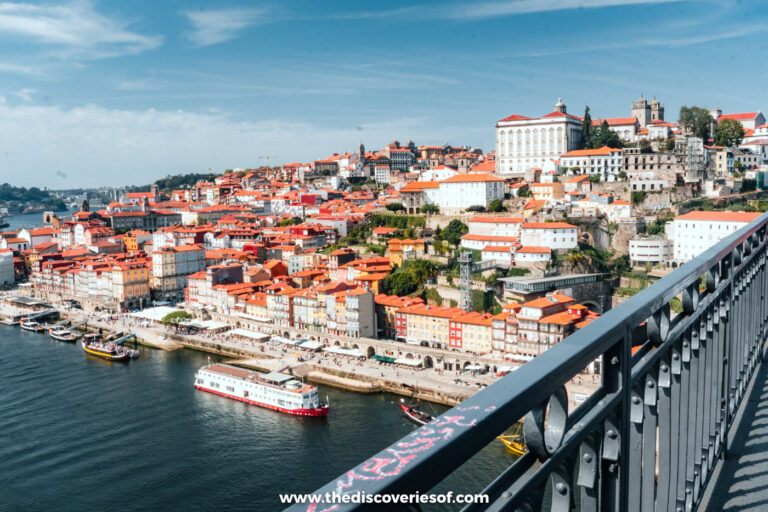
Beautiful Porto sits at the mouth of the Rio Douro, an enchanting maze of hilly streets, the houses and shops clustered around narrow walkways begging for you to get lost in.
Lisbon may well be making a name for itself as one of the coolest destinations in Europe, but Porto should not be overlooked. In fact I may just prefer it to the capital… just.
This effortlessly endearing city has a relatively quiet and easily walkable centre, which includes the UNESCO-listed Ribeira district. Two days is enough to see the highlights, drink some port where it’s made and eat very, very well.
Take a walking tour of the old town

Porto’s centre is easily walkable, so I think that taking a few hours to walk around the city is the perfect start to your time in Portugal. Meander through narrow lanes and twisting streets, and let the hills (and there are a lot of them) set the pace.
Most of the city’s must-sees are within striking distance of each other. The UNESCO-listed Ribeira district should be at the top of your list, with its stacked, colourful houses spilling down to the river.
Must-sees: Clérigos Church and its tower, Livraria Lello (the bookshop said to have inspired JK Rowling; entry is by ticket, which you can put towards a book), the cathedral, the old city walls, São Bento station with its azulejo tiles, the Dom Luís I bridge and the gilded interior of the Igreja de São Francisco.
I’m a sucker for learning about the history and culture of a destination, so I almost always book onto a guided tour when I arrive in a city.
Do
This three-hour guided walking tour of Porto’s highlights is a good way to get your bearings on day one.
Taste port in the lodges of Gaia

I’ll level with you: you can’t visit Porto without paying homage to the city’s most famous export, port.
The port houses sit across the river from the Ribeira in Vila Nova de Gaia, where the wine has been shipped down from the Douro and aged in the lodges for centuries. Take a guided tour of a cellar and sample the tipples to learn about the fortified wine (you’re tasting for purely informational purposes, of course).
I’m a huge port fan: nothing says the end of a good meal like a glass of port as a digestif. If you’re new to it, start by comparing a ruby with a tawny. On a tasting tour in Lisbon I was poured a seven-year-old tawny, still red but drier and darker than a ruby, and it’s a good way to see how much the wood ageing changes things.
Popular port houses include Sandeman, Taylor’s, Graham’s and Cockburn’s, and most of them run their own tours and tastings.
Do
If you’d rather someone else did the choosing, this wine and tapas walking tour takes in a port cellar in Gaia and five tastings, from port to Vinho Verde and Douro reds, with petiscos along the way.
Book dinner at DOP

I’m a huge fan of the famous Portuguese chef Rui Paula’s food. His Porto restaurant, DOP, is the place to treat yourself to a delicious meal out in the city. Paula showcases the very best Portuguese ingredients in a minimalist dining room in the old Palácio das Artes, a few minutes’ walk up from the Ribeira, and the restaurant was awarded a Michelin star in the 2026 guide. Book ahead, especially at weekends.
Party at Hard Club
Part club, part concert venue, Hard Club is one of Porto’s coolest spots, set inside the iron-and-glass Mercado Ferreira Borges near the Ribeira. Don’t arrive too early (before midnight) and prepare to stay until the early hours.
Ride tram 1 to the sea at Foz
Hop onto tram line 1 close to Praça do Infante. The old-school tram is the perfect way to see a different side of the city: it rattles along beside the Douro towards the Atlantic, dropping you off in Foz do Douro, where the river meets the sea.
Once there, stop off at Casa de Pasto da Palmeira for petiscos (Portuguese small plates) at affordable prices, then walk along the seafront to the lighthouse at the end of the breakwater.
Shop the Mercado do Bolhão

Step into history at the Mercado do Bolhão. Its neoclassical building dates from 1914, and after a long restoration it reopened in 2022, with traders selling fish, fruit, cheese, cured meats and flowers on two levels around a central courtyard. Trust me when I say that you should make room in your suitcase, because you’re going to want to bring some of this food home.
Have a drink in Baixa
The streets around Clérigos and the Baixa are brimming with bars and nightspots: join the throng for a few tipples on Rua Galeria de Paris and the lanes around it. The cocktails are divine.
Getting to Porto

Fly into Porto’s Francisco Sá Carneiro Airport if you can; the metro’s purple line runs from the airport to the city centre. Otherwise, fly into Lisbon and take the train from Lisboa Oriente to Porto Campanhã: the fastest Alfa Pendular services take just under three hours, and a short connecting train takes you on into São Bento in the centre.
Suggested stay: The Yeatman

A luxury wine hotel in Gaia with stupendous views out over the Douro and central Porto, this is one of the city’s best hotels and certainly one of its most stylish.
The Yeatman is a personal favourite I’ve stayed in a few times and easily could stay in a few times more! Even if you can’t stay, splash out on a meal in its restaurant, which holds two Michelin stars. For more options across the country, see my guide to where to stay in Portugal.
Check prices at The Yeatman or search for other accommodation in Porto.
Got an extra day? Spend a night in the Douro Valley

Take a trip up the Douro Valley to tour the vineyards. This is where the grapes for port are grown, and the valley’s red and white table wines are every bit as good.
You’ll need at least a day: you can visit on a day trip from Porto, but it’s even better to spend a night in the valley. Whichever you choose, get out on the water. I’d really recommend a boat trip on the river: the sight of the terraced slopes, verdant with vines, rising up from the water is something quite spectacular. Trains from Porto’s São Bento station follow the river to Régua and Pinhão in about two to two and a half hours, and it’s one of the most beautiful rail journeys in Portugal.

If you can, go in the harvest, which usually runs from about mid-September into early October. I visited Symington’s Quinta do Bomfim in Pinhão in late September, while the grapes were coming in. It doesn’t rain very much there, so the yields are small, but the flavour is intense. The vineyard is mapped plot by plot so each section is cut at exactly the right moment, the grapes are picked into boxes of about 18 kilos, and they go over a selection belt to weed out the bad ones before crushing. Some of the port is still foot-trodden in the traditional granite lagares, with three to four hours of treading to music. Quinta do Bomfim now runs visits and tastings all year.
Bed down in luxury at the Six Senses: I’ve stayed, and both the views and the rooms are divine. I’ve also stayed at Vidago Palace, a grand old spa hotel known for its thermal waters, about an hour north of the river, which is worth the detour if you have the time.
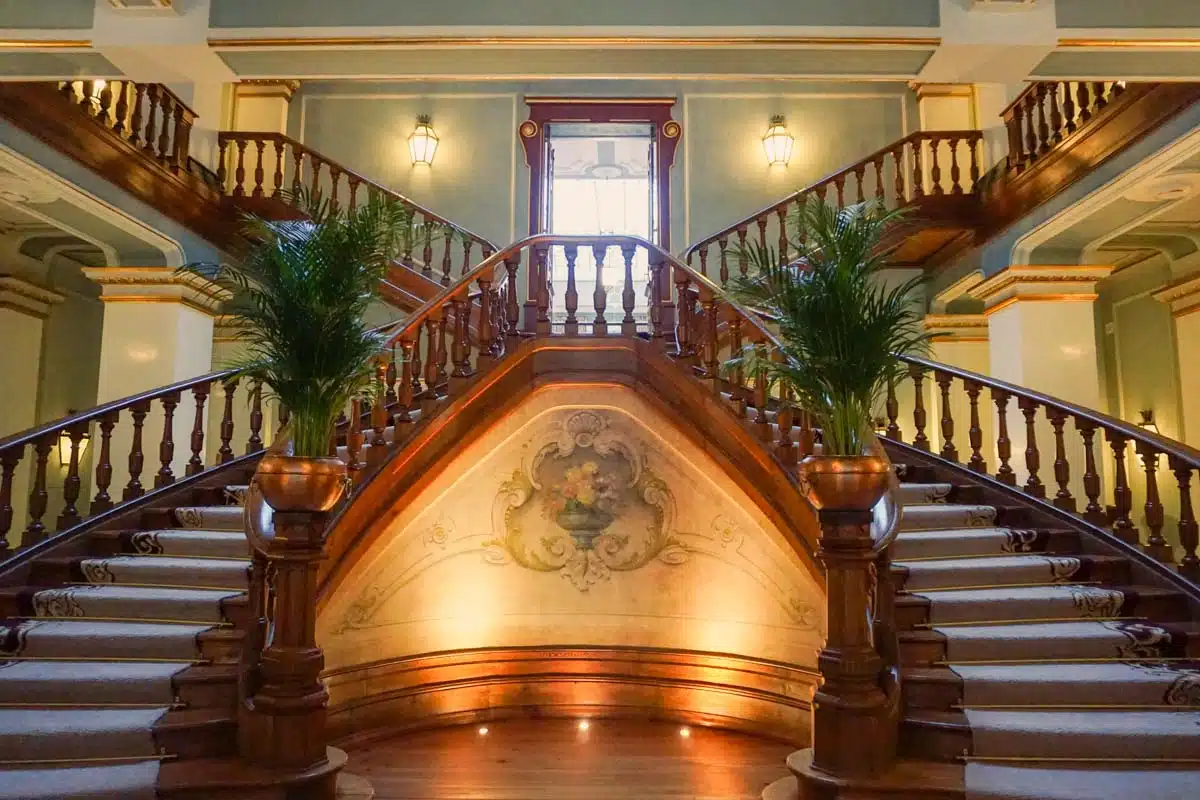
I cannot rave enough about the food at DOC, the riverside sister restaurant to DOP that I mentioned above. I first went years ago and couldn’t resist a cheeky return visit when I was back in the valley. Rui Paula’s contemporary Portuguese cooking, with ingredients from the river and the surrounding hills, is served in an idyllic setting on a terrace right over the Rio Douro, and the tasting menus are a proper treat. It might make your wallet cry, but it will make your stomach happy. Don’t miss it.

Days 3 and 4: Lisbon, sidecars, seafood and Belém

It’s time to move on to the next stop: Lisbon, Portugal’s beautiful and surprisingly laid-back capital.
I’ve visited Lisbon time and time again and it never fails to make me love it just that little bit more… I first came as a teenager and, I’ll admit it, wasn’t the biggest fan. These days I’ve written more about Lisbon than about London, where I live.

Relatively affordable, delicious food (wear stretchy trousers) and a buzzing nightlife: it’s the cool kid that everyone can’t help but love. It’s also where you’re going to be spending the next three nights, with Sintra as a day trip on day 5, so settle in and enjoy the ride. If you have longer in the city, my 3 days in Lisbon itinerary plans each day in full.
Ride a vintage sidecar round the city

You know how I said that I like to take a walking tour when I visit a new city? Scrap that. I took a vintage sidecar tour when I was in Lisbon and it was some of the most fun I had in the city.
Toot toot, beep beep!
Who doesn’t love whizzing around the city tucked into the sidecar of a vintage motorbike, with a cooler-than-cool Lisboeta telling you about all the secret spots and bags of history, and taking you to the best panoramic points in the city? My guide, Pedro, was a lifelong resident with the stories to match. It was 100% one of the highlights of my Portugal itinerary.
I’m not going to lie, I basically rave about this tour to anyone I know who is visiting Lisbon, and right now, that includes you.

The tour is tailor-made, so if there’s stuff you’re not that interested in, are desperate to see or have already seen, you can just let your guide know at the start.
To be honest, some of the best bits of the tour were when he took me to places I had no idea about before (I realise that sounds a bit seventies Mills & Boon). I’m still sworn to secrecy about a lovely local café that served THE BEST CAKES. Mmm, cake. Anyway, moving on.
Do
Book a sidecar tour of Lisbon. Tours last about three and a half hours.
Feast on seafood at Cervejaria Ramiro

After your whirlwind tour, do like the locals do and head to Cervejaria Ramiro for a traditional Portuguese seafood feast. I went straight from my sidecar tour on a Sunday afternoon and it turned out to be one of the culinary highlights of my trip: oysters, clams in garlic and coriander, giant tiger prawns and, for dessert, a steak sandwich. Expect a queue at peak times, and read my full review for what to order and how to get a table.
Explore Alfama and Mouraria

Head to Alfama in the afternoon, when the neighbourhood’s narrow lanes and tall buildings catch the golden Lisboeta light.
Alfama is one of the few parts of the city that survived the earthquake of 1755, so it’s a chance to see the Lisbon of a period that has been largely erased. It’s the beating heart of the Lisbon of times past: fado, ginjinha and steep stairways that open onto sudden views of the river.
A history tour might not be for everyone, but I think it’s the best way to get to know Alfama. I took one from São Jorge Castle down to the Sé cathedral with a historian, and two and a half hours went by in no time.
Pop into the Museu do Fado to learn about the history of the much-loved music, and if you can, go to the Miradouro das Portas do Sol for sunset: the views over the rooftops to the river are pretty wow-worthy.

Other must-see spots in Alfama: the Sé cathedral, São Jorge Castle and, on Tuesday and Saturday mornings, the Feira da Ladra flea market by the Panteão Nacional, a few minutes from André Saraiva’s huge tiled mural.
From the bottom of Alfama, walk west through the Baixa to the Church of São Domingos. It has had a rough history: a massacre began here in 1506, the 1755 earthquake brought much of it down and a fire in 1959 gutted it. The scorched pillars and walls were left as they are when it reopened, and the result is one of the most moving interiors in the city. On a walking and tasting tour in October, my guide pointed out that it was once the only church in Lisbon where enslaved people were allowed to worship.

Turn left out of São Domingos and you’re in Mouraria, Lisbon’s most eclectic neighbourhood, where the Moors were moved after the Christian conquest in 1147. It’s the birthplace of fado and today one of the city’s most multicultural corners, with tiny tascas and grocers from every corner of the world.
Eat at Bairro do Avillez

First up, time to fill up. Head for Bairro do Avillez.
Chef José Avillez is another stellar Portuguese chef, with restaurants dotted all over the city. How has one chef come to dominate Lisbon’s culinary scene?
It’s simple: he makes banging dishes that make you happy to part with your cash and sad that your stomach isn’t actually a bottomless pit and at some point you’re going to have to stop eating the tasty, tasty food.
Bairro do Avillez is four restaurants under one roof on Rua Nova da Trindade in Chiado: the Taberna, the most casual and great for petiscos; the Páteo, where seafood is king and the setting is spectacular; Mini Bar, part gastropub, part live music venue; and Pizzaria Lisboa. All four take bookings online. Go for the Taberna if you want to drop in without planning, and book the Páteo if you want the full experience.
I received the tip to go to Bairro do Avillez from the PR at the Four Seasons, and believe me, that was a woman who knew every single restaurant in Lisbon and wasn’t afraid to be frank about her opinions on each (thanks Catarina).
Listen to jazz at Hot Clube de Portugal
Hot Clube de Portugal on Praça da Alegria is one of the oldest jazz clubs in Europe, and it has a well-deserved reputation as one of the best in the world. I first visited as a (mildly pretentious) 17-year-old and it’s still my evening destination of choice several (I mean several) years later. It’s a small basement club, so get there early for a seat.
See the sights in Belém

Sun-drenched Belém is home to big-hitter after big-hitter. A few kilometres west of the centre, it’s the elaborate playground of times past. Few places have been shaped more by Portugal’s Age of Discoveries.
From the Gothic Manueline architectural fantasy of the Jerónimos Monastery to the stalwart Belém Tower and the striking Monument to the Discoveries, this is an area packed with history. Belém Tower reopened in May 2026 after a year of restoration, and both it and the monastery now let visitors in by half-hour time slot, so book ahead in busy months. Tram 15E runs out to Belém from Praça da Figueira and Praça do Comércio.

Oh, and it’s the place to snap up the sweet, flaky and impossibly moreish pastéis de nata: they’re said to have originated at Pastéis de Belém, where you can still buy them today, made to a recipe the bakery has kept secret since 1837.
If, like me, you’re at least 50% driven by food, you are going to want to block out some time in your diary to visit.
Queues for takeaway can be long. My insider’s tip is to go and sit inside: there’s often no wait, and you can be tucking into your pastéis in a matter of minutes.
Spend time at LX Factory

An old textile factory that’s been turned into one of Lisbon’s biggest hipster hangouts? Sign me up!
LX Factory is a cool conglomeration of independent businesses, including shops, restaurants and bars housed in industrial-chic quarters under the 25 de Abril bridge, about ten minutes from Belém.
It’s not hard to see why this has become one of the city’s most popular hangouts: the street art is extraordinary, and the food (yes, food again, it’s always food with me) is fab. Ler Devagar, one of the most beautiful bookshops in the world, fills an old printing works here, with a bicycle flying overhead. Come on a Sunday for the market.
Go street art hunting

Lisbon is one of the big destinations on the street art scene, thanks to a roster of talented home-grown artists and plenty of creative spaces for them to show off their skills. Hunting out the city’s murals was one of my favourite things to do on my first trip back as an adult, and I was still at it on my October trip.

Hotspots include LX Factory (above), Calçada da Glória beside the funicular, Rua das Gaivotas and Avenida Conselheiro Fernando de Sousa. Look out, too, for Bordalo II’s giant animals built from reclaimed rubbish, which stop people in their tracks all over the city.
Do
Get ahead by booking a three-hour street art tour.
Eat your way around the Time Out Market

The international arbiters of urban culture and cool, Time Out opened its first market in Lisbon in 2014, inside the Mercado da Ribeira at Cais do Sodré.
Safe to say, it’s been drawing in the punters ever since. Many of Lisbon’s hottest restaurants and chefs have bagged a counter in the ever-changing rotation.
I’m a total sucker for a well-curated food market.

The chance to have a small plate from a few different restaurants is a great experience, particularly when I’m trying to see the best of Portugal in 7 days and have a limited number of meals in each city.
Save room for something sweet. Having eaten more than my fair share of pastéis de nata, I can honestly say my favourites come from Manteigaria, which has a counter here as well as its bakery in Chiado.

My biggest tip? Go hungry and dine well. If you’d rather have someone else do the choosing, book a food tour: I’ve taken more than my share over the years, and the one I booked on a whim one October morning in Lisbon is still up there with the best.
Getting to Lisbon

I’d recommend getting on with the journey from Porto to Lisbon as early as you can bear, so you can make the most of your time in the capital.
You could fly from Porto to Lisbon, but it’s a bit of a waste of time. You’re much better off taking the train, booking a private transfer or, at a push, hiring a car and driving down yourself.
If you do the latter, just remember that, like most cities, parking in Lisbon is not the easiest task. The Alfa Pendular train from Porto Campanhã to Lisboa Oriente or Santa Apolónia takes just under three hours, and the slower Intercidades about three and a quarter. Book on the CP website a few days ahead for the cheapest fares.
Top Tip
I recommend buying the Lisboa Card. It covers the metro, buses, trams (tram 28 included), the Santa Justa lift and the trains to Sintra and Cascais, and gets you into more than 50 sights for free, including the Jerónimos Monastery, Belém Tower and São Jorge Castle. Prices start at about €31 for 24 hours, rising to about €51 for 48 hours and €62 for 72. It isn’t valid for Pena Palace. Pick yours up here.
Suggested stay: the Four Seasons Hotel Ritz

I’ll be blunt. The Four Seasons is a treat. A very expensive treat.
It’s my favourite hotel in Lisbon, but I have to admit that it comes at quite a steep cost. If you can afford it, you can look forward to decadent interiors (including marble bathrooms), eye-catching city views and a breakfast that’s to die for. I stayed on the tenth floor and watched the sun come up over the city from my balcony. There’s more in my Four Seasons Hotel Ritz Lisbon review.
There’s even a rooftop running track to help you burn it all off afterwards. For other options, see my guide to where to stay in Portugal.
Check prices for the Four Seasons Hotel Ritz or search for other Lisbon accommodation.
Day 5: a day trip to Sintra

Travelling to UNESCO World Heritage-listed Sintra is like stepping into the pages of a fairy tale.
Brightly coloured palaces, exotic gardens and Moorish castles: you won’t regret making the trip. Its palaces sit high in the hills above the town, so plan for steep walks or short taxi rides between them, and aim to see three, or four if you start early.
Start at the Palácio Nacional de Sintra
Make a beeline for the Palácio Nacional in the centre of town, one of Sintra’s much-loved (and photographed) spots, with its two huge conical kitchen chimneys.
A curious mix of Moorish, Gothic and Manueline styles, it’s the kind of building you won’t find outside Portugal: spacious courtyards, tiled rooms, opulent ceilings and Insta opportunities galore. It’s also the best preserved of Portugal’s medieval royal palaces, and usually much quieter than Pena.
Tickets
Buy them on the day or online from Parques de Sintra. If you’re doing this itinerary in peak season, a skip-the-line ticket is worth considering.
Climb up to Pena Palace

The building that launched a thousand clicks: I was enamoured with the vibrant yellow exterior of Pena Palace before I even clapped eyes on it in real life.
See what I mean?
Weird, wacky and all-out fabulous, Pena might look like an architectural romp, but it’s one of the most important expressions of the 19th-century Romantic movement in Portugal, built for King Ferdinand II on the ruins of a monastery at the top of the Serra de Sintra. Leave time for the park around it, which is full of follies, lakes and exotic trees.
Tickets
Entry to the palace is by timed slot, and the park and palace ticket costs €20 for adults (€12 for the park alone). Book online well ahead in summer and arrive at the start of your slot.
Walk the walls of the Castle of the Moors

Just when you thought that Sintra couldn’t get any more dramatic… you come to the Castle of the Moors. Often shrouded in cloud, its walls snake along the ridge next door to Pena, about a 2km uphill walk from the centre of Sintra. On a clear day the views reach all the way to the Atlantic.
Tickets
Buy them on the day, book online (€12 for adults) or buy a fast-track ticket.
Descend the Initiation Well at Quinta da Regaleira
If you have time for one more Sintra stop, make it Quinta da Regaleira, a mysterious and romantic estate with an extraordinary Gothic-Manueline palace, lush gardens and grottoes, and the famous Initiation Well: a spiral staircase descending deep into the earth that has to be one of the strangest and most beautiful things in all of Portugal. It also uses timed tickets in busy periods, so book ahead.
Getting to Sintra
The trip from Lisbon to Sintra isn’t difficult: hop on the train from Rossio station (or Oriente) for a journey of around 40 minutes. Tickets are cheap, trains are frequent and the ride is free with the Lisboa Card. From Sintra station, the 434 bus loops up to Pena and the Moorish castle, but it can be slow and packed in summer, so a taxi or tuk-tuk is often the better bet.
If you’d prefer a tour, there are plenty from Lisbon. This full-day tour includes entry to Pena Palace and Quinta da Regaleira and adds Cabo da Roca and Cascais on the way back.
Top Tip
If you do book a tour, make sure it covers all the entrance fees. When it does, it’s a surprisingly cost-efficient way to do the trip.
Suggested stay: keep your Lisbon base for Sintra, as it’s an easy day trip and you’ll be heading south the next morning.
Days 6 and 7: the Algarve

Why should you go to the Algarve on your Portugal itinerary? That’s easy.
How do sun-soaked beaches with crystal clear waters and miles of Atlantic views, medieval towns, and fresher-than-you-thought-possible seafood washed down with crisp whites from the neighbouring Alentejo sound to you?
For many people, a week in Portugal starts and ends with a beach in the Algarve, and I can see why. It is really quite enticing to plop down and simply appreciate that good, good Portuguese sunshine. If you would rather give the whole week to the south, my week in the Algarve itinerary plans it day by day.

You’d be missing out, though.
Sure, the Algarve has spectacular beaches, but move away from these and you’ll discover a region with a vibrant culture and unique history that’s waiting to be explored. The western end around Lagos is all cliffs, sea stacks and coves; the eastern end around Faro and Tavira is calmer, flatter and wrapped around the lagoons of the Ria Formosa. Two days won’t cover both properly, so pick a base and use a car to dip into the rest.
Base yourself in Lagos

I suggest that you stay in Lagos during your time in the Algarve: not only is it a rather charming destination in its own right, it’s a good base to explore the rest of the region in the limited time that you have left. I’ve stayed in Lagos myself, in a hired villa, and shot the beaches along this stretch of coast from the air with my drone.
The centre of Lagos really isn’t very big: grab a map and walk to the baroque fantasy that is the Igreja de Santo António, its walls covered in gilded woodcarving, which you visit through the municipal museum next door.
Nature has created many of Lagos’s biggest attractions. The rugged Ponta da Piedade comes complete with sandstone arches, sea stacks and nesting birdlife, and you can see it from the clifftop paths or from a small boat that weaves through the grottoes below. On the way, stop at Praia do Camilo, a tiny cove reached by a long wooden staircase. Closer to town, the long sweep of Meia Praia is a good spot to try your hand at surfing, or simply sit back and enjoy the sun.
Browse the market in Loulé

Stop off in the quaint town of Loulé in the morning to see its famous covered market in full swing. The red-domed, neo-Moorish market hall is open every morning except Sunday, and on Saturdays a busy open-air market spills into the streets around it.
I’ve always stocked up on ingredients for the barbecue during longer stays, but it’s worth popping in, if only to see a traditional Portuguese market in action: fish straight off the boats, piles of oranges and figs, cured hams, cheeses and local honey. On my October week in the eastern Algarve I also went hiking in the hills inland with a local guide, a lovely way to see the countryside behind the coast.
The Benagil Cave is a short drive west of Loulé and one of the area’s best natural sights, a sea cave with a hole in its roof that lets the sunlight pour onto the sand. Access is from the water only, and the rules on boats, kayaks and landing have tightened in recent years, so check the current situation before you go (my drone found out the hard way that the cave is best left to the boats).

Walk around Tavira

I personally think that Tavira would take the prize for the most picturesque town in the Algarve.
With a church on practically every corner, castle ruins and a gorgeous setting on the Rio Gilão, not to mention numerous buildings with elaborate tiled façades, Tavira is just lovely. Cross the old seven-arched bridge over the river and climb up to the castle gardens for the view over the town’s hipped rooftops.
Once you’ve had a look around, strike out to the nearby beaches, including the Ilha de Tavira, which you can only reach by boat.
I loved the nearby Praia do Barril: a wild and rather windswept beach reached by a short hop on a narrow-gauge railway from Pedras d’el Rei and home to the quirky anchor cemetery. Yes, you read that right, anchor cemetery. Dozens of rusting anchors from the tuna fishing fleet that once worked here lie half-buried in the dunes. If the little train isn’t running, you can walk the path beside the tracks across the lagoon in about 20 minutes.
With a car, carry on east to Castro Marim, an old fortress town on the Guadiana looking across the river to Spain, and the grid-planned streets of Vila Real de Santo António on the border.
Read Next
Take a boat to Ilha Deserta and lunch at Estamine

In case you didn’t get the memo, Ilha Deserta means… deserted island.
It isn’t quite deserted, but this quiet barrier island off the coast of Faro, in the Ria Formosa Natural Park, is the perfect place to escape the crowds on the Algarve’s busier beaches. It’s pretty much my favourite beach in the Algarve.

Take one of the informative eco boat tours over to the island, which leave a few times a day from the pier beside Faro’s old town. I went across on a small catamaran with a nature guide, and on the way I spotted oysters, shore crabs, teals and curlews in the lagoon and, as an extra-special surprise, a few dolphins. Speedboats are a noisier but more direct way over.
The island has another attraction, though: Estamine Restaurant.

This eco-friendly restaurant, the only one on the island, serves up astoundingly good seafood with sea views, and it runs on solar power. Book a table, especially at weekends.
By now you know how much I love Portuguese food (and hopefully you will too): if you trust me at all, trust me when I say you need to get yourself to this restaurant.
If you’re staying around Quinta do Lago or Faro, the Ria Formosa is also lovely by bike: I cycled out from my villa to the lagoon, where the long beach and dunes feel a world away from the resorts (until one of the planes from the airport round the corner takes off, anyway).
Getting to the Algarve
There are plenty of transport connections between Lisbon and the Algarve, but which one you take will depend on where you stay.
If, as I suggest, you stay in Lagos, take the fast Alfa Pendular or Intercidades train from Lisbon (Oriente or Entrecampos) to Tunes, then change to a regional train for Lagos. The whole journey takes about three and a half to four hours, there are around five connections a day, and since July 2026 the Algarve line has run electric trains with more frequent services. For Faro and Tavira, stay on the fast train to Faro (about three hours) and change there for Tavira.
Book ahead on the CP website: tickets can (and will) sell out in high season.
Express buses run between Lisbon and Lagos in about four hours, which is close enough to the train to be worth comparing on price. If you’re flying straight in, Faro airport is about an hour’s drive from Lagos.
Getting around the Algarve

You can get around some parts of the Algarve without a car, particularly along the coast, where the train and local buses link the main towns.
Other places are a bit more difficult. I’ve listed four of my favourite spots in the Algarve, and in all honesty, I haven’t attempted getting between them without a car. Seeing as you only have a couple of days left of your 7 days in Portugal, I’d suggest hiring a car: it just makes life much easier in this part of the country. Picking one up in Lagos or Faro means you don’t have to drive in Lisbon.
If that’s not practical, Lagos is the easiest place to base yourself, with plenty of hotels in the centre of town and several beaches within walking distance.
Suggested stays in the Algarve

I’ve stayed in Lagos, Vilamoura and Quinta do Lago on various trips and can recommend all three as good bases. Lagos suits a short trip on this route best, as it’s at the end of the railway line and walkable.
- Casa Mãe in Lagos is a good five-star boutique option, set around a garden just inside the old town walls.
- If you’re going to spend longer than a few days in the Algarve (a week or more), book a villa at the Four Seasons Fairways in Quinta do Lago, where I stayed in a renovated villa with its own jacuzzi terrace and barbecue.
- Looking for high-end luxury with hotel amenities? The Anantara Vilamoura is the perfect spot, with an adults-only pool and an excellent spa.
For more ideas, see my guide to where to stay in Portugal.
And that’s your week in Portugal. I hope you have a wonderful time discovering the best this vibrant country has to offer.
If you have more than a week, I’ve suggested a few more places you could add below. Otherwise, skip ahead to the handy tips at the end.
Have more time? Add these to your itinerary
Évora
A gorgeous UNESCO World Heritage-listed town in the Alentejo, with Portugal’s best-preserved Roman temple.
Évora is a glorious passage through Portuguese history, with architecture charting pretty much every chapter from the Romans to the Moors and the present day. The Roman Temple of Évora still stands remarkably intact in the city centre: it dates from the 1st century AD and has no business looking this good. Wander through the narrow alleys to the São Francisco church, home to the Chapel of Bones, its walls lined floor to ceiling with the skulls and bones of around 5,000 people and an inscription above the entrance that reads, “We bones that are here, for yours we wait.” Oddly peaceful, genuinely extraordinary. Spend a day or two exploring.
Top Tip
Évora sits in the Alentejo, about an hour and a half east of Lisbon by train or car, so you can add it to your itinerary between Lisbon and the Algarve.
Cascais

If you think “resort” means plastic sun loungers and all-inclusives, Cascais will make you rethink your position. Imposing mansions and a flashy marina are grounded by cute fishermen’s houses that wind away from the harbour, and the coastal path west to the Boca do Inferno cliffs makes a lovely short walk.
Top Tip
Cascais is a short hop from Lisbon, about 40 minutes by train from Cais do Sodré along the coast. Beware: it does get busy in summer. Add it to the itinerary before or after Lisbon as a beach stop.
Coimbra

Portugal’s capital for more than a century in the Middle Ages, Coimbra is a genteel city with a host of historical sights, including the stunning baroque Biblioteca Joanina in the old university. The large student population keeps things lively.
Add it to your itinerary between Porto and Lisbon: the train stops at Coimbra-B on the main line, about an hour from Porto.
The Alentejo coast
If you’d rather walk than lie on a beach, the wild coast of the Alentejo, just north of the Algarve, is hard to beat. I spent several October days walking sections of the Rota Vicentina here, along clifftop paths and through cork oak country, staying in rural guesthouses where dinner was served around a communal table. Read about the places I loved in my guide to secret spots in the Alentejo.
Map
Handy tips for planning your one week in Portugal

Top tips
- Tourist taxes: many Portuguese towns charge a nightly tourist tax, paid at your hotel. There’s more on taxes, tolls and transport cards in my Portugal travel tips. Lisbon charges €4 per person per night and Porto €3, both for guests aged 13 and over and capped at seven nights. In the Algarve, towns including Faro, Albufeira, Loulé and Portimão charge €1 to €2 a night, while Lagos had no tax at the time of writing.
- Book timed tickets early: Pena Palace, the Jerónimos Monastery and Belém Tower all use timed entry, and summer slots go days in advance.
- Border checks: if you’re not an EU citizen, the EU’s Entry/Exit System now records your fingerprints and photo the first time you enter, so allow extra time at passport control. The ETIAS travel authorisation is due to follow: check the official ETIAS website before you travel.
- Tipping: Portugal isn’t a big tipping country, but a small tip for good service is always appreciated. Read more in my guide to tipping in Portugal.
- Phones: EU roaming rules no longer cover UK visitors, so check your provider’s charges or buy a local or eSIM data plan before you go.
- Need to know: Portuguese is the language, the currency is the euro, mainland Portugal is on GMT in winter and GMT+1 in summer, the country code is +351 and the emergency number is 112.
What to pack
- Sunglasses: Portugal is no stranger to the sunshine, you’ll need them.
- Sunscreen: the Atlantic breeze can trick you into thinking it isn’t hot.
- A universal travel adapter: Portugal uses the European two-pin plug.
- A microfibre beach towel: quick-drying and light for the Algarve.
- A camera.
- A portable battery pack: to keep everything charged while you’re on the move. And also in case you end up staying in one of those hotels that think charging sockets are completely optional (why?!).
- Comfortable shoes: those super-cute cobbled streets might look #thatsdarling in your Instagram pictures, but believe me when I say that they wreak havoc with your feet. Plus, with cities this walkable, it makes sense to do as much on foot as you can.
Best time to visit
Spring (April to June) and early autumn (September and October) are the sweet spots for this itinerary: warm enough for the beach in the Algarve, but without the heat and crowds of July and August. I’ve been in all sorts of seasons. A January weekend in Lisbon meant short days and quiet sights; late September in the Douro meant harvest; and October across the Algarve, the Alentejo and Lisbon brought quieter beaches and good walking weather. Read more in my guide to the best time to visit Portugal.
Getting there
The main airports in Portugal are Lisbon’s Humberto Delgado Airport, Porto’s Francisco Sá Carneiro Airport and Faro Airport in the Algarve. This route works best flying into Porto and home from Faro, or the other way round.
If you’re travelling to the eastern Algarve, you can also fly into Seville in Spain and transfer from there, which is sometimes cheaper.
Getting around
You have three main options for getting around in your 7 days in Portugal: train, bus and car.
There are benefits to each, but I’d suggest taking trains between Porto, Lisbon and the Algarve and then hiring a car for the last two days in the south.
Top Tip
Driving in Portugal isn’t hard, but I’ve noticed that drivers can sometimes be a bit aggressive on smaller roads. Just keep your own pace and let them do their thing. Drive on the right, and note that many motorways use electronic tolls: ask your hire company for a transponder.
Useful Portuguese phrases
- Hello: bom dia (good morning), boa tarde (good afternoon), boa noite (good evening)
- Goodbye: adeus
- Thank you: obrigado (if you’re a man) or obrigada (if you’re a woman)
- Please: por favor
- Yes: sim
- No: não
And there you are, you’re all ready to set off. I hope you’ve enjoyed this itinerary and you’re ready to see the best of Portugal in 7 days.
Got any feedback or suggestions? Drop me a message in the comments below.
Read next
- My Portugal travel guide
- 32 cool things to do in Portugal
- The coolest things to do in Lisbon
- Where to stay in Portugal
- Secret spots in the Alentejo
- The best beaches in the Algarve
Love this? Save and share on Pinterest

Discover the top things to do, insider tips and hidden gems in our Portugal Travel Guides.
Read the guides →






This process has extra power if stated out loud.
I will forever appreciate the amount of detail you have included in this post. The Estaminé and Bairro do Avillez recommendations got me drooling. Thank you for sharing your experiences, as they have definitely shaped my itinerary for Portugal this summer. All the best!
Thanks Arina. So glad that you found it useful and it gave you a few ideas for your time in Portugal – absolutely love the country and hope you have a wonderful time.
Great post on Portugal! This is one of the best places to visit in Europe!
Thanks Whitney! Couldn’t agree more.