

Lisbon saves its best side for people who slow down. Between the grand monuments of Belém and the castle on the hill, there’s a church left blackened inside on purpose, a food tour you should only take on an empty stomach and a vintage sidecar waiting to show you corners you’d never find on your own.
I have a confession to make. The first time I went to Lisbon, as a teenager, I wasn’t exactly the biggest fan. Looking back, I can only put it down to a serious lapse in judgement.
I’ve visited Lisbon several times over recent years, each trip opening my eyes just that little bit more to what a fantastic city it is. There aren’t many places I fall for straight away, but this is one of them, and I’ve fallen hard.


My trips have fallen at very different times of year: a January weekend that began with sunrise over the Tagus from a hotel balcony, and a late October trip spent eating and walking my way around the old neighbourhoods. Each time, I came home with a longer list of places I wanted to go back to.
You can see why the city has become such a favourite: an attractive combination of elaborate architecture, sun-drenched days and the distinctive sound of fado on the air, not to mention the food.
As with any city, there are so many options that it can be difficult to pick the things to do in Lisbon that deserve your time if you’re only visiting for a few days. That’s why I’ve written this guide, packed with everything you need to plan your trip, from the tours I loved to the sights that make the trip out to Belém worth it.
The best things to do in Lisbon
Eat your way around the city on a food tour

If eating your way around the city in the company of a vivacious local who’ll show you all of the best food spots and tastiest dishes sounds like it’s up your street, it’s time for you to sit up and pay attention.
I’ve taken more than my share of food tours over the years and the lively tour from Oh! My Cod is up there with the best. I booked it on a whim one morning and I’m so glad I did.
Founder Silvia Olivença takes you on a whirlwind of discovery, helping you to discover a different side of the city’s culinary scene.


Take it from me when I say that Lisbon is a gastronome’s delight: there’s so much amazing food to be found across the city that eating your way around it is an absolute must. The only real question is how you’re going to fit in as much of it as possible during your stay.
I’m not going to spoil the adventure by giving too much away, but if I have two pieces of advice for you, it’s 1) I cannot recommend this tour enough and 2) go HUNGRY. That’s all.
The company has changed its name since my tour (it was Suck My Cod back then), and its signature tour now runs as the Original Lisbon Food and Wine Tour: four hours of tastings and wine, from €105 a head.
See the city from a vintage sidecar

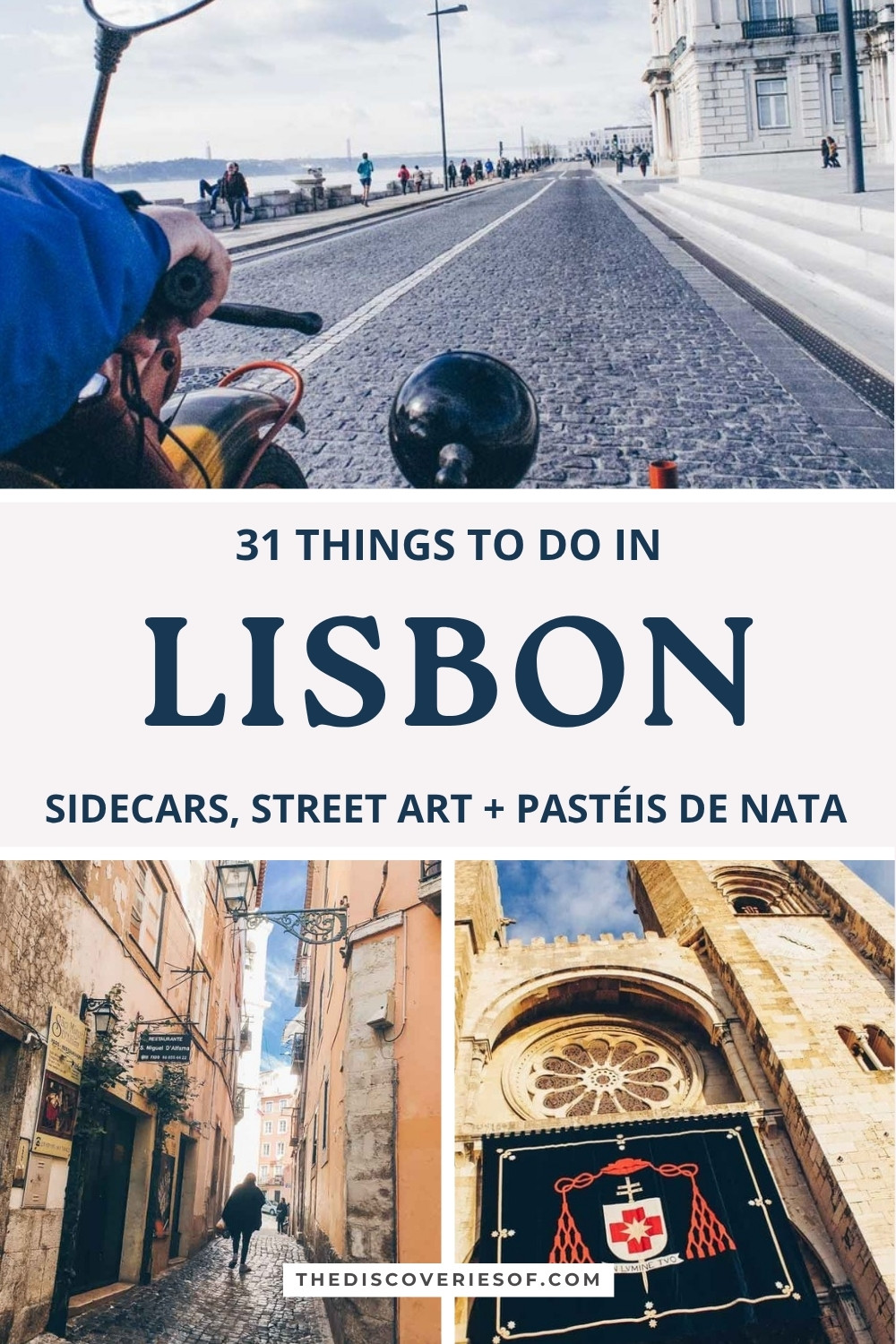
If you only take one tour while you are in town, make it a sidecar tour of Lisbon.
Jump into the sidecar (or ride pillion if that suits) on a vintage motorbike and embark on a whirlwind tour of the city. The tours are completely personalised: simply tell the guide what you want to see or what you are interested in and they’ll whizz you around while explaining the city’s fascinating history, culture and architecture.
My guide Pedro was the epitome of Lisbon cool: a lifetime resident with a wealth of stories to match.
It was some of the most fun I’ve had in the city. The best moments came when he took me to places I’d never have known about, including a little local cafe whose cakes were the best I tasted all weekend. I’m still sworn to secrecy on its name, so you’ll have to take the tour to find it.
I rode on a Sunday in January and finished, very happily, at Cervejaria Ramiro, which I’d recommend as a plan for anyone.
Do
This sidecar tour of Lisbon lasts about three and a half hours and takes in the viewpoints, Alfama and the riverside.
Hunt down the city’s street art

The street art scene here is very much alive and kicking. It seems like there’s an awesome (and very Instagram-worthy) piece of street art around every corner.
Tracking pieces down was one of my favourite things to do on my first trip back after years away, and I’ve kept at it on every visit since.
I talk about André Saraiva’s huge mural in São Vicente de Fora further on in this guide, but you can also find cool street art dotted around the city.
Alfama, LX Factory and the Ascensor da Glória (the Glória funicular that climbs from Restauradores Square up to the São Pedro de Alcântara viewpoint) are the best places to check out while you are in town. Keep an eye out for Bordalo II’s giant animals, built from scrap plastic and rubbish, which pop up on walls all over the city.
Do
Book a street art tour of the city with a local guide (three hours).
Find André Saraiva’s giant tiled mural

Street art reigns supreme here: it’s clearly a city that embraces its creative side.
Nowhere is this more apparent than with André Saraiva’s impressive urban mural in São Vicente de Fora. I only found it because Catarina, the PR at the hotel I was staying in, tipped me off, and I’ve been pointing people towards it ever since.
A team of artisans spent about a year and a half hand-painting the tiles before the mural was unveiled in 2016. It’s made up of more than 52,000 hand-painted tiles and runs for around 188 metres, a dreamlike skyline in which you can pick out landmarks from Lisbon, Paris and New York.
It sits on Calçada de São Vicente, opposite the white dome of the National Pantheon, so pair it with a Tuesday or Saturday visit to the Feira da Ladra flea market, which sets up right behind it.
Lose an afternoon at LX Factory

LX Factory is one of the city’s coolest destinations and one of my favourite places to go in Lisbon, with street art galore and a host of restaurants, bars and shops.
What was an old disused cloth and textile factory in Alcântara has been transformed into a buzzing combination of young businesses in an eye-catching setting.
Visit in the daytime for shopping and a spot of lunch, and check out the events schedule, as LX Factory often hosts some of the city’s hottest gigs.
Alternatively, pop in on a Sunday to browse the market stalls. Who knows, you might even find something to bring home.
Read Next
Taste-test the city’s pastéis de nata
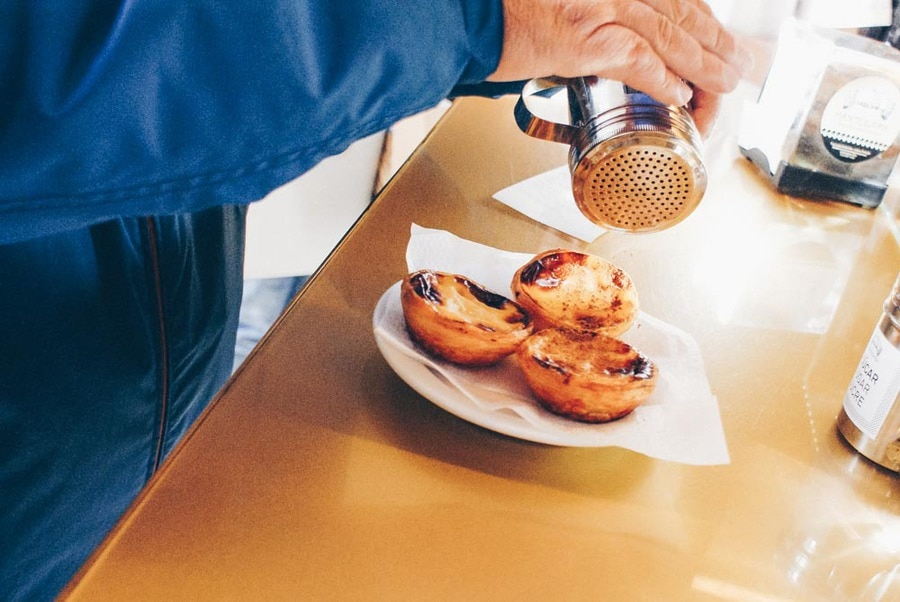
It might be sacrilege to say it but, having eaten more than my fair share of the wibbly, wobbly rich goodness that is pastéis de nata, I can honestly say that my favourites are those from Manteigaria.
Pop into the original shop in Chiado, on the corner of Rua do Loreto, or their outpost in the Time Out Market in Cais do Sodré, and get there while a tray is fresh out of the oven: a bell rings when a new batch is ready.
Of course, you can’t leave without trying the originals at Pastéis de Belém, the bakery near the Jerónimos Monastery that has been making them to a secret recipe since 1837. The queue for takeaway can stretch down the street, but here’s a tip I always pass on: head inside and sit down. The tearooms go back a long way and there’s often a table free.
Gaze up at the Jerónimos Monastery
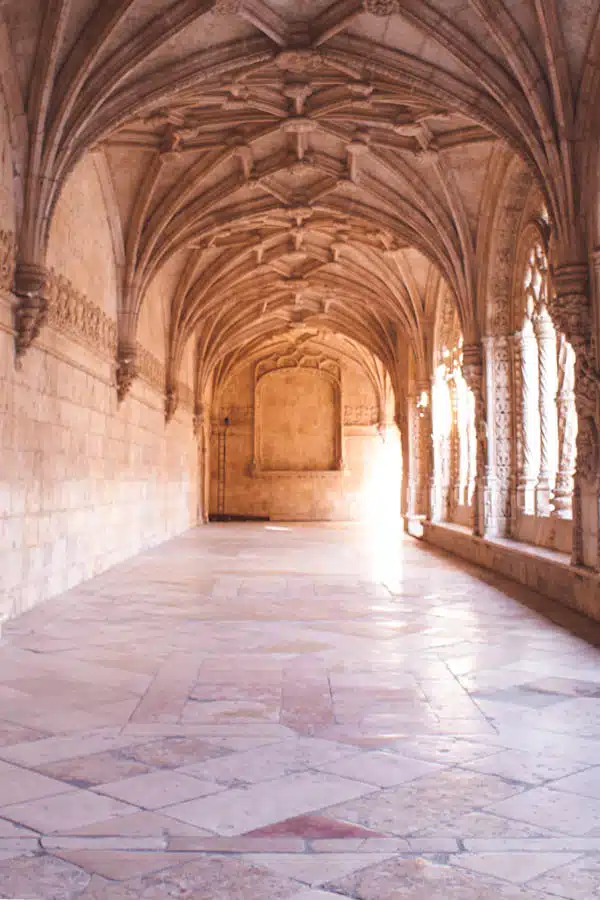
The Jerónimos Monastery lives in picture-perfect Belém and is one of the sights you shouldn’t miss during your trip to the city. I first visited as a teenager and have been back since.
Set back from the River Tagus, this monastery is a breathtaking piece of architecture and one of the few historical buildings to survive the devastating earthquake of 1755.
Building began in 1501, during the heyday of Portugal’s nautical exploration, and it was paid for largely by a tax on the spice trade. No expense was spared on its construction, a fact that’s apparent when you look at the elaborate Manueline carving, all twisted ropes, sea creatures and armillary spheres, and the sheer scale of the place.
Wander around the ornate two-storey cloister, then step into the church, where Vasco da Gama and the poet Luís de Camões are buried.
Tickets
The cloister costs €18 (timed entry, so book ahead); the church is free. Open Tuesday to Sunday, 9.30am to 5.30pm (last entry 5pm), closed Mondays.
Climb the Belém Tower

Another must-do in Belém, the Belém Tower (Torre de Belém) is a fortress that was built to guard the city against attack by sea. Completed in 1519, it’s one of the three must-see historical sights in Belém, the other two being the Monument to the Discoveries and the Jerónimos Monastery.
Learn about Portugal’s seafaring history while taking in the tower’s imposing architecture, from the carved stone rhinoceros under one of the watchtowers to the gothic loggia overlooking the river.
Don’t forget to climb the narrow winding stairs for some great views over to the Tagus, and stick to the one-way system: the staircase is only wide enough for one person at a time.
The tower reopened on 27 May 2026 after a year-long restoration, and visits now run in half-hour slots with a cap of around 900 visitors a day, so booking ahead is the way to avoid a wasted trip.
Tickets
€15 for adults, under-12s free. Open Tuesday to Sunday, 9.30am to 5.30pm (last entry 5pm), closed Mondays.
Stand beneath the Monument to the Discoveries

The Monument to the Discoveries is also located in Belém, between the Jerónimos Monastery and the Belém Tower.
Sitting on the banks of the Tagus, it’s a striking reminder of Portugal’s pivotal role in the Age of Discovery. It was erected in 1960 to mark 500 years since the death of Henry the Navigator, who stands at its prow.
The monument features 33 important figures carved into its sides, including Vasco da Gama, Philippa of Lancaster and Camões. Before you go in, look down: the giant compass rose and world map set into the pavement in front of it was a gift from South Africa.
Marvel at the outside of the monument before exploring the interior, then head to the top for panoramic views over Belém and the river.
Av. Brasília, 1400-038 Lisboa, Portugal. Open daily, 10am to 7pm from March to September and 10am to 6pm from October to February.
Stroll through the Tropical Botanical Garden
If you couldn’t tell, Belém is one of my favourite places near the city centre. And the Tropical Botanical Garden is a must-visit spot.
Founded in 1906 as an experimental garden for acclimatising plants from Portugal’s former colonies, it’s now a shady tangle of palms, dragon trees and ponds, with peacocks wandering the paths.
It makes for a beautiful afternoon walk, post-pastéis de nata, of course. It’s open daily, from 9am to 8pm between April and September and 10am to 5pm between October and March.
Graze your way round the Time Out Market

The city’s thriving food scene really comes to life at the Time Out Market in Cais do Sodré, one of the coolest places in the city.
Run by the world-famous magazine in the old Mercado da Ribeira, the market brings together a variety of the city’s most talented chefs under one roof.
Diners can choose from any one of the restaurants and bars. Grab a glass of wine or a cerveja (beer) to accompany your meal and feast at one of the communal tables.
The Time Out Market is the perfect destination for a Saturday or Sunday lunch, when you can really appreciate the vast space and the mix of locals and visitors enjoying a leisurely meal.
This is what days here are really about. Don’t miss Henrique Sá Pessoa’s counter while you’re there, and finish with a nata from Manteigaria. It’s open daily from 10am until midnight.
Get lost in Alfama
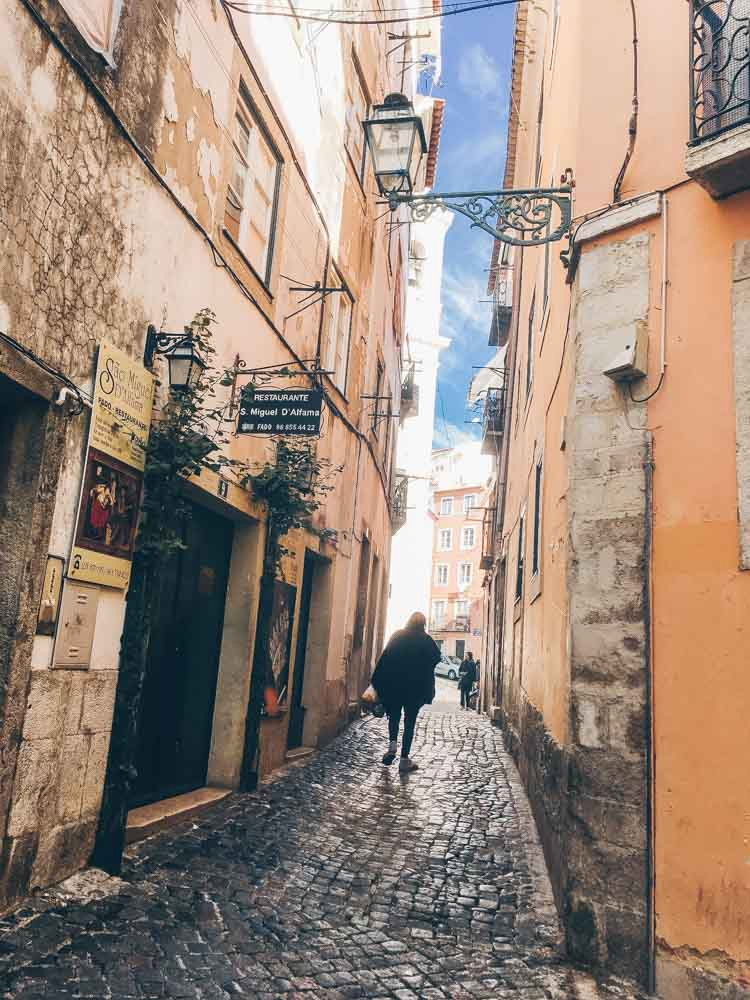
Walking around the narrow, cobbled streets of Alfama is one of the city’s not so hidden secret pleasures. My guide to Alfama has the full walk.
Discover the beautiful traditional architecture (Alfama largely survived the earthquake) and pop into a small bar or two for a taste of home-brewed ginjinha, the sour cherry liqueur.
If you want to understand the neighbourhood rather than just wander it, book a history tour. In my not so humble opinion, it’s hands-down the best way to get to know Alfama: I spent two and a half hours walking from the castle down to the cathedral with a historian, learning about Alfama past and present.
At sunset, make your way to the Miradouro das Portas do Sol for snap-worthy views of the sun setting over your new favourite city.
Don’t forget to pop in for a sundowner too: the terrace there is the perfect place to sip on a cocktail and watch as the last light fades from the day.
Walk up to the Castelo de São Jorge

The Castelo de São Jorge is the place to go for a glimpse of the Lisbon of days gone by. It’s also where my Alfama history tour began.
You might not expect to find a medieval Moorish fortress in the heart of a European capital, but then again, this is a city full of surprises.
The hilltop fortress is a reminder that the city, like much of Portugal, was under Moorish rule: the fortress served as a lookout and a base for defending it. The castle has seen the city change drastically since it was built in the 11th century, but still sits serenely, boasting fabulous views today.
Walk the ramparts, climb the towers and look for the peacocks that strut around the courtyards. It’s open daily from 9am to 9pm between March and October and 9am to 6pm between November and February.
Visit Lisbon Cathedral

Lisbon Cathedral, the Sé, is the oldest church in the city and one of its most important landmarks.
Tucked away between Baixa and Alfama, the cathedral has been a central part of the city’s religious life since building began in 1147, the year Afonso Henriques took the city from the Moors.
The fort-like exterior is dramatic and imposing, a pale stonework structure that catches the late evening glow of the sun and reflects its tawny hues as the day ends. Inside, the cloister has been excavated to reveal layers of the city’s past, from a Roman street to the remains of an Islamic-era building.
Largo da Sé, 1100-585 Lisboa, Portugal
Read the history in Praça do Comércio

Praça do Comércio is undoubtedly one of the city’s most iconic spots.
The grand facades of the buildings and symmetrical architecture around this gorgeous square symbolise the city rising from the devastation of the earthquake and tsunami that razed it to the ground in 1755.
On a walking and tasting tour that started here, I learnt why it looks the way it does. The royal palace stood on this square until the earthquake destroyed it. The Marquis of Pombal rebuilt the lower town on a grid of wide, straight streets, and the square was rebuilt in the hope that the king would move back. He never did.
The streets of the Baixa behind it were named after the trades that worked them (look out for Rua do Ouro and Rua da Prata, the streets of the goldsmiths and silversmiths), and the plain, sturdy Pombaline buildings were some of the first anywhere designed to withstand earthquakes.
Not only is the square one of the top places to see; you can also grab some of the best views of the city from the top of the Arco da Rua Augusta, the square’s elaborate centrepiece.
Step inside the scorched Church of São Domingos

Churches come ten a penny here, but the Church of São Domingos isn’t just any church.
The church tells a tale of historical events, tragedy and folklore bound together in an unforgettable interior.
The tale starts in 1506, when a massacre of the city’s Jewish population began on the steps of the church. It continues to the 1755 earthquake when, the story goes, the destruction stopped just short of its doors, and on to 1959, when a huge fire gutted the interior.
Locals believed that the fire was a punishment for the massacre centuries before, and the interior was left in its burnt-out state as a reminder of the tragedy. The scorched pink stone and cracked columns make for a haunting interior.
My guide on the tasting tour added another layer to its story: for a long time it was one of the few churches in the city where enslaved Africans could worship, and African priests said mass there too.
Wander into Mouraria, the birthplace of fado

The eclectic and international Mouraria neighbourhood (the old Moorish quarter) doesn’t find its way onto many visitors’ itineraries, a shame as the winding streets and colourful buildings show a different side of the city. My tasting tour turned left out of São Domingos and straight into it. My guide billed Mouraria as the most eclectic neighbourhood in the city, in terms of both class and race.
Along the way came the tastings: cheese from São Jorge in the Azores, aged for at least four months and served with quince marmalade; ham from the free-range Bísaro pigs of the north, fattened on chestnuts in winter; and a seven-year-old tawny port, still red but drier and darker than a ruby.
Mouraria is best known as the birthplace of fado, the soulfully tragic music style emblematic of the city.
There’s a proliferation of fado houses in the city, but Mouraria is home to one of the best, Maria da Mouraria, in the house where Maria Severa, a pioneer of fado, once lived.
Hear live jazz at the Hot Clube de Portugal
For something other than fado after dark, there’s the Hot Clube de Portugal, one of the oldest jazz clubs in Europe, founded in 1948.
I first went at 17, a slightly pretentious teenager with a taste for jazz, and on every trip since it has been where I’ve wanted to spend my evenings.
The club’s famous basement on Praça da Alegria was closed by the city in 2023 over the state of the building, and the city has since funded works for its return to number 48. In the meantime, the club has kept putting on concerts at other venues around town, so check its programme at hcp.pt for what’s on and where before you go.
Browse the Feira da Ladra flea market
I love a good market, especially a flea market. One of the best I’ve ever visited is the Feira da Ladra, the city’s premier flea market in the Campo de Santa Clara.
The market runs every Tuesday and Saturday, from early morning until just after lunch, and offers you a range of really cool gems to browse and part with your hard-earned cash. The first mention of a Feira da Ladra dates back centuries and you can see why it’s stood the test of time as you browse the awesome range of stalls.
There’s everything from artisanal homemade goods to second-hand books, upcycled clothes to militaria. That’s not to mention the antique furniture, homeware, accessories, records and CDs. Whatever you’re after, you’ll be sure to find a bargain here.
The market spreads out behind the São Vicente de Fora monastery, so it’s an easy pairing with André Saraiva’s mural and the National Pantheon.
Eat the best steak in town at Sala de Corte


Sala de Corte in five words? The best steak in town. Service is slick, the interior snazzy and the steaks, aged and seared over a very hot grill, really are something else.
I’m not alone in thinking so: in September 2026 it came in at number 50 on the European edition of the World’s 101 Best Steak Restaurants list. It’s in Cais do Sodré, a short walk from the Time Out Market, and it’s small, so book.
If you’re after a full fine-dining blowout instead, José Avillez’s two-Michelin-star Belcanto in Chiado serves one of the most celebrated tasting menus in the country, at around €295 a head before wine. It opens Tuesday to Saturday and books up well ahead.
Lunch at the Taberna in Bairro do Avillez

You can barely move an inch in Chiado without coming across one of local chef José Avillez’s much-talked-about restaurants.
I’d never have found Bairro do Avillez without Catarina, the same PR who sent me to the Saraiva mural, and I’ve been grateful for the tip ever since.
The Taberna, at the front of this “neighbourhood” of restaurants on Rua Nova da Trindade, strikes the right balance between high-end and casual, with many of the chef’s signature dishes in a relaxed setting.
It serves continuously from noon until midnight, which makes it a lifesaver for a late lunch. Order the croquetes and a prego (the classic steak sandwich) and you won’t go far wrong.
Feast on seafood at Cervejaria Ramiro

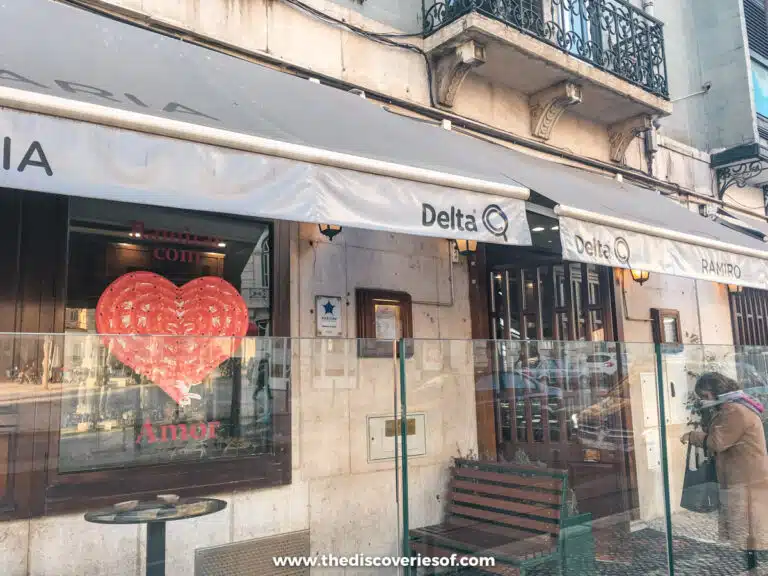
Cervejaria Ramiro is a serious contender for the title of the best seafood restaurant in the city, or perhaps one of its best restaurants full stop. It’s been feeding the city’s happy residents since the 1950s.
Bourdain named it as one of the must-dos here, and if it was good enough for the late culinary maestro, it’s certainly good enough for me. Order the oysters, the clams and the garlicky prawns, then finish with a prego steak sandwich for dessert (yes, you read that right).
Watch the sunset from a miradouro or a rooftop
The city’s seven hills give it a sunset view on almost every corner, and the miradouros (viewpoints) are where locals gather to watch it.
Beyond Portas do Sol in Alfama, head to São Pedro de Alcântara at the top of the Glória funicular for a view across to the castle, or climb to the Miradouro da Senhora do Monte above Graça, the highest of them all, for a panorama that takes in almost the whole city.
If you’d rather have a cocktail in hand, the rooftops are the answer. My own rooftop drink was at Rio Maravilha, the quirky fourth-floor bar at LX Factory, where the caipirinha went down far more easily than it should have and the view of the 25 de Abril Bridge was worth the climb. It has been listed as closed recently, so check its social channels before you head over.
Two other rooftops are worth knowing about. Topo, on the sixth floor of the shopping centre on Praça Martim Moniz, has big views over the castle and Mouraria, and opens from 5pm, Tuesday to Saturday. Park sits on the roof of a multi-storey car park on Calçada do Combro: you go up in the car park lift and come out on a garden terrace above Bica.
Barhop along Pink Street
The city’s Pink Street is the place to go if you’re looking for a good time. Rua Nova do Carvalho in Cais do Sodré was once a rough-and-ready sailors’ haunt, until it was painted bright pink in the early 2010s, and it’s now lined with bars and clubs that are always full of people looking to let loose.
The best way to experience Pink Street is to simply wander up and down the street, checking out the different venues.
If you’re looking for a place to start your night, Pensão Amor is a cocktail bar in a former brothel, all velvet and burlesque decor. Later on, Musicbox, tucked under the arches, keeps going until the early hours.
Ride Tram 28 across the old city
The yellow Tram 28 rattles from Martim Moniz up through Graça, down through Alfama and the Baixa and on through Chiado and Estrela to Campo de Ourique, squeezing through streets so narrow that you could almost touch the walls.
The carriages are the old wooden “remodelado” trams, and the ride is one of the cheapest sightseeing tours you’ll find: a ticket bought on board costs €3.30, or it’s included in a 24-hour public transport pass and the Lisboa Card.
The trick is timing. Board at Martim Moniz first thing in the morning, before the queues build, and keep your bag in front of you, as the crowded carriages are a favourite with pickpockets.
Take in the Carmo ruins and the Santa Justa lift


Though technically two separate sights, the Carmo ruins and the lift are right next to each other, so it makes sense to see them at the same time.
The Elevador de Santa Justa is a beautiful wrought-iron structure designed by Raoul Mesnier du Ponsard as both a functional lift and an architectural flourish, and it has been carrying people up from the Baixa since 1902. Step inside and watch as the city unfurls before your eyes as it climbs to the top.
Disembark and you’ll immediately see the Carmo Church and Convent ruins.
The church was originally built in the 14th century but was irreparably damaged in the earthquake. It was left standing, roofless, as a reminder of the damage that was caused and the lives that were lost that day, and now houses a small archaeological museum.
It’s eerily beautiful and it’s not difficult to imagine its grandeur before it was damaged.
Top Tip
If you want to climb to the very top of Santa Justa (I personally don’t think it’s necessary), make sure you arrive early or you’ll be in for a long queue. A return ride costs €6.20 and is included in the 24-hour transport pass.
Admire the art at the Gulbenkian Museum
Love art? The Museu Calouste Gulbenkian should go straight to the top of your list, particularly if you’re visiting in the winter months. Every European capital has its standout museum, and this is Lisbon’s.
Calouste Gulbenkian was an Armenian oil magnate who left Turkey in 1896, lived in London and Paris and settled in Lisbon during the Second World War. He died in 1955, leaving behind a collection of more than 6,000 pieces, some dating back more than 5,000 years to Ancient Egypt.
Lovers of the old masters shouldn’t miss pieces by Rembrandt and Rubens, while fans of impressionism should make a beeline for Manet’s Boy Blowing Bubbles, as well as works by Monet, Degas and Renoir. Save time for the dazzling room of Lalique jewellery, too.
The Founder’s Collection reopened on 18 July 2026 after a major renovation, and the modern art centre (CAM) shares the same leafy gardens. A museum ticket covering both costs €16, entry is free on Sunday afternoons from 2pm, and one piece of advice: don’t visit on a Tuesday, when it’s closed.
Hunt for azulejos at the National Tile Museum and Cortiço & Netos
You’ll see azulejos (painted tiles) on facades all over the city, and two places help you understand them.
The Museu Nacional do Azulejo, in the former Madre de Deus convent east of the centre, traces five centuries of Portuguese tiles, and its highlight is a 23-metre tiled panorama of the city before the 1755 earthquake. It has been undergoing a major rehabilitation due to finish in the second half of 2026, so check what’s open before you go.
Then shop the vast (and beautiful) collection on offer at Cortiço & Netos, now on Rua Maria Andrade near Intendente.
They have a fantastic selection of original and hard-to-find industrial tiles, many of which were bought in bulk by the owners’ grandfather from factories that were closing down between the 1960s and the 1990s. You can also create your own azulejo mosaic designs from their offcuts.
Escape to the Jardim Botânico and Estufa Fria
The city is stacked with gardens and green spaces, some of which I’ve covered already in this guide. Two more are worth seeking out when the streets get hot.
The Jardim Botânico de Lisboa, run by the university’s natural history museum in Príncipe Real, is a terraced garden of palms, cycads and a grand avenue of trees, with a greenhouse of tropical plants and a small lake that’s a great place to sit and take in the garden. It keeps the same hours as its sister garden in Belém.
One of the most beautiful, and best-kept, secrets in the city is the Estufa Fria, a garden under a slatted roof in Parque Eduardo VII. There are three distinct spaces here, a cold greenhouse, a hot greenhouse and a sweet greenhouse, each housing plants in their ideal climate, from ferns and azaleas to coffee, cacti and aloe.
There are also waterfalls, sculptures, places to sit and ponds where you can just relax and let the sights and sounds wash over you. Entry is free with the Lisboa Card.
Take a day trip to Sintra
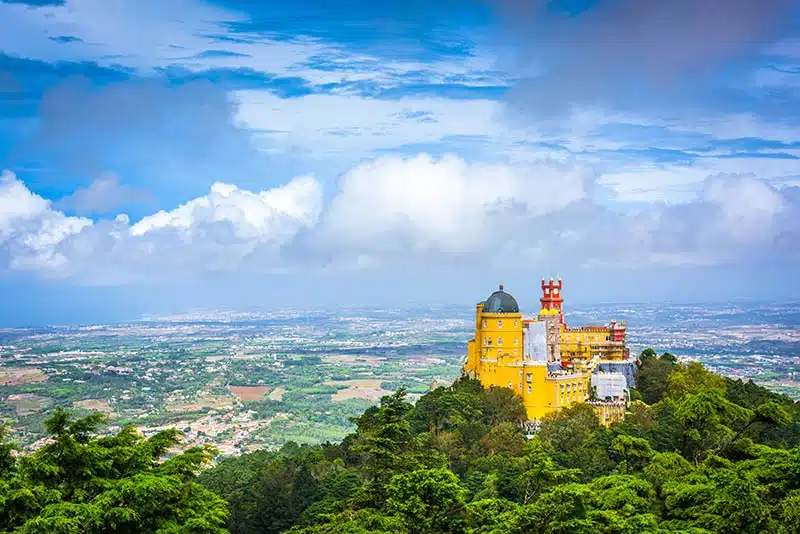
Sintra is one of the most beautiful towns I’ve ever visited. If you have a day to spare, I highly recommend taking a trip out to this fairytale town.
The best way to get there is by train from Rossio, which is one of my favourite stations anywhere, simply because its horseshoe-arched facade is so striking. Trains leave every 20 minutes or so and take about 40 minutes.
Once you’re there, make sure you wander around the old town: it’s full of winding streets, pretty squares and gorgeous buildings.
A definite highlight is the Palácio Nacional de Sintra, easy to spot by its two giant conical chimneys. It was once used as a royal residence and is now open to the public. Inside, you can explore a range of rooms, each with its own unique style and decor, as well as paintings, furniture and tapestries.
Then there’s the Pena Palace, perched on a hilltop above the forest. I was enamoured with its vivid yellow walls before I’d even clapped eyes on them in real life. Entry is by timed ticket, so book in advance.
Do
Book this Sintra and Cascais day trip from Lisbon, which adds Cabo da Roca and Cascais to Pena.
Swap the city for the beach at São Pedro do Estoril
About half an hour by train from Cais do Sodré is Praia de São Pedro do Estoril, one of the most popular beaches along the Estoril coast.
A popular spot with visitors, this is arguably one of the most beautiful beaches on this stretch, and one that is less busy than it used to be, with surfers having largely gravitated away to other breaks.
There isn’t much in the way of sights here, yet for anyone wanting to lie back in the sun, catch some rays and enjoy the incomparable experience of chilling on the beach, this is a quick, easy and accessible option.
The train journey is gorgeous too, as it follows the bank of the River Tagus to the estuary where it meets the Atlantic Ocean.
Tips for your trip
- Pack sensible shoes. This is the city of seven hills, which means you’ll be doing a lot of walking up and downhill on slippery cobbles. Flip-flops and sliders probably won’t do it if you’re planning to walk extensively.
- Sort out your transport card. Buy a reusable Navegante card (€0.50) at any metro station and load it with Zapping credit or a 24-hour pass (€7.25 for the metro, buses, trams and lifts); tickets bought on board trams are far pricier. If you’ll be doing a lot of sightseeing, the Lisboa Card (from €29.45 for 24 hours) adds free entry to the Jerónimos Monastery, the castle and dozens more.
- Book ahead and watch your bag. While some restaurants serve on a first-come, first-served basis, if there’s somewhere you’re desperate to eat I advise you to try and book in advance, as places fill up quickly. Pickpockets work the busiest areas and the trams, so keep valuables out of sight. For the rest of the country, see my Portugal travel tips.
- When to go. Summer is the busiest time, with high season and hot weather. If you prefer milder weather, yet still with plenty of sunshine and fewer crowds, then I suggest visiting during April and May, or September and October. My guide to the best time to visit Portugal goes month by month. Allow at least three or four days for the city itself, plus a day for Sintra. Hotels add a city tourist tax of €4 per person per night.
- Where to stay. Chiado is one of my favourite areas and a great base, with Baixa and Bairro Alto on the doorstep. For a splurge, the Four Seasons Hotel Ritz has been hosting the city’s finest since the 1950s, and it’s my favourite bolthole when I want to treat myself. Here’s my full review of the Four Seasons Hotel Ritz Lisbon. In Chiado itself, the Lisboa Pessoa Hotel, inspired by the poet Fernando Pessoa, is a great mid-range option (book a room with a terrace if you can). For more areas, see my guide to where to stay in Portugal.
So there we are: the best things to see, eat and do in the city. To fit them into a day-by-day plan, see my 3 days in Lisbon itinerary. I hope you have a brilliant trip.
Map
Read next
- Visiting LX Factory, my favourite place in Lisbon
- Visiting the Jerónimos Monastery in Lisbon
- Belém Tower: what you need to know before you go
- A practical guide to visiting the Monument to the Discoveries
- André Saraiva’s street art in São Vicente de Fora
- Cervejaria Ramiro: what to order and how to get in
- The best restaurants in Lisbon
- The perfect Portugal itinerary
- The best things to do in Portugal
Love this? Save and share on Pinterest
Discover the top things to do, insider tips and hidden gems in our Portugal Travel Guides.
Read the guides →






Thanks for sharing, I loved Portugal and can’t wait to go again in a few months.
It’s such a cool place. I’ve been to Porto but not really anywhere else – time to explore!