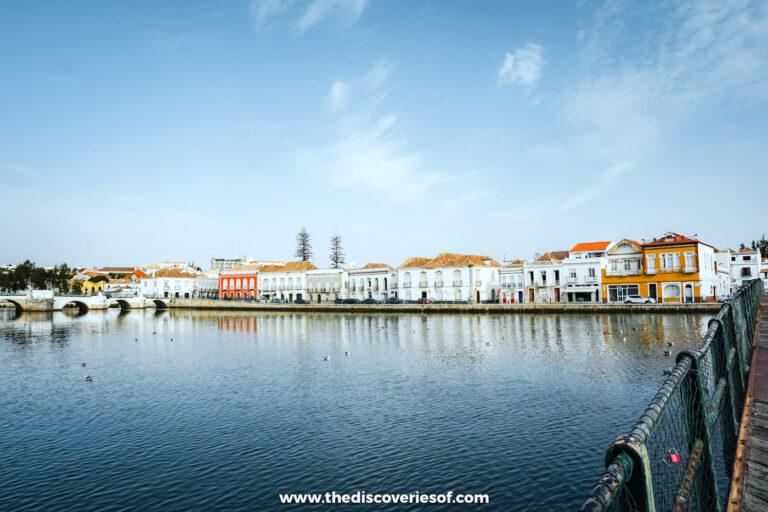
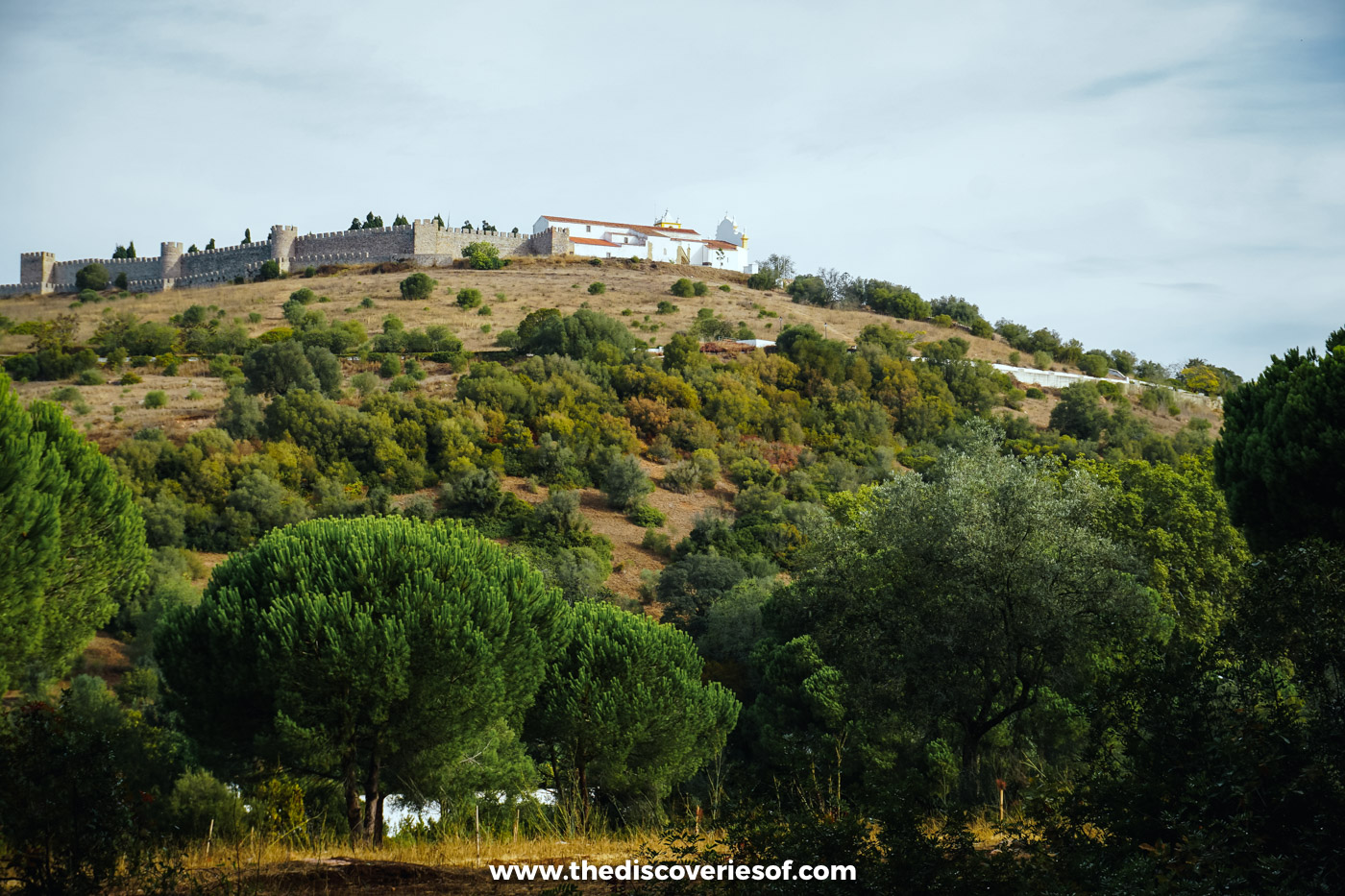
Portugal’s Algarve is blessed with more than its fair share of spectacular beaches, from coves tucked beneath looming cliffs to miles and miles of island sand. A few of the most famous now come with new rules, a closed staircase or a boat ride attached, so here’s where to go and how to get there.
The Algarve: just the words conjure up sun-drenched days, azure skies and gorgeous beaches.
During my first visit to the region, I fell head over heels for the near-unlimited opportunities for beach-hopping, so much so that I always try and slip in a cheeky trip every year to go and discover a few more.
I’ve cycled out to the Ria Formosa from Quinta do Lago and taken the boat to Ilha Deserta in the east, and hired a villa in Lagos in the west, where I sent my drone up over the cliffs and coves. My week in the Algarve itinerary strings both trips together.
You see, the Algarve’s beaches are nothing short of spectacular: along the south coast, sheltered coves hide beneath honey-coloured cliffs and long barrier islands shelter the lagoons, while the west coast faces the raging Atlantic head on.
The result is a diversity of beaches rarely found in one country, never mind in one region.
Looking for the best beaches in the Algarve? I’ve got you covered.
PS: Looking for more Portugal inspiration? Check out my pick of Cool Places to Visit in Portugal and Portugal Itinerary
The best beaches in the Algarve
Praia da Coelha

Praia da Coelha is one of the quieter beaches in the Algarve: it’s very unlikely that you’ll need to elbow anyone to find your stretch of sand here.
Perched on the coastline between Albufeira and Armação de Pêra, about 5km west of Albufeira’s centre, it’s hidden enough that you have to really know it’s there in order to find it.
That’s a good thing, because once you’ve made your way along the path through the scrub from the car park (it’s 400m or so) and down the wooden steps to the beach, you’re confronted with a hidden treasure you’ll want to keep all to yourself.
The cove is small, so get there early in summer. There’s a seasonal beach bar and parasols to rent, lifeguards keep watch in the bathing season and it flies the Blue Flag. Leave the flip-flops at home for the walk in: the path is part earth, part steps.
Ilha Deserta (Praia da Barreta)

A deserted island? Just a short boat ride away from Faro? Complete with its own 7km stretch of golden sands? I’d forgive you if you thought that the beach at the Ilha Deserta was a heady figment of my imagination. I assure you it is not.
The island is a part of the gorgeous Ria Formosa Natural Park in the area between Faro and Quinta do Lago. All well and good, but it is the beach you’re interested in, and for good reason.
I think this is pretty much my favourite beach in the Algarve and certainly the best beach near Faro, if only because it is so large and wild. As you’d expect from a beach that big, it never gets packed, even in high season, and a stretch on its western side is one of Portugal’s official naturist beaches.
Boats run from the Portas do Mar pier in Faro all year: the ferry takes about 45 minutes and costs €5 each way, and the speedboat shuttle does it in 15 minutes for €10. Once you’re there, a boardwalk leads across the dunes towards Cabo de Santa Maria, the southernmost point of mainland Portugal.
If you do visit, I would recommend hopping on one of the eco-tours that take you on a fascinating ride through the marshlands of the natural park, spotting birds and marine life as you go. I went out on a small catamaran with a nature guide from Animaris, and I was lucky enough to see a few dolphins on the way.

Once you’re on the island, eco-friendly Estaminé, the island’s only restaurant, is one of the best in the region. It was rebuilt after a fire in 2021, runs on solar power and opens all year: go if you like your seafood with a side of fantabulous views, and book ahead in summer. Hands down one of the best things you can do in the Algarve.
Praia da Quinta do Lago
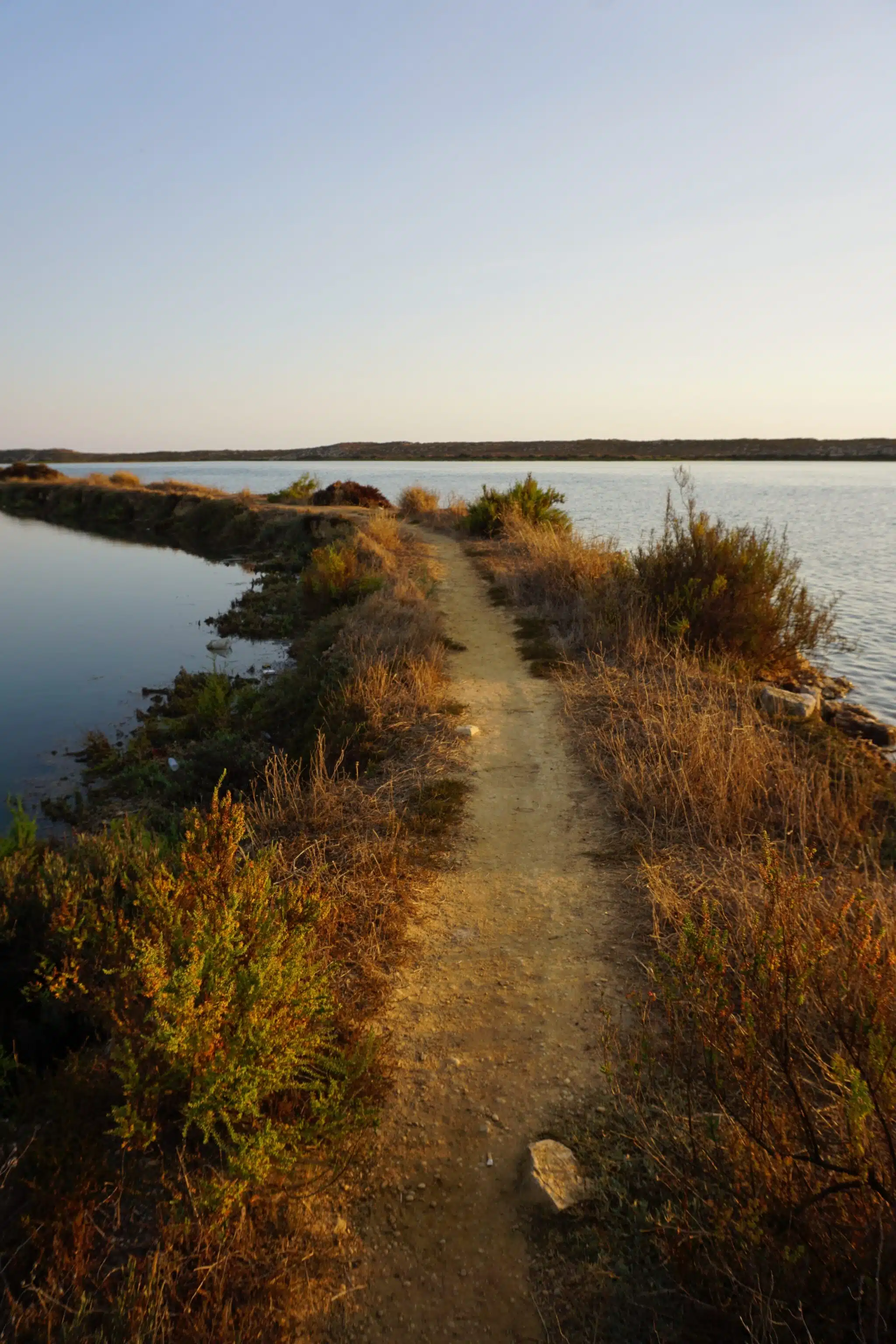
This was my beach on my October stay at Four Seasons Fairways. It’s a short bike ride from the villas, then a walk over a wooden footbridge, about 300m long, that crosses the lagoon of the Ria Formosa to a long, clean beach backed by big dunes.
It’s blissfully peaceful, at least until one of the planes from Faro airport, just round the corner, takes off overhead.
Locals sometimes call it Praia do Gigi, after the seafood restaurant at the end of the bridge. The sea here is usually calm, there are lifeguards in the bathing season and it flies the Blue Flag.
Praia da Marinha

Search for any recommendations for the best beaches on this coast and I’ll bet that Praia da Marinha features on every. single. one.
Figuring out why isn’t exactly rocket science: ensconced between golden cliffs and crystal clear waters, it looks every inch the part of the dramatic beachside diva it’s reputed to be.
To get to the beach itself, you need to head down a steep wooden staircase of around 150 steps from the clifftop. At low tide you can wander between the rock stacks to smaller coves and rock pools, but watch the tide as you go or you’re certain to get soaked (or stranded at the far end).
Don’t worry though, drying off is just a matter of stripping down to your swimmers, flopping down and enjoying the sunshine: not exactly a hardship.
There are toilets and a snack bar at the top but nothing on the sand, so bring water and shade. The small free car parks fill within an hour or two of sunrise in July and August. The beach is also the eastern end of the Seven Hanging Valleys Trail, a 5.7km clifftop path that heads west over Benagil Cave to Praia de Vale de Centeanes.
Praia da Albandeira

Praia da Albandeira might not be quite as well-known as its neighbours Praia da Marinha and Benagil sea cave but trust me, this is one secret that you will want to be in on.
It might be small, but it punches well above its weight when it comes to natural beauty.
There are two sides to the beach, the left bigger than the right, and a short walk along the cliffs brings you to the Arco de Albandeira, a striking natural arch leading from the cliffs into the sea.
At low tide, a tunnel through the rock leads to tiny Praia da Estaquinha next door. Both coves all but disappear at high tide, so check the tide times before you go. The last stretch of road is single track, and from the car park a paved path and steps lead down past a beach bar to the sand.
Praia de Vale Figueiras

Many of the gorgeous beaches on this list are well-known destinations, meaning that when the sun shines, they can get rather busy.
Standing in complete contrast to those popular beaches, the Praia de Vale Figueiras, south of Aljezur on the west coast, is one of the region’s secret gems. Isolated and windswept, it comes with bagfuls of views and a huge swathe of enticing sand.
Be warned, you’ll need to set off on a long unpaved road to get there, and there are no buildings or facilities anywhere near the beach, so be sure to bring plenty with you. There are no lifeguards either, and there’s a strong undertow, so it’s a beach for surfers, walkers and sitting back to soak up the view rather than a lazy swim.
Benagil sea cave

Benagil Cave’s large domed arch looks too dramatic to be believed: a rocky igloo complete with a small hole at the top through which the sunlight streams down onto the sand below.
You can no longer step onto that sand, though. Since August 2024, nobody is allowed to land on the beach inside the cave or swim in from the nearby Praia de Benagil. The only way in is on a licensed boat trip or a guided kayak or paddleboard tour, and the visits are short: about two minutes for a motorboat and up to eight minutes for a paddling group.
Go early in the morning, when the sea is calmest and the boats are fewest (it does get very busy as the day progresses).
Want to take the adventurous route? Check out this guided kayaking tour to the caves. Renting a kayak to paddle in on your own isn’t allowed. Or see it for free from the clifftop path, which crosses right over the fenced hole in the roof.
I once got a much closer look than I’d planned, chartering a boat into the cave to rescue a drone I’d flown through that hole. The whole sorry tale, and everything you need to know about the rules, is in my guide to visiting Benagil Cave.
Praia do Carvalho
A short way west of Benagil along the Seven Hanging Valleys Trail, towards Carvoeiro, Praia do Carvalho is reached through a short, narrow tunnel cut by hand into the cliff, which opens out onto a tiny cove framed by rock stacks and grottoes.
Park by the dirt road at the start of the path and follow it to the tunnel. There’s no bar or restaurant, so bring water, shade and snacks; you’ll find all three in Carvoeiro, a short drive away.
Praia do Barril
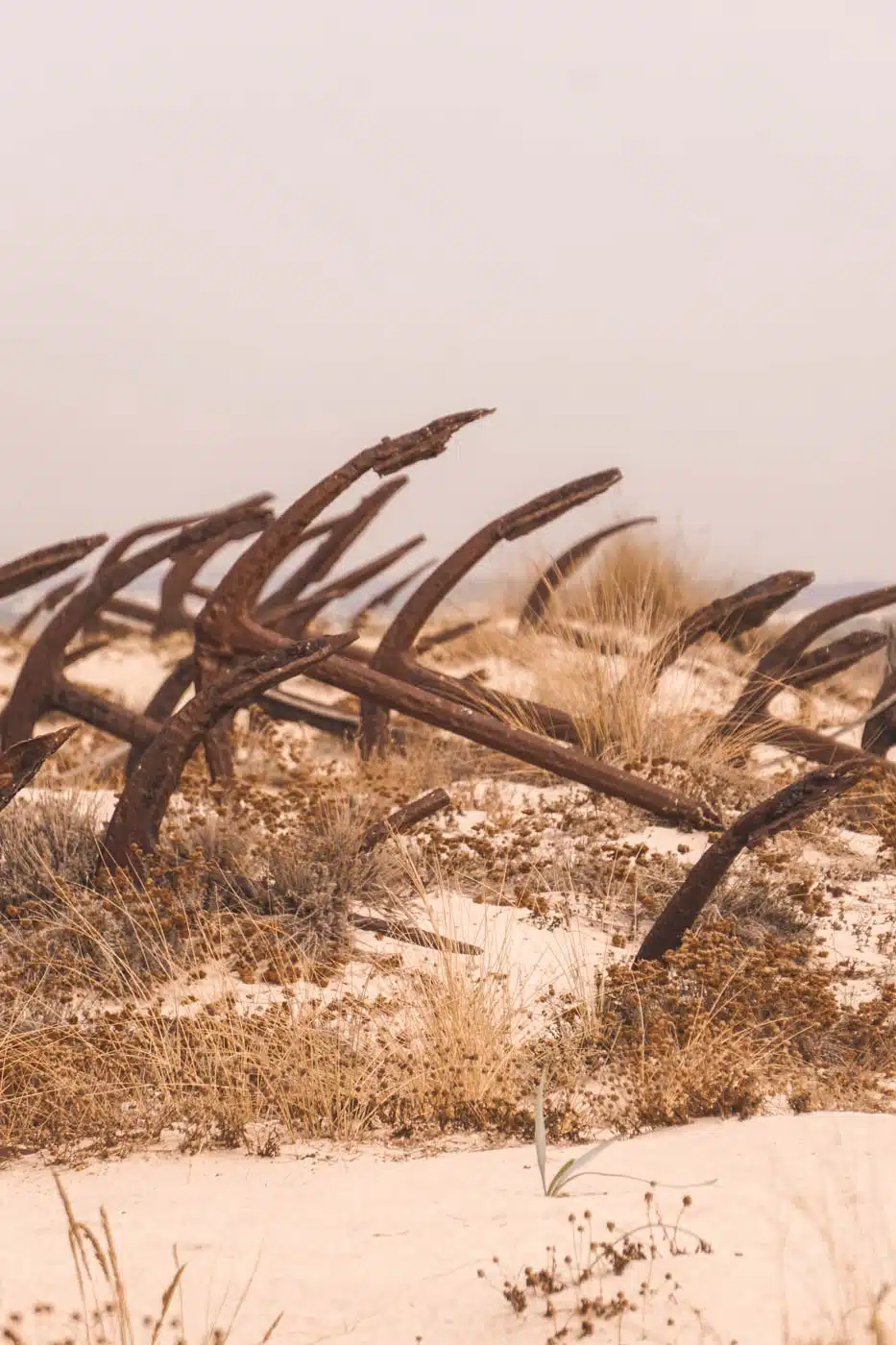
Praia do Barril sits on another island that forms part of the Ria Formosa Natural Park, this time in a section near postcard-perfect Tavira.
I loved it here: the beach is wild and rather windswept, and the short hop out on the little narrow-gauge train is half the fun.
It’s famed for the quirky Anchor Cemetery: more than 200 old rusting anchors partially buried in the sand, left as a reminder of the area’s once-thriving tuna fishing industry.
Move beyond that and you will find one of the nicest nudist beaches in the Algarve: Praia do Homem Nu, reached along the sand from Barril, is one of Portugal’s official naturist beaches, with soft sands and plenty of opportunity for embracing the sun in the buff. Back at Barril, there are restaurants and lifeguards in the bathing season.
Getting to Praia do Barril is a mini-adventure in itself. From Pedras d’El Rei, cross the footbridge over the lagoon, then either walk the path across the marshlands (about 1.5km) or hop on the twee mini train that carries visitors to the beach for about €2.
Praia do Camilo

Wind your way down the 200-plus wooden stairs that form the passageway to Lagos’ most striking beach, Praia do Camilo.
Or at least, that’s how you would normally get there. In 2026 the Portuguese Environment Agency closed the staircase after winter storms damaged the cliff it stands on, and it was still shut in August with no date set to reopen, so check before you go. For now you can admire the view from the top, where the restaurant and car park are open (I watched the sun come up over the cove from up there), and see the cove from the water on one of the boat or kayak trips around Ponta da Piedade.
It’s often named as the best beach in the Algarve, so don’t expect it to be at all deserted once the stairs reopen. With views like these, you can well afford to snuggle up a little closer to your beach neighbour.
Be warned, thanks to the surrounding cliffs, the beach itself is small: if there’s no space or you just want to have a little extra breathing room, head through the tunnel to the quieter beach next door. And for sundowners, O Camilo on the clifftop has the view.
Praia Dona Ana
Lagos’ other famous cove sits about 1.8km from the old town, at the bottom of a staircase of about 100 steps, with golden rock stacks standing in the shallows. Condé Nast Traveller named it the best beach in the world in 2016, so it’s no secret: come early.
There’s a restaurant, sunbeds and parasols to rent, and a car park for about 70 cars, or you can walk from the centre in half an hour. In the bathing season, you can’t carry surfboards, paddleboards or kayaks down the stairs here (or at Camilo) between 9am and 7pm.
Praia de Odeceixe

Praia de Odeceixe sits right on the cusp of the Algarve, just on the right side of the river that forms the border between the Algarve and its much quieter northern neighbour the Alentejo.
Be warned, as this is the Atlantic coastline the waters can get rough and the waves can get big. Hence the popularity with surfers. Like things a little tamer? Simply head to the beach that stretches inland along the river, where the water is calm enough for children and canoes.
The horseshoe of sand is about 330m long, with lifeguards and sunbeds in the bathing season, and in 2012 it was voted one of the seven wonders of Portugal in the beach category.
I’ve long been a fan of this stretch of the Atlantic coastline as it’s jam-packed with incredible views, and the beaches aren’t too shabby either. If you’re up to the challenge, they form a part of the gorgeous Fishermen’s Trail on the Rota Vicentina walking route.
Praia da Arrifana
Further south on the same wild coast, near Aljezur, Arrifana is a sweeping bay below high cliffs, reached by a winding road down to a tiny fishing harbour.
It’s one of the west coast’s best-known surf spots, with surf schools working for much of the year, beginners included. Climb to the ruins of the fortress built on the headland in 1635 for the view over the bay and the Pedra da Agulha, a needle of rock rising out of the sea at its southern end.
Praia da Ilha de Tavira
You won’t catch me on a naturist beach, though I thought I would include the Ilha de Tavira, as its western end is home to Praia do Homem Nu, one of Portugal’s official nude beaches (and the best… so I’ve heard).
Whilst that’s not for everyone, the island’s main beach, opposite Tavira itself, is a long, popular stretch of sand where you definitely don’t need to strip down. There are plenty of restaurants and cafes by the landing stage, and clothes are very much required at these.
It’s worth exploring the island, as it is filled with an array of wildlife, including the chameleons that live in the Ria Formosa’s pine woods.
Ferries cross from Tavira town (about 20 minutes) and, more cheaply, from the Quatro Águas pier (about 10 minutes), roughly hourly out of season and every half hour or so in summer.
Praia de Manta Rota

Situated at the eastern end of the Ria Formosa, between Cacela Velha and Monte Gordo, this beach is easily one of my favourites, though it’s not exactly a secret as it attracts plenty of visitors. The coast fills with people early on in the day so you might want to set your alarm to nab the best spot on a sunbed (which you can rent, FYI, for about €12 a day).
Praia de Manta Rota becomes a mammoth beach during low tide, so expect to walk quite the distance before you make it to the sea. The upside is that you’re pretty much guaranteed space on the sand.
Boardwalks lead through the dunes from the free car park, the water is shallow, calm and warmer than on the west coast, and there are lifeguards, restaurants, toilets and showers. For a quieter patch, walk west along the sand towards Cacela Velha.
Praia da Fuseta

Nestled on Ilha da Fuseta in the Ria Formosa, Praia da Fuseta is a quieter beach that’s perfect if you like the idea of chilling out in peace. Yes, please.
Getting to this beach is simple: a boat from the village pier takes about 10 minutes, with frequent crossings in the bathing season and through October. Some people wade across at very low tide, but it isn’t recommended. From November to April, the only boat goes to neighbouring Armona, which leaves you with a long walk along the sand. The sea is mainly calm, especially at low tide and at the island’s eastern end.
This is a great beach for families especially. There are bars, sunbeds and lifeguards near the landing stage in the bathing season, and plenty of restaurants back in the village to make a post-swim pit stop.
Praia da Falésia
If you’re after a showstopper, Praia da Falésia is it: almost 6km of sand running east from Albufeira towards Vilamoura, below cliffs that shift from deep red to white, topped with green pines. Catch the cliffs glowing in the late afternoon sun: it’s one of the best experiences in the Algarve and one I recommend you make the pilgrimage for.
This beach is located east of Albufeira, and it’s easiest to reach by car: there are car parks a few hundred metres from the sand at Açoteias and by the Alfamar resort.
The beach is blanketed by a rugged and rocky landscape, and the stretch of near-white sand is ample enough that you should manage to find a space to chill out. There are restaurants and toilets, and lifeguards in summer.
Praia da Rocha
One of my favourite beaches in the Algarve, Praia da Rocha is the primary beach for Portimão and so it has exploded in popularity in recent years.
Stretching for about 1.25km from the Fortaleza de Santa Catarina at the mouth of the Arade river to the rocks of Três Castelos, this beach is one of the biggest in this guide. In other words, you shouldn’t have any difficulty finding yourself a patch of sand to recline on.
That said, this patch of beach can get incredibly lively during the summer months. A boardwalk of more than 1km runs along the sand, lined with cafes and restaurants, and the clifftop avenue above has bars, clubs and even a casino. There are lifeguards and it flies the Blue Flag.
Praia dos Três Irmãos
At the eastern end of the long sweep of sand at Alvor, Três Irmãos takes its name from three rocks on the beach (the “three brothers” of a local legend about three fishermen).
At low tide you can pick your way through the rocks to the arches and coves of Praia da Prainha next door. It’s an easy beach to get to, with restaurants and the usual facilities, and a quieter alternative to Praia da Rocha just along the coast.
Watch the flags, the tides and the cliffs
Lifeguards are only on duty in the bathing season, which runs from about June to September on most of the coast (from mid-May to mid-October in Albufeira), so take extra care outside it. Check the tide times before heading to the small coves around Lagoa, which can all but vanish at high tide, and stay back from cliff edges and the foot of the cliffs: rockfalls happen, and storms can close a staircase overnight.
Map
Read next
- The best things to do in Portugal
- The perfect Portugal itinerary
- Lisbon city break guide
- A villa at Four Seasons Fairways in Quinta do Lago
- The best things to do in the Algarve
- How to visit Benagil Cave
- Tavira travel guide
Love this? Save and share on Pinterest
Discover the top things to do, insider tips and hidden gems in our Portugal Travel Guides.
Read the guides →