
Asia
South Korea travel guide
Walk into a Joseon palace for free in a borrowed hanbok, look down on a clan village wrapped in a bend of the river and swing across the sea to an island by cable car. Plan your trip to South Korea with the best places to visit, when to go, how to get between cities and where to stay.


Julianna BarnabyTravel and culture writer
South Korea wears its history and its future side by side. In Seoul, a Joseon palace sits a few subway stops from glass towers and K-beauty megastores. In Andong, Confucian academies still stand where scholars studied more than 400 years ago, and in Busan a temple clings to the rocks above the sea while the skyline lights up across the bay.
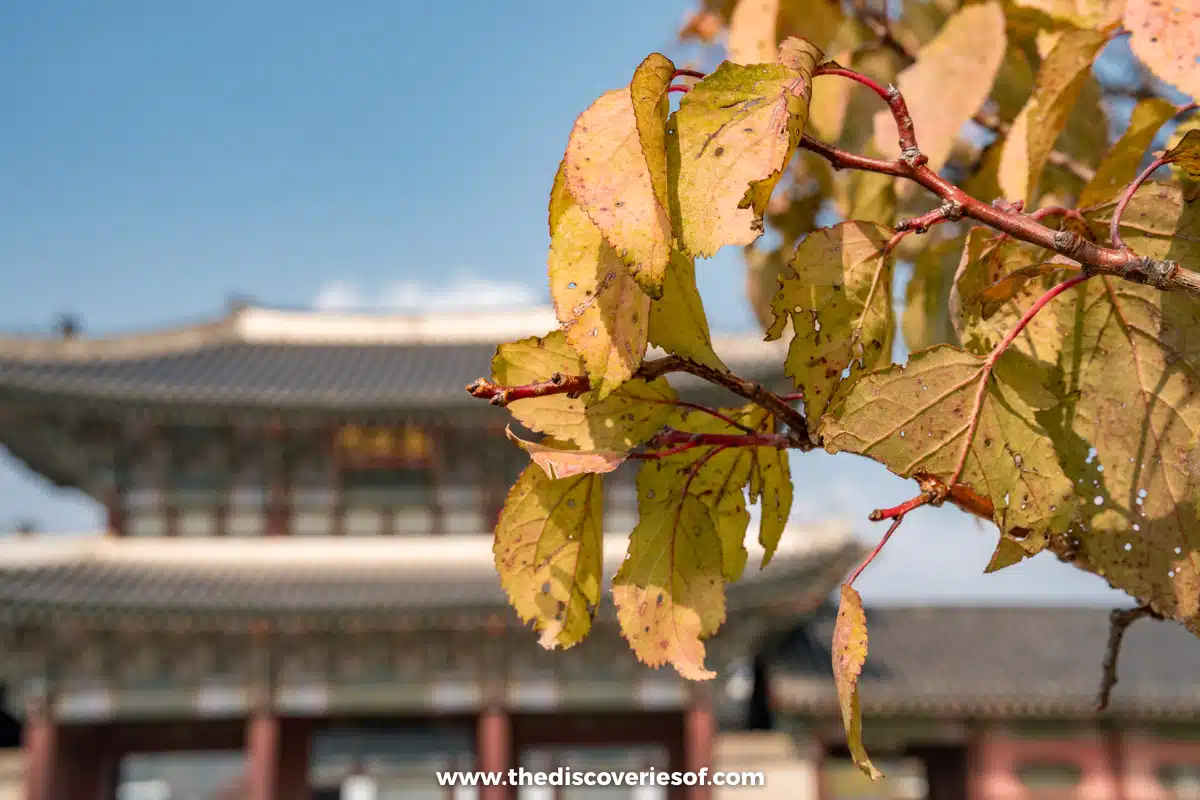
I saw all of it over two weeks in October. I started in Seoul, took the KTX out to Gangneung on the east coast, then headed inland to Andong, south to Busan, west to the old harbour city of Mokpo and north again to Jeonju, before finishing back in the capital. Autumn came with me the whole way: gold in the rice fields around Hahoe, red and orange around the pond at Changgyeonggung and yellow ginkgo leaves in courtyard after courtyard.
I came back obsessed with the country, and I’ve been telling anyone who’ll listen to go ever since. So which places should you not miss? When should you go, and how do you get between the cities? This guide has the essentials, with links to every South Korea guide I’ve written.
Some links on this page are affiliate links, which means I may earn a small commission, at no extra cost to you, if you book through them.
 30 South Korea travel tips to know before you go, from cash to hidden cameras
 22 things to do in South Korea, from a peek into North Korea to a vigorous spa scrub
 32 things to do in Seoul, from a virtual royal banquet to cocktails in an old teahouse
When to go
Spring and autumn are the best times for a first trip. Cherry blossom usually peaks in Seoul in early April, a little earlier on the south coast, and autumn colour sweeps down from the mountains to the cities from mid-October, reaching its peak in most of the country in late October and early November. Summers are sticky, and the rainy season runs from late June to late July, while winter is cold, dry and quiet. If you can, steer clear of the Lunar New Year (Seollal) and the harvest holiday (Chuseok), when trains sell out and some sights close.
Some places have their own best moments:
- Seoul: autumn at the palaces. I was there in October, when the trees around Changgyeonggung’s pond turned red, orange and gold.
- Busan: the beaches are at their liveliest in July and August. June is warm but quieter, before the school holidays and the rains.
- Jeonju: go in late April or early May for the Jeonju International Film Festival, or in autumn for the ginkgo at the hyanggyo.
There’s more on the season in my guide to South Korea in October, and holiday dates are in my travel tips.
Getting there and around
- Skyscanner: flights to Seoul Incheon and Busan Gimhae.
- Korail: KTX tickets between the cities.
- Omio: compare flights and ground transport.
- 12Go: buses for day trips.
- Holiday Autos: compare car hire prices.
- Booking.com airport transfers: a car waiting when you land.
- Naver Map or KakaoMap: reliable walking and transit directions, which Google Maps can’t give you here.
- G Adventures: multi-day guided trips.
- GetYourGuide: tours, skip-the-line tickets and classes.
Getting around South Korea is far easier than you might expect. From Incheon Airport, the AREX express train reaches Seoul Station in about 43 minutes. In the cities, a rechargeable T-money card works on both the subway and the buses: top it up at a station or convenience store, then tap on and off. A single subway ride in Seoul costs 1,550 won (about 90p), and I got around the city for less than £4 a day.
Between cities, the KTX bullet train is quick and good value. On my ride from Jeonju to Seoul it was so comfortable, and the views out of the window were great. A standard seat on that route costs from about 34,000 won (about £19), and first class around 48,000 won, only about £8 more, which I’d say is worth it for the wider seats and extra legroom. Book through Korail’s website or app, as far ahead as you can for weekends and holidays.
Where to stay
Seoul
From the views at the top of N Seoul Tower to the palace gardens of Changgyeonggung, there’s a lot to see in Seoul. I based myself at the Four Points by Sheraton Josun in Myeongdong: well located, if a tiny bit bland. It’s handy for the K-beauty shops (Olive Young included), the cable car up Namsan and Korean barbecue in the streets around it.
Gangneung
The laid-back city of Gangneung is known for its pine forests and sandy beaches, but it also has an excellent restaurant and coffee scene. I stayed at the high-end Skybay Hotel, right by the water at Gyeongpo.
Andong
In Andong I stayed at Tradition Resort Gurume, where rescued Joseon-era hanok houses are gathered on a wooded slope outside the centre. It’s a beautiful, distinctly Korean place to sleep, and it gets 4 out of 5 from me.
Busan
Busan is a great place to learn about Korean history, at the UN Memorial Cemetery and Gamcheon Culture Village. My own stay was at Grand Josun Busan, on the seafront at Haeundae. For somewhere quieter by the water, the Centum Premier Hotel is in Centum City, between Haeundae and Gwangalli.
Mokpo
My base for Mokpo was Hanok Hotel Youngsanjae, a hotel built in the hanok style over the river in Yeongam, roughly 25 minutes by car from Mokpo Station. My Mokpo travel guide has more.
Jeonju
Jeonju is best known for its hanok village. I stayed at the Lahan Hotel Jeonju, close to the Joseon-era sites at Omokdae and Imokdae, and one of my favourite barbecue meals was nearby at the Pork Grill Restaurant (경성금돼지).
Busan
Seoul
Andong

Tours
Know before you go
Top things to do
Jeonju
Jeonju is a city rich in tradition, and a UNESCO City of Gastronomy, so come hungry: the smell of grilling meat drifts out of the hanok restaurants on every lane. It’s not all about the food, though. Locals and visitors stroll the lanes of Jeonju Hanok Village in hanbok, the traditional Korean dress, and you can learn to make moju, the city’s spiced rice drink, as I did.
Seoul
Old meets new in South Korea’s capital, where Joseon dynasty palaces sit steps from trendy shops, galleries and cocktail bars. Gwangjang Market, trading since 1905, is the place to taste the city’s street food: go early and queue for the mung bean pancakes. There’s plenty of open space too, along the Han River or on a hike up Inwangsan.
Do: Walk and eat through Gwangjang Market with a local food guide
Read next: 32 things to do in Seoul, from a virtual royal banquet to cocktails in an old teahouse
Jeju
South Korea has more than 3,000 islands, and Jeju is by far the biggest. It mixes nature with culture, from the thatched stone houses of Seongeup Folk Village to Hallasan, the country’s highest mountain. Its sandy beaches and waterfalls give you plenty to do outdoors, and Manjanggul Lava Tube, one of the longest in the world, reopened a 1 km stretch to visitors in May 2026 after safety work.
Daejeon
Daejeon is one of South Korea’s most forward-looking cities, home to tech companies and research institutes. Watch the city light up from Sikjangsan Culture Heritage Park after dark, then head for somewhere quieter: the trails of Jangtaesan Recreational Forest wind through a forest of towering metasequoia trees, with a walkway up among the treetops.
Busan
Busan, South Korea’s second city, is strung along the coast, and you can take in most of it from the 100th floor of BUSAN X the SKY, the observatory at the top of the second-tallest building in the country. It’s rich in history too: during the Korean War it held out as a refuge and temporary capital, and the film at the UN Memorial Cemetery, the only one in the world, had me in tears. It’s also full of outdoor fun, like paddleboarding at Gwangalli Beach.
Read next: 20 things to do in Busan, from a glass-floored cable car to blowfish cooked two ways
Damyang
Damyang County is a gorgeous stretch of countryside between Jeonju and Mokpo, just north of Gwangju. Visitors come for its Joseon-era pavilions and gardens and its walking trails. The 31-hectare Juknokwon Bamboo Forest is the best known, and the Metasequoia Road, an old stretch of National Route 24, runs between towering dawn redwoods on both sides.
Andong
Andong is a city of traditional markets, Joseon-era architecture and a laid-back pace. Visit Hahoe Folk Village and the Confucian academy of Dosanseowon for the history, then eat the local way: braised jjimdak in the old market, and the set menu at Hansangchaebi (한상채비), which I found nothing short of stellar.
Gangneung
Explore this coastal city, best known for its beaches and pine forests, and you’ll find a brilliant food scene in Gangneung, too, with great coffee and seafood.
What does a perfect day look like? Pedal along the East Sea on the Jeongdongjin Railbike and take in the immersive digital exhibits at Arte Museum Valley. Finish with Korean barbecue at Gangnamchon to see why I can’t get enough of this charming town.
Suggested itineraries
Experience Seoul
2 to 3 days
Gyeongbokgung Palace > bulgogi at Hangane in Insadong > the cable car and N Seoul Tower > Changgyeonggung Palace > Bukchon Hanok Village > street food at Gwangjang Market > cocktails at Ace Four Club > K-pop pop-ups at The Hyundai Seoul > Aegibong Peace Ecopark > K-beauty shopping in Myeongdong > an evening at Spa Lei
Read next: How to spend 3 days in Seoul, from royal palaces to a loo with a view
Hanok villages
3 to 5 days
Bukchon Hanok Village in Seoul > Hahoe Folk Village in Andong > Jeonju Hanok Village
Spend a long weekend among the Joseon-era houses of Seoul, Andong and Jeonju.
Read next: Inside Jeonju Hanok Village, where more than 700 traditional houses fill the old town
The best of South Korea
10 days
Seoul > Andong > Busan > Jeonju > Seoul
Take in South Korea’s best-known cities for Joseon-era palaces, Korean markets and beautiful beaches.
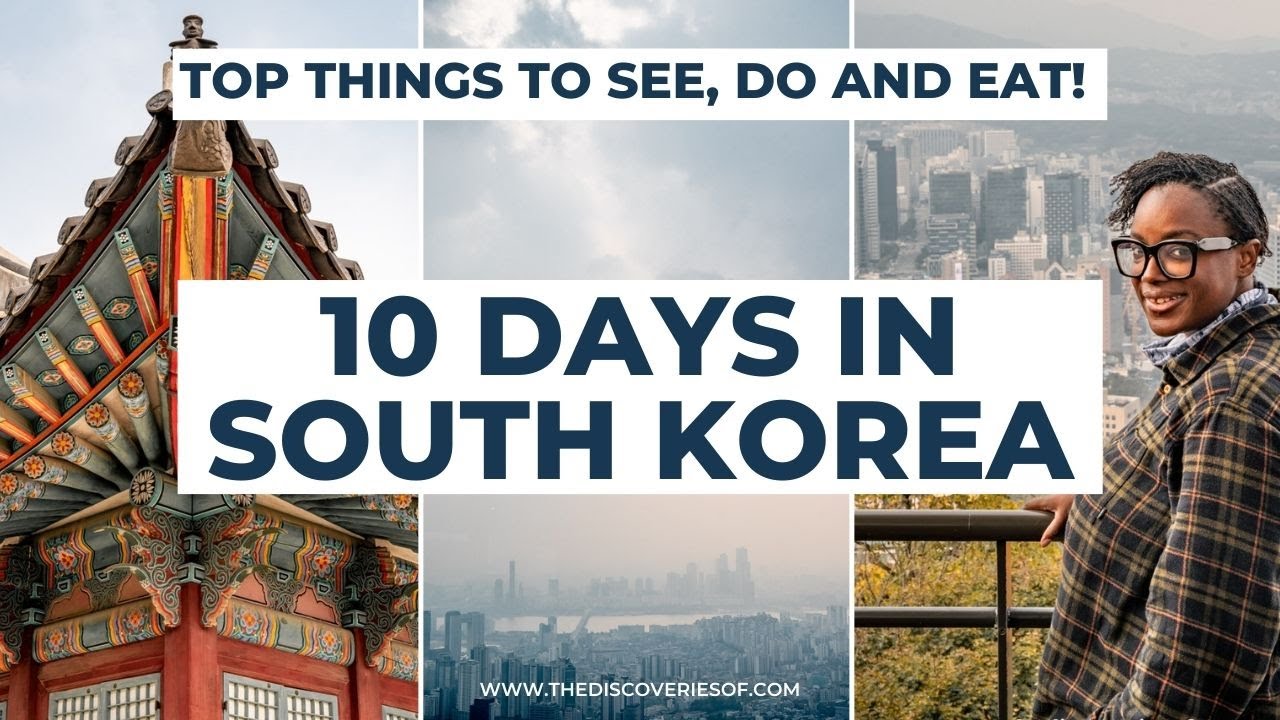
Read next: How to spend 10 days in South Korea, from Seoul’s palaces to live octopus in Busan
A weekend in Jeonju
2 to 3 days
Jeonju Hanok Village > Omokdae and Imokdae > a moju class > Deokjin Park > Jeonju Arboretum
Read next: A Jeonju travel guide, from paper made by hand to a library on a lotus pond
Hidden South Korea
Songnisan National Park
Songnisan National Park, near Boeun, mixes challenging terrain (its highest peak, Cheonwangbong, rises to 1,058 metres) with beautiful scenery. The autumn colour here is superb, and Beopjusa, a temple founded in 553, is remarkable to see in person: its five-storey wooden pagoda, Palsangjeon, is the tallest in Korea.
Mokpo
Mokpo is a historic harbour city that once accounted for 20% of South Korea’s revenue and was a busy port under the Japanese occupation. Ride the Mokpo Marine Cable Car for sunsets and mountain views: it climbs to about 155 metres over the sea, so beware if you’re scared of heights, though as my cabin rose over Yudalsan I couldn’t stop looking down. Then visit the second building of the Mokpo Modern History Museum, as I did, for its photographs of the city under the occupation.
Buyongdae Cliff
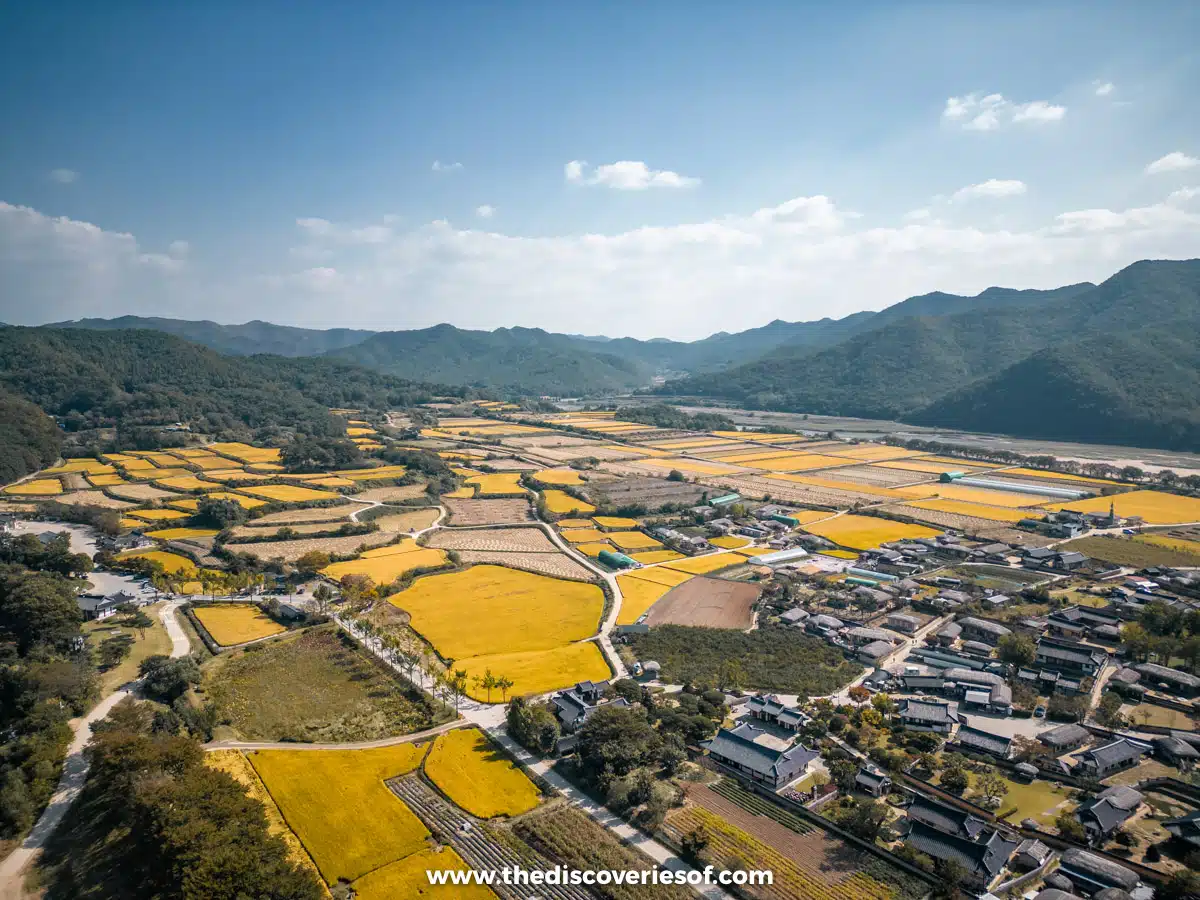
Across the Nakdong River from Hahoe Folk Village, near Andong, Buyongdae Cliff is a beautiful lookout and a short but steep climb. The view down over Hahoe’s houses and rice fields from the top of the 64-metre cliff is worth the small ferry across the river, which runs when the water level allows. In October, my drone picked out the rice fields in gold.
Aegibong Peace Ecopark
Looking for an alternative to a standard DMZ tour? Aegibong Peace Ecopark sits on a former battleground in Gimpo, where the Han and Imjin rivers meet, about an hour and a half from Seoul. From its observatory you look across about 1.4 km of water to North Korean villages and farmland (not to Pyongyang, which is about 150 km away), and the park covers the history and wildlife of the border. Book a slot online and bring your passport for the ID check. Mist hung over the river on the day I went, which made the view all atmosphere.
Dishes and drinks to try
Dishes to try
- Buchimgae: a savoury Korean pancake, often stuffed with seafood and spring onions. At Gwangjang Market, the mung bean version, bindaetteok, is the one to queue for.
- Kimchi: fermented cabbage with chilli and garlic, on the table at almost every meal.
- Bulgogi: thin slices of beef marinated in soy, sugar and sesame. My bulgogi set at Hangane in Insadong came with more side dishes than I could finish.
- Banchan: the free side dishes that arrive with every meal, from kimchi to fish cakes.
- Bokeo (blowfish): a fish that must be prepared by a licensed chef, because parts of it are deadly. I had it two ways in Busan.
- Jjimdak: Andong’s braised chicken with glass noodles and vegetables in a sweet, spicy soy sauce.
Read next: 17 dishes to eat in South Korea, and where to try each one
Drinks to try
- Moju: a low-alcohol drink of makgeolli simmered with spices and fruit, a Jeonju speciality. At my class, there were three recipes to choose from, and the one I made was actually pretty tasty.
- Soju: Korea’s clear spirit, usually drunk neat in small glasses.
- Somaek: a mix of soju and beer, poured together in one glass.
Must-try bars and restaurants
Insadong Hangane Bulgogi Jumak, Seoul
A bulgogi set menu with rice, soup and a table full of side dishes. Grab a spot on the raised floor at the back and you’ll often skip the queue.
Sunhui-ne Bindaetteok, Seoul
Crisp mung bean pancakes fried in front of you at Gwangjang Market. Get there before the lunch rush.
Hansangchaebi, Andong
Andong’s set menu, with grilled mackerel and beef bulgogi. Nothing short of stellar.
Korean Steak Grill, Busan
Huge beef ribs grilled at your table on Haeundae’s seafront. Of everything I ate in Korea, this was my favourite meal.
Pork Grill Restaurant (경성금돼지), Jeonju
Unctuous pork, grilled at your table until it’s just right.
Owole Chodang, Gangneung
Crisp seafood pancakes that rank among the best things I ate in Korea.
Read next: 17 dishes to eat in South Korea, and where to try each one
Costs and budgeting
Expect to spend between about 250,000 and 575,000 won (£140 to £320) a day on a mid-range trip, including your hotel. Add 180,000 to 540,000 won (£100 to £300) a day if you’re travelling in luxury.
Average daily costs:
- Hotels: mid-range about 115,000 to 255,000 won (£63 to £142) a night; luxury about 255,000 to 565,000 won (£142 to £315)
- Food: from about 18,000 won (£10) for a bulgogi set at lunch to 270,000 won (£150) for a high-end dinner with wine
- Public transport: about 1,600 to 7,000 won (90p to £4) a day; a single subway ride is 1,550 won
- Attractions: palaces cost 1,000 to 3,000 won (under £2); a ticket for the deck at N Seoul Tower costs 29,000 won (about £16)
- KTX: Seoul to Busan from about 59,800 won (about £33) in standard class
- Tours: about 57,000 to 128,000 won (£32 to £71) for a day tour
Safety, health and tipping
Safety
South Korea is a very safe destination. You can walk around most places day or night, though if you’re unsure, I’d recommend sticking with a group late at night. Keep your phone and wallet somewhere safe and avoid dimly lit areas late at night, just as you would anywhere. One thing to know about: hidden cameras have been found in some toilets and changing rooms, and my travel tips explain what to look out for.
Health
You can drink the tap water almost everywhere, so pack a refillable bottle, even if Koreans tend to prefer it filtered. You shouldn’t need any vaccinations beyond the routine ones. Air quality can be poor, especially in spring when fine dust blows in, so check the daily reading in an app such as AirKorea and pack a mask if you have a respiratory condition.
Tipping
Nobody tips in South Korea: good service is just part of the deal. Tuck your change away and use it to top up your T-money card at the station instead.
Practical tips and info
Tips for travelling
- Do not, I repeat, do not rely on Google Maps here. It still can’t give proper walking or driving directions, so download Naver Map or KakaoMap instead.
- Sort out a SIM card or eSIM before you fly. About 35,000 won (around £20) buys seven days of unlimited data, so you can look up the way to your hotel the moment you leave the terminal.
- Most travellers from the UK, the US and Western Europe don’t need a visa for stays of up to 90 days. Until 31 December 2026 they’re also exempt from the K-ETA, but there’s a free e-Arrival Card to submit online, no earlier than 72 hours before your flight lands.
- Don’t pay the tax on shopping: hand over your passport when you pay, or claim it back at the airport. My refund on Olive Young K-beauty took about five minutes.
- Take the subway around town. A ride costs 1,550 won (about 90p), and it’s usually faster than a taxi.
Read next: 30 South Korea travel tips to know before you go, from cash to hidden cameras
How to see the best for free
South Korea has plenty of free things to do. Wear a hanbok and you get into Seoul’s royal palaces for free, and so does everyone else on Culture Day, which falls on the final Wednesday of each month. The UN Memorial Cemetery and Haedong Yonggungsa in Busan cost nothing, and nor do the Songdo Cloud Trail, the Seonseong floating bridge in Andong or Jeonju’s arboretum. You can explore neighbourhoods in Seoul and Busan on your own or join a guided walk.
GuruWalk runs a free walking tour of Seoul past Gyeongbokgung (from the outside), through Gwanghwamun and Insadong, with an optional stop at a tea house. Just bring spending money, and tip your guide what you think the walk was worth.
Alternatively, Busan Greeters pairs you with a volunteer local for a free walk around Haeundae Beach and some of the city’s hidden gems.
Packing
Packing for South Korea? Don’t forget:
- A comfortable pair of trainers for the walks between subway stations, and the hills.
- A swimsuit and cover-up if you’re visiting in summer.
- Lightweight jackets for spring and autumn, and a proper coat for winter.
- Clothes that cover your shoulders for temples and smaller towns, where people dress a little more conservatively.
- A two-pin plug adaptor and a Korean phrasebook, or Papago on your phone.
Travel insurance
Add travel insurance before you go. Any time you travel abroad, there’s a chance your bags go missing or you need medical help, and a good policy covers you in both cases (and many more). I use AXA Travel Insurance.
Suggested guidebooks
- Lonely Planet Korea: great advice on hidden gems.
- The Rough Guide to Korea: thoughtful advice from experienced travellers.
- Moon South Korea: historic landmarks and fun things to do.
Interesting facts
- Busan’s UN Memorial Cemetery is the only UN cemetery in the world.
- South Korea has more than 3,000 islands.
- Many lifts in South Korea skip the number 4, which sounds like the word for death, and use an F instead.
- It’s the custom to take off your shoes in someone’s home, and at some restaurants.
Handy phrases
- Hello: annyeonghaseyo (안녕하세요)
- Goodbye (to someone staying): annyeonghi gyeseyo (안녕히 계세요)
- Yes: ne (네)
- No: aniyo (아니요)
- Please (when asking for something): juseyo (주세요)
- Thank you: gamsahamnida (감사합니다)
- How much is it?: eolmayeyo? (얼마예요?)
- Where is …?: … eodiyeyo? (어디예요?)
- Train station: gichayeok (기차역)
- That was delicious: masisseosseoyo (맛있었어요)
- Do you have …?: … isseoyo? (있어요?)
- Can I have …, please?: … juseyo (… 주세요)
Time zone
The whole country keeps Korea Standard Time (UTC+9) and never changes its clocks, so it’s UK time plus nine hours in winter, or plus eight in summer.
Electricity and adapters
Sockets take type C and F plugs at 220V, the same round-pin design you’ll find across most of mainland Europe. A universal adaptor covers you here and almost everywhere else.
Map
Insider tips, straight to your inbox
All South Korea guides
 South Korea in October, when the ginkgo turns gold and the festivals fill the calendar
 Should you rent a hanbok in South Korea? Free palace entry is only half the story
 Why Tradition Resort Gurume, Andong’s village of rescued Joseon houses, is worth a night
 17 dishes to eat in South Korea, and where to try each one
 Mokpo travel guide: a cable car over the sea and the streets of an old treaty port
 Aegibong Peace Ecopark: a DMZ alternative near Seoul, with no tour needed
 Ride the Busan Air Cruise over Songdo Bay, then walk the Cloud Trail above the waves
 Haedong Yonggungsa, the Busan seaside temple a sea god asked for
 How to see Gamcheon Culture Village, Busan’s painted hillside
 Wander Bukchon Hanok Village, Seoul’s prettiest lanes (before the 5pm curfew)
 Gyeongbokgung Palace guide: guard ceremonies, night openings and a hall on a lake
 Changgyeonggung, the Seoul palace I’d choose over all the others
 Eat your way around Gwangjang Market, Seoul’s century-old food market
 Is N Seoul Tower worth it? The cable car, the views and a loo with a view
 Andong travel guide: Hahoe Folk Village, Confucian academies and the town’s famous braised chicken
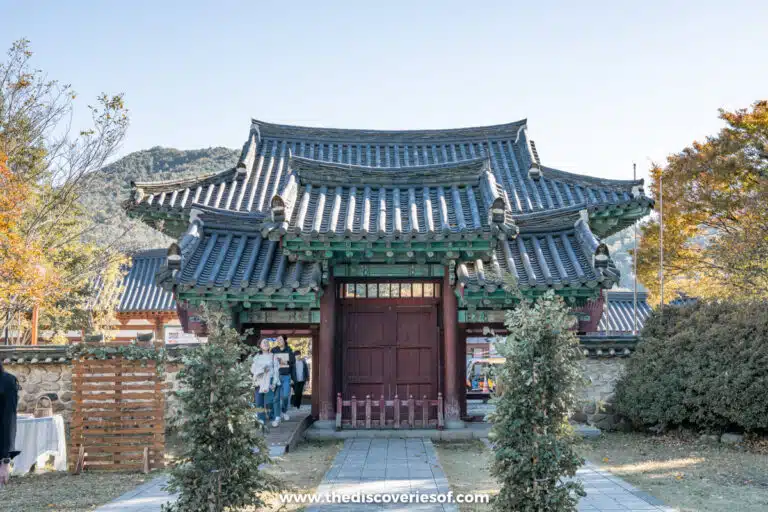 Inside Jeonju Hanok Village, where more than 700 traditional houses fill the old town
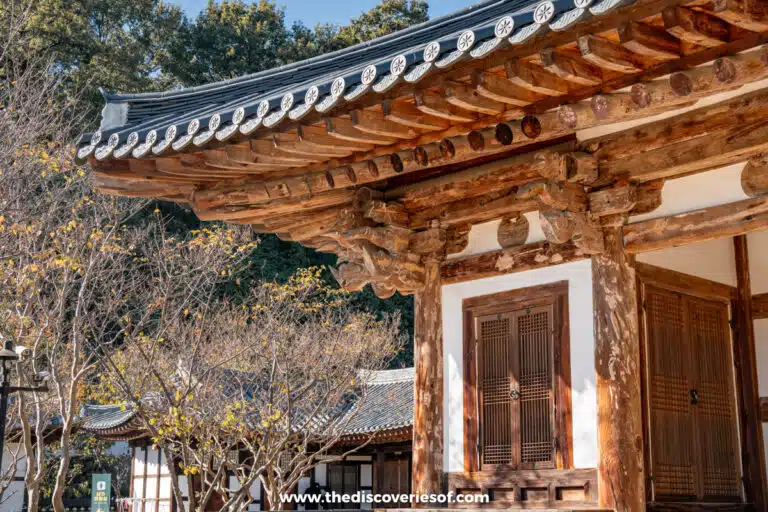 A Jeonju travel guide, from paper made by hand to a library on a lotus pond
 Visiting the UN Memorial Cemetery in Busan, the only UN cemetery in the world
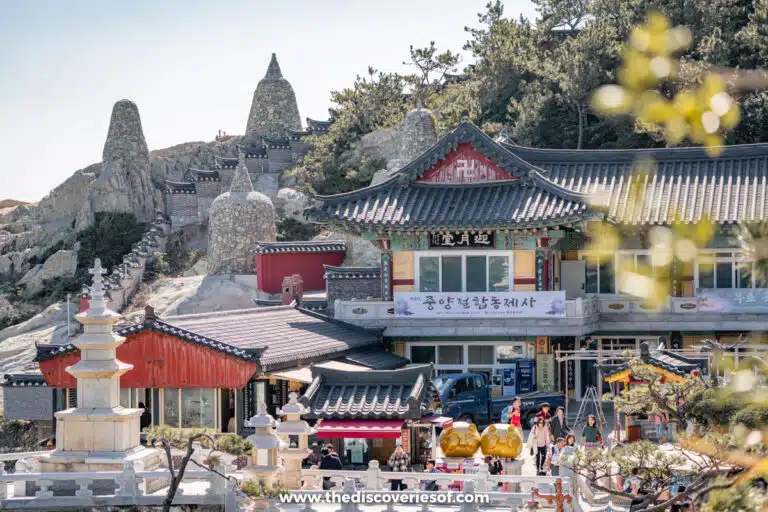 3 days in Busan: the itinerary for temples, beaches and seafood
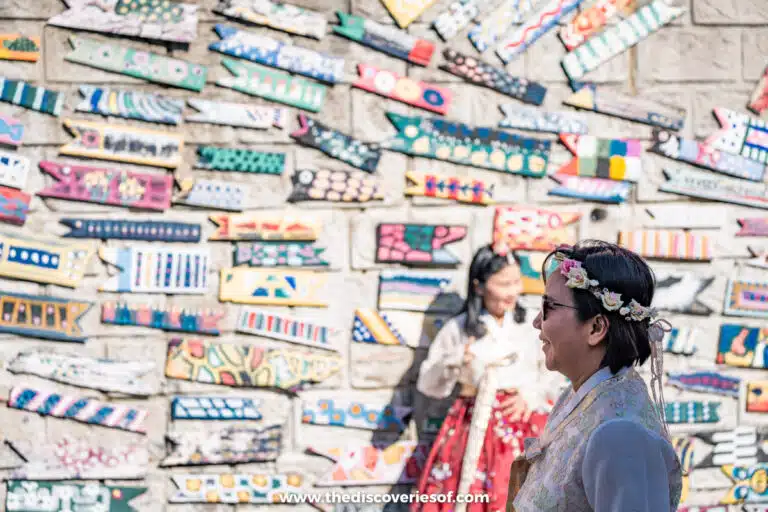 20 things to do in Busan, from a glass-floored cable car to blowfish cooked two ways
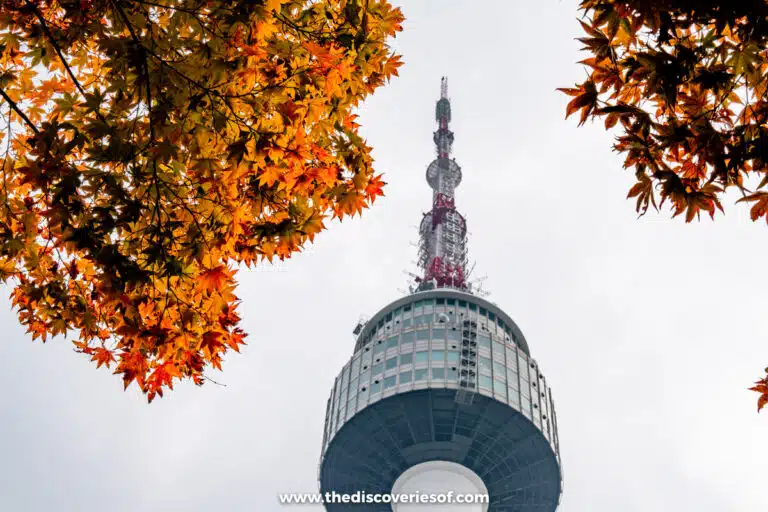 32 things to do in Seoul, from a virtual royal banquet to cocktails in an old teahouse
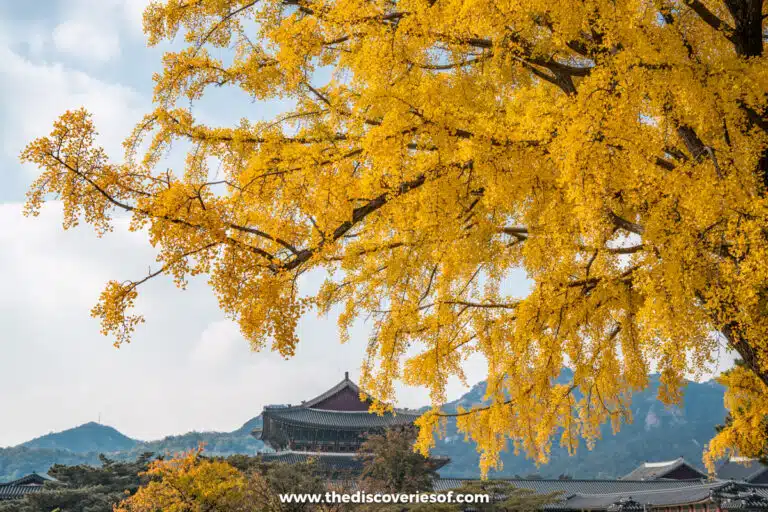 30 South Korea travel tips to know before you go, from cash to hidden cameras
 22 things to do in South Korea, from a peek into North Korea to a vigorous spa scrub
 A complete guide to Gangneung, South Korea
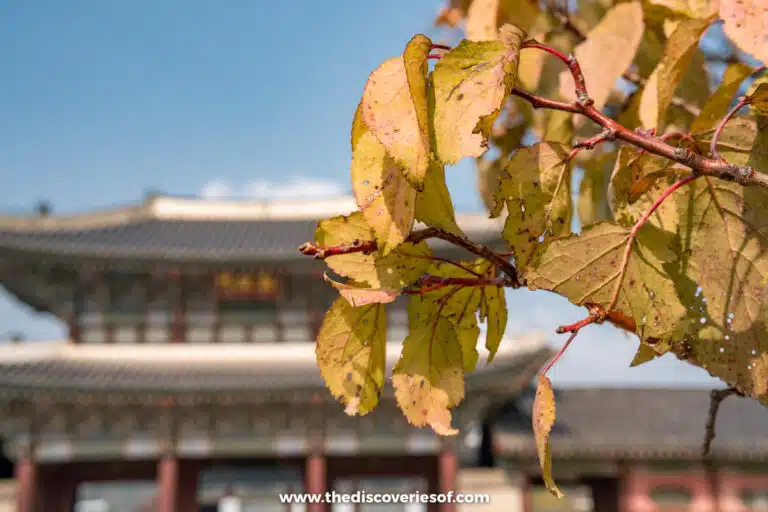 How to spend 10 days in South Korea, from Seoul’s palaces to live octopus in Busan
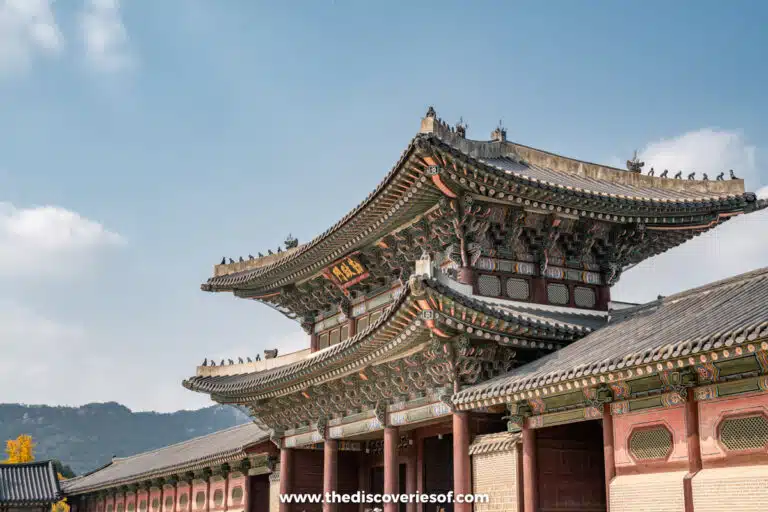 How to spend 3 days in Seoul, from royal palaces to a loo with a view

Watch on YouTube
See the places before you go
Short films from the places in my guides, so you can see what a destination really looks and feels like before you go.
Subscribe on YouTube youtube.com/@thediscoveriesof