
South Korea
Busan travel guide
A temple that a sea god is said to have asked for, a cable car with a glass floor over the bay and a bowl of noodles invented with wartime aid flour. Plan your trip to Busan, South Korea’s second city, from when to go and where to stay to what to eat and which guides to read first.

Julianna BarnabyTravel and culture writer
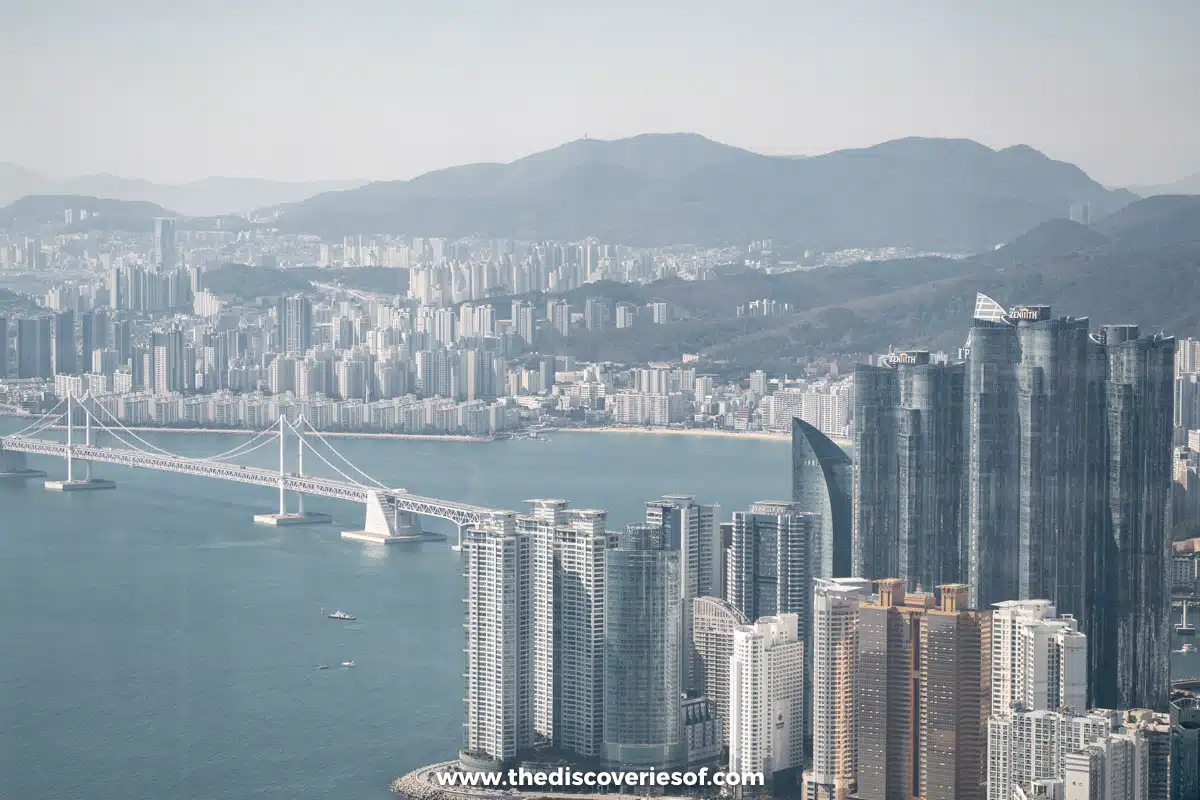
I arrived in Busan expecting a beach city to tack on after Seoul, and left wondering whether I’d got the order the wrong way round. South Korea’s second city strings its sights along one long, ragged stretch of coast: temples on the rocks, glass-floored walkways over the waves, hillsides of painted houses and a skyline that lights up the bay every night. By the end, it may just have pipped Seoul as my favourite place in Korea.
My own visit came in October, midway through two weeks of travelling the country, with a base on Haeundae Beach at Grand Josun Busan. I rode the Crystal Cruise cable car across Songdo Bay, paddled out beneath Gwangan Bridge, ate blowfish two ways and braved live octopus above a fish market. The meal I still talk about is the ribs at Korean Steak Grill, cut and grilled at the table: the best I had anywhere on the trip.
The place that moved me most, though, was the UN Memorial Cemetery. When almost all of the South had fallen in the Korean War, Busan held out, and the film in the cemetery’s memorial hall had me in tears. That history runs through the whole city, from the refugee homes of Gamcheon to its signature noodles.
Below are the essentials for planning your own trip, with links to every Busan guide I’ve written.
Some links on this page are affiliate links, which means I may earn a small commission, at no extra cost to you, if you book through them.
 3 days in Busan: the itinerary for temples, beaches and seafood
 Visiting the UN Memorial Cemetery in Busan, the only UN cemetery in the world
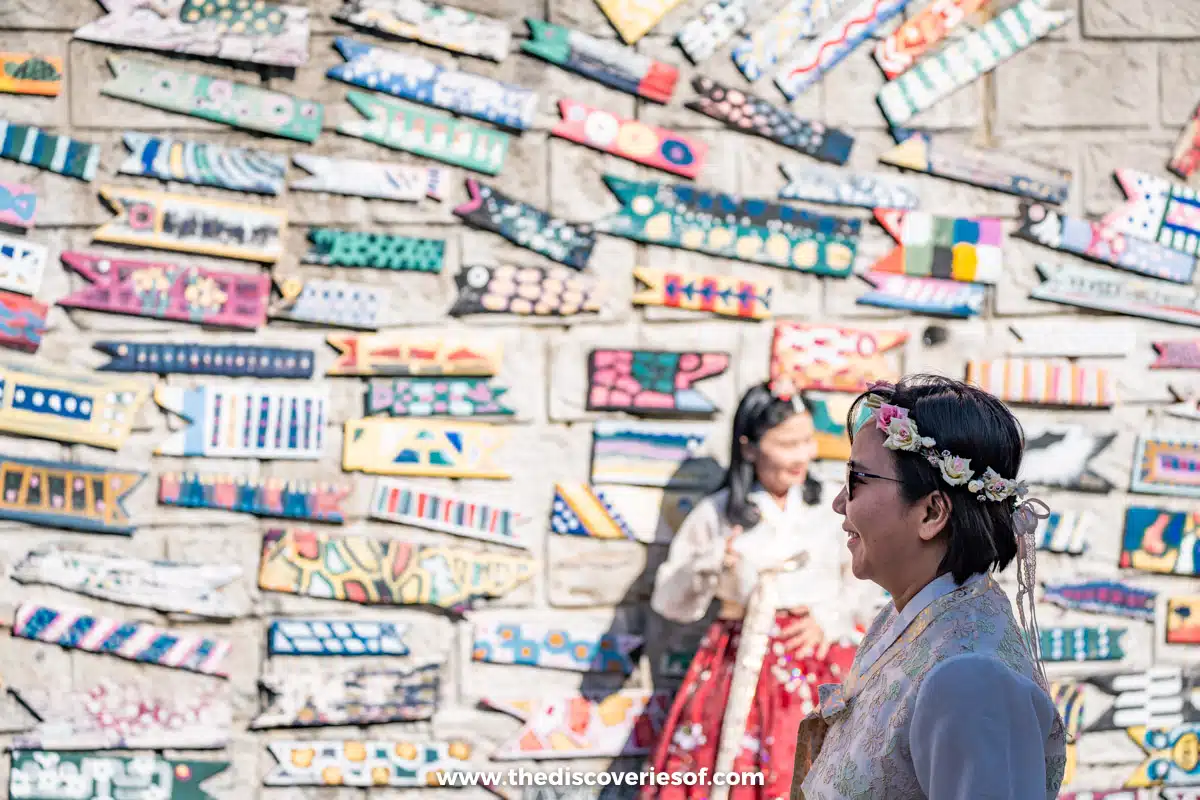
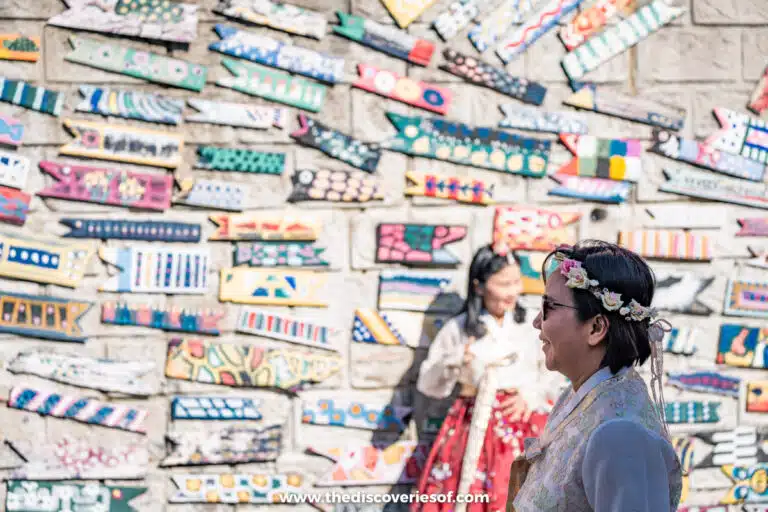
 How to see Gamcheon Culture Village, Busan’s painted hillside
When to go
For a city of hills and stairs, spring and autumn are the kindest times to come. Cherry blossom arrives from late March, and by October the humidity has gone, the skies are usually clear and the sea still holds its summer warmth. July and August are hot, sticky and busy, but it’s beach season: the lifeguards are on duty from late June to the end of August (into mid-September at Haeundae). Late summer is also typhoon season on the south coast, so keep an eye on the forecast. Winters are cold but bright, when the Haeundae Light Festival strings lights along the seafront.
I was here in October, once the parasols had been packed away, and it was ideal for sightseeing: Busan averages highs of 23°C and lows of 15°C that month, and I was still happy out on a paddleboard. October is also festival season. Asia’s biggest film festival, the Busan International Film Festival, takes over Haeundae and Centum City from 6 to 15 October in 2026, so book your hotel well ahead, and the Busan Fireworks Festival over Gwangalli now falls in November (7 November in 2026). My guide to South Korea in October has the month in detail.
Getting there and around
- Skyscanner: flights to Seoul Incheon or Busan’s Gimhae airport.
- Korail: KTX tickets from Seoul and the rest of the country.
- Naver Map or KakaoMap: the apps that actually give directions in Korea.
- Visit Busan: the city’s official tourism site, with events and opening times.
- Booking.com: hotels across Busan.
Most visitors arrive by KTX bullet train. Trains from Seoul Station take roughly two and a half hours to Busan Station, with standard seats from about 59,800 won, and KTX-Eum services from Seoul’s Cheongnyangni Station run via Andong to Bujeon, some calling at Sin Haeundae, by the beaches. Gimhae International Airport, west of the centre, handles domestic and regional flights, with a light rail link to the subway and limousine buses to Haeundae.
Once you’re here, the subway and buses will get you almost everywhere, and a T-money card covers both: top it up and tap on and off. Busan sprawls along the coast, so crossing from Haeundae to Nampo takes the best part of an hour by subway, and taxis, which are cheap, are often quicker for short hops; book them through the Kakao T app. Google Maps can’t give you proper walking or driving directions in Korea, so install Naver Map or KakaoMap on your phone first. Entry rules, money and the other apps worth having are all in my South Korea travel tips.
Where to stay
Haeundae
Haeundae suits a first visit: the city’s most famous beach, a subway line and plenty of good places to eat are all close at hand, and the bus to Haedong Yonggungsa leaves from here. I stayed here at Grand Josun Busan, a few minutes’ walk from the sand. Marine City, at the western end, is all glass towers and harbour views.
Gwangalli
A livelier, younger beach facing Gwangan Bridge, with bars and restaurants along the front, paddleboarding in the bay and the bridge lit up every night.
Nampo and Jung-gu
The old port district, by Jagalchi and Gukje markets, and the handiest base for Gamcheon, Songdo and Yeongdo island.
Songdo
Korea’s first public beach, at the start of the Air Cruise and the Cloud Trail. It’s quieter in the evenings, with sea views from almost every hotel.
Seomyeon
The city’s commercial centre, where subway lines 1 and 2 meet, with shopping and late-night food but no sea.
My 3-day Busan itinerary splits the city into its east and west sides, so you can see which base suits your plans.


Tours
Know before you go
Top things to do
Spend a morning at the UN Memorial Cemetery
The world’s only United Nations cemetery, where around 2,300 servicemen from 11 countries lie in national sections between clipped hedges. Watch the short film in the memorial hall first. It tells the story of the war through individual soldiers, and I was far from the only one in tears by the end. Entry is free.
Read next: Visiting the UN Memorial Cemetery in Busan, the only UN cemetery in the world
Ride the Air Cruise and walk the Cloud Trail at Songdo
A cable car swings 1.62 km across Songdo Bay to the cliffs of Amnam Park. Pay the little extra for a glass-bottomed Crystal Cruise cabin, and ignore the slightly odd growling gorillas at the far end. Below it, a free walkway curves out over the sea to a rocky islet; go early, when the morning cloud that gives it its name often hangs over the water.
Read next: Ride the Busan Air Cruise over Songdo Bay, then walk the Cloud Trail above the waves
Wander the painted lanes of Gamcheon
A hillside of pastel houses built by refugees from the Korean War and brightened by an art project from 2009. Climb to the Haneul Maru deck for the view over the rooftops, and keep your voice down: people still live here.
Read next: How to see Gamcheon Culture Village, Busan’s painted hillside
Watch the sun rise at Haedong Yonggungsa
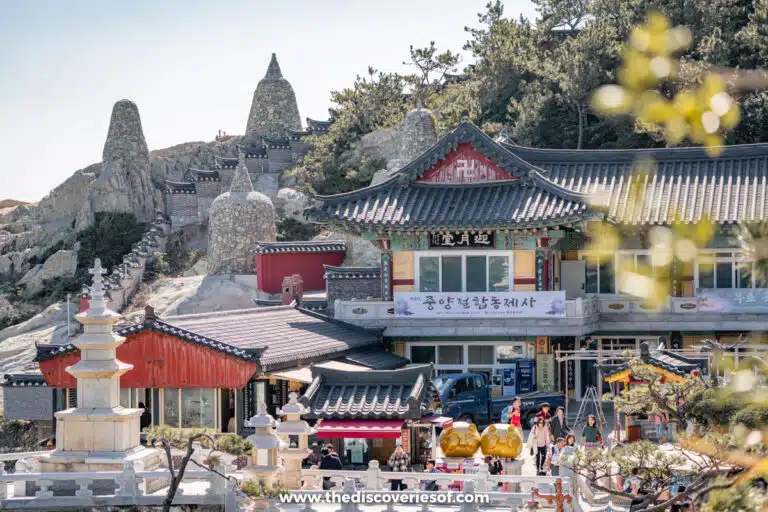
Most of Korea’s great temples hide in the mountains. This one sits on a ledge above the East Sea, founded, so the story goes, after a sea god appeared to a monk in a dream. The gates open at 5am, and sunrise is the time to beat the coach tours.
Read next: Haedong Yonggungsa, the Busan seaside temple a sea god asked for
Paddleboard beneath Gwangan Bridge
Gwangalli’s calm bay, facing the 7.4 km double-decker bridge, is made for stand-up paddleboarding. It still got a bit bumpy on my paddle out, which was half the fun. Stay after dark, when the bridge lights up.
See the city light up from a yacht
Diamond Bay’s catamarans sail from Yongho Bay past Gwangan Bridge and Marine City’s glass towers. Take an early evening sailing on the Haeundae course and you’ll watch the skyline light up on the way back, as I did.
Look straight down from BUSAN X the SKY
The observatory on the 98th to 100th floors of the LCT tower, the second-tallest building in Korea, looks along the coast from Haeundae to Gwangan Bridge. Its glass-floored Shocking Bridge was the most legitimately terrifying part of my visit.
Pootle along the coast in a Sky Capsule
Haeundae Blue Line Park has turned an old coastal railway into a walking route with two rides: little capsule cars on a raised track between Mipo and Cheongsapo, and a slow Beach Train below. Book the capsules ahead at weekends.
Read next: 3 days in Busan: the itinerary for temples, beaches and seafood
Suggested itineraries
Three days in Busan
3 days
Gukje Market, Gamcheon, the Cloud Trail, the Air Cruise and Huinnyeoul > the UN Memorial Cemetery, sashimi above a fish market, Gwangalli and a yacht at dusk > blowfish for brunch, Haedong Yonggungsa, the Sky Capsule, BUSAN X the SKY and Korean Steak Grill
One day on the west side
1 day
Choryang Milmyeon for an early lunch > Gamcheon Culture Village > the Air Cruise and the Cloud Trail > sunset at Huinnyeoul
Busan on a 10-day trip around South Korea
10 days
Seoul > Andong > Busan > Jeonju > Seoul
Every stop, with timings, is in my 3-day Busan itinerary, and the 10-day South Korea itinerary fits Busan into a longer route.
Hidden Busan
Huinnyeoul Culture Village
A strip of white houses on the cliffs of Yeongdo island, with steep staircases down to a coastal path and a tunnel through the rock that frames the sea. I loved it at the end of the day, when the sun drops behind the harbour.
Oryukdo Skywalk
A horseshoe of glass jutting out from a 35-metre cliff above the Oryukdo islets, at the start of the Haeparang coastal trail. It’s free.
Taejongdae
A wooded headland at the southern tip of Yeongdo, with sheer cliffs, a lighthouse and, on a clear day, a view of Japan’s Tsushima Island.
Dishes and drinks to try
Dishes to try
- Milmyeon: Busan’s cold wheat noodles, created by wartime refugees with flour sent as aid. My bowl at Choryang Milmyeon came with a spicy sauce and a jug of broth to pour over it.
- Bokguk: clear blowfish soup, the city’s favourite cure for the morning after. I had blowfish two ways, and preferred it in a sticky teriyaki-style sauce.
- Saengseon-hoe: Korean sashimi, chosen from the tanks downstairs and sliced for you upstairs.
- San-nakji: octopus chopped moments before it reaches you, still moving. Chew firmly.
- Dwaeji gukbap: a milky pork and rice soup that’s a Busan staple.
- Ssiat hotteok: a sweet fried pancake stuffed with seeds and nuts, sold around BIFF Square.
- Eomuk: fish cakes, a Busan speciality, sold on skewers in hot broth.
Drinks to try
- Soju: order the local bottle. C1, from Busan’s Daesun distillery, is the longtime local favourite.
- Geumjeongsanseong makgeolli: a sour, thick rice wine brewed in a village by the old mountain fortress on the edge of the city, with yeast cakes still shaped by foot.
- Coffee: Busan’s cafés, from the Haeundae seafront to Huinnyeoul, are as much a part of the day as the sights.
Must-try bars and restaurants
Korean Steak Grill, Haeundae
The Haeundae branch of Jeonseorui Udaegalbi, on the third floor above the beachfront, and the best meal of my whole trip. Huge ribs come to the table on the bone, are grilled in front of you and snipped into pieces, and the booths are perfect for sharing. Hours are roughly 11am to 10pm, every day.
Geumsubokguk, Haeundae
Blowfish has been on the menu at this head store since 1970, prepared by licensed chefs, around the clock. Order the bokguk if you want the classic, or the fish in sauce if you want my pick.
Bangpajae Hoetjip, Namcheon-dong
A restaurant above a fish market near Gwangalli: choose your fish downstairs and it comes up sliced, with vegetables and dipping sauces. It’s where I tried live octopus. Not for the faint of heart.
Choryang Milmyeon, near Busan Station
A neighbourhood noodle house with a steady crowd of locals. The cold noodles are the draw, but order the dumplings too: they’re enormous. My meal came to under £10 a head.
Read next: 17 dishes to eat in South Korea, and where to try each one
Costs and budgeting
- KTX from Seoul: from about 59,800 won in standard class
- Busan Air Cruise: 19,000 won return, or 24,000 won in a Crystal Cruise car
- BUSAN X the SKY: about 27,000 won, with discounts for booking online
- Sky Capsule: 40,000 won one way for a capsule of two
- Milmyeon at Choryang Milmyeon: about 7,000 to 8,000 won a bowl
- Bokguk at Geumsubokguk: from about 14,000 won
- UN Memorial Cemetery, Haedong Yonggungsa and the Cloud Trail: free
Safety, health and tipping
Safety
Busan is a very safe city. The real hazards are natural: rip currents on the beaches outside the lifeguard season, slippery rocks at Taejongdae and on the coast paths, and the odd typhoon in late summer. For everything else, including hidden cameras, see my South Korea travel tips.
Health
There are no particular health risks. Tap water is safe to drink, though most locals drink filtered or bottled water. Summer is hot and humid, so carry water and sun cream, and only eat blowfish at a licensed restaurant.
Tipping
Tipping isn’t part of life in Korea, and good service is simply expected. Some smarter hotels and restaurants put a service charge on the bill, and that covers it. There’s more on money in my South Korea travel tips.
Practical tips and info
Tips for travelling
- Pick your base by side of the city: Busan stretches a long way along the coast, so group your days east (Haeundae, the temple) and west (Nampo, Gamcheon, Songdo).
- Book the Sky Capsule and the Crystal Cruise ahead at weekends and in summer, when they sell out.
- Go early: Haedong Yonggungsa opens at 5am, and the Cloud Trail is at its most atmospheric first thing.
- Gamcheon and Huinnyeoul are homes as well as sights, so keep the noise down and stay out of doorways and courtyards.
- Check market days: Jagalchi shuts on the first and third Tuesday of each month, and many Gukje Market shops close on Sundays.
How to see the best for free
Some of the best things in Busan cost nothing. Entry to the UN Memorial Cemetery and Haedong Yonggungsa is free, and so are the lanes of Gamcheon, the Songdo Cloud Trail, the Oryukdo Skywalk and every one of the beaches. Time your evening on Gwangalli for dusk and you’ll see Gwangan Bridge light up for free, with a drone show over the bay on Saturday nights.
Packing
- Comfortable shoes with grip: Gamcheon has 148 steps up to its viewpoint, Haedong Yonggungsa 108 down to the temple, and the rocks by the sea can be slippery.
- A two-pin plug adaptor (type C or F).
- Layers for spring and autumn: warm days give way to cool evenings, and it’s windy on the water and up on the observation decks.
- Swimwear, even out of beach season, if you’d like to try a bathhouse such as Spa Land.
- A refillable water bottle and sun cream for summer, when it’s hot and humid.
Travel insurance
Travel insurance is the fail-safe that will help any trip go to plan, from medical emergencies to lost luggage and cancellations. I use AXA Travel Insurance. If you plan to paddleboard or hike, check your policy covers it.
Interesting facts
- During the Korean War, Busan was the temporary capital, held inside the Pusan Perimeter when almost all of the South had fallen.
- Songdo, west of the port, became Korea’s first public beach in 1913.
- The LCT Landmark Tower in Haeundae is 411.6 metres tall, the second-tallest building in the country.
- The Busan International Film Festival is the biggest film festival in Asia.
Handy phrases
- Hello: annyeonghaseyo (안녕하세요)
- Thank you: gamsahamnida (감사합니다)
- How much is it?: eolmayeyo? (얼마예요?)
- This one, please: igeo juseyo (이거 주세요)
Time zone
Korea Standard Time (UTC+9) all year, with no daylight saving: nine hours ahead of the UK in winter and eight in summer.
Electricity and adapters
220V, with type C and F plugs, the round two-pin plugs used across most of Europe.
Map
Insider tips, straight to your inbox
All Busan guides
 Ride the Busan Air Cruise over Songdo Bay, then walk the Cloud Trail above the waves
 Haedong Yonggungsa, the Busan seaside temple a sea god asked for
 How to see Gamcheon Culture Village, Busan’s painted hillside
 Visiting the UN Memorial Cemetery in Busan, the only UN cemetery in the world
 3 days in Busan: the itinerary for temples, beaches and seafood
 20 things to do in Busan, from a glass-floored cable car to blowfish cooked two ways



Watch on YouTube
See the places before you go
Short films from the places in my guides, so you can see what a destination really looks and feels like before you go.
Subscribe on YouTube youtube.com/@thediscoveriesof