
South Korea
Seoul travel guide
Gate-crash a Joseon queen’s 60th birthday banquet through augmented reality, queue for mung bean pancakes in a market that opened in 1905 and survey the whole city from a toilet cubicle with floor-to-ceiling windows. Plan your trip to Seoul, from when the palace gardens turn gold to where to stay, eat and drink.

Julianna BarnabyTravel and culture writer
My two weeks in South Korea in October began and ended in Seoul, and the two stints could hardly have felt more different. The first came with a local guide who knew exactly which pancake stall deserved the queue. The second was mine alone: a few extra days, a hotel in Myeongdong booked at the last minute and a list of everything I hadn’t yet managed to squeeze in.
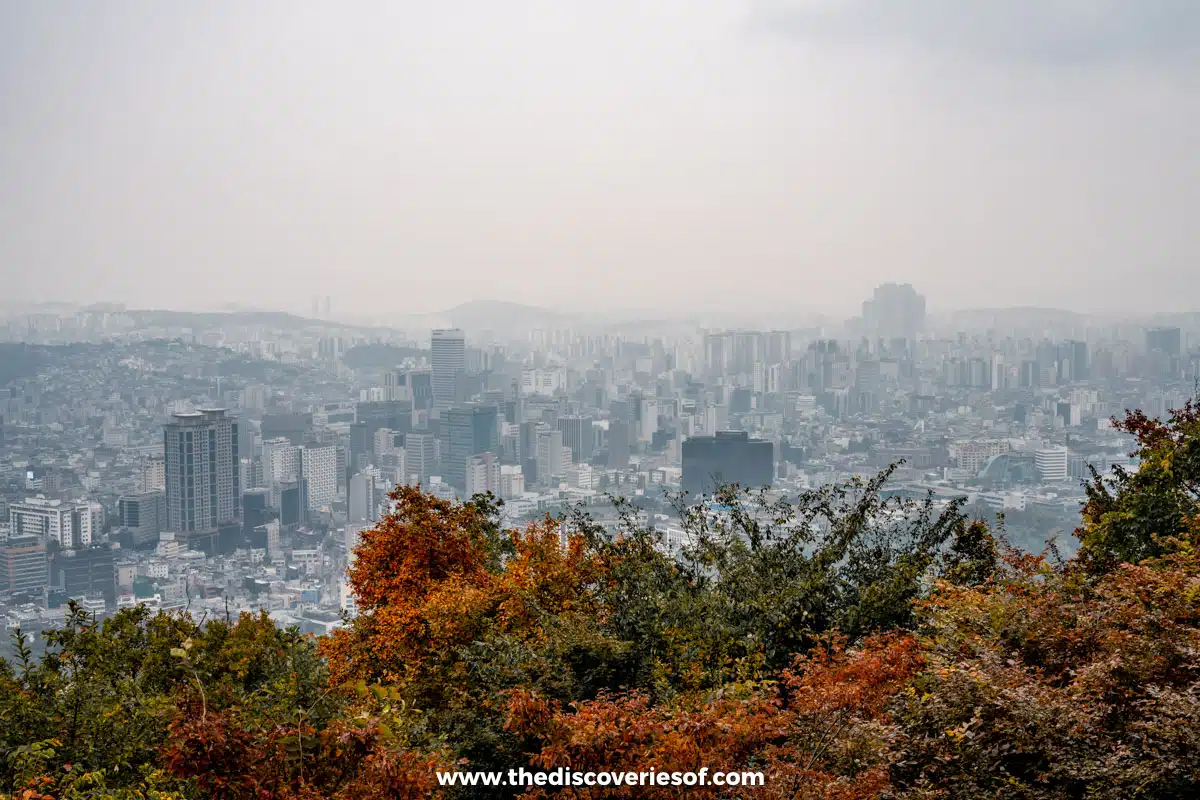
Between the two, I elbowed my way to a window on the Namsan cable car, sat in on a royal birthday banquet at Changgyeonggung, courtesy of augmented reality, watched the ginkgo trees around Gyeongbokgung turn yellow and peered through the mist at Aegibong towards North Korea. I carved my own stone seal, had a scrub in Sinsa-dong that was vigorous even by the standards of the many I’ve had, and found one of my favourite bars in the city at the top of a flight of stairs in Euljiro.
Everything you need to plan your own visit is below, with links to every guide to Seoul on the site.
Some links on this page are affiliate links, which means I may earn a small commission, at no extra cost to you, if you book through them.
Start here
 How to spend 3 days in Seoul, from royal palaces to a loo with a view
 Changgyeonggung, the Seoul palace I’d choose over all the others
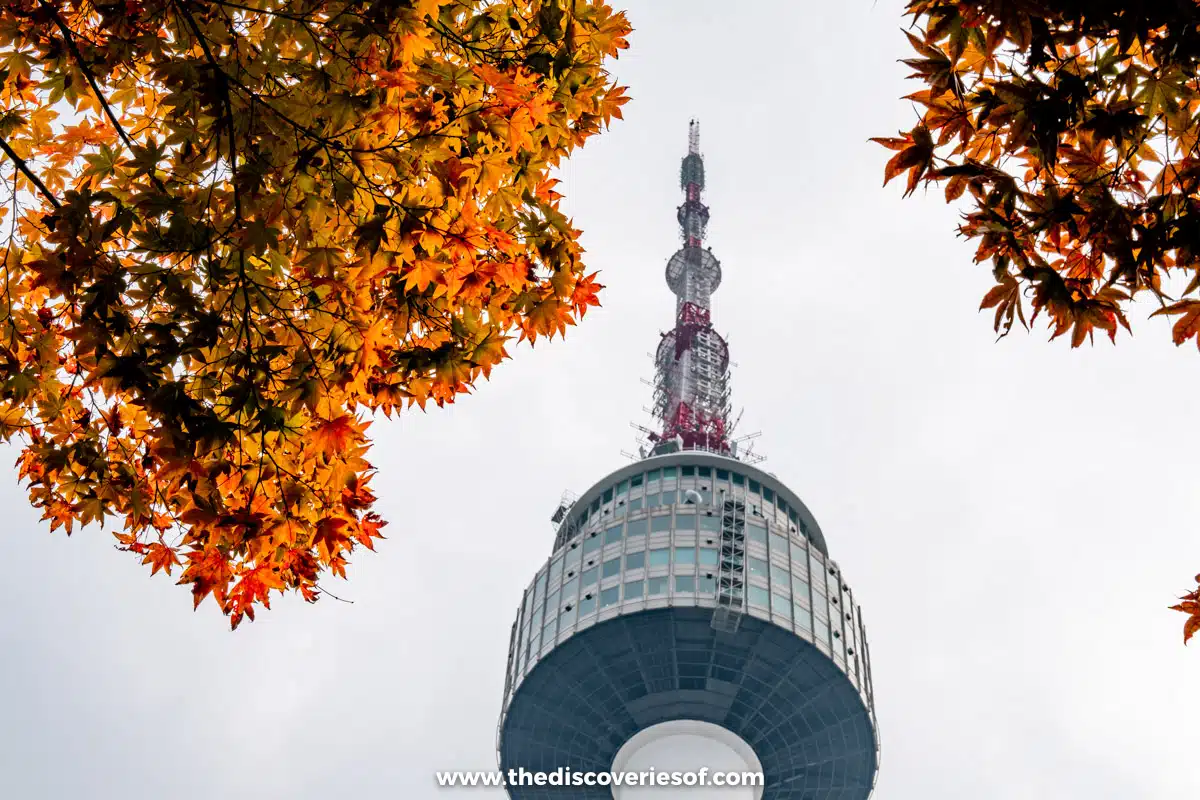
 Is N Seoul Tower worth it? The cable car, the views and a loo with a view
When to go
Spring and autumn are the seasons to aim for. Cherry blossom tends to be at its best in the first half of April, and from mid-October into November the maples on Namsan turn red and the ginkgo trees in the palace grounds go a startling yellow. Both bring settled weather, with Seoul averaging highs of about 18°C in April and 20°C in October. Summer is hot and humid, with August highs around 30°C, and the jangma rains soak the city from late June to late July. Winter is dry, clear and bitterly cold: January highs barely reach 2°C, and nights drop to about -5°C.
When I rode the cable car up Namsan in October, the maples had already turned orange and red. Book well ahead if you’re aiming for the same weeks: autumn is peak season for Koreans too, and the palaces and Bukchon are busiest on weekend afternoons. My guide to South Korea in October has the month’s festivals and weather.
Getting there and around
- Skyscanner: flights to Seoul Incheon.
- K-ETA: the official site for Korea’s electronic travel authorisation, which most visitors won’t need until 2027.
- Naver Map: download it, or KakaoMap, before you land, as Google Maps won’t give you proper directions.
- Korail: KTX tickets to Busan, Jeonju, Gangneung and Andong.
- Booking.com: hotels across Seoul.
Almost everyone flies into Incheon International Airport, about 50 km to the west. From there, take the AREX train: the express gets you to Seoul Station without a stop in 43 minutes (fares are around 10,000 won), while the all-stop service takes a little over an hour and costs about half as much.
Once you’re in the city, the subway does nearly everything. Convenience stores sell the rechargeable T-money card: load it with credit and tap it at the gates, and each ride costs 1,550 won. If you’ll ride a lot, the Climate Card gives unlimited subway and city bus travel from 5,000 won a day, with a one-off 3,000 won charge for the card. I kept my T-money card topped up at convenience stores and got around for less than £4 a day. Taxis are cheap and plentiful, and the Uber and K.Ride apps both take overseas cards.
For the rest of the country, the KTX leaves from Seoul and Yongsan stations: Busan is about two and a half hours away and Jeonju about an hour and three-quarters.
Where to stay
Myeongdong
The most convenient base for a first trip: the subway on your doorstep, the cable car up Namsan a short walk away and street food stalls on every corner after dark. I checked into the Four Points by Sheraton Josun, which I found well located, if a tiny bit bland.
Insadong and Jongno
The old heart of the city, within walking distance of Gyeongbokgung, Changgyeonggung, Bukchon and Jogyesa, with tea houses and craft shops in the lanes. It’s also where I ate one of the best meals of my trip, at the Nine Tree hotel.
Hongdae
The university district in the west, for indie shops, live music and late-night bars, and a direct ride on the AREX from the airport.
Gangnam and Sinsa
Polished, modern and south of the river, with designer shopping on Garosu-gil and the women-only Spa Lei in Sinsa-dong.
My 3 days in Seoul itinerary has more on where to base yourself.


Tours
Know before you go
Top things to do
Join a royal birthday party at Changgyeonggung
The east-facing palace that won me over, thanks to an augmented reality room where a 19th-century banquet for a queen dowager’s 60th birthday plays out on screen in front of you. When I visited in late October, the trees around Chundangji pond were gold and crimson. Tickets are just 1,000 won, and it’s closed on Mondays.
Read next: Changgyeonggung, the Seoul palace I’d choose over all the others
Ride Namsan’s cable car to the tower
The cabins up Namsan fill fast, and getting a window takes some determination. At the top, the observation deck circles the tower, and the toilets have floor-to-ceiling windows over the city. Expect to pay 15,000 won for a return on the cable car and 29,000 won for the deck.
Read next: Is N Seoul Tower worth it? The cable car, the views and a loo with a view
Queue for pancakes at Gwangjang Market
The covered market in Jongno has been trading since 1905. Head for Sunhui-ne Bindaetteok, where mung bean pancakes are ground and fried while you wait, then try yukhoe in the raw beef alley. Go before midday or in the middle of the afternoon to miss the worst of the queue.
Read next: Eat your way around Gwangjang Market, Seoul’s century-old food market
Watch the guards change at Gyeongbokgung
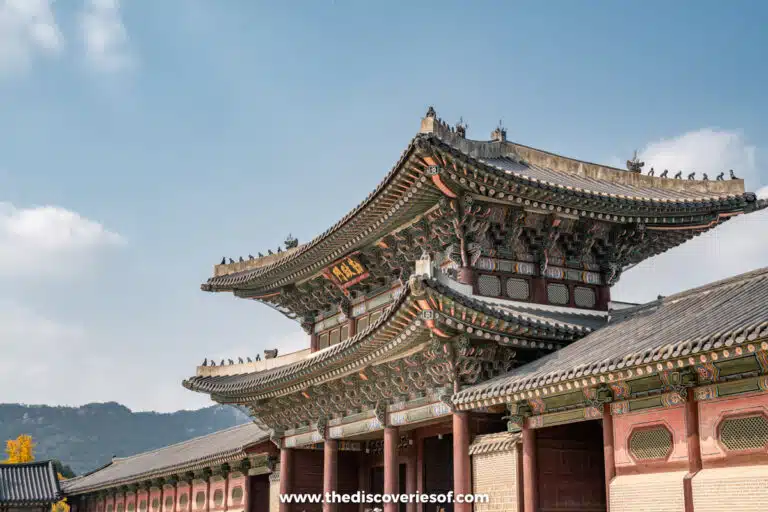
Seoul’s grandest palace, founded in 1395, with a banquet hall standing on stone pillars in its own square lake. The guard ceremony runs at 10am and 2pm, entry is 3,000 won (free if you’re in hanbok) and it’s closed on Tuesdays.
Read next: Gyeongbokgung Palace guide: guard ceremonies, night openings and a hall on a lake
Walk the lanes of Bukchon before 5pm
Hundreds of hanok houses step down the hill between the two biggest palaces. These are people’s homes, so talk quietly and stay off the doorsteps. The busiest lanes are a red zone, open to visitors only from 10am to 5pm.
Read next: Wander Bukchon Hanok Village, Seoul’s prettiest lanes (before the 5pm curfew)
See North Korea without a tour at Aegibong
An observatory in Gimpo looks across the estuary to North Korean farmland about 1.4 km away. My visit came on a day of thick mist, so check the forecast. Bring your passport: the park sits inside the civilian control zone.
Read next: Aegibong Peace Ecopark: a DMZ alternative near Seoul, with no tour needed
Get scrubbed at Spa Lei
A women-only spa in Sinsa-dong, open around the clock, where you soak in the hot pools before an attendant scrubs you down. Entry is 22,000 won by card; bring cash for the treatments.
Decide whether to rent a hanbok
Hanbok rental shops line the streets around the palaces, and wearing one gets you into them for free. It isn’t for everyone: I tried it once in Jeonju and found it awkward.
Read next: Should you rent a hanbok in South Korea? Free palace entry is only half the story
Suggested itineraries
Three days in Seoul
3 days
Gwanghwamun Square, Gyeongbokgung and Insadong, then N Seoul Tower at dusk > Changgyeonggung, Bukchon, Gwangjang Market and a cocktail in Euljiro > Seodaemun Prison, Aegibong Peace Ecopark and a scrub at Spa Lei
A palace and market weekend
2 days
Gyeongbokgung, Jogyesa and lunch in Insadong > Changgyeonggung, Bukchon and dinner at Gwangjang Market
Seoul and beyond in ten days
10 days
Seoul > Andong and Hahoe > Busan > Jeonju > back to Seoul
You’ll find the full day-by-day plan in 3 days in Seoul, and the longer route in my 10-day South Korea itinerary.
Hidden Seoul
Seal carving at Kaja
For centuries, Koreans signed documents with a dojang, a personal stone seal, and they’re still used for banking today. At Kaja, I picked a stone, worked out my name in hangeul and carved it in reverse, which is fiddlier than it sounds.
Nogari Alley
Round the corner from Euljiro’s cocktail bars, plastic tables spill into the lanes after work, and office workers drink cheap beer over dried pollack (nogari) with a chilli and mayonnaise dip.
Daeonsil, Changgyeonggung
Past Chundangji pond, at the top of the palace gardens, a white glasshouse from 1909 holds Korean native plants. It was the country’s first Western-style greenhouse, and most visitors walk straight past it.
Dishes and drinks to try
Dishes to try
- Bindaetteok: crisp mung bean pancakes, fried to order at Gwangjang Market.
- Bulgogi: thin slices of marinated beef, best as a set with rice, soup and banchan.
- Yukhoe: raw beef seasoned with sesame and topped with egg yolk and pear.
- Mayak gimbap: small rice rolls with a mustard dip, so moreish they’re named after a drug.
- Korean barbecue: pork belly or galbi grilled at the table and wrapped in lettuce.
- Tteokbokki and hotteok: spicy rice cakes and syrup-filled pancakes from the street carts.
What to eat in South Korea covers the rest, with where to try each one.
Drinks to try
- Soju: the clear spirit that goes with almost every Korean meal, drunk in shots.
- Makgeolli: cloudy, lightly fizzy rice wine, served in bowls and best with pancakes.
- Traditional tea: omija (five-flavour berry) or jujube tea in an Insadong tea house.
- Cocktails in Euljiro: the classics, made with precision at Ace Four Club.
Must-try bars and restaurants
Sunhui-ne Bindaetteok, Gwangjang Market
The stall that does one thing, mung bean pancakes packed with pork and kimchi, at about 5,000 won each. I went on my guide’s tip, and if you only eat one thing in the market, make it these.
Read next: Eat your way around Gwangjang Market, Seoul’s century-old food market
Insadong Hangane Bulgogi Jumak
A tiny restaurant in an Insadong alley that serves a bulgogi set I still think about. Mine cost 18,000 won; expect around 19,000 now. Ask for the low tables on the raised platform and you’ll usually skip the queue. It opens on weekdays only.
Nine Tree, Insadong
A proper treat: an unhurried dinner of polished courses with matching wines, about $165 a head, at the hotel now called Nine Tree by Parnas Seoul Insadong. The grilled octopus was a highlight.
Ace Four Club, Euljiro
One of my favourite bars in Seoul, up the stairs at 105 Eulji-ro in a 60-year-old teahouse, with dark wood, low lights and classic cocktails at around 18,000 to 24,000 won.
Costs and budgeting
- A single subway ride: 1,550 won with a T-money card
- AREX express from Incheon to Seoul Station: around 10,000 won
- Gyeongbokgung: 3,000 won (due to rise from January 2027); Changgyeonggung 1,000 won
- Namsan cable car and N Seoul Tower: 15,000 won return, plus 29,000 won for the observation deck
- Mung bean pancake at Gwangjang Market: about 5,000 won
- Bulgogi set at Hangane: about 19,000 won
- Cocktail at Ace Four Club: 18,000 to 24,000 won
- Hanbok rental near the palaces: about 15,000 to 25,000 won for two to four hours
Safety, health and tipping
Safety
Seoul is one of the safest big cities you’ll visit, day or night. The country does have a problem with hidden cameras, so check changing rooms and toilets. Keep three numbers handy: 112 (police), 119 (ambulance and fire) and 1330, the English-speaking Korea Travel Hotline, open 24 hours.
Health
Healthcare is excellent, and pharmacies are everywhere. The tap water is treated and safe, though most locals drink filtered or bottled water. In spring, fine dust and yellow dust from the west can push air quality down for days at a time: check a forecast app and wear a KF94 mask on bad days. Summers are hot and humid, so carry water.
Tipping
There’s no tipping culture in Korea, and leaving extra can cause confusion. Some upmarket hotels and restaurants add a service charge to the bill; otherwise, leave nothing extra. My South Korea travel tips have more.
Practical tips and info
Tips for travelling
- Check the day before you set out: Changgyeonggung, the Seoul Museum of History and Seodaemun Prison close on Mondays, and Gyeongbokgung on Tuesdays.
- Get Naver Map or KakaoMap on your phone before you arrive, as Google Maps can’t do walking or transit directions here.
- Keep some won in your wallet for the market stalls and spa treatments; almost everywhere else takes cards.
- Shop tax-free: show your passport at the till in Olive Young and other tax-free shops, or claim it back at the airport. Mine took about five minutes.
- Book Aegibong online at weekends and on holidays, as daily visitor numbers are capped.
How to see the best for free
Some of Seoul’s best sights cost nothing. Bukchon’s lanes, Jogyesa’s courtyard, Gwanghwamun Square and the Cheonggyecheon stream are all free, and so is the changing of the royal guard just inside Gwanghwamun gate. The permanent galleries of the Seoul Museum of History and the National Museum of Korea charge no admission, and you can walk up Namsan through the woods instead of taking the cable car: the terrace at the foot of N Seoul Tower has a view worth the climb. Rent a hanbok and the royal palaces are free as well.
Packing
- Shoes you can slip on and off: you’ll take them off for floor seating in traditional restaurants and at temple halls.
- Layers in spring and autumn: days can be warm, but evenings and early mornings turn chilly fast, especially late in October.
- A universal travel adaptor: Korea uses European-style round-pin plugs.
- Room in your case for the way home: Seoul’s K-beauty shops are very hard to resist, and my suitcase was significantly heavier on the flight back.
Travel insurance
Travel insurance is the fail-safe that will help any trip go to plan, from medical emergencies to lost luggage and cancellations. I use AXA Travel Insurance.
Interesting facts
- Seoul has been the capital since 1394, when the first Joseon king moved his court to Hanyang, as the city was then called.
- Hangeul, the Korean alphabet, was created under King Sejong, whose gilded statue sits on Gwanghwamun Square, in 1443.
- About half of South Korea’s population lives in Seoul and the towns around it.
Handy phrases
- Hello: annyeonghaseyo
- Thank you: gamsahamnida
- How much is it?: eolmayeyo?
- The bill, please: gyesanhae juseyo
Time zone
Korea Standard Time (UTC+9) all year round, with no daylight saving: nine hours ahead of the UK in winter and eight in summer.
Electricity and adapters
220V, with type C and F plugs.
Map
Insider tips, straight to your inbox
All Seoul guides
 Should you rent a hanbok in South Korea? Free palace entry is only half the story
 Aegibong Peace Ecopark: a DMZ alternative near Seoul, with no tour needed
 Wander Bukchon Hanok Village, Seoul’s prettiest lanes (before the 5pm curfew)
 Gyeongbokgung Palace guide: guard ceremonies, night openings and a hall on a lake
 Changgyeonggung, the Seoul palace I’d choose over all the others
 Eat your way around Gwangjang Market, Seoul’s century-old food market
 Is N Seoul Tower worth it? The cable car, the views and a loo with a view
 32 things to do in Seoul, from a virtual royal banquet to cocktails in an old teahouse
 How to spend 3 days in Seoul, from royal palaces to a loo with a view



Watch on YouTube
See the places before you go
Short films from the places in my guides, so you can see what a destination really looks and feels like before you go.
Subscribe on YouTube youtube.com/@thediscoveriesof