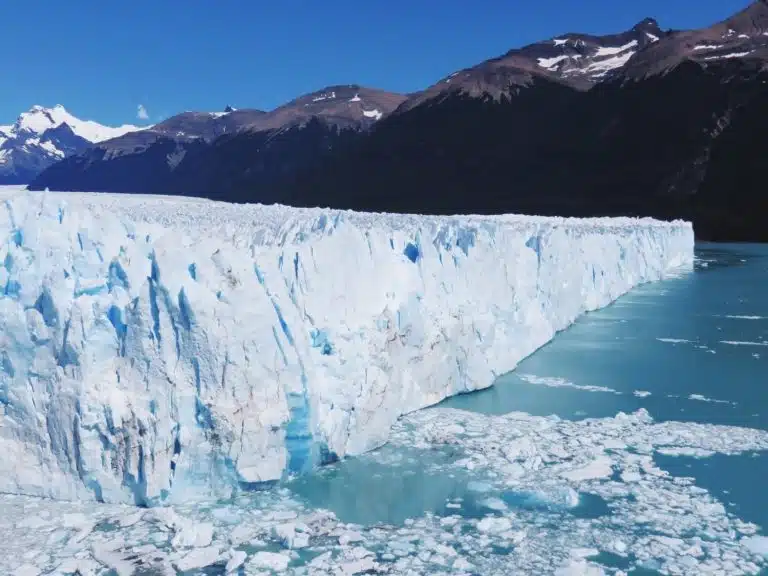
A five-kilometre wall of blue and white ice, the crack and roar as chunks crash into the lake, and boardwalks close enough to feel the cold coming off it: this is my guide to the Perito Moreno Glacier, with how to get there from El Calafate, the boardwalk circuits, the boat trips, walking on the ice and the park fee as it stands today.
So, you think you’ve seen it all. And then you see the Perito Moreno Glacier: a vast expanse of jagged peaks, gleaming white and blue, thundering as chunks break off and fall into the water. Of all the breathtaking sights in Patagonia (and believe me, there are more than a few), there’s nothing quite like watching, and hearing, tonnes of ice calve from its face and splash into the lake below.
Standing on the viewing walkways, close enough to feel the cold rolling off the ice, is one of those experiences that stays with you. For me, it’s worth the trip to Patagonia on its own.
It’s also one of the easiest great glaciers in the world to see up close. The glacier sits in Los Glaciares National Park, about 80km from El Calafate, and you can walk the boardwalks that face its front, sail beneath its walls or strap on crampons and hike across it. This guide covers all of it: how the glacier works and why it’s changing, how to get there, which boardwalk circuits to walk, the boat trips and ice treks worth booking, when to go and what to wear.
Some links in this article may be affiliate links, which means we may receive a small commission, at no additional cost to you, if you decide to purchase through one of my recommended partners.
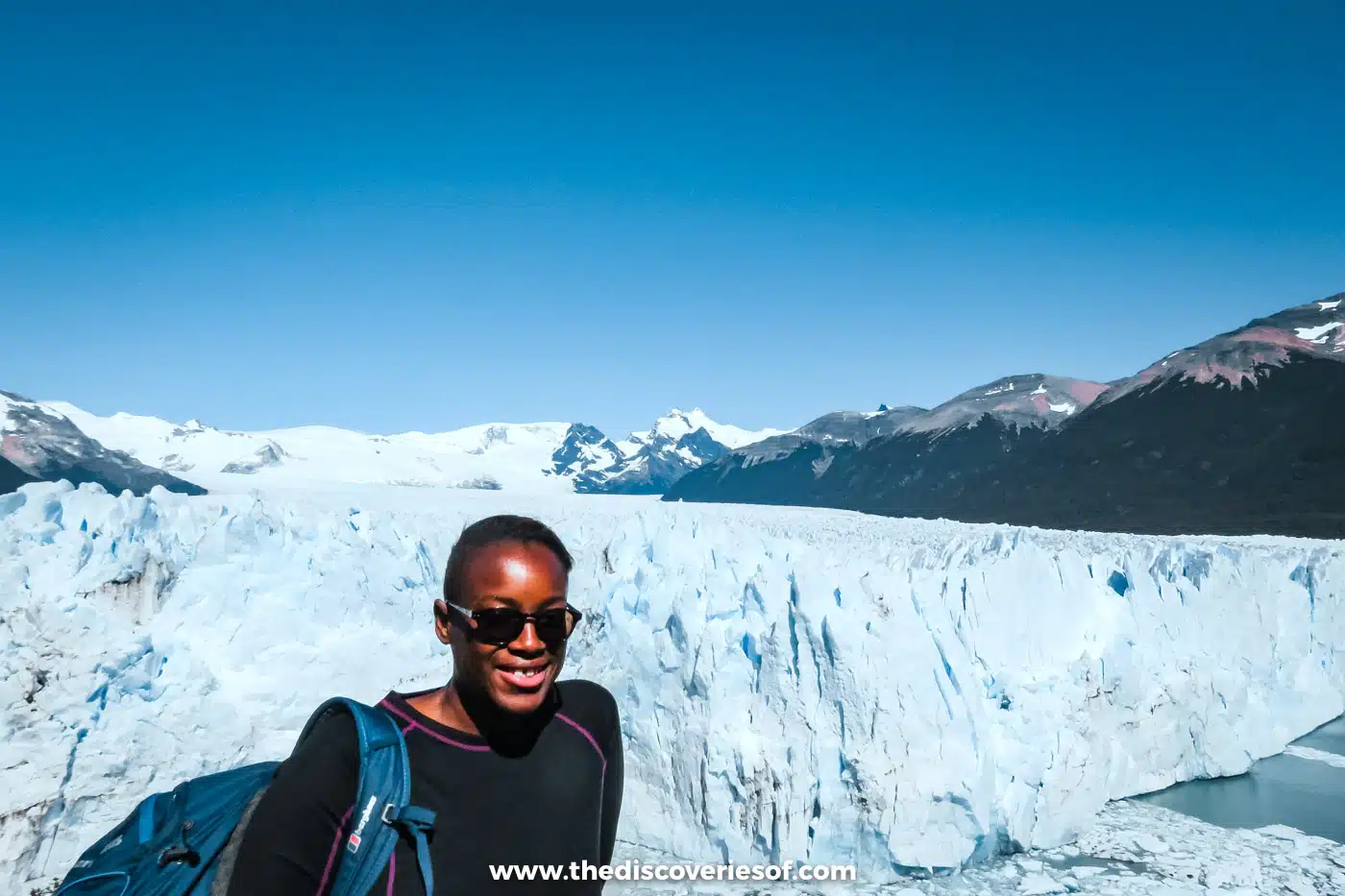
Perito Moreno Glacier at a glance
- Where: Los Glaciares National Park, Santa Cruz province, in Argentine Patagonia
- Getting there: about 80km from El Calafate, roughly an hour and a half by road, by bus, tour, taxi or hire car
- Park entry: AR$50,000 a day for foreign visitors and AR$25,000 for Argentines, paid on top of any tour unless it says it’s included
- Opening hours: 8am to 8pm from October to April, and 8am to 6pm from May to September
- Time needed: three to four hours for the boardwalks; a full day with a boat trip or ice trek
- Best time to go: October to April, with December to February the busiest months
- Don’t miss: finding a spot on the boardwalks and waiting for the ice to calve
What makes the glacier so special
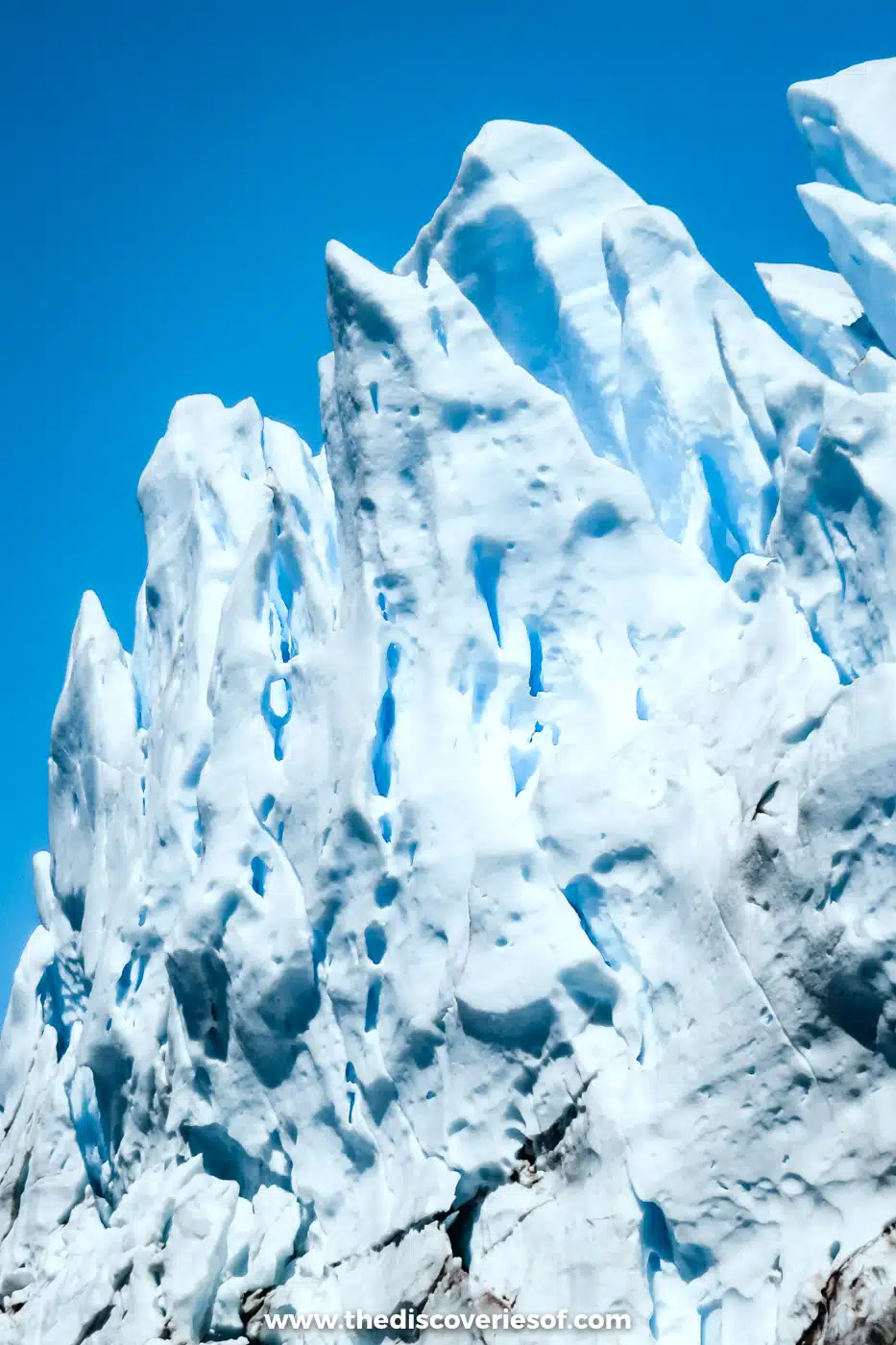
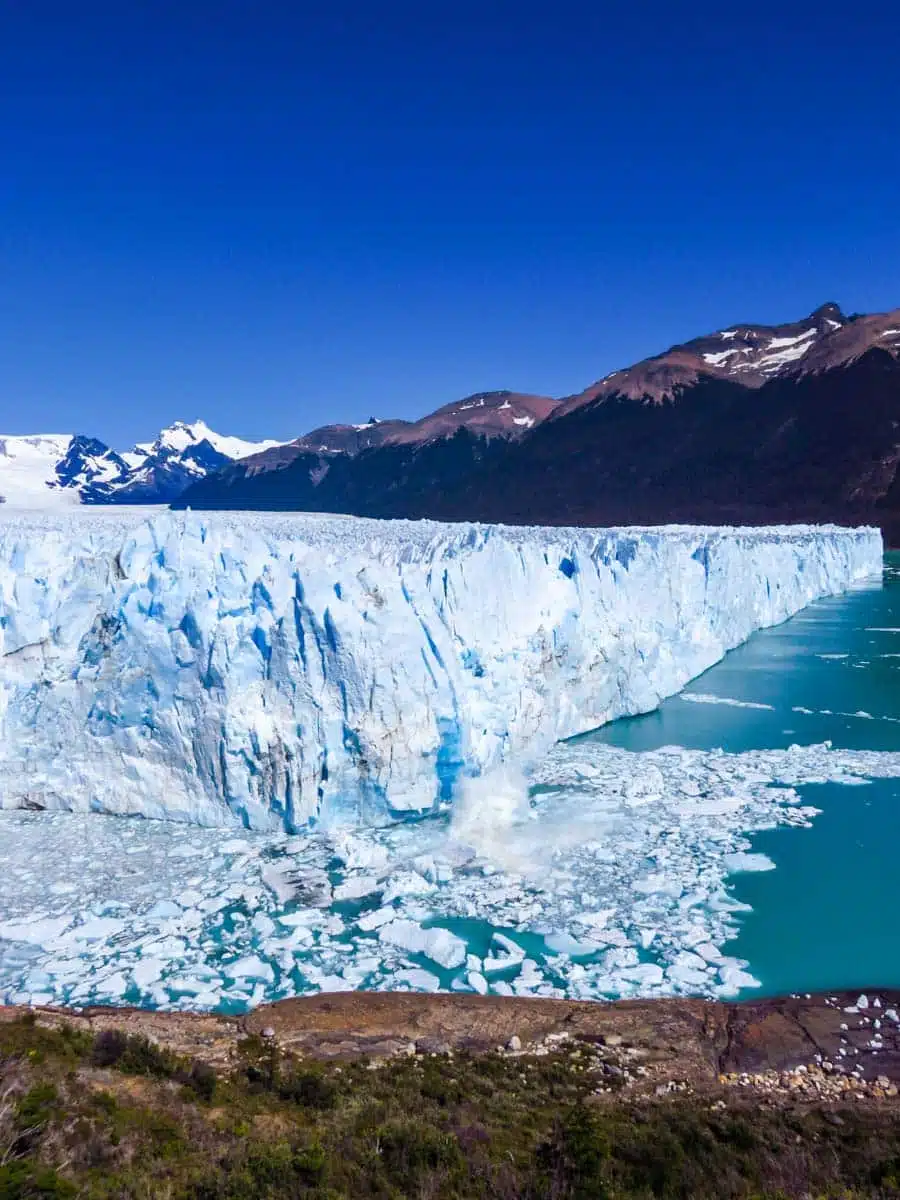
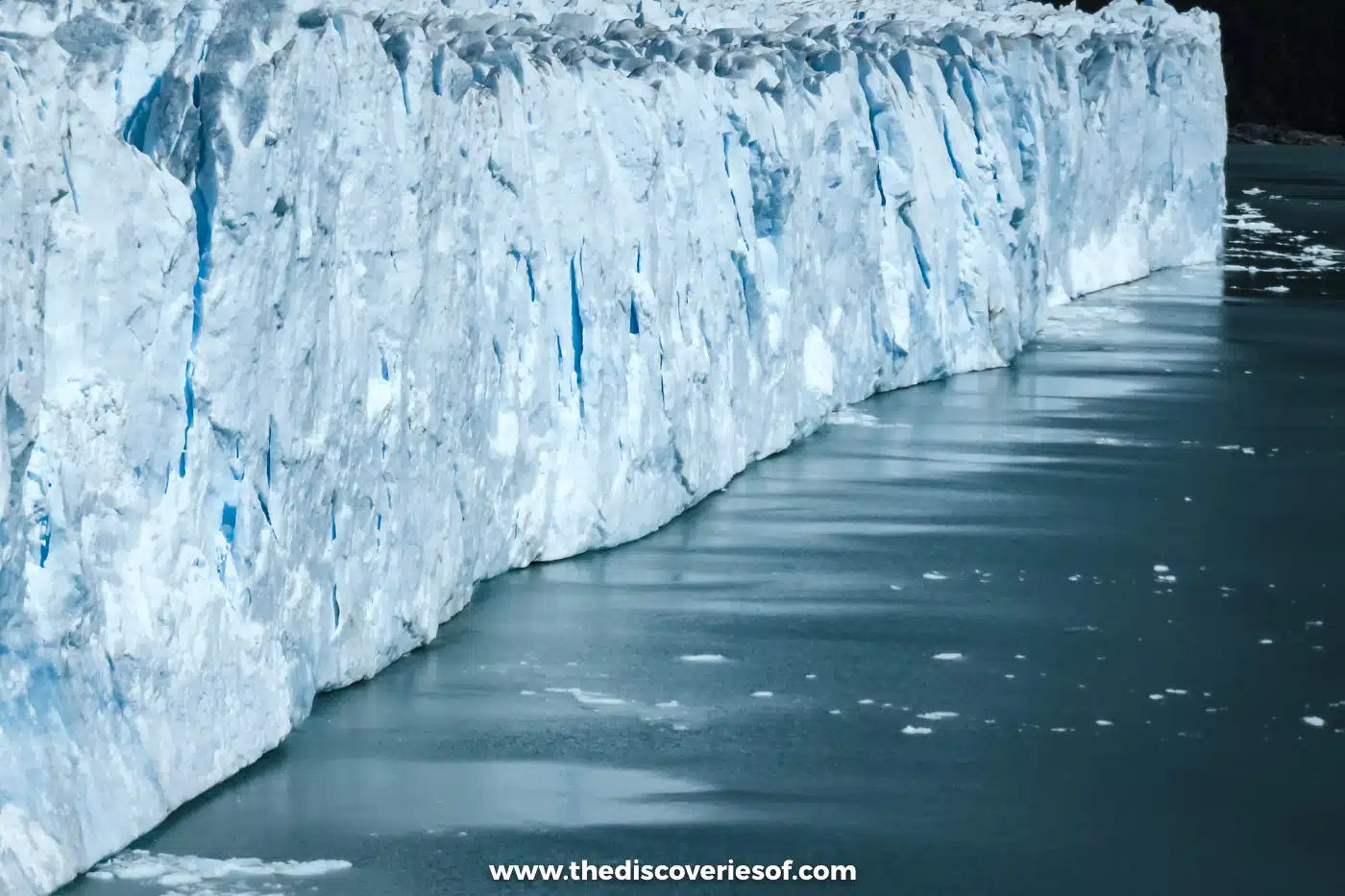
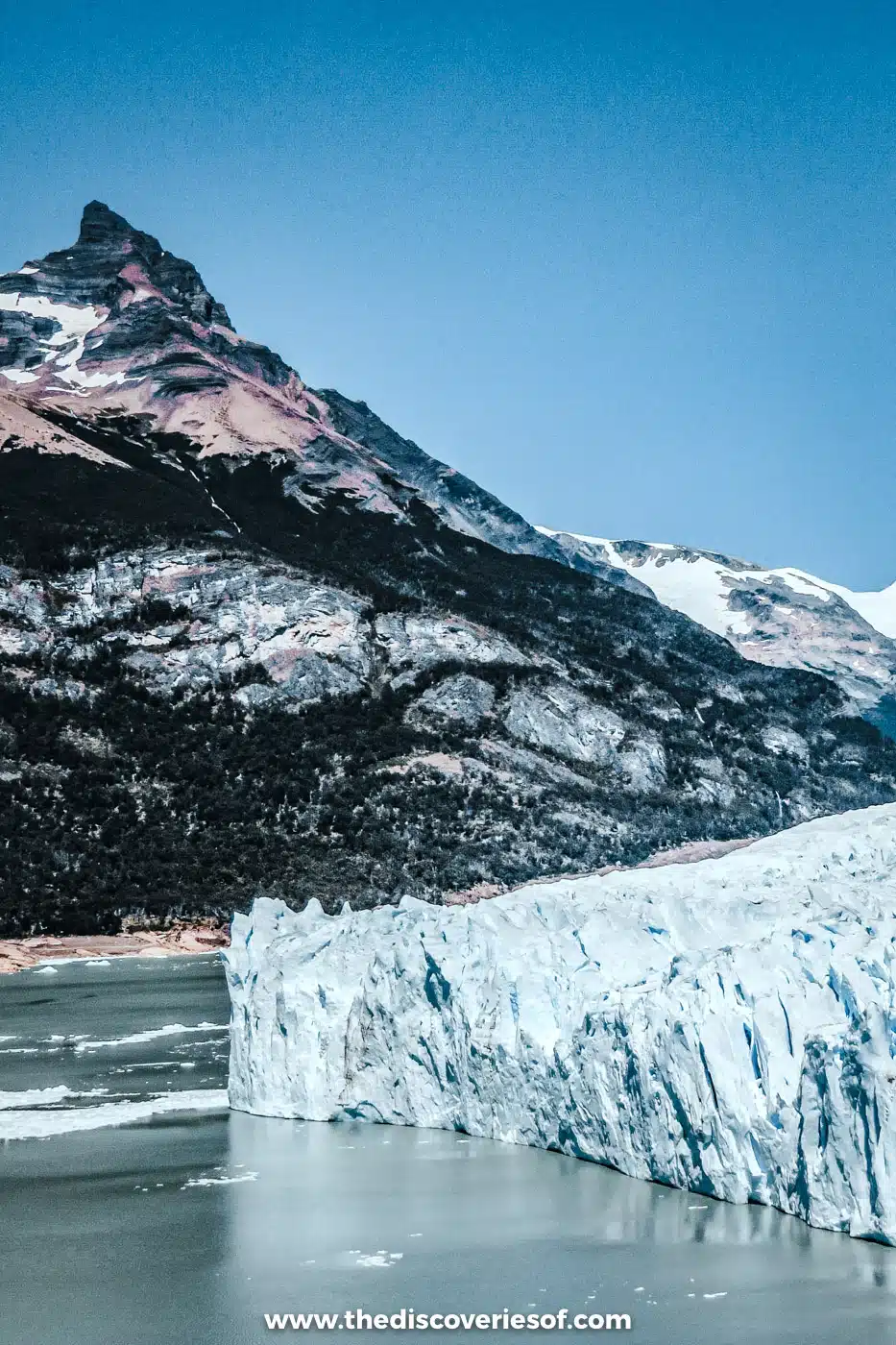
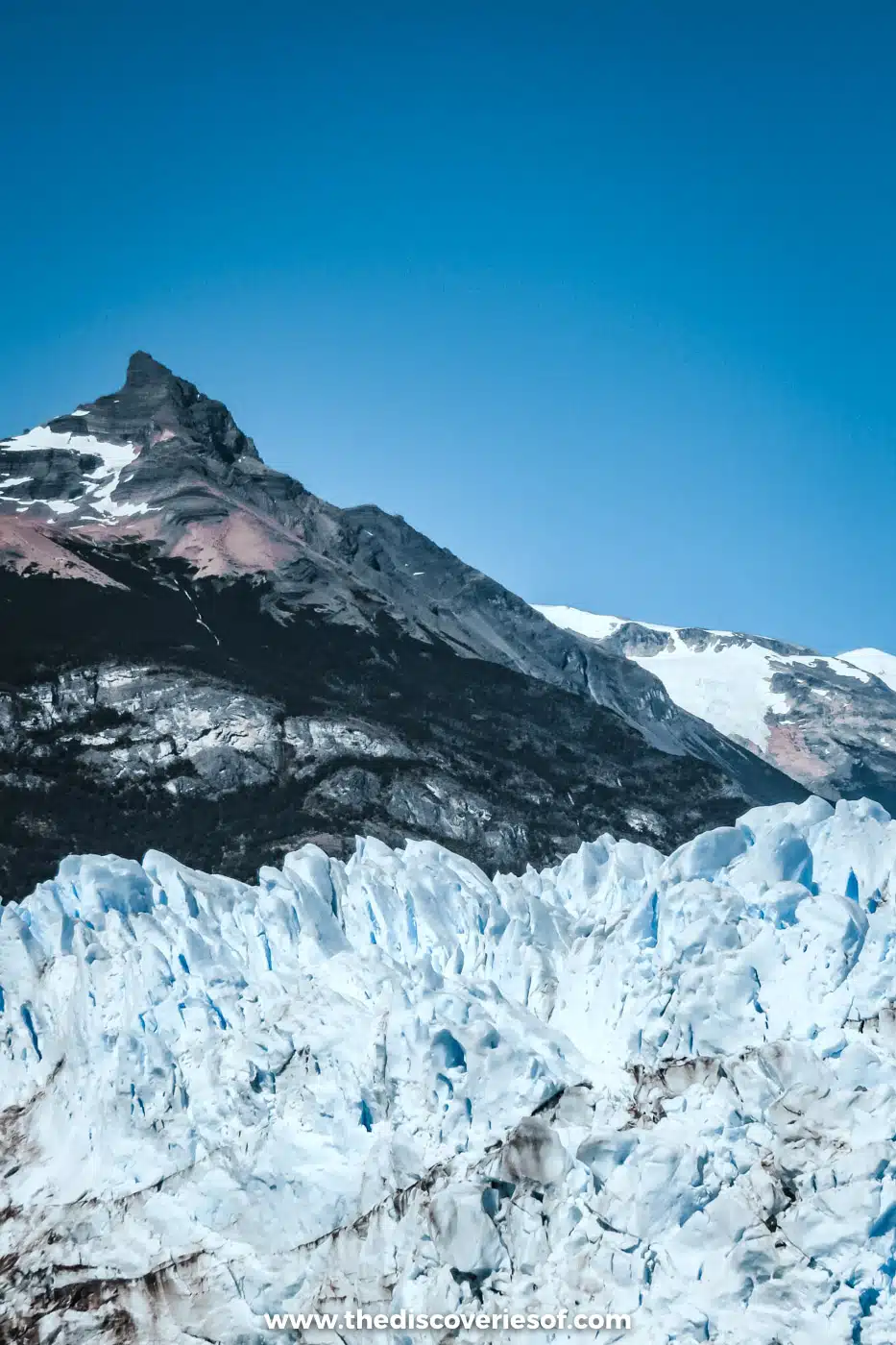
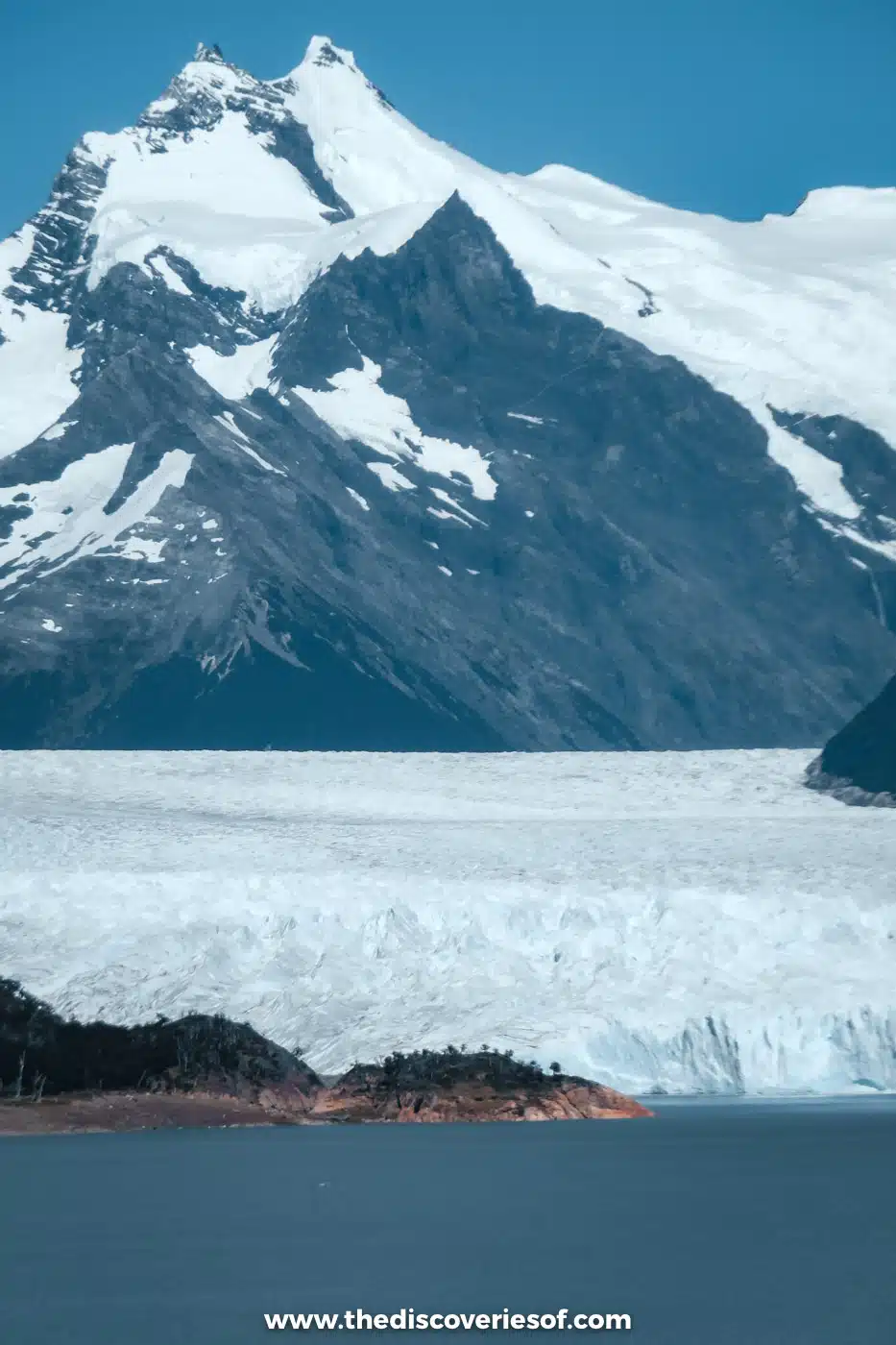
The Perito Moreno is a tongue of ice about 30km long that flows down from the Southern Patagonian Ice Field, one of the largest expanses of ice outside the polar regions. Its front is about 5km wide and rises as much as 70m above the milky turquoise water of Lago Argentino, and the ice runs far deeper below the surface.
What sets it apart is how active it is. In the middle, the ice moves forward by around two metres a day, so the front is constantly pushing out over the water and breaking away. Calving happens throughout the day, from small showers of ice to slabs the size of a building, and the sound reaches you before your eyes have found where it came from.
The glacier takes its name from Francisco Pascasio Moreno, the 19th-century explorer known as “el Perito” (the expert) for his role in Argentina’s border dispute with Chile. It was named in his honour in 1899, and Los Glaciares National Park has been a UNESCO World Heritage Site since 1981.
The ruptures
Every few years, the glacier puts on its most famous show. As the front advances, it pushes right across the narrow Canal de los Témpanos to the Península de Magallanes, the spit of land the boardwalks are built on. The ice forms a dam that cuts off the Brazo Rico, the southern arm of the lake, and the water behind it starts to rise, sometimes by many metres. Eventually it forces a tunnel through the ice, the tunnel widens into an arch, and the arch collapses into the lake.
The first rupture was recorded in 1917, and over the past century they have come roughly every four to five years, though never to a timetable. In March 2016 the arch fell in daylight in front of crowds on the boardwalks; in March 2018 and again on 28 December 2019, it collapsed at night, with almost no one there to see it. With the front now thinning, nobody can say when the next one will come.
Is the glacier retreating?
For decades, the Perito Moreno was famous as one of the few glaciers in the world that was holding its ground while others shrank. That’s no longer the case. A study published in Communications Earth & Environment in August 2025, led by researchers at Friedrich-Alexander-Universität Erlangen-Nürnberg, found that the glacier was broadly stable from 2000 to 2019, retreating less than 100m, but has pulled back by more than 800m in places since 2019. Thinning at the front has jumped from about 0.34m a year to an average of 5.5m a year.
The front currently rests on a ridge of bedrock beneath the lake, which seems to explain its long stability. If the thinning carries on, the researchers warn it could lift off that ridge and retreat by several kilometres, though they can’t say when. It remains every bit as staggering to stand in front of, but it’s worth going with clear eyes, and sooner rather than later.
How to get to the glacier from El Calafate
El Calafate is the base for the glacier. Flights from Buenos Aires take about three hours and 15 minutes to its airport, about 20km east of town, and buses run from El Chaltén and from Puerto Natales in Chile, the gateway to Torres del Paine.
From town, Provincial Route 11 runs west along the shore of Lago Argentino. It’s paved all the way. The park entrance, where you pay or show your ticket, is about 30km before the boardwalks, and a few kilometres before the end of the road, the Mirador de los Suspiros gives you your first full view of the ice. Shortly after it, the road passes Puerto Bajo de las Sombras, where the south-face boats and the ice treks leave from.
By bus
The cheapest way to go independently is the regular glacier bus run by Caltur from the El Calafate bus terminal. It leaves in the morning and comes back in the afternoon, giving you several hours on the boardwalks, and the ride takes about an hour and a half each way. Book a day or two ahead in December, January and February, and remember the park fee is extra.
On a tour
A guided tour is the easiest option. Transport, a guide and usually the park ticket are taken care of, and most tours give you the choice of adding a boat trip. This guided tour of the national park and Perito Moreno Glacier is excellent value: it includes hotel pickup, the national park entrance fee and lunch, with an optional one-hour boat trip near the face.
Do
Book the guided Perito Moreno Glacier tour with optional boat cruise from El Calafate.
By car or taxi
Driving yourself gives you the most freedom. You can be at the gates when they open, stop at the Mirador de los Suspiros on the way in and stay on the boardwalks after the buses have gone. Cars can be hired at El Calafate airport and in town. The small car park at the central boardwalk fills up by mid-morning; after that, you park at Puerto Moreno, by the water, and take the free shuttle bus up to the walkways, which runs every 10 to 15 minutes. If you’d rather not drive, taxis and private drivers will take you there and wait.
Park entrance and fee
Tickets
Entry to Los Glaciares National Park is AR$50,000 a day for foreign visitors, AR$25,000 for Argentines and free for children under six. A Flexipass, valid for three days (AR$100,000) or seven days (AR$175,500) over a set period, also covers the El Chaltén trails. Buy tickets online on the Parques Nacionales website, or pay by card or cash at the booth, which has no internet signal.
The fee covers the boardwalks. Boat trips and ice treks are booked and paid for separately, and they still need a park ticket. The booth closes an hour before the park does.
The boardwalks
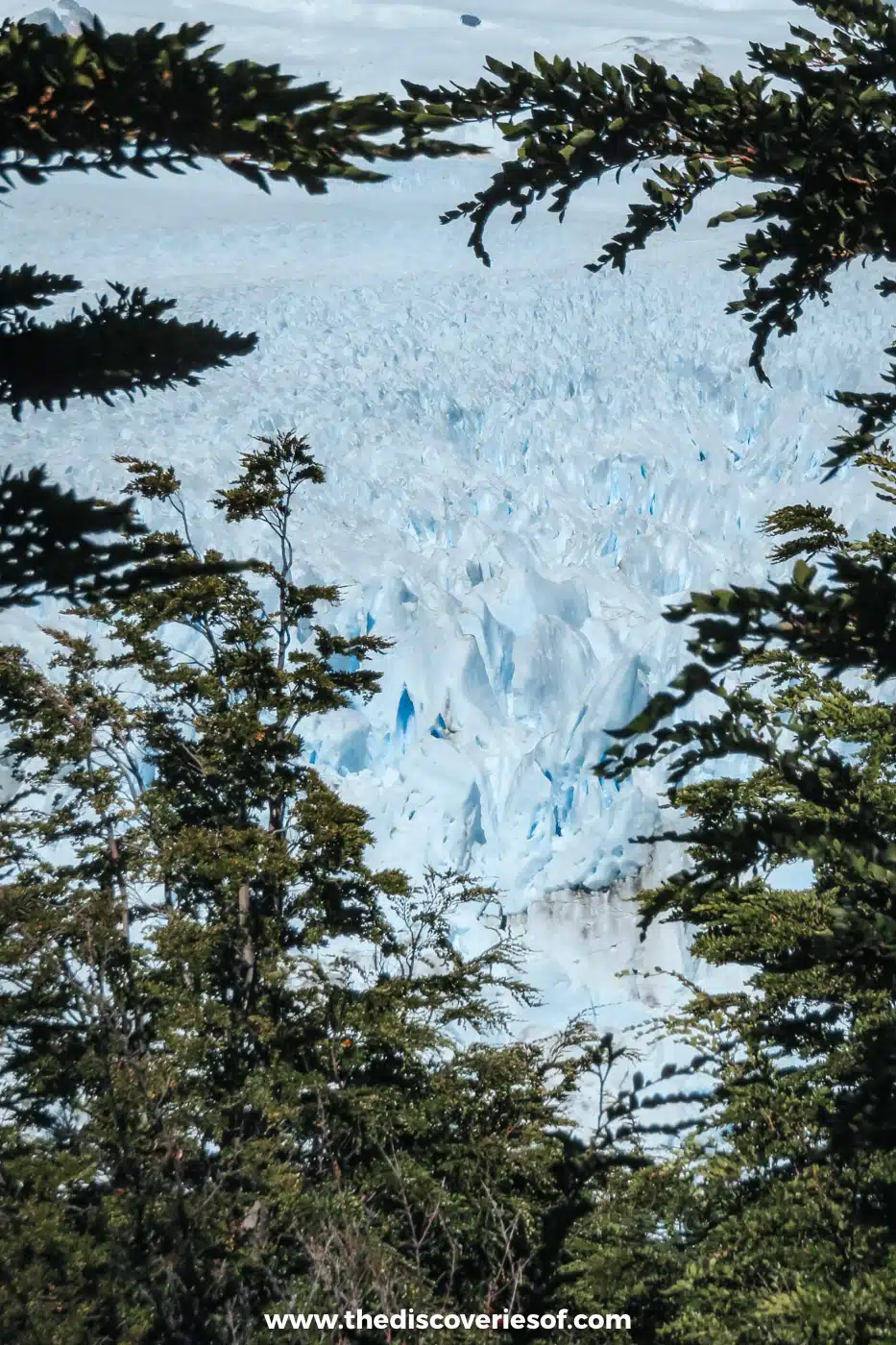
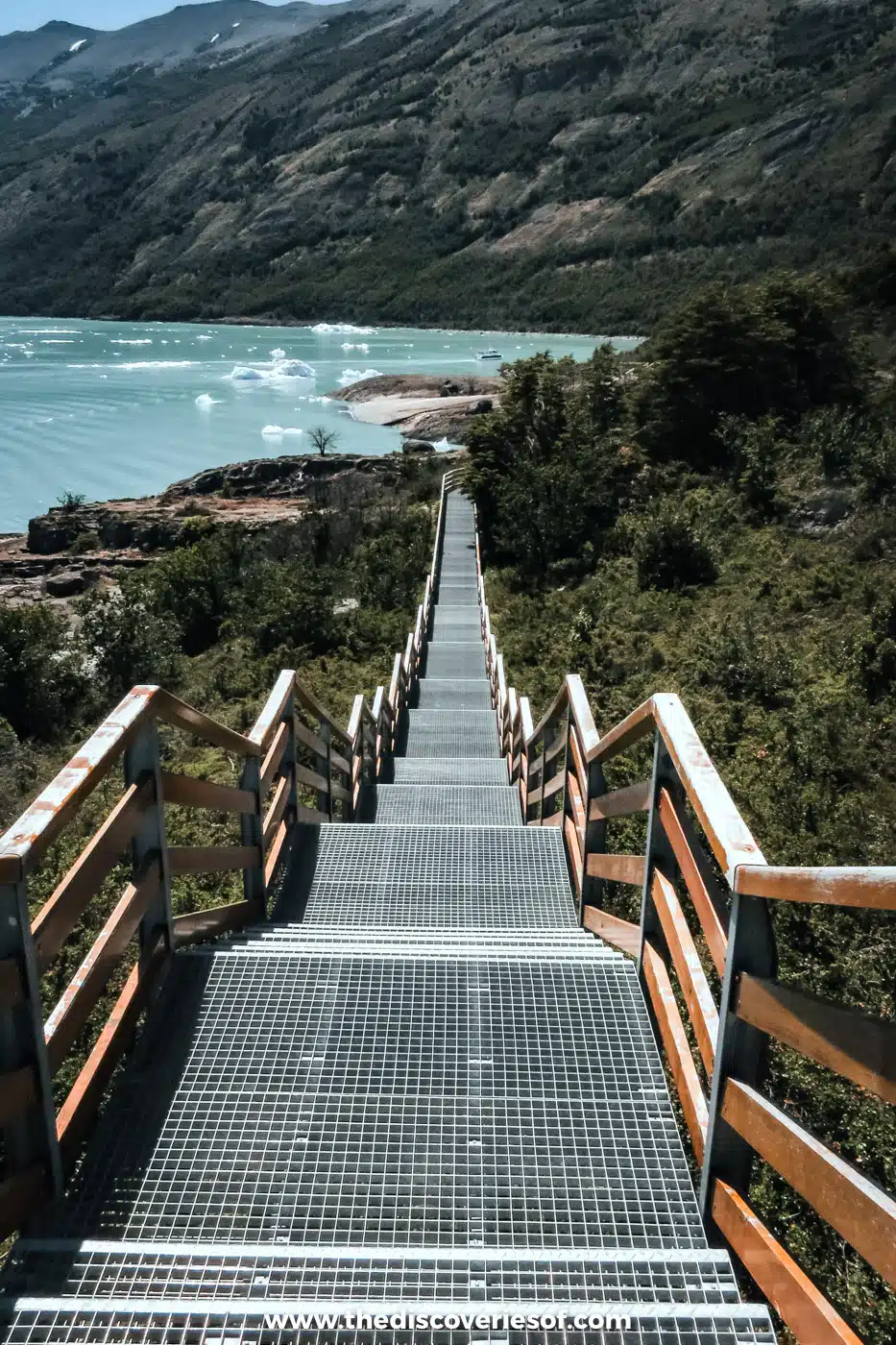
The boardwalks, or pasarelas, are the heart of any visit. More than 4km of metal walkways and stairs wind down the wooded slopes of the Península de Magallanes, facing the north side of the glacier’s front across the water, with viewing balconies at different heights and distances from the ice.
There are five main circuits:
- Central (about 400m): the main viewpoint over the front, and the best place to start. The restaurant, toilets and shop are by its entrance.
- Accessible (about 500m): step-free, with a lift at the start, so it works for wheelchairs and pushchairs.
- Lower (about 1,100m): drops down closer to the water and the ice. Lots of stairs.
- Coastal (about 1,100m): runs along the shore with side views of the north wall and the Canal de los Témpanos, ending near Puerto Moreno. Lots of stairs here too.
- Forest (about 600m): a quieter loop through the trees, if you have time to spare.
Allow three to four hours to walk all of them at an unhurried pace, and longer if you want to sit and wait for the ice to fall. A good order is the central circuit first, then the lower one, then the coastal one. All the paths are easy underfoot, but apart from the accessible circuit, there are plenty of stairs, so it’s worth pacing yourself.
Be ready for the sharp cracking sounds of the glacier moving and shifting. It’s quite a shock to the system at first, but utterly mesmerising, and it’s the best reason to slow down: find a bench on one of the balconies, keep your eyes on the face and wait.
Top tip
Get to the boardwalks when the park opens. Most tour buses arrive mid-morning, so the first hour or two is far quieter, and you’re more likely to find a space in the car park by the central circuit. Late afternoon is calmer again once the day trips have left.
There’s a restaurant and café at the central entrance and another by Puerto Moreno, though plenty of people bring a packed lunch and eat it on the balconies.
Seeing the glacier by boat
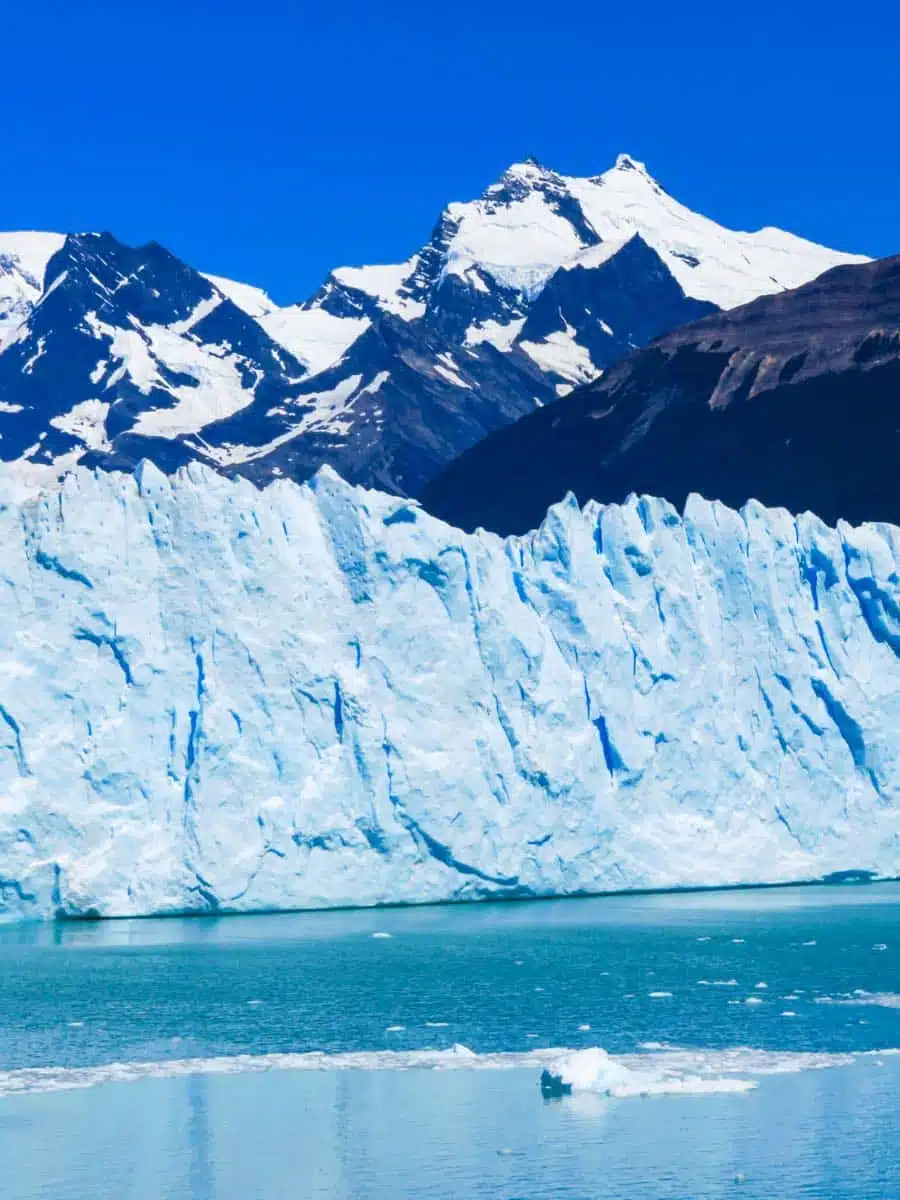
The boardwalks give you height and perspective; a boat gives you scale. From the water, the ice wall towers over you, and you see the blue of the deeper ice in a way that’s hard to appreciate from above. If you can, combine the two: the walking circuits give you different perspectives at different distances from the ice, and a boat adds the most dramatic angle of all, from the water.
Safari Náutico (south face)
The classic boat trip is Hielo y Aventura’s Safari Náutico, a one-hour cruise along the glacier’s south face from Puerto Bajo de las Sombras, about 7km before the boardwalks. The boat keeps a safe distance of around 500m from the ice, which still feels very close when the wall is 60m or 70m high. It sails every day of the year, several times a day, and costs about AR$80,000 per person, plus the park fee. It’s easy to fit around a visit to the boardwalks if you have your own transport.
North face boat
From Puerto Moreno, at the foot of the boardwalks, a one-hour boat trip operated by Southern Spirit sails into the Canal de los Témpanos to the north face, among the icebergs. It’s the simplest boat trip to add to a bus or car visit, as you don’t have to leave the boardwalk area, and prices start at about US$47 through booking sites.
Full-day lake cruises
For more glaciers in one day, full-day cruises sail to the Upsala and Spegazzini glaciers in the northern arm of Lago Argentino, mostly from Puerto Punta Bandera, west of El Calafate. The Glaciers Gourmet full-day cruise takes in Spegazzini and the Upsala channel, serves lunch on board and finishes at the Perito Moreno’s north face, with the option of getting off at the boardwalks. Park entry is extra.
Walking on the ice
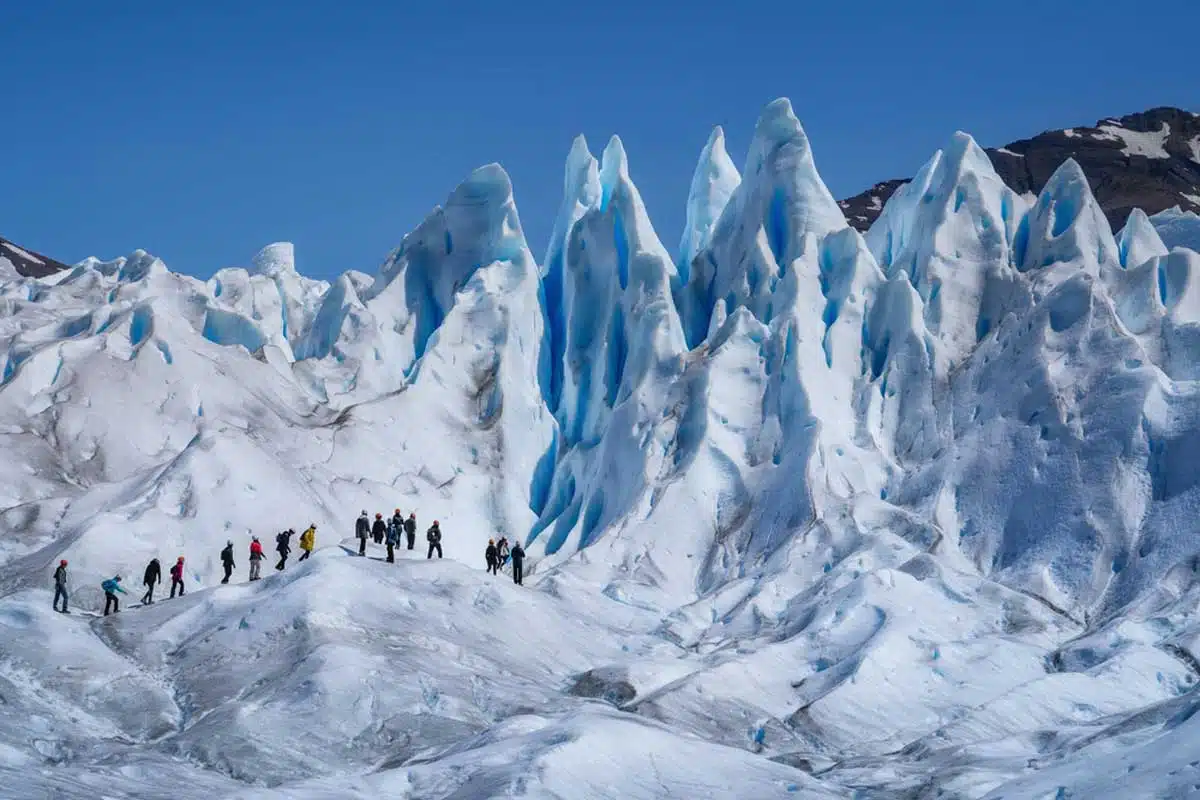
Walking on the glacier itself is something else entirely: ridges of ice, deep blue crevasses and meltwater pools, with the crunch of crampons underfoot. Hielo y Aventura is the only company authorised to take visitors onto the Perito Moreno, and its trips start with a boat across the Brazo Rico from Puerto Bajo de las Sombras to the glacier’s south side.
Minitrekking
The Minitrekking is the shorter and more popular option. After the boat crossing, you walk through the forest along the shore to a refuge, where the guides fit your crampons, then spend about an hour to an hour and a half on the ice in small groups. It’s a moderate walk rather than a climb, and it traditionally ends with a drink poured over glacier ice.
It’s open to anyone aged 8 to 65 with a basic level of fitness, but not to pregnant women or anyone with heart problems or mobility issues. The trek itself takes about four and a half hours from the port, or a full day of around nine and a half hours with transfers from El Calafate and time on the boardwalks. At the operator’s last published rates, it costs about AR$320,000 per adult, or AR$384,000 with transfers, and the park fee is extra. It runs all year.
Do
Book the Minitrekking on the Perito Moreno Glacier, run by Hielo y Aventura, with the park ticket and a meal included.
Big Ice
Big Ice is the longer, tougher trek. You hike up the side of the glacier and spend about three hours deep on the ice, with crampons and a harness, among crevasses, seracs and, depending on conditions, ice caves. It’s a 12-hour day, from roughly 7am to 7pm, and it’s only open to people aged 18 to 50 who are fit and comfortable with heights. Big Ice runs from September to April and costs about AR$630,000 per person, with the park fee on top. Places are limited, so book well ahead for December to February.
Safari Azul and kayaking
If you’d like to touch the glacier without walking on it, Hielo y Aventura’s Safari Azul (Blue Safari) is a gentler alternative. After the boat crossing of the Brazo Rico, you walk an easy 1.5km along the shore and through the trees to the glacier’s south wall, where you can put your hand on the ice. It’s open to ages 6 to 70, and the tour from El Calafate includes about two hours on the boardwalks.
Small-group kayak trips also paddle the lake near the glacier, with the kayaks and technical clothing provided. The minimum age is 14 and prices start at about US$380.
The best time to visit
The main season runs from October to April. December to February brings the longest days and the warmest weather, with average highs of about 19°C and lows of about 7°C in El Calafate in January, but it’s also when the boardwalks, boats and treks are at their busiest. November and March are a good compromise, with fewer people and most trips running.
Don’t expect it to feel like summer at the glacier itself. The wind coming off the ice is cold, and Patagonian weather can turn from sunshine to sleet in an hour.
The park is open all year. In winter, from June to August, highs in El Calafate average about 5°C and nights drop below freezing, but the boardwalks are quiet, and the Safari Náutico and Minitrekking still run. Big Ice doesn’t operate from May to August. For the wider picture, my guide to the best time to visit Argentina goes season by season.
What to wear and bring
- Layers: a base layer, a warm fleece or down jacket and a windproof, waterproof shell, even in January.
- Hat and gloves: the air off the ice is cold, and you’ll want gloves on the ice treks too.
- Sunglasses and sun cream: the glare off the ice and water is strong on clear days.
- Comfortable walking shoes: the boardwalks have a lot of stairs. For the Minitrekking or Big Ice, wear sturdy hiking boots; the crampons strap onto them.
- A packed lunch and water: there’s food at the boardwalks, but on the treks the refuge only serves hot drinks.
- A camera with a good zoom: the zoom on my pocket-sized compact made all the difference for catching the ice as it fell.
Where to stay in El Calafate
I love El Calafate, and with the glacier an easy day trip away, it’s the place to base yourself. Most people stay in the centre, but I’d look at the edges of town: you still have easy access to the restaurants, but your stay is quieter and the views are better.
For a touch of luxury, I highly recommend Xelena Hotel & Suites. It’s on the western edge of town, the side the glacier road leaves from, and you’ll have views over Lago Argentino from your room, the restaurant and the indoor heated pool.
On a budget, I think the best option is Patagonia Queen Hotel Boutique, a characterful wooden hotel just off the main street, with a good restaurant to come back to after a long day out.
Check rates and availability for hotels in El Calafate
My El Calafate guide has more on the town, including where to eat and the best day trips.
Combining the glacier with the rest of Patagonia
I recommend spending at least four days in El Calafate, which gives you a day for the glacier and time for the other trips without rushing. Of the possible day trips, El Chaltén might just be my favourite: a small trekking town beneath the granite spires of Fitz Roy, about three hours north by road. My El Chaltén guide covers the hikes.
Buses also run from El Calafate to Puerto Natales in Chile in about six hours, so it’s easy to pair the glacier with the Torres del Paine W Trek. For a full route, see my 10-day Argentina itinerary, and for everything else on both sides of the border, my Patagonia travel guide.
Perito Moreno Glacier FAQs
Can you visit the glacier without a tour?
Yes. The regular bus from El Calafate or a hire car gets you to the boardwalks, and you can book the Safari Náutico or the north face boat separately. You only need a tour company for the ice treks and the kayak trips.
How long do you need at the glacier?
Three to four hours covers the boardwalks. Add an hour or two for a boat trip, or make a full day of it with the Minitrekking. Big Ice takes up the whole day.
Is the boat trip worth it?
If you have time, yes. The boardwalks show you the size of the glacier’s front; the boat shows you its height, and seeing the ice wall rise above you from the water is something else.
Can children walk on the glacier?
The Minitrekking is open from the age of eight and the Safari Azul from six. Big Ice is for adults aged 18 to 50 only. The boardwalks and boat trips suit all ages.
Map
Read next
- El Calafate, Argentina travel guide: discover the jumping-off point for Patagonia
- El Chaltén: hiking Argentina’s trekking capital
- Torres del Paine W Trek: a step-by-step guide to hiking the W
- 20 landmarks in Argentina you have to see
- The ultimate 10-day Argentina itinerary
- When is the best time to visit Argentina?
- Read all my Patagonia guides
Love this? Save and share on Pinterest

Discover the top things to do, insider tips and hidden gems in our Argentina Travel Guide.
Read the guides →