Planning a trip to El Chaltén? Here’s how to hike to Fitz Roy and Cerro Torre: the best trails with distances and times, getting there from El Calafate, the park fee, when to go, what to pack and where to stay.
There’s a reason El Chaltén calls itself Argentina’s trekking capital. The trails start at the edge of town, and within an hour or two you’re looking up at the granite spires of Fitz Roy and Cerro Torre, two of the most dramatic mountains in South America. No permits to queue for, no long drives to a trailhead: you just lace up your boots and walk.
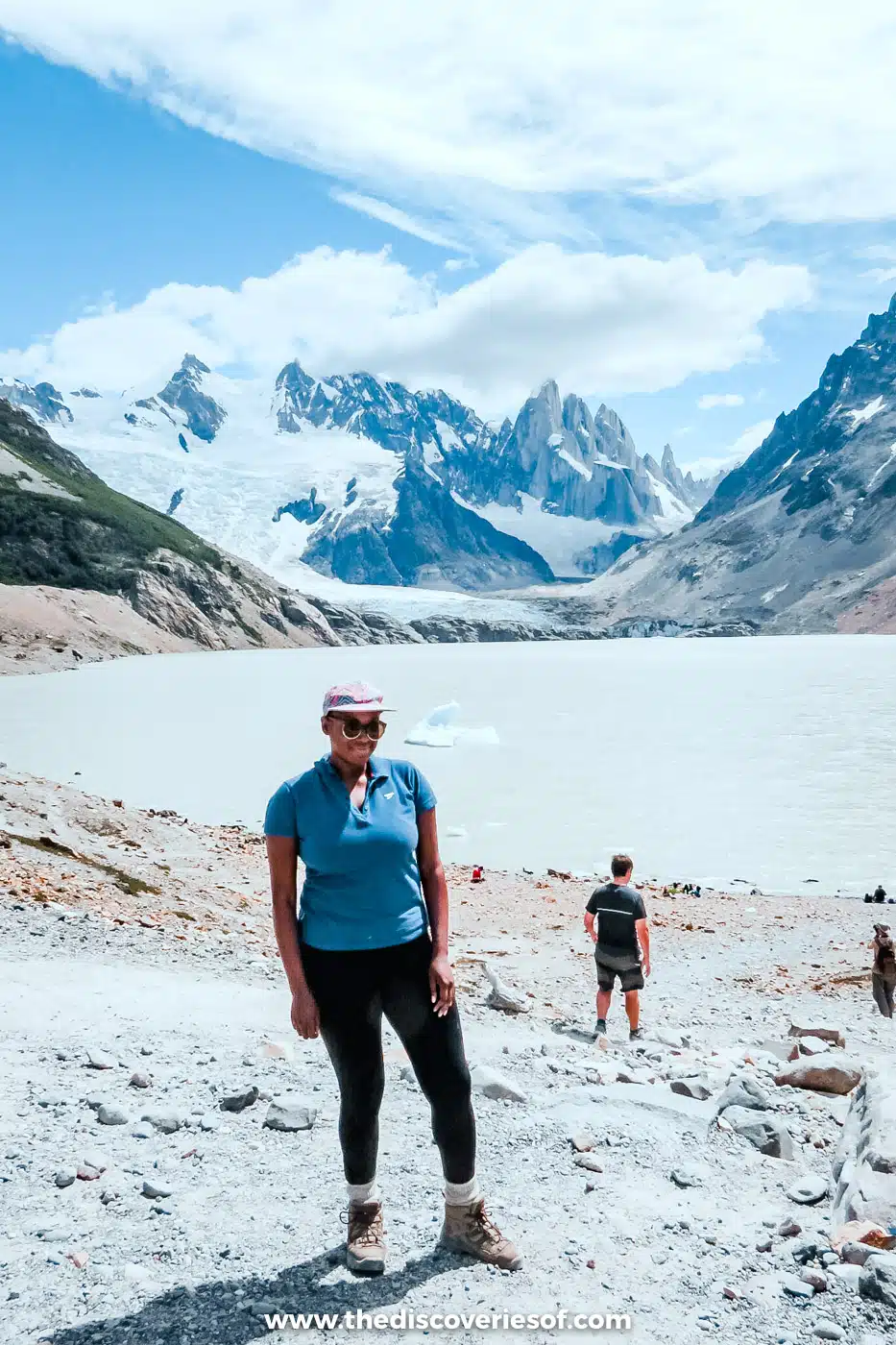
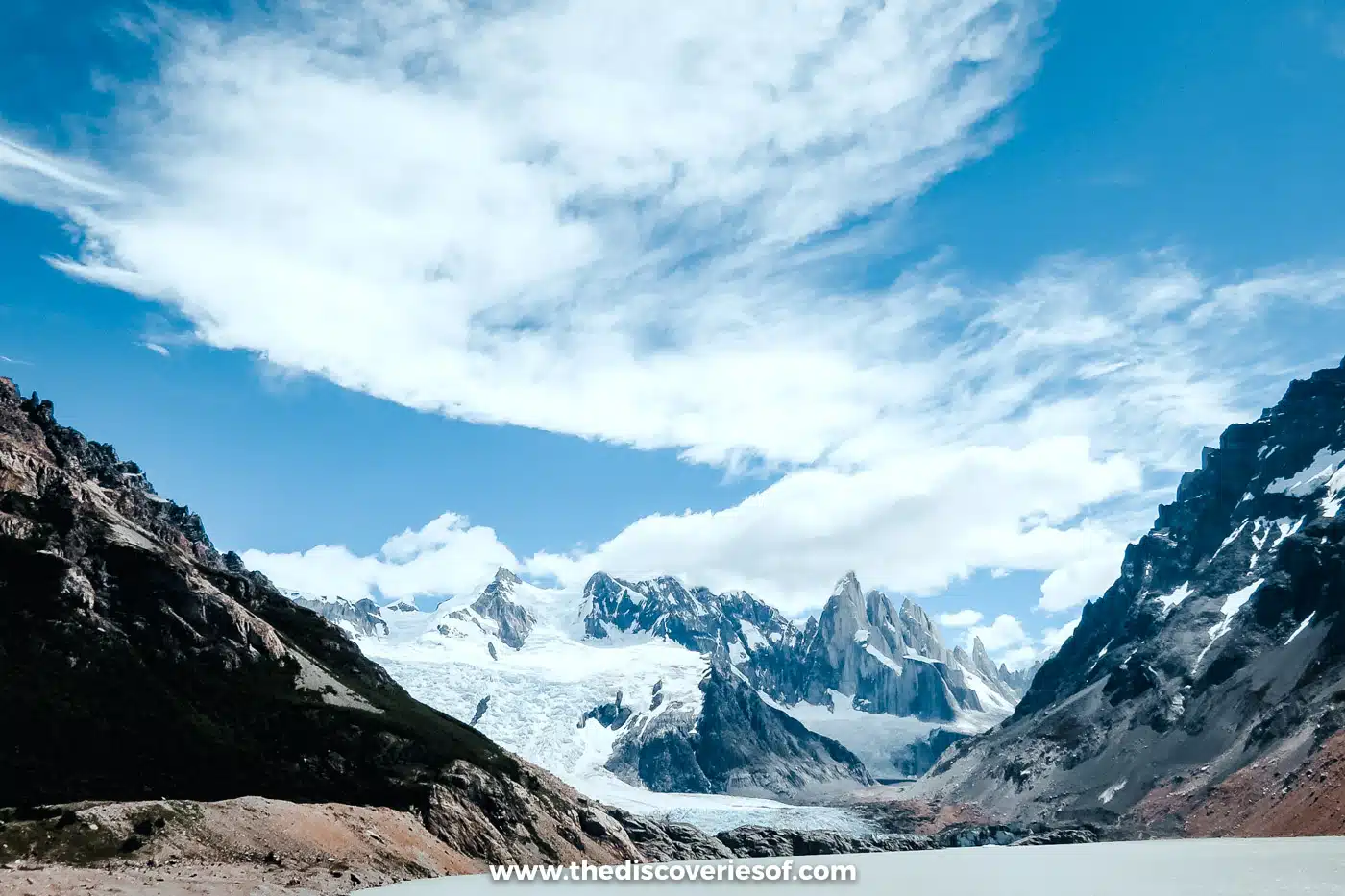
I visited as a day trip from El Calafate, and of all the trips you can make from there, it might just be my favourite. I hiked the trail to Laguna Torre in January, on a bright, blue-sky day, and stood on the moraine looking at icebergs drifting on the grey-green lagoon below Cerro Torre. It was one of those views that makes every step worth it.
This guide covers what you need to plan your own visit: how to get here, the national park fee and the town’s day-visitor charge, the best hikes (from a one-hour walk to a waterfall to the big climb to Laguna de los Tres beneath Fitz Roy), when to go, and where to stay if you decide one day isn’t enough.
Some links in this article may be affiliate links, which means we may receive a small commission, at no additional cost to you, if you decide to purchase through one of my recommended partners.
At a glance
- Where: in the north of Los Glaciares National Park in Argentine Patagonia, about 220km north of El Calafate
- Getting there: about three hours by bus from El Calafate, with several departures a day in summer
- Park fee: AR$50,000 for a day pass for foreign visitors, bought online in advance, with half price for a second day within 72 hours
- Town fee: day visitors pay a small municipal charge (AR$3,000 per person at the time of writing), already included in regular bus tickets
- Best time to go: November to April, with December to February the busiest and windiest, and March and April the quietest and most colourful
- Best day hike if you only have one day: Laguna Torre (about 18km return) or Laguna Capri (about 8km return)
- The big one: Laguna de los Tres, about 20km to 24km return with a steep final climb, best done from an overnight stay
Getting to El Chaltén from El Calafate
El Chaltén sits at the end of a long road. From El Calafate, it’s about 220km north along Route 40 and then Route 23, past the turquoise sweep of Lago Argentino and along the shore of Lago Viedma. The road is paved all the way, and on a clear day you can see Fitz Roy on the horizon long before you arrive.
Three bus companies run the route: Chaltén Travel, Cal Tur and Marga Taqsa. The journey takes about three hours, usually with a stop at the old roadside inn at La Leona, roughly halfway, for coffee and a stretch. In summer, there are departures from El Calafate from about 8am through to the evening, and a similar spread coming back. Fares vary by company and season but are typically around US$30 to US$50 each way. Some services also call at El Calafate airport, which is handy if you want to head straight to the mountains, but check the pickup with the operator first, as the bus won’t wait for a delayed flight.
If you’d rather not organise it yourself, a guided day tour does the logistics for you. This full-day tour to El Chaltén from El Calafate includes hotel pickup, the park entry fee, a guided walk up to the Mirador de los Cóndores and a short walk to the Chorrillo del Salto waterfall, with around five hours to explore on your own.
You can also hire a car in El Calafate and drive yourself. It gives you the freedom to stop for photos and to reach the trailheads north of town, but the wind on the open steppe is fierce, so keep both hands on the wheel.
A day trip or an overnight stay?
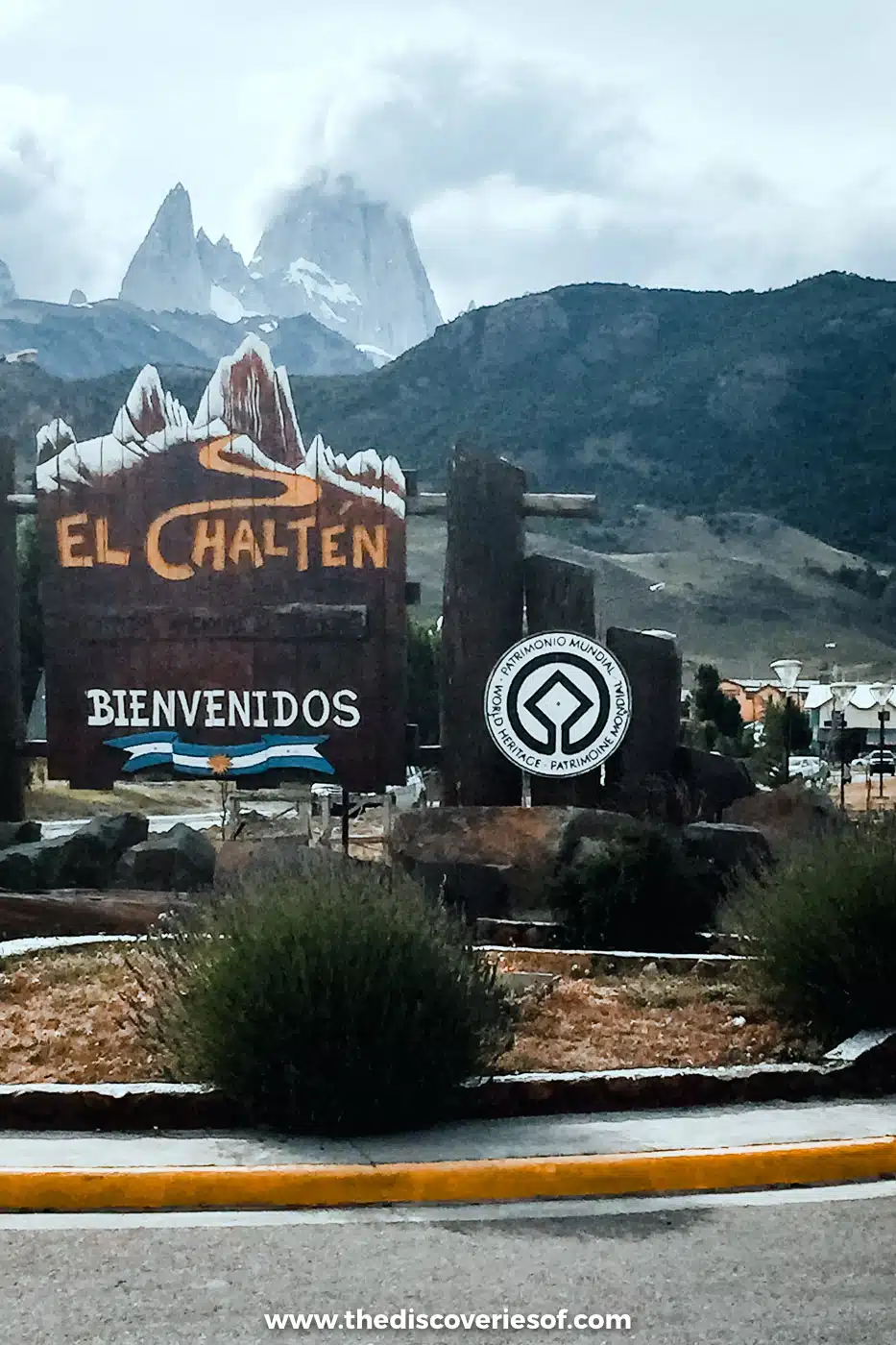
I did El Chaltén as a day trip, and it absolutely works if you pick the right hike. Taking an early bus gets you into town by late morning, and the last buses back leave in the early evening, which gives you around seven hours on the trails. That’s enough for Laguna Torre, Laguna Capri or a combination of the shorter walks.
What a day trip won’t give you is Laguna de los Tres. It’s a full eight to ten hours on foot, so you need to sleep in town for at least one night, and ideally two or three. The weather here changes by the hour, and the peaks spend a lot of time in cloud, so an extra day or two gives you a far better chance of seeing Fitz Roy clear. If you have the time, I’d stay.
Top tip
If you’re doing a day trip by bus, book your return seat in advance and know your departure time before you set off up the trail. The last bus won’t wait for you, and the hikes always take longer than you think when you keep stopping for photos.
The national park fee and the town fee
El Chaltén is the northern gateway to Los Glaciares National Park, a UNESCO World Heritage Site since 1981, and the trails were free to walk until October 2024. Now Argentina’s national parks service, Parques Nacionales, charges for entry here, at the same rates as at the Perito Moreno Glacier.
From June 2026, a day pass costs AR$50,000 for foreign visitors and AR$25,000 for Argentine residents. A second day within 72 hours is half price, and there are Flexipasses too: AR$100,000 for three days and AR$175,500 for seven, which work out cheaper if you’re staying a while. Buy your ticket online in advance through the Parques Nacionales ticket site, and keep it on your phone along with your passport, as rangers check them at the trailhead checkpoints. Some tour operators say you can still pay in cash at the checkpoints, but don’t count on it, and download your ticket before you set off, as phone signal is weak or non-existent on the trails.
The checkpoints are at the main trailheads: the trails out of the northern and western edges of town (for Laguna Torre, Laguna de los Tres and Chorrillo del Salto), the visitor centre by the bridge as you come into town (for the Mirador de los Cóndores, the Mirador de las Águilas and Loma del Pliegue Tumbado) and Río Eléctrico, north of town, for the alternative route to Laguna de los Tres.
On top of the park fee, since March 2026 the town has charged a small fee to day visitors who aren’t staying overnight. It’s AR$3,000 per person at the time of writing and is linked to the price of fuel, so it creeps up. It’s collected by QR code as you enter town, but if you arrive on a regular bus, it’s already included in your ticket, and if you’re staying the night, you’re exempt.
The best hikes in El Chaltén
The hikes here range from a short climb above town to a full day in the mountains, and almost all of them start on foot from the edge of town. The trails are well marked and well maintained, and you don’t need a guide for any of the ones below in summer. What you do need is to respect the weather: carry layers, food and water (there’s nowhere to buy anything once you leave town), and turn around if conditions change.
Rangers ask you to stick to the marked paths, and dogs, drones and fires are all banned in this part of the park.
Laguna Torre
About 18km return (9km each way), 6 to 7 hours, moderate
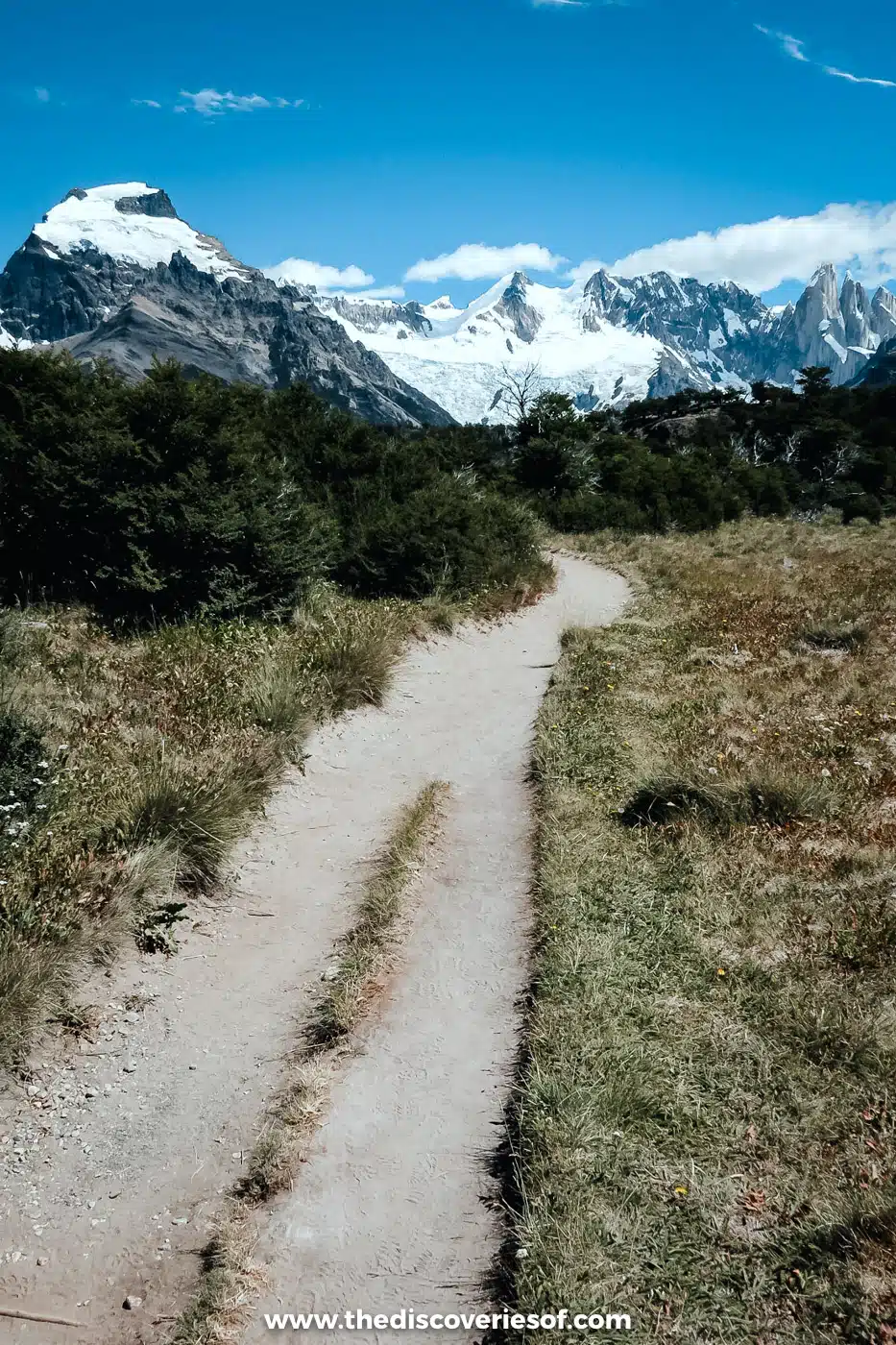
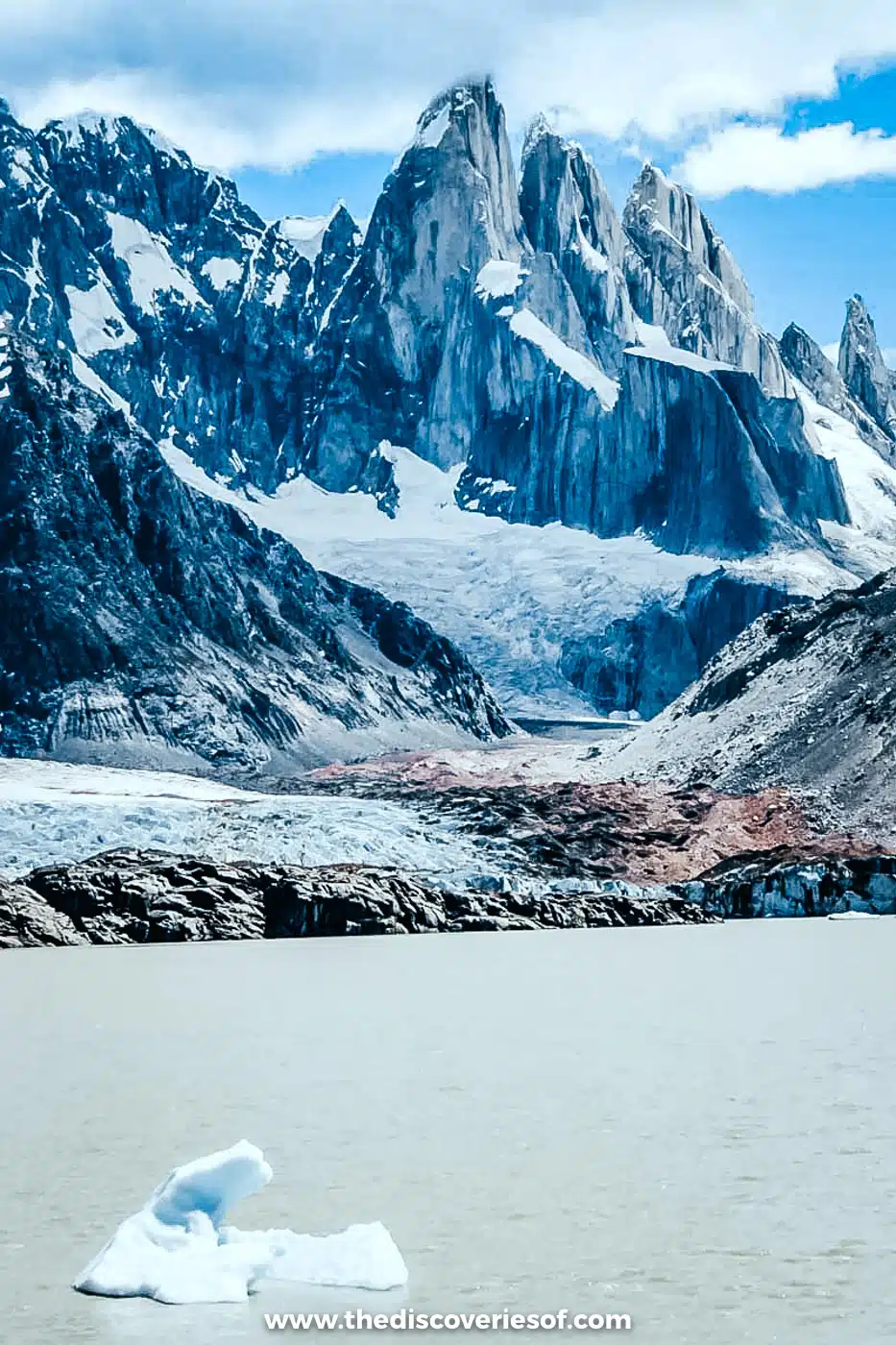
This is the hike I did, and if you only have one day in El Chaltén, it’s the one I’d choose. It’s about 9km each way from the edge of town with far less climbing than Laguna de los Tres, and it takes you right to the foot of Cerro Torre, the slender needle of granite that’s one of the most famous (and most fought-over) climbing peaks in the world.
The trail climbs steadily for the first couple of kilometres out of town, then levels out as it follows the valley of the Río Fitz Roy. Before long you reach the Mirador del Torre, your first proper view up the valley to Cerro Torre and its neighbours. From there, it’s an easy walk through open grassland and patches of lenga forest, with the mountains getting bigger and bigger ahead of you.
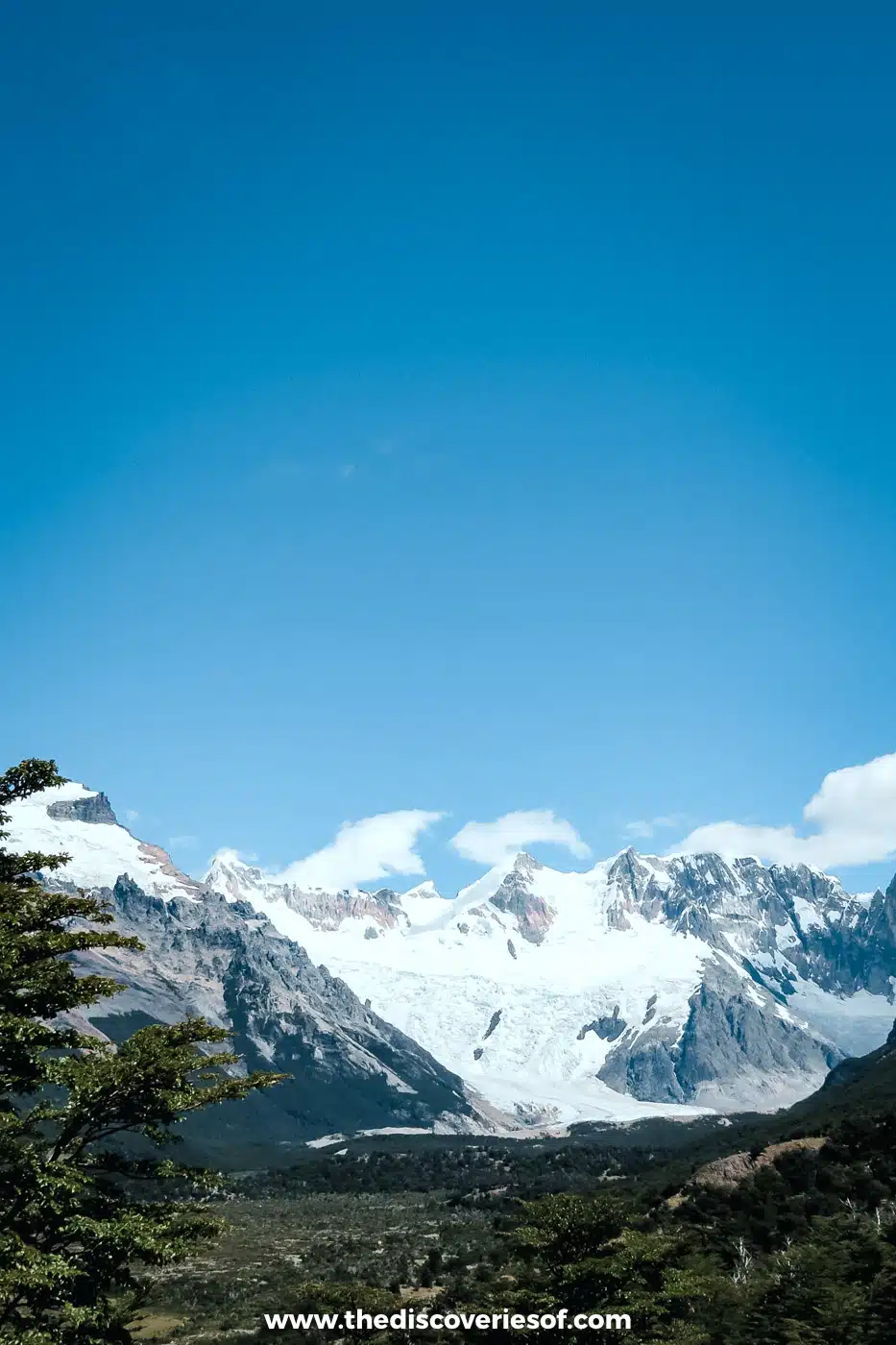
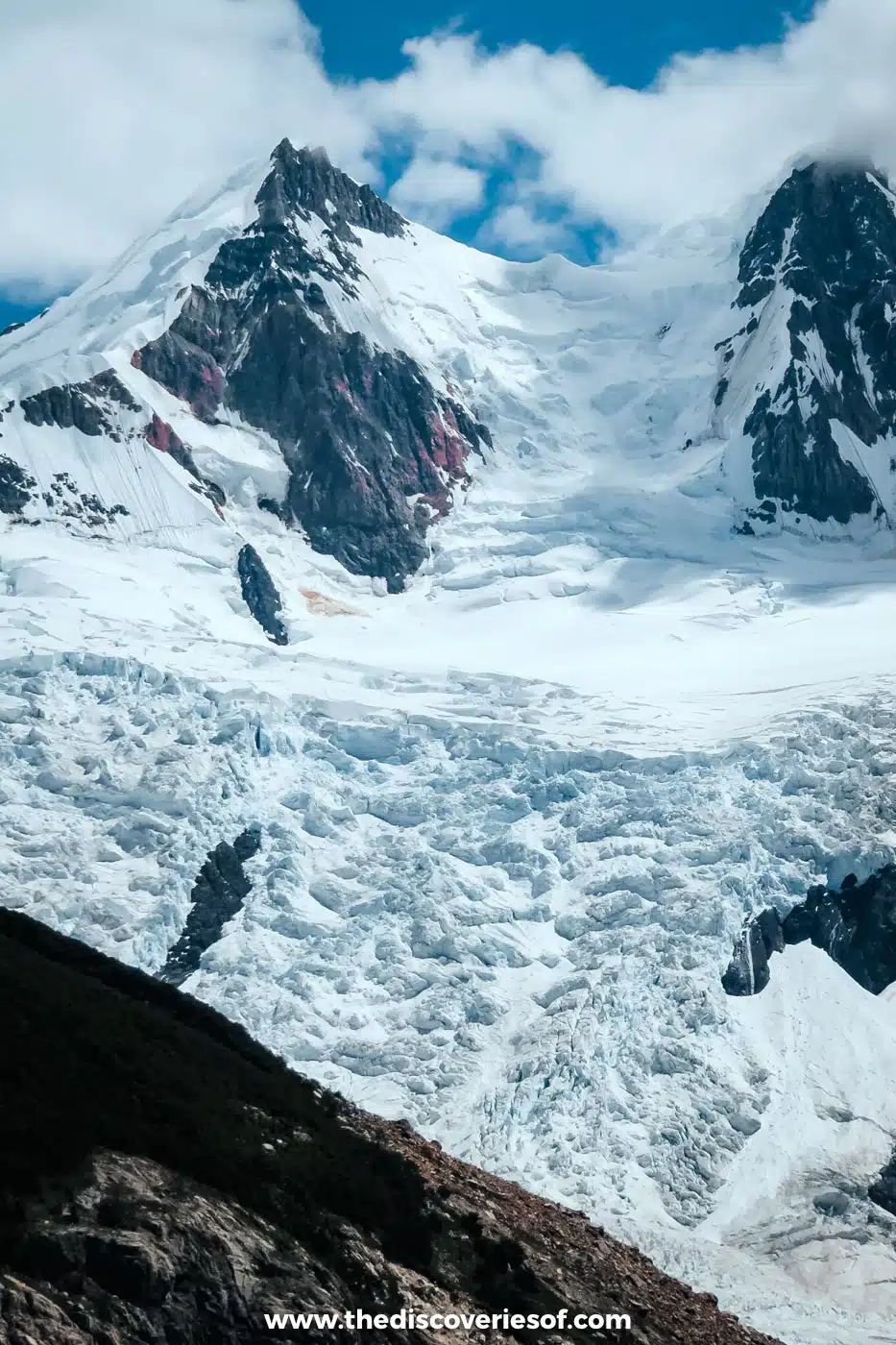
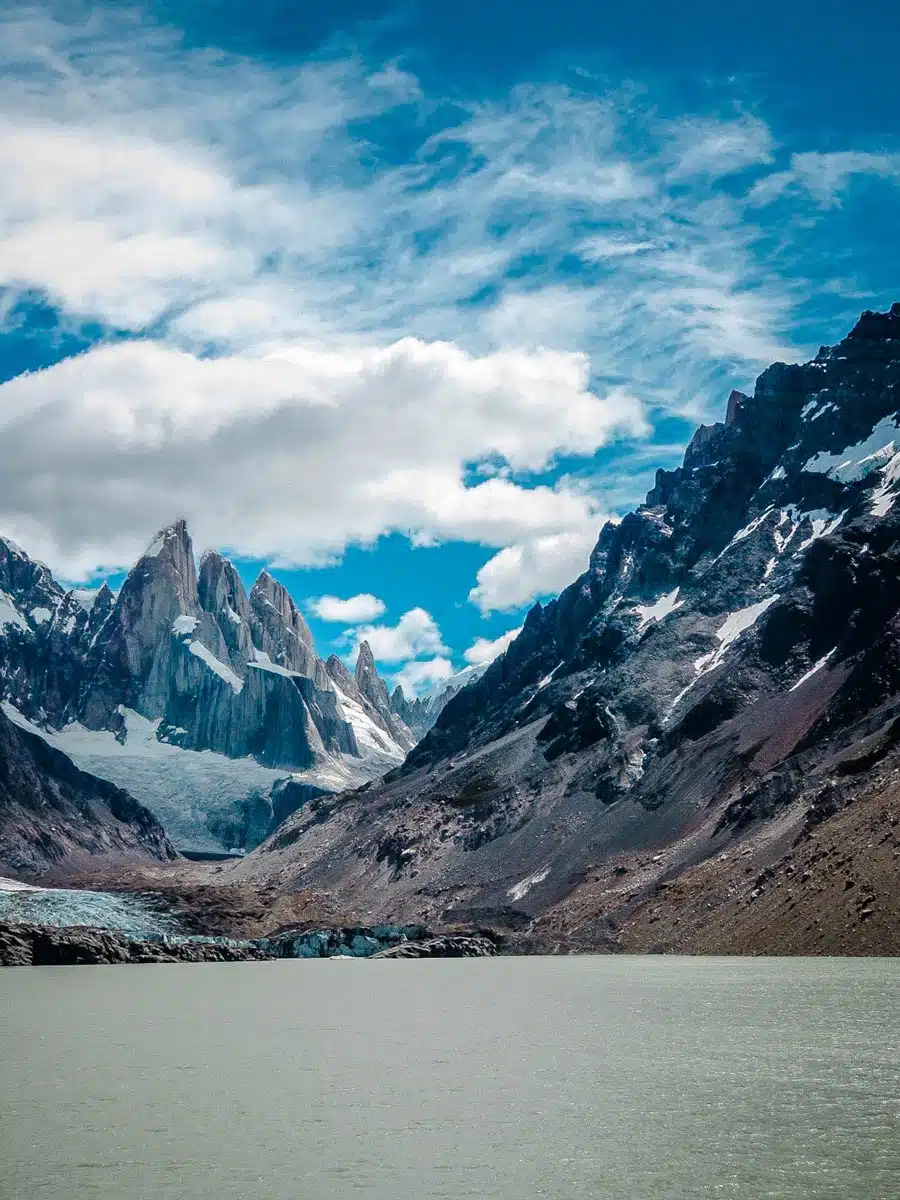
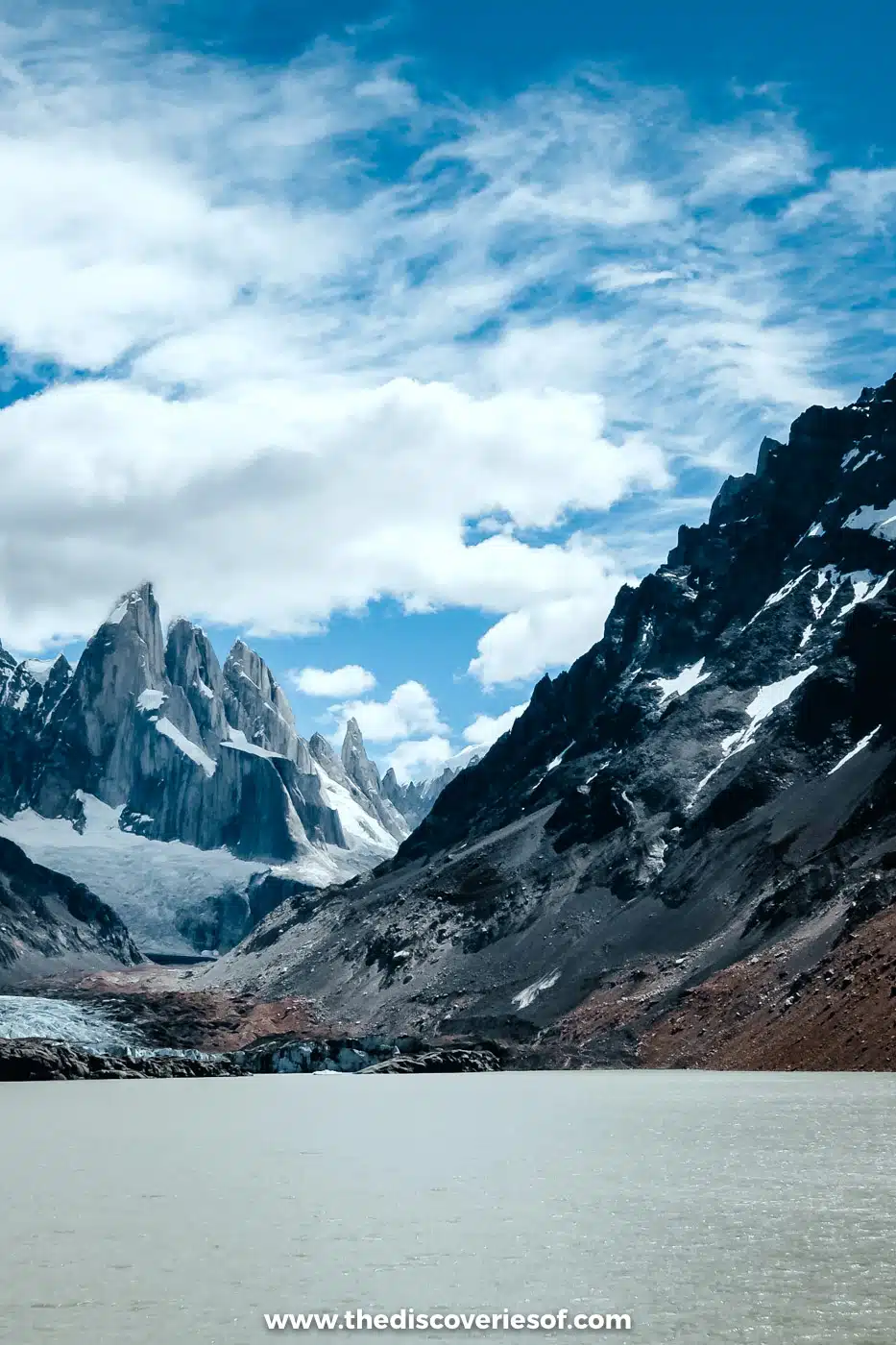
The last stretch climbs onto the moraine, and then suddenly you’re standing above the lagoon. On the day I was there, chunks of ice that had broken off the Grande Glacier were floating on the water, and Cerro Torre’s spires rose straight up behind it into a blue sky. It’s a properly dramatic spot, and it’s worth taking your time over lunch here before you turn back.
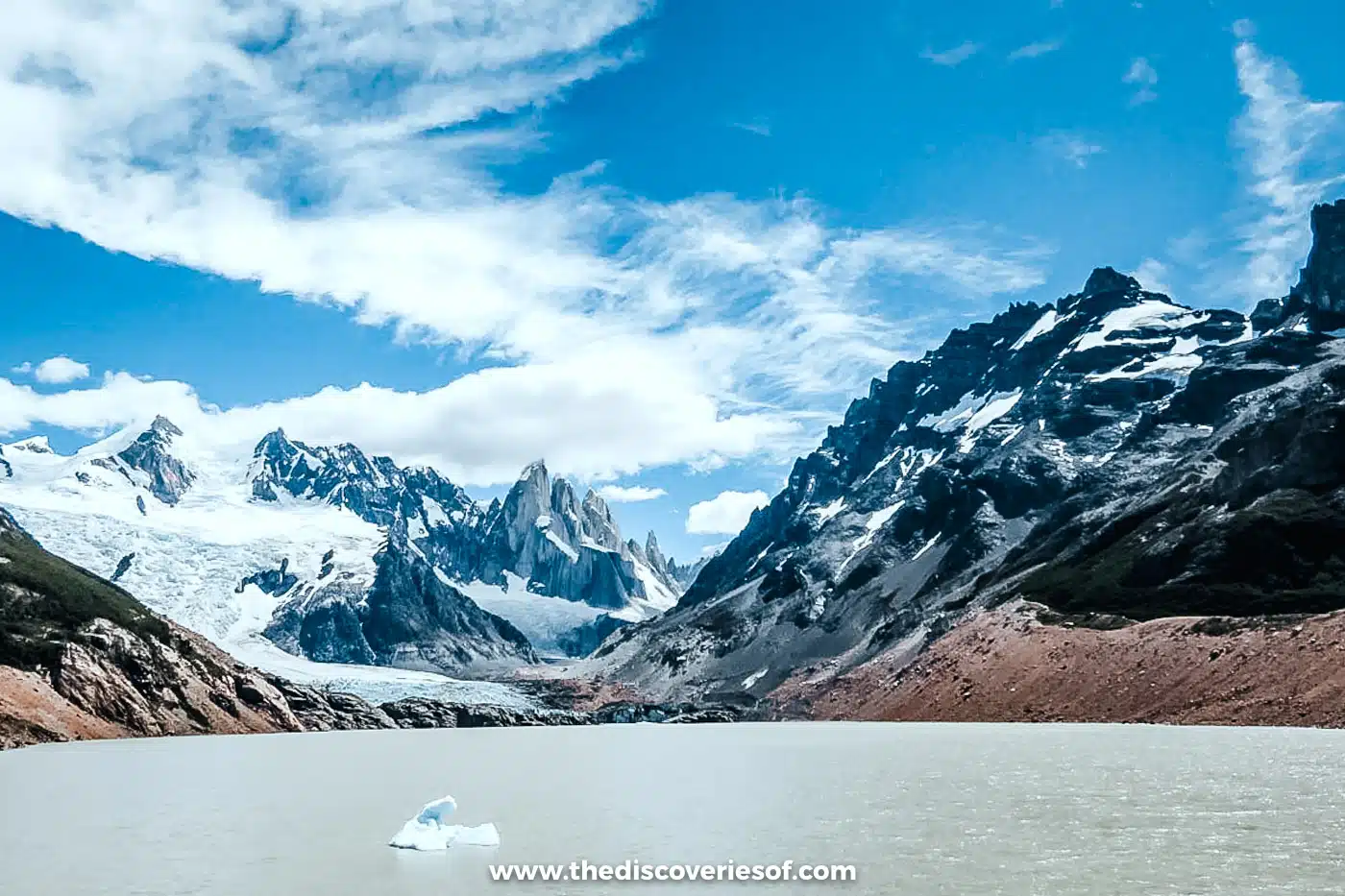
If you have the energy, you can carry on for about 2km along the moraine to the Mirador Maestri, which looks down onto the glacier. Otherwise, it’s the same way back to town.
Top tip
Cerro Torre is notorious for hiding in cloud, and the wind funnels down the valley straight off the ice field. Set off early, keep a warm layer and a windproof jacket in your daypack, and if the peaks are clear when you wake up, go that morning. They might not be tomorrow.
There’s a campsite near the lagoon, Campamento De Agostini, if you want to stay up here overnight; like the others in the park, it needs booking in advance.
Laguna de los Tres
About 20km to 24km return depending on your route, 8 to 10 hours, challenging, with around 1,000 metres of climbing
This is El Chaltén’s classic hike, and the reason most people come. The trail ends at a glacial lake right beneath the Fitz Roy massif, where the sheer rock walls of Fitz Roy, whose summit stands about 3,400 metres above sea level, tower over the water. On a clear day, it’s one of the great views in South America.
The first hour is a steady climb out of town to a viewpoint over the Río de las Vueltas valley, and then the path rolls through forest and open meadows, with a signed viewpoint of Fitz Roy along the way. After about four hours you reach Campamento Poincenot, cross the Río Blanco, and then comes the sting in the tail: the final kilometre climbs about 400 metres up a steep, loose, rocky path to the lagoon. Take it slowly, use poles and allow at least an hour for it.
Once you’re at the top, walk to the far side of the lagoon and look down over the edge. Laguna Sucia sits far below, a second lake that most people miss.
You can also start from Río Eléctrico, about 17km north of town, which takes you past the viewpoint for the Piedras Blancas Glacier before joining the main trail at Poincenot, and then walk back to town. It’s a great one-way route if you can get a lift or a transfer to the start.
If you’d rather go with a guide, this Laguna de los Tres trek from El Calafate takes the Río Eléctrico route, with transport there and back and crampons when they’re needed. It’s a very long day (pickup is at 5.30am and you’re back in El Calafate late at night), but it’s the only way to fit the hike into a day trip.
Top tip
The final climb is fully exposed. If it’s blowing a gale at Poincenot, the top will be worse, and there’s no shame in turning around and settling for the view from Laguna Capri on the way back.
Laguna Capri
About 8km return, 3½ to 5 hours, moderate
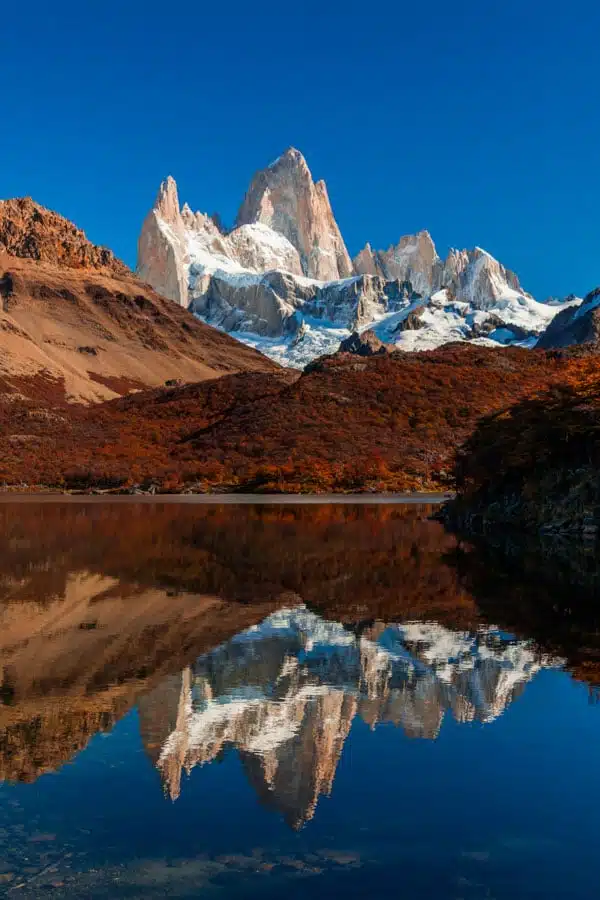
If you want a look at Fitz Roy without committing to the full Laguna de los Tres hike, Laguna Capri is the answer. It follows the first part of the same trail, with a steep first 40 minutes or so out of town, and then branches off to a small forest-fringed lake with Fitz Roy rising straight behind it. On a still morning, the mountain is reflected in the water.
It’s an easy fit for a day trip, and you can add the Fitz Roy viewpoint on the main trail for about another hour and a half there and back. There’s also a campsite by the lake, Campamento Laguna Capri, which needs booking in advance.
For a guided version from El Calafate, this Laguna Capri hike with a Patagonian picnic includes the park fee, transport, a guide, poles and lunch by the lagoon.
Mirador de los Cóndores and Mirador de las Águilas
About 3km return, 1½ to 2 hours, easy but steep; add 30 to 45 minutes for the Mirador de las Águilas
The perfect first walk, and a great one for the evening you arrive. The trail starts at the Ceferino Fonzo visitor centre, by the bridge as you come into town, and climbs about 150 metres to a rocky viewpoint looking down on El Chaltén with Fitz Roy and Cerro Torre behind it. As the name suggests, you’ve a decent chance of seeing Andean condors riding the thermals above you.
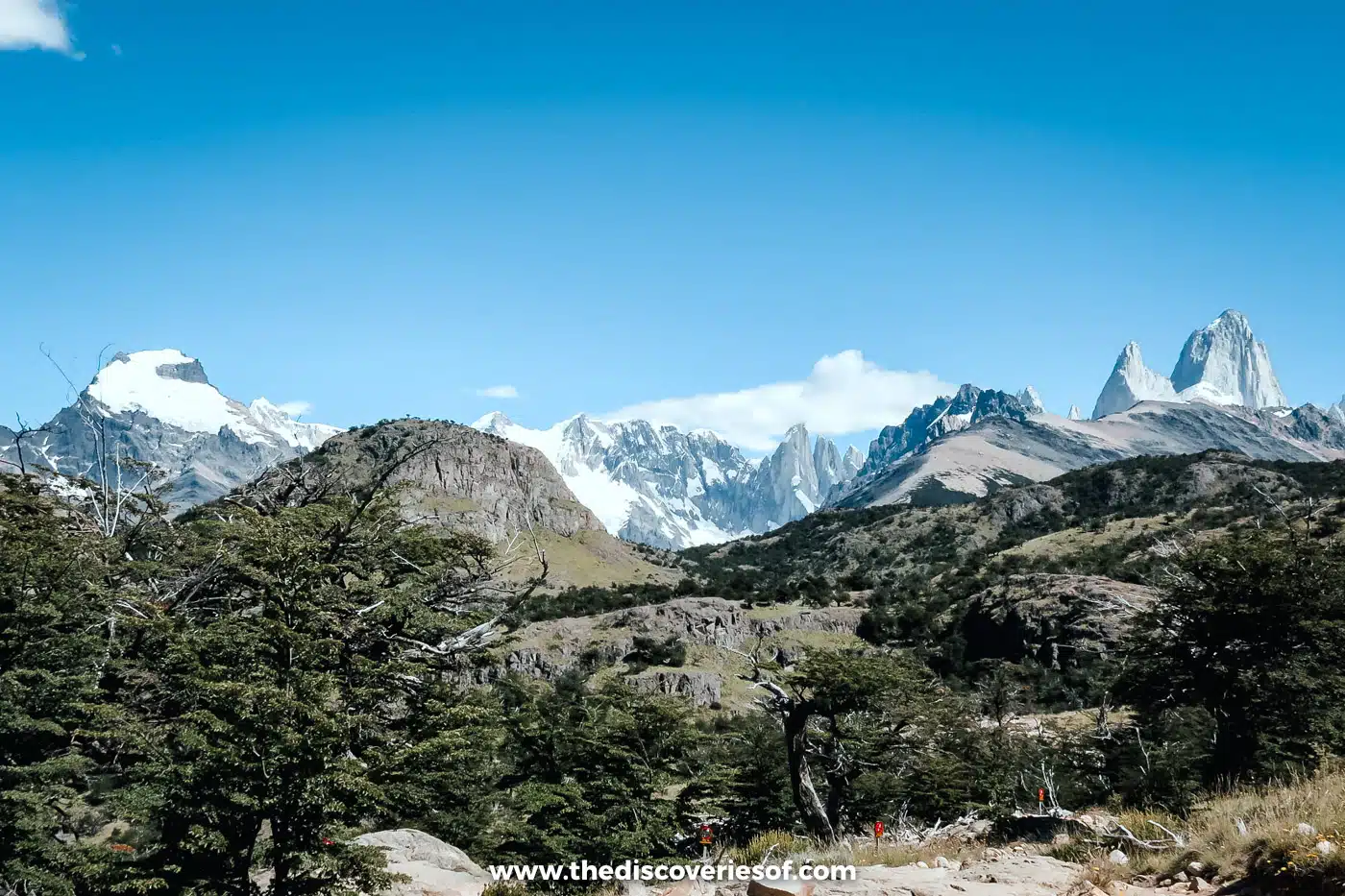
From the condor viewpoint, a mostly flat path carries on across the plateau to the Mirador de las Águilas, which looks east over the vast blue expanse of Lago Viedma and the steppe. Both are lovely at sunset, but bring a head torch for the walk down.
Chorrillo del Salto
About 6 to 7km return from town, 2½ to 3 hours, easy
The easiest of the hikes here, and a good choice for a rest day or a wet one. The path follows the road north of town for about 3km, then turns off through lenga forest to a waterfall that drops more than 20 metres into a pool. If you’re short on time or legs, take a taxi to the car park on the road to Lago del Desierto, and it’s only about a 15-minute walk from there.
Loma del Pliegue Tumbado
About 18km return, 7 to 8 hours, challenging, with more than 1,000 metres of climbing
The best panorama in the area, and far quieter than the lagoon hikes. This trail also starts at the visitor centre and climbs through forest and then open hillside to a high ridge, where Fitz Roy, Cerro Torre and the whole skyline of jagged peaks line up in front of you, with Lago Viedma behind. Because it’s a viewpoint rather than a lagoon at the foot of the mountains, it’s the one to choose when the peaks are clear but you want a different angle on them. It’s exposed, steep near the top and very windy, so save it for a settled day.
When to go and what the weather’s like
The hiking season runs from about October to April. December to February is the peak, with the warmest weather (average highs of around 18°C to 19°C in town and lows of 6°C to 7°C) and the longest days, with around 16 hours of daylight in December. It’s also the busiest time and the windiest: strong westerly winds blow from about October to March, with gusts of 60km/h to 80km/h common on exposed stretches.
March and April are my pick if you can be flexible. The crowds thin out, the wind usually eases, and the lenga forests around town turn red and gold. The days are shorter and the mornings colder, so start later and pack an extra layer.
From May to September it’s winter. Snow falls in town, the trails are icy, muddy and snowy, and the park makes poles and crampons compulsory. Plenty of businesses close for the season, and buses run less often, so it’s a trip for experienced winter hikers only.
Whenever you go, expect four seasons in a day. I hiked on a bright, blue-sky day in January, but the weather in this part of Patagonia can change in minutes. My guide to the best time to visit Argentina has more on the seasons across the country.
What to pack
The same rules apply here as across the border in Torres del Paine, where I had rain, blazing sun and winds strong enough to blow me off my feet, all on the same trek. Pack for every season in a single day:
- Broken-in hiking boots with good grip, as the final climbs are steep and loose
- A waterproof, windproof jacket, plus a fleece or insulated layer, even in summer
- Hiking poles, which make a real difference on the climb to Laguna de los Tres
- A warm hat, gloves and sunglasses
- Plenty of sun cream, as the sun is strong even when it’s cold
- At least two litres of water, plus lunch and snacks, as there’s nothing to buy on the trails
- A head torch, in case you’re out later than planned
- A small first aid kit
My Torres del Paine packing list goes into much more detail, including what the wind and cold taught me on the W Trek.
Where to stay
If you’re staying over, El Chaltén has plenty of places to sleep, from hostels to boutique lodges. It’s a small town, so almost everywhere is within walking distance of the trailheads. Book well ahead from December to February.
Hostería Senderos
My pick for El Chaltén, and a favourite with hikers. Hostería Senderos has spacious rooms, good breakfasts and two-level family suites, plus a well-regarded restaurant serving steak, trout and Patagonian lamb with a long list of Argentine wines. It’s close to the bus terminal and an easy walk to the trails.
Hostería El Pilar
For somewhere more remote, Hostería El Pilar is a rustic, cosy lodge inside the national park, about 20 minutes’ drive north of town near the Río Blanco. It’s close to the northern trailheads for Laguna de los Tres, so it’s perfect if that’s your main goal.
Destino Sur
A good mid-range choice near the centre, Destino Sur has views of Fitz Roy, a pool and a small spa with a jacuzzi and steam room for tired legs.
Lunajuim
A colourful, characterful guesthouse close to the trails, Lunajuim is a good-value option with regional cooking and triple rooms for families and groups.
Or browse all the places to stay in El Chaltén.
Where to eat
For a small town, El Chaltén eats well, and after a long day on the trails, it’s all about hearty food and a cold beer. A few places that are consistently recommended:
- La Cervecería: the town’s brewpub, where hikers swap stories over craft beer, pizza and hearty stews
- Patagonicus: a laid-back pizzeria hung with photos of climbers and the town’s early days
- La Waflería: sweet and savoury waffles, hot chocolate and coffee, ideal for a rainy afternoon
- La Tapera: a rustic, wood-lined restaurant for a proper dinner of Patagonian lamb, steak or trout
- Senderos: the restaurant at Hostería Senderos, a good choice for a celebratory dinner after Laguna de los Tres
Pick up a packed lunch from one of the bakeries or cafés in town before you set off, and get there early, as the hikers’ favourites sell out.
Map
Planning the rest of your trip
El Chaltén fits neatly into a trip around southern Patagonia. Most people combine it with El Calafate and the Perito Moreno Glacier, and then cross the border into Chile for the W Trek in Torres del Paine. Puerto Natales, the gateway to the park, is about six hours by bus from El Calafate. My Patagonia travel guide has everything you need to plan both sides of the border, and my 10-day Argentina itinerary shows how to fit El Chaltén into a longer trip. Fitz Roy also features in my round-up of the landmarks in Argentina you have to see.
Read next
- El Calafate, Argentina: the complete travel guide
- The Perito Moreno Glacier: how to visit
- Patagonia travel guide
- Torres del Paine W Trek: a step-by-step guide to hiking the W in Patagonia
- The ultimate Torres del Paine W Trek packing list
- The ultimate 10-day Argentina itinerary
- 20 landmarks in Argentina you have to see
- When is the best time to visit Argentina?
- 17 best hikes in Chile, from the W Trek to the Atacama’s red rocks
Love this? Save and share on Pinterest
Love This? Save and Share on Pinterest

Discover the top things to do, insider tips and hidden gems in our Argentina Travel Guide.
Read the guides →