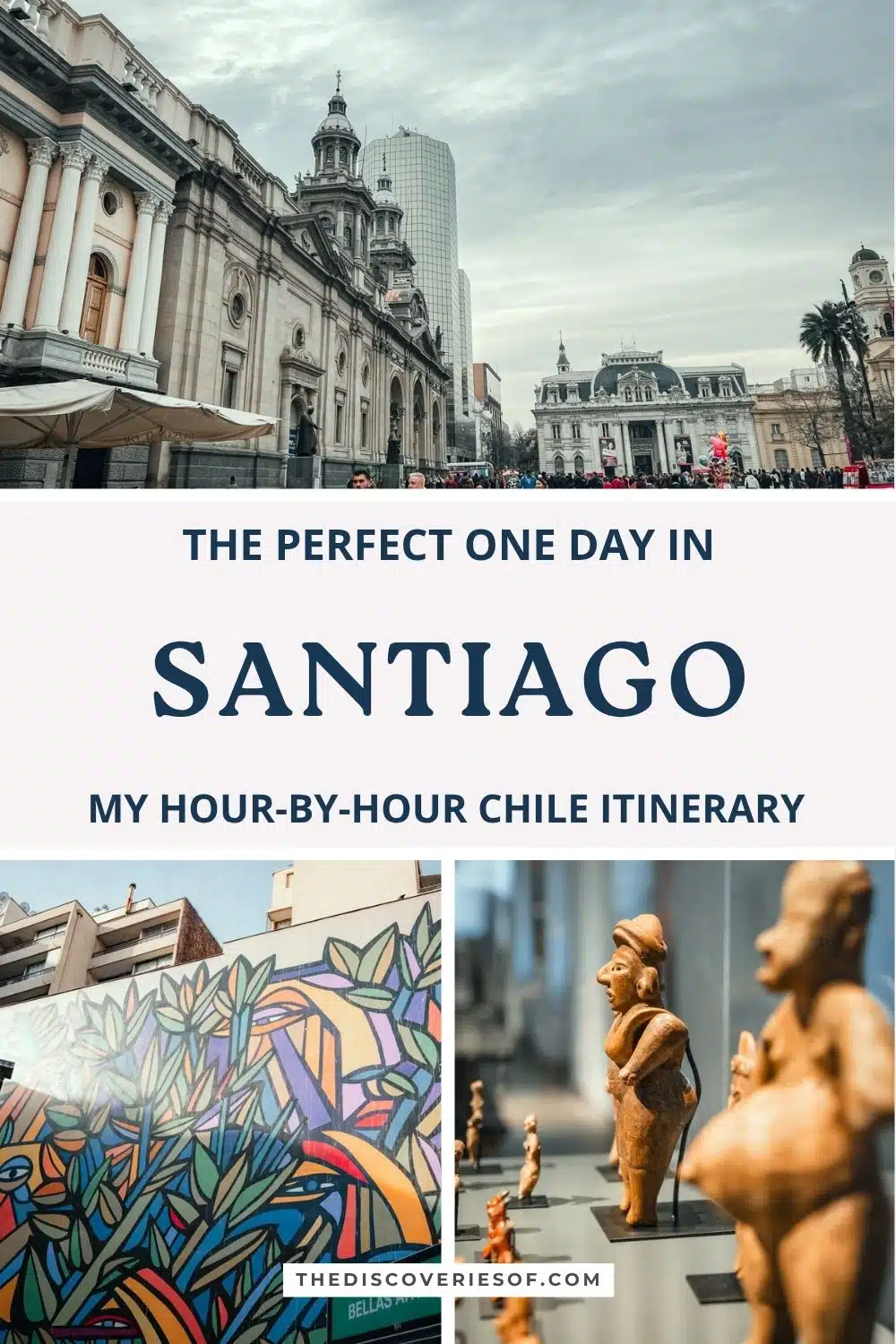
Only got one day in Santiago? Get your walking shoes at the ready. This is the route I’d follow again, built around my favourite places in the city: Pablo Neruda’s eccentric house, the street art of Bellavista, the brilliant Museo Chileno de Arte Precolombino and a wine flight in Lastarria, plus how to get around safely.
One day in Santiago? It can’t be done…
It can! Get ready to embrace Chile’s vibrant capital. From the dizzying heights (and stunning views) of Cerro San Cristóbal to museums filled with captivating pre-Columbian art, you’re in for a treat.
I’d been to Chile three times before I finally gave its capital the time it deserves. On a month of solo travel in July, I started and finished my trip in Santiago, based myself in Lastarria and spent my days hopping between museums, murals, markets and some of the best food and wine I’ve had in South America. I came away a convert.
Every stop on this itinerary is somewhere I went myself. I’ve put them in an order that actually works on foot, with one cable car ride and the odd Uber, so you can see the best of the city in a single, full day without doubling back on yourself. If you have longer, my guide to the best things to do in Santiago has plenty more to fill your time.
Grab your camera and your appetite. This detailed itinerary will show you exactly what to do in Santiago, Chile, for a day, with the tips I picked up along the way.
Some links in this article may be affiliate links, which means we may receive a small commission, at no additional cost to you, if you decide to purchase through one of my recommended partners.
Your day at a glance
- 9am: Breakfast-time browsing at the Mercado Central
- 10am: Cerro San Cristóbal by cable car and funicular
- 11.45am: La Chascona, Pablo Neruda’s house
- 1pm: The street art of Bellavista
- 1.45pm: Lunch at Galindo
- 3pm: Museo Nacional de Bellas Artes
- 3.45pm: Plaza de Armas and the Metropolitan Cathedral
- 4pm: Museo Chileno de Arte Precolombino
- 6pm: Sunset views from Cerro Santa Lucía (or Sky Costanera)
- 7pm: A pisco sour at Liguria in Lastarria
- 8.30pm: Dinner and a wine flight at Bocanáriz (or Boragó)
This works from Tuesday to Sunday. Avoid Mondays: La Chascona, the Precolombino, Bellas Artes and the San Cristóbal cable cars and funicular are all closed.
One day itinerary in Santiago, Chile
How to plan your day

Think it’s impossible to explore Santiago in one day? Prepare to be proven wrong. This itinerary will show you some of the best things the city has to offer.
Expect epic views from the city’s hills, phenomenal art at the best museums, a feast at a traditional Chilean restaurant and a wander through Bellavista’s street art, before rounding it all off with a pisco sour and an impeccable dinner in Lastarria.
It’s a full day, so pace yourself. Book your dinner table before you set off, wear your comfiest shoes, and if you’d rather linger at the Precolombino (I would), skip Santa Lucía and head straight to Lastarria.
Start at the Mercado Central
Start your day at the Mercado Central, Santiago’s historic fish market, where eating is all about the seafood. I’d visit in the morning, when the market is at its best and the fish counters are piled high with the morning’s catch. It’s a great way to dive headfirst into Chilean cuisine if Santiago is your first stop in the country.
You’ll often hear that the wrought-iron hall was designed by Gustave Eiffel, but it was actually the work of Chilean architect Fermín Vivaceta, and it opened in 1872. The market opens at 6am, but most of the restaurants don’t start serving until late morning. If you’d rather eat here than at Galindo, swap it for lunch: order the paila marina (a rich seafood stew) or a plate of ceviche. Skip the touristy spots on the outskirts of the market and head into the middle to rub shoulders with the locals, and ignore the pushy waiters touting for business.
From the market, it’s about a 25-minute walk east along the river through the Parque Forestal to the Pío Nono entrance of the Parque Metropolitano, or a short Uber.
Ride the San Cristóbal cable car and funicular
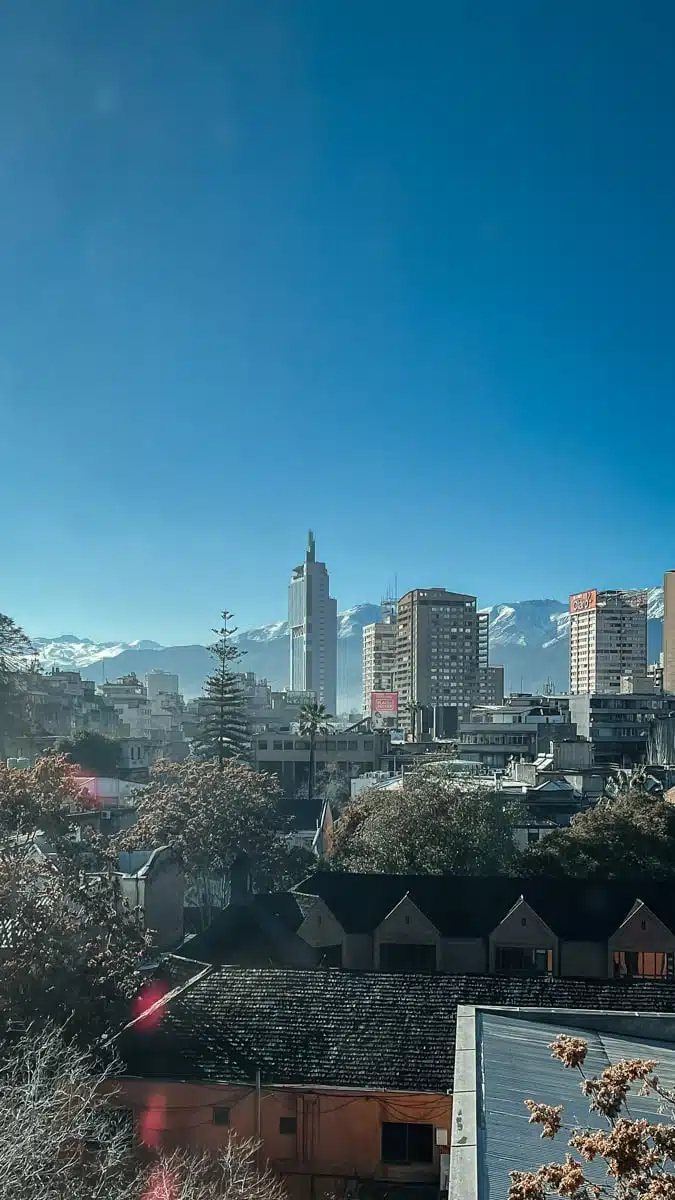

Next, it’s time to hitch a ride up Cerro San Cristóbal. Few cities boast such an incredible location as Santiago, so it only makes sense to take in the views of the city from above early on.
Rising around 300 metres above the city, San Cristóbal is the place to go for epic views of Santiago and the towering Andes. I rode both the cable car and the funicular, and it’s worth trying both. The views from the top are stunning, with the Andes poking up into the sky on one side and the sprawling city far below on the other. At the summit, a 22-metre statue of the Virgin Mary (including its pedestal) looks out over it all.
The classic way up is the Funicular de Santiago, which celebrated its 100th birthday in 2025 and climbs from Pío Nono street in Bellavista. If you’re not a fan of heights, it’s the on-the-ground alternative to the cable cars. The original cable car line runs from the Oasis station near Avenida Pedro de Valdivia in Providencia, via Tupahue, up to the Cumbre station near the summit. A second cable car line opened in February 2026 from the Pío Nono entrance, near the zoo, to the Plaza México station just below the summit, and the ride takes about seven minutes.
That new line makes the hill easy to fit into a day. Ride up on the Pío Nono cable car and come back down on the funicular, which drops you a few minutes’ walk from La Chascona. A one-way ticket combining the two starts at around 1,620 CLP, and a return on the Pío Nono line from around 1,150 CLP. Both cable car lines and the funicular run Tuesday to Sunday from 10am to 7.45pm, are closed on Mondays for maintenance, and tickets are sold online at telefericosantiago.cl and at the ticket offices.
Either way, they’re a great way to start your day and take in the beauty of Santiago. Go on a clear day if you can, ideally after rain, when the smog lifts and the mountains look close enough to touch. And grab a mote con huesillo from one of the stalls at the top: cooked wheat in sweet peach nectar with a rehydrated peach, eaten with a spoon. It’s a local favourite.
Visit La Chascona


Next up, it’s a trip to La Chascona, the Santiago home of the poet-politician Pablo Neruda, who won the Nobel Prize for Literature in 1971. You can barely stumble around Santiago without hearing a reference to Neruda, so how better to learn more about him than visiting his former home?
He started building the house in 1953 as a secret hideaway for Matilde Urrutia, his mistress and later his third wife. Chascona is Chilean slang for someone with wild, tangled hair, a reference to Matilde’s mane of curly red hair. During the 1973 coup, the house was vandalised and flooded. Neruda died just days later, and Matilde insisted on holding his wake here, among the mud and broken glass. She later restored it, and it’s now run as a museum by the Pablo Neruda Foundation.
While I’m not normally a fan of audio guides (they can be a bit cough dry), the one here was included with my ticket and gives an immersive look into Neruda’s life in the house and beyond: the Captain’s Bar, shaped like a ship’s cabin, where Neruda would receive his guests, and the private living quarters upstairs, adorned with images of the two of them. Without it, I can guarantee the visit wouldn’t be half as engaging, but with it, you feel like you’re stepping back in time to peek into their lives. The house is laden with seemingly random trinkets, secret corners and quirky art.
It’s compact enough to explore in around an hour. La Chascona is at Fernando Márquez de la Plata 0192, at the foot of the hill, and it’s open Tuesday to Sunday from 10am to 6pm. Entry costs 9,500 CLP for adults (it was 8,000 CLP when I went).
Wander the street art of Bellavista
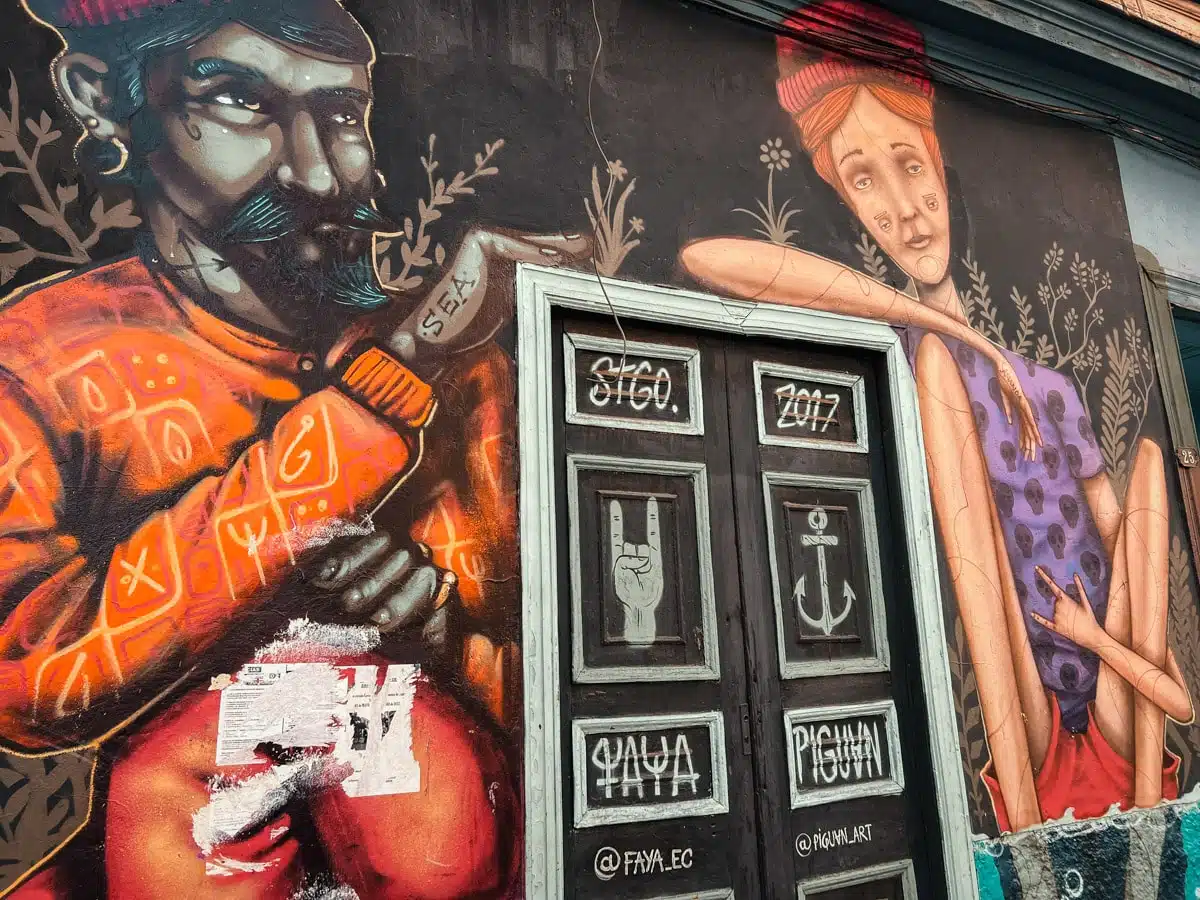
If you know me, you’ll know I’m obsessed with exploring local street art scenes, and Santiago’s is thriving. It isn’t talked about much, but the scene is focused on local artists, which means lots of hyper-local references and political statements.
I booked a street art tour with a local guide, Alejandro, who knew the city incredibly well, as well as the stories behind the works. He ran the tour even though it was just me. It kicked off in Bellavista, beneath two large-scale murals, and it only got better from there. Bellavista has a wide variety of pieces, some by up-and-coming artists and others by well-established names on the Santiago scene, with a lot of work by Pigüan.
On a one-day itinerary, you can wander the streets between La Chascona and Galindo on your own and see plenty, though you’ll miss the context. If you’d like a guide, the company that ran my tour, Stgo Street Art, now trades as Getaways Discoveries and still runs tip-based tours.
With more time, take the tour on to Barrio Yungay, west of the centre. You’ll find Bellavista in a lot of guidebooks, but not Yungay, and the street art there is much more outspoken and political, in keeping with the area’s left-wing roots. One of my favourite pieces there told a version of the creation story from Chiloé folklore, involving two monsters.
Have lunch at Galindo


Feeling peckish? I’d be surprised if the answer’s no. It’s time to have lunch at Galindo, the spot for affordable, traditional Chilean food of the kind people cook at home. My guide Alejandro recommended it as one of his favourite local eats.
Look, I’ll level with you: Galindo does get quite busy. I wasn’t overly excited about being shunted to the corner halfway through my meal so more people could crowd in, but the restaurant is cheap and cheerful. I’d recommend the pastel de choclo, a hearty combination of chicken and minced beef with onions, olives (beware, they aren’t stoned), herbs and spices under a crust of creamed corn, baked until bubbling.
It’s about as traditional as Chilean food gets, so try it at least once while you’re in the city (and it’s very hearty, so make sure you’re hungry). Galindo has been going since 1968 and is on the corner of Dardignac and Constitución, a short walk from La Chascona. Most mains cost around 9,000 to 14,000 CLP, it’s open every day, and you just walk in. The caldillo de congrio, a conger eel soup Neruda loved so much he wrote an ode to it, is the other classic here.
If you’d like a drink in the sun after lunch, Patio Bellavista is around the corner: a buzzing courtyard of bars, restaurants and shops with plenty of terrace space, and a really cool spot to hang out.
Visit the Museo Nacional de Bellas Artes


Now that you’ve had your hearty lunch, cross the river to your next stop, the National Museum of Fine Arts. It’s about a 10-minute walk from Galindo.
It’s impossible to talk about the National Museum of Fine Arts without talking about the gorgeous building it’s in. It was built for Chile’s centenary in 1910, with a glass-roofed central hall, on the edge of the Parque Forestal, and the Museo de Arte Contemporáneo occupies the back of the same building. But the collection holds some notable works too, and there’s always a changing line-up of temporary exhibitions alongside the permanent displays.
Don’t forget to pop down to the basement, where the work takes a decidedly more modern bent.
Entry is free. When I visited, you had to fill in a Google form before you went in, but you no longer need to book. It’s open Tuesday to Sunday from 10am to 6.30pm (last entry 6.20pm), so give it about 45 minutes on this route.
Top tip: Bring some change for a locker. When I visited, you weren’t allowed to walk around with a backpack on, so you’ll want somewhere to stash it until you’re done.
See the Metropolitan Cathedral of Santiago de Chile

This next stop is a quick one but well worth it. From Bellas Artes, it’s about 15 minutes on foot to the Plaza de Armas.
The square is where it all began: the Spanish conquistador Pedro de Valdivia laid out the city here in 1541, and it’s still the busy heart of the old centre, full of chess players, street performers and families lounging under the palm trees.
Sitting on a corner of the Plaza de Armas, Santiago’s Metropolitan Cathedral is an easy sight to include in your itinerary. From the outside, it doesn’t look like much, but when I stepped inside I found a Neoclassical extravaganza, complete with more gold than you might think tasteful. Definitely worth a look.
Entrance to the cathedral is free outside of mass, so that’s a bonus. The Museo Histórico Nacional, on the north side of the square, closed in August 2026 for a major expansion that’s expected to take about three years, so you can only admire its building from the outside for now. Keep a close eye on your bag here.
Visit the Museo Chileno de Arte Precolombino

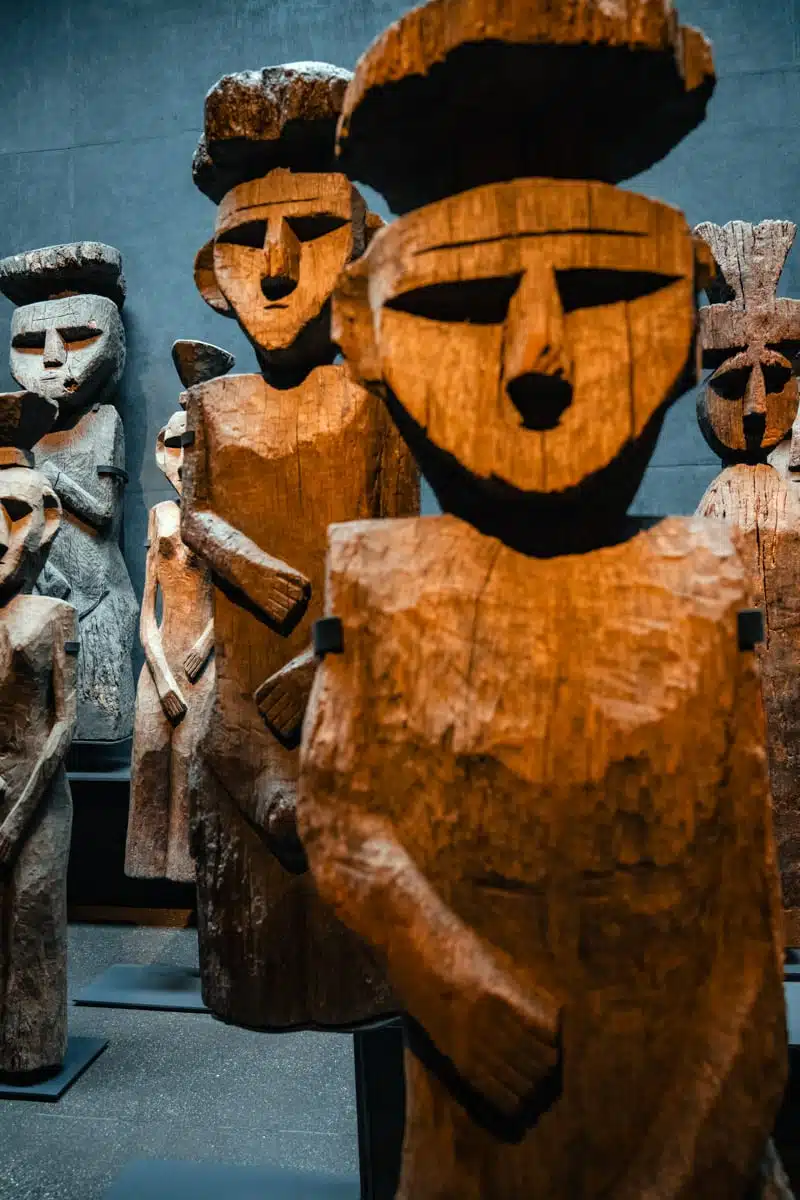
You’ve still got some time in the day to check out another museum, a block from the square. That can only mean it’s time for my absolute favourite place in Santiago, the Chilean Museum of Pre-Columbian Art. It was 100% my favourite museum in the city. In fact, I think it might have been my favourite thing I did in Santiago, full stop. In other words, GO.
Some archaeological museums can be a total snooze, but this thoughtfully curated one is not only visually stunning, it also gives you an in-depth insight into the vibrant and complex cultures that flourished across Latin America before the Spanish conquest. Exhibits range from intricate Andean textiles, preserved in a specially darkened, temperature-controlled room, to ceramics, stone carvings and striking jewellery.
The building is a treasure too: the old Royal Customs House, completed in the early 1800s. The collection is spread over 12 galleries on several floors, including the downstairs gallery Chile antes de Chile (Chile before Chile), on the cultures of what’s now Chile, from the Mapuche to the Lickanantay people of the Atacama and Rapa Nui. It’s a brilliant primer if you’re heading on to the Atacama Desert.
It takes at least a couple of hours to really do it justice, which is why I’ve given it the last two hours before closing. The museum is at Bandera 361 and is open Tuesday to Sunday from 10am to 6pm. Foreign visitors pay 12,000 CLP (5,000 CLP for students), and you can buy tickets online in advance.
When you’re done looking around, head to the museum gift shop for some little gifts for your family back home (or yourself).
Marvel at the views from Santa Lucía Hill

Look, you can’t come to Santiago without seeing the historic Cerro Santa Lucía.
This hallmark of downtown Santiago rises around 70 metres (230 feet) above the streets around it and gives impressive panoramic views of the city below. It’s historically significant too: Pedro de Valdivia founded the city at the foot of the hill in 1541. I went in through the ornate entrance at the Terraza Neptuno, on Avenida Libertador Bernardo O’Higgins by Santa Lucía metro station, and climbed up to the Castillo Hidalgo, a fort built in 1816. The architecture is a mishmash of styles, which is only part of its charm. The trek to the top of the stairs can be strenuous, but it’s worth the effort.
It’s a 10 to 15-minute walk from the Precolombino, and it’s free to visit and open every day, though the closing time changes with the seasons, so check it at the entrance. In winter, the sun sets around 6pm, which makes this the perfect spot to watch it; in summer, it doesn’t set until after 8.30pm.
Top tip: The cobblestone paths and steps can be uneven, so don’t wear flimsy sandals. Instead, opt for some comfy trainers or hiking shoes to make your way up the steps more easily.
Or: Sky Costanera at sunset. If you’d rather see the whole city lit up, take an Uber (or Line 1 to Tobalaba) to Sky Costanera instead. It’s in the Gran Torre Santiago, which at 300 metres is the tallest building in South America, and its 360-degree windows across floors 61 and 62 take in the entire city, the hills and the mountains. I went up to see the view for myself, and it’s a great place to sip a cocktail and soak up the views: the mixologists serve inventive cocktails, and you should try to grab a table by the (numerous) windows. Adult tickets cost 25,000 CLP, rising to 30,000 CLP for the popular sunset slot, and it’s open daily from 10am to 10pm. Then Uber back to Lastarria for dinner.
Have a pisco sour in Lastarria
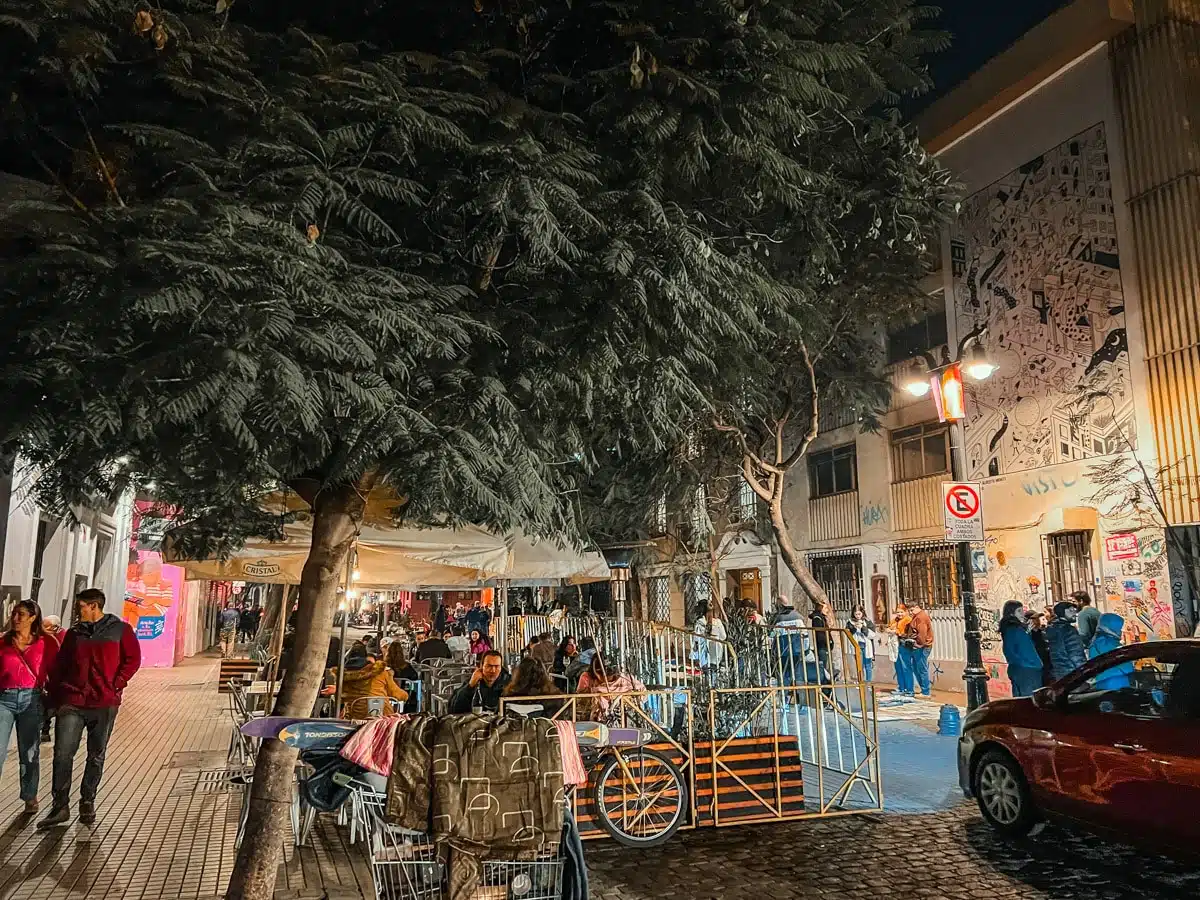
Santa Lucía sits right on the edge of Lastarria, so you can walk down into the neighbourhood for a pre-dinner drink. Calle José Victorino Lastarria is lined with bars and open-air cafés, and the street market strung along it sells jewellery, art, beauty products and clothes from independent makers. It’s at its best on Sundays, but there are some stalls pretty much every day of the week, and they start thinning out around 7pm or 8pm, so have a browse on your way past. It’s great for souvenirs, or even (whisper it) a little treat for yourself.
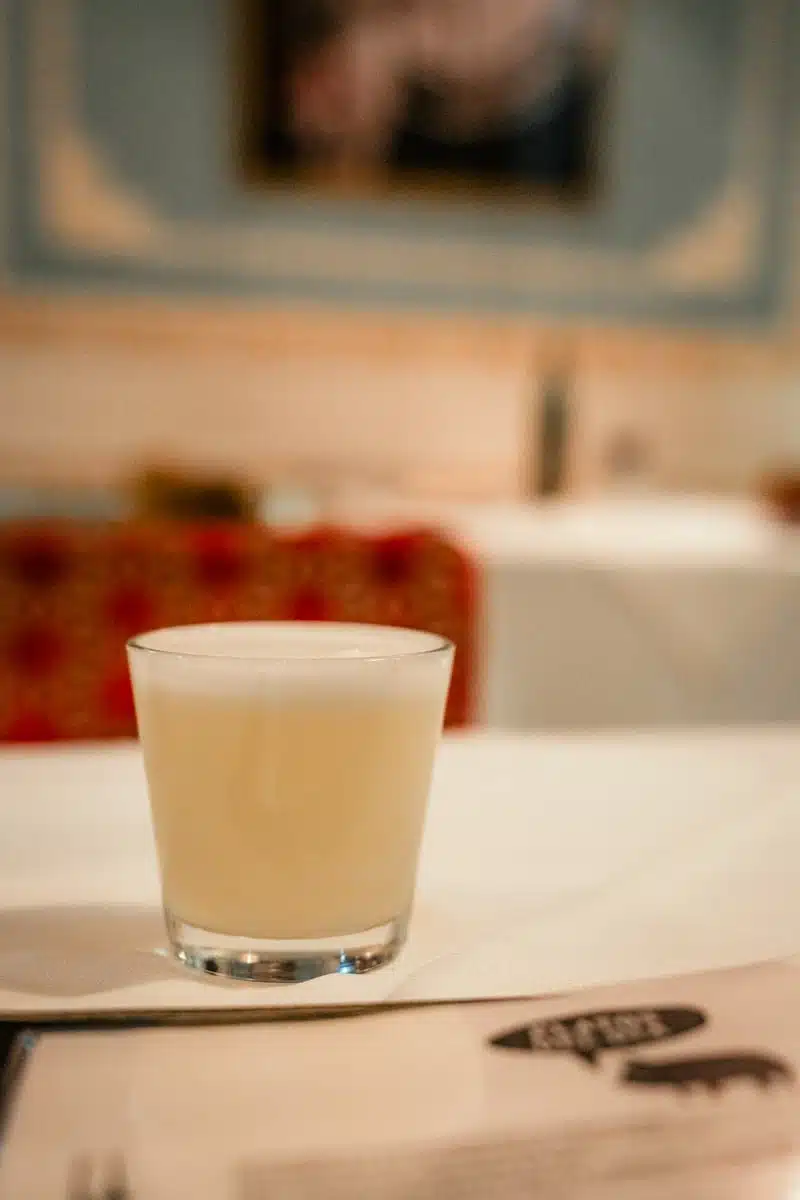
For a drink, head to Liguria, one of the best-known restaurants in Santiago. There are a few branches around the city, but several locals told me the one in Lastarria, on the corner of Merced, is the best, and it’s in a grand 1906 mansion. The setting is baroque, with fringed lampshades and gilt on the cornices. The effect should be a bit much, but it pulls it off.
Obviously, try a pisco sour, but venture beyond it, as the bartenders have serious skills and the cocktail list is long. You know you’re in Chile, too, when the house Carmenere is better than most of what they pour in the high-end restaurants at home in London. If you’d rather eat here, the long menu flits between Chilean classics, with a healthy-ish mix of tourists and locals. My plancha wasn’t the most flavourful meal I’ve ever had, but it was good enough to pass muster. Reserve ahead.
Have dinner and drinks at Bocanáriz or Boragó

A day in Santiago wouldn’t be complete without some drinks and an out-of-this-world meal.
That’s why you’ll end your day at one of Santiago’s best wine bars-come-restaurants, Bocanáriz, a couple of minutes’ walk away on Calle Lastarria. About ten people told me to make sure I booked a table, from the concierge at my hotel to Alejandro, my street art guide, and I’m glad I listened: it was easily one of the best dining experiences I had in the city. It’s a wine bar and restaurant in one, and it’s stellar at both.
Book one of the wine flights. You can choose from ones focusing on specific varieties or classifications, or opt for a pan-Chilean flight. I went for the White Wines of Chile flight, as well as the Carmeneres flight. Servings are small, so you can try quite a few wines, and the servers talk you through the differences and standout details of each one, so you’re not going in blind. Opened in 2012, it was Chile’s first wine bar, and it now has more than 300 Chilean wines on the list, 36 by the glass and over a dozen themed flights.
Food-wise, most wine bars put on a platter of artisan cheese and leave it at that. Not Bocanáriz. There’s a selection of sharing-style tapas as well as heartier main courses, and my tiradito with carrots and pea jus and my steak and chips set the bar high: set your expectations high too. Book ahead.


Really want to push the boat out? Book dinner at Boragó, about a 20-minute Uber away in Vitacura. It is expensive (the tasting menu now costs 189,000 CLP, plus 99,000 CLP for the wine pairing, which makes it pretty much the priciest meal you can buy in Santiago), but the food is superb and hands-down some of the city’s best cuisine. It was sixth on the Latin America’s 50 Best Restaurants list in 2025. I saved it for the end of my trip.
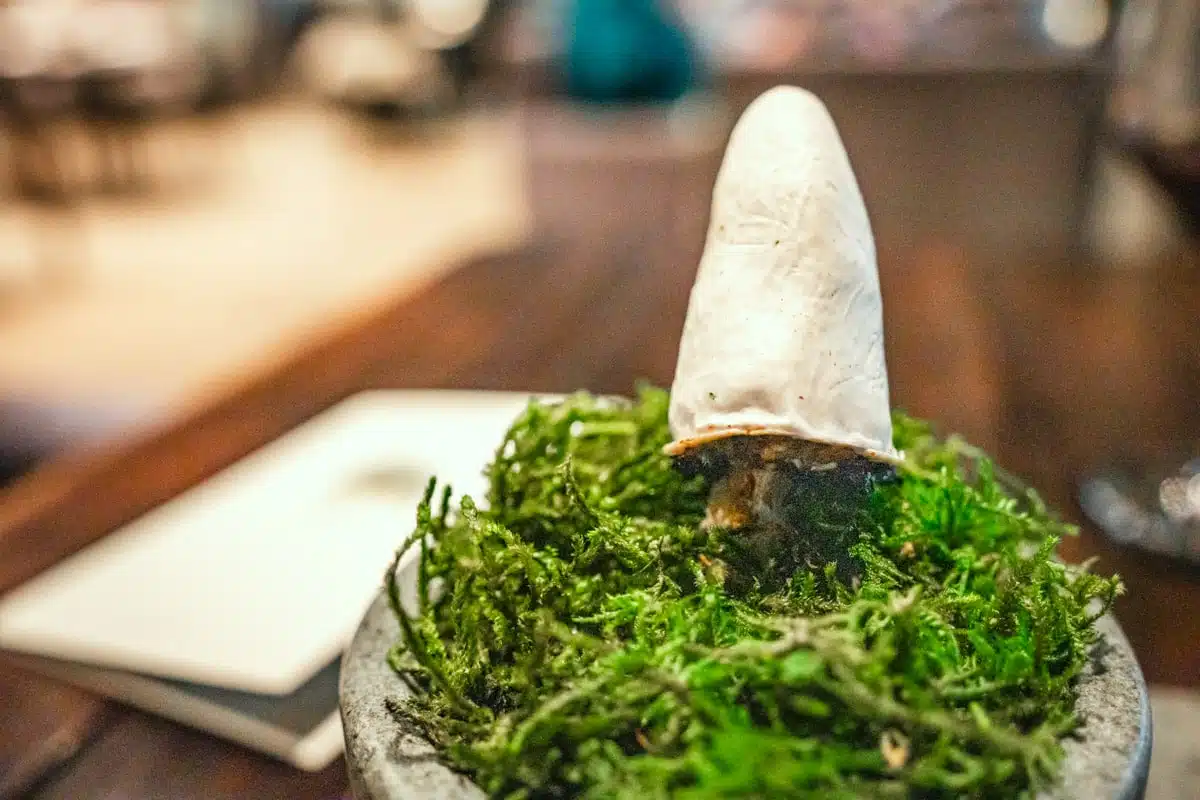
Whether it’s the chupe, a dish traditionally made with seafood but here made with mushrooms for the ultimate umami blast, balanced by a delicate eucalyptus-bud broth, or the ice brûlée with mussels, lemon, onion and traditional berries, it’s an all-out dining experience. Not everything landed for me: the ice brûlée was an inventive idea, but the ice made it very cold and it clashed with the course before and the wine. To finish, a nitrogen-blasted lemon meringue: expect to make like a dragon when you eat it. I blasted smoke from my nose like Smaug.
I walked away stuffed, verging on uncomfortably so: 14 courses, no matter how small and exquisite, is a lot, so pace yourself early on. A trip to Boragó is as much about theatre as dinner, so don’t go expecting a simple, unfussy meal, and book well ahead.
Got more time? Add these
If you have a second day in the city, these are the places I’d add, all of which I visited:
- Museo de la Memoria y los Derechos Humanos: The Museum of Memory and Human Rights examines the Pinochet dictatorship from 1973 to 1990. It’s all too easy to gloss over Chile’s turbulent history, but this museum does a great job of setting the context and showing the scale of the loss. Everyone should visit. It’s free, open Tuesday to Sunday, and next to Quinta Normal metro station, so pair it with the street art of Barrio Yungay.
- MAVI UC: The Museo de Artes Visuales in Lastarria showcases contemporary art from Chile and Latin America, in a sleek, striking building that’s a work of art in itself. The temporary exhibitions change all the time, so no two visits are the same.
- Chipe Libre: Lastarria’s “Independent Republic of Pisco” serves piscos from both sides of the Chile and Peru rivalry. My platter of oysters came Chilean-style, with lime and a salsa of red onion, corn and peppers. I’m a convert.
- The spa at The Singular: I stayed at The Singular at the end of my trip and had a massage at its spa on my last day. It’s the perfect way to recover from a full day on your feet, or to fill the hours before a late flight.
- A day trip: The wineries of the Maipo and Casablanca valleys and the colourful port of Valparaíso are all within easy reach. See my guide to day trips from Santiago for the ones I did.
If Santiago is the first stop on a bigger trip, my Chile itinerary shows you how to fit in the coast, the Atacama Desert and the Elqui Valley too.
Santiago, Chile itinerary: map
Handy tips for planning your Santiago itinerary

A little planning goes a long way in Santiago. Most of the day is on foot, a couple of the stops need booking and a few close earlier than you might expect, so here’s what to sort out before you go.
Top tours for your Santiago itinerary
- Coast tour to Viña del Mar, Valparaíso and Casablanca: If you have a second day, this is a top choice. It’s a 10-hour day out to the coast, with a wine and olive oil tasting in the Casablanca Valley, Neruda’s house La Sebastiana and a funicular ride in Valparaíso, the gardens of Viña del Mar and a stop at Reñaca beach. It covers much the same ground as the coast tour I took, and it’s the easiest way to see all three in a day.
- Hot springs tour and Chilean barbecue: For something different, head up into the mountains of the Cajón del Maipo. Go for a dip in the steaming waters for utter relaxation, then top it all off with an all-you-can-eat Chilean barbecue (vegetarian, vegan and pescatarian options included), with wine, a campfire and some stargazing. Hotel pickup is included.
For more ideas, from the Maipo Valley wineries to skiing in the Andes, see my guide to the best day trips from Santiago.
Where to stay for your Santiago itinerary
Santiago has some incredible places to stay while you’re visiting, and for a short stay, I’d base yourself in Lastarria. Some of the city’s coolest boutique hotels are here, along with top restaurants and bars, and it’s within easy walking distance of Bellas Artes, Centro and Bellavista. Every stop on this itinerary is a short walk or ride from the neighbourhood, and you’ll end the day here too.
I spent my first four nights at Hotel Cumbres Lastarria, a chic, well-priced four-star. The rooms are a good size and the staff were super-friendly and helpful, but the breakfast was basic and exactly the same every day. After four mornings, I’d completely had enough of it.
There’s also a full review of Casa Noble Boutique Hotel on the site, a beautiful old house turned hotel on a quiet street near Bellas Artes: read the Casa Noble review. But that isn’t the only place you’ll find. For more options in every area, see my guide to the best places to stay in Santiago.
Let’s look at another worth-the-stay hotel for you to enjoy in Santiago.
The Singular Santiago (boutique hotel)

This fabulous boutique hotel in Lastarria, where I stayed at the end of my trip, offers a real bang for your buck: rates are reasonable for what is a true five-star experience.
Not to mention that the rooms themselves are well decorated and uber-comfy. It’s one of my favourite city hotels I’ve stayed at.
I booked a treatment at the spa on my last day in Chile, and it was excellent: my one-hour massage cost about £50. The spa is open to non-guests too, so it’s a great spot for some downtime before a long flight home.
Don’t forget to pop up to the rooftop bar and restaurant for great cocktails and food with an unbeatable view. The terrace was closed when I visited, as it shuts in the winter months, but it would be a great place to hang out in summer, when the outdoor pool is open too.
Quick info for your day in Santiago

- Time zone: Chile Standard Time (GMT-4) from the first weekend of April, and Chile Summer Time (GMT-3) from the first weekend of September.
- Currency: Chilean peso (CLP). Cards are accepted almost everywhere, but carry some cash for markets, lockers and tips.
- Plugs: Type C and L (220V)
- Nearest airport: Santiago’s Arturo Merino Benítez International Airport (SCL), west of the city.
- 5 must-see spots: La Chascona, the Museo Chileno de Arte Precolombino, Cerro San Cristóbal, Bellas Artes and Cerro Santa Lucía.
- Closed on Mondays: Most museums, plus the San Cristóbal cable cars and funicular. Many also close on 1 January, 1 May, 18 and 19 September (the national holidays) and 25 December.
- Top tip: Keep an eye on your belongings, especially in the Centro area. It’s a bit run down, and petty theft is rife in the city, though it’s mostly non-violent.
Getting around
Santiago is a walkable city, and this itinerary is designed to be done mostly on foot. Between the stops, you’ll need the metro or a car only to get up to Sky Costanera if you swap it in, and to get home after dinner.
Metro
One of the more popular options for getting around Santiago is taking the metro, which is clean, quick and convenient. A ride costs between 735 and 895 CLP, depending on the time of day (it’s most expensive at rush hour). You can now tap a contactless Visa or Mastercard straight onto the metro readers (check with your bank that yours works abroad), or buy a rechargeable bip! card at any station ticket office, which you’ll also need for the red city buses, as they don’t take cash.
You’ll find maps, fares and service updates on the official Metro de Santiago website, or download the Metro de Santiago app to your phone. Handy stations for this route are Bellas Artes and Plaza de Armas (Line 5), Baquedano for Bellavista, Santa Lucía and Universidad Católica for Lastarria (all Line 1), and Tobalaba for Sky Costanera (Lines 1 and 4).
Uber
Outside of the metro, Uber is the best way to get around Santiago. It’s relatively cheap and better than taxis, as you don’t have to negotiate fares or worry about getting ripped off. All my hotels told me to use Uber.
Plus, it’s super convenient to just download the app. Cabify and DiDi work too. A law regulating ride-hailing apps was passed in 2023 but still hasn’t fully taken effect, so some drivers may ask you to sit in the front seat. If you do need a taxi, book one through an app or your hotel rather than hailing one on the street, especially late at night.
From the airport
Skip the touts in the arrivals hall. TransVIP runs shared shuttles from right outside the terminal for around 10,000 CLP per person to the centre, and the Centropuerto and Turbus airport buses run to Pajaritos or Los Héroes, where you can pick up the metro. If you want a taxi, book and pay at one of the official desks inside the arrivals hall before you head out.
Staying safe
Santiago is a lot of fun, but it pays to keep your wits about you. Crowded spots like the Plaza de Armas and the Mercado Central are prime pickpocketing territory, so keep your phone out of reach and your bag zipped and in front of you. The UK government also warns that street robberies in Santiago are increasingly carried out at knife or gunpoint, sometimes in broad daylight. If it happens, don’t resist.
You can hike up Cerro San Cristóbal using various paths, but there have been armed robberies on the routes, so I’d take the cable car or funicular instead. If you do walk, stick to the main paved road, go during the day and go with other people. Bellavista is lively at night, so don’t leave drinks unattended in the bars there.
More for your Santiago itinerary
- Things to do in Santiago, Chile
- Day trips from Santiago, Chile
- Where to stay in Santiago
- The perfect Chile itinerary
- The top things to do in Chile
Love this? Save and share on Pinterest

Discover the top things to do, insider tips and hidden gems in our Chile Travel Guides.
Read the guides →