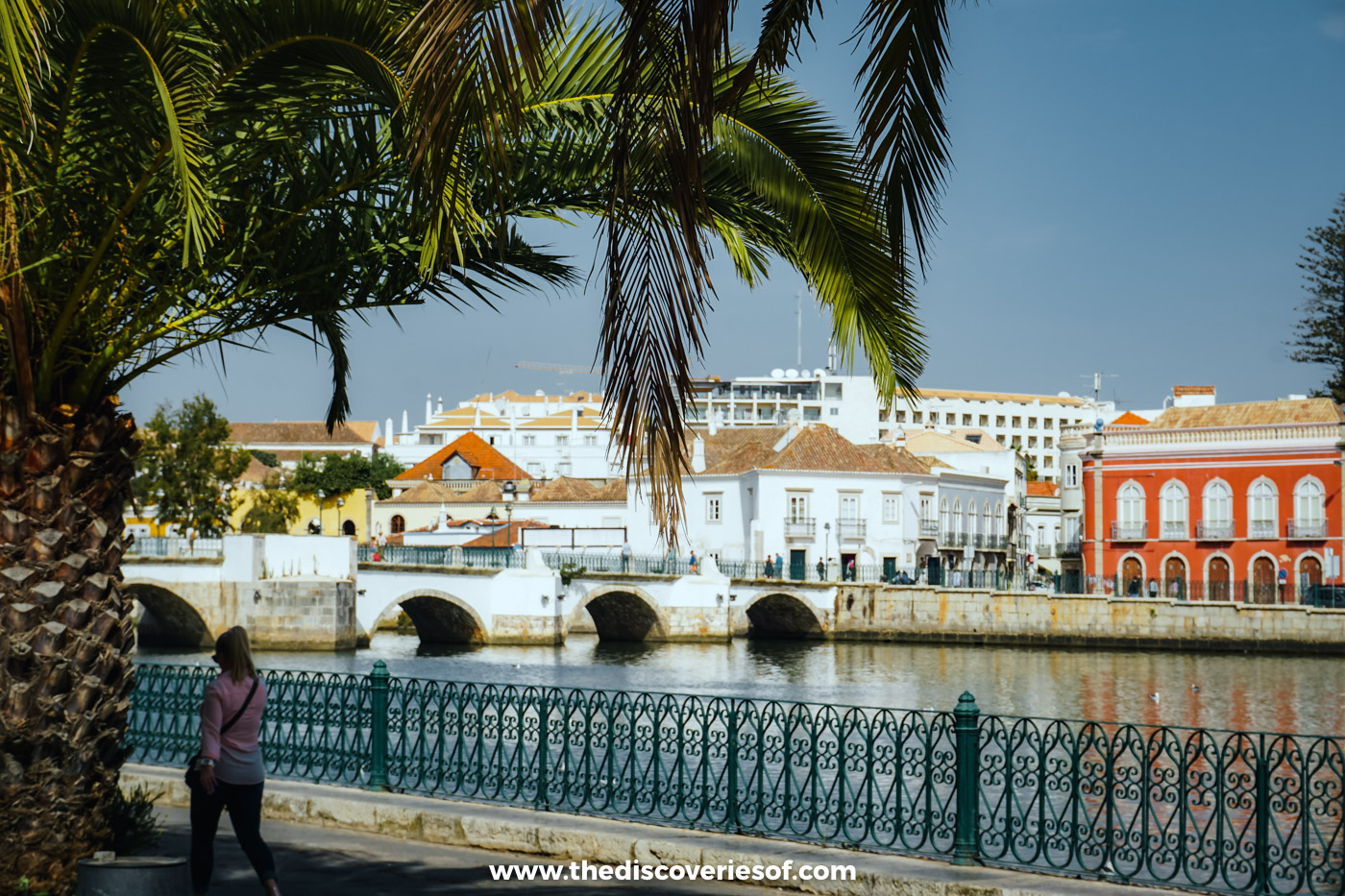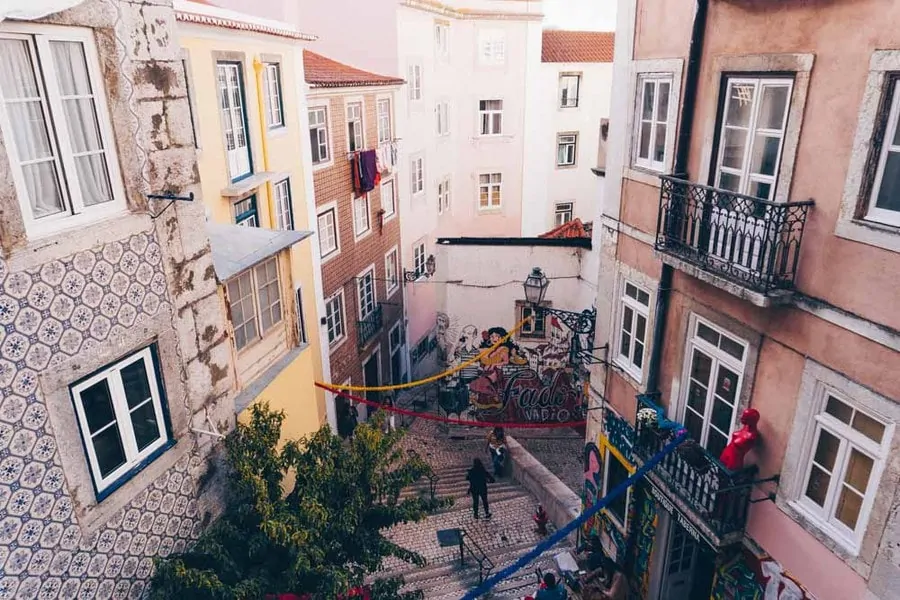

Three days is just right for Lisbon if you give each one a neighbourhood. Start in the grand streets of the Baixa and Chiado, spend a day climbing through Alfama and Mouraria, then head west for Belém’s monuments and the old warehouses of LX Factory. This itinerary has the walks, the tickets worth booking ahead, the tables worth queuing for and the best places to stay.
Lisbon and I got off to a slow start. On my first visit, as a teenager interrailing on a shoestring, I didn’t really get it. I’ve been making up for it ever since: I’ve been back time and again, I’ve fallen hard, and these days the city has had more words from me than London, my home town.
My visits have landed at very different times of year. One was a January weekend at the Ritz, which began with the sun coming up over the Tagus from my balcony and ended on a Sunday with a sidecar ride round the hills and a seafood feast at Cervejaria Ramiro. Another was a late October trip spent almost entirely on foot and at the table: a historian’s walk down through Alfama, a walking and tasting tour into Mouraria and a food tour I signed up for on a whim one morning.
This plan for 3 days in Lisbon takes the best of those trips and puts them in an order that works. Each day sticks to one part of the city, so you spend your time exploring rather than crossing town, and the days are arranged around the closing days that catch people out (more on that below). Expect a 16th-century monastery, a 52,000-tile mural, a flea market that has been trading for centuries, a castle with views across the river and some of the best custard tarts and seafood you’ll ever eat.
I’ve written it for a Friday to Sunday, the way most people visit, but it works on other days with a little shuffling. Prefer to pick your own highlights? Each sight gets more space in my guide to the best things to do in Lisbon. Where to stay is at the end of day one, and the practical tips (transport, packing, timing) close the page.
Your 3 days in Lisbon at a glance
- Day 1 (Friday): the Baixa and Chiado. Praça do Comércio, a food tour through the old town, the roofless Carmo Convent, pastéis de nata at Manteigaria, dinner at Bairro do Avillez and an evening of jazz.
- Day 2 (Saturday): Alfama, São Vicente and Mouraria. The Feira da Ladra flea market, André Saraiva’s tiled mural, the castle and a history walk down to the Sé, lunch at A Muralha, the Church of São Domingos, Mouraria and sunset from Senhora do Monte.
- Day 3 (Sunday): Belém and LX Factory. The Jerónimos Monastery, Pastéis de Belém, the Belém Tower, the Monument to the Discoveries, the Sunday market at LX Factory and a farewell feast at Cervejaria Ramiro.
- Have more time? A day trip to Sintra, a vintage sidecar tour or a morning at the Gulbenkian.
Top Tip
The order matters more than it looks. The Feira da Ladra only runs on Tuesdays and Saturdays, the Sé and the Carmo ruins close to visitors on Sundays, LX Factory’s market is on Sundays, and the big Belém sights all close on Mondays. If your trip starts on another day, keep Alfama for a Saturday or Tuesday and keep Belém away from Monday.
Day 1: the Baixa, Chiado and a food tour
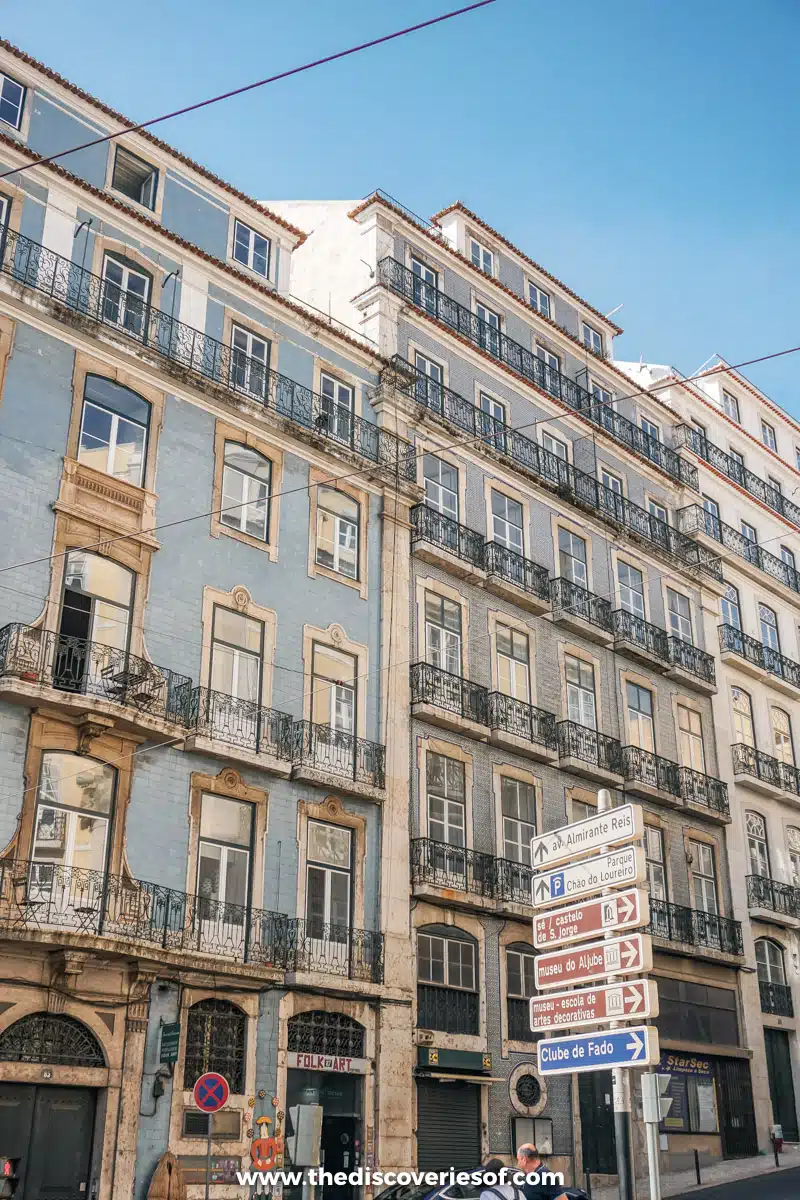
The Baixa is the flat grid of downtown streets between the river and Rossio, rebuilt from scratch after the earthquake, tsunami and fires of 1 November 1755 destroyed most of the city. Chiado rises up the hill to the west, the old literary quarter of theatres, cafés and smart shops, with the bars of Bairro Alto just above it. Everything today is within walking distance, although the walking is uphill in places, so it’s a gentle way to start while you get your bearings.
Start where the city was rebuilt, on Praça do Comércio

The vast riverside square of Praça do Comércio is where the story of modern Lisbon begins. Before 1755, the royal palace stood here. After the disaster, the Marquis of Pombal had the lower town laid out again as a tidy grid, and the arcaded square rose once more on the waterfront, built to tempt the king back. He never returned.
I learnt that on a walking and tasting tour that set off from this square, along with the reason the streets behind it carry the names of trades: Rua do Ouro for the goldsmiths, Rua da Prata for the silversmiths and Rua dos Fanqueiros for the cloth merchants. The plain, sturdy Pombaline buildings that line them were some of the first anywhere to be designed with earthquakes in mind.
Walk through the triumphal arch on Rua Augusta and you’re in the heart of the Baixa. There’s a viewing terrace at the top of the arch if you want an early look over the rooftops.
Eat your way round the old town on a food tour

The best introduction to the city is through its food, and the best way to do that is with someone who knows where to go. My food tour was with Oh! My Cod (Suck My Cod, as it was then), booked on a whim one morning, and it’s still one of the best I’ve done, out of a great many. If I have one piece of advice, it’s to turn up starving.
Its Original Lisbon Food and Wine Tour now meets at the Arco da Rua Augusta and spends four hours winding through the Baixa, Mouraria and Alfama, with four food stops and wine along the way, from €105 a head in groups of four to ten. It’s a good way to preview the neighbourhoods you’ll explore properly tomorrow, and if it runs in the morning, it takes care of lunch. Check the start times when you book on the Oh! My Cod website.
Climb to the Carmo Convent, roofless since 1755
Afterwards, head up the hill to Largo do Carmo, a pretty, tree-shaded square at the top of Chiado. The Carmo Convent was one of the grandest Gothic churches in the city until the earthquake brought its roof down during Mass. It was never rebuilt, and today its bare stone arches frame the sky above the nave, with a small archaeological museum in the old chancel.
Tickets
Adults pay €7, students and over-65s €5, and children under 14 nothing. Hours run from 10am to 6pm (November to April) or 7pm (May to October), Monday to Saturday; it’s shut on Sundays.
The Santa Justa lift, the wrought-iron elevator that has carried people up from the Baixa to this part of town since 1902, has been out of service since September 2025, so you’ll need to walk up from Rua do Carmo for now.
Taste the city’s best pastel de nata at Manteigaria
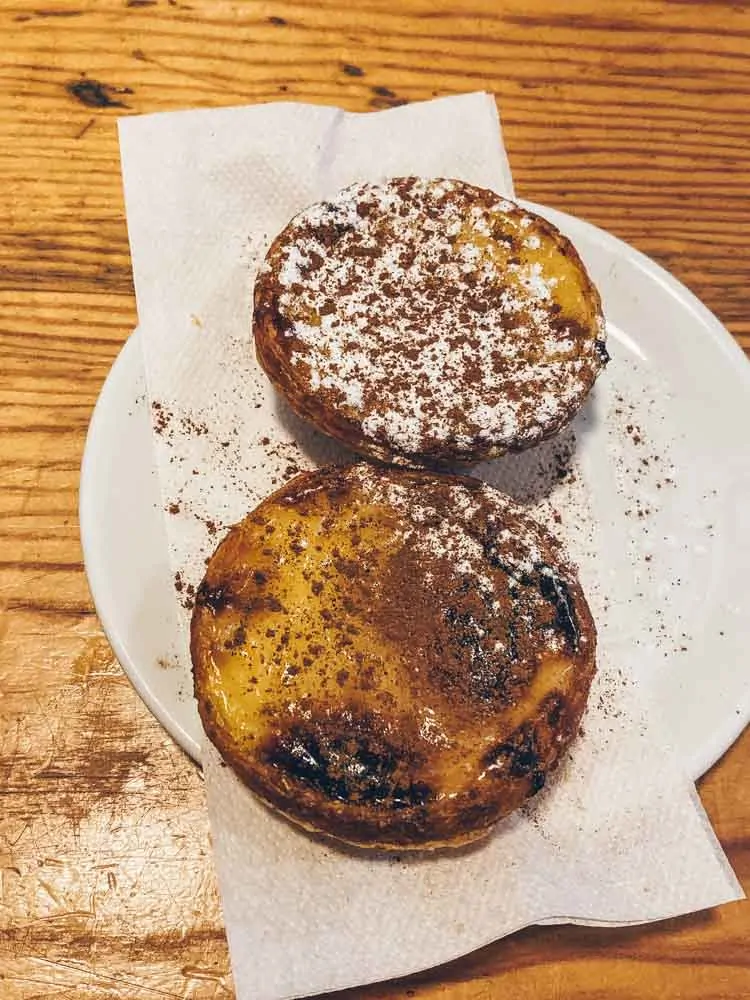
It may be sacrilege to say so, but I’ve worked my way through a great many pastéis de nata in this city, and Manteigaria’s are the ones I’d cross town for. Its original shop is on the corner of Rua do Loreto, at the top of Chiado, and it’s open daily from 8am to midnight. There are no tables, so eat yours standing at the counter with a bica (espresso), and listen out for the bell that rings whenever a new batch is ready. They cost about €1.30 each.
Chiado is one of my favourite parts of the city to wander, so give yourself time to dawdle. Have a coffee at A Brasileira, the art deco café where the poet Fernando Pessoa was a regular (his bronze statue sits at a table outside), and browse the bookshops on Rua Garrett, among them Bertrand, which opened in 1732 and is said to be the oldest working bookshop in the world.
Dinner at Bairro do Avillez
Bairro do Avillez came recommended by the PR at my hotel, who seemed to know every restaurant in the city and had firm views on all of them. It was a very good tip.
Chef José Avillez has restaurants all over Lisbon, and this one, in a former convent in Chiado, is four in one. The Taberna at the front serves petiscos (small plates) from noon until midnight and is the easy option if you haven’t planned ahead. Further in, the Páteo is a covered courtyard where seafood is the star, and it’s the one to book for a special dinner. Order the croquetes and a prego (steak sandwich) at the Taberna and you won’t go far wrong.
End the night with jazz from the Hot Clube
I was 17, mildly pretentious and newly into jazz the first time I went to the Hot Clube de Portugal, and it has been my evening plan of choice on every trip since. Founded in 1948, it ranks among Europe’s oldest jazz clubs.
You’ll need to plan around it for now. The club’s home, a basement on Praça da Alegria, was closed on the city’s orders in 2023 because the building was unsafe, and although the council has funded works so that it can return to number 48, it remains temporarily closed. In the meantime, the club keeps putting on concerts at other venues, such as Teatro Variedades in Parque Mayer, so check what’s on at hcp.pt before you go. If nothing is on, the bars of Bairro Alto are a short climb from Chiado and stay busy late.
Getting to Lisbon
Lisbon’s Humberto Delgado Airport is close to the centre: the red metro line runs from the terminal into town, and a taxi, Uber or Bolt takes about 15 to 20 minutes outside rush hour. Coming from Porto, the quickest Alfa Pendular services reach Lisboa Oriente or Santa Apolónia in a little under three hours; book on the CP website a few days before for the lowest fares.
Suggested stay: the Four Seasons Hotel Ritz
My favourite hotel in the city is the Four Seasons Hotel Ritz Lisbon. My tenth-floor room had its own balcony, and watching the sun rise over the rooftops from it is the memory I’ve kept. It’s a splurge (rooms start at around €900 a night), and for that you get a spa, an indoor pool, the Michelin-starred CURA and a rooftop running track. Its spot above Eduardo VII Park is a little way from the old town, so expect to take the metro or a taxi down each morning. My full review of the Ritz has the rest.
To stay closer to the action, the Lisboa Pessoa Hotel is a good mid-range base in Chiado, and Memmo Alfama puts you in the lanes below the castle, with a rooftop pool and terrace looking over the river. For more ideas, see where to stay in Portugal, or search all accommodation in Lisbon.
Day 2: Alfama, São Vicente and Mouraria
Day two is all about the oldest part of the city, on the steep hill below the castle. Alfama came through the 1755 earthquake largely intact, so its tangle of lanes, stairways and tiny squares still follows the layout of the Moorish town. Neighbouring São Vicente is home to the flea market and two of the city’s great white churches, and Mouraria, on the other side of the castle hill, is where the Moors were resettled once the Christians took the city in 1147. It’s a day of hills, so wear your grippiest shoes.
Browse the Feira da Ladra flea market
Start early at the Feira da Ladra, which sets up every Tuesday and Saturday in the Campo de Santa Clara, behind the monastery of São Vicente de Fora. I love a good flea market, and this is one of the best I know: it has been going for centuries, and its stalls cover everything from antique furniture, tiles and militaria to records, second-hand books, upcycled clothes and handmade jewellery.
Go in the morning, when the stalls are full and the best finds are still on the tables, and bring cash. Tram 28’s Voz do Operário stop is close by.
Find André Saraiva’s tiled skyline in São Vicente

A couple of minutes from the market, across the square from the white dome of the National Pantheon, is my favourite piece of street art in the city. Catarina, the PR at the hotel where I stayed in January, tipped me off about it, and I’ve been sending people to find it ever since.
André Saraiva’s mural stretches for about 188 metres along Calçada de São Vicente and is made up of more than 52,000 hand-painted tiles: a dreamlike skyline in which landmarks from Lisbon, Paris and New York merge into one imaginary city. Look out for his winking, top-hatted alter ego, Mr A, popping up among the buildings.
If you want to go inside, the National Pantheon (€10, Tuesday to Sunday) is where Amália Rodrigues, the queen of fado, is buried, and its roof terrace has views across Alfama to the river. São Vicente de Fora next door (about €8) has cloisters lined with tiles illustrating La Fontaine’s fables.
Walk down from the castle with a historian
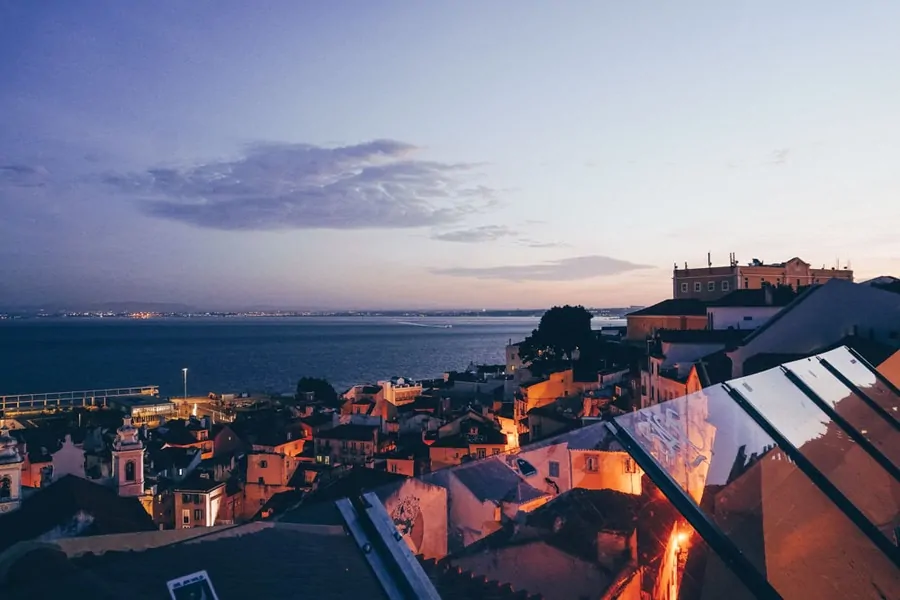
From São Vicente, it’s a 15-minute walk uphill to the Castelo de São Jorge, the Moorish fortress that crowns the city’s highest hill. It has been rebuilt many times, but the views from its ramparts are the real thing: Alfama tumbling to the river on one side, the neat grid of the Baixa on the other.
The castle was also the starting point for the best thing I did in Alfama. A history tour might not sound like everyone’s idea of a good time, but in my not so humble opinion, it’s the best way to understand the neighbourhood. Two and a half hours with a historian, working downhill through the lanes from the castle to the cathedral, was all it took. My guide brought Alfama’s past and present to life along the way, and the time flew.
Going top to bottom also keeps the climbing to a minimum and saves the best views for the descent. Stop at the Miradouro das Portas do Sol and the tiled pergola of Santa Luzia just below it, then finish at the Sé, the fortress-like cathedral begun in 1147. It’s the oldest church in the city, and its cloister has been excavated to reveal Roman and Islamic-era remains.
Tickets
Adult tickets for the castle are €17 (13 to 25s pay €8.50), and it’s open daily until 9pm in the warmer months (March to October) and 6pm in winter, from 9am. In summer, a guided skip-the-line castle ticket cuts the wait. The Sé costs €7 and is open Monday to Saturday, but it’s closed to visitors on Sundays, which is why this day falls on a Saturday.
Lunch at A Muralha
Down at the bottom of Alfama, near the cruise terminal, A Muralha Tapas e Vinhos is the kind of small, friendly place you hope to stumble across. Everything I ate there was a delight, from the fresh, zingy octopus salad to the morcela (blood sausage) that arrives at the table in flames and a crumbly, tangy sheep’s cheese, with a wine list that goes well beyond the usual names. You’ll find it at no. 104 Rua do Jardim do Tabaco. It serves from mid-morning to after midnight from Monday to Saturday, and doesn’t take bookings, so a late lunch is the way to beat the rush.
See the fire-blackened Church of São Domingos
After lunch, walk west through the Baixa to Rossio and the Church of São Domingos, one of the most moving places in the city. A massacre of Lisbon’s Jews began on its steps in 1506, the earthquake brought much of it down in 1755, and in 1959 a fire gutted the interior. When it reopened, the scorched stone and split columns were left untouched, a reminder of all three.
On my walking and tasting tour, my guide pointed out something most visitors never hear: for a long time this was the one church in the city that would let enslaved people worship. Entry is free, but keep your voice down, as it’s still a working church.
Turn left into Mouraria
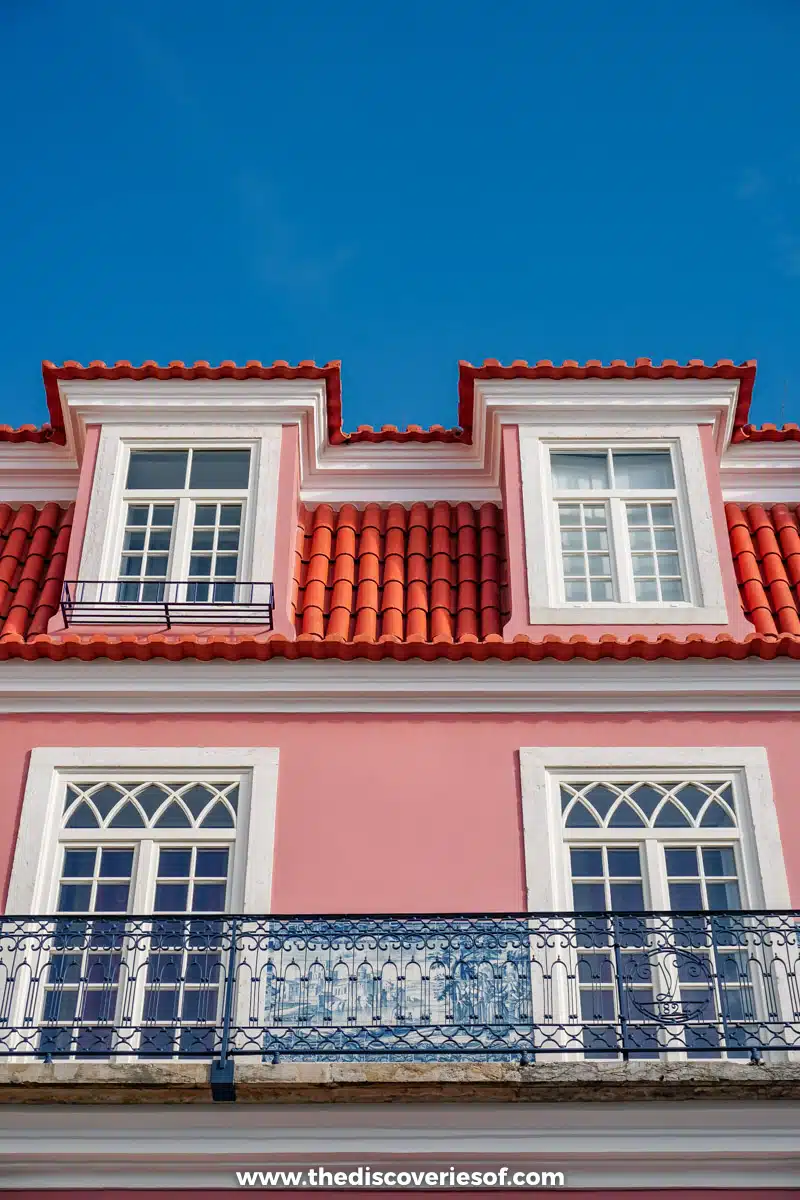
Leave São Domingos, turn left, and you’re in Mouraria. My guide called it the most eclectic part of the city, for its mix of class as much as race. After 1147, the Moors who chose to stay were pushed outside the walls onto this slope, and incomers have settled here ever since. In the streets between Martim Moniz and Largo do Intendente, along Rua do Benformoso, you’ll find grocers and canteens run by families from South Asia, China and Africa.
Along the route came the tastings: a wedge of São Jorge cheese from the Azores, never aged for less than four months, with quince marmalade; ham from Bísaro pigs, a free-range breed from the north that feeds on chestnuts in winter; and a young, seven-year-old tawny port, darker and drier than a ruby though still red.
This is where fado was born, too. Maria Severa, the 19th-century singer remembered as the first great fadista, spent her life in these lanes, and her old home on Largo da Severa now houses a fado restaurant, Maria da Mouraria. Book ahead to hear the music where it began.
Watch the sun go down from Senhora do Monte
End the afternoon at the Miradouro da Senhora do Monte, the highest of the city’s viewpoints, where the castle, the river and almost the whole of the centre spread out below you. It’s a stiff climb up from Mouraria, but the Graça funicular, which reopened in April 2026, does most of the work, hauling passengers up from Rua dos Lagares towards Graça. Arrive half an hour before sunset to find a spot.
For dinner, stay in the neighbourhood for fado, at Maria da Mouraria or at one of Alfama’s fado houses such as Parreirinha de Alfama or Mesa de Frades. Most expect you to eat and keep quiet while the singers perform, so book a table.
Day 3: Belém and LX Factory
Save Belém for your last day. A few kilometres west along the river, this is where the caravels set sail during Portugal’s Age of Discovery, and the monuments that the riches of that age paid for are some of the finest in the country. It’s open on Sundays and closed on Mondays, so it fits neatly at the end of a weekend. Tram 15E runs out along the river from Praça da Figueira, Praça do Comércio and Cais do Sodré and takes about half an hour. Finish at LX Factory on the way back, then go out with a feast.
Be at the Jerónimos Monastery for the first slot
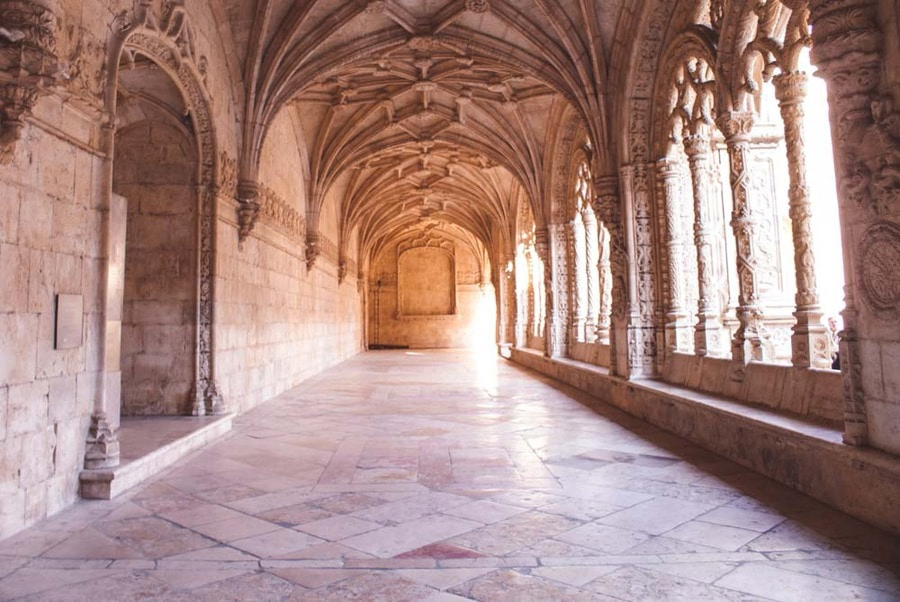
My first visit to the Jerónimos Monastery was as a 17-year-old, and my diary from that trip is mostly exclamation marks. When I went back on a January weekend years later, I was just as floored. Begun in 1501, with much of the bill met by a levy on the spice trade, it has carving that is Manueline at its most exuberant: twisted ropes, sea creatures, armillary spheres and coral climb all over the stone.
The two-storey cloister is the showstopper. The church, where Vasco da Gama’s tomb faces Camões’s memorial, is free, but it keeps shorter hours than the cloister and on Sundays usually only opens in the afternoon.
Tickets
The cloister costs €18 (half price for 13 to 24-year-olds and over-65s; under-13s free) with timed entry, so book the 9.30am opening slot online before you go. Hours are 9.30am to 5.30pm, and it’s closed on Mondays.
Skip the queue at Pastéis de Belém
A few doors along Rua de Belém, Pastéis de Belém has made its custard tarts to the same closely guarded recipe since 1837, using a method said to come from the monks next door. The takeaway queue can stretch along the street, but my tip, which I pass on to everyone, is to walk past it and sit inside. The tearooms go back a long way, there’s usually a free table, and your pastéis arrive warm in minutes. It’s open every day.
Climb the narrow stairs of the Belém Tower
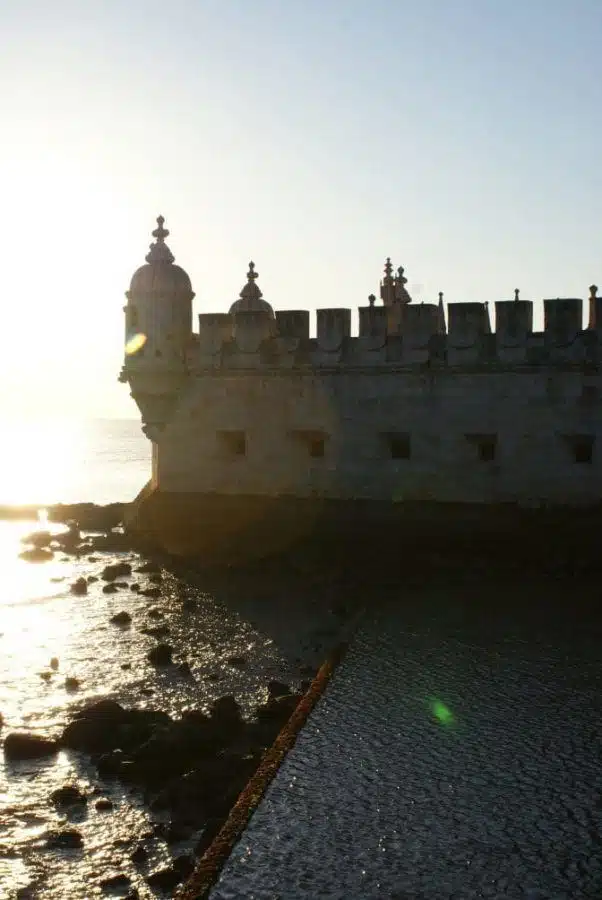
Walk west through the riverside gardens to the Belém Tower, the little Manueline fortress that has guarded the mouth of the Tagus since 1519. Look out for the stone rhinoceros carved under one of the turrets, thought to be the first rhino ever sculpted in Western Europe.
Believe me when I say the spiral staircases inside are narrow. There’s a one-way system to stop people trying to go up and down at once, though not everyone obeyed it when I visited. That should be less of a problem now. Since reopening on 27 May 2026, after about a year of restoration work, the tower lets people in by half-hour slot, with numbers held to roughly 900 a day.
Tickets
€15 for adults, under-13s free. Hours are 9.30am to 5.30pm, and it’s closed on Mondays. Book a slot online in advance, or buy this Belém Tower entry ticket.
Look for Queen Philippa on the Monument to the Discoveries
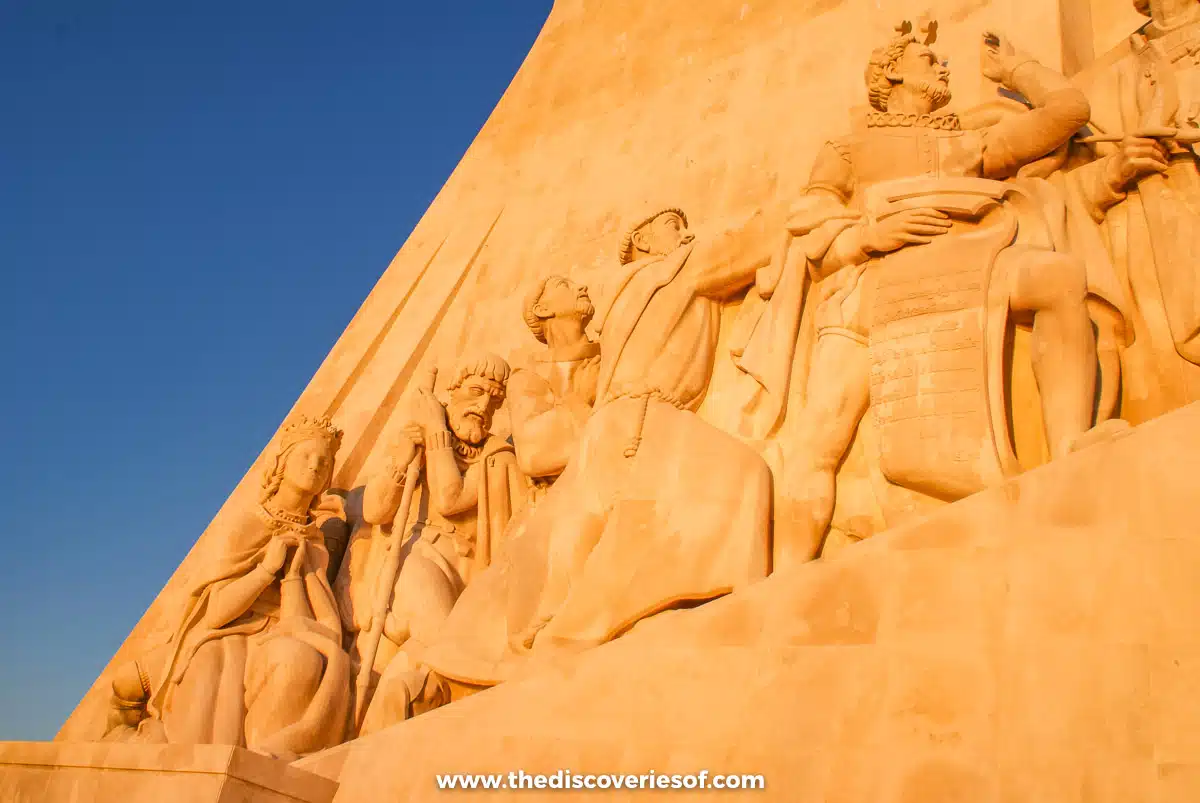
Walk back east along the river to the Monument to the Discoveries, a 56-metre stone prow unveiled in 1960, five centuries after the death of Prince Henry the Navigator, who leads the way at the front. Behind him, 32 more figures from the age of exploration line up along the sides. My favourite is Queen Philippa of Lancaster, Henry’s English mother and the only woman on the whole monument.
Take the lift up for the view over Belém and the river from the top, then look down at the huge compass rose and map of the world laid into the pavement below, a gift from South Africa. The monument is open every day (10am to 6pm from October to February and to 7pm from March to September), a full ticket costs €10, and it doesn’t need a booked slot, which makes it simple to slot in around the other two.
Spend the afternoon at LX Factory

Head back towards the centre to Alcântara, where LX Factory fills an old textile mill under the 25 de Abril Bridge, a short tram or taxi ride from Belém. I’d come for the street art (hunting down the city’s murals had become a bit of an obsession), but I found far more than a street art hub: the old factory buildings are packed with independent shops, studios, cafés, bars and restaurants.
Don’t miss Ler Devagar, a contender for the world’s most beautiful bookshop, which fills an old printing works with towering shelves and a bicycle flying overhead. It’s the one place there I wish I’d photographed properly, as I got so excited about the street art that I forgot to. On Sundays, the LX Market fills the main street with stalls of crafts, vintage finds and food, which makes this the perfect day to visit.
Read Next
Go out with a feast at Cervejaria Ramiro
Finish the way I finished my January Sunday: with a seafood feast at Cervejaria Ramiro, a short taxi ride away on Avenida Almirante Reis. I went late on a Sunday afternoon, queued for about ten minutes and ate one of the best meals of the trip: oysters, clams in garlic and coriander and grilled tiger prawns, then a steak sandwich to finish (Ramiro’s idea of dessert). It’s open on Sundays from noon to 11pm (closed on Mondays and all of August), and you can now book online with a deposit or take your chances in the queue.
Have more time? Add these to your itinerary
Take a day trip to Sintra
With a fourth day, take the train to Sintra, the hill town of fairytale palaces in the forest above the coast. Trains from Rossio run roughly three times an hour, and the journey is about 40 minutes. Rossio is one of my favourite stations, if only for its horseshoe-arched façade, so arrive early enough to look at it properly.
In Sintra, the National Palace with its two giant conical chimneys is in the town itself, while the yellow and red Pena Palace sits high on the hill above. I was smitten with Pena’s colours before I’d even seen it in person. Entry to Pena is by timed ticket, so book ahead, or hand over the logistics on a guided day trip that takes in Pena, Cabo da Roca and Cascais.
See the hills from a vintage sidecar

If you’d rather save your legs, hop into the sidecar of a vintage motorbike. I took a sidecar tour on my January Sunday, and I had more fun on it than almost anything else I did in the city. The tours are tailor-made, so you tell your guide what you’d like to see, and mine, Pedro, was a lifelong local with the stories to match. The best moments were the places I’d never have found on my own, including a little café with the best cakes of the weekend, whose name I’m still sworn to keep secret. Tours take about three and a half hours: book a sidecar tour here.
Spend a morning at the Gulbenkian
The Museu Calouste Gulbenkian holds the collection of an Armenian oil magnate who settled in the city during the Second World War, from Egyptian antiquities and Islamic ceramics to Rembrandt, Rubens, Monet and a dazzling room of Lalique jewellery. The Founder’s Collection has been open again since July 2026 following a big refurbishment, and the CAM, its modern art centre, sits across the gardens. One €16 ticket gets you into both; Sunday afternoons from 2pm are free, and Tuesdays are the day to avoid, as it’s closed. It’s an easy walk from the Ritz, too.
Map
Handy tips for planning your 3 days in Lisbon
Top tips
- Tourist tax: expect €4 a night on your hotel bill for everyone over 12, capped at seven nights.
- Book the big tickets ahead: the Jerónimos cloister, the Belém Tower and Pena Palace all run timed slots that sell out days ahead in summer.
- Think about the Lisboa Card: as well as public transport, it gets you into dozens of sights, the Jerónimos cloister and the Belém Tower among them. One day costs €31 (€29.45 if bought online), two days €51 and three days €62. It earns its keep on the Belém day, but you’ll still need to reserve timed slots using your card number. Buy the Lisboa Card here.
- Don’t count on the historic lifts: the Glória funicular has been closed since its fatal crash in September 2025 and isn’t due back for several years, and the Santa Justa lift and the Bica and Lavra funiculars have been out of service since around the same time, so check before you plan around them. The Graça funicular is running again.
- Watch your bag: pickpockets work tram 28, the viewpoints and the busiest streets of the Baixa.
What to pack
- Shoes with a good grip: the city’s polished limestone cobbles are beautiful and treacherous when wet, and every day of this plan involves hills.
- A light waterproof: autumn and winter showers come in heavy bursts.
- A layer for the evenings: even in summer, the breeze off the river can be cool after dark.
- A travel adapter: Portugal uses the round two-pin European plug.
Best time to visit
The best months are April to June and September to October, when the days are warm and the crowds thinner than in July and August, when the city is hot, busy and expensive. In June, the Festas de Lisboa fill Alfama and Mouraria with sardine grills and street parties, peaking on the night of 12 June, the eve of Santo António. Late October is still warm, at around 23°C, but rainier. January brings short days and quiet sights, and some of the best hotel rates of the year. For a month-by-month view, read the best time to visit Portugal, and there’s more on the autumn in Portugal in October.
Getting around
Walking is the best way to see the centre, hills permitting. For longer hops, get a reusable navegante card (€0.50) from a metro station machine and load it with pay-as-you-go Zapping credit, or with a €7.25 day pass that covers the metro, buses and trams. A ticket bought from the tram driver is €3.30, so the card soon earns its keep. Ride tram 28 at the start of the day, ahead of the crowds, and tram 15E to Belém. Taxis, Uber and Bolt are cheap and handy for late nights and the uphill journeys. There’s more in my Portugal travel tips.
Read next
- The best things to do in Lisbon
- Getting lost in Alfama, the quarter the earthquake spared
- The best restaurants in Lisbon
- Is the Four Seasons Hotel Ritz Lisbon worth the splurge?
- How to spend one week in Portugal
- How to spend 3 days in Porto
- Where to stay in Portugal
Love this? Save and share on Pinterest
Discover the top things to do, insider tips and hidden gems in our Portugal Travel Guides.
Read the guides →