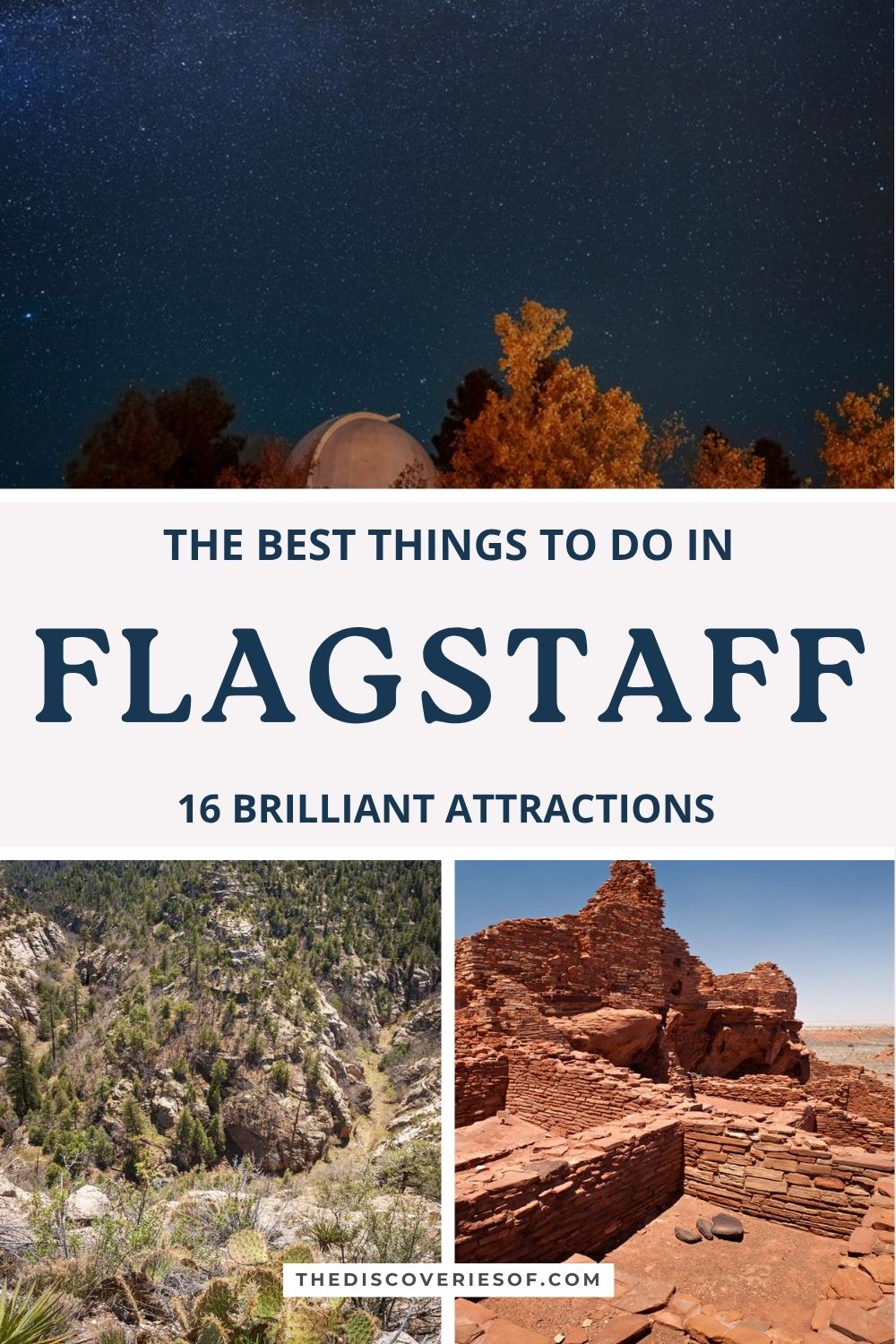
From stargazing in the world’s first Dark Sky City to ancient cliff dwellings, volcanoes and Arizona’s highest peak, these are the best things to do in Flagstaff, Arizona.
When you think of Arizona, your mind probably goes straight to Phoenix, Tucson or Sedona, right? I’ll admit I was the same.
But Flagstaff deserves a place on your list. Sitting at around 7,000 ft in a ponderosa pine forest beneath the San Francisco Peaks, it’s a mountain town that feels nothing like the desert you’ll find a couple of hours south. It has a lively historic downtown on Route 66, one of the most important observatories in the country, and ancient pueblos, lava fields and canyons within half an hour’s drive. It’s also the gateway to the Grand Canyon’s South Rim, about 80 miles north.
Add it to your Arizona road trip and give it at least a couple of days. Here’s what to do while you’re there.
The best things to do in Flagstaff
Stargaze at Lowell Observatory

Lowell Observatory is unmissable, and the best way to spend an evening in town. Founded by Percival Lowell in 1894, this is where Clyde Tombaugh discovered Pluto in 1930, and it’s still a working research observatory today.
Whether you’re an astronomy buff or not, it’s a brilliant visit. General admission (about $35 for adults) includes the Marley Foundation Astronomy Discovery Center, which opened in 2024 with interactive exhibits and a planetarium, and the Giovale Open Deck Observatory, where you can look through its telescopes on clear evenings without booking. The observatory is open from noon to 10pm, but closed on Tuesdays.
The skies here are exceptional for a reason: in 2001, Flagstaff became the world’s first International Dark Sky City, with strict rules on outdoor lighting to keep the night sky dark. Winter evenings are cold but crystal clear, perfect for spotting Orion and the Pleiades.
Explore Lava River Cave

For something a little wilder, head underground at Lava River Cave in the Coconino National Forest, about 14 miles north-west of Flagstaff.
This isn’t just any cave. Around 700,000 years ago, molten rock from a volcanic vent in Hart Prairie flowed through here; the outer layer cooled and hardened while the lava inside drained away, leaving a tube about a mile long.
You can walk the full length of the tube and back, which takes around one to two hours. The floor is uneven and rocky, and it’s pitch black and between 35°F and 45°F (about 2°C to 7°C) inside all year, whatever the weather outside.
Top tip: Bring warm layers, sturdy closed-toed shoes and at least two or three light sources (the Forest Service’s own advice). The forest roads to the cave are usually closed in winter because of snow and mud, which adds a walk of about 4 miles each way from US-180, so it’s best visited from spring to autumn.
Visit the Museum of Northern Arizona

Before you scoff at the thought of a museum, let me assure you that the Museum of Northern Arizona is well worth your time. Founded in 1928 by Harold S. Colton and Mary-Russell Ferrell Colton, it’s a nationally respected museum with a superb setting in the pines just north of town.
It was created to safeguard Native American art and the natural history of the Colorado Plateau, and its collections cover everything from Hopi, Navajo and Zuni art and jewellery to dinosaurs and geology.
It’s one of the best places in the region to learn about the cultures of the land you’re exploring before you head out to the pueblos and canyons. It’s open daily from 10am to 5pm, and admission is $18.
Tour Riordan Mansion State Historic Park

Few of the town’s historic sites compare to Riordan Mansion. It was built in 1904 for two brothers, Timothy and Michael Riordan, who ran the local lumber company: two near-identical homes joined by a shared billiard room.
The mansion was designed by Charles Whittlesey, the architect of El Tovar hotel at the Grand Canyon, and it’s a showcase of the Arts and Crafts style, with log-slab walls, volcanic stone arches and much of the families’ original furniture inside.
Top tip: You can only see inside the mansion on a guided tour, which runs on the hour every day (adults $12). Book ahead in busy periods to make sure you get a place.
Wander the Arboretum at Flagstaff

At 7,150 ft, the Arboretum at Flagstaff: it sits on the edge of a meadow surrounded by ponderosa pine forest, and it’s one of the highest research gardens in the United States.
Its 200 acres hold around 750 species of plants, many of them native to the Colorado Plateau, and there’s a butterfly garden that’s at its best in summer.
It’s the place for unwinding after your travels, with short trails through the forest, picnics in the meadow or simply wandering among the wildflowers.
Top tip: The Arboretum is only open in the warmer months (from late April to late October in 2026, Wednesday to Sunday). Check its calendar for events such as Wine in the Woods.
See Sunset Crater Volcano
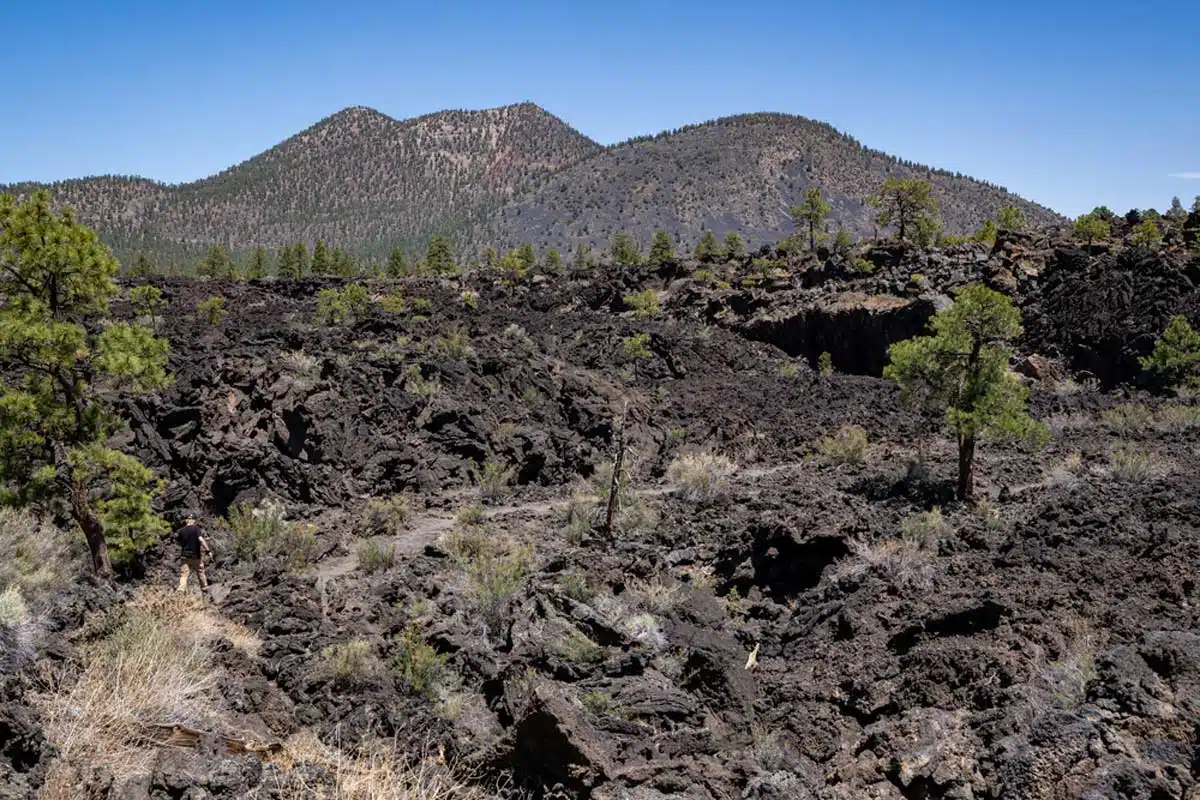
About 15 miles north of Flagstaff, Sunset Crater is the youngest volcano in the San Francisco volcanic field. It erupted around AD 1085, and the cinder cone, tinged red and orange at the top, still rises above fields of black lava and cinders.
You can’t climb the cone itself, but the 1-mile Lava Flow Trail loops through the lava field at its base (the first quarter-mile is paved), and the steeper Lenox Crater Trail (1.6 miles return) climbs a neighbouring cone for views over the whole field.
The Sunset Crater-Wupatki Loop Road links the two monuments, and one $25 vehicle pass covers both. Grand Falls, the muddy “Chocolate Falls” on the Navajo Nation further east, used to be a popular add-on, but it has been closed to visitors since 2023.
Take a day trip to the Grand Canyon
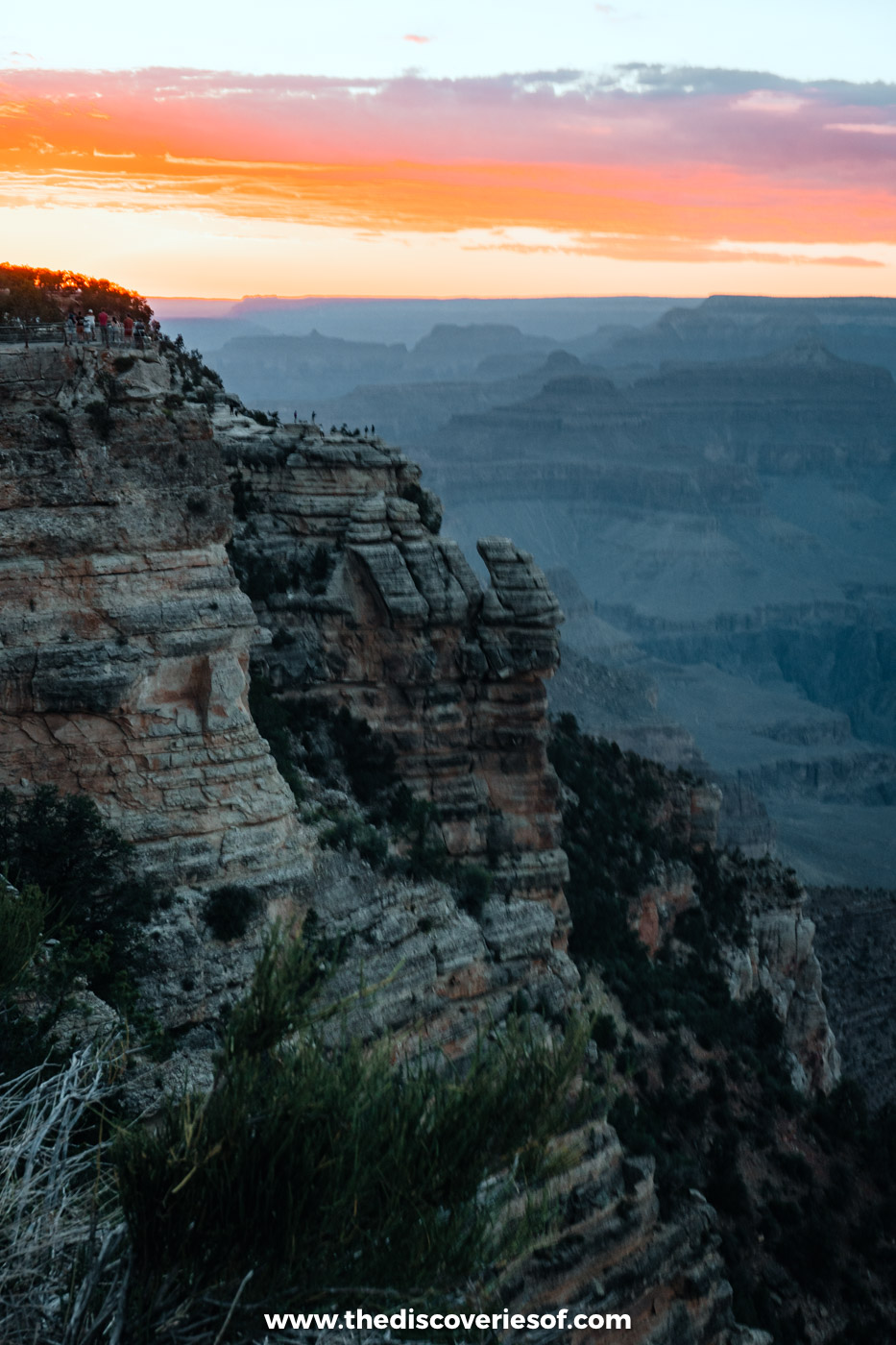
Is there anything more brilliant than one of the world’s great natural wonders? No, there isn’t. Luckily, the South Rim is only about 80 miles away (around an hour and a half’s drive), so a day trip is a no-brainer.
The South Rim also has the widest range of things to do at the Grand Canyon. Walk the Rim Trail between viewpoints, catch sunrise or sunset at Mather or Hopi Point, or try one of the Grand Canyon’s best hikes. If you can stay longer, my 2-day Grand Canyon itinerary shows how to fit it all in.
If you’d rather not drive, take this Grand Canyon tour from Flagstaff. Park entry is $35 per vehicle, and visitors who aren’t US residents now pay an extra $100 each unless they have an annual pass.
Visit Wupatki National Monument
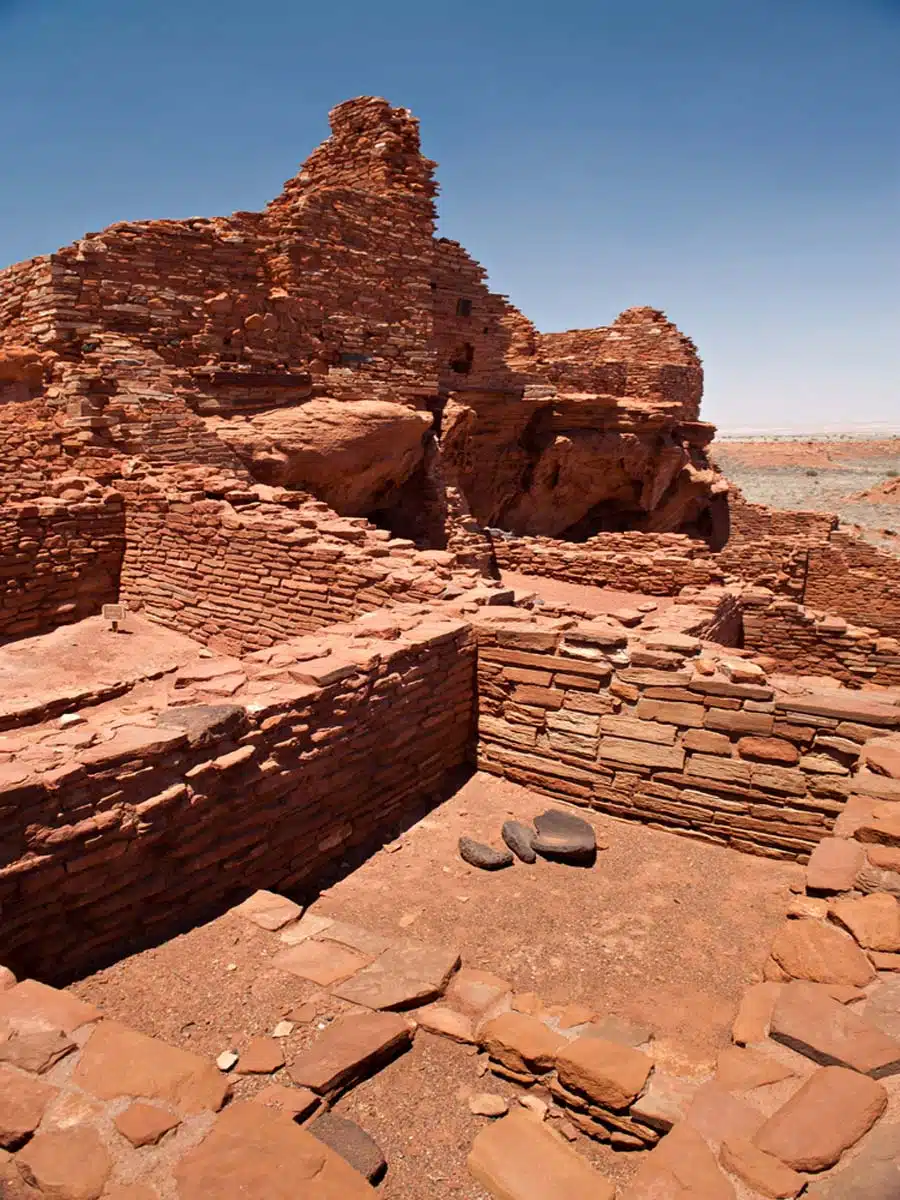
Wupatki National Monument sits between the Painted Desert and the ponderosa forest about 35 miles north of town, and protects the remains of pueblos built by the ancestors of today’s Pueblo peoples in the 1100s, after the eruption of Sunset Crater left the land covered in moisture-holding ash.
The star is Wupatki Pueblo, which had around 100 rooms, with a ball court and a natural blowhole that breathes air in and out of the ground. Short, easy trails lead to Wupatki and several smaller pueblos along the loop road.
What makes it special is how open the landscape is: you can see for miles across the desert to the San Francisco Peaks. For a real adventure, ranger-led hikes to Crack-in-Rock Pueblo run in April and October; book early, as they fill quickly.
Top tip: Consider this ruins and volcanoes tour from Flagstaff, which includes Wupatki and Sunset Crater.
Take a day trip to Sedona
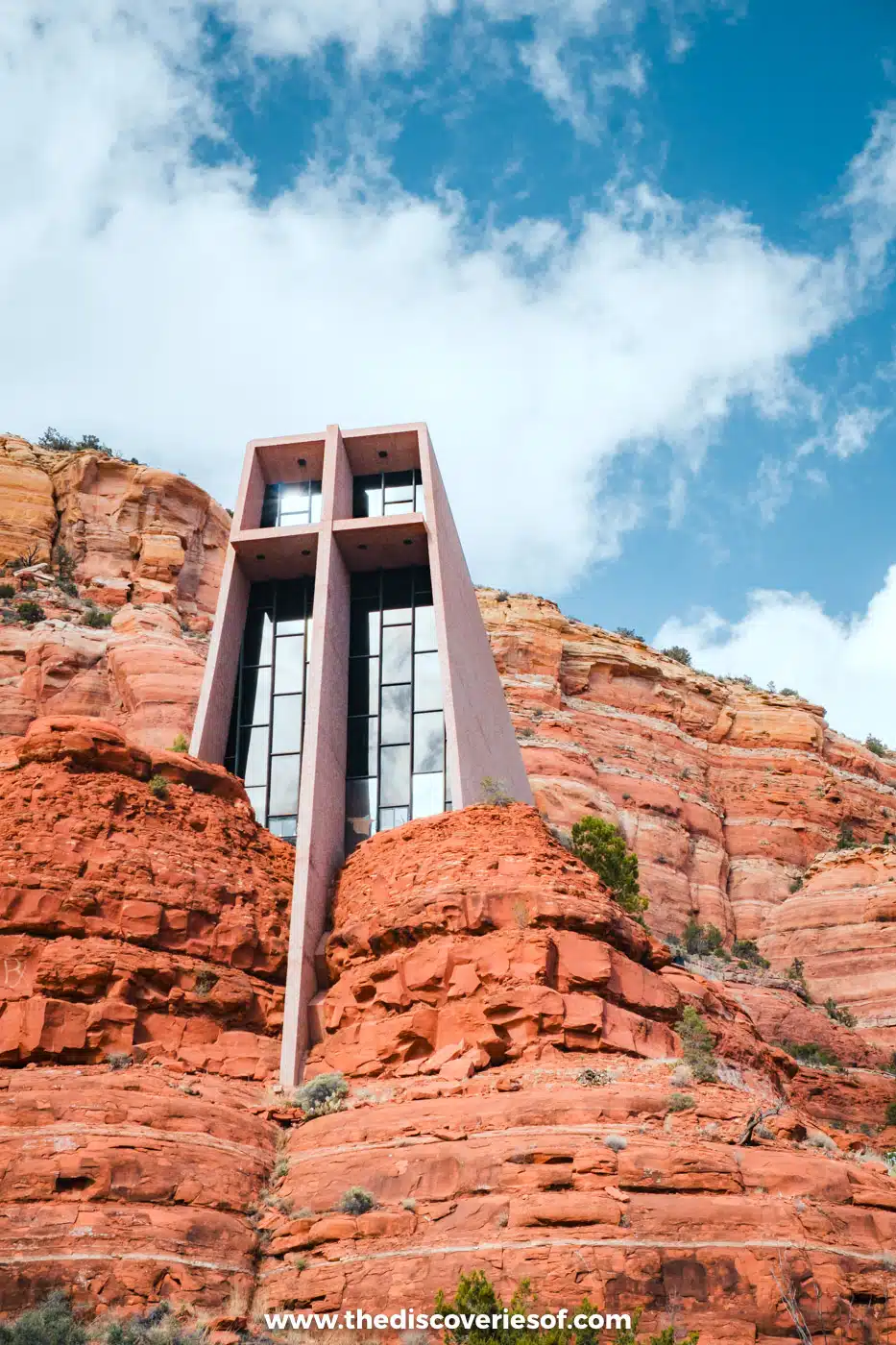
Once you’ve worked through Flagstaff itself, head to Sedona for a jam-packed day trip. It’s about 30 miles south, and the drive alone is worth it.
Take Highway 89A down through Oak Creek Canyon, a winding road that drops through pine forest and red rock cliffs alongside the creek. Guardrail work in 2026 means stretches of single-lane traffic with a pilot car, so allow extra time.
You could easily spend a full day in Sedona, hiking among the red rocks, visiting the Chapel of the Holy Cross and seeing the cliff dwellings at Palatki Heritage Site or Montezuma Castle.
If you want to chill out, embrace Sedona’s spiritual side with a trip to a spa after visiting one of the town’s famous vortexes (Cathedral Rock is often called the most powerful).
Read Next
Head to Montezuma Castle
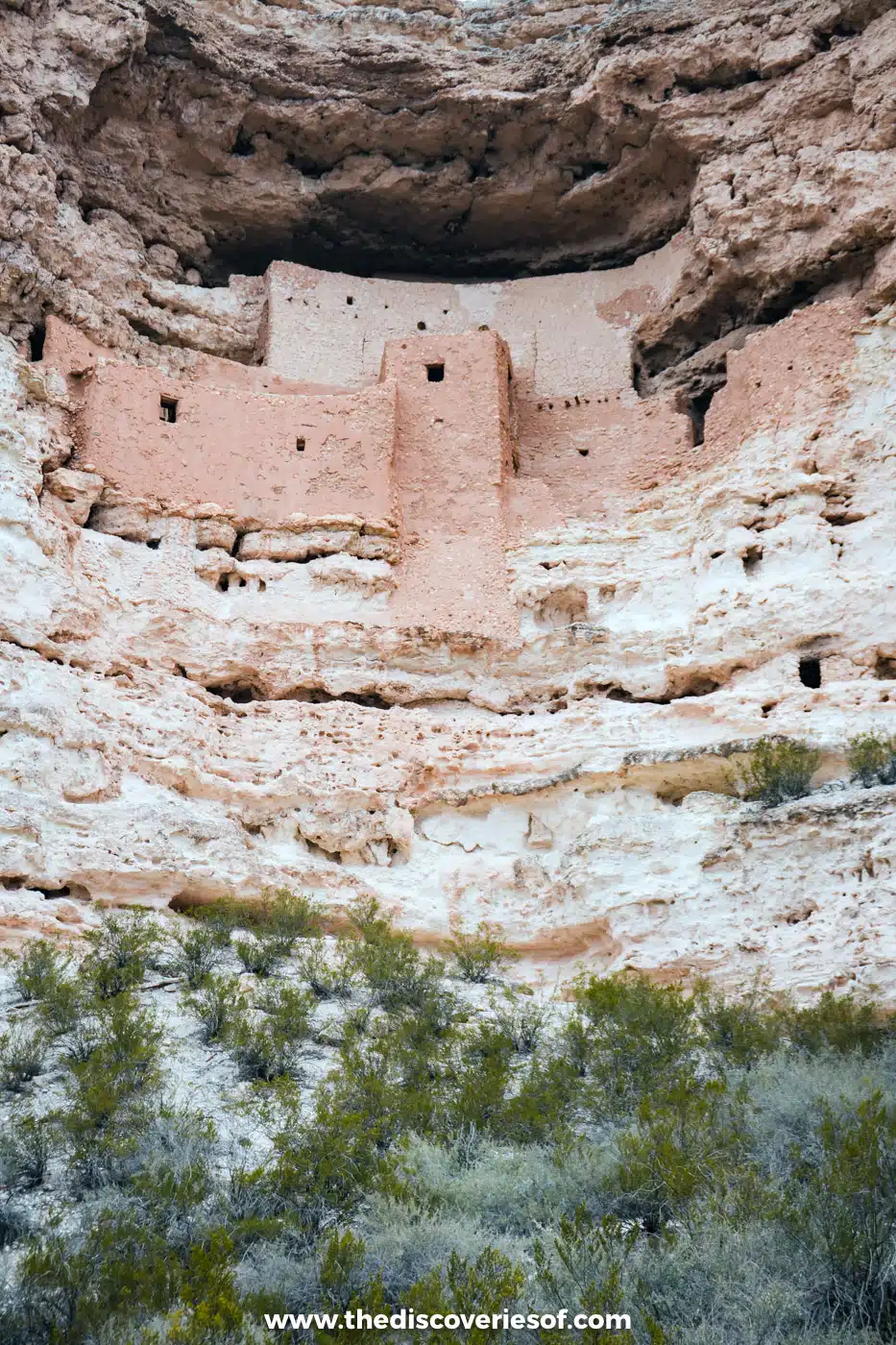
Speaking of Montezuma Castle, this is another must-see on any Arizona trip. It’s just under an hour south of Flagstaff on I-17, so it’s easy to fit into a day trip.
It was declared one of the first four national monuments in the United States in 1906, and protects a five-storey cliff dwelling built by the Sinagua people from around the 1100s, set high in a limestone alcove above Beaver Creek.
The dwellings are remarkably well preserved, and the short, flat loop trail from the visitor centre gives you a good view of them and of the riverside woodland below. It’s a great opportunity to learn about the people who lived here.
Visit Walnut Canyon National Monument
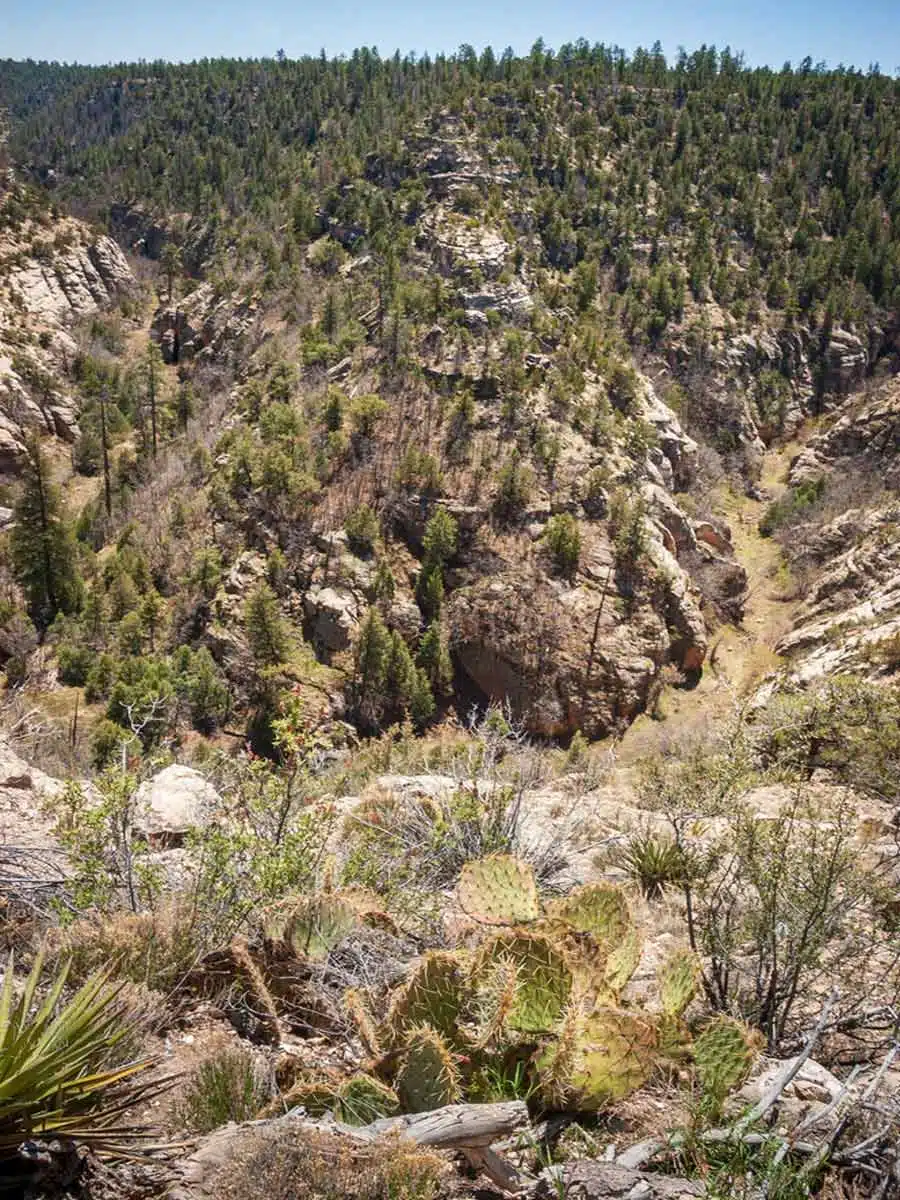
Walnut Canyon National Monument, just east of town off I-40, is one of the area’s most striking natural landmarks.
The limestone and sandstone walls of this 400-foot canyon are lined with cliff dwellings built by the Sinagua people in the 1100s and 1200s.
Now, you’re probably thinking: more ruins? Well, yes, but walking right past them is something else. The Island Trail loops for about a mile around a “peninsula” in the canyon, passing 25 cliff dwelling rooms, but it involves 240 steps down and back up, so take it slowly at this altitude. The flatter Rim Trail (0.7 miles) gives views down into the canyon. Entry is $15 per person or $25 per vehicle (card only).
Grab a pint at Mother Road Brewing Company

Picture this: you’ve spent the day exploring and you’re aching for an ice-cold pint. Head to Mother Road Brewing Company, named after Route 66, which runs right through town.
Its taproom on Mike’s Pike in the historic Southside district is the perfect place to meet friendly locals and try the brewery’s flagship beers alongside new small-batch experiments.
Not only can you work your way through a tasting flight, but you can also play board games or just chat with the locals. Either way, it’s one of the best spots in town for a drink.
Eat out at The Mayor
Before you carry on: no, this isn’t the kind of mayor you’re thinking of. The Mayor is a bar and kitchen with one of the few rooftop terraces in downtown Flagstaff, and it’s an excellent place for some terrific vibes and good food.
Why not spend an evening here? The menu covers creative cocktails, pizzas and sandwiches, and some rather noteworthy chicken tenders.
Tackle the Extreme Adventure Course
It’s exciting, isn’t it? The idea of swinging along zip lines and rope bridges high in the pines. That’s precisely what you can expect at the Flagstaff Extreme Adventure Course in Fort Tuthill County Park.
This isn’t for the faint-hearted, though there are harnesses and safety systems, so don’t worry. The adult course takes three to four hours (about $60), and there’s a shorter course for children aged 7 to 11. It’s seasonal, so check the opening days before you go.
Top tip: Wear comfortable clothes and comfy shoes. You’ll want to be as comfortable as possible as you make your way through the course.
Climb Humphreys Peak or ride up Arizona Snowbowl
Flagstaff sits at the foot of the San Francisco Peaks, home to Humphreys Peak, the highest point in Arizona at 12,633 ft. The Humphreys Trail climbs about 3,400 ft over 4.5 miles each way from the Arizona Snowbowl car park, so it’s a full-day hike for fit walkers, best tackled in summer or early autumn.
In winter, Arizona Snowbowl turns into one of the best ski areas in the Southwest (its 2026/27 season is due to open on 20 November), and in the warmer months the scenic chairlift carries you up the mountain for huge views without the climb.
Stroll historic downtown and Route 66
Downtown Flagstaff is one of the best-preserved stretches of Route 66, with red-brick buildings, independent shops, cafés and bars around Heritage Square, which hosts free concerts in summer.
Start at the visitor centre inside the 1925 Santa Fe railway depot, where the Amtrak Southwest Chief still stops every day, then wander across the tracks into the historic Southside district for more bars and restaurants.
Practical tips
- How long to spend: two to four days covers the town, the Grand Canyon and the volcanoes and cliff dwellings nearby.
- When to go: September and October are ideal, with mild, sunny days and cold nights. Summer is far cooler than the rest of Arizona; winter brings snow (great for skiing, but some forest roads close).
- Getting there: Flagstaff is about two hours north of Phoenix on I-17, and the Amtrak Southwest Chief stops here daily. You’ll need a car for most of this list.
- Passes: one $25 vehicle pass covers Sunset Crater and Wupatki, and the America the Beautiful pass covers both plus Walnut Canyon and the Grand Canyon.
Where to stay
Downtown is the best base, with Route 66, the bars and restaurants and the visitor centre all within walking distance.
- Historic: the Weatherford, a downtown landmark open since 1897.
- Mid-range: High Country Motor Lodge, a modern mountain motel on Route 66 with a Nordic spa.
- Luxury: Little America Hotel, set in its own 500-acre pine forest on the east side of town.
Map
Read next
- 20 unmissable things to do in Arizona
- The ultimate 9-day Arizona road trip itinerary
- Where to stay in and near the Grand Canyon
- The best day trips from Sedona
Love this? Save and share on Pinterest

Discover the top things to do, insider tips and hidden gems in our USA Travel Guides.
Read the guides →