Planning a visit to Montezuma Castle National Monument? From the history of this 800-year-old cliff dwelling to the short trail beneath it, Montezuma Well, tickets and the drive from Sedona, this guide covers everything you need to know.
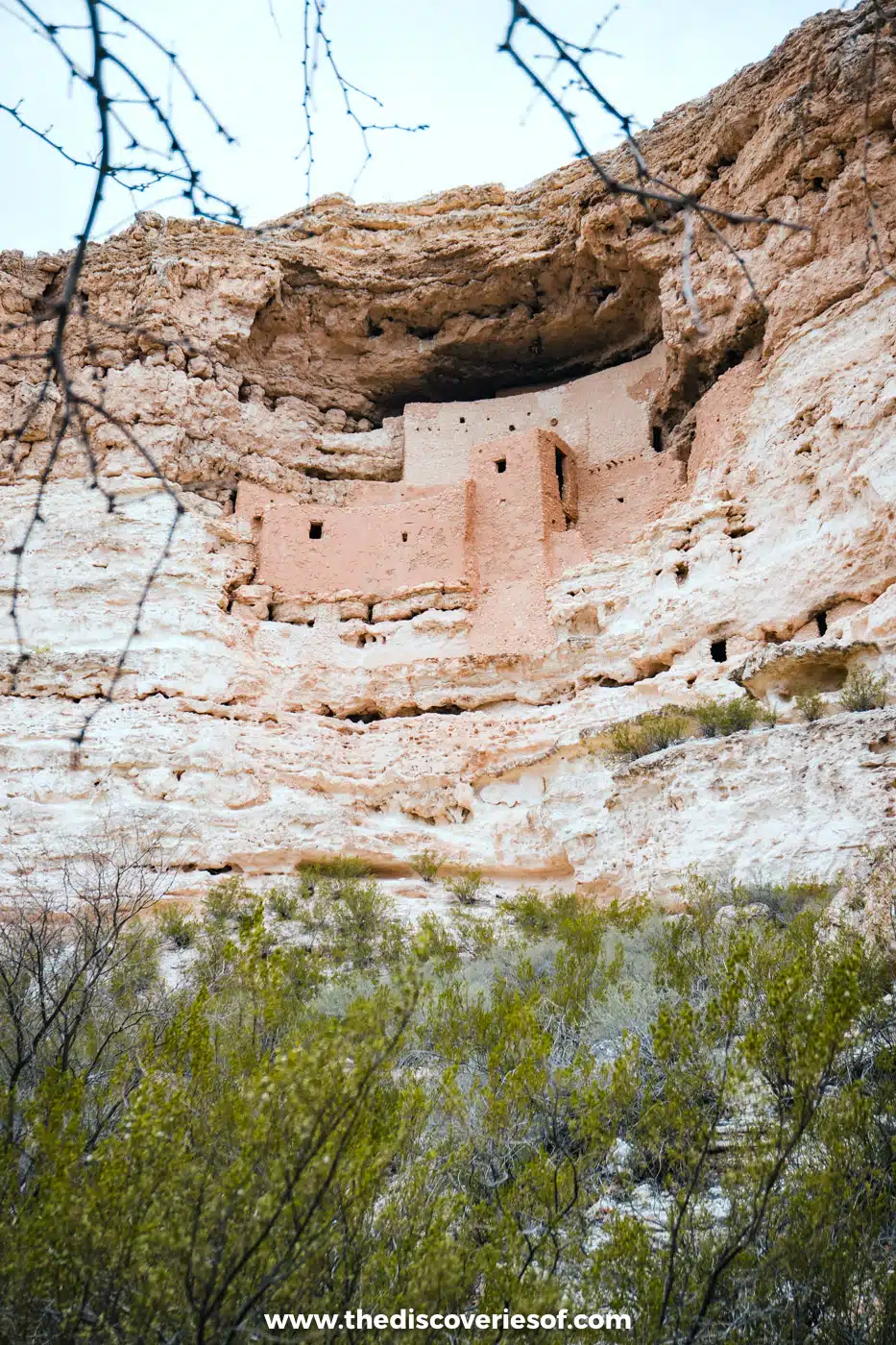
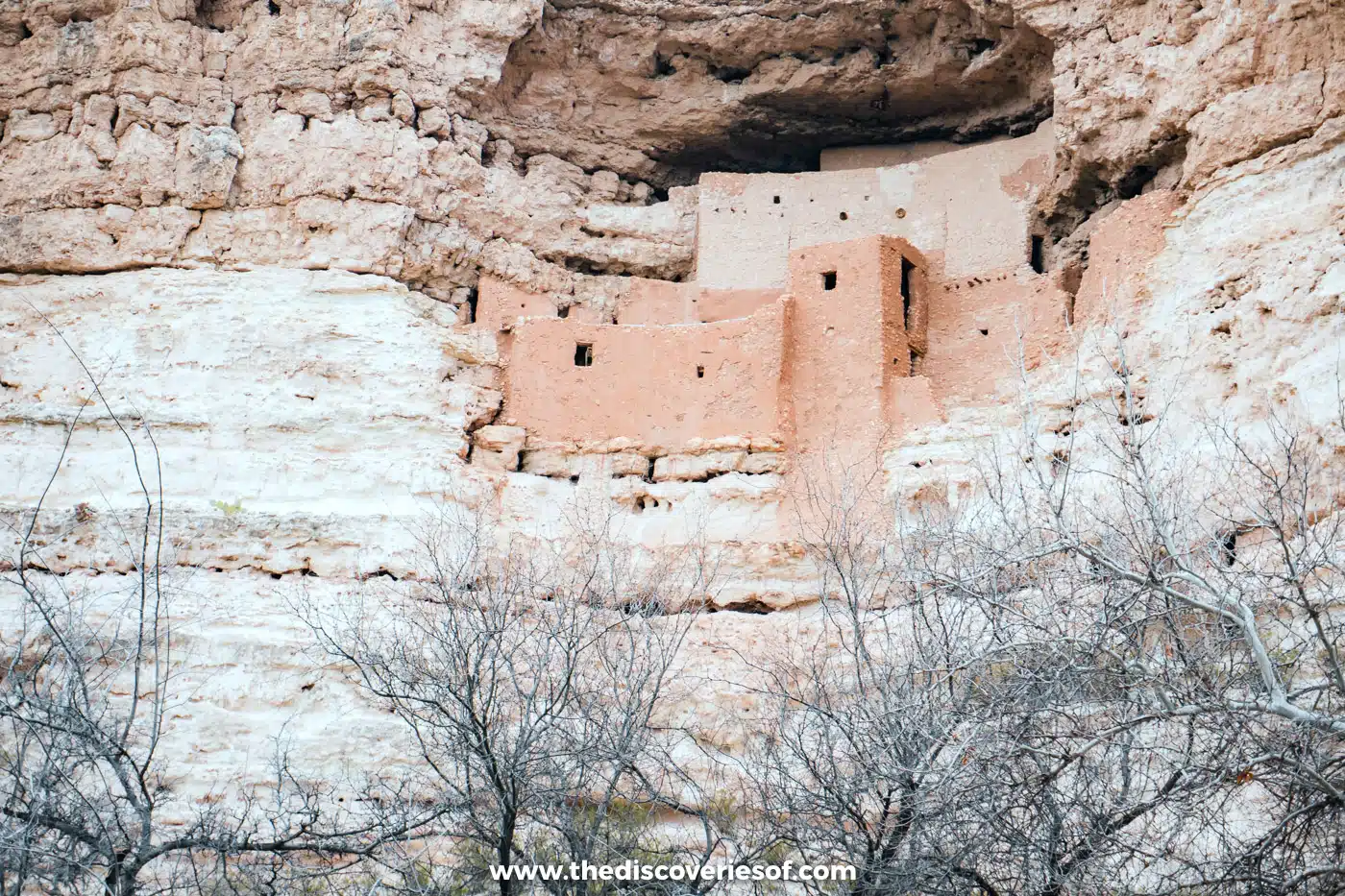
High in a pale limestone cliff above Beaver Creek, in Arizona’s Verde Valley, sits one of the best-preserved cliff dwellings in North America. Montezuma Castle is a five-storey, 20-room home built by the Sinagua people more than 800 years ago, and it’s still remarkably intact.
I visited in February, and these striking, well-preserved dwellings set into the side of a cliff are well worth a visit while you’re in the area. It’s an easy stop on the way between Sedona and Phoenix, about 40 minutes from Sedona and an hour and a half from Phoenix, and the whole visit takes as little as an hour.
Montezuma Castle at a glance
- Where: Camp Verde, in the Verde Valley, just off I-17 at exit 289
- What: a five-storey, 20-room Sinagua cliff dwelling about 90 feet up a limestone cliff, built in the 1100s
- Trail: a flat, paved loop of about a third of a mile, suitable for wheelchairs and pushchairs
- Entry: $10 per adult (16 and over), valid for seven days and also covering Tuzigoot National Monument; under-16s free
- Montezuma Well: a separate part of the monument about 11 miles away, free to visit
- Hours: 9am to 5pm daily; closed Thanksgiving, Christmas Day and New Year’s Day
- Time needed: about an hour at the castle, or half a day with Montezuma Well
- Dogs: allowed on the trails on a lead of up to 6 feet, but not in buildings
The history: who built it, and why you can’t go inside
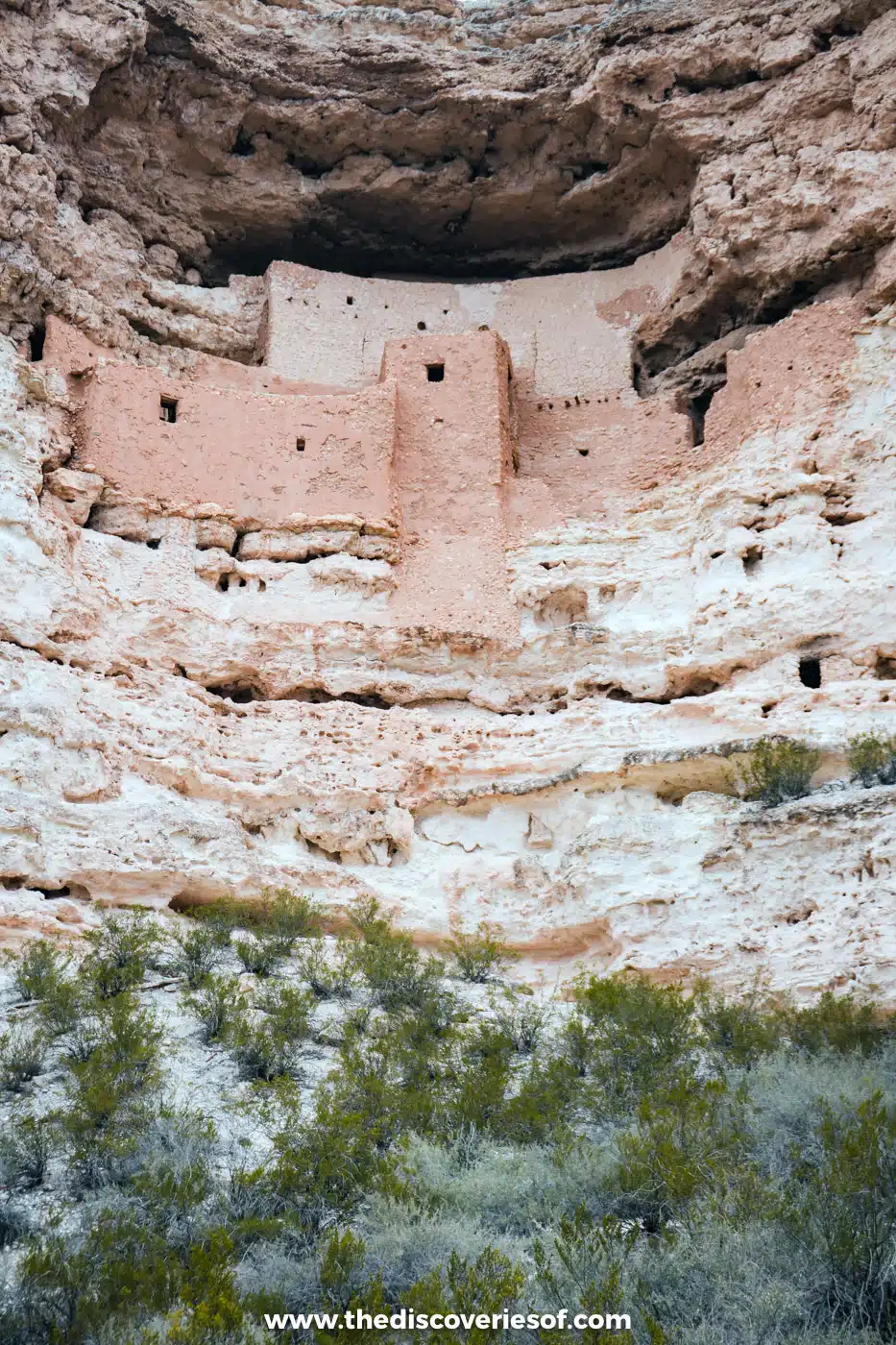
The dwelling wasn’t carved out of the rock. The Sinagua, farmers who lived here from around 1100 to the early 1400s, built it inside a natural alcove in the cliff, using limestone blocks and mud mortar, with roof and floor beams of sycamore wood. Tree-ring dates from those beams show the main building went up in the 1100s, and it was remodelled in the late 1200s. Residents reached it by ladders from the valley floor.
The position was clever. The alcove sits about 90 feet above Beaver Creek, safe from floods, and faces south, so the overhang shades it from the high summer sun while the low winter sun warms the walls. Around 1300, the castle was probably home to no more than about 30 people, who farmed corn, beans, squash and cotton along the creek below. By the early 1400s the Sinagua had left the area, and nobody is entirely sure why.
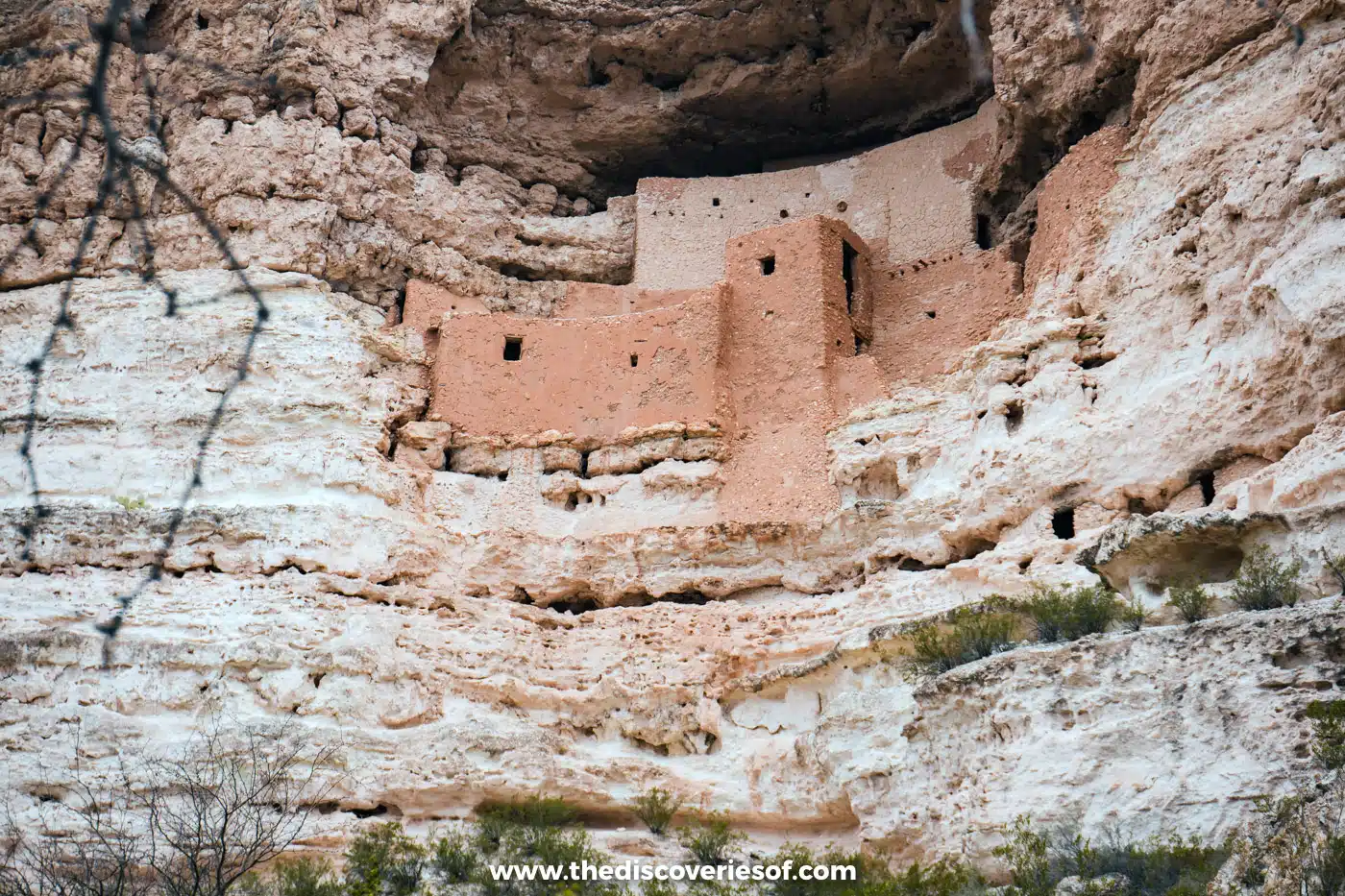
The name is a double misnomer. It isn’t a castle, and it has nothing to do with Montezuma. European-American settlers who came across it in the 1860s assumed it must have been built by the Aztecs and named it after their emperor, Moctezuma II, but the dwelling had been empty for more than 40 years before he was even born.
On 8 December 1906, President Theodore Roosevelt made it one of the first four national monuments in the United States. Early visitors were allowed to climb ladders up the cliff and wander through the rooms, and they did a lot of damage, so public access ended in 1951. Today you can only admire it from the trail below, which also means it’s in remarkably good shape.
Walk the trail beneath the castle
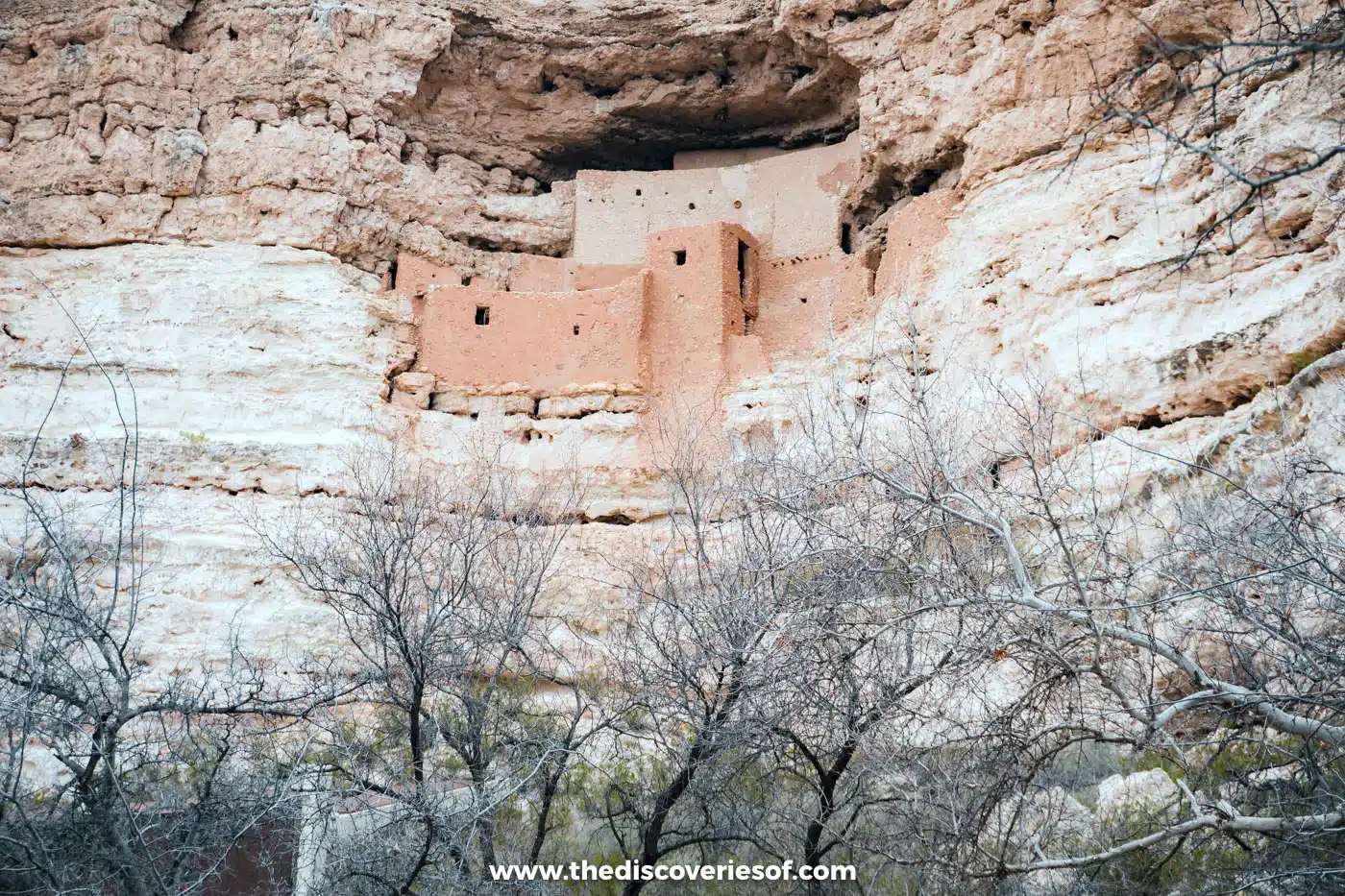
From the visitor centre, where you pay your entry and can learn more about the Sinagua, a paved loop of about a third of a mile runs along the foot of the cliff. It’s fully paved with minimal change in elevation, so it’s suitable for wheelchairs and pushchairs, and it takes 20 to 30 minutes at a gentle pace with stops to read the signs.
The first views of the castle come almost straight away, high above you in its alcove. The trail then continues west along the cliff before looping back along the bank of Beaver Creek, under sycamores and cottonwoods. In winter the bare branches frame the castle; in summer the trees give welcome shade.
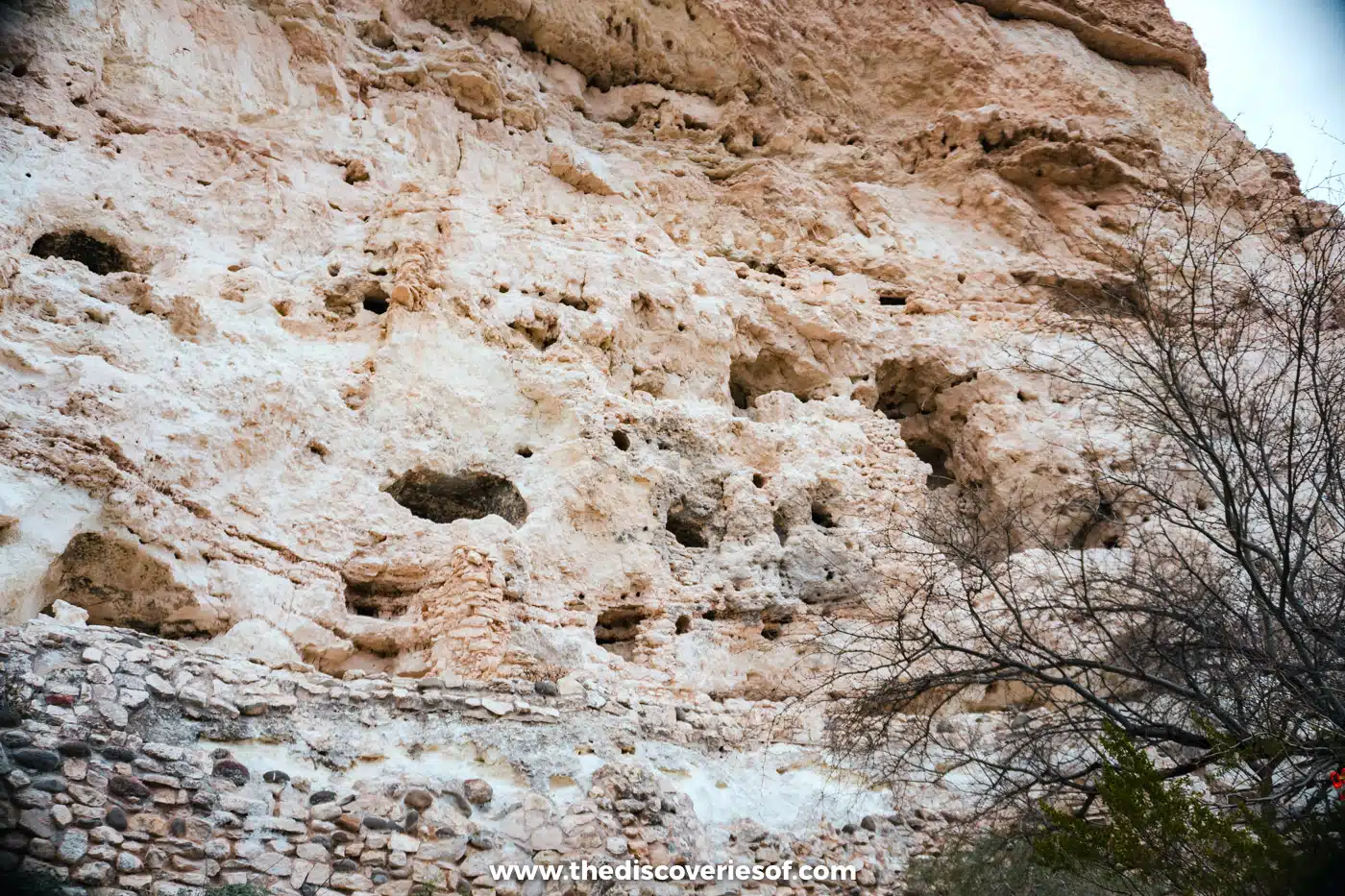
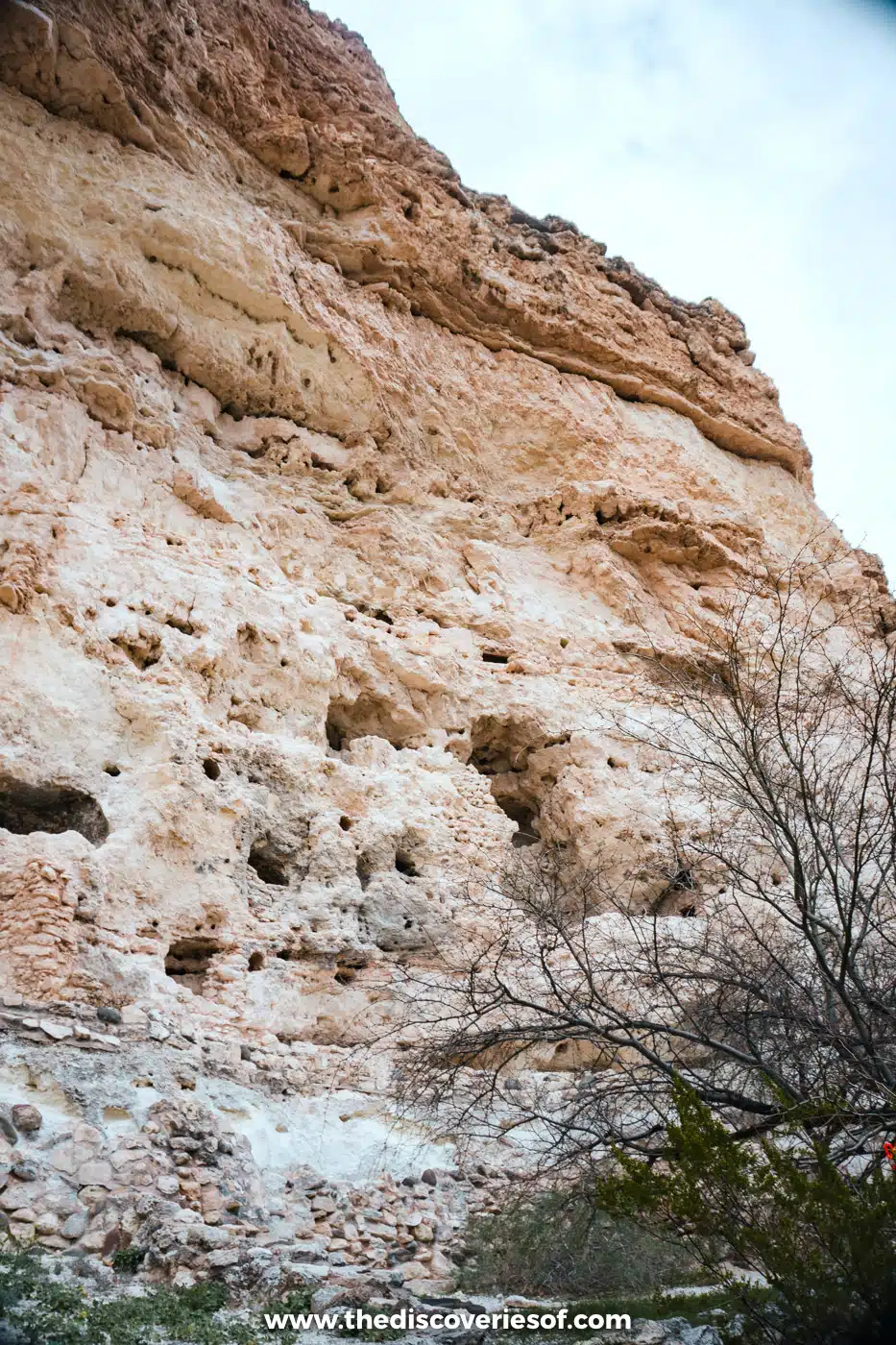
Look closely at the rest of the cliff as you go: it’s pitted with hollows, several still holding the remains of smaller rooms.
Castle A
A short spur off the main loop leads to Castle A, the remains of a much larger pueblo that once stood against the base of the cliff. It had around 45 to 50 rooms over several storeys, which would have made it home to many more people than the castle itself. It was probably destroyed by fire in the late 1300s and was excavated in 1933, and today only the stone foundations are left.
The spur has a slight slope that may not suit every wheelchair user.
Top tip: bring binoculars or a camera with a zoom lens. The castle is high up, and you’ll see far more of the detail (the small doorways, the windows and the original plaster) with a bit of magnification.
Visit Montezuma Well
Most people stop at the castle and drive on, but Montezuma Well is worth adding. This detached part of the monument is about 11 miles from the castle by road, around a 20-minute drive, off I-17 at exit 293 near the village of Rimrock. It’s free to visit.
The Well is a limestone sinkhole about 368 feet across and 55 feet deep, fed by springs that pour in about 1.5 million gallons of water a day at a constant 74°F. The water is so rich in carbon dioxide that fish can’t live in it, but it’s home to four species found nowhere else on Earth. The Well is sacred to the Yavapai, and the Sinagua built small dwellings into its rim.
People have used the Well’s outflow to irrigate their fields since the 8th century, and a section of an ancient irrigation canal survives by the picnic area. From the car park, a short loop trail climbs to the rim, with views down to the water, and a branch drops down to the outlet beside Wet Beaver Creek.
Unlike the castle trail, these trails aren’t wheelchair accessible, with a steep slope down to the outlet and high steps at the overlook. The Swallet Trail closes from 1 May to 31 July for nesting bats, and there’s no shade in the car park, so don’t leave a dog in the car.
When to visit and tickets
Montezuma Castle is open year-round, but the most pleasant months are from October to April. The Verde Valley is much lower than Sedona and Flagstaff, and summer temperatures here can top 100°F. In summer, arrive when the gates open or come in the late afternoon.
Spring is the busiest season: between late February and early May, the National Park Service may turn away oversized vehicles such as RVs between 10am and 2pm because the car park fills up.
Both the castle and the Well are open from 9am to 5pm daily, with the car park gates locked outside those hours. Hours can change, so check the National Park Service website or call 928-567-3322 before you go.
Tickets
Entry to Montezuma Castle is $10 per adult (16 and over), valid for seven days and also covering Tuzigoot National Monument; under-16s go free. Pay at the visitor centre on arrival; there’s no need to book. The America the Beautiful pass is accepted, and Montezuma Well is free.
How to get to Montezuma Castle
The monument is at 2800 Montezuma Castle Road, Camp Verde, a few minutes’ drive from I-17 at exit 289. There’s no public transport, so you’ll need a car or a tour.
From Sedona: about 29 miles, around 40 minutes. Take SR 179 south through the Village of Oak Creek to I-17, then head south to exit 289.
From Phoenix: about 95 miles, around 90 minutes. Head north on I-17 to exit 289. It makes a good break on the drive between Phoenix and Sedona or Flagstaff.
From Flagstaff: about 55 miles, around 45 minutes, heading south on I-17.
If you’d rather not drive, some day tours from Sedona and Phoenix stop here, usually combined with Jerome or the Verde Valley.
Read Next
Places to visit nearby
The castle sits in the middle of the Verde Valley, so it’s easy to build a day around it.
Tuzigoot National Monument
Your Montezuma Castle ticket also covers Tuzigoot, about 35 minutes away in Clarkdale. This Sinagua hilltop pueblo, roughly contemporary with the castle, had about 110 rooms and sits on a ridge 120 feet above the Verde River, with wide views across the valley. Visitors to the nearby Tavasci Marsh also need the pass.
Fort Verde State Historic Park
In the centre of Camp Verde, a few minutes from the castle, Fort Verde tells the story of the US Army post here during Arizona’s Indian Wars of the late 1800s. Three original buildings hold museum exhibits, and you can walk along the historic homes of Officers’ Row. It’s open from 9am to 4:30pm daily, and entry is $7 for adults and $4 for ages 7 to 13.
Out of Africa Wildlife Park
Just off I-17 in Camp Verde, Out of Africa is a wildlife park with big cats, giraffes, zebras and more, and its African Bush Safari Tour and Tiger Splash show are included in the ticket. It’s open from 9:30am to 5pm daily, with last admission at 4pm, and tickets are $42.95 for adults and $27.95 for children aged 3 to 12.
Jerome
About 45 minutes away, the old copper-mining town of Jerome clings to Cleopatra Hill above the valley. Once a boomtown, it’s now home to fewer than 500 people, with galleries, independent restaurants and tasting rooms, and views across the Verde Valley to the red rocks of Sedona. Combine it with Tuzigoot, which is on the way.
Sedona
Forty minutes north, Sedona’s red rocks are the reason most people come to this part of Arizona. See my guide to the best things to do in Sedona and my 3-day Sedona itinerary.
Tips for visiting Montezuma Castle
- Combine it with the Well: you can see both the castle and Montezuma Well in a relaxed half day, and the Well is free.
- Bring water: fill up at the visitor centre, as there’s no drinking water on the trail, and wear sun protection: the Verde Valley is hot and sunny for much of the year.
- Where to stay: most people visit on a day trip from Sedona; see my guide to where to stay in Sedona.
- Road trip: it’s an easy stop on the drive between Phoenix and Sedona, the Grand Canyon or Flagstaff; plan the rest of your route with my Arizona road trip itinerary.
- Respect the site: stay on the paths and don’t climb on walls or touch the rock; these are archaeological sites, and they’re important to the Hopi, Yavapai and other tribes of the region today.
Map
Read next
- The best day trips from Sedona
- The best things to do in Sedona
- 3 days in Sedona: the perfect Sedona itinerary
- The best things to do in Arizona
- The ultimate 9-day Arizona road trip itinerary
Love this? Save and share on Pinterest

Discover the top things to do, insider tips and hidden gems in our USA Travel Guides.
Read the guides →