

Thinking of visiting Norway in winter? Here are the best things to do, from chasing the Northern Lights to riding the Bergen Line through the snow.
Yes, Norway is idyllic in the summertime. But if you’re looking for something different, you have to visit in winter.
I’ve been to Arctic Norway three times in the colder months: to the Lofoten Islands in October and again in February, and to Tromsø in March. Snow covers almost everything, the light turns pink and gold for hours at a time, and on a clear night the sky can explode in green.
It’s cold, of course. Oslo usually sits a few degrees below freezing in January, Bergen tends to hover just above it (with plenty of rain), and the Arctic coast is milder than you’d expect thanks to the Gulf Stream. Head inland in Finnmark, though, and it can drop below -30°C. The other thing to plan around is the light. Oslo gets around six hours of daylight at the winter solstice, while north of the Arctic Circle the sun doesn’t rise at all for weeks. Pack proper layers, plan your days around the daylight you do have, and it’s a totally eye-popping, jaw-dropping experience.
Stick around as I take you through some of the most unmissable things to do in Norway in winter, including the ones I’ve done myself.
Brilliant things to do in winter in Norway
Chase the Northern Lights

Okay, so I have to start with the Northern Lights. I mean, come on. A trip to Norway in the winter wouldn’t be complete without chasing them.
Northern Norway sits right under the auroral oval, and the season runs from late August to mid-April. The long, dark nights from October to February give you the most hours of darkness to look for them, but what really decides whether you see them is cloud.
I learnt that the hard way in Tromsø. It was crazily cloudy for most of my trip. On my first night, the sky was 100% cloud from 9pm onwards. On the second, I caught a faint green glow through the glass roof of my cabin at ÆRA, then headed down to the lake for a better look. The best night came after I added an extra night to my trip. I spent most of that day mapping the cloud forecast against known viewing spots, drove out to Oldervik, and watched the lights dance for two hours under a completely clear sky. Absolutely otherworldly.

So give yourself as many nights as you can, and watch the cloud cover as closely as the aurora forecast. Windy Premium has been the most reliable weather app for me. Read exactly how I did it in my guide to chasing the Northern Lights in Tromsø, and find out more about timing your trip in my guide to the best time to see the Northern Lights.
Tip: If you’re not confident driving on snow and ice in the dark, book this Northern Lights chasing tour from Tromsø, and let the guides find the clear skies for you. Read Next: Where to Stay in Tromsø (Including the Best Hotel for the Northern Lights)
Spend some time in the capital, Oslo

Oslo is Norway’s bustling capital, which means there’s a lot to do here, even in winter. Some highlights of the city include the Norwegian Maritime Museum, where you can learn about Norway’s long seafaring history dating back to the Viking era. It’s on the Bygdøy peninsula and open daily in winter, with shorter hours (11am to 4pm). The museum ferry to Bygdøy only runs in the warmer months, so take bus 30 from the centre instead.
If you travel to Norway in December, you’ll find Oslo abuzz with the festive spirit. Snow, Christmas trees, and lights adorn the city, and it looks like something from a fairytale.
There are multiple Christmas markets throughout Oslo where you can buy treats and gifts and indulge in traditional mulled wine, gløgg. The biggest is Jul i Vinterland at Spikersuppa, in the middle of town, which runs daily from early November until early January. The Norsk Folkemuseum on Bygdøy holds a more traditional market among its historic buildings, and most of the others take place at weekends in November and December.
Ultimately, I think one of the best ways to spend time in Oslo is by going on a walking tour, especially when it isn’t snowing in buckets.
This will take you past some of the city’s iconic landmarks like the Nobel Peace Center (definitely dip inside for an afternoon if you have the time, but note that it’s closed on Mondays), the National Theatre, and Oslo Cathedral.
Winter opening hours are shorter at a lot of Oslo’s museums, and some close on Mondays, so check before you go. Sundays are a good day for museums, as most shops are closed. And don’t bother hiring a car while you’re in the city: parking is hard to find and expensive, and public transport is cheaper and faster.
Take a winter train ride
One activity you can enjoy during the Norwegian winter that doesn’t involve spending time outdoors and freezing your behind off is a scenic train ride. Norway’s railways cover over 2,000 miles of track, and some of the most beautiful stretches are at their best under snow.
The most scenic and popular route is the Bergen Line (Bergensbanen), which runs from Oslo to Bergen, Norway’s second city. It takes about seven hours to cover the 483 km, climbing to 1,222 metres at Finse, the highest station on the line. In winter, you’re looking out over a frozen white plateau that feels a world away from either city. It runs all year, with four departures a day in winter, and you can book through Vy. I always say you need to travel to Bergen by train at least once, because it’s one of the most beautiful train rides in the world.
You can sit back and relax as you take in picturesque views of snow-covered mountain peaks, frozen lakes, valleys, forests, and charming villages.
Want more? Change at Myrdal for the Flåm Railway (Flåmsbana), which drops 863 metres in just 20 km to the village of Flåm, at the end of the Aurlandsfjord. It also runs all year, with around four departures a day in winter rather than the summer crowds, and the journey takes about 50 minutes. Winter fares are around 370 NOK one way, and the line’s frozen waterfalls and snowy valleys look completely different from the summer postcards.
Explore Norway’s famous fjords
If you search for things to do in Norway, it’s highly likely a cruise on a fjord will pop up as one of the first things. And for good reason. Norway’s fjords are absolutely spectacular. Don’t believe me? Find out for yourself.
Snow-covered mountains, frozen waterfalls, and tranquil waters are just a few things that await you in winter. Bergen is the “Gateway to the Fjords”, so it’s a good starting point to hop on a fjord cruise and discover Norway’s incredible outdoor landscape.
This one heads out to the narrow Mostraumen strait on a three-and-a-half-hour round trip, and it sails daily all year round. In the depths of winter, sea ice can block the innermost part of the fjord, in which case the captain takes an alternative route. Pack your warmest layers for the deck.
If you’d rather explore the fjords by car, land in Bergen or Stavanger, hire a car and drive the E39, which runs up the entire west coast with some stunning views along the way. In winter, check road conditions on the Norwegian Public Roads Administration (Statens vegvesen) website before you set off, and give yourself plenty of time.
Head to Tromsø

Tromsø markets itself as “The Arctic Capital” and the best place to see the Northern Lights, which is pretty bold if you ask me. But having spent five days there, I think it’s a title the city has every right to claim. Tromsø is a vibrant city surrounded by raw nature.
So it’s the perfect city break, with outdoor activities right on your doorstep. It’s also a place of extremes: the sun doesn’t rise at all during the polar night (roughly 27 November to 15 January), while in summer the midnight sun shines around the clock from about 20 May to 22 July.
While Tromsø is a popular spot to chase the Northern Lights, there are plenty of other things to do here. Try sampling some unique Norwegian cuisine, visit one of the city’s many museums, or tour the iconic Arctic Cathedral.
I spent my first nights in a glass-roofed aurora cabin at ÆRA, about half an hour outside the city, then moved into town to Enter St. Elisabeth. I hired a car, and I’d really recommend it: I think it’s a real shame that so many people visit Tromsø and never explore the islands around it. Ersfjordbotn is only 20 to 25 minutes from the city, Grøtfjord about 40 minutes, and Sommarøy, with its white sand beaches, about an hour. Rental cars come with winter tyres, but the roads are snowy and icy, so drive carefully.
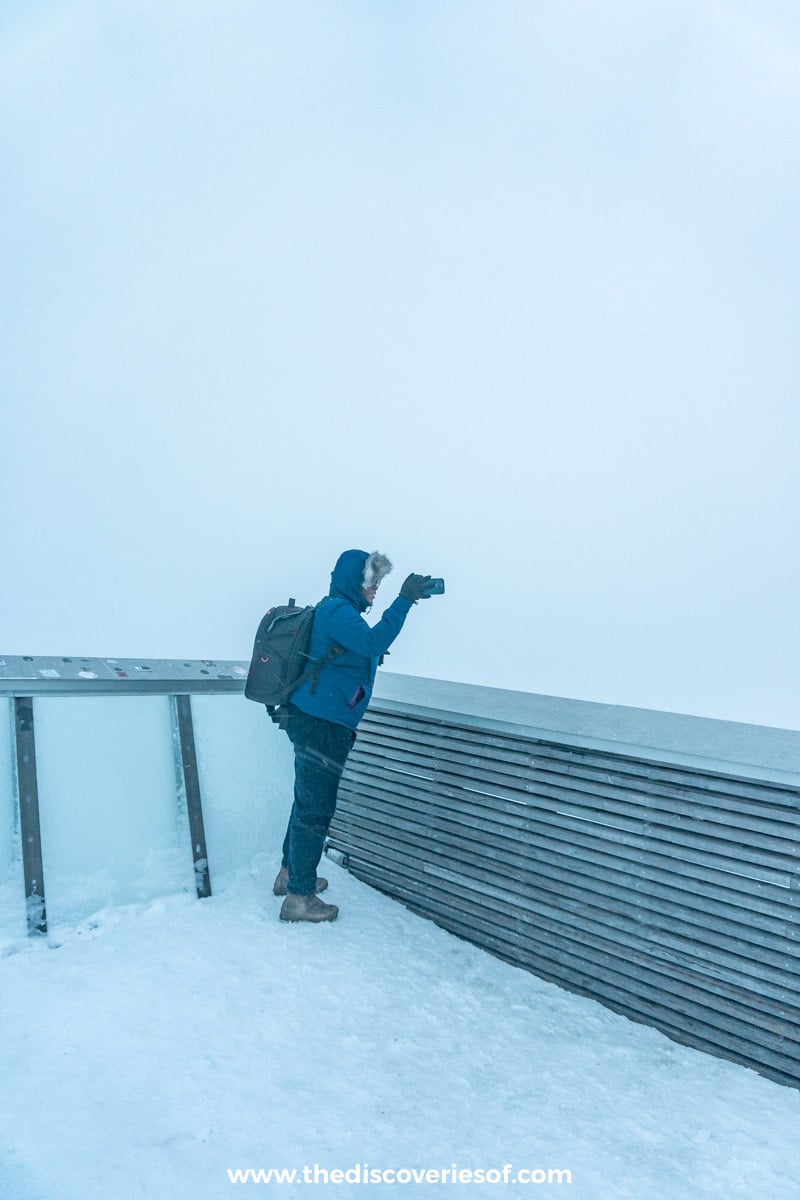
In town, ride the Fjellheisen cable car 421 metres up Mount Storsteinen (a return ticket is 645 NOK). When I went, it was snowing, and riding up into the cloud felt like being loaded into the Matrix. I also tried to visit the Arctic Cathedral, rolled up at 5.20pm and found it had closed at 5. So close. For lunch, Mathallen in the centre is great value by Tromsø standards; I had the burger, which was 290 NOK when I visited.
One thing to know before you book: the Tromsø Ice Domes in the Tamok Valley won’t open for the 2026/27 winter season.
Tip: Check out my guide on things to do in Tromsø in Winter and discover more activities to add to your Norway itinerary, or plan your days with my 3-day Tromsø itinerary.
Watch my video on why Tromsø needs to be on your bucket list
Meet the Sámi people and go reindeer sledding

The Sámi are Norway’s Indigenous people, who live across the far north of Norway, Sweden, Finland and Russia. They’ve lived there for thousands of years and carry rich traditions and history with them. The winter months in Norway are a great time to learn more about the Sámi and their way of life.
This was one of my favourite things I did in Tromsø. I went with Wondering Reindeer on their Arctic Fjords and Reindeer Experience. My guide, Ula, is of Sámi heritage, and he took me to some fantastic photography spots before I met Sámi reindeer herders and fed the reindeer. Surrounded by reindeer, with snow absolutely everywhere, it was the definition of a winter wonderland. Fair warning: those reindeer are hungry, so watch out for their antlers when they come in close.
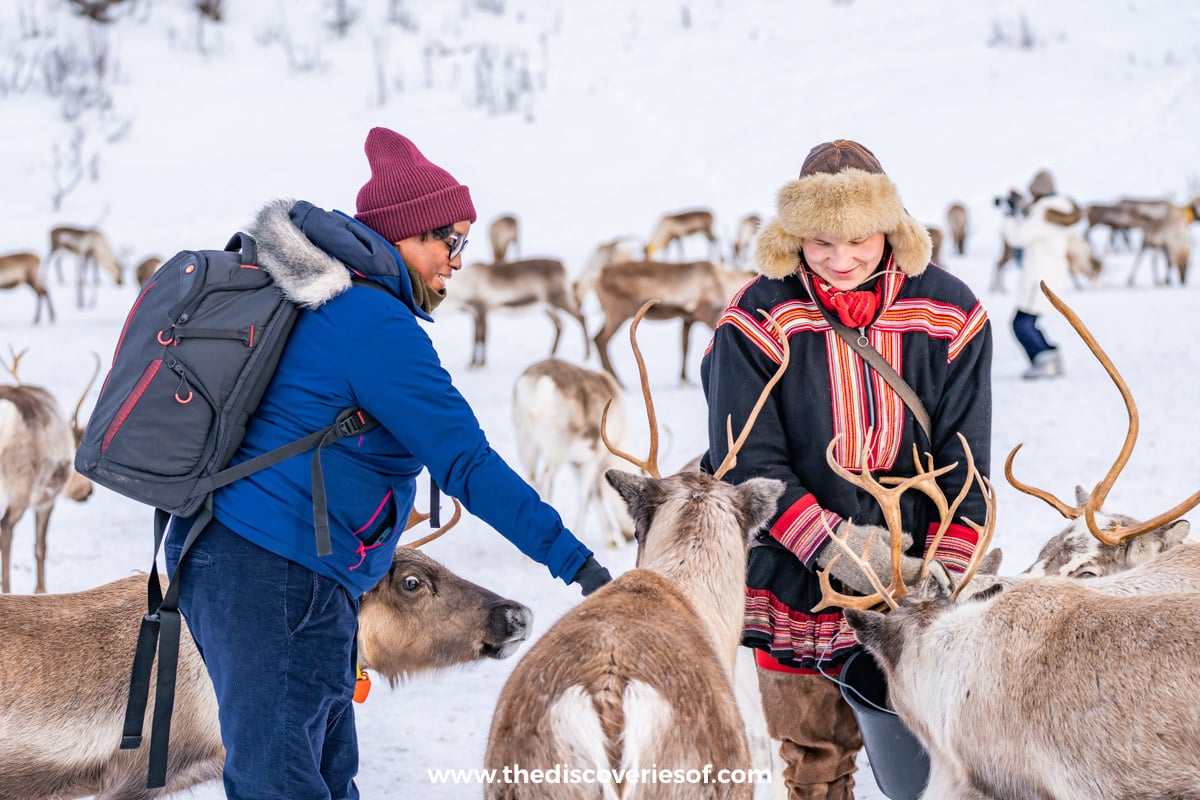
Reindeer sledding with a Sámi guide is the perfect opportunity to have some fun in the snow and pretend to be Santa Claus for a few hours. It’s also a great way to see how the Sámi herd reindeer, which they’ve been doing for generations.
You can also warm up in a lavvu (a traditional Sámi tent) and enjoy a traditional hot meal, which is certainly most welcome after spending time in below-freezing temperatures. On my tour, we warmed up in the lavvu, learnt more about Sámi culture and heard traditional joik singing. Tours like these support Sámi families whose livelihoods include reindeer herding, which helps keep their traditions alive.
Road trip through the Lyngen Alps
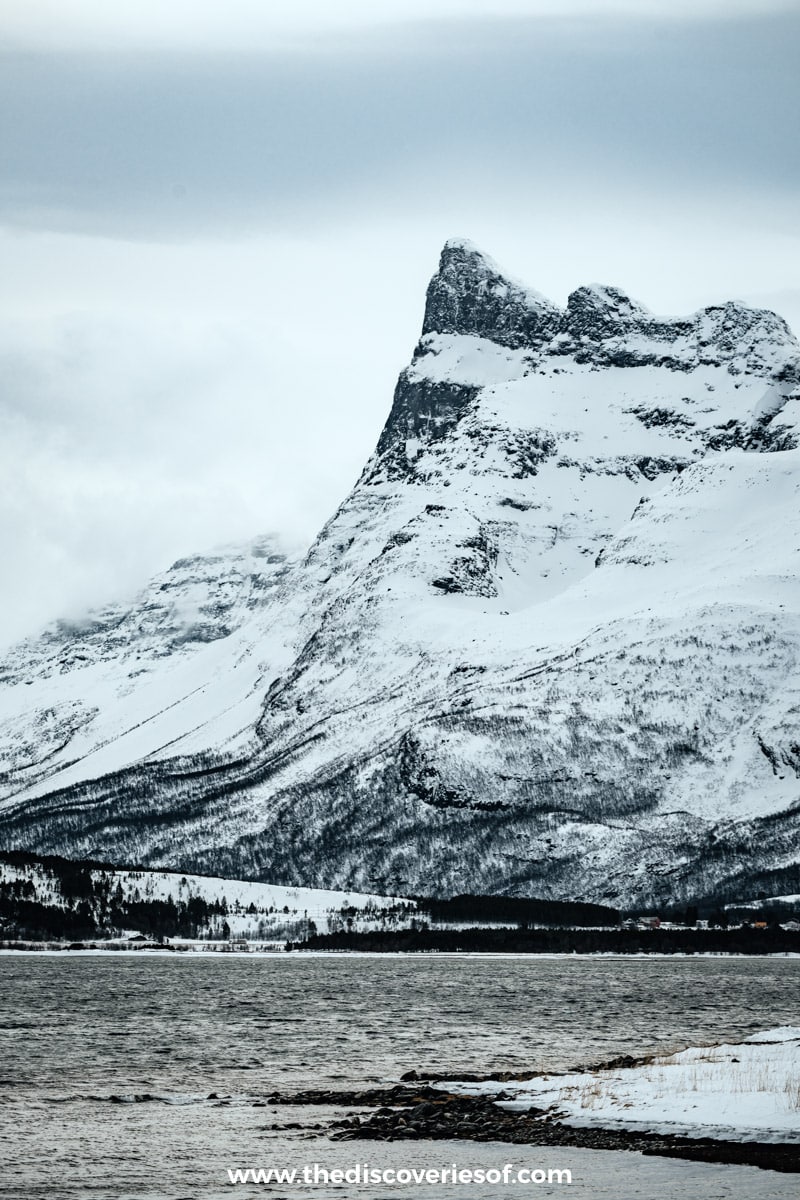
I just loved this part of my Tromsø trip. The Lyngen Alps are some of the most spectacular scenery in northern Norway, with peaks reaching 1,834 metres, and you can drive a loop through them in a day.
From Tromsø, drive east to Breivikeidet and hop on the car ferry to Svensby. It’s a 20-minute crossing, and even though it felt fairly mild when I set off, the wind chill out on the fjord was mad. Wrap up and get out of the car anyway, because the views are vast: mountains all around you and an inky black fjord below.
From Svensby, drive through small settlements like Lyngseidet and Oteren, then loop back to Tromsø on the E8. I took a detour to Otertind, often called the Matterhorn of the North, and it really was spectacular. Nobody’s climbing to the top in the middle of winter (certainly not me), but I did some short walks around the base, and I’d definitely recommend it.
Travel along the Atlantic Road

Now, it’s hard to beat a drive along the Atlantic Road (Atlanterhavsveien) if you’re looking for a scenic self-guided adventure. It opened in 1989 and stretches just over five miles (8.3 km) along Norway’s west coast, between Molde and Kristiansund.
The Atlantic Road connects a series of small islands and skerries to the mainland via eight bridges. At first glance, it looks somewhat like a road roller coaster, twisting and winding as it makes its way from one island to the next. The curving Storseisundet Bridge is the one you’ll recognise from the photos.
But it’s totally worth the ride as you explore this rugged and wild part of the country. Winter is storm season here, and on a wild day, waves crash right over the road, which is dramatic to watch from a safe spot.
Note: Drivers should be extra cautious in winter, as the road can be very slippery in icy conditions. Make sure your car has winter tyres (rental cars in Norway come with them in the season), and check the Statens vegvesen website for traffic information and closures. Norway’s drink-driving limit is also very low, at 0.02%, so don’t drink at all if you’re driving.
Spend an evening in an ice hotel
You might have heard of the Icehotel in Sweden. Well, the Snowhotel in Kirkenes is Norway’s answer to that. It first opened in 2006 and is now part of Snow Resort Kirkenes, where the Snowhotel 365 is kept frozen all year round, made completely from ice and snow.
Each room is hand-carved by ice artists, so no two are alike, with fantastic ice sculptures and special lights. If you can brave the cold, it’s worth spending a night here. If you can’t, well, visit anyway to say you’ve been to a snow hotel. The resort also runs dog sledding, reindeer visits and king crab safaris.
Further west, the Sorrisniva Igloo Hotel in Alta is rebuilt every winter and opens from 20 December to 31 March. Pop into the ice bar, where you can enjoy a drink served in a glass made of ice.
Closer to Tromsø, the Ice Domes in the Tamok Valley usually build a whole hotel, bar and restaurant out of ice each winter. I spent about 30 minutes there on my trip and was absolutely freezing, so I’m not sure I could have managed a whole night. They won’t open for the 2026/27 season, though, so head to Kirkenes or Alta instead.
Try some of the best seafood in Norway
Seafood lover? You’re in luck. Norway has some of the best seafood you’ll find in the world and, lucky for you, a lot of it is at its prime during winter. Norway has around 100,000 km (over 60,000 miles) of coastline once you count all its islands, so there’s no shortage of spots where you can enjoy fresh seafood.
Think iconic Norwegian salmon, king crab, lobster, scallops, and cod. Between January and April, look out for skrei, the migrating Arctic cod that arrives off Lofoten to spawn and is prized all over the country. And definitely try the king crab.
In Oslo, Fiskeriet by Youngstorget is a fish shop and restaurant serving fish and chips, creamy fish soup and oysters, all made from scratch. In Tromsø, the waterfront Fiskekompaniet is one of the most popular restaurants in town if you’re up for a splurge (book ahead).
In Lofoten, my favourite pit stop was Anita’s Sjømat on Sakrisøy. It had been a cold, cold day, so I went for the hot chocolate, which was dreamy, and the fish burger, which was so good.
Eating out in Norway is expensive. Budget around £20 to £25 for a main course in a mid-range restaurant. If you want to keep costs down, street food is your friend: you can regularly find a meal for around £7, and kebab shops and pizzerias are around £10 to £12.
Go on a skiing adventure

While the Alps are usually most people’s preferred ski destination, Norway’s slopes give them a good run for their money. Norway has numerous ski resorts with endless ski trails and mountain plateaus, with Trysil the biggest of them all.
Whether you’re a beginner or a pro skier, there’s a trail for everyone. Apart from regular skiing, you can also enjoy cross-country skiing (it’s practically the national sport) and snowboarding. And, if you’re not keen on trekking out to the mountains, there’s the SNØ indoor ski arena in Lørenskog, just outside Oslo.
Complete with a slope of around 500 metres, ski lifts, a cross-country track and everything else you would expect from an outdoor resort, SNØ opened in 2020 and is open all year round to enjoy some fun in the icy powder. It’s about 20 to 25 minutes from Oslo city centre by public transport.
Explore the Lofoten Islands

The Lofoten Islands are one of the best places to visit in Norway, and one of my favourites. I’ve been twice, in October and in February, and I wasn’t sure what to expect from coming in the winter months. Then I saw those snowy peaks rising straight out of the sea, and that was exactly what I’d come for.
Think towering mountains rising straight from the sea, fjords, colourful fishing villages and seabird colonies; there’s a lot that you can do here in winter. From fjord fishing and sea eagle safaris to discovering Lofoten’s stunning Arctic beaches, it doesn’t disappoint. If one word sums up Lofoten in winter, it’s drama. You turn round every corner, and there it is.

On both trips, I flew into Harstad/Evenes, hired a car and based myself in Svolvær, the biggest town. From there, it’s easy to drive the E10 to Henningsvær, where I flew my drone over the famous island football pitch, and on to Hamnøy, Nusfjord and Å, the village at the very end of the road. Look out for the stockfish racks too: cod has been dried on them since the Viking times, and in late winter they’re hung with fish drying in the cold air.
Lofoten is a great place to see the Northern Lights when the cloud lifts, but it is cloudier than Tromsø, so don’t rely on it. The weather can also disrupt your plans: on my last day, it looked as if our flight home might be cancelled. There are worse places to be stuck.
Oh, and I must mention that it’s a food lover’s paradise, with eateries serving fresh seafood and comforting bowls of fish soup. Lofoten Island’s food is an excellent introduction to Nordic cuisine, so go in with an open mind and expand your palate.
Tip: Check out my guide to the Lofoten Islands for a more in-depth review of what you can look forward to on the islands, and my guide to Svolvær if you’re basing yourself there.
Watch my Lofoten video for a taste of the islands in winter
Take a sea eagle safari in Lofoten

If you only do one wildlife trip in Lofoten, make it a sea eagle safari. White-tailed sea eagles are the biggest birds of prey in northern Europe, and in Lofoten, they come incredibly close.
I wasn’t out of my mind with anticipation before I went, but it turned out to be one of my favourite experiences from my trips. You get on a RIB boat, cling on, bomb it through the fjords, and then watch the eagles swoop down metres away from you. The light out on the water was beautiful, too. Do it, just do it.
Tours like this sea eagle safari to Trollfjord leave from Svolvær and take about two hours. Wrap up well, because it’s freezing out on the water at speed.
Watch Arctic surfers at Unstad

Yes, you read that right. Surfing. In the Arctic Circle. In winter.
Unstad Arctic Surf, on the island of Vestvågøy, facing the open sea, is one of the most northerly surf spots in the world, and the waves roll in all the way across the Norwegian Sea. There was no way I wasn’t going to see that for myself, so on my last day, we drove over to see it.
Not a surfer? Go for the cinnamon buns, which are often named among the best in the world. When we popped in early on our way to the airport, they weren’t ready yet, but they magicked a couple up for us anyway. Oh my goodness, they were good.
Learn about the Vikings

Most of us know of the Vikings, the fearsome seafarers who raided, traded and settled across Europe and beyond. Oh yes, and apart from that, they were also brilliant engineers, building impressive boats for long-distance voyages and battle.
If you’re a history buff, you’ll want to know that Oslo’s famous Viking Ship Museum on Bygdøy is closed while it’s rebuilt as the new Museum of the Viking Age, which is expected to open around 2027. The Oseberg, Gokstad and Tune ships won’t be on display until it reopens.
In the meantime, head to the Historical Museum (Historisk museum) in the city centre, which has a permanent exhibition of Viking Age finds. For something more immersive, Viking Planet, in the city centre, puts you aboard a longship with virtual reality and a saga film.
Visit the old Wharf of Bergen

You might have seen those colourful houses perched along Bergen’s waterfront. Bryggen, the Old Wharf of Bergen, was the hub of the Hanseatic League’s trade in Norway for centuries and has been a UNESCO World Heritage Site since 1979.
This wharf has survived fires and other devastating threats, and much of what stands today was rebuilt in the traditional way after the great fire of 1702, so for that reason alone, it’s worth visiting. During winter, you can stroll along the wharf area and its narrow wooden passages, and discover loads of shops, restaurants, and cafés overlooking the waterfront.
Bergen is one of the rainiest cities in Europe, so pack a waterproof. When it does clear, ride the Fløibanen funicular up Mount Fløyen for views over the city and the fjord.
Go whale watching
Whale watching is one of the best things you can do in Norway during winter. Every year, from around late October to the end of January, humpbacks and orcas follow the herring into the fjords north of Tromsø. Whether you’re taking a cruise from Tromsø or elsewhere, it’s a real treat.
As you cruise around the maze of fjords, you might spot humpback whales, orcas, and other Arctic wildlife sticking their heads out to say hi. Most tours from Tromsø are full-day trips of around eight hours, and sightings are never guaranteed. I’d missed whale season by the time I visited in February, so time your trip carefully if this is top of your list.
Tip: Bring a waterproof layer on top of your warmest clothes! Whales like to breach, so there’s a good chance you will get wet if your boat is close enough. It will still be worth it though, I promise.
Sail the coast with Hurtigruten or Havila
For a slower way to see Norway in winter, sail the coastal route between Bergen and Kirkenes, near the Russian border. Ships call at 34 ports along the way, including Ålesund, Trondheim, Bodø, Svolvær and Tromsø, and a round trip takes 12 days, although you can also book one way or just a few nights.
Two companies sail it, on alternating days: Hurtigruten and Havila Voyages. (Hurtigruten’s expedition cruises are now a separate brand, HX, so don’t confuse the two.) In winter, you get the polar night, snowy fjords and the chance to watch for the Northern Lights from the deck.
Head to Svalbard for the real polar night
If you really want an adventure, head to Svalbard. It’s part of Norway, but far north of the mainland and within 1,000 km of the North Pole. It’s also much easier to get to than Antarctica: just grab a domestic flight to Longyearbyen.
In Longyearbyen, the sun doesn’t rise from late October to mid-February, and in the darkest weeks around Christmas, there’s barely any twilight at all. It’s a taste of life in the extreme Arctic, and a brilliant place to see the Northern Lights in the middle of the day.
Norway in winter: map
Norway in winter: read next
- When to See the Northern Lights?
- Where to Stay in Tromsø
- A Guide to the Lofoten Islands
- Unmissable Things to do in Norway
- The Ultimate Norway Travel Guide
- Brilliant Things to do in Tromsø
- A Foodie Guide to Lofoten Islands, Norway
- How to Chase the Northern Lights in Tromsø
- 3 Days in Tromsø: The Perfect Tromsø Itinerary
Love This? Save and Share on Pinterest

Discover the top things to do, insider tips and hidden gems in our Norway Travel Guides.
Read the guides →