Looking for the best things to do in Norway? This guide takes you around the country, from the Arctic north, where I’ve chased the Northern Lights and sea eagles, to the fjords, mountain hikes and cities of the south.
Norway is a country I could (and will) visit time and time again and never tire of. I’ve been to the Lofoten Islands twice, once in October and once in February, and I spent five days road-tripping around Tromsø in February, from a glass-roofed cabin under the Northern Lights to a Sámi reindeer herd in the snow.
From the mesmerising Northern Lights to a landscape outlined by picturesque fjords, towering mountains and icy glaciers, it’s impressive, to say the least.
Planning your trip to Norway and not sure where to start? These are the places not to miss. If you only have a week, pick one region: the Arctic north (Tromsø and Lofoten) or the fjords and cities of the south (Oslo, Bergen and the west coast). With two weeks, you can do both, with a domestic flight in between.
PS: if you’re planning your Norway trip, watch these travel tips!
Unmissable things to do in Norway
Visit the Lofoten Islands


Picture Norway in your mind and you’ll probably imagine something that looks like the Lofoten Islands.
This awe-inspiring archipelago, just north of the Arctic Circle, is a picture postcard of natural Norway scenery. Imagine towering snow-capped mountains, clear blue water, white sand beaches, and colourful fishing villages. If I had to sum it up in one word, it would be drama. You turn round every corner, and there it is.
Both times, I flew into Harstad/Evenes and based myself in Svolvær, the biggest town. The first time, I took the bus; the second time, I hired a car at the airport and drove, which takes about two and a half hours and is the way I’d do it again. From there, the E10 strings the islands together with bridges and tunnels all the way to Å, at the very end of the road.
If you’re adventurous, you’ll find ample activities for exploring the area. Hiking and climbing trails weave through the diverse landscapes, from the scenic beaches to the mountains, and summer is the season for them.
Off-land, some of the most popular things to do include kayaking, boating, and fishing. And in winter, there’s snowshoeing, ski touring for experienced skiers and, when the cloud lifts, the Northern Lights.
During your downtime, pop into a local museum or cosy cafe. And make sure to check out the impressive food scene on the Lofoten Islands. The ocean provides the star ingredients for many culinary delights on the local menus. My favourite pit stop was Anita’s Sjømat on Sakrisøy, near Reine: it had been a cold, cold day, so I had the fish burger and a hot chocolate, which was dreamy.
Be honest with yourself about the weather, though. Lofoten is cloudier than Tromsø, so it isn’t the most reliable place to see the Northern Lights, and on the last day of my February trip, it looked as if our flight home might be cancelled. Build some slack into your plans.
How to Visit: Book this Lofoten Islands Trollfjord Cruise on a silent electric boat from Svolvær and read my Lofoten Islands Guide for more information on this incredible archipelago.
Take a closer look at Lofoten in my travel guide video.
Take a sea eagle safari to the Trollfjord

If you only do one wildlife trip in Lofoten, make it a sea eagle safari. White-tailed sea eagles are the biggest birds of prey in northern Europe, and here they come incredibly close.
I wasn’t out of my mind with anticipation before I went, but it turned out to be one of my favourite experiences in Norway. You hop onto a RIB boat in Svolvær, cling on as you bomb it through the fjords, and then watch the eagles swoop down mere metres away to catch the fish the captain throws out for them. When I came off the boat, all I could say was that it was the most ridiculous experience I’d ever been on.
The boat heads into the Trollfjord, a narrow fjord with sheer walls on both sides. Our guide told us the legend of how it was made: two trolls fought over the grazing land, one hurled a giant axe, missed, and cut the mountain clean through, and the sea flooded in.
How to Visit: Book this Sea Eagle Safari to the Trollfjord from Svolvær. It takes about two hours. Wrap up in every layer you’ve got, because the wind on a RIB at full speed is bitter.
Road trip the E10 from Henningsvær to Å

The E10 is one of the great drives in Norway, and the best way to see Lofoten is to take it slowly, stopping every five minutes for photos. It’s about two hours from Svolvær to Å without stops, and longer in winter, when you’ll want to drive carefully on snow and ice.
Henningsvær
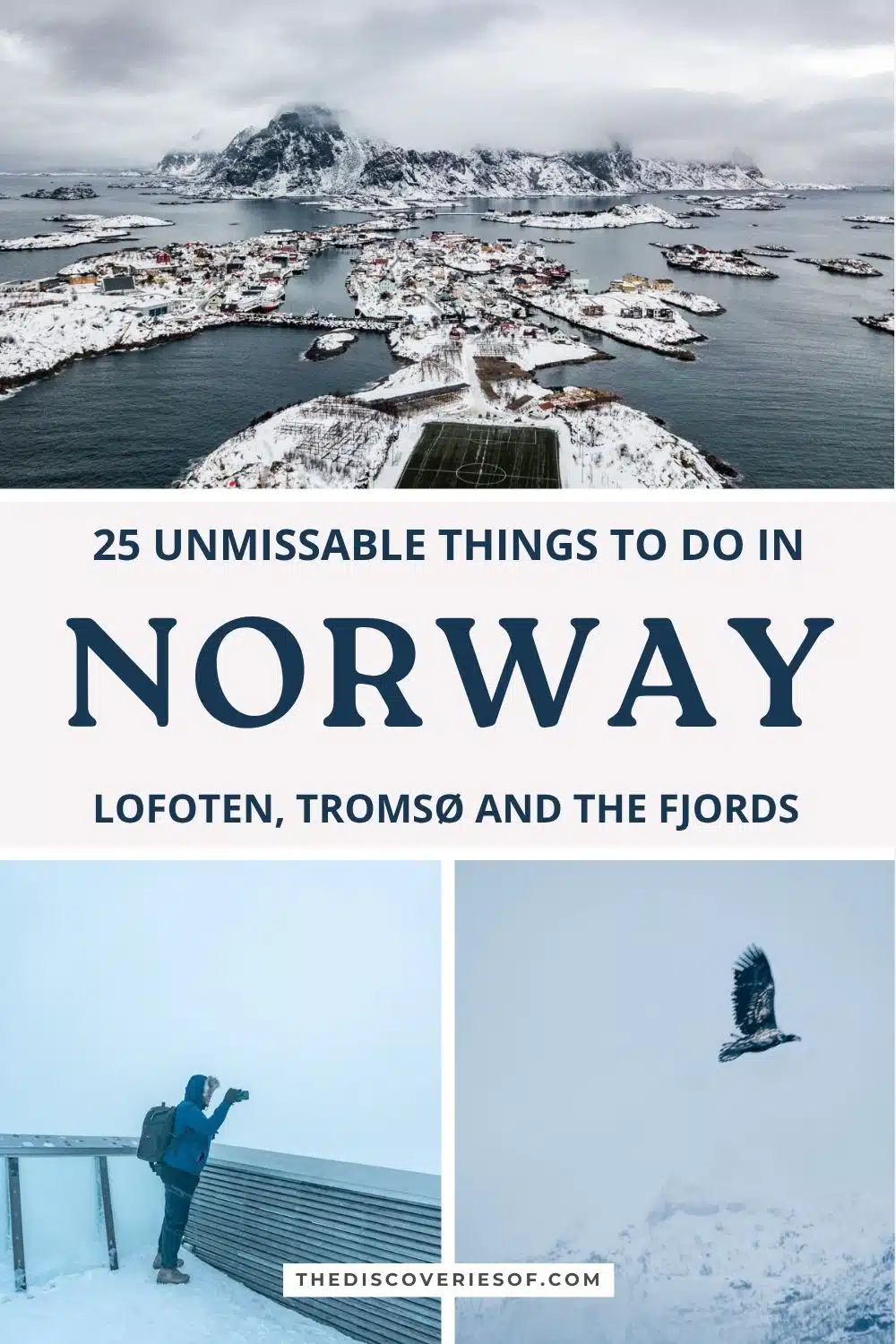
About half an hour from Svolvær, Henningsvær is spread across a cluster of little islands, with art galleries, cosy cafes and stockfish racks along the quay. Its secret is only obvious from above: a football pitch on its own tiny island. When I visited in February, the weather looked distinctly unpromising, but I got my drone up anyway and the view was insane. Read my Henningsvær travel guide and my guide to the Henningsvær football pitch.
Borg, Unstad and Nusfjord
On Vestvågøya, the Lofotr Viking Museum at Borg has rebuilt an 83-metre Viking chieftain’s longhouse at full size, right on the E10. A short detour takes you to Unstad, one of the most northerly surf spots in the world, where we popped into Unstad Arctic Surf on our last day for their famous cinnamon buns. They weren’t ready yet, but the owner magicked up a couple for us anyway, and they were divine. Further west, Nusfjord, at the end of a narrow road off the E10, is one of the oldest and best-preserved fishing villages in Norway, and much quieter than Hamnøy and Reine.

Hamnøy and Reine
If you’ve ever looked at travel photos on Instagram, you’ll have seen Hamnøy: red rorbuer (fishermen’s cabins) on stilts over inky water, with jagged peaks behind. The morning I visited, I woke up to dreadful weather and thought the day was a write-off. Then I got to Hamnøy, and it was just so much drama. The classic shot is taken from the bridge on the E10. Just across the water, Reine sits beneath Reinebringen, whose Sherpa-built stone staircase is the big summer hike (it’s strongly advised against in the snowy months). Read my Hamnøy travel guide for more.
Å
The road ends at Å, and arriving there, with that view in front of you, is quite the finish. Visit the Norwegian Fishing Village Museum, which is open all year, and the Stockfish Museum in the summer season, and look at the colours of the houses: red paint was the cheapest, yellow cost more, and white was the most expensive of all.
Go deep fjord fishing in Lofoten
Life in Lofoten has always revolved around fishing, so what better way to experience it than on a boat trawling for your own catch of the day?
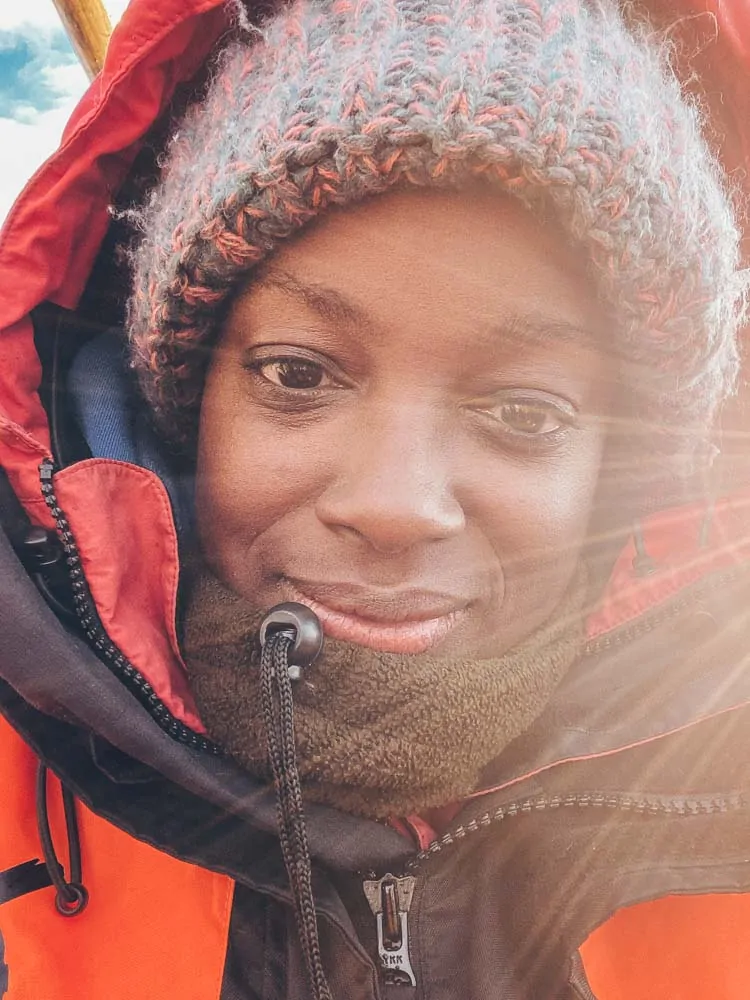
Waking up bleary-eyed and definitely not bushy-tailed, I stumbled onto a fishing boat in Svolvær, decked out in a fetching padded, inflatable onesie to keep out the Arctic wind. The captain used a fish finder to put us right over the shoal, and I’d barely dropped my line before I felt the first tug. Over the next two hours, I pulled in three fish (one so small we threw it back), with the gulls swarming the boat and some monstrously pretty views of the islands to distract me.
Look out for the triangular stockfish racks too. From late winter, they’re hung with cod drying in the cold, salty air, as they have been since Viking times. I tried stockfish for the first time at Paleo Arctic in Svolvær, and you can learn all about it at the Stockfish Museum in Å.
Explore Oslo

Norway’s capital, Oslo, is continually ranked as one of the best cities in the world to live in. It’s no secret that the city is also one of the prettiest, set on the shores of the gorgeous Oslofjord.
Many attractions take advantage of the capital’s scenic appeal. Whatever you do, don’t hire a car while you’re here: parking is hard to find and expensive, and public transport is cheaper, faster and easier. Oslo is also the hub of the rail network, so it makes a good base for day trips.
Aker Brygge and the Opera House
The Aker Brygge neighbourhood is a lively hub for dining, shopping, and entertainment, and the strip of al fresco eateries and bars along the boardwalk offers breathtaking sea views. Walk east along the harbour to the Opera House, which rises out of the water like a glacier: you can walk right up its sloping marble roof for views over the fjord. Next door, the 13-storey MUNCH museum is home to the world’s largest collection of Edvard Munch’s work, including versions of The Scream.
Vigeland Park
For nature lovers, there are also numerous parks and public spaces. Many feature beautiful (and sometimes surreal) sculpture gardens, like the one inside Vigeland Park, in Frogner Park. More than 200 sculptures by Gustav Vigeland line its avenues, from the famous Angry Boy to the towering Monolith, carved from a single block of granite. It’s free and open around the clock, so go early or in the evening light.
The Bygdøy museums
If you want to learn about Norway’s culture and history, there are a cluster of museums on the Bygdøy peninsula, which you can reach by bus 30 all year or by ferry from the city centre in summer.
The Norwegian Maritime Museum (closed on Mondays) and the Kon-Tiki Museum are the most well-known ones, along with the Fram Museum, home to the polar ship Fram, and the open-air Norwegian Folk Museum. The famous Viking Ship Museum is closed while it’s rebuilt as the Museum of the Viking Age, which is expected to open around 2027. Sundays are a good day for museums, as most shops are closed.
How to Visit: Book this Boat Tour of Oslo’s Fjords on a traditional wooden sailing boat.
Where to stay: Hotell Bondeheimen is a good mid-range option. It’s a traditional hotel in the city centre, a minute’s walk from Karl Johans gate, with its own café-restaurant, Kaffistova, serving classic Norwegian dishes.
Check Rates and Availability for Hotell Bondeheimen on Booking.com
See the Northern Lights


The Northern Lights are one of the best things to see in Norway. But you can’t catch a glimpse of them from anywhere; you’ll need to travel to the very north of the country, to Arctic Norway, where Tromsø and Lofoten sit right under the auroral oval.
The season runs from late August to early April, whenever it’s dark enough, and the long nights from October to February give you the most hours to look for them. Find out more in my guide to seeing the Northern Lights.
In my experience, though, it’s the cloud, not the calendar, that decides whether you see them. It was crazily cloudy for most of my Tromsø trip. On my first night, the sky was 100% cloud from 9pm onwards. The best night came after I added an extra night to my trip. I spent most of that day mapping the cloud forecast against known viewing spots, drove out to Oldervik, and watched the lights dance for two hours under a completely clear sky. Absolutely otherworldly.
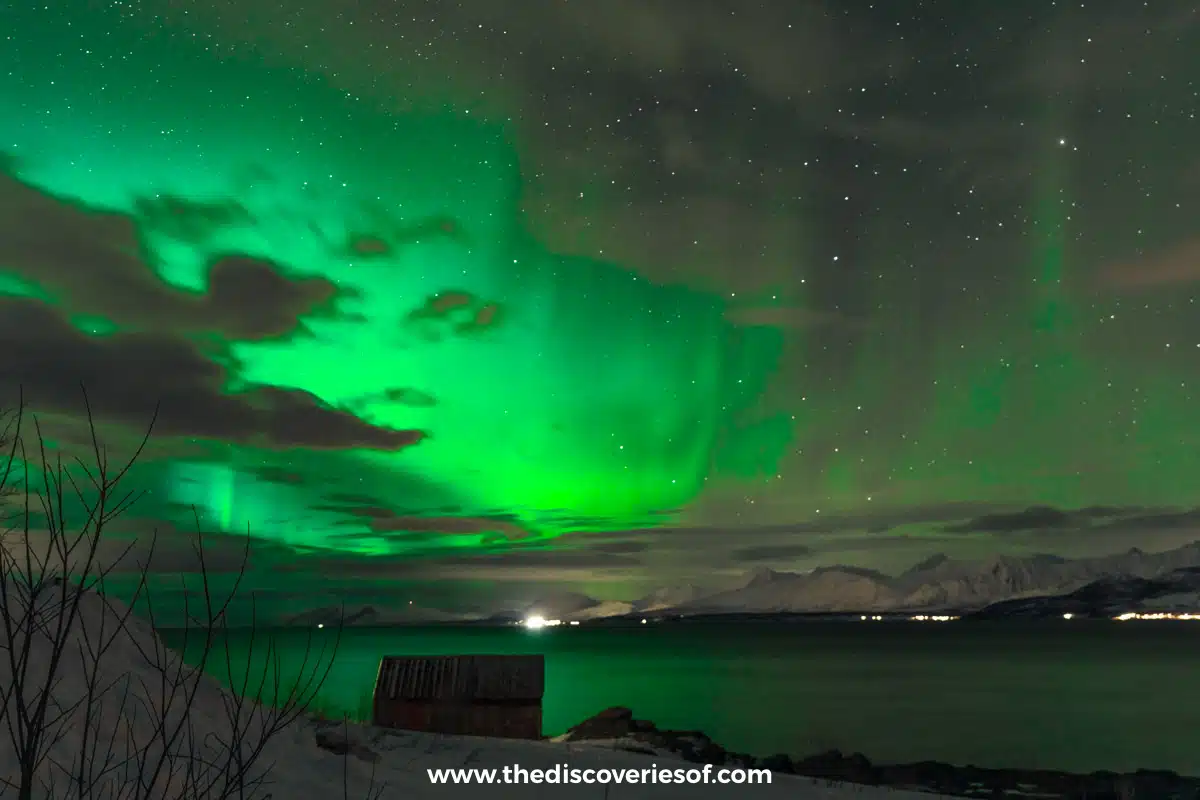
So give yourself as many nights as you can, and watch the cloud cover as closely as the aurora forecast. I’ve got loads of weather apps on my phone, and Windy Premium has been the most reliable for me. My guides to the best time and places to see the Northern Lights in Norway and chasing the Northern Lights in Tromsø have everything you need.
How to Visit: Book this Northern Lights Tour from Tromsø if you’re not confident driving on snow and ice in the dark, and let the guides find the clear skies for you.
You can watch me chase the Northern Lights around Tromsø in my vlog.
Sleep under the Northern Lights at ÆRA
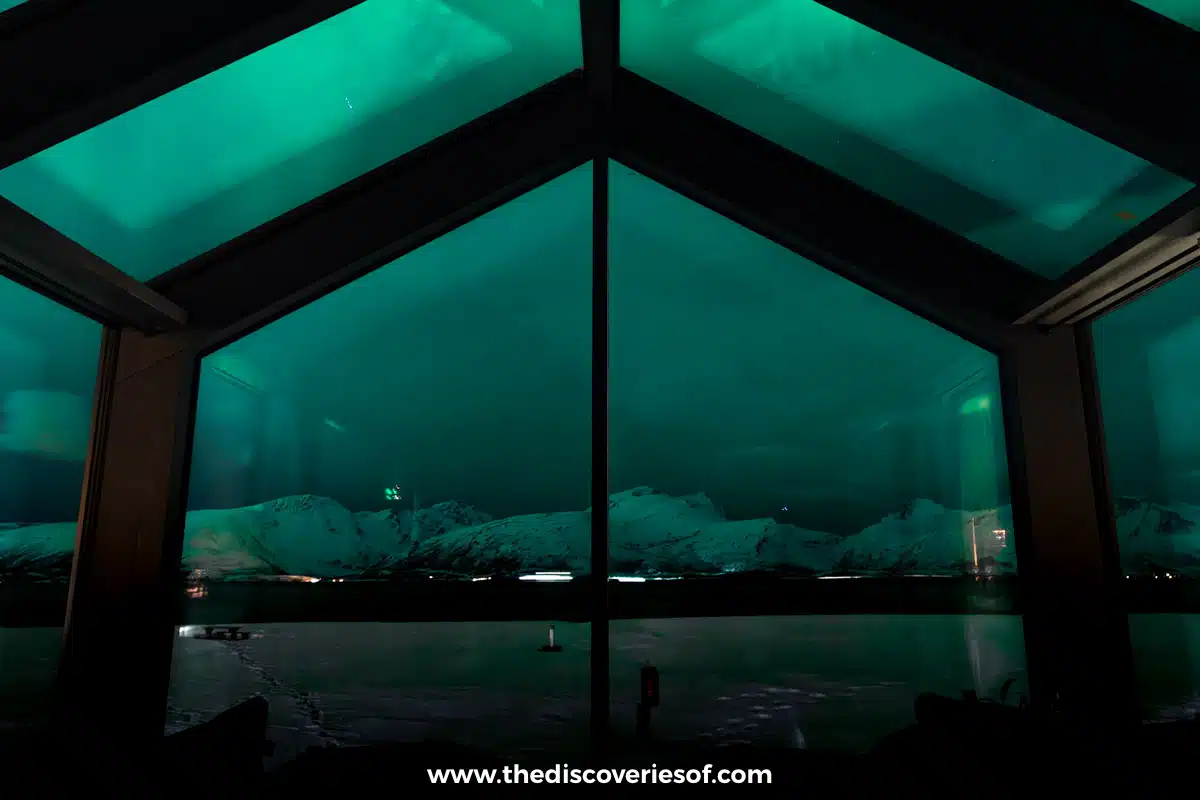
For a once-in-a-lifetime stay, book a night in a glass-roofed aurora cabin. I spent my first two nights at ÆRA, a 30 to 40-minute drive from Tromsø, where the bed sits right under a glass roof facing the fjord. On my second night, I caught a faint green glow from my bed, then headed down to the lake for a better look. Any aurora is better than no aurora.
You’ll need a car to get there, and the location, away from the lights of the city, is exactly the point. Read my full ÆRA Tromsø review, and see my guide to where to stay in Tromsø for more Northern Lights hotels.
Travel to Tromsø
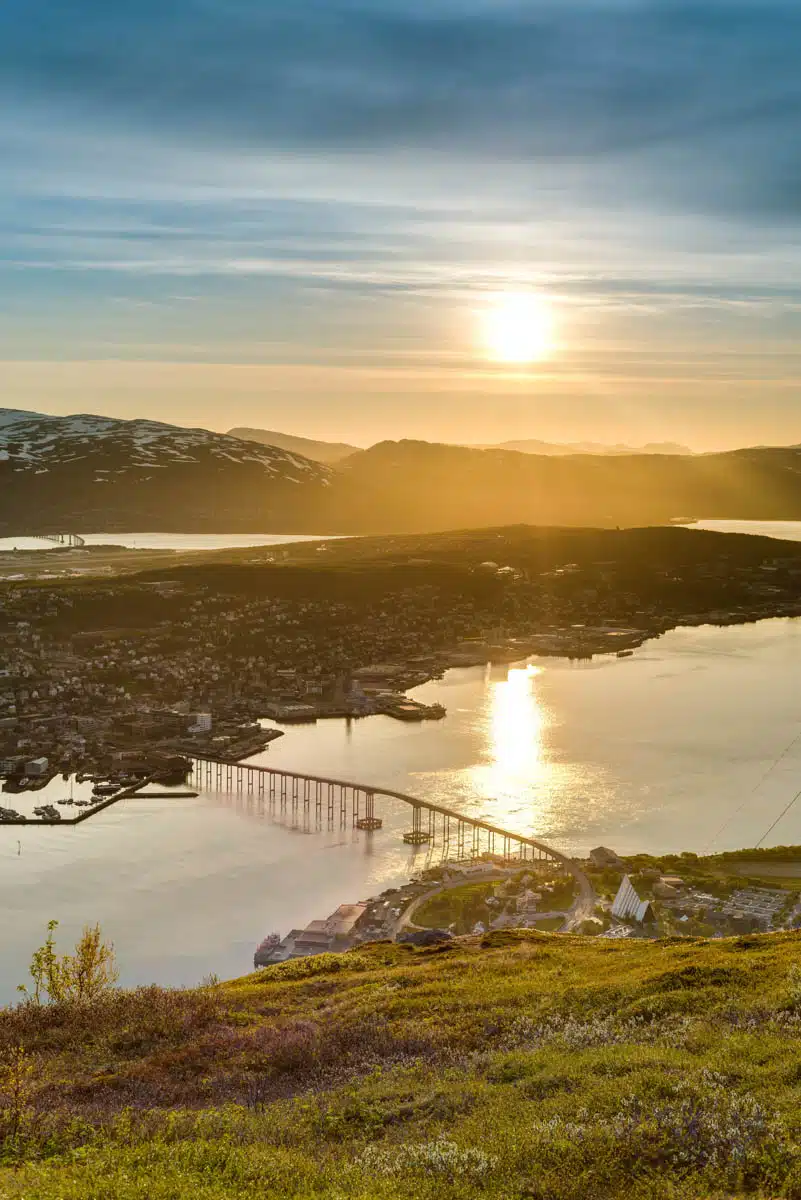

The city of Tromsø is about 350 km north of the Arctic Circle and is outlined by stunning Norwegian fjords. With around 80,000 people, it’s the biggest city in Northern Norway, and it calls itself the capital of the Arctic. Having spent five days there, I think it’s earned the title.
One of the best excursions you can take is a cruise along the narrow waterways. Seeing the area’s wildlife and towering mountains up close is one of the top things to do in Norway.
In winter, Tromsø is a Northern Lights hotspot and a popular place to enjoy Arctic activities, like snowshoeing, ice fishing, and husky dog sledding. The sun doesn’t rise at all during the polar night, from about 27 November to 15 January. One thing to know before you book: the Ice Domes in the Tamok Valley, which I visited, aren’t opening for the 2026/27 winter.
In summer, the city is famous for its midnight sun. From about 20 May to 22 July, the city has sunlight around the clock. This makes hiking and other outdoor activities available and at your disposal 24/7.
Here are my favourite things to do in Tromsø on video.
The Arctic Cathedral

The city also has unique indoor attractions, like the Arctic Cathedral. Built in 1965, it looks like a cascade of white triangles, and its huge glass mosaic fills the east wall. I say all this as if I went inside. I rolled up at 5.20pm and found it had closed at 5. So close. Opening hours change from day to day, so check the calendar before you go.
The Fjellheisen cable car
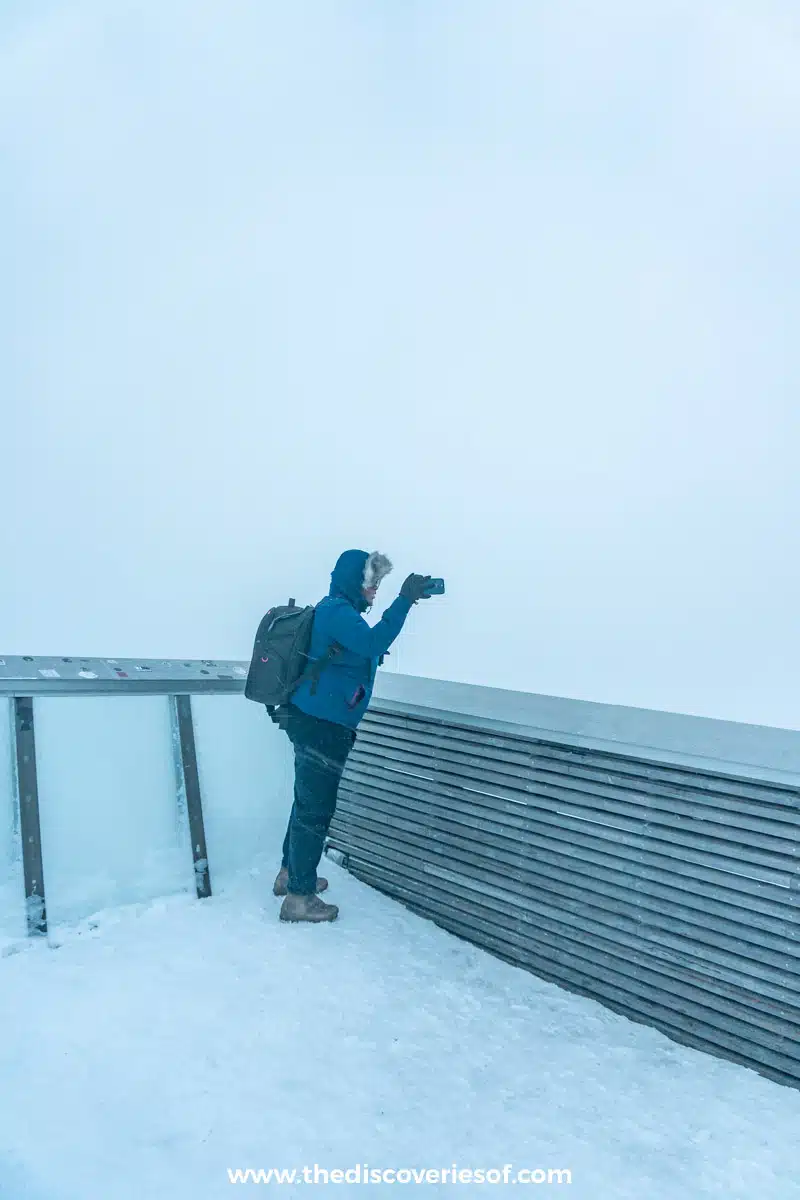
The Fjellheisen cable car climbs 421 metres up Mount Storsteinen for views over the city, the bridge and the fjords. Sunset is the classic time to go. When I went, it was snowing, and riding up into the cloud felt like being loaded into the Matrix. Take bus 26 from the centre, and expect to pay 645 NOK for a return ticket.
Polaria and the Polar Museum
On a cold afternoon, warm up at the Polar Museum, which tells the story of Tromsø as the starting point for Arctic hunting and polar expeditions, and the Polaria Arctic Aquarium, with its bearded seals and a building designed to look like ice floes tipping into the sea. For lunch, Mathallen in the centre is great value by Tromsø standards. I had the burger, which was 290 NOK when I visited.
Kvaløya, Ersfjord, Grøtfjord and Sommarøy
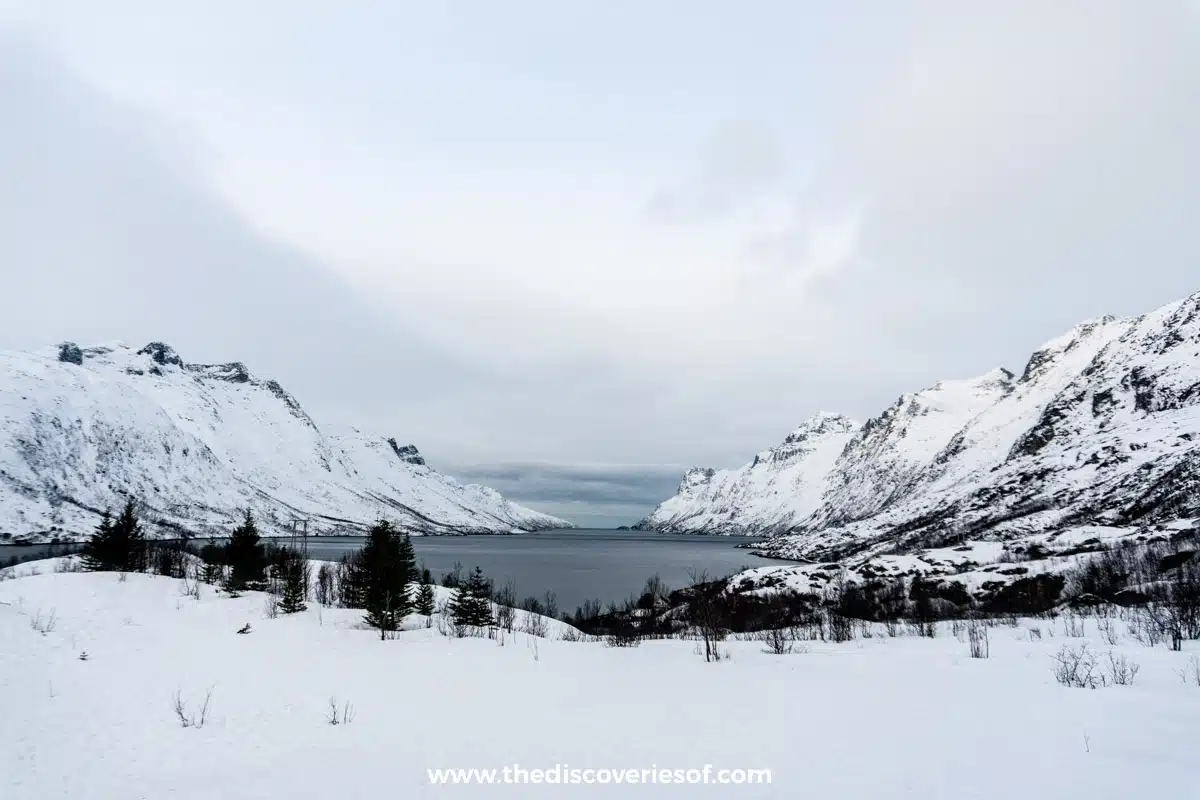
I think it’s a real shame that so many people visit Tromsø and never leave the city. I hired a car, and the drives were some of my favourite days. Kvaløya, just across the bridge, has the Ersfjord viewpoint (about 20 to 25 minutes from the city): the first time I stopped, it was foggy, and the next day it was bright blue skies. Keep going to Grøtfjord, about 40 minutes away, where I finally got my drone up after a too-windy day. Further out, about an hour from Tromsø, the island of Sommarøy has colourful houses and white sand beaches.

How to Visit: Book this Tromsø Fjord Cruise and read my guide on the top things to do in Tromsø and my 3-day Tromsø itinerary.
Feed reindeer with Sámi herders
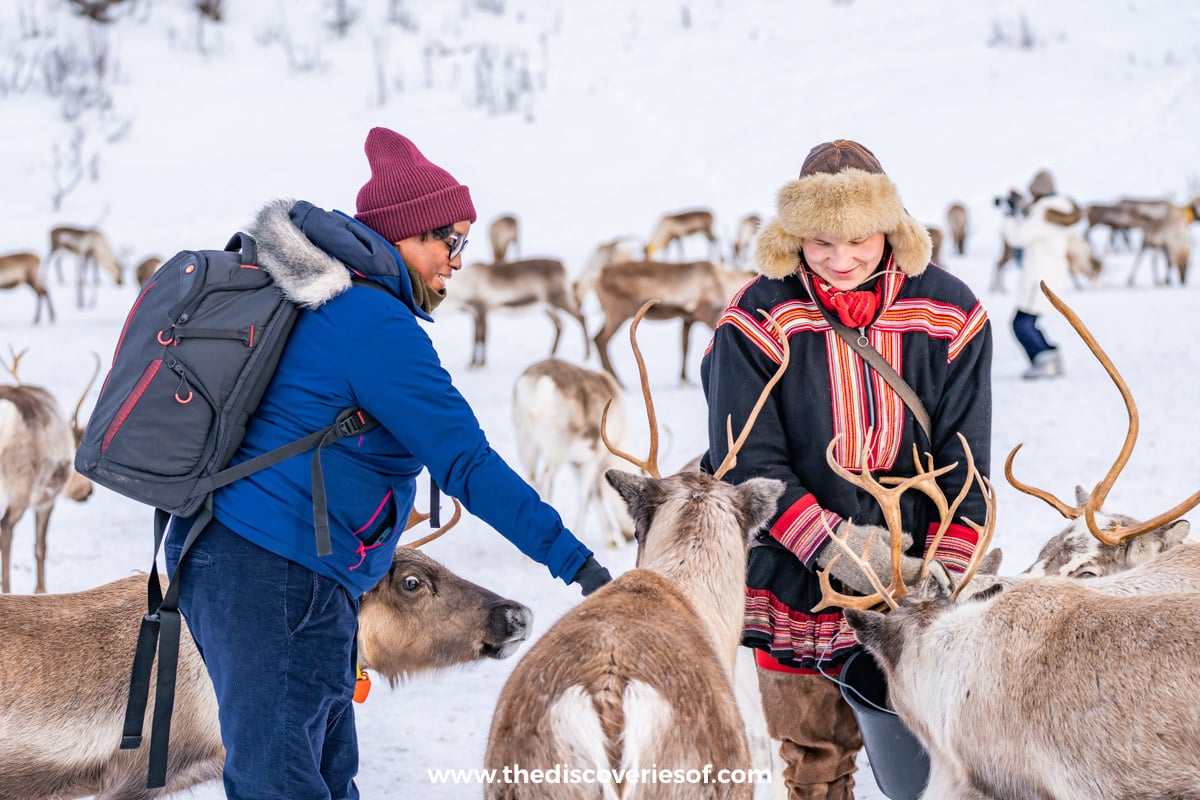
The Sámi are the Indigenous people of the far north of Norway, Sweden, Finland and Russia, and reindeer herding has been part of their way of life for generations. Spending time with them was one of my favourite things I did in Tromsø.
I went with Wondering Reindeer. My guide, Ula, is of Sámi heritage, and he took me to some fantastic photography spots on Kvaløya before we met the herders and fed the reindeer. Surrounded by reindeer, with snow absolutely everywhere, it was the definition of a winter wonderland. Fair warning: those reindeer are hungry, so watch out for their antlers when they come in close. Afterwards, we warmed up in a lavvu, a traditional Sámi tent, and heard a joik, the traditional Sámi song. Read all about my Sámi reindeer experience in Tromsø.
How to Visit: Book this Reindeer Sledding and Feeding with a Sámi Guide from Tromsø.
Road trip through the Lyngen Alps
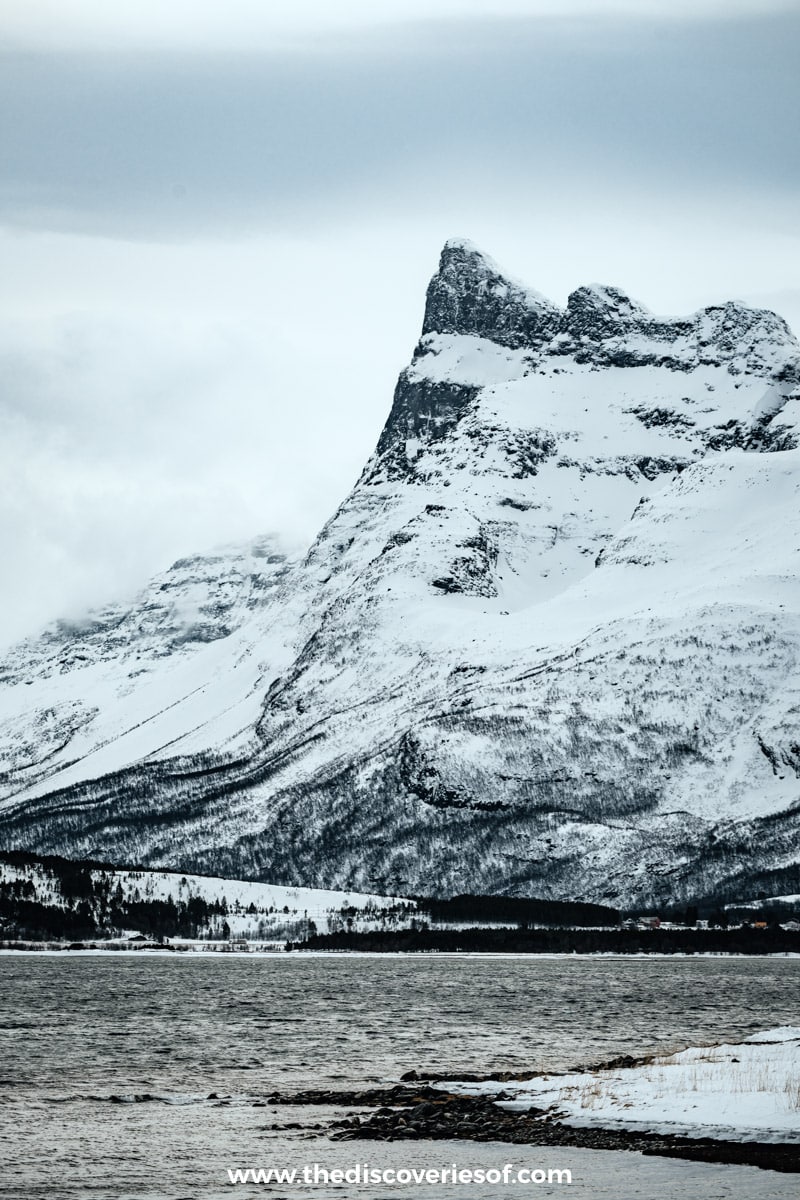
I just loved this part of my Tromsø trip. The Lyngen Alps, east of the city, have peaks reaching 1,834 metres, and you can drive a loop through them in a day.
Drive east to Breivikeidet and take the 20-minute car ferry to Svensby. It felt fairly mild when I set off, but the wind chill out on the fjord was mad. Get out of the car anyway, because the views are vast: mountains all around you and an inky black fjord below.

From Svensby, drive through Lyngseidet and Oteren, then loop back to Tromsø on the E8. I took a detour to Otertind, often called the Matterhorn of the North. Nobody’s climbing it in the middle of winter (certainly not me), but I did some short walks around the base, and it was spectacular. Rental cars come with winter tyres, but the roads are snowy and icy, so take it slowly.
Spend time in Bergen

Bergen is Norway’s second-largest city (it also happens to be my favourite) and is set on the southwestern coast and known as the gateway to the fjords. The historic city contains many cultural attractions, like old churches and insightful museums. It’s also one of the wettest cities in Europe, so pack a raincoat.
Bryggen
The most charming area of Bergen is the Bryggen district. This old Hanseatic wharf, a UNESCO World Heritage Site since 1979, is lined with colourful wooden buildings, much of it rebuilt in the traditional way after the great fire of 1702. Wander the narrow wooden passages behind the waterfront, where you’ll find workshops, galleries and cafes.
The fish market
Check out the popular fish market, where you can enjoy a fresh seafood meal and pick up local specialities and souvenirs. The indoor market hall on the harbour is open all year, and the outdoor stalls set up in the warmer months.
Fløibanen and Ulriken
If you want a break from the city, hop on the Fløibanen funicular railway or the Ulriken cable car. These two different lifts connect Bergen with the mountains above it and offer fantastic hiking routes along with stunning views of the city below. Bergen is also where the Bergen Line from Oslo ends and the coastal ships of Hurtigruten and Havila begin their voyage north.
How to Visit: Book this Walking Tour of Bergen.
Where to stay: Opus XVI is a boutique hotel in central Bergen, in a listed 1876 bank building near the fish market. It’s run by relatives of the composer Edvard Grieg, has its own restaurant and bar, and includes a Norwegian breakfast buffet in every rate.
Check Rates and Availability for Opus XVI on Booking.com
Epic drives, hikes and train rides
Ride the Bergen Line and the Flåm Railway

You need to travel to Bergen by train at least once, because it’s one of the most beautiful train rides in the world. The Bergen Line takes about seven hours from Oslo, climbing over the Hardangervidda plateau to Finse, which at 1,222 metres is the highest station on the Norwegian rail network. Book early for the cheapest fares on Entur or Vy.
At Myrdal, you can change for the Flåm Railway, which drops 863 metres in about 20 km to the village of Flåm on the Aurlandsfjord, past waterfalls and snowy valleys. Both lines run all year.
Drive the Atlantic Ocean Road

Wondering what to see in Norway that will take your breath away besides the Northern Lights?
Well, the Atlantic Ocean Road is your answer. It’s one of the most spectacular driving routes in the world. Opened in 1989, it connects Averøy island with the mainland, between Molde and Kristiansund, through a series of eight low bridges.
The 8.3-kilometre-long scenic road twists and turns as it passes over a small archipelago, and there are several viewpoints along the way where you can pull over and admire the amazing views. The curving Storseisundet Bridge is the one you’ll recognise from the photos. In autumn and winter storms, waves crash right over the road, which is dramatic to watch from a safe spot.
How to Visit: The road is toll-free and open 24/7, although it can close in severe storms. If you’re driving in winter, your hire car will have winter tyres, but check road conditions on the Statens vegvesen website before you set off.
Pose for a photo at Trolltunga

Trolltunga is hands-down one of the most breathtaking cliffs in Norway. It provides an incredibly scenic hike that leads to a stunning rock formation called the Troll’s Tongue. This thin slice of rock juts out 700 metres above Lake Ringedalsvatnet, providing an epic photo opportunity (expect to queue for it in summer).
Skjeggedal (P2) is the main trailhead, and the round trip from here is 27 kilometres and takes about 8 to 12 hours to complete.
Mågelitopp (P3) is the highest trailhead. The round trip from here is 20 kilometres and takes about 7 to 10 hours (and is significantly easier, if you’re worried about tackling something too big). If you love hiking, this is the perfect way to spend a day.
In summer, a shuttle bus runs from Skjeggedal up the steep road to Mågelitopp, which saves you one of the steepest sections of the trail. Mågelitopp is only open from early June to the end of September, and you need to book your parking in advance for most of the season. Outside the summer months, the trail is covered in snow, so only go with a guide.
How to Visit: Book this Trolltunga Overnight Hiking Excursion
Hike up Pulpit Rock

Pulpit Rock (Preikestolen) is another one of Norway’s beautiful hiking spots. Two factors make this location so unique. First, the trek offers a breathtaking viewpoint 604 metres above the Lysefjord. And second, the cliff has a flat top of about 25 by 25 metres.
The round-trip hike is about 8 km, with around 500 metres of climbing, and usually takes about 4 hours. It’s rated as moderate, with only a few steep sections along the trail.
One last thing to mention is that hiking Pulpit Rock is one of the most popular things to do in Norway in summer. The trail can get very crowded, especially from June to August when the weather is warm.
If you want a more peaceful experience, try to visit on a weekday and start your hike as early as possible. In winter, the trail is covered in snow and ice, so go with a guide and crampons.
How to Visit: Book this Pulpit Rock Guided Hike from Stavanger.
Cruise the Nærøyfjord from Flåm
From Flåm, boats sail along the Aurlandsfjord and into the Nærøyfjord, a narrow arm of the Sognefjord that’s UNESCO-listed alongside the Geirangerfjord. Since 2026, smaller tourist boats and ferries in both World Heritage fjords have had to be zero-emission, so many of the cruises here are on near-silent electric boats. The classic Norway in a Nutshell route strings together the Bergen Line, the Flåm Railway, a Nærøyfjord cruise and a bus, and the company sorts all the tickets for you.
How to Visit: Book this Classic Nærøyfjord Cruise.
Hidden gems and off-the-beaten-track adventures in Norway
Go to Geiranger

The village of Geiranger looks like a scene straight out of a storybook. It’s an area of exceptional beauty made up of lush vegetation, cascading waterfalls, majestic mountains, and pristine fjords. It isn’t a secret (cruise ships call here all summer), so stay overnight to see it at its quietest.
Ørnesvingen (the Eagle Road) and Flydalsjuvet are two noteworthy vantage points that supply dramatic views of the region laid out before you. The Seven Sisters Waterfall runs down the side of a cliff into the glassy blue fjord below.
The landscape throughout Geiranger is so pure and unspoiled it might take your breath away. Combine it with the hairpin bends of Trollstigen, which is usually open from mid-May to October or November. The road up Mount Dalsnibba opens around May too.
How to Visit: Book this Geiranger Sightseeing Tour and explore the region.
See a glacier up close

Located in Luster, Nigardsbreen is part of the Jostedalsbreen Glacier, the largest glacier in mainland Europe. A scenic hiking route starts at the Nigardsbreen car park and takes you right next to the glacier.
You’ll venture along a calm lake between towering mountains as you reach the large and dense piece of blue ice. The hike takes about 1 to 2 hours, one way, so it’s a fairly easy trek with plenty of rewards.
Or, if you want to save time, you can hop on the glacier boat, which shuttles across the lake from late May or June to September, with no timetable or booking needed. It reduces your hiking time to the glacier to only about 30 minutes. Never walk onto the ice itself without a guide: guided glacier hikes run from the same spot.
Either way, getting a glimpse of the glacier up close is one of the coolest things to see in Norway.
How to Visit: Start at the Breheimsenteret glacier centre (open from May to the autumn) or walk the route on your own.
Stand on top of Kjeragbolten

If you’re an adrenaline junkie looking for places in Norway to visit, put Kjeragbolten at the top of your list. This unique and famous boulder, wedged in a crevice almost 1,000 metres above the Lysefjord, is reached on a round-trip hike of about 11 km, which takes around 6 hours to complete.
It’s a long trek, and there are several steep sections along the route, with chains to hold on to, so it might not be for everyone.
But if you’re down for a challenge, the views along the trail make it all worth it. And, if you step out onto the boulder, when you reach the top, you’ll have a picture to treasure for a lifetime. The season runs from about May to October, when the road to the Øygardstøl car park is open.
How to Visit: Book this Guided Hike to Kjeragbolten from Stavanger.
Walk on Lofoten’s Arctic beaches

You probably don’t think of coming to the Arctic to hang out on beaches. More fool you. Of all the beaches I visited on the Lofoten Islands, Rambergstranda was the one that made my jaw drop: milky turquoise sea and pale white sand, so fine it could have been imported from the Caribbean, with snow and mountains behind.

Uttakleiv is the other must-see, a wide sweep of rocks, mountains and brooding sea that felt like all the other beaches had been leading up to it. In summer, Kvalvika Beach is the one everyone wants to reach: there’s no road, so you hike in from Fredvang.
Admire the Art Nouveau rooftops of Ålesund

After a fire destroyed most of Ålesund in 1904, the town was rebuilt in the Art Nouveau style of the day, and its towers, turrets and pastel facades spread across a string of islands. Climb the 418 steps from the town park up Mount Aksla to the Fjellstua viewpoint for the view everyone photographs. Ålesund is also a good base for the Geirangerfjord and the Atlantic Ocean Road, and it’s on the E39, which runs up the west coast from Stavanger and Bergen with some really stunning scenery along the way.
Go whale watching in the Arctic
From around late October to the end of January, humpbacks and orcas follow the herring into the fjords north of Tromsø. Most tours are full-day trips of around eight hours, and sightings are never guaranteed. I’d missed whale season by the time I visited in February, so time your trip carefully if this is top of your list.
How to Visit: Book this Whale Watching Safari from Tromsø.
Sail the coast with Hurtigruten or Havila
For a slower way to see the country, sail the coastal route between Bergen and Kirkenes, near the Russian border. Ships call at 34 ports along the way, including Ålesund, Trondheim, Bodø, Svolvær and Tromsø, and a round trip takes 12 days, although you can also book shorter port-to-port journeys. Hurtigruten and Havila Voyages both sail it, and in winter you can watch for the Northern Lights from the deck.
Stand at the North Cape
The cliffs at Nordkapp rise 307 metres straight out of the Barents Sea, and they’re often called the northernmost point of Europe (strictly, the Knivskjellodden headland next door is a little further north, and only reachable on foot). In summer, you can watch the midnight sun from mid-May to the end of July. The visitor centre charges an entry fee, and in winter, the last stretch of road is often only open in a convoy behind a snowplough.
Head to Svalbard
What happens if you mix an icy haven with some of the world’s toughest terrain? Svalbard. Around 60% of this archipelago is covered in glaciers, it sits about 1,300 km from the North Pole, and you can fly there from Oslo or Tromsø. Stricter environmental rules came into force in 2025, so most visitors explore on guided trips from Longyearbyen, looking for polar bears, walruses and, in winter, the Northern Lights in the middle of the day.
Recommended Tours in Norway
- Lofoten Islands Trollfjord Cruise
- Sea Eagle Safari to the Trollfjord
- Boat Tour of Oslo’s Fjords
- Northern Lights Tour
- Tromsø Fjord Cruise
- Trolltunga Overnight Hiking Excursion
- Pulpit Rock Guided Hike
Norway map
Read more Norway guides
- The Ultimate Guide to Visiting Norway
- Where to Stay in Tromsø (Including the Best Hotel for the Northern Lights)
- Things to do on the Lofoten Islands
- Norway in Winter: Why It’s Worth Visiting
- Best Time and Places to See the Northern Lights in Norway
- 19 Incredible Things to Do in Tromsø in Winter
- How to Chase the Northern Lights in Tromsø
Love This? Save and Share on Pinterest

Discover the top things to do, insider tips and hidden gems in our Norway Travel Guides.
Read the guides →