Is Hamnøy the most photogenic fishing village in the world? Perhaps so. Explore the best things to do in and around this scenic spot in Norway’s Lofoten Islands.
If you’ve ever been to, or even caught the merest whiff on social media about, the Lofoten Islands in Norway, you know how many incredible sceneries there are to explore.
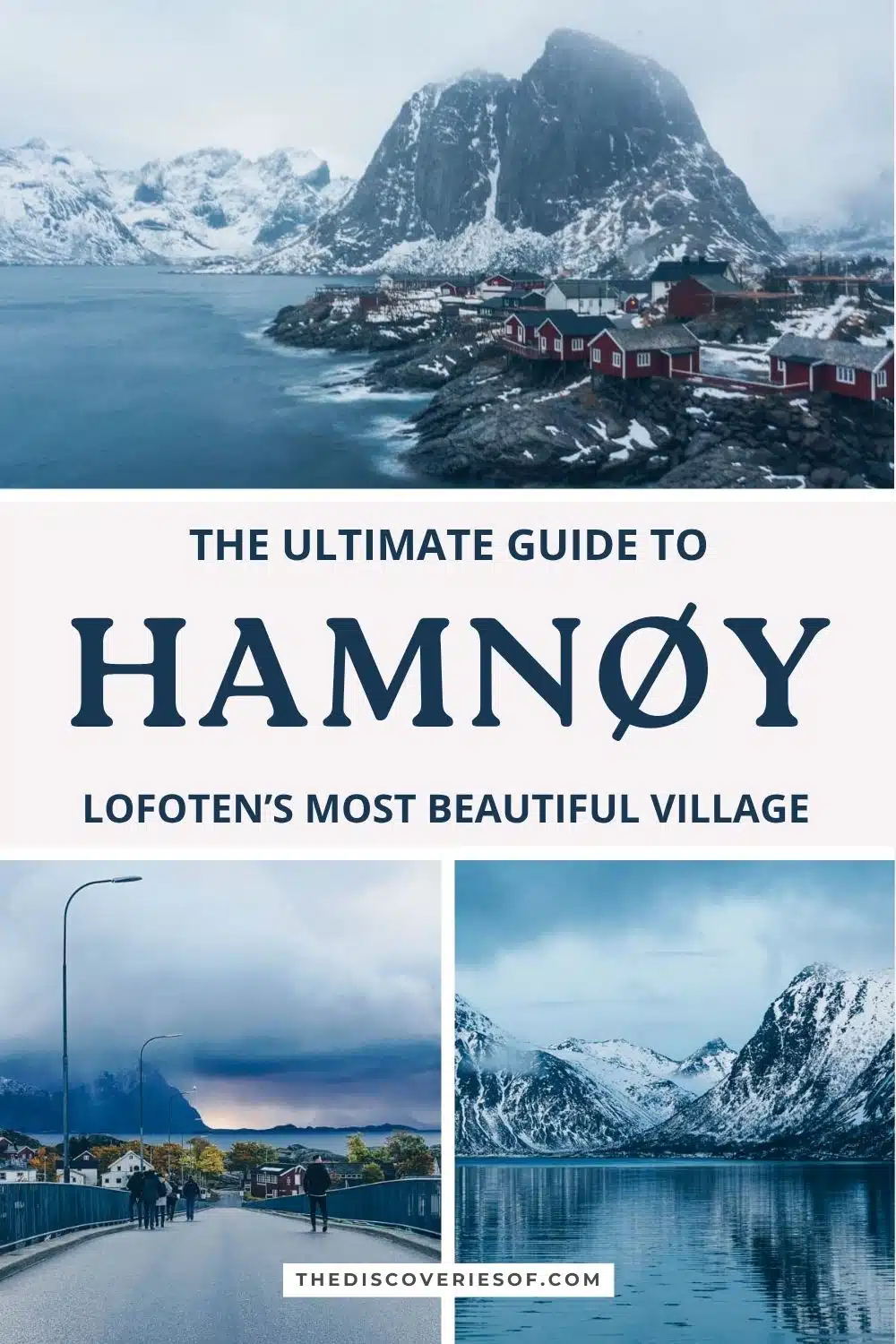
Even so, if you strike out along the E10 across the bridge in Moskenesøya, you’ll notice one place that really stands out. Picture a small town with crimson-hued fishing houses contrasting with snow-laced cliffs over the deep, dark waters of the Norwegian Sea. That village is Hamnøy.
The average tourist snaps a photo, jumps back in their car, and keeps driving to the next location. I’m guessing you’re not the average tourist and you’re ready to stay longer.
Hamnøy is one of my favourite locations in the Lofoten Islands, and I think it’ll be yours, too. I drove down here on my February road trip around the islands, and it really is as incredible as the photos. Here’s a look at what you need to see and do in the most scenic fishing village in Norway.
Stay in one of the iconic red rorbuer at Eliassen Rorbuer right in the village.
Top 5 things to do in Hamnøy
Take the iconic photo
You’ve probably seen the photos on IG, but do you know where you can get the best shot of the village? If you walk along the Hamnøy Bridge, you’ll capture the same photos that made this small fishing village famous worldwide.
The bridge carries the E10 over to the little islet of Lille Toppøya, and the clearest view is from its east side. There’s no parking on the bridge itself, so leave the car in the small pull-in just before it or in the village, then walk along the verge. Never stop or stand in the road: it’s narrow, busy in summer and often very windy, so bring a sturdy tripod.

The morning I visited, I woke up to dreadful weather and thought the day was a write-off. Then I got to the bridge, and it was just so much drama. That’s the word I’d use for the whole of Lofoten: you turn every corner, and there’s more drama.
Pay attention closely to details beyond the famous crimson fishing houses propped up on timber.
You’ll see dozens of large drying racks (used to make the famous stockfish), layer after layer of picturesque mountains, with the peak of Festhæltinden looming over the village, and (if you’re lucky) the Northern Lights from late August to mid-April.
Top Tip
Be patient with the lighting and weather. One of the advantages of staying in the village is that you give yourself time to capture the best photos around sunset or sunrise on a clear day. Winter is worth considering too, with snow on the mountains and far fewer people on the bridge. I based myself in Svolvær on both of my trips, about two hours’ drive away. If you want the bridge at sunrise or sunset, it’s far easier to stay in the village.
Hike Reinebringen
Just a short drive from Hamnøy is another iconic fishing village, Reine. The town itself is worth visiting, and you can actually walk there in a little over an hour from the bridge viewpoint.
But you can also access one of the best hikes in the Lofoten Islands from Reine, the Reinebringen Viewpoint.
Sherpas from Nepal built a stone staircase of almost 2,000 steps up the mountain behind Reine, and the climb takes most people an hour to an hour and a half. At the top, you get some of the best views of the fjords, mountains, and villages that make this region special.
Park at the paid car park in Reine’s outer harbour (you pay with the EasyPark app), then allow about 30 minutes to walk to the start of the steps by the Ramsvik tunnel. The trail has been closed for long stretches since 2024 because of rockfall and work on the steps, and it’s strongly advised against in winter, so check its status with the tourist office before you go. I’ve only been to Lofoten in autumn and winter, so I haven’t done this one myself.
Top Tip
This is a steep, demanding hike requiring proper hiking shoes and poles, especially if you hike after rain, when the steps get slippery.
Relax in a sauna
Sauna culture is a thing in Nordic countries. If you’ve ever spent any time hiking, skiing, or kayaking in the frozen tundra, you’ll know why.
Finding a sauna in such a small village is easier than you may think. Hamnøy Sauna, at Eliassen Rorbuer, is a popular option right in the village, where you can relax and sweat it out while enjoying views of the mountains and fjords. Book through reception, or drop in if there’s space. Reinefjorden Sjøhus, a few minutes’ walk away, has two more saunas and a jacuzzi, though its own guests get priority.
See the Northern Lights
If you look at the village on a map, you’ll see that the Norwegian Sea and fjords surround it. It’s also in a prime position for viewing the Northern Lights.
You don’t need a tour to see them here: with the red rorbuer in the foreground and the mountains behind, the view from the bridge is about as good a setting for the aurora as you’ll find. I’ll be honest, though. Lofoten is quite cloudy compared with Tromsø, and it was cloudy for much of my February trip, so watch the cloud forecast as closely as the aurora forecast. On my Tromsø trip, I used the cloud layers on Windy Premium to find a clear patch of sky, and the same trick works here.
If you’d rather leave the chasing to an expert, Guide to Lofoten runs private Northern Lights tours from Reine from September to March, with pickup anywhere between Å and Hamnøy. They’re priced per group (from NOK 8,990 for up to eight people), so they work best if you’re travelling with friends or family. One of my favourite ideas for a trip to Lofoten is seeing the skies light up shades of green, blue, and red from the water, and for that, Brim Explorer’s Northern Lights cruise sails from Svolvær, about two hours’ drive away, in February and March.
Do
Kayaking

The Lofoten Islands are a wonderful place to kayak, and you can find a couple of great launching sites near the village.
Saga Adventures Lofoten runs guided three-hour trips on Reinefjorden from its activity centre right here in the village, on the harbour next to Eliassen Rorbuer, including winter and midnight sun trips. In summer, you can also take a guided tour with Reine Adventure, which meets on neighbouring Sakrisøy, where you’ll paddle through fjords with an expert guide.
Do
Brilliant things to see and do nearby
Bike around the Lofoten Islands

Is there a better way to get to know the famous stretch of Nordic highway than pedalling down the windy roads surrounded by the Norwegian Sea? I don’t know of any, personally.
Renting a bicycle allows you to explore the different villages along E10. You can sample local food, see wildlife like sea eagles in their natural habitat, and get some great cardio while you’re at it. If you’d rather not go it alone, Reine Adventure runs guided bike tours in summer.
Top Tip
Try biking under the Midnight Sun, from the end of May to mid-July, if you’re up for a unique experience.
Hiking to hidden beaches
If you want to see some of the gorgeous and undisturbed coastlines nearby, there are lots of opportunities for backpacking near the beaches.
You can reach many of the trails by taking the little Reinefjorden ferry, a passenger boat that leaves from the big car park at Reine’s outer harbour, before hiking. Get off at Vindstad for Bunes Beach, an easy walk of about 3km each way, or at Kjerkfjorden for Horseidstranda, which only some summer sailings serve. A one-way ticket is about NOK 59, booked in the Reis app or on entur.no. In winter there are only a couple of sailings a day and none on Saturdays, and from mid-October to late March you need to prebook by phone.
Top Tip
Bring your backpacking gear if you visit in the summer and want to camp out. Norway’s right to roam (allemannsretten) lets you camp for up to two nights in one spot on open, uncultivated land, as long as you’re at least 150m from the nearest house or cabin. Take all your rubbish home with you.
Drive to Å, the end of the road
A short drive south, past Reine, the E10 simply stops at the village of Å. Arriving at the very end of the road that winds through all of the islands, with that view in front of you, is quite the finish.
While you’re there, look at the colours of the houses. The story goes that red paint was the cheapest, so most people painted their houses red. Yellow cost more, so if you had a bit of money, you went yellow. And if you really wanted to make a statement, you painted your house white, because white paint was the most expensive of all. The Norwegian Fishing Village Museum in Å tells the story of life on Lofoten in times past.
Must-try bars and restaurants
Gadus
A top-notch Italian restaurant in the small Norwegian fishing village of Hamnøy? You bet. Considering that Italy is one of the largest importers of stockfish, it’s not that big of a surprise.
Try freshly made pasta with seafood and enjoy the scenic views at the best place to eat in the village. It’s part of Eliassen Rorbuer, right in the village, and the Italian-Norwegian menu is built around fresh local cod. Book ahead, and check opening times outside the summer season.
Anita’s Sjømat
No one is ever going to describe Lofoten as a budget destination, so when you find somewhere serving up absolutely deeeeelicious food at reasonable prices, you sit up and pay close attention.
Anita’s, on the little island of Sakrisøy between Hamnøy and Reine, is a seafood bar and deli, and if you only try one thing, make it the fish sandwich. Served piping hot in a bun, a glorious feast of fish pattie, sauces and salads, it’s a winner. It had been a cold, cold day when I stopped by, so I had the hot chocolate too, and it was dreamy.
Bakeriet på Å
There aren’t many spots to eat in Hamnøy proper. Luckily, there’s a good bakery just down the road in Å. Sometimes that’s all you need.
The old stone-oven bakery was built in 1844 and still bakes its bread and cinnamon buns the old way. Freshly baked bread, coffee, and cinnamon rolls will provide the energy you need for hiking, kayaking, and photography. It’s open every day in the summer season, which runs until mid-October, from 9am to 3pm.
Tapperiet Bistro
If you’re ready for a sundowner after a long day taking in the scenery, check out this gastropub in Reine that serves beer and beer-friendly food like pizzas and burgers.
Best places to stay
Eliassen Rorbuer
If you want to stay in one of the iconic fishing houses (rorbuer), Eliassen Rorbuer offers traditional and modern fishermen’s cottages and sea house apartments, with one or two bedrooms, full kitchens, private bathrooms, and Wi-Fi. It calls itself the oldest rorbu resort in Lofoten, and its red cabins are the ones you see from the bridge. Gadus and Hamnøy Sauna are both on site.
Check Rates and Availability
Reinefjorden Sjøhus
Stay right here in the village at Reinefjorden Sjøhus, looking across Reinefjorden to yet another postcard-worthy fishing village (Reine). The views of the fjords, mountains, and ocean from the cosy apartments and rorbuer are stunning, every unit has a kitchen, and there are saunas and a jacuzzi to book.
Check Rates and Availability
The Manor House
The Manor House in Hamnøy offers comfortable rooms with ocean and mountain views. You’ll need to be OK with sharing a bathroom and kitchen, as the rooms don’t have their own, but it’s one of the more affordable ways to sleep in the village.
Check Rates and Availability
Practical tips for your trip
How long should you stay?
Hamnøy is a tiny village. I suggest staying for two days to see the village and the surrounding areas before continuing on your drive through the Lofoten Islands.
Best time to visit Hamnøy
Summer is the best time for exploring the area and enjoying the summer weather, with the midnight sun from the end of May to mid-July. But if you visit in winter, you can capture some incredible Northern Lights photos. The season runs from late August to mid-April. I visited in February, when the peaks were dusted with snow.
Where should I stay?
Be sure to stay in a rorbu when you visit.
You know, those iconic fishing houses that you came here for in the first place? You can stay in one in Hamnøy or a similar accommodation in nearby villages like Sakrisøy and Reine.
Rorbuer aren’t cheap. In summer, expect to pay roughly NOK 2,000 to 3,500 a night, and the best ones sell out months ahead, so book as soon as your dates are fixed. From 2027, Lofoten’s municipalities can also apply to add a visitor levy of up to 3% to paid overnight stays, so check whether it’s included in your rate.
How do I get to Hamnøy?
Fly from Oslo to the Harstad/Narvik Airport, and then drive down to the village in approximately 4 to 5 hours. That’s how I got to Lofoten on both of my trips, and on the second, I picked up a hire car at the airport.
The quicker option is to fly to Leknes with Widerøe, from Oslo or Bodø. Hamnøy is about 50km, or an hour’s drive, from there, and there are also local buses. Or take the Torghatten Nord car ferry from Bodø to Moskenes, a crossing of three to four hours that lands you about 15 minutes away. Only part of each sailing can be reserved for cars, so book as early as you can. My Lofoten Islands guide has the full rundown on getting there and getting around.


Take a peek at more of the Lofoten Islands on YouTube!
Things to do in Hamnøy: map
Explore more of the Lofoten Islands
- The Best Things to do in the Lofoten Islands
- The Food of the Lofoten Islands: Norway’s Unlikely Culinary Powerhouse
- Svolvær Travel Guide: Discover The Capital of Norway’s Stunning Lofoten Islands
- Henningsvær Travel Guide: Things to do in the Jewel of the Lofoten Islands
Love This? Save and Share on Pinterest

Discover the top things to do, insider tips and hidden gems in our Norway Travel Guides.
Read the guides →