
Heading to Monument Valley and wondering how to make the most of it? This travel guide covers the best things to do, how the Valley Drive and Navajo-guided tours work, where to stay and camp, how to get there and when to go.
Monument Valley might just take the title for the strangest landscape in America. Towering sandstone buttes and mesas rise straight out of a flat red desert on the Arizona-Utah border, and they’ve starred in so many Westerns that the view feels familiar before you’ve even arrived.
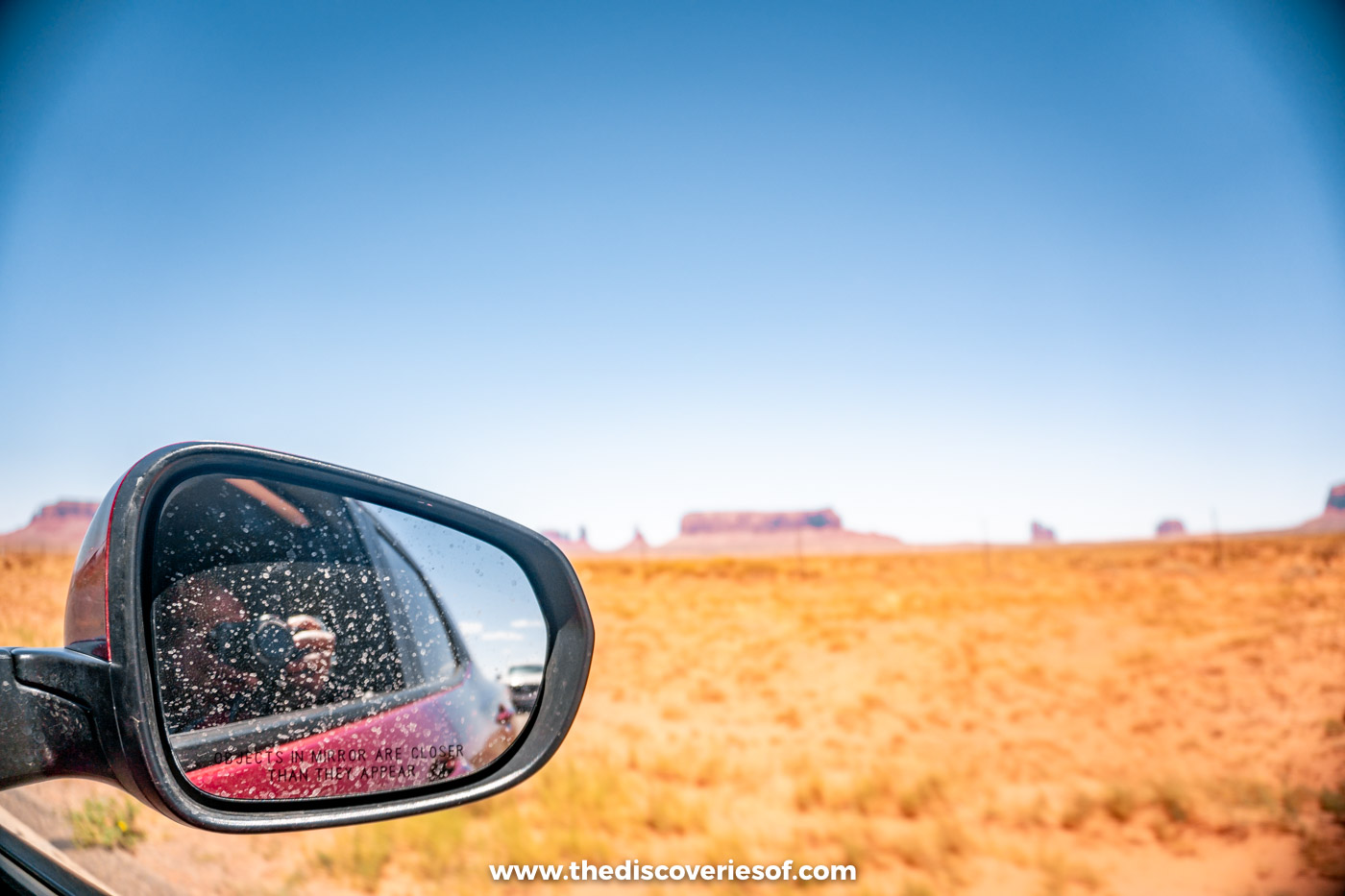
I visited Monument Valley on a day trip from Page during an early-summer road trip through northern Arizona and southern Utah. It’s a longish drive from Page, but it’s worth it. I drove the 17-mile Valley Drive past the Mittens, the Three Sisters, John Ford’s Point and the North Window, and stopped at Forrest Gump Point for the classic road shot.
This guide combines that experience with everything else worth knowing: the parts of the valley you can only see with a Navajo guide, the trails you can walk on your own, the hotels and campgrounds closest to the buttes, and the rules that catch visitors out.
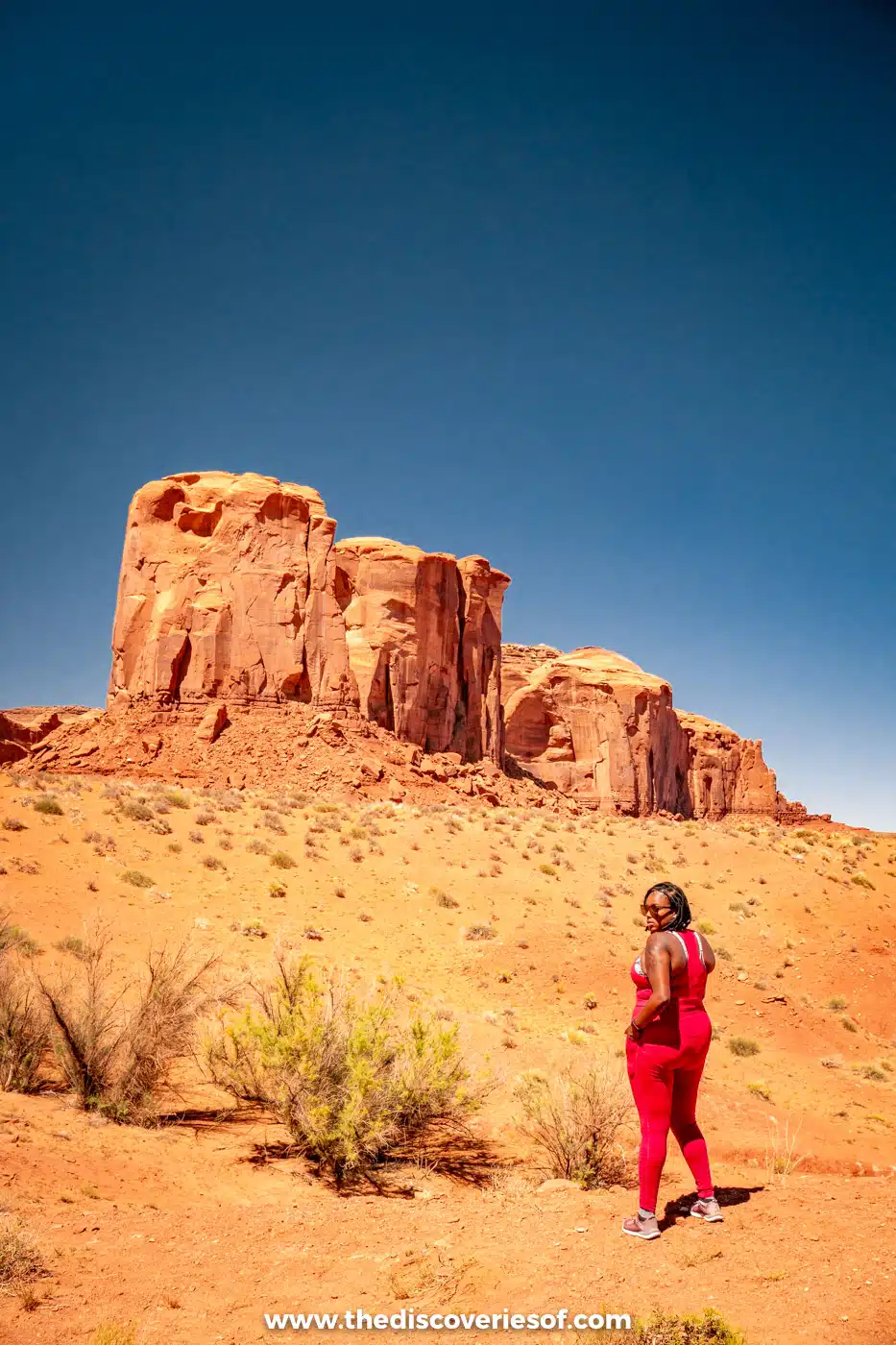
Monument Valley at a glance
- What it is: Monument Valley Navajo Tribal Park (Tsé Biiʼ Ndzisgaii in Navajo), a 91,696-acre park run by the Navajo Nation, not the US National Park Service
- Where: Oljato-Monument Valley, on the Arizona-Utah border, about 25 miles from Mexican Hat (Utah) and 22 miles from Kayenta (Arizona)
- Entry: $10 per person per day, plus $15 per vehicle; national park passes aren’t accepted
- Hours: the Valley Drive opens at 8am; last entry is 2:30pm in winter and 4:30pm in summer
- Time needed: half a day for the Valley Drive and visitor centre; a full day with one night to add a guided tour and sunrise or sunset
- Time zone: Mountain Time with daylight saving, so in summer it’s an hour ahead of Page and Phoenix
- Good to know: dogs aren’t allowed in Navajo tribal parks, alcohol is banned on the Navajo Nation, and mobile signal is patchy
- Nearest base: Goulding’s or The View for an overnight stay; Page (about two hours and 15 minutes) or Kayenta (about 30 minutes) for a wider choice of hotels
The best things to do in Monument Valley
Drive the 17-mile Valley Drive
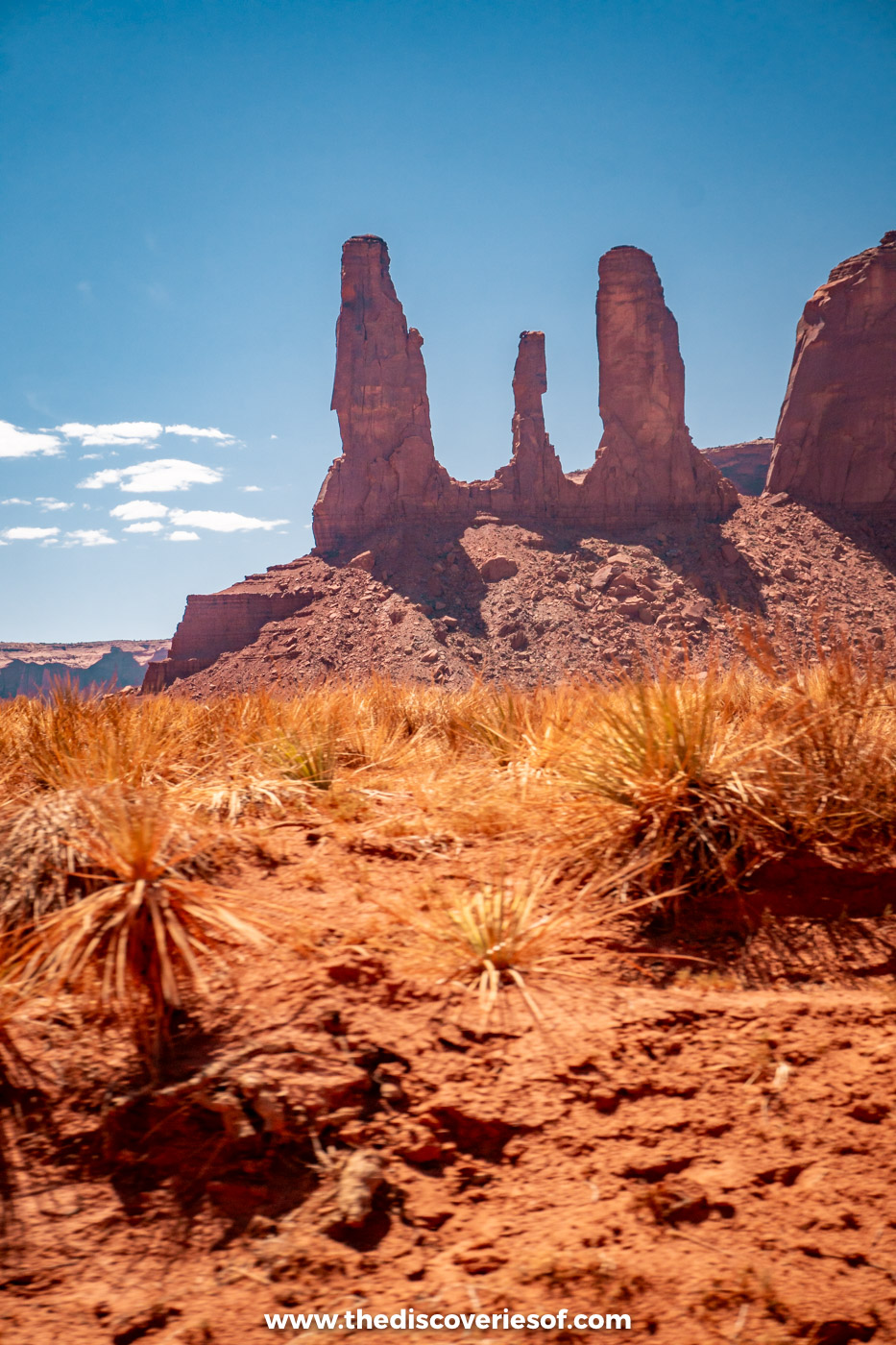
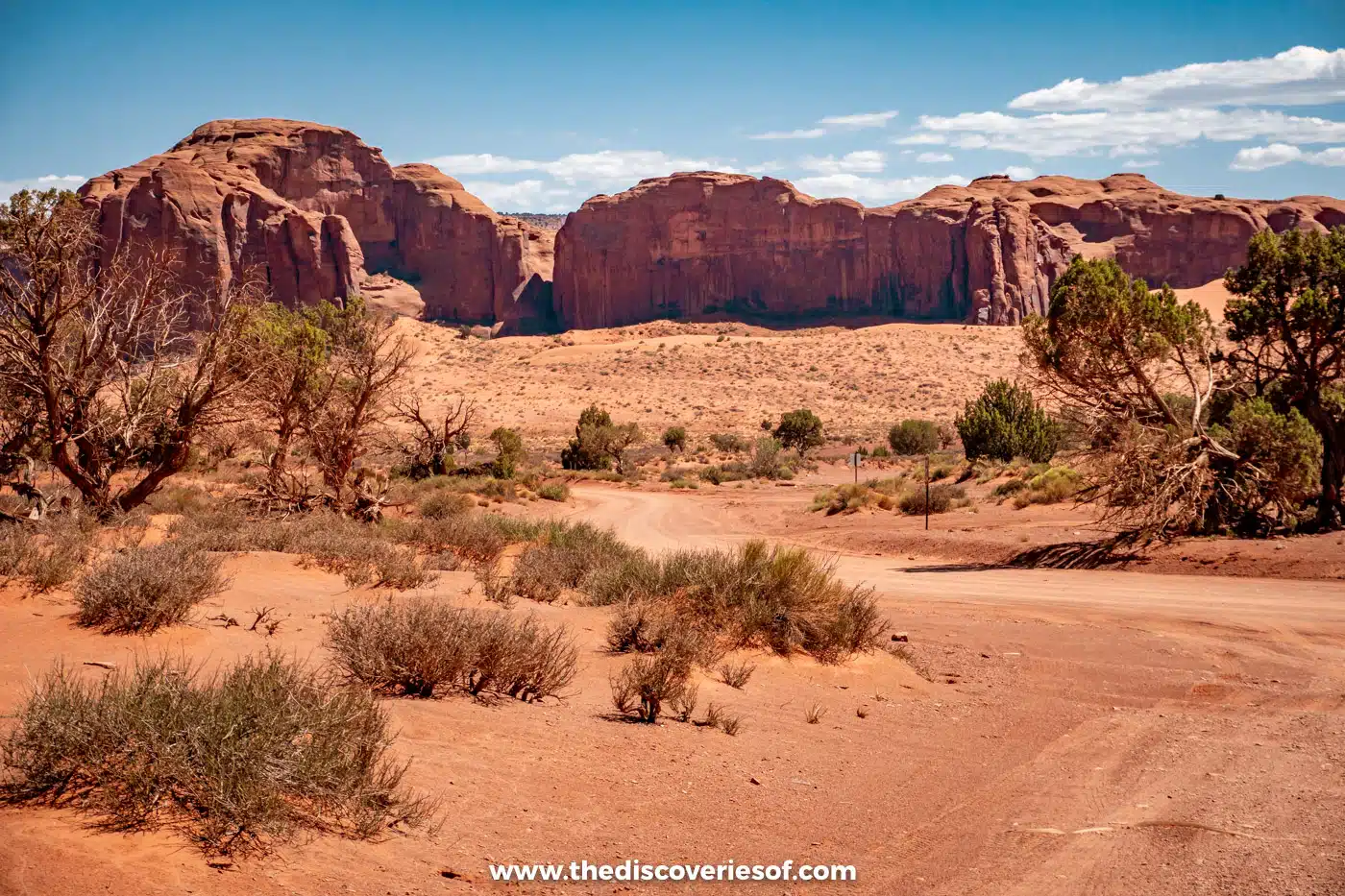
The Valley Drive (often called the Monument Valley scenic drive) is the one thing everyone should do here. This unpaved loop starts and ends at the visitor centre and takes two to three hours with stops, which makes it the perfect way to see the valley’s most famous formations if you’re short on time.
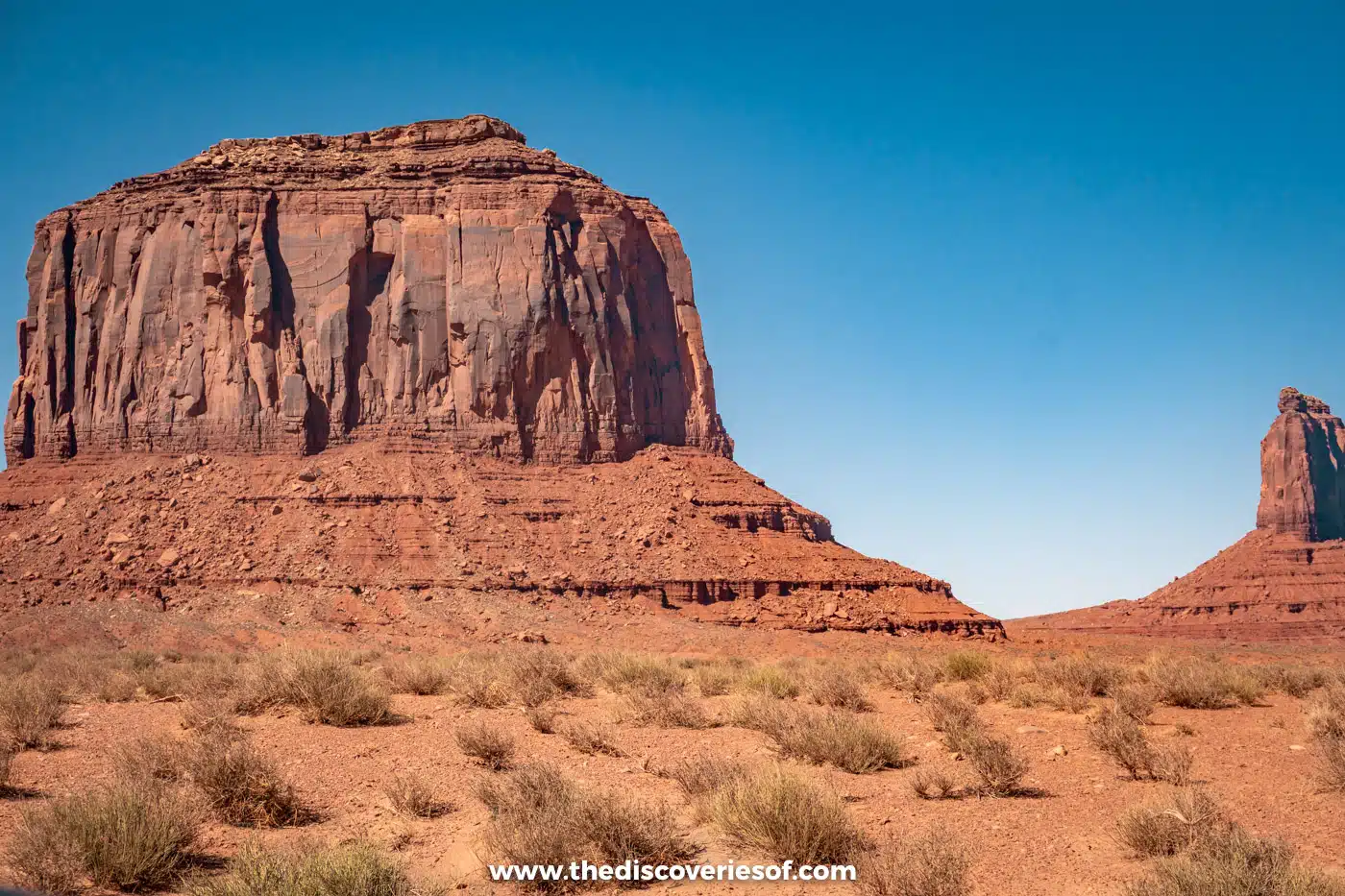
The road drops steeply from the visitor centre onto the valley floor and then winds past 11 numbered viewpoints, including the Mittens and Merrick Butte, Elephant Butte, the Three Sisters, John Ford’s Point, Camel Butte, the Totem Pole, Artist’s Point and the North Window. It’s rutted and sandy in places, so take it slowly.
This is the only part of the park you can explore in your own vehicle, and you’re not allowed to leave the marked route. To get closer to the formations beyond the road, you’ll need to join a tour with a Navajo guide.
Snap the classic view from John Ford’s Point
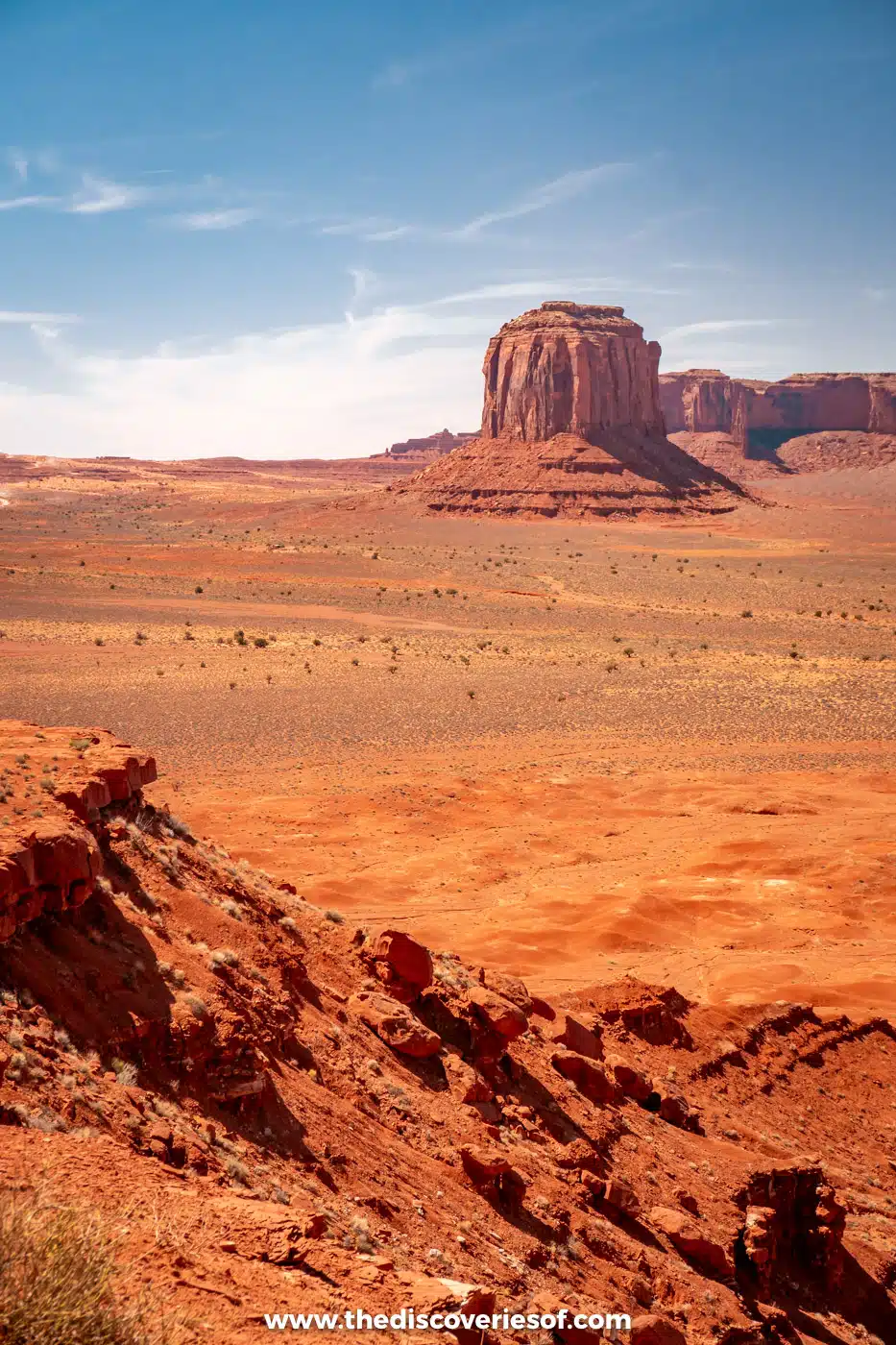
John Ford’s Point is a panoramic viewpoint on the Valley Drive that frames one of the most iconic views of the valley, and it’s one of the most popular photo spots in the park.
It’s named after the director of Stagecoach (1939), the John Wayne Western that introduced Monument Valley to cinema audiences around the world. Ford returned for several more films here, including My Darling Clementine, She Wore a Yellow Ribbon and The Searchers, and his films did more than anything else to turn the valley into Hollywood’s image of the American West.
Follow the Valley Drive past the Three Sisters to reach the viewpoint. There’s usually a Navajo rider with a horse on the ledge: tip them and you can pose on horseback overlooking the valley like a cowboy in a Western. Linda’s frybread stand is close by, and The View’s own restaurant recommends it for a taste of local food.
Peer through the North Window
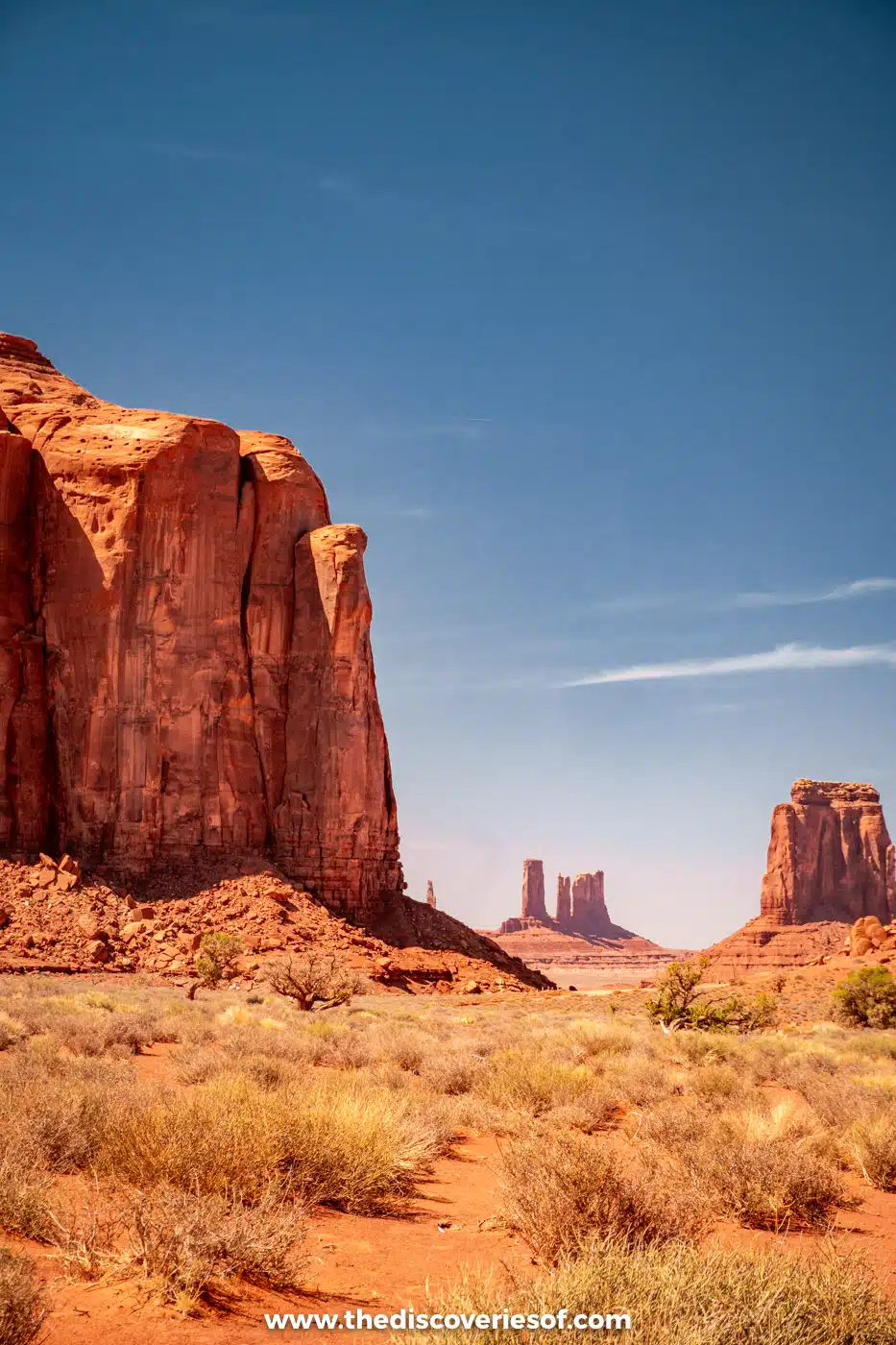
Near the end of the Valley Drive, the North Window is a gap between Elephant Butte and Cly Butte that frames East Mitten Butte, three miles away. It’s one of the most photographed views in the park, and you can walk a short path of about a third of a mile from the parking area for an even better angle.
From the same parking area, you’ll also spot The Thumb, a rounded pinnacle at the end of Camel Butte that looks exactly like its name.
Stop for the road shot at Forrest Gump Point
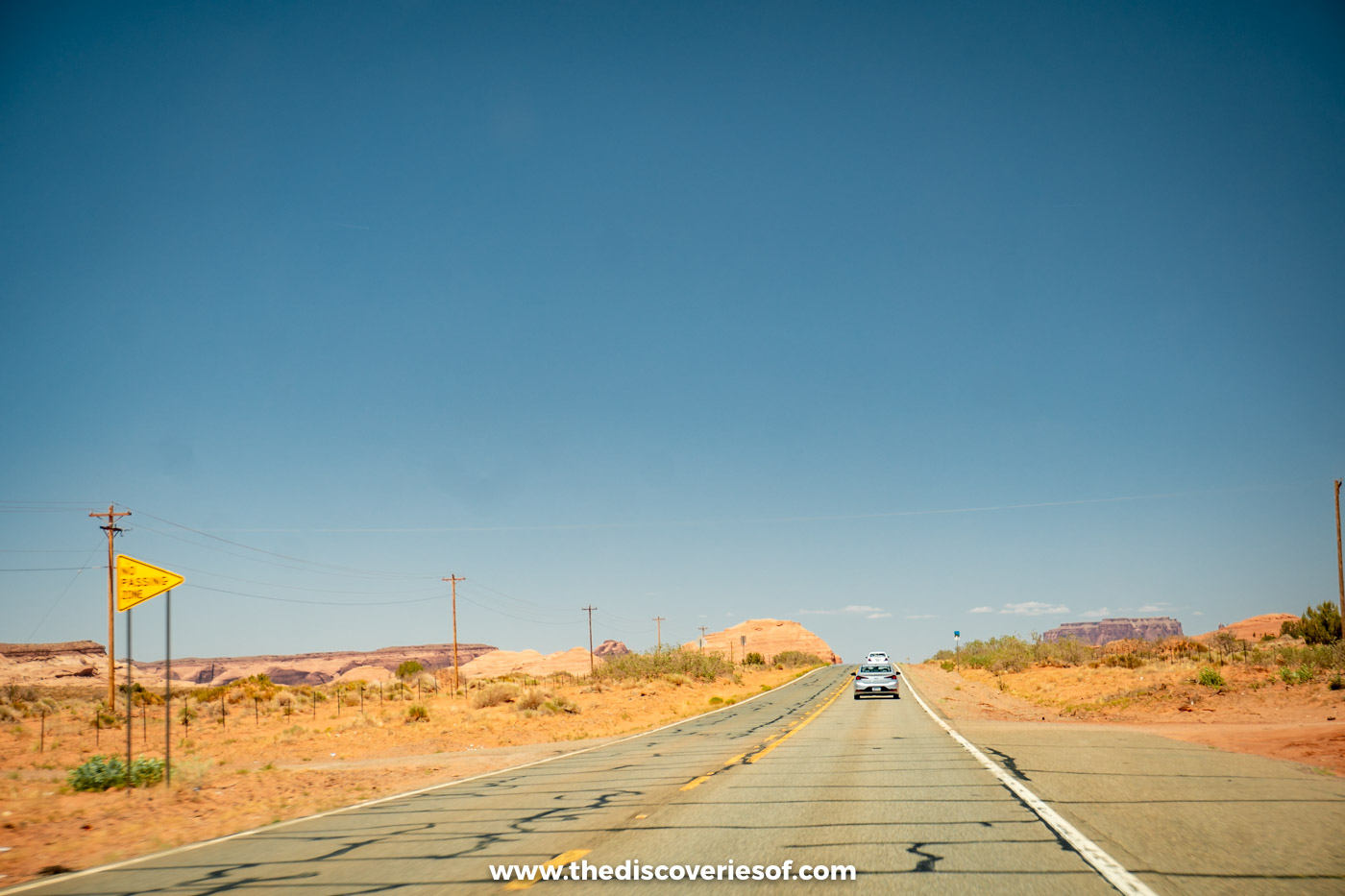
Calling all Forrest Gump fans: on US-163, about 12 miles north of the turning for the tribal park, is the spot where Forrest finally stops his cross-country run. The road runs dead straight towards the buttes, and it’s one of the most photographed highways in the country.
I stopped here on my way through, and it’s well worth the short detour. It’s a busy road with fast traffic, though: park in the pullouts, keep an eye on both directions and don’t linger in the road for your photo.
Read Next
Hike the Wildcat Trail around West Mitten
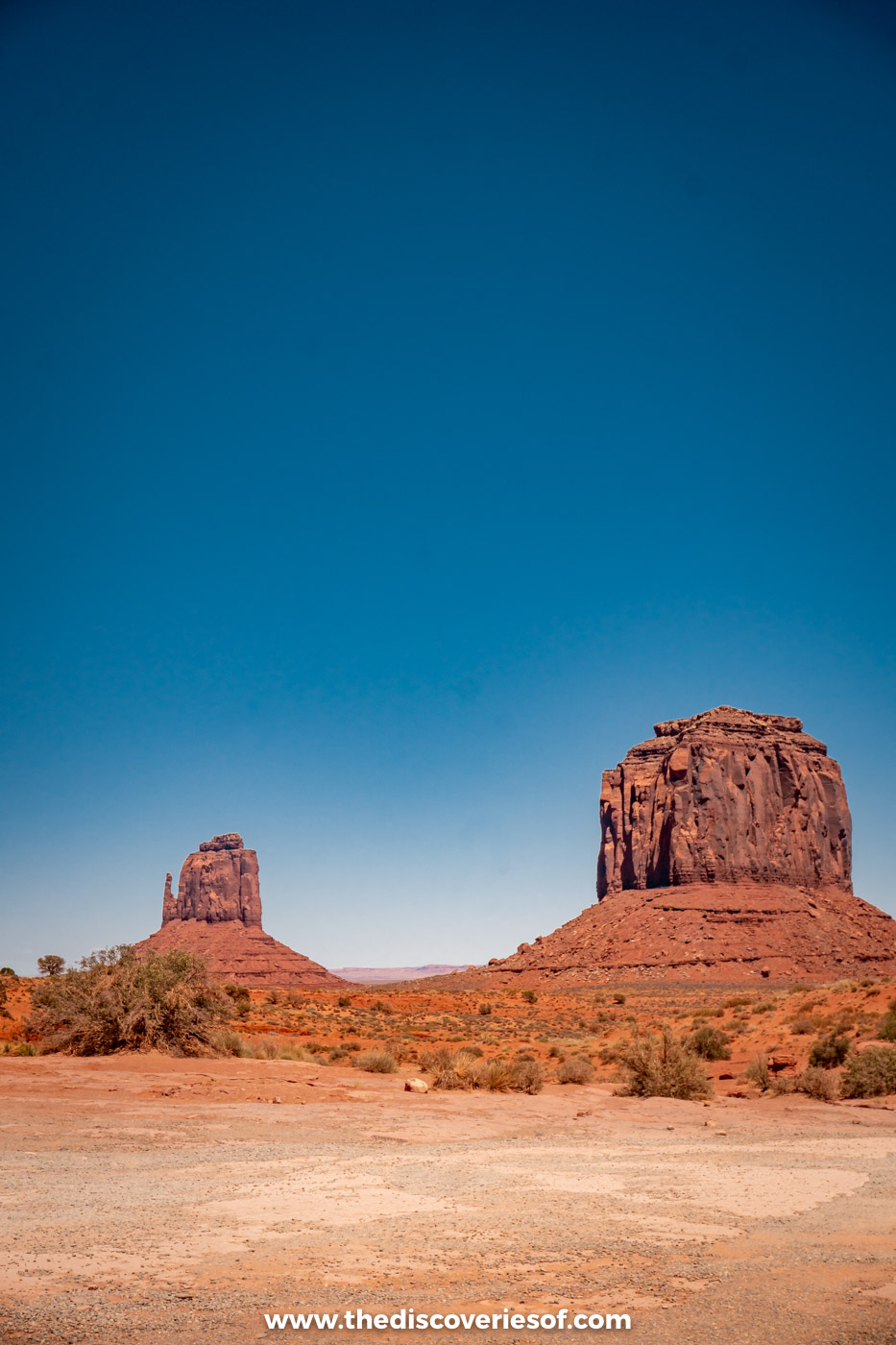
If you want to get out of the car, the Wildcat Trail is the park’s best-known self-guided hiking trail. The 3.2-mile loop starts at the north-west end of the visitor centre car park, drops down into the valley and circles West Mitten Butte, with views of East Mitten and Merrick Butte along the way.
It takes about two hours, and there’s no extra fee, but you must sign in and out at the visitor centre. The trail is sandy, with no shade, and the climb back up at the end is steep, so bring a comfy pair of shoes, a good sunhat, sunscreen and plenty of water.
Read Next
Walk the Lee Cly and Mesa Rim trails
Starting near The View’s campground, the Lee Cly Trail loops for about two miles through sandy hills towards Mitchell Butte and Mitchell Mesa, and the short Mesa Rim spur adds a scramble up to views over the valley from above. Together they make a hike of about 2.8 miles. They aren’t listed on the Navajo Parks website, so check at the visitor centre that they’re open before you set off.
Head into the backcountry with a Navajo guide
Monument Valley is a sacred landscape for the Navajo (Diné) people, and much of it can only be visited with a licensed Navajo guide. A guided tour takes you to places such as Ear of the Wind, Big Hogan Arch and Moccasin Arch, gets you closer to the Totem Pole and Yei Bi Chei, and gives you the chance to learn about Navajo culture and the spiritual significance of the valley from someone who grew up here.
There are plenty of options, from guided backcountry jeep tours to shorter scenic tours. See the tours section below for more.
Explore Mystery Valley
Just south-west of the main valley, Mystery Valley is a quieter maze of arches and red rock that’s only open on guided tours. It’s known for its Ancestral Puebloan cliff dwellings and rock art, and you’ll see far fewer people than on the Valley Drive. You can visit on a 2.5-hour Mystery Valley tour or combine it with the main valley on a full-day Monument Valley and Mystery Valley tour.
Watch the sunrise or sunset

Nothing quite beats watching the light wash over the reds and oranges of the valley, and there are plenty of ways to catch the sun rising or setting in Monument Valley.
The free option is the viewpoint by the visitor centre and The View Hotel, which looks straight out at the Mittens. The Valley Drive opens after sunrise and closes before sunset, so to be out among the buttes at either end of the day, take a guided sunrise tour or sunset tour with a Navajo guide.
For the ultimate view, Hunts Mesa, south of the main valley, looks back across the whole sea of sandstone formations. It’s only reachable with a licensed Navajo guide, usually on a 4×4 trip with a hike to the rim, and many visitors camp overnight to see both sunset and sunrise from the top.
Ride a horse through the valley
Several Navajo-owned outfits run horseback rides in the valley, from short trail rides to longer treks, and they’re one of the few ways to get off the road without a jeep. Navajo Parks lists the authorised operators, or book ahead with this Monument Valley horseback adventure tour, which lasts 30 minutes to an hour.
Gaze at the stars
With no towns nearby and very little light pollution, the valley is an excellent place for stargazing. Understatement of the century, I know. If you’re staying at The View or Goulding’s, step out onto your balcony after dark.
You can also take a guided stargazing tour, which gets you into the valley after hours with a Navajo guide.
Browse Navajo art at The View’s trading post
The View Hotel is the only hotel inside the tribal park. Designed to blend into the landscape, it has a pinkish facade looking out over the Mittens, and even if you’re not staying, it’s worth a stop.
Its trading post sells contemporary and traditional Native American art, from pottery and rugs to jewellery, and the deli and restaurant are the most convenient places to eat in the park.
Step back into Hollywood history at Goulding’s Trading Post Museum
Just outside the park, Goulding’s began life as a trading post in the 1920s, and it was Harry Goulding who sent photographs of the valley to John Ford in the 1930s and persuaded him to film here. The old trading post is now a museum, with a recreated trading post floor, a room of film posters and memorabilia, and the cabin used as Captain Nathan Brittles’ quarters in She Wore a Yellow Ribbon, now known as John Wayne’s Cabin. Entry is by donation, which funds scholarships for Navajo students.
Drive the Valley of the Gods

No, no: this isn’t Egypt. The Valley of the Gods is like a miniature version of Monument Valley, and it’s a perfect detour if you’d like to avoid the crowds.
It’s about 45 minutes’ drive north of the tribal park, on public land run by the Bureau of Land Management, so entrance is free. A 17-mile gravel and clay road winds between the buttes, and it’s suitable for ordinary cars when it’s dry. Look out for formations with names like Lady in the Bathtub and Castle Butte.
Look down on the Goosenecks of the San Juan
About 40 minutes north of the park, near Mexican Hat, Goosenecks State Park is a small Utah park where the San Juan River twists through a series of tight meanders 1,000 feet below the canyon rim. It’s a quick stop from the car park, open around the clock, and you can combine it with the Valley of the Gods and Forrest Gump Point on the same drive.
Driving the Valley Drive: the rules to know before you go
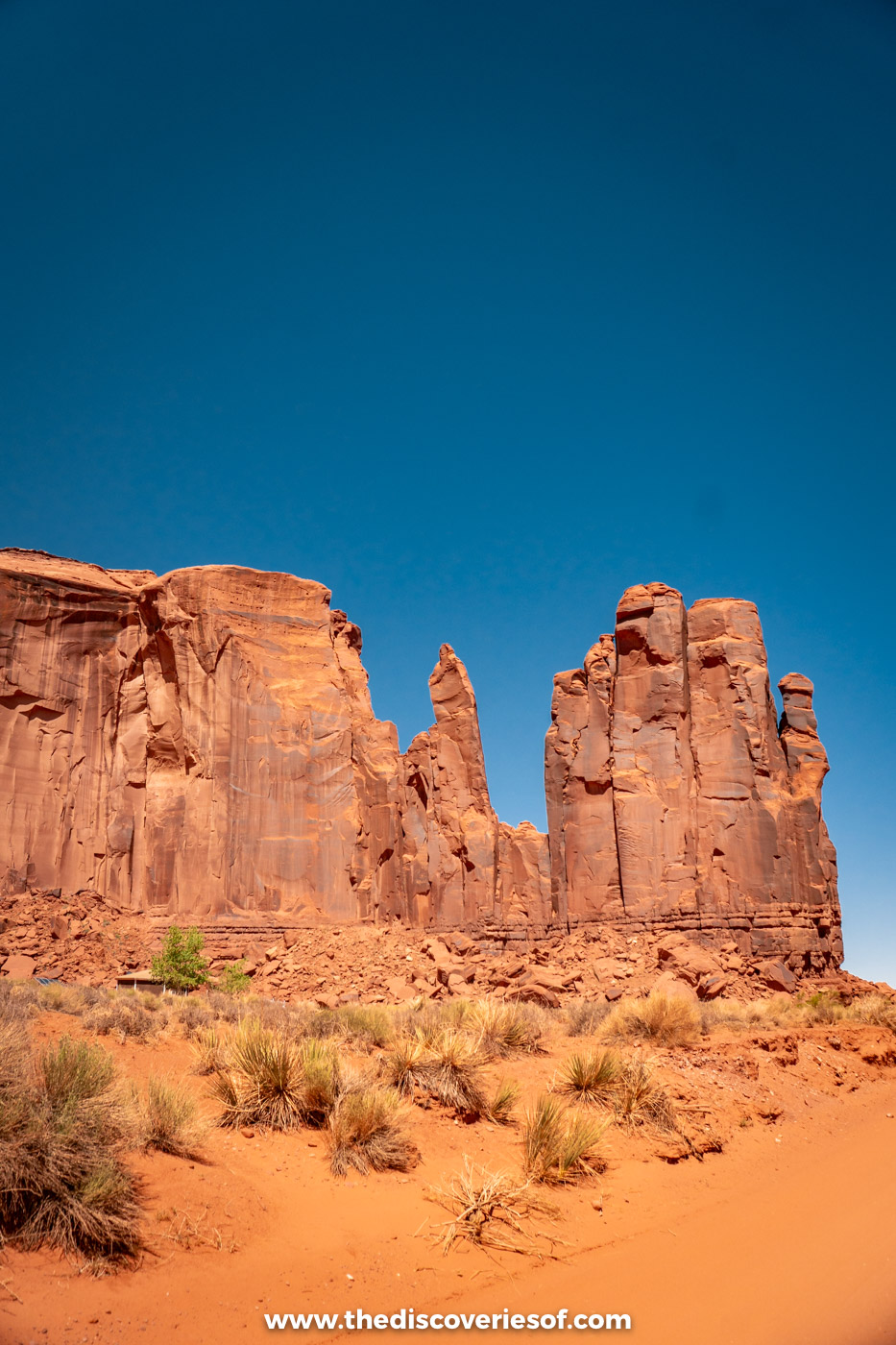
- Hours: the drive opens at 8am. In winter (from mid-October) it closes at 5pm, with last entry at 2:30pm; in summer, the last vehicle goes in at 4:30pm. Check the Navajo Parks website for the current season.
- Vehicles: RVs, camper vans, motorcycles, and large SUVs or off-road vehicles aren’t allowed. A car with good ground clearance copes best with the ruts and sand. If you’re renting, check your agreement covers unpaved roads.
- Rules: stay on the designated route, obey the signs and don’t walk onto the back roads, which are for guided tours only.
- Closures: the drive can close after heavy rain or flooding, and the park closes on Thanksgiving, Navajo Nation Family Day, Christmas Day and New Year’s Day.
- Facilities: there are restrooms and water at the visitor centre but nothing along the drive, so fill up before you set off.
Which Navajo-guided tour is right for you?
You can book a tour on arrival with the Navajo tour operators at the lower car park by the visitor centre (Navajo Parks lists around 25 authorised operators, including Goulding’s Tours), or book ahead online, which is wise for sunrise, sunset and peak-season tours. Popular options include:
- Monument Valley: backcountry jeep tour with a Navajo guide (2.5 hours)
- Monument Valley: highlights tour with backcountry access (3.5 hours)
- Monument Valley: scenic 2.5-hour guided tour
- Monument Valley: scenic 3.5-hour cultural tour
- Monument Valley and Mystery Valley full-day tour (7 hours)
- From Sedona or Flagstaff: full-day Monument Valley tour, if you’d rather not drive
Where to stay in Monument Valley
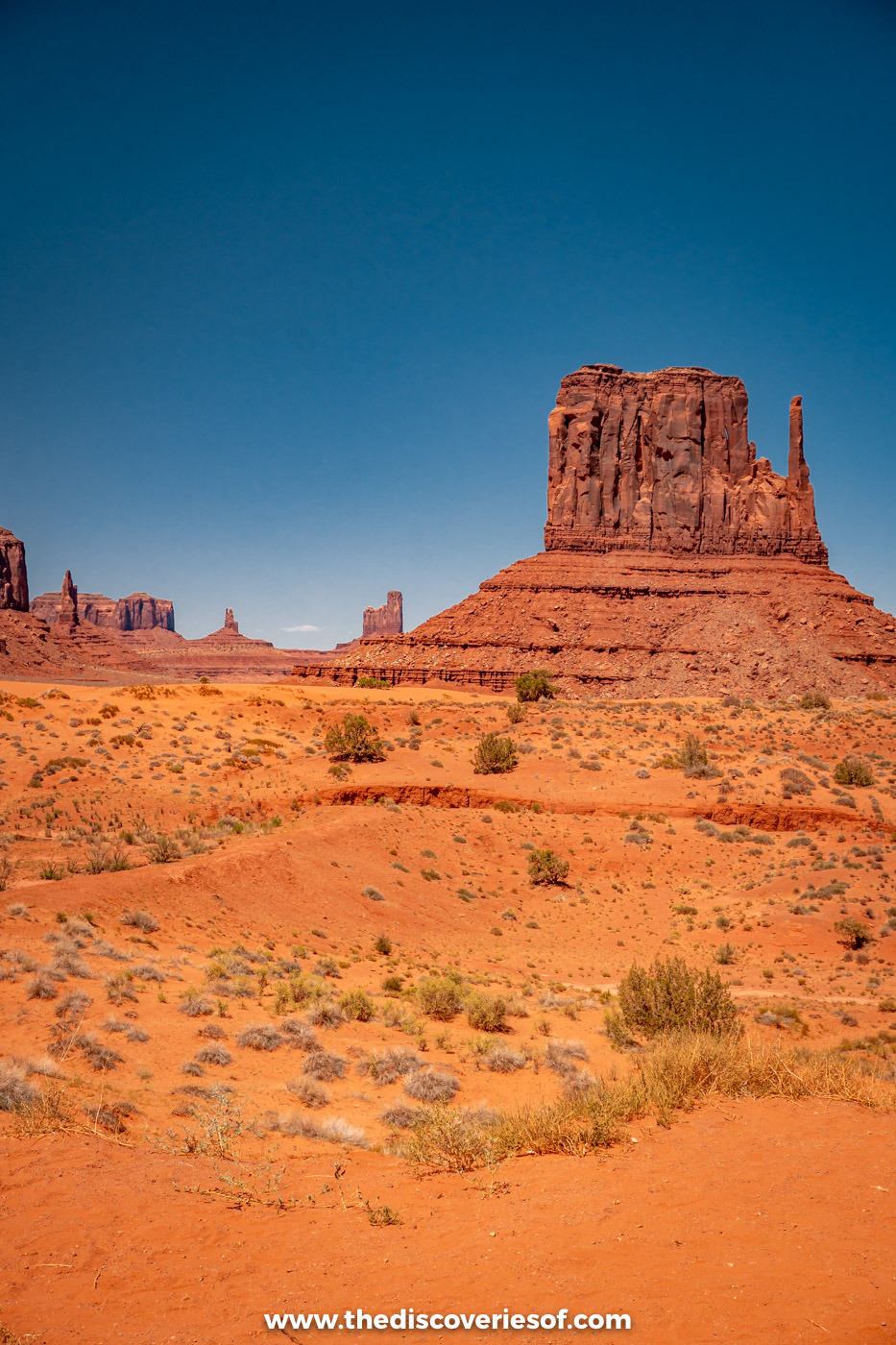
I based myself in Page at the Best Western View of Lake Powell and visited as a day trip. It’s a long day, but it works. If you want to see sunrise or sunset over the buttes, stay overnight at one of these.
The View Hotel
The only hotel inside Monument Valley, The View has hotel rooms with balconies facing the Mittens, private valley-rim cabins and a campground. As well as the views, there’s a restaurant, a deli and a trading post selling Native American art and souvenirs.
Goulding’s Lodge
Goulding’s Lodge, about five miles from the park entrance on the Utah side, has rooms and villas with views of the buttes in the distance. The historic complex also has the Stagecoach Restaurant, a trading post museum, a grocery store, fuel and its own Navajo-guided tours.
Hampton Inn Kayenta
On US-160 in Kayenta, Hampton Inn Kayenta is about half an hour’s drive from the park and usually cheaper than the hotels by the park. It has a pool for hot days and a complimentary breakfast.
Camping under the buttes
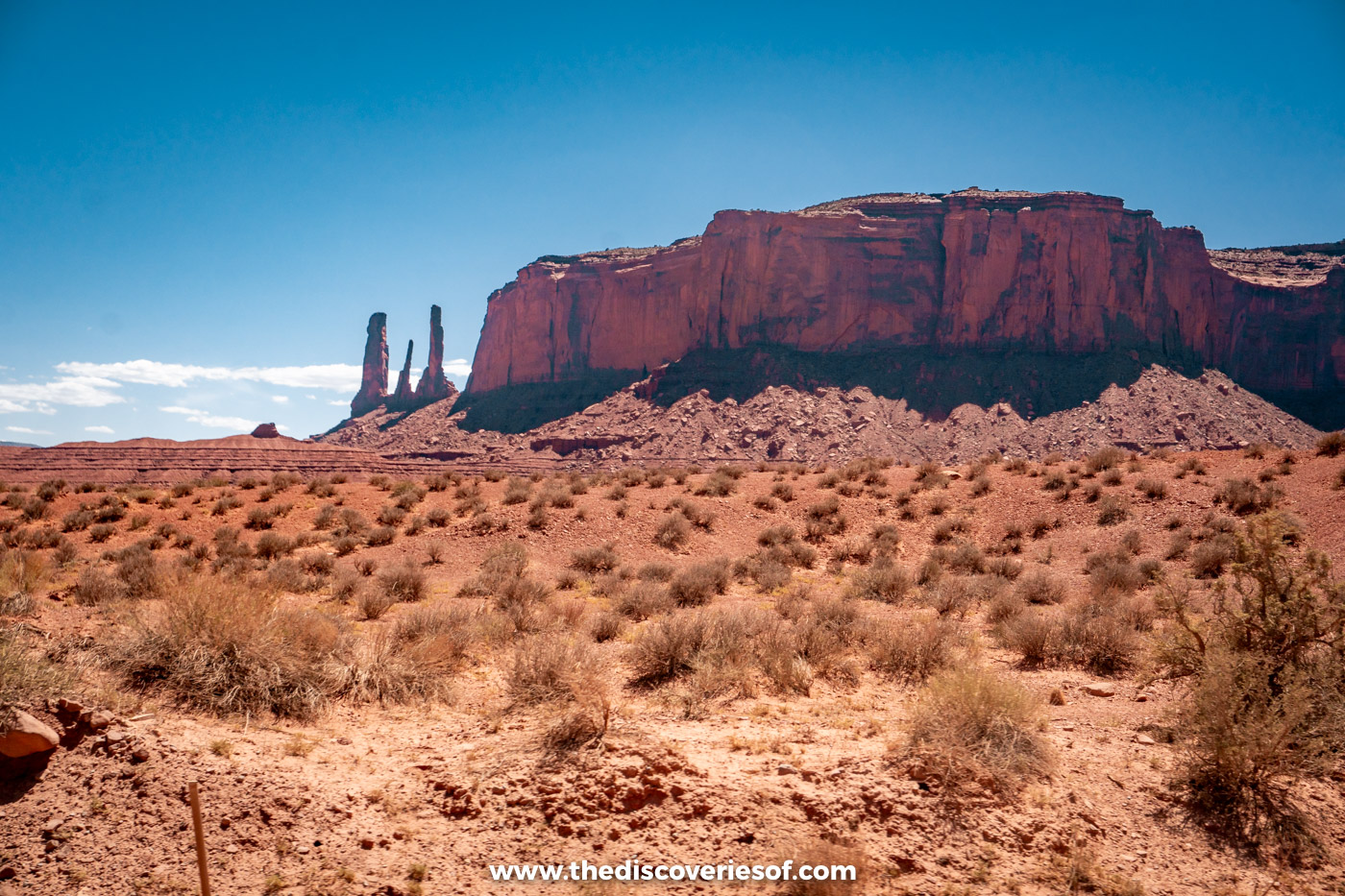
Camping is a brilliant way to be among the buttes at sunrise and sunset, and there are options from full-hookup RV sites to free spots on public land. Book ahead for the campgrounds in spring, summer and autumn.
- The View Campground: the only campground inside the tribal park, run by The View Hotel, with RV sites and wilderness tent sites, most with a view out over the valley. There are no RV hookups, but there’s a bathhouse with toilets and showers, and the hotel’s tent cabins are next door. There’s no shade, and it can be windy and dusty. Book through The View’s website.
- Goulding’s RV Park and Campground: a full-service campground just outside the park, with hookups and access to Goulding’s restaurant, grocery store, laundry and tours.
- Monument Valley KOA Journey: on US-163 near the park turning, with full-hookup and pull-through RV sites, tent sites, laundry, a camp store and a dog park. It’s open from early March to the end of October.
- Valley of the Gods: free car camping on Bureau of Land Management land along the Valley of the Gods road, about 45 minutes north. There are no facilities, campfires aren’t allowed, and you’ll need to pack out everything you bring.
- Goosenecks State Park: primitive campsites on the canyon rim near Mexican Hat, with vault toilets, picnic tables and fire pits.
- Hunts Mesa: for something unforgettable, several Navajo operators run guided overnight camping trips to Hunts Mesa, with the 4×4 drive, the hike, camping gear and dinner included.
Remember that dogs aren’t allowed in the tribal park itself, so if you’re travelling with one, the KOA or the public land to the north are better bets.
Where to eat: frybread, diners and a picnic with a view
Food options are limited, so it’s worth packing a picnic for the Valley Drive. These are the main places to eat nearby:
- The View Restaurant: at The View Hotel, with dinner in the evenings, a continental breakfast in the mornings and a deli for lunch, all with views of the valley.
- Linda’s frybread stand: a Navajo food stand near John Ford’s Point, where you can try frybread (a fried Navajo flatbread) at one of the most scenic spots in the park.
- Stagecoach Restaurant at Goulding’s: just outside the park, serving hearty breakfasts, burgers and Southwestern dishes, open daily from 7am, with hours that vary by season.
- Amigo Cafe, Kayenta: a family-run spot on US-163 in Kayenta, about half an hour’s drive south, serving Mexican, Native American and American food since 1983. It’s open from Tuesday to Saturday, 8am to 8pm.
Getting there: how long the drives take
You’ll need a car to get here, or a tour from Sedona, Flagstaff or Page. The tribal park is reached by Monument Valley Road (Indian Route 42), which leaves US-163 about 20 miles south of Mexican Hat; the visitor centre is about four miles further east.
Approximate driving times to the visitor centre:
- Kayenta, Arizona: about 30 minutes
- Page, Arizona: 125 miles, about two hours and 15 minutes
- Moab, Utah: 150 miles, about 2.5 hours
- Grand Canyon South Rim: about 175 miles, about three hours
- Phoenix: 320 miles, about five hours
- Albuquerque: 324 miles, about five hours
- Salt Lake City: 380 miles, about 6.5 hours
- Las Vegas: 400 miles, about 6.5 hours
The nearest major airports are Phoenix, Las Vegas, Salt Lake City and Albuquerque, all of which have plenty of car hire. Monument Valley fits neatly into a loop with the Grand Canyon, Page and the Utah parks: see my Southwest road trip itinerary for how I’d plan it.
When to go for mild weather and quieter viewpoints
Spring (April to May) and autumn (September to October) are the best times to visit Monument Valley, with milder temperatures and fewer crowds than in high summer.
Summer days regularly reach the 90s Fahrenheit (over 32°C), and storms are common from July to mid-September, sometimes closing the Valley Drive. Winter is quiet and cold, with occasional light snow on the buttes that usually melts within a couple of days.
For photography, mornings and the middle of the day are easiest on the Valley Drive, as late in the afternoon you’ll be shooting into the sun at many of the viewpoints.
Tips to make the most of your visit
- Spend a night if you can. Half a day covers the Valley Drive, but staying overnight lets you add a guided tour and sunrise or sunset.
- Respect the Navajo Nation’s rules. Don’t take photos of Navajo residents or their homes without permission, keep to the marked route and trails, and leave rocks, plants and artefacts where they are.
- Bring cash. It’s handy for the frybread stand, the craft stalls and tips for the horse photo at John Ford’s Point.
- Fill up the tank. Fuel stations are few and far between in this corner of the Southwest, so top up in Kayenta, at Goulding’s or in Mexican Hat.
- Watch the clock. In summer, the park is an hour ahead of Page and Phoenix, so double-check the time of any tour you book.
Map
Read next
- A guide to the Monument Valley scenic drive
- The ultimate guide to Forrest Gump Point
- Stunning hikes in Monument Valley
- Things to do in Page, Arizona
- Upper vs Lower Antelope Canyon: which tour to choose
- The best things to do at the Grand Canyon
- The perfect Southwest road trip itinerary
- Beautiful places in the USA to visit
Love this? Save and share on Pinterest

Discover the top things to do, insider tips and hidden gems in our USA Travel Guides.
Read the guides →