

The trees here aren’t really trees, the fluffiest-looking cactus in the desert will happily hitch a ride on your leg, and the finest view in the park is worth a 5am start. Here’s what’s worth your time in Joshua Tree National Park, the hour of the day that suits each one, and the latest on fees, campgrounds and closures.
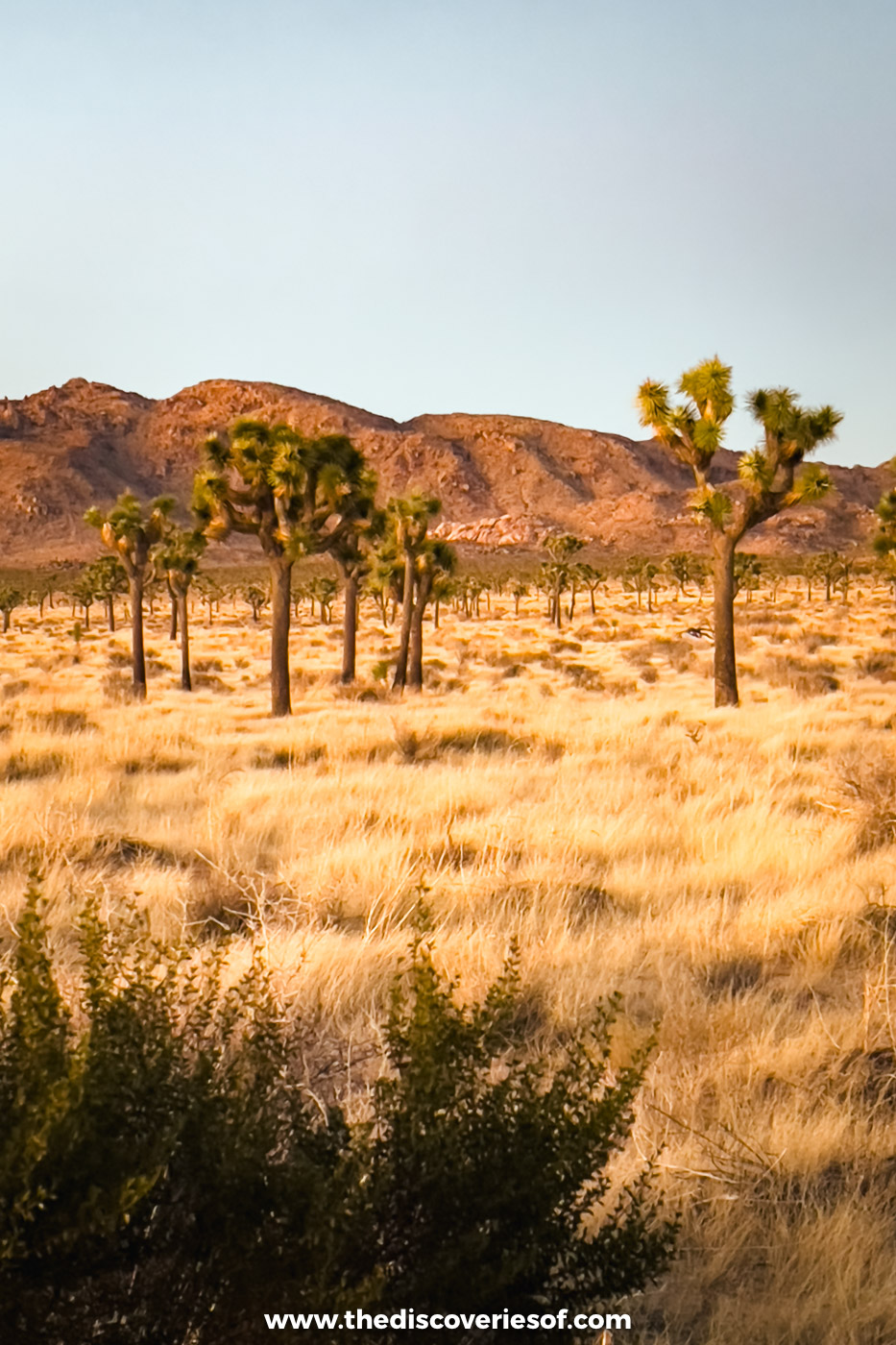
It’s no secret that I adore Joshua Tree National Park. I spent some time in Palm Springs and the park in November, between Death Valley and San Diego on a road trip through California, and I’d tell anyone who hasn’t been yet to just go.
The park sits where two deserts meet. The higher, cooler west belongs to the Mojave, which is where you’ll find the shaggy Joshua trees and the giant heaps of granite boulders the park is famous for. Drop down to the east and south and you’re in the Colorado Desert, all cholla, ocotillo and wide, empty basins. Rock fans (see what I did there?) might know the name from U2’s 1987 album, though, funnily enough, the tree on the cover was photographed elsewhere in the Mojave.
And who is Joshua? Sorry to burst your bubble, but there isn’t one. Legend has it that 19th-century Mormon settlers named the plant after the prophet Joshua, its branches raised to the sky like arms in prayer. It isn’t even a tree, either: it’s a giant yucca, and it grows nowhere in the world except the Mojave.
Timing is everything in the desert: boulders that look flat and grey at noon turn gold at sunset. So for each of the best things to do in Joshua Tree below, I’ve said when to go. The places I loved most come first, then the hikes, the history, the nights and a few quirky stops just outside the gates.
The best things to do in Joshua Tree National Park
Watch the sunrise from Keys View

Best time: sunrise, or a clear winter morning after rain
If you only make one early start in the park, make it this one. Keys View sits on the crest of the Little San Bernardino Mountains at 5,185 feet, and the panorama takes in the whole of the Coachella Valley: Palm Springs, the line of the San Andreas Fault running along the valley, Mount San Jacinto and, on a clear day, the Salton Sea. Rumour has it you can even spot Mexico on the very best days.
Most people come for sunset, which is beautiful and busy. I went for sunrise instead, and dragging myself out of bed at 5am was completely worth it. Watching the sun creep up over the horizon and wash the viewpoint in gold is one of the moments I remember most from the whole trip.
It’s a short, paved walk from the car park to the viewpoint. Keys View Road branches south off Park Boulevard near Cap Rock, about 30 minutes’ drive from the West Entrance. Bring a warm layer: at this height, mornings are cold for much of the year, and the clearest ones come in winter, when there’s no summer haze.
Scramble around Arch Rock and find Heart Rock
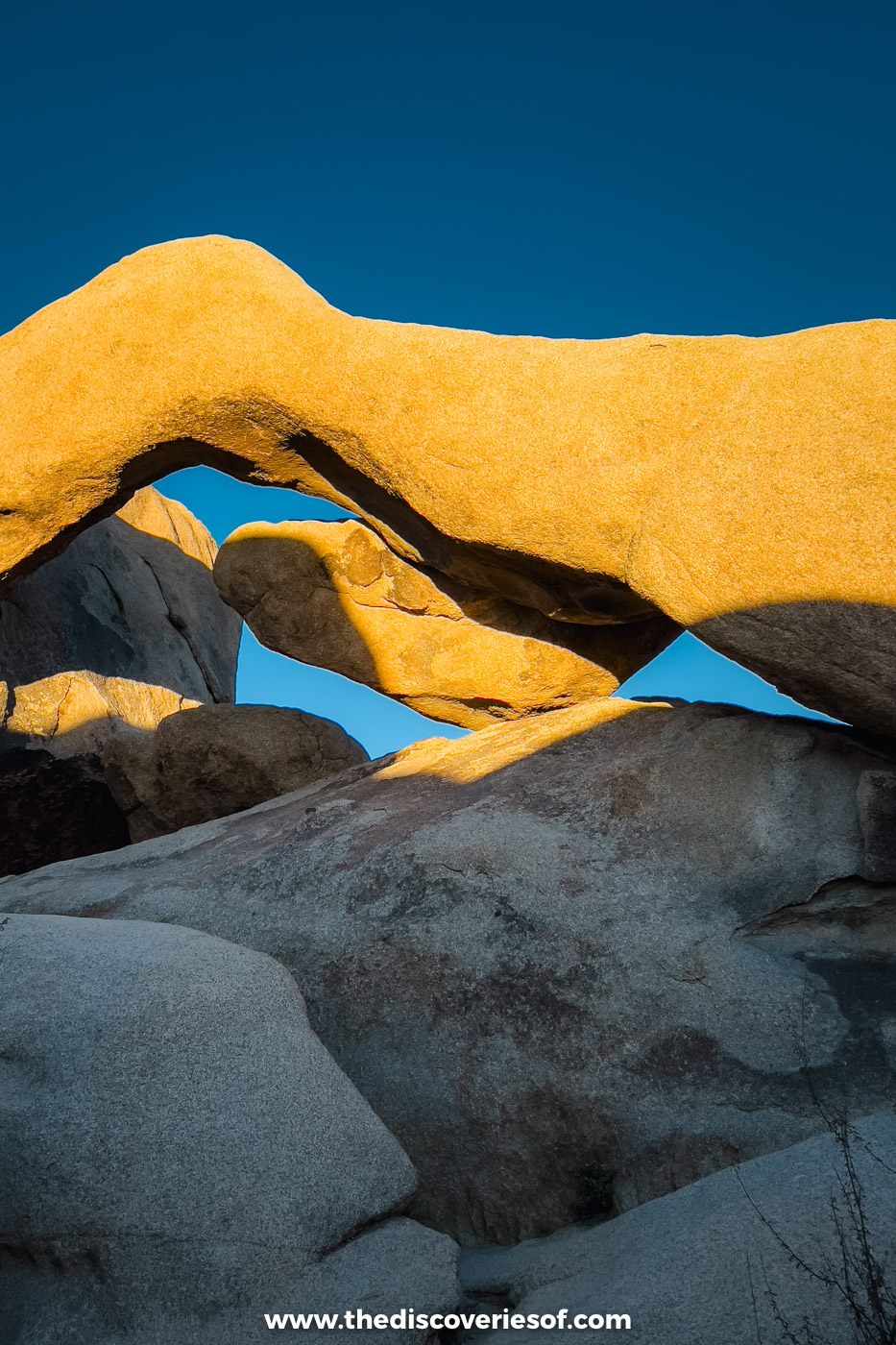
Best time: late afternoon, when the arch turns orange
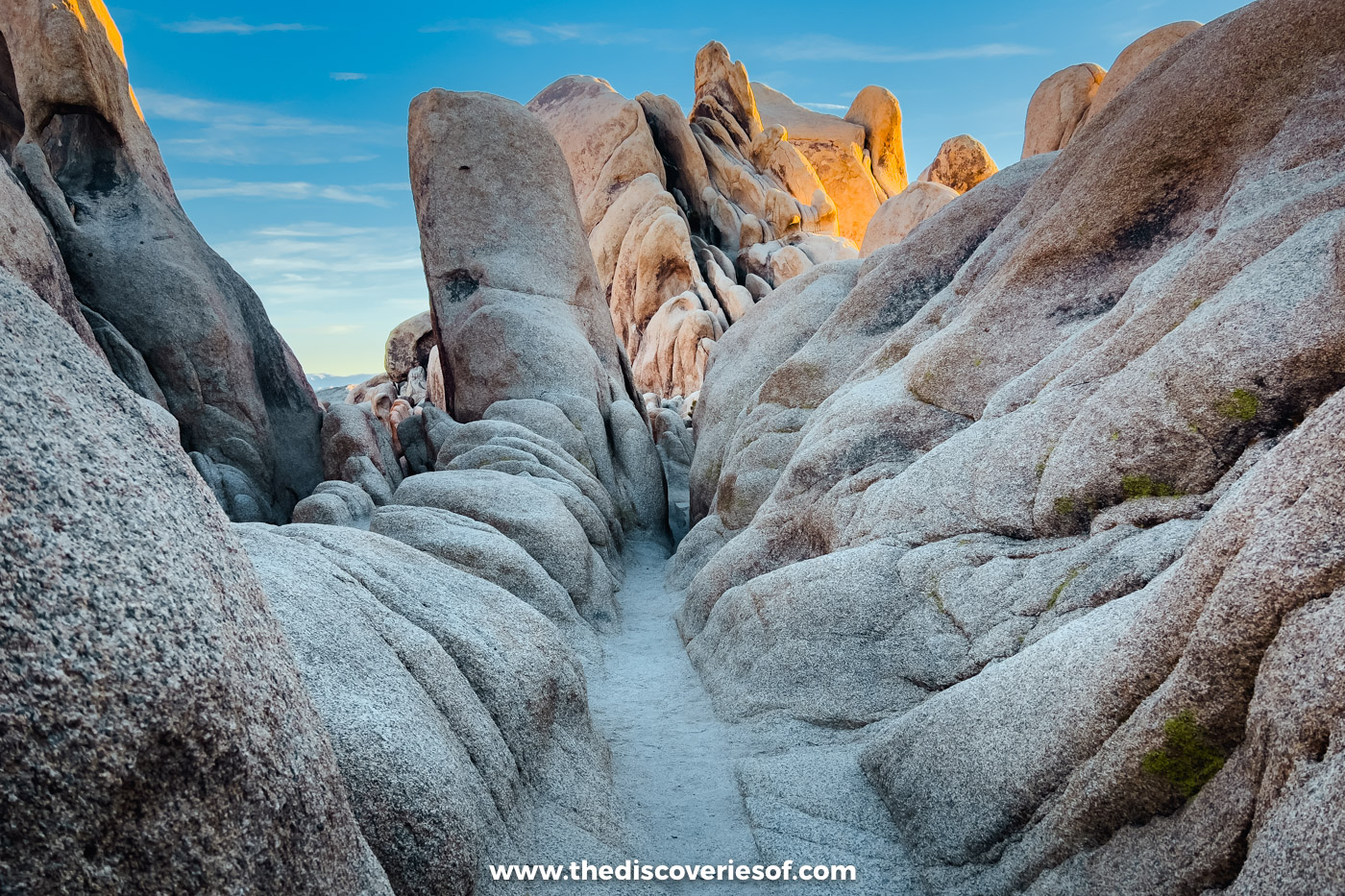
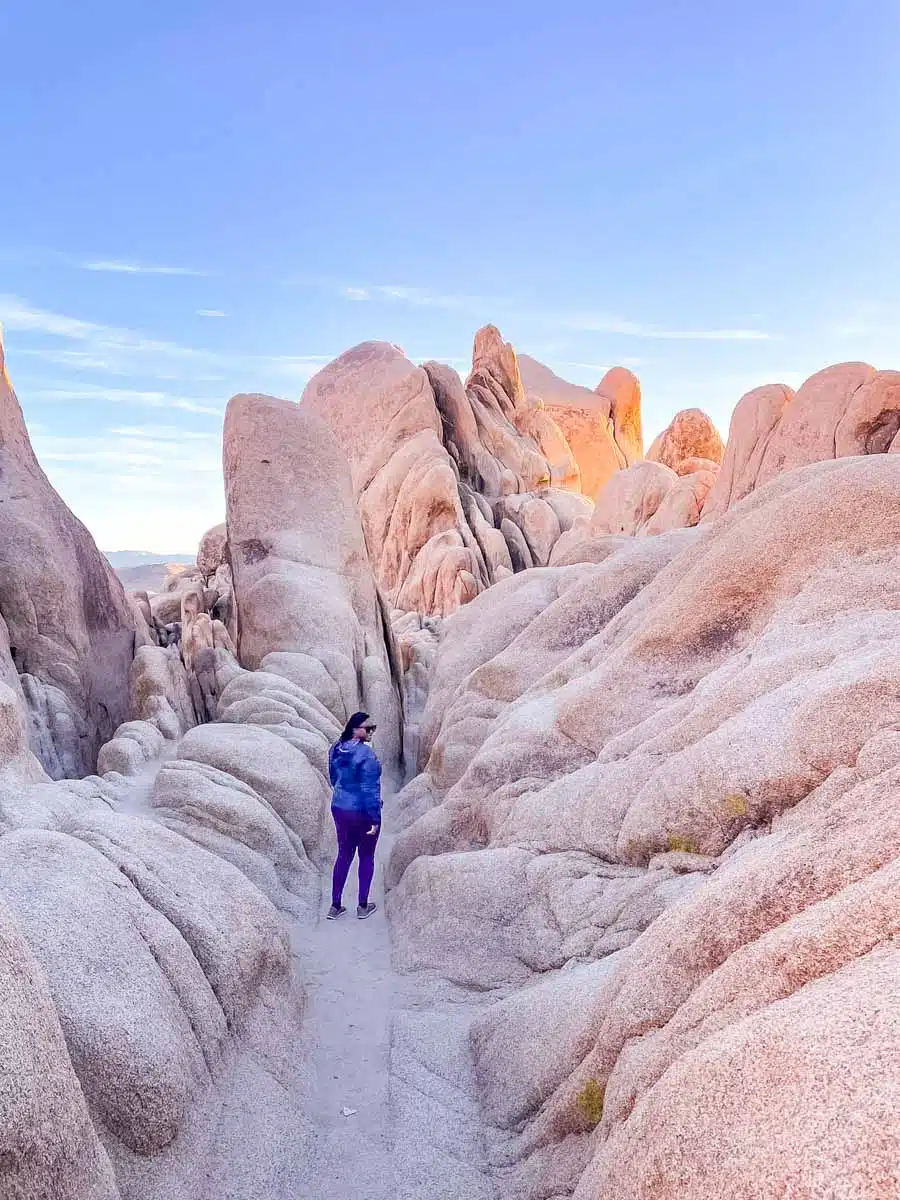
Arch Rock is my favourite spot in the whole park, and the trail to it is one of the easiest walks you can do. It’s a 1.4-mile lollipop loop starting at Twin Tanks, a car park on Pinto Basin Road, with barely 100 feet of climbing, and you’ll be at the arch in under half an hour. The granite span is about 30 feet across, and it’s tricky to spot until you’re right beneath it, so follow the signs (or the other hikers).
I’ll be honest, though: the arch is lovely, but the real stars of the show for me were the smooth, sculpted boulders all around it, which are piled into narrow corridors and odd shapes that you can wander through for ages. Plenty of people scramble up the rocks for a better angle on the arch. I’ll stick to walking, thanks.
Before you leave, take the short signed spur near the start of the loop to Heart Rock, a boulder with an almost perfect heart-shaped outline. The car park is small and fills up on busy afternoons, so give yourself time.
Read Next
Walk among the teddy bears at the Cholla Cactus Garden
Best time: early morning or golden hour, when the spines glow
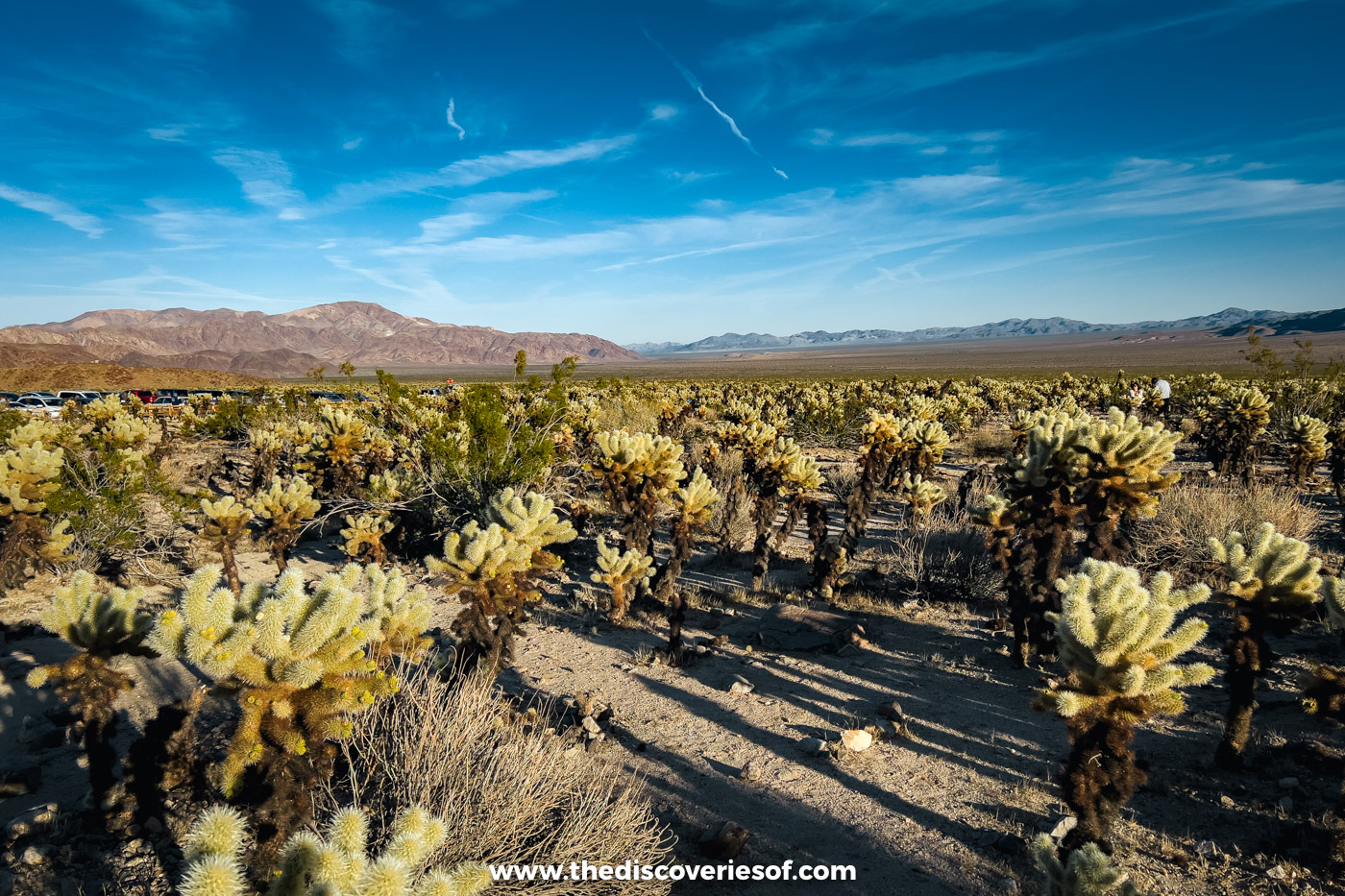
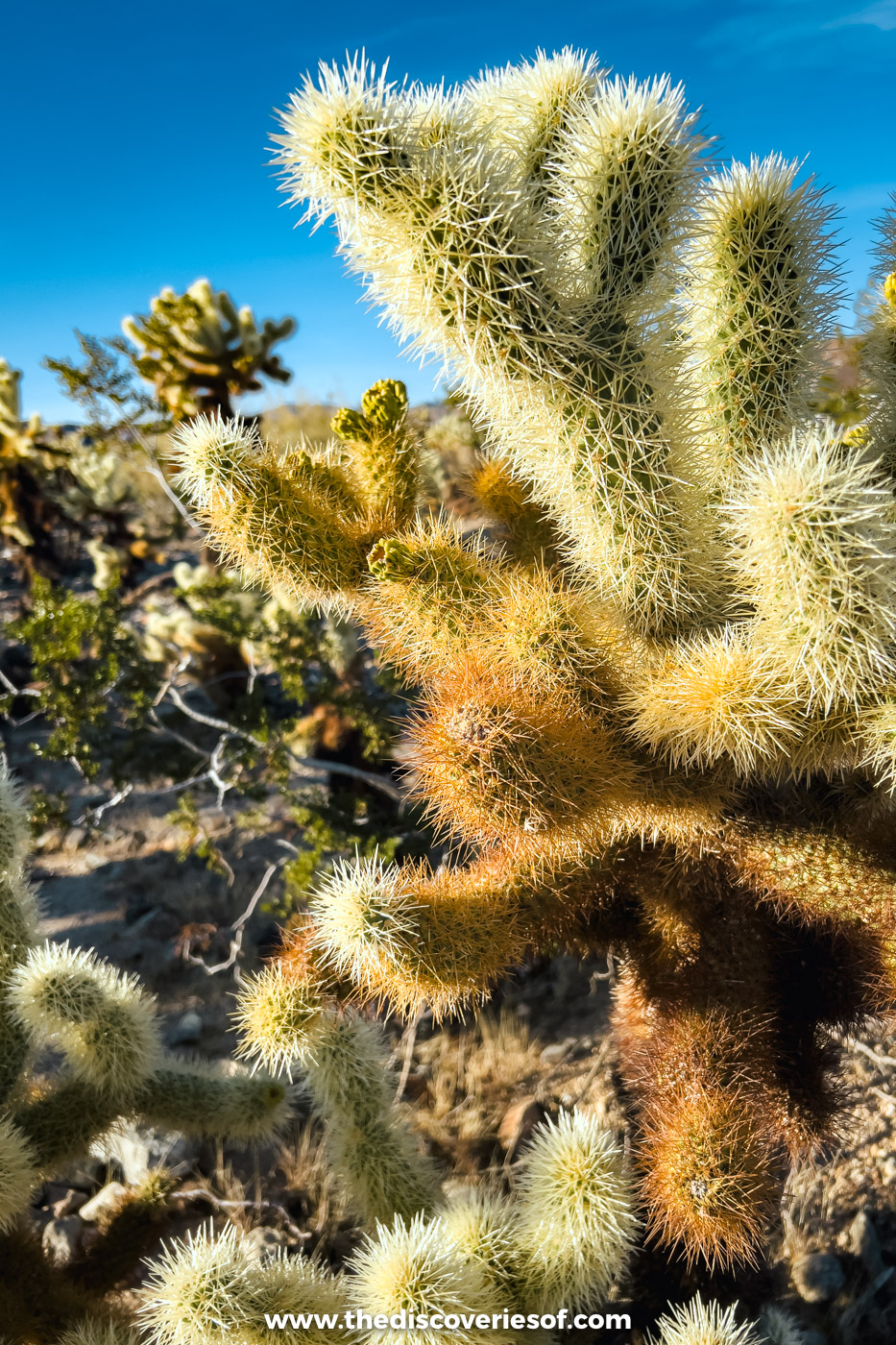
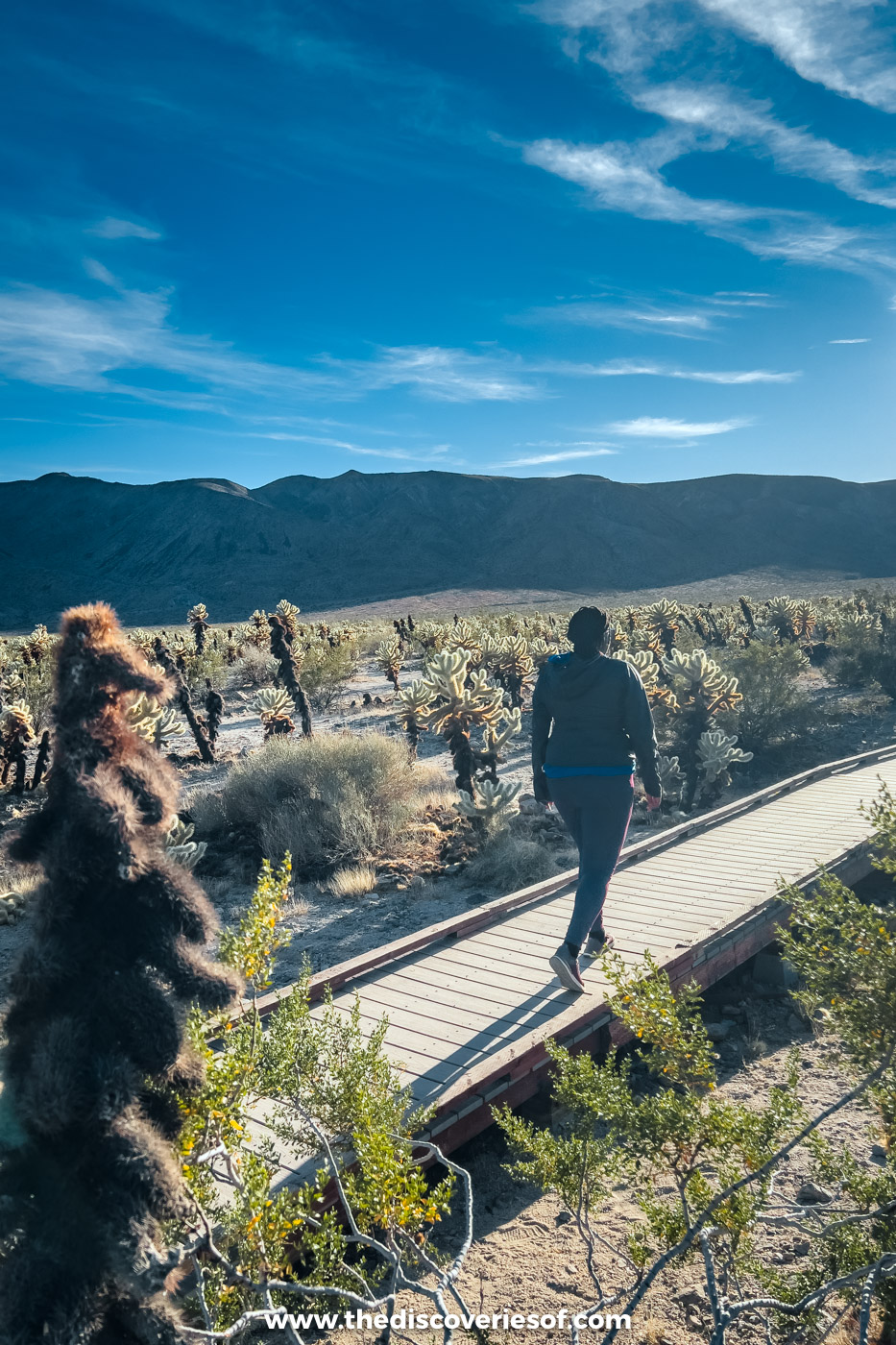
Of all the plants in the park, these were the ones I was most excited to see. The Cholla Cactus Garden is a dense stand of teddy bear cholla on Pinto Basin Road, right on the line where the Mojave gives way to the Colorado Desert, and a quarter-mile loop trail winds through the middle of it. It’s flat, so even the most hiking-averse will manage it.
The teddy bear nickname comes from the way the cacti look almost fluffy from a distance. They are anything but cuddly. Each segment is covered in barbed spines that detach at the lightest brush, which is why they’re also called jumping cholla, and getting them out of your skin (or your shoes) is miserable. Stay on the trail, keep children close and wear closed-toe shoes.
Come when the sun is low. The spines catch the light at either end of the day, and the whole garden seems to glow. In spring, you’ll get wildflowers too.
Top Tip
The trail was closed for improvement work for the first part of 2026, so check the park’s alerts page before making the drive. If it’s shut, you’ll still see cholla scattered all along Pinto Basin Road.
Come face to face with Skull Rock
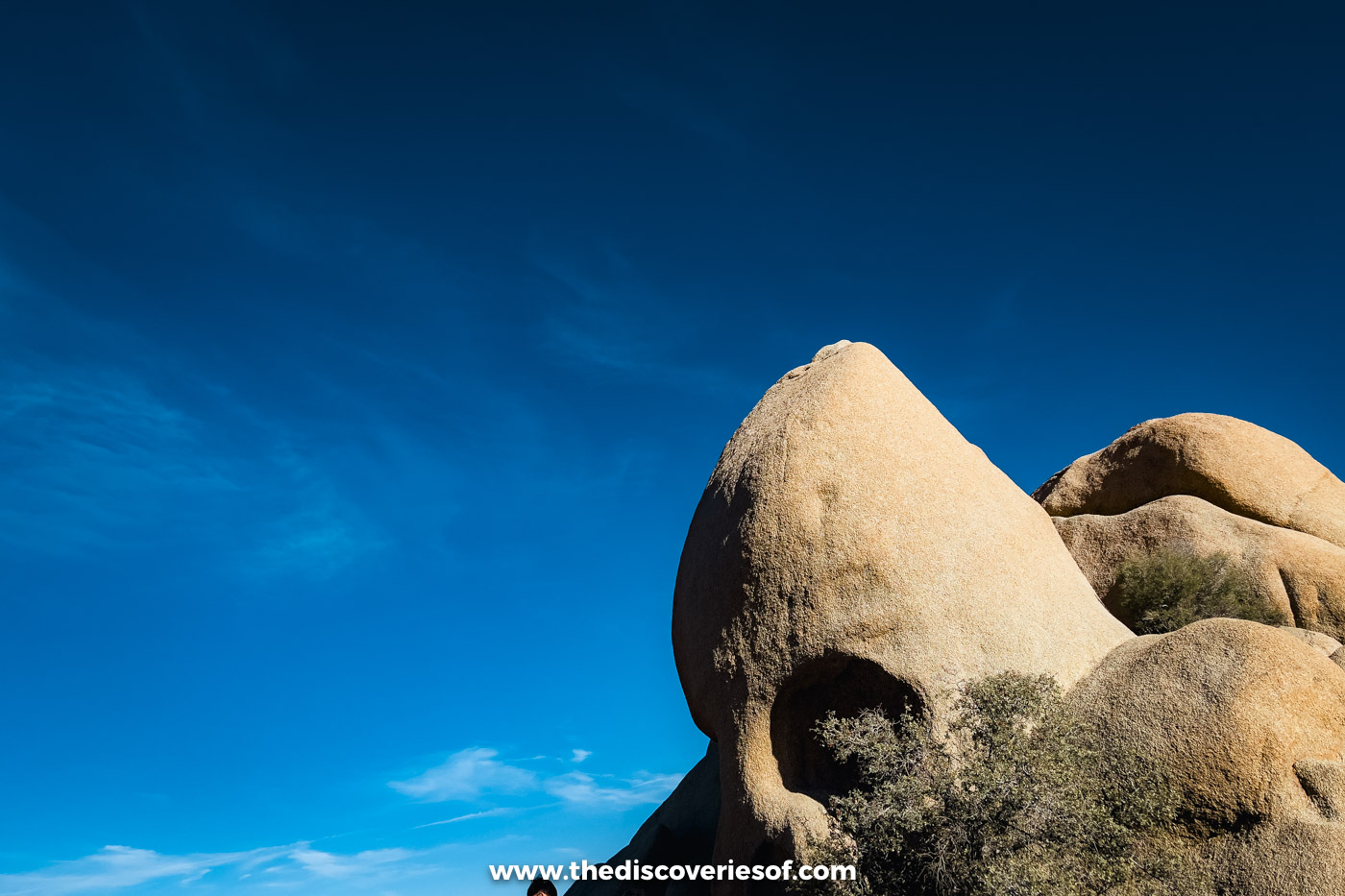
Best time: early morning, before the roadside crowds
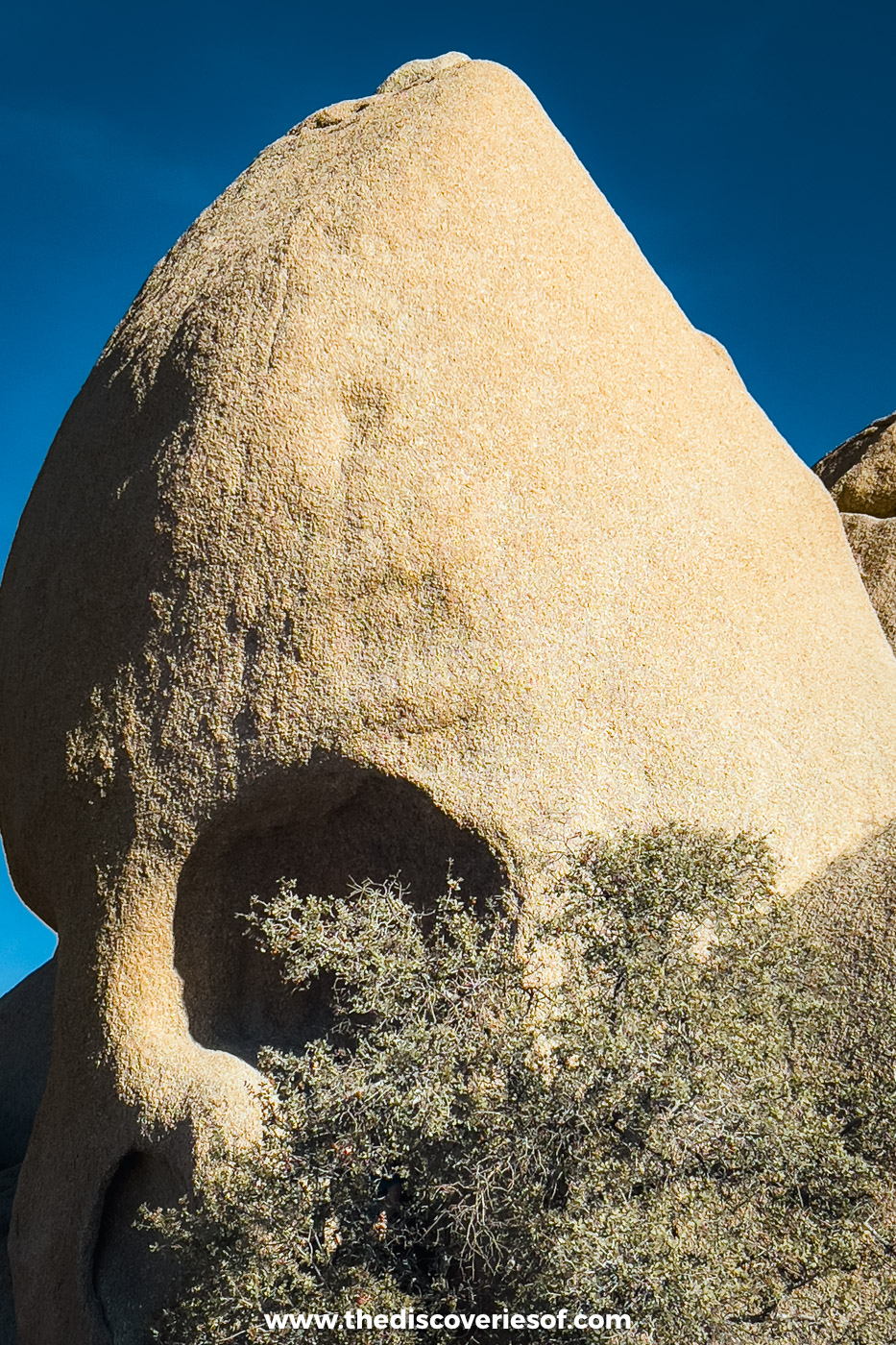
Skull Rock is easily the most photographed boulder in the park, and one look at it explains why. Rainwater collecting in the granite has hollowed out two deep eye sockets and a nose, and the result looks unnervingly like a giant skull poking out of the rocks.
It sits right beside Park Boulevard, so you can pull over, take your photo and drive on. But I’d recommend doing what I did and walking the 1.7-mile loop trail instead, which starts at Jumbo Rocks Campground, crosses the road and threads through boulders, yucca and Joshua trees before arriving at the rock itself. It makes the whole experience much more relaxed than jostling at the roadside, and you can scramble up the piles nearby for a different view of the skull.
Parking on the road is limited and fills up by mid-morning, so go early. If you’re camping at Jumbo Rocks, you can walk straight there.
Lose yourself in the boulders at Jumbo Rocks
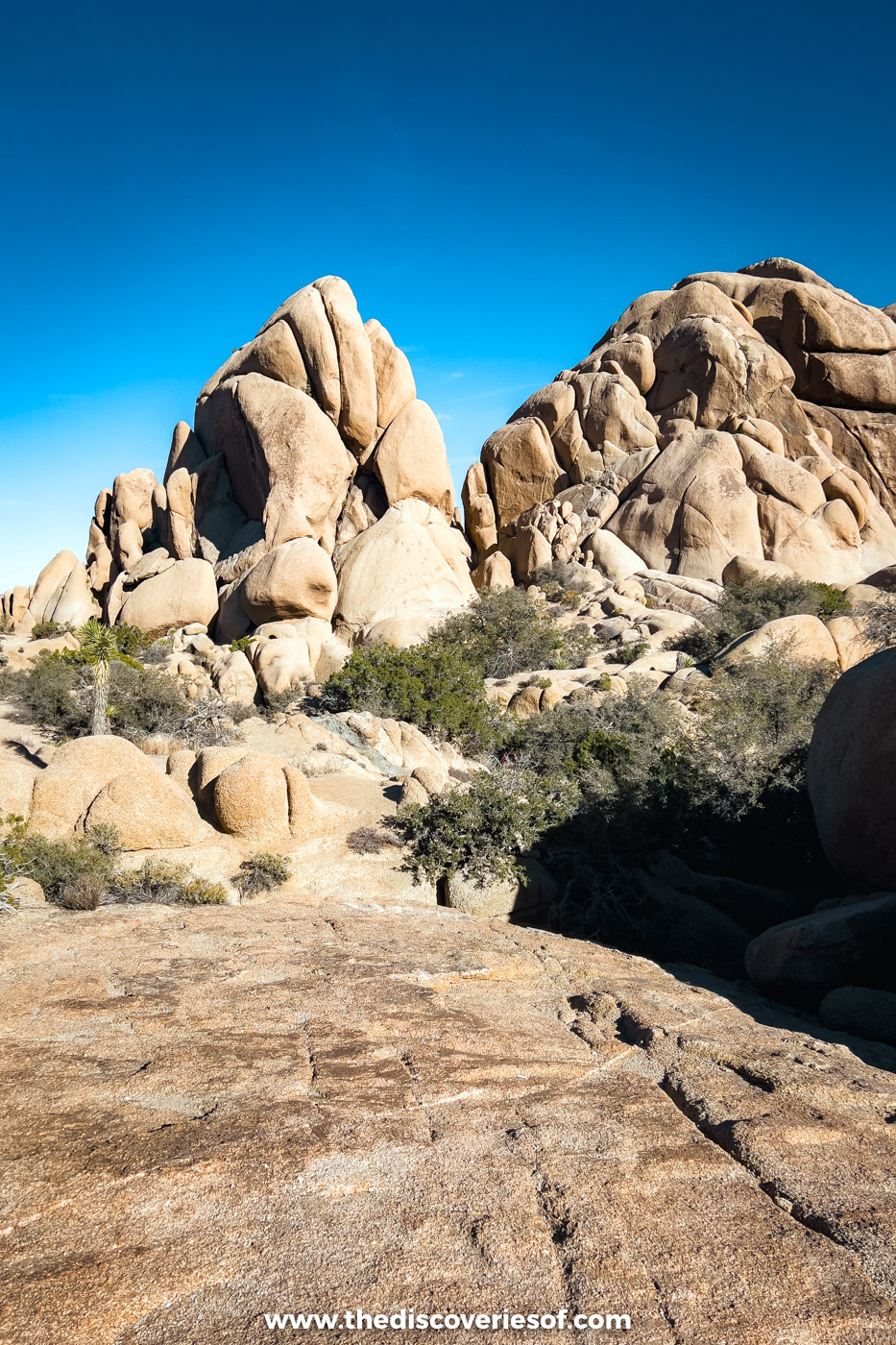
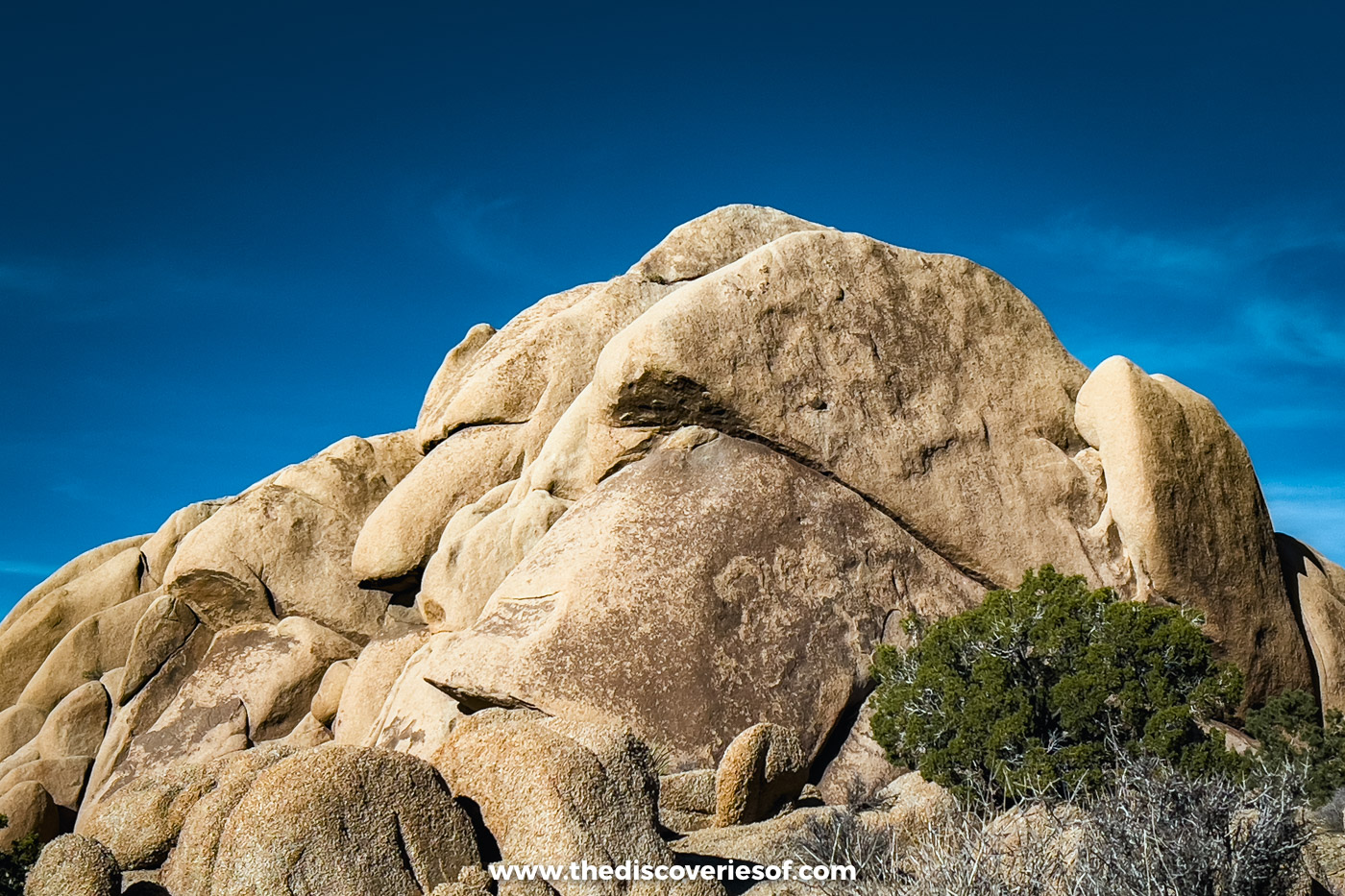
Best time: sunset, then stay for the stars
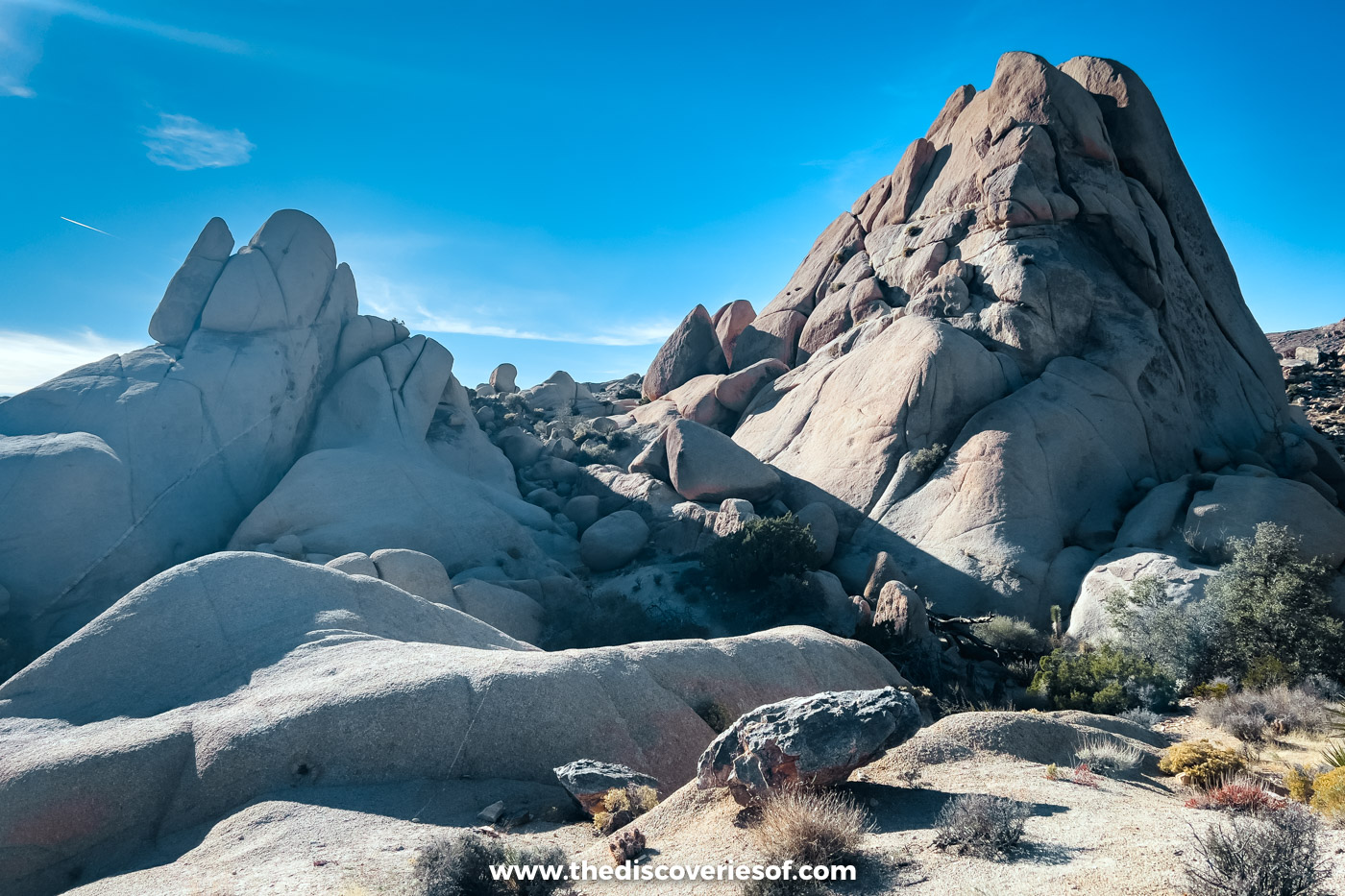
If the park had a playground, this would be it. Jumbo Rocks is a sprawling jumble of monster granite boulders, domes and stacks right in the middle of the park, and it’s the place to go if you just want to wander, climb and poke around.
The boulders began as molten rock deep underground, then cooled, cracked and weathered into these rounded heaps once the softer ground around them wore away.
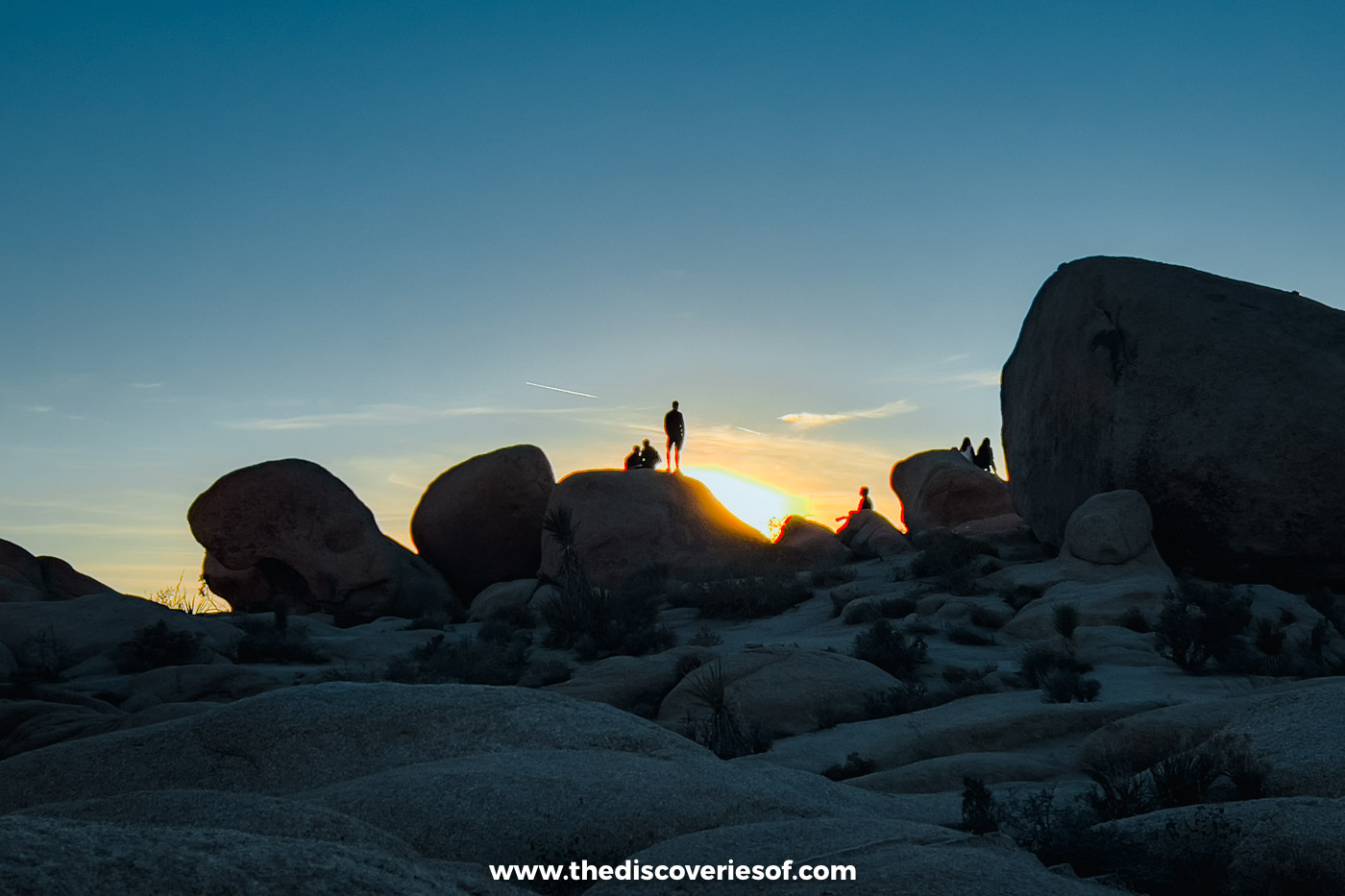
Most of the area is taken up by one of the park’s biggest campgrounds (more on camping below), and the Skull Rock loop starts here too. Come in the late afternoon, scramble up a low dome to watch the sunset and, if you’re camping, settle in for the night sky.
Chase golden hour among the Joshua trees
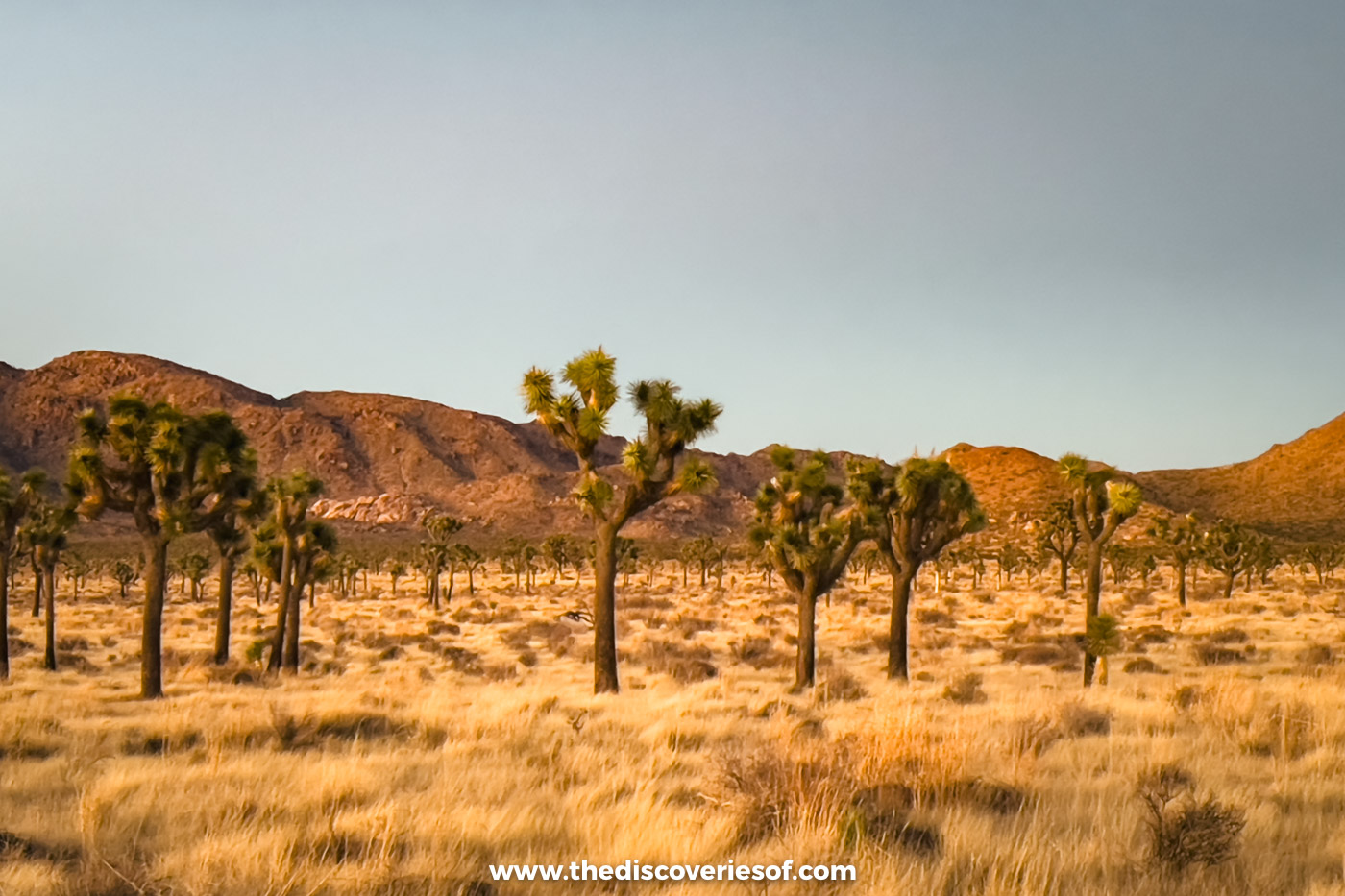
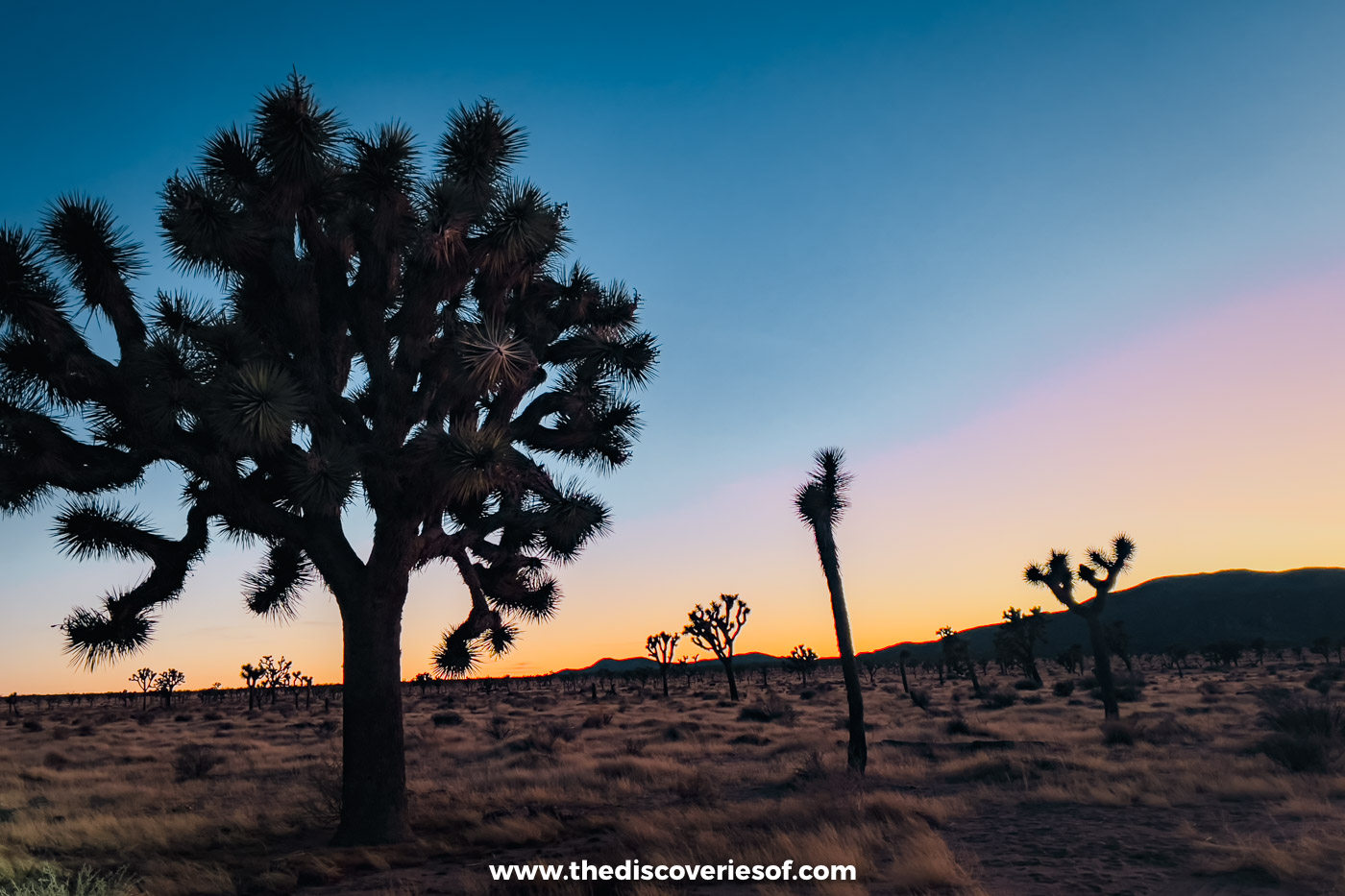
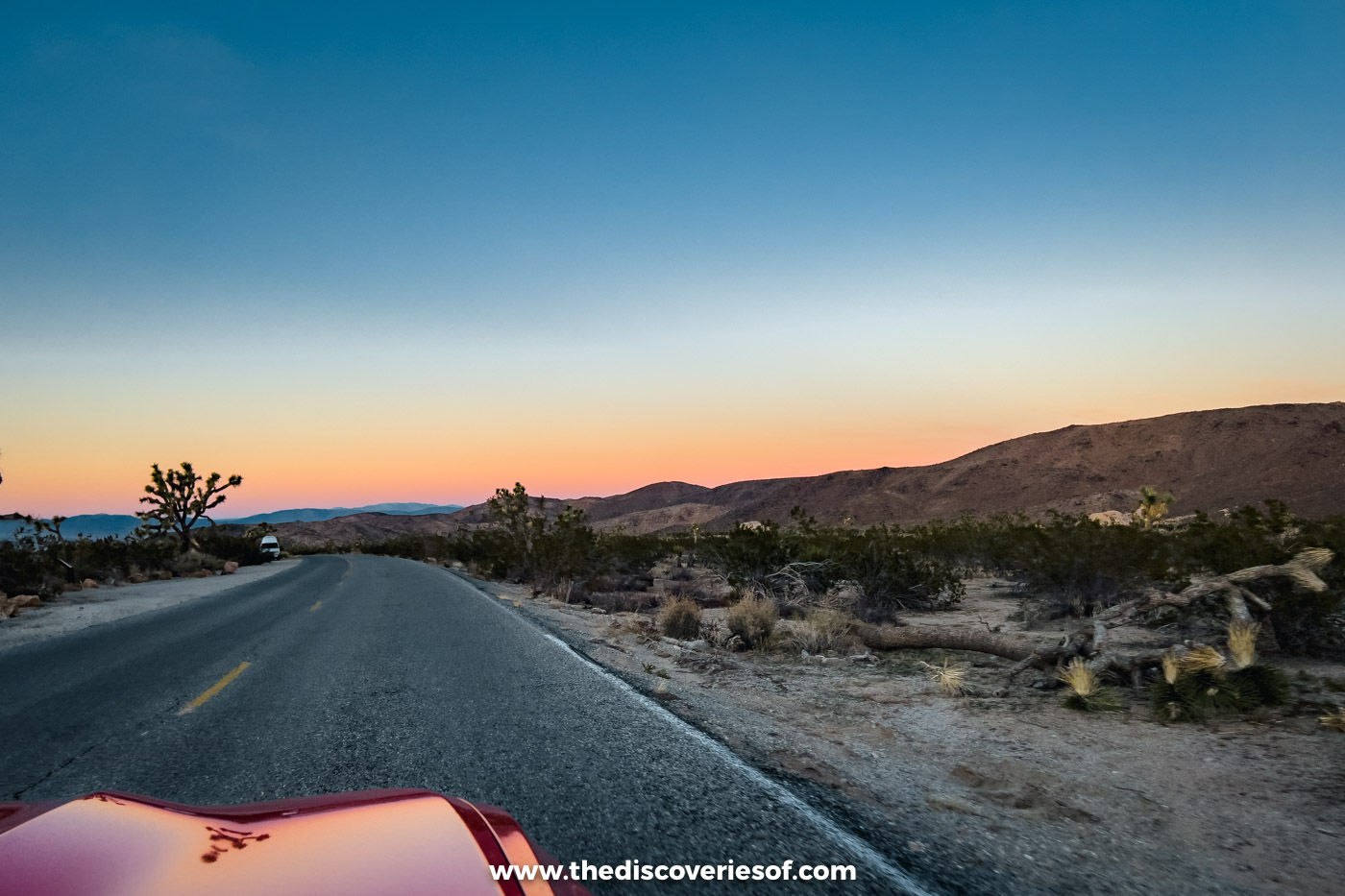
Best time: the last hour before sunset
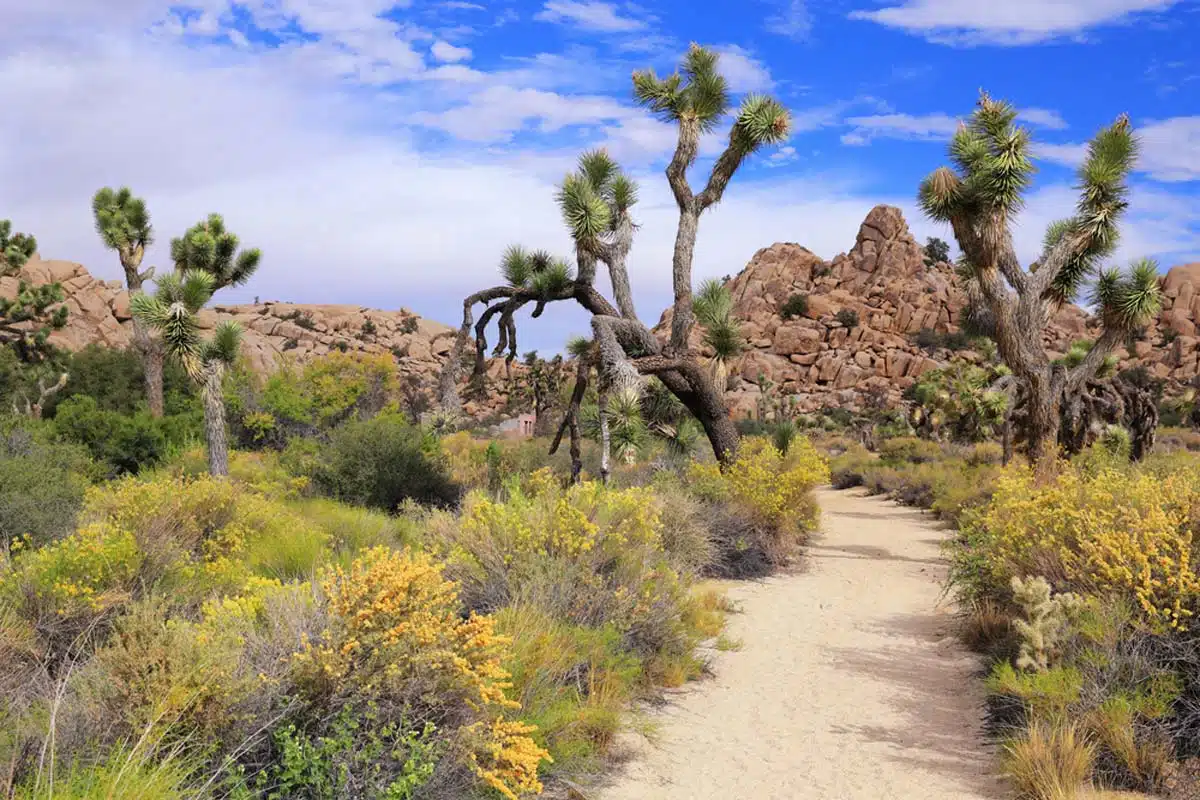
My photos of the park are full of this hour, and it doesn’t belong to any single sight. In the hour before sunset, the low light turns the Joshua trees and the dry grasses around them a burnished gold, the boulders blush pink and orange, and then everything fades to silhouettes against a sky streaked with pink and violet.
You don’t need to plan much to catch it. Park Boulevard runs through the thickest Joshua tree forests in the west of the park, especially across Queen Valley and Lost Horse Valley, and there are plenty of pull-offs where you can stop and walk a little way into the desert. Pick a spot, find a tree with a good shape and wait for the light to change.
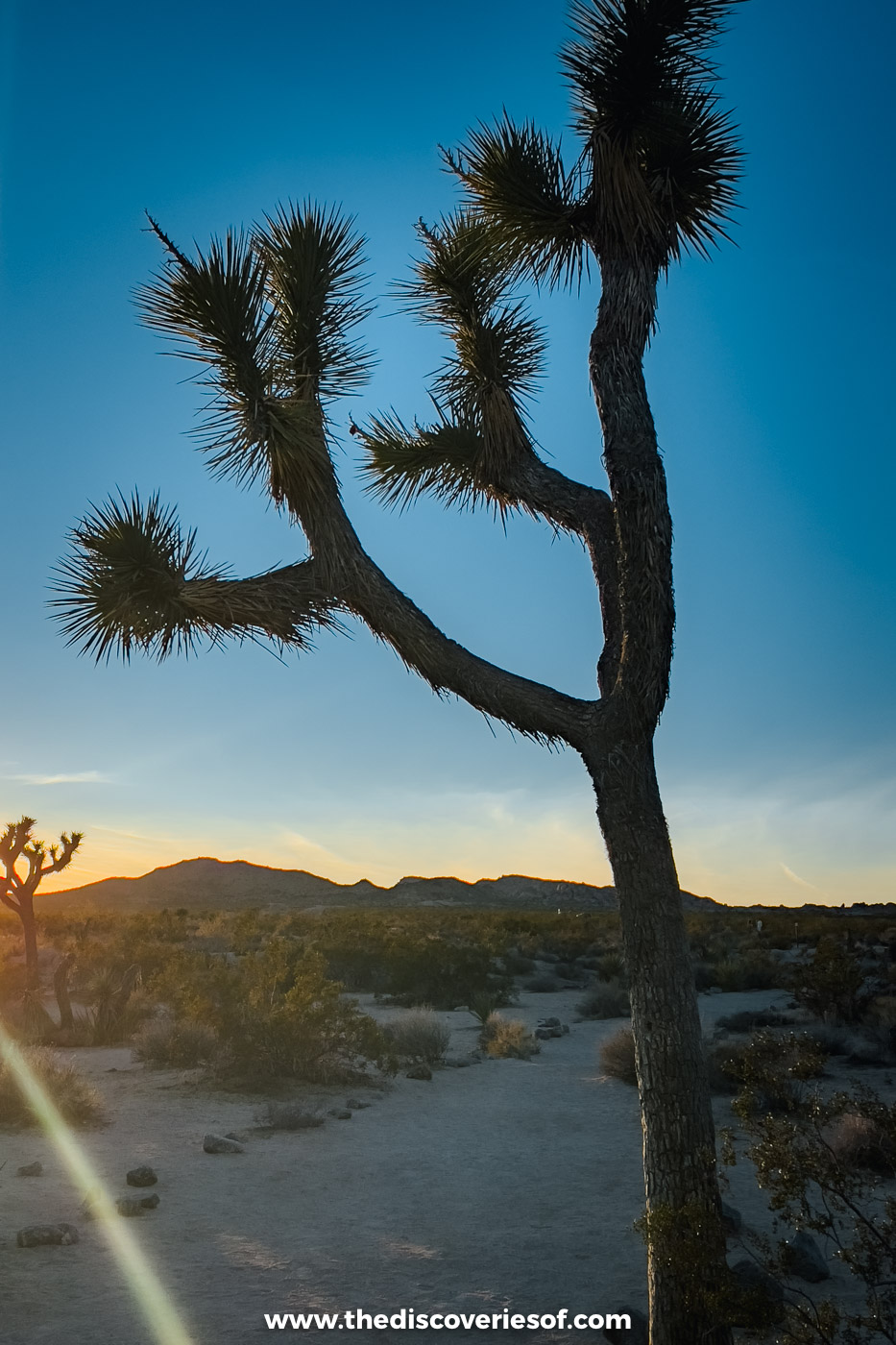
The light goes quickly once the sun drops behind the mountains, and the temperature falls with it, so have your shot planned and a warm layer in the car.
Loop through Hidden Valley
Best time: morning, before the car park fills
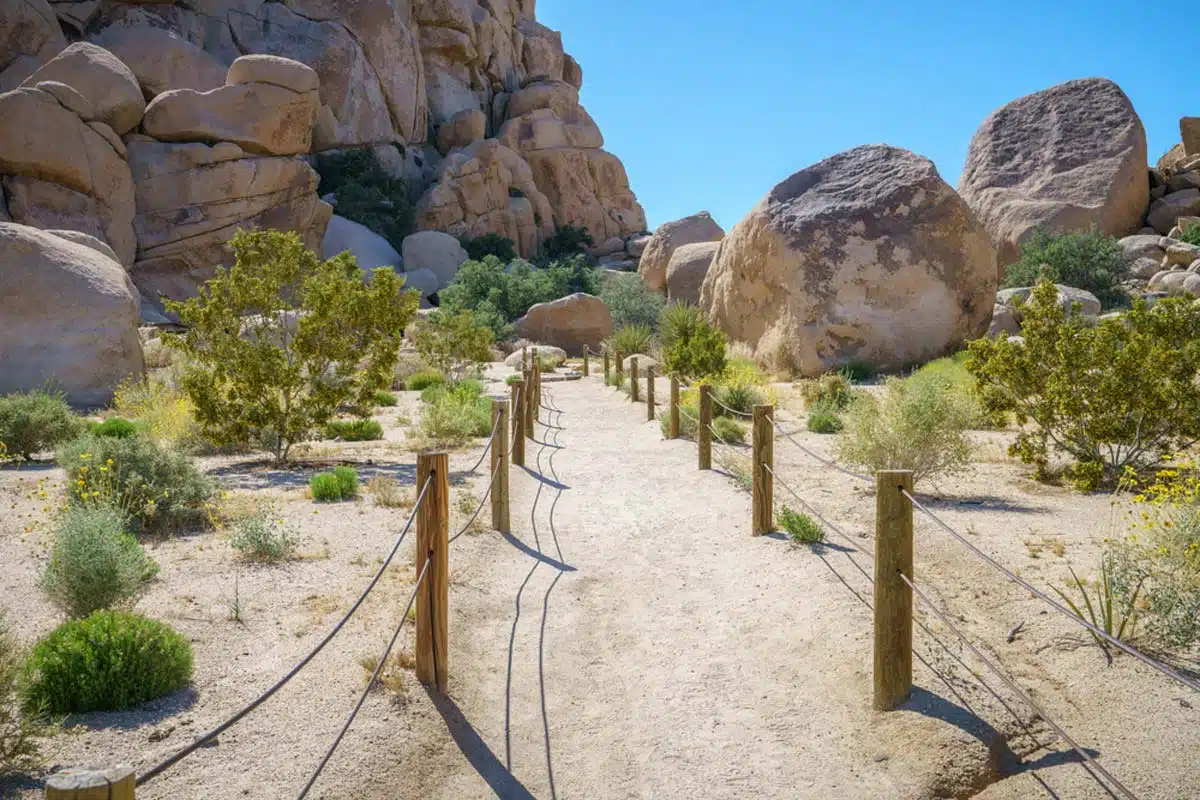
Keen to explore at a chilled pace? Hidden Valley is one of the walks I did, and it’s one of the gentlest in the park: a one-mile loop through a valley almost entirely ringed by walls of rock, with just a couple of rock steps at the start and end.
According to local legend, cattle rustlers once used this hidden pocket to stash the herds they’d stolen, which was a significant problem for the ranchers of the Old West. Today, the valley is busier with climbers. Look up and you’ll often spot them on the rock faces, especially on the big monolith known as the Great Burrito. The picnic area by the trailhead sits in the shade of the boulders, so it’s a good place for lunch. The car park fills up quickly, though, so aim to arrive before about 9am at weekends.
Read Next
Hike to summits, dams and petroglyphs
Best time: start early, and avoid hiking between 10am and 5pm in summer
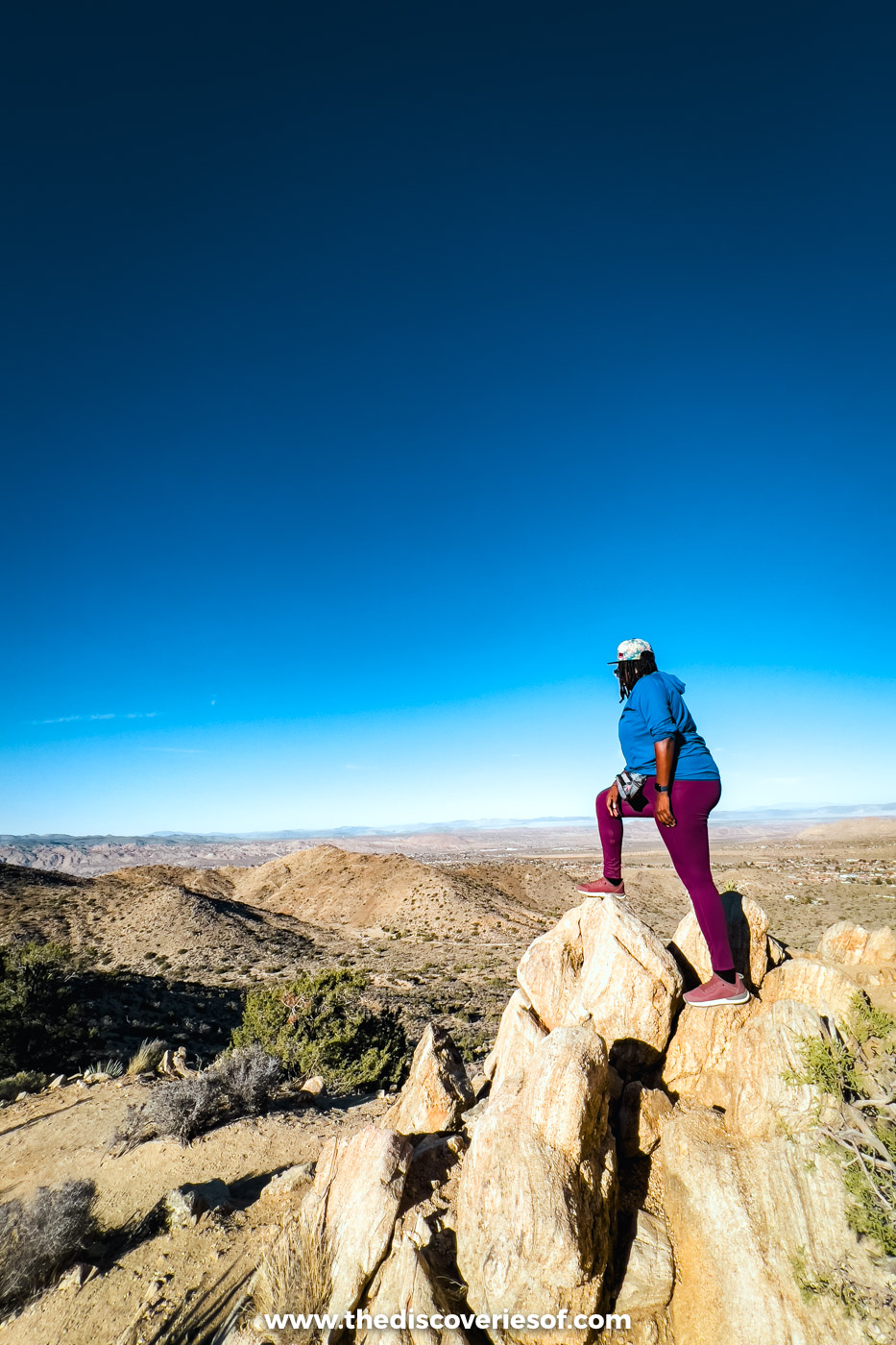
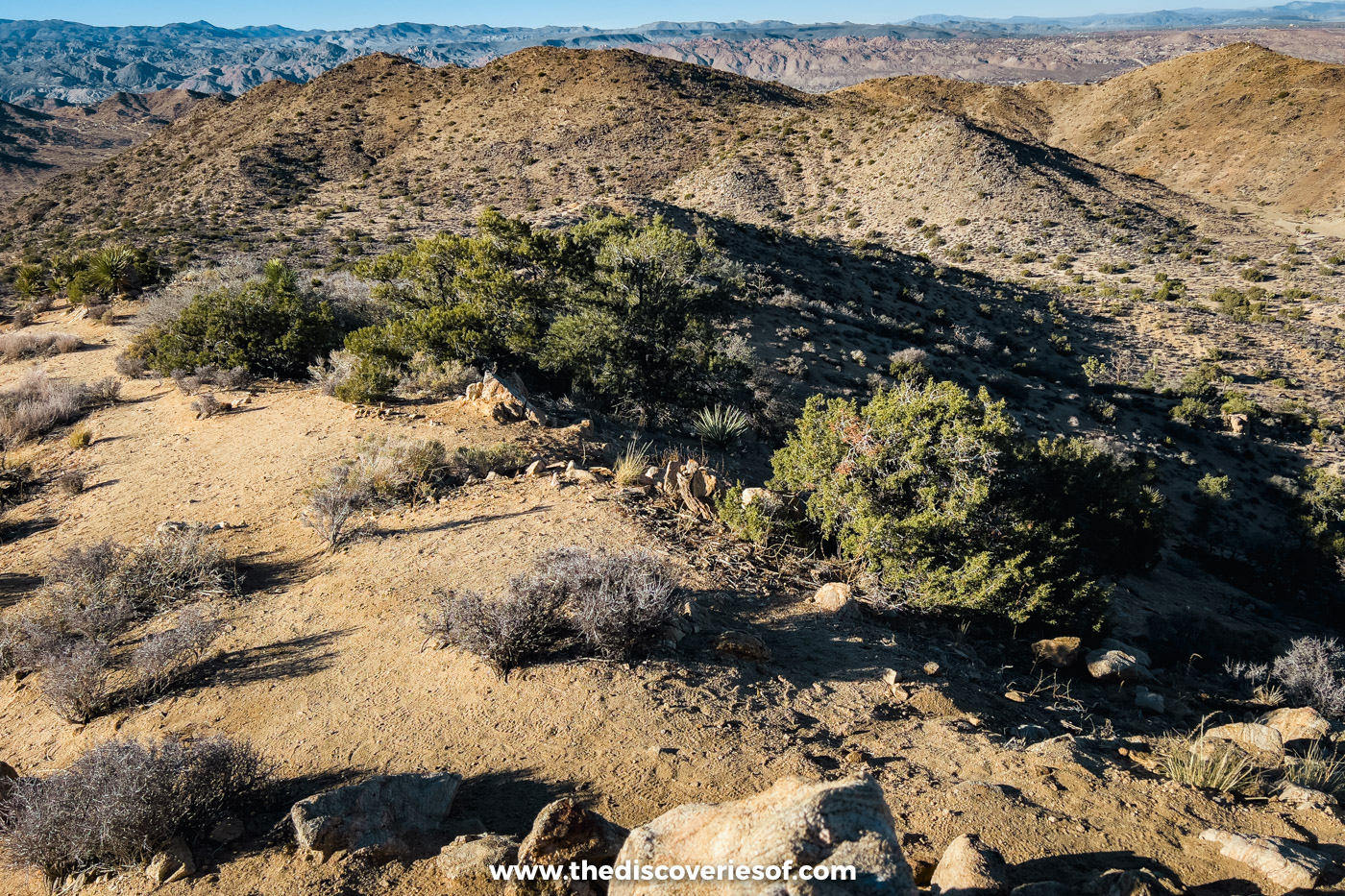
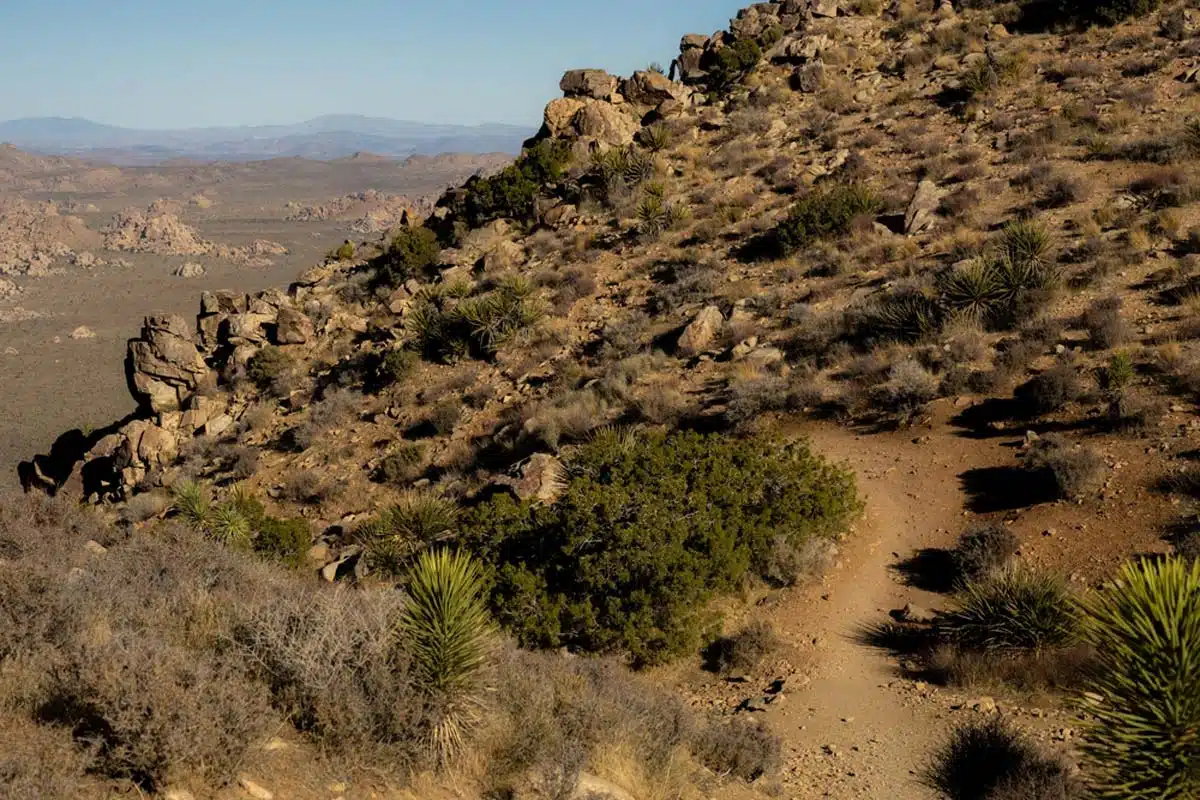
Hiking is one of the very best ways to get to know the park, and there are trails for every level. My guide to the best hikes in Joshua Tree has the full details on more than a dozen trails, but these are the ones I’d put on your list first:
- High View Nature Trail: a 1.4-mile loop in the Black Rock Canyon corner of the park near Yucca Valley. It was one of my favourite walks in the park, partly because so few people were on it, and the views from the top are huge.
- Ryan Mountain: a steep 3-mile return climb, gaining about 1,050 feet on the way to a 5,457-foot summit. I recommend it if you want a great view of the whole park, but there’s little shade, so bring sunscreen and lots of water.
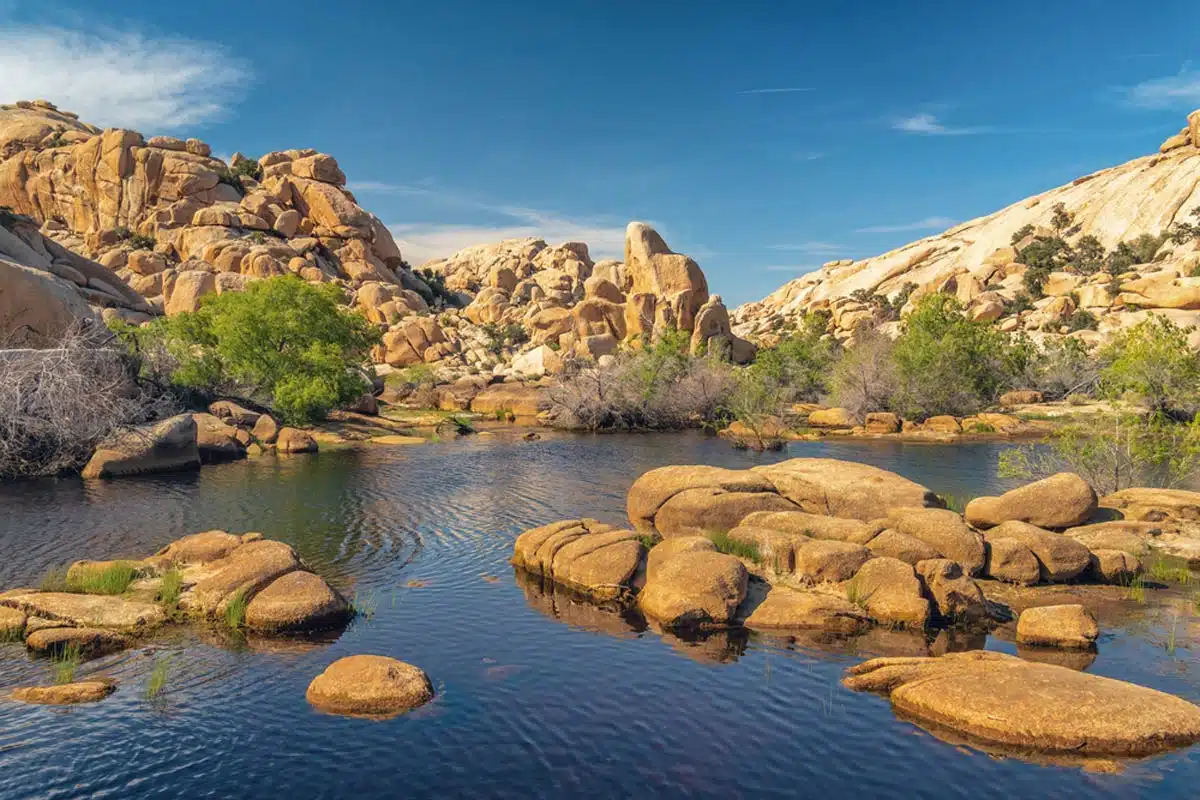
- Barker Dam: an easy 1.1-mile loop past a cattle ranchers’ dam that holds a pool after a wet winter, with a short spur to Native American petroglyphs at the end. Keep an eye out for bighorn sheep.
- Boy Scout Trail: 8 miles one way along the edge of the Wonderland of Rocks, best done with a car at each end.
Find the palm oases
Best time: morning, in the cooler months
It’s hard to believe in the middle of all that dry rock, but the park has a handful of natural palm oases, where water close to the surface lets groves of California fan palms grow. They’re magnets for birds and wildlife.
The easiest to reach is Cottonwood Spring, a short walk from the car park near the Cottonwood Visitor Center in the south of the park, which makes it a natural stop if you’re arriving from the I-10. It’s the starting point for the 3-mile Mastodon Peak loop and the longer trek to Lost Palms Oasis, a remote canyon of palms 7.5 miles there and back. In the north of the park, the 3-mile return hike to Fortynine Palms Oasis climbs over a ridge and drops into a shady canyon full of palms. The Oasis of Mara, next to the visitor centre in Twentynine Palms, is the gentlest of the lot, although part of its paved trail is closed after flooding.
Go rock climbing (or just watch)
Best time: October to April, in the morning or late afternoon
Rock climbing is something I love… from a safe distance. Joshua Tree is one of the most famous climbing destinations in the world, with more than 8,000 climbing routes and around 2,000 bouldering problems on its rough granite, and on any day in the cooler months you’ll see climbers dotted all over the rocks, especially around Hidden Valley.
If you’re new to it (or, like me, not that confident), I’d recommend booking a half day with one of the climbing guide services licensed to work in the park.
Not keen on ropes? The park is full of scrambles. The Hall of Horrors, off Park Boulevard near Ryan Campground, hides a narrow slot canyon between two boulder piles. Find the entrance on the south-west corner of the second pile and squeeze through, as long as you’re not claustrophobic. The Chasm of Doom, a boulder-choked chasm with dark tunnels, is one to do only with someone who knows the way and with a torch, as parts of it are pitch black.
Tour Keys Ranch and the old gold mines

Best time: a morning tour between October and May
The park has a rich gold rush past, and the best way into it is a ranger-led tour of Keys Desert Queen Ranch. Bill Keys arrived in the area in 1910, and he and his wife Frances raised their family here, running a ranch, a mill and a general store in one of the harshest places imaginable. They wasted nothing, so the ranch is crammed with the machinery, cars and tools they collected, alongside the house and the schoolhouse they built for local children.
You can only see it on a tour. Tours run from October to May, last about two hours with half a mile of walking, and cost $20 for adults and $10 for children aged 4 to 11, on top of the entrance fee. They’re popular, so I’d recommend booking as far ahead as you can on recreation.gov: tickets go on sale 60 days ahead, there are no walk-ups, and you meet the ranger at the ranch gate.
Good ol’ Bill Keys pops up again at the Wall Street Mill, the gold mill he built in the 1930s, a walk of about 2 miles there and back from the Barker Dam car park. On the way, a stone marker records where he shot his neighbour Worth Bagley in a 1943 row over the road. Plot twist: Keys spent five years in San Quentin before being released and later pardoned.

The Lost Horse Mine, off Keys View Road, was one of the most successful in the area, producing more than 10,000 ounces of gold between 1894 and 1931, and its ten-stamp mill still stands on the hillside. It’s a 4-mile return hike on an old mining road, and the shafts are dangerous, so stay outside the fence.
Go stargazing in an International Dark Sky Park

Best time: a moonless night, at least an hour after sunset
When the sun goes down, the show isn’t over. Joshua Tree was named an International Dark Sky Park in 2017, and with no big city close by on its eastern side, the skies here are some of the darkest in Southern California. On a moonless night, the Milky Way arcs right across the sky. I stargazed here on my trip too, and it’s well worth staying in the park after dark for.
The park is open 24 hours, so you can head out whenever you like. The darkest skies are in the east and south, away from the glow of the Coachella Valley: the pull-offs along Pinto Basin Road, the Cholla Cactus Garden car park and Cottonwood are all good, and the campgrounds at Jumbo Rocks and White Tank let you stargaze from your tent. Use a red torch to keep your night vision, and wrap up: desert nights are cold.
For something more organised, rangers run night sky programmes through the year (check the bulletin boards at the visitor centres), and every October the Night Sky Festival takes over the Sky’s the Limit Observatory and Nature Center just outside the North Entrance in Twentynine Palms. It’s ticketed, and tickets go on sale in early summer.
Camp among the boulders
Best time: October to May, booked as far ahead as you can
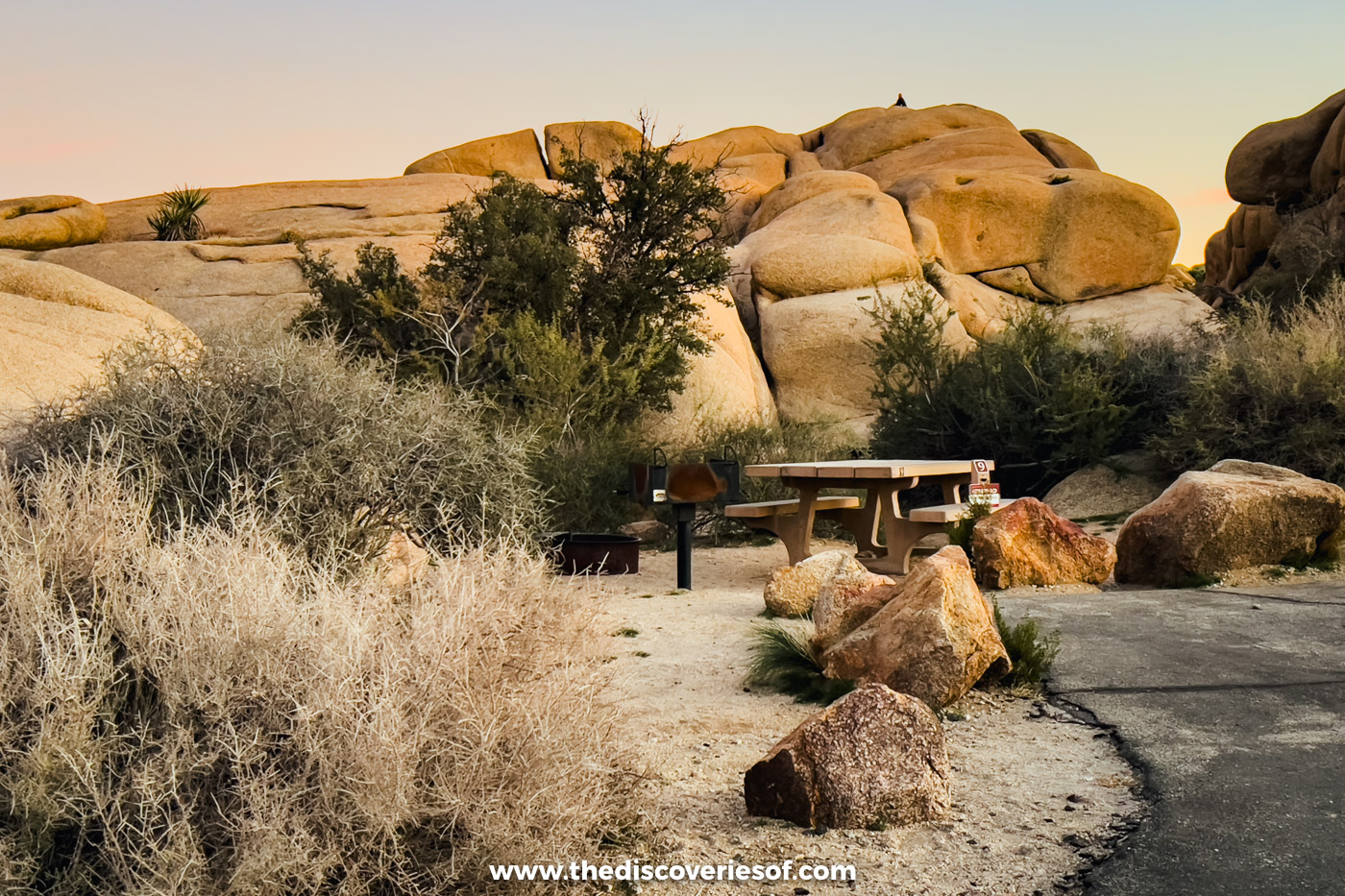
There are no hotels or lodges inside the park, so if you want to wake up surrounded by Joshua trees, you’ll need to camp. There are around 500 sites across nine campgrounds, and they fill up most weekends from autumn to spring.
Six of them take reservations on recreation.gov, up to six months ahead and even on the day: Black Rock, Cottonwood and Indian Cove cost $35 a night, Jumbo Rocks and Ryan cost $30, and Sheep Pass is for groups. Black Rock and Cottonwood are the only two with drinking water and flush toilets. The other three, Belle, Hidden Valley and White Tank, are first come, first served for $25 a night, and Belle, Ryan and White Tank close in summer. Jumbo Rocks is the one I’d book first for the boulders and the stars.
You can’t sleep in your car at the roadside or in a pull-off, and fires are banned from mid-June to 1 October. Backcountry camping is allowed if you register at one of the backcountry boards first. If roughing it isn’t your style, there’s a glamping dome among the stays in the tips below.
Drive the Geology Tour Road

Best time: a dry morning, with a high-clearance 4WD
For an off-road adventure, the Geology Tour Road leaves Park Boulevard between Jumbo Rocks and Sheep Pass and heads south into Pleasant Valley. It’s an 18-mile round trip on dirt, with numbered markers explaining the rock formations, old mines and water tanks along the way. Roughly the first six miles are usually fine in a normal car when the road is dry; beyond that, it becomes a one-way loop that needs a high-clearance 4WD.
You can download the park’s guide to the stops or listen along with this self-driving audio tour, which also covers Park Boulevard.
Top Tip
The road was temporarily closed after flooding in October 2026, so check the park’s alerts before you set off.
Wander the town of Joshua Tree and Noah Purifoy’s art museum
Best time: the middle of the day, when it’s too hot for the trails
The little town of Joshua Tree, just outside the West Entrance, is a laid-back strip of cafés, vintage shops and galleries along Highway 62, with the main visitor centre and the last places to stock up before the park.
The highlight is the Noah Purifoy Outdoor Desert Art Museum, a few miles north of town. The Los Angeles artist spent the last 15 years of his life building around 100 sculptures across 10 acres of open desert from scrap: toilets, bowling balls, old televisions and timber. It’s free, open every day from sunrise to sunset, and wonderfully strange. Sign in at the kiosk when you arrive, and drive carefully, as the dirt roads to it can be rough after storms.
Take a sound bath at the Integratron
Best time: book a session ahead, then go in the afternoon
Out in Landers, about half an hour north of Yucca Valley, the Integratron looks like a white dome that has dropped out of a 1950s sci-fi film. George Van Tassel began building it in 1954, claiming the instructions came from beings from Venus, and he believed it could recharge the human body and even turn back time.
He died before he could test it, but the dome turned out to be acoustically remarkable, and today it hosts sound baths: you lie on the wooden floor while quartz crystal bowls are played and the sound swirls around you. Sessions sell out, so book on the Integratron’s website before you go.
Step back into the Wild West in Pioneertown
Best time: evening, for dinner and live music
Pioneertown, about 15 minutes north-west of Yucca Valley, was built in 1946 as a living film set for westerns, with backing from stars including Roy Rogers. Its dusty main drag, Mane Street, still looks the part, with wooden storefronts and hitching posts.
Come in the evening for Pappy and Harriet’s, a cantina that has been serving barbecue and live music for decades and draws surprisingly big names to its stage. Check the line-up and book ahead at weekends.
Practical tips for your visit
- Fees and entrances: a seven-day pass costs $30 per car, $25 per motorcycle or $15 per person if you walk or cycle in, and the America the Beautiful pass covers it. There’s no timed entry. The West Entrance in Joshua Tree and the North Entrance in Twentynine Palms take cards only (cash is accepted at the visitor centres), and the South Entrance at Cottonwood is the one to use from the I-10. Palm Springs is about an hour’s drive from the West Entrance.
- When to go: October to May is the best time for hiking, and October and November are my pick, as you dodge both the spring wildflower crowds and the summer heat, when the park regularly passes 100°F (38°C). Nights can be cold in winter. My guide to the best time to visit Joshua Tree goes month by month.
- How long to spend: I’d recommend at least a day or two, as most trails take only an hour or two, and three if you want to add the summits and oases. My 3-day Joshua Tree itinerary puts it all together.
- Water, fuel and signal: there are no shops, restaurants or fuel stations inside the park and very little phone signal, so fill up with water, food and fuel before you enter, carry at least a litre of water each even on short walks, and download offline maps or the NPS app.
- Where to stay: I did the park as day trips from Palm Springs, staying at The Cole on North Palm Canyon Drive, about an hour from the West Entrance. To be closer, base yourself in the town of Joshua Tree, with Twentynine Palms and Yucca Valley nearby. AutoCamp Joshua Tree has Airstreams and cabins near the West Entrance, Sacred Sands is a two-room guest house a mile from the entrance with private patios and hot tubs, and the Pioneertown Motel sits in the old western film set. For a glamping night, the MoonCatcher Desert Dome in Wonder Valley, about 15 minutes from the North Entrance, has a skylight over the bed for stargazing.
Map
Read next
- Joshua Tree National Park: 16 best hikes and how to visit
- 3 days in Joshua Tree: the perfect Joshua Tree itinerary
- The best time to visit Joshua Tree National Park
- Brilliant day trips from Palm Springs
- The best things to do in Palm Springs
- The ultimate California road trip
Love this? Save and share on Pinterest

Discover the top things to do, insider tips and hidden gems in our USA Travel Guides.
Read the guides →




