
Gljúfrabúi is the waterfall that hides inside a cliff, a short walk along the rock face from Seljalandsfoss on Iceland’s south coast. To see it properly, you step through a slit in the rock and pick your way up a shallow stream into the chamber it falls into. Here’s how to get in, how wet you’ll get, what parking costs and when to go.
Gljúfrabúi might not be as famous as its next-door neighbour, Seljalandsfoss, the one you can walk behind. But to me, this is the more spectacular of the two.
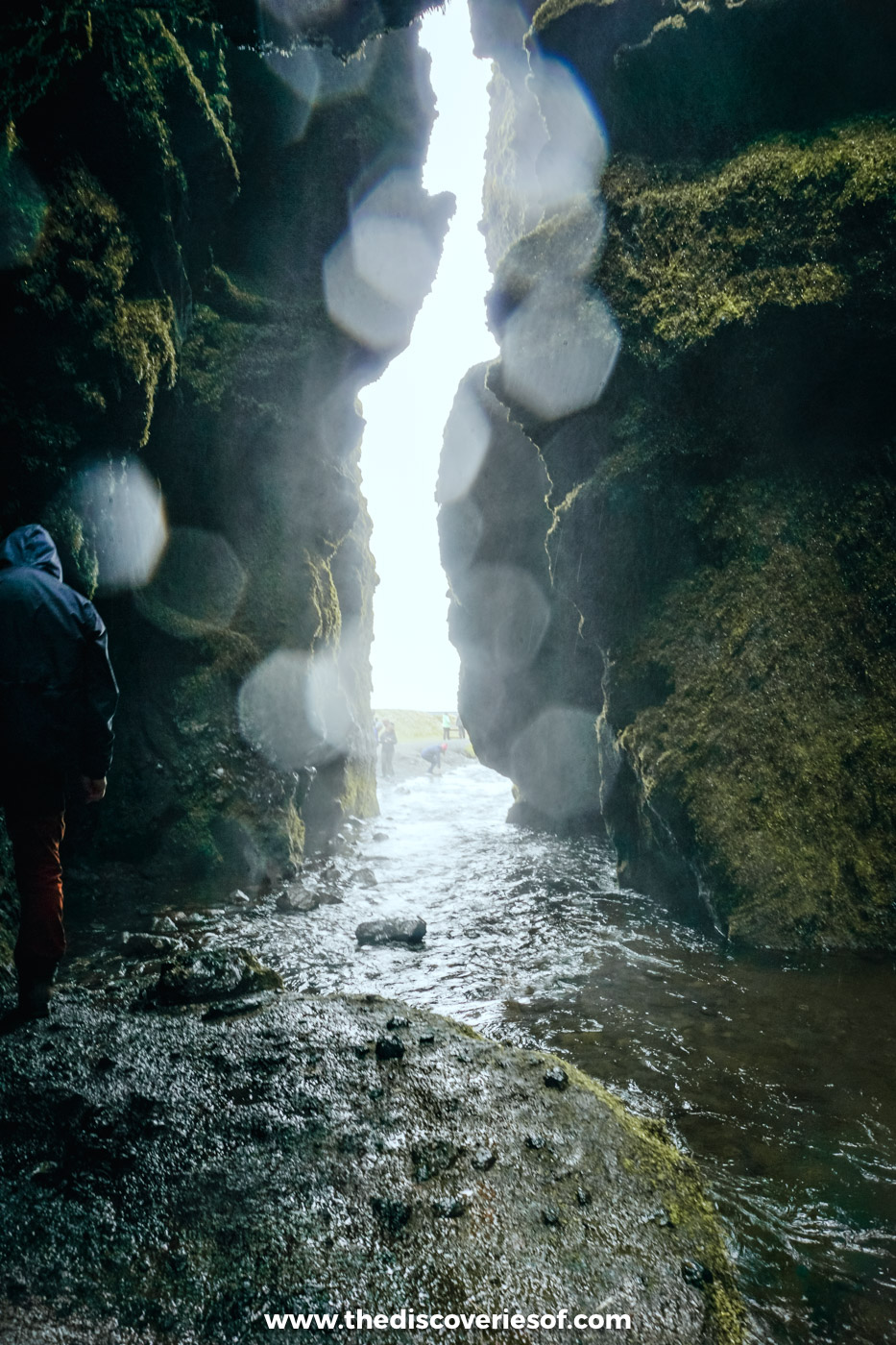
I came here in early May, on a guided super jeep day that started on the black sand at Landeyjafjara and carried on into the canyons of Þórsmörk. I had no idea what was waiting when my guide steered me towards a slim crack in the cliff with a fast stream pouring out of it. A few steps in, the walls opened up, and there it was: a waterfall plunging into a tall stone chamber, with me standing at the bottom of it.
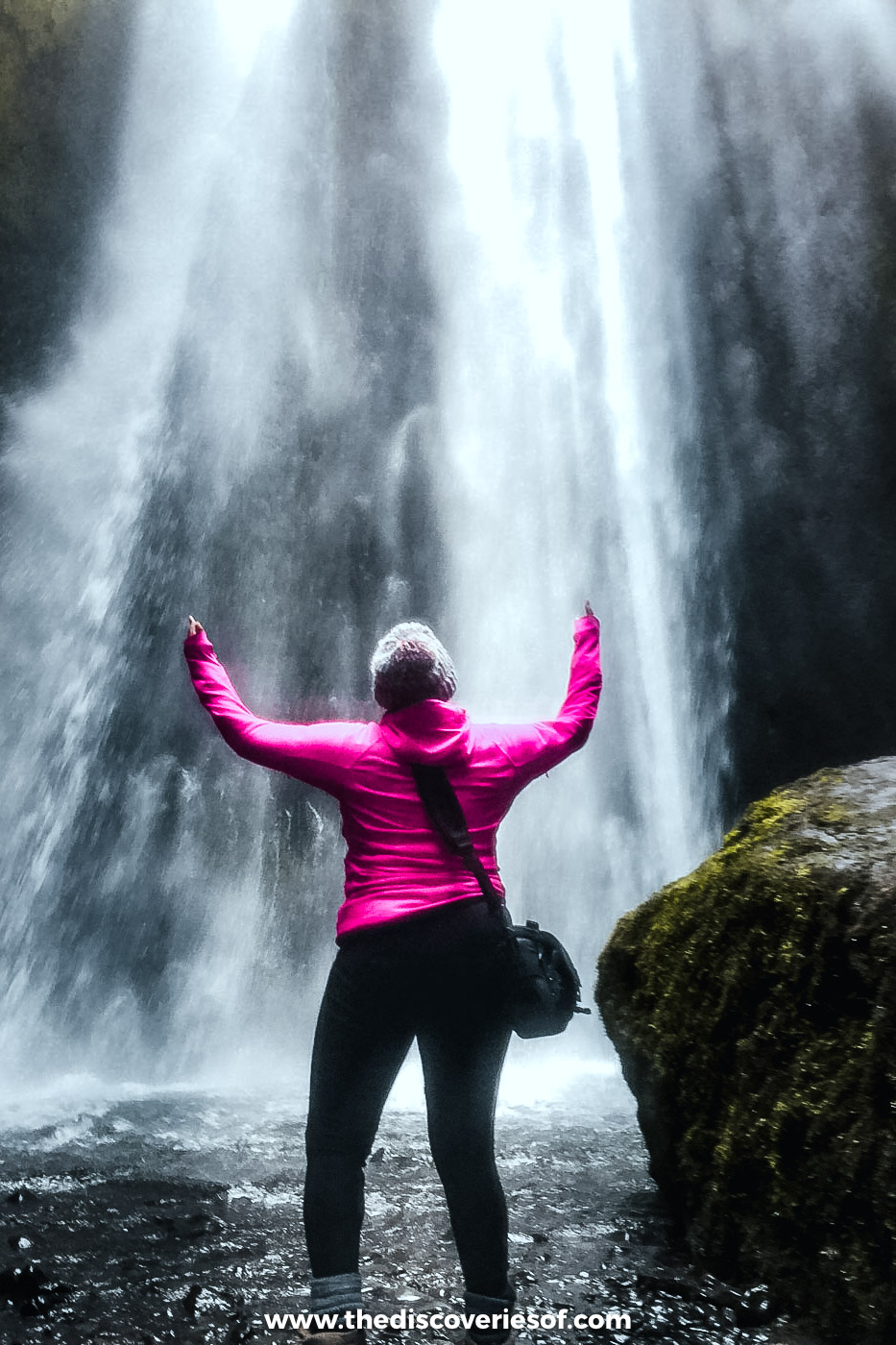
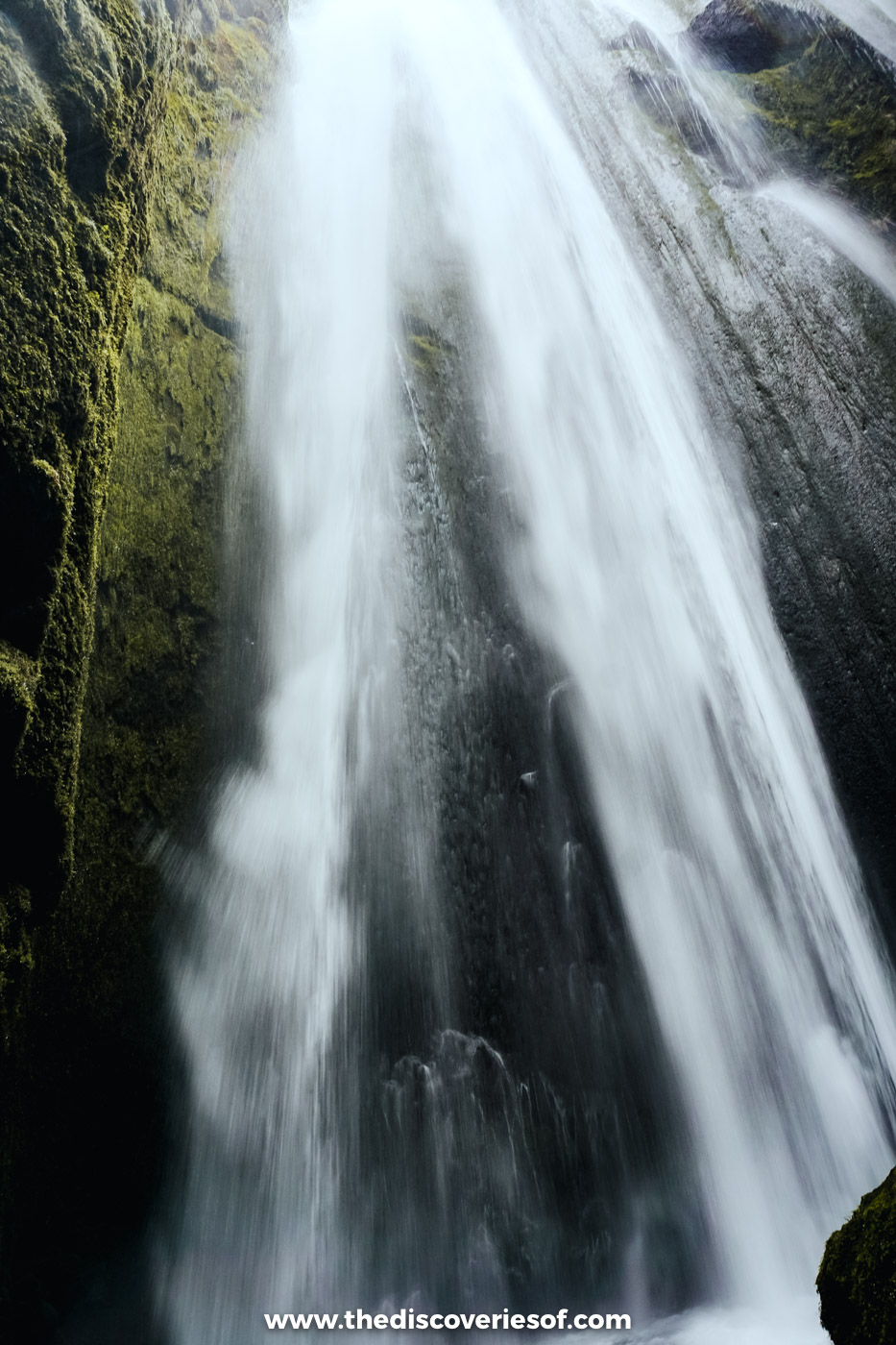
Most waterfalls you admire from a viewpoint. This one you have to get up close and personal with, and that’s exactly why it’s one of my favourites. You don’t so much look at it as stand inside it, with the roar bouncing off the rock and the mist settling on everything you own.
No, it isn’t off the beaten track, whatever you might read about a “secret” waterfall. There was a steady stream of other people edging their way along the water with me. But a crowd can’t take much away from that noise, or from the feeling of the spray closing in around you.
Gljúfrabúi at a glance
- Where: in the cliffs beside Route 249, about 500 metres north of Seljalandsfoss and roughly 130 km east of Reykjavik.
- Height: about 40 metres.
- Cost: free. You pay only for parking at Seljalandsfoss (ISK 1,000 per car at the time of writing, valid all day for both falls).
- Getting in: a 5 to 10 minute walk along the foot of the cliff from the Seljalandsfoss car park, then a few metres up a shallow stream on stepping stones into the gorge.
- Time needed: 30 minutes to an hour, including the walk.
- Best time: early morning or evening in summer, when the coach tours have moved on.
- Open: all day, all year, though the way in can be icy and dangerous in winter.
A waterfall that lives inside the rock
The name roughly translates as “the one who lives in the gorge”, and it couldn’t be more accurate. The small Gljúfurá river, spring-fed rather than glacial, runs off the heath above the cliffs and drops about 40 metres into a deep, narrow chasm.
From the meadow below, you’d barely know it was there. A huge boulder called Franskanef blocks most of the falls, so all you see is the top of the water slipping into a gap in the cliff and a stream running out at the bottom.
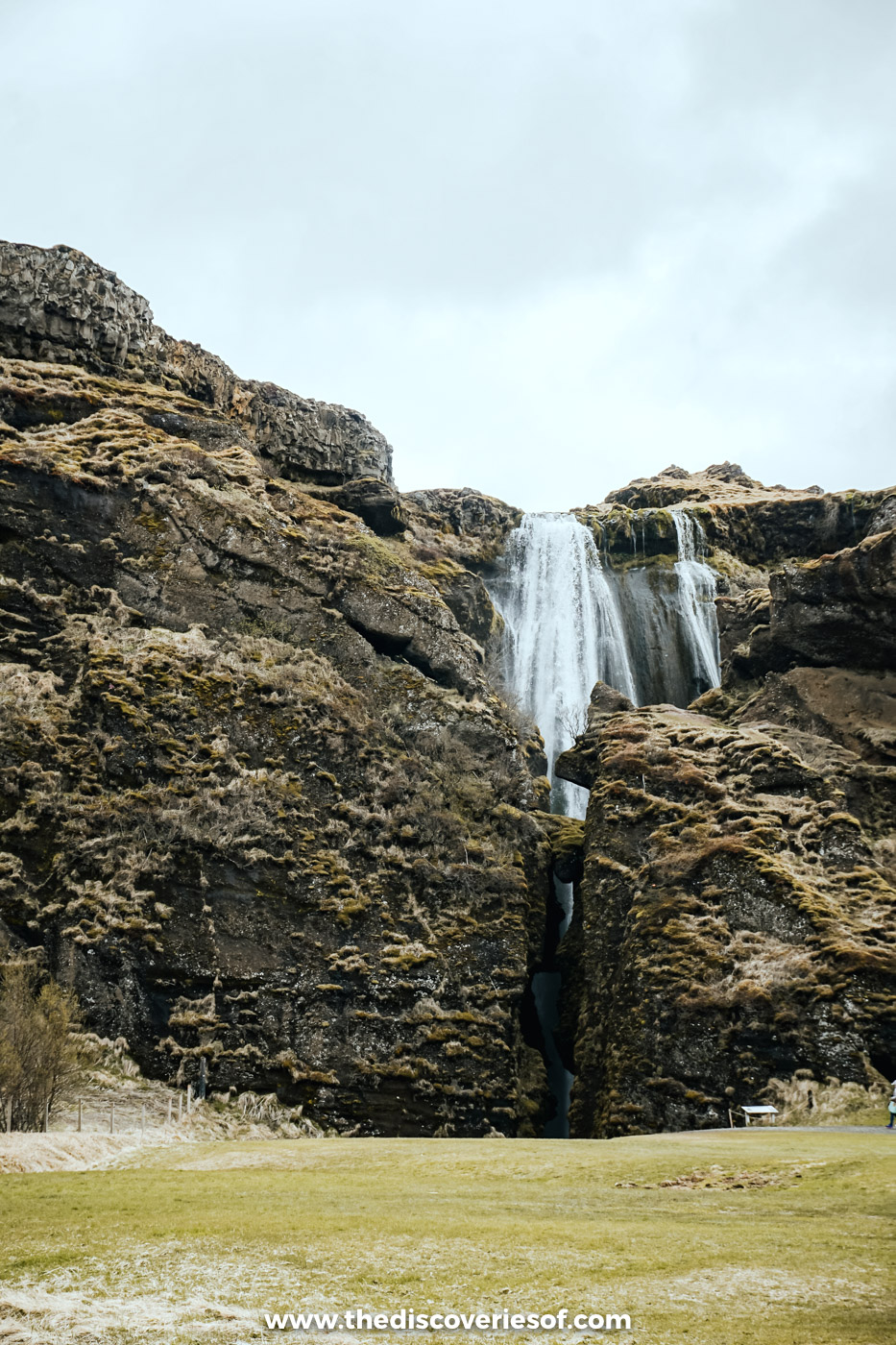
Local folklore says Franskanef and the cliffs around it were home to the huldufólk, Iceland’s hidden people. Below the boulder are the remains of an old bathing pool, and at its inner end is Ömpuhellir, a tiny cave named after a hermit woman who once lived there.
The falls stand on the land of Hamragarðar, an old farm that’s now owned by the local municipality, and they’re a protected natural monument. Stick to the paths and the stream bed.
How to step inside the gorge
The walk from Seljalandsfoss
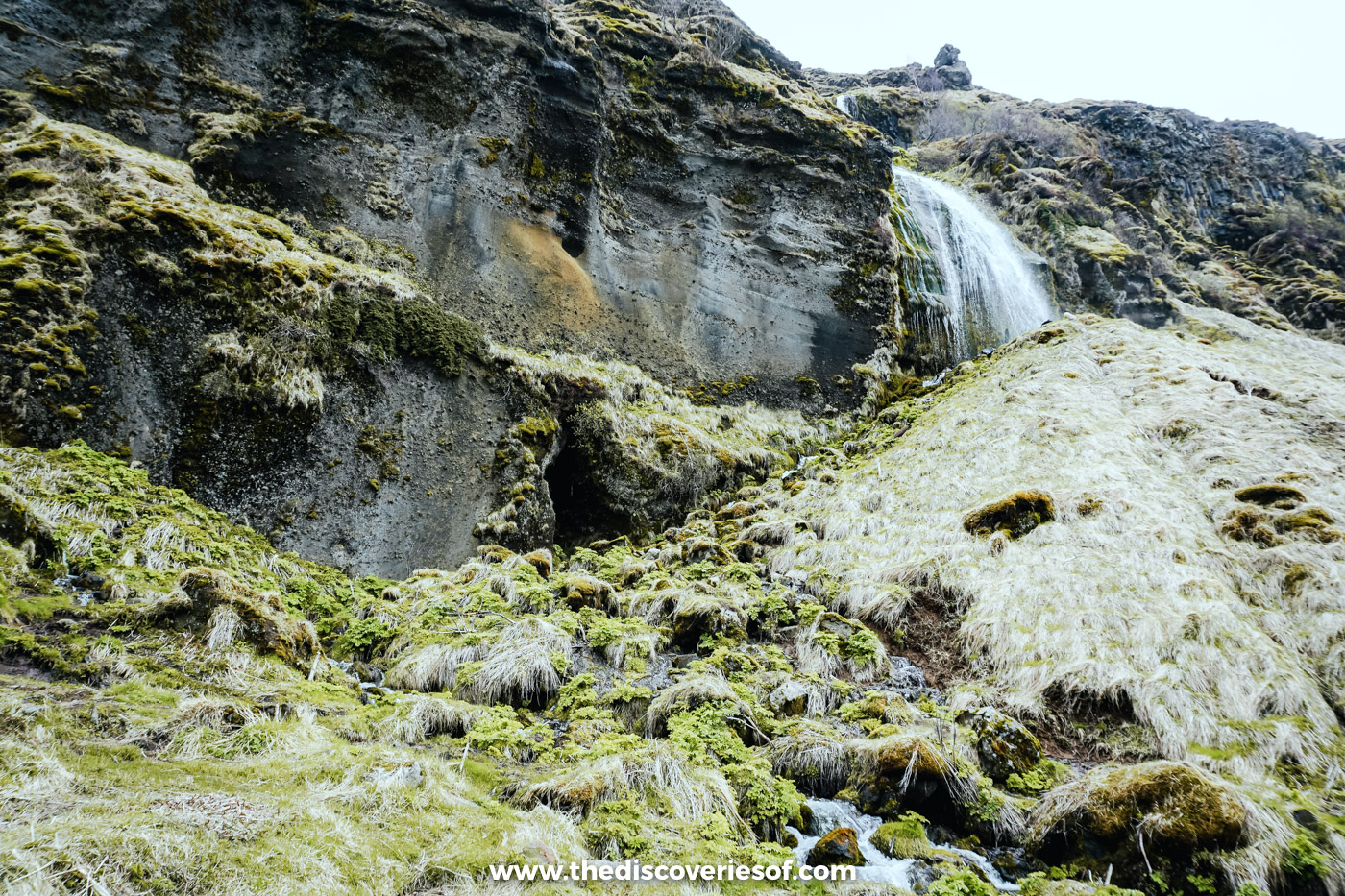
I walked over from Seljalandsfoss, and it’s the way I’d recommend. From the car park, follow the path north along the foot of the cliffs. It’s about 500 metres, flat and easy, and you pass a whole run of smaller falls trickling down the mossy rock on the way. In May, the grass on the slopes beneath them was still pale and flattened from the winter.
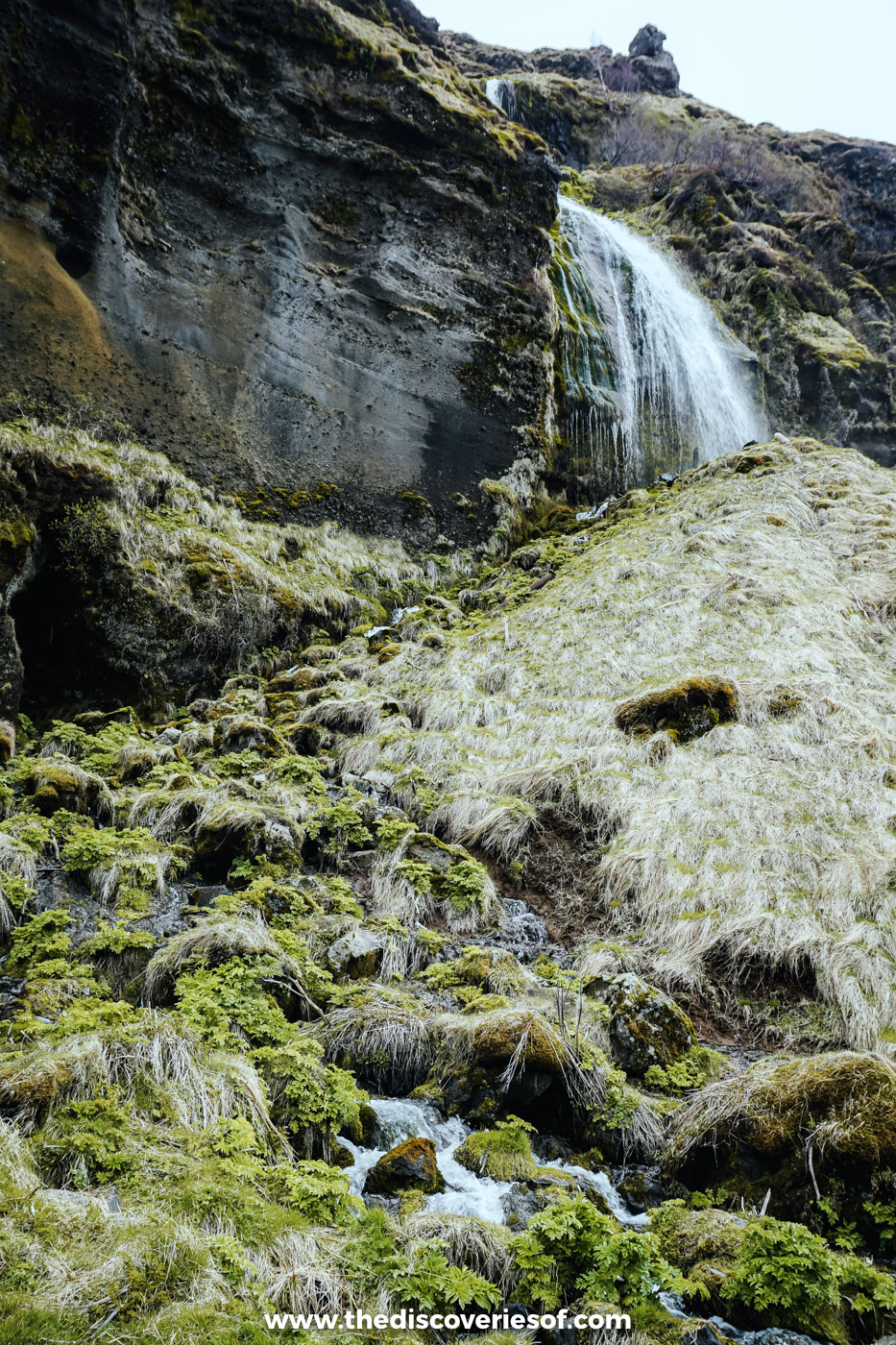
By the Hamragarðar campsite, look for a stream flowing out of a narrow crack in the cliff. That crack is your way in.
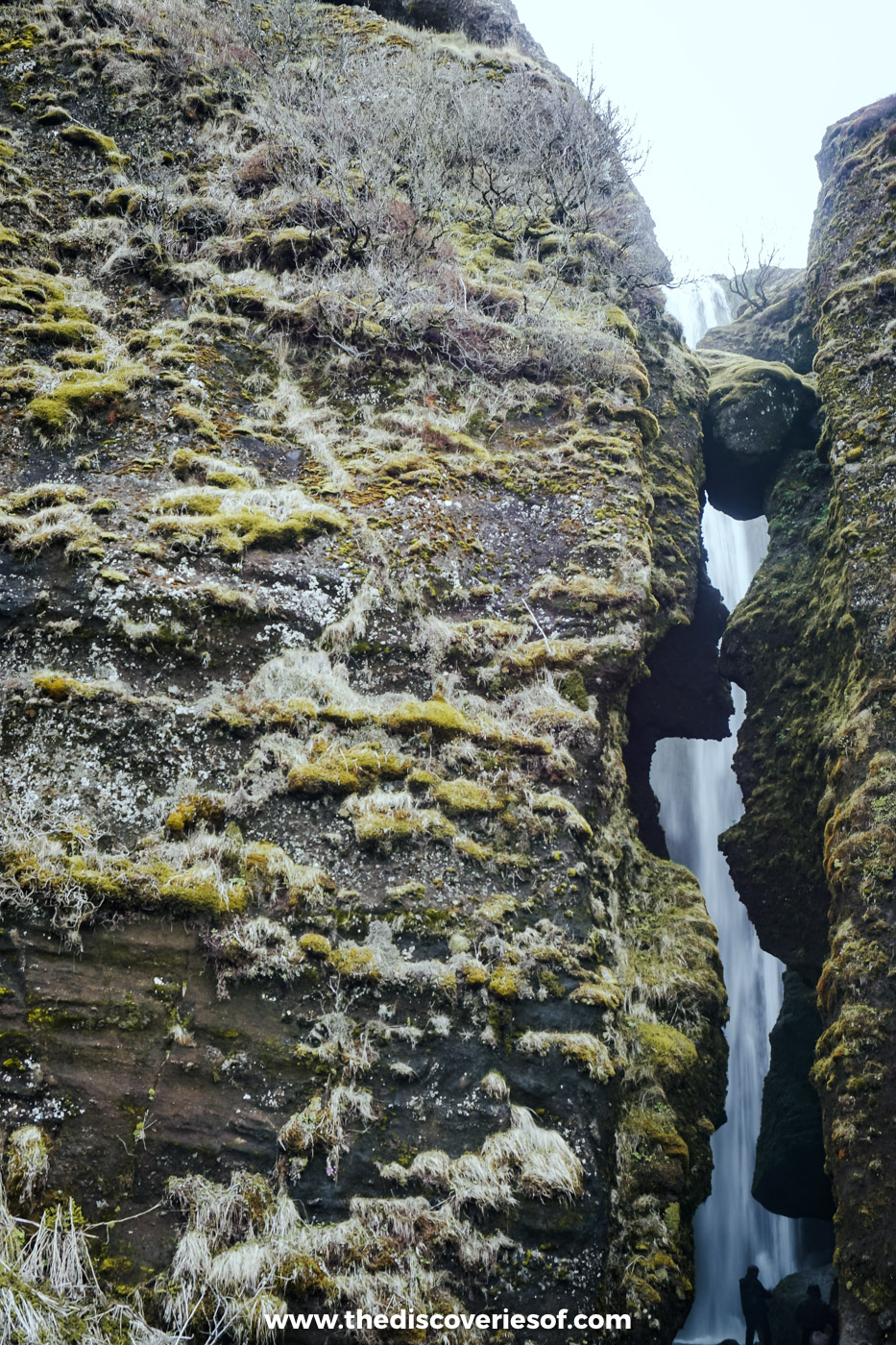
Stepping stones into the chamber
The entrance is a slit only a metre or two wide, and the floor is the stream itself. The water is shallow, though it rises after heavy rain, and a line of stepping stones will keep your feet dry if your balance is up to it. Mine wasn’t: I came out with wet feet, and it was well worth it.
It’s narrow enough that people going in and out have to take turns, so the first few metres can be slow. When I went, there was a queue of people shimmying along the stones in front of me, and the only thing to do was wait and inch forward.
Then the walls open out into a tall, mossy chamber, open to the sky, with the waterfall dropping into it from high above. A big mossy boulder sits near the base, and it’s where most people stop for photos. After that, you just stand there and get wet.
Top Tip
Go in with a free hand. The stones are slick with spray, and you’ll want to steady yourself against the rock on the way in and out.
The view from above
If you’d rather keep your feet dry, there’s a second angle. A narrow path climbs part of the way up the cliff beside the gorge, with a few wooden steps, and looks down over the top of the falls. It’s steep and muddy, so skip it when it’s wet or icy.
Getting there and parking
The falls are on Route 249, the road to Þórsmörk, which leaves the Ring Road just east of the bridge over the Markarfljót river. From Reykjavik it’s about 130 km, or an hour and three quarters to two hours’ drive, through Selfoss, Hella and Hvolsvöllur. Hvolsvöllur is 20 minutes away, and Skógafoss is about 25 minutes further east.
Getting There
Park at Seljalandsfoss. Parking costs ISK 1,000 per car at the time of writing, and one ticket covers both waterfalls for the whole day, so leave the car where it is and walk. Pay at the machines on site or online (the signs show how). A handful of spaces by the Hamragarðar campsite, right next to the gorge, fill up quickly.
Without a car, a south coast day tour from Reykjavik is the easiest way to get here. Almost all of them stop at Seljalandsfoss, but not every stop is long enough for the walk north as well, so check the timings before you book.
Do
This South Coast waterfalls, black sand and glacier tour runs for about 10 hours from Reykjavik, with stops at Seljalandsfoss, Skógafoss, Sólheimajökull, Vík and Reynisfjara.
When to visit
The best time of day
The chamber is so deep and narrow that it’s at its brightest around the middle of the day, when the light reaches down inside. Unfortunately, that’s also when the day tours arrive: the gorge tends to be busiest from mid-morning to late morning and again in mid-afternoon.
In summer, when it stays light until late in the evening, come early in the morning or after dinner and you’ll queue for far less time on the stones.
The best time of year
The falls flow all year. Late spring and summer are the easiest times to get in, though the stream runs higher after heavy rain and during the spring thaw. On my visit in early May, Eyjafjallajökull was still white above the coast, and the meadows below the cliffs hadn’t turned green yet.
Autumn is quieter, and in winter the gorge is a very different (and much riskier) place: more on that below. My guide to the best time to visit Iceland runs through the seasons.
What to wear for the spray
You will get wet in here, whatever the weather is doing outside. A waterproof jacket with a hood and waterproof trousers are the basics.
For your feet, waterproof boots will cope with the stepping stones on most days. When the stream is up after rain, wellies are the surest way to keep your feet dry.
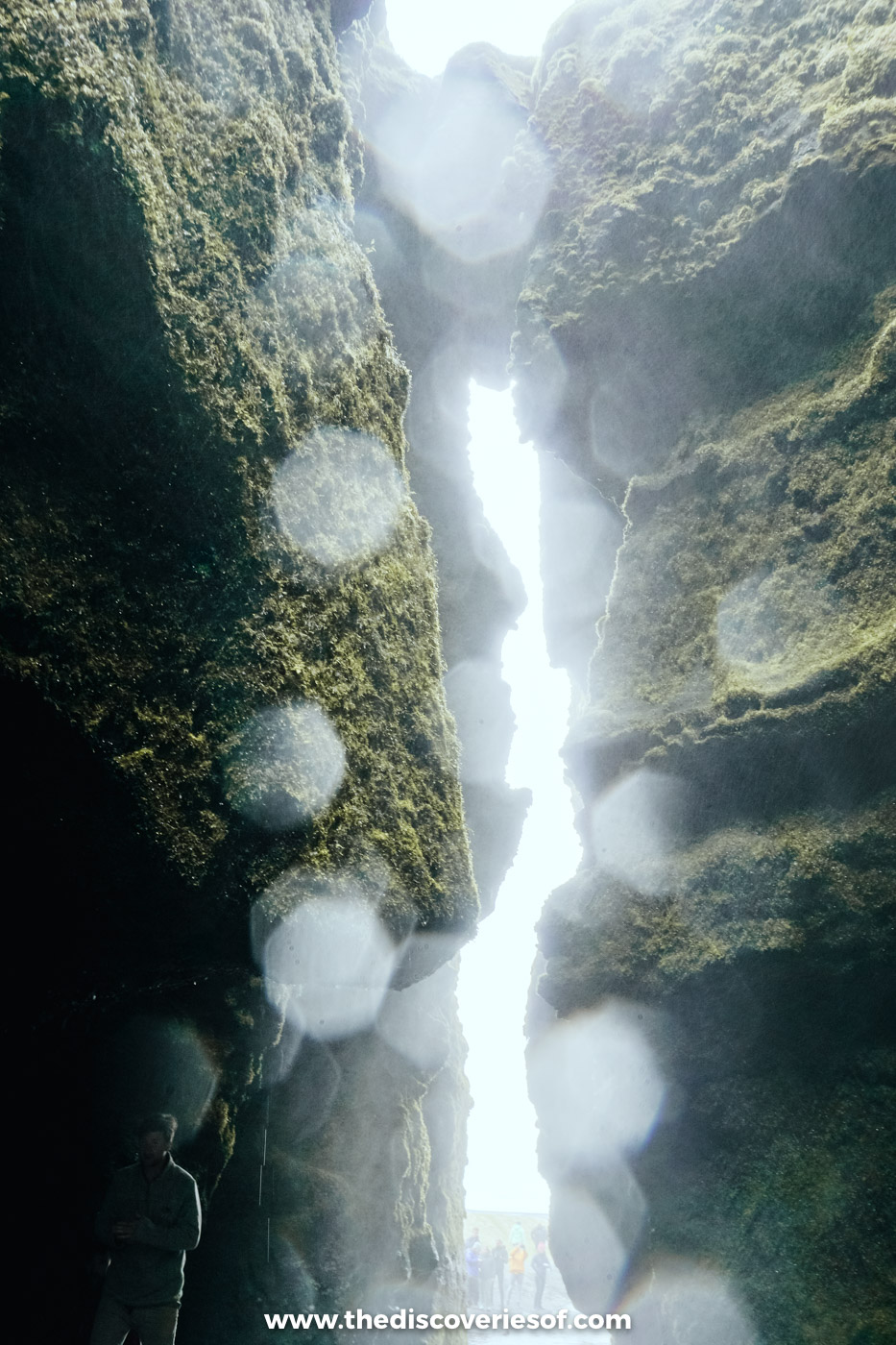
Keep your camera or phone in a dry bag or under your jacket until you’re inside, and have a cloth ready: the spray coats a lens in seconds. My Iceland packing list covers the rest.
Staying safe, and visiting in winter
- Falling rock. South Iceland’s official tourism site warns of rockfall in the gorge. Don’t hang around under the walls, and think twice about going in after heavy rain or a thaw.
- Slippery stones. The rocks in the stream and around the base of the falls are permanently wet. Take it slowly.
- Ice in winter. The stream and its stepping stones ice over, and the way into the gorge can become dangerous or blocked altogether. If it looks icy, enjoy the falls from outside. The path behind Seljalandsfoss is usually closed in winter too.
- Short days. In December and January you’ll get only four or five hours of daylight, so plan the drive around the light.
- Check before you go. Look at the road conditions at umferdin.is and any alerts on safetravel.is before you set off.
More to see nearby
- Seljalandsfoss: 500 metres south along the cliff, the 60-metre falls with a path that loops right round behind the water (usually closed when it’s icy).
- Þórsmörk: Route 249 becomes the F249 and carries on up the valley to Þórsmörk, which is where my super jeep headed next: slot canyons, an underground stream and a hidden waterfall I didn’t quite reach. The river crossings mean super jeep or summer highland bus only. The story is in my guide to Iceland off the beaten path.
- Landeyjahöfn: about 20 minutes away, the ferry port for the Westman Islands, on the wild stretch of black sand where my day began.
- Gluggafoss: about half an hour’s drive away in Fljótshlíð, a tiered waterfall that bursts out through “windows” in the soft rock.
- Skógafoss: 25 minutes east, a 60-metre curtain of water with a staircase of about 500 steps to the top. It’s in my guide to Iceland’s waterfalls.
- LAVA Centre: 20 minutes west in Hvolsvöllur, an interactive volcano and earthquake exhibition, and one of my things to do in Iceland.
Map
Read next
- Iceland waterfalls: 25 of the best
- Iceland off the beaten path: hidden gems to discover
- Things to do in Iceland
- 7 day Iceland itinerary
- Visiting Reynisfjara black sand beach
- Iceland packing list
- Iceland travel guide
Love this? Save and share on Pinterest


Discover the top things to do, insider tips and hidden gems in our Iceland Travel Guide.
Read the guides →