So, you’re thinking of visiting White Sands? You should be. Although White Sands is one of the lesser-known parks it overdelivers when it comes to ethereal landscapes. But when’s the best time to visit White Sands National Park? From the top months to visit to the best activities throughout the year, here’s what you need to know.
Okay guys, listen up. I’m about to spill the deets on the best time to visit White Sands National Park. This striking region centres around giant, brilliant-white dunes. It’s a pretty unique place: while most dunes are made of silica, the sand in this park is made of gypsum, and it’s the largest gypsum dunefield on Earth.
Unbeknownst to many, visiting White Sands National Park is one of New Mexico’s best sights. It’s rather unfortunate that it’s not really on most people’s travel radars, because who’d knowingly deprive themselves of visiting this otherworldly landscape?
I visited in February, on a road trip through the Southwest. It rained for part of the day, but the upside was a blissfully quiet park: I went sledging, walked the Interdune Boardwalk, drove Dunes Drive and tackled the Alkali Flat Trail without battling any crowds. Timing here is about more than the weather, though: heat, wind, missile tests and the park’s evening closing times all shape your day.
If you’re wondering when to plan your visit, I’m here to help. Here’s a handy guide to everything you need to know before you book, from monthly temperatures to the full-moon nights when the dunes stay open late.
The short answer: when to go

Look, I won’t lie and say it’s perfect year-round. We all know that summer crowds aren’t exactly cute, no matter where you go.
But the short and honest answer is that autumn, from late September to early November, is the sweet spot. You’ll encounter fewer crowds than in spring or summer, the days are typically sunny with light winds, and the worst of the heat has gone.
Winter is a close second if you’re happy to wrap up: the park is at its quietest from November to February, and it’s when I went. Spring brings wildflowers but also strong winds and spring-break crowds, while summer is hot, stormy in the afternoons and busy, though it’s the only time of year for the full-moon nights.
- Best overall: late September to early November
- Quietest: November to February
- Busiest: March and July
- Hottest: June and July, with average highs of 97°F (36°C)
- Windiest: March to May
The best time to go for hiking, crowds and budget
What’s the best month to visit?
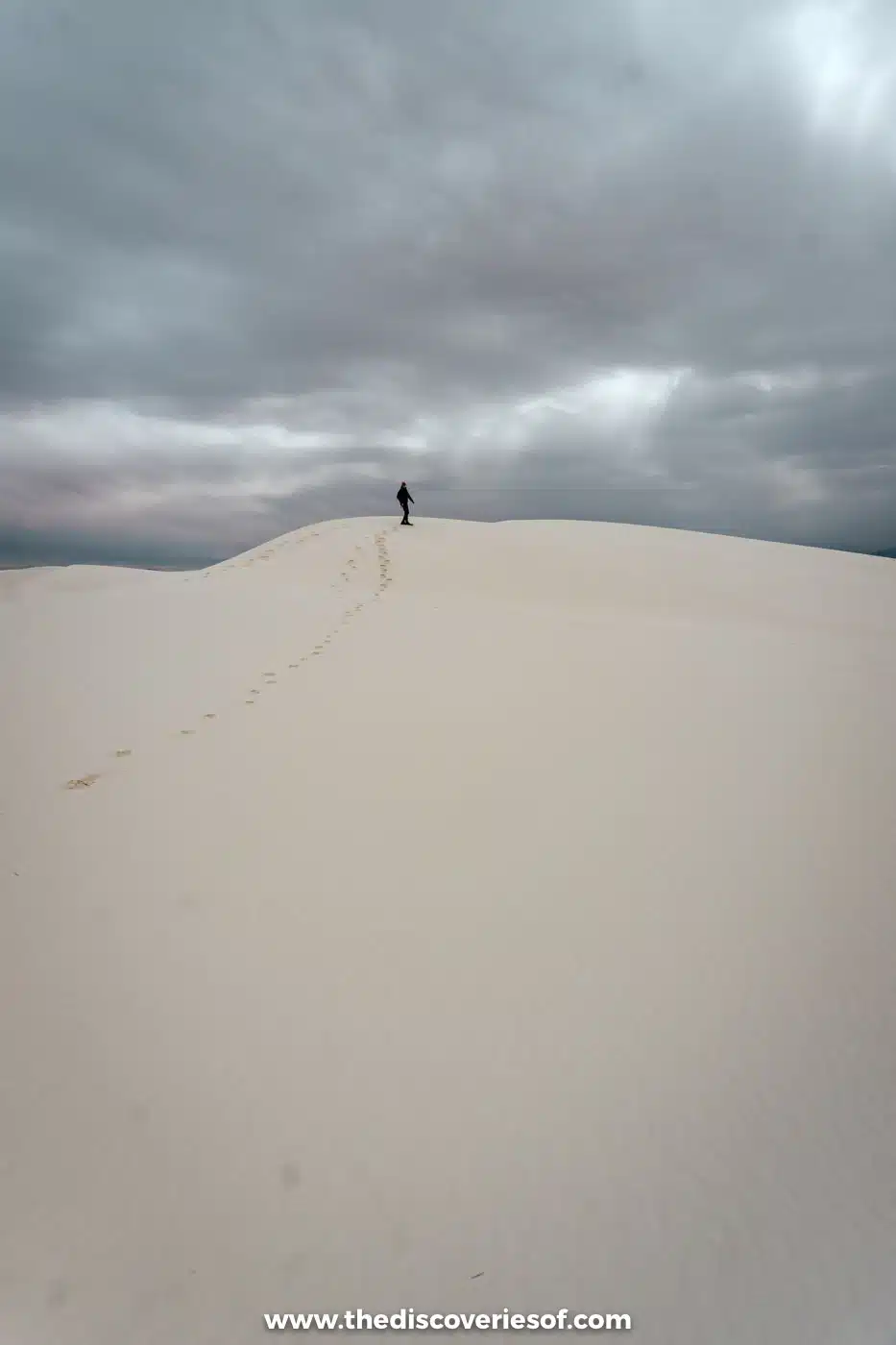
The best time to visit the park for hikes and outdoor activities is October through April. You’ll have a splendid time hiking the Dune Life Nature Trail and the Alkali Flat Trail because the temperatures are milder, and you’ll avoid the scorching summer sun. October is hard to beat: average highs of 79°F (26°C), settled weather and the last of the full-moon nights.
That said, the summer months are popular with stargazers and sunset lovers. Ranger-led sunset strolls run on Fridays, Saturdays and Sundays all year (they’re free, and timed to finish as the sun goes down), and from May to October the park stays open two hours later on full-moon nights.
Are we avoiding the crowds? Hey, we all try. If you’d prefer a more peaceful and mellow experience, consider visiting in September or October. It’s when the crowds begin to thin out finally, and the weather’s still pleasant.
When’s high season?
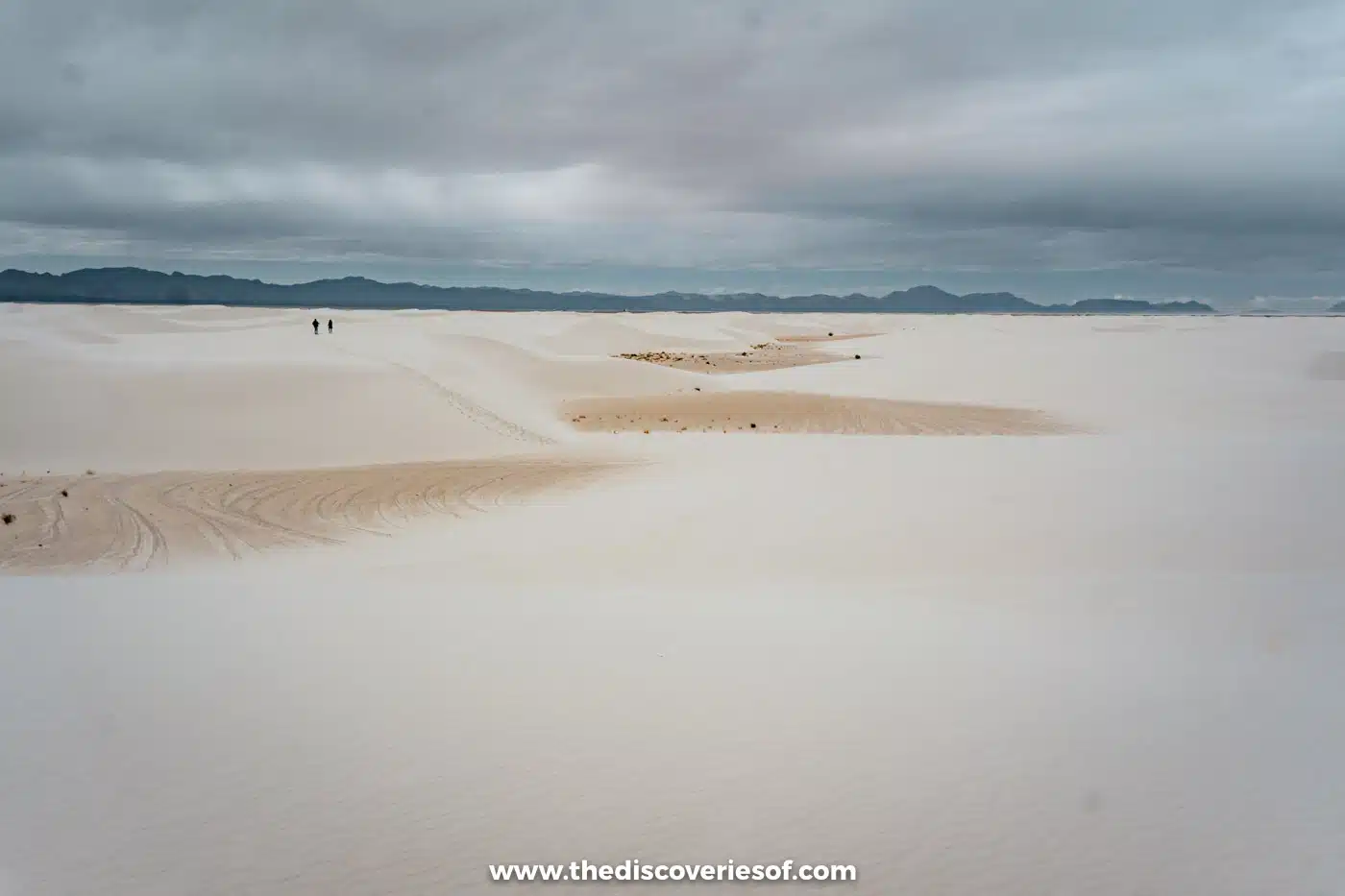
The high season runs from spring into summer. The two busiest months are March, when spring break arrives, and July, each with more than 60,000 visitors (around 2,000 a day). Much like other popular destinations, crowds flock to the site and the most popular sledging dunes, picnic areas and the Interdune Boardwalk get busy.
Naturally, high season means high prices too, and rooms in nearby Alamogordo fill up fastest at these times. But spring’s blissful weather and the summer sun’s rays warming one’s skin tempt people to visit.
The cheapest time to visit
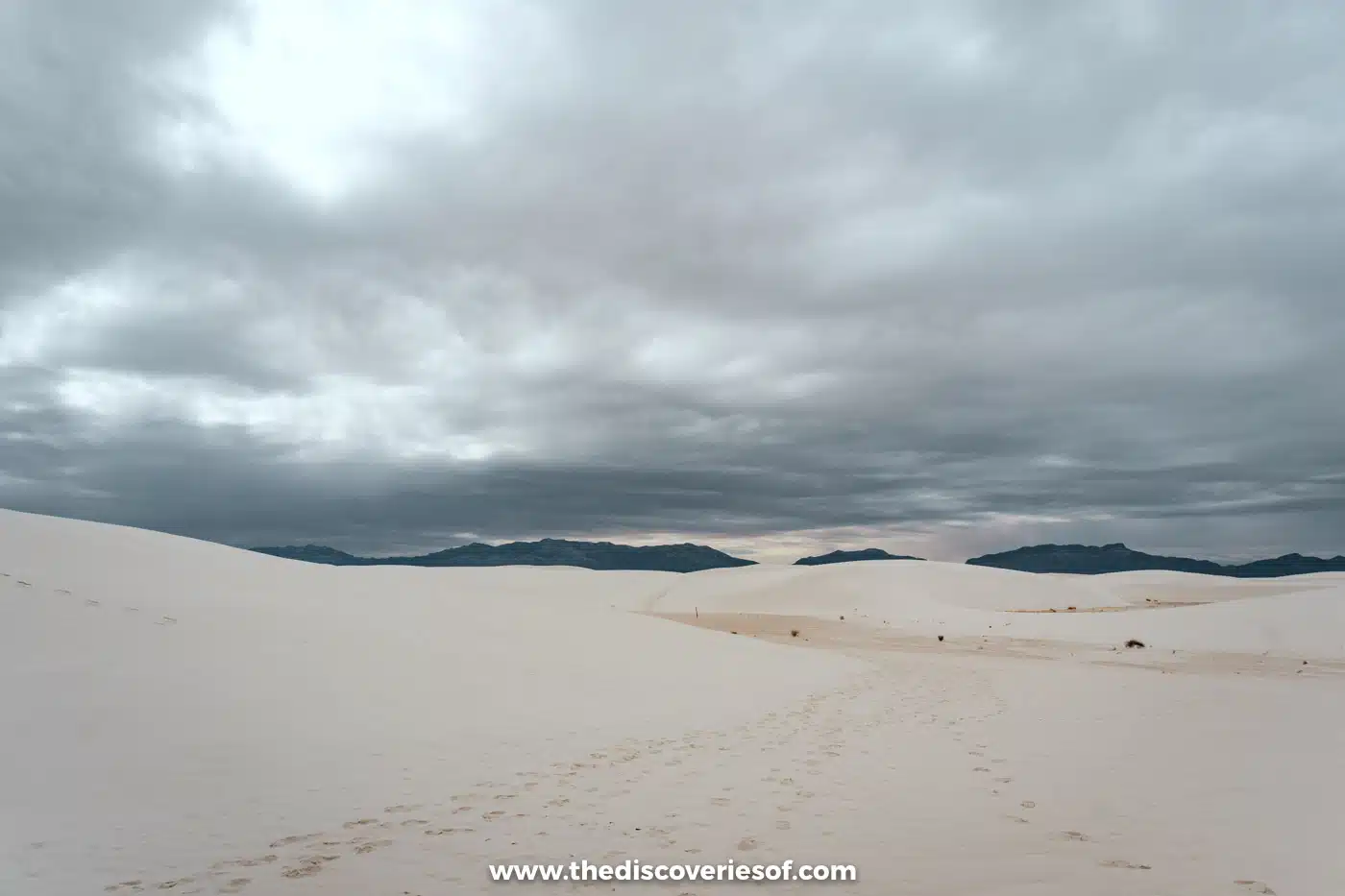
For my money-savvy friends seeking affordable travel, visiting in winter (January, specifically) is a no-brainer.
Not only are you competing with far fewer people for rooms in Alamogordo, so it’s easier to find a good rate, but the crowds aren’t as thick and the days are mild, with average highs of 57°F (14°C) in January. That said, you’ll have to contend with its desert winters: nights drop well below freezing, to an average low of 22°F (-6°C), and the record low is a bone-chilling -25°F (-32°C). No kidding.
Hike the Alkali Flat Trail in the cooler months
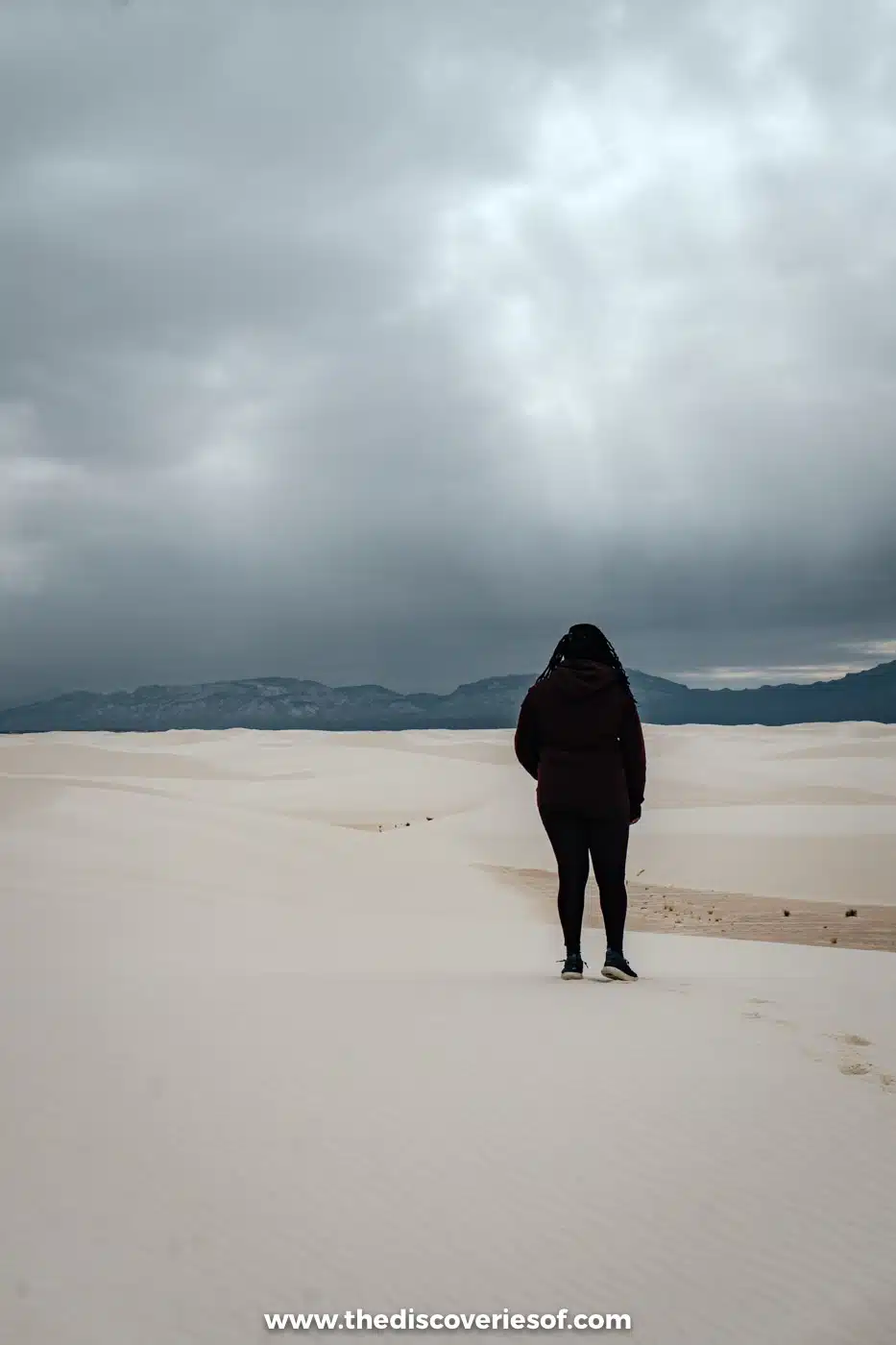
Fancy a challenge? Tackle the Alkali Flat Trail: it’s a marked 5-mile (8 km) loop over some of the park’s biggest dunes, out to the edge of the dry lakebed of Lake Otero.
I’ll be totally honest, it wasn’t my favourite trail, as it was pretty hard work. That said, the views were incredible, and you get to wade into the midst of the sand dunes.
I recommend hiking this in the late winter months. I didn’t have the best weather during my trip in February (it was raining for part of the day) but it’s way busier in the summer and can get dangerously hot. The park recommends that you don’t start a hike when it’s 85°F (30°C) or above, which rules out the middle of the day from May to August, and that you carry at least two litres of water each.
Top Tip
Keep a close eye on the trail markers, as it’s fairly easy to get lost on the trail. You’re hiking through sand the whole way, and there’s no shade, water or toilets, so you need to prepare yourself. Never do this trail in the middle of the day during the summer months: it’s dangerous as the temperatures get so high.
Stroll the Interdune Boardwalk at any time of year

Treat yourself to an easy and unique walk on the out-and-back Interdune Boardwalk. Taking less than 10 minutes to complete, you’ll enjoy this more leisurely way to explore the park, and it’s the one trail that’s fully accessible for wheelchairs and pushchairs.
This easy 0.4-mile (650 m) walk on a raised boardwalk takes you through the heart of some of the smaller dunes and boasts incredible views. I walked it on my February visit. Panels along the way introduce the plants and animals that have adapted to life in the dunes.
Again, it’s better to do this walk in the slightly cooler weather. That said, it’s very short, so it’s not a dealbreaker if you’re there in summer.
Top Tip
Bring your camera as part of your travel gear essentials (can’t forget the essentials, can we?) to capture stunning views. Sledging is banned around the boardwalk, so save the sledge for the dunes further along Dunes Drive.
Drive Dunes Drive when it’s cool (and check for closures)
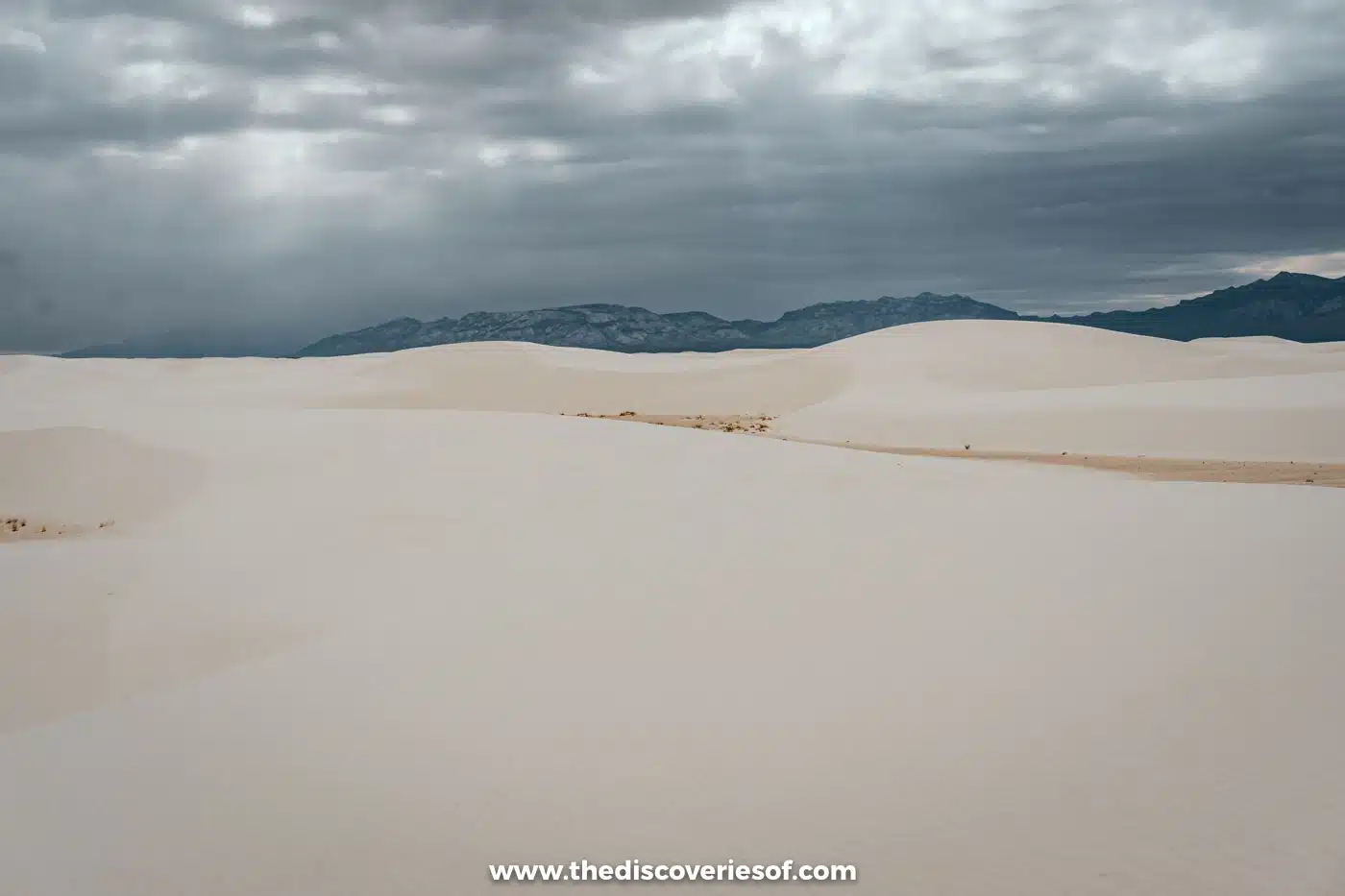
With an estimated 4.5 billion tons (yes, billion) of white gypsum sand in a dunefield that covers 275 square miles, why wouldn’t you want to experience its otherworldly beauty on a scenic drive?
Dunes Drive runs 8 miles (13 km) from the visitor centre into the heart of the dunefield, so it’s a 16-mile round trip. The first five miles are paved and the last three are hard-packed gypsum, bending between giant, captivating dunes. Take in the awe-inspiring views from the comfort of your car on this 45-minute drive, or stop at one of the many pullouts and picnic areas to explore the dunes.
I recommend this drive in the cooler months, when the car shelters you from any pesky rain and the cold. It’s the drive I did in February, with stops to sledge and walk. Just take it slowly after rain: the gypsum road can be slippery when wet, especially in winter.
Top Tip
This drive is perfect if you’re short on time. Make sure you have a car with AC if you’re heading out in summer, and check the park’s closure page before you set off: Dunes Drive can close for up to three hours during missile tests on the neighbouring White Sands Missile Range.
White Sands weather and crowds by season
The park opens at 7am every day of the year except Thanksgiving and Christmas Day, and closes in the evening at a time that changes through the year: around 9pm in midsummer and nearer 6pm by late October, with earlier closing in winter. There are no overnight stays, as backcountry camping is closed with no date set for it to reopen, so you’ll be staying in a nearby town such as Alamogordo. I stayed at Home2 Suites by Hilton in Alamogordo, about 25 minutes’ drive from the visitor centre, and my guide to where to stay near White Sands has the best options.
Spring: wildflowers, wind and spring break
March to May
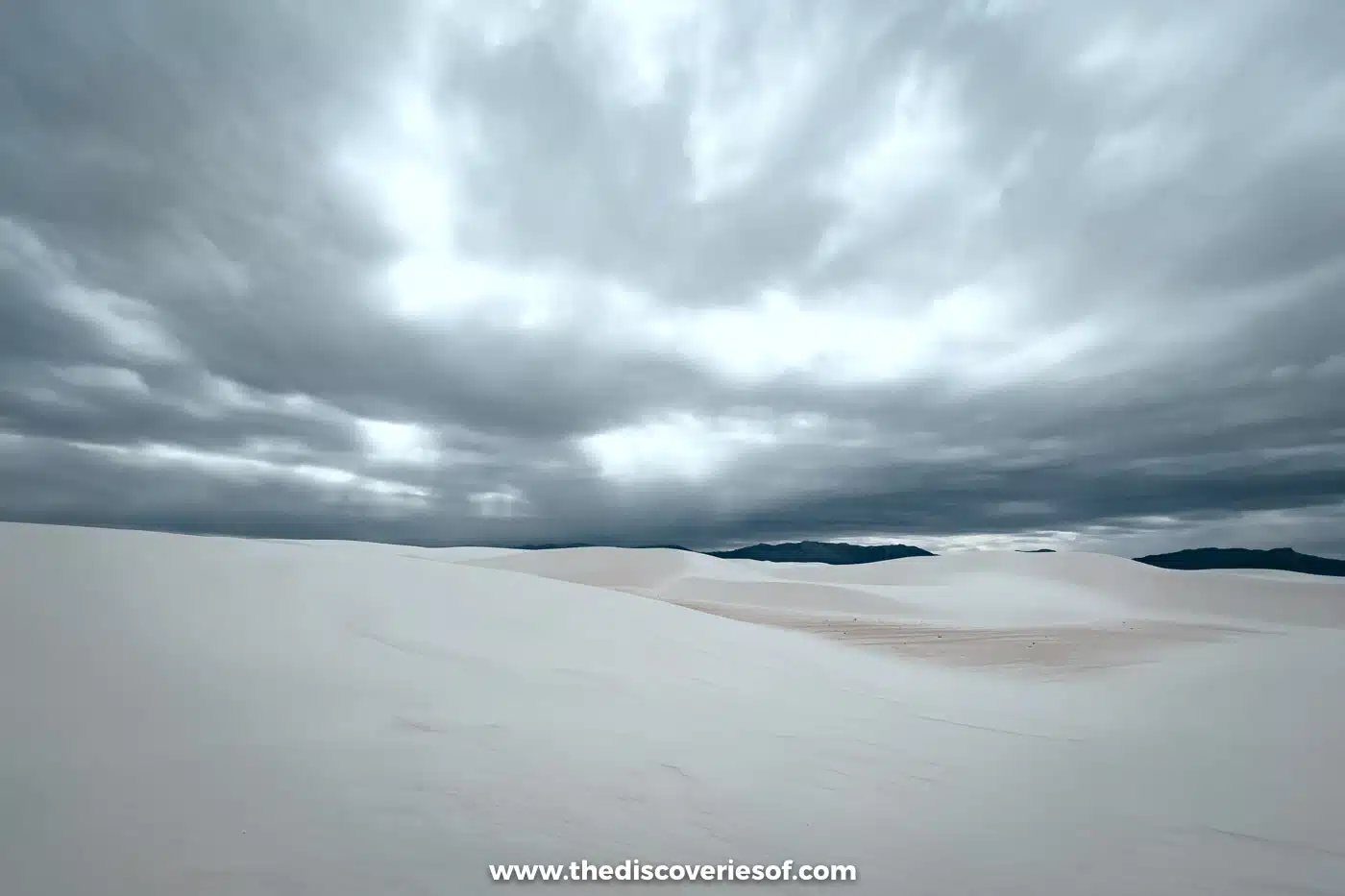
The park may have more crowds than autumn, but spring’s mild temperatures and blooming wildflowers contrasted with white sands make for a picturesque experience. Daytime highs climb from about 71°F (22°C) in March to 88°F (31°C) in May, while nights stay cool.
Key events and things to do in spring
- Take a guided ranger-led sunset stroll through the dunes to learn about the park’s unique ecosystem.
- Sledging down sand dunes is a popular activity here. You can rent or buy a waxed plastic saucer at the park’s gift shop, or bring your own. Just be aware that climbing back up the dunes requires quite some effort!
- Witness the bloom of desert wildflowers. The soaptree yucca is the star of spring, and you’ll find prairie gentian near the start of the Dune Life Nature Trail and purple sand verbena in the heart of the dunes from late April.
Pros of travelling in spring
- Mild, pleasant weather.
- Fewer crowds than in summer, outside the spring-break rush in March.
Cons of travelling in spring
- Spring brings high winds of up to 50mph, and sunny days with strong windstorms are common. Blowing gypsum gets everywhere, so pack sunglasses and a buff.
- Occasional closures due to missile tests.
Summer: heat, storms and full-moon nights
June to August

Summers here are hot and predictably sunny, with average highs of 97°F (36°C) in June and July and some days reaching a scalding 110°F (43°C). From early July to late September, monsoon season brings most of the park’s rain in late-afternoon and evening thunderstorms. But it’s great if you love basking in the sun, and the evenings cool off quickly.
Key events and things to do in summer
- Catch stunning sunset views on a sunset stroll to experience the dunes in the cooler evening hours.
- Enjoy stargazing and view the park’s beautiful, dark skies.
- Attend one of the park’s Full Moon Nights. From May to October, the park stays open two hours later than usual on the night of the full moon, with free live music, ranger talks and guest presenters on some dates (park entry fees still apply).
Pros of travelling in summer
- Enjoy warm, long evenings, with the park open until around 9pm.
- Attend unique events like the Full Moon Night programme.
Cons of travelling in summer
- Can get ridiculously hot, and the white sand reflects around 80% of the sun’s rays, so you burn fast.
- Afternoon thunderstorms in monsoon season: if you hear thunder, get off the dunes and back to your car.
- Very busy on the trails and in the park itself, especially in July.
- Occasional closures due to missile tests.
Autumn: the sweet spot
September to November
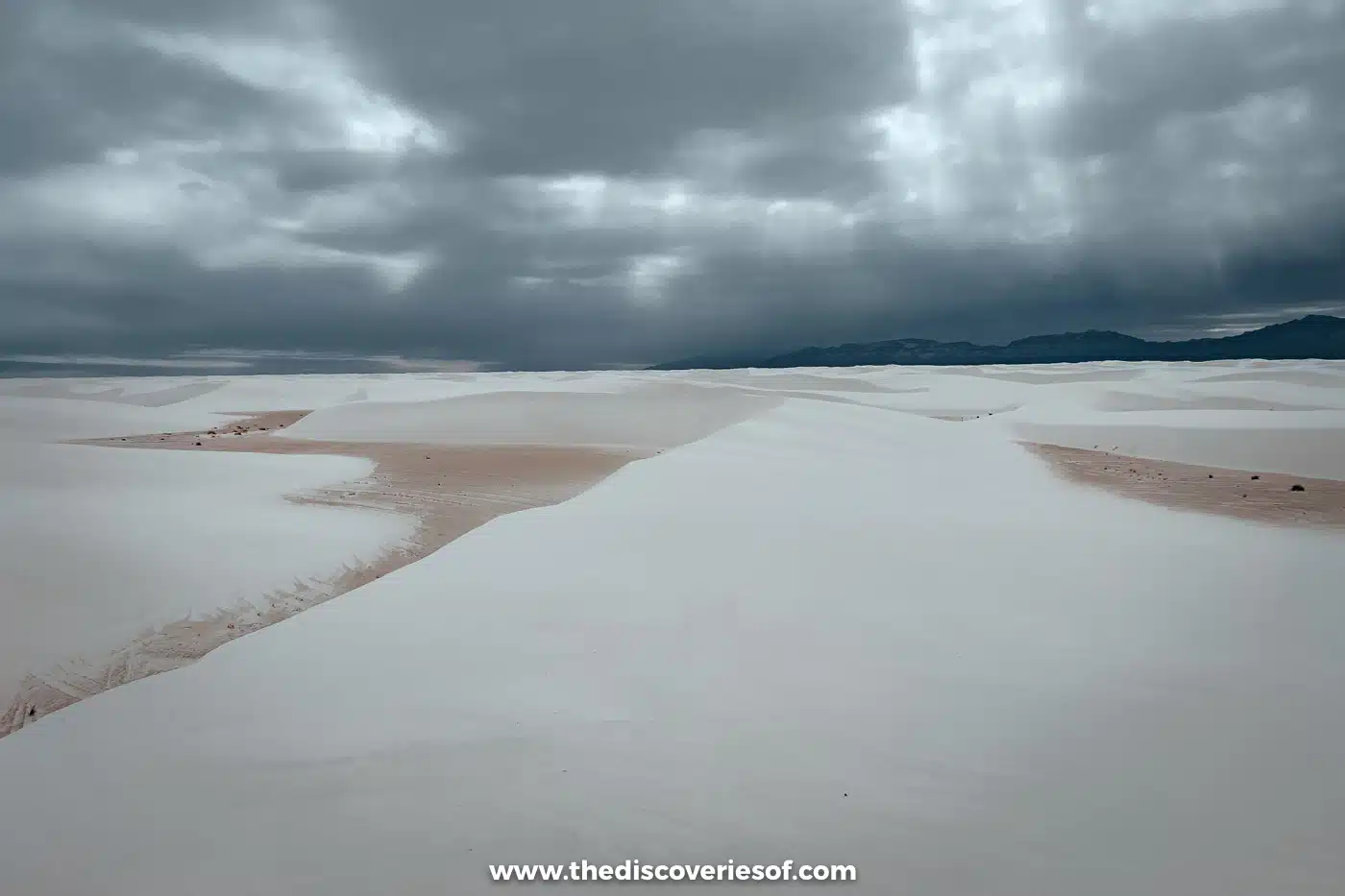
Autumn in White Sands National Park brings oh-so-cool temperatures and fewer crowds, making it an excellent time for hiking and exploring. Highs ease from 89°F (32°C) in September to 67°F (19°C) in November, and the days are typically sunny with light winds.
Key events and things to do in autumn
- Look out for autumn colour from October into November, when the Rio Grande cottonwoods turn orange and the skunkbush sumac turns red along the first five miles of Dunes Drive.
- Enjoy cooler weather for hiking, sledging and stargazing.
- Like summer, attend special events like Full Moon Nights (until October) and sunset strolls.
Pros of travelling in autumn
- Much milder weather: far more manageable on the hikes.
- Encounter fewer crowds.
Cons of travelling in autumn
- Limited lodging nearby, so book Alamogordo early for weekends.
- Much like other seasons, there may be closures due to missile tests.
- Shorter days: by November the park closes in the early evening.
Winter: quiet dunes and cold nights
December to February
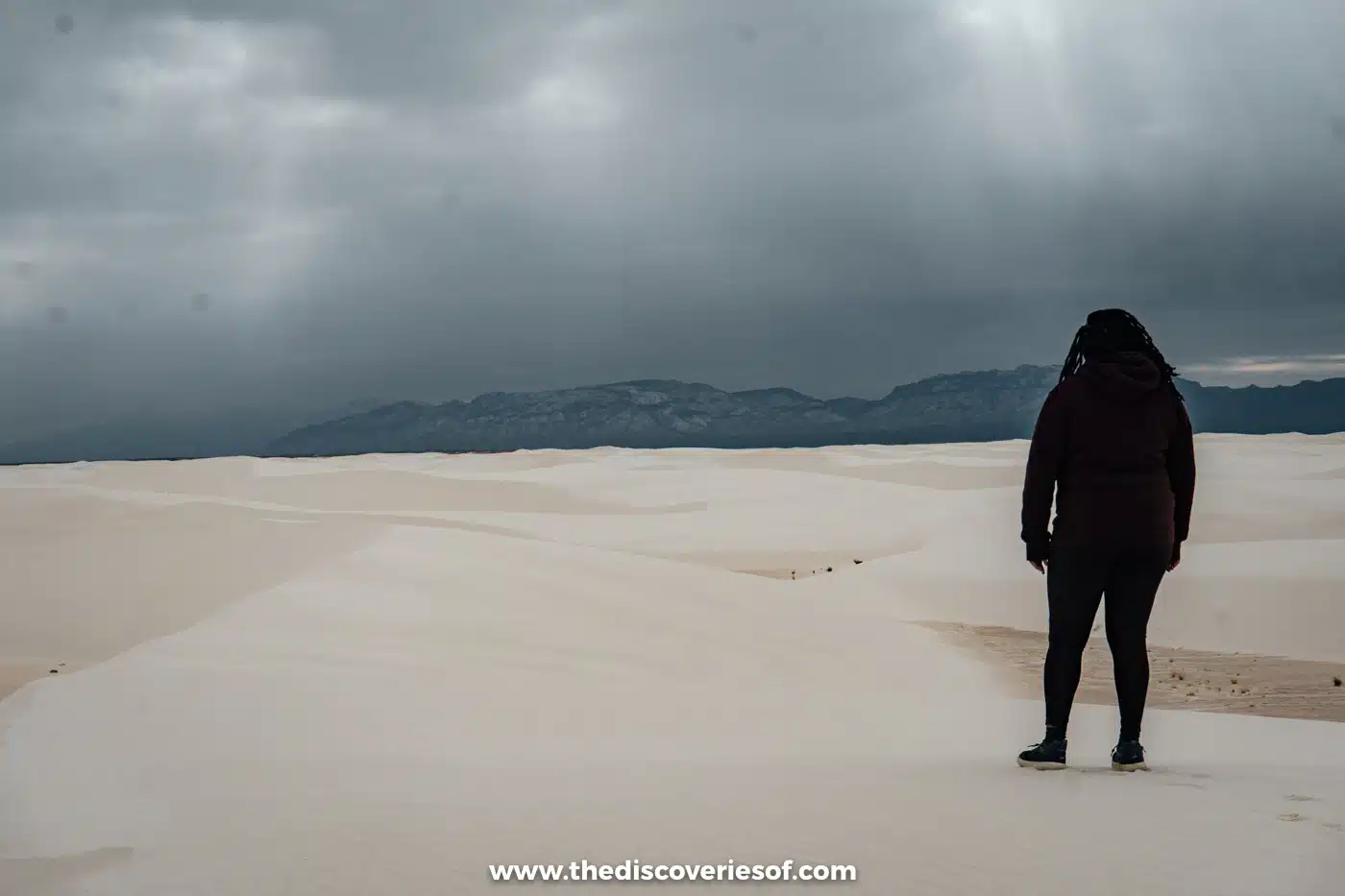
White Sands National Park in winter can be blissful, with smaller crowds and cooler temperatures for hiking. In December, expect average highs of 57°F (14°C) and lows of 21°F (-6°C), with the sun setting around 5pm; by February, highs average 63°F (17°C). The occasional winter storm brings rain and, now and then, a little snow, but dunes covered in snow are a rare sight.
Key events and things to do in winter
- Elevate those winter vibes with sledging, sunset strolls (they start at 4pm in November and December) and stargazing on the long, dark evenings.
- Join a ranger-led tour to Lake Lucero, the dry lakebed where the gypsum comes from, with its exposed selenite crystals. Tours run once a month from November to March; book on Recreation.gov, where tickets go on sale a month ahead and often sell out in minutes.
- Wrap up warm and plan a full day on the dunes: there’s no camping in the park at the moment, as backcountry camping is closed with no reopening date.
Pros of travelling in winter
- Can be really quiet in the winter months: November to February are the park’s quietest months.
- Hiking the trails is far easier going in the cool air.
Cons of travelling in winter
- I didn’t have the best weather during my trip in February (it was raining for part of the day).
- Short days and freezing nights, and the park is closed on Christmas Day.
Practical tips for timing your visit
- Bring a water bottle and wear a buff, you’ll thank me later.
- If you’re visiting multiple parks on one trip, I strongly urge you to consider buying an America the Beautiful pass to save money. It costs $80 for US residents and $250 for non-residents (from 2026), while entry to White Sands alone is $25 per vehicle, valid for seven days.
- Wear sunscreen, a hat, closed-toe shoes and sunglasses. Especially in summer: sand gets everywhere and is hella bright.
- Check the park’s closure page the day before you go. Missile tests can close Dunes Drive, and sometimes US 70 between Alamogordo and Las Cruces, for up to three hours.
- Arrive early or stay late. The light is softest after the 7am opening and before closing, and you’ll dodge the midday heat in summer.
Map
Read next
- Brilliant things to do in White Sands National Park
- Where to stay near White Sands National Park
- Stunning hikes in New Mexico
- When’s the best time to visit New Mexico?
- New Mexico landmarks you have to see
- The ultimate New Mexico road trip itinerary
Love this? Save and share on Pinterest


Discover the top things to do, insider tips and hidden gems in our USA Travel Guides.
Read the guides →