

Rock art in a volcanic canyon, white gypsum dunes, a snowy summit reached by tram and slot canyons you have to book: these are the best hikes in New Mexico, with distances, climbs, permits and the tips you need for each trail.
There’s no denying the fact that the Land of Enchantment lives up to its reputation.
This southwestern state is home to a wealth of landmarks and hiking trails that are nothing short of breathtaking. From the rugged mountains and mesas to the expansive deserts and canyons, New Mexico is a state of contrasts that I implore you to explore.
I spent a week here one February, on a road trip from White Sands up through Albuquerque and Taos to Santa Fe, and some of the best moments were on foot: playing spot the petroglyph in Rinconada Canyon, a snowy afternoon in the foothills above Santa Fe, a short and very cold walk at the top of Sandia Peak and the slog across the dunes to Alkali Flat.
And, while checking out the state’s man-made landmarks is an experience in itself, there’s nothing quite like heading out on foot along the hiking trails that weave through its spectacular landscape. From the slot canyon at Tent Rocks and the cliff dwellings of Bandelier to the climb up Wheeler Peak, the state’s highest point, and wild walks through badlands, gorges and ancient Chacoan ruins, this is one of the most varied hiking states in the country.
A little planning goes a long way. Much of the state sits high: Santa Fe is around 7,000 feet and the top of the Sandias is over 10,000, so take it easy on your first day. Winter brings snow to the mountains and foothills, summer brings heat to the deserts, and a few of the most popular trails now need a reservation, all of which is covered below.
Get ready for an adventure with this brilliant New Mexico hiking guide.
The best hikes in New Mexico
Play spot the petroglyph in Rinconada Canyon
Distance: 2.2 miles out and back
Elevation gain: minimal, but on soft sand
Time: 1 to 1.5 hours
Difficulty: easy to moderate
Trailhead: Rinconada Canyon car park, Unser Boulevard at St Joseph’s Avenue, Albuquerque
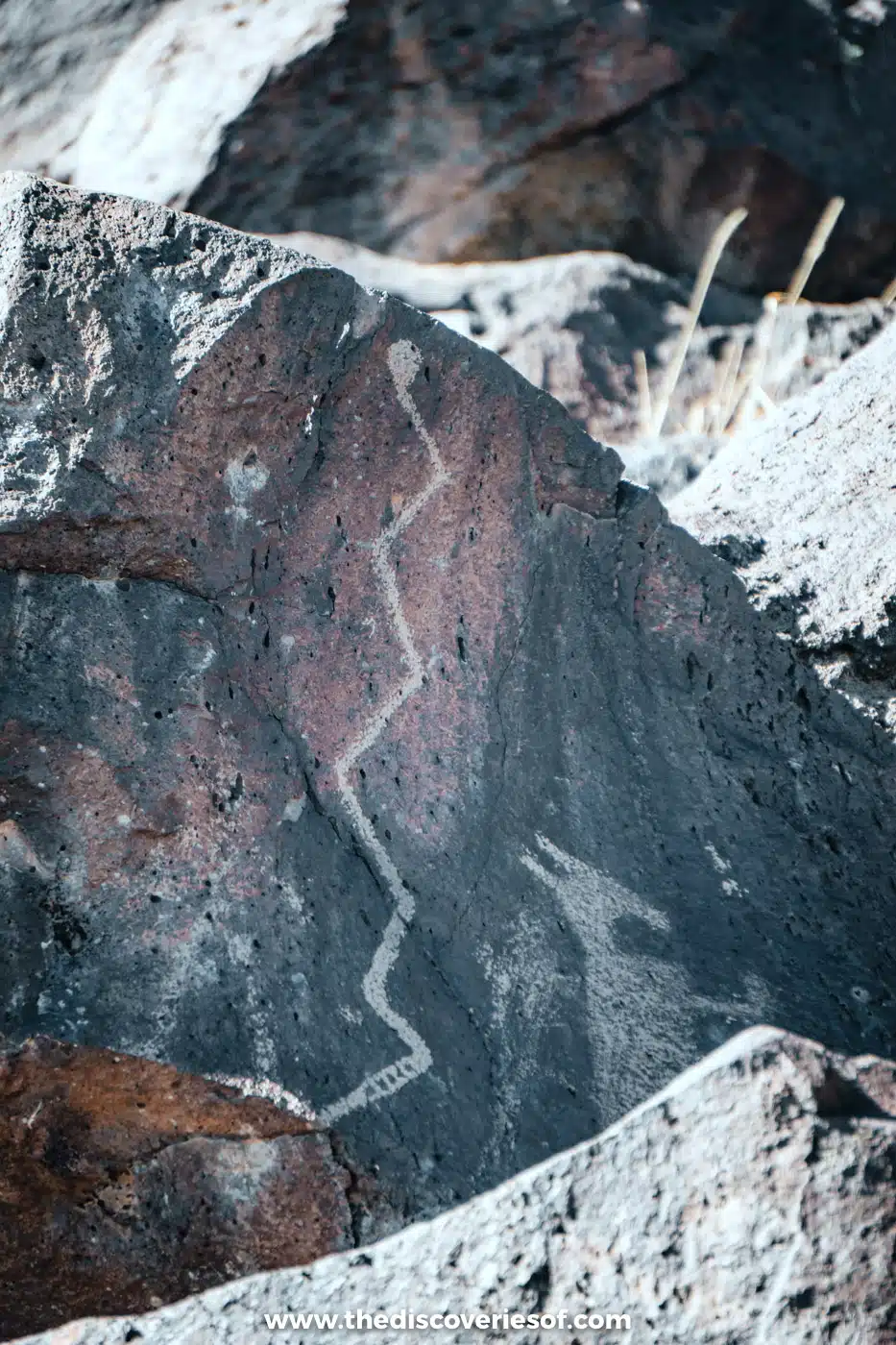
Located within the Petroglyph National Monument on Albuquerque’s West Side, the Rinconada Canyon trail is a must-do when planning your NM itinerary, and it was my favourite walk in Albuquerque. Following the walls of the Rinconada Canyon, the route cuts through volcanic boulders, eventually reaching many petroglyphs.
With roughly 300 of these located along the canyon, you’ll have a lot to look out for and, depending on the sun’s position, some are more visible than others. Most were carved by ancestral Pueblo people between about 1300 and 1680, by chipping through the dark coating on the basalt boulders to the lighter rock beneath: spirals, animals, stars, masked figures and handprints.
This is where you play spot the petroglyph. The carvings sit among the boulders on the escarpment beside the trail rather than on display, so you have to hunt for them, and the further you progress, the more you get to see. Bring binoculars, because plenty are high up the slope, and try to work out what each one shows yourself before you read the signs. A ranger told me to allow about an hour and a half, so don’t rush it.
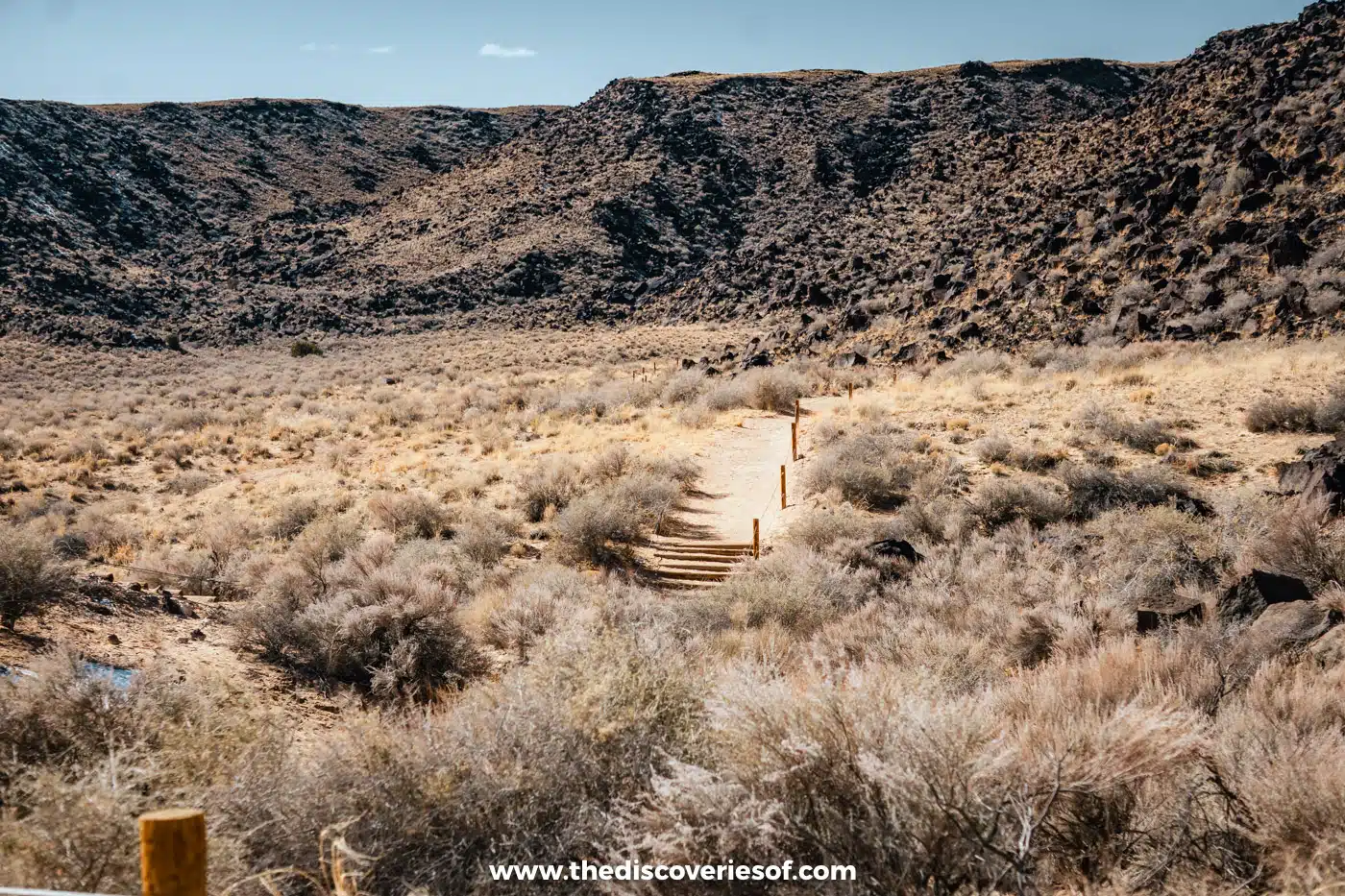
This out-and-back trail is ideal for an immersive adventure without breaking a sweat. The trail runs 1.1 miles to the back of the canyon, then you double back on the same path, and while making your way, you’ll have stunning views of the Sandia Mountains. Albuquerque was sunny but freezing when I visited in February; in summer there’s no shade at all, so go early.
Entry and parking are free. The car park is open from 8am to 5pm daily and has a vault toilet but no water, and leashed dogs are allowed on this trail. Stay on the path and never touch the carvings: the oils on your skin damage them.
Wander the Dale Ball Trails in the foothills above Santa Fe
Distance: a 24.4-mile network of linked trails, so choose your own loop
Elevation gain: gentle in the north and central sections, steeper in the south
Time: anything from an hour to all day
Difficulty: easy to moderate
Trailhead: Sierra del Norte on Hyde Park Road, or Cerro Gordo at the top of Upper Canyon Road
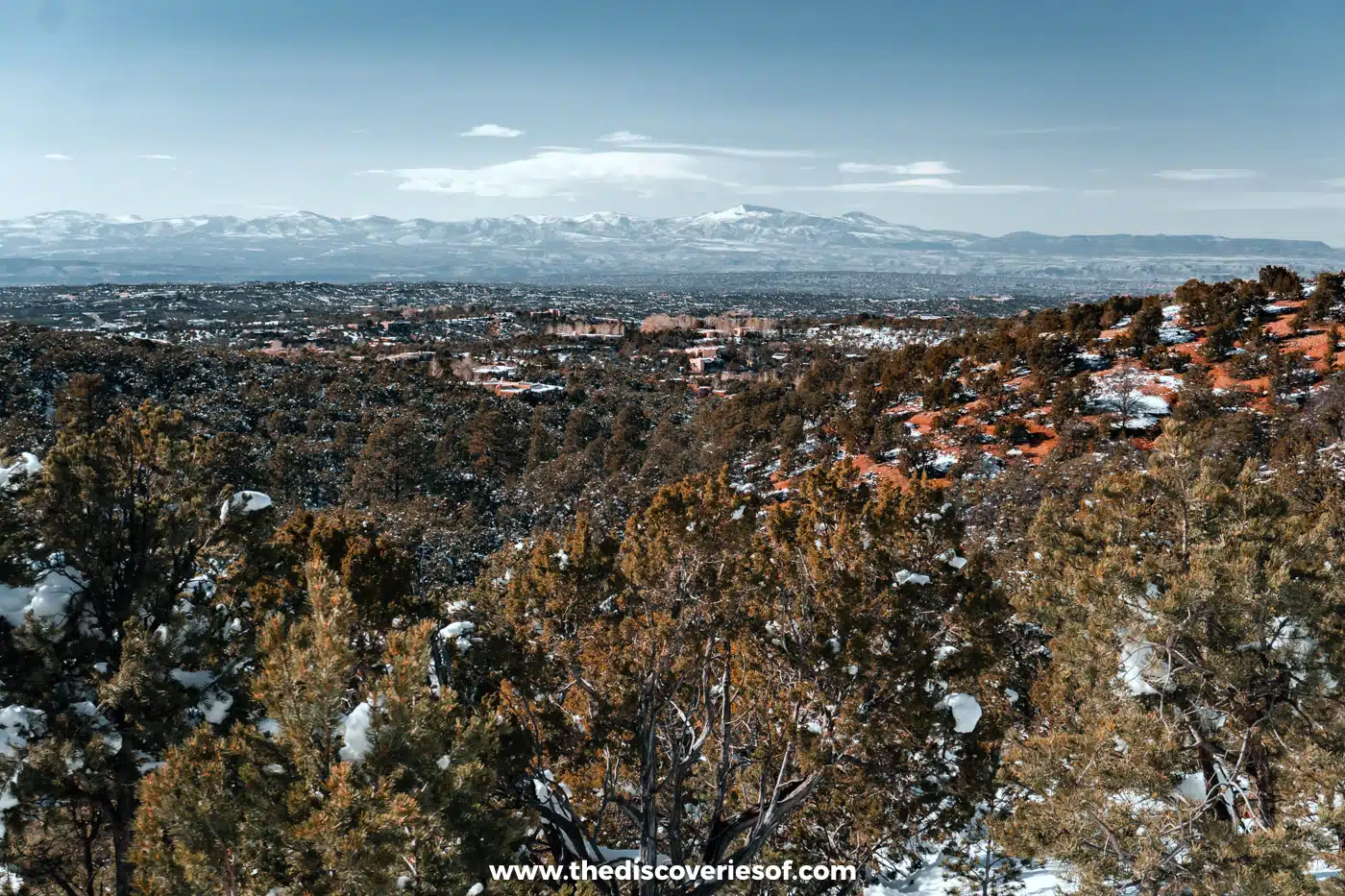
You don’t have to go far from Santa Fe to find great hiking. The Dale Ball Trails start a few minutes’ drive from downtown, winding through piñon and juniper in the Sangre de Cristo foothills, with views back over the city’s adobe rooftops and out to the mountains beyond.
I arrived in Santa Fe before I could check in, so after lunch I headed straight up into the foothills. There was snow on the ground (it was February in Santa Fe, after all), the trails were very pretty, and I loved hiking here. It’s the easiest way to get a dose of nature without leaving the city behind.
You could spend anything from an hour to all day working your way around the different trails in the system. Junctions are numbered and signposted, so it’s easy to make up a loop as you go. The north and central sections, reached from the Sierra del Norte trailhead, have the gentlest terrain; the south section from Cerro Gordo is steeper and links to Picacho Peak and the Atalaya Trail in the Santa Fe National Forest.
The trails are free, shared with mountain bikers and open to dogs on a leash. You’re already around 7,000 feet up here, so drink plenty and don’t be surprised if you’re puffing on the climbs.
Ride the tram for a snowy walk at the top of Sandia Peak
Distance: 0.3-mile Peak Nature Trail, or as far as you like along the South Crest Trail
Elevation: about 10,378 feet at the top of the tram
Time: 15 minutes each way on the tram, plus an hour or more at the top
Difficulty: easy, but high, cold and icy in winter
Trailhead: Sandia Peak Tramway upper terminal (the lower terminal is in north-east Albuquerque)
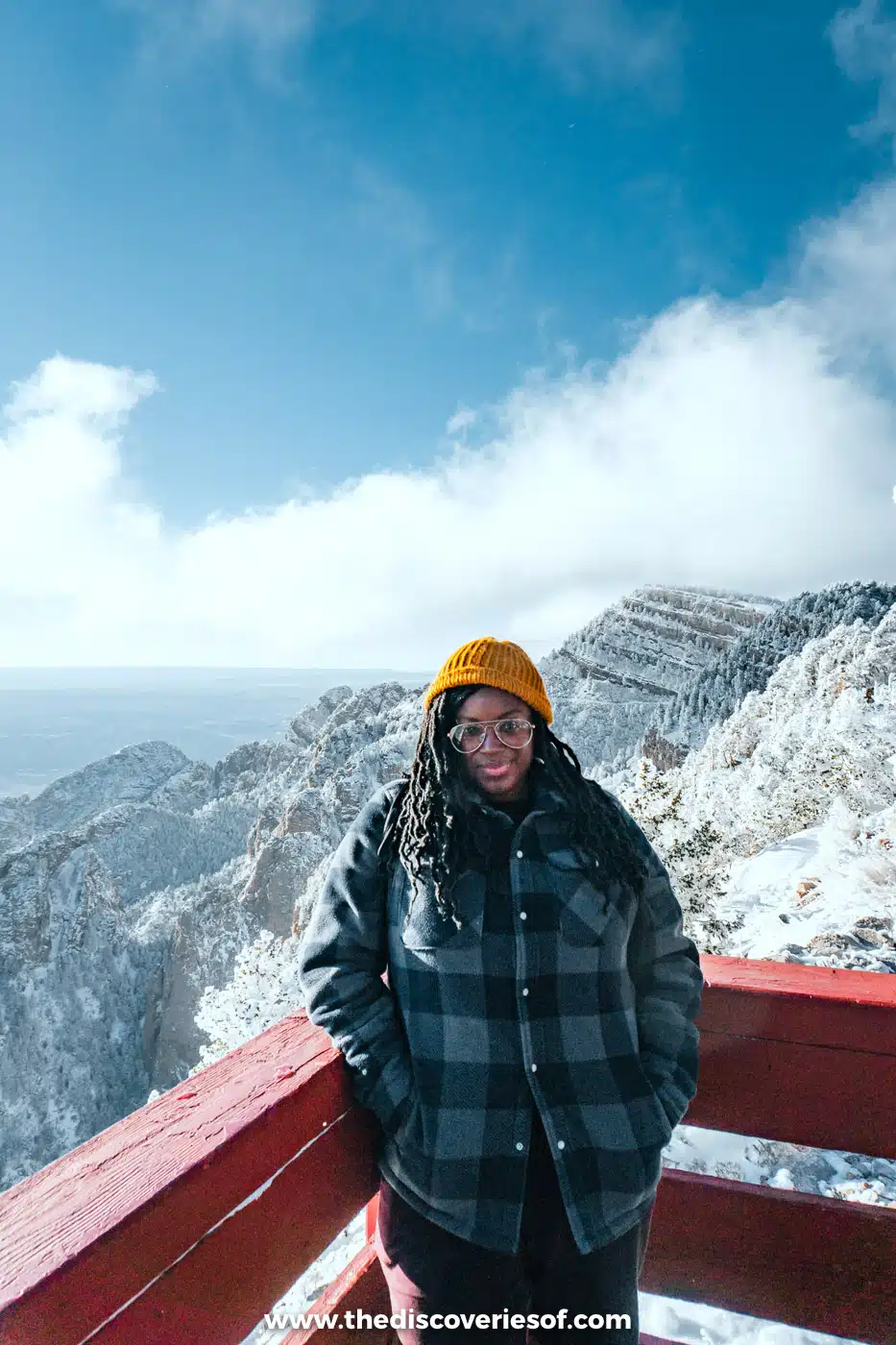
This is the easy way to hike in the Sandia Mountains, and I absolutely recommend it. The Sandia Peak Tramway whisks you 2.7 miles from the edge of Albuquerque to the crest in about 15 minutes, climbing to over 10,000 feet as the desert drops away beneath you.
It was freezing when I went up in February, and there was snow everywhere at the top. I tried a little hike at the top and wasn’t quite prepared: down there it’s desert, up here it’s not, and there were pockets of snow all along the path. Pack proper layers, gloves and boots with grip, whatever the weather in town.
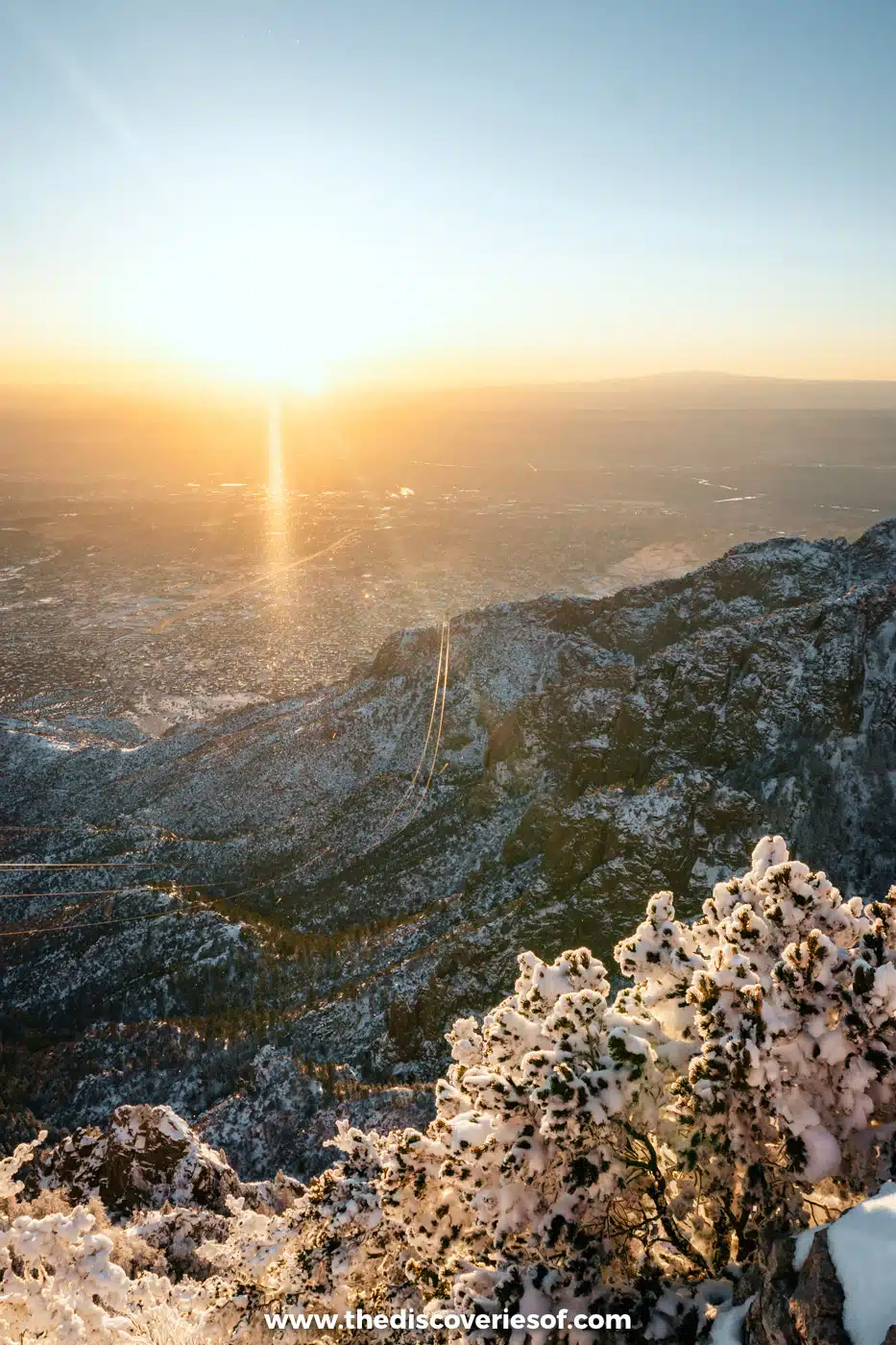
I stayed for sunset, which was freezing cold but epic, with the light turning the snowy rocks pink and the city spread out below. Definitely do this.
From the upper terminal, the short Peak Nature Trail loops through the forest, and the South Crest Trail runs along the ridge for longer walks (it’s 6.5 miles there and back to South Peak, with about 2,100 feet of climbing). The tram runs Wednesday to Monday from 9am to 8pm, weather permitting; a round-trip ticket costs $35 for adults, plus tax and a grounds fee, so book online. It closes for maintenance for about two weeks every April and November (from 3 to 11 November in 2026).
Top Tip
The Forest Service has closed the Sandia Crest recreation area, the summit area just north of the tram including the trails around Kiwanis Cabin, for forest-thinning work from April 2026, with work paused in winter and closures again in spring to autumn 2027. The tram, its restaurant and the South Crest Trail are not affected, but check the Cibola National Forest alerts before you plan a longer walk along the crest.
Climb the La Luz Trail up the Sandia Mountains
Distance: 7.5 miles one way
Elevation gain: 3,200 feet
Time: 5 hours or more up
Difficulty: strenuous
Trailhead: La Luz trailhead, at the end of Forest Road 333 off Tramway Boulevard
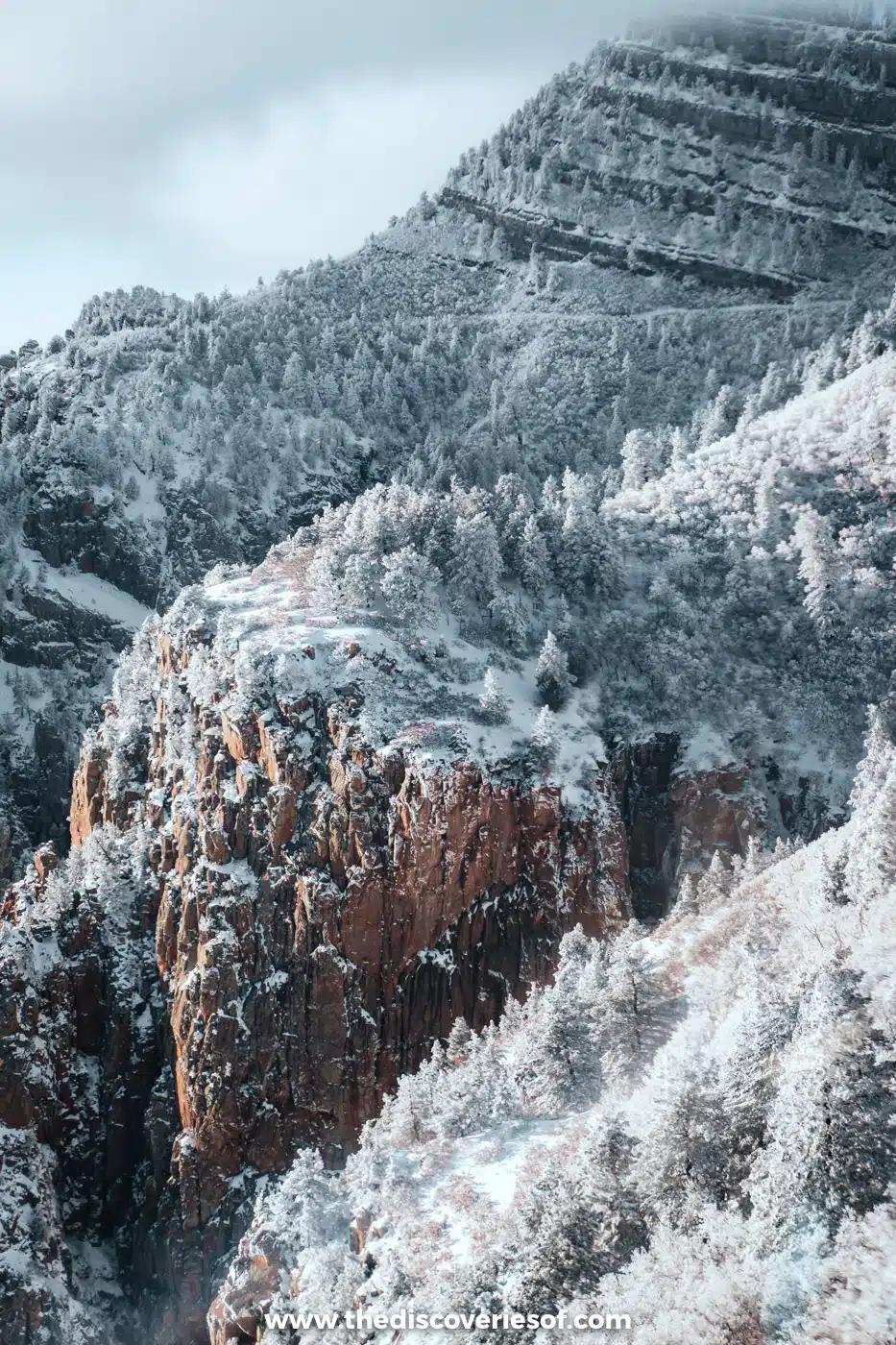
An easy contestant for one of the best New Mexico hikes, the La Luz Trail in the Sandia Mountains is an absolute must for strong hikers. Beyond offering some spectacular views of Albuquerque, it’s also a great way to reach the top of the Sandias.
Let’s just get this out of the way. This is a challenging trek, and even experienced hikers could have some tough times here, but the rewards are worth it. It is daunting, with 3,200 feet of climbing from the desert scrub at the bottom through pine forest to the granite spires near the top, finishing with a long run of switchbacks below the crest.
However, what’s a hike without some effort? Easy, that’s for sure, but once you reach the top of the Sandia Mountains, you’ll realise why it’s so popular. The trail ends on the Crest Trail near the upper tram terminal, so the classic plan is to hike up and ride the tram down (a one-way ticket costs $24), leaving a car at the lower tram terminal, or arrange a pick-up there. The day-use fee at the trailhead is $5 per vehicle, cash or cheque only.
You should ideally plan to tackle this trail from late spring to autumn, as snow can make the upper section impassable from November to April. Start early to beat the heat on the lower slopes and the afternoon thunderstorms in summer. The trail stays open during the Sandia Crest closure, but you may need to follow detour signs near the top.
Cross the white dunes to Alkali Flat
Distance: 5 miles out and back
Elevation gain: repeated climbs over dunes up to about 60 feet high
Time: about 3 hours
Difficulty: strenuous
Trailhead: end of Dunes Drive, 7 miles from the visitor centre
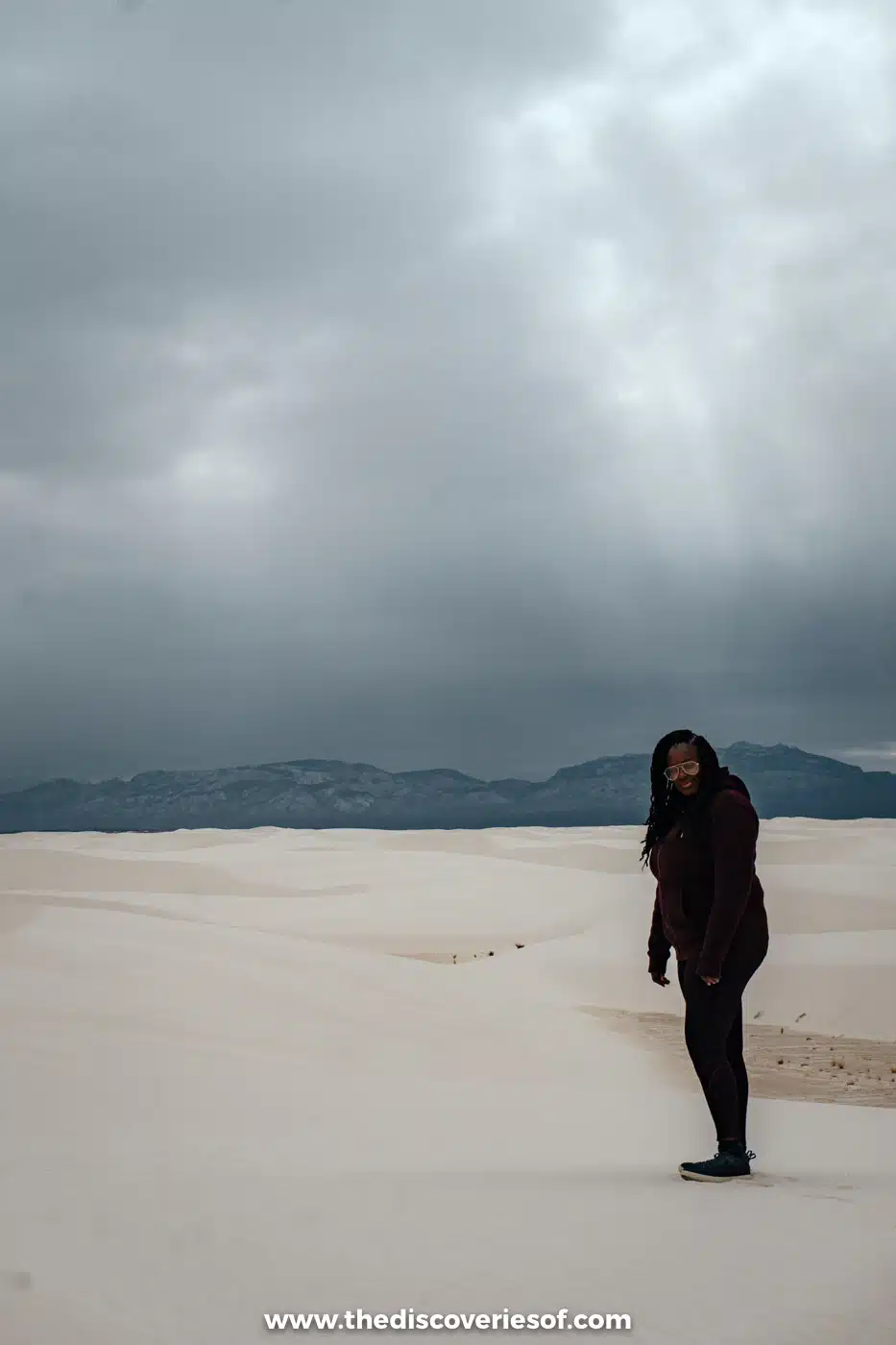
A massive part of White Sands National Park, the Alkali Flat Trail is both a challenging and very rewarding hiking trail. Don’t let the word “flat” fool you: you’ll ascend and descend across numerous white, wavy sand dunes, which can be very difficult at times.
I’ll be honest: it was pretty hard work and it wasn’t my favourite part of White Sands. But the views were incredible. It rained for part of my February day in the park, which at least kept it quiet.
The route has no path, just a line of posts, so it’s important to keep your eye on where you’re going. Follow the red markers with a white diamond symbol, and if blowing sand means you can’t see the next one, turn back. Stick to them and you’ll find drop-dead gorgeous views of this distinct environment.
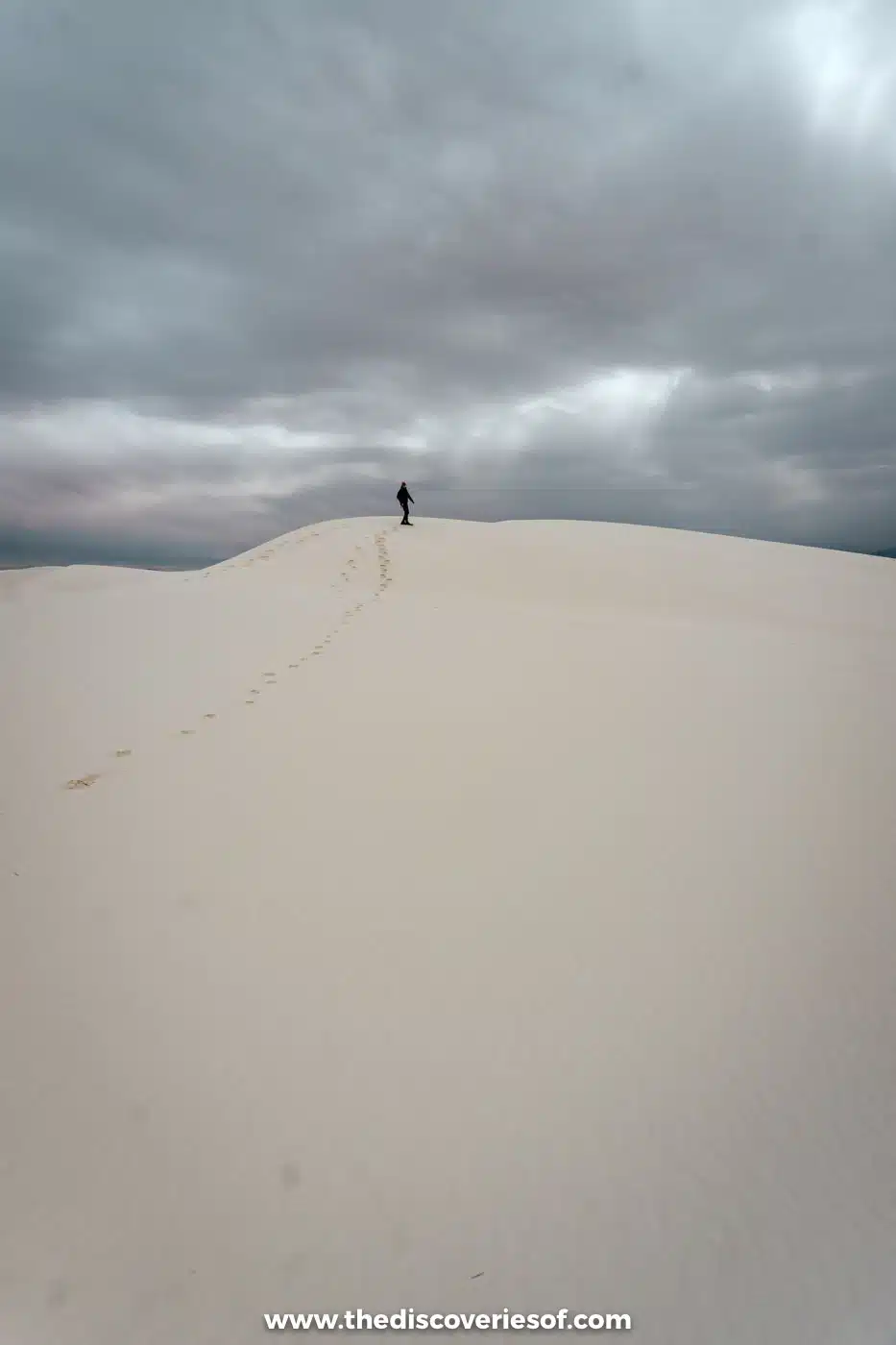
The trail’s goal is the edge of Alkali Flat, the dry bed of Lake Otero, an ice-age lake that once covered about 1,600 square miles of the Tularosa Basin. It’s the gypsum left behind by that lake that the wind has piled into the world’s largest gypsum dunefield.
Fair warning, though, you’ll literally slip and slide your way down the dunes, so prepare for sandy boots but epic views. Also, there’s no shade at all, so the sun and heat play a significant role in when to tackle this hike: the park says not to start if it’s 85°F (30°C) or hotter, to carry at least two 32-ounce bottles of water each and to turn round when half your water is gone. Entry to the park costs $25 per vehicle for seven days.
Top Tip
Don’t even think about wearing sandals for this trail: closed-toe boots are a must. As is a buff.
Stroll the Interdune Boardwalk at White Sands
Distance: 0.4 miles out and back
Elevation gain: none
Time: 15 to 30 minutes
Difficulty: easy, wheelchair accessible
Trailhead: Dunes Drive, 4.5 miles from the visitor centre
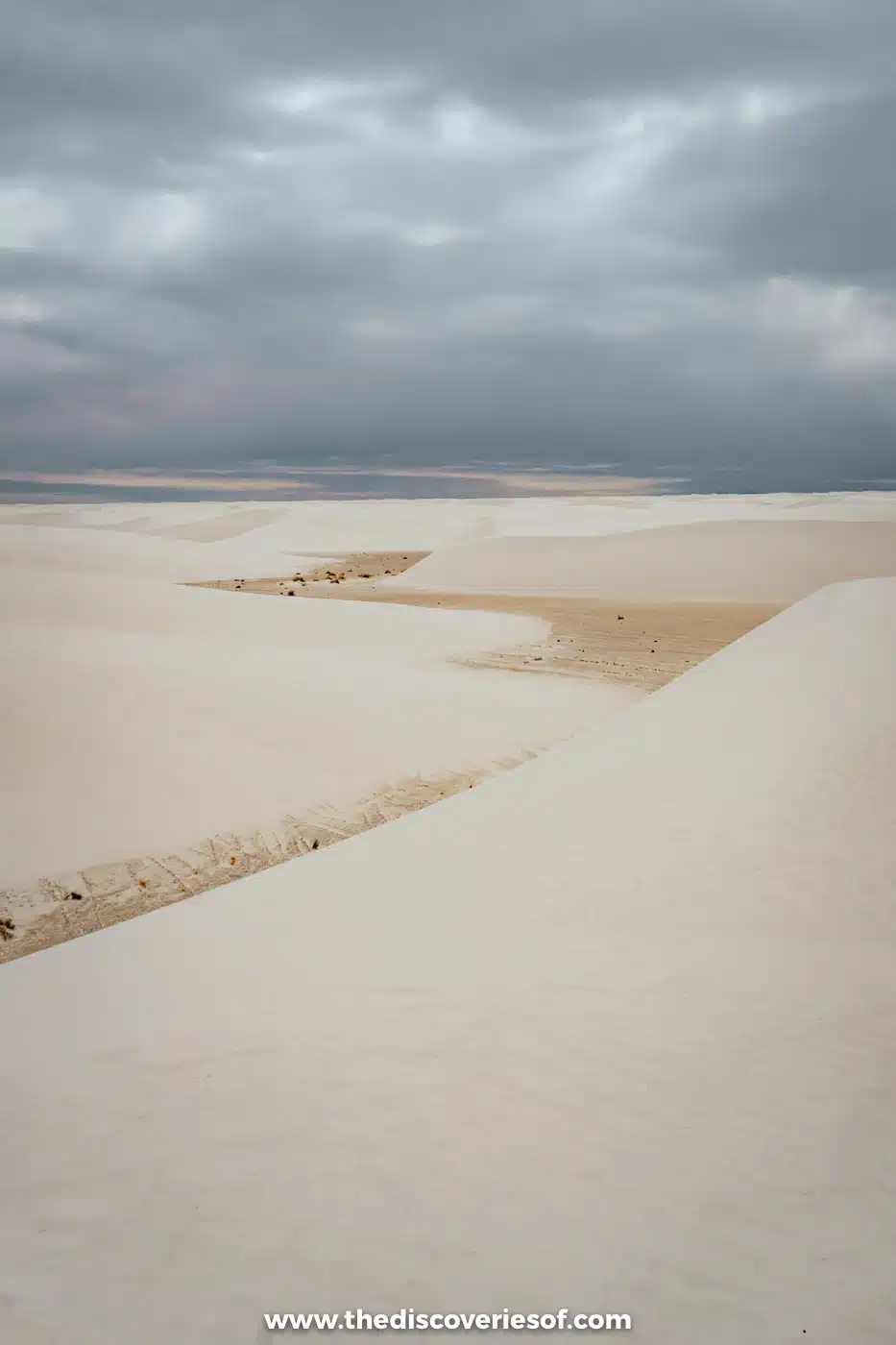
If Alkali Flat sounds like too much, this is the gentle way to see White Sands on foot. The raised boardwalk crosses the fragile interdune area between the dunes, with a shade shelter halfway and ten panels on the plants, animals and geology that survive in the dunefield, and it ends at a view over the dunes to the Sacramento Mountains.
It was one of my stops along Dunes Drive, along with a spot of sledding further in, and it’s the park’s only accessible trail, so it works for everyone. Keep an eye out for the bleached lizards that have evolved to blend in with the white sand.
Top Tip
After a US Air Force crash in the park in 2024, White Sands set up a safety corridor on Dunes Drive between miles 3 and 5.5 where you can’t stop, and the National Park Service listed the boardwalk as closed until further notice. Check the park’s alerts, or ask at the visitor centre, before you go.
Squeeze through the slot canyon at Kasha-Katuwe Tent Rocks
Distance: 3 miles out and back on the Slot Canyon Trail (or the 1.2-mile Cave Loop)
Elevation gain: 630 feet to the mesa top
Time: 2 to 3 hours
Difficulty: moderately strenuous, with some scrambling
Trailhead: reached only by escorted convoy from the Cochiti Visitor Center, Cochiti Pueblo

Kasha-Katuwe means “white cliffs” in the Keresan language of Cochiti Pueblo, and the monument’s tent-shaped hoodoos are some of the strangest rock formations in the Southwest. They’re made of volcanic ash and pumice laid down by eruptions millions of years ago, and each cone is protected by a harder caprock that stops it eroding away.
The Slot Canyon Trail is the one to do. It narrows into a sinuous slot only a few feet wide in places, where you’ll use your hands to scramble over boulders, then climbs steeply to the mesa top for a view straight down over the tent rocks to the Sangre de Cristo, Jemez and Sandia mountains. The flatter Cave Loop passes a small cave in the cliff face.
The rules have changed, so plan ahead. The monument reopened in February 2026 after a seasonal closure and is open Thursday to Monday by reservation only, with no tickets on the day. Book a ticket for every visitor on Recreation.gov ($6 each), then buy a separate Cochiti Pueblo Tribal Access Pass online, which America the Beautiful passes don’t cover. Check in at the Cochiti Visitor Center between 7:45am and 1pm; a pilot vehicle leads you to the trailhead and everyone must be out by 4pm. Dogs aren’t allowed, and it closes every year from 15 December to 31 January, plus a handful of other days for Cochiti Pueblo events. Follow the official directions off I-25, as GPS can route you across pueblo land you can’t use. It’s about an hour’s drive from both Santa Fe and Albuquerque.
Climb the ladders to Alcove House at Bandelier National Monument
Distance: 1.4-mile Pueblo Loop Trail, plus about 1 mile there and back to Alcove House
Elevation gain: 140 feet of ladders to Alcove House
Time: 1.5 to 2.5 hours
Difficulty: easy on the loop, strenuous on the ladders
Trailhead: Bandelier Visitor Center, Frijoles Canyon

Frijoles Canyon was home to ancestral Pueblo people from about 1150 to 1550, and walking its main trail feels like wandering through a village they’ve only just left. The Pueblo Loop Trail (also called the Main Loop) passes the circular ruins of Tyuonyi, then climbs to the cliff face, where rooms called cavates were carved into the soft volcanic tuff. Some have wooden ladders you can climb to peer inside, and Long House stretches along the base of the cliff with petroglyphs above.
For the best bit, carry on up the canyon to Alcove House, a ceremonial cave 140 feet up the cliff, reached by four steep wooden ladders and some stone steps. It’s not for anyone nervous of heights, and the ladders can close in winter when they’re icy.
Parts of the loop are flat enough for wheelchairs and pushchairs, but other sections have narrow stairs. Entry costs $25 per vehicle for seven days, dogs aren’t allowed on the trails, and the park closes at sunset. From mid-March to mid-October a free shuttle runs between the car parks in the canyon, and you’ll only have to use it if the lots are full. It’s about an hour’s drive from Santa Fe.
Stand on top of the state on Wheeler Peak
Distance: about 8 miles out and back via Williams Lake
Elevation gain: about 3,000 feet
Time: 6 to 8 hours
Difficulty: strenuous, at high altitude
Trailhead: Williams Lake trailhead, above Taos Ski Valley
At just over 13,160 feet, Wheeler Peak is the highest point in New Mexico, and the hike to the top is a classic summer challenge in the Sangre de Cristo Mountains, up the road from Taos.
The usual route starts high, above Taos Ski Valley, and climbs through spruce forest to Williams Lake, a glacial tarn tucked beneath the peaks. From the lake a steep, switchbacking trail heads up the slope to the summit ridge, where you’ll have views over the Wheeler Peak Wilderness and, on a clear day, a good chunk of northern New Mexico. A longer route via Bull-of-the-Woods Meadow also starts at the ski valley.
The trailhead is over 10,000 feet, so the air is thin from the first step: give yourself a day or two at altitude first. The summit is usually snow-free from late June to September, and summer thunderstorms build most afternoons, so start at dawn and be off the top by midday. If the full climb is too much, Williams Lake on its own makes a lovely walk.
Walk the rim of the Rio Grande Gorge
Distance: up to 9 miles one way on the West Rim Trail, or 2 miles there and back on the Big Arsenic Springs Trail
Elevation gain: almost none on the rim; about 680 feet down (and back up) on Big Arsenic
Time: 1 to 4 hours, depending on how far you go
Difficulty: easy on the rim, hard on the descent
Trailhead: Rio Grande Gorge Bridge rest area on US 64 (West Rim), or Wild Rivers Recreation Area near Cerro (Big Arsenic)
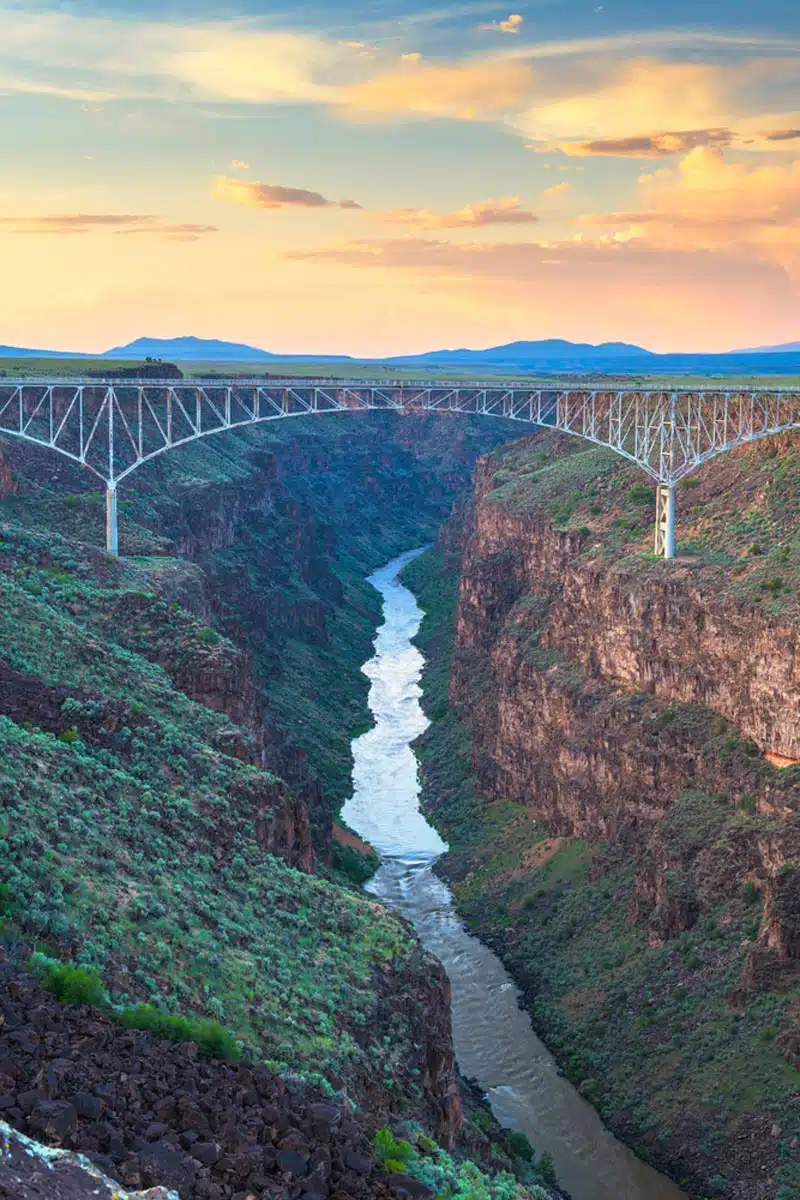
Not able to pack in multiple hikes in New Mexico? Not a problem: there’s no better place to start than the Rio Grande Gorge.
Located close to Taos, the gorge offers pretty special views of the rugged canyon below, and it’s part of the Rio Grande del Norte National Monument. The Rio Grande Gorge Bridge, which I stopped at in Taos, is the easiest place to see it, and it’s where the easy option starts: the West Rim Trail runs south from the rest area beside the bridge along the edge of the gorge, almost flat, for around 9 miles. Walk out as far as you like and back, looking down to the river and across the sagebrush plain to the mountains.
For a proper workout, head north to the Wild Rivers Recreation Area beyond Questa. After a short walk near the visitor centre, you’ll have ample opportunity to take in the geological colours that blend throughout the canyon. Then the Big Arsenic Springs Trail drops about 680 feet in a mile to the river, past the springs that give it its name, and it’s every bit as steep on the way back up. You’re never safe from burning calves! The La Junta Trail to the confluence of the Red River and the Rio Grande was closed until further notice in 2025, so check before you go.
As you make your way, there are a few spots to stop for captivating snapshots. After all, the area is home to an abundance of wildlife, including mule deer, bighorn sheep and red-tailed hawks frequenting the region. Day use at Wild Rivers costs $3 per vehicle, and the nearest food and fuel are in Questa.
Get lost (safely) among the hoodoos of the Bisti Badlands
Distance: about 5.5 miles out and back, as most people walk it (there’s no set trail)
Elevation gain: minimal
Time: 2 to 3 hours, or longer to explore
Difficulty: easy terrain, but you have to navigate
Trailhead: Bisti trailhead, about 36 miles south of Farmington off NM 371
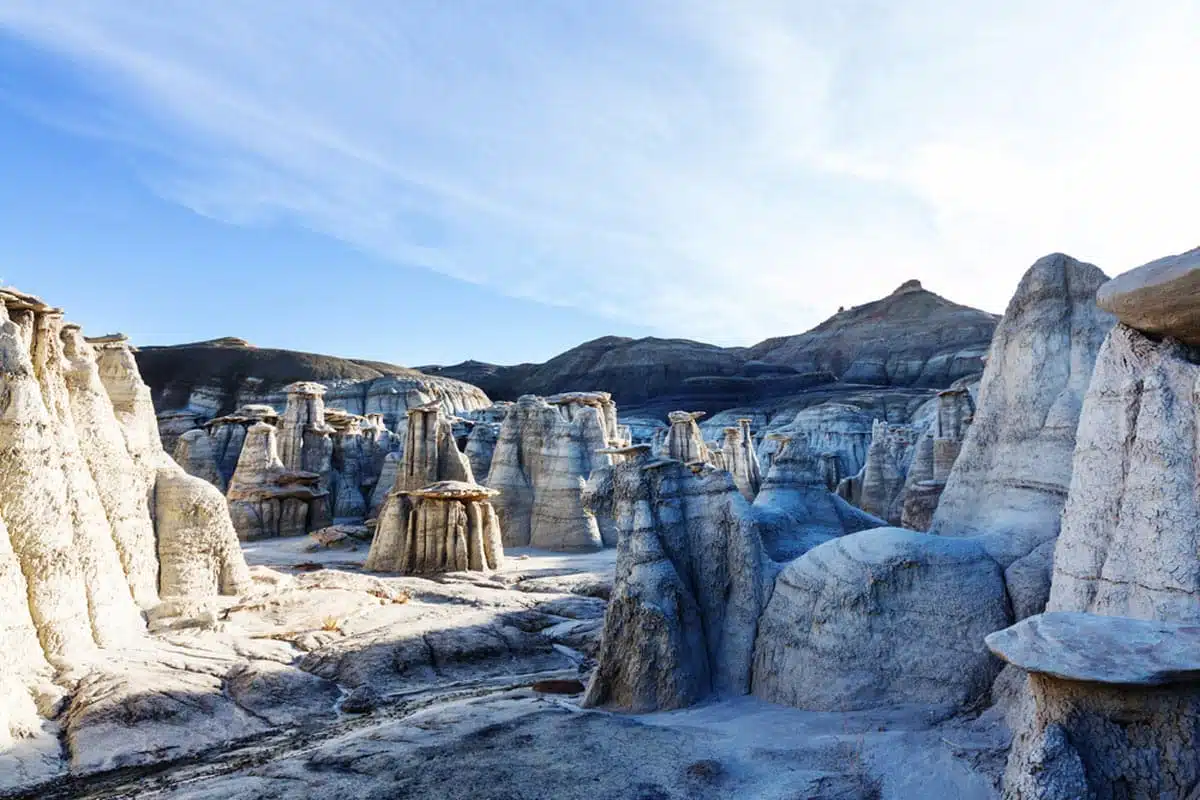
Fancy trekking through a surreal landscape that defies the imagination? Then the Bisti Badlands beckon. Set within the Bisti/De-Na-Zin Wilderness in the north-west of the state, this spectacular region spans around 45,000 acres containing everything from small gullies to contorted rock formations: hoodoos, striped mounds, petrified logs and the rounded “cracked eggs” that turn up on every photographer’s list.
I’ll be honest, the beauty of the Bisti Badlands rests on the fact that there’s no definite trail to follow as you make your way. For those who want the freedom to navigate their journey, this is the best place to do it.
With that in mind, don’t forget to bring a compass, map or your trusty GPS. You can thank me later.
More of a wander than a hike, the best time to tackle the wilderness is spring or autumn, because summers here are sweltering, but the views and thrill of conquering the badlands outweigh all. Entry is free, leashed dogs are allowed, and the Bisti trailhead has a vault toilet but no water. It’s a wilderness area, so no bikes or drones, and collecting petrified wood is prohibited.
Climb to Pueblo Alto above Chaco Canyon
Distance: 5.5-mile loop (3.2 miles there and back to Pueblo Alto only)
Elevation gain: a steep scramble up a crack in the cliff to the mesa top
Time: 3 to 4 hours
Difficulty: moderate
Trailhead: Pueblo del Arroyo car park, Chaco Culture National Historical Park
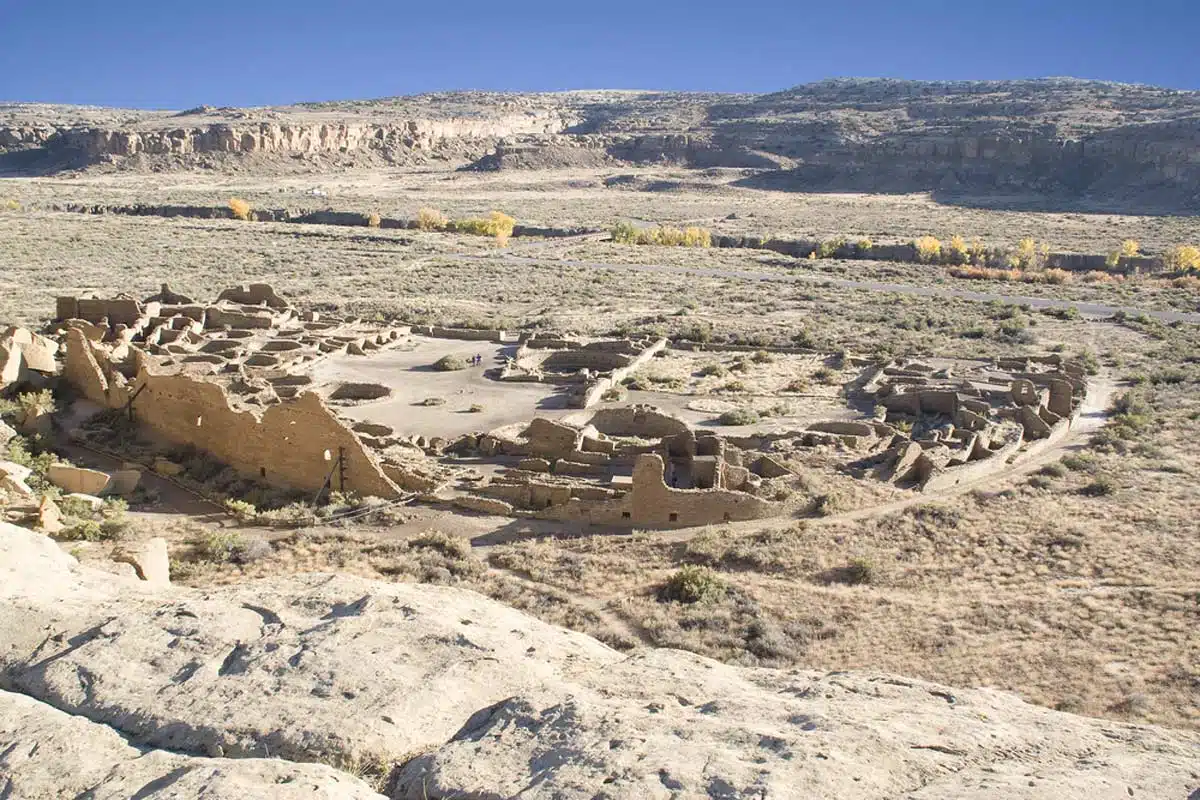
For one of the most beautiful hikes in New Mexico, you shouldn’t pass up the chance to head out on the Pueblo Alto Trail. Situated within the Chaco Culture National Historical Park near Nageezi, this one is all about the sights and sounds of the ancestral Pueblo world.
Following an ancient route, this moderately challenging loop trail begins by squeezing up a narrow crack in the canyon wall to the rim. From there, you’ll find numerous rock piles (cairns) that mark the path across the bluff to a show-stopping lookout point over Pueblo Bonito, the largest of Chaco’s great houses, with Chetro Ketl and Kin Kletso nearby.
Once at the top of the mesa, the trail heads across bare sandstone embedded with the fossils of sea creatures from the shallow sea that covered this area millions of years ago. You can choose to head back the way you came from here or continue the loop, eventually reaching the remains of Pueblo Alto and New Alto, passing the Jackson Stairs, steps the Chacoans carved into the cliff, and traces of their ancient roads.
The park is remote and the last stretch of the drive in is on rough dirt road, so check conditions before you go. Entry costs $25 per vehicle for seven days.
Top Tip
You need a free backcountry hiking permit for this trail: pick one up at the trailhead or the visitor centre. The backcountry trails are open from 7am to sunset.
Hike to Stewart Lake in the Pecos Wilderness
Distance: about 8 miles out and back via the Winsor Creek trail
Elevation gain: about 1,900 feet
Time: 5 to 6 hours
Difficulty: moderate
Trailhead: Winsor Creek trailhead, near Cowles in Pecos Canyon
Not only is Stewart Lake one of the best hiking trails in New Mexico, but it’s also one of the most popular. I see why; sitting in the Pecos Wilderness between Santa Fe and Las Vegas, this trek outshines most other options thanks to its captivating beauty and topography.
So what’s all the fuss about? Aside from the chance to hike through one of the Southwest’s most stunning wilderness areas, you’ll have quite a few rewards as you go. The trail climbs steadily through aspen and fir forest beside Winsor Creek, passing meadows full of wildflowers in summer and a staggering variety of wildlife.
The prize is the lake itself, at about 10,230 feet: a glassy alpine lake reflecting the forest around it, with the bare summit of Santa Fe Baldy towering behind. It’s a perfect spot to stop for lunch. Longer routes reach it from the Winsor Ridge trail or from Holy Ghost Campground (around 12 miles there and back), or you can turn it into an overnight trip.
The trailhead is about an hour and a half’s drive from Santa Fe via the village of Pecos. Snow lingers well into spring up here, and summer afternoons bring thunderstorms, so start early.
Loop through the pines on the Pine Tree Trail in the Organ Mountains
Distance: 4-mile loop
Elevation gain: about 1,000 feet
Time: 2 to 3 hours
Difficulty: moderate
Trailhead: Aguirre Spring Recreation Area, off US 70 east of Las Cruces
A fantastic and popular trek, the Pine Tree Trail often comes up as one of the best hikes in New Mexico. It’s a moderate loop trail that’s well maintained, and it sits in the Organ Mountains-Desert Peaks National Monument, on the road between Las Cruces and White Sands, so it’s easy to combine with a visit to the dunes.
Tackling it at a moderate pace is a good idea, as this gives you time to really take in the beautiful surroundings. The trail leads through ponderosa pine, juniper and piñon below the jagged granite spires of the Organ Mountains, culminating in magnificent views across the Tularosa Basin to the white streak of White Sands.
Adding to the allure of the trail, if you time your hike right (head there in spring), you’ll also find blankets of wildflowers and a range of mountain wildlife roaming around. You can also bring your dog along, but they need to remain leashed for the entire trail.
Day use costs $5 per vehicle. The gates are open from 8am to 6pm in winter, with longer hours in summer, and the last few miles of the access road are a narrow one-way loop, so leave big RVs behind.
Follow the Winsor Trail to Lake Katherine
Distance: about 15 miles out and back from the Santa Fe ski basin
Elevation: 10,250 feet at the trailhead to just above 11,700 feet at the lake, with a saddle to cross on the way
Time: 8 to 10 hours, or overnight
Difficulty: strenuous
Trailhead: Winsor trailhead, Ski Santa Fe car park at the top of Hyde Park Road
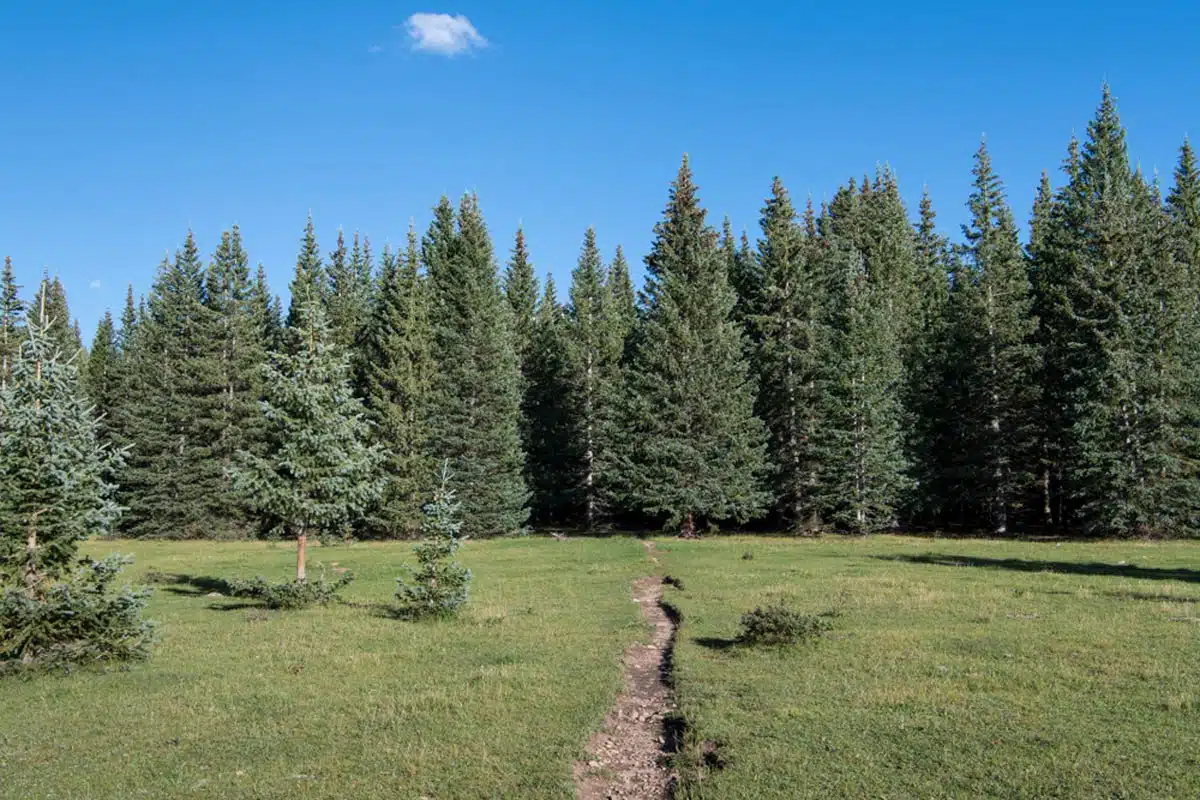
Let’s head back to Santa Fe for this next hike. The city does so many things right, including having its stake as one of the best places to hike in New Mexico. Look no further than the Winsor Trail within the Santa Fe National Forest for stone-cold evidence of this.
Famous for its mountain biking and horseback riding opportunities, the trail caters to almost every type of outdoor enthusiast. The section from the ski basin climbs into the Pecos Wilderness (no bikes beyond the boundary) and is one of the most popular walks near the city.
While it does have some strenuous parts, the effort is worth it. You’ll find scenic tree stands, babbling rivers and grassy meadows along the path, crossing the Rio Nambe to the meadow at Puerto Nambe, where the Skyline Trail takes you over a bald saddle with 360-degree views.
However, the surefire standout moment is the view of Lake Katherine, set in a bowl below Santa Fe Baldy, and the stunning sights of the Sangre de Cristo Mountains along the way. It’s around 7.5 miles each way, making it about 15 miles round trip, so it’s a long, high day or a good overnight trip, but I promise you’ll thank me. For a shorter outing, turn round at Puerto Nambe or take the Skyline Trail the other way to Spirit Lake.
Descend into Carlsbad Cavern on the Natural Entrance Trail
Distance: 1.25 miles one way
Elevation: about 750 feet of descent
Time: about 1 hour, plus 1.5 hours for the Big Room
Difficulty: extremely steep, but paved
Trailhead: Carlsbad Caverns visitor centre, south-east New Mexico
Most hikes go up; this one goes down. The Natural Entrance Trail follows the steep, paved switchbacks from the cave’s gaping mouth into the darkness, dropping about 750 feet through the Main Corridor, past the Devil’s Spring and the Whale’s Mouth, to the cavern’s underground lunchroom.
From there, the Big Room Trail loops for another 1.25 miles, on the flat, around the largest single cave chamber in North America, among stalagmites, columns and features such as the Hall of Giants and the Bottomless Pit. Most people take the lift back up to the visitor centre.
You need a timed-entry reservation from Recreation.gov ($1) as well as an entrance ticket bought at the visitor centre ($15 per person aged 16 and over). The cavern opens at 8:30am and the last entry has been 2:30pm, but check the park’s alerts for current hours and the lift’s status before you go. In summer, stay for the bat flight at dusk, when thousands of Brazilian free-tailed bats pour out of the entrance.
Walk the Catwalk through Whitewater Canyon in the Gila
Distance: about 1 mile there and back on the catwalk, with the Whitewater Trail beyond
Elevation gain: minimal
Time: 1 hour, or longer if you continue
Difficulty: easy
Trailhead: Catwalk Recreation Area, at the end of NM 174 near Glenwood
In the remote south-west of the state, the Gila National Forest is New Mexico’s great wilderness, and the Catwalk is the most fun way in. A metal walkway clings to the walls of Whitewater Canyon, suspended above the rushing creek as the canyon walls close in.
It follows the route of water pipes built around 1893 to supply a mill for the mining town of Graham. The Civilian Conservation Corps rebuilt it in the 1930s, it became a metal walkway in 1961, and it was rebuilt again after a flood washed it out in 2013. The catwalk runs about half a mile up the canyon, and the Whitewater Trail continues beyond it if you want more.
It’s open year-round from dawn to dusk for day use, and there’s a $5 fee per vehicle. There’s no drinking water, and the low-water crossings on the road in can flood after heavy rain.
Know before you go: altitude, seasons and permits
- Respect the altitude: Santa Fe sits at around 7,000 feet and Albuquerque at around 5,000, and the mountain trails climb far higher. Drink more water than you think you need, go easy on your first day and turn back if you get a headache or feel dizzy.
- Pick the season for the trail: winters are cold and snowy in the mountains and foothills (I had snow on Sandia and above Santa Fe in February), summers are scorching in the desert, and July and August bring afternoon thunderstorms. Desert trails such as White Sands, Bisti and Rinconada Canyon are best from autumn to spring; the high peaks are summer hikes.
- Book ahead: Tent Rocks and Carlsbad Cavern now need reservations, the Sandia tram closes for maintenance every April and November, and many trailheads charge a day-use fee. An America the Beautiful pass covers the national park and monument fees, but not the Cochiti Pueblo pass for Tent Rocks.
- Pack properly: when putting together your packing list, remember to bring the essentials. These include hiking boots, a lightweight daypack and your water bottle: it gets seriously hot in NM, and dodging the sun on these trails can be pretty impossible.
- More trails near Santa Fe and Albuquerque: with extra days, try the Atalaya Mountain and Aspen Vista trails above Santa Fe, or the Piedras Marcadas Canyon and Volcanoes trails in Petroglyph National Monument and the Embudo Canyon trail in the Sandia foothills above Albuquerque.
- Leave it as you found it: never touch petroglyphs or climb on ruins, stay on the trail to protect the fragile desert crust, and remember that collecting petrified wood, potsherds or fossils is against the law on public land.
Where to stay
Santa Fe is the best base for the most trails, with the Dale Ball Trails, the Winsor Trail, Tent Rocks and Bandelier all within an hour; add a night or two in Albuquerque for the Sandias and Rinconada Canyon, and Alamogordo for White Sands.
- Eldorado Hotel & Spa (Santa Fe): where I stayed in Santa Fe, with spacious rooms a short walk from the Plaza.
- Hotel Chaco (Albuquerque): the hotel I’d recommend in Old Town, a stylish base about 20 minutes’ drive from Rinconada Canyon.
- Home2 Suites by Hilton Alamogordo White Sands (Alamogordo): where I stayed for White Sands, about 20 minutes from the park entrance.
Map
Read next
- The best things to do in Albuquerque
- The best day trips from Santa Fe
- Things to do in White Sands National Park
- The ultimate New Mexico road trip itinerary
- 22 incredible New Mexico landmarks
- The best things to do in New Mexico
- When’s the best time to visit New Mexico?
Love this? Save and share on Pinterest

Discover the top things to do, insider tips and hidden gems in our USA Travel Guides.
Read the guides →