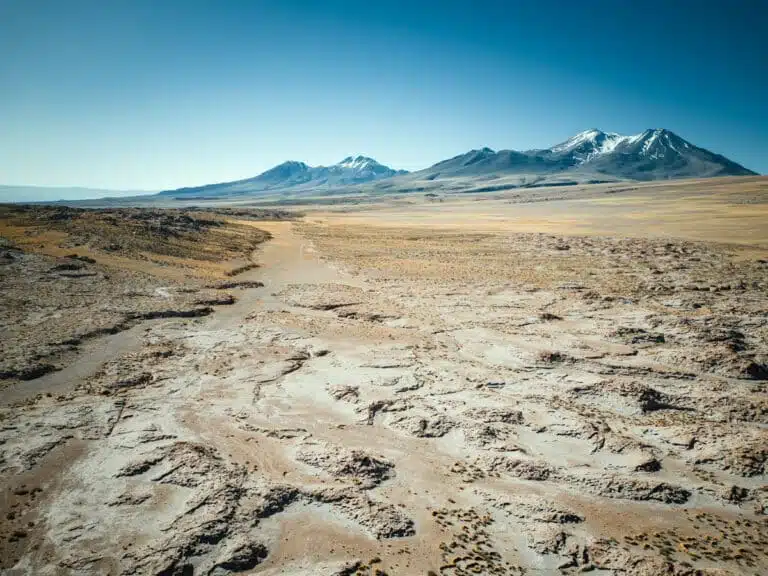
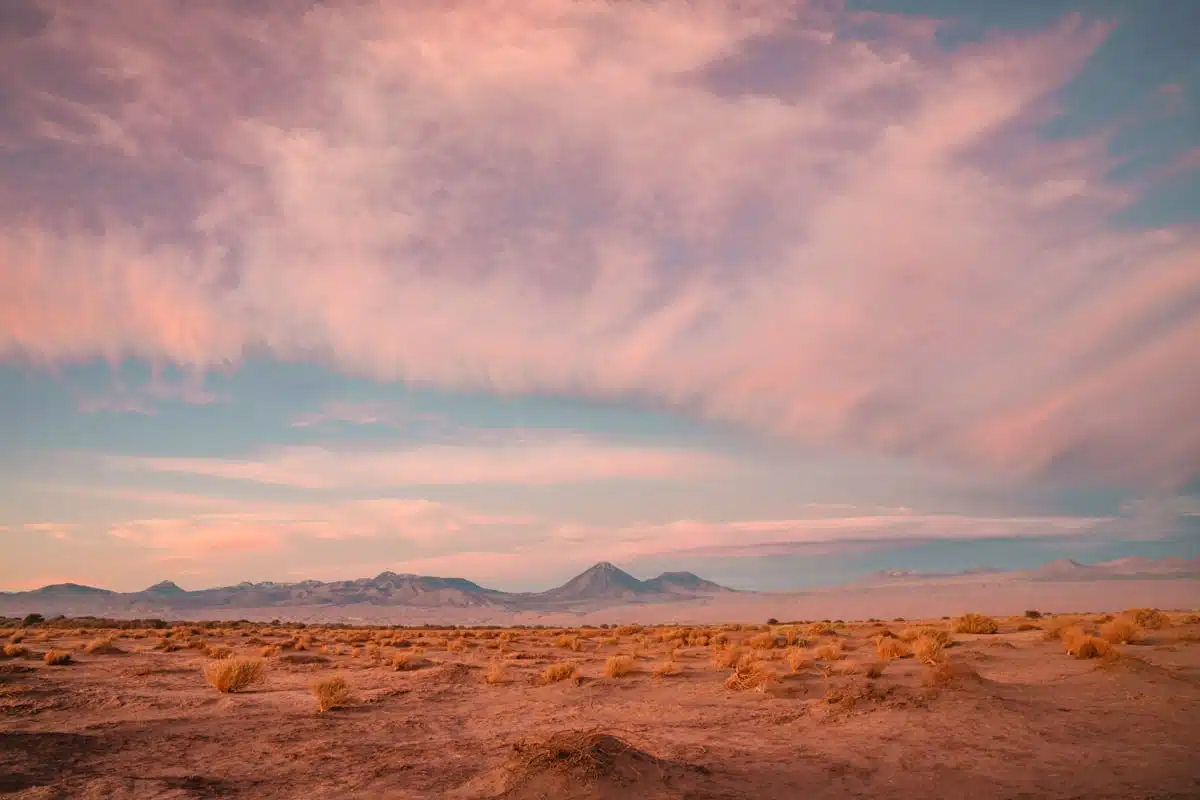
Jagged salt ridges, a sandy slope to shuffle down and Licancabur glowing pink as the sun goes down: this is my guide to Ckamur, the quieter alternative to a Valle de la Luna sunset, and to its better-known neighbour, the Valle de la Muerte, with the access rules, fees and sandboarding as they stand today.
Sunset at the Valle de la Luna is on just about every Atacama itinerary, and that’s exactly the problem. On my first trip to the Atacama, a February road trip in a campervan, I dodged the crowds by going at sunrise instead and had the whole valley to myself. When I went back in July, I wanted a sunset, and my answer was Ckamur.
It’s one of the Atacama’s newer “attractions”, and that’s a big part of its appeal: it’s far quieter than the Valle de la Luna, it was free to visit when I went, and the landscapes are every bit as strange. It’s my favourite place in the Atacama to catch a sunset, with all the drama of colour over a moon-like landscape and none of the crowds.
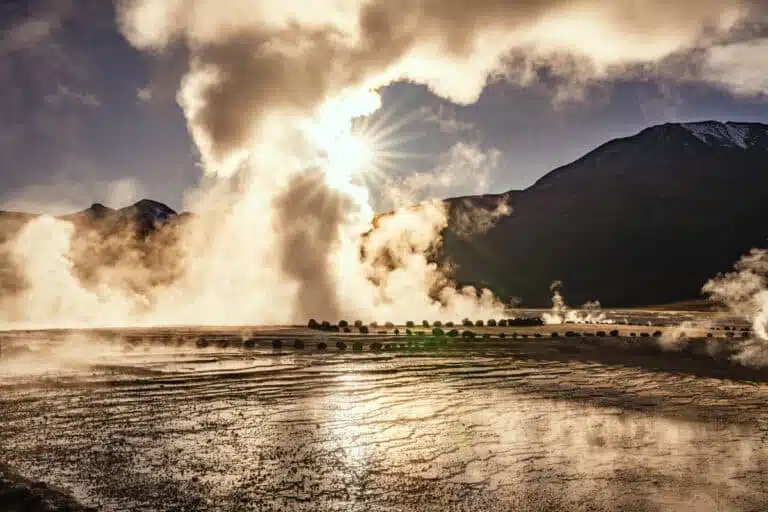
I went on the same day as my second visit to the El Tatio geysers, so I’d been up since 3am. It was worth staying awake for.
Some links in this article may be affiliate links, which means we may receive a small commission, at no additional cost to you, if you decide to purchase through one of my recommended partners.
What is Ckamur?
Ckamur is a stretch of the Cordillera de la Sal, the range of salt-crusted hills that runs along the western side of San Pedro de Atacama and also holds the Valle de la Luna and the Valle de la Muerte. It’s about 22km from town, in the part of the range that tour operators call Vallecito, at around 2,650 metres.
My notes from the trip file it under the Valle de la Muerte, and it certainly shares that valley’s landscape, but strictly speaking it lies about 12km south-west of the Valle de la Muerte itself. If you’re booking a guide, ask for it by name.
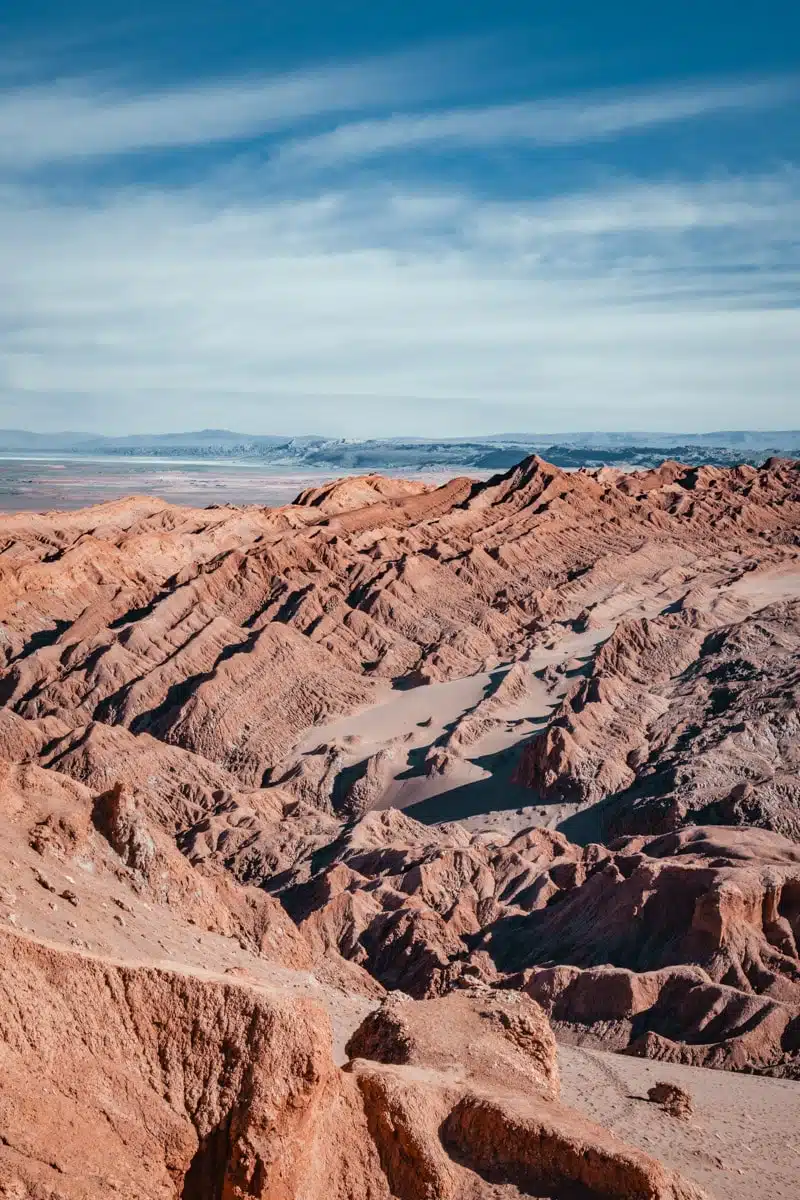
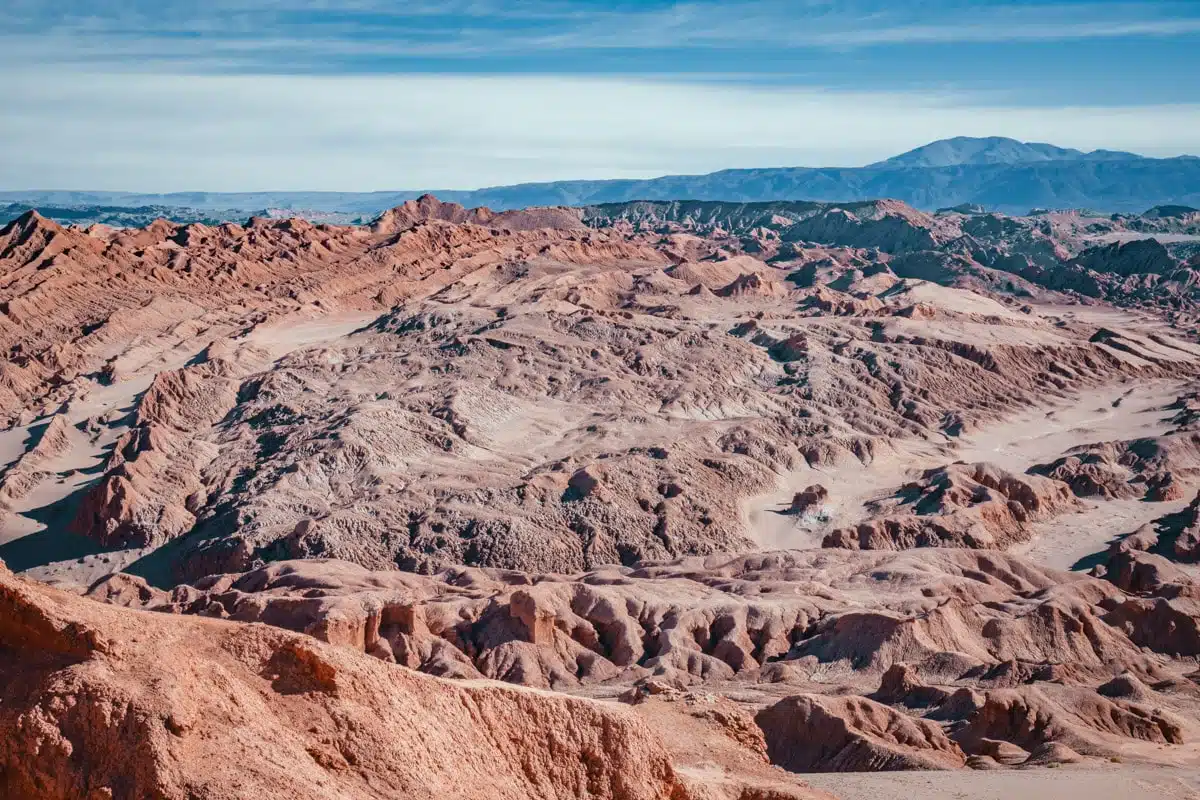
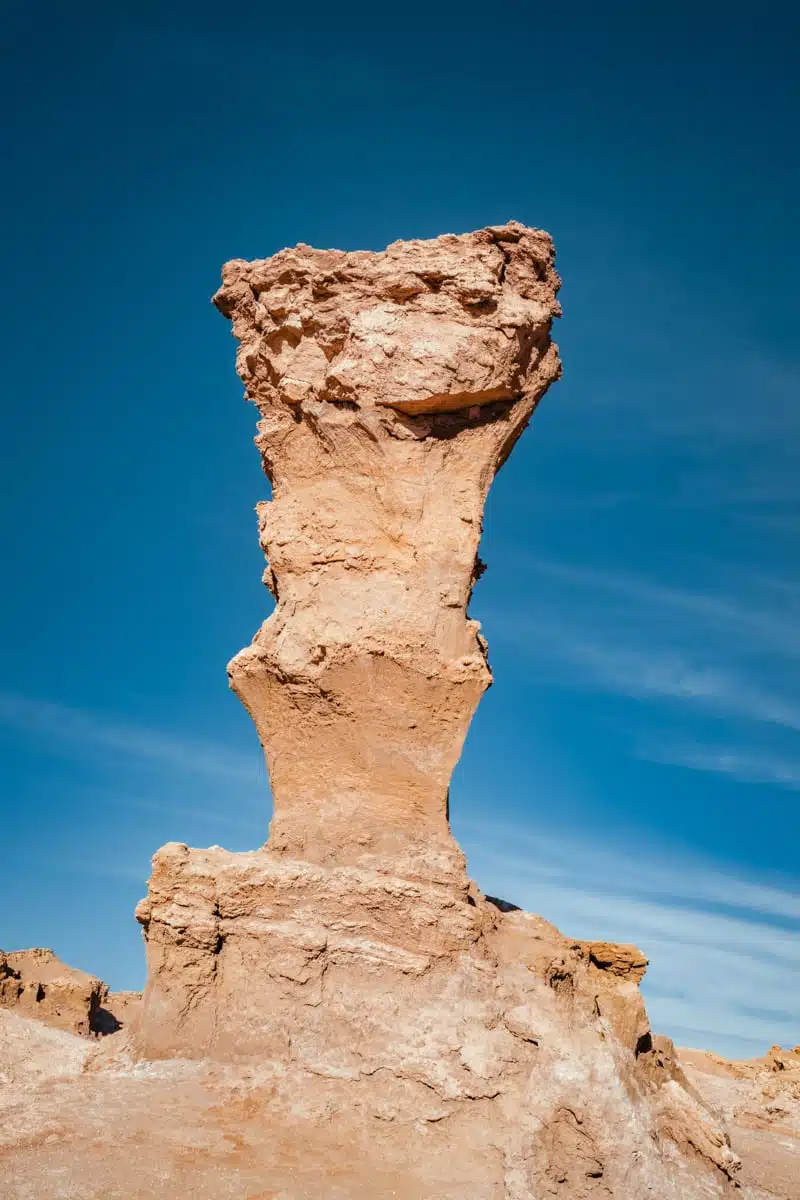
The Valle de la Muerte’s name, the valley of death, would suit this place just as well. Between the harsh conditions and the high mineral content, almost nothing grows. Rocks jut up, scissor-sharp, towards the sky, glistening with salt and other minerals, and the wind has carved some of them into towers that look as though they could topple at any moment.
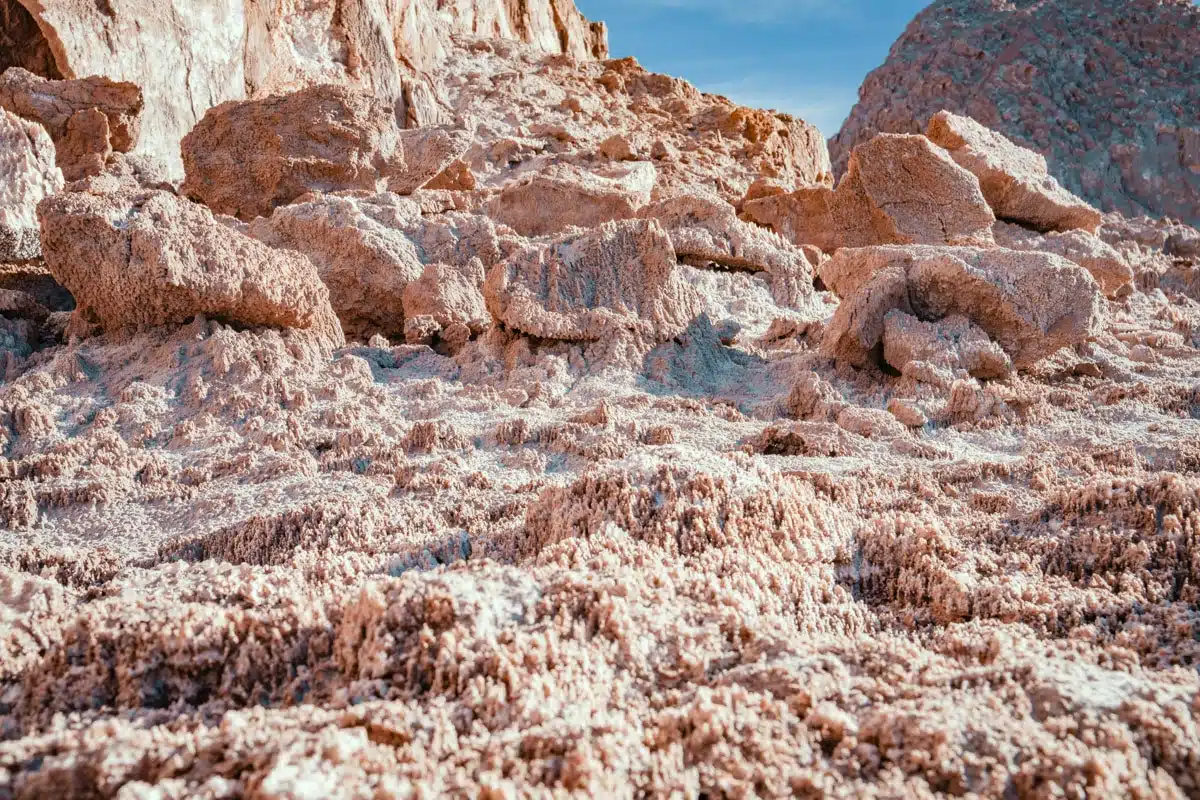
Look in the right place and you’ll find the remains of an old salt mine, where miners used to blast sections of rock to get at the minerals inside. Up close, much of the ground is crusted white with salt.
Walking the ridges
The best way to see the area is from above. I spent the late afternoon walking among the ridges, climbed up the ridge of one of the peaks for the view, and then shuffled down its sandy side to reach the valley floor again. The ground is loose and steep in places, so wear proper shoes with a good grip, and take your time.
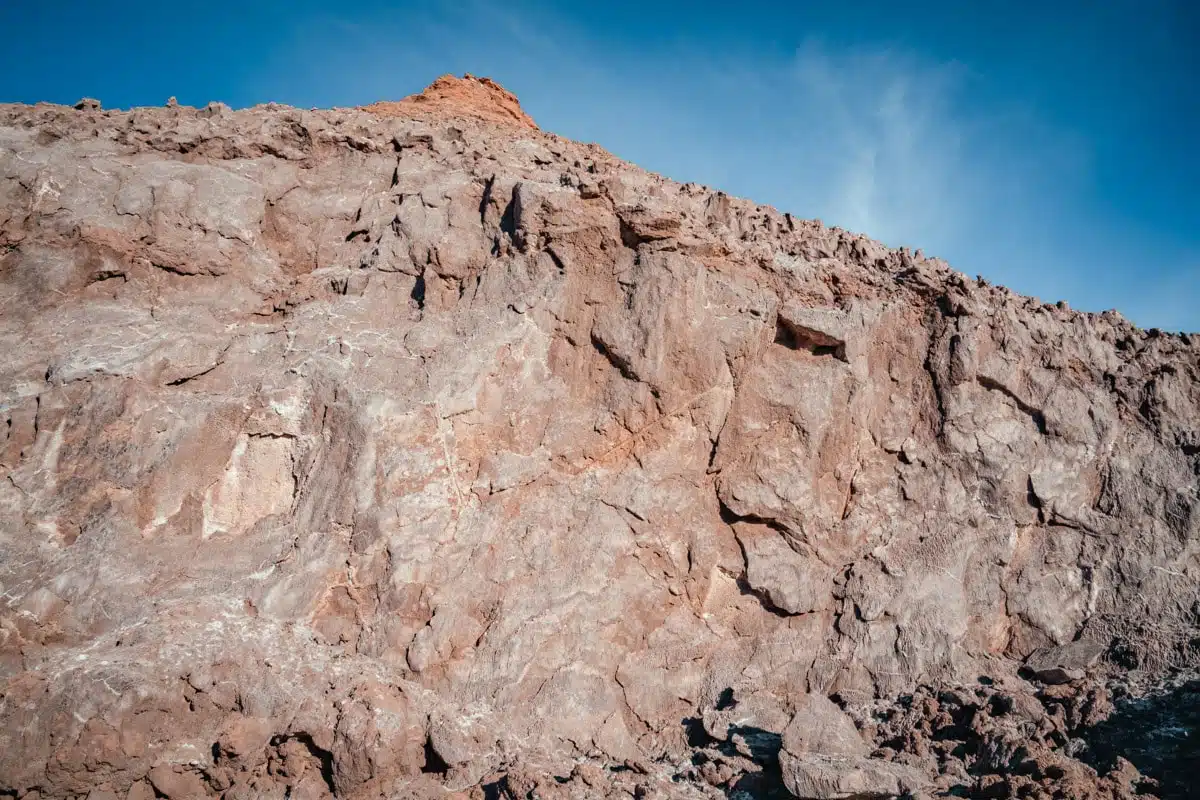
It feels too easy to say that this looks like another planet, but there’s no denying that it does. In fact, it’s often said to have been a filming location for The Mandalorian. Look carefully and you’ll recognise the undulating shapes, a rainbow of reds, yellows and shadows. What you won’t recognise is Licancabur, the perfect volcanic cone that pokes up behind the valley: the story goes that the filmmakers cut off the top of the volcano so that the location wasn’t so identifiable.
Chile’s tourist board is a little more cautious. It says the Valle de la Muerte is thought to have inspired some of the show’s landscapes, but that the link has never been fully confirmed. Either way, you’ll see why the idea took hold.
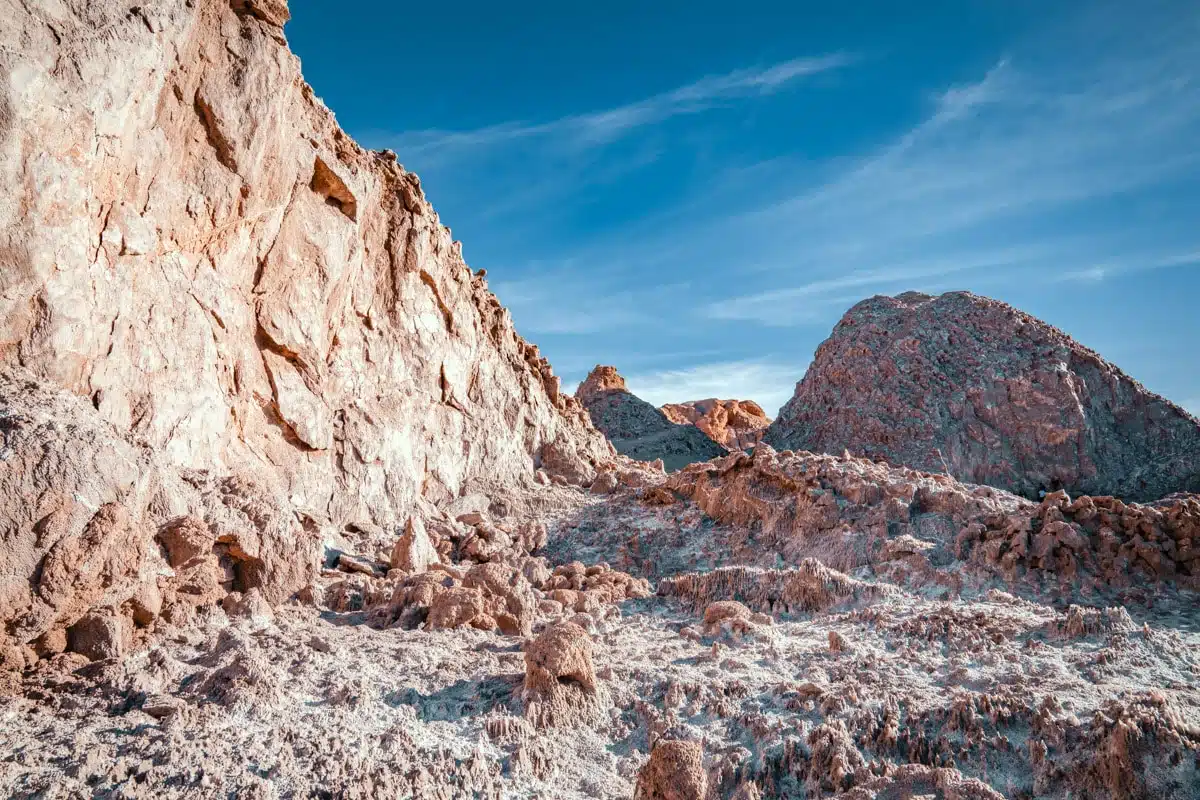
When I visited, you could cycle and quad bike here as well as hike. Rules across the Cordillera de la Sal have tightened in recent years, though, so check what’s allowed before you go.
Sunset over Licancabur
As the light started to fade, I headed back towards San Pedro to watch the sun go down over open desert, with Licancabur on the horizon. Nayara had laid on a sunset picnic: a table on the red sand with wine, bread and canapés.
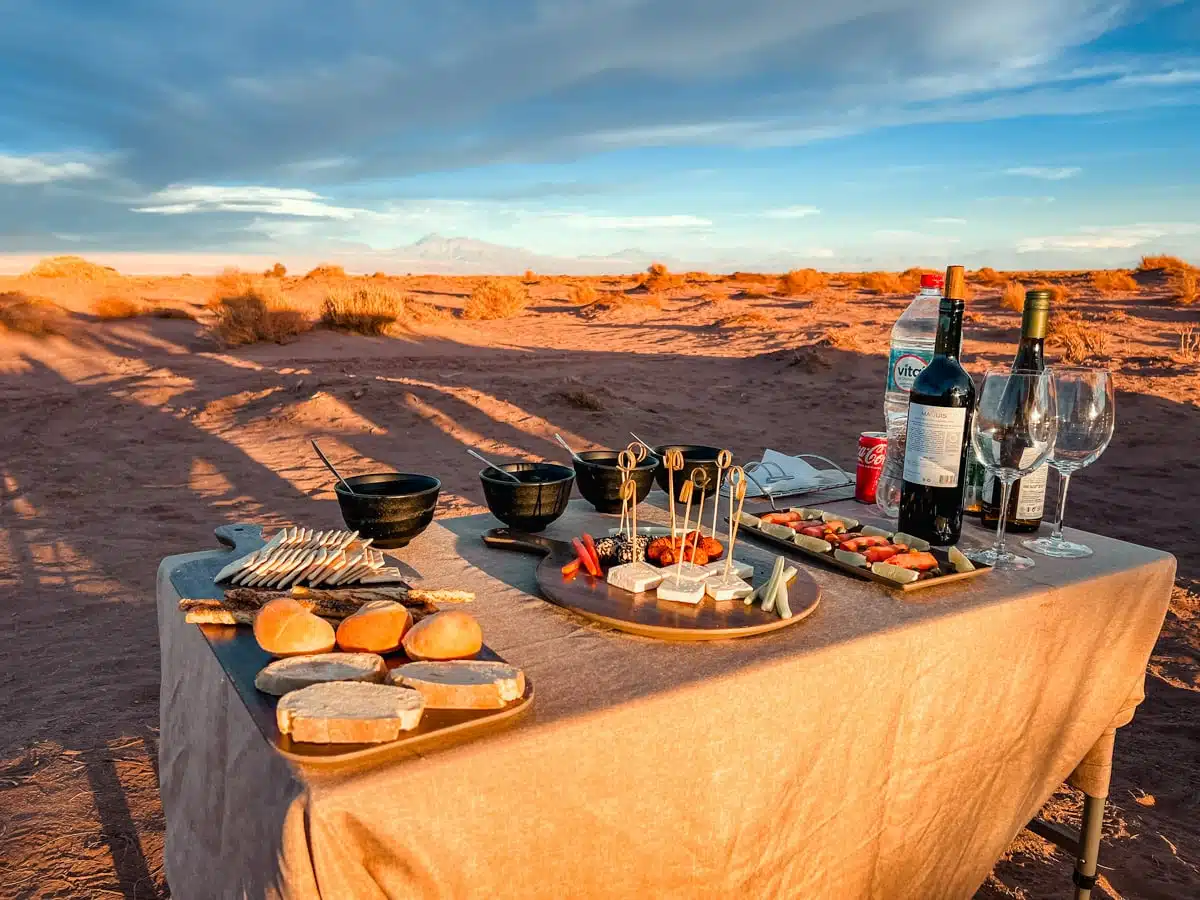
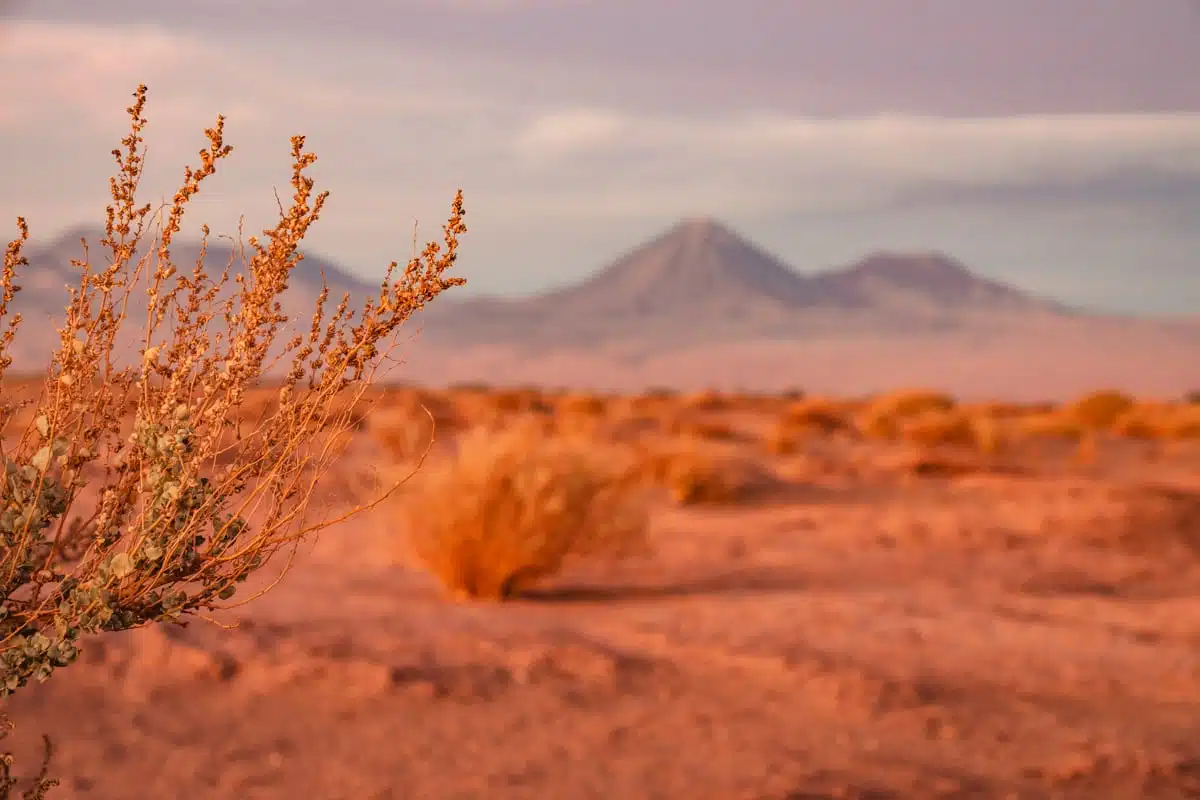
Once the sun dropped, the show really began. The sky streaked pink and violet over the volcanoes, the red earth glowed, and Licancabur and its neighbour Juriques turned into soft, purple silhouettes.
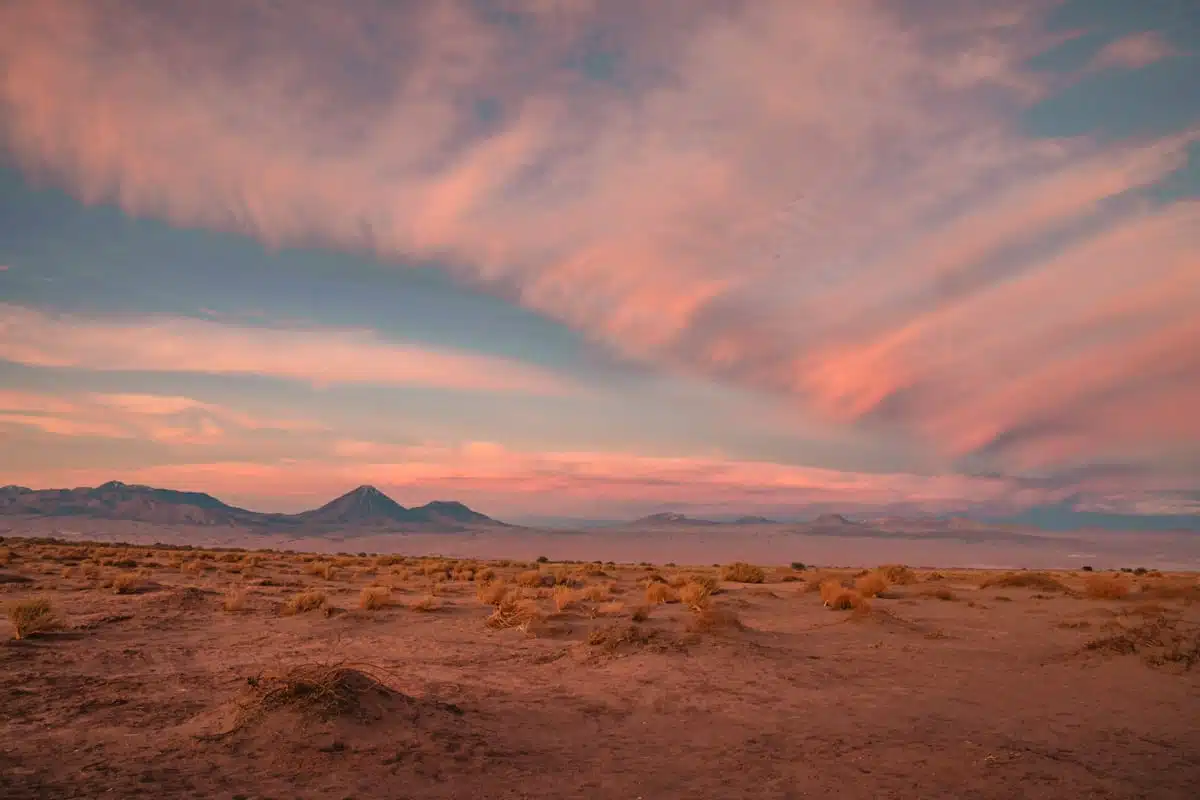
It was a quiet, glowing end to a day that had started in the dark at 4,300 metres, watching the geysers at El Tatio come to life.
The Valle de la Muerte: tickets, hours and sandboarding
If you’d rather stay closer to town, the Valle de la Muerte (also known as the Valle de Marte, or Mars Valley) is the classic alternative, a couple of kilometres west of San Pedro. The story usually told is that a European scientist, variously said to be the Belgian priest and archaeologist Gustavo Le Paige or the geographer Roland Paskoff, named it the Valle de Marte for its Martian landscape, and that his accent turned Marte into Muerte. Others say the name simply reflects how little lives here.
It’s a much busier place, and these days it’s managed, with an entry fee, opening hours and rules:
- Entry: around CLP 6,000 for adults and CLP 3,500 for students and over-60s, with under-sixes free (some operators quote a little more). You pay at the booth beside the road from Calama, about 2km before you reach town. Access is run by the Atacameño community of Quitor. Bring cash, as cards aren’t always accepted.
- Hours: walkers can visit from 8.30am to 5.30pm and vehicles until 6.30pm, while bikes are only allowed in between 8.30am and 10am.
- Rules: stay on the marked trails, keep to 20km/h if you’re driving, don’t take any rocks or salt, and leave the drone at home: drones, pets, smoking and alcohol are all banned.
- No facilities: there’s next to no shade and nowhere to buy water, so bring plenty of both water and sunscreen.
The valley’s big draw is its towering sand dune, which is where San Pedro’s sandboarding tours head. They run in the morning and the late afternoon, last around three and a half hours and cost around CLP 45,000 per person, with the entry fee on top. Expect to hike back up the dune after every run, which is hard work at this altitude, and note that some operators don’t take anyone under 14.
If you’d rather walk, a circuit of about 10km takes in the main viewpoint, a ridge section known as Las Cornisas and the main dune, with around 400 metres of climbing. Allow about four hours and avoid the middle of the day.
As for the Valle de la Luna, it’s now strictly a daytime visit: tickets are sold online only, the gates open at 8am or 9am depending on the season, and the trails close before sunset. The Mirador de Kari viewpoint, where many tours used to go to watch the sun set over the valley, has been closed. That makes a quieter spot like Ckamur all the more appealing.
How to get there
The easiest way to visit is with a guide who knows the area. I went on a private excursion from Nayara Alto Atacama, where I stayed on the all-inclusive option with private tours, and the lodge has run a half-day sunset excursion to this part of the range for its guests.
If you’re not staying at Nayara, you’ll rarely see Ckamur on tour listings by name. The closest equivalent is a sunset tour to Vallecito, in the same part of the Cordillera de la Sal. This Vallecito sunset tour run by Feel Atacama lasts about five hours, with short walks among the rock formations, a stop at the “Magic Bus” abandoned in the desert and a pisco sour at sunset. The listing says no entrance fee is needed.
Do
Book the Vallecito sunset tour
Driving yourself is possible, but think carefully. The tracks into this part of the range leave the paved road for gravel and then sand, and the final stretch out to the Magic Bus is deep, loose sand where ordinary cars regularly get stuck, so you’ll want a 4×4 and some experience of driving on sand. It was free when I went, but some operators say the local communities may ask for a small contribution at times (one quotes CLP 5,000 per person for Vallecito), so carry some cash. There are no facilities, so take everything you need.
For more ideas, see my guide to the best Atacama Desert tours.
When to go
Late afternoon is the time to come, when the low sun brings out the reds and the shadows deepen between the ridges. Aim to arrive at least an hour before sunset, and check the sunset time for your dates, as it shifts a lot between summer and winter.
The temperature drops fast once the sun has gone, and nights can fall to around freezing, so bring a warm layer, a hat and gloves, especially in winter. At only a little higher than San Pedro, it’s a good option early in your trip, or as a gentle end to a big day, as it was for me after El Tatio.
Map
Tips for visiting Ckamur
- Book a guide, or go with a 4×4 and some experience of driving on sand.
- Wear walking shoes with a good grip for the ridge and the sandy descent.
- Carry cash for any community contributions, and for the Valle de la Muerte’s entry booth.
- Pack water, sunscreen, a hat and a warm layer for after sunset.
- Leave the drone behind: drones are banned in the Valle de la Muerte.
- Stay on existing tracks and paths, and don’t take any rocks or salt home.
- Check the sunset time and give yourself an hour to explore before it.
Read next
- How to visit the Valle de la Luna
- The best things to do in the Atacama Desert
- My Atacama Desert itinerary
- Sunrise at the El Tatio geysers
- Stargazing in the Atacama Desert
- My Nayara Alto Atacama review
- Read all my San Pedro de Atacama and Atacama Desert guides
Love this? Save and share on Pinterest

Discover the top things to do, insider tips and hidden gems in our Chile Travel Guides.
Read the guides →