
The Algarve is really two coasts. In the west, golden cliffs crumble into sea stacks, grottoes and coves you can only see from a boat; in the east, the land flattens into salt marsh, sandbars and a lagoon where dolphins swim in from the open sea. Seven days is just enough to do both properly, if you know which way to drive and where to sleep.
Most people pick one end of the south coast and stay put. I’ve done both, on two separate trips. On one, I hired a villa in Lagos and spent my time on the clifftops and in the coves of the west and sending my drone up over the water. On the other, I had a villa at Quinta do Lago, at the eastern end, for a week in October: I rode a bike to the lagoon, took a slow boat to a desert island, shopped at a century-old market hall and went hiking inland with a guide.
This week in the Algarve puts the two trips together. You’ll start in Lagos, with three days for the cliffs, Benagil Cave, Praia da Marinha and the wild headland at Sagres, then drive east for four days of Loulé, the Ria Formosa, Ilha Deserta, Tavira and the old border towns on the Guadiana. The order is deliberate: fly into Faro, head straight west while you’re fresh, and finish within easy reach of the airport.
You’ll need a car for most of it. I’ve suggested a base for each end of the coast, and the practical stuff (driving, tourist taxes, packing, timing) is in the tips at the end. Prefer to build your own trip? My guide to the best things to do in the Algarve goes deeper on every stop.
Your week in the Algarve at a glance
- Day 1: Lagos and its cliffs. The old town, the clifftop path to Ponta da Piedade, the grottoes by boat and the view over Praia do Camilo.
- Day 2: Benagil and Praia da Marinha. Into Benagil Cave by boat or kayak, the Seven Hanging Valleys Trail, a swim at Marinha and sunset on the Carvoeiro boardwalk.
- Day 3: Sagres and Cabo de São Vicente. The great fortress on its headland, a west coast beach and sunset at the lighthouse.
- Day 4: Loulé and the lagoon. Drive east via Loulé market, then explore the lagoon by bike around Quinta do Lago.
- Day 5: Ilha Deserta and Estaminé. A slow boat across the lagoon, a seafood lunch on a desert island and an evening in Faro’s walled old town.
- Day 6: Tavira and Praia do Barril. The prettiest town on the coast, then a toy train to a beach full of rusting anchors.
- Day 7: the Spanish border. Castro Marim’s castle, cake and coffee in Vila Real de Santo António and a last sunset at Cacela Velha.
- Have more time? A walk in the hills behind the coast, the car-free islands off Olhão, and Silves and Monchique.
Day 1: Lagos, Ponta da Piedade and Praia do Camilo
Lagos is where the Algarve’s cliff coast is at its most dramatic, and it makes the best base for the west. It’s a proper town rather than a resort, with medieval walls, a lively marina and a tangle of cobbled lanes, and it’s small enough to walk. It’s also a place with a long and complicated history: Portuguese caravels sailed from here in the age of exploration, and it was the region’s capital until the 1755 earthquake.
Wander the old town

Start your morning inside the walls. The baroque Igreja de Santo António looks modest from the street, but step inside and almost every surface glitters with carved, gilded wood; the way in is through the town museum next door, which reopened in 2021 after a long renovation. Down on Praça do Infante, the old slave market, the Mercado de Escravos, is now a small museum on a grim chapter: the arrival of captive Africans here in 1444 is often called the first slave auction in Europe.
Walk down to the waterfront for the Forte da Ponta da Bandeira, the little 17th-century fort that guarded the harbour mouth, then follow the avenue along the river towards the marina for coffee.
Walk the clifftops to Ponta da Piedade
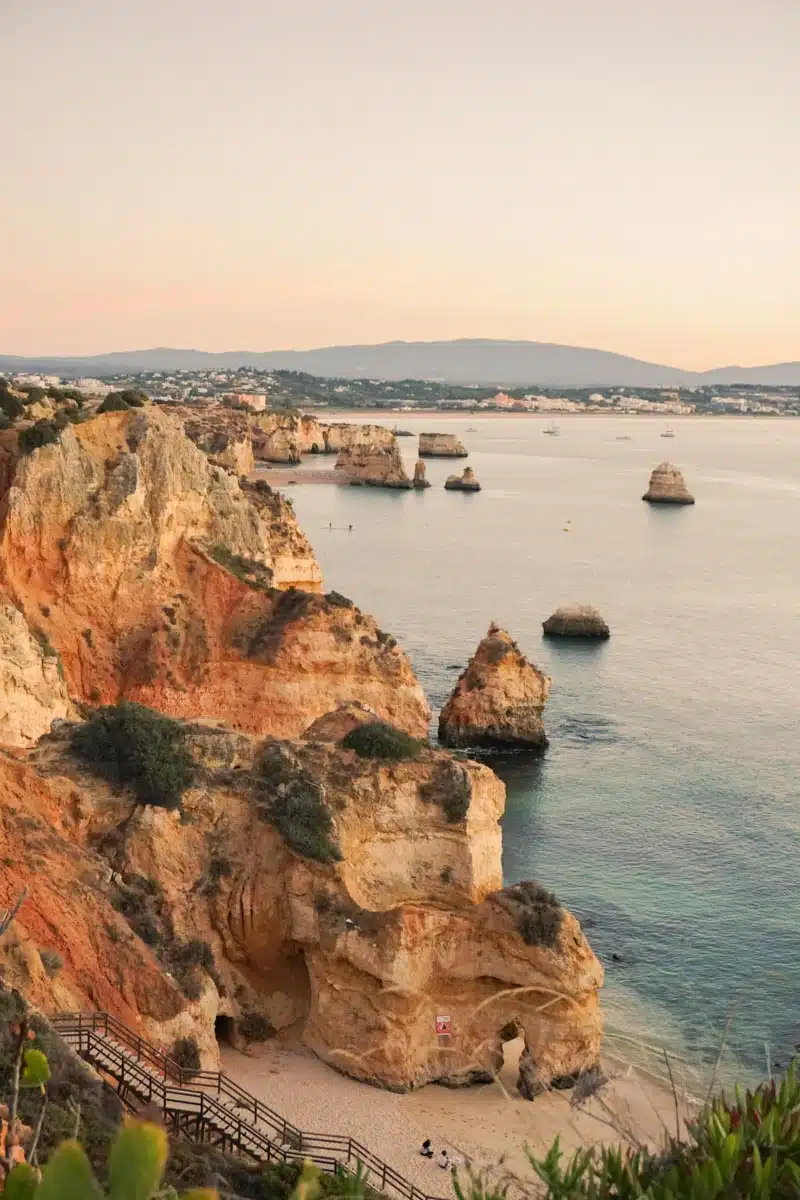
From the fort, it’s about 2km to Ponta da Piedade, the headland at the southern tip of the bay, and the walk takes you along the clifftops past one cove after another. The headland itself is a maze of sea pillars, arches and grottoes carved out of golden limestone, with a lighthouse on top and 182 steps down to the water at its tip.
The paths and boardwalks are unfenced in places, and chunks of these cliffs do fall, so stay a good few metres from the edge. Go early or late in the day: the light is softer and the car park, which fills fast in summer, is quieter.
See the grottoes from the water
You can’t really understand Ponta da Piedade until you’ve seen it from sea level. Small boats and kayaks weave in and out of the grottoes and arches, and they leave all day from the Lagos riverfront and from the landing at the bottom of the headland steps. Trips last from around 45 minutes to a couple of hours, and on a calm morning the water inside the grottoes glows green.
Do
This half-day cruise from Lagos with lunch takes in the grottoes and the coast beyond, if you’d rather make a morning of it.
Look down on Praia do Camilo
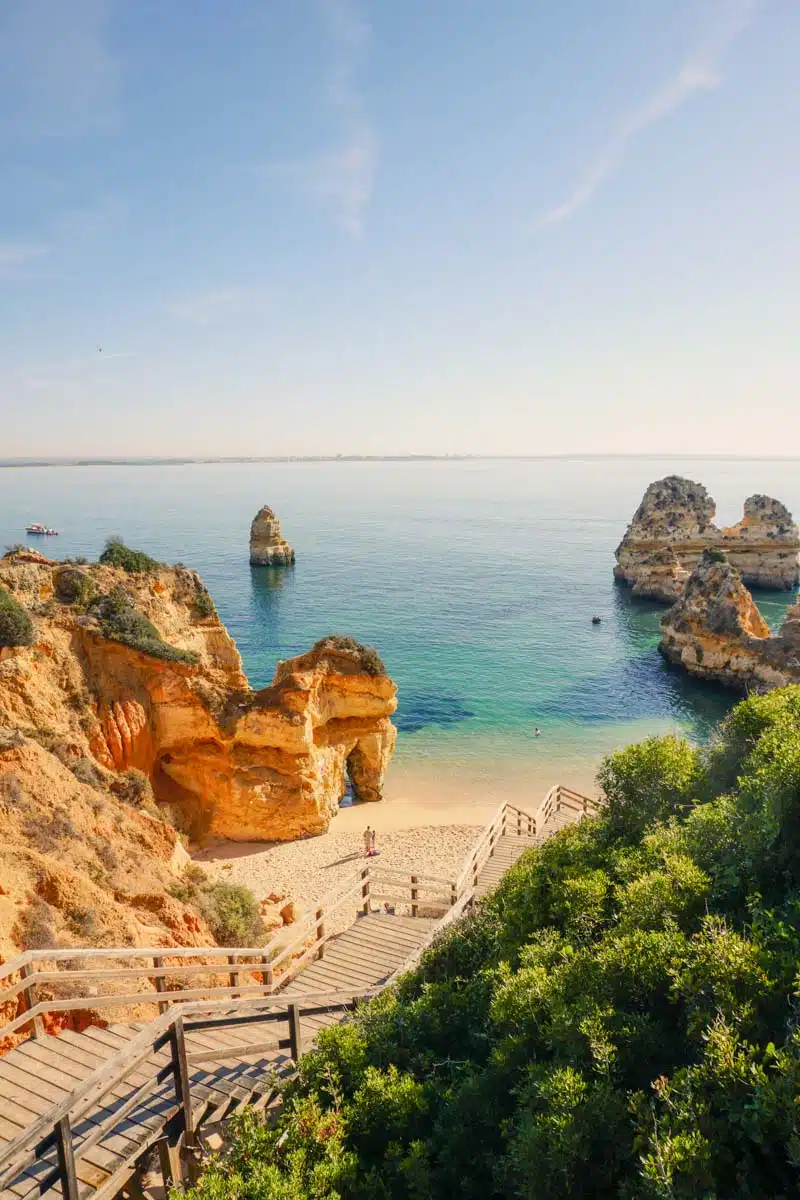
On the walk back, pause above Praia do Camilo, a tiny cove of golden sand between the cliffs that’s one of the most photographed beaches on the coast. I flew my drone over it on my Lagos trip, and from above you can see exactly why it’s so famous: a scrap of beach, a rock tunnel through to a second cove, and water that runs from emerald to deep blue.
Normally you’d go down the long wooden staircase to the sand, but it has been shut since a cliff fall in 2026, and no reopening date has been announced. Until it does reopen, admire the cove from the viewpoint at the top, or take one of the Ponta da Piedade boat trips, which pass right by. O Camilo, the clifftop seafood restaurant above the beach, is still open and makes a good spot for a drink as the sun goes down.
Top Tip
Before you go, check whether the Camilo steps have reopened. If you head down to Praia Dona Ana nearby instead, pitch your towel well away from the base of the cliffs.
Getting to Lagos
Most people fly into Faro, and Lagos is about an hour’s drive west on the A22, which has been toll-free since January 2025. Pick up your hire car at the airport and you’ll have it for the whole week. By train from Lisbon, the fast service to Tunes connects with a regional train to Lagos, which takes three and a half hours or more in total. Check flights on Skyscanner.
Suggested stay: a villa in Lagos
I rented a villa in Lagos, and for groups and families it’s hard to beat: room to spread out, often a private pool and a kitchen of your own, which is no bad thing when the fish is this good. You’ll find plenty in the hills behind town and out towards Luz, so it’s worth browsing villas and holiday homes in and around Lagos; for July and August, book months ahead.
For a hotel, Casa Mãe is the town’s standout boutique option, a 19th-century family house beside the old walls with rooms set around a kitchen garden and a pool. There’s more in my guide to where to stay in Portugal.
Day 2: Benagil Cave, the Seven Hanging Valleys and Praia da Marinha
Day two heads east along the coast to the stretch between Carvoeiro and Armação de Pêra, where the cliffs are riddled with caves and some of the finest beaches in Portugal hide at the bottom of them. It’s about 40 minutes by car from Lagos, so make an early start: the boats, the trail and the car parks are all at their best before the day trippers arrive.
Go inside Benagil Cave by boat or kayak

Benagil Cave is the most famous sight on the whole coast: a domed sea cave with a round hole in its roof that lets a shaft of sunlight fall onto a crescent of sand. The rules have changed a lot in the last few years. Landing on the sand inside and swimming in have both been banned since August 2024, so you can only enter on a licensed boat trip or in a guided kayak or paddleboard group, and then for just a few minutes.
Boat trips run from the beach at Benagil and from the bigger resorts along the coast, or you can paddle in with a guide, which gives you the longest time inside. Calm mornings are best, and if the sea is up, expect to see the cave from its mouth rather than from inside. And leave your drone in its bag: steering one through the skylight is a bad idea. I tried it once: mine lost its signal, crashed, and I had to hire a boat just to get it back. The full story, and the latest rules, are in my guide to visiting Benagil Cave.
Do
A guided kayak tour from Benagil is the slower, quieter way into the cave, with a guide alongside.
Walk the Seven Hanging Valleys Trail
Back on dry land, walk the Seven Hanging Valleys Trail (Percurso dos Sete Vales Suspensos), one of the finest coastal walks in Portugal. It runs for about 6km along the clifftops from Marinha west to Vale de Centeanes, near Carvoeiro, dipping in and out of the small dry valleys that end abruptly in mid-air above the sea.
Along the way, you’ll look straight down on Benagil Cave through its skylight, for free, and pass the double rock arch of Praia da Marinha and the sea arch at Albandeira just to the east. Allow two to three hours one way, carry water, as there’s very little shade, and stay on the marked path. Start from the big car park at Marinha, and take a taxi back from the Carvoeiro end if you don’t fancy the return leg.
Swim at Praia da Marinha

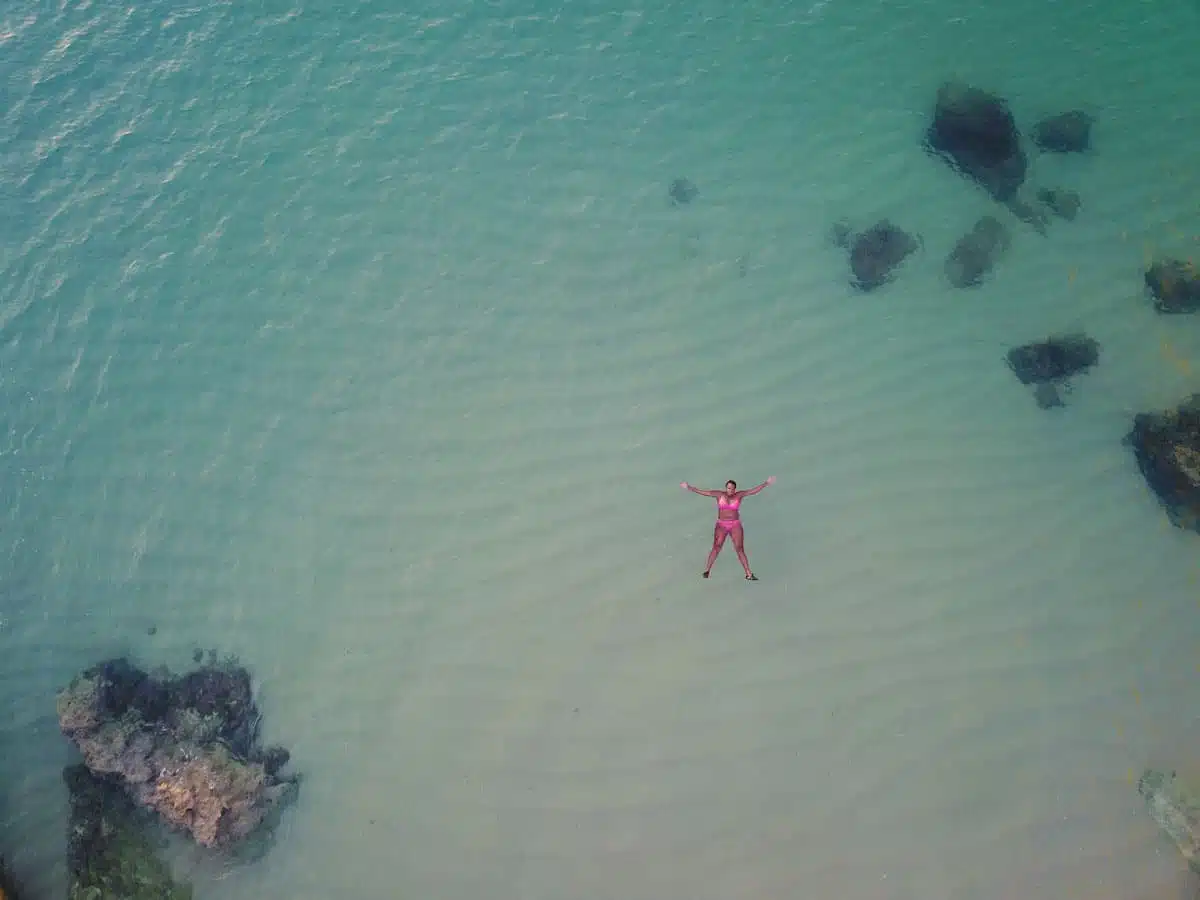
Finish the walk where you started, with an afternoon on the sand at Praia da Marinha. Golden cliffs, sea stacks and water so clear you can see the rocks on the bottom make it a regular on lists of the most beautiful beaches in the world, and it’s one of the beaches I shot from the air on my trip to the west. A steep path and steps lead down from the clifftop. When the tide is out, rock-hop round to the smaller coves and pools on either side, but keep an eye on the water so you aren’t cut off.
End the day on the Carvoeiro boardwalk
On the way back to Lagos, stop in Carvoeiro, a fishing village turned resort whose white houses spill down the hillside to a small beach. Above it, by the old fort, a clifftop boardwalk a little over half a kilometre long leads to Algar Seco, a jumble of eroded rock, natural pools and blowholes. There’s no charge and no closing time, so stay for the sunset.
Day 3: Sagres and Cabo de São Vicente
West of Lagos, the coast gets wilder. The villas and golf courses thin out, the trees bend away from the wind and the cliffs face the open Atlantic. Sagres, about 35 minutes’ drive from Lagos, is a laid-back surfing town on the last stretch of land before the ocean, and it makes a fine day out.
Explore the Fortaleza de Sagres
The Fortaleza de Sagres stands on a vast, flat headland jutting out into the Atlantic, and it’s a place soaked in the story of Portuguese exploration: Prince Henry the Navigator, the patron of the voyages that sailed down the coast of Africa, is closely linked with this headland, and he died nearby in 1460. The walls you see today mostly date from the 17th and 18th centuries, but inside the headland are the little Igreja de Nossa Senhora da Graça, a giant stone wind rose of disputed age and a clifftop path right around the promontory. Entry has cost €10 since 2025.
Spend the afternoon on a west coast beach
Sagres has beaches on both sides of the headland, which means there’s almost always one sheltered from the wind. Praia do Martinhal, east of the town, is calm and shallow, and Praia do Tonel, on the ocean side, is the one the surfers head for. The water on this coast is cooler than further east, so a surf lesson is a good excuse for a wetsuit.
If you’re keen on walking, the Fishermen’s Trail runs north from here along the Atlantic coast into the Alentejo, part of the Rota Vicentina network of footpaths. I’ve walked stages of it further north, and my guide to walking the Rota Vicentina covers the whole route.
Watch the sunset at Cabo de São Vicente
End the day 6km further west at Cabo de São Vicente, the far south-western corner of the European mainland, where the lighthouse sits on cliffs more than 60m above the waves. Sailors once believed this was the edge of the world, and with nothing but ocean in front of you, it’s easy to see why. The lighthouse has a small museum about Portugal’s lighthouses, and the clifftop draws a crowd at sunset, when the sky goes gold over the Atlantic.
Top Tip
Take a jumper, even in summer. The wind at the cape can be fierce, and it gets cold the moment the sun goes down.
Day 4: Loulé market and the Ria Formosa by bike
Today you swap the cliffs for the east. It’s about an hour on the A22 from Lagos to Loulé, so check out early: the market is at its liveliest in the morning, and you’ll want the afternoon for the lagoon.
East and west might as well be different regions. Beyond Faro, the cliffs give way to the Ria Formosa, about 60km of lagoon, marsh, sandbanks and islands, and the towns feel quieter, older and more Portuguese.
Shop for lunch at Loulé market
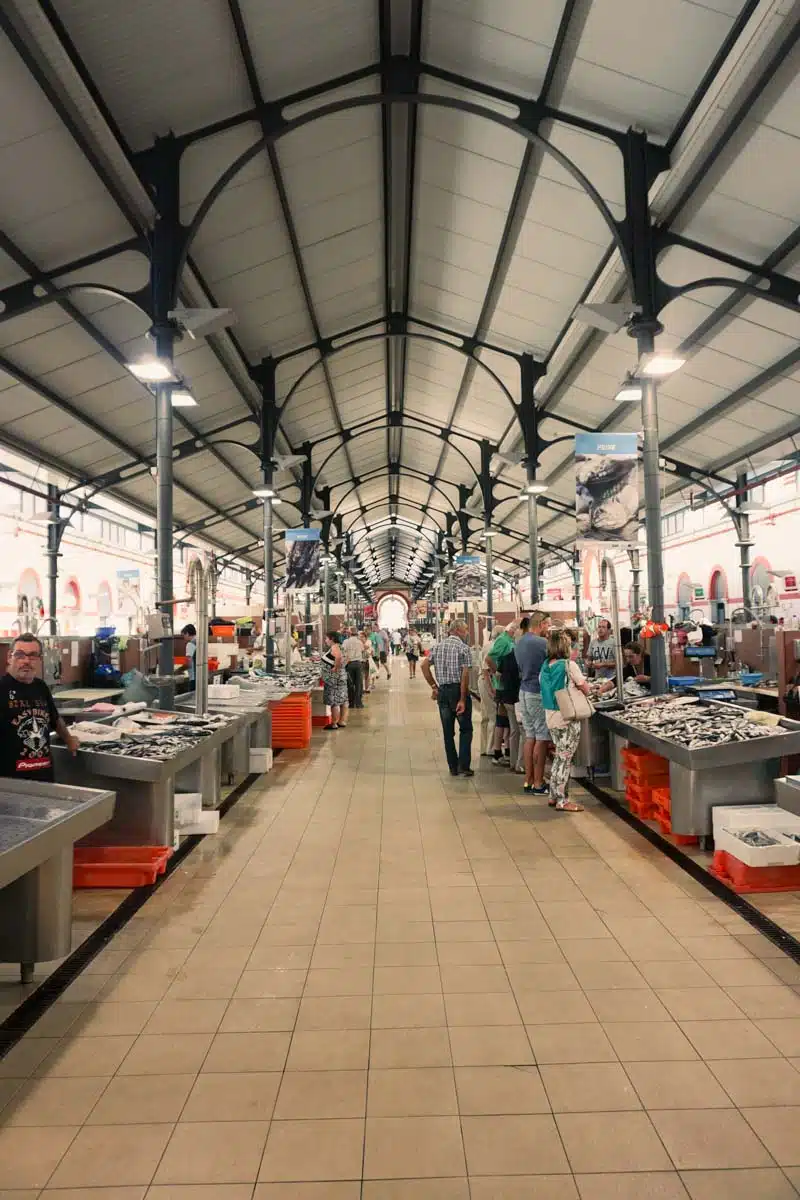
Loulé is an old market town a few kilometres inland, and its market hall, with its red onion domes and Moorish arches, has been the heart of it since 1908. Fishmongers shout over the morning’s catch, and the fruit stalls are stacked with oranges, figs and almonds alongside cured hams, sheep’s cheese and jars of local honey. The hall opens Monday to Saturday from 7am until 3pm, and on Saturday mornings a producers’ market spills out into the streets around it.
Whenever I’ve stayed in the area for a while, I’ve done my barbecue shopping here, and if you’re heading for a villa with a kitchen, do the same. Even if you’re not cooking, it’s worth an hour just to watch the town do its shopping, and the old town behind it, with its castle walls and white lanes, is a pleasant place for a coffee.
Cycle out to the lagoon at Quinta do Lago
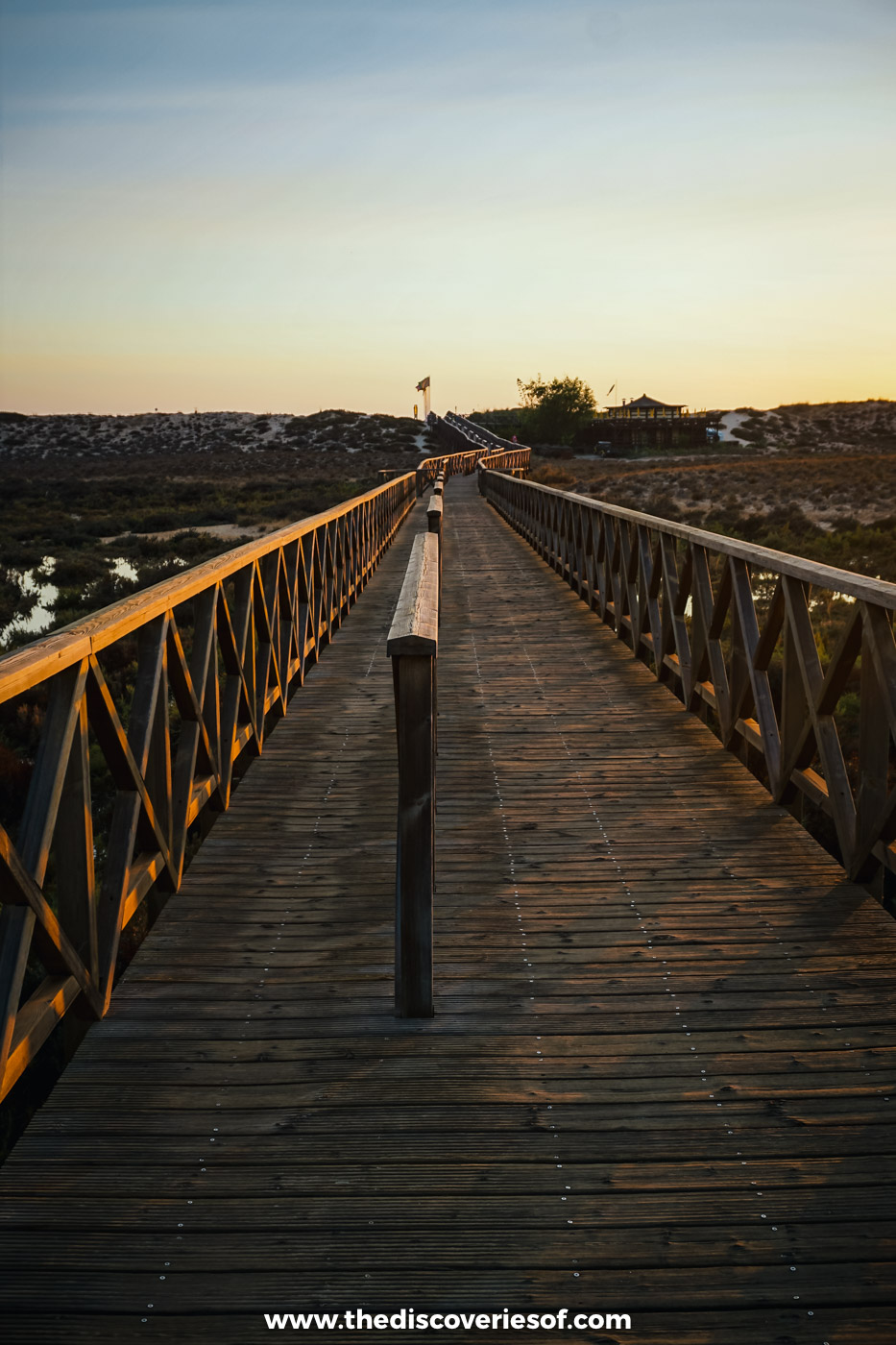
From Loulé, it’s about 20 minutes south to Quinta do Lago, where you’ll find the lagoon at its most accessible. When I stayed here in October, the Ria Formosa was a short bike ride from my villa, and its paths through the salt marsh were wild, quiet and full of birds, at least until the next jet took off from Faro, which sits right on the other side of the lagoon.
Ride to the end of the road and a 300m wooden footbridge takes you over the water to a long, dune-backed beach. Just east, the Ludo trail loops for 7km past salt pans and freshwater pools where you’ve a good chance of seeing flamingos, especially from October to March. Most resorts and several shops in the area rent bikes. For the trails and the birdlife in more detail, read my Ria Formosa Natural Park guide.
Suggested stay: Four Seasons Fairways
For the eastern half of the week, I’d base myself around Quinta do Lago or in Tavira. I stayed in a newly renovated villa at Four Seasons Fairways, a calm, spacious resort among the pines, with a jacuzzi on my terrace and a barbecue that got plenty of use. It has no connection with the Four Seasons hotel brand: it’s an independent resort of self-catering villas, let by the week, so it suits a trip where you spend the whole seven days in the east and drive out to Benagil and Lagos as day trips.
For a shorter stay in the east, the Pousada Convento de Tavira puts you in a 16th-century convent in the heart of Tavira’s old town, with a pool in the garden (note that works close it between 2 November and 22 December 2026). For more choices, see where to stay in Portugal.
Day 5: Ilha Deserta and lunch at Estaminé
Today is all about the lagoon. Ilha Deserta, officially Ilha da Barreta, is an uninhabited barrier island off Faro where the only building is a restaurant, and its beach is, more or less, my favourite anywhere on this coast. The only way there is by boat.
Take the slow boat across the lagoon
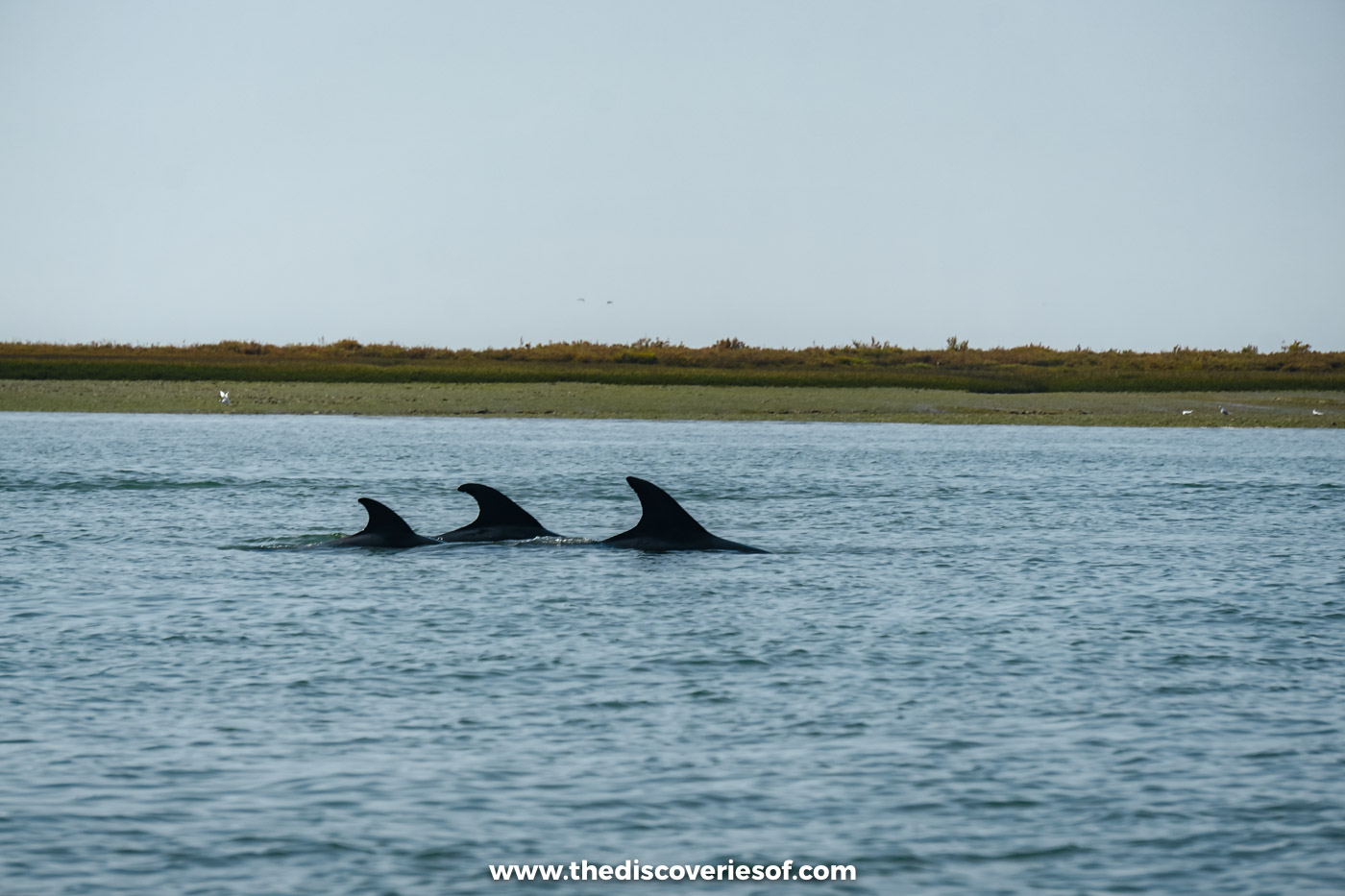
Boats to the island leave all year from the pier beside Faro’s old town, run by Animaris. The speedboat takes about 15 minutes, but the trip comes alive when you take it slowly. I crossed on a little catamaran with a naturalist on board, who showed me oysters and shore crabs in the shallows and teals and curlews on the mud flats, and then, the highlight, a handful of dolphins that had come in from the ocean.
Ferry tickets are €5 each way for the 45-minute crossing, and the speedboat costs €10. There are around five ferries a day, with fewer in winter, and the last boats back leave in the early evening, so check the times before you set off.
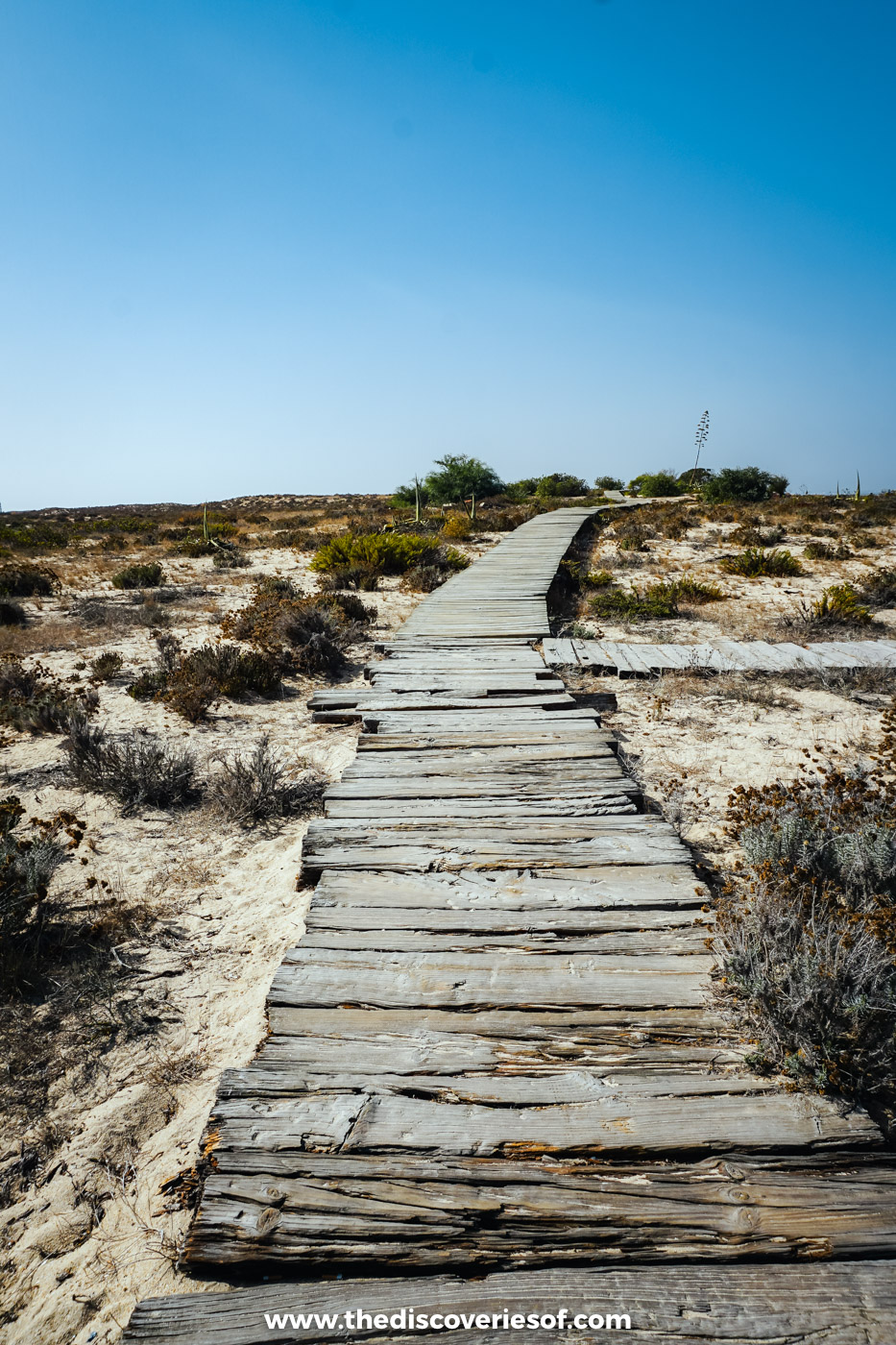
Once you land, a wooden boardwalk crosses the dunes to the ocean side, where a beach of about 7km stretches away in both directions. Walk east and you’ll reach Cabo de Santa Maria, as far south as you can go in mainland Portugal, which turns out to be little more than a curve in the sand. For timetables and the walk in detail, read my Ilha Deserta guide.
Lunch at Estaminé
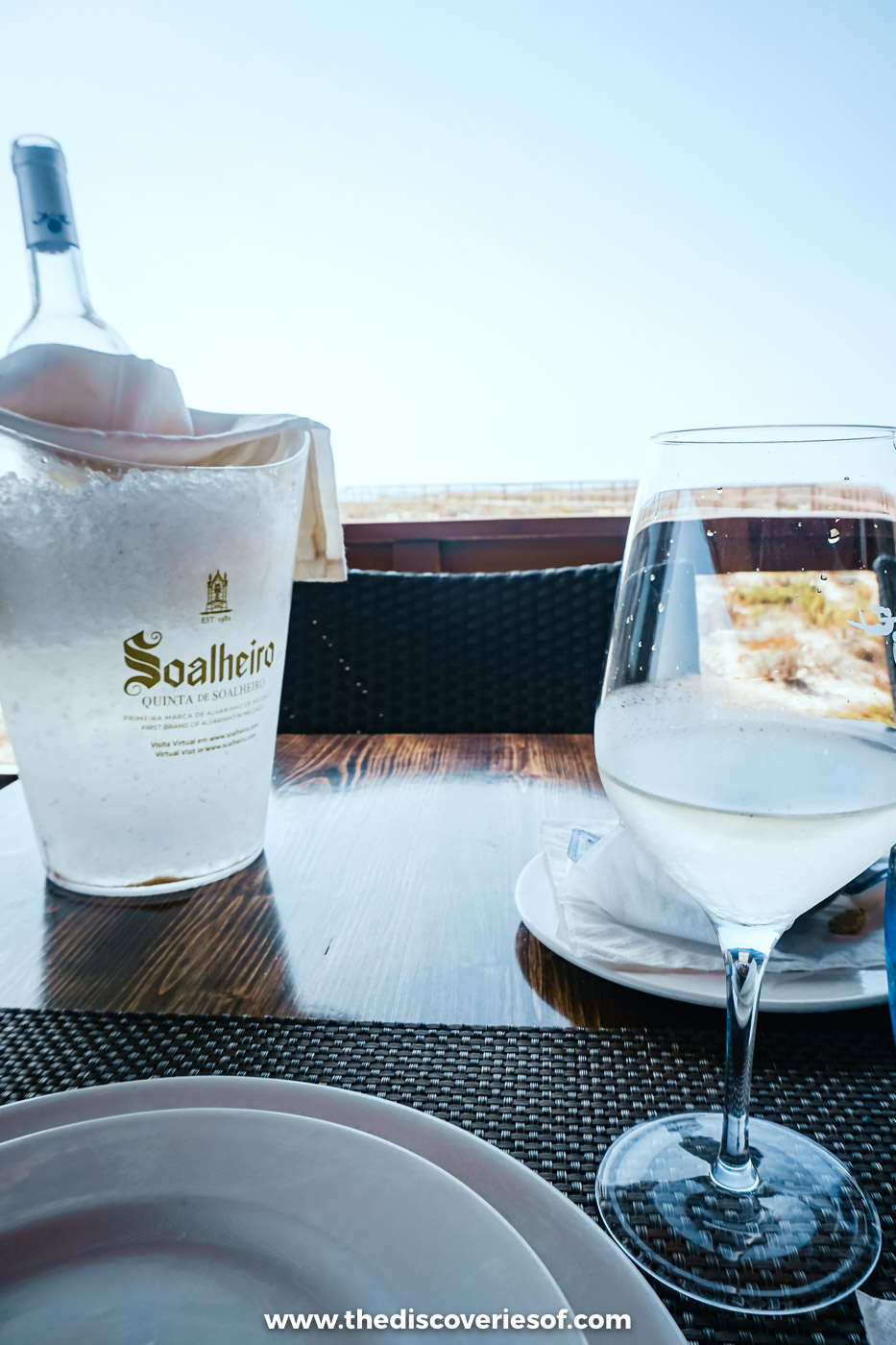
The island’s only building is Estaminé, and seafood lovers should put it first on their Algarve list. It’s open for lunch every day, all year, with lagoon shellfish, fish straight off the grill and big pans of seafood rice to share, in a building that runs on solar power and makes its own drinking water from the sea. The original restaurant burned down in 2021 and was rebuilt within months; I’ve been back since, and it’s every bit as good.
I ate my way through the lagoon’s best: oysters, an octopus salad, clams cooked Bulhão Pato style with garlic and coriander, crispy prawns and fish from the grill. Book a table ahead in summer and at weekends, and time it around your boat back. My Estaminé review has the menu, prices and how to get a table.
Spend the evening in Faro’s old town
Most visitors only see Faro from the airport, and its old town deserves better. Back on the mainland, the Cidade Velha is a short walk from the pier: enter under the Arco da Vila, where storks nest on top of the gateway, and you’re in a hushed little quarter of cobbles and orange trees inside the old walls. Climb the tower of the Sé, the cathedral, for a view over the lagoon you’ve just crossed, then, if there’s time before it closes, visit the bone chapel (Capela dos Ossos) behind the Igreja do Carmo, whose walls are lined with the skulls and bones of the town’s monks. Stay for dinner: cataplana, the Algarve’s copper-pot seafood stew, is the dish to order.
Day 6: Tavira and Praia do Barril
About 35 minutes east of Quinta do Lago, Tavira is the town I’d pick as the most picturesque on the whole south coast, and it’s the perfect antidote to the resorts further west.
Explore Tavira’s old town
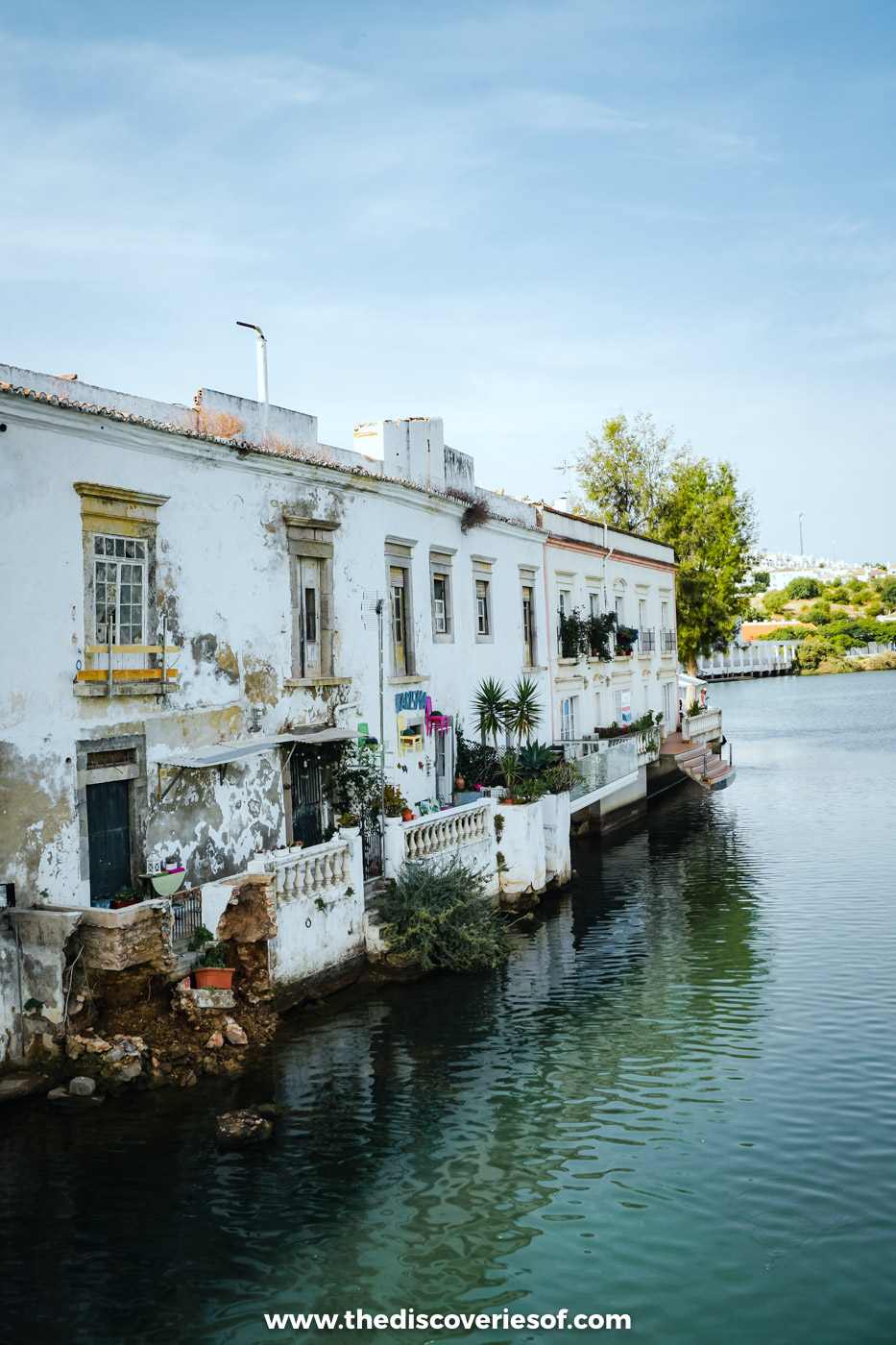
Tavira spreads across both banks of the Rio Gilão, and it seems to have a church on nearly every street corner, along with houses faced in patterned tiles and the distinctive four-sided hipped roofs you’ll rarely see anywhere else in the region. Cross the seven-arched Ponte Antiga, which has been closed to traffic since a flood in 1989, then climb to the castle, whose walls go back to the Moorish town, for the view across the rooftops.
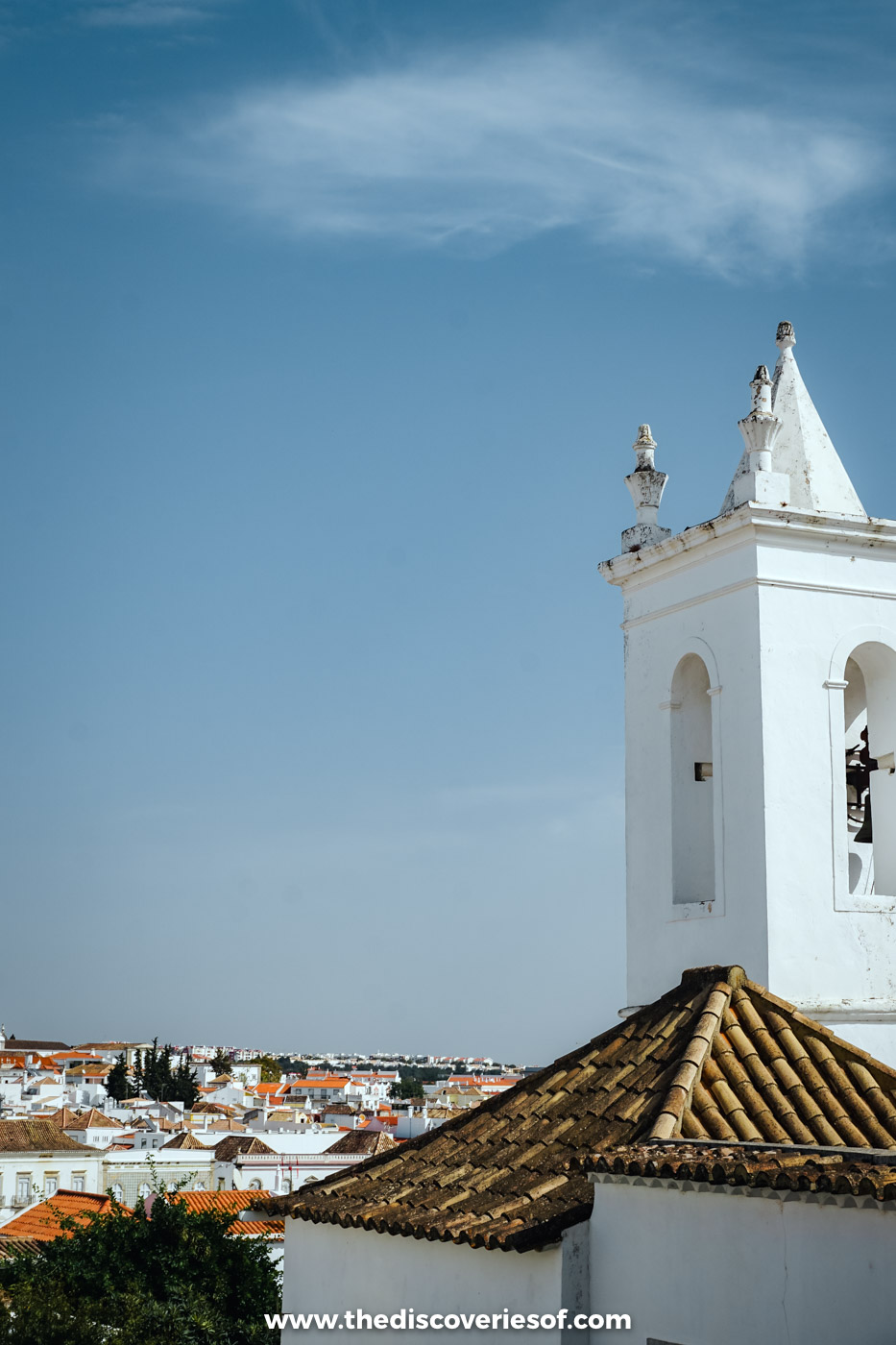
Next door, the Igreja de Santa Maria do Castelo, the main church, replaced the town’s mosque after the 13th-century Christian conquest, and the Igreja da Misericórdia, a few streets away, has a beautifully carved Renaissance doorway. Have lunch by the river around the Praça da República. My Tavira travel guide has the full rundown.
Take the toy train to Praia do Barril
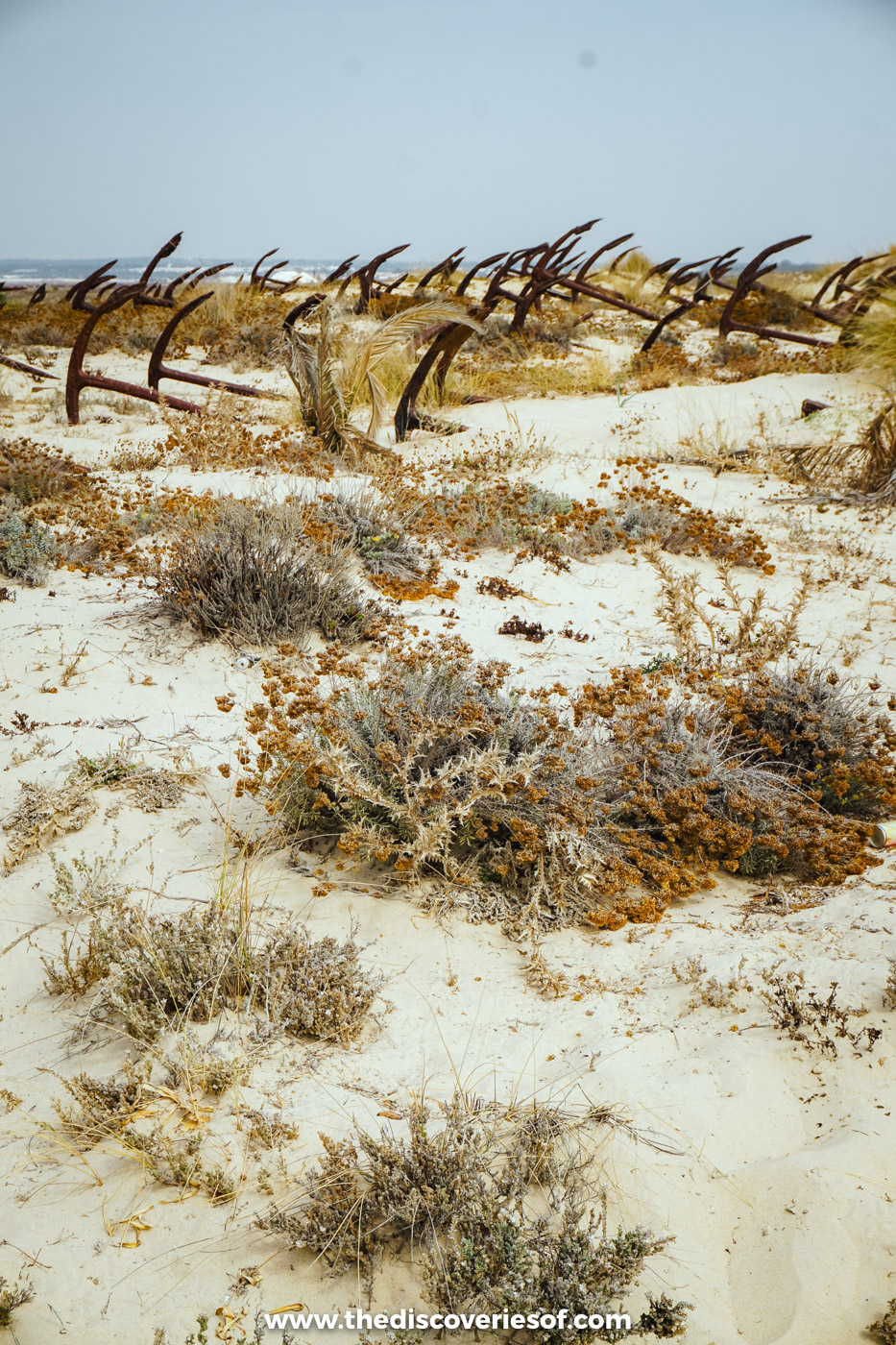
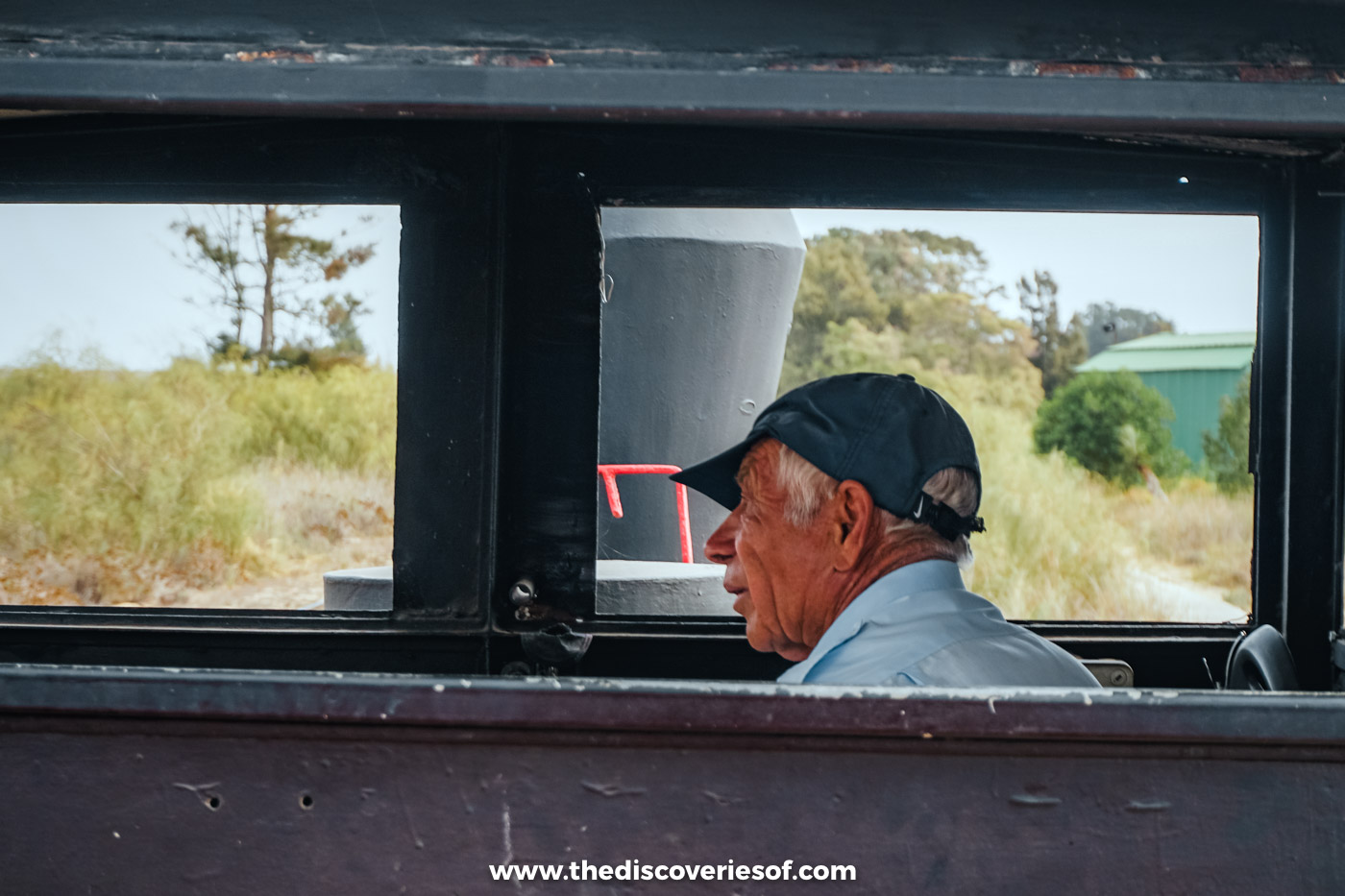
In the afternoon, drive a few kilometres west to Pedras d’El Rei for the beach I loved most around Tavira. Praia do Barril is wild and a little windswept, and getting there is half the fun. Over the footbridge across the lagoon, a narrow-gauge train no bigger than a fairground ride trundles 1.5km out to the sea for about €2, or you can walk the path that runs beside the rails.
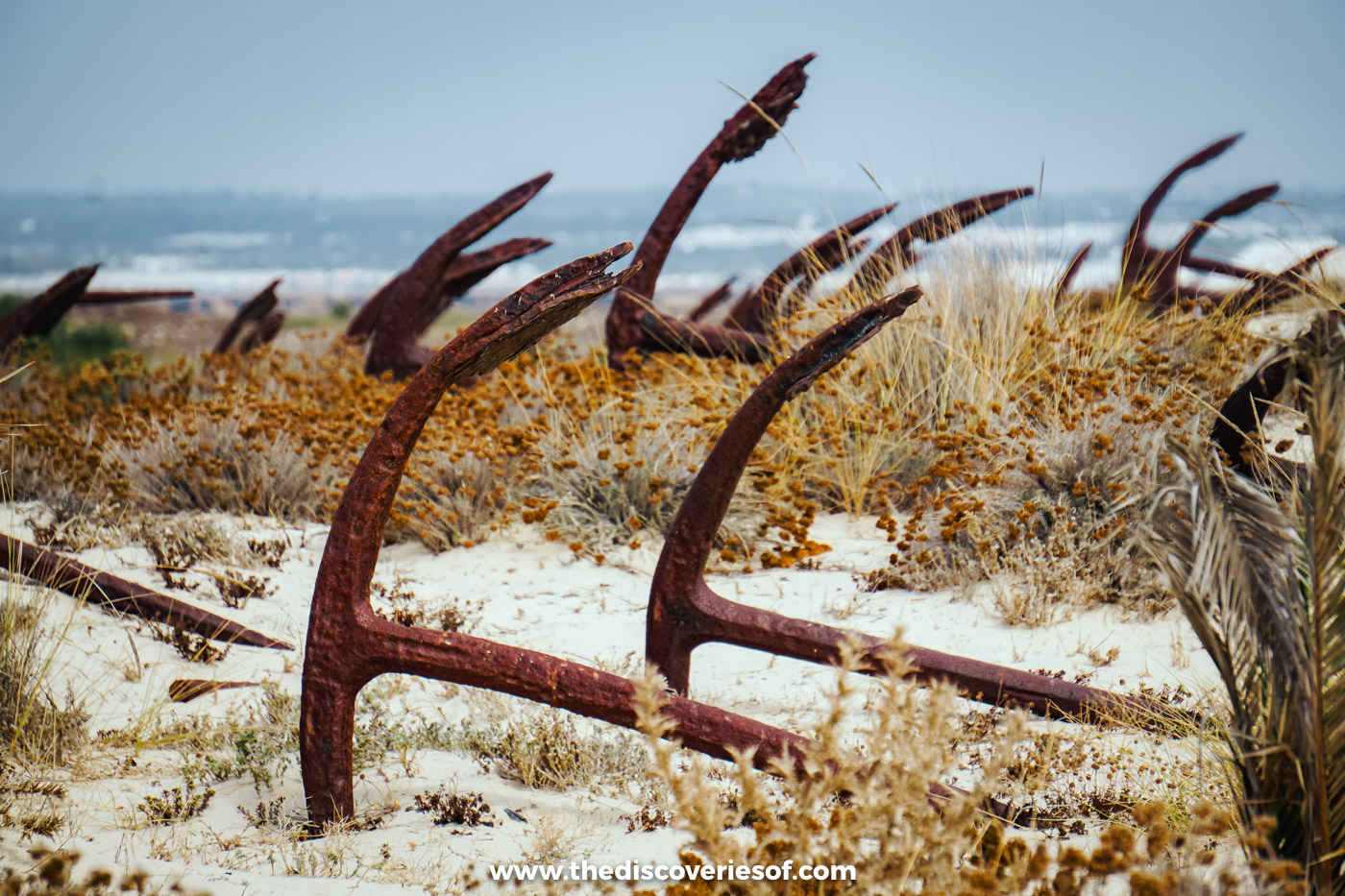
At the far end, the Cemitério das Âncoras, the anchor cemetery, is one of the strangest sights on the coast: row upon row of more than 200 rusting anchors planted in the dunes, a memorial to the tuna fishermen who worked from here until the fishery closed in the 1960s. Their old cottages are now cafés and restaurants, and the beach has lifeguards in the bathing season.
Top Tip
Check the time of the last train back before you settle in on the sand. If you miss it, the walk back beside the tracks is easy and only takes about 20 minutes.
Day 7: Castro Marim, Vila Real de Santo António and Cacela Velha
On your last day, carry on east to the Guadiana, where Portugal ends and Spain begins on the far bank. Castro Marim is about 25 minutes from Tavira, and the drive back to Faro airport at the end of the day is around 45 minutes.
Climb the walls of Castro Marim
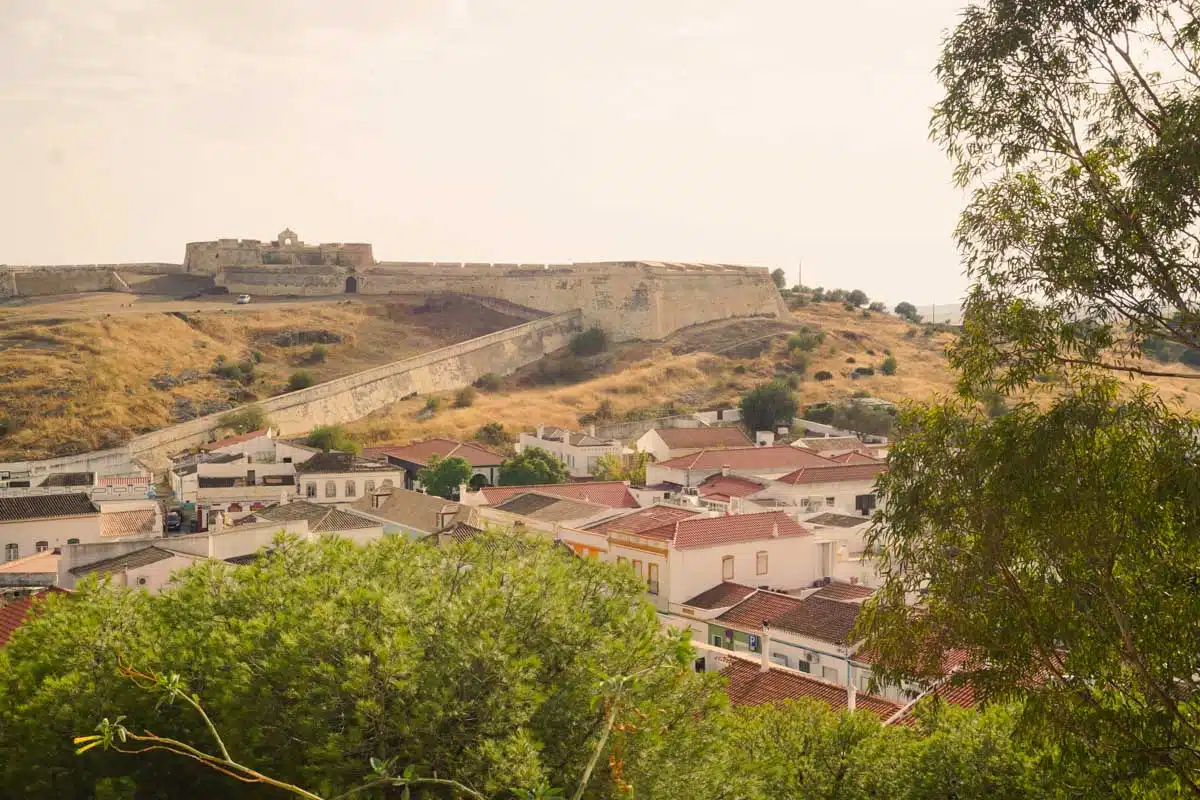
Castro Marim is a fortress town facing Spain over the water, and from its walls you can see straight into Andalucía. The castle on the hill was rebuilt in the 13th century, and in 1319 it became the first seat of the newly founded Order of Christ, the knights who inherited the Templars’ lands in Portugal. Its star-shaped neighbour, the Forte de São Sebastião, went up on the next hill in the 17th century, during the long war that restored Portugal’s independence from Spain. Below the town, the salt pans of the Sapal nature reserve draw flamingos and storks for much of the year.
Take a siesta break in Vila Real de Santo António
Ten minutes down the road, Vila Real de Santo António is a complete contrast: a new town laid out from scratch in 1774, on the orders of the Marquis of Pombal, using the same rational street plan he had drawn up for rebuilding Lisbon after the earthquake. Its straight, pedestrianised streets lead to a handsome square paved in black and white stone.
Time your visit for the late afternoon, once the town stirs again after the siesta, and take a break in a café in the pedestrianised centre: coffee and a slice of toasted cake is the local way to restart the afternoon. If you’ve time to spare, the little ferry from the riverfront crosses to Ayamonte, in Spain.
Watch a last sunset from Cacela Velha
On the way back towards Faro, stop at Cacela Velha, a tiny whitewashed village on a bluff where the lagoon finally runs out. It’s little more than a church, a small fortress and a few houses, but from the square you look out over the lagoon to the sandbar beach and, on a clear evening, all the way to Spain. Get here an hour or so before sunset and order oysters in the village before you head for the airport or your last night.
Have more time? Add these to your itinerary
Walk the hills behind the coast
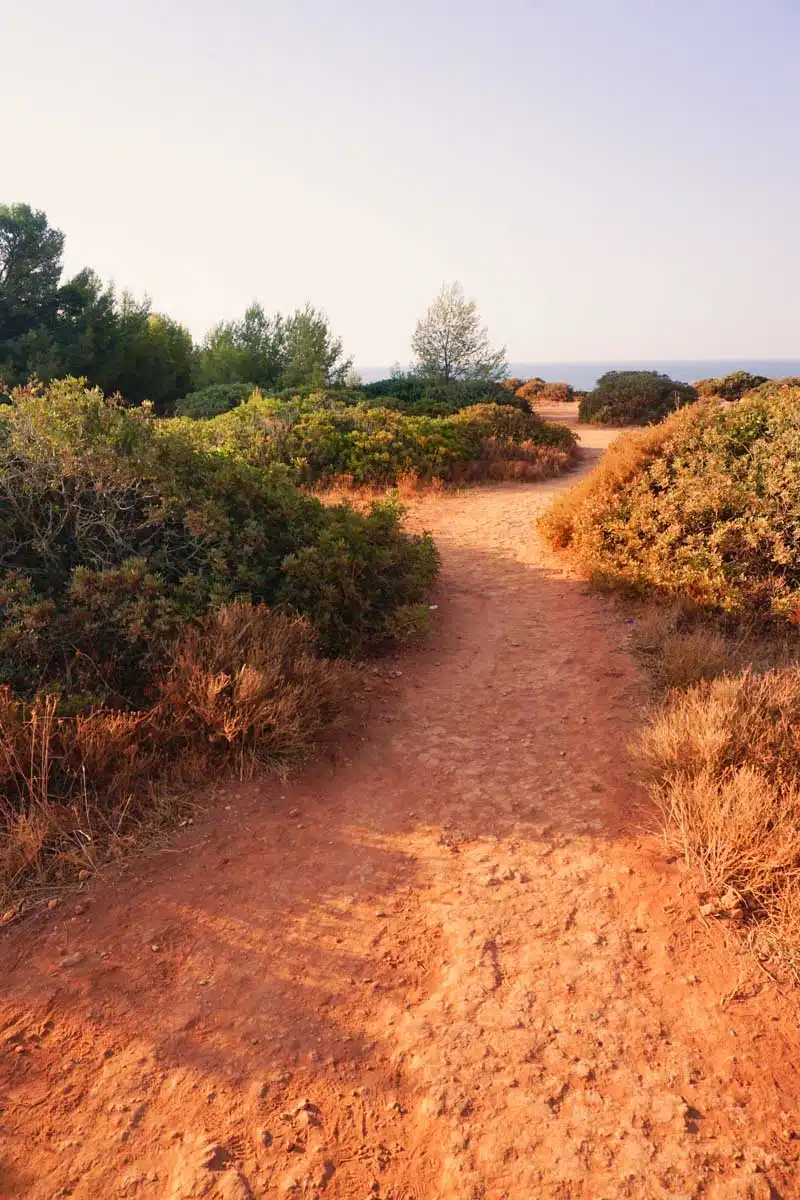
Few people who come for the beaches ever venture inland. Acting on a tip from the staff at my resort, I went walking in the hills with a local guide, Terry, which gave me a very different picture of the region from the one you get on the coast.
To walk on your own, head for the Rocha da Pena, a limestone ridge above the village of Salir, north of Loulé, where a 6.7km circular trail climbs onto the plateau for views all the way to the coast. Serious walkers can take on the Via Algarviana, a long-distance path of more than 300km that crosses the whole region through the hills, from Alcoutim on the Guadiana to Cabo de São Vicente.
Island hop from Olhão to Culatra
Olhão, a fishing port a few minutes past Faro, has two red-brick market halls on its waterfront and public ferries out to the car-free islands of Armona and Culatra, with fishermen’s houses, sandy lanes and long ocean beaches. Fares are about €2 each way, and boats run all year, though far less often in winter.
Drive inland to Silves and Monchique
From the west, a day inland takes in Silves, the old Moorish capital of the region, with its red sandstone castle above the orange groves, and the wooded Serra de Monchique, where a winding road takes you up to Fóia, the region’s highest summit at 902m. Stop for lunch in Monchique and finish with medronho, a fierce brandy distilled from the berries of the strawberry tree.
Map
Handy tips for planning your week in the Algarve
Top tips
- Hire a car: I’ve never tried to get between these places without one, and I wouldn’t. The coast train links Lagos, Faro and Tavira, but almost everything else on this route needs wheels. Watch out on the smaller roads, where some local drivers can be on the aggressive side.
- Tourist tax: it varies by council. Quinta do Lago falls under Loulé, where guests pay €2 a night in the summer season and €1 in winter, capped at five nights, and Faro €1.50 a night all year. Lagos and Tavira had no tourist tax in 2026.
- Book the boats and the cave early: in July and August, the Ilha Deserta boats, Estaminé and the Benagil tours all fill up, so book ahead and go on the first departure you can.
- Mind the cliffs: rockfalls are common along the western coast. Keep well back from the edges on clifftop paths and don’t sit right under the cliffs on the beach.
- Tipping: rounding up or leaving around 10% for good service is appreciated, never compulsory; read more on tipping in Portugal.
What to pack
- Reef or water shoes: for the rocks at Marinha and the pebbly coves of the west.
- Proper walking shoes: for the Seven Hanging Valleys, the Ponta da Piedade steps and the hills.
- A wide-brimmed hat: there’s very little shade on the clifftops or the island beaches.
- A warm layer: for the wind at Cabo de São Vicente and evenings by the water.
- A travel adapter: sockets take the round two-pin European plug.
Best time to visit
Late April to June and mid-September to October are the sweet spots: beach weather, but not the July heat or the August queues. I spent my week in the east in October, and the evenings were still warm enough to eat outside on the terrace. July and August bring the hottest days, highs of about 29°C, the warmest sea and the biggest crowds. Winter is mild and quiet, but some boats and restaurants cut back. My guide to Portugal in October covers the autumn, and my best time to visit Portugal guide covers the rest of the year.
Getting around
Faro airport is the gateway, about an hour from Lagos and 20 minutes from Quinta do Lago. The A22 motorway runs the length of the coast and has been toll-free since January 2025, so a car is the easiest way to follow this route. Without one, the regional train runs along the coast from Lagos to Vila Real de Santo António, stopping at Faro and Tavira, and local buses fill some of the gaps, but you’ll need taxis or tours for Benagil, Sagres and the Ria Formosa trails. For more planning advice, see my Portugal travel tips.
Read next
- The best things to do in the Algarve
- The best beaches in the Algarve
- How to visit Benagil Cave now
- A Tavira travel guide
- Is a villa at Four Seasons Fairways the best way to do the Algarve?
- How to spend one week in Portugal
Love this? Save and share on Pinterest
Discover the top things to do, insider tips and hidden gems in our Portugal Travel Guides.
Read the guides →