
Looking for the best things to do in Tucson? From the adobe streets of Barrio Viejo and the “White Dove of the Desert” to trails through forests of giant saguaro cacti and some of the best Sonoran food in the US, this is what not to miss in southern Arizona’s laid-back desert city.
Tucson is a relaxed city a couple of hours’ drive south of Phoenix, ringed by mountains and wrapped in some of the most striking desert scenery in the country. The forests of towering saguaro cacti that most people picture when they think of Arizona grow right on its doorstep, and its Spanish, Mexican and Native American roots run deep, from an 18th-century mission church to a food scene that made Tucson the first UNESCO City of Gastronomy in the US.
I visited Tucson in February as part of a Southwest road trip, staying at the Graduate by Hilton Tucson near the University of Arizona. I wandered the adobe streets of Barrio Viejo, gazed up at the ornate façade of Mission San Xavier del Bac, hiked the King Canyon and Gould Mine loop through the cacti of Saguaro National Park West, explored the Arizona-Sonora Desert Museum and ate my way from hearty breakfasts at Cup Cafe to contemporary Southwestern cooking at Tito & Pep.
The central sights can be packed into half a day, but you’ll want at least two more days for the desert, mountains and missions around the city, so plan to spend a minimum of two nights. This guide starts with my top five things to do in Tucson, then the other places I went, followed by everything else worth your time.
Want a sneak peek? Watch my Tucson video
Subscribe on YouTube and discover new destinations.
The best things to do in Tucson
Wander the adobe streets of Barrio Viejo
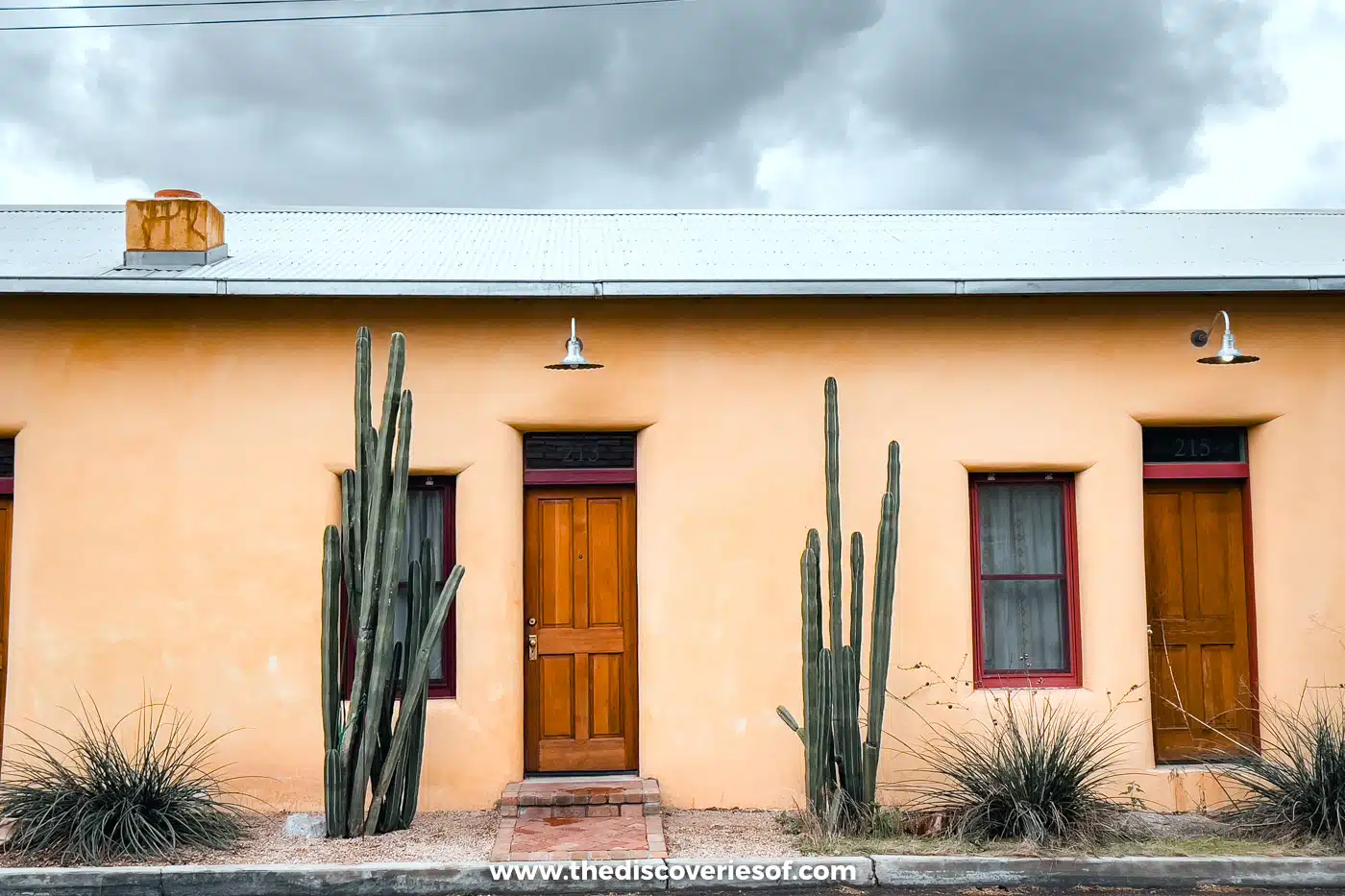
If you want to soak up some history, start in Barrio Viejo, Tucson’s oldest neighbourhood. It’s a cluster of low-rise, adobe-style buildings in warm, earthy colours, with tall cacti lining the streets, and wandering its few blocks south of downtown feels like stepping back into the city’s earliest days.
The neighbourhood is very much lived in, so this is a place to stroll slowly rather than tick off sights. It is bidding to become a National Historic Landmark, and the historic Teatro Carmen, once a Spanish-language theatre, is being restored: its patio opens in 2026 and the theatre interiors in 2027.
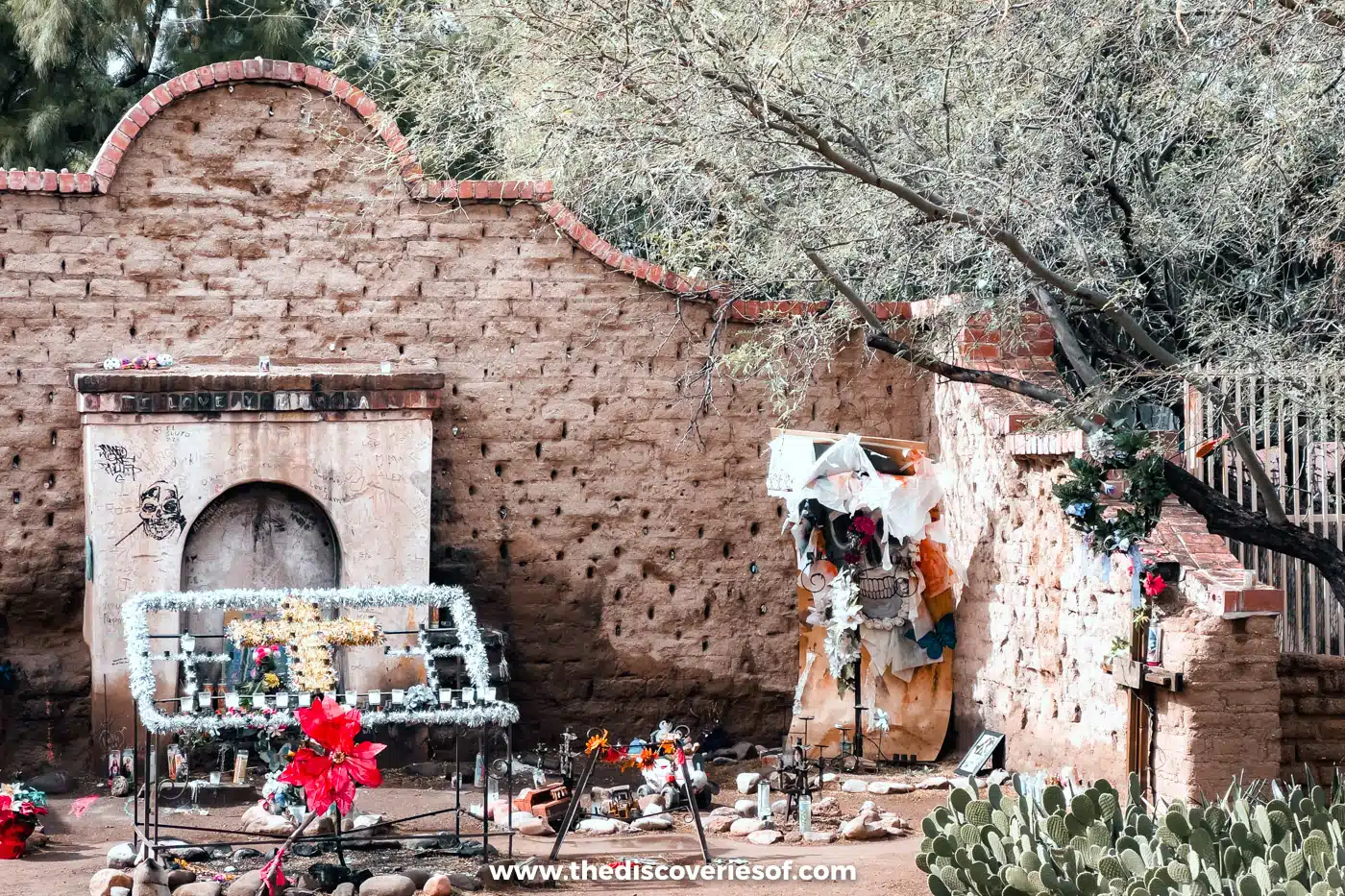
One of the highlights is the El Tiradito Wishing Shrine on South Main Avenue, a crumbling adobe wall where people make wishes and leave candles, notes and offerings for love, health and happiness. Right next door, El Minuto Cafe is a long-standing local favourite for Sonoran-style Mexican food. It reopened in June 2024 after a renovation and is open from 11am on Tuesday to Sunday (closed Mondays), so it’s a good place to end your walk.
The Presidio San Agustín del Tucson Museum, which tells the story of the city’s Spanish fort, is a short walk north in the El Presidio district downtown (see the downtown entry below).
Do
Join a guided Barrio Viejo walking tour to hear the stories behind the houses.
Marvel at Mission San Xavier del Bac
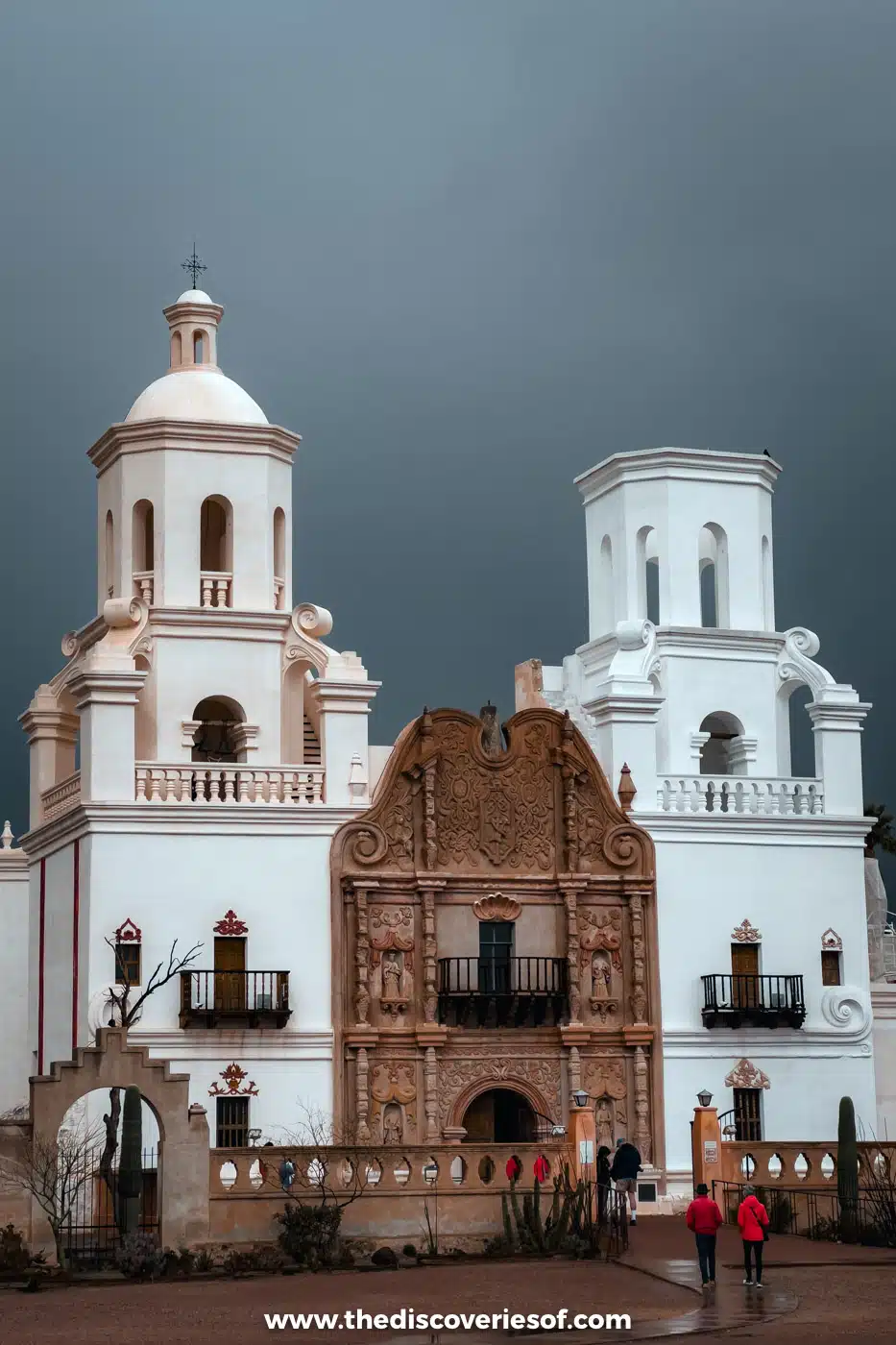
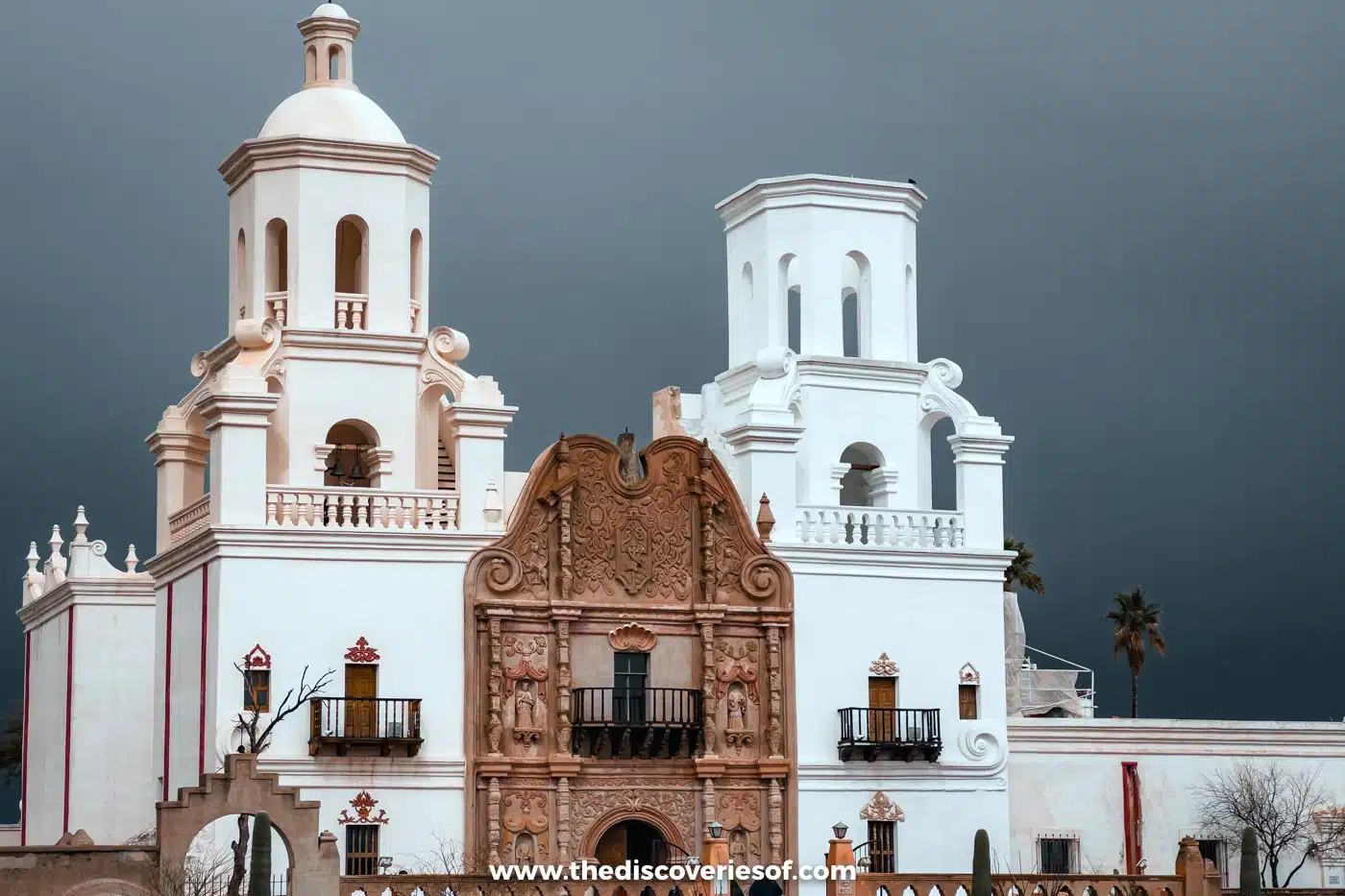
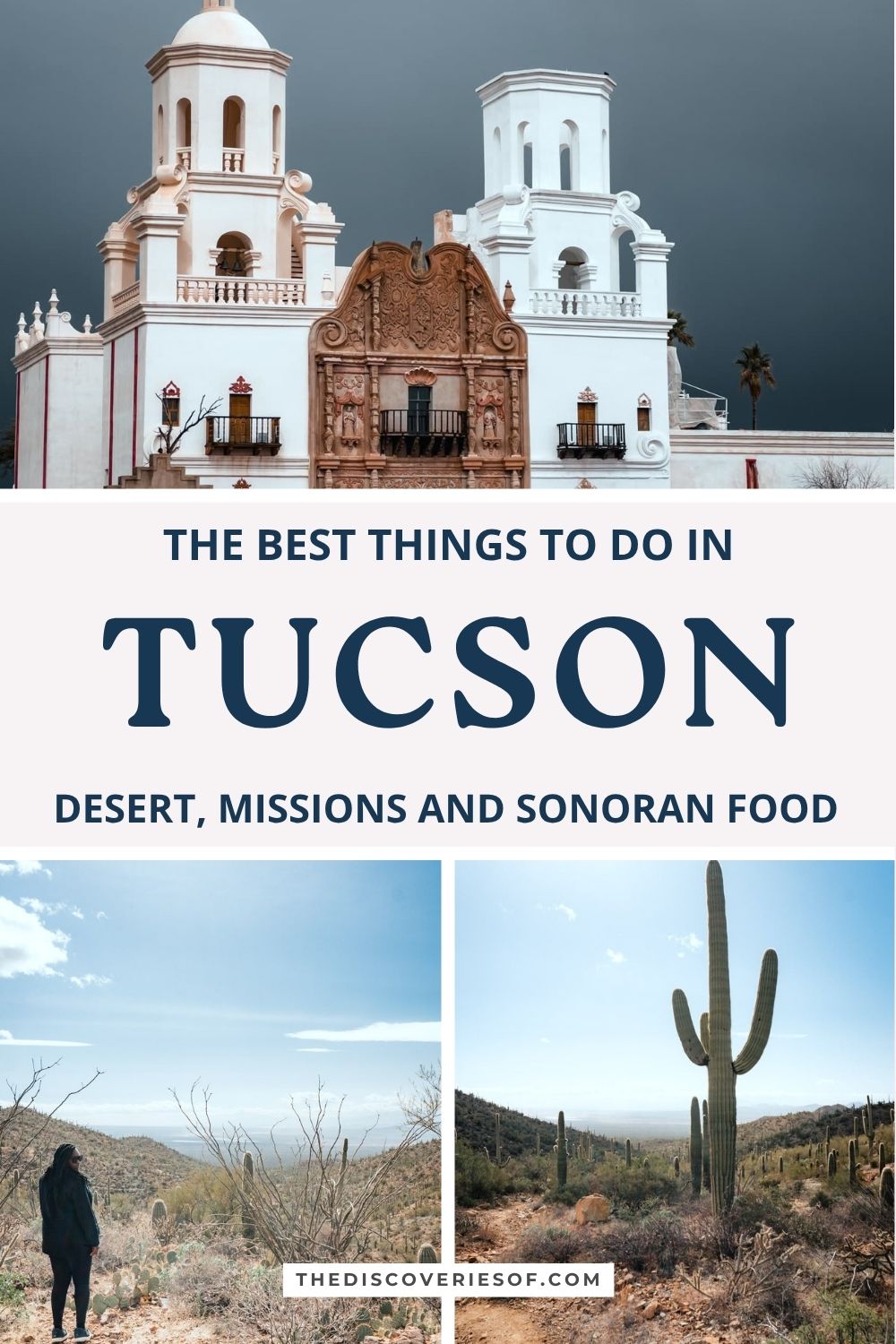
No trip to Tucson is complete without a visit to Mission San Xavier del Bac. It’s a short drive out of the city, about 10 miles south of downtown on the Tohono O’odham Nation, and it’s an absolute must. Spanish colonial architecture is relatively few and far between in southern Arizona, and this ornate example is stunning both outside and in.
The mission was founded by the Jesuit missionary Eusebio Kino in 1692, but the church you see today was built by the Franciscans between 1783 and 1797, making it one of the oldest European-built structures in Arizona. Its brilliant white walls have earned it the nickname “the White Dove of the Desert”, and they set off a richly carved, brick-red façade between two bell towers.
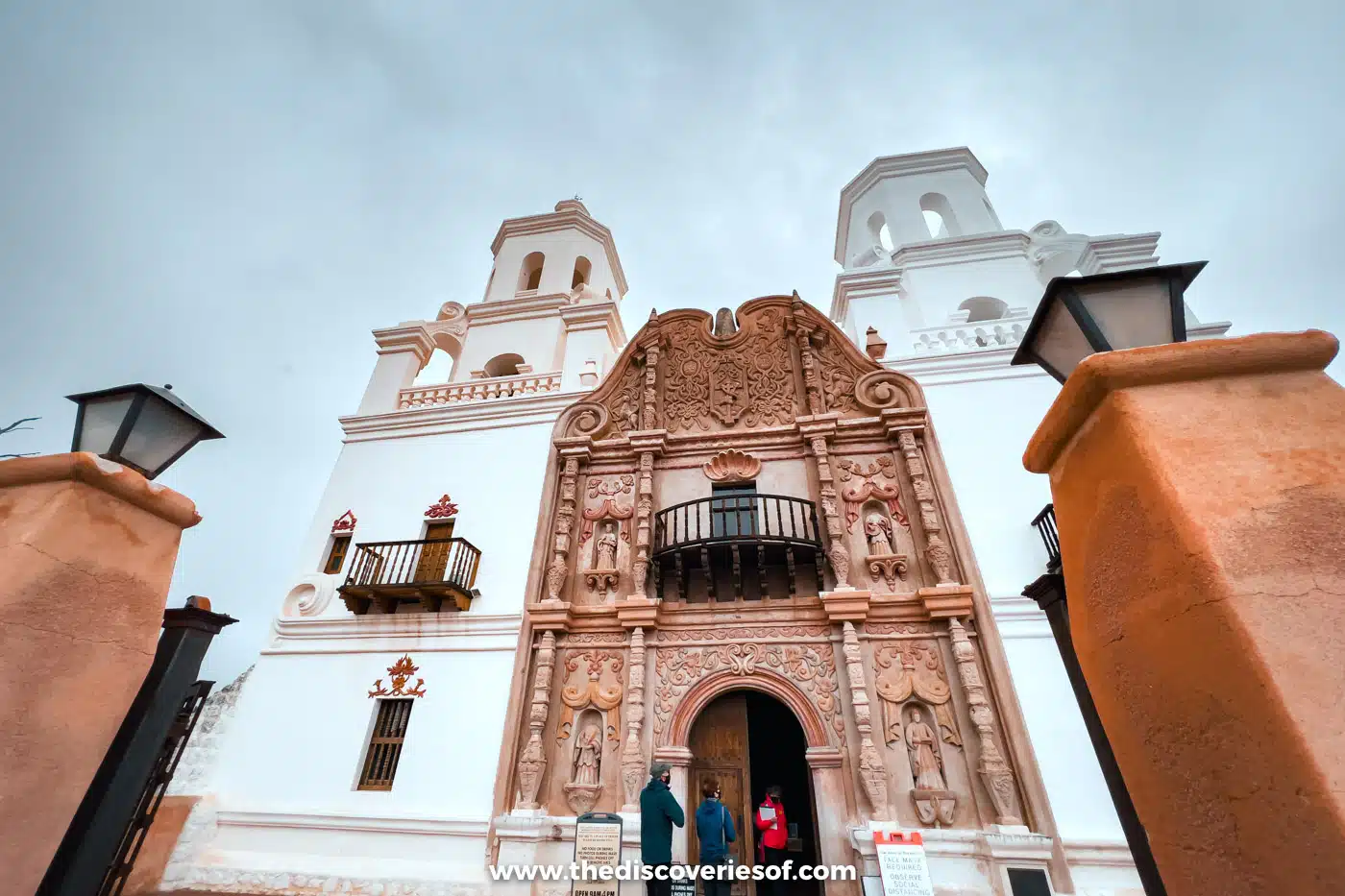
Inside, the church is crammed with painted saints, carvings, frescoes and gilded decoration. It’s still an active parish church serving the Tohono O’odham community, so be respectful, especially during Mass. The church and museum are open daily from 9am to 4pm and the gift shop from 8am to 5pm. There’s no admission fee, though donations are welcome.
Top Tip
Free docent-led tours run every day except Sunday. The church has no air conditioning or heating, so bring layers in winter and water in summer, as there’s little shade outside.
Hike among the giant cacti of Saguaro National Park West
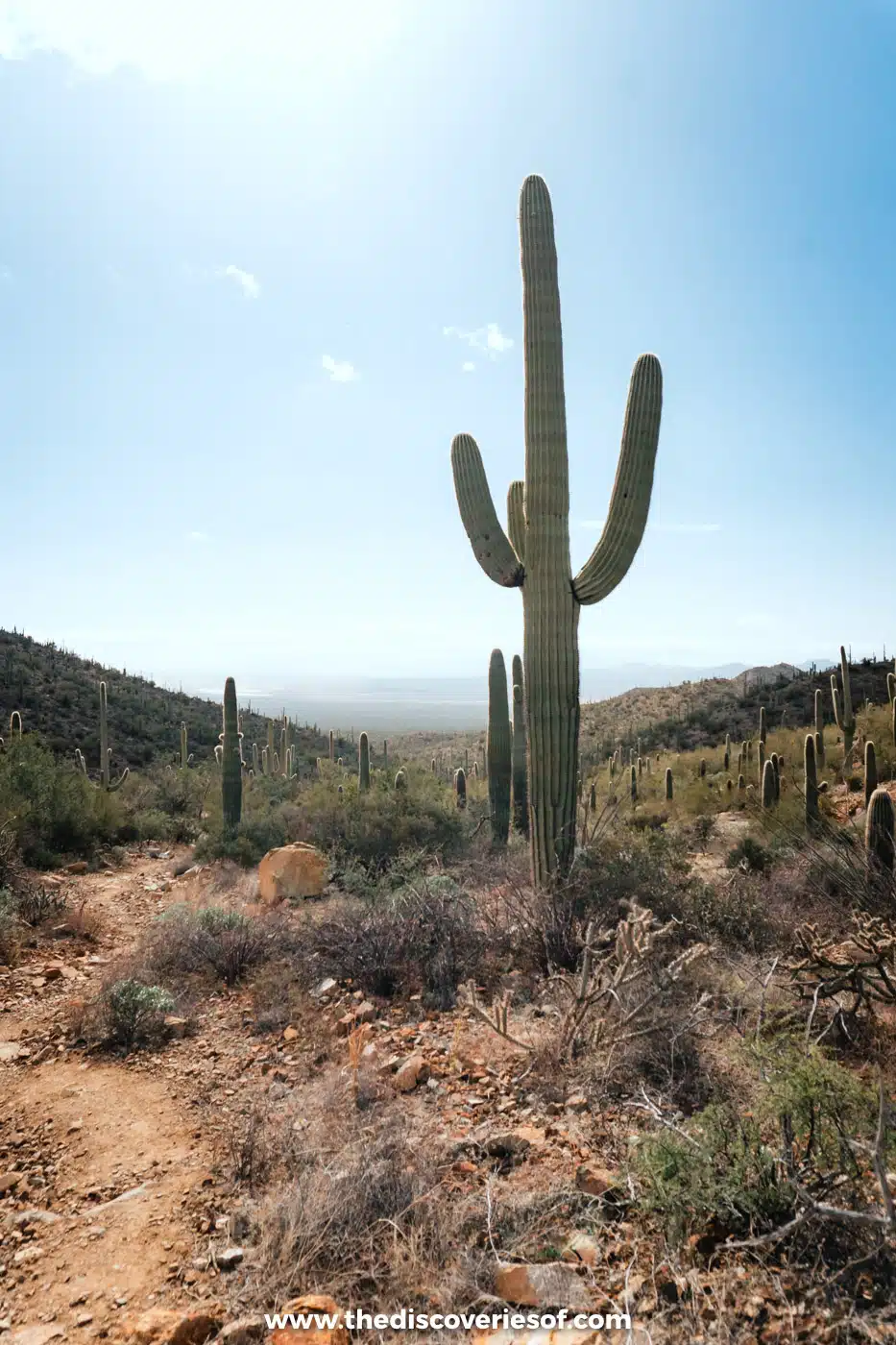
If you’re planning a trip to Tucson, there’s one place you simply can’t miss: Saguaro National Park. It’s named after the towering saguaro, the largest cactus in the US, and whole hillsides of them are a sight to behold.
The park is split into two districts on either side of the city: Saguaro National Park West (the Tucson Mountain District) and Saguaro National Park East (the Rincon Mountain District). If you only have time for one, go West, which has the most saguaros and is easier to explore thanks to its smaller size. Personally, I think the West also had the most stunning scenery. The East is good for a more remote backcountry experience, particularly if you’re into hiking.
Entry costs $25 per vehicle and covers both districts for seven days (cards only, no cash). If you’re visiting several US national parks, an America the Beautiful pass covers entry: it costs $80 for US residents and $250 for non-residents from 2026, and Saguaro isn’t one of the parks that charge non-residents an extra surcharge.
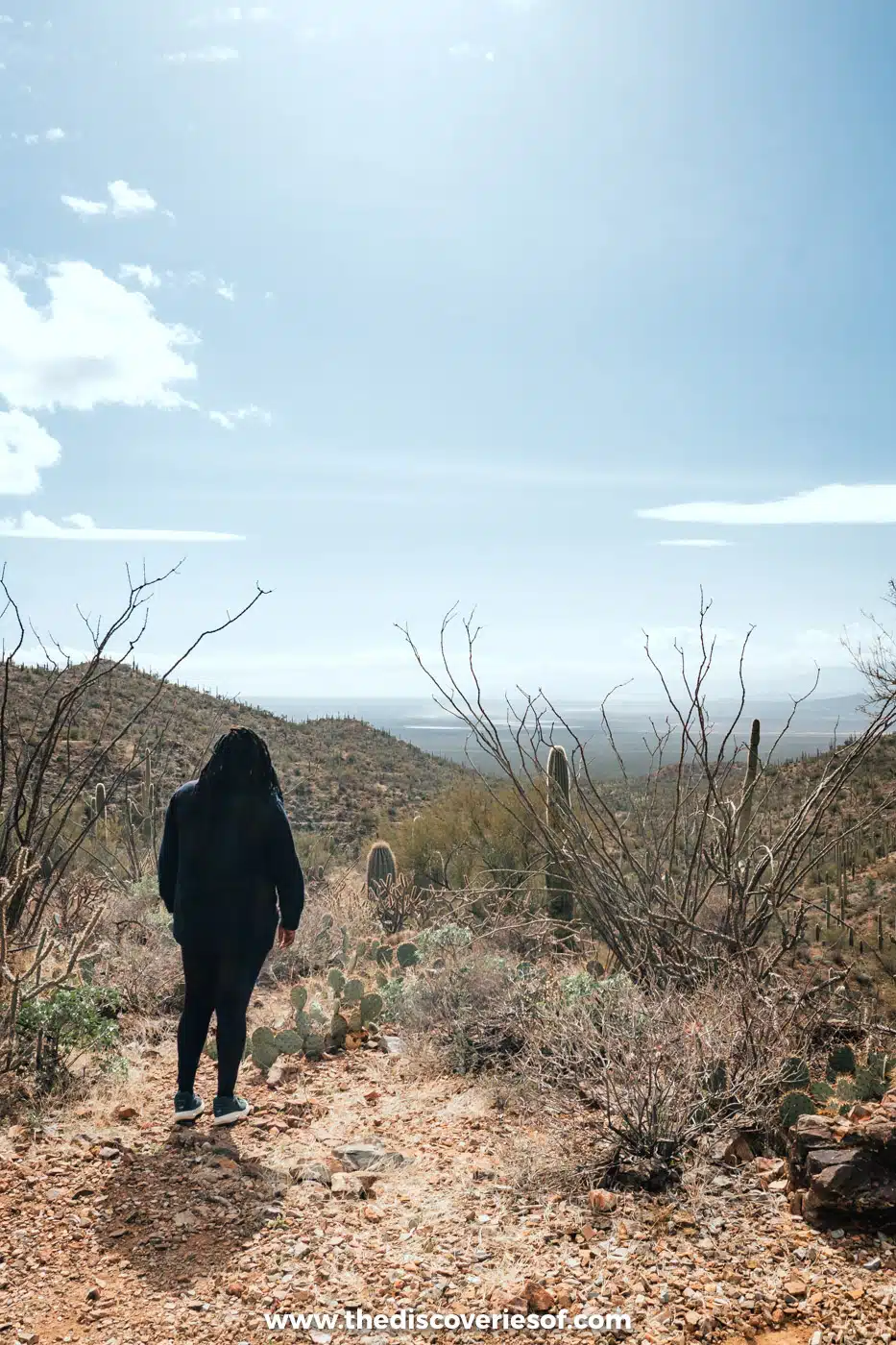
For the best hike in Saguaro West, I highly recommend the King Canyon and Gould Mine loop. It’s a cool 2.5-mile hike through a cacti-covered canyon and back on a pretty loop, with about 380 feet of climbing, and the Mam-A-Gah picnic area at roughly the halfway point makes a perfect lunch stop. It’s nice and easy: there’s some elevation gain, but not much. The signed King Canyon trailhead is on Kinney Road, just past the Desert Museum.
Bring plenty of water, as there’s nowhere to refill along the way and the desert heat can kill (literally). Wear tonnes of sunscreen, too.
Meet the desert’s wildlife at the Arizona-Sonora Desert Museum
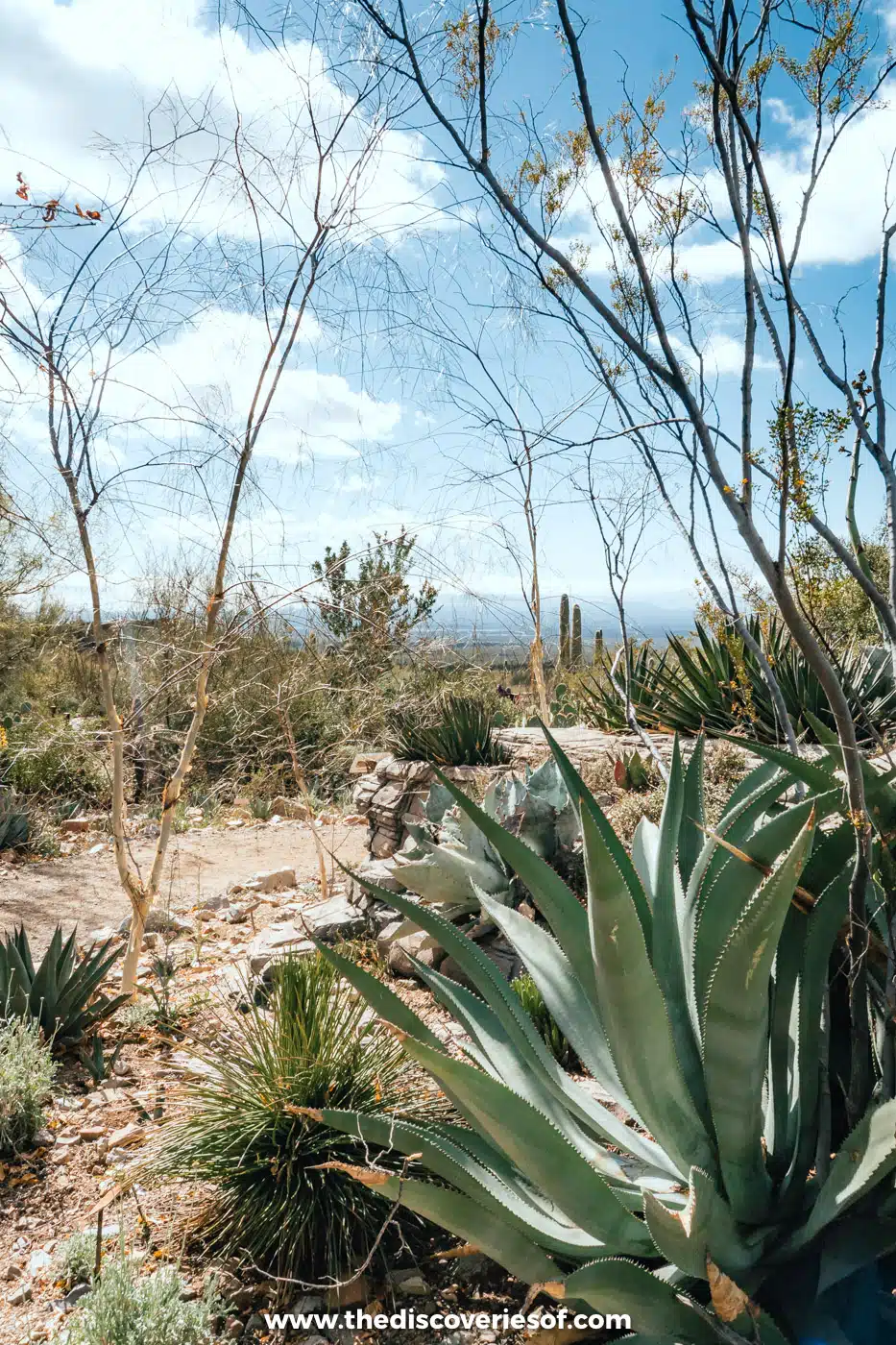
The Arizona-Sonora Desert Museum is another must. It’s an outdoor museum charting the ecology of Arizona and the Sonoran Desert, one of the most vibrant deserts in the world, and it’s more zoo and botanical garden than museum.
Paths wind between outdoor enclosures of native animals, like javelinas and coyotes, and gardens of native plants, including a colourful cactus garden. The Desert Loop Trail is a must: it’s a relatively short trail past several enclosures, so watch for the signs telling you about the wildlife.
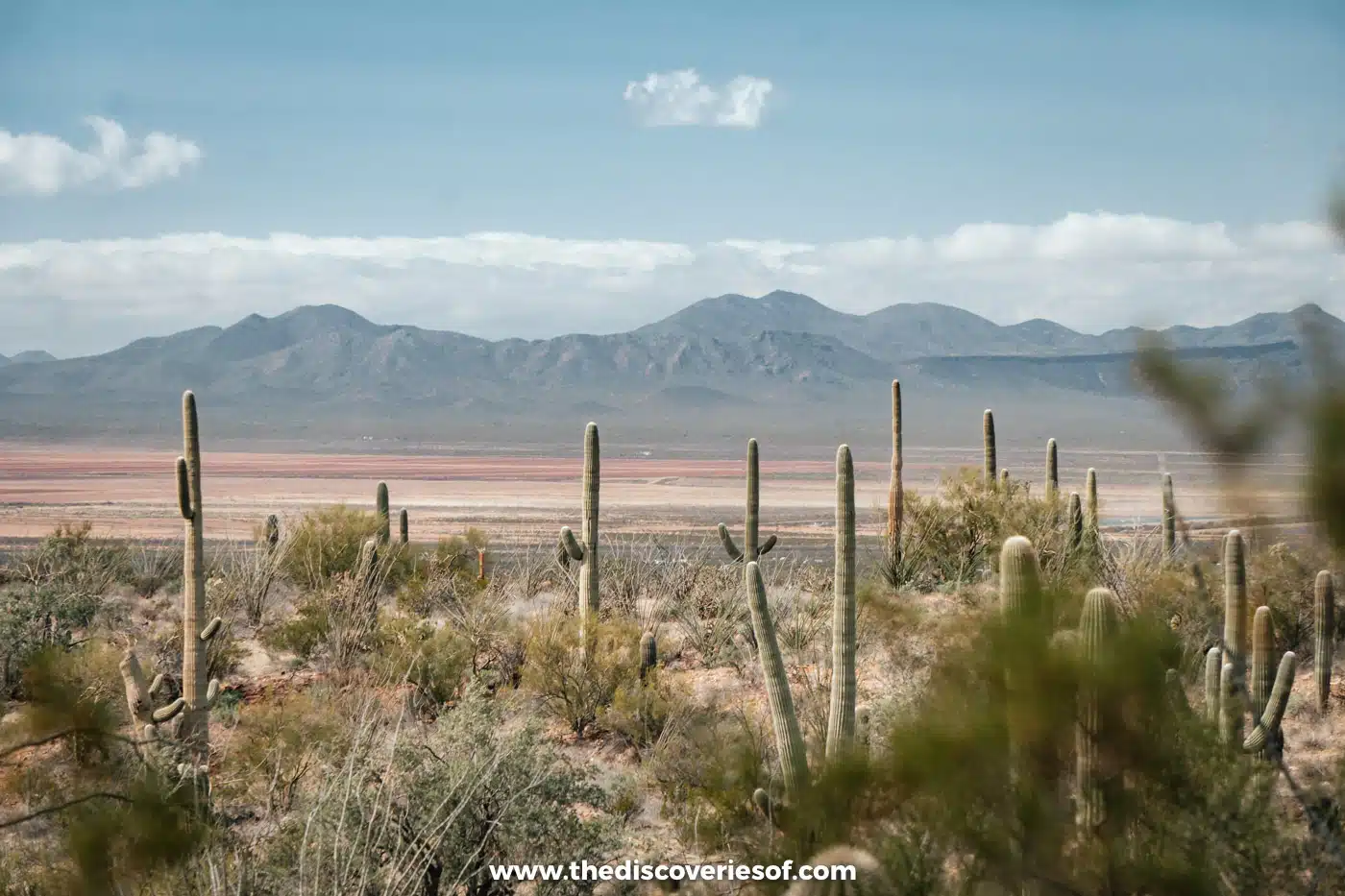
Entry is $29.95 for adults (13 to 64) and $24.95 for children aged 3 to 12, with $2 off for seniors. It’s extensive, so plan to spend a couple of hours here, and check the daily programme: there are frequent live animal presentations, docent tours and demonstrations. The museum is open every day of the year, from 8:30am to 5pm between October and May. In summer (June to September) it opens from 7:30am to 4pm, and on Saturday evenings from June to August it stays open until 10pm.
Getting There
The museum is at 2021 North Kinney Road, about 25 minutes’ drive west of downtown and close to Saguaro West, so it’s easy to combine the two. Kinney Road is closed between McCain Loop and the museum entrance until 24 November 2026: follow the signed detour via McCain Loop.
Feast on contemporary Southwestern food at Tito & Pep
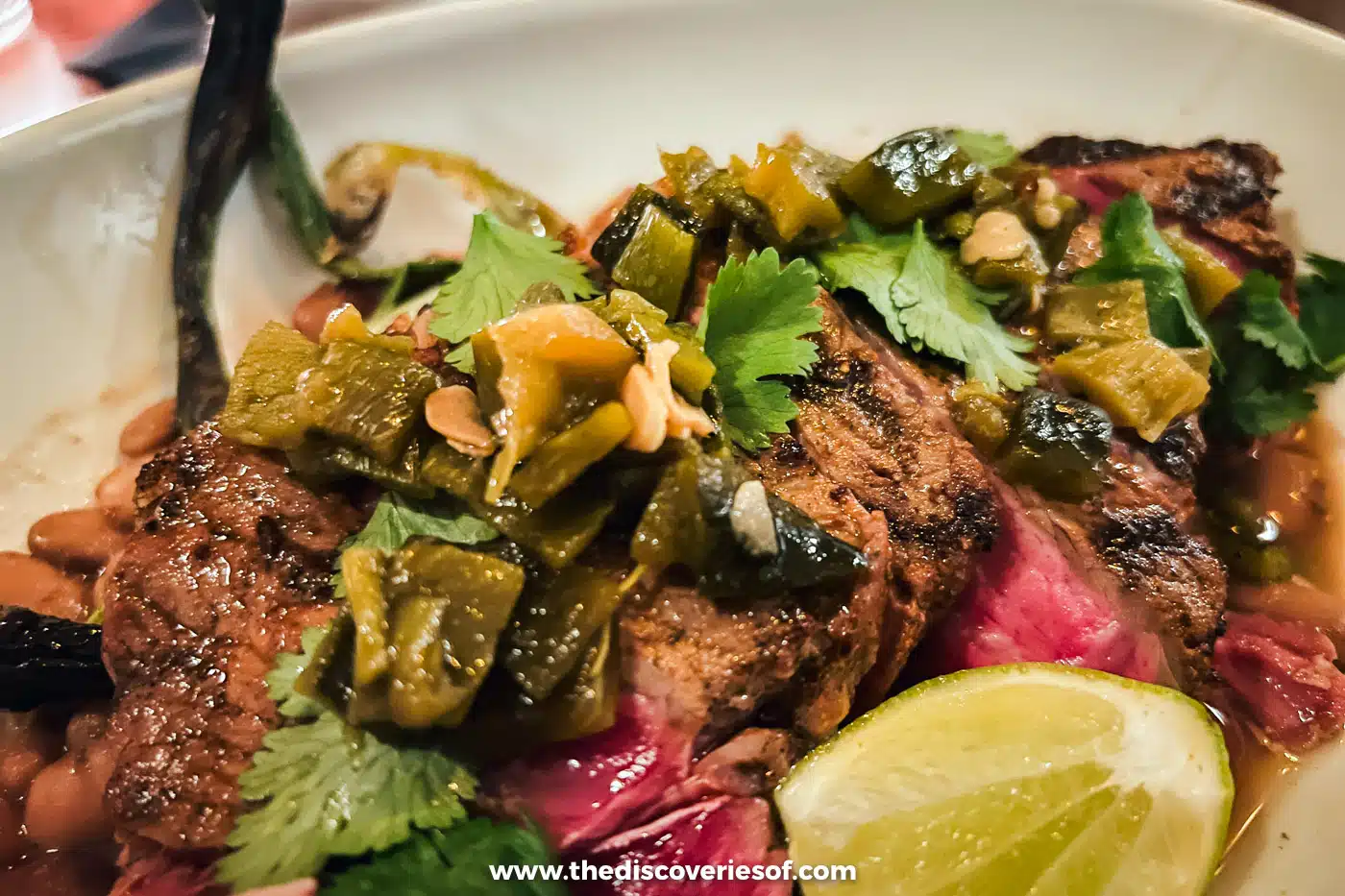
Foodies, I’ve got you. Tito & Pep is a fantastic spot for contemporary Southwestern food, and it was one of my top five things to do in Tucson.
It’s a neighbourhood bistro on East Speedway Boulevard in Midtown, where much of the cooking is done over a mesquite fire, with dishes that draw on the Southwest’s mix of cultures. And it’s not just the food: the cocktails are brilliant, made with local ingredients.
Dinner is served daily from 5pm to 9pm, with brunch from 11am to 2pm at weekends. Reservations are recommended.
Start the day with a hearty breakfast at Cup Cafe

Cup Cafe, on the ground floor of the historic Hotel Congress downtown, serves insanely good (and hearty) breakfasts. It’s a characterful spot, and a great place to fuel up before a day of sightseeing.
It’s open daily from 8am to 9pm, with a break between 2pm and 4pm. Once you’ve eaten, the rest of downtown is right on the doorstep.
Wait for a table at Prep & Pastry (it’s worth it)
Prep & Pastry is a great breakfast spot, and a cosy one. Expect a short wait for a table, but it’s definitely worth it.
The menu runs from pastries to full breakfast plates and brunch dishes, and there are two branches: one on North Campbell Avenue in central Tucson and one on East Grant Road on the east side. Both are open daily from 7am to 3pm.
Admire the façade of St Augustine Cathedral

St Augustine Cathedral sits a few blocks out of Barrio Viejo on South Stone Avenue, and its striking cream and white exterior stands out among the city’s largely unremarkable architecture.
The cathedral dates from 1897, and its cast-stone façade, added in 1928, is in the Mexican baroque style, modelled on the cathedral of Querétaro in Mexico. The interior was rebuilt in the 1960s.
It’s still a functioning cathedral, so check whether there’s a service before you go inside. Mass is held several times a day, including a Spanish-language mariachi Mass on Sunday mornings. Even if you can’t go inside, the façade alone is worth the detour.
Escape to the trails of Tucson Mountain Park
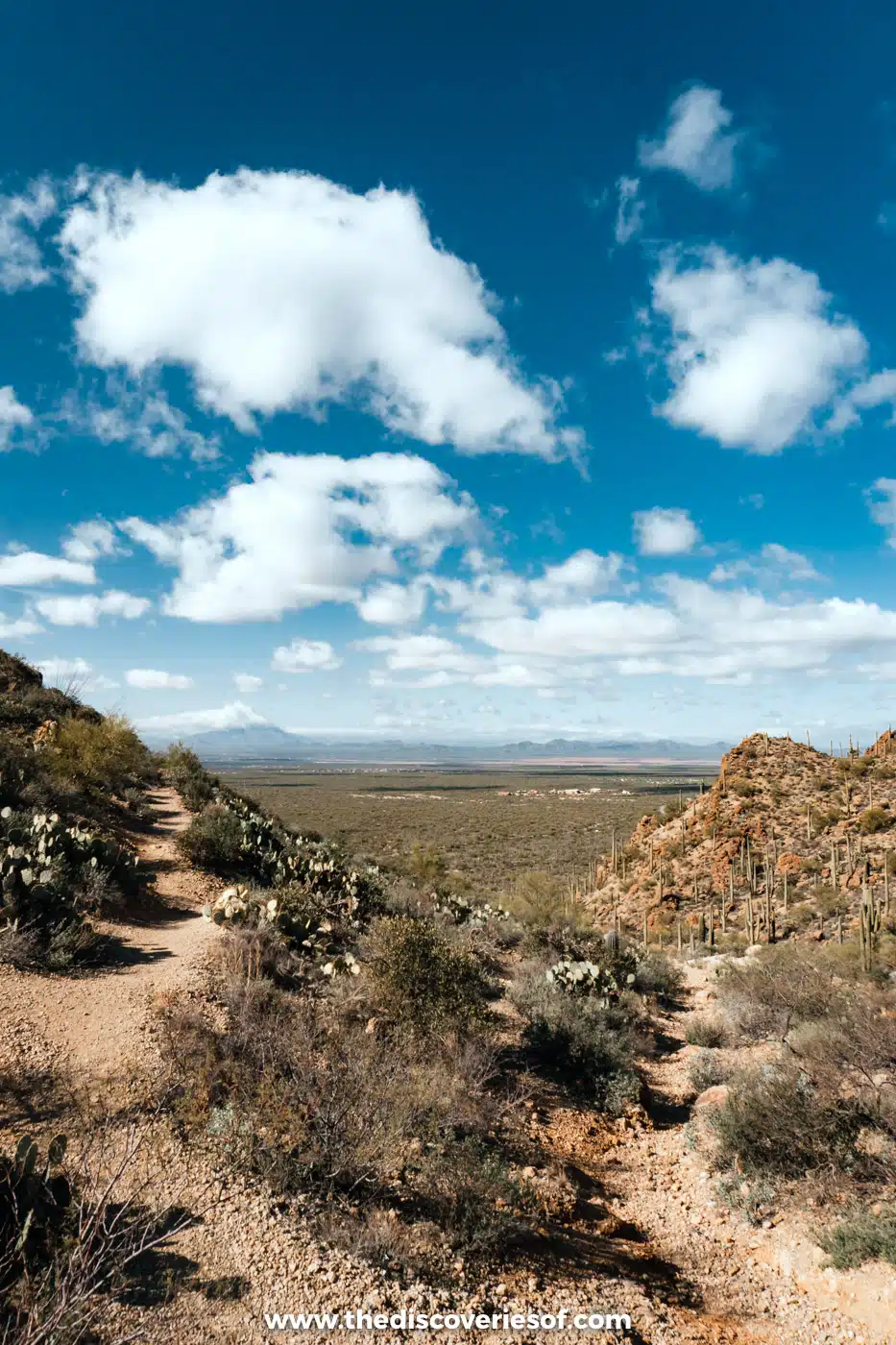
Tucson Mountain Park is packed with great hikes just a few minutes’ drive outside the city. Run by Pima County, it covers around 20,000 acres of desert and rugged peaks right next to Saguaro National Park West, with about 62 miles of trails shared by hikers, mountain bikers and horse riders. The King Canyon trailhead for the loop I hiked is technically inside the park.
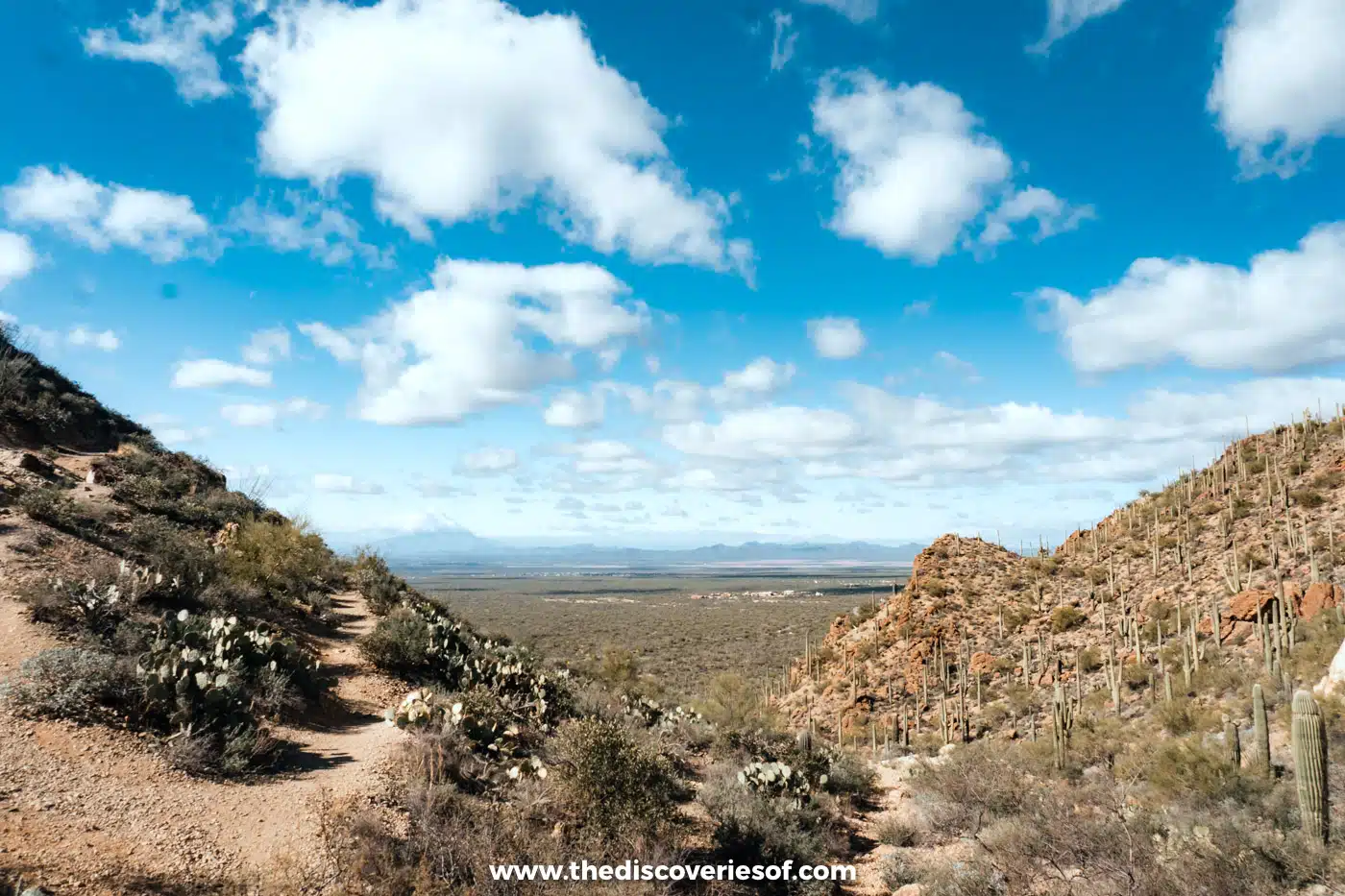
The easiest way to get a feel for it is to drive over Gates Pass, where the overlook at the top is one of Tucson’s favourite spots for sunset. The Kinney Road closure (until 24 November 2026) also affects this side of the park, so check the Pima County website before you set out.
Read Next
Drive the Catalina Highway up Mount Lemmon

When a city is surrounded by this much beauty, it would be rude not to go and see it. The road up Mount Lemmon, the highest peak in the Santa Catalina Mountains at just over 9,000 feet, is a scenic highway with pretty views the whole way.
Officially the Catalina Highway (and signed as the Sky Island Scenic Byway), it runs for about 30 miles from Tanque Verde Road on the north-east edge of Tucson up to the village of Summerhaven and Ski Valley near the summit. Along the way, you climb from saguaro desert through oak and pine woodland to cool forest, with dramatic rock formations, canyons and viewpoints like Windy Point to pull over at.
At the top, Mount Lemmon Ski Valley runs its chairlift all year round. If you stop at the recreation sites along the road, you’ll need a day pass ($8 per vehicle, or $10 for a week), and America the Beautiful passes are accepted.
Top Tip
The upper road can close in winter weather, so call the road conditions hotline on (520) 351-3351 before you go, and take a layer, as it’s much cooler at the top.
Explore downtown Tucson and El Presidio

Downtown Tucson is the city’s cultural heart and is well worth a few hours. Start at Hotel Congress, which opened in 1918 and is famous as the place where members of John Dillinger’s gang were caught in 1934; its nightclub, Club Congress, has been a fixture of the live music scene since 1985. Nearby, the Fox Tucson Theatre is a restored 1930s movie palace that hosts concerts and films.
A few blocks north, El Presidio is where Tucson began. The Presidio San Agustín del Tucson Museum, at 196 North Court Avenue, recreates part of the Spanish fort founded in 1775 and tells the story of the city’s early settlers. From October to April it’s open from Tuesday to Sunday, 10am to 4pm (it closes for much of the summer), and entry is $9 for adults.
Close by, the Tucson Museum of Art (140 North Main Avenue) covers art of the American West, Latin America and beyond, open Wednesday to Sunday, 10am to 5pm ($15).
Downtown is also a great place to eat and drink, with gastropubs, taco spots, cocktail bars and coffee shops. Try local specialities like Sonoran hot dogs (more on those below) and a prickly pear margarita.
Do
See the historic sites with a guide on a Downtown Tucson and El Presidio walking tour.
Get to know the Old West at the Arizona History Museum
The Arizona History Museum, run by the Arizona Historical Society, tells the story of how the Grand Canyon State grew from frontier territory into the place it is today. It’s on East 2nd Street next to the University of Arizona campus.
Highlights include a walk-through replica of an underground mine, a transport gallery with wagons and a 1912 Studebaker, Spanish colonial silver and Old West firearms, and artefacts and stories connected with Geronimo and Wyatt Earp. It’s open Tuesday to Saturday, 10am to 3pm, and entry is $12 for adults.
Don’t confuse it with the Arizona State Museum on the university campus, the oldest anthropology museum in the Southwest, whose exhibition building has been closed to the public since August 2024 for repairs.
Stroll through 20 themed gardens at Tucson Botanical Gardens

Tucson Botanical Gardens is a five-and-a-half-acre oasis in Midtown, with 20 themed gardens to explore, each with its own character. Keep your eyes peeled for hummingbirds, quail, cardinals and other desert birds, too.
From October to May, butterflies fill the Cox Butterfly and Orchid Pavilion. Next door, the Yume Japanese Gardens are run separately and need their own ticket.
The gardens are open daily from 8:30am to 4:30pm. A gardens-only adult ticket costs $20, and a combined ticket with Yume is $25.
Find a quiet desert corner at Tohono Chul

Tohono Chul Gardens and Galleries is a peaceful hideaway in the Casas Adobes area of north-west Tucson. Its name means “desert corner” in the Tohono O’odham language, and its Sonoran Desert gardens and trails, set against the Santa Catalina Mountains, are a lovely place to slow down.
There are themed gardens and desert landscape trails, art galleries with changing exhibitions, shops selling local crafts and plants, and the Garden Bistro, a good spot for breakfast or lunch. Check opening times and admission on the Tohono Chul website before you go.
Ride the Ferris wheel at Trail Dust Town
Ready for a Wild West adventure without leaving the city? Trail Dust Town, on the east side, is an outdoor shopping and dining complex built to look like a frontier town, with souvenir shops along its boardwalks.
The big draw is Pinnacle Peak Steakhouse, a Tucson institution for cowboy-style steaks. Children love the Ferris wheel, miniature train and carousel, which run from Thursday to Saturday, mostly in the evenings from 5pm, so it’s best as an evening outing.
See nearly 400 aircraft at Pima Air & Space Museum

If you’re an aviation enthusiast or history buff, Pima Air & Space Museum is a must-visit. It’s one of the largest aerospace museums in the world, with nearly 400 aircraft and spacecraft spread across 80 acres of hangars and outdoor displays, from an SR-71 Blackbird and a B-29 Superfortress to a Boeing 787 test plane.
From October to May it’s open from 9am to 5pm (last entry 3pm), with shorter hours in summer. Adult tickets cost $22.50, and a guided tram tour around the outdoor collection is an extra $10. The museum’s bus tours of the “Boneyard”, the aircraft storage area at Davis-Monthan Air Force Base, have ended for good.
Go underground at Colossal Cave Mountain Park

Colossal Cave Mountain Park, in Vail about 35 minutes’ drive south-east of downtown, is the place to discover what lies beneath the desert. The cave stays at around 70°F all year, which makes it a good escape on a hot day.
The Classic cave tour costs $24 for adults and $14 for children, and if you want something more adventurous, the Ladder tour ($60) takes you into parts of the cave that the main route doesn’t reach. The park is open daily from 8am to 4pm.
If going underground isn’t your thing, there’s plenty to do above ground, with hiking and biking trails, horse riding, picnic areas and the Terrace Café in a historic limestone building.
Step onto a Western film set at Old Tucson

Old Tucson, just west of the city near the Desert Museum, was built by Columbia Pictures in 1939 as a replica of 1860s Tucson for the film Arizona. It went on to host more than 400 films and TV shows, including John Wayne’s Rio Bravo and McLintock!, Gunfight at the O.K. Corral, Tombstone and Little House on the Prairie.
It’s no longer a theme park with daily rides and shows: the site isn’t open for general daytime admission. Instead, you can join a guided studio tour (daily at 10:15am, 1pm and 2:30pm) or come for one of its seasonal events, such as the Halloween-themed Nightfall in October and the Christmas Yuletide event from late November. Book ahead online.
Shop for local produce at Rillito Park Farmers Market
The farmers market that used to run at St Philip’s Plaza has moved on, but Tucson still has a great Sunday market. The Heirloom Farmers Market at Rillito Park, at 4502 North 1st Avenue, is a lively place to browse local produce, baked goods, food stalls and crafts.
It’s run by Heirloom Farmers Markets, which also holds markets on other days around Tucson, including Saturdays at Steam Pump Ranch in Oro Valley. Opening times change with the seasons, so check the Heirloom Farmers Markets website before you go.
Watch the sunset from Sentinel Peak
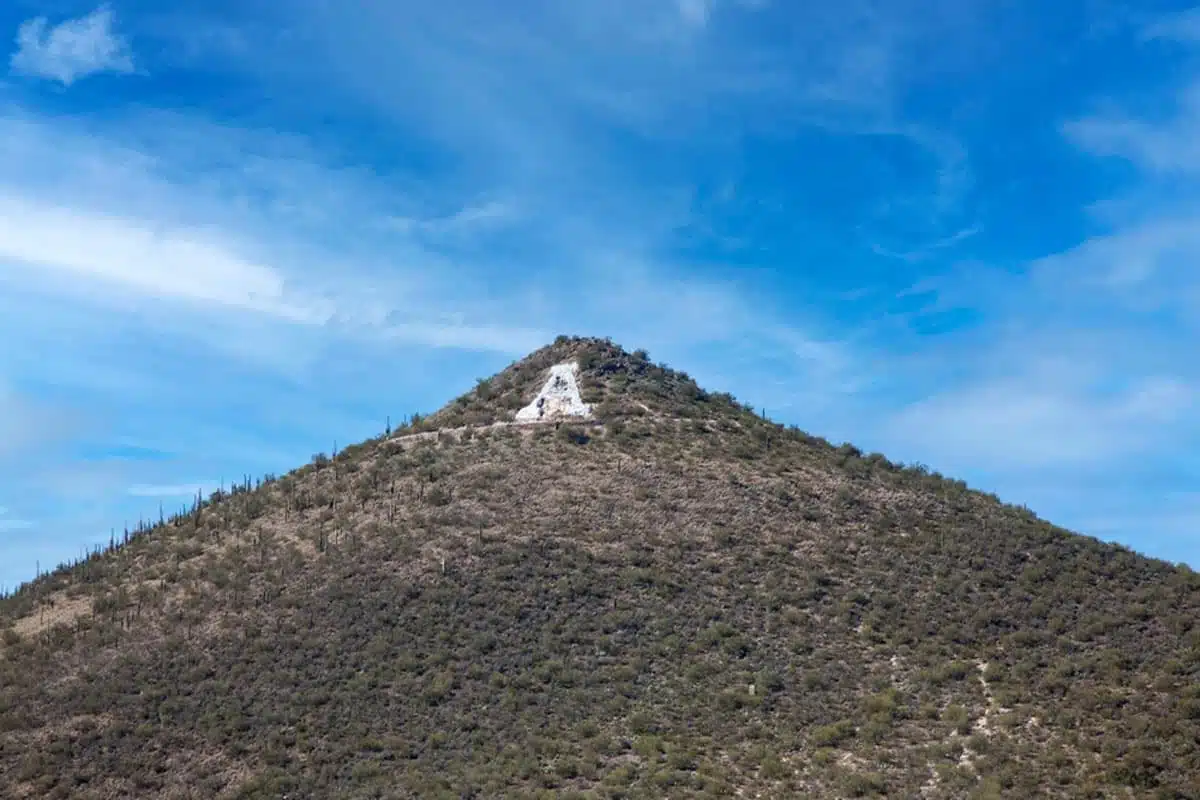
Sentinel Peak, rising to nearly 2,900 feet just west of downtown, is better known as “A” Mountain, after the giant letter “A” built from local basalt on its side by University of Arizona students in the 1910s. It’s traditionally painted white, though students have given it plenty of other colours over the years.
You can drive almost to the top or walk up, and the view over the city and the mountains beyond is well worth it, especially at sunset. The park is open from sunrise to sunset, but the road is closed to cars on Mondays and opens to vehicles from 2pm on Tuesdays to Thursdays and from 11am from Friday to Sunday. There are no toilets.
Taste 4,000 years of farming at Mission Garden
At the foot of Sentinel Peak, Mission Garden is a living museum of the plants that have fed this valley for millennia. It’s on the site of the O’odham village of Cuk Ṣon, often called Tucson’s birthplace, where archaeologists have documented around 4,100 years of continuous farming. It was added to the National Register of Historic Places in June 2026.
The gardens recreate each chapter of that story, with plots for the Hohokam, O’odham, Spanish, Mexican, Chinese and other communities who farmed here, plus heritage fruit trees and heirloom crops. It’s open from Wednesday to Sunday, from 8am to 2pm between October and March and 8am to noon between April and September, and docent-led tours are available.
Eat a Sonoran hot dog in America’s first City of Gastronomy
In December 2015, Tucson became the first city in the US to be named a UNESCO City of Gastronomy, in recognition of a food heritage that goes back thousands of years, from native desert ingredients to Spanish, Mexican and ranching traditions.
The dish everyone should try is the Sonoran hot dog: a bacon-wrapped hot dog in a soft, split-top bolillo roll, piled with pinto beans, onions, tomatoes, mustard, mayonnaise and jalapeño salsa. The most famous place to eat one is El Güero Canelo, which started as a food cart in 1993 and won a James Beard America’s Classics award in 2018. It has three branches, on South 12th Avenue, North Oracle Road and East 22nd Street.
Do
Try a range of local flavours on a Tucson food tour with six tastings.
Take the Crawler into Sabino Canyon
Sabino Canyon Recreation Area, in the foothills of the Santa Catalina Mountains on the north-east edge of the city, is one of Tucson’s favourite outdoor escapes: a desert canyon with a creek, cottonwoods and saguaro-covered slopes.
A paved road runs 3.8 miles up the canyon, closed to cars, so you can walk it or ride the Sabino Canyon Crawler, an open-air shuttle that runs hourly from 9am to 4pm on a narrated round trip of about an hour ($15 for adults, $8 for children). Hikers can ride up and walk back down, and the separate Bear Canyon shuttle ($8) cuts about a mile and a half off the hike to Seven Falls, one of the most popular hikes in Tucson (about 8.5 miles return from the visitor centre).
Parking costs $8 per vehicle per day, and pets aren’t allowed anywhere in the canyon.
Read Next
Stargaze from Kitt Peak National Observatory
Kitt Peak National Observatory sits at almost 7,000 feet on Tohono O’odham land about 54 miles south-west of Tucson, home to a cluster of research telescopes run by the US national astronomy lab, NOIRLab. It was closed when I visited in February because of works on the access road, but it has since fully reopened.
The visitor centre is open daily from 9am to 4pm, with guided daytime tours ($19.95), but the real reason to go is the Nightly Observing Program: a four- to five-hour evening of stargazing through the observatory’s telescopes, including a light meal, for $79. It runs every night of the year, is limited to 45 people and isn’t suitable for children under eight, so book at least a month ahead.
Getting There
Allow at least 90 minutes each way by car. There’s no fuel on the mountain, it’s 15 to 20°F cooler than Tucson at the top, and you’ll pass a Border Patrol checkpoint on State Route 86, so non-US citizens should carry their passports. You can also book the Kitt Peak Nightly Observing Program online.
Float over the desert in a hot-air balloon
For a different view of the Sonoran Desert, take to the skies at sunrise. Balloon flights drift over the saguaros as the sun lights up the mountains around the city, and this one finishes with champagne and breakfast once you’re back on the ground.
Tips for visiting Tucson
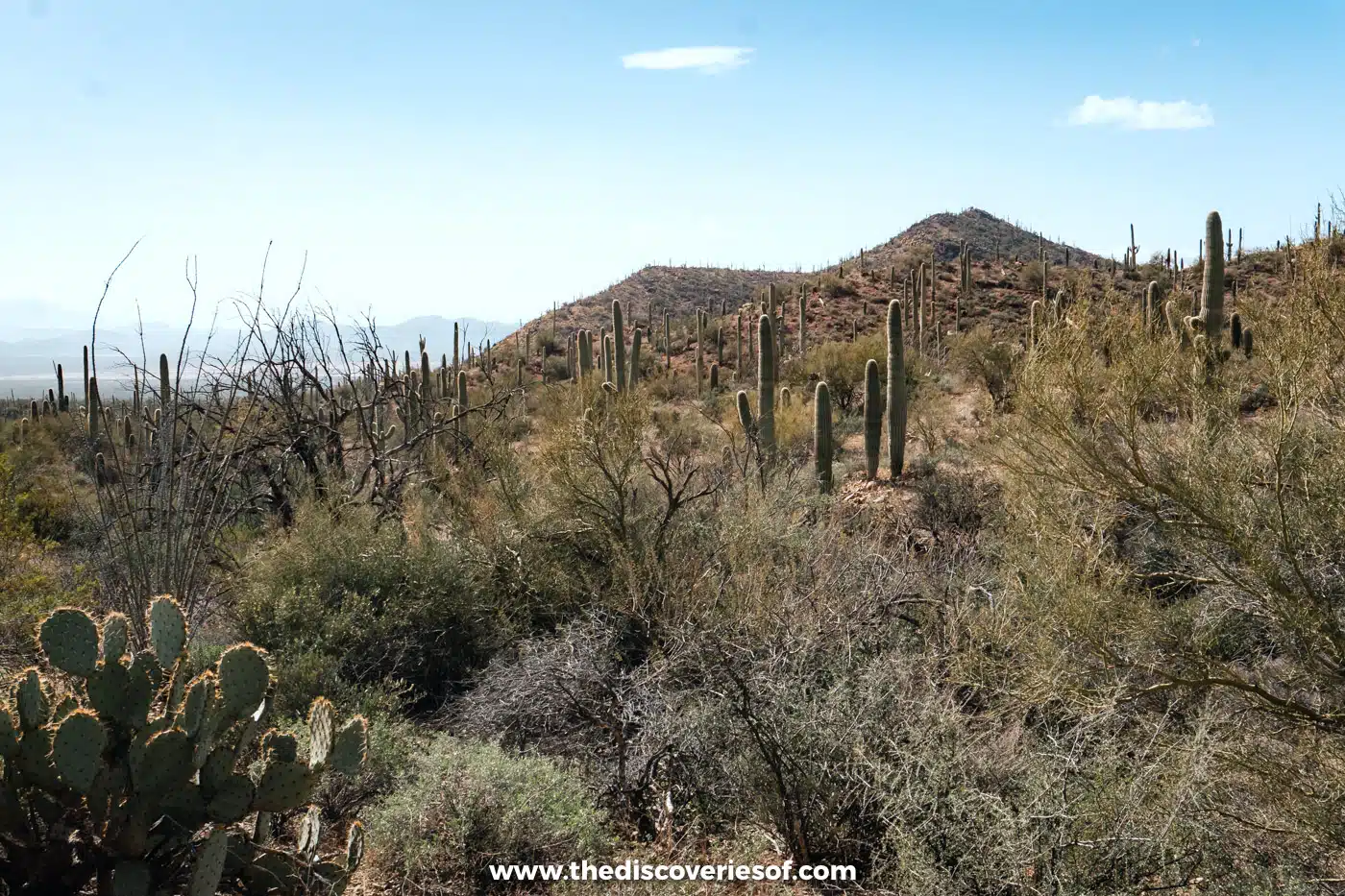
- How long to spend: at least two nights. You can see the central sights in half a day, but you’ll want at least two more days for the surroundings, including Saguaro National Park and the Arizona-Sonora Desert Museum. See my Arizona road trip itinerary if you have longer.
- When to go: I visited in February. The cooler months, from late autumn to spring, are the most comfortable time for hiking, and March to May is especially lovely. Summer is fiercely hot, so if you visit then, hike at dawn and save the afternoons for museums and pools.
- Getting around: you’ll need a car. There’s no public bus to Saguaro National Park, the Desert Museum, Kitt Peak or Mount Lemmon, though the Sun Link streetcar is handy for getting between downtown, Fourth Avenue and the university.
- Park passes: if you’re doing a Southwest road trip, an America the Beautiful pass will cover Saguaro and the other national parks you visit. Saguaro’s entry fee is card only.
Where to stay in Tucson
Stay downtown or in the university area for walkable restaurants and bars, or out of town for a resort. I stayed at the Graduate by Hilton Tucson, a cool hotel in a great location at Main Gate Square by the University of Arizona. The rooms are relatively spacious, with nice mountain views, and the quirky decor, with little nods to the Graduate theme, is retro meets contemporary. There’s a gorgeous rooftop pool and a late-night rooftop bar, The Moonstone.

For a resort, the JW Marriott Tucson Starr Pass Resort & Spa, about six miles west of central Tucson in the Tucson Mountains, has 27 holes of golf, five restaurants and the Hashani Spa. For history, the Arizona Inn is a pink stucco boutique hotel built in 1930 by Isabella Greenway, Arizona’s first congresswoman, set in landscaped gardens. See my guide to where to stay in Tucson for more.
Map
Read next
- The best things to do in Saguaro National Park
- The best hikes in Saguaro National Park
- Unmissable things to do in Arizona
- The best places to go stargazing in the US
- The ultimate Arizona road trip itinerary
- The best hikes in Sedona
Love this? Save and share on Pinterest

Discover the top things to do, insider tips and hidden gems in our USA Travel Guides.
Read the guides →