
Cross a footbridge over the lagoon, climb aboard a train no bigger than a fairground ride, and a few minutes later you step off beside an old tuna fishing village and a field of rusting anchors half buried in the dunes. Here’s the story behind them, and how to plan your day on the sand.
I loved Praia do Barril. It was one of the highlights of my October week in the eastern Algarve: after a few hours in Tavira, I headed a few kilometres west one afternoon, crossed the lagoon and rode the narrow-gauge train out to the sea. What waited at the other end was wild and windswept, a long, open sweep of sand with nothing much on it but the wind, and the strangest sight on the whole coast: rows of huge iron anchors standing in the dunes.
They belonged to the tuna fishermen who lived and worked here for more than a century. Their whitewashed cottages still line the edge of the beach, now turned into cafés and restaurants, and the little train that carries you there is part of the charm. This guide covers the lot: the train and the walk, the anchors and their history, the beach itself, and how to get here from Tavira.
Praia do Barril at a glance
- Where it is: on the Ilha de Tavira, the long sandbar that shelters the eastern end of the Ria Formosa lagoon, about 5km west of Tavira.
- Getting there: drive or take a taxi to Pedras d’El Rei, cross the footbridge, then take the train or walk about 1.5km beside the tracks.
- The train: about €2 each way, every 10 to 15 minutes in summer and roughly every half hour out of season.
- What’s there: the anchor cemetery, cafés and restaurants in the old fishermen’s houses, toilets, a first aid post, and sunbeds and parasols for hire in summer.
- Best for: a long beach walk, a lazy lunch and a slice of the Algarve’s fishing history.
Ride the little train across the lagoon
The trip starts at Pedras d’El Rei, a holiday village just past Santa Luzia. From the car park, a wooden footbridge crosses a channel of the Ria Formosa Natural Park, and on the far side the train waits at its little station.
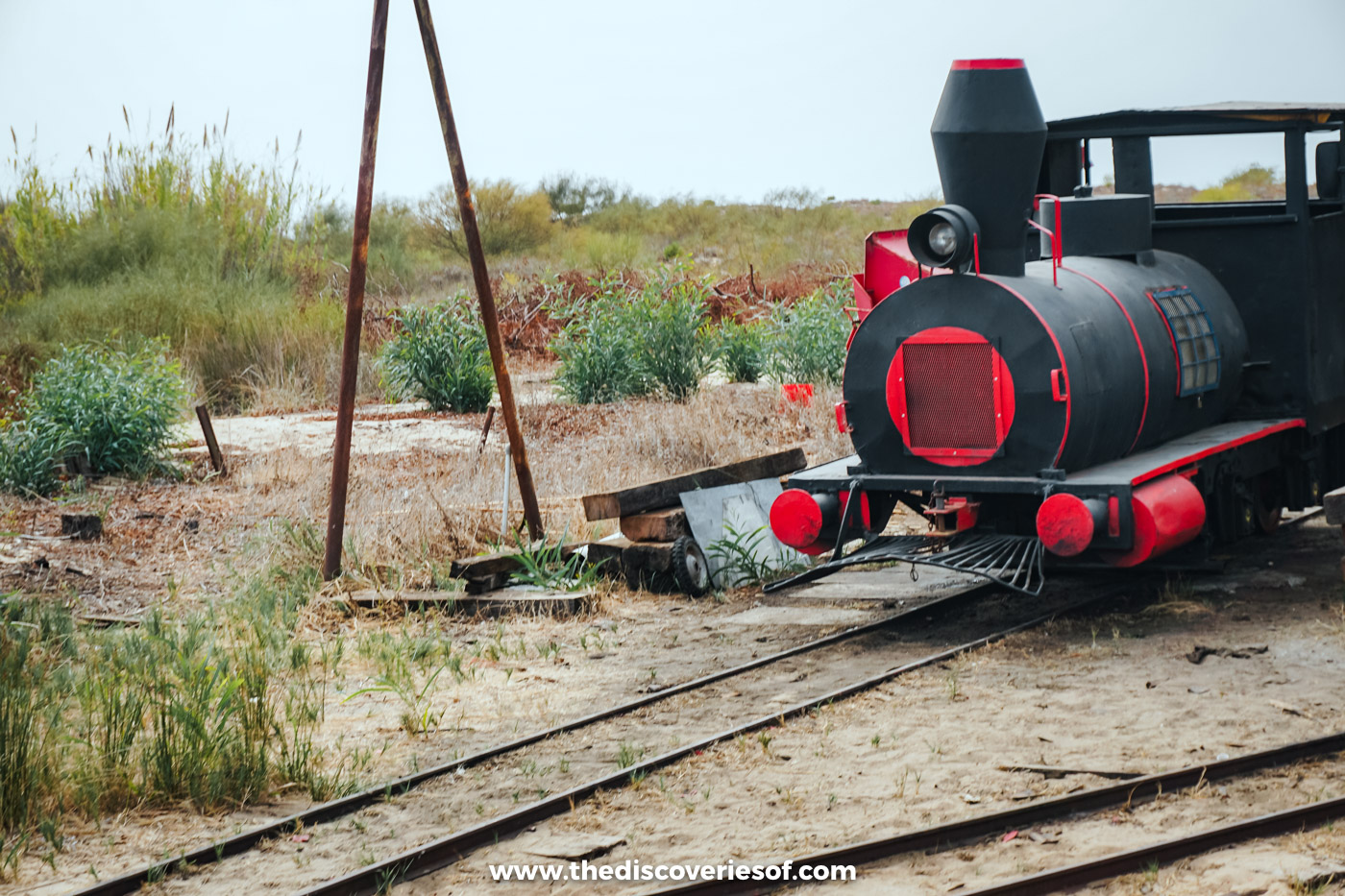
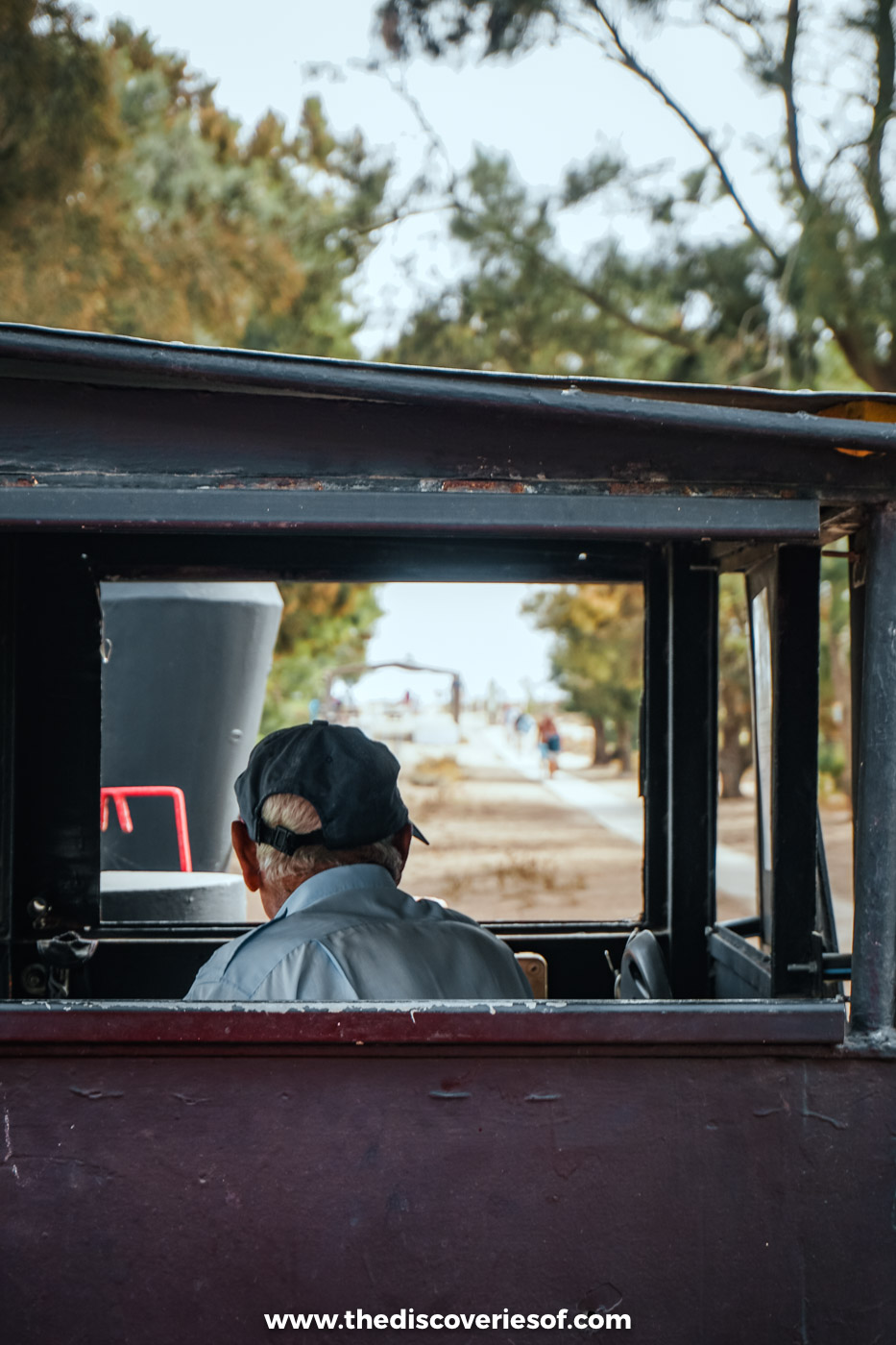
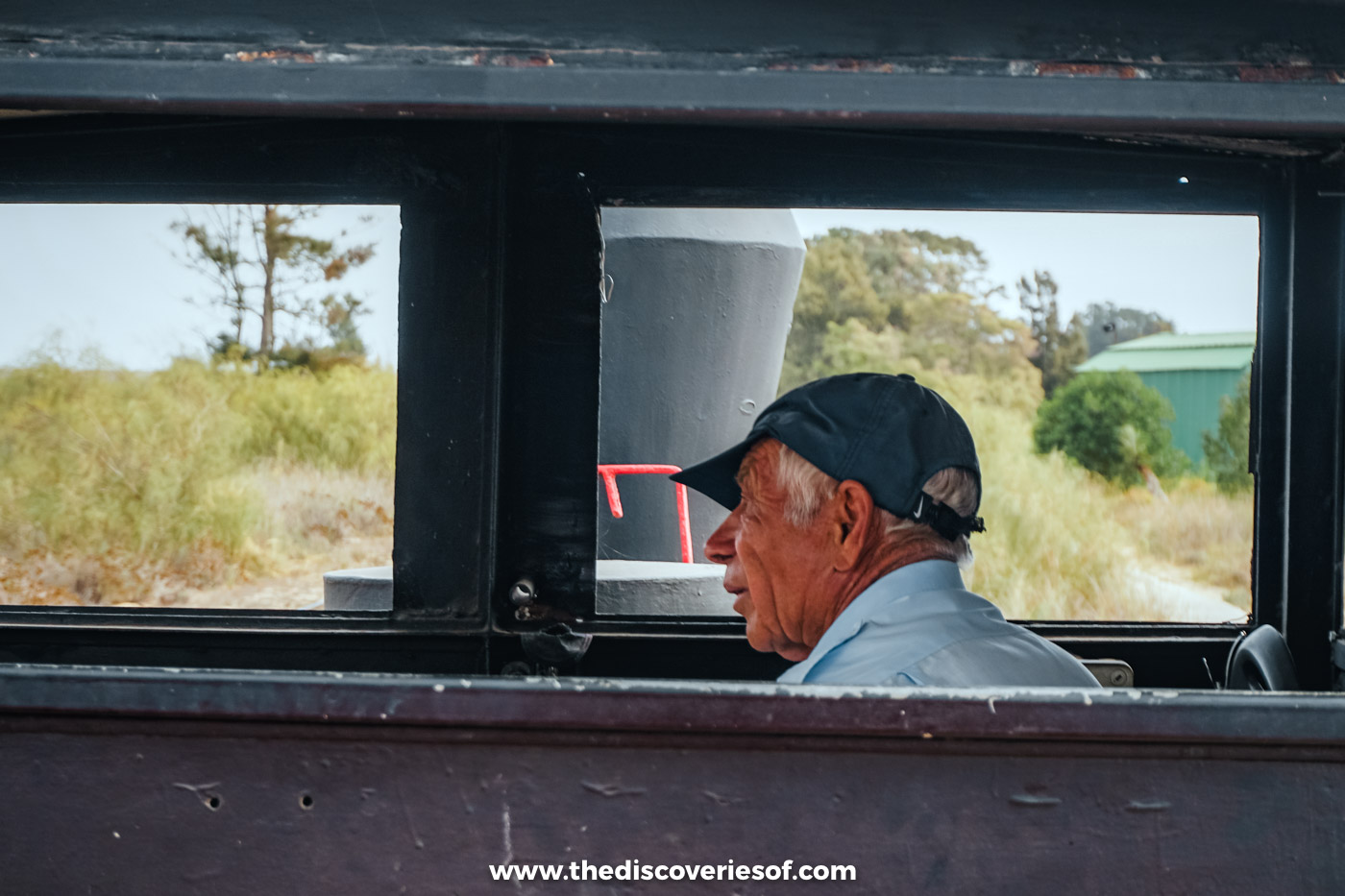
It’s a proper miniature railway: a small engine with a red-rimmed chimney pulling a handful of open-sided carriages along a narrow-gauge track. From my seat, I could see the driver up front in his cap, steering the train through the salt marsh and the scrub towards the dunes. The ride is short, around five to ten minutes, and it’s a lovely way to arrive at a beach.
You don’t have to take it. A flat path runs right alongside the tracks, about 1.5km from the footbridge to the beach, and it takes 15 to 20 minutes on foot. There’s no shade, and bikes aren’t allowed, but keep your eyes on the mud as you go: the marsh is full of fiddler crabs, and the low, silvery curry plant that grows here really does smell of curry when the sun warms it.
Tickets
The train costs about €2 each way, and small children ride free. In high summer it runs from about 8am to 8pm, every 10 to 15 minutes; the rest of the year, it runs from about 9am to 6pm, roughly every half hour. Times change with the season, so check the board at the station before you set off.
The anchor cemetery and the tuna that built Barril
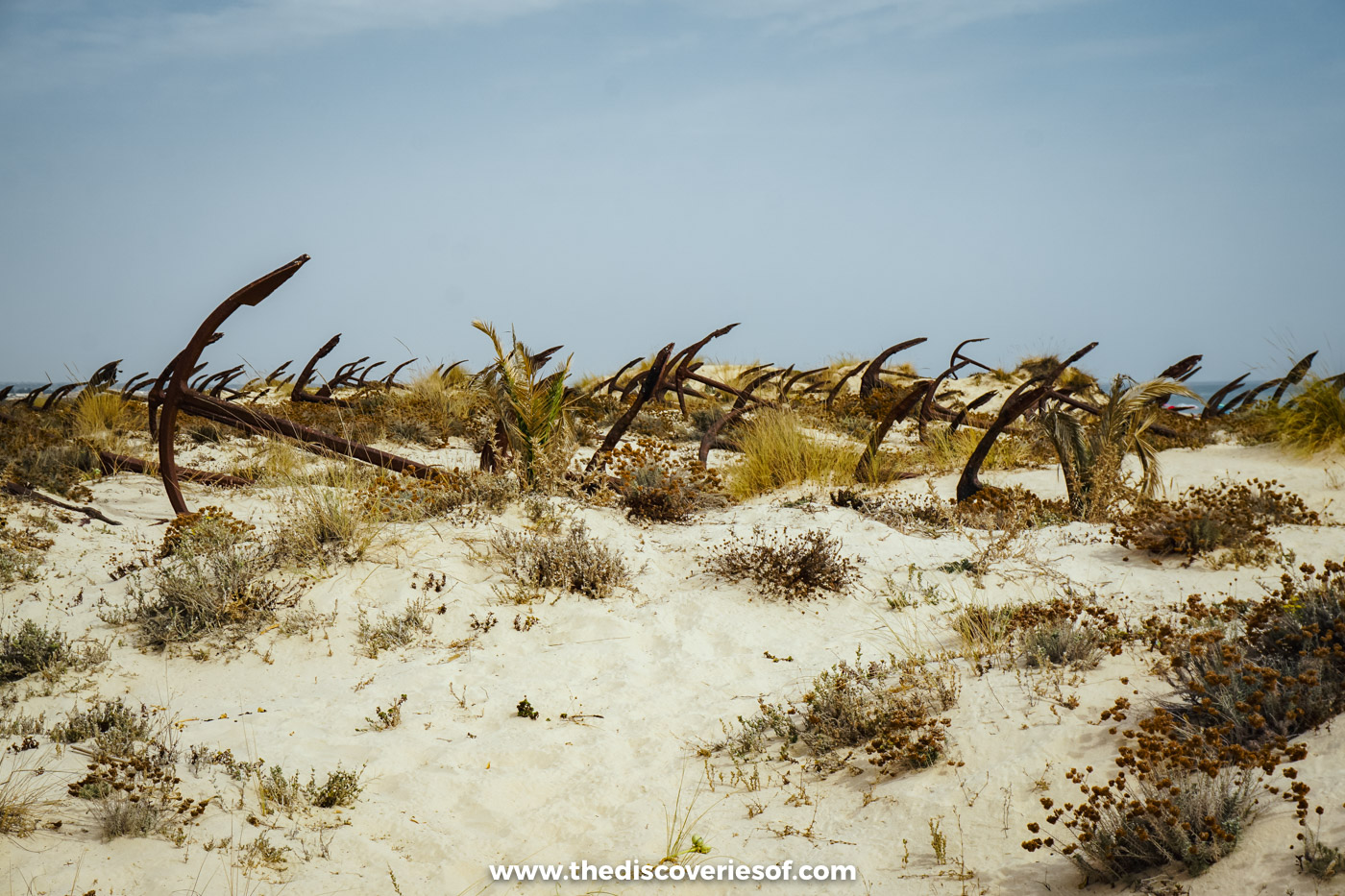
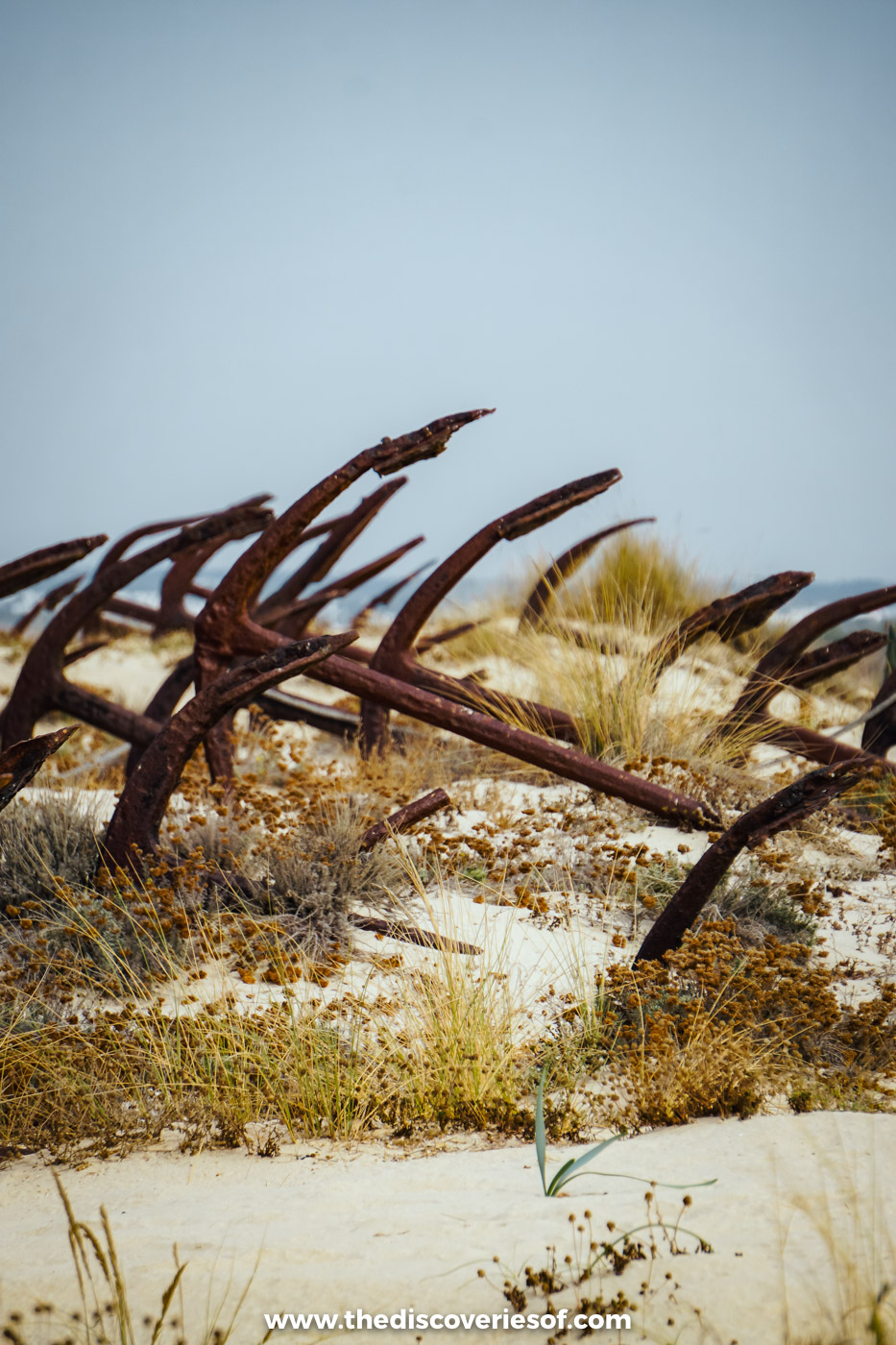
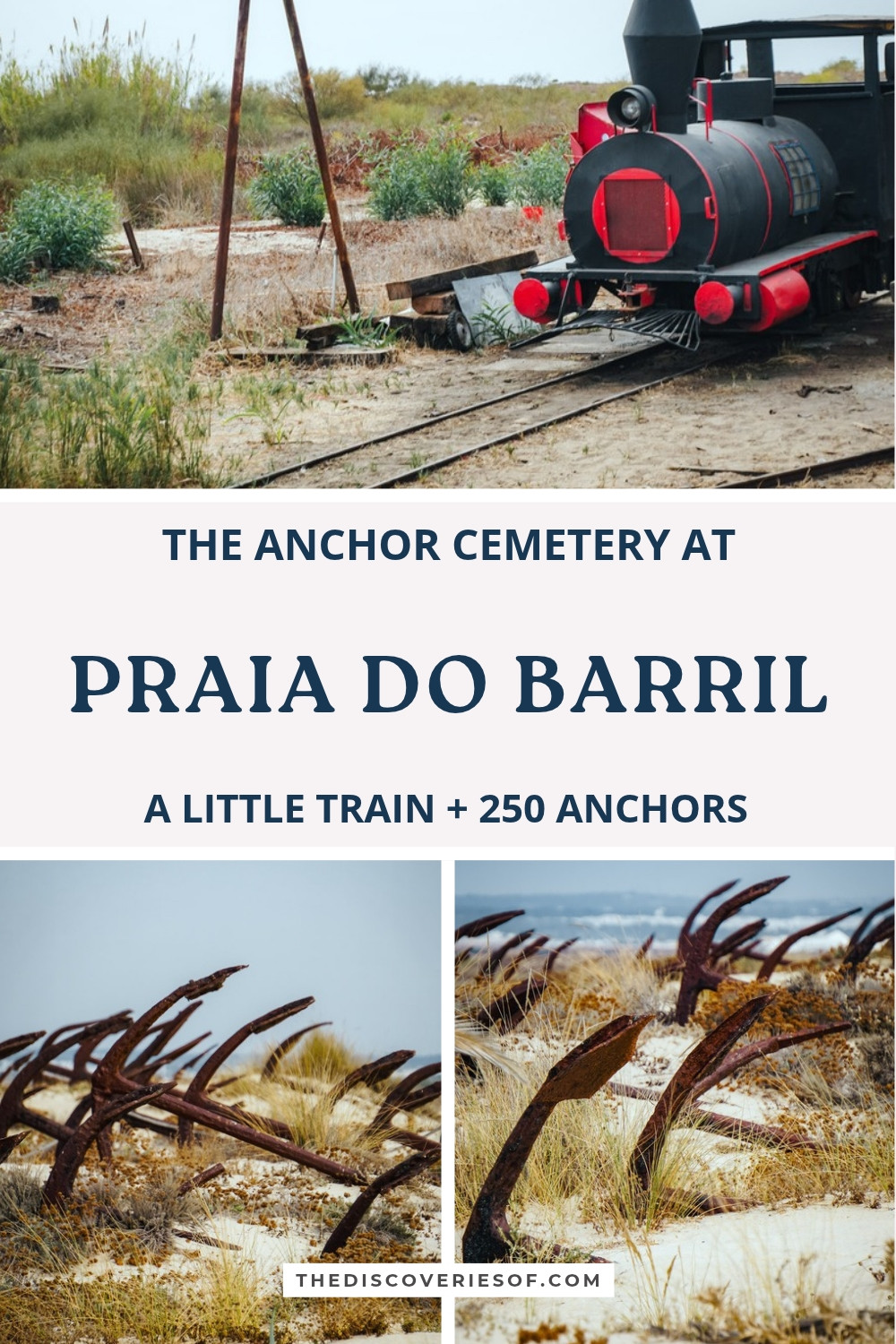
Step off the train, walk past the old cottages towards the sea, and the anchors appear in the dunes: around 250 of them, laid out in long rows with their flukes and shanks pointing up out of the sand. It’s known as the Cemitério das Âncoras, the anchor cemetery, and it’s one of the most unusual sights in the Algarve.
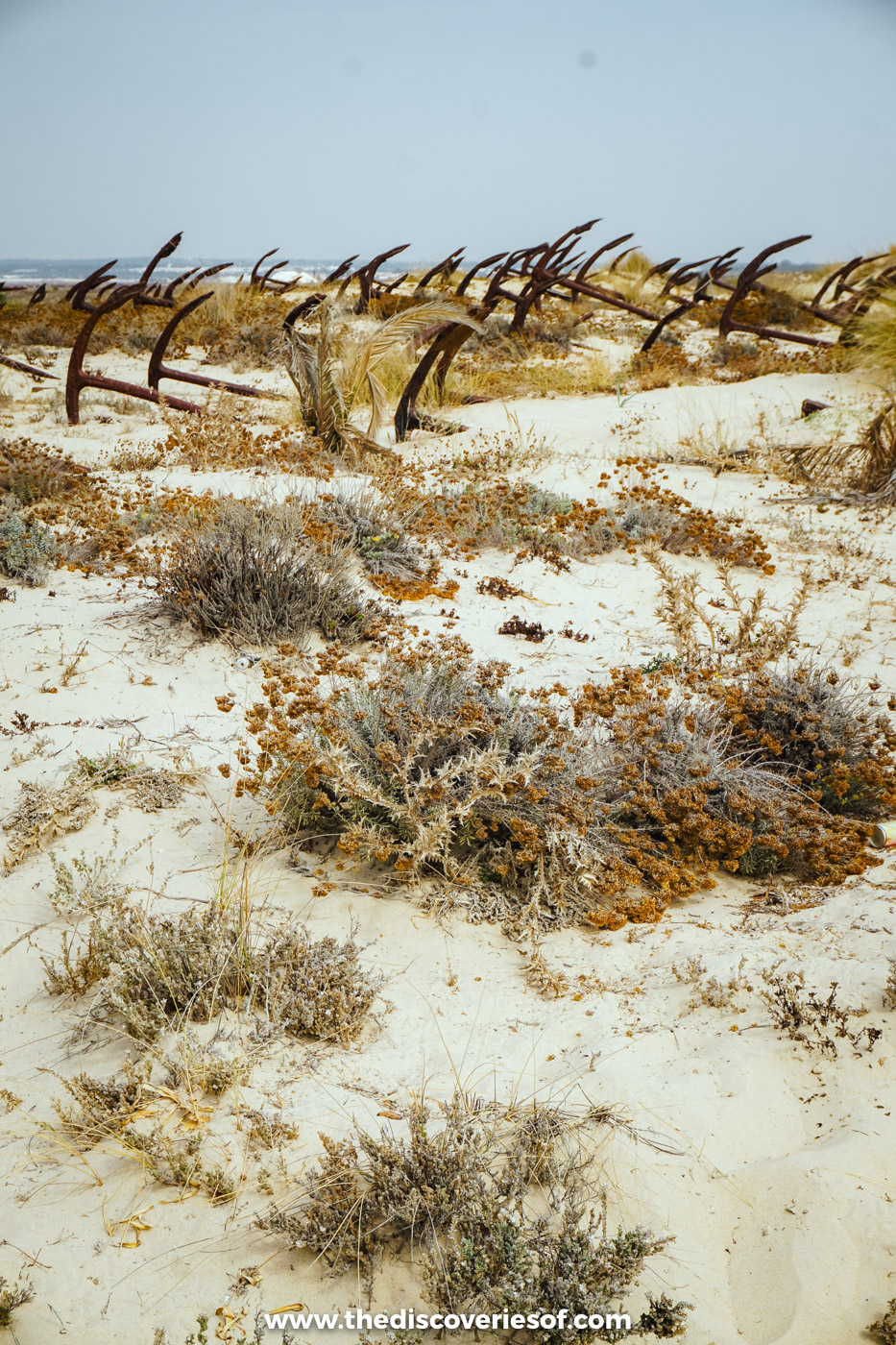
The anchors are the last trace of the Armação do Barril, also known as the Três Irmãos, a tuna fishery that worked from this beach from 1841 to 1966. Every spring, bluefin tuna swam past this coast on their way into the Mediterranean to spawn, and the fishermen were waiting for them with an almadraba, a vast maze of nets fixed to the seabed. It took heavy anchors like these to hold it in place against the currents.
For half of each year, from April to September, the fishermen and their families moved out onto the sandbar to live in the arraial, a seasonal village built around the fishery. When the catches dwindled and the company closed in 1966, the anchors were left lined up in the dunes, a memorial to the industry and to the generations who worked in it.
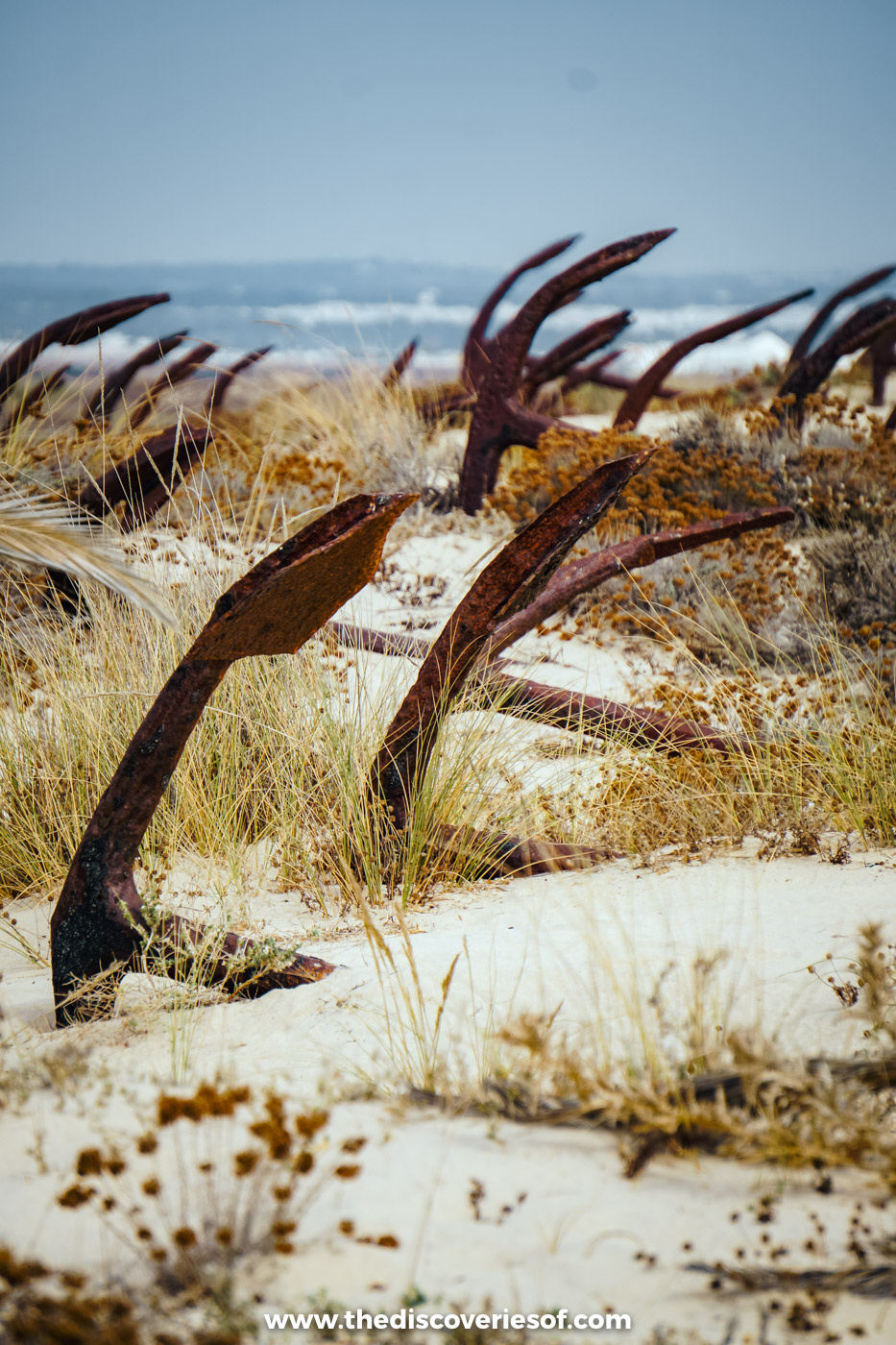
Sixty years of salt and wind have taken their toll. The iron is rusting away, and winter storms have battered the dunes they stand in, so the site is roped off. Admire them from the edge, stay off the dunes, and leave the anchors exactly where they are. Come late in the afternoon if you can, when the low sun turns the rust a deep orange.
The fishermen’s village, reborn as cafés
The low, whitewashed buildings behind the anchors were the heart of the old arraial: the fishermen’s homes and the buildings of the fishery itself. Today, they’ve been restored and turned into a little hub of restaurants, cafés, a bar, an ice-cream shop and a few small shops, with wooden walkways linking them to the sand.
It’s a good spot for lunch. Grilled fish and octopus salad are the obvious orders, and there are snack bars for cold drinks and something quick between swims. Prices are higher than in Tavira, as you’d expect on a car-free island, but sitting out on a terrace in the shell of an old tuna fishing village makes up for it.
The beach itself
Beyond the anchors, the sand runs for miles in both directions. This is the open-sea side of the sandbar, so you get a big, wide beach backed by dunes, with plenty of room to spread out even in summer once you’ve walked a few minutes from the train.
It has flown the Blue Flag every year since 1987, it’s one of the Algarve’s accessible beaches, with walkways and facilities for visitors with reduced mobility, and lifeguards keep watch through the summer bathing season. In the warmest months, the water reaches around 21 to 22°C, warmer than on the west coast. In summer, you can hire sunbeds and parasols by the restaurants (about €15 to €20 for two loungers and a parasol for the day), plus kayaks and paddleboards.
Walk 1.5 to 2km west along the sand and you come to Praia do Homem Nu, a designated naturist stretch with no lifeguards or facilities, so take water with you.
Top Tip
The only shade on the beach is the shade you bring. Pack a hat and plenty of water, especially if you plan to walk the path rather than take the train, as there’s nothing between the footbridge and the beach.
How to get to Praia do Barril from Tavira
Pedras d’El Rei is about 5km west of the centre of Tavira, a ten-minute drive, and it’s the only place to start. My Tavira travel guide covers the town itself, which makes the most natural base.
- By car: follow the road west towards Santa Luzia and the signs for Pedras d’El Rei. There’s a guarded car park by the footbridge, which charges about €5 a day in high season, and free parking along the approach road if you arrive early or late in the day.
- By taxi: a short, cheap ride from the centre of Tavira, and the easiest option without a car. Book one for the way back too.
- By bus: local buses run between Tavira and Santa Luzia, but services are limited, especially at weekends, so check the Vamus Algarve timetable before you rely on one.
- On foot or by bike: the flat lagoon-side route from Tavira through Santa Luzia makes a pleasant walk or cycle, about an hour on foot each way. Leave your bike at the footbridge, as they aren’t allowed on the path to the beach.
Getting There
Faro airport is about 30 minutes’ drive from Pedras d’El Rei along the toll-free A22, so the beach also works as a first or last afternoon in the Algarve.
When to visit
July and August are busiest. The train runs every few minutes, the car park fills by mid-morning, and the restaurant terraces are packed at lunch. If you’re coming in high summer, arrive early, or come for the evening when the day crowds head home.
June and September are the best months for a beach day here: warm enough to swim, with far more room on the sand. October, when I came, is lovely too: the crowds have gone and the days are still mild, though the lifeguards have gone home and the sea is cooler. In winter, it’s a place for walking rather than swimming, with the train on its shorter timetable.
Whatever the month, check the time of the last train before you settle in. If you miss it, the path back to the footbridge is flat and easy, and with the anchors glowing in the late sun behind you, it’s no hardship at all.
Map
Read next
- A Tavira travel guide to the Algarve’s prettiest town
- The Ria Formosa Natural Park, the wild Algarve most visitors fly straight over
- The best beaches in the Algarve, and how to actually reach them
- How to spend a week in the Algarve
Love this? Save and share on Pinterest
Discover the top things to do, insider tips and hidden gems in our Portugal Travel Guides.
Read the guides →