

Philae Temple is a stunning island temple in Aswan, dedicated to the goddess Isis and moved, block by block, to save it from the Nile. Here’s what you’ll see, the story behind it and how to plan your visit.
So you’re planning your trip to Philae Temple?
Let’s get the biggest thing out of the way first: it is stunning. Chances are that you’re going to see a lot of temples on your Egypt trip. Believe me when I say that Philae will stop you in your tracks nonetheless, and it’s one of my own personal favourite sights in Aswan.
The only way to reach it is by boat, and I promise that the first glimpse you get of Philae, its golden columns surrounded by the striking blue of water and sky, will be one to remember. I visited in early June with my guide, taking a motorboat across from the marina around midday and spending about an hour and a half exploring the island.
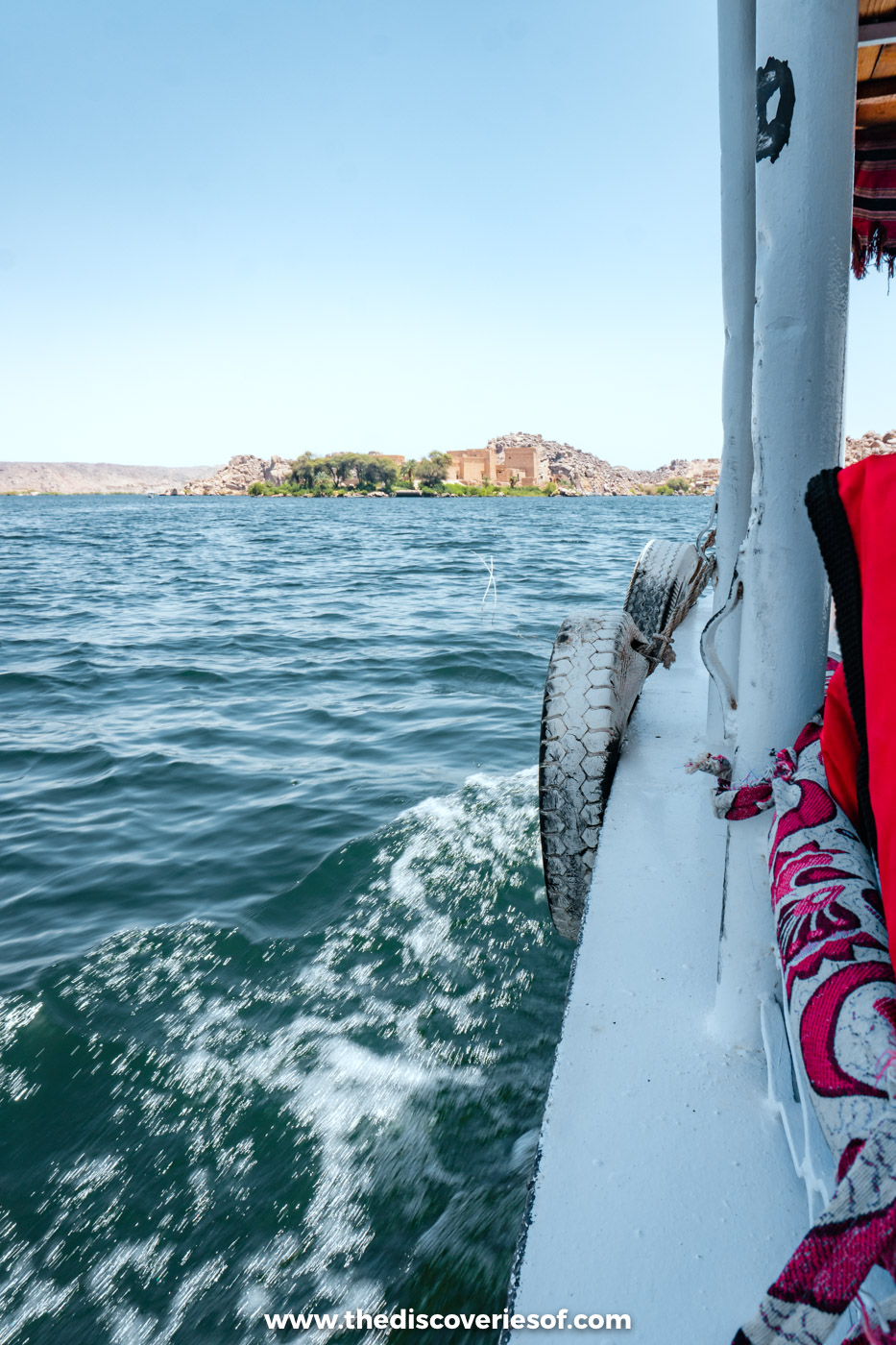
Long considered one of the most beautiful temples in Egypt, its towering hieroglyph-covered walls have their own story to tell, not least the fact that the island you’ll step onto isn’t the one its builders chose.
Ready to discover the mysteries of this ancient site? Let’s go.
At a glance
- Location: Agilkia Island, in the reservoir between the old Aswan Dam and the High Dam, about 20 minutes by car south of central Aswan
- Getting there: a motorboat from the Philae marina at Shellal, about 10 minutes each way
- Ticket: 550 EGP for adults and 275 EGP for students, paid by card; the boat is extra and paid in cash
- Opening hours: daily from 7am; closing time varies with the season, between about 3pm and 5pm
- Time needed: one and a half to two hours, including the boat
- Best time: first thing in the morning, before the heat and the cruise groups
- After dark: a sound and light show runs most evenings
Why visit Philae Temple?
Honestly, the real question is “why not?”
It’s easy to forget that the ancient Egyptian civilisation lasted for almost 30 centuries. The temples you’ll see today span a huge range of architectural styles and trends, and no two are the same.
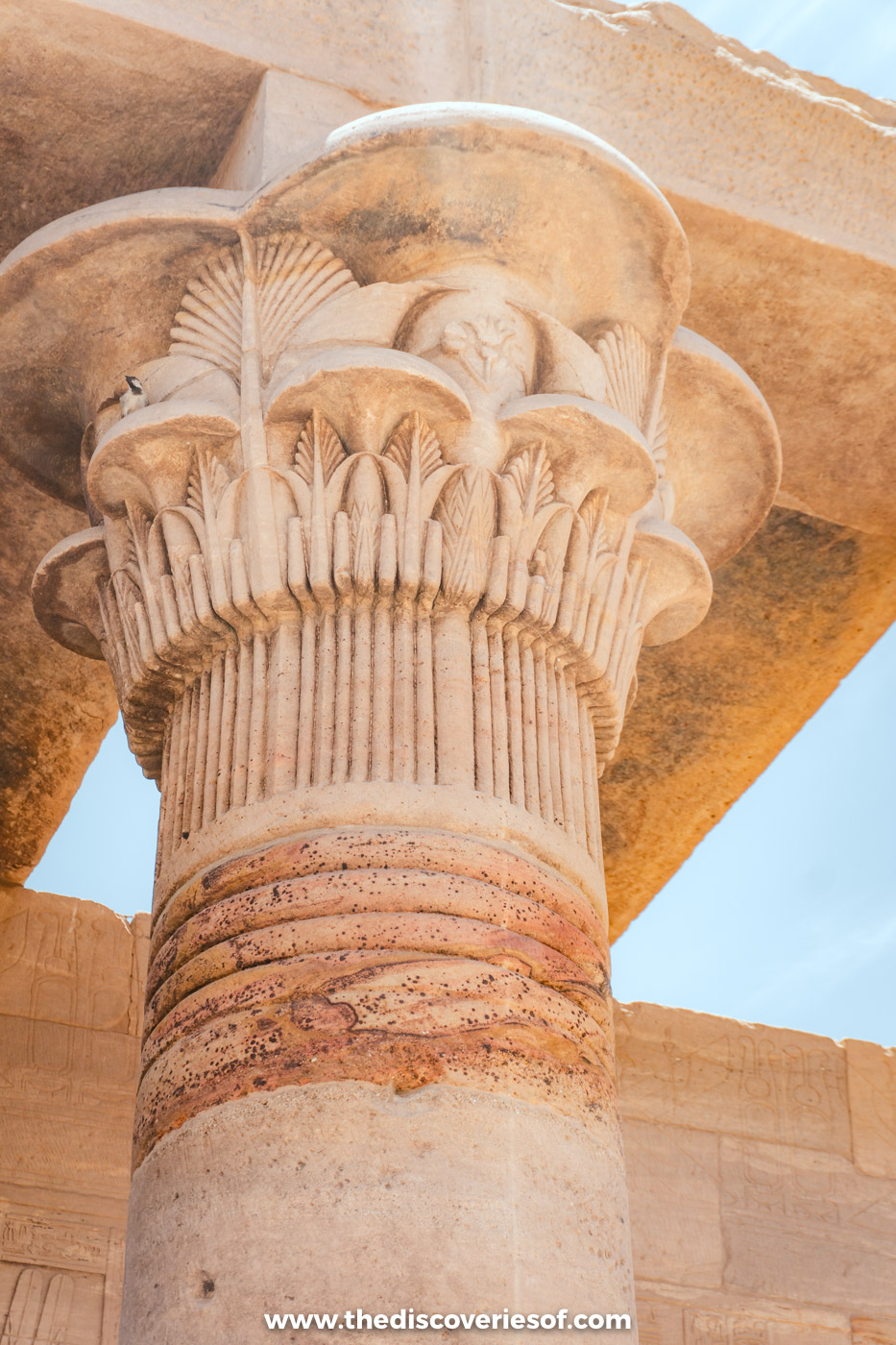
Philae looks quite different to the others for a couple of reasons. The first is its age: at just over 2,000 years old, it’s one of the youngest ancient Egyptian temples still standing. The second is who built it. It dates from a really interesting period, the Ptolemaic dynasty, when Macedonian Greeks ruled Egypt but still billed themselves as pharaohs and worshipped the Egyptian gods. The architecture from this era, with its flowery column capitals, is distinctly different to that of earlier eras.
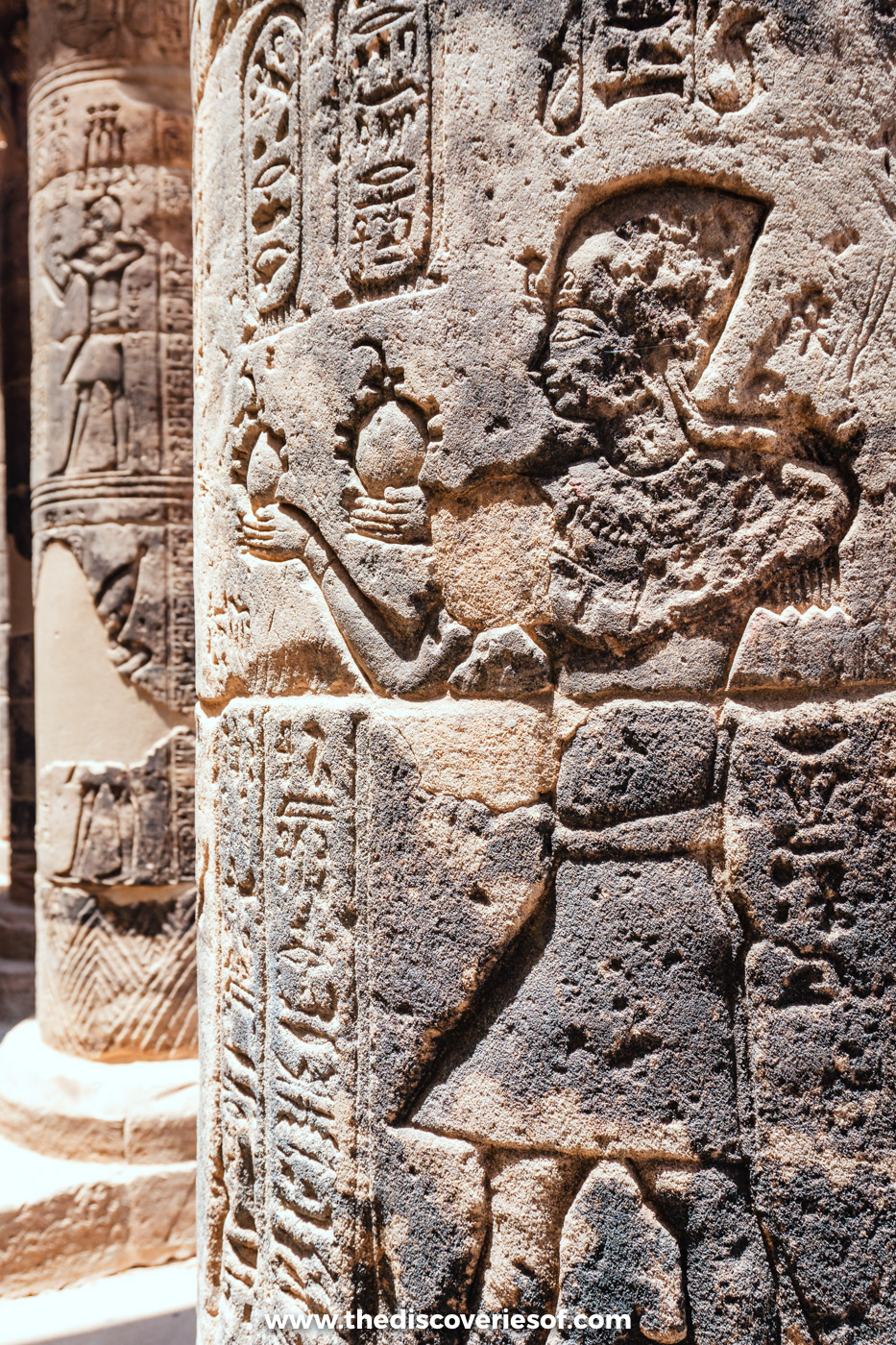
This meeting of Egyptian and Greek cultures, along with its late place in the timeline of ancient Egypt, means that Philae really stands out from temples like Karnak and Abu Simbel. It’s jaw-dropping, not only in its scale but in the intricacy of the hieroglyphs that cover every available surface. You’ll see why it’s nicknamed the pearl of Egypt as soon as your boat comes round the island.
In other words, it should be firmly on your list of must-visit spots in Egypt.
PS: take a sneak peek at the temple here (and follow along for more travel adventures)
A sacred island for Isis (and why it moved)
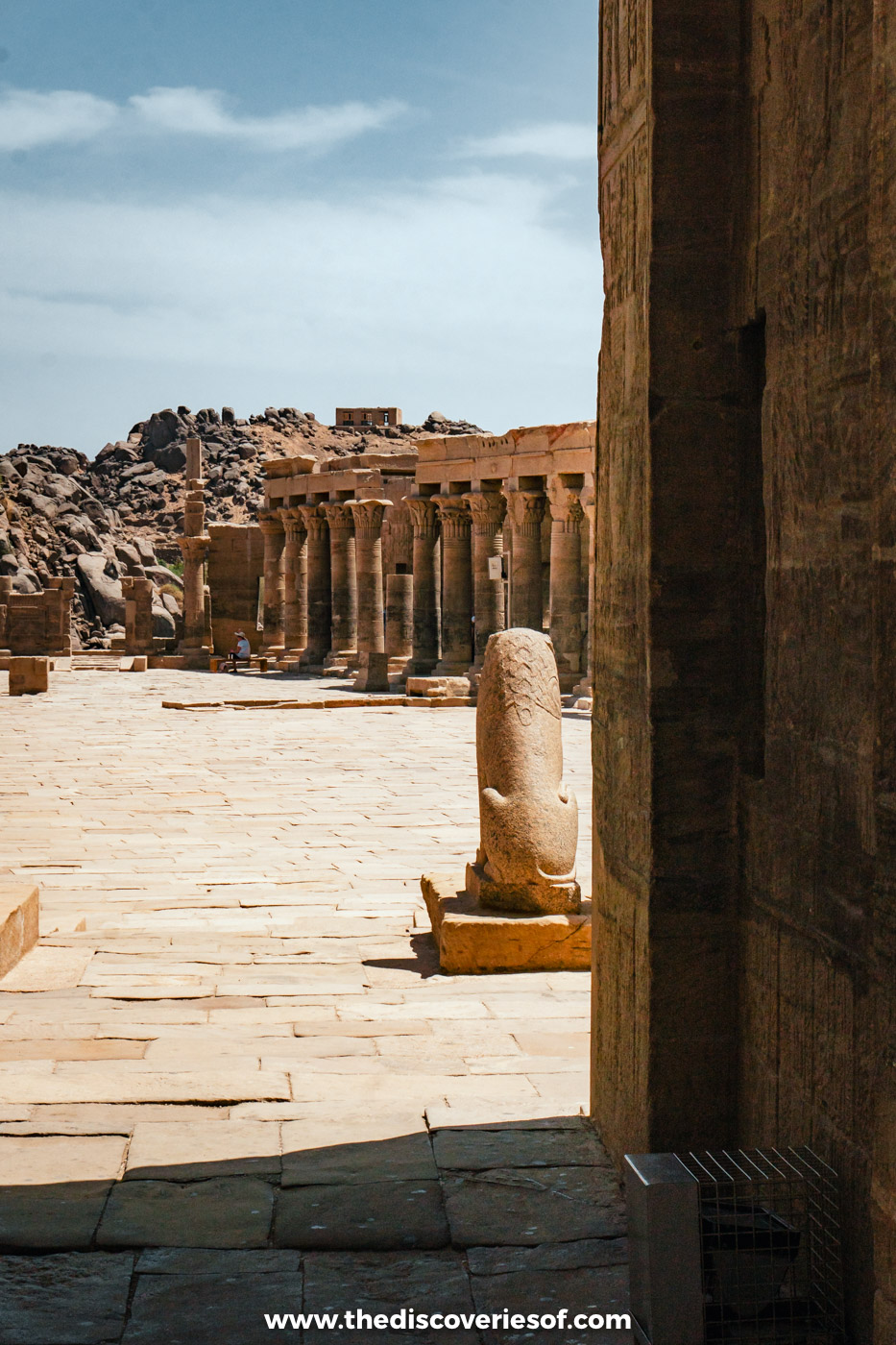
The temples originally stood on Philae Island, close to the First Cataract of the Nile, the band of granite boulders and rapids that marked Egypt’s southern frontier for thousands of years.
The island was sacred because of its neighbour, Bigeh, which the Egyptians believed was one of the burial places of the god Osiris. Philae became the home of his wife, Isis, and over the centuries it filled up with temples, chapels, gateways and shrines dedicated to her and to several other gods and rulers.
Isis was one of the most important goddesses in Egypt: a great magician and healer, a protector and the ideal mother, who brought her murdered husband Osiris back to life and raised their son Horus. Her temple at Philae honours all three of them, and her cult was so popular that it spread right across the Roman world.
What you’ll see on the island
Boats drop you at the southern end of the island, so you’ll walk through the site roughly in the order it was meant to be approached, from the oldest building at the front to the sanctuary.
The outer court and the first pylon
Your first stop is the Kiosk of Nectanebo I, the oldest building on the island, from the fourth century BC. Beyond it, a long outer court is lined with colonnades on either side, leading up to the first pylon.
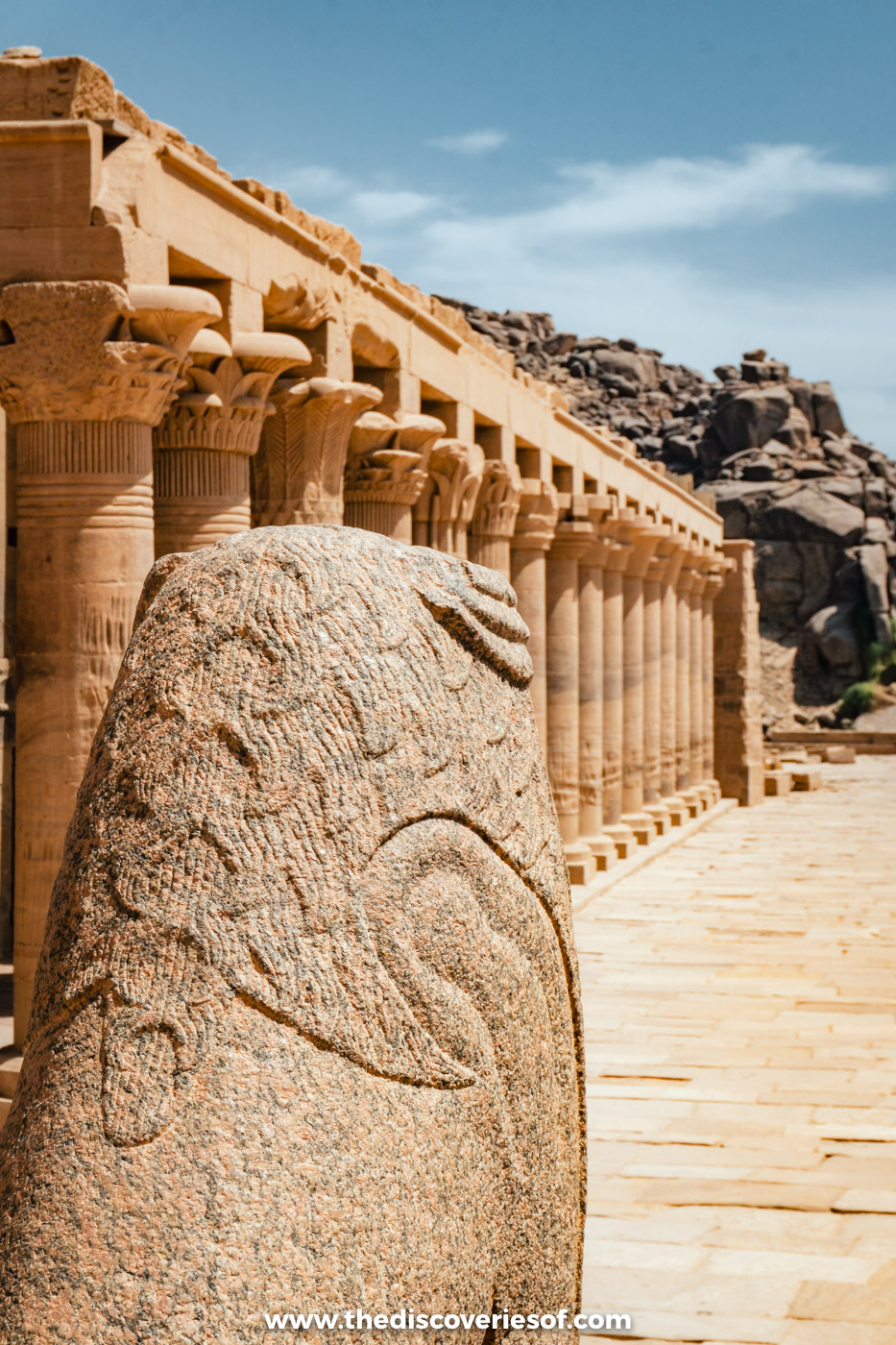
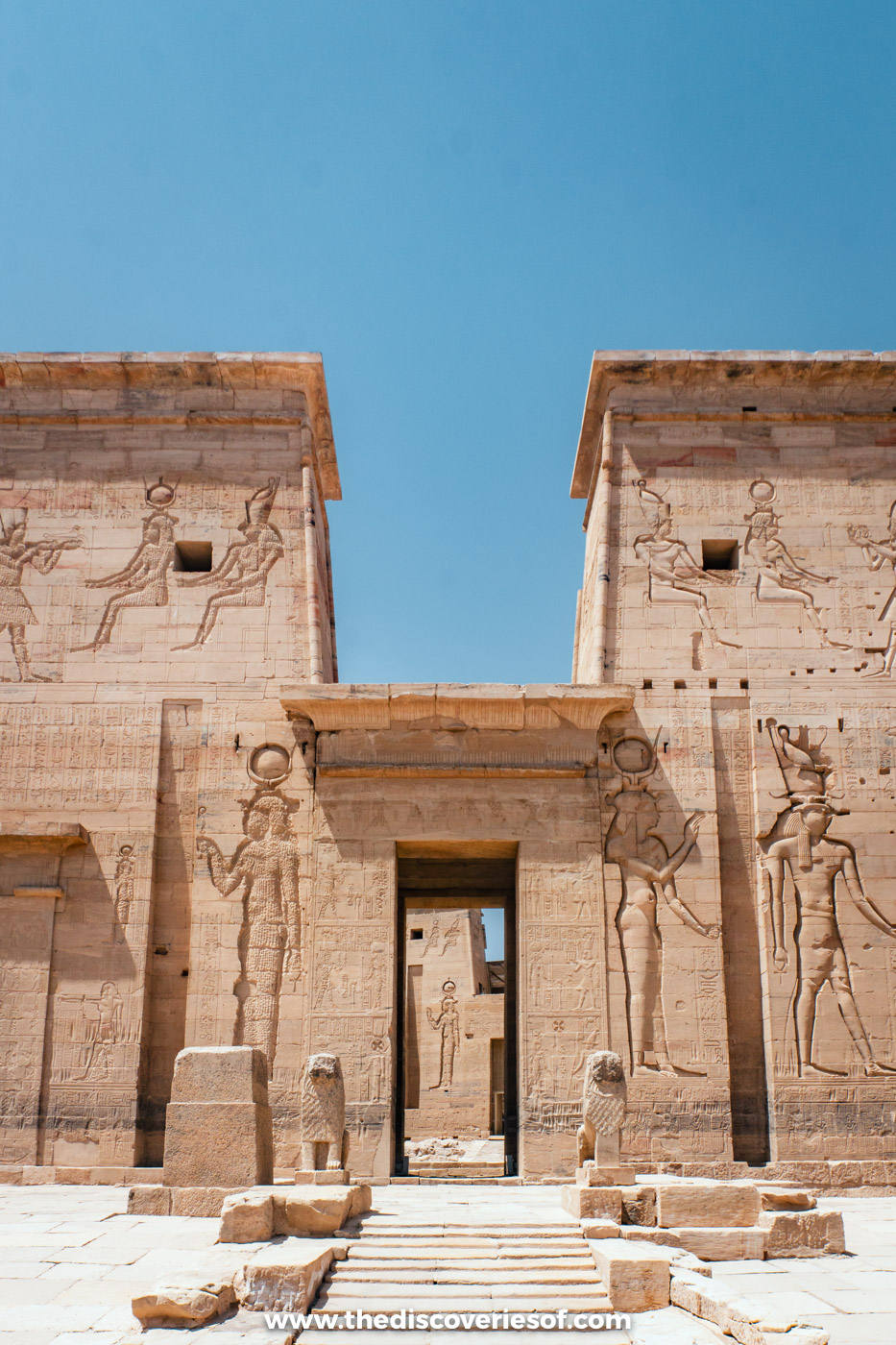
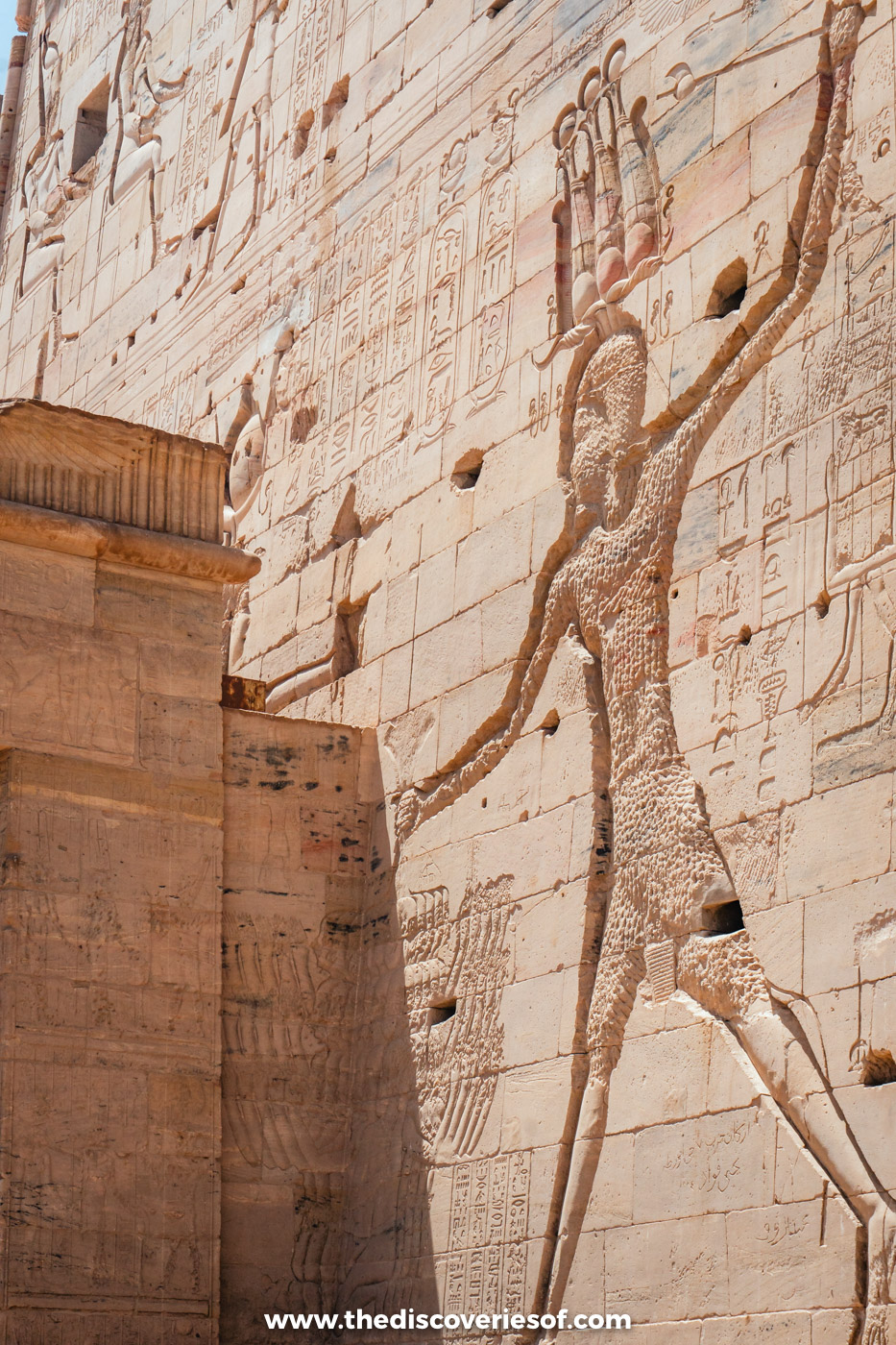
This 18-metre gateway, with its towering pylons on each side, is the grand entrance to the Temple of Isis. Look out for the giant reliefs of Ptolemy XII smiting his enemies in front of the gods, the pair of granite lions by the central gate, and the bases where two obelisks once stood. A gateway built by Nectanebo I was incorporated into the pylon when it was built.
The forecourt and the birth house
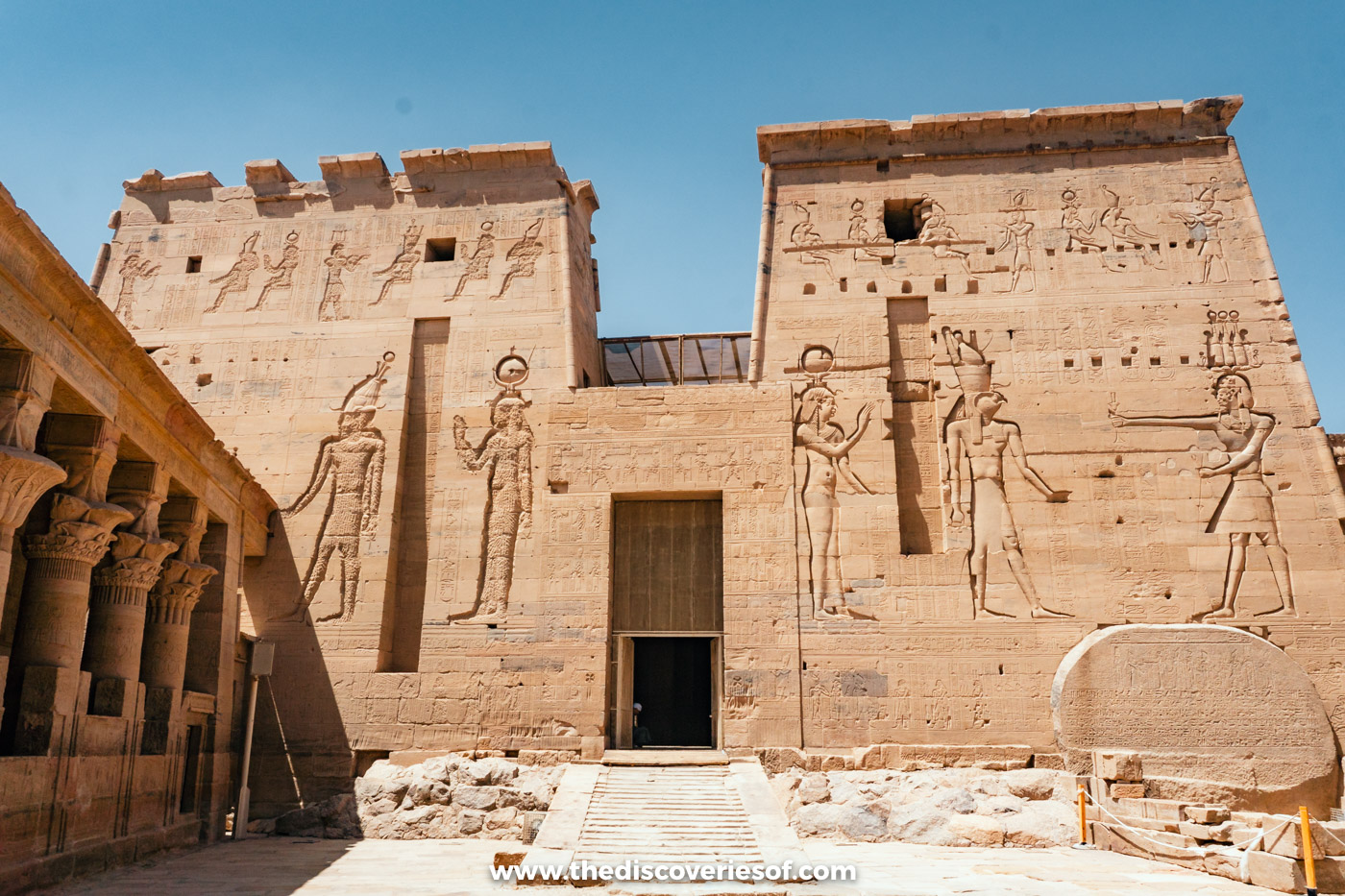
Through the first pylon is the forecourt, with a colonnade on one side and the mammisi, or birth house, on the other. Take some time to stroll around, taking in the towers’ intricate details and the colonnade-fronted forecourt, before heading inside.
Birth houses celebrated the divine birth of the god’s child, and the reliefs here show Isis giving birth to Horus and nursing him in the marshes, scenes that tied the ruling king to Horus himself. Across the court, the second pylon leads into the temple proper. At its base, a natural granite outcrop was left in place and carved with an inscription, rather than being cut away.
The Temple of Isis
The Temple of Isis is the main structure on the island. Largely built under Ptolemy II and his successors from around 280 BC, it’s a striking building carved with giant reliefs. Though it was dedicated to Isis, Osiris and Horus were worshipped here too.
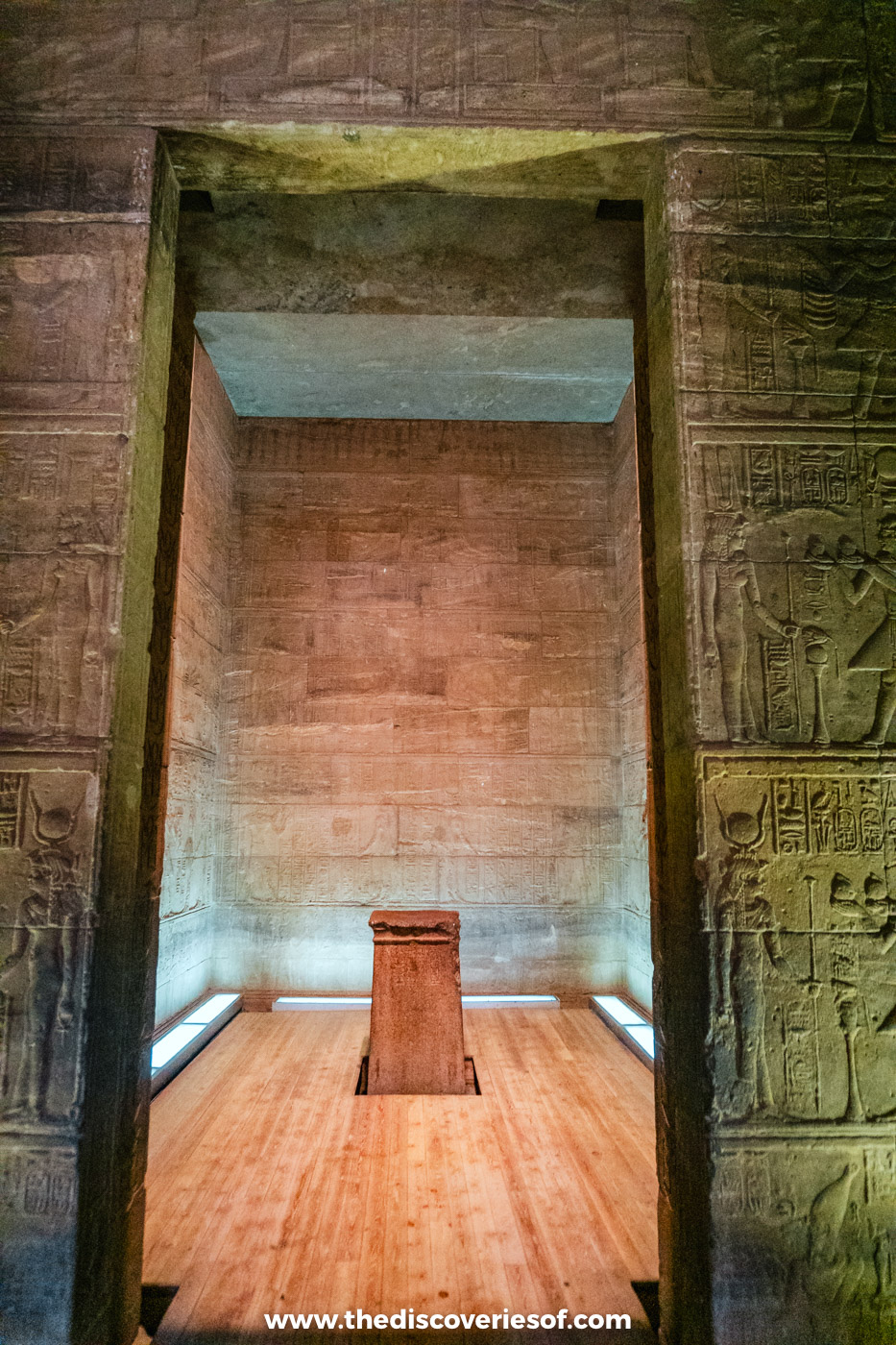
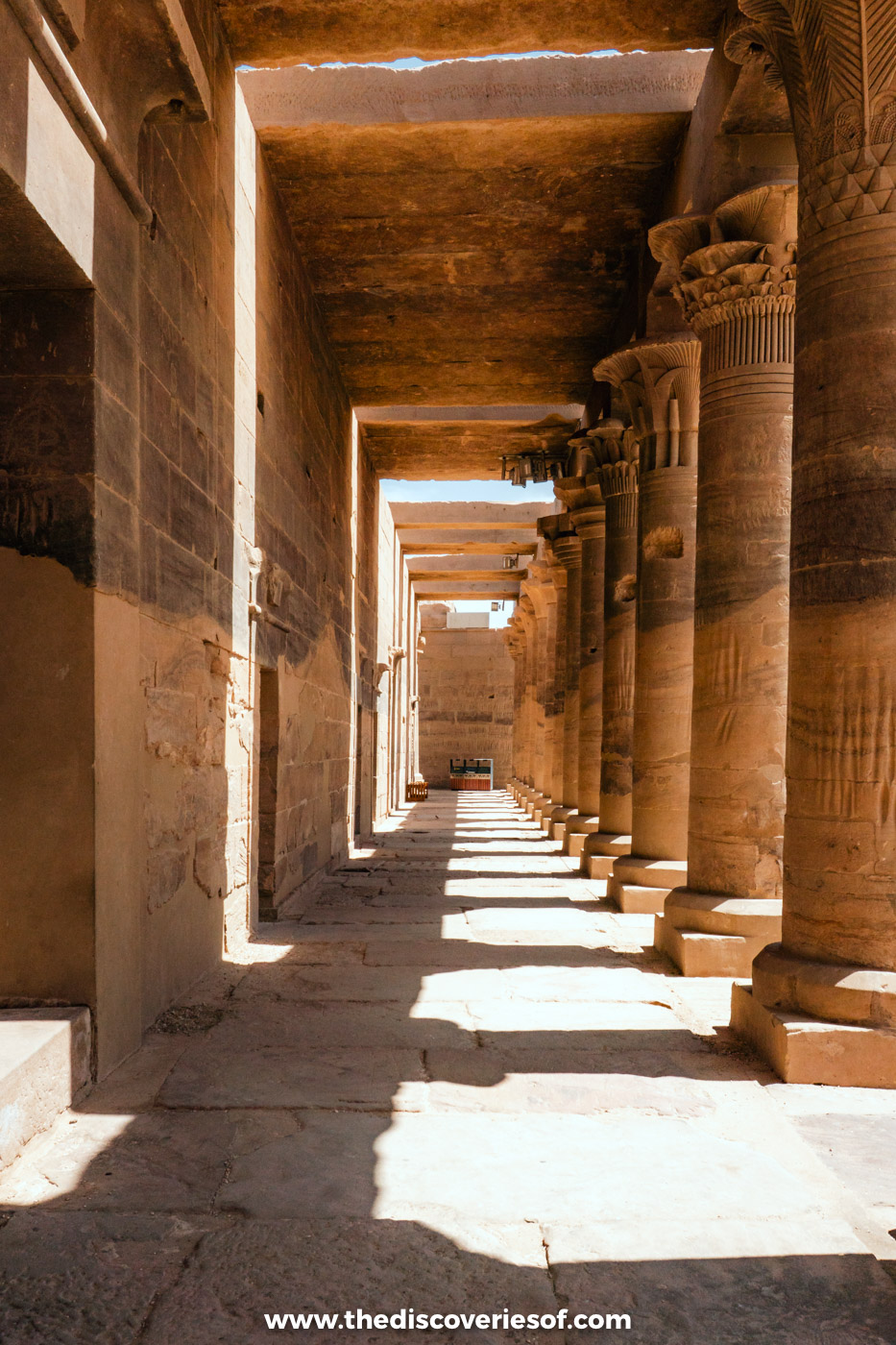
Inside, a hypostyle hall with brightly carved floral capitals leads through a series of increasingly dark rooms to the sanctuary, where a granite stand once held the boat-shaped shrine carrying the goddess’s statue. Keep your eyes peeled for the Coptic crosses carved into the walls (more on those below). On the roof, which is usually closed to visitors, a set of chapels tells the story of Osiris’s death and resurrection.
Hadrian’s Gate
Just west of the Temple of Isis, Hadrian’s Gate is an ornamental gateway built during the reign of the Roman emperor Hadrian (AD 117 to 138), with decoration added under later emperors.
Its most famous relief shows the source of the Nile as the Egyptians imagined it: the flood god Hapi crouching in a cave beneath the rocks of Bigeh, encircled by a serpent and pouring out the river’s waters. It faces the island of Bigeh across the water, which is no coincidence.
The Kiosk of Trajan
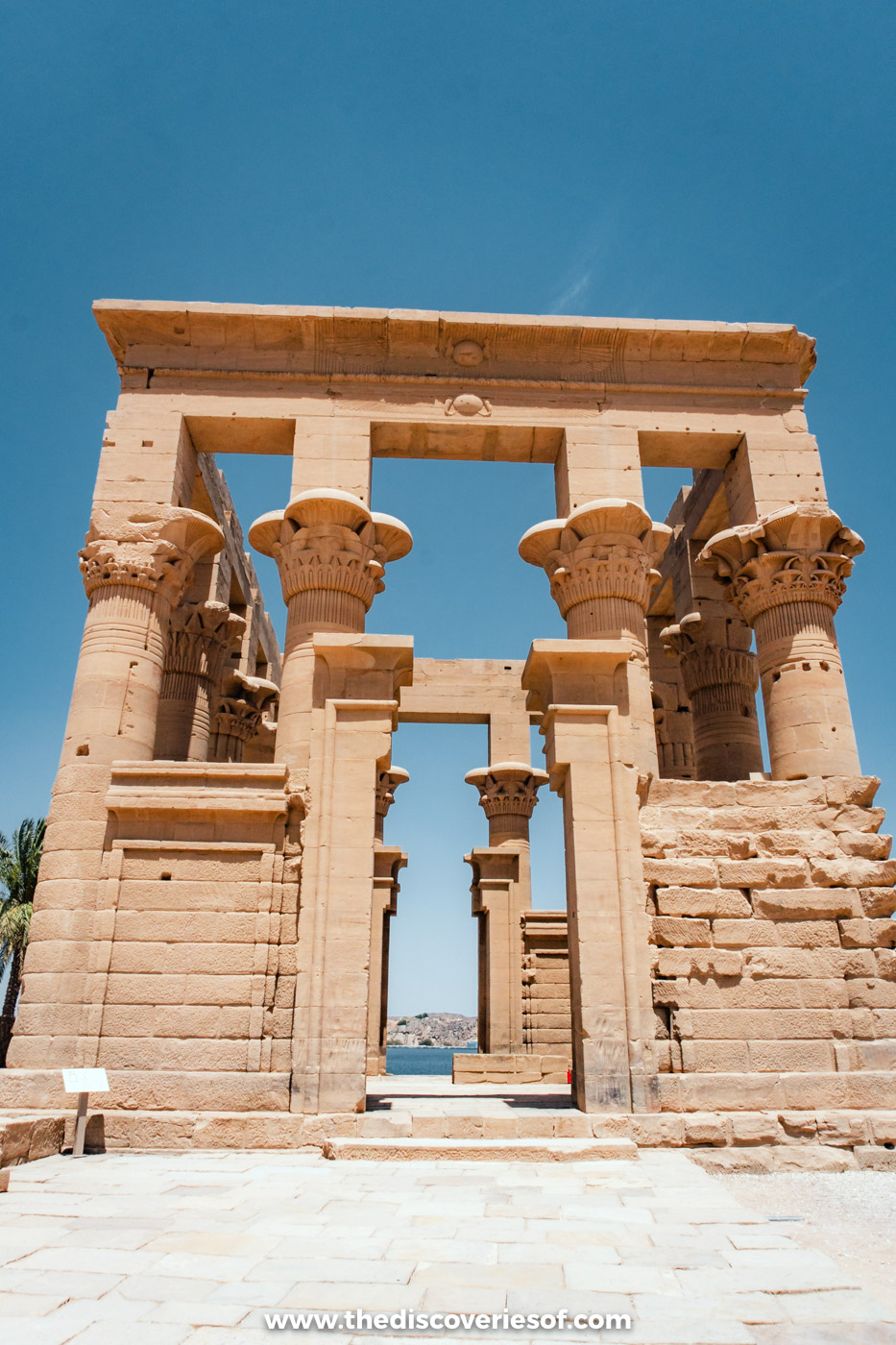
On the eastern edge of the island, the elegant Kiosk of Trajan is probably the most photographed building at Philae, and it’s not hard to see why. Its 14 columns, topped with different floral capitals, frame the water beautifully.
It was built as a grand landing stage for boats arriving at the island, and it’s sometimes called Pharaoh’s Bed. Its reliefs were started under the emperor Trajan (AD 98 to 117) but never finished.
The smaller temples and chapels
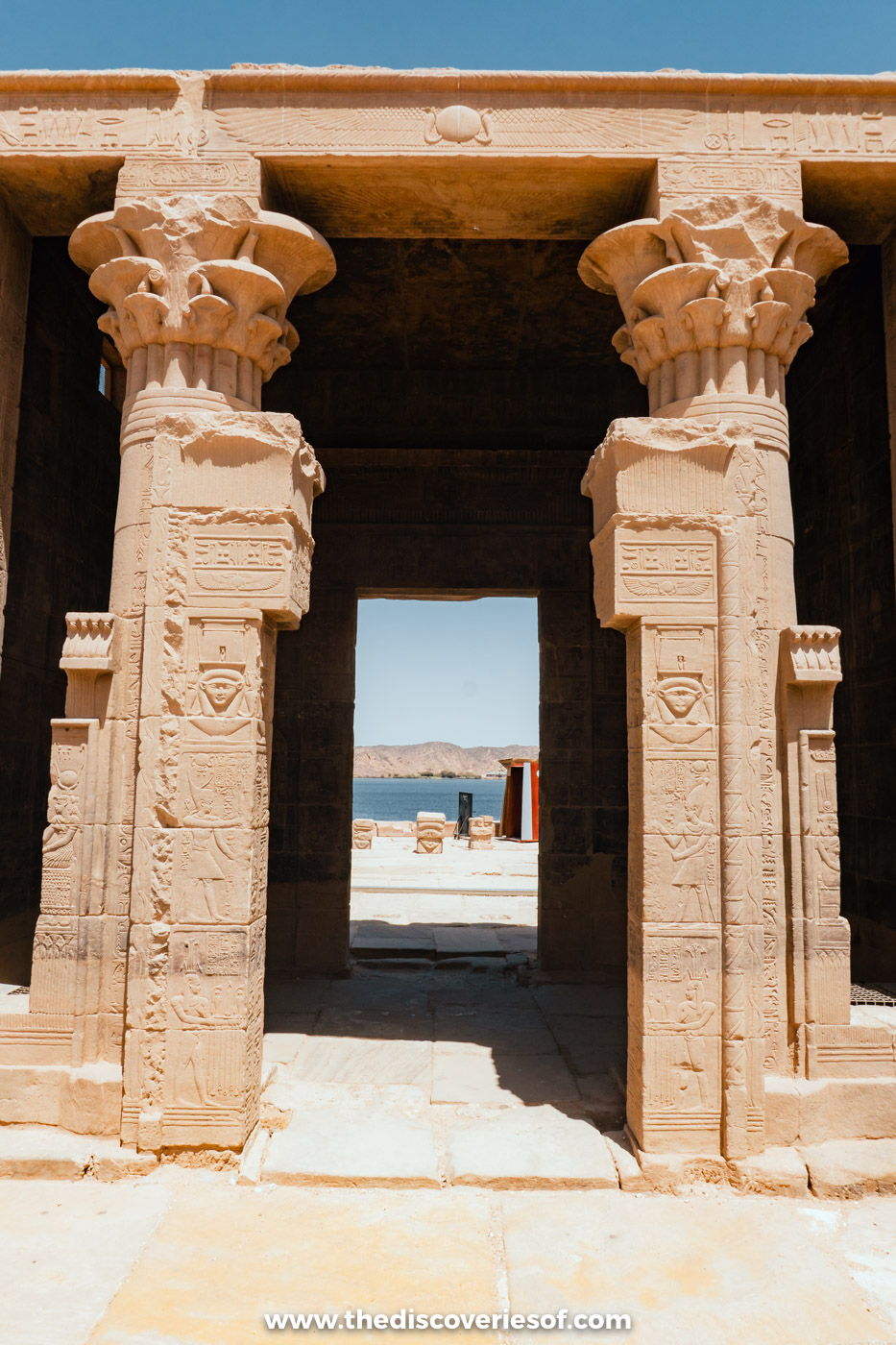
Other noteworthy sanctuaries include the Temple of Hathor, whose reliefs show musicians and the dwarf god Bes playing instruments; the small Temple of Imhotep, the architect of the Step Pyramid at Saqqara, who was worshipped as a god of healing; and the Temple of Harendotes, a form of Horus. The Nubian god Mandulis, whose main temple was at Kalabsha, was honoured here too, along with a ruined Temple of Augustus and the Gate of Diocletian at the northern end.
A short history, from the last pharaohs to Justinian
Built by the last pharaohs
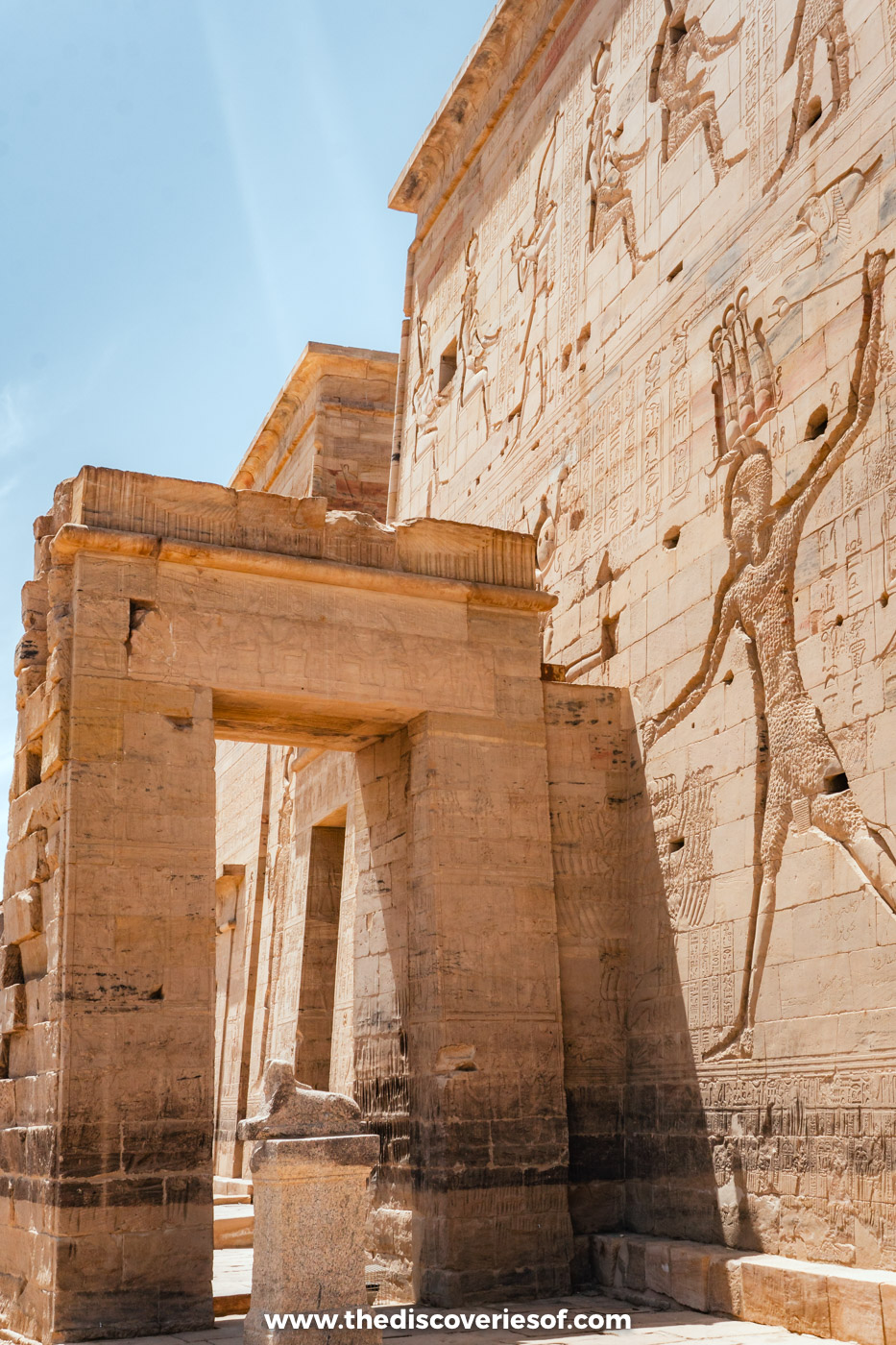
There were shrines on the island by the sixth century BC, but the oldest building that survives is the Kiosk of Nectanebo I, from the fourth century BC. Work on the Temple of Isis as you see it today began under Ptolemy II, around 280 BC, and the Ptolemies and then the Roman emperors kept adding to it for centuries.
The Ptolemies were among the last rulers to use hieroglyphs, reliefs and inscriptions in the classical Egyptian style to honour their gods, and this temple is one of the finest examples of it.
The name itself is a clue to where the island sits. Philae is the Greek form of its Egyptian name (Pilak in Coptic), which is often translated as “the boundary” or “the end”, fitting for a place on Egypt’s southern frontier. It doesn’t mean “the end” in Greek, as you’ll sometimes read.
Moved block by block to Agilkia
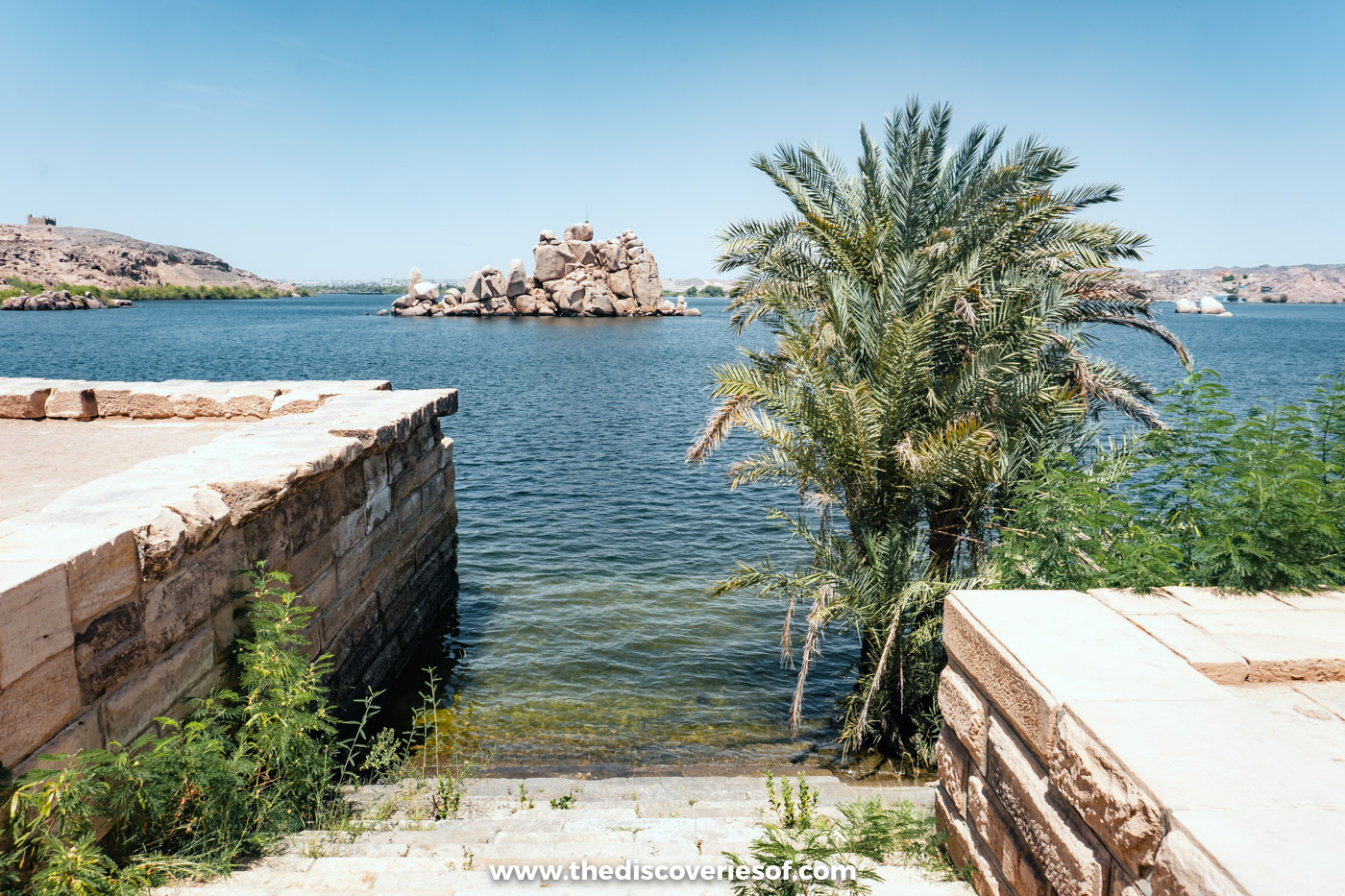
The first Aswan Dam, finished in 1902, left Philae underwater for much of the year: for decades, visitors rowed between the tops of its columns. The High Dam, built in the 1960s to control the annual flooding of the Nile, generate hydroelectric power and improve irrigation, made things worse. Philae was now trapped between the two dams, in water that rose and fell every day and would slowly have destroyed it.
UNESCO launched its campaign to save the Nubian monuments in 1960, and the rescue of Philae, a joint effort between the Egyptian government and UNESCO, got under way in 1972. A cofferdam of steel plates and sand was built around the island and the water pumped out. Between 1977 and 1980, the temples were dismantled into about 40,000 blocks and moved, piece by piece, to their new home on Agilkia Island, about 500 metres away and on higher ground. Agilkia was even landscaped to match the shape of the original island, and the temple reopened in 1980.
If the tale sounds familiar, the same thing happened at Abu Simbel, while other temples, like Debod, were given to the countries that helped (Debod went to Spain and is one of my favourite spots in Madrid).
So it wasn’t the end after all.
Five things you probably didn’t know
It was a pilgrimage centre for centuries
As the heart of the cult of Isis, the island was a prime destination for devotees seeking healing, protection and fertility, from Egypt, Nubia and right across the Mediterranean. Many sought the goddess’s blessings, which is why successive rulers kept adding new buildings to the island, and the Nubian kingdom of Meroë sent its own delegations here too.
It holds the last hieroglyphic inscription ever carved
The last known inscription in hieroglyphs, anywhere, was carved here in AD 394, and the last known inscription in demotic, the everyday Egyptian script, followed here in AD 452. After that, nobody could read hieroglyphs for more than 1,300 years.
Christianity and the old gods lived side by side
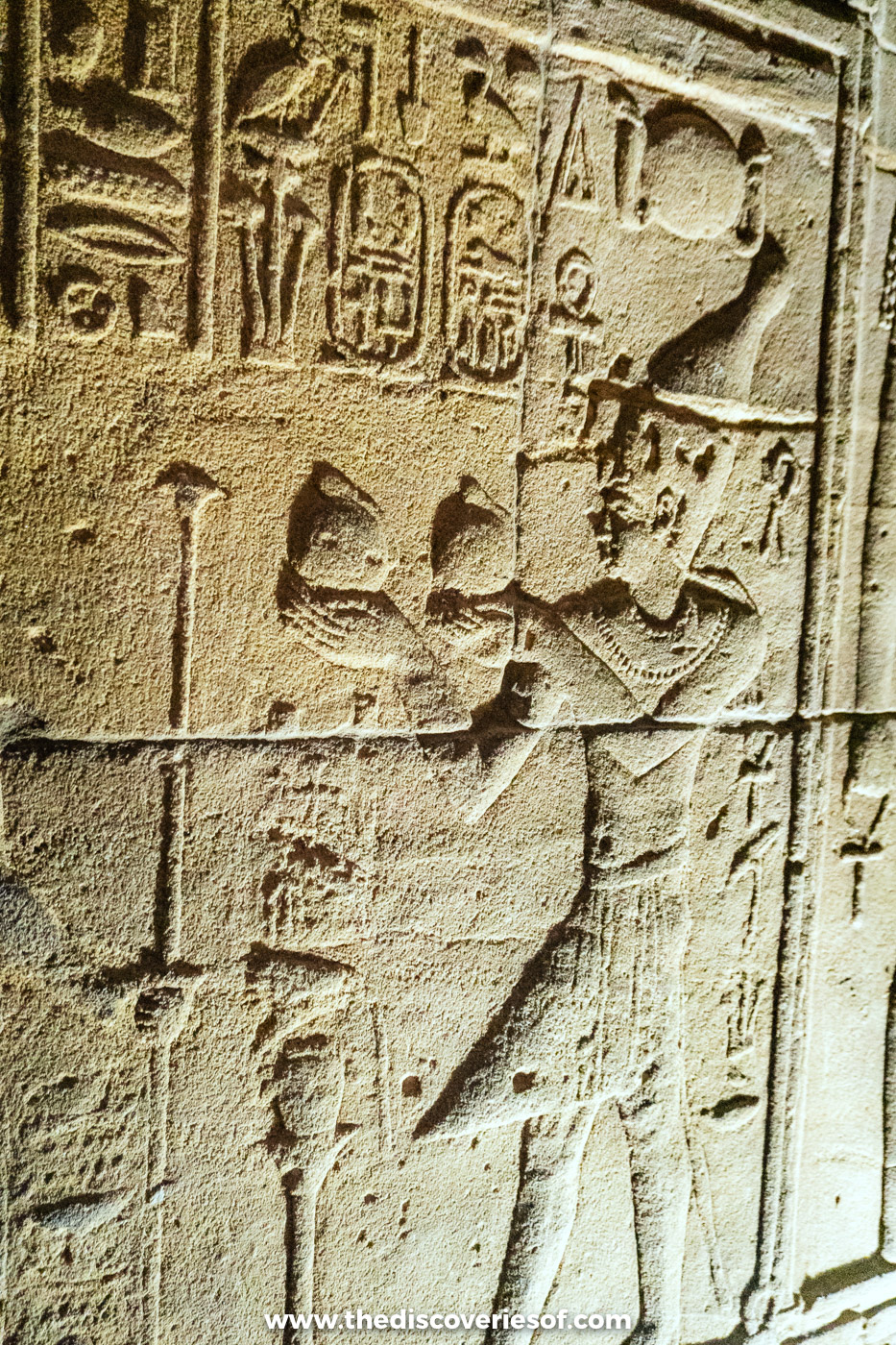
Remember those Coptic crosses carved into the walls of the main temple? They weren’t a mistake. The island held out as a centre of the old religion long after the rest of Egypt had become Christian, with the worship of Isis carrying on until it was officially ended in AD 537, under the Byzantine emperor Justinian.
After that, Christians turned the Temple of Isis into a church dedicated to St Stephen, along with four other temples on the island, and built two new churches on its northern side. Some of the reliefs were chiselled away, and crosses were carved alongside the hieroglyphs.
One of its obelisks is in Dorset
A pair of obelisks once stood in front of the first pylon of the Temple of Isis. The English explorer William John Bankes acquired one of them in 1815, along with a large piece of its broken twin, and Giovanni Belzoni arranged for it to be shipped down the Nile. It reached London in 1821, the first Egyptian obelisk brought to Britain, and was set up in the gardens of Bankes’s home at Kingston Lacy in Dorset in 1830, where it still stands today.
It’s more important than it looks: its inscriptions, in Greek and hieroglyphs, helped Jean-François Champollion confirm how to read the name Cleopatra, a key step in deciphering hieroglyphs.
It’s part of a UNESCO World Heritage Site
The temples are part of the Nubian Monuments from Abu Simbel to Philae, a UNESCO World Heritage Site inscribed in 1979, the year before the rebuilt temple reopened.
Planning your visit to Philae Temple
Seeing it on a tour
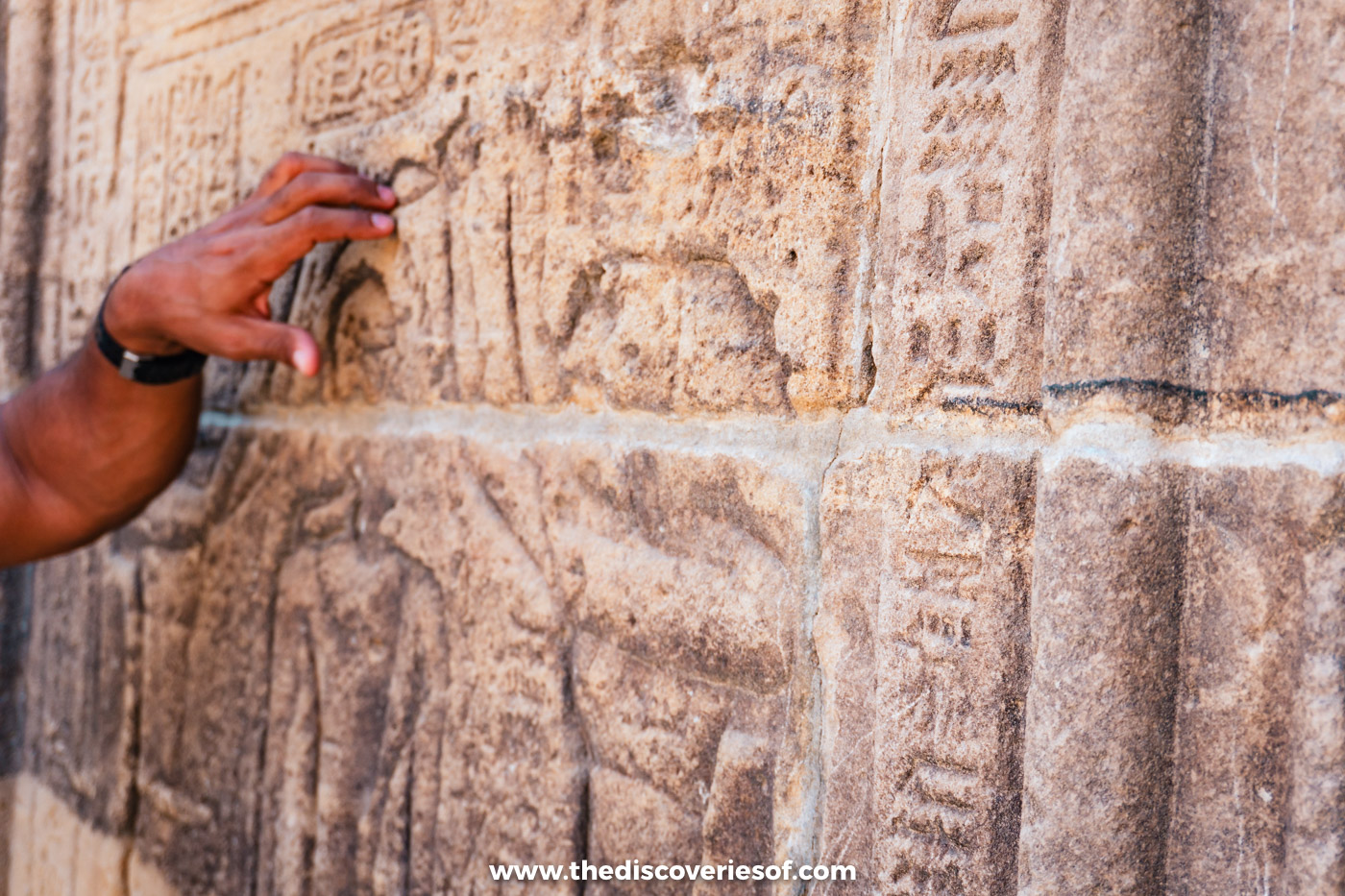
Take one of these guided tours to see the majestic ruins and understand how Egyptian mythology shaped the lives of the people who worshipped here. A guide makes a real difference, as the reliefs are so dense.
- This guided half-day tour of Philae includes the boat, a guide and hotel transfers.
- A private tour of the High Dam, the Unfinished Obelisk and Philae is a great way to learn about the history of these fascinating sights in one morning.
- If you’re cruising between Luxor and Aswan, most Nile cruises include a visit to Philae in their Aswan day.
Visiting independently
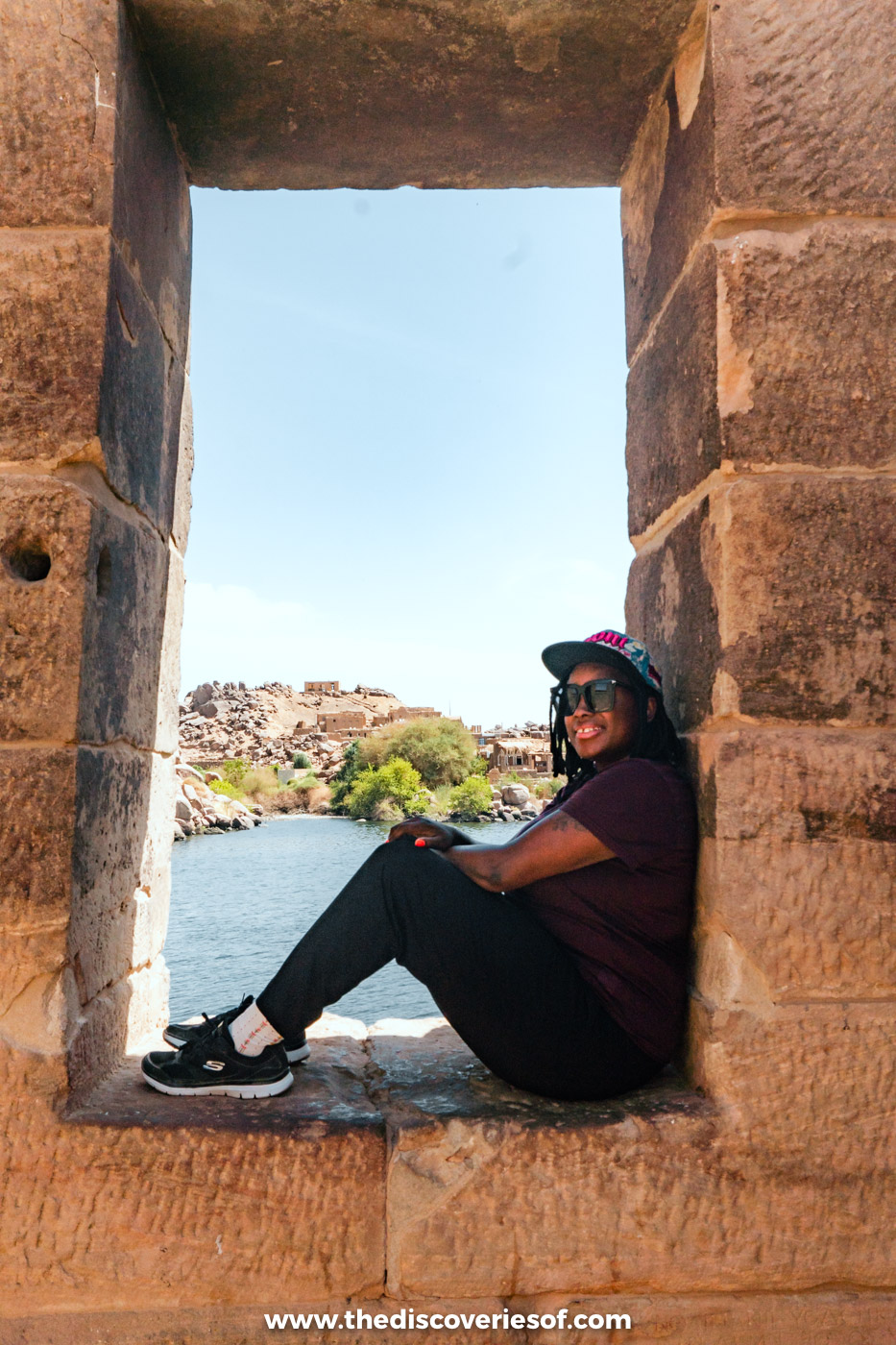
While a guided tour takes care of all the nooks and crannies, travelling independently gives you free rein to experience all of Aswan’s unmissable attractions at your own pace.
Take a taxi (or a ride-hailing car) to the Philae marina at Shellal, about 20 minutes south of the city centre. Buy your temple ticket at the ticket office, then pick a motorboat from the jetty. You’ll be quoted for the round trip, and opening prices can be several times what’s reasonable, so agree the fare and how long the boat will wait before you set off, and pay at the end. Ask your hotel what to expect first.
To reach Aswan in the first place, you’ve got a few options:
By air
The fastest way to arrive is to fly from Cairo, which takes about an hour and 20 minutes. There are few direct flights between Luxor and Aswan, so from Luxor you’re better off on the train or road. Check Skyscanner for the best prices.
By rail
The cheapest way is by train. From Luxor, it’s about three hours. From Cairo, you can take the overnight sleeper train, which is what I did. Tourists have to board at Giza station, not Cairo, so triple check before you book.
By road or by boat
A private car or taxi from Luxor takes three to four hours, often with a stop at Kom Ombo or Edfu on the way. Or come by river: Nile cruises run between Luxor and Aswan, and I travelled the other way, sailing north from Aswan on an overnight felucca.
Tickets and opening hours
Tickets cost 550 EGP for adults and 275 EGP for students, and the ticket office takes cards. You’ll need cash for the boat. The temple opens daily at 7am, and closing time varies with the season, from around 3pm to 5pm, so plan to go in the morning.
Address: Agilkia Island, Aswan, Egypt (boats leave from the Philae marina at Shellal)
The sound and light show
This is one of the few temples in Egypt you can visit after dark. The sound and light show runs most evenings, when the temple is lit up and the story of Isis and Osiris is told as you walk through it. Reviews of the show are mixed, so go for the atmosphere rather than the script, and check the language of the performance before you book.
Tips for visiting
- Go early: the island has little shade, and Aswan is hot. I went in early June, and there were points on the trip where I was so hot I didn’t know what to do with myself. Arrive at opening time and you’ll also beat the cruise groups.
- Agree the boat fare first: settle the price, and how long the boat will wait, before you get on, and pay at the end.
- Bring a card and cash: card for the ticket office, small notes for the boat, toilets and tips.
- Walk the whole island: most visitors stop at the Temple of Isis, but the Kiosk of Trajan, Hadrian’s Gate and the views from the island’s edge are just as memorable.
- Combine it: the Unfinished Obelisk and the High Dam are on the way back to town, so many visitors see all three in one morning.
Watch my Aswan video
Subscribe on YouTube and discover new destinations.
Map
Read next
- Things to do in Aswan: temples, Nubian culture and the Nile
- Abu Simbel temples: is the early start worth it?
- The Great Temple of Ramses II at Abu Simbel
- The most incredible ancient Egyptian temples
- The ultimate Egypt itinerary
- What to do in Egypt: a bucket list
- Egypt travel guide
- What to wear in Egypt
- Why you really should take a Nile cruise from Aswan to Luxor
Love this? Save and share on Pinterest

Discover the top things to do, insider tips and hidden gems in our Egypt Travel Guide.
Read the guides →




