

There are no pews. The floor is scattered with pine needles, the air is thick with copal smoke and thousands of candles flicker along the walls, while families kneel on the ground praying aloud in Tzotzil. Even though I’ve travelled pretty extensively, the Iglesia de San Juan in Chamula has to be one of the most memorable and certainly most unique things I’ve seen on the road.
Chamula is a small Tzotzil Maya town about 15 minutes’ drive from San Cristóbal de las Casas, and its church was the most memorable stop of my time in Chiapas on my Mexico road trip. You can’t take photos inside, so this is a guide to what you’ll see, what it means and how to visit respectfully.
What is San Juan Chamula?
San Juan Chamula is the religious and economic heart of the Tzotzil Maya, one of the main indigenous groups of the Chiapas highlands. It’s a fiercely independent community that has held onto its traditions with remarkable determination, and it runs its own affairs to a degree that’s unusual even in Chiapas.
The town’s patron saint is John the Baptist, and here he’s revered above Jesus Christ. His feast in late June is the biggest event of the year, along with Carnival in the days before Lent.
Inside the Iglesia de San Juan
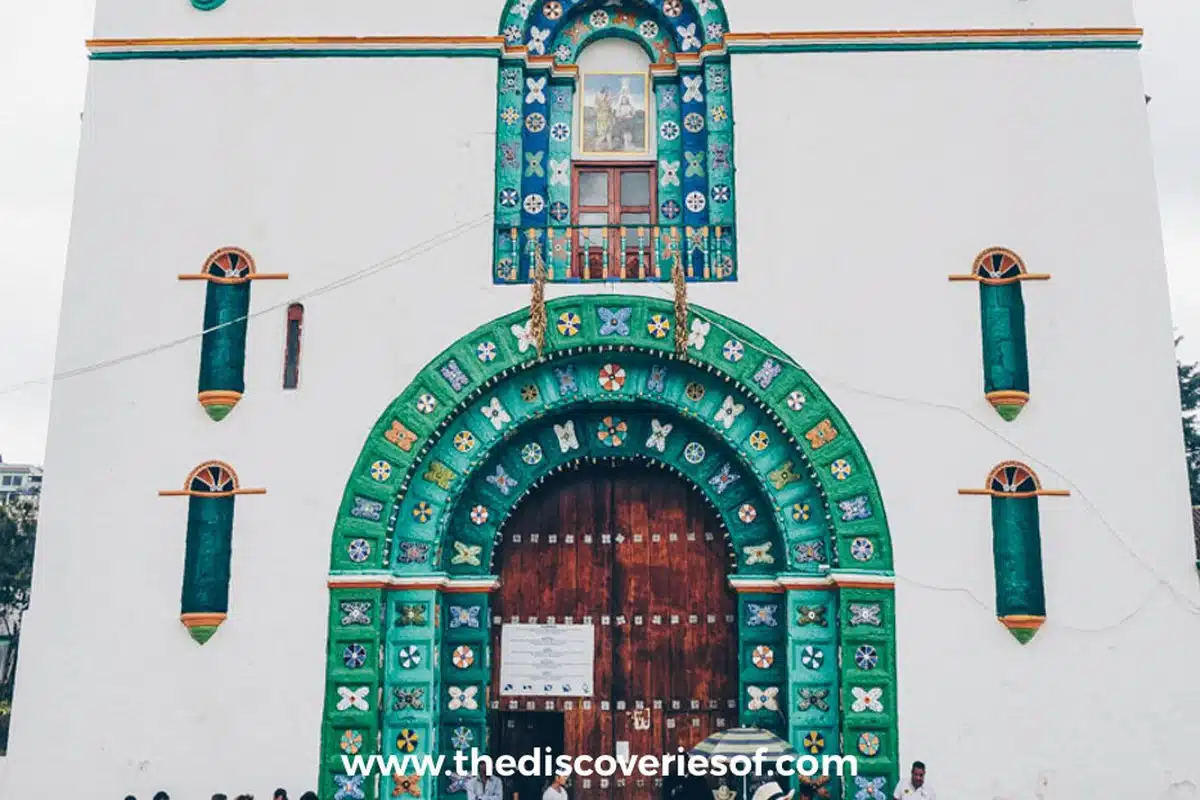
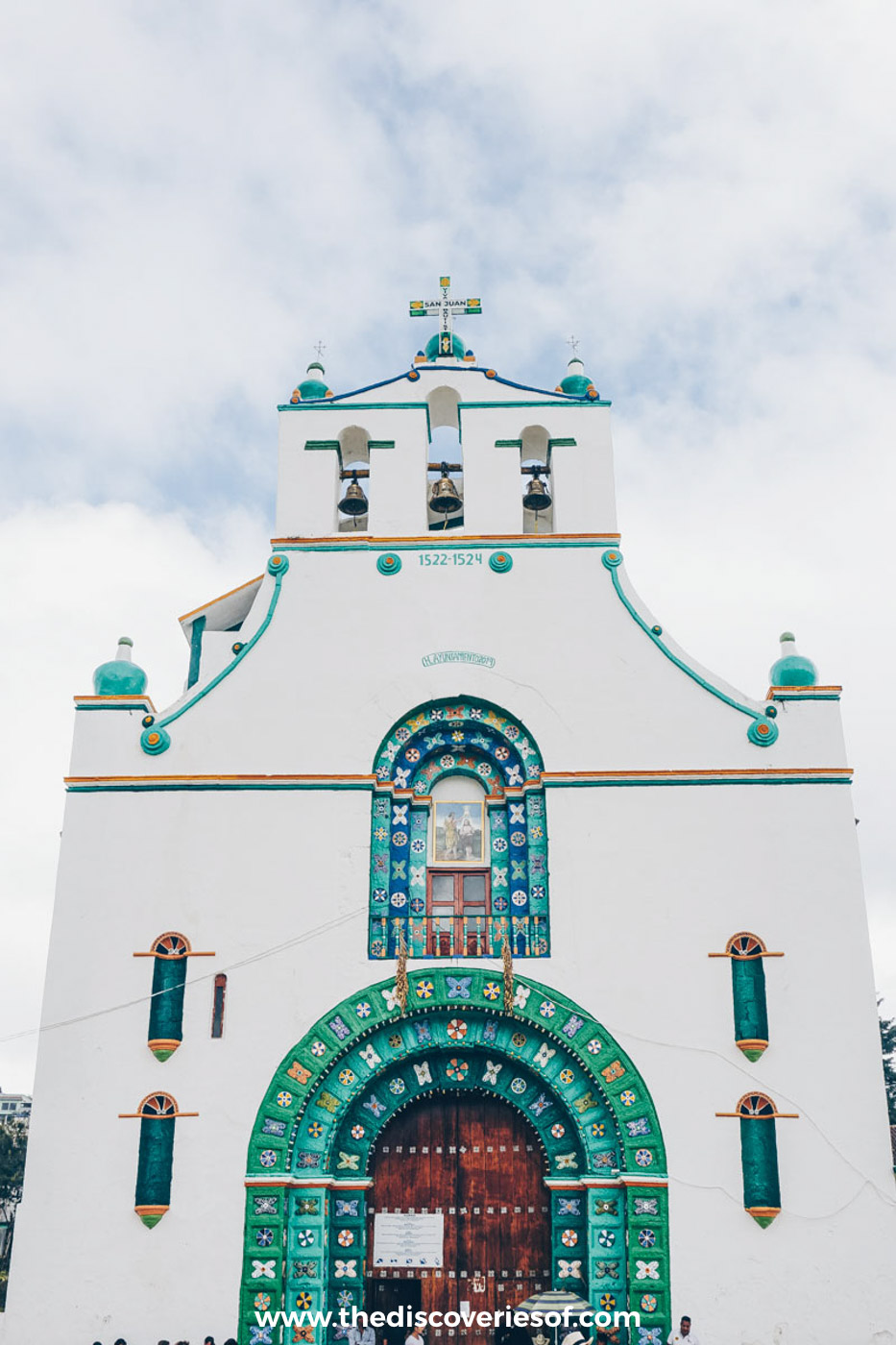
From the outside, the church looks like a fairly ordinary whitewashed building, with a green and blue painted doorway. But the moment you pay the entrance fee and walk in, it’s clear this is going to be different.
A fug of copal incense hangs in the air, mixed with the smoke of thousands upon thousands of candles lining the walls and the floor. Locals sit on the floor, which is scattered with fresh pine needles, praying around small clusters of candles. There are no pews and no regular mass. Statues of saints line the walls in glass cases, many with small mirrors around their necks.
Families drink pox, the local cane spirit, and fizzy drinks in order to burp and bring out evil spirits from the body. Healers, known as curanderos, guide the rituals, sometimes passing eggs over a person to absorb illness and, on occasion, sacrificing a chicken. It’s a genuine, living fusion of Catholicism and ancient Maya belief, and watching it unfold is utterly mesmerising.
Top Tip
Taking photos inside is strictly forbidden, so keep your phone away once you step through the door. Cameras are confiscated, and visitors who photograph people in Chamula can be fined.
How to visit the church in Chamula
- Buy your ticket first: entry to the church is around 25 to 35 pesos, paid at the tourist office on the square before you go in.
- Take off your hat: and dress modestly, with your shoulders and knees covered.
- Move quietly and give people space: you’re walking through people’s prayers, so don’t step over the candles or stand over the families on the floor.
- No photos inside: and ask before photographing anyone outside. Many Chamulans don’t want to be photographed at all, and that includes children.
- Go with a guide if you can: without someone to explain the customs and rituals, much of what you see is impossible to understand.
Do
To have the rituals explained as you go, this guided tour of Chamula and Zinacantán covers both villages in a morning from San Cristóbal.
The market and the cemetery
The square in front of the church holds a daily market, busiest on Sundays, when families come in from the surrounding hamlets to buy and sell vegetables, textiles and household goods. It’s the best day to visit for atmosphere, though the church is busier too.
At the edge of town, the cemetery is worth a short walk. Its graves are marked with simple wooden crosses painted in black, white and green, and the roofless ruins of an older church stand in the middle of it.
Zinacantán, next door
Most visits to Chamula carry on to Zinacantán, a Tzotzil village a short drive away and a gentler counterpart to Chamula. The valley around it is covered in greenhouses, and flowers are everywhere: embroidered on the purple and blue clothing the villagers wear, and heaped around the altars of the Iglesia de San Lorenzo. Many visits include a stop at a family home to watch women weaving on backstrap looms. Photography inside the church is forbidden here too.
When to visit Chamula
- Sundays: for the market, when the town is at its busiest.
- Carnival: the five days before Ash Wednesday, in February or March, with processions and runners carrying flags through the smoke.
- The fiesta of San Juan: around 22 to 25 June, the biggest celebration of the year.
- Mornings: whatever the day, go in daylight and head back to San Cristóbal before dark.
How to get to Chamula from San Cristóbal
Chamula is about 10km northwest of San Cristóbal de las Casas.
- By colectivo: shared vans leave from the streets around the Mercado José Castillo Tielemans when they’re full, and cost around 15 to 20 pesos each way. The ride takes 20 to 35 minutes.
- By taxi: around 120 to 150 pesos each way, about 15 minutes.
- On a tour: half-day tours from San Cristóbal cover Chamula and Zinacantán, with a guide to explain what you’re seeing.
Map
Read next
- Things to do in San Cristóbal de las Casas, and the church you won’t forget in a hurry
- 2 weeks in Mexico: the perfect road trip itinerary
- Swim, eat and dance your way through the 38 best things to do in Mexico
- 34 famous landmarks in Mexico that are worth crossing the country for
Love this? Save and share on Pinterest

Discover the top things to do, insider tips and hidden gems in our Mexico Travel Guide.
Read the guides →




