Diego Rivera painted his country’s history on its walls, and Mexico City is where most of those walls are. The murals inside the Palacio Nacional were one of the highlights of my time in the city, and the Palacio de Bellas Artes, where his most political work hangs, is my favourite spot in Mexico City. Between them, and a few more buildings in the historic centre, they hold most of his greatest work.

Frida Kahlo is probably the most famous artist in Mexico, but Rivera is a very close second, and his murals are free or cheap to see. This guide covers which Diego Rivera murals to see and where, the opening hours, entry and ID rules for each building, and a walking route that strings them together in a day.
Diego Rivera’s most famous murals (and where they are)
These are the Diego Rivera mural names worth knowing before you go, starting with the ones you can see in Mexico City:
- Epopeya del pueblo mexicano (The Epic of the Mexican People, often called the History of Mexico): the main staircase of the Palacio Nacional, painted from 1929 to 1935.
- La gran Tenochtitlán: his vision of the Aztec capital’s market, along the first-floor corridor of the Palacio Nacional.
- El hombre controlador del universo (Man, Controller of the Universe): the Palacio de Bellas Artes, painted in 1934.
- Sueño de una tarde dominical en la Alameda Central (Dream of a Sunday Afternoon in the Alameda Central): the Museo Mural Diego Rivera, painted in 1947.
- The Ballad of the Revolution and the Labour and Festivals courtyards: the old Ministry of Public Education building, now the Museo Vivo del Muralismo.
- La Creación (Creation): his first mural, in the Antiguo Colegio de San Ildefonso.
Outside Mexico City, his best-known works are the Detroit Industry Murals at the Detroit Institute of Arts and Pan American Unity in San Francisco.
The Palacio Nacional: the History of Mexico

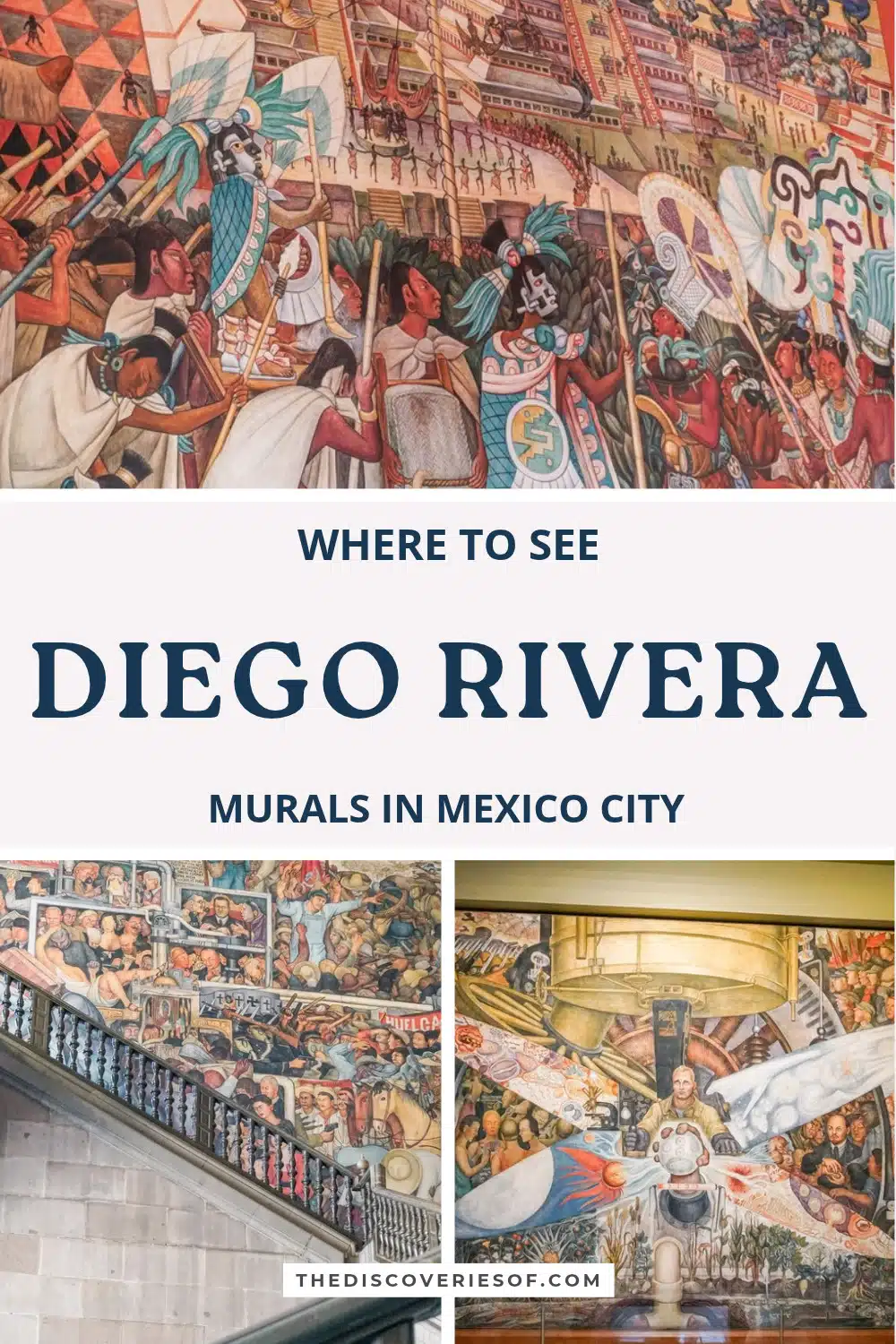
The murals inside the Palacio Nacional, on the east side of the Zócalo, were one of the highlights of my time in Mexico City. This is Rivera at his most ambitious. The Epopeya del pueblo mexicano fills the walls of the main staircase, a sweeping depiction of Mexican history from the ancient civilisations through the Spanish conquest and the colonial period to the Revolution and the state that followed it. Each section is filled with extraordinary symbolism and detail, and it’s an absolute must.
Stand at the foot of the stairs and the central wall reads as the conquest and its aftermath, a crush of armour, horses and faces. The left-hand wall goes back to the pre-Hispanic world, and the right-hand wall pushes forward into Rivera’s own century, with industrialists, workers and a hopeful, Marxist vision of the future. Look for the eagle on a cactus, the founding symbol of Tenochtitlán, at the heart of it all.
Rivera then carried on along the first-floor corridor, painting a further series of panels until 1951. These celebrate the cultures that came before the Spanish, from the Zapotec and Mixtec to the Totonac and Huastec.

Don’t miss La gran Tenochtitlán, his reconstruction of the great market at Tlatelolco, with traders, feather workers and the lake city stretching away behind them to the volcanoes. On the right-hand staircase wall, look out too for Frida Kahlo and her sister Cristina, painted as teachers.
Tickets
Palacio Nacional visits are free and guided only, Tuesday to Sunday. You register in person from 10am at the Hacienda art museum at Moneda 4, just round the corner, then join a tour (the official schedule lists English-language tours at 10.30am and 3.30pm, with more in Spanish through the day). Anyone over 18 needs official photo ID, so bring your passport. Bags, hats, sunglasses and drinks go into the cloakroom.
Top Tip
The palace is the seat of government and tours can be suspended without notice for official events. Make it your first stop of the day, and if it’s closed, head straight to the Museo Vivo del Muralismo a few blocks north.
The Palacio de Bellas Artes: Man, Controller of the Universe
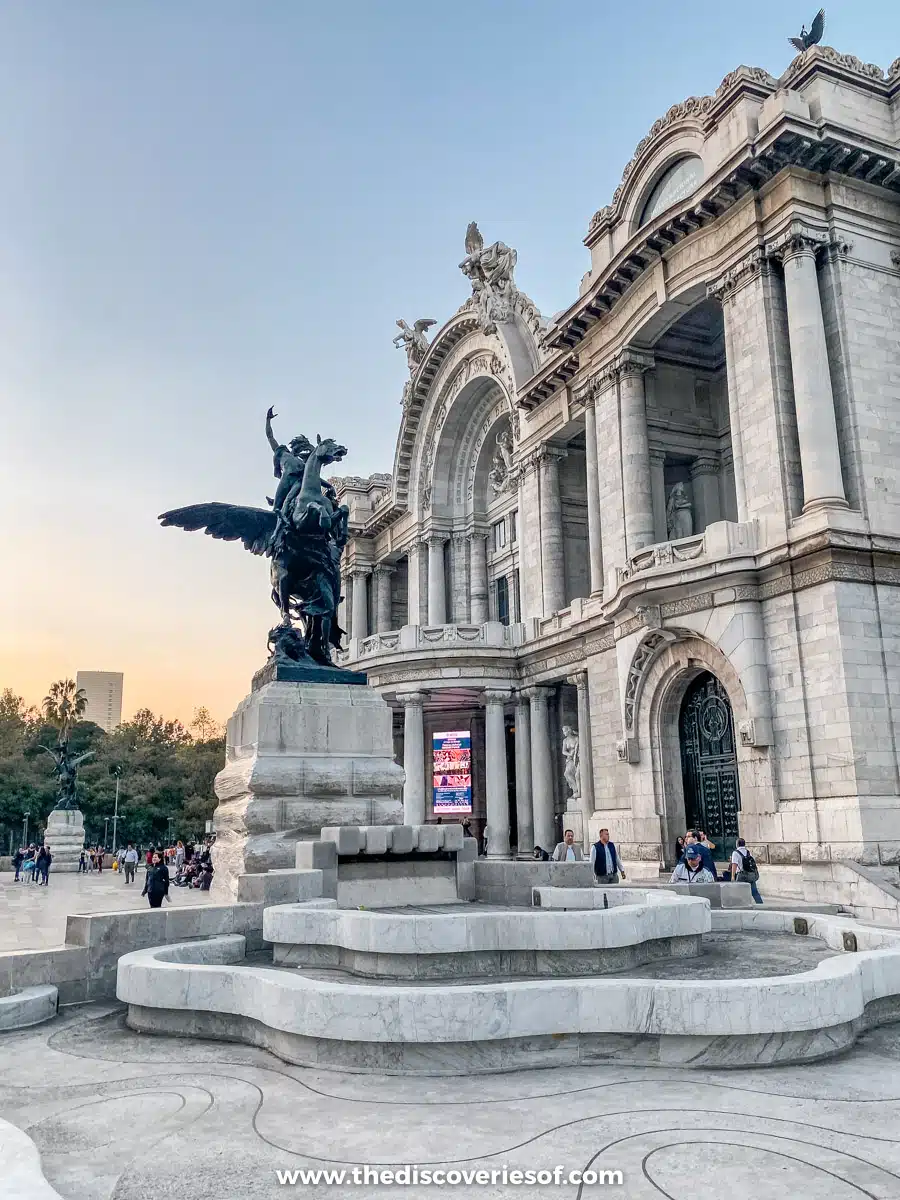
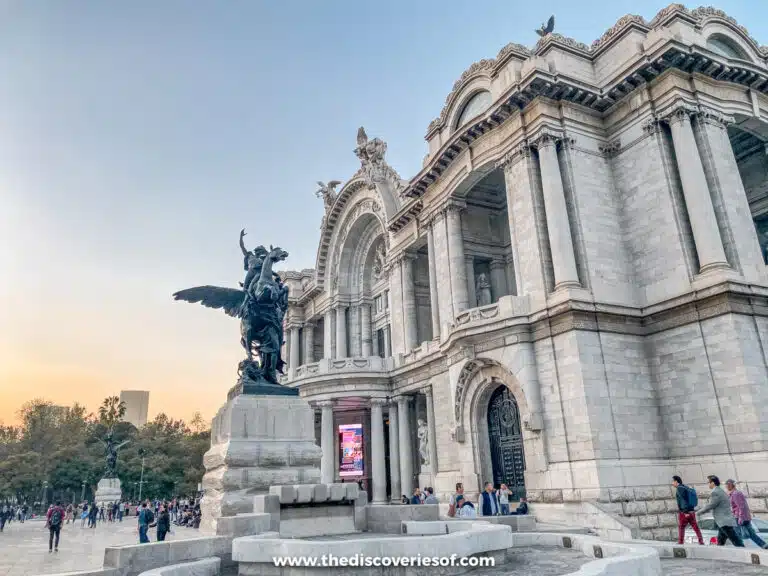
The Palacio de Bellas Artes is my favourite spot in Mexico City: an Art Nouveau palace of white marble outside and a breathtaking Art Deco interior that shows off some of the finest mural work in the world. Its upper floors hold 17 murals, by Rivera, David Alfaro Siqueiros, José Clemente Orozco, Rufino Tamayo and others, and they’re jaw-dropping.

My personal favourite is Rivera’s El hombre controlador del universo (Man, Controller of the Universe), a vast and politically charged mural on the third floor. Rivera first painted it for the Rockefeller Center in New York in 1933, as Man at the Crossroads. When he refused to remove a portrait of Lenin, it was covered up and then destroyed before it was finished, and he recreated it here in 1934. A worker at the controls sits at the centre, with capitalism on one side, socialism on the other and the universe opening out above. It’s worth standing in front of it for a while.
Close by is his Carnaval de la vida mexicana (Carnival of Mexican Life), four panels of masks, dancers and political satire painted in 1936 and moved here in 1963. On the same floors, look for Orozco’s Katharsis and Siqueiros’s Nueva democracia, with its woman breaking free of her chains.
Tickets
The museum is open Tuesday to Sunday, 10am to 6pm. Entry to the murals and exhibitions is 90 pesos (2026), and Sundays are free for everyone, so expect crowds then. You can look around the lobby for free.
The Museo Vivo del Muralismo: Rivera’s biggest cycle
If the Palacio Nacional is closed on the day you visit, or you simply want more, walk a few blocks north to the old headquarters of the Ministry of Public Education (SEP) on República de Argentina. Rivera covered its two courtyards in the 1920s, three floors of well over a hundred panels showing village festivals, miners and farm workers, and the Revolution. It’s the largest group of his murals anywhere.
Look on the top floor for the Ballad of the Revolution, where Frida Kahlo, in a red shirt, hands out rifles in the panel known as En el arsenal. Orozco, Siqueiros and other muralists, including women such as Aurora Reyes, are on the walls too. The building opened as the Museo Vivo del Muralismo in 2024, and it’s usually far quieter than the Palacio Nacional.
Tickets
The Museo Vivo del Muralismo is free. It’s open Wednesday to Monday, 10am to 6pm, and closed on Tuesdays. The entrance is at República de Argentina 28.
The Museo Mural Diego Rivera: Dream of a Sunday Afternoon
On the western edge of the Alameda Central, a small museum exists for a single painting. Sueño de una tarde dominical en la Alameda Central (Dream of a Sunday Afternoon in the Alameda Central) is a sprawling, satirical panorama of Mexican history, populated by hundreds of historical figures strolling through the park, from Hernán Cortés and Benito Juárez to Porfirio Díaz and the revolutionaries who toppled him.
Look in the centre for Rivera himself, painted as a boy holding the hand of La Catrina, the elegant skeleton who has become a symbol of the Day of the Dead, with Frida Kahlo standing behind him. Rivera painted it in 1947 for the dining room of the Hotel del Prado. One of its figures originally held up a sign reading “Dios no existe” (God does not exist), and the uproar kept the mural hidden from view until Rivera painted the words out in 1956. It survived the 1985 earthquake that wrecked the hotel and was moved in one piece to this purpose-built museum across the park.
Tickets
The Museo Mural Diego Rivera is open Tuesday to Sunday, 10am to 6pm. There’s a small entry fee, it’s free on Sundays, and students, teachers and seniors get in free with ID. It’s on the corner of Balderas and Colón, a short walk from Metro Hidalgo.
More Rivera in Mexico City
- Antiguo Colegio de San Ildefonso: Rivera’s first mural, La Creación (1922 to 1923), is in the Anfiteatro Simón Bolívar of this old Jesuit college, a block from the SEP. The amphitheatre isn’t always open to visitors, but the courtyards are lined with Orozco’s murals, which are reason enough to go.
- Museo Anahuacalli: Rivera’s volcanic-stone temple to pre-Hispanic art in Coyoacán, built to hold his collection of ancient sculpture. It’s open Tuesday to Sunday from 11am to 5.30pm, and it’s free if you add it to a Frida Kahlo Museum ticket.
- The Frida Kahlo Museum: the Casa Azul, where Rivera lived with Kahlo on and off, still has his bedroom, his clothes and his collection of pre-Hispanic sculpture in the garden. Read my guide to visiting the Frida Kahlo Museum.
A walking route to see Diego Rivera’s murals in a day
All four of the big sites are in the historic centre, within about a 30 minute walk of each other. Go Wednesday to Sunday: the Palacio Nacional, Bellas Artes and the Museo Mural are closed on Mondays, and the Museo Vivo del Muralismo is closed on Tuesdays.
- 10am, Palacio Nacional: register at Moneda 4 and take the first tour you can. Allow about two hours with the registration and the queue.
- 12.30pm, Museo Vivo del Muralismo: a five minute walk north along República de Argentina. Allow an hour.
- 2pm, lunch in the Centro: then walk west along the pedestrian Calle Madero to the Alameda, about 15 minutes.
- 3.30pm, Palacio de Bellas Artes: head straight up to the third floor. Allow an hour.
- 5pm, Museo Mural Diego Rivera: across the Alameda, about ten minutes on foot. Allow 45 minutes, and get there before the 6pm close.
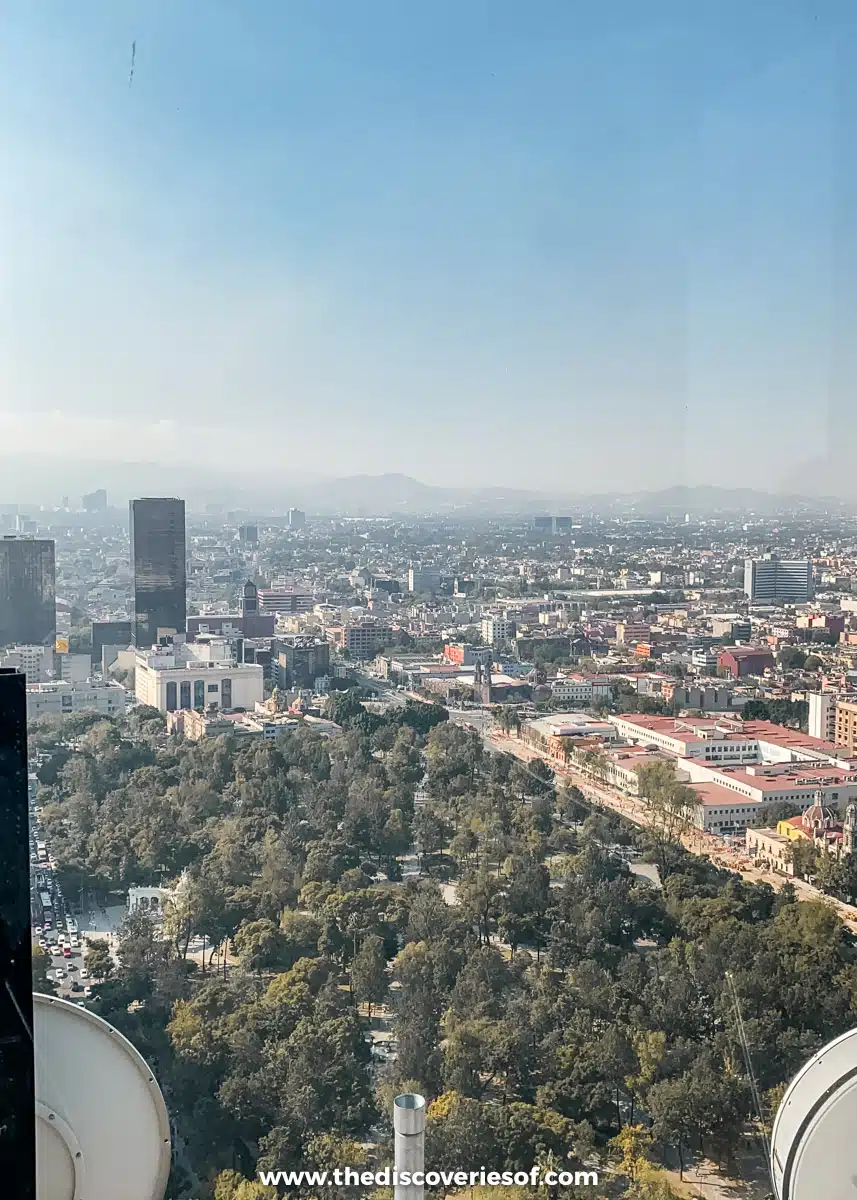
- Sunset, Torre Latinoamericana: finish with a drink high above the city on the 41st floor, looking down over the Alameda and the dome of Bellas Artes.
Tips for seeing Diego Rivera murals
- Carry your passport: the Palacio Nacional checks ID at the door.
- Look up and look closely: the murals are crowded with portraits, so spot the famous faces (Kahlo turns up in at least three).
- Use Sundays carefully: Bellas Artes and the Museo Mural are free, but busier.
- Take the English tour if you can: Palacio Nacional visits are guided anyway, and a little history goes a long way with the SEP cycle too.
- Don’t try to see everything in one go: if you have three days, split the Centro sites across two mornings.
Map
Read next
- Visiting the Frida Kahlo Museum, the blue house that still feels lived in
- 23 things to do in Mexico City, from murals to tacos
- 3 days in Mexico City: the perfect Mexico City itinerary
- Pujol review: ants, a years-old mole and Mexico City’s hardest table
- 34 famous landmarks in Mexico that are worth crossing the country for
- 2 weeks in Mexico: the perfect road trip itinerary
Love this? Save and share on Pinterest

Discover the top things to do, insider tips and hidden gems in our Mexico Travel Guide.
Read the guides →