

Chicatana ants on smoking baby corn, a mole that has been reheated and fed every day for years, and a table most people book months ahead. Here’s what a meal at Pujol in Mexico City is really like, what it costs and how to get in.
Pujol is a place I’d been hearing about for my whole trip around Mexico. When I was down in Tulum and when I was in Oaxaca, everyone kept talking about it, so by the time I reached Mexico City I had to see whether I could get a table.
Honestly, I’m never that sure whether restaurants are worth the hype. Chef Enrique Olvera opened Pujol in 2000, and over the years since it has built a reputation for marrying traditional Mexican recipes with an avant-garde approach to cooking. It now holds two Michelin stars and has been a fixture on the World’s 50 Best Restaurants list for years. That’s a lot to live up to over one lunch.
This review covers how I got a table, what I ate, the dish everyone talks about, what it costs today and who I think it suits.
Quick verdict
If you want to understand Mexican flavours in a high-end setting, this is the place to do it. The cooking is adventurous (ants, aged moles and grasshoppers all turn up), the mole madre is unlike anything else you’ll taste in the city, and the service is relaxed rather than stuffy. It isn’t the place for an unadventurous eater, and it’s a splurge by any measure.
How I got a table at Pujol
Normally Pujol is booked up months in advance. I hadn’t planned that far ahead, so on the day I just had a little look to see if there were any tables available. There were some for lunch, and I nabbed one. The staff told me it’s really, really rare to be able to do that, so don’t count on it.
Booking now works differently from when I went. Reservations are made through the restaurant’s own website rather than through the big booking platforms, and you’ll need to leave a deposit when you book. The restaurant calls to reconfirm a few days beforehand, and tables that aren’t reconfirmed can be released.
Top Tip
Aim to book two to three months ahead, especially for an evening table. If you’ve left it late, keep checking the website for cancellations.
What eating at Pujol is like
The dining room is in Polanco, the city’s smartest neighbourhood, in a low, modern building set around a garden. The menu changes with the seasons and is built around ingredients that have been part of Mexican cooking since long before the Spanish arrived, so expect a few surprises.
Street snacks to start
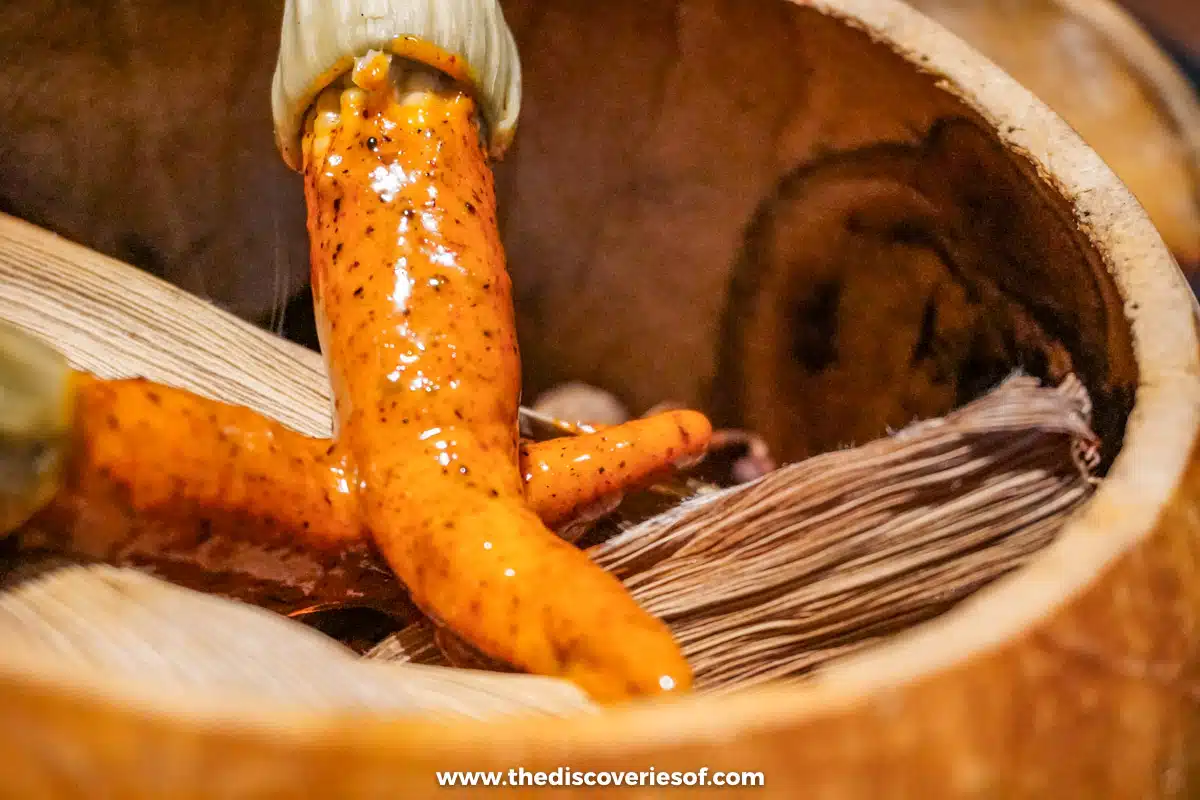
The meal opened with what the waitress called street snacks. First a sopecito, a little corn dough base topped with courgette, avocado and serrano chilli, to cleanse the palate. Then a roasted baby corn with coffee mayonnaise and chicatana ants, served in a hollowed-out gourd that was still smoking.
I’d never tried ants before, so this was the time. They were good.
The mole madre
Of everything Pujol is known for, the mole is the most famous, and it lived up to it. It arrives as a mole tasting: two moles on one plate, one circle inside another.
The darker ring on the outside is the mole madre, the mother mole. When I ate there, the kitchen had been reheating and feeding it with new ingredients every day for over five years, and it’s still going. Alongside the usual chillies, peanuts and chocolate, it has ingredients you rarely see in a mole, such as plantain, peaches and molasses. The circle in the centre is a mole coloradito, one of the seven traditional moles of Oaxaca, made fresh each day. It’s sweet and spicy.
The waitress explained why the kitchen keeps one going: in Mexico, everything gets celebrated with mole, from births to weddings, there are usually leftovers, and the saying is that mole tastes better reheated than on the day it was made.
You’re encouraged to try each one on its own with a spoon first, then with the warm blue corn tortillas, pressed with a hoja santa leaf, that come alongside. The flavour changes completely. After that there’s no proper way to eat it, so mix them as you like. The complexity of that older mole was just mind-blowing.
Top Tip
Taste the two moles separately before you mix them. The contrast between the fresh coloradito and the years-old mole madre is the whole point of the dish.
A peek into the kitchen
I was super excited to get to take a peek at the kitchen, and it was so much more chilled out than I expected. This is where the mole madre gets its daily reheat.

The rest of the meal
The courses that followed included delicate seafood, bright plates of leaves and herbs, and smoky dishes cooked over fire and served on a leaf. Because the menu changes with the seasons, you won’t get the exact plates I had, but the style is the same: familiar Mexican flavours, presented in a way you won’t have seen before.


Dessert was a coil of churro.

What I loved
- The mole madre. Tasting a sauce that has been reheated and fed every day for years, next to one made that morning, is unforgettable.
- The adventure. Ants, aged moles and grasshoppers all have a place on the menu. It’s a brilliant introduction to pre-Hispanic ingredients if you’re curious.
- How relaxed it is. For a two-Michelin-star restaurant, the kitchen was far more chilled out than I expected.
- The chef. Enrique Olvera is one of Mexico’s best-known chefs for good reason: this is cooking at the absolute top of its game.
The catches
- The price. Even by Mexico City’s high-end standards, it’s a big bill once you add drinks and tip.
- Getting a table. Unless you’re lucky like I was, you’ll need to plan months ahead and reconfirm.
- It isn’t for picky eaters. If you’d rather not try ants or grasshoppers, you’ll miss part of the point.
- It takes time. Budget around three hours for lunch, so don’t plan a tight afternoon of sightseeing afterwards.
Menus, prices and practical information
When I went, the dining room offered two tasting menus, one built around corn (maíz) and one around the sea (mar), and my tip was to order one of each for the table so you could try every dish. Today the line-up is different:
- Tasting menu in the dining room: six courses, 3,595 pesos.
- Taco omakase at the bar: nine courses of tacos, 3,995 pesos.
- Drinks: not included. Wine and drink pairings are extra, as is the tip.
- Opening hours: Monday to Saturday, from about 1.30pm, with the last seating at 9.30pm. Closed on Sundays.
- Address: Tennyson 133, Polanco, Mexico City.
- Dress code: smart casual.
- Getting there: Polanco is a short taxi or Uber ride from Roma and Condesa.
Top Tip
Prices change with the menu, so check the current figure on Pujol’s website when you book, and budget for drinks and a tip on top.
Is Pujol worth it?
Yes, if you love food and want to understand it. I’m never really that sure about whether restaurants are worth the hype, but this one was fantastic. This is a chef at the absolute top of his game, and the complexity of the flavours, especially in that mole, was something I’d never seen before.
If you’re spending a few days in the city, it fits neatly into the first day of my 3-day Mexico City itinerary, after a morning at Chapultepec and the Anthropology Museum.
Watch my Pujol video
I loved Pujol so much that I made a whole video about eating there. Prepare for some serious food envy.
Read next
- 23 things to do in Mexico City, from murals to tacos
- 3 days in Mexico City: the perfect Mexico City itinerary
- Oaxaca food: what to eat in Mexico’s foodie paradise
- 2 weeks in Mexico: the perfect road trip itinerary
- Mexico travel guide
Love this? Save and share on Pinterest

Discover the top things to do, insider tips and hidden gems in our Mexico Travel Guide.
Read the guides →




