Goat barbacoa slow-cooked in a pit, chicken handed straight off the coals and a frothy drink that looks like nothing you’d ever order: an hour east of Oaxaca City, Tlacolula’s Sunday market is where the whole valley comes to shop and eat. Here’s what to eat, and how to get there.
Everyone tells you Oaxaca is Mexico’s food capital, and they’re right. But here’s the thing most visitors miss: the best meal you’ll eat there probably won’t be in a restaurant in the city. It’ll be on a plastic stool in a town an hour east, on a Sunday, surrounded by people who’ve driven in from the mountains to do their weekly shop.
That place is Tlacolula. And if you want to get to the actual heart of Oaxacan food culture, this is where you do it.
A market that isn’t for you (which is the whole point)
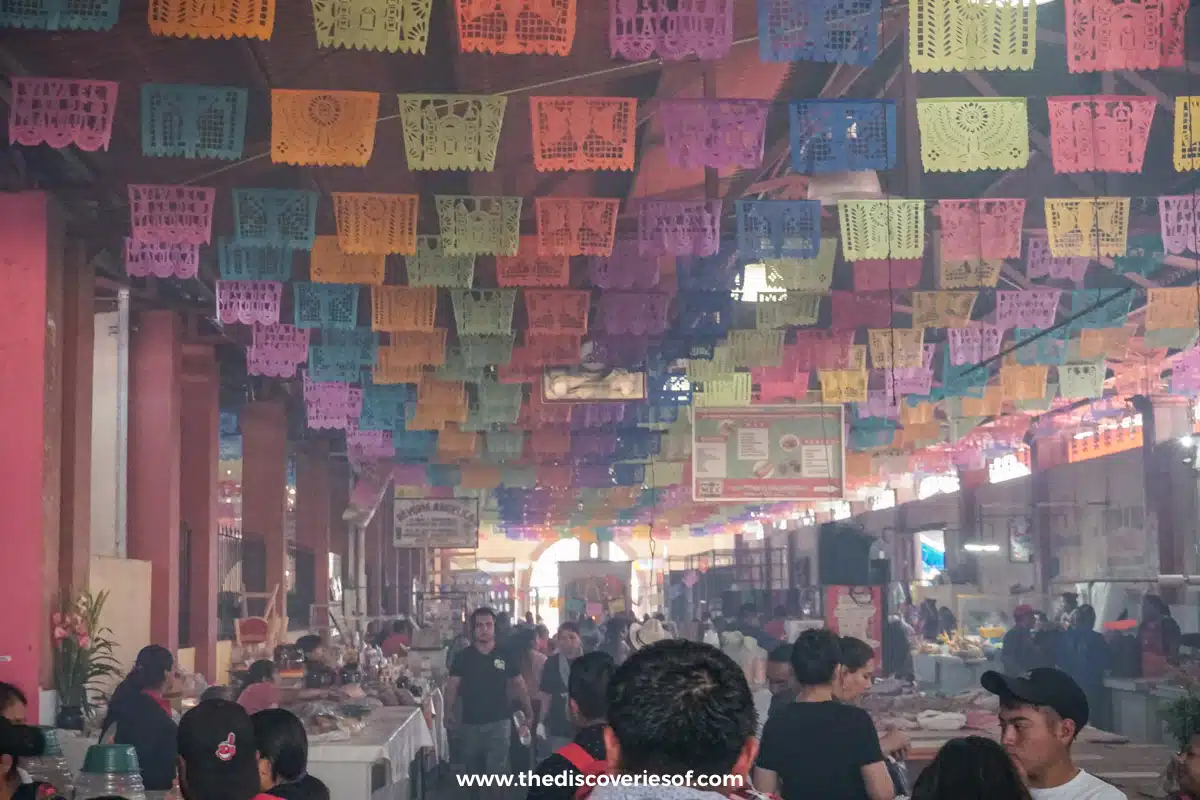

Let me set expectations, because this matters. Tlacolula’s Sunday market, the tianguis, is not a curated tourist experience. It’s one of the oldest continuously running markets in the Americas, and every Sunday people pour in from the surrounding Zapotec towns and villages to buy, sell, trade, eat, and catch up. They’re shopping for the week: the veg, the meat, the chiles, the cheese. You’re a guest at something that would happen, exactly like this, whether you showed up or not.
That’s precisely what makes it special. If you arrive expecting it to be arranged for visitors, you’ll misread the whole thing. Come understanding it’s real life first, and it’s one of the most alive places you’ll ever stand in.
The market has two halves. The covered market hall in the centre of town trades all week, with its butchers, bakers, cheese sellers and cooked-food stalls. On Sundays, the tianguis spills out of it, with stalls pitched under awnings along the streets around the church and the main square, selling everything from fruit, flowers and live turkeys to clay pots, hats, sarapes and hand-carved molcajetes.
I’d built it up in my head before I went. I’d heard so much about this market that, I’ll be honest, by the time I got there, I was hungry, and ready. Good call, as it turned out, because the moment you step in it’s full-on: people absolutely everywhere, in every direction, and it does not stop. I walked around for the better part of an hour and I’m fairly sure I saw a fraction of it.
The barbacoa is the reason you come
If Tlacolula is famous for one thing, it’s barbacoa de chivo: goat, slow-cooked the traditional way in an underground pit until it falls apart, and a genuine Sunday ritual here rather than anything resembling what “barbecue” means back home.
You follow the smoke and the smell to find it. It comes with consomé, the rich, deeply seasoned broth that runs off the meat as it cooks, plus a stack of handmade tortillas and fresh salsas to build it however you like. It’s the dish people across Oaxaca will point you towards when you ask where to eat barbacoa; the answer is almost always “go to Tlacolula on a Sunday.” A word of warning if you’re not used to goat or to seriously intense, spicy food: go in gently. A Sunday market an hour from your bed is not the place to find your limits the hard way.
The barbacoa stalls are family-run and gathered together in the market’s cooked-food section, each with its own big pot and long communal tables where you squeeze in next to whoever is already eating. Some stalls do lamb (borrego) as well as goat, so ask which is which before you order. Barbacoa is a breakfast and early lunch dish here, so go earlier rather than later.
But the chicken might steal the show
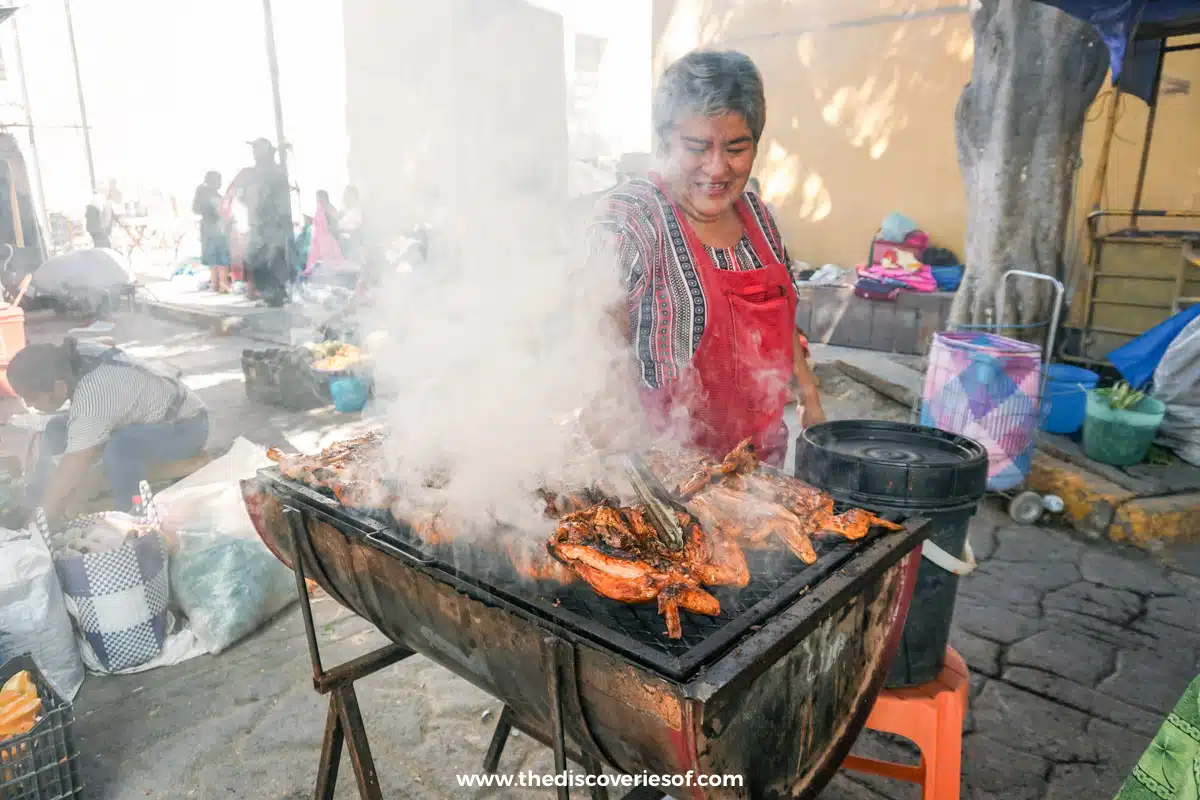
Here’s the surprise, though. My first stop wasn’t the barbacoa: it was a stall doing chicken straight off the grill, and honestly? It was some of the best chicken I have ever eaten. Anywhere. Fresh off the coals, handed over with salsa and tortillas, eaten on a small stool as I chatted to the stallholder’s husband in my broken Spanish.
That’s the joy of a market like this. You don’t plan it, you follow your nose, and the thing that floors you isn’t always the famous thing. Sometimes it’s a plate of grilled chicken from a stall whose name you never caught.
Follow the smoke to the carne asada aisle
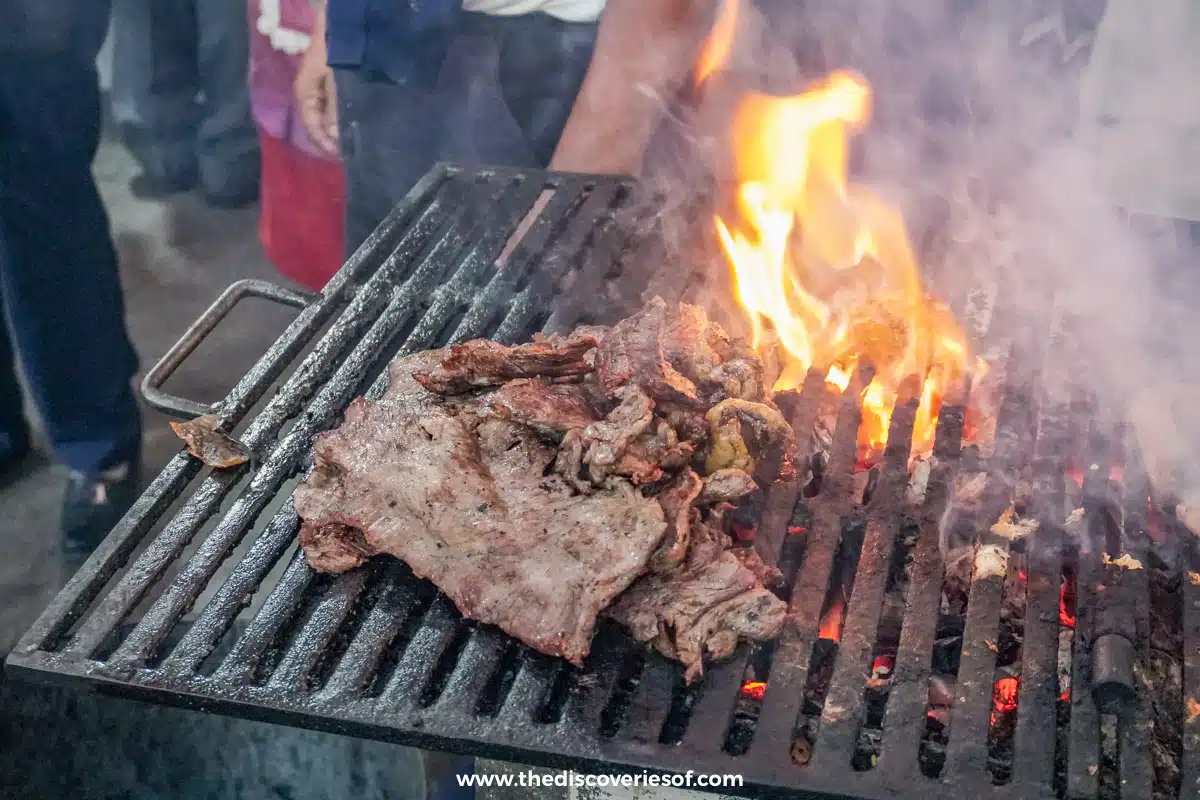
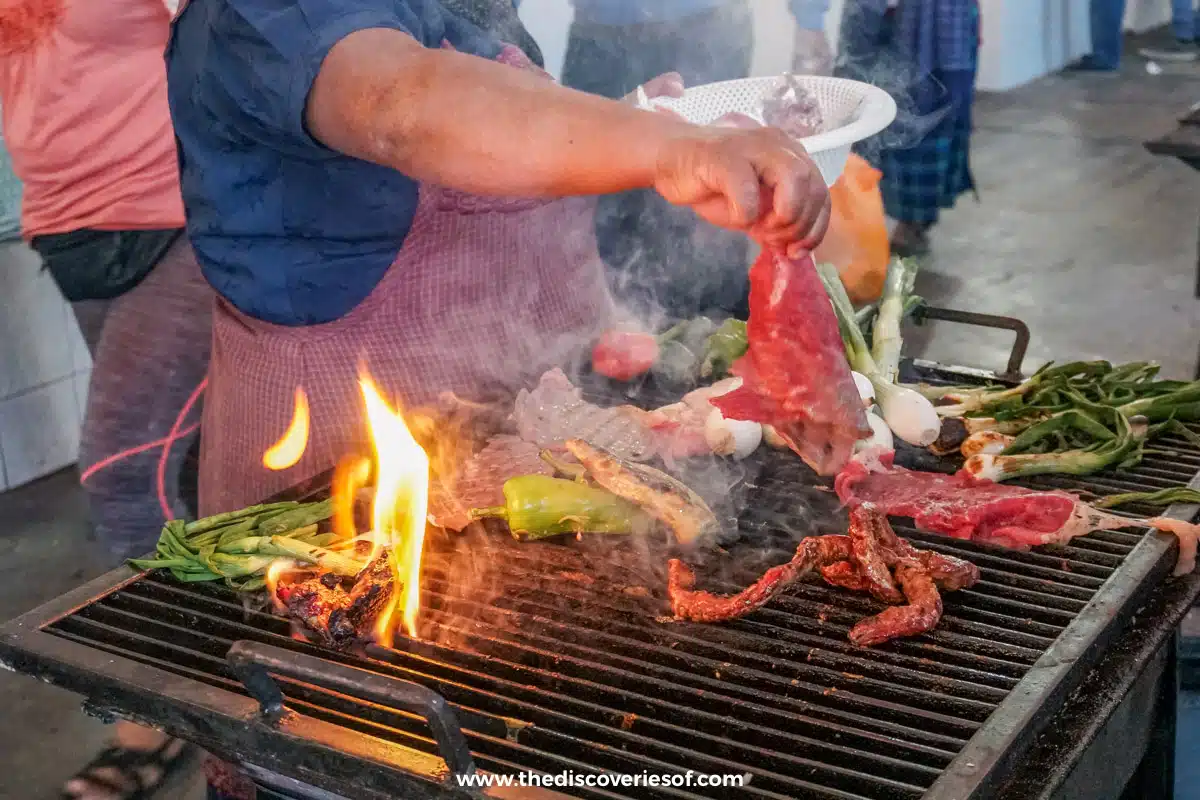
Inside the covered market hall, one aisle is permanently wreathed in smoke. This is where you build your own carne asada: buy your meat from one of the butchers lining the aisle, usually tasajo (thin, salted beef), cecina enchilada (pork rubbed with chilli paste) or chorizo, then hand it over to a grill stall to cook over charcoal. It comes back with tortillas, salsa, grilled spring onions and chiles to pile on as you like. Agree a price for the grilling before they start, and tip the cook.
It works much like the famous Pasillo de Humo in Oaxaca City’s Mercado 20 de Noviembre, only with locals rather than tourists on the benches.
Drink the thing that looks least appetising

Now for the one I’d most urge you to try, precisely because you’ll be tempted not to: tejate.
It’s a traditional Oaxacan drink, cold, made from cornflour and flor de cacao (cacao flower), with a little chocolate and seeds, topped with a pale foam. And I’ll be straight with you… it does not look appetising. It looks like something you’d politely decline.
Try it anyway. It’s wonderful. Deeply earthy, and you can genuinely taste both the corn and the cacao flower sitting on top. It was the biggest surprise of my day there. I can completely see how people drink bowl after bowl of it, though you’d be full for a week.
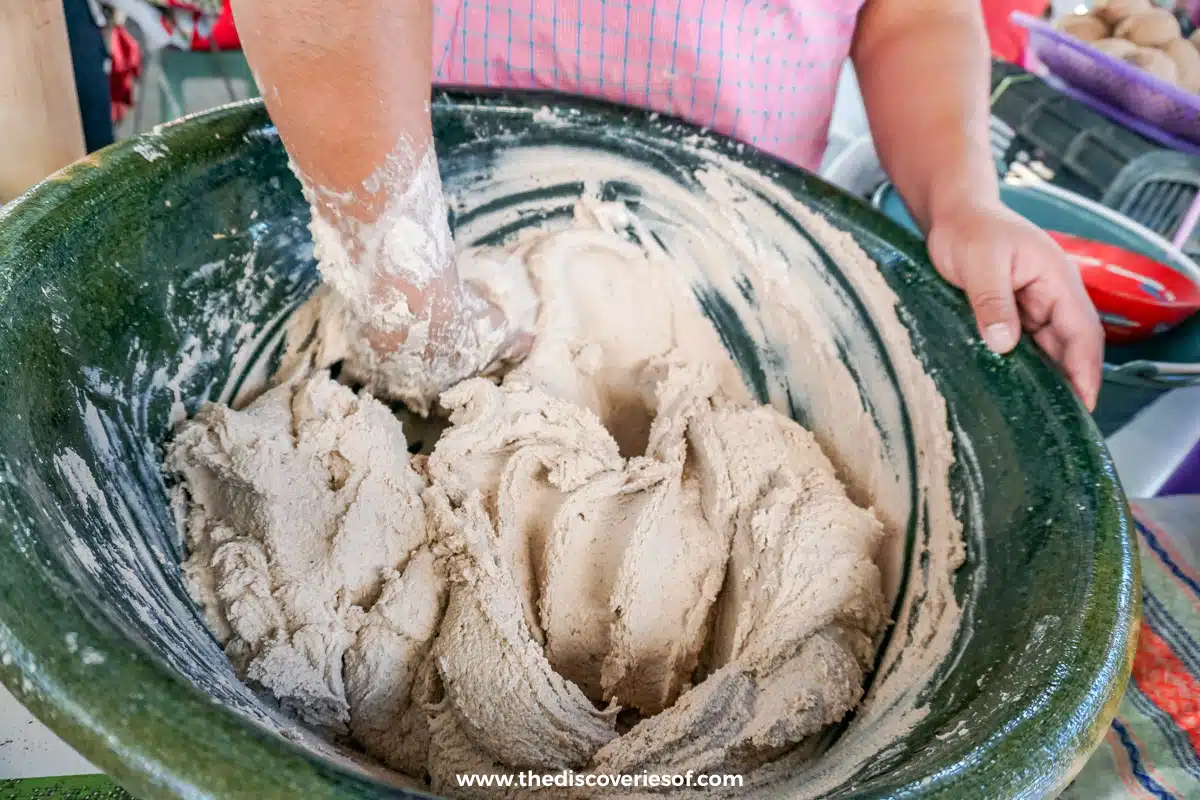
Keep an eye out for the women making it: you’ll spot them kneading the mixture by hand in huge green clay bowls before adding water and serving it, ladled into gourd bowls (jícaras), to the inevitable long line of customers. The seeds are mamey stones, toasted and ground into the paste, and they’re what gives tejate its faintly bitter, nutty edge.
Of everything I tried, it’s the one I most want you not to walk past.
Save room for quesillo, bread and mezcal
This is a working market, so the best souvenirs are the ones you can eat or drink. Please, please try the fresh quesillo, Oaxaca’s stringy cheese wound into balls the size of a fist: you won’t regret it.
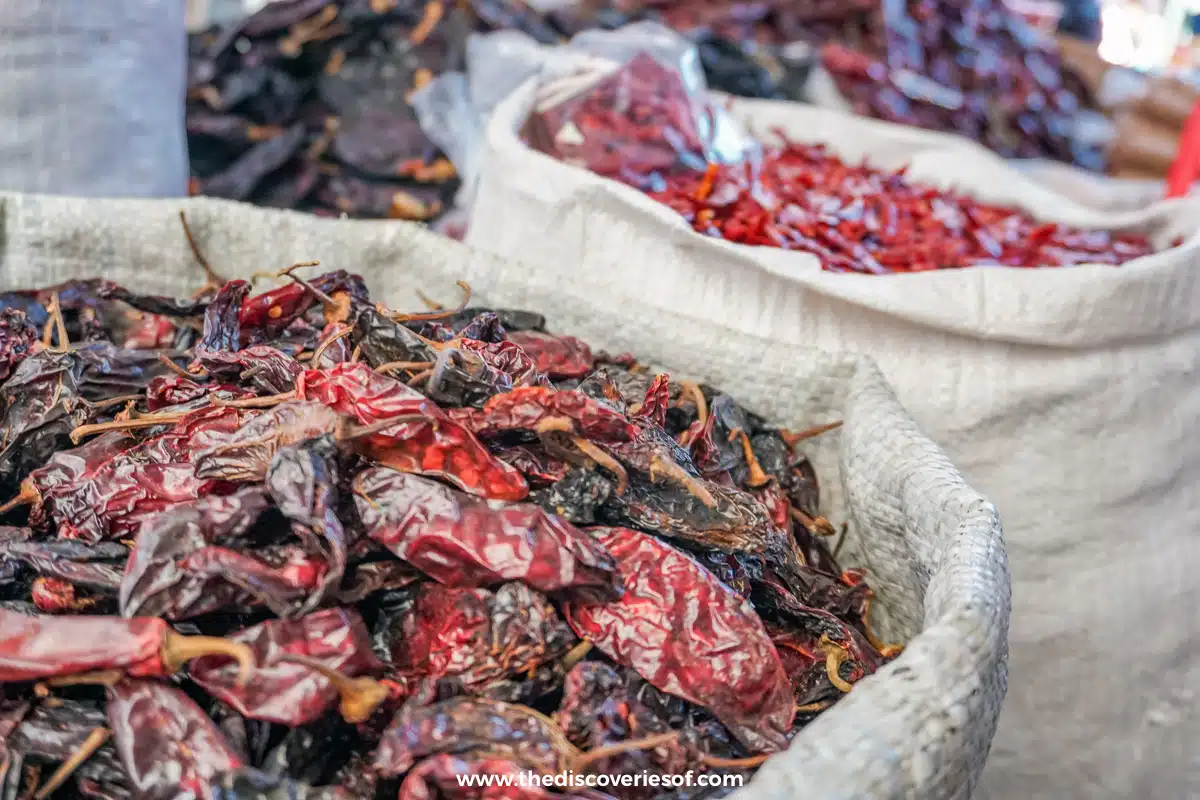
The town is also known across the valley for its bread, including pan de cazuela, a sweet loaf often filled with chocolate, raisins and cinnamon and baked in traditional stone ovens. You’ll find dried chillies piled high in sacks, bags of chapulines (toasted grasshoppers) for the brave, and mezcal for sale from big plastic jugs as well as bottles, often with a tasting thrown in. If you’re planning to take some home, bring an empty bottle to fill, and read my guide to mezcal in Oaxaca before you buy.
How to actually do it
A few honest practicals, because Tlacolula rewards a bit of planning:
It only happens on Sundays. The indoor part of the market runs through the week, but the huge outdoor tianguis, the one you’ve come for, is a Sunday thing. So build your Oaxaca trip around having a free Sunday. It’s about an hour east of Oaxaca city; you can drive, take a colectivo, or go with a tour.
Come hungry, and come earlyish if you can. I came late in the morning, wanting a slower start to the day, and it was still heaving, but if you want it in absolute full swing, the early morning is when it peaks.
- Getting there by bus: The town is about 30 kilometres east of Oaxaca City along Highway 190. Second-class buses leave from the Terminal de Autobuses de Segunda Clase, next to the Central de Abasto market, and drop you in the centre of town after about an hour, for around 20 to 25 pesos. Pay the driver in cash, ideally with small change.
- By colectivo or taxi: Shared colectivo taxis run from the same area and leave when full, for around 30 to 45 pesos a seat and a slightly quicker ride. A private taxi costs roughly 250 to 400 pesos each way. Getting back, buses and colectivos leave from the edge of the market and the town’s bus station, but they fill up in the afternoon, so don’t leave it until dusk.
- On a tour: If you’d rather someone else handled the transport, a small-group Sunday tour of Tlacolula market with a family mezcal palenque takes care of the logistics and adds a distillery visit.
- Timing: The Sunday market runs from early morning and starts winding down by about 4pm.
- Bring cash: Almost every stall is cash only, and ATMs nearby have long queues. Carry small notes and coins, including a few pesos for the toilets.
- Ask before you take photos: This is people’s weekly shop, not a set. Ask before photographing anyone or their stall, and if you haggle, keep it light: prices are already fair.
- Look inside the church: The market wraps around the 16th-century Templo de la Asunción, whose side chapel, the Capilla del Señor de Tlacolula, is covered in astonishing ornate plasterwork and wrought iron. It’s worth five minutes between snacks.
The town sits on the road to Mitla and Hierve el Agua, so the market pairs easily with the rest of the valley’s things to do around Oaxaca on the same day.
And bring a bit of an open mind and an empty stomach. The grasshoppers, the goat, the earthy cacao drink: Tlacolula isn’t a market that meets you halfway. It’s the real, unfiltered heart of how this valley eats, and that’s exactly why it’s the single best food experience I had in all of Oaxaca.
Skip a restaurant. Find a Sunday. Go to Tlacolula.
Map
Read next
- Oaxaca food: what to eat in Mexico’s foodie paradise
- The best things to do in Oaxaca (grasshoppers included)
- Mezcal in Oaxaca: why it’s more than smoky tequila
- 2 weeks in Mexico: the perfect road trip itinerary
- The best time to visit Mexico
Love this? Save and share on Pinterest

Discover the top things to do, insider tips and hidden gems in our Mexico Travel Guide.
Read the guides →