High in the mountains of Chiapas lies one of Mexico’s most enchanting towns, where pastel colonial facades meet a living, breathing Maya culture. From the mesmerising candlelit rituals of nearby Chamula to baroque churches, mountain-top viewpoints and a brilliant food scene, here are the best things to do in San Cristóbal de las Casas.
Do you believe in magic? Visiting San Cristobal de las Casas in Mexico will make you a believer if you’re still on the fence. If you haven’t already, you should add this town to your Mexico bucket list pronto.
I almost didn’t make it to San Cristóbal at all. It was a tip-off from a friend (hey Mike) who once rode a motorbike from Alaska to the southern tip of South America, and who named this little Chiapas town as one of his favourite stops on that entire, epic journey. On the strength of that, I added it to my Mexico road trip itinerary, and I’m so glad I did.
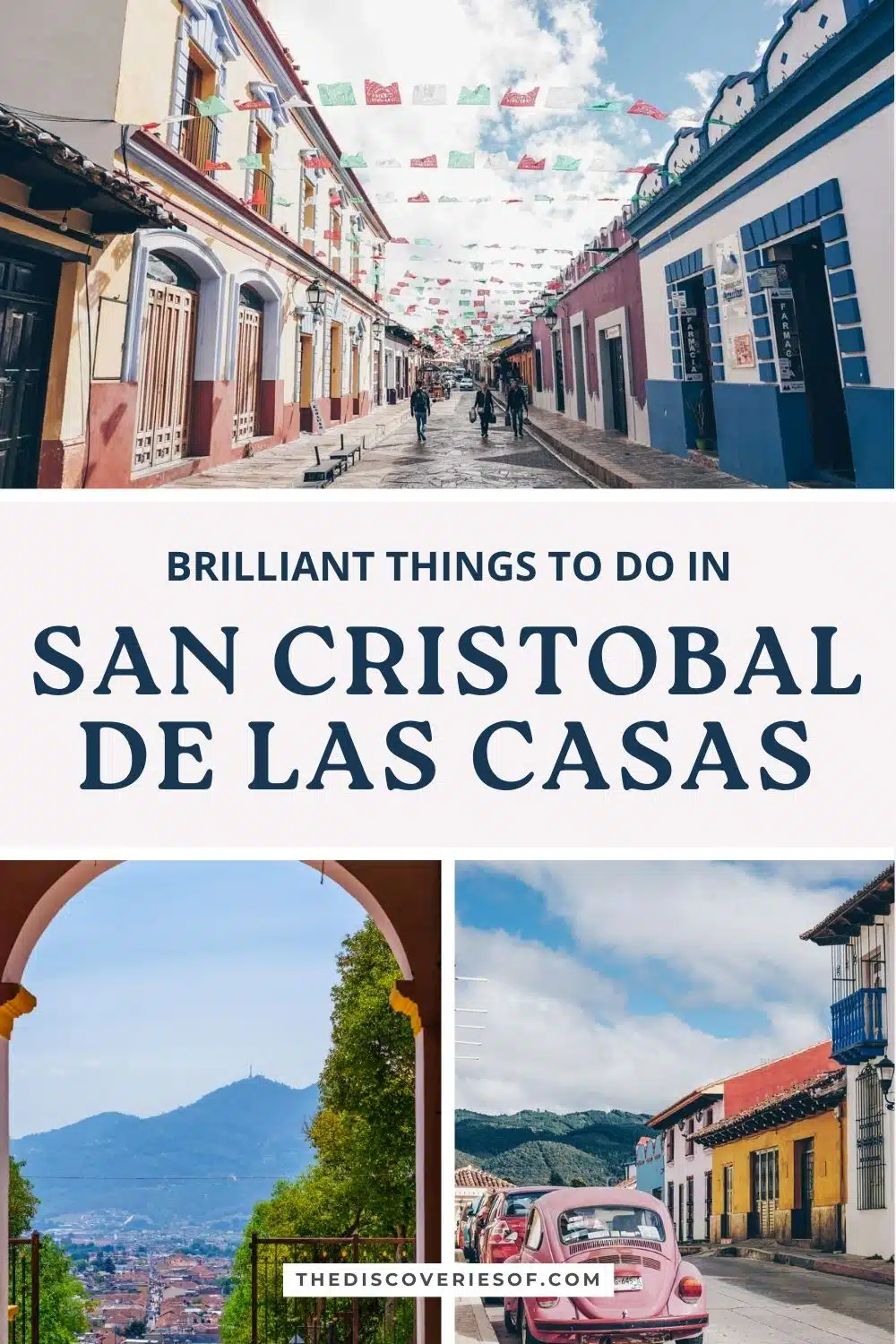
Tucked away high in the mountains of Chiapas at over 2,200 metres, San Cristóbal felt worlds away from everywhere else I visited in Mexico. The air is cool and thin, the light is soft, and the streets are a tumble of pastel colonial facades, cobblestones and brightly painted churches. But what makes it genuinely special is its living indigenous culture: this is the heartland of the Tzotzil and Tzeltal Maya, and their presence shapes the markets, the food, the textiles and the rhythm of daily life in a way you feel the moment you arrive.
Here’s how to make the most of it.
A Little History: Why San Cristóbal Feels the Way It Does
To understand San Cristóbal, it helps to know where its name comes from, because that name tells you almost everything about the town’s character.
The city was founded on 31 March 1528 by the Spanish conquistador Diego de Mazariegos, who initially named it Villa Real, then Ciudad Real after his home town in Spain. But the name that stuck honours two very different things: Saint Christopher, the town’s patron saint, and Fray Bartolomé de las Casas, the 16th-century Dominican friar who became the first bishop here and spent his life as a fierce defender of the indigenous people against the brutality of the Spanish colonisers. That a colonial town carries the name of the man who fought for indigenous rights is a fitting paradox, because the tension and fusion between Spanish and indigenous worlds is exactly what defines San Cristóbal to this day.
The Dominican order arrived in 1545 and set about building the churches and convents that still dominate the town, their facades carved in the exuberant Latin American baroque style that the friars used, in part, to convey Christian narratives to a largely non-Spanish-speaking indigenous population.
Centuries later, those same indigenous communities have absorbed Catholicism on their own terms, blending it with ancient Maya belief into something entirely their own, as you’ll see most vividly in nearby Chamula. That layering of cultures, never fully one thing or the other, is the thread that runs through everything here.
Things to do in San Cristobal de las Casas
Climb to the Iglesia de San Cristobalito and the Iglesia de Guadalupe
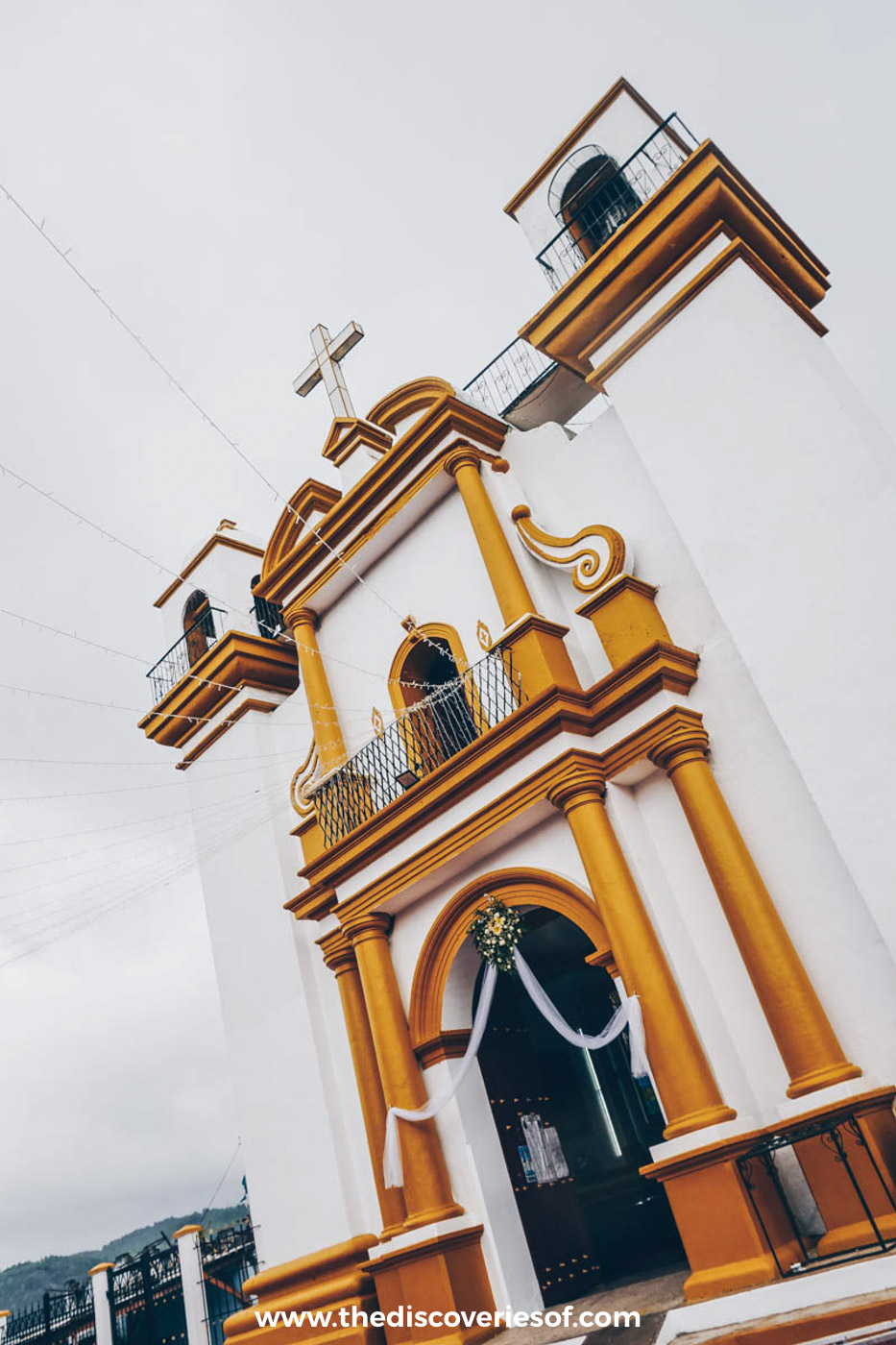
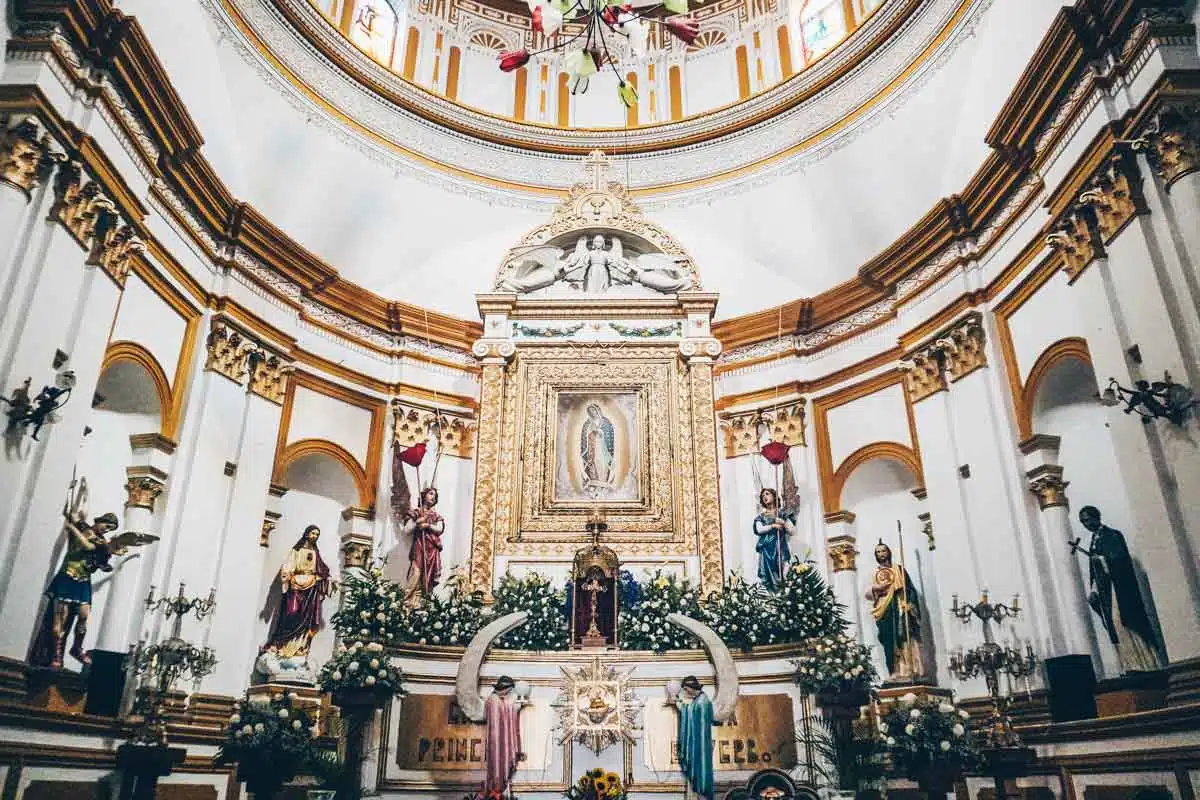
San Cristóbal sits in a valley ringed by hills, and two of those hills are crowned with churches that reward the climb with the best views in town.
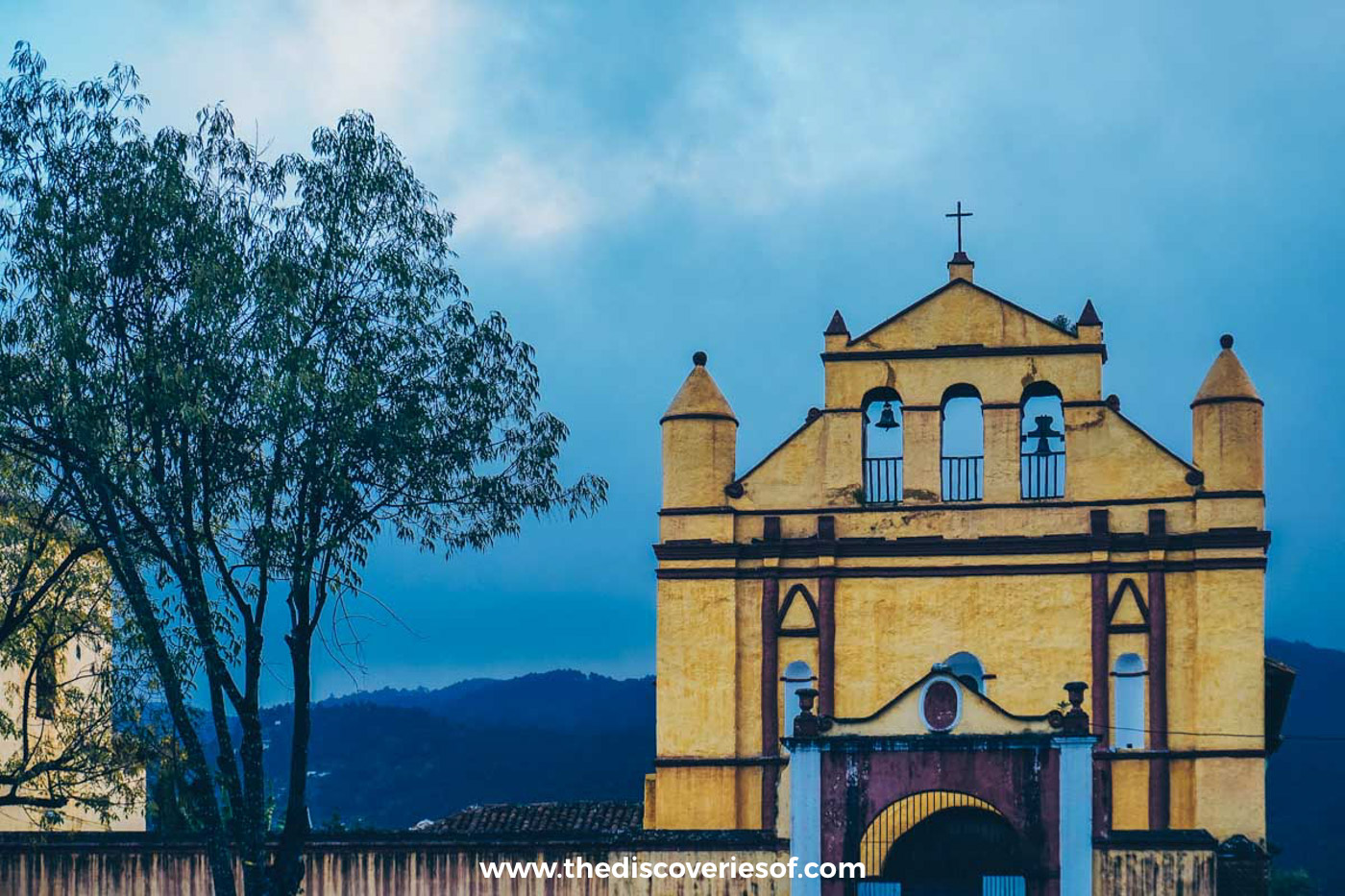
The first is the Iglesia de San Cristobalito, a pretty little red-and-white church first built in the 18th century and dedicated to the town’s patron saint. It’s a steep walk up, but the panorama over the rooftops is worth the puff. The second, on the opposite side of the centre, is the Iglesia de Guadalupe, a yellow-and-white church reached by a near-100-step climb up Guadalupe Hill, with an equally sweeping view back over the town.
You can do both in one go if your legs are willing: it’s around a 30-minute stroll between the two, with a steep climb at either end. Tackling them together is a brilliant way to orient yourself and see how the town nestles into its mountain setting.
Top Tip
If you’d like, you can walk to both Guadalupe Church and The Church of San Cristobalito in one fell swoop. It is just a 30-minute stroll between the two (albeit with two quite steep puffs uphill at either end) if you’d like to get in a few more steps.
Witness the Extraordinary Iglesia de San Juan in Chamula
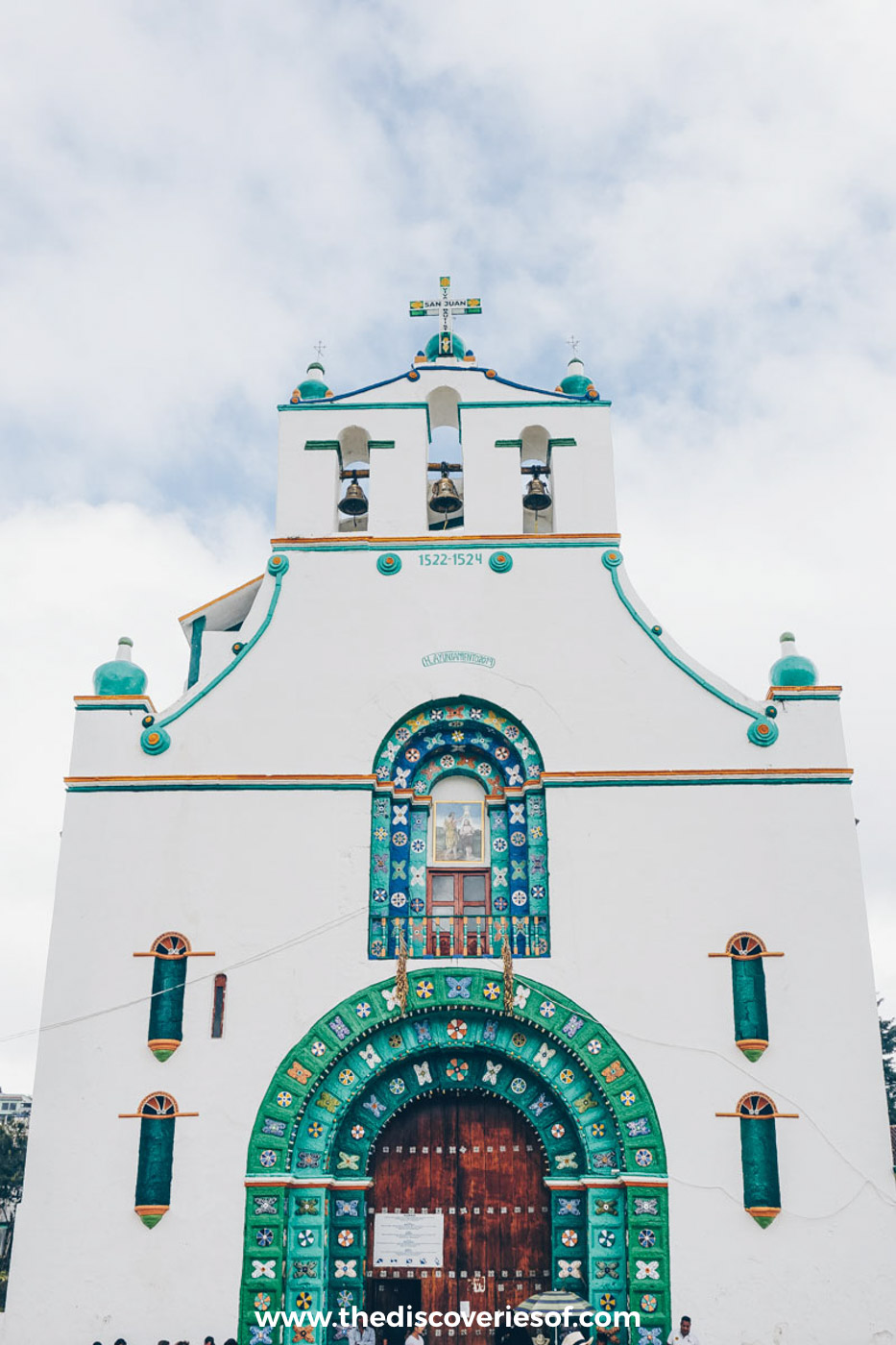
Although it’s not in San Cristóbal itself, a visit to the Iglesia de San Juan in the small town of Chamula, about 15 minutes’ drive away, is an absolute must. Even though I’ve travelled pretty extensively, it remains one of the most memorable and certainly the most unique things I have ever seen on the road.
San Juan Chamula is the religious and economic heart of the Tzotzil Maya, a fiercely independent community that has held onto its traditions with remarkable determination. From the outside, the church looks like a fairly ordinary whitewashed building. But the moment you pay the entrance fee and step inside, it’s clear this is something else entirely.
There are no pews. The floor is carpeted with fragrant pine needles, and a thick fug of copal incense hangs in the air, mingling with the smoke of thousands upon thousands of candles lining the walls and floor. Families kneel on the ground around little clusters of candles, praying aloud, drinking the local cane spirit known as pox and, increasingly, fizzy drinks, the belief being that burping helps expel evil spirits from the body. Curanderos (healers) perform rituals that on occasion include the sacrifice of a chicken. It is a genuine, living fusion of Catholicism and ancient Maya belief that has clung on through the centuries, and watching it unfold is utterly mesmerising.
Top Tip
The Chamulans are private people and do not like being photographed. Photography is strictly forbidden inside the church, and you should be respectful about it outside too. Take off your hat inside. You can visit independently, but I’d genuinely recommend going with a guide who can explain the customs and rituals you’re seeing, because without context much of it is impossible to understand.
Step Into the History of Casa Na Bolom
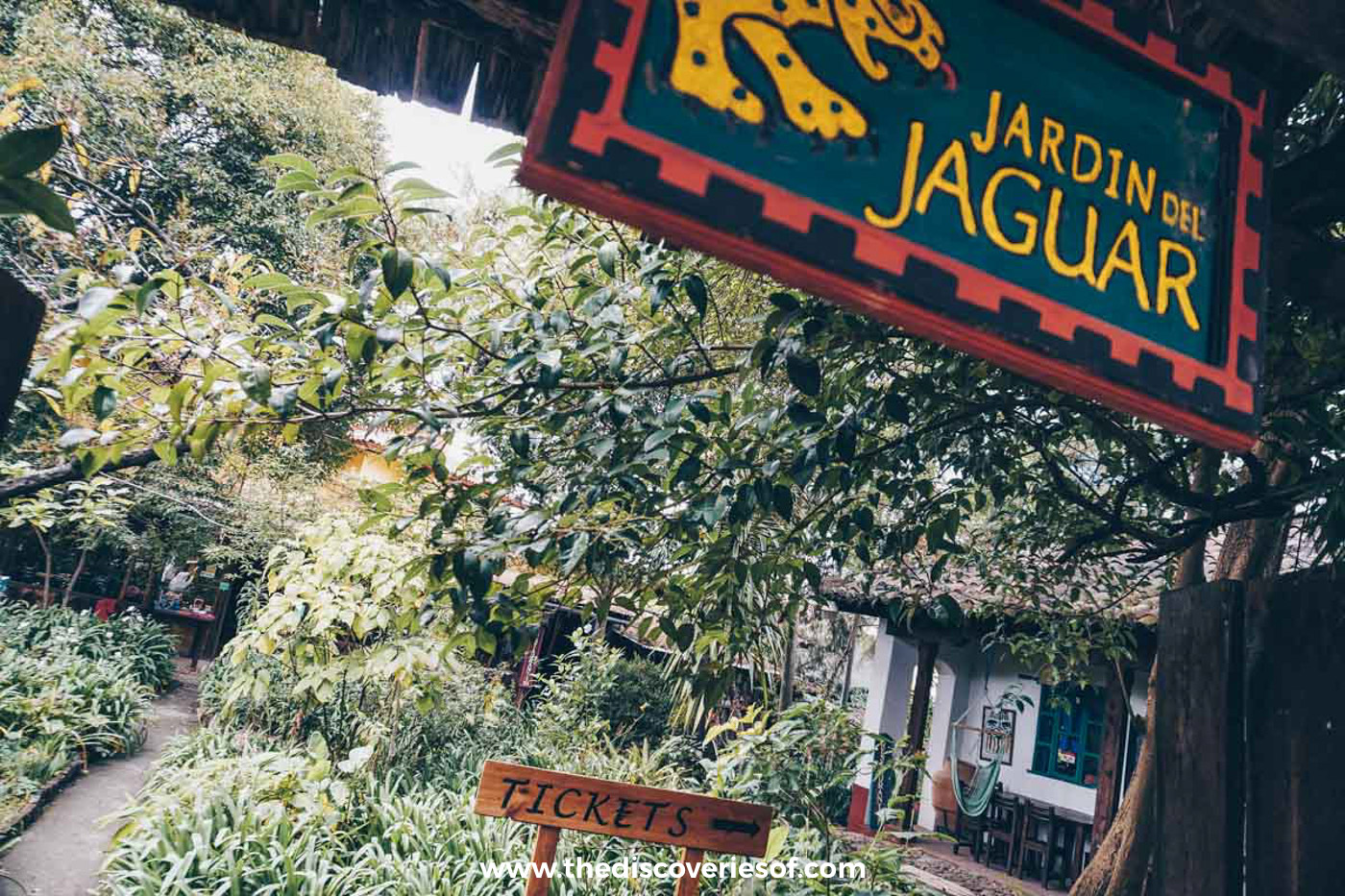
Casa Na Bolom is one of the most atmospheric spots in San Cristóbal, and a window into the town’s role as a centre for the study and protection of indigenous Chiapas culture.
It was the home of the Danish archaeologist Frans Blom and his Swiss wife, the photographer and conservationist Gertrude “Trudy” Duby Blom, who met in the Chiapas jungle in the 1940s. They dedicated their lives to documenting and protecting the region’s cultural and natural heritage, particularly that of the Lacandón Maya, one of the most isolated indigenous groups in Mexico.
The house, a colonial building full of their belongings, artefacts and Trudy’s striking photographs, has a wonderfully homely feel, as though the Bloms had just stepped out.
Top Tip
There’s a community garden and a restaurant on site, and ticket proceeds still support the Lacandón community, keeping the couple’s mission alive.
Marvel at the Iglesia de Santo Domingo de Guzmán
If you see one church in San Cristóbal, make it Santo Domingo. Built by the Dominican order from the mid-16th century onwards, its facade is widely considered one of the finest examples of baroque architecture in all of Latin America: an astonishing pink-stone confection of carved columns, saints and ornamental detail that positively glows in the afternoon sun, the surface worked like a giant retablo.
Inside, it’s just as lavish, with gilded walls and a series of ornate baroque altarpieces. The former convent attached to the church now houses the Centro Cultural de los Altos de Chiapas, with exhibits on regional history, and a superb textile museum (Sna Jolobil) showcasing hundreds of handwoven Maya textiles. And the square outside is home to one of the best artisan markets in town, where Maya weavers from the surrounding villages sell their work. It’s the beating heart of the town’s craft tradition.
Wander the Plaza 31 de Marzo and the Cathedral
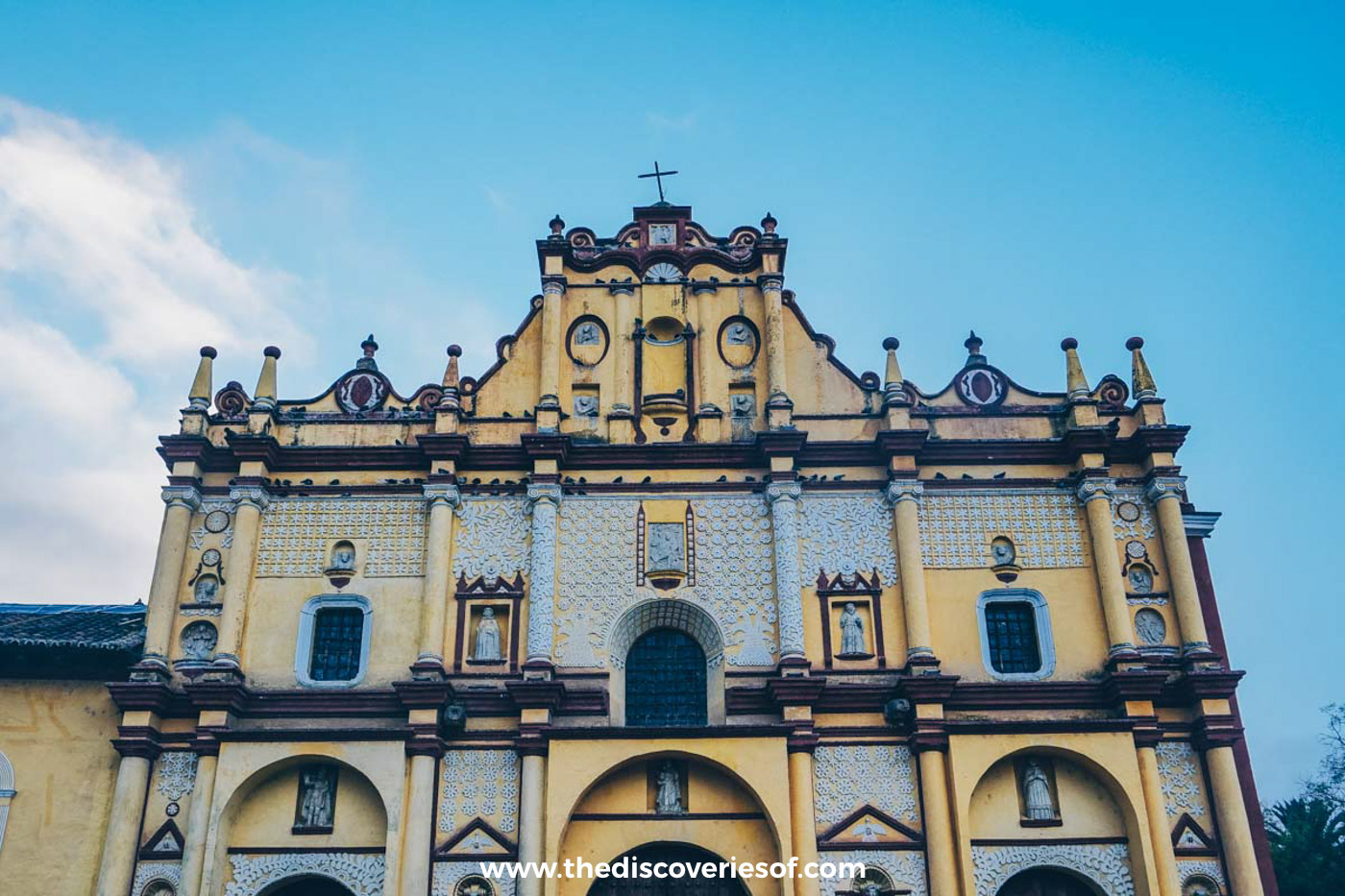
The Plaza 31 de Marzo is the central square and the social heart of San Cristóbal, named for the date the city was founded in 1528. It’s the kind of place where the whole town passes through: shoe-shiners, street vendors, families, musicians. Grab a bench and watch the world go by.
Presiding over it is the Catedral de San Cristóbal, whose construction began in 1528, though the distinctive baroque facade you see today dates to the 18th century. Its ochre-yellow exterior, picked out in red and white, is one of the town’s most photographed sights, especially at sunset.
Inside, it’s dedicated to the Virgin of the Assumption, with a gilded interior and ornate altarpieces. In the evenings the square in front often comes alive with costumed indigenous performances and a small night market selling handmade textiles and crafts, well worth lingering for.
Browse the Mercado José Castillo Tielemans
For a true sense of everyday life in San Cristóbal, head to the José Castillo Tielemans market, the oldest and largest in town. It’s a lively, sprawling indoor market where the Tzotzil and Tzeltal communities from surrounding villages come to buy and sell: mountains of fruit and vegetables, fresh produce, flowers, clothing, crafts and more. It’s chaotic, colourful and entirely unpolished, which is exactly what makes it worth your time. A word to the wise: this is a working market for locals, not a tourist attraction, so be discreet with your camera and respectful of the traders.
Escape into Nature at El Arcotete
When you need a break from the town, El Arcotete is an ecological park just a 20-minute drive (or a public-transport hop) outside San Cristóbal, and a lovely dose of the Chiapas outdoors. The highlight is a dramatic natural limestone arch over a river, but there are also caves to explore, hiking trails through the pine forest, and adventure activities including ziplines and rappelling. There’s a small shop for refreshments and public restrooms, so it’s easy to spend a few hours here.
Discover the Orchids of Moxviquil
The Moxviquil Botanic Garden is a peaceful spot just outside the centre, dedicated to conserving the native flora of the Chiapas highlands, with a particular passion for orchids. Its nurseries protect hundreds of orchid species, and the garden is also a haven for the region’s birdlife. Trails wind through the reserve, and there’s an entrance fee with donations welcomed to support the conservation work. A gentle, restorative few hours for anyone who loves the natural world.
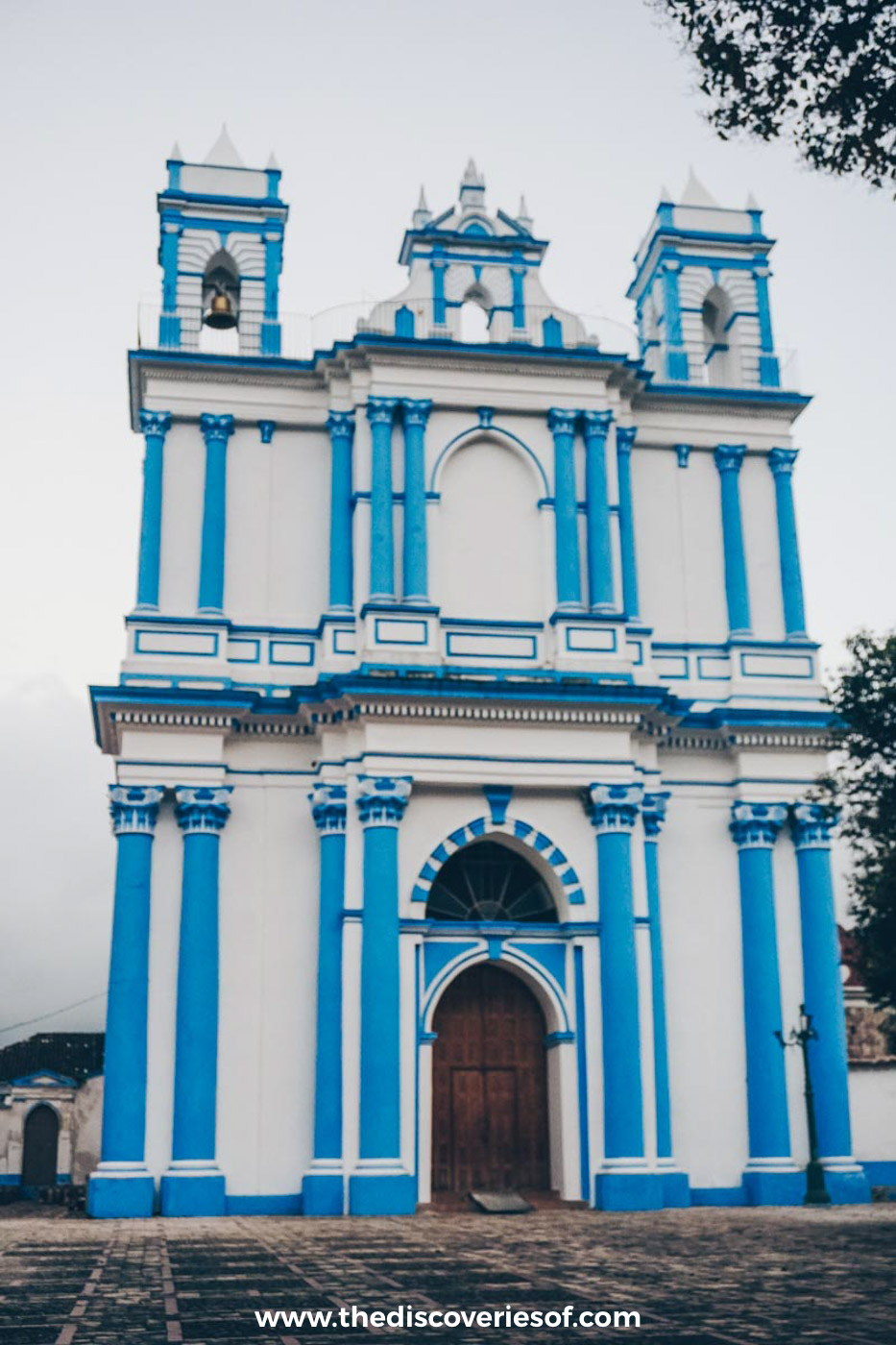
See the Blue Rimmed Facade of Iglesia de Santa Lucía
This large cathedral is in the centre of town in front of a big square. The building of the cathedral started in 1528 and finished in 1815. Over the years, it has undergone restoration many times due to many earthquakes.
Now, it is well-known for its intricate design and colourful exterior. While the yellow and red exterior often takes the spotlight, the interior is just as stunning.
The cathedral is a dedication to the Assumption of the Virgin Mary. You’ll find the inside covered in gold leaf and featuring five gilded altarpieces. It also has candles and incense constantly burning inside.
Iglesia de Santa Lucia or Church of Saint Lucia keeps up San Cristobal’s trend of brightly coloured churches. This turquoise and white church is also in the town centre.
The Santa Lucia neighbourhood, founded in 1594, had two churches built in the area (one of them being Saint Lucia). The reasoning for the churches was that there was a need for clinics and cloisters in the area.
The neighbourhood was a crafts centre producing diverse crafts and art. Today, you can find artisan markets selling traditional candies and sweets.
Top Tip
On 13 December, there is a celebration in remembrance of Saint Lucia. Fluttering blue and white flags decorate the church during this time.
Iglesia de Santo Domingo de Guzmán
This Baroque-style church built in the 16th century is San Cristobal’s most beautiful church. The grandiose church was a Dominican monastery named after the monk who founded it. Its interior features golden walls and eight wooden baroque altarpieces.
The temple has two museums inside. Upstairs in the former monastery, there’s a textile museum of the Maya. It showcases over 500 handwoven textiles from all over Central America.
There’s also the Cultural Center of the Highlands of Chiapas. The museum showcases the traditional and cultural artworks of the state’s indigenous people. Most of the art dates to the 17th to mid 19th century and showcases major themes of Chiapas history.
Where to Eat and Drink in San Cristóbal
San Cristóbal punches well above its weight for food, with a cool, creative scene that blends traditional Chiapas cooking with a strong vegetarian streak and excellent coffee (this is, after all, coffee-growing country).
Casa de Pan
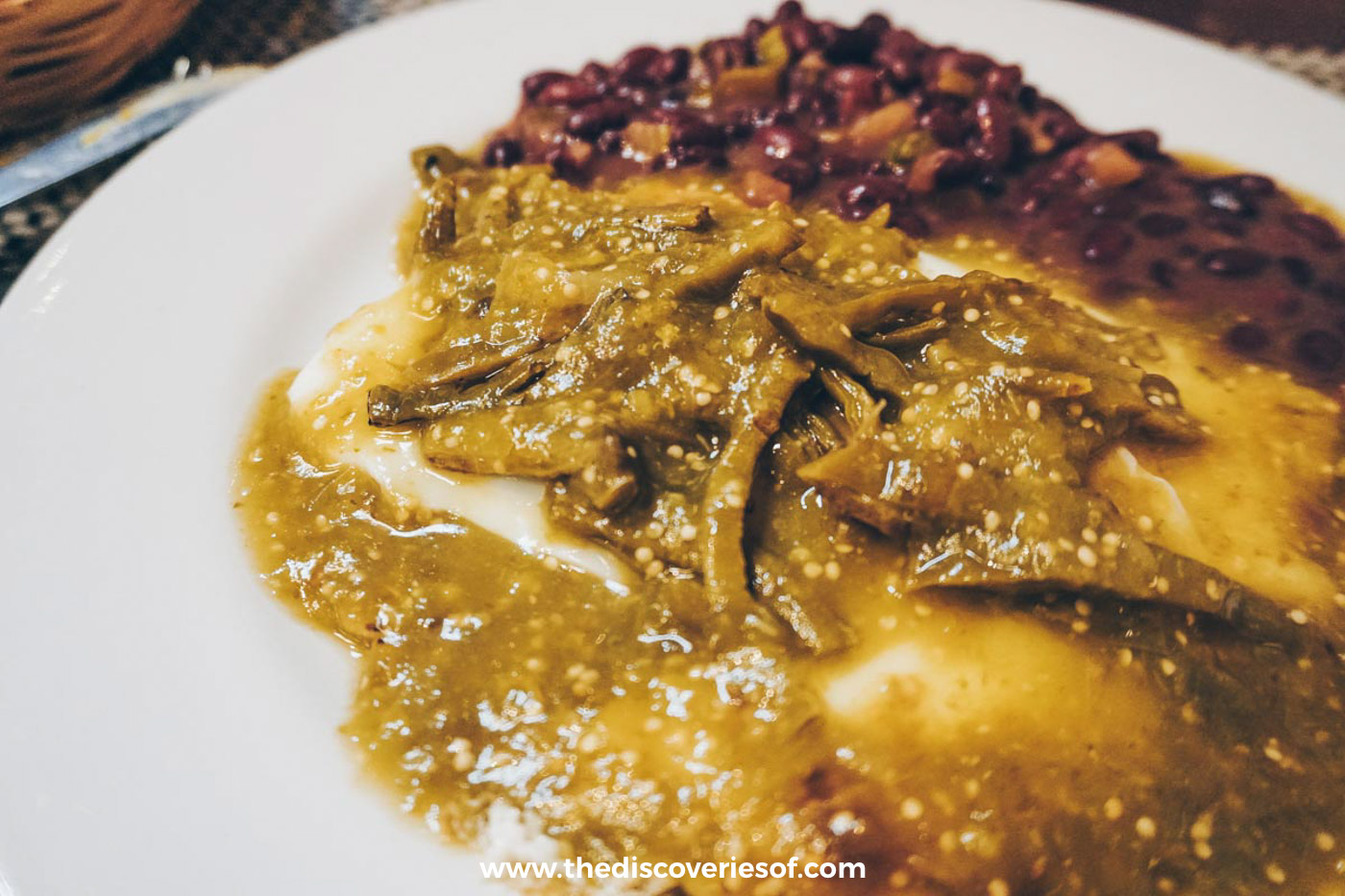
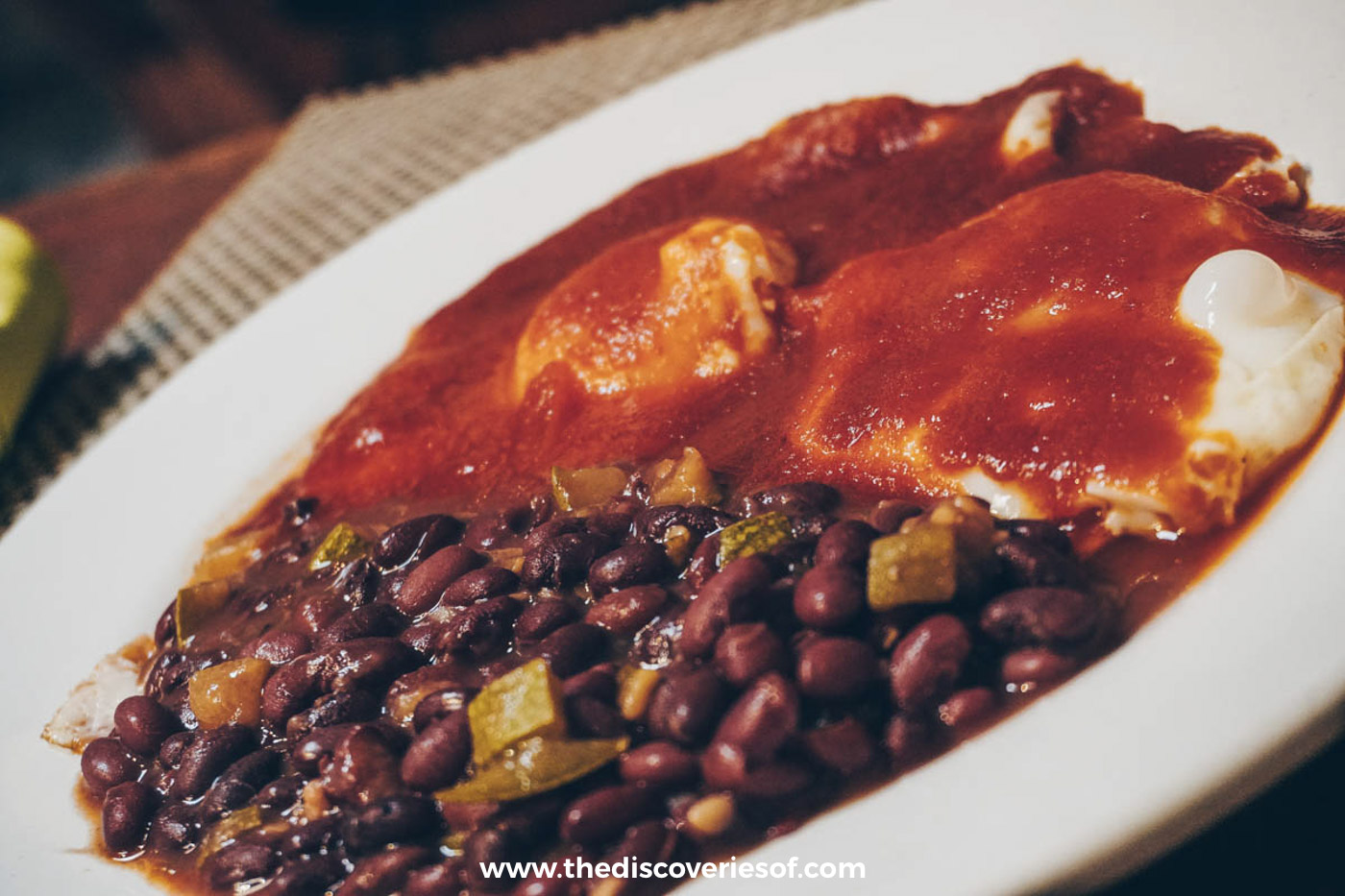
Casa del Pan is a long-running vegetarian and vegan spot, with a good-value lunch buffet and a menu that runs from traditional Mexican dishes to pizzas, salads and sandwiches. A reliable choice for non-meat-eaters.
Los Chapulines
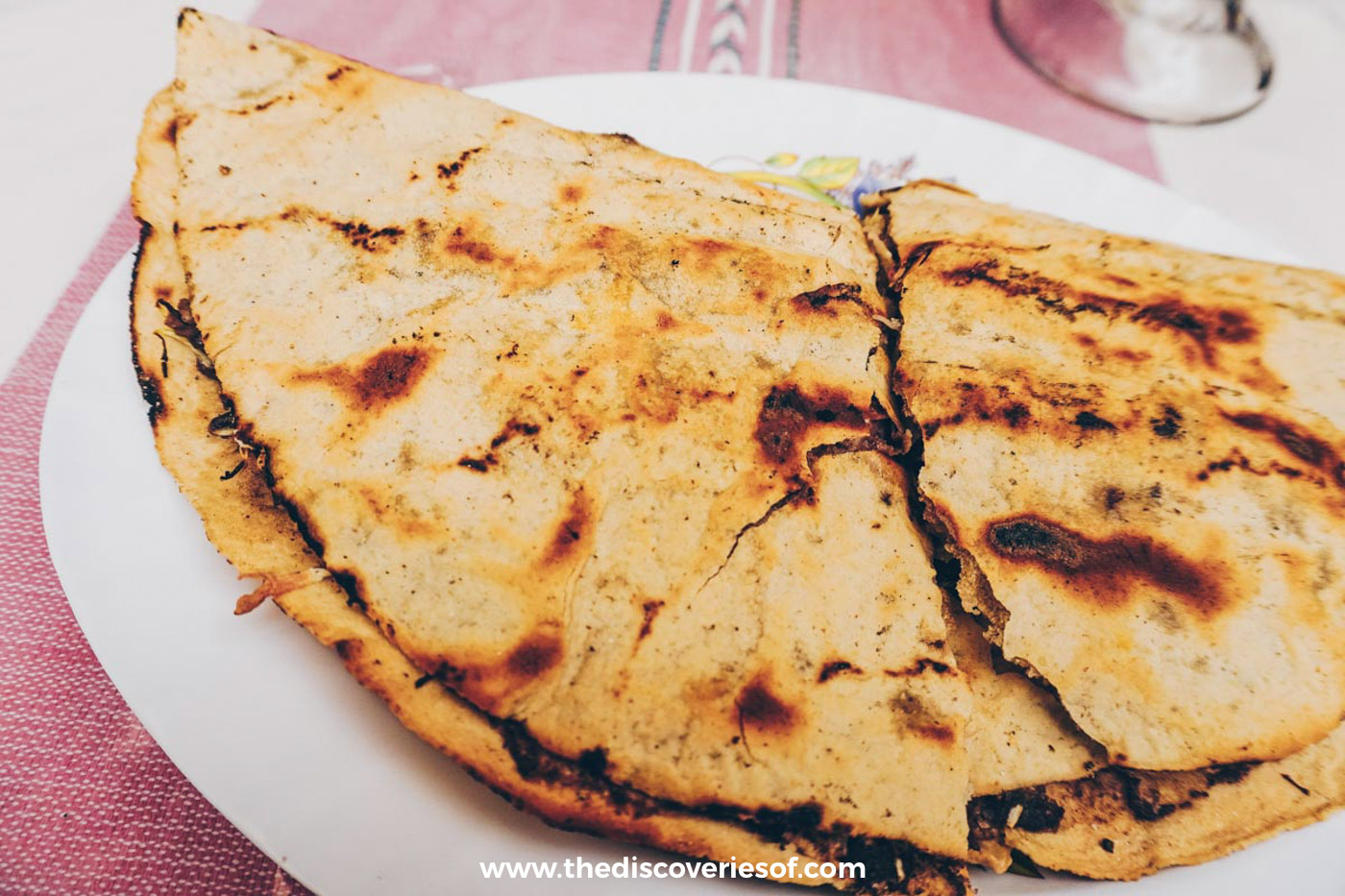
Los Chapulines takes its name from the grasshoppers that are a regional delicacy, though the menu spans plenty of more conventional traditional dishes too, including tlayudas and huaraches, with vegetarian options available. Adventurous eaters, this is your moment.
Black Love Coffee
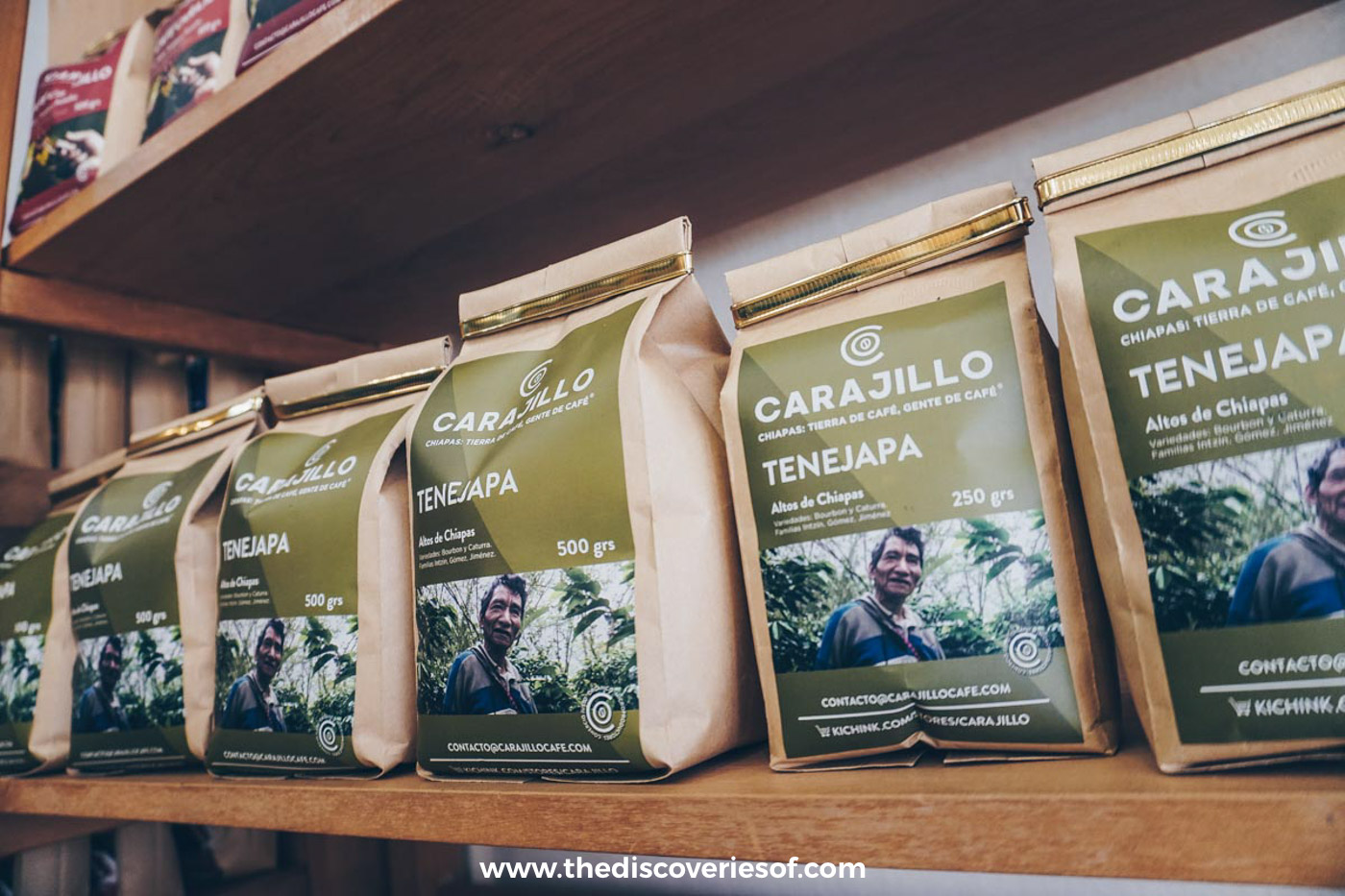
Black Love Coffee is the spot for a serious brew, roasting local Chiapas beans in-house. With fast wifi and power outlets, it’s also a favourite of the town’s sizeable digital-nomad contingent.
La Viña de Bacco
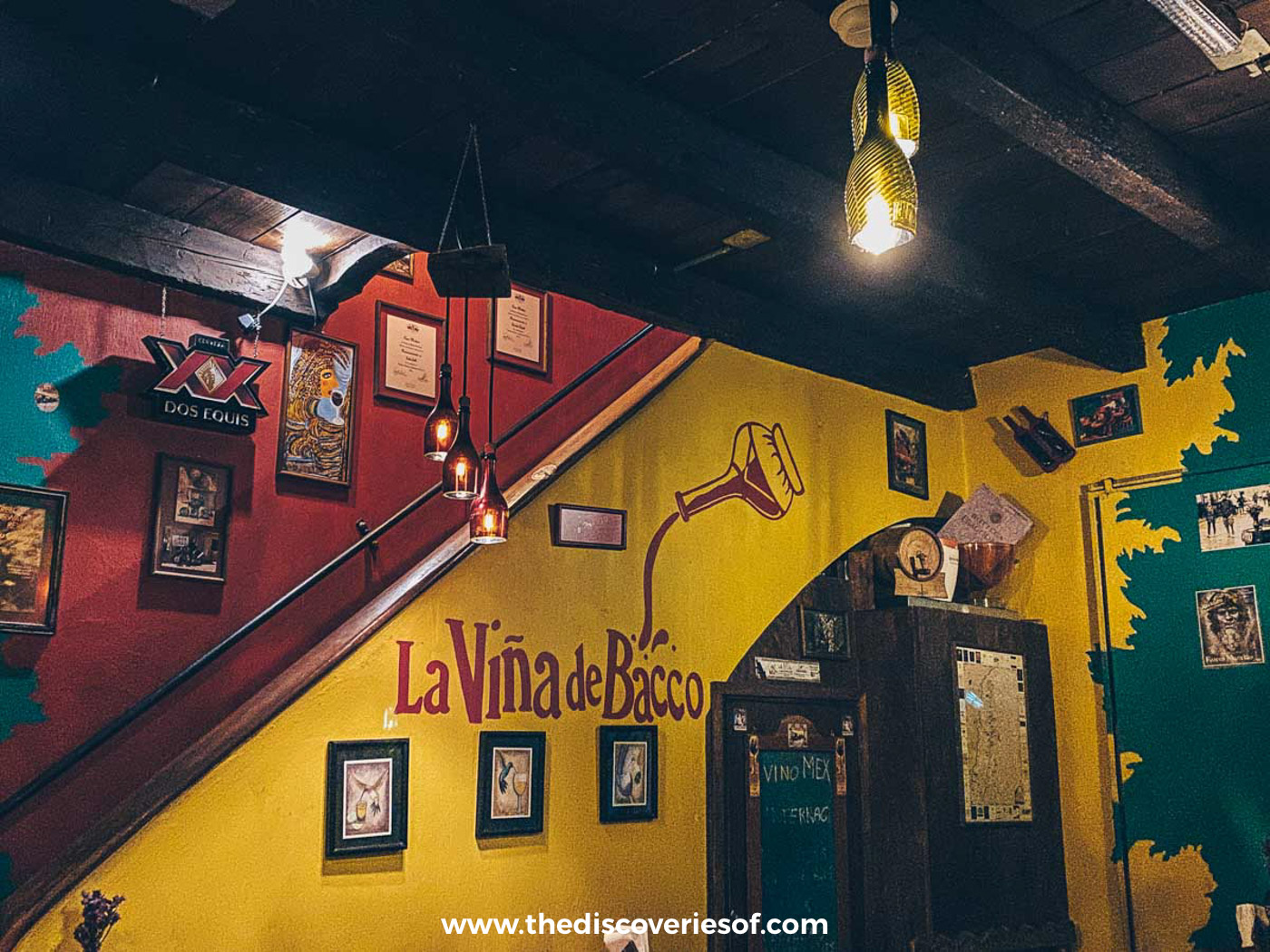
La Viña de Bacco is a great tapas bar in the central area of town. San Cristobal’s first wine bar is always bursting with patrons. As a treat, you get free tapas with each glass of wine you order from their national and international wine list.
Top Tip
Arrive early, so you don’t miss your free tapas. There is a limited supply every night.
Sensaciones de Chiapas Cocina Regional
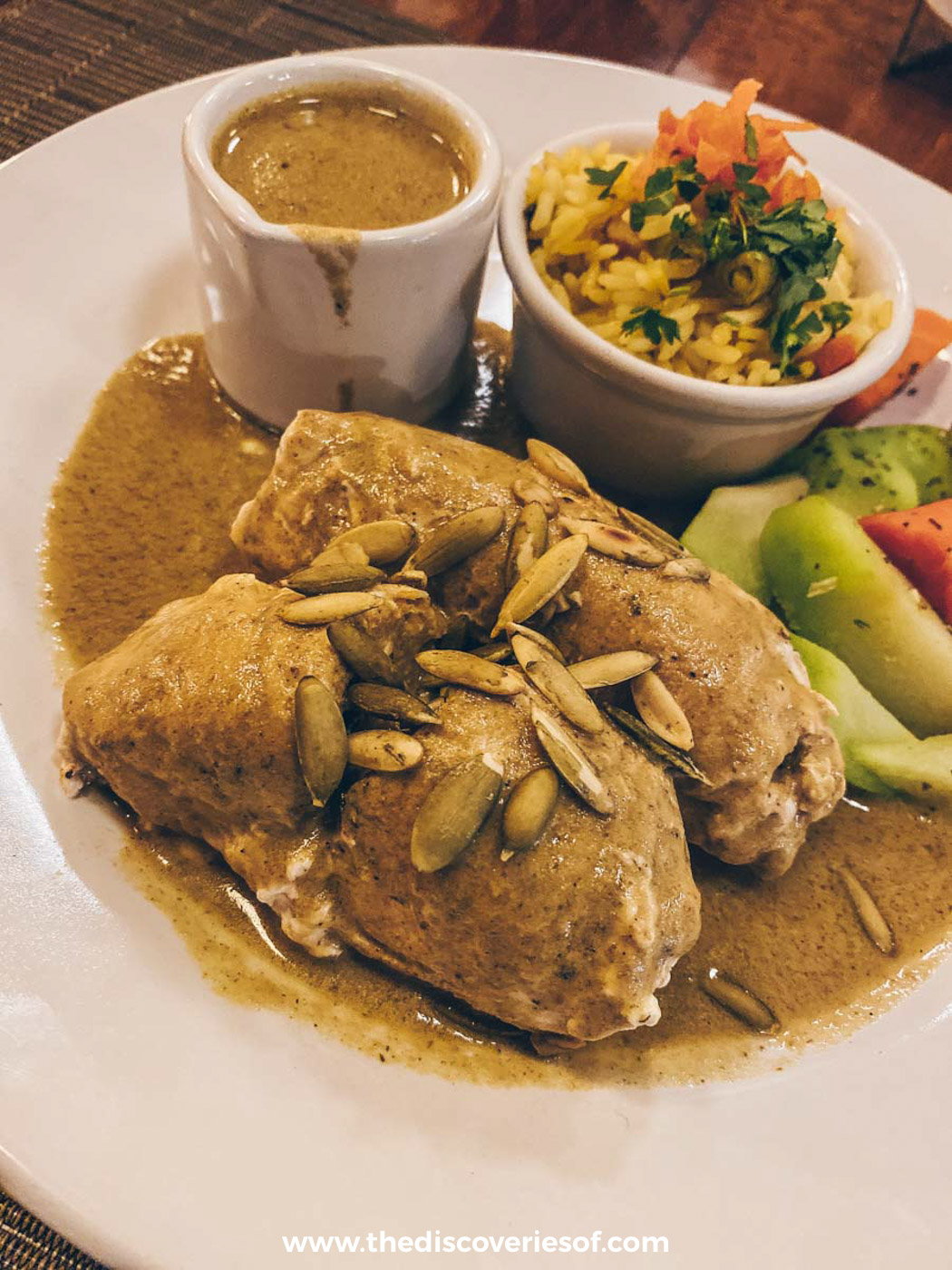
This restaurant is part of Hotel Ciudad Real Centro Historico’s three restaurants. Sensaciones de Chiapas Cocina Regional is one of the best restaurants in San Cristobal de Las Casas. It serves regional cuisine from the area at slightly higher-end prices.
However, the quality matches the price, and you can taste it in the dishes. The place offers food from breakfast to dinner, so you never have to miss out
Practical Tips for Your Trip
- Best time to visit: San Cristóbal’s high-altitude climate keeps temperatures mild year-round, typically 12 to 18°C, but it can get genuinely chilly, dropping to around 1°C on winter nights. Bring a jacket and some layers whatever the season; this is not the tropical Mexico of the coast.
- Take the free walking tour: San Cristóbal runs a free walking tour every day at 10am. Look for the guides in bright orange T-shirts at the wooden cross in the Plaza de la Paz. It’s a great orientation and the guides are knowledgeable about the town’s history and culture.
- Haggle gently at the markets: If you’re buying from the street markets and artisan stalls, a little good-natured negotiation is expected, though always be fair given how much work goes into the handmade crafts.
- Respect indigenous customs: This bears repeating, especially in Chamula and the surrounding villages. Always ask before photographing people, never photograph inside churches, and go with a guide where you can to understand what you’re seeing.
Read More Mexico Travel Guides
- The Ultimate Mexico Travel Guide
- The 2-Week Mexico Road Trip Itinerary
- The Most Famous Landmarks in Mexico
- The Best Things to Do in Oaxaca
Love This? Save and Share on Pinterest

Discover the top things to do, insider tips and hidden gems in our Mexico Travel Guide.
Read the guides →