
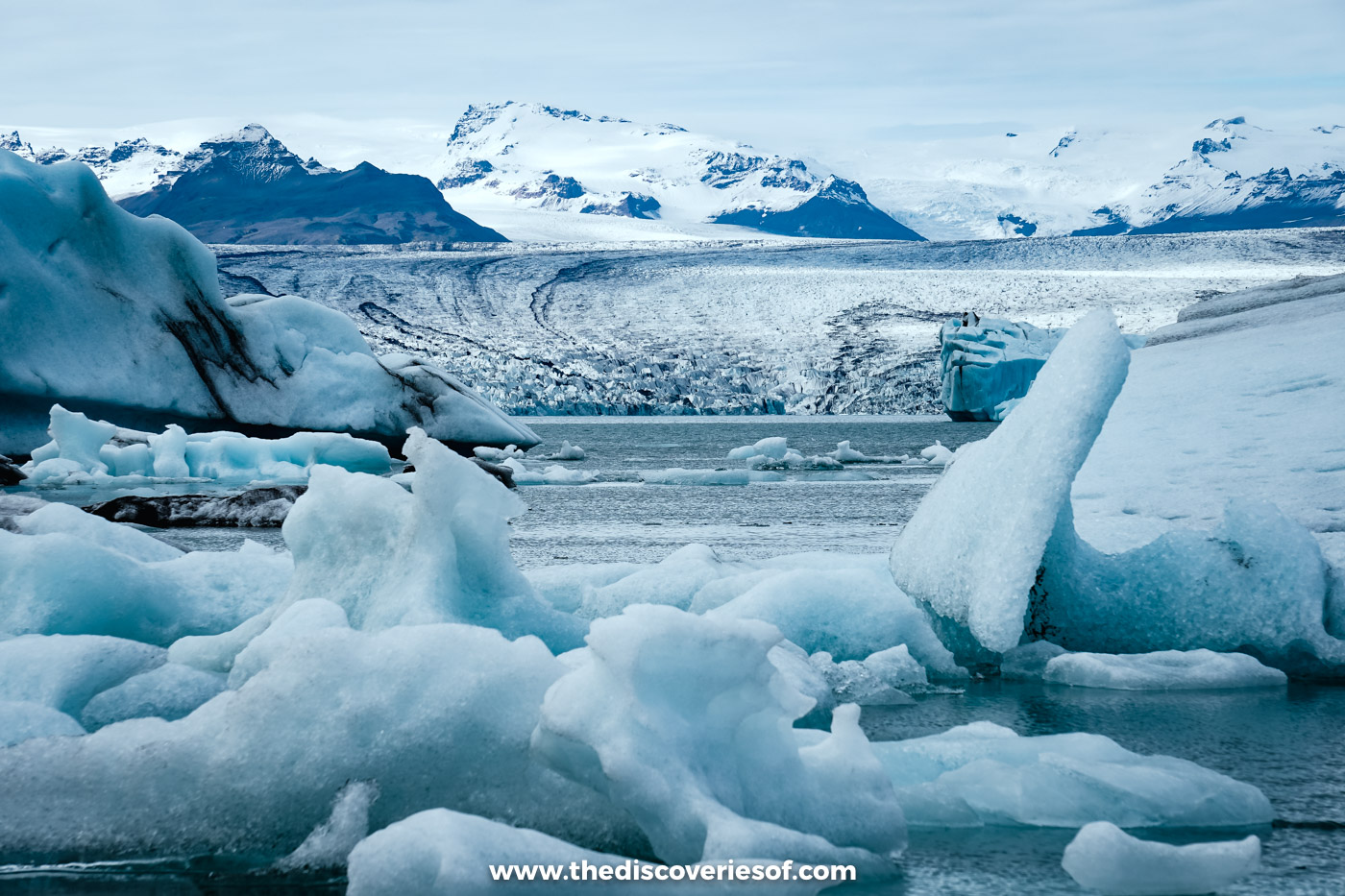

Have you ever been to one of those places that you can barely believe is real? I guarantee that Jökulsárlón glacier lagoon in Iceland is going to be one of them. Here’s what you need to know to plan your visit, from the boat tours and Diamond Beach to the long drive there.
It’s wrong to have favourites, I know. But do you ever visit a country and find there’s somewhere that captures your imagination from the moment you discover it exists?
Well, Jökulsárlón was that place for me.
We all know that I’m a sucker for an amazing landscape or two, and luckily Iceland is filled with them. Even so, the lagoon was a step beyond. I drove there in a single day from Hotel Rangá in September, with a stop at Skógafoss and a walk on Reynisfjara on the way east, and climbed over the low hill from the car park late in the afternoon. My jaw literally dropped. A lake full of icebergs was spread out below me, with the glacier that made them filling the horizon.
You might ask what the big fuss is about? What’s so special about the lagoon and the nearby “Diamond Beach”?
Let me show you.
Why Jökulsárlón glacier lagoon is worth the long drive
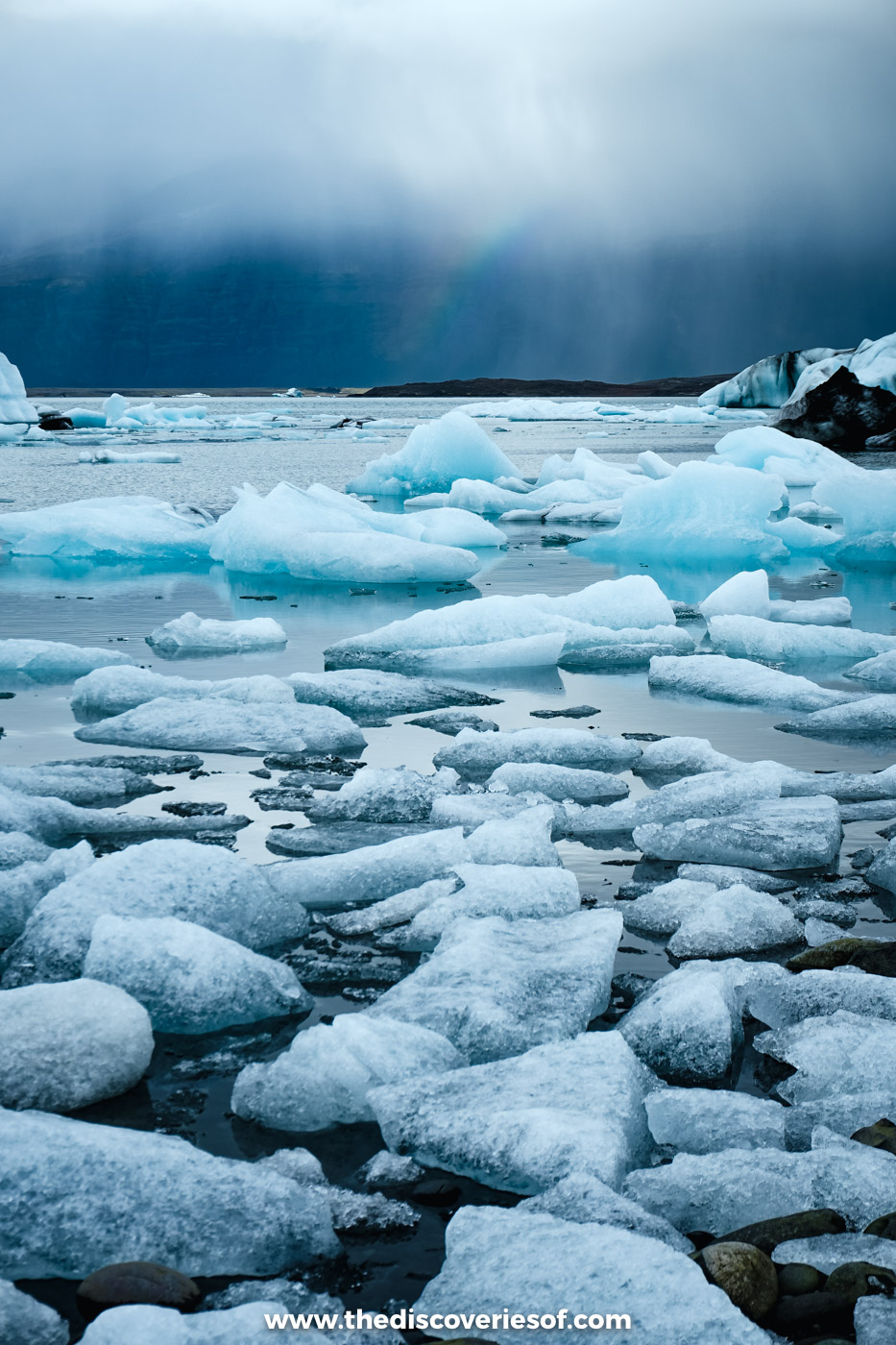
Why visit? I think a better question would be why wouldn’t you visit… Where else in the world will you see a striking, jet black sand beach stretching for miles and miles, studded with sparklingly clear pieces of glacier (the “diamonds”)?
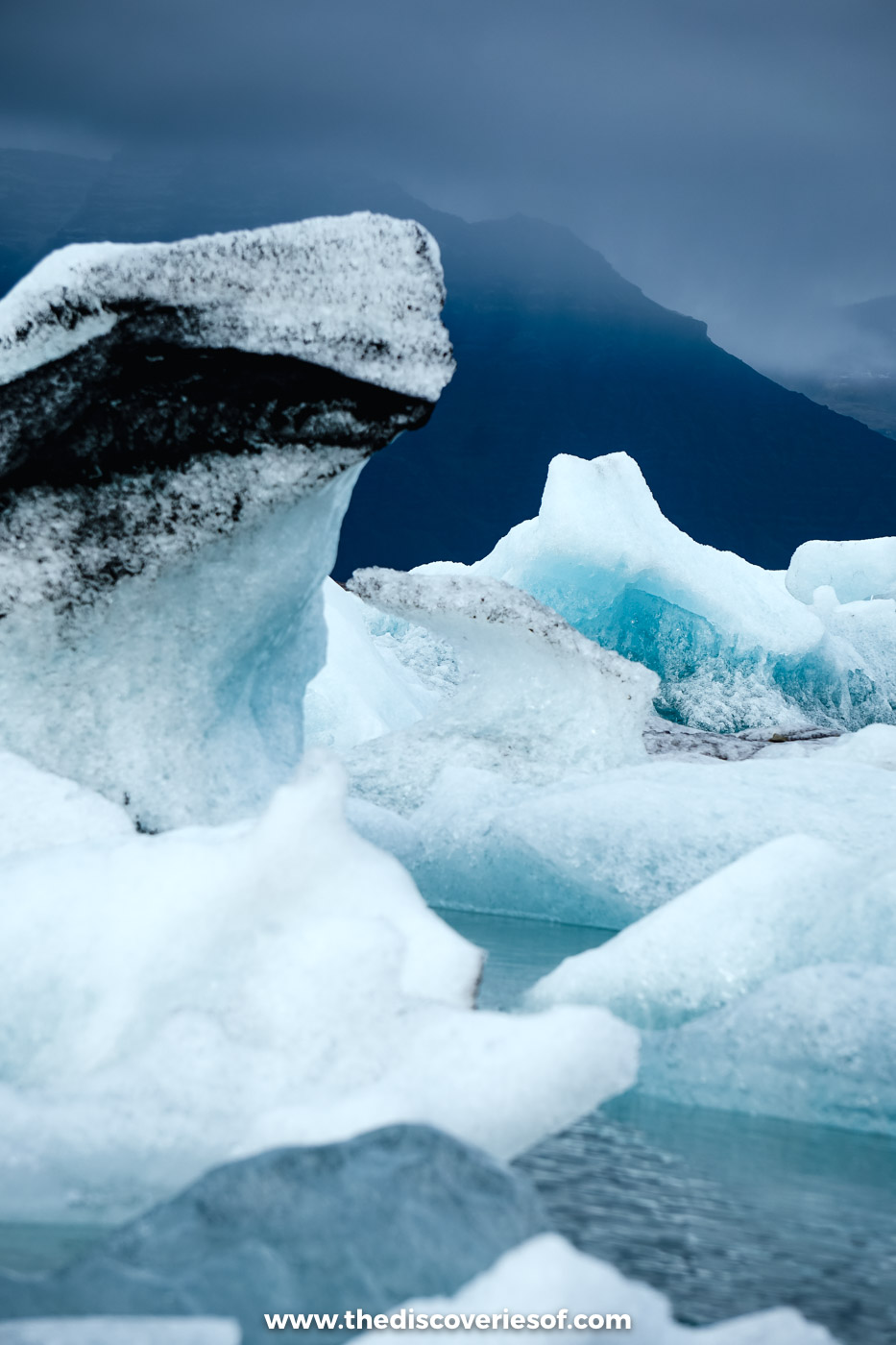
Here’s how it works. Chunks of ice calve from the tongue of Breiðamerkurjökull, an outlet glacier of the vast Vatnajökull ice cap, and crash into the lagoon. They float around the lake, sometimes for years, slowly melting and breaking apart, until they’re small enough to slip out through a short channel under the Ring Road bridge and into the sea. The tide then throws many of them back onto the black sand of Diamond Beach.
The result is simply bewitching. It’s one of those landscapes that is so Icelandic, near unbelievable but impossibly striking, that it simply must go on your list of places to see in Iceland.
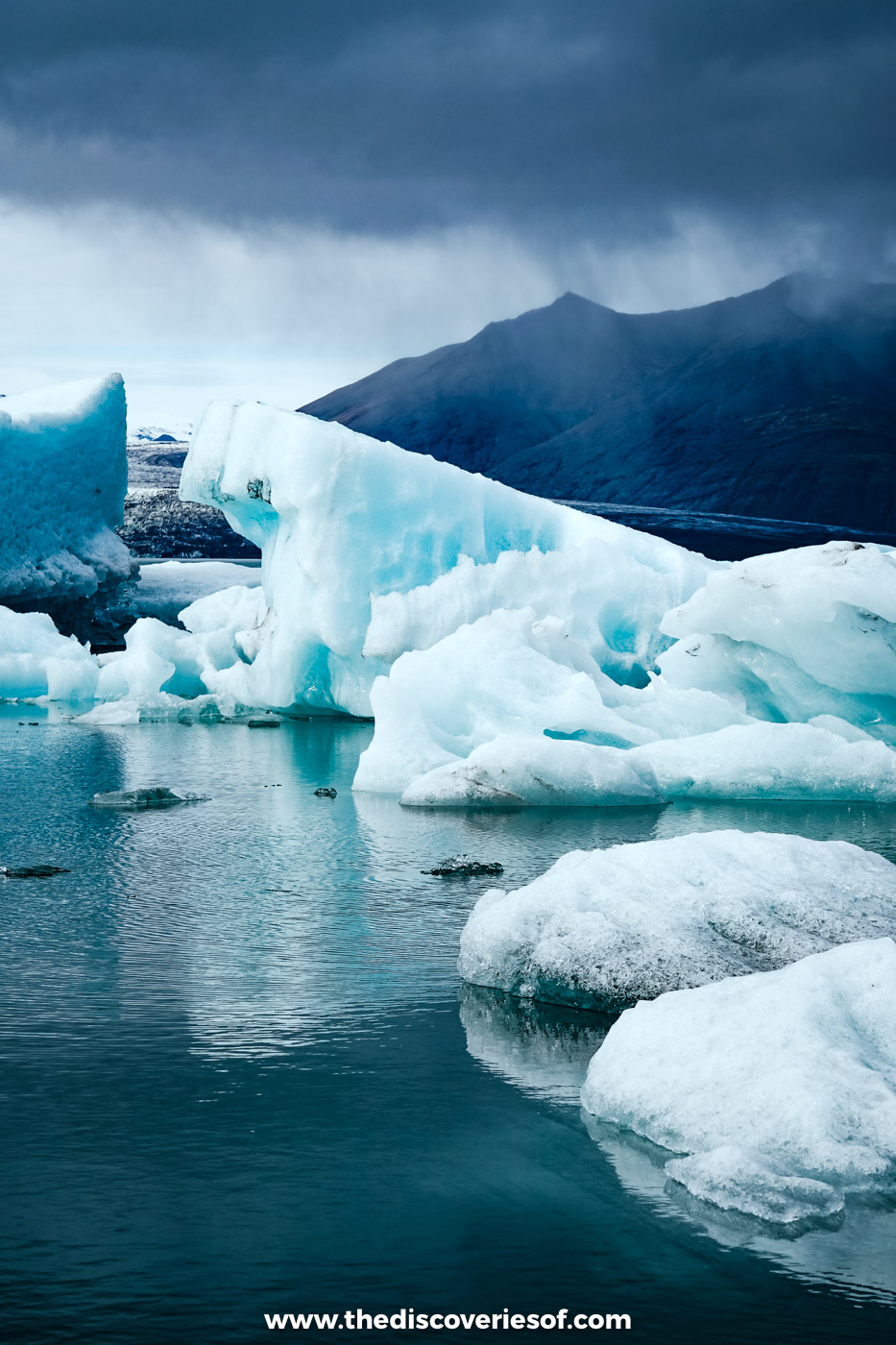
Climbing up a rocky path from the car park, I was rewarded straight away with views of the lagoon: an eyeful of sparkling water framed by the glacier on one side and the mountains on the other, studded with bright fragments of ice.
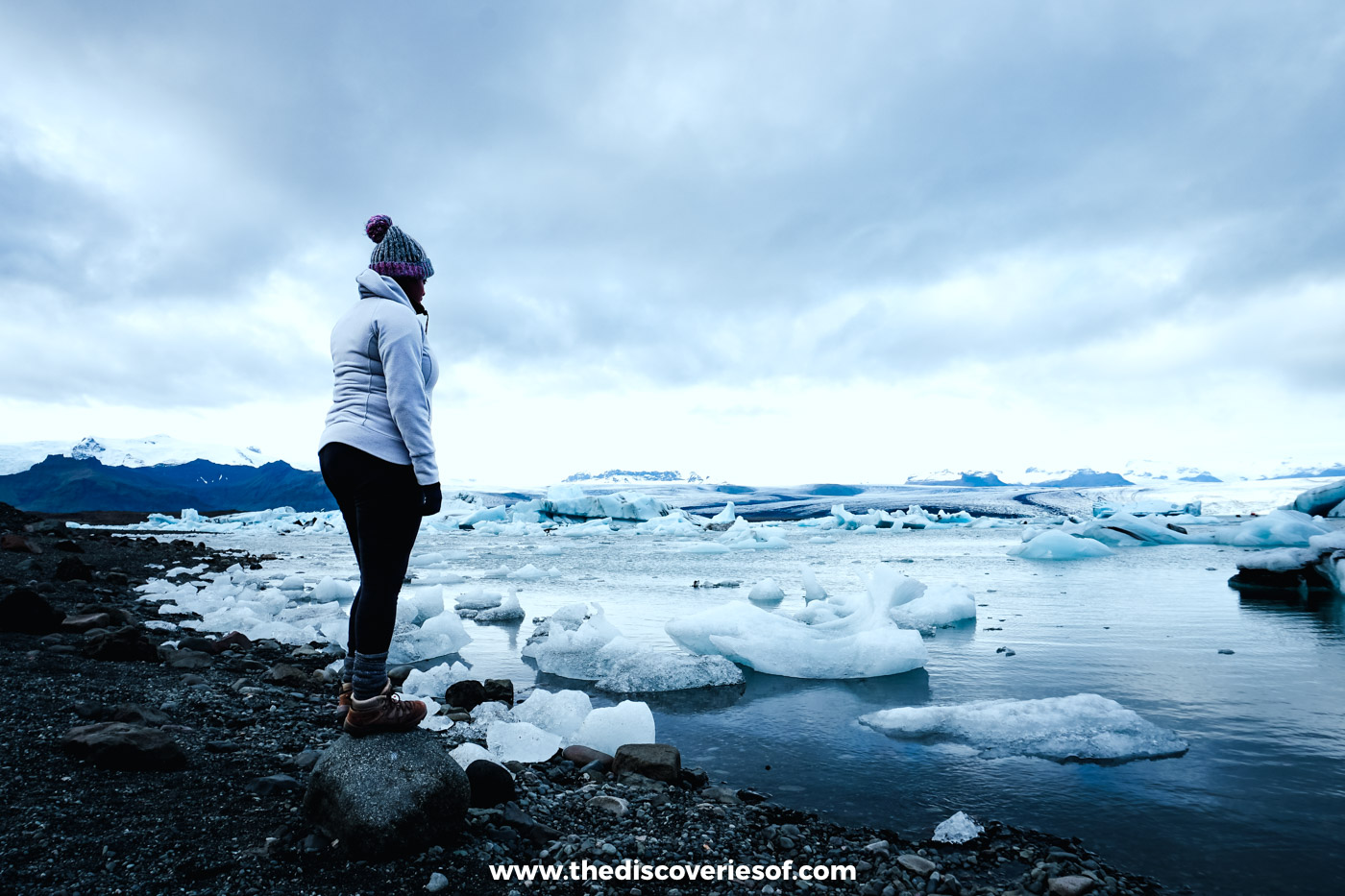
Some are large, some small, all ranging in colour from a pure and brilliant white to a deep aquamarine that somehow looked colder than anything I’d ever seen before.
At a time when you can find a picture of almost any destination in the world in a matter of seconds, it can sometimes feel like the surprise has been taken out of travelling. The unknown has been replaced with an endless scrolling punctuated by a double tap here or there to show our appreciation.
But Jökulsárlón was different.
Here was a place that I’d seen so many pictures of and had researched thoroughly, and yet nothing prepared me for the reality: the sight of the icebergs floating serenely on the water, the hiss and crack of ice splitting and breaking, the splash as yet another chunk fell into the water.
Walk the shore to leave the crowds behind
Most visitors stay within a stone’s throw of the main car park, the café and the boat jetty. Don’t. The shoreline runs for kilometres in both directions, and this is the one tip I’d give anyone: walk for just a few minutes and you’ll leave around 90% of the crowds behind.
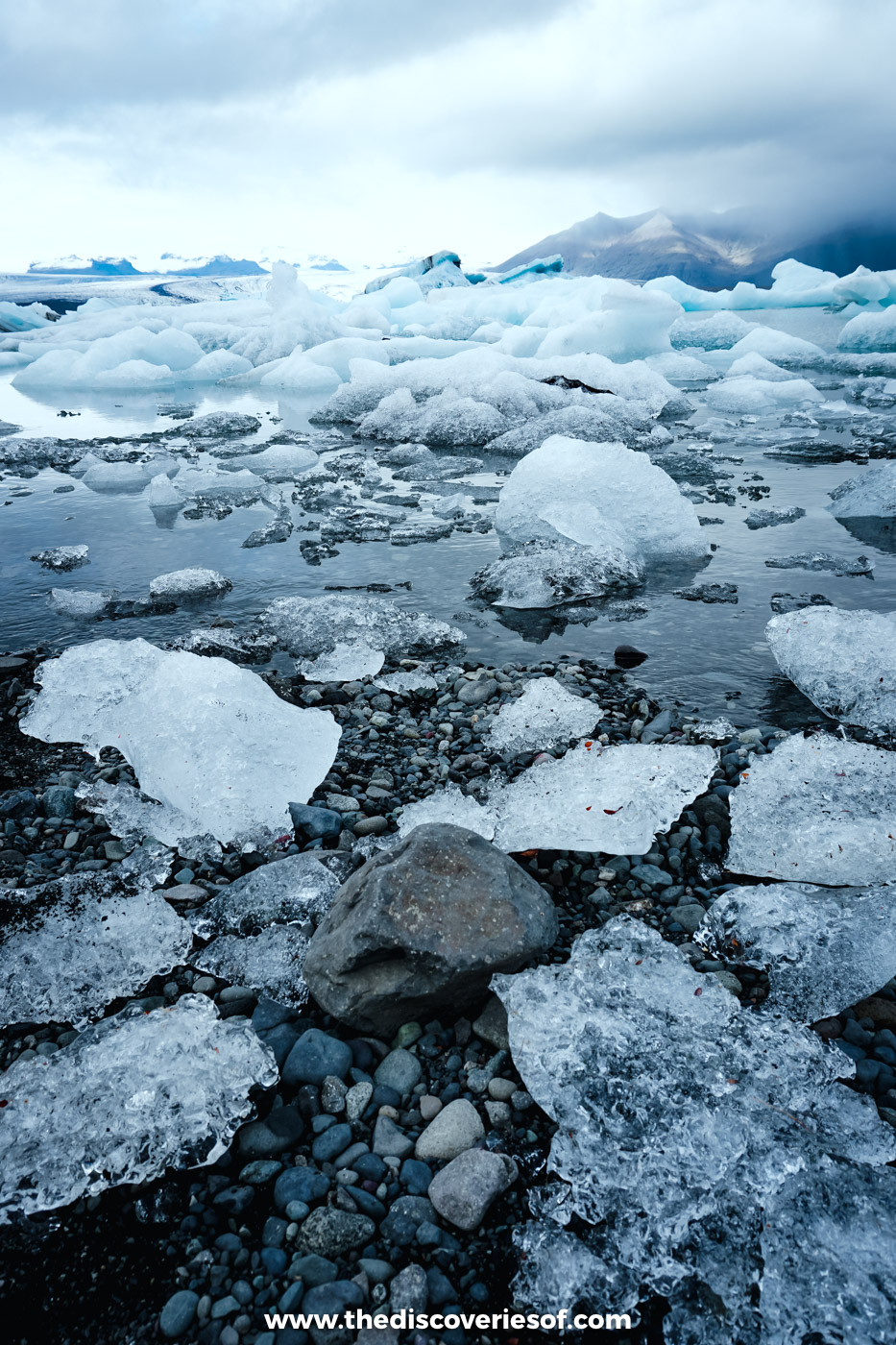
That’s what I did. I hiked along different stretches of the lagoon, and the further I got from the car park, the better the views became and the fewer people I passed. In September there weren’t many to begin with. Out on the quieter shore it was eerily silent, apart from the occasional roar as an iceberg split and toppled into the water.
I’ll be honest: I didn’t take a boat out. I had the long drive back to Rangá ahead of me, with Svartifoss still to squeeze in on the way west, and time was against me. If you have more of it than I did, the boat tours below are a brilliant way to get closer to the ice. But don’t feel short-changed if you don’t: walking the shore is free, and it’s where the lagoon felt most peaceful to me.
A few things to know before you set off along the water’s edge:
- Stick to the shore and never step onto the ice, even the pieces that look grounded. Icebergs can roll over without warning, and the floating ones can carry you away from the bank.
- The ground is rough, stony and sometimes muddy, so walking boots beat trainers.
- The channel by the Ring Road bridge, where the lagoon empties into the sea, is where you’re most likely to spot seals.
The story of Jökulsárlón
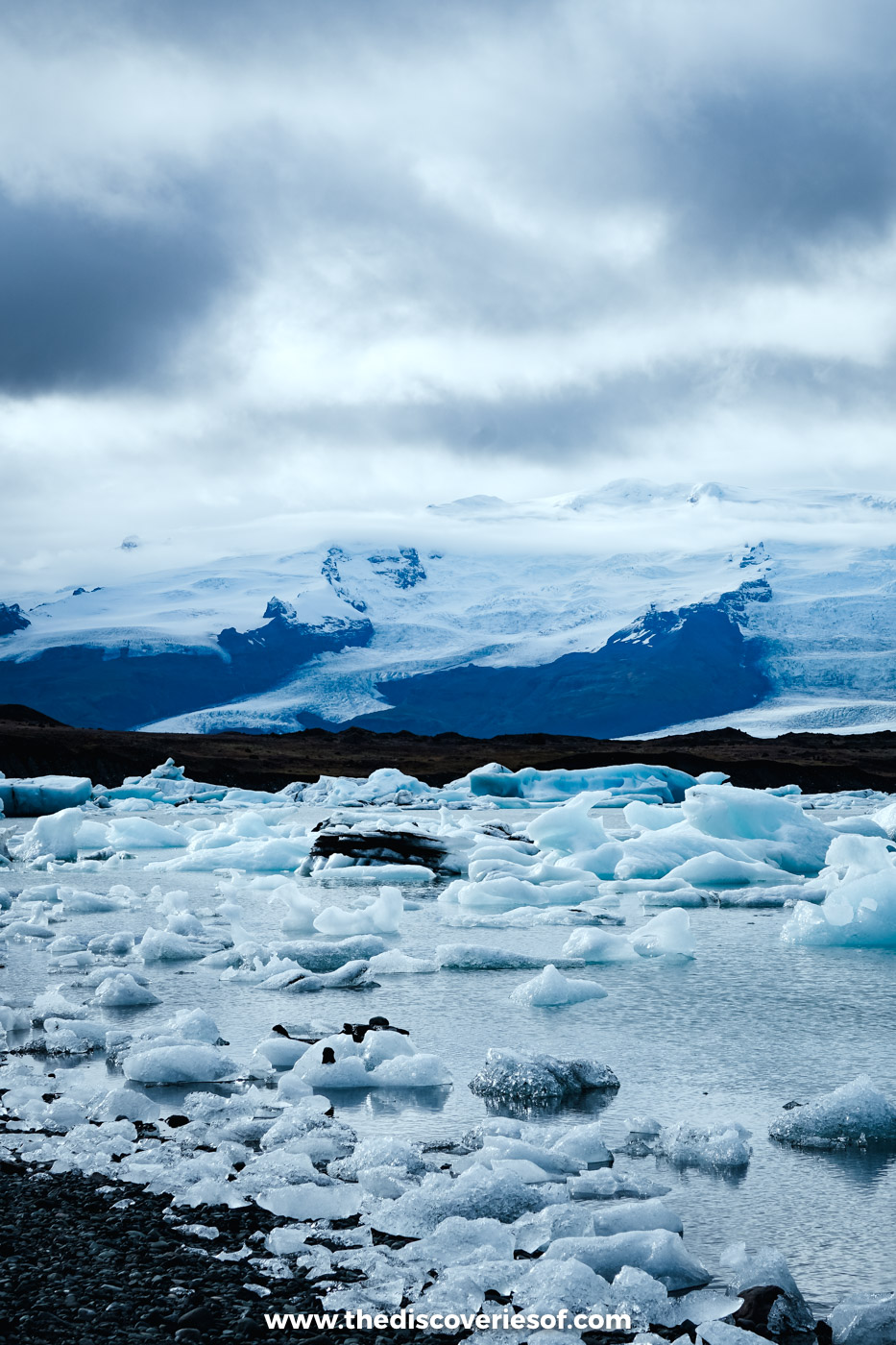
- Perched on the edge of Vatnajökull National Park (and part of the park since 2017), Jökulsárlón is a large lagoon in the south east of Iceland, about 370 kilometres from Reykjavik.
- It’s the deepest lake in the country. At its deepest point, it plunges to more than 280 metres (around 930 feet). It’s so deep because the space it fills was carved out by the glacier itself.
- The name translates as “glacial river lagoon”. You can always count on the Icelandic to call a spade a spade.
Want to know more? Here’s a closer look at how this landscape came to be.
The lagoon is expanding, and that’s not a good thing
Unfortunately, beautiful as the lake is, it’s not all roses.
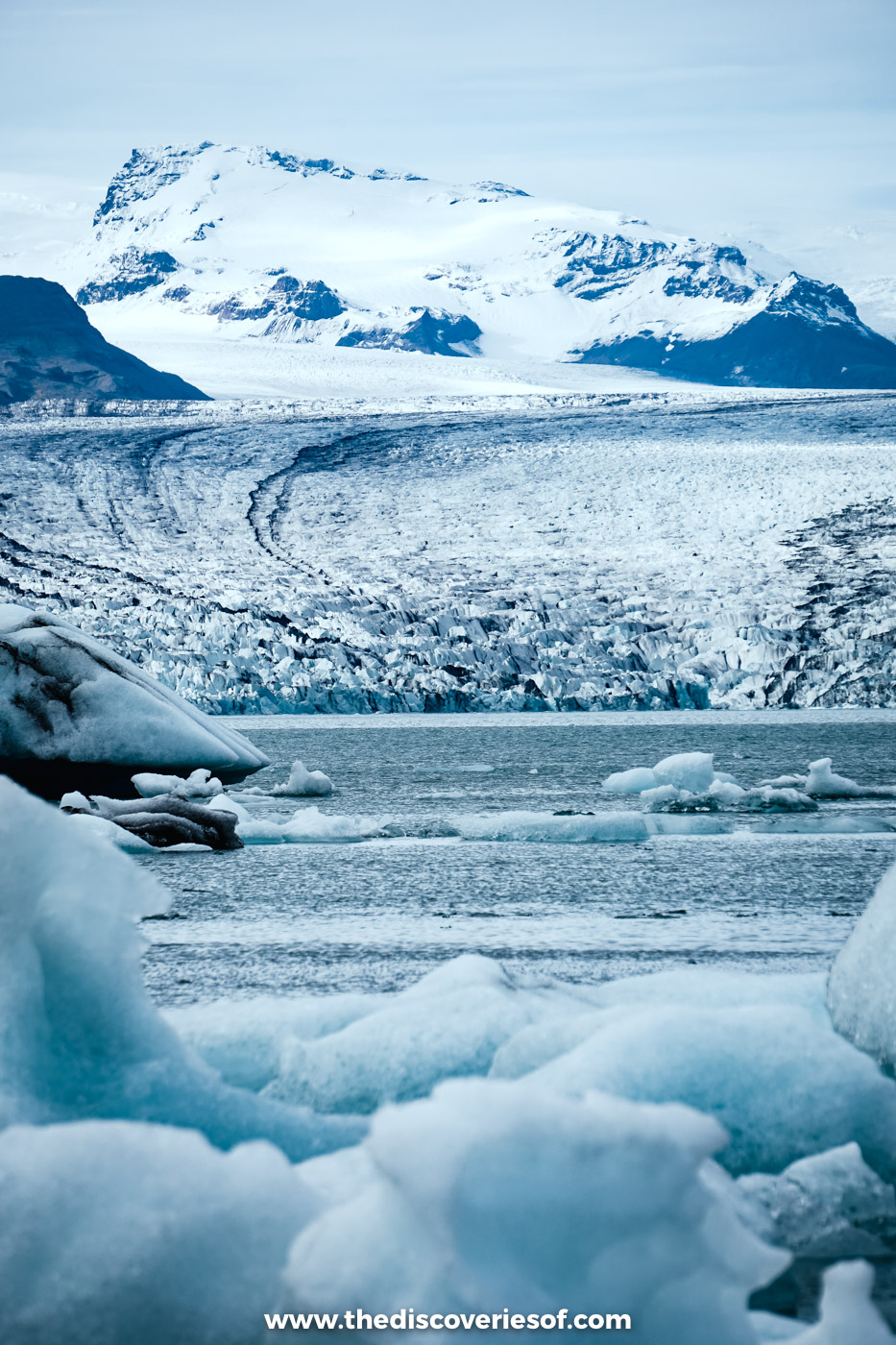
It’s a sad fact that the reason we see this impressive landscape today is the alarming rate at which the Breiðamerkurjökull glacier is retreating.
The glacier used to fill the space where the lagoon is today. The lake only began to form in the 1930s, as the ice pulled back from the coast, and it has roughly quadrupled in size since the 1970s, from about 8 square kilometres to around 25. The glacier front now sits about 8 kilometres from the sea. At a time when we know we need to take drastic action to stem the curve of global warming, it’s difficult to look at these facts and not feel despondent.
It’s had a starring role in a lot of films
Not only does this glacial lake feature in pretty much every “best of Iceland” photo line-up, it’s also appeared in quite a few films.
A View to a Kill, Die Another Day, Lara Croft: Tomb Raider and Batman Begins all filmed here. In Die Another Day, the lagoon was even frozen over specially for a car chase across the ice. It’s no stranger to the big screen.
Why are the icebergs different colours?
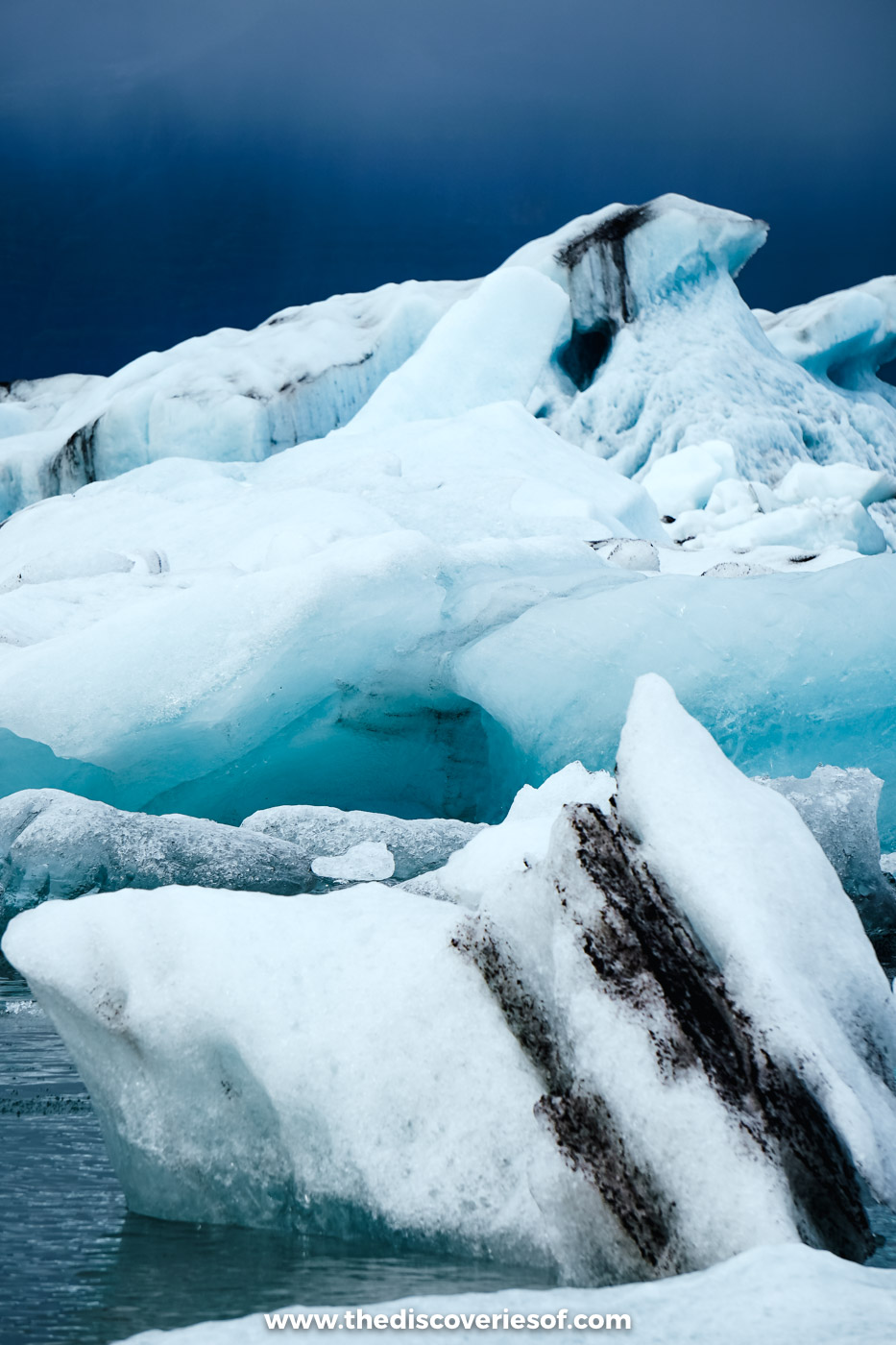
I know what you’re thinking. Those colours are not real.
Guess again.
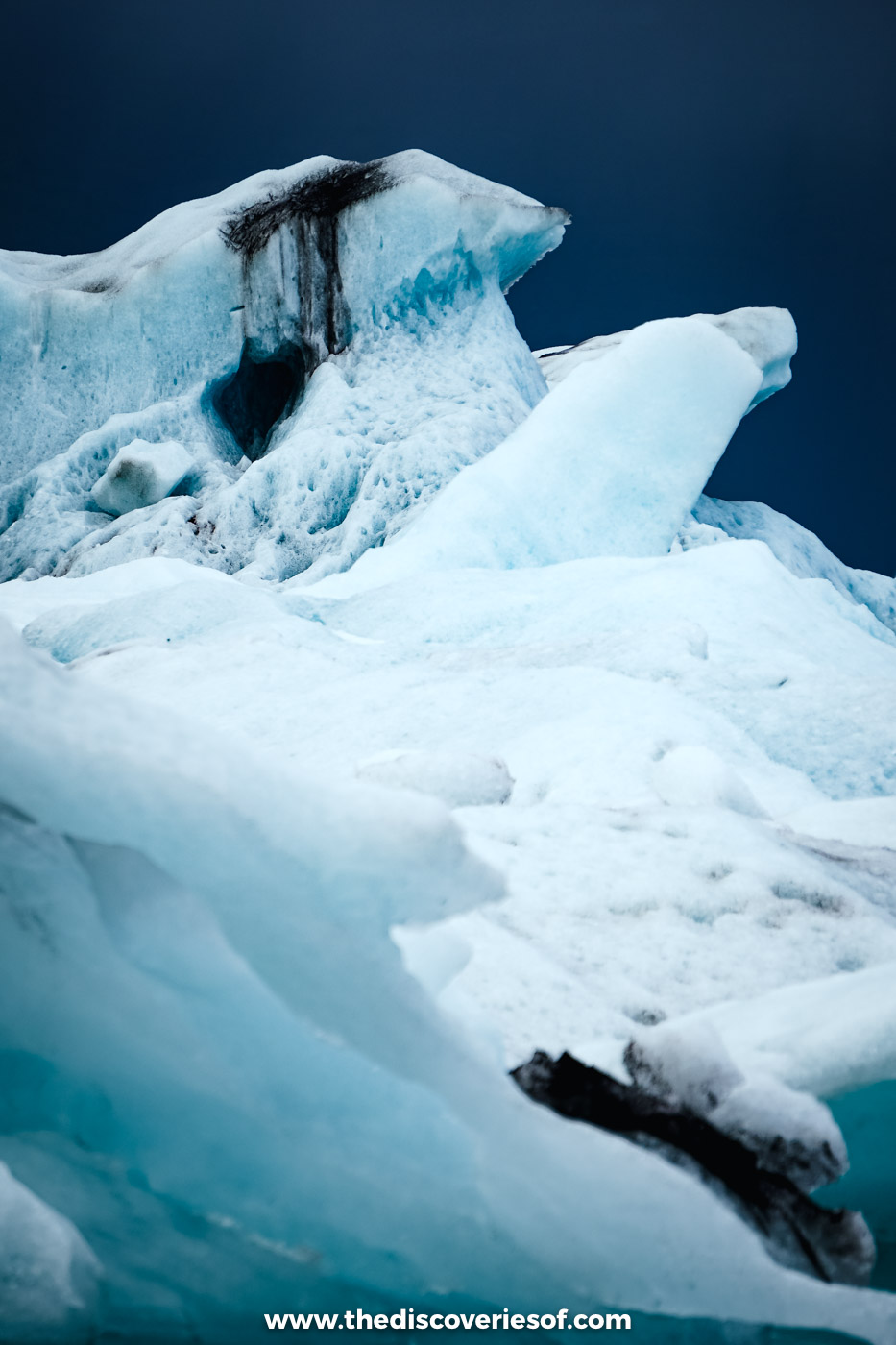
The icebergs’ milky white and bright blue colours are actually a play of light caused by air trapped within the ice.
Top Tip
The more air trapped in the ice, the whiter it looks, whereas the denser the ice, the deeper blue it appears. Add stripes of jet black and brown from layers of volcanic ash and sediment picked up by the glacier, and the effect is pretty striking overall. Freshly flipped icebergs show off the bluest ice, so keep an eye out for any that have just rolled.
How big are the icebergs?
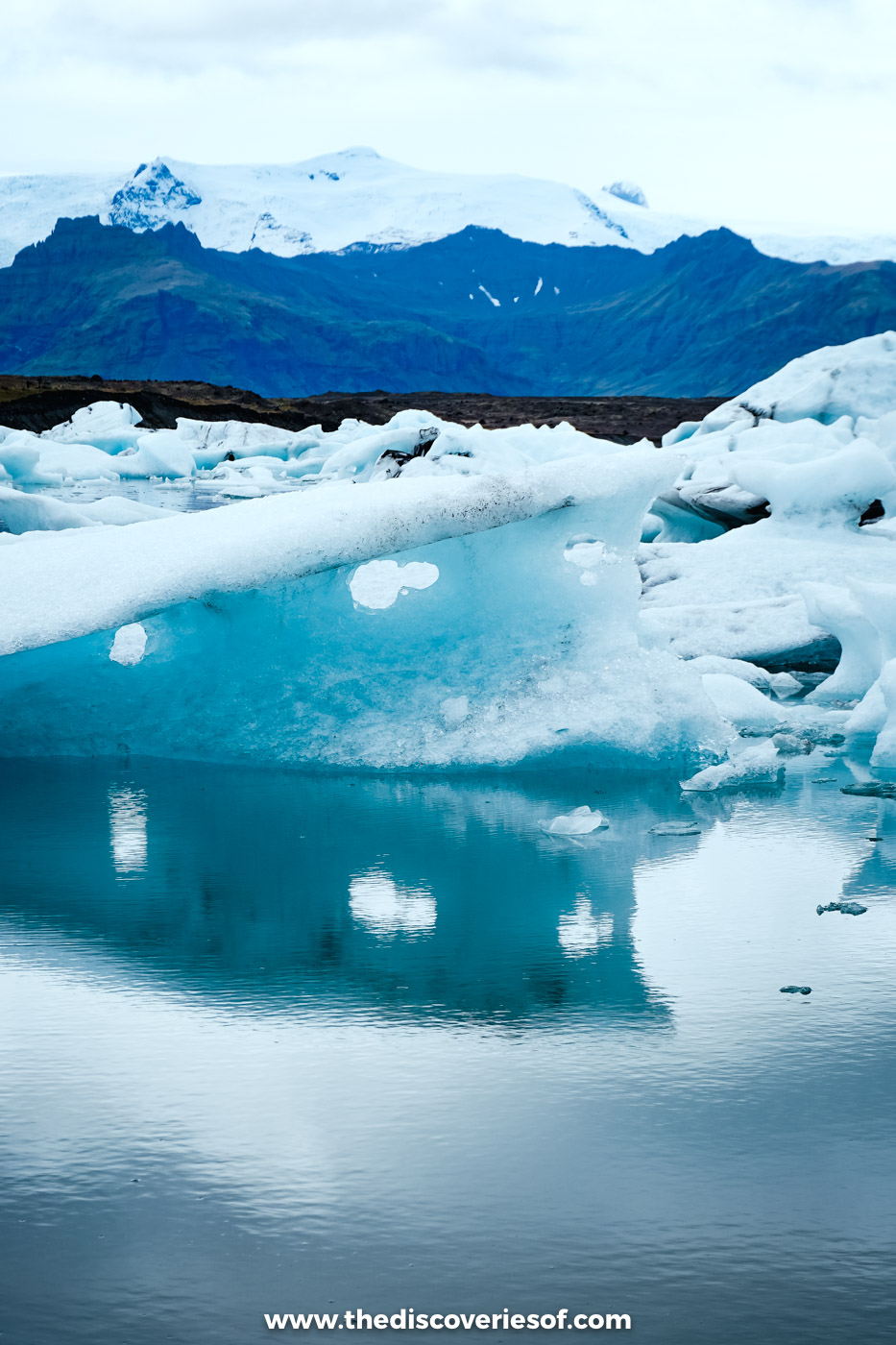
The icebergs come in all imaginable shapes and sizes, with some of the biggest measuring between 20 and 30 metres tall and wide. Plus, what you see above the surface is generally only about 10% of the iceberg itself, so they can be pretty huge.
What wildlife can you see at the lagoon?
If you’re lucky and you get your timing right, you can often spot seals at the mouth of the lagoon, just before it opens out into the sea. They come for the fish (herring and capelin are sometimes carried in on the tide), and they gather in the largest numbers in winter. On my September visit I didn’t see a single one, so hopefully you’ll have better luck.
Like much of Iceland, Jökulsárlón is a birdwatcher’s delight, too. Arctic terns, gulls and skuas come to feed in its fishy waters, especially in the summer months.
Can you see the Northern Lights here?
If you’re visiting Iceland between September and April, you may want to try to combine your visit to the lagoon with a viewing of the Northern Lights.
Like pretty much the whole of Iceland, you can see the Northern Lights here, and with the aurora reflected in the water between the icebergs, it’s a truly spectacular setting. There’s no light pollution to speak of on this stretch of coast, but you’ll need to stay nearby rather than drive back the same night.
Now, I’ve written an in-depth guide to seeing the Northern Lights in Iceland, and you have to remember that it is mostly a matter of luck. There are some things that you can do to increase your chances of seeing the lights (like going at the right time of year!).
Boat tours and kayaking on the lagoon
Now, many of you will be satisfied with simply rocking up to the lagoon, walking around for a couple of hours, taking some pictures and then popping off back to your accommodation. There’s nothing wrong with that at all (it’s exactly what I did). But if you want to see the ice from the water, there are three ways to do it, all run from the main car park.
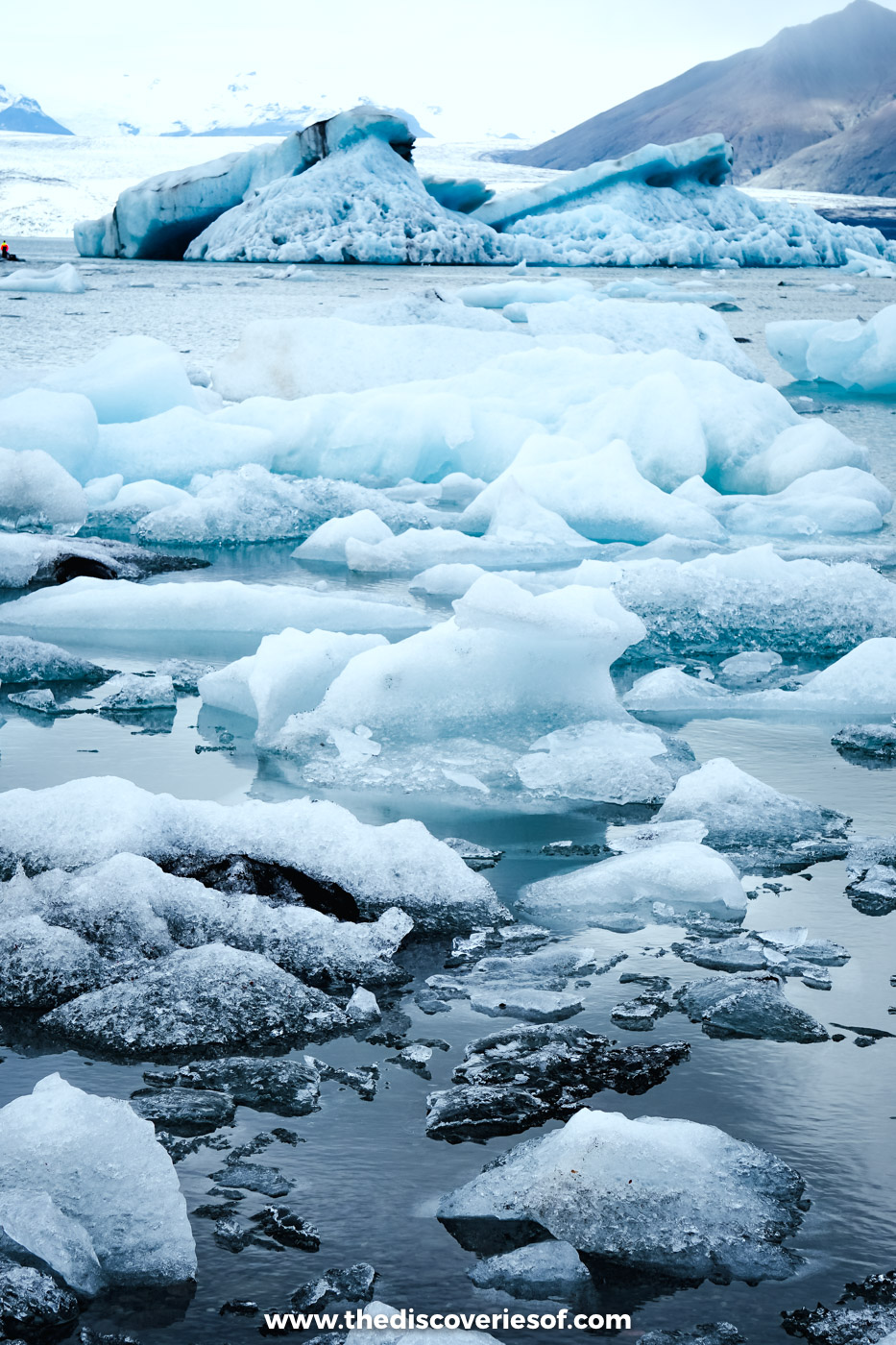
Amphibian boat tour
The classic option. The amphibious boats drive down the shore and straight into the water for a gentle 30 to 40 minute cruise among the icebergs, with a guide on board. Tours run from May to November and cost ISK 7,100 (about £44) for adults, with reduced prices for children aged 6 to 12 and free places for under-sixes. In summer, boats leave at least every 30 minutes.
Zodiac boat tour
Smaller, faster and much closer to the action. The Zodiacs take small groups right up towards the glacier front, which the amphibian boats don’t reach. The tour lasts about 75 minutes, runs from May to October and costs ISK 16,600 (about £102). Children must be at least 10 and 130 centimetres tall. There are only around ten departures a day in high season, so book ahead.
Kayaking
For something a little different, you can paddle among the icebergs in a kayak. Guided tours run from about May to September and last around an hour and a half, with all the kit provided. The minimum age varies by operator, from 10 to 14.
Do
Book a guided kayaking tour on the lagoon, or book the amphibian and Zodiac boats directly with the lagoon’s boat operator, Ice Lagoon.
In all cases, make sure you wrap up warm: the wind coming off the ice is bitter, even in summer.
But you shouldn’t get in or go swimming. Ever.
One word. Hypothermia.
Diamond Beach: where the icebergs wash ashore
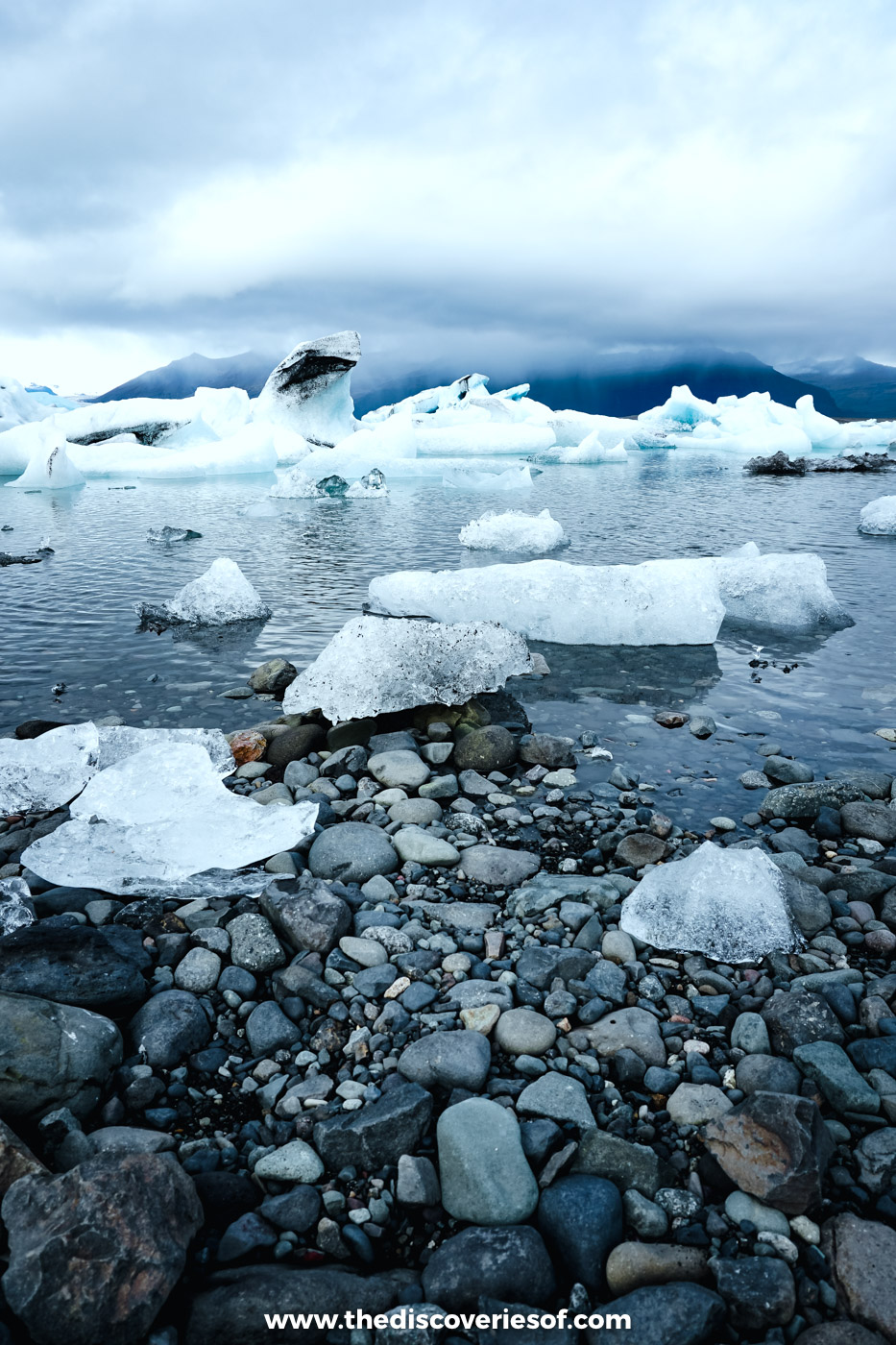
Across the Ring Road from the lagoon is the black sand beach that gives the area its nickname. Its official name is Breiðamerkurfjara, and the stretch on the east side of the river mouth is also known as Eystri-Fellsfjara. Ice that has drifted out of the lagoon washes back up on the sand, where it glitters against the black like a scattering of giant diamonds.
It’s a five-minute drive or a short walk from the lagoon car park, and there are smaller car parks right by the beach on both sides of the river. I walked over late in the day, and by then there wasn’t much ice left on the sand. How much there is depends on the tides, the wind and the season: some days it’s strewn from end to end, other days there are just a few chunks. The low sun of the early morning and late evening makes the ice glow, so it’s worth timing your visit if you can.
Top Tip
Treat Diamond Beach with the same respect as Reynisfjara. The Atlantic surf here is powerful, and waves can surge far further up the sand than you expect. Stay well back from the water’s edge, never turn your back on the sea, and never climb onto the ice on the beach: the blocks can be swept out by the next wave.
More ice nearby: Fjallsárlón and ice caves
The lagoon is the star, but it isn’t the only place along this stretch of coast where the ice meets the road.
Fjallsárlón
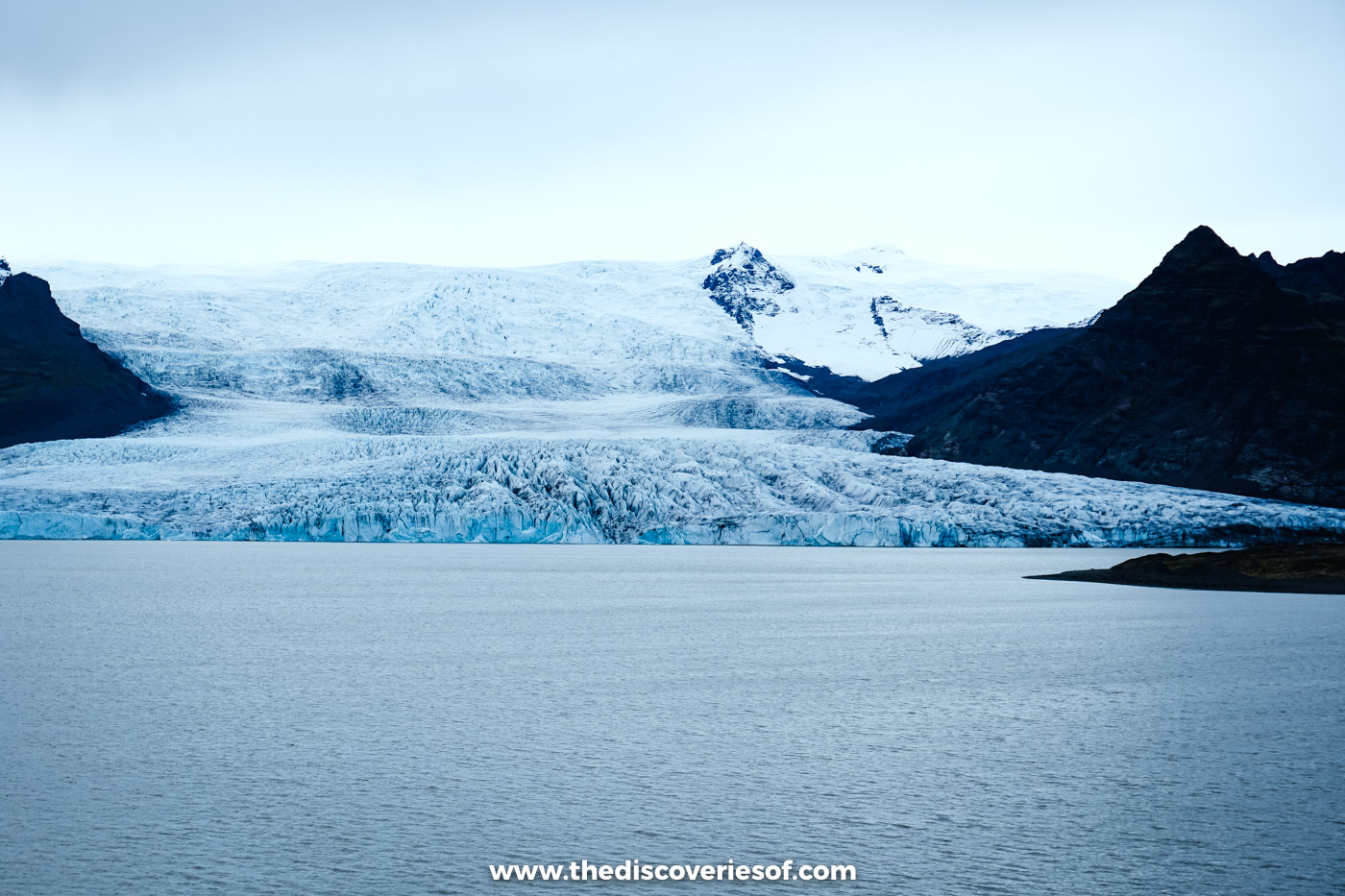
About 10 kilometres (10 minutes’ drive) west of Jökulsárlón, Fjallsárlón is a smaller glacier lagoon where the Fjallsjökull glacier tumbles straight down into the water. The glacier face feels much closer than at Jökulsárlón, it’s usually quieter and the car park is free. I stopped here too, and it’s well worth the detour. Boat tours on the lagoon run from April to November and cost ISK 11,300 for about 75 minutes, and the FROST restaurant on site is a good place to warm up.
Ice caves in winter
From roughly November to March, guided tours leave from the Jökulsárlón area to the natural ice caves that form inside Breiðamerkurjökull. You can only visit them with a certified guide, as the caves change every year and can collapse, and tours are cancelled in bad weather or when it’s too warm. Book well in advance.
How to get to Jökulsárlón
Jökulsárlón sits on the south east coast of Iceland, on a relatively remote stretch of the Ring Road, so your biggest worry is going to be how to get there.
You have two main options when it comes to travelling to the lagoon from Reykjavik.
Drive yourself from Reykjavik
The first of these is to rent a car, drive onto Iceland’s famous Ring Road and truck along until you see the signs for the lagoon. It sits right beside the road, just west of the bridge over the river.
Now, Iceland isn’t the cheapest country to travel in, but one of the ways that you can reduce your travel spend is to travel independently. Hiring a car and driving to the lagoon is going to be the most cost-effective and flexible way you can do the trip.
It’s about 370 kilometres from Reykjavik, which is between four and a half and five hours of driving without stops. That’s perfectly doable during the long days of summer, but I wouldn’t recommend it as a day trip during the winter months, when days are short and conditions can be difficult. Check road.is for road conditions and safetravel.is for alerts before you set off.
If you are visiting in winter, I’d instead recommend taking the trip over two days and staying somewhere nearer to the lagoon.
Either way, you can (and should) combine the lagoon with some of the south coast’s other famous sights, such as Reynisfjara, the Reynisdrangar sea stacks and Skógafoss waterfall. That’s exactly what I did: I was based at Hotel Rangá, near Hella, which is about three and a half hours’ drive from the lagoon, so it made for a long but unforgettable day.
Getting There
Rough driving times to the lagoon without stops: Reykjavik 4.5 to 5 hours (about 370 km), Hotel Rangá and Hella about 3.5 hours, Vík about 2.5 hours (190 km), Skaftafell about 45 minutes (56 km) and Höfn about an hour (80 km) to the east. Parking at the lagoon costs ISK 1,110 for a car with up to five seats, paid through the Parka app or at the machines; it’s valid until midnight and half price if you’ve already paid at Skaftafell that day.
Take a full-day tour from Reykjavik
Your second option is to hop on a tour.
As I mentioned before, it is a long trip from Reykjavik: full-day tours to Jökulsárlón take around 14 hours.
Most stop at a few other south coast sights along the way. This glacier lagoon and Diamond Beach day tour, for example, includes an amphibian boat ride on the lagoon, half an hour on Diamond Beach and stops at Stjórnarfoss, Vík and Seljalandsfoss on the way.
Is it worth the long travel time? Yes, certainly. However, it is a long distance, so if you are taking a tour, be sure to check that it also stops at a few places along the way. Not only will this break up the journey, but it will give you the chance to see more than just the inside of your coach.
Do
Check all tours to the lagoon, including multi-day south coast trips and winter ice cave tours
Where to stay near the lagoon
If you want to see the lagoon at its quietest, in the early morning or late evening, or try for the Northern Lights over the ice, stay the night nearby. There are only a handful of places on this stretch of coast, so book early.
- Hali Country Hotel: a family-run farm hotel about 15 minutes east of the lagoon, with its own restaurant.
- Fosshotel Glacier Lagoon: a modern hotel about 20 minutes west, with big windows looking out towards Vatnajökull.
- Hotel Rangá: my base on both of my south coast trips, and the place to stay if you’d rather make the lagoon a (very) long day out and spend your nights watching for the aurora. Read my Hotel Rangá review.
Tips to make the most of your visit
- Arrive early in the morning or later in the afternoon. Day tours from Reykjavik tend to arrive around the middle of the day, so the shore is busiest then.
- The café by the main car park is open all year, from 9am until 5pm in winter and until 7pm in summer, and it has toilets.
- The weather here changes fast. On my visit, rain showers swept across the lagoon between brighter spells, so don’t give up on a grey day.
- Plan to spend at least an hour or two at the lagoon, plus half an hour at Diamond Beach, and longer if you’re taking a boat tour.
Map
Read next
- The best things to do in Iceland
- Visiting Reynisfjara black sand beach
- Reynisdrangar sea stacks
- Iceland’s most stunning waterfalls
- When’s the best time to see the Northern Lights in Iceland?
- Is Iceland expensive?
- Hotel Rangá review
- Iceland’s hidden gems
- Iceland travel guide
Love this? Save and share on Pinterest

Discover the top things to do, insider tips and hidden gems in our Iceland Travel Guide.
Read the guides →




