Planning a trip to Saguaro National Park? Before you strap on your hiking boots, read this guide to the best time to visit Saguaro National Park, from the cool hiking months and the saguaro bloom to monsoon season and fee-free days.
Saguaro National Park is split into two districts, East and West, on either side of Tucson, but the best time to visit both is pretty much the same.
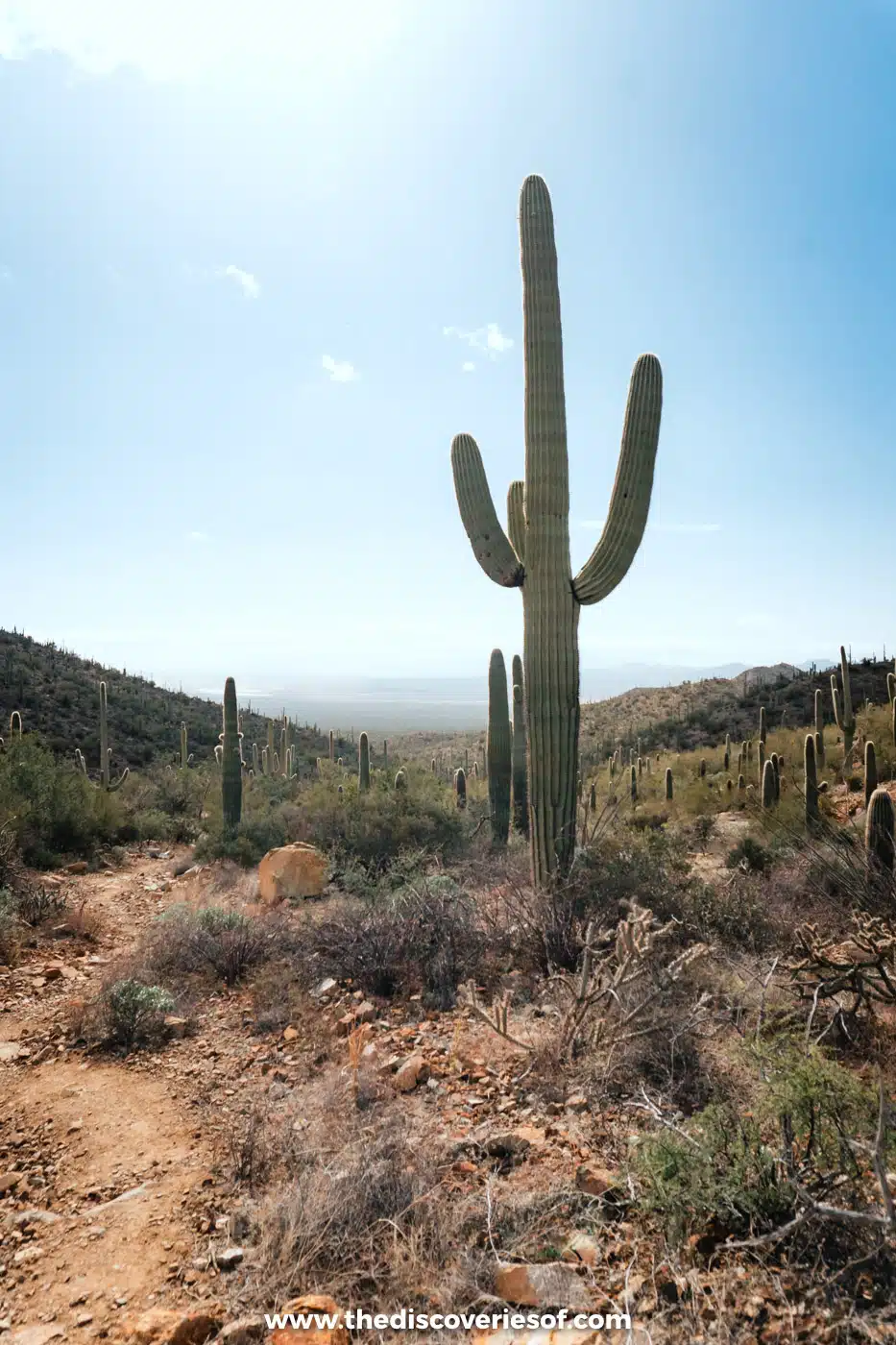
I visited in February, when I hiked the King Canyon and Gould Mine loop in Saguaro West. If you only have time for one district, go West, which has the most saguaro and is easier thanks to its smaller size. Personally, I think the West also had the most stunning scenery too.
Whether you want to hike, see the saguaros bloom or save yourself some cash, I’ve written this guide to help you plan the ultimate Saguaro trip. Here’s what you need to know.
Saguaro National Park at a glance: when to go
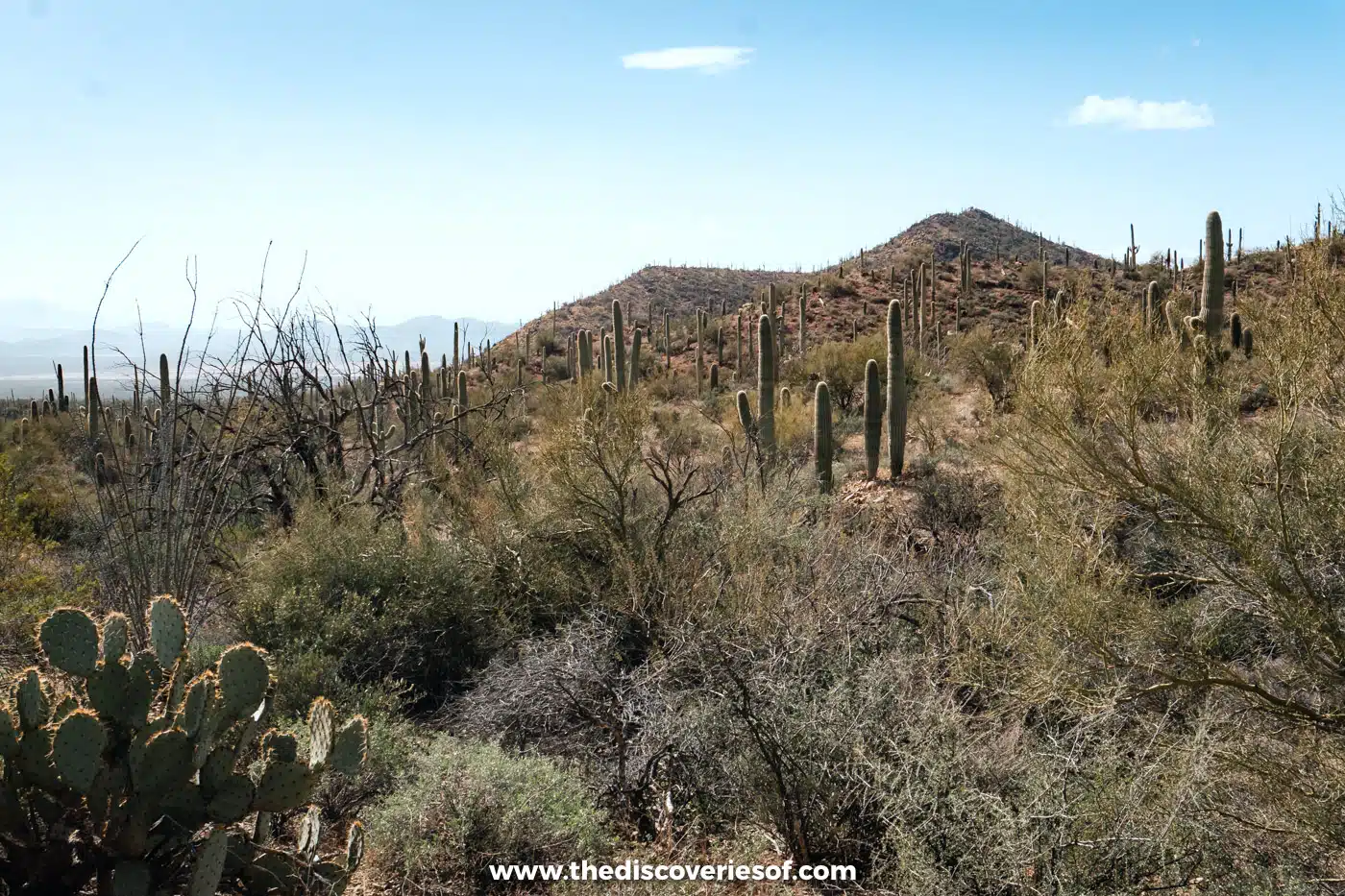
The best time to visit Saguaro National Park can differ from person to person, depending on what you enjoy. I visited in February and the temperatures were still warm but very, very pleasant.
If you’re an avid hiker, the best months are in winter when the temperatures are cooler and allow longer treks. In contrast, a flower enthusiast should plan to visit in mid to late March for the wildflowers, April and May for most of the blooming cacti, or late May to early June for the saguaro blossoms themselves.
The summer months are very hot and dry at first, followed by a monsoon season that doesn’t let up the heat but turns up the humidity A LOT.
This makes longer trails almost unbearable: the best way to experience the shorter trails is to hit them early in the morning before the sun gets too strong. The park service advises limiting outdoor activity to before 10am or after 4pm in summer.
- Best for hiking: December to February, with daytime highs of around 19 to 21°C (66 to 69°F)
- Best for wildflowers: mid to late March
- Best for the saguaro bloom: late April to early June, peaking from the last week of May to the first week of June
- Busiest: November to March, peaking from December to February
- Quietest: July and August, the hottest and stormiest months
- Monsoon season: 15 June to 30 September, with storms usually arriving in early July
The best time to visit Saguaro National Park, AZ
What is the best month to travel to Saguaro National Park?
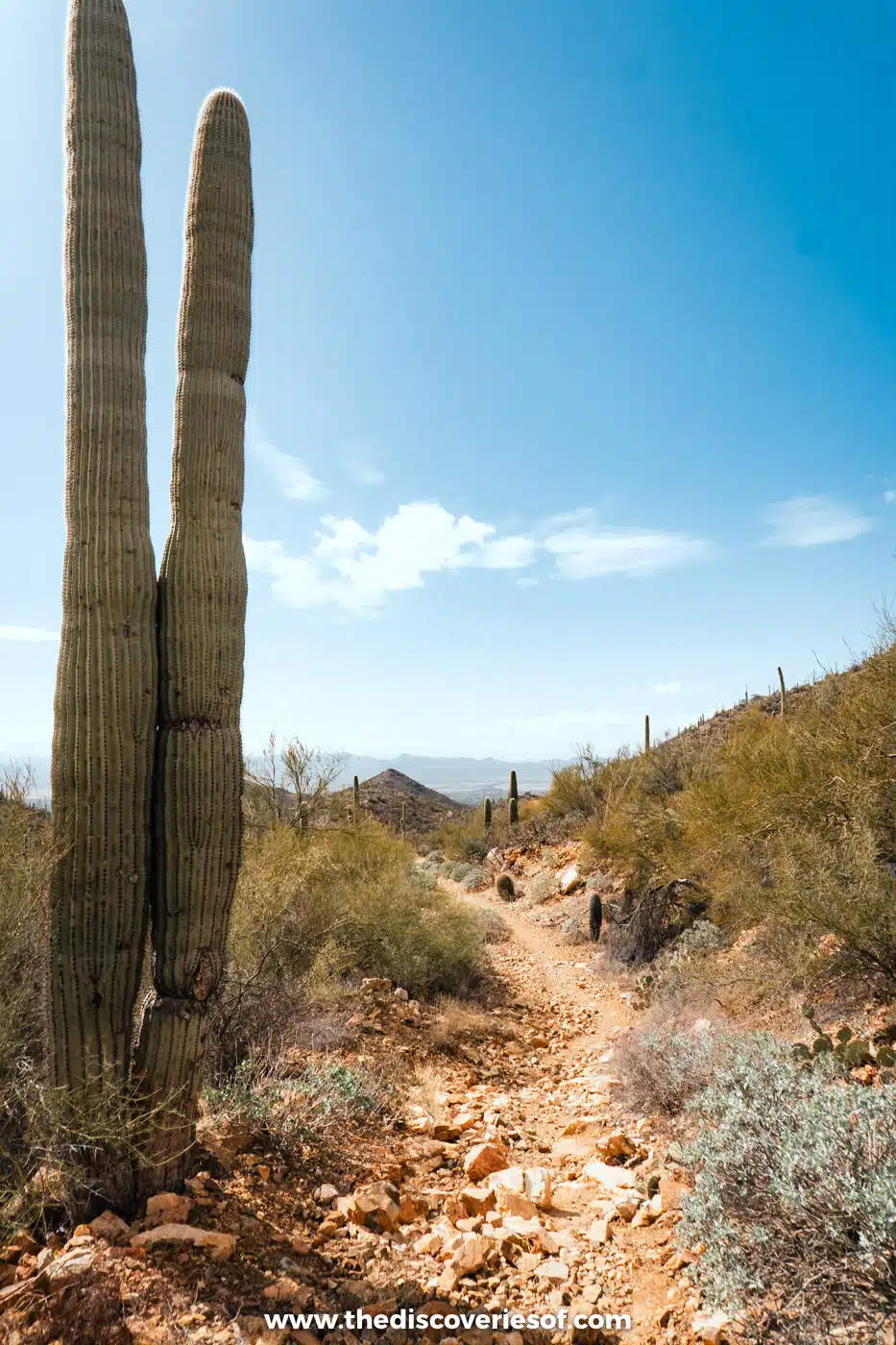
You can’t go wrong with December, January or February, really.
The temperatures stay pretty consistent, with the highs varying between 19°C and 21°C (66°F to 69°F) and the lows between 5°C and 6°C (41°F to 43°F). You can expect about four rainy days a month.
Here’s how the averages for Tucson, which sits between the park’s two districts, look across the year.
| Month | Average high | Average low | Rainy days |
|---|---|---|---|
| January | 19°C (67°F) | 5°C (41°F) | 4 |
| February | 21°C (69°F) | 6°C (43°F) | 4 |
| March | 24°C (76°F) | 9°C (48°F) | 3 |
| April | 28°C (83°F) | 12°C (53°F) | 2 |
| May | 33°C (92°F) | 17°C (62°F) | 1 |
| June | 38°C (101°F) | 22°C (71°F) | 2 |
| July | 38°C (100°F) | 25°C (76°F) | 9 |
| August | 37°C (99°F) | 24°C (75°F) | 9 |
| September | 35°C (95°F) | 21°C (70°F) | 4 |
| October | 30°C (86°F) | 15°C (59°F) | 3 |
| November | 24°C (75°F) | 9°C (48°F) | 3 |
| December | 19°C (66°F) | 5°C (41°F) | 4 |
When’s high season?
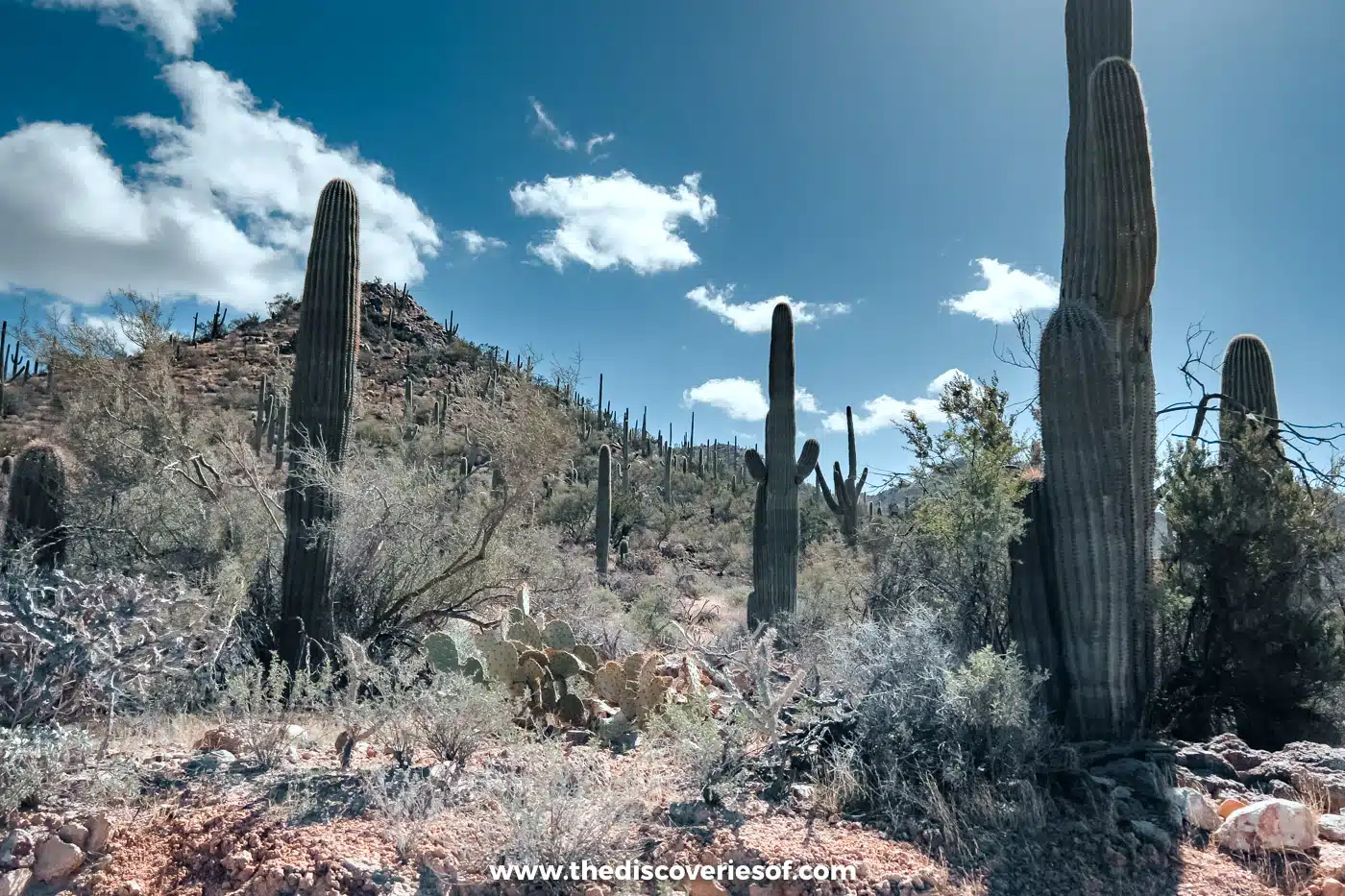
Saguaro National Park is bustling from November to March, with the winter months of December to February being the peak. November provides slightly higher temperatures than winter allows, while March brings the spring wildflowers for those who want to snap pretty photos.
The quietest months are July and August, when the heat keeps most visitors away.
Tucson itself is at its busiest during the winter gem shows, which run from late January to mid-February (27 January to 14 February in 2027), so book your hotel early if you’re visiting then.
The cheapest time to visit
There is no ideal season to visit Saguaro National Park for budget travellers. However, the National Park Service waives entrance fees on certain days of the year, so if you want to skip the entrance fees, jot these dates down in your journal.
From 2026, fee-free days apply to US citizens and residents only. The 2026 dates are Presidents’ Day (16 February), Memorial Day (25 May), Flag Day (14 June), the Independence Day weekend (3 to 5 July), the National Park Service’s birthday (25 August), Constitution Day (17 September), Theodore Roosevelt’s birthday (27 October) and Veterans Day (11 November).
The rest of the year, a vehicle pass costs $25 and covers both districts for seven days, and the park only accepts cards, not cash. If you’re visiting several national parks, the America the Beautiful pass ($80 for US residents, $250 for non-residents) covers Saguaro too.
Top Tip
US citizens and residents aged 62 and over can buy the Senior Pass ($20 a year or $80 for life), and US veterans and Gold Star families can get a free Military Lifetime Pass.
To see the saguaros bloom

The saguaro’s waxy white flowers, Arizona’s state wildflower, start to open in the last two weeks of April and peak from the last week of May to the first week of June. Each flower opens at night and closes the following afternoon, so head out early in the morning to see them at their best.
Most of the park’s other cacti bloom in April and May. After the monsoon season in late summer, a smaller group of desert flora, including barrel cactus, flowers after soaking up all that water.
To hike the best trails
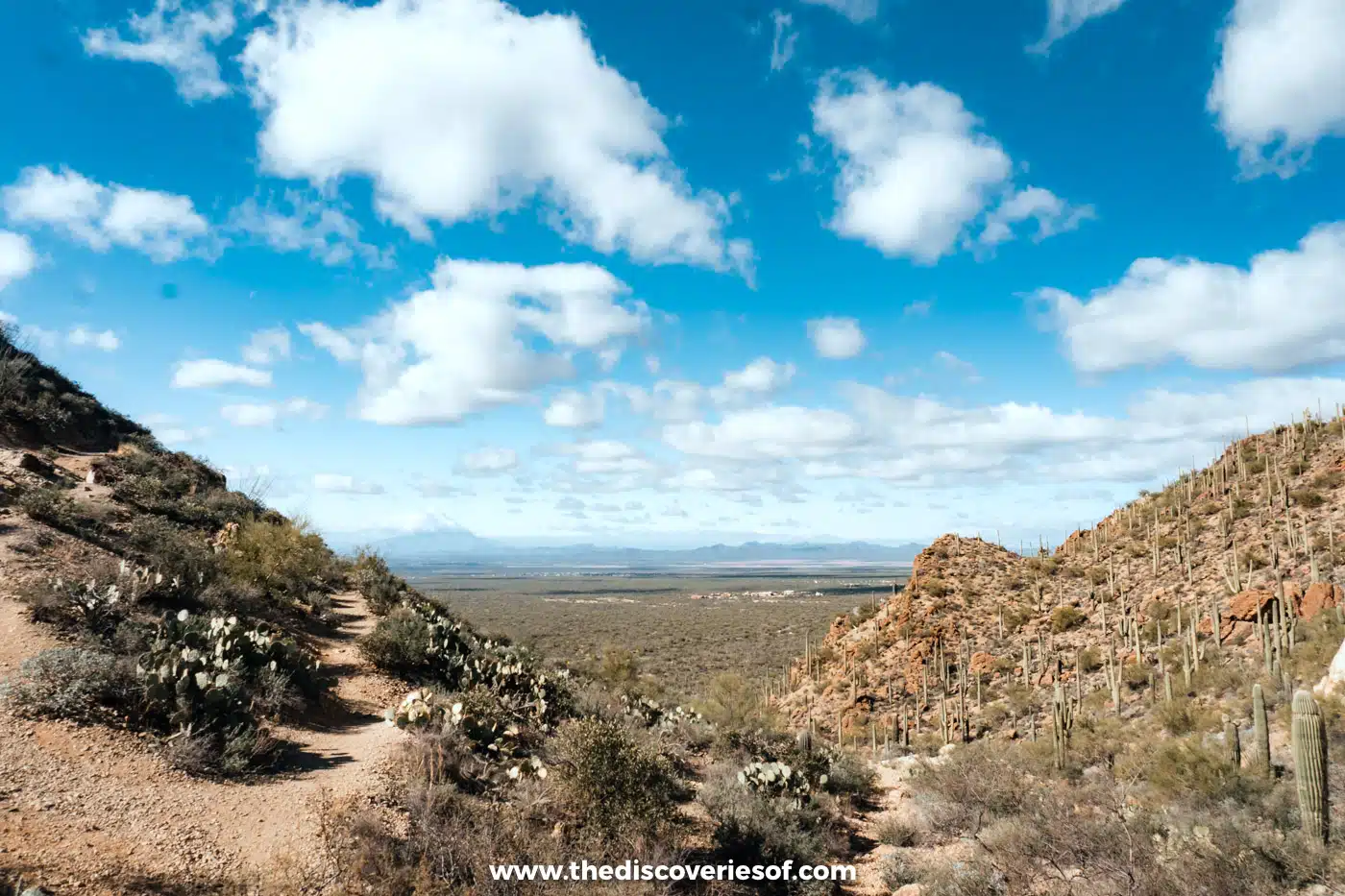
While some of the best trails in Saguaro are quite short, the longer sun-bathed ones typically provide the best panoramic views.
Intense summer heat makes these treks hard and gruelling, so many people prefer to tackle them in the winter months of December to February for those gorgeous vistas.
My pick for a shorter hike is the King Canyon and Gould Mine loop: a cool 2.5-mile hike through the cacti-covered canyon and back on a pretty loop, with a picnic spot at the halfway point. It’s nice and easy, with some elevation gain but not much (about 380ft), so it’s a great choice if you’re short on time.
To see the stars
Stargazing in the desert is a must-do experience, and Saguaro is certified as an Urban Night Sky Place by DarkSky International. The park service says winter is the best season, thanks to the long nights, while monsoon clouds often cover the sky from July to September.
The glow from nearby Tucson is visible from the park (hence the “urban” in its title), so plan where you go. In the East, Cactus Forest Loop Drive is usually open until 8.30pm, while the West’s Bajada Loop closes to vehicles at dusk, so the easiest way to stargaze there is on a ranger-led star party. For more dark sky spots, see my guide to stargazing in the US.
To see the wildflowers
Mid to late March is usually the best time for wildflowers in the park, with lupine, gold poppies, desert marigold and ocotillo all in bloom, so if you crave a colourful hike, this is the time to do it.
Saguaro National Park by season
Spring: wildflowers and the saguaro bloom
March to May
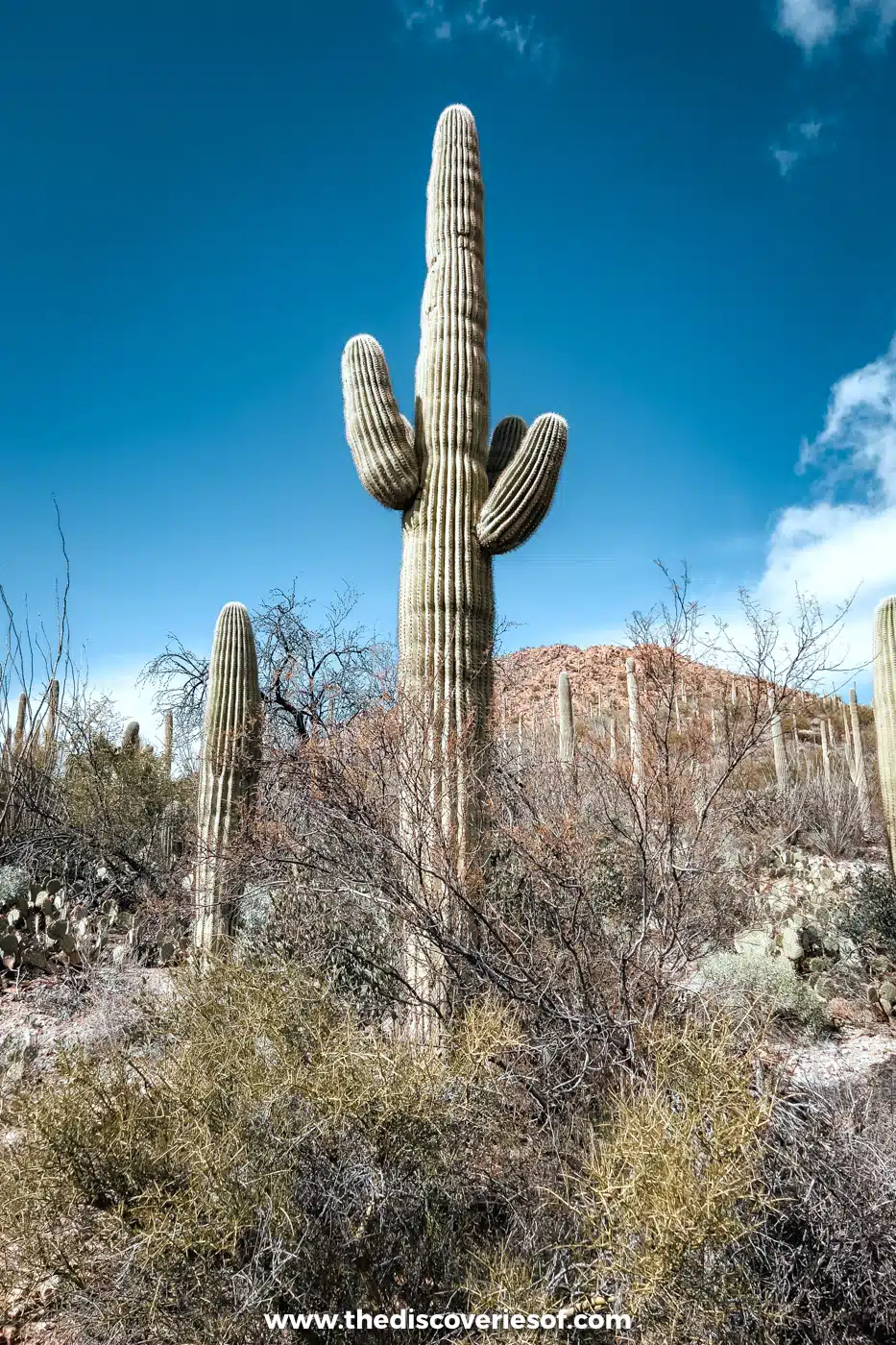
If you enjoy mild weather and a burst of blooming desert brilliance, spring is the best time to visit Saguaro National Park. The wildflowers begin to open at the end of February and usually peak in mid to late March, followed by the cacti in April and May.
Winter rain and snowmelt from the Rincon Mountains feed the waterfall at Bridal Wreath Falls in the East district, making it the perfect spring trail to tackle. Plus, the weather is still cool enough in March and April that you don’t end up a sweaty mess in five minutes.
Key events and things to do in spring
- Tackle the Bridal Wreath Falls trail
- Join a ranger-led walk, night hike or star party: programmes run all year but are busiest from January to April, so check the park calendar
- Look out for the first saguaro blossoms from late April
Why go in spring
- Wildflowers and cacti are in bloom
- Mild weather
- Waterfalls are more prevalent
What to watch out for in spring
- March is still part of the busy season, so trails can be crowded
- May can already be hot, with average highs of 33°C (92°F)
Summer: monsoon storms and extreme heat
June to August
June is an extremely hot and dry month in Saguaro National Park, reaching around 38°C (100°F), prime for sunburn and heat exhaustion if you don’t come prepared.
The plus side is that the saguaro bloom is still going in early June, so go early in the month, preferably in the morning, to avoid the peak temperatures. By late June, the saguaro fruit ripens to a deep red.
The official monsoon season runs from 15 June to 30 September, but the storms usually arrive in early July, and the rains can be quite dramatic, with flash floods in the washes. July and August are not much better temperature-wise, and the humidity level also increases: any avid hiker knows that hiking in the intense heat with high humidity is a real killer.
Key events and things to do in summer
- Stop by the visitor centres, open 8am to 4pm in summer (mainly to fill your water bottle up!)
- Take a quick stroll along the Desert Ecology Trail, a quarter-mile paved path with benches, though very little shade
- Take a scenic drive in an air-conditioned car
- Visit the nearby Arizona-Sonora Desert Museum, which opens earlier in summer so you can beat the heat
Why go in summer
- The saguaro bloom peaks in early June, and barrel cactus and other summer bloomers flower after the monsoon
- July and August are the quietest months of the year
What to watch out for in summer
- Intense heat
- High humidity in July and August
- Monsoon season from 15 June to 30 September, with a risk of flash floods
Autumn: the heat breaks and hiking season returns
September to November

September is still officially monsoon season and October maintains the residual heat from summer, but the humidity drops as the storms fade. In November, the average high drops to a comfy 24°C (75°F), so it’s the coolest month in autumn for hiking.
October is quieter than the winter peak, so if you crave solitude, this might be the month for you. Don’t expect many blooming plants, although the spindly ocotillos leaf out after rain.
Key events and things to do in autumn
- Hike the shorter trails early in the day and bring plenty of water
Why go in autumn
- The park is less crowded in September and October
- November has the lowest and most comfortable temperatures of the season
What to watch out for in autumn
- The heat can still be intense early to mid-season
Winter: mild days and crisp nights
December to February

Now is the time to tackle those serious backcountry trails and sun-scorched Saguaro hikes. Many popular treks, like the Wasson Peak trail, lie bathed in full sunlight, so winter is the perfect opportunity to explore them without getting heatstroke.
December and January are the coldest months, with temperatures dropping to a chilly 5°C (41°F) after the sun sets, so it’s better to hike during the day. The days are short too, with the sun setting at around 5.20pm in December, so start longer hikes early.
It can even snow on the desert floor in winter, although it is rare. The higher Rincon Mountains in the East district, including Manning Camp, can get significant snow.
Key events and things to do in winter
- Tackle longer hikes
- Camping and backpacking: all of the park’s campgrounds are hike-in sites in the East district, and you’ll need a backcountry permit
- Join a ranger-led walk or star party
Why go in winter
- Very tolerable temperatures for hiking the longer trails
What to watch out for in winter
- Early mornings and nights can get quite chilly
- Winter is the busiest season, so the park’s packed with tourists, and the trails might be busy
Practical tips for planning your visit
- If you prefer to visit during warmer weather, pack essentials like a water bottle, sunscreen, a wide-brim hat, and good breathable hiking shoes.
- There’s plenty of wildlife, despite the heat. This includes Africanized bees, particularly in King Canyon wash, and snakes throughout the park. If you see a snake, give it a wide berth, and if you hear swarming, give an even wider berth and do it quickly.
- There aren’t many places besides the visitor centres to refill your water bottle, so ensure you bring enough water, even in the cooler months.
- Pets are only allowed on roads and paved trails, such as the Desert Ecology Trail in the East and the Desert Discovery Trail in the West, so leave your dog behind if you’re planning to hike.
- I stayed at the Graduate by Hilton Tucson, a cool hotel in a great location near the University of Arizona, with a gorgeous rooftop pool. See my guide to where to stay in Tucson for more options.
Map
Read next
- The best things to do in Saguaro National Park
- Visiting the Arizona-Sonora Desert Museum
- Unmissable hikes in Saguaro National Park
- The best things to do in Tucson
- Where to stay in Tucson
Love this? Save and share on Pinterest

Discover the top things to do, insider tips and hidden gems in our USA Travel Guides.
Read the guides →