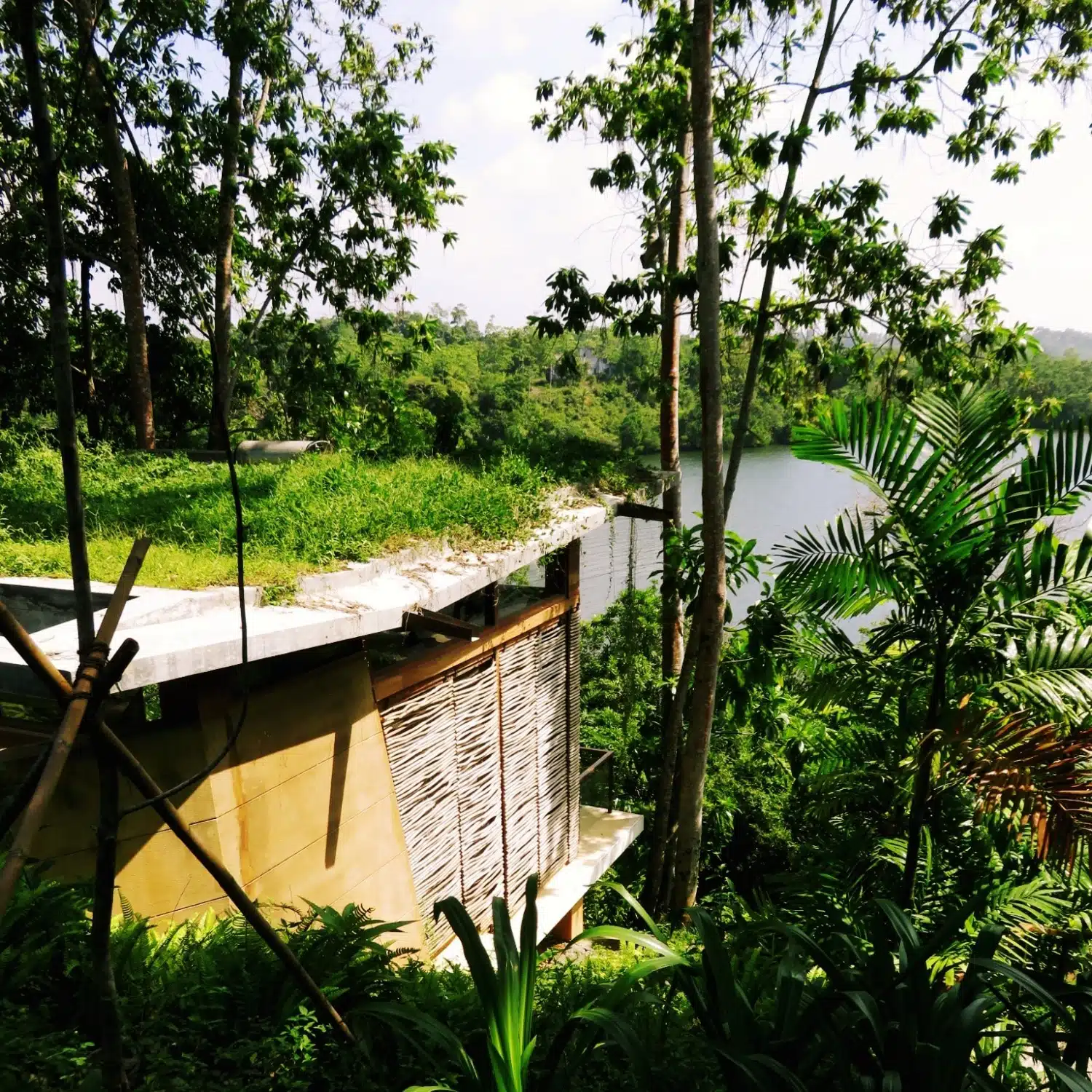
On a hill above Koggala Lake in southern Sri Lanka, a water tower clad in cinnamon bark rises over a scattering of villas with gardens growing on their roofs. Not so long ago, there was nothing on this hill but an overgrown plot and a mud hut. So how did it turn into one of Sri Lanka’s most striking eco hotels, and is it worth the long drive south?
“There used to be just a mud hut here,” Tri’s founder, Rob Drummond, said, pointing to a spot a few paces from where I was sitting.
“I bought the land in 2003 and used to come and spend a bit of time staying in the hut, then I built the road and I brought in the electricity…”
That’s how the story of Tri begins: a Sri Lankan boutique hotel on the shores of Koggala Lake, a short tuk-tuk ride inland from the surf town of Ahangama and about 20km from Galle. I came here in December, on a trip around the island that took me from the hill country down to the south coast. If you’re planning your own, my two-week Sri Lanka itineraries are a good place to start.
I stayed at Tri as a guest of the hotel.

Quick verdict
My rating: 5/5
Tri is a small, quietly luxe eco hotel where the design does the talking: cinnamon-clad villas tucked into the trees, an infinity pool lined up with the islands on the lake and a water tower you can climb for the sunset. There’s no ostentation, yet everything runs like clockwork. It suits couples, design lovers and anyone after a slow, restorative few days with yoga, good food and dawn views over the water. If you want to step straight out onto the sand, or you’re travelling with young children, it isn’t the one for you.
Tri at a glance
- Where: on a six-acre hill above Koggala Lake at Aladuwa Watte, Pelassa, near Ahangama on Sri Lanka’s south coast, about 20km east of Galle.
- What it is: a 15-bedroom boutique eco hotel built around a central water tower, owned by Rob Drummond and managed by Teardrop Hotels. On booking sites you’ll also see it as Tri Lanka, Tri Koggala, Tri Ahangama or Tri by Amaya.
- Rooms: water tower rooms, a lake suite and a range of lake, sunset and family villas, several of them with private plunge pools.
- Food: “lake to table, garden to plate” cooking that mixes Sri Lankan and international dishes, served in the main restaurant, on the sunset deck and in the bar.
- Wellness: an open-sided yoga shala above a bamboo grove and a spa with a steam cavern.
- Price: the hotel doesn’t publish rates on its website; booking sites show rooms from around US$200 a night for two, with the plunge-pool villas costing considerably more.
- Best for: couples, design lovers, yoga fans and anyone who wants a peaceful base for the south coast.
From a mud hut to a cinnamon-clad hotel
Rob first saw the land in 2003, an overgrown plot running wild with cinnamon on the edge of the lake, and he bought it. For years he stayed in its single hut on visits, slowly working out what it should become. At first he pictured a retreat rather than a hotel, but when he moved back to Sri Lanka in 2012, the plan took shape.
He built Tri with his wife, Lara Baumann Drummond, the founder of Quantum Yoga, and the sustainable architecture practice A00, led by the architect Raefer Wallis. Building began at the end of 2013, and the hotel opened at the end of 2015.
The layout is cleverer than it first looks. The buildings follow a Fibonacci spiral that radiates out from the water tower, and the villas sit in natural clearings, so the existing trees stayed where they were. Walking around the grounds, I couldn’t help noticing how function and form run together: swathes of lemongrass grow in the gardens alongside lettuces and other vegetables for the kitchen, and there are mango, cashew and jambu trees, whose fruit goes into sauces and salads.

Why the villas are wrapped in cinnamon
From the outside, the villas almost disappear. Their walls are clad in cinnamon wood and their roofs are planted, so from a distance they barely stand out from the forest around them.
“We’ve used cinnamon wood to cover the villas and help them blend into the surroundings,” Rob explained. “The cinnamon wood is essentially a waste product. What we call a cinnamon stick is the skin, where the wood is really not used, so we incorporated it into the design of the hotel.”
The same thinking runs right through the build. The villa terraces are made from pebblewash, another by-product of construction, and you’d never guess: the slightly textured finish feels wonderful underfoot. Materials were sourced locally wherever possible.
“For example, all of the granite in the hotel is Sri Lankan,” Rob told me. “This means that you’ve got a smaller colour palette to choose from than if you were using granite sourced anywhere, but we thought it was more important to focus on what we have here.”
Today the hotel runs on solar power, harvests rainwater and uses water gardens and swales to stop the hill eroding. The grounds are home to 51 species of bird, 18 of butterfly and nine of dragonfly.
My stay at Tri
I arrived after a long drive down from the hill country, a little flustered from hours stuck in traffic and having eaten almost nothing all day. Within moments, I’d forgotten all of it.
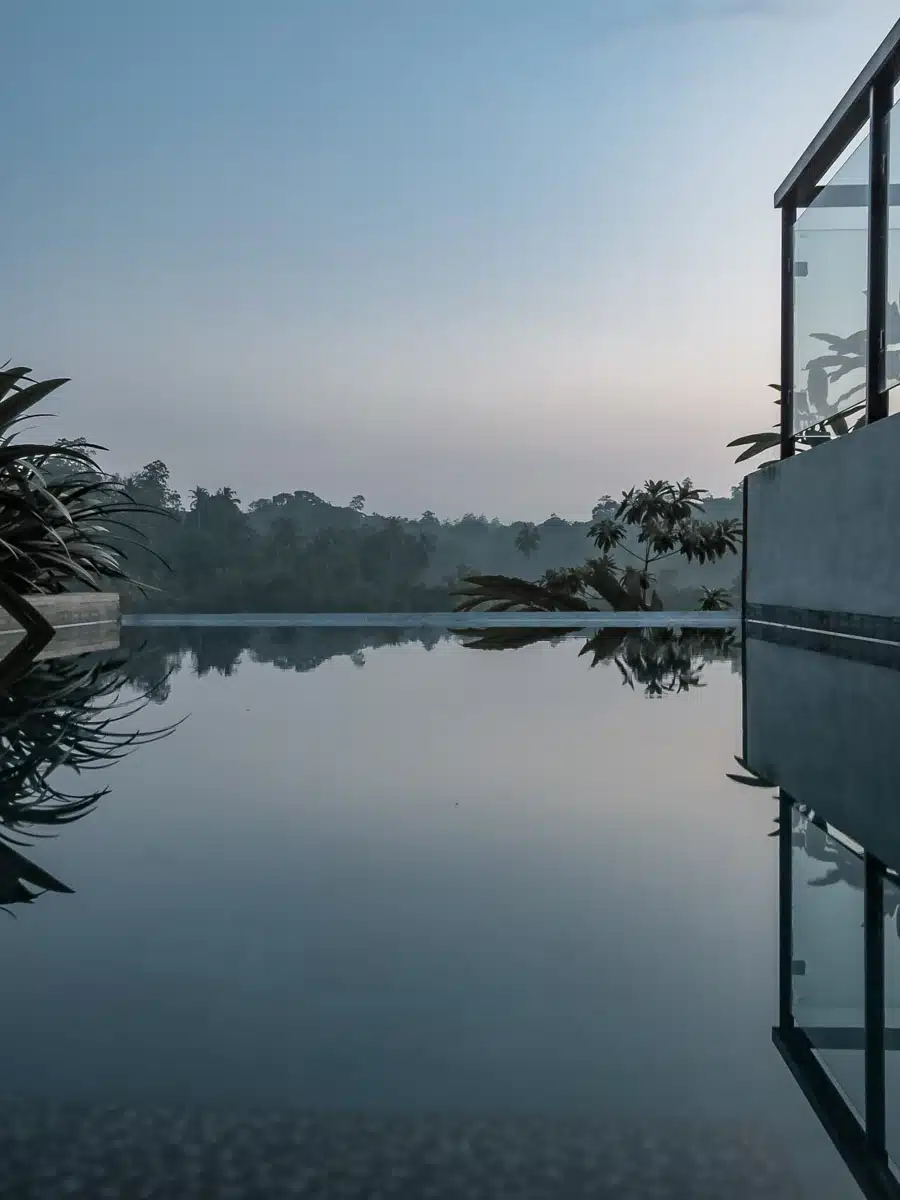
Without any fuss, my bags were whisked away, I was handed a cold towel, and before long I had a sundowner in my hand as dusk settled over the infinity pool and the lake beyond seemed to go on forever.
Over the next two days, I realised that those first few minutes summed up what makes Tri special. Nothing is showy, nothing seems to take any effort, and yet everything works perfectly.
Sunrise from the terrace
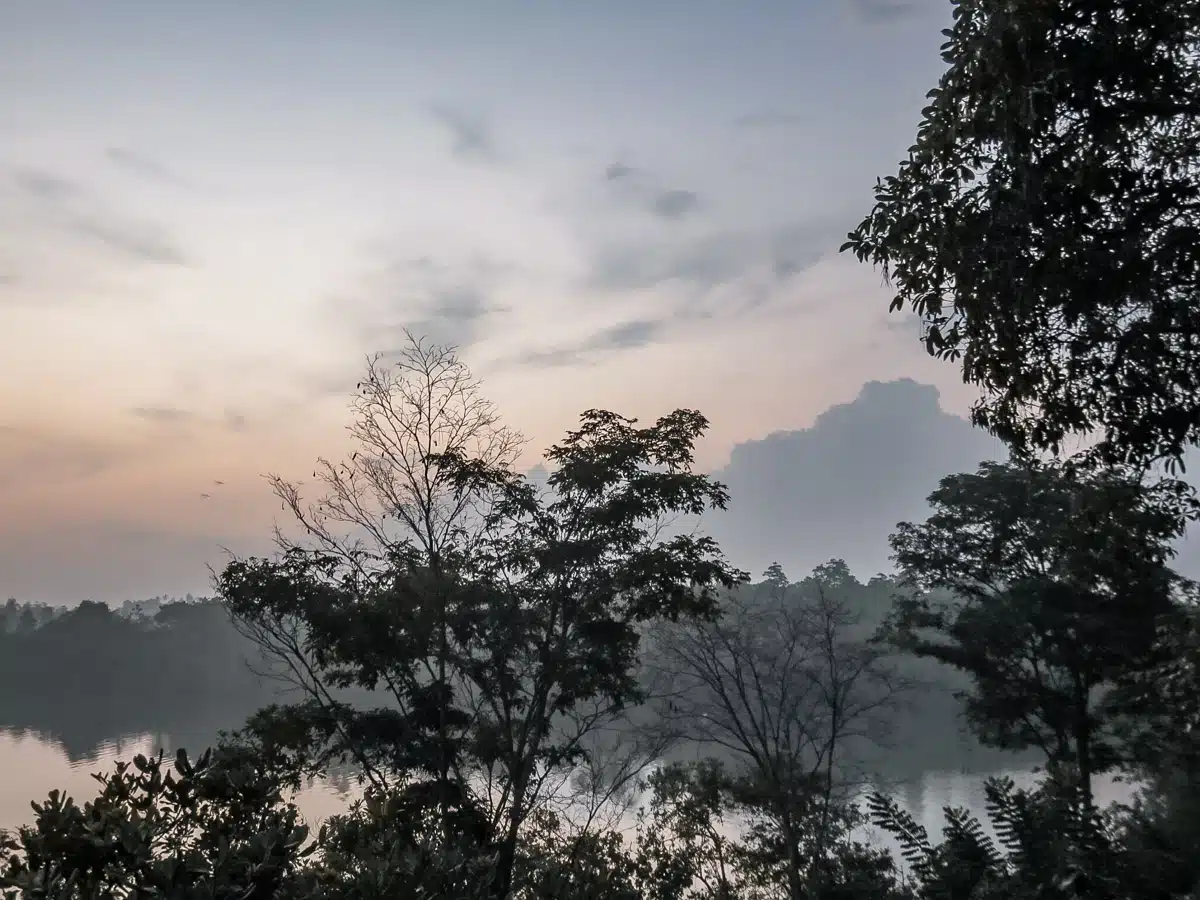
After watching the dusk, it seemed only right to get up for the dawn. Even as an early riser, the 5.30am start wasn’t easy, but seeing it was simply a case of padding out to the villa’s private terrace, sitting down and waiting.
The first few moments of darkness were filled with the sounds of the forest around me: peacocks, crickets and birds all playing their part in heralding the new day. Slowly the sky lightened, turning the lake navy, then mauve and finally lilac as day broke.
My watch said it was all over in a matter of minutes. If you’d asked me how long I’d been sitting there, entranced, I couldn’t have begun to guess.
I’d meant to go back to bed afterwards, but I took an early dip instead. The terrace wrapped round to a private pool and bathing area looking out over a quieter arm of the lake. I’m no swimmer, so after a few half-hearted laps I was more than happy to settle at the edge of the pool and watch the scenery.
The rooms and villas
Inside, the villas are spacious, simple and calm, decorated in light, neutral tones and natural materials. Rob describes them as “basically two slabs with windows in between”, which is exactly the point: the view does the work. My villa had the bedroom on an upper level, with a seating area stepping down to the terrace and a large bathroom off to one side. The layouts vary, partly because of where each villa sits on the hill.

Tri has grown since it opened with eight villas and three rooms in the tower. It now has 15 bedrooms across eight types of room:
- Water tower rooms (25 sq m): king-bedded rooms inside the tower with views east and west, so you get the sunrise and the sunset, and a rainfall shower. They sleep two, with no room for an extra bed.
- Lake suite (60 sq m): a king room with a balcony looking across the lake and a large walk-in shower.
- Lake villas (72 sq m): stand-alone, open-plan villas with lake views from the terrace, balcony and bed.
- Lake villa with pool (96 sq m): the same idea with a private plunge pool on the terrace.
- Tri villa with pool (140 sq m): the largest, with two terraces, unbroken lake views, a plunge pool and a bathtub.
- Family villa with pool: two 72 sq m villas sharing a plunge pool, with lawns running down to the lake, for four to six people.
- Sunset villas (70 sq m) and sunset villas with pool (80 sq m): double-bedded villas facing west over the lake and fields, the second with its own plunge pool.
The suites and villas have a day bed that can be made up for a third guest.
What and where to eat
The food at Tri is delicious, and all of it is locally sourced. Rob is a big believer in guests exploring Sri Lankan flavours, so instead of importing cheese from France or steak from New Zealand, the kitchen turns local ingredients into a whole array of dishes. The hotel sums it up as “lake to table, garden to plate”, and much of what you eat comes from the grounds or the surrounding area.
Today the menus mix Sri Lankan dishes with international cooking. The main Tri restaurant serves breakfast, lunch and dinner at flexible times, in a cool, shady room or an open-sided space with views of the lake. The sunset deck, scattered with beanbags and loungers, does brunch, afternoon snacks and pre-dinner cocktails, while the bar serves Sri Lankan bites, fresh juices, smoothies and pots of Ceylon tea.
For a special occasion, the hotel can set up a floating breakfast in your private pool, lunch under the banyan tree, champagne at sunset on top of the water tower or a candlelit dinner by the lake.
Top Tip
The infinity pool is 21 metres long and lined up with two islands on the lake. Head down just before sunset, when parakeets, egrets and fruit bats start their evening fly-past.
Yoga, the water tower and food for the soul
“People want to pigeonhole you. Are you a hotel or are you a wellness destination?” Rob mused. The honest answer is both.
When I stayed, Lara was running yoga classes in the shala, an elevated, open-sided pavilion that floats above a bamboo grove with fields and the lake on one side and trees on the other. These days there’s also a spa with a steam cavern, massages and other treatments, and it’s worth booking these in advance.
Focusing only on the wellness side doesn’t do Tri justice, though. There’s a library for reading in peace, and Rob had big plans for it when I visited.
“I’ve built a really lovely library, so people can go and read and study in peace,” he told me. “I like the idea of people coming and using this as a retreat, for this place to become a little bit of a cultural centre with an occasional programme of artists and residents. Basically to be able to use it in more creative ways.”
“Most hotels cater to the body, but I’d like to think that some hotels cater to your soul.”
Tri is one of those hotels. Climb to the deck at the top of the water tower, which is open day and night, and you get a 360-degree view over the lake, its islands and the forest, with the odd seaplane coming in to land.

Exploring the lake and the south coast
Cinnamon grows wild around the lake, and some of its islands are still worked by local farmers who grow and peel the spice. I watched one at work, shaving the bark from freshly cut stems with a small blade, which is how the papery quills that end up in your kitchen cupboard begin.
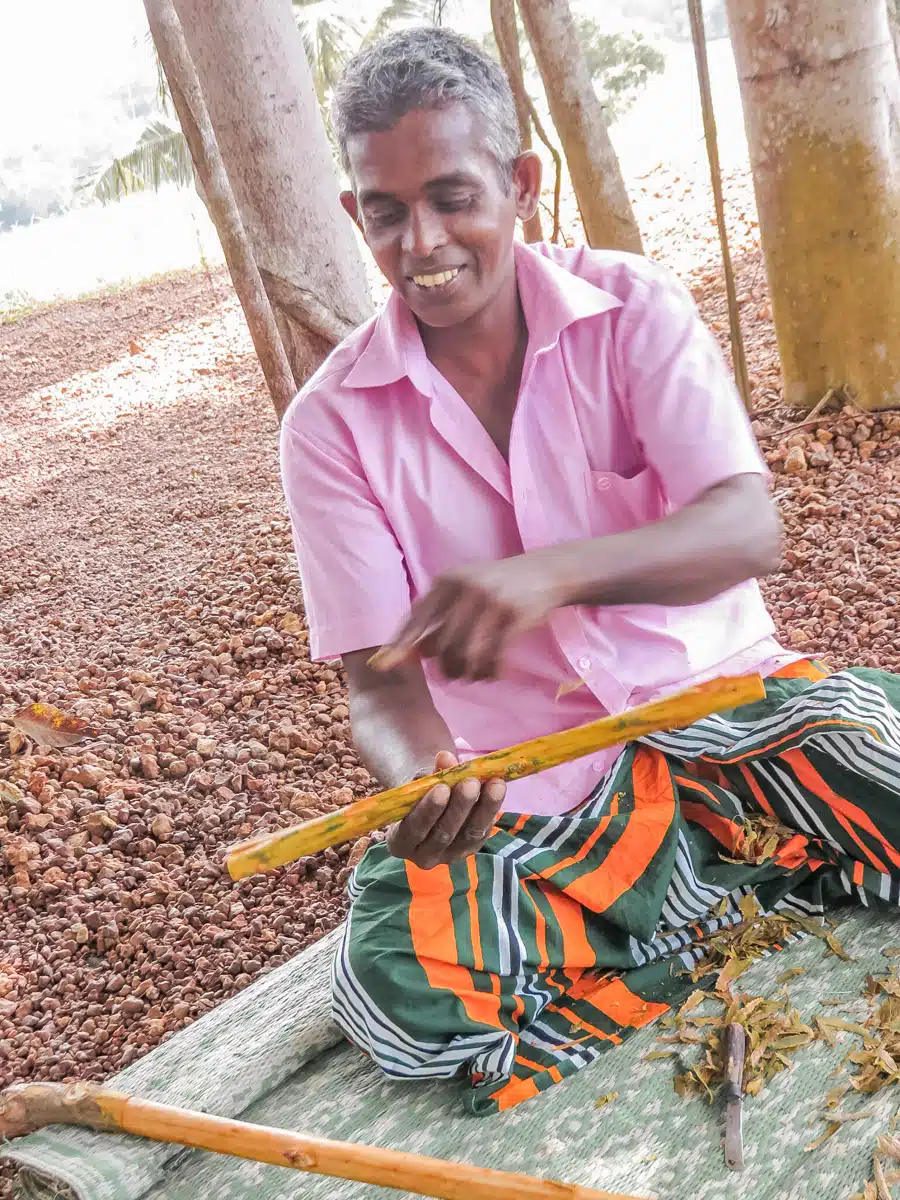
The hotel can arrange a boat trip around Koggala Lake with a stop at a cinnamon island, canoe fishing for crab and prawns, guided bike rides and walks, a cooking class under the banyan tree, surf lessons and a visit to the Virgin White Tea Estate at Handunugoda. Further afield, it organises whale and dolphin watching off the south coast and safaris in Yala and Udawalawe national parks. Koggala’s long beach and Ahangama’s surf breaks are a short tuk-tuk ride away, and the ramparts of Galle Fort are about 20km to the west.
What I loved
- The welcome: a cold towel and a sundowner by the pool within minutes of a long, hot drive.
- Dawn on the terrace: the sky over the lake turning from navy to lilac, to a soundtrack of peacocks and crickets.
- The design: cinnamon-clad walls, planted roofs and a pebblewash terrace that feels wonderful underfoot.
- The food: local, seasonal and full of flavour, with ingredients from the garden and the lake.
- The pace: a daily rhythm of dawn, good food and yoga that I wasn’t keen to give up.
Worth knowing before you book
- It isn’t on the beach. Tri faces the lake, not the sea. The coast is a short tuk-tuk ride away, but if you want to walk from your room onto the sand, look elsewhere.
- No young children. The hotel doesn’t accept children under 12.
- The water tower rooms are compact. At 25 sq m they’re the smallest rooms, with a king bed and no space for an extra bed. Choose a villa if you want room to spread out.
- The drive can be long. It’s about 163km from Colombo’s international airport, and my journey down from the hill country took most of the day.
- Cancellations are strict. Cancelling within 14 days of arrival, or not turning up, costs the full booking.
- Rates aren’t published. You’ll need to check the hotel’s booking page or a booking site for prices.
Prices and booking
The hotel doesn’t publish prices on its website, and rates vary with the season and the room. Booking sites show rooms from around US$200 a night for two, and the villas with plunge pools and the Tri villa cost considerably more. The hotel’s terms quote half-board rates (breakfast plus lunch or dinner) for two, excluding drinks, while its booking pages list rooms with breakfast, so check exactly what your rate includes. Booking direct adds afternoon tea and a drinks hour from 5pm to 6pm.
A third guest on the day bed in a suite or villa costs US$75 a night.
Practical information
- Address: Tri, Koggala Lake, Aladuwa Watte, Pelassa, Ahangama, Sri Lanka. Phone +94 77 770 8177.
- Check-in and check-out: check in from 2pm and check out by 11am.
- Children: over-12s only.
- Facilities: infinity pool, water tower deck, yoga shala, spa with steam cavern, library, gardens and a boat on the lake.
- Management: owned by Rob Drummond and run by Teardrop Hotels.
Getting there
- From Colombo airport by car: Tri is about 163km from Bandaranaike International Airport, and the drive takes around two to two and a half hours on the Southern Expressway, which is about 15 minutes from the hotel. The hotel’s one-way air-conditioned minivan transfer costs from US$155.
- From Galle: about 20km, or a short drive or tuk-tuk ride.
- By train or bus: take the coast line or a bus to Koggala, then a tuk-tuk for the last stretch.
- By air: Cinnamon Air flies to Koggala in season, and Tri’s boat can pick you up from the lake.
Is Tri worth it?
My rating: 5/5
Yes, if you want somewhere beautiful and peaceful to slow right down. The villas are gorgeous, the food is fresh and local, and the dawns over the lake are worth every early alarm. By the time I had to leave, I’d fallen into a rhythm of sunrise, yoga and good food that I wasn’t keen to give up, and I left already thinking about the next trip.
Tri pairs well with a stay in the hill country: I came straight from Santani, a wellness retreat near Kandy. For more ideas on where to go across the island, start with my Sri Lanka travel guide.
Map
Read next
- Two weeks in Sri Lanka: three action-packed itineraries
- The best things to do in Sri Lanka
- Santani, a wellness retreat in Sri Lanka’s hill country
- Best places to visit in December: 29 warm and wintry escapes
- More Sri Lanka travel guides
Love this? Save and share on Pinterest

Discover the top things to do, insider tips and hidden gems in our Sri Lanka Travel Guide.
Read the guides →