
USA
Joshua Tree National Park travel guide
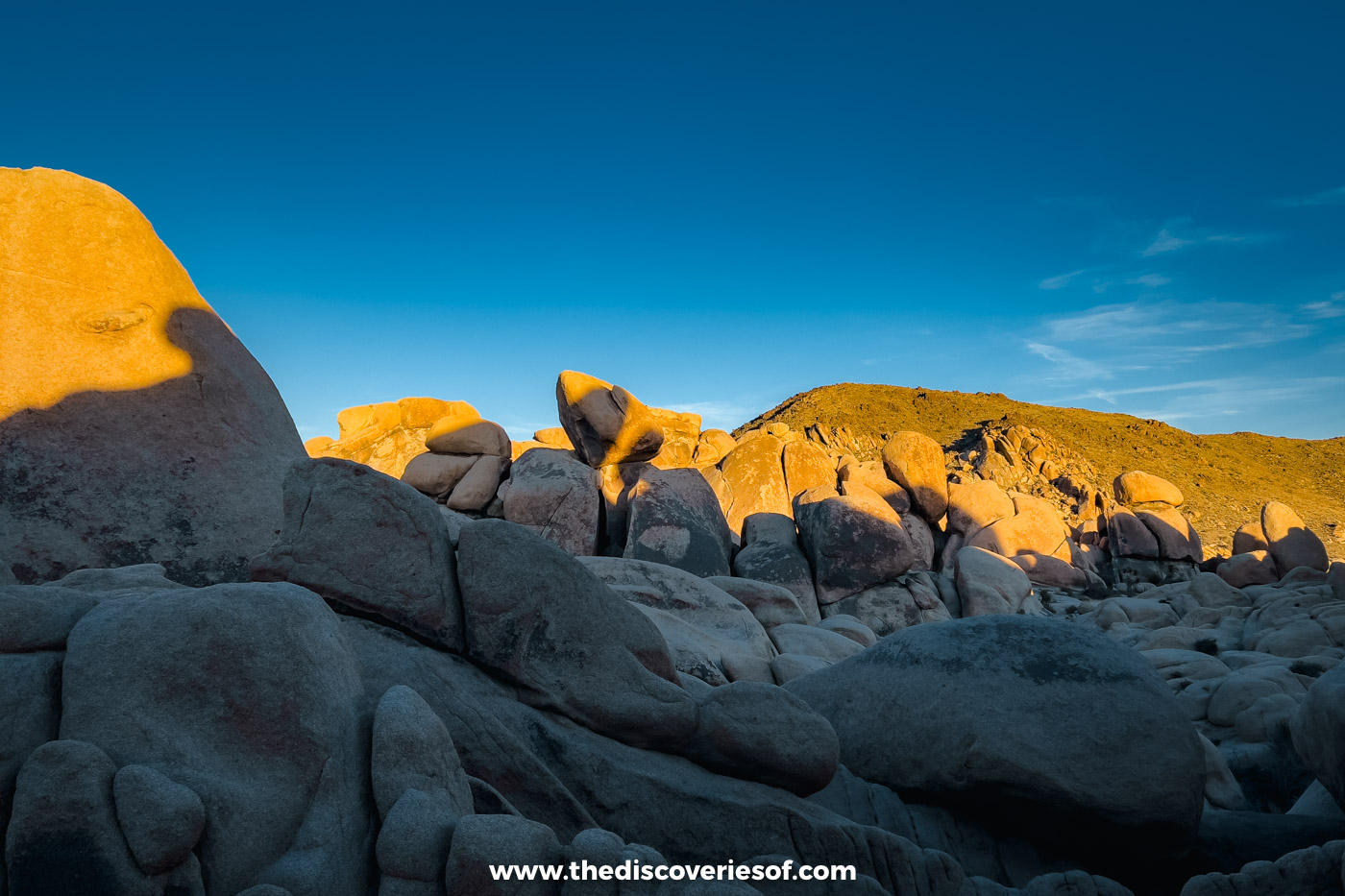
Granite boulders heaped up like giant marbles, a rock that seems to stare back at you and cacti whose spines leap onto passing ankles. Plan a trip to Joshua Tree, from the best months and the three entrances to where to base yourself and which guides to read first.

Julianna BarnabyTravel and culture writer
Joshua Tree National Park spreads across almost 800,000 acres of Southern California, on the line where two deserts overlap. The higher, cooler west is Mojave, home to the shaggy Joshua trees and the vast heaps of granite the park is known for; the lower east is Colorado Desert, all cholla, ocotillo and wide, bare basins. Most first-time visitors keep to Park Boulevard, which links the West Entrance by the town of Joshua Tree with the North Entrance at Twentynine Palms, and Pinto Basin Road, which runs south past the cholla to the I-10.
I explored the park on day trips out of Palm Springs in November, about an hour’s drive away, as part of a road trip through California. I set a 5am alarm for sunrise at Keys View and didn’t regret a minute of it. I walked the loops to Skull Rock and around Hidden Valley, got to Arch Rock at about 4pm as the granite turned orange, followed the spur to Heart Rock and strolled the boardwalk through the Cholla Cactus Garden. The High View Nature Trail was almost empty, and one night I stayed on after dark to watch the stars come out.
Everything you need to plan a visit is below, along with links to all my Joshua Tree guides.
Some links in this article may be affiliate links, which means we may receive a small commission, at no additional cost to you, if you decide to purchase through one of my recommended partners.
Start here
 Joshua Tree National Park: 16 best hikes and how to visit
 A 3-day Joshua Tree itinerary that saves the strangest stop for last
 The best time to visit Joshua Tree National Park, and the months that beat spring
When to go
October to May is the season for walking. Spring is the busiest stretch: from March to mid-April, a wet winter can bring wildflowers, and spring break brings full car parks, so arrive before 8am or come midweek. From June to September, afternoons regularly pass 100°F (38°C), and rangers advise hiking only early or late, and only on short trails.
My pick is autumn. In November, the days were warm without being sticky and the spring crowds had long gone, with average highs of around 72°F (22°C) in Twentynine Palms. The catch is the light: the days are short, with the sun gone not long after 4.30pm by the end of the month, so plan around golden hour. My month-by-month guide to when to go has the detail.
Getting there and around
- NPS current conditions: the live map of road, trail and campground closures.
- Recreation.gov: campsite bookings and the Keys Ranch tours.
- NPS fees and passes: entry passes and where you can pay in cash.
- Skyscanner: flights into Palm Springs or Los Angeles.
- Rentalcars.com: car hire.
- GetYourGuide: stargazing, audio driving tours and jeep trips.
You’ll need a car, as there’s no public transport into the park or shuttle within it. From Palm Springs, allow an hour to the West Entrance via Highway 62; from Los Angeles, it’s about two and a half hours. Palm Springs International is the nearest airport. There are three entrances: West (the town of Joshua Tree), North (Twentynine Palms) and South (Cottonwood, off the I-10), and Park Boulevard is the main road between the first two.
Where to stay
Palm Springs
My base, an hour or so by car from the West Entrance, with pools, mid-century hotels and plenty of places to eat: a good choice if you’d rather spend the day in the park and the evening in town. Stay at The Cole, the small, adults-only boutique hotel on North Palm Canyon Drive where I stayed.
Joshua Tree, Yucca Valley and Pioneertown
The closest bases to the West Entrance and Black Rock Canyon, with cafés, galleries and vintage shops along Highway 62. Stay at Sacred Sands, a two-room guest house about a mile from the entrance, or at the Pioneertown Motel, in the old western film set north-west of Yucca Valley.
Twentynine Palms
The town beside the North Entrance, with simpler, cheaper motels and the shortest drive to the darker eastern side of the park. Inside the park itself there are campgrounds but no hotels.


Tours
Know before you go
Top things to do
Catch the sunrise at Keys View
From 5,185 feet up on the Little San Bernardino range, the whole Coachella Valley opens up below, with the San Andreas Fault, Mount San Jacinto and, on a clear morning, the Salton Sea. Sunset draws the crowds, but sunrise is quieter, and it was one of my favourite moments of the trip.
Walk to Arch Rock and Heart Rock
A short, almost flat loop from the Twin Tanks car park leads to a 30-foot granite arch tucked into a maze of smooth boulders. I timed it for about 4pm, when the rock glows orange, then took the signed spur to Heart Rock. My Arch Rock guide has the route.
See Skull Rock from the trail
It sits right by the road, but the 1.7-mile loop from Jumbo Rocks Campground, which I walked, gets you there through the boulders and away from the roadside scrum. My Skull Rock guide covers parking and timing.
Loop around Hidden Valley
A gentle mile-long loop inside a ring of rock walls, said to have hidden stolen cattle, with climbers on the cliffs and a shady picnic area at the start. Read my Hidden Valley guide before you go.
Wander through the Cholla Cactus Garden
A quarter-mile boardwalk and gravel loop through thousands of teddy bear cholla, off Pinto Basin Road. I went in the afternoon, and as the sun dropped, every spine began to glow. Look, but don’t touch.
Chase golden hour among the Joshua trees
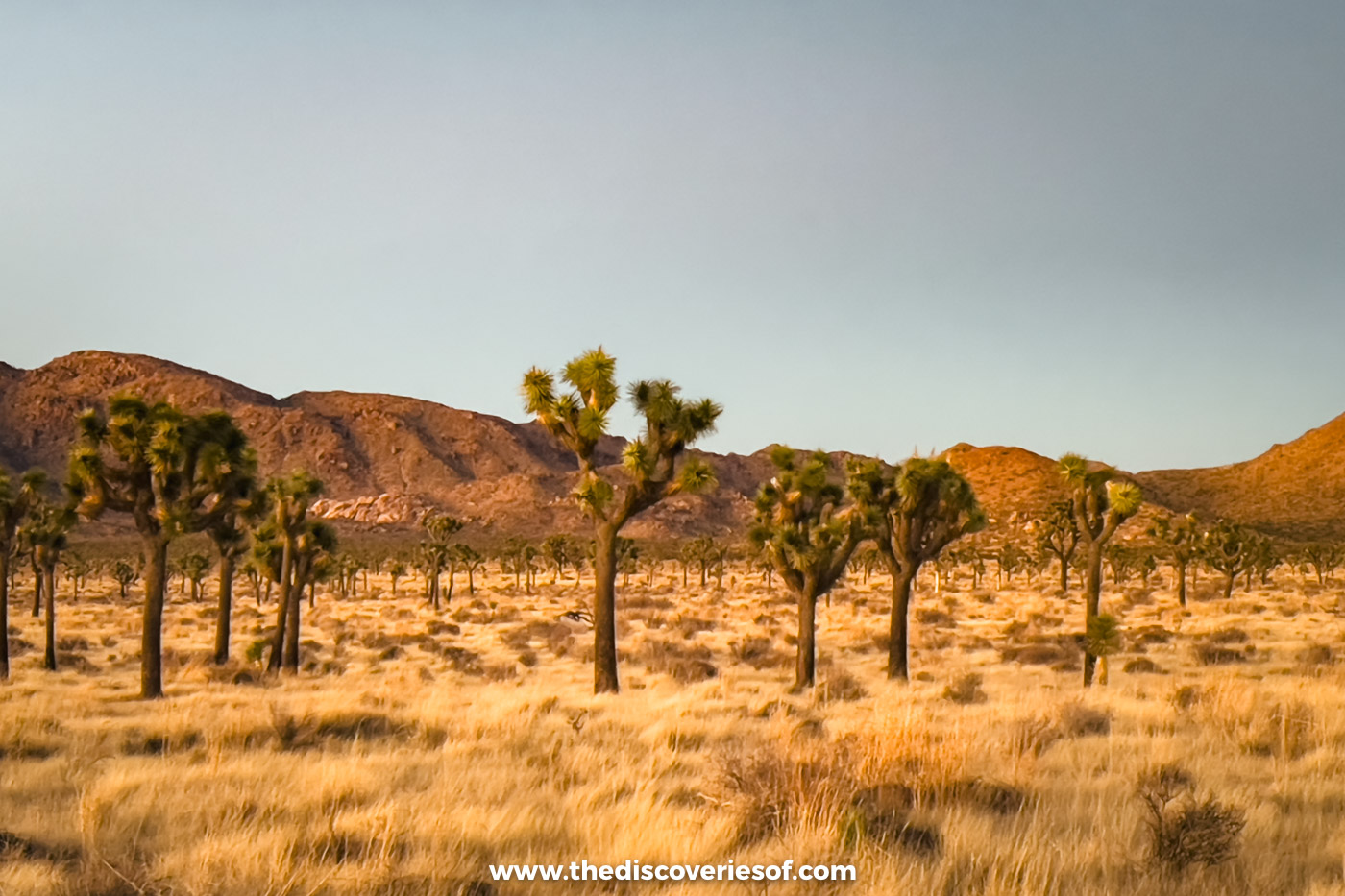
In the last hour of daylight, the trees and grasses of Queen Valley and Lost Horse Valley turn gold and the boulders blush pink, so pull over anywhere along Park Boulevard and wait for the light.
Hike the trails
Barker Dam, the palm oasis at Fortynine Palms and the climb up Ryan Mountain are three of the best known, and my Joshua Tree hikes guide covers 16 trails in detail.
Stay up for the stars
The park won International Dark Sky Park status in 2017, and it never closes, so you can drive out after dinner. I stargazed here too: head east, far from the lights of Palm Springs and the valley towns, for the blackest skies.
Suggested itineraries
Joshua Tree in a day from Palm Springs
One day
Keys View at sunrise, Hidden Valley, Skull Rock, Arch Rock and Heart Rock, then golden hour at the Cholla Cactus Garden
Allow an hour and a half from Palm Springs to Keys View; head home via the South Entrance and the I-10.
Three days in Joshua Tree
Three days
Boulders and cholla, then a summit and a gold mine, then Black Rock Canyon and the Integratron
My 3-day itinerary takes the park one corner at a time.
The Southern California desert loop
Around ten days
Los Angeles to Death Valley, on to Palm Springs and Joshua Tree, and down to San Diego
My own route in November; for the other stops, see my Death Valley guide and things to do in Palm Springs.
Hidden Joshua Tree National Park
The High View Nature Trail
A loop of 1.4 miles up onto a ridge in Black Rock Canyon, the park’s north-west corner above Yucca Valley. I loved it: huge views and hardly another soul on it.
Noah Purifoy Outdoor Desert Art Museum
Ten acres of sculptures made from scrap, from old televisions to toilets, a few miles north of the town of Joshua Tree. Entry is free, and it’s open every day in daylight hours.
The Integratron
A white dome in Landers, half an hour north of Yucca Valley, built from 1954 by a man who said the plans came from Venus. Book ahead for one of its sound baths.
Costs and budgeting
The entry pass covers nearly everything inside the park, so fuel and beds are the real costs.
- Seven-day entry: $30 a car, $25 a motorbike, or $15 a person arriving on foot or by bike
- Joshua Tree annual pass: $55
- America the Beautiful annual pass (all national parks): $80 if you live in the US, $250 if you don’t
- Campsites: $25 to $35 a night
Safety, health and tipping
Safety
Summer storms can send flash floods down washes and across roads, so keep out of narrow canyons when rain threatens. Stay back from the fenced mine shafts, never climb the Joshua trees, and watch your hands when scrambling: rattlesnakes shelter in the rocks.
Health
Heat and dehydration are the main risks, even on short walks: drink often, rest in the shade and save longer hikes for the mornings. If a cholla segment catches you, flick it off with a comb, not your fingers. Winter nights bring frost to the higher west of the park.
Tipping
At sit-down restaurants, tip 18% to 22% of the bill; at bars, US$1 to US$2 a drink; and for guides and drivers, around 15% to 20%.
Practical tips and info
Tips for travelling
- Stock up before you drive in: there’s no fuel, food or shop anywhere in the park, and you’ll lose signal for long stretches, so download offline maps or the NPS app first.
- Bring a card: the West and North entrance stations don’t take cash (the visitor centres do).
- Check the NPS closures map the day before. The Cholla Cactus Garden loop closed for trail work for part of 2026, and the Geology Tour Road shut after flooding in October 2026.
- Go early or late: the small car parks at Arch Rock, Skull Rock and Hidden Valley fill by mid-morning.
- Flying in from the UK or another Visa Waiver country? Apply for your ESTA (US$40.27) well before you travel.
How to see the best for free
The entrance fee covers almost everything: every viewpoint, trail, boulder pile and cactus garden, with no timed tickets and no charge to stay after dark, as the park never closes. Ranger walks and night sky talks are free too (see the visitor centre noticeboards); the one paid extra is the Keys Desert Queen Ranch tour. Outside the gates, the Noah Purifoy art museum costs nothing.
Packing
Packing for Joshua Tree? Don’t forget…
- A large water bottle: there’s no drinking water on the trails and only two campgrounds have taps, so fill up before you drive in.
- A sun hat and high-factor sunscreen: shade is scarce once you leave the boulders.
- Closed-toe shoes with a grippy sole: for the granite, and to keep cholla spines out of your feet. I wear my Tropicfeel Canyons.
- Layers: for sunrise at Keys View and cold desert nights.
Travel insurance
US medical care is expensive and the trails are far from a hospital, so make sure your policy covers US medical bills and emergency rescue in full, and check your car hire cover for dirt roads. You can find a policy with AXA Travel Insurance.
Suggested guidebooks
Interesting facts
- The Joshua tree isn’t a tree at all but a giant yucca, and it grows wild only in the Mojave Desert.
- The park was created as a national monument in 1936 and became a national park in 1994.
- Its granite holds more than 8,000 climbing routes, which makes it one of the best-known climbing areas in the world.
Time zone
The park runs on Pacific Time, like Los Angeles and Palm Springs: UTC-8 in winter and UTC-7 during daylight saving time (March to November), so usually eight hours behind the UK.
Electricity and adapters
US sockets take Type A and B plugs (120V, 60Hz).
Map
Insider tips, straight to your inbox
All Joshua Tree National Park guides
 The best time to visit Joshua Tree National Park, and the months that beat spring
 A guide to Hidden Valley in Joshua Tree, the walled-in valley where cattle rustlers hid their herds
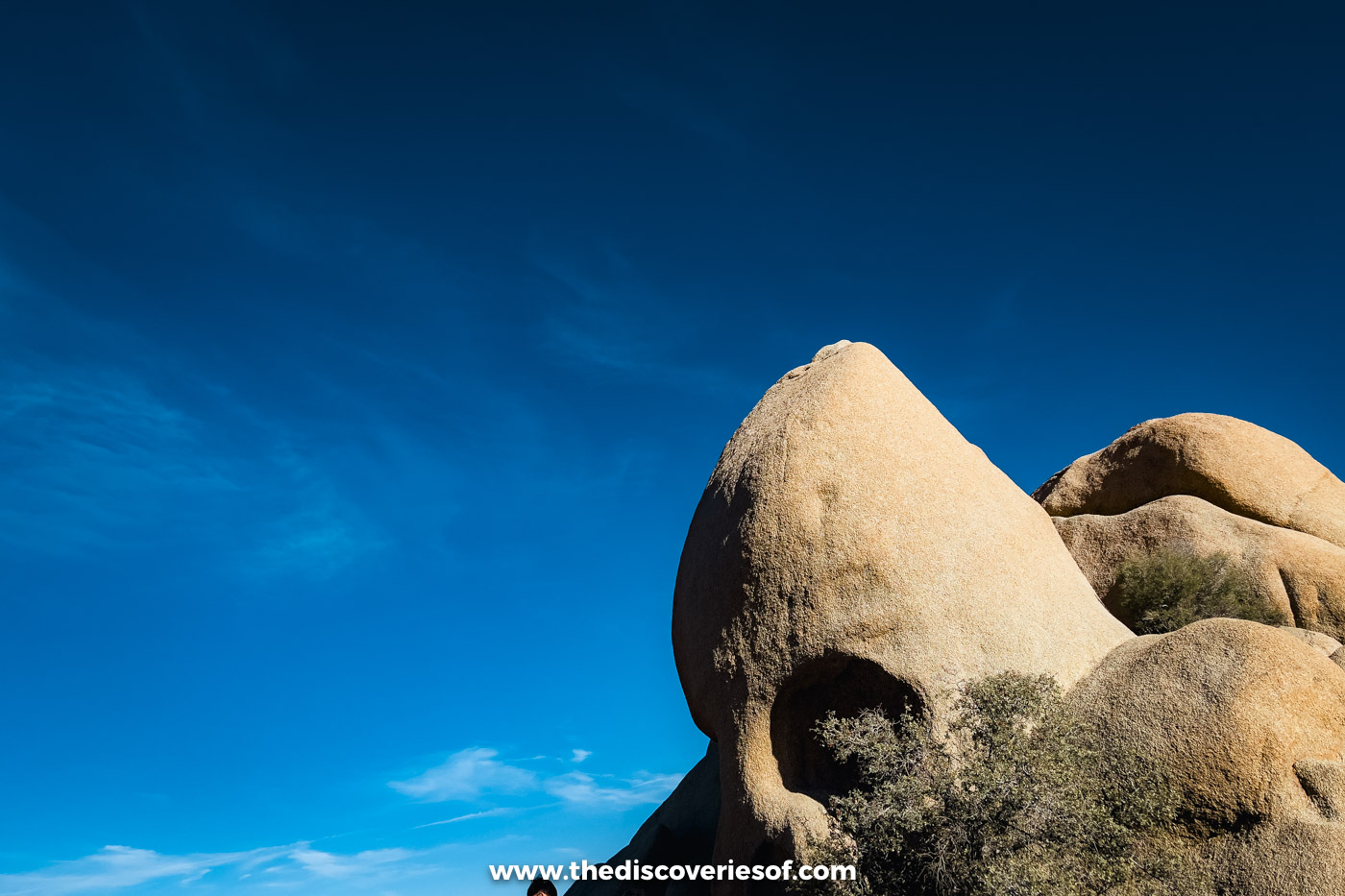 A guide to the Skull Rock trail, the Joshua Tree loop to a boulder that stares back
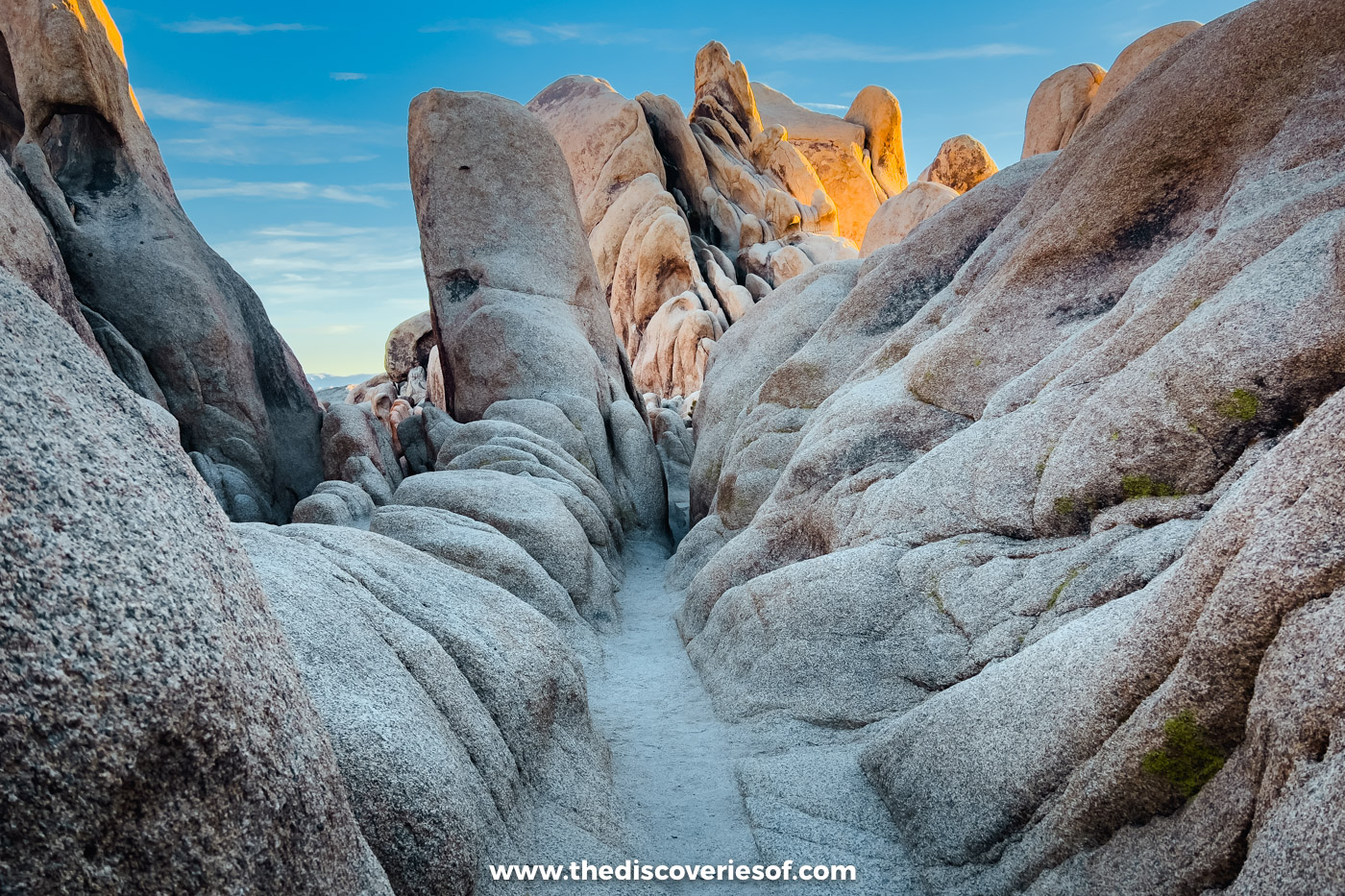 How to hike the Arch Rock trail in Joshua Tree, an easy loop to the park’s most famous arch
 A 3-day Joshua Tree itinerary that saves the strangest stop for last
 The 17 best things to do in Joshua Tree National Park (and the best time of day for each)
 Joshua Tree National Park: 16 best hikes and how to visit



Watch on YouTube
See the places before you go
Short films from the places in my guides, so you can see what a destination really looks and feels like before you go.
Subscribe on YouTube youtube.com/@thediscoveriesof