
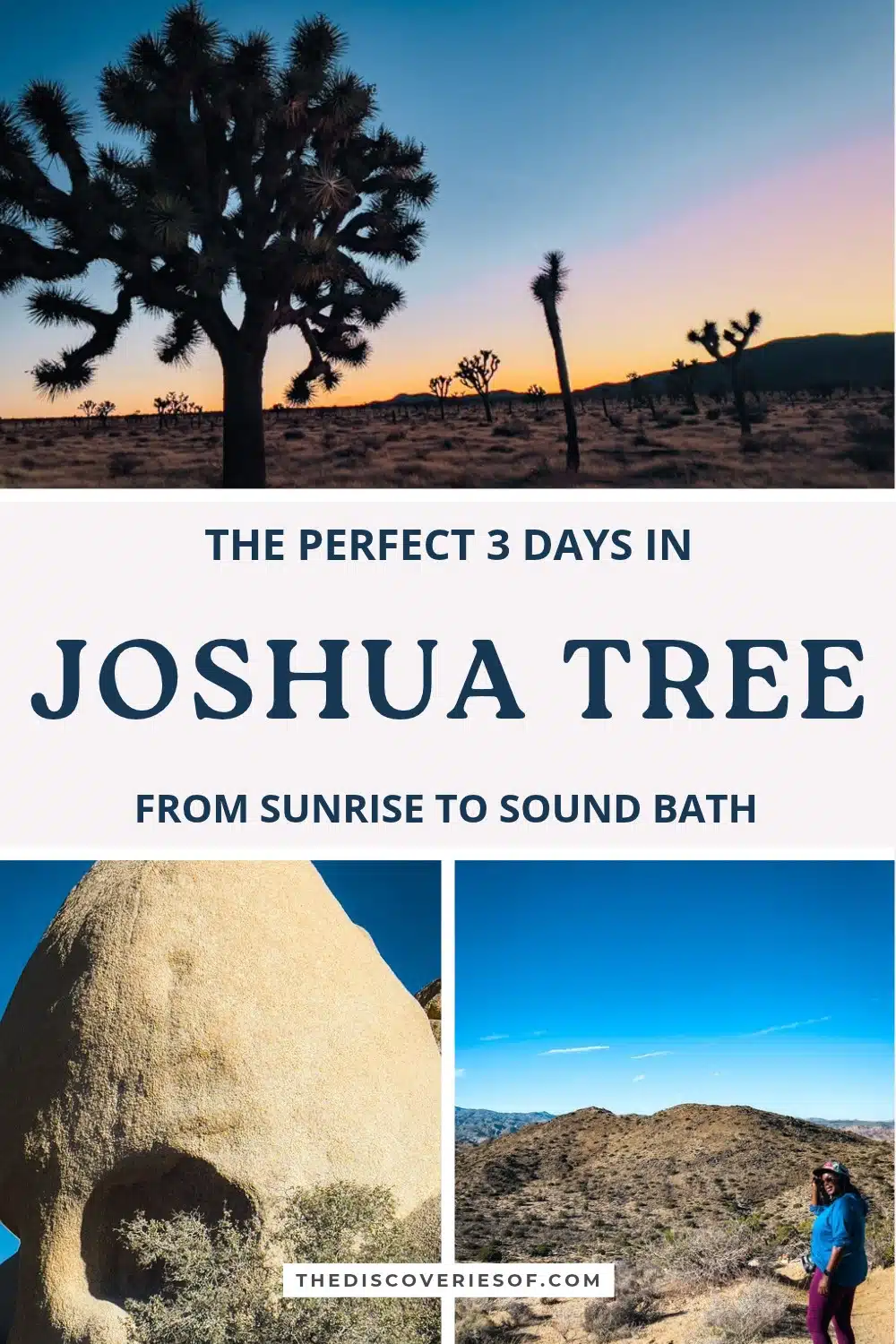
Joshua Tree National Park spreads across two deserts and close to 800,000 acres, with its best sights miles apart on empty desert roads. This three-day route puts the boulders, cacti, summits and gold mines in an order that works, and it finishes somewhere far stranger than a national park.
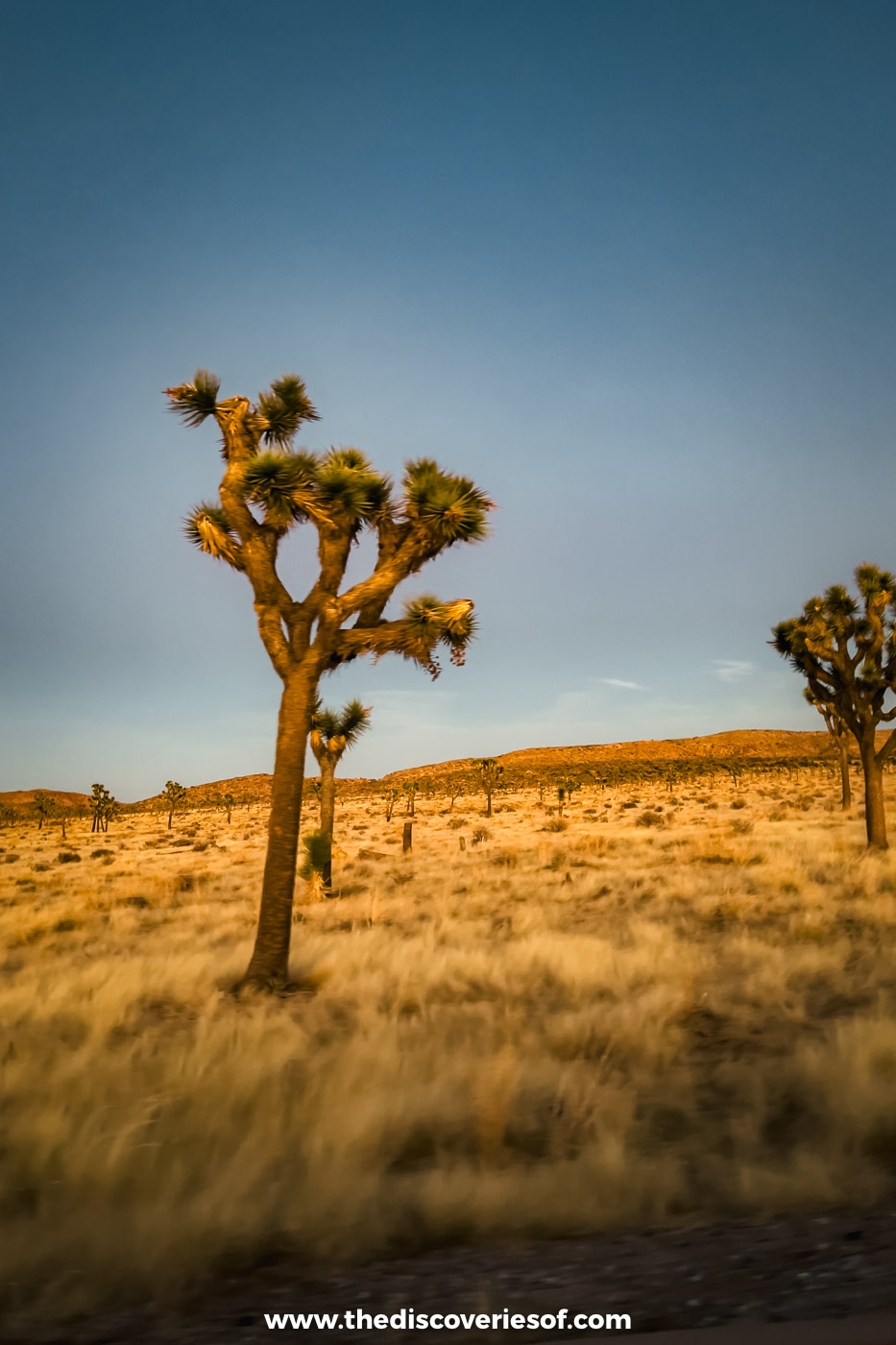
It’s no secret how much I love Joshua Tree National Park. The broad expanses of this desert playground are home to weirdly shaped rocks and stunning vistas, not to mention more hiking trails than you could ever hope to tackle in one trip (or five).
I spent some time in the park on a November road trip through California, and all I can say is: if you haven’t been already, just go!
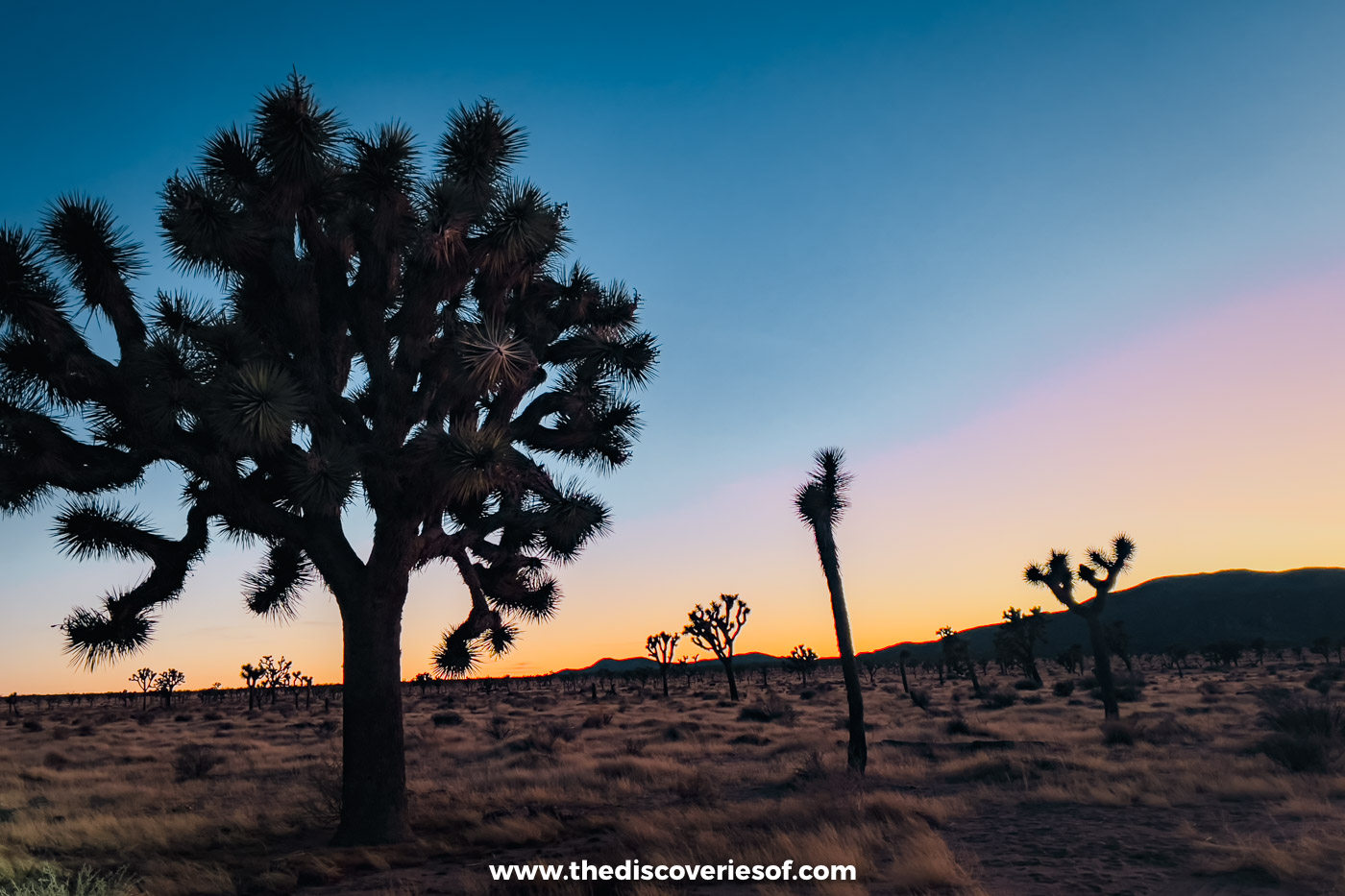
The meeting point of the Mojave and the Colorado deserts, Joshua Tree is a landscape of contrasts: the higher Mojave studded with the shaggy trees the park is named after, the much drier Colorado Desert stretching out in cholla-dotted basins.
A bit too much, perhaps: at more than 3,200 square kilometres, the park is something of an unwieldy beast. This route tames it, one corner a day, with the practical stuff (how many days you need, getting there, packing) at the end.
Pack your bags, peeps: we’re going for a ride!
Your 3-day Joshua Tree itinerary at a glance
- Day 1: boulders, a skull and the cholla. Barker Dam, the Desert Queen Mine, Skull Rock, Arch Rock and sunset at the Cholla Cactus Garden.
- Day 2: a summit, a slot canyon and a gold mine. Ryan Mountain, the Hall of Horrors, the Lost Horse Mine and sunset at Keys View.
- Day 3: the quiet corner and beyond. The High View Nature Trail in Black Rock Canyon, a sound bath at the Integratron, the town of Joshua Tree and a night under the stars.
Day 1: Barker Dam, Skull Rock, Arch Rock and the Cholla Cactus Garden
Your first day will help you find your feet (so to speak), starting among the boulders and dropping south-east into the Colorado Desert for sunset.
Top Tip
Today is BIG on hikes, so if you’re not feeling up to it, I’d suggest cutting the Skull Rock loop. You can still park by the side of the road and hop out to see the rock; you just won’t walk there.
Explore Barker Dam
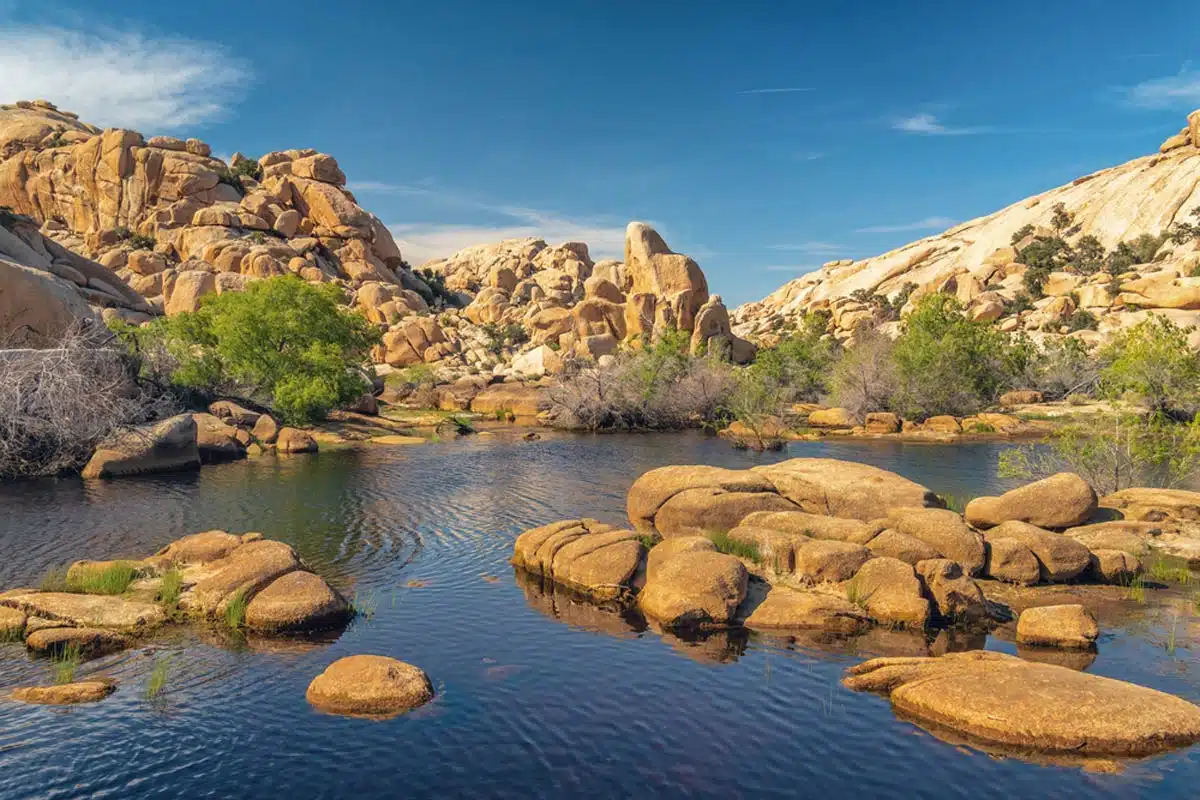
Let’s kick off day one on the edge of the Wonderland of Rocks with the easy 1.1-mile Barker Dam loop. About halfway round, you reach the dam, built by cattle ranchers in the early 1900s and later raised by Bill Keys. After a wet winter, the water behind it pulls in birds and, if you’re lucky, desert bighorn sheep.
Near the end of the loop, a short signed spur leads to a rock alcove of Native American petroglyphs (some look oddly bright because a film crew painted over them in the 1960s). The car park often fills from September to May; if it’s full, park at Echo T, a little way west, and follow the connector path.
Peer into the Desert Queen Mine
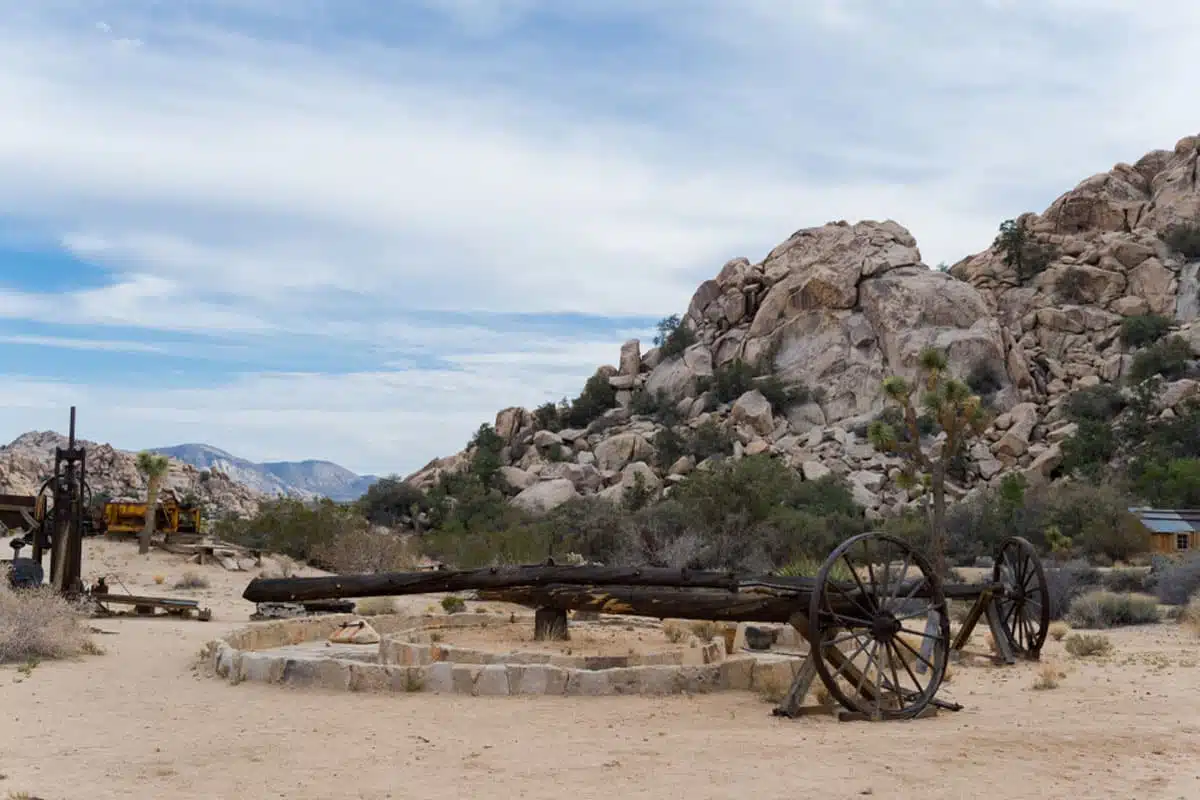
An abandoned gold mine along Desert Queen Mine Road? Sounds like a plan!
It’s close to Barker Dam, a mile or so up a dirt road off Park Boulevard, and an easy 0.7-mile round trip from the trailhead leads to an overlook facing the mine across a small canyon.
Not content with the view from the overlook? Drop into the wash and climb the far side for a closer look, which brings the walk to about 1.6 miles. You’ll pass rusting machinery and more than 20 fenced-off shafts from a mine that worked on and off from 1895 to 1961.
Go alien-hunting at Skull Rock
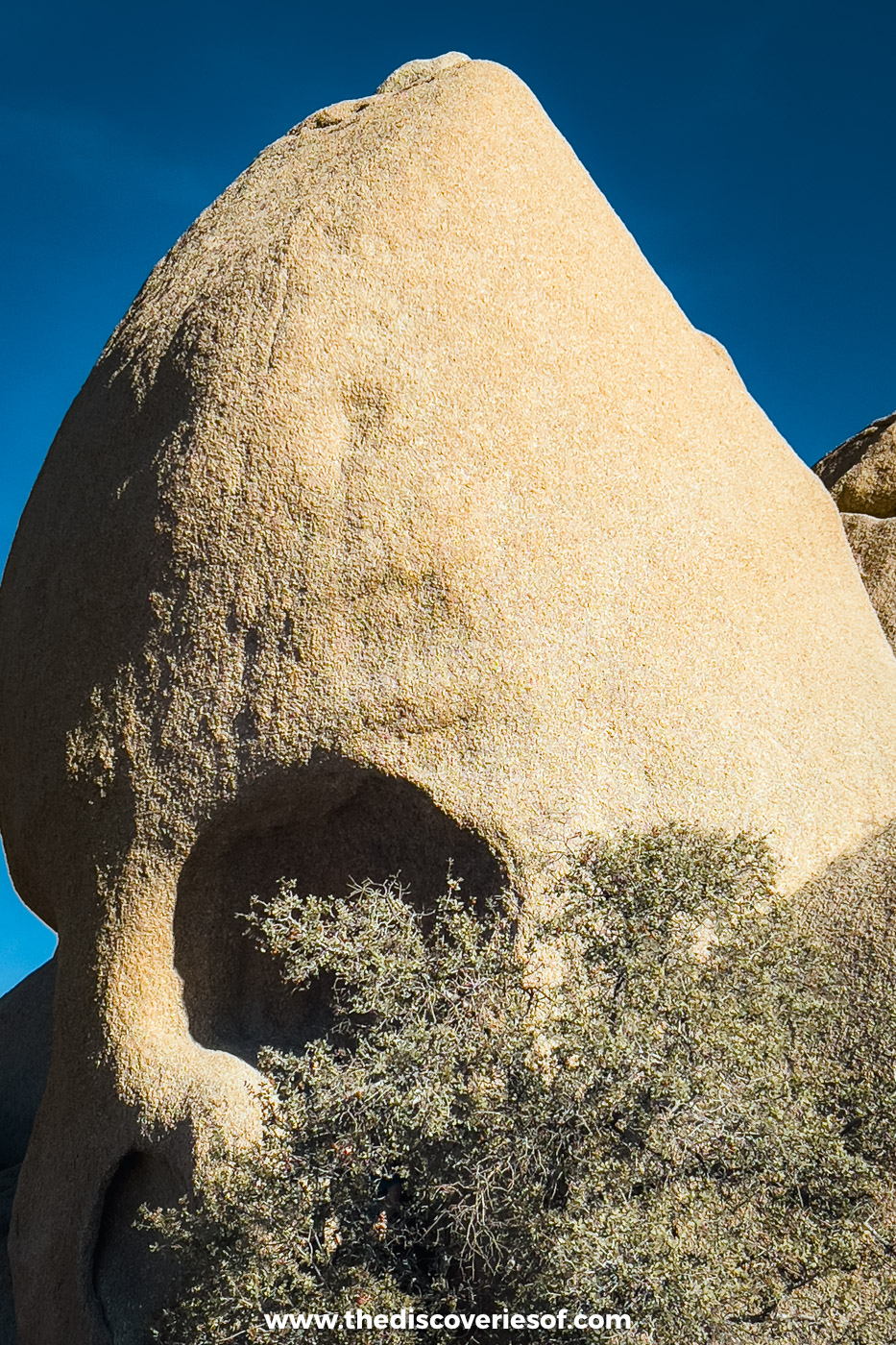
Joshua Tree is packed with surreal spots, and Skull Rock is no exception.
There’s no need to guess how it got its name. Rainwater sitting in the granite has scooped out a pair of hollow eyes and a nose, leaving what looks for all the world like a giant alien skull peeking out of the desert.
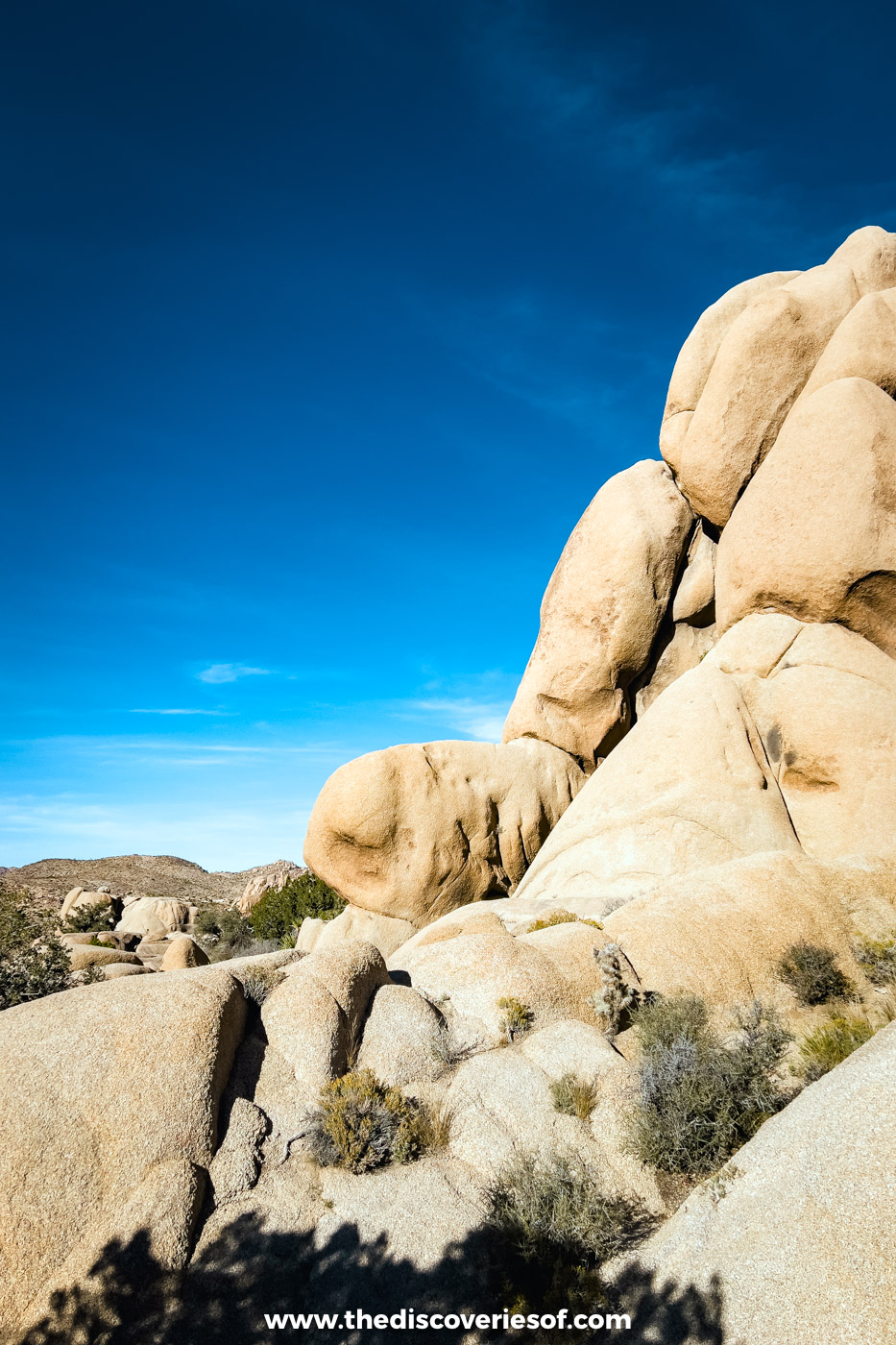
It sits right beside Park Boulevard, so the rock itself is bound to be thronged by the masses. That’s why I’d suggest walking the 1.7-mile loop instead, which is what I did. From Jumbo Rocks Campground, it winds past boulder piles, yuccas and Joshua trees on both sides of the road, and it makes the whole experience much more chilled.
Hike the Arch Rock Trail
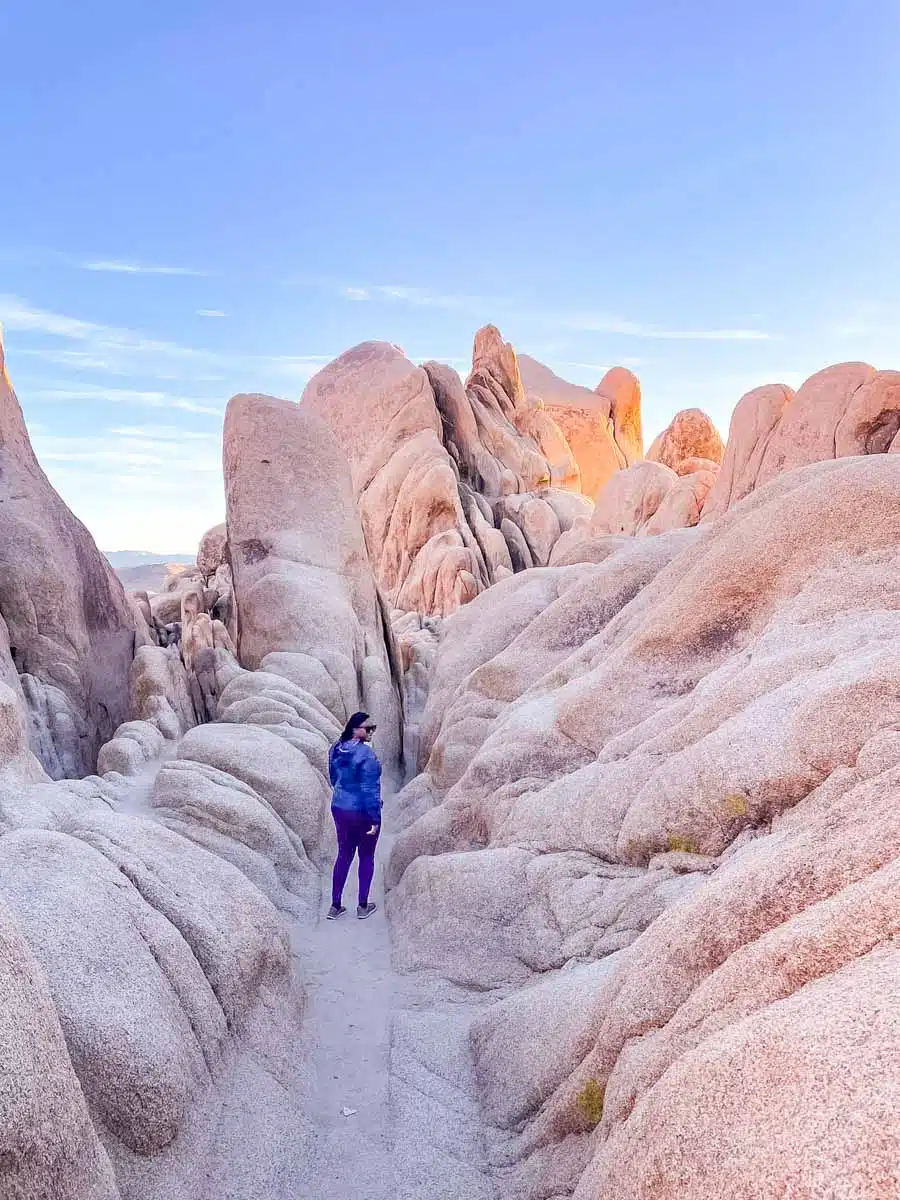
The Arch Rock Trail, a short, 1.4-mile lollipop loop with barely 100 feet of climbing begins at Twin Tanks, a small car park beside Pinto Basin Road. Spaces are limited, so expect a wait on weekend afternoons. Prepare yourself for some uninhibited scrambling, because you’re going to clamber over some rocks, baby! Strike off along the trail, wending your way through massive granite formations (climb atop for some epic snaps), before finishing at the foot of the 30-foot-wide arch.
I’ll level with you: the arch is cool, but the star of the show for me was the maze of smooth boulders all around it, worn into every weird shape you can imagine. I got there at about four in the afternoon, just as the low sun was turning the arch a deep orange, and it’s the time I’d pick again.
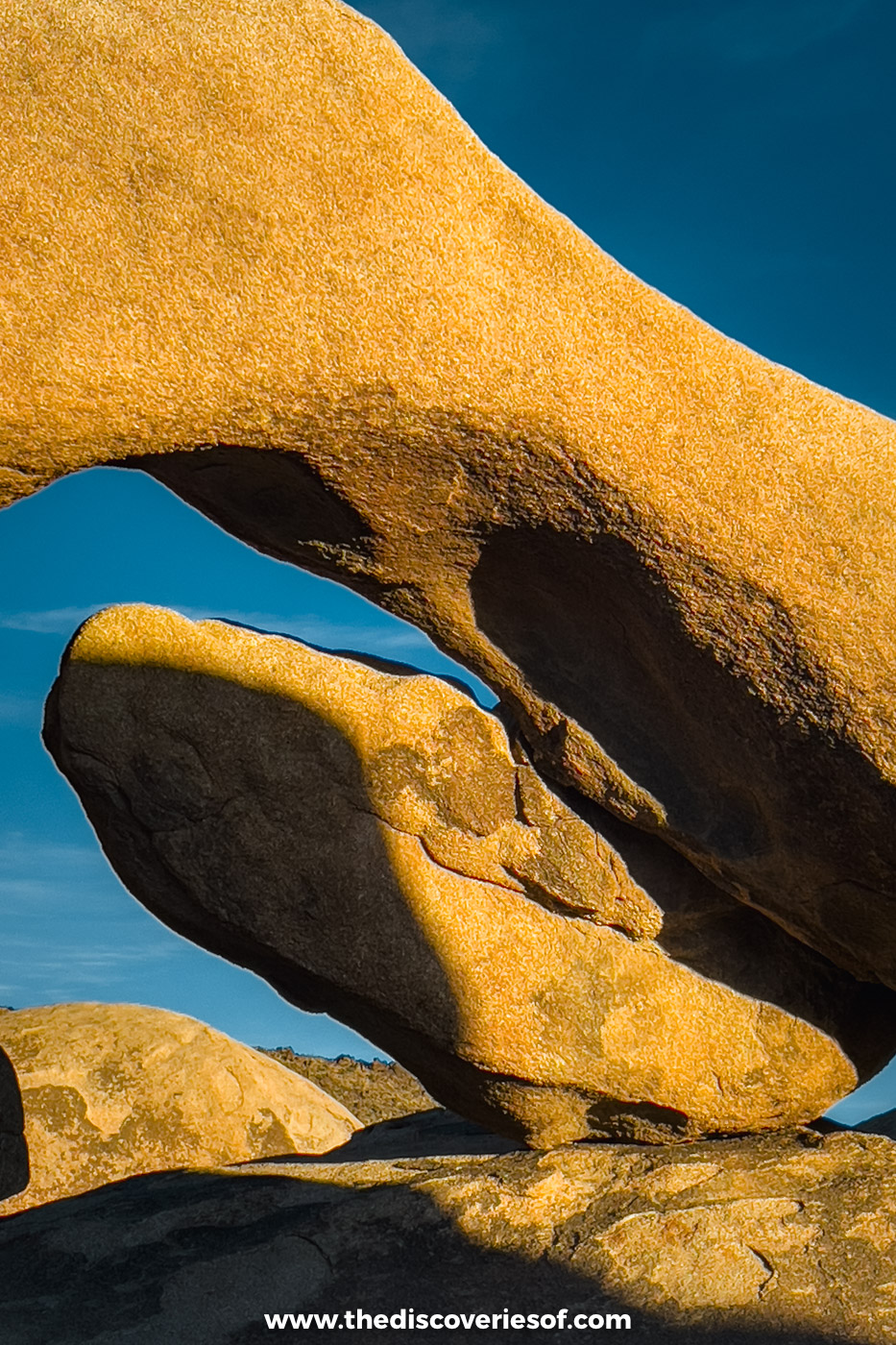
If you’re feeling more adventurous, a short signed spur off the loop leads to Heart Rock, a boulder whose silhouette makes a near-perfect heart.
Watch the sunset at the Cholla Cactus Garden
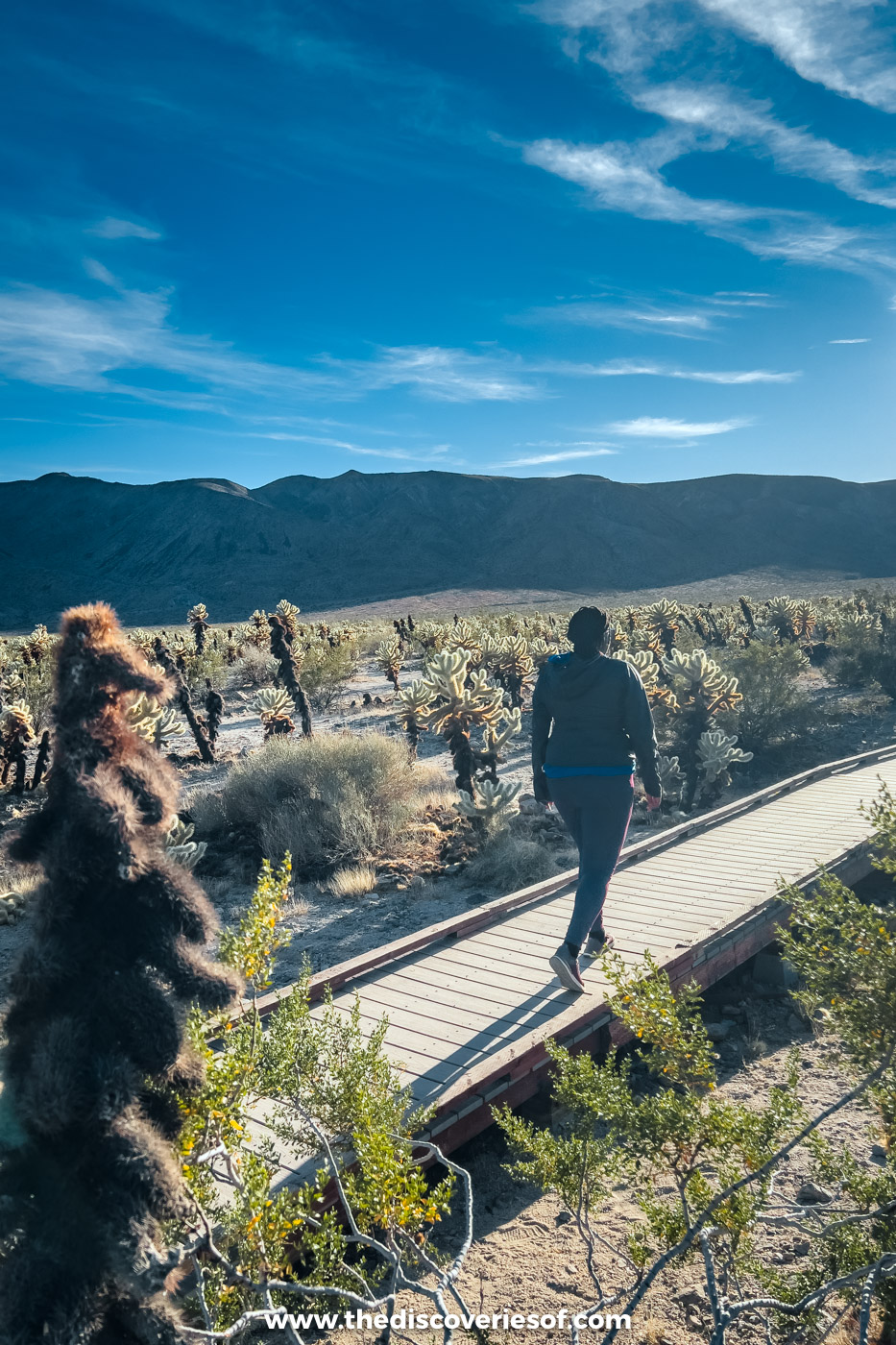
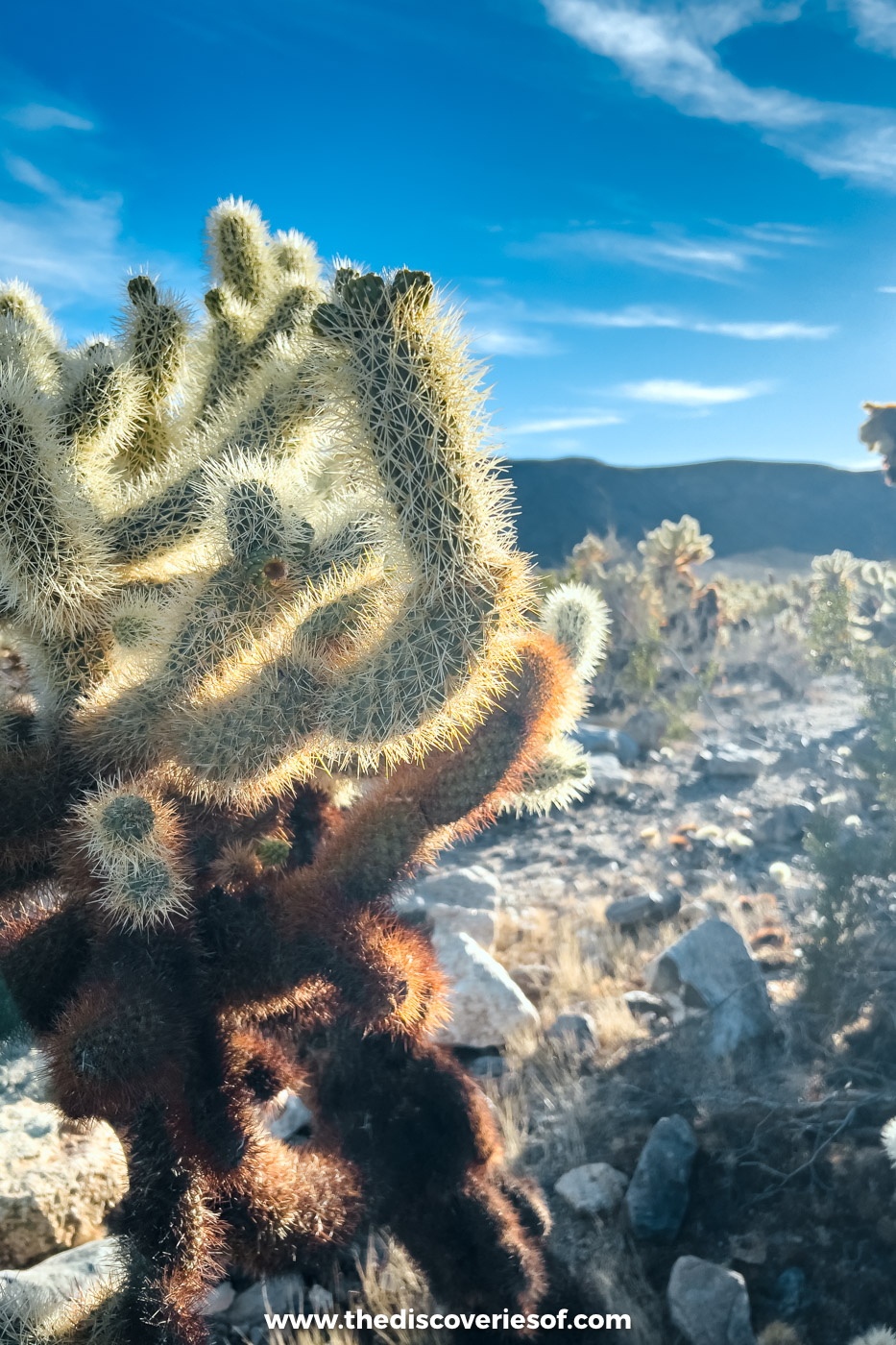
You can’t come to Joshua Tree and not make your pilgrimage to the spiky teddy bear cholla. They’re an iconic part of the park, after all.
So what better way to finish day one? The Cholla Cactus Garden, about 15 minutes further down Pinto Basin Road, is a flat quarter-mile loop, part boardwalk and part gravel, through one of the thickest cholla stands in the desert. When the sun drops low, every spine lights up: epic sunset photos here are a must. The spines are barbed and detach at the lightest brush (hence the other name, jumping cholla), so stay on the path.
Top Tip
The loop closed for trail improvements in early 2026, so check the alerts on the park website before you drive down.
Where to stay
I based myself in Palm Springs and drove into the park each day from The Cole, a small, adults-only boutique hotel with a pool on North Palm Canyon Drive, roughly 60 minutes by car from the West Entrance. It works well for this route if you don’t mind the driving.
Check rates and availability at The Cole
If you’d rather wake up closer to the trails, the Center Street Villas in the town of Joshua Tree have a private patio and a full kitchen in every unit, a few minutes from the West Entrance.
On a tighter budget, the Inn at Palm Springs has spacious rooms and an outdoor pool.
Day 2: Ryan Mountain, the Hall of Horrors, Lost Horse Mine and Keys View
Day two packs in a summit, a slot canyon and a gold mine, all a few miles apart in the middle of the park.
Climb Ryan Mountain
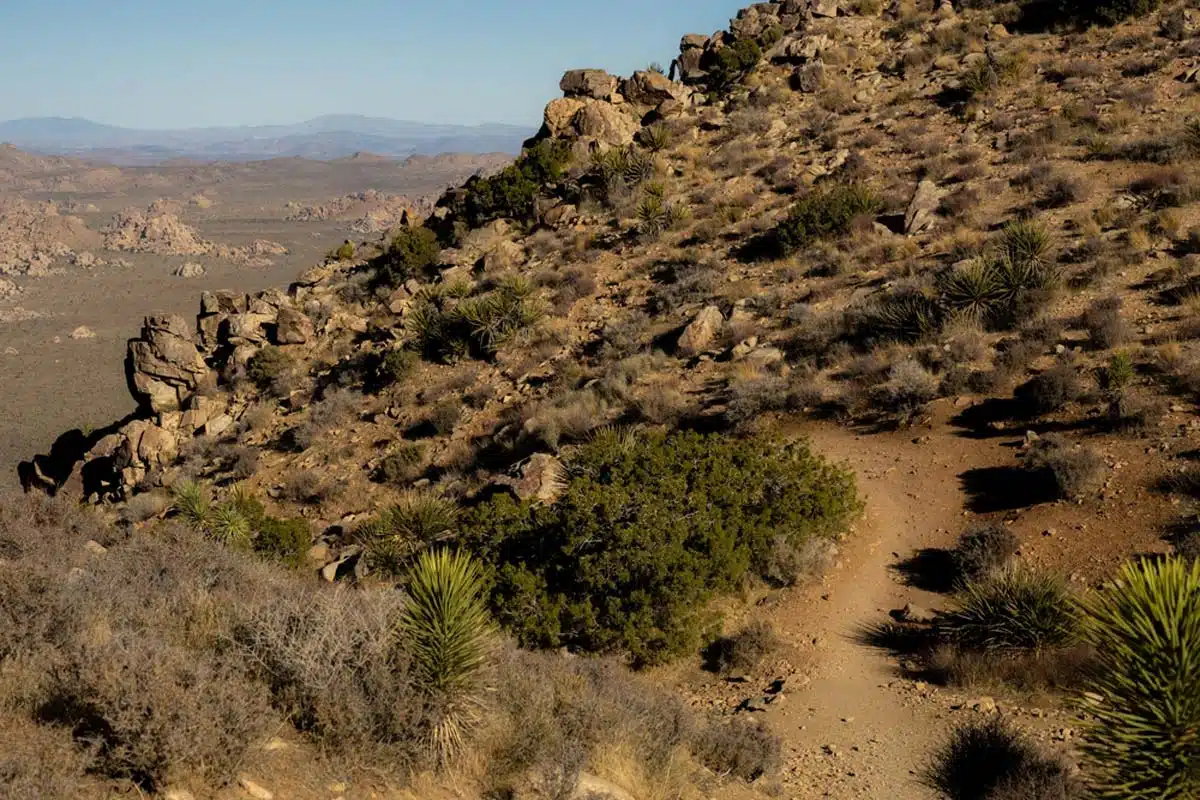
Another early-morning hike, Ryan Mountain starts from its own car park on Park Boulevard, between Sheep Pass and Ryan Campground, about half an hour’s drive from the West Entrance.
It’s the toughest walk on this route: 3 miles there and back, with about 1,050 feet of steep, stepped climbing and next to no shade. The reward is the 5,457-foot summit, with the park laid out on every side and, on a clear day, San Gorgonio and San Jacinto on the horizon. Start early, carry plenty of water and skip it in summer heat.
Squeeze into the Hall of Horrors
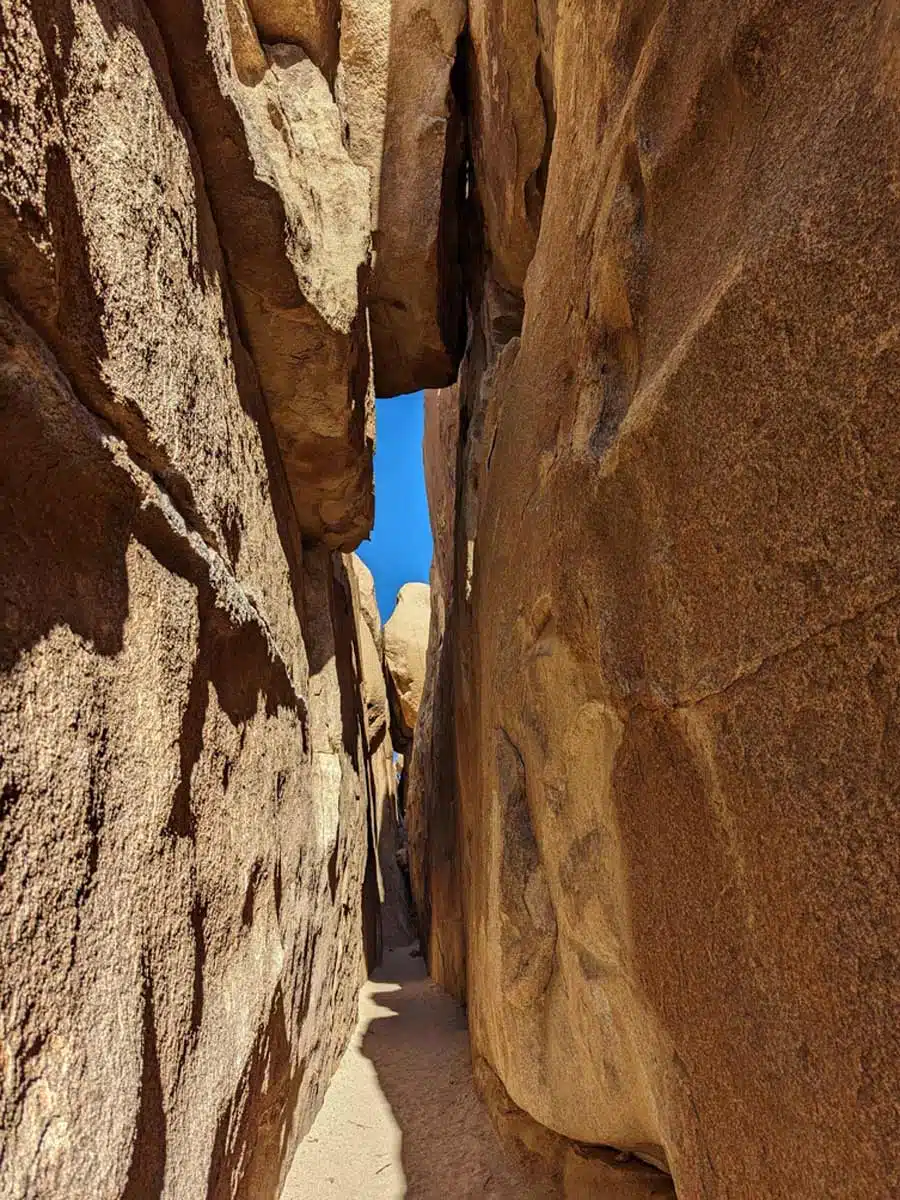
I’ll admit, it does have an ominous name, but the Hall of Horrors is merely a slot canyon.
A few minutes’ drive from the Ryan Mountain car park, a 0.6-mile loop circles two big piles of boulders, with Joshua trees all around.
The slot hides in the second pile: scramble up its south-western side to find the narrow crack. It takes some climbing (yes, please) and pinches to just a few inches wide in places, so make sure you can climb back out before you squeeze in.
Hike to the Lost Horse Mine
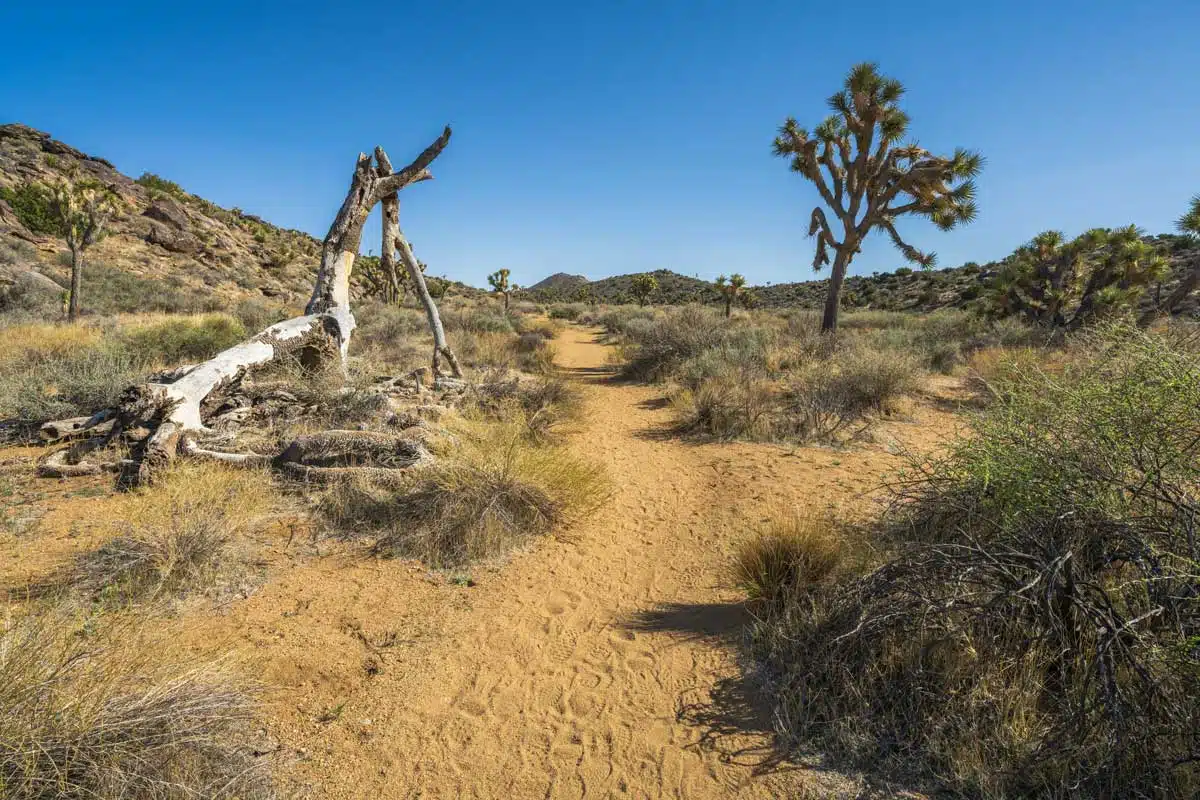
Next, a walk into the gold rush past is the perfect way to round off your penultimate day in the park.
The trailhead is off Keys View Road, and an old ore-hauling road climbs 4 miles there and back (about 550 feet up) to one of the most successful gold mines in the area. It yielded over 10,000 ounces of gold from 1894 to 1931, and its steam-powered ten-stamp mill survives, with the ruins of the operation scattered around it. Allow two to three hours, and view the shafts from outside the fence. Feeling energetic? The full Lost Horse Loop is 6.5 miles, but leave time to make sunset.
Watch the sun go down at Keys View
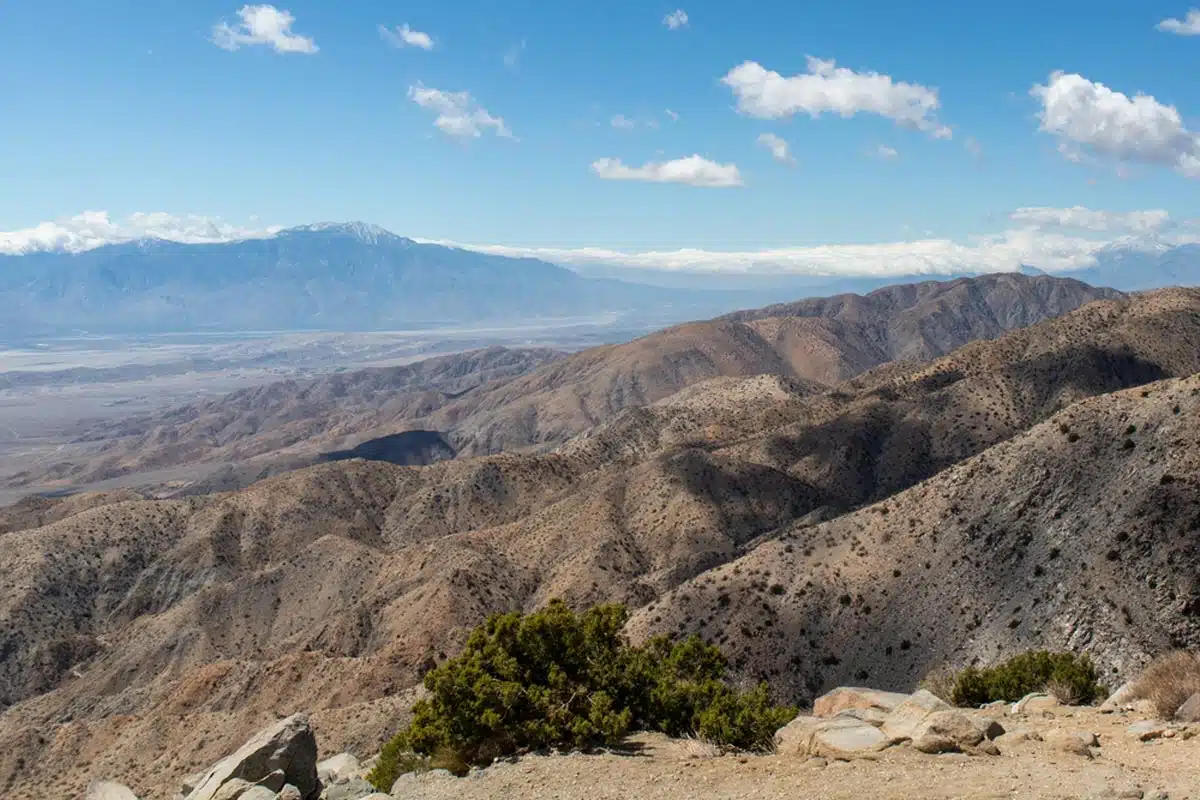
From the Lost Horse Mine, it’s only a few minutes further up Keys View Road (which branches off Park Boulevard near Cap Rock) to the viewpoint.
At 5,185 feet, up on the ridge of the Little San Bernardino Mountains, it’s one of the highest points you can drive to in the park, and a short, paved quarter-mile loop leads to the edge. Gaze out across the Coachella Valley, where the San Andreas Fault runs along the valley floor below Palm Springs and Mount San Jacinto, and, on clear days, the Salton Sea in the distance.
Sunset here is beautiful and busy, so arrive early for a parking space. I went for sunrise instead, and watching the first light creep over the horizon and wash across the valley was worth every minute of the 5am alarm.
Top Tip
Early riser? Flip day two around. Start at Keys View for sunrise, then do the Lost Horse Mine, Ryan Mountain and the Hall of Horrors in the cool of the morning, and you’ll have the afternoon free.
Day 3: High View, the Integratron and the town of Joshua Tree
Welcome to your third and final day: one more hike, a strange encounter with relaxation and an evening in town.
Climb the High View Nature Trail
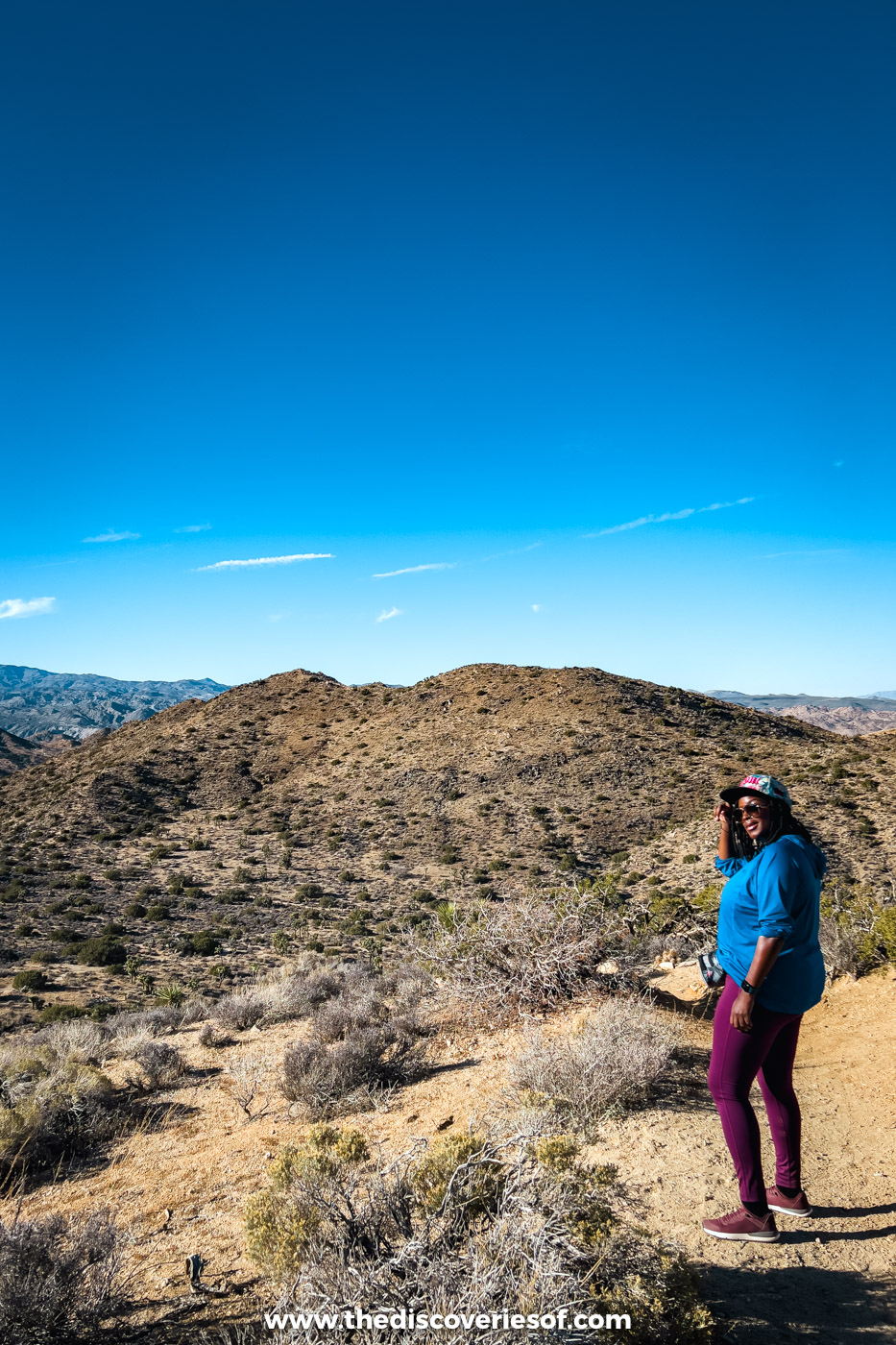
Today’s hike is in another part of the park entirely: the Black Rock Canyon corner on the edge of Yucca Valley, well away from the Park Boulevard crowds. It has its own entrance off Joshua Lane, and you can’t drive through from here to the rest of the park.
High View ended up as one of my favourite hikes in the whole park, partly because it was so quiet and partly because it delivers hard on the views. I walked it in the early afternoon.
I’ll be honest: you pay for those views with burning legs, climbing about 400 feet on a 1.4-mile loop from its own trailhead (2.1 miles if you start at the Black Rock Nature Center). Then you reach the top, the sweat and the aches are instantly forgotten, and the panorama over Yucca Valley to San Gorgonio Mountain is nothing short of incredible.
From there, it’s a hop, skip and a gambol down to the car.
Get lost in sound at the Integratron
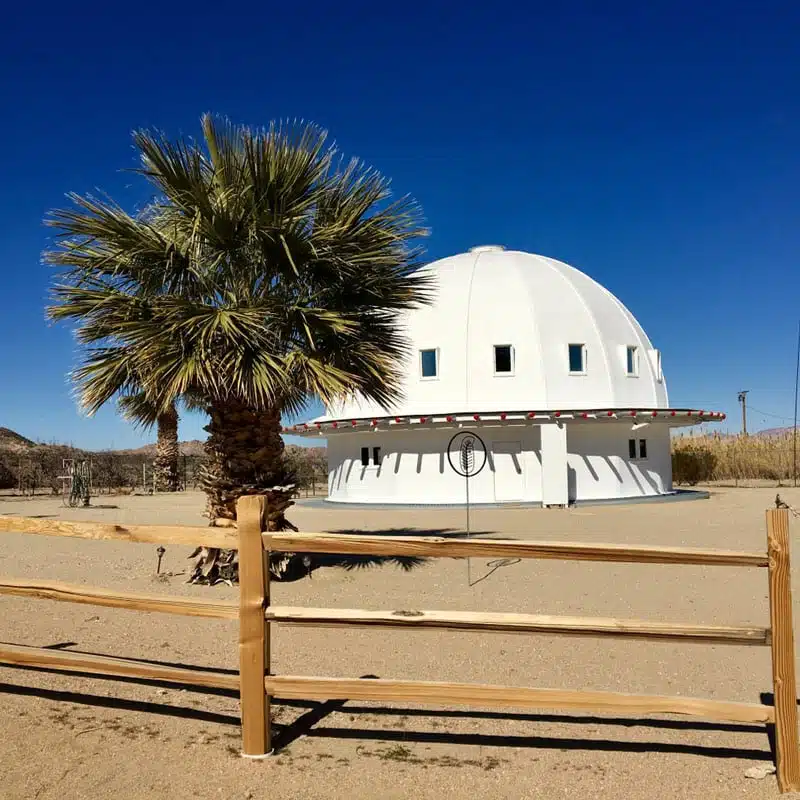
After your final hike, head beyond the park’s borders. Drive roughly 30 minutes north from Yucca Valley and you’ll end up in Landers, home of the Integratron. What the hell is the Integratron? I’m glad you asked.
The ufologist George Van Tassel started building this white wooden dome in the 1950s, saying the design had been passed to him by visitors from Venus. He died before it was finished, but the dome turned out to have extraordinary acoustics, and today it hosts sound baths: an otherworldly (pun intended) hour of sonic healing, with about 25 minutes of quartz crystal bowls played around you, then the rest of the hour lying back to recorded music.
Tickets
Entry to the dome is by reservation only, so book a public or private sound bath on the Integratron website before you go; they sell out weeks ahead. It’s open Wednesday to Saturday and closes from July to early September, so plan day three around it.
Spend the evening in the town of Joshua Tree
After your healing session, it’s time to hit the streets of Joshua Tree (the town), strung along Highway 62 near the West Entrance, in time for a couple of its quirkier museums.
Opt for the Noah Purifoy Outdoor Desert Art Museum for an outdoor affair: the assemblage artist spent his final years filling the desert north of town with sculptures made from salvaged junk. It’s free and open from sunrise to sunset. Or head to the World Famous Crochet Museum, a lime-green former photo booth crammed with crocheted animals, at the back of a lot beside the Joshua Tree Saloon. It’s free and always open.
For dinner, the Joshua Tree Saloon & Grill dishes up burgers in kitschy Old West surroundings, or drive 25 minutes to Pappy and Harriet’s in Pioneertown for mesquite-grilled meat and live music.
End the trip under the stars
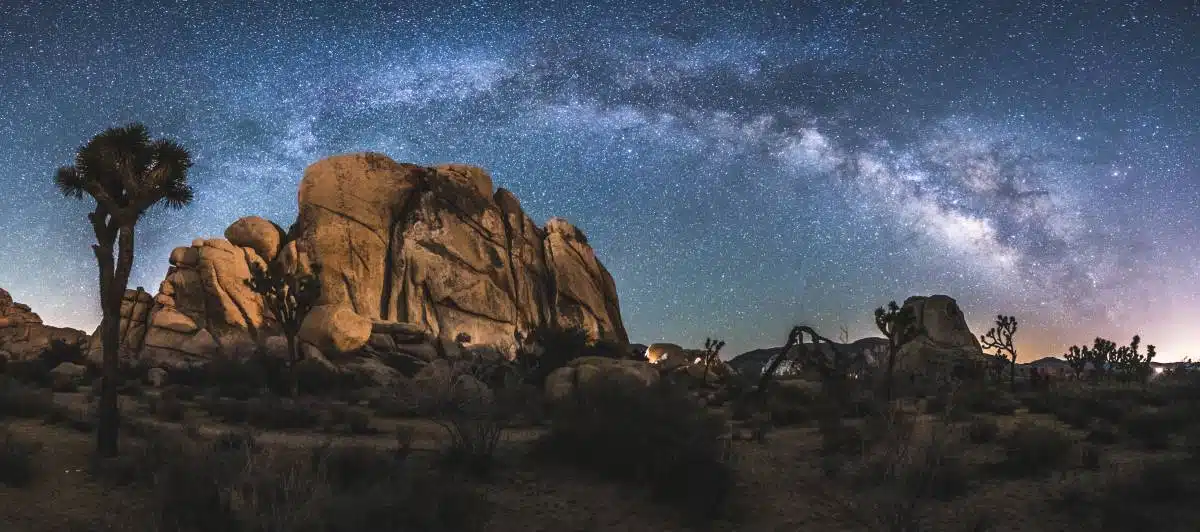
Before you call it a night, head back into the park, which is open 24 hours. Joshua Tree has been an International Dark Sky Park since 2017, and stargazing here was part of my trip too. The darkest skies are in the east, furthest from the lights of the Coachella Valley, so drive in from Twentynine Palms and pull off along Pinto Basin Road. Pick a moonless night, use a red torch and wrap up warm.
Have more time? Add these to your itinerary
Hidden Valley and Keys Ranch
The Hidden Valley trail circles a rock-walled hollow, said to have hidden rustled cattle, in just a mile, and it’s round the corner from Barker Dam. Close by, ranger-led tours of Keys Desert Queen Ranch ($20, October to May, booked on recreation.gov) show you the homestead Bill Keys and his family built from scratch.
Cottonwood Spring and Mastodon Peak
Heading back to Palm Springs via the I-10? Stop at the fan palm oasis of Cottonwood Spring for the 3-mile Mastodon Peak loop, which you’ll find with the rest in my guide to hiking in Joshua Tree.
A day in Palm Springs
Basing yourself in Palm Springs? Give the city a day for its mid-century houses, cactus garden and canyons. My Palm Springs itinerary has the route, and there are more ideas in my day trips from Palm Springs.
Handy tips for planning your 3 days in Joshua Tree
How many days do you need in Joshua Tree?
Three days is the sweet spot: enough for the classic boulders and cacti, a summit, a gold mine and the quiet Black Rock corner without rushing. With two days, follow days one and two of this route. With just one, stick to Park Boulevard and Pinto Basin Road: Barker Dam or Hidden Valley, Skull Rock, Arch Rock, the cholla and Keys View. With four or more, add the oases in the south, a Keys Ranch tour and a day in Palm Springs.
Best time to visit
October to May is hiking season, with warm days and cool nights; I went in November, and the weather was stunning. Spring brings wildflowers and crowds, while summer regularly passes 100°F (38°C). For a season-by-season breakdown, see when to visit Joshua Tree.
Getting there and around
The nearest airport is Palm Springs International (PSP), about an hour from the West Entrance. From Los Angeles or Santa Monica, it’s around 140 miles, or two and a half to three hours without traffic. Check flights to Palm Springs on Skyscanner.
There’s no shuttle inside the park, so you’ll need a car: try Hertz, Enterprise or Sixt. Entry costs $30 a car and lasts seven days, and the entrance stations take cards only. You won’t find shops, restaurants or petrol inside the park, and the phone signal is patchy at best, so stock up before you go in, download offline maps and check alerts on the National Park Service website.
What to pack
Any trip into Joshua Tree is literally venturing into the untamed and harsh desert, so don’t leave home without:
- Sunscreen and polarised sunglasses for the unforgiving sun.
- A sturdy pair of hiking boots or all-terrain hiking shoes: the trails are rocky and the cacti are spiky.
- A hydration pack and a water bottle. Trust me, there are few places to fill up in the park, and they’re far apart.
- A good, lightweight daypack for your snacks and water.
- Depending on the season, a softshell jacket for sunrise at Keys View and cold evenings stargazing.
Useful resources
- Booking.com: hotels in Palm Springs, Joshua Tree and Twentynine Palms.
- Airbnb and Plum Guide: desert homes and cabins near the park.
Map
Read next
- The best things to do in Joshua Tree National Park
- The best hikes in Joshua Tree National Park
- The best time to visit Joshua Tree National Park
- 2 days in Palm Springs
- Brilliant day trips from Palm Springs
- A 10-day Southern California desert road trip
Love this? Save and share on Pinterest

Discover the top things to do, insider tips and hidden gems in our USA Travel Guides.
Read the guides →