
High in the hills of the south-west, a bare patch of earth glows red, violet, ochre and blue against the forest around it. It’s one of the strangest sights on the island, and the same ticket also buys you a waterfall and a visit to some very old tortoises.
I visited the Seven Coloured Earth in September, on my first trip to Mauritius, on a day around Chamarel with a guide my hotel had arranged. The dunes are every bit as lovely as the name suggests, and that day up in the hills turned out to be one of the high points of my time on the island.
It’s an easy sight to visit, but a little planning helps. The light changes the colours completely, the dunes are fenced off, and they sit 3 km inside the Chamarel 7 Coloured Earth Geopark, past the island’s tallest waterfall. This guide covers what you’ll see, how the colours formed, tickets and opening hours, getting there from the main beach areas and when to go.
The geopark at a glance
- Where: just outside the village of Chamarel, in the hills above the south-west coast.
- Tickets: Rs 800 for non-resident adults and Rs 400 for children aged 5 to 11. Residents pay half, and under-5s go free.
- Hours: daily from 8.30am to 5.30pm between October and May, and to 5pm from June to September.
- Included: the coloured dunes, both viewpoints over Chamarel Waterfall and the tortoise park.
- Time needed: 45 minutes to 2 hours.
- Getting there: by car, taxi or tour. About 30 minutes from Bel Ombre, an hour and a half from Grand Baie.
How the earth got its colours
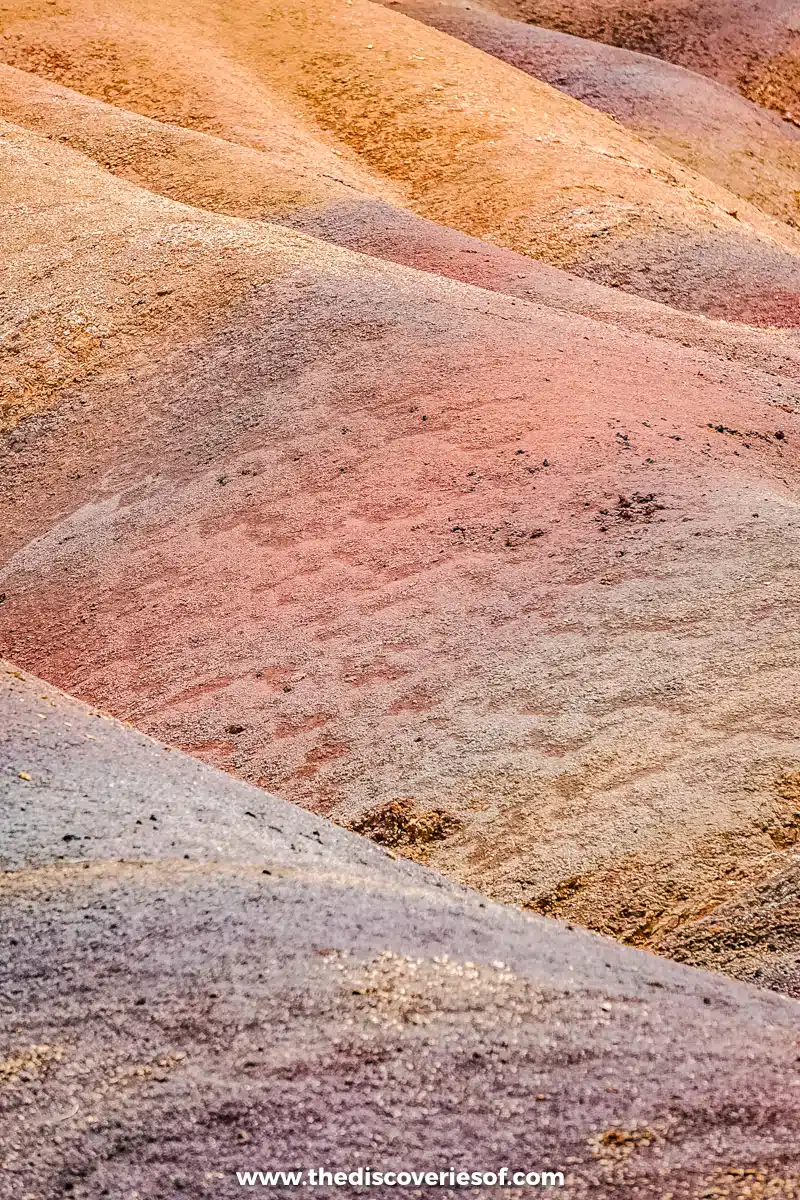
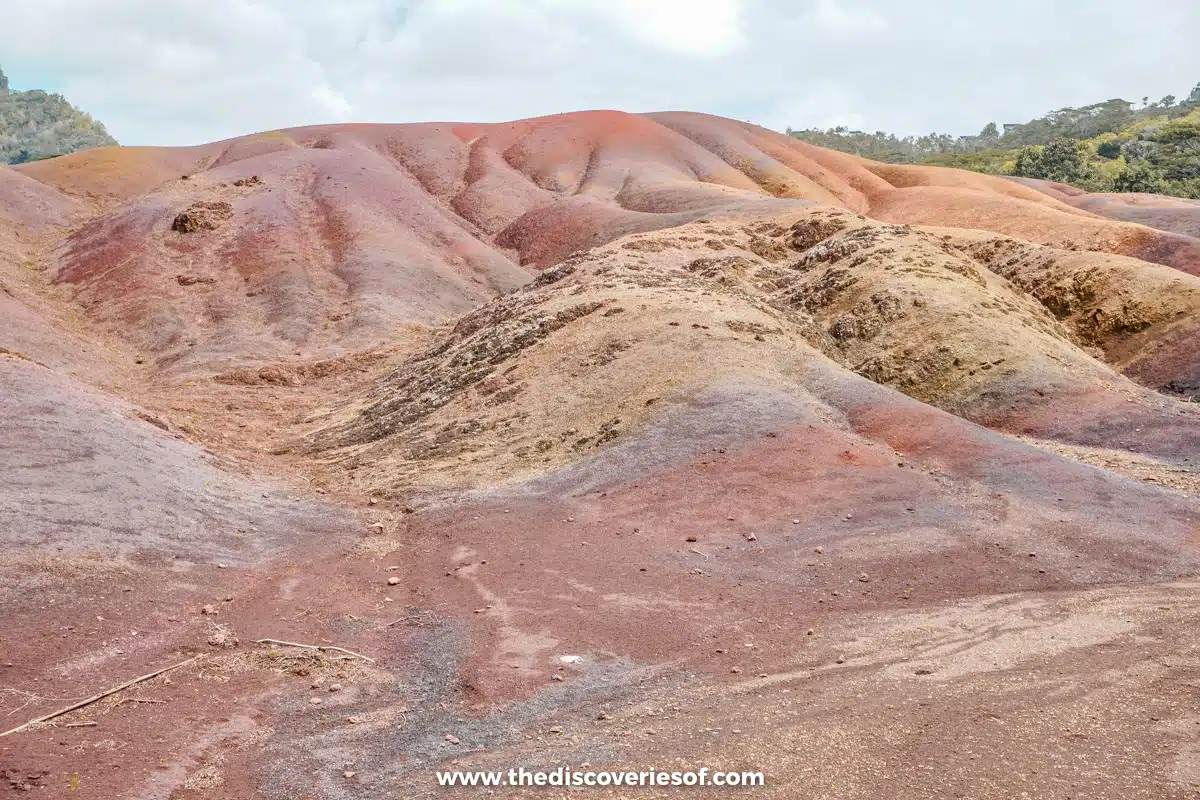
Mauritius is a volcanic island, and these dunes are what’s left of its basalt. Over a very long time, the lava rock here broke down into clay, and the tropical rain then washed away almost everything except the least soluble minerals, mainly oxides of iron and aluminium. Geologists call the result ferralitic soil. Iron is behind the reds, rusts and near-black shades, and aluminium gives the blues, violets and purples. One theory for the range of tones is that the molten rock cooled at different rates.
The colours usually listed are red, brown, violet, green, blue, purple and yellow, but you won’t find seven tidy stripes. The shades melt into each other where they meet, so in practice you see dozens of in-between tones, from salmon pink to lilac.
There’s a curious footnote. The park says the colours “resist mixing”, and the popular story goes that if you stir sands of different colours together, they gradually settle back into separate layers. Nobody has fully explained why, which is half the fun.
The site was first written up in 1879 by the Royal Society of Arts and Sciences, and it has drawn visitors since the 1960s. It’s smaller than the photos suggest: the dunes cover about 7,500 square metres, roughly the size of a football pitch, with rain-carved ripples and gullies running across the surface.
What you’ll see in the geopark
The coloured dunes
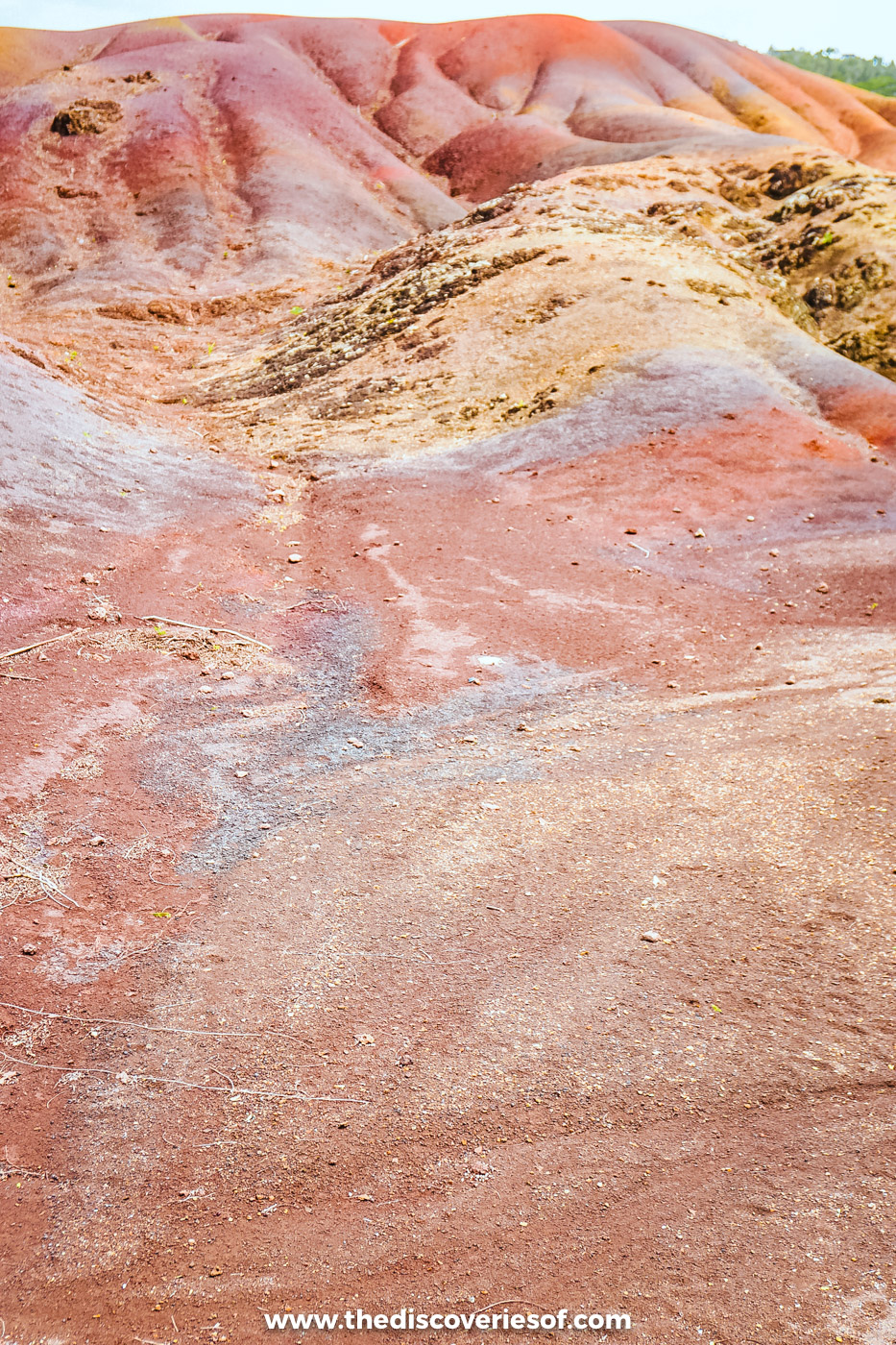
The dunes sit in a hollow ringed by green forest, which only makes the reds and purples look brighter. It really is as pretty as it sounds. From the fence I could pick out pinks, rusts, mauves and a greyish violet in a single sweep, and each of my photos came out a slightly different palette.
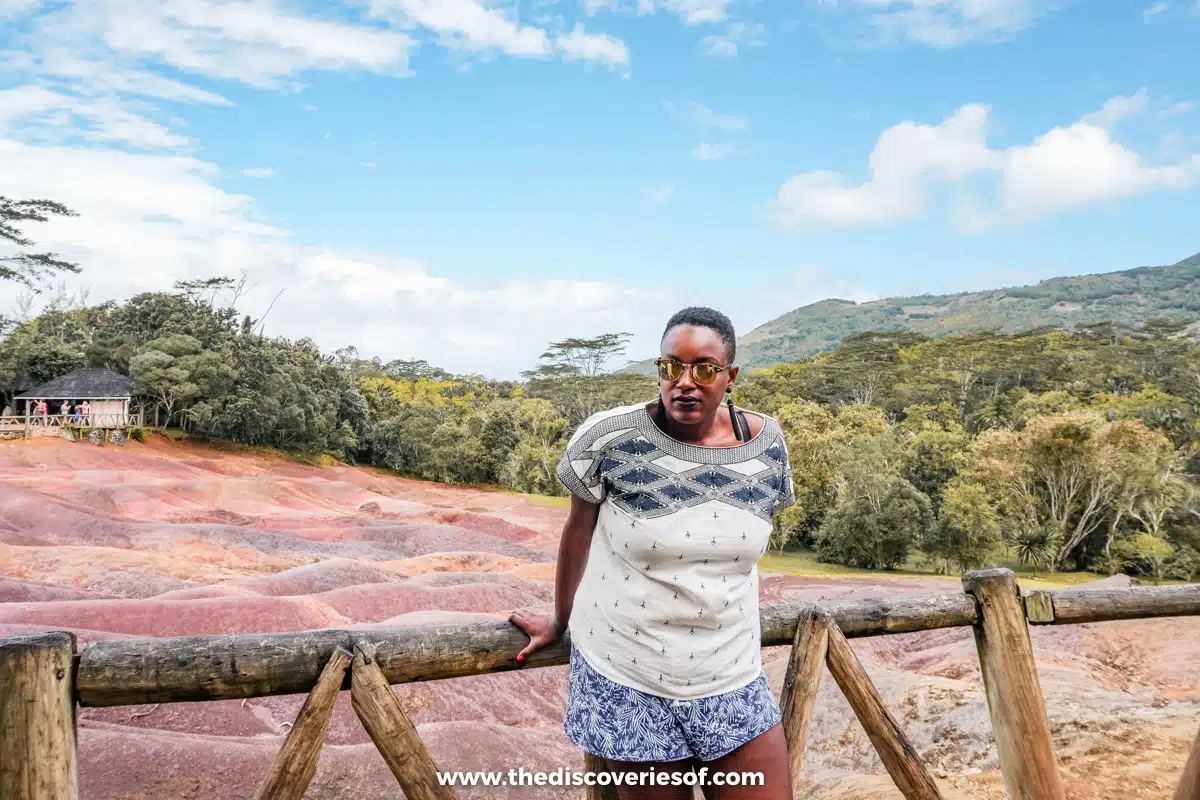
Wooden fences keep everyone off the earth itself, and there are viewing decks on both sides. Walk all the way round rather than stopping at the first one: the patterns and colours change with every angle.
Chamarel Waterfall, on the same ticket
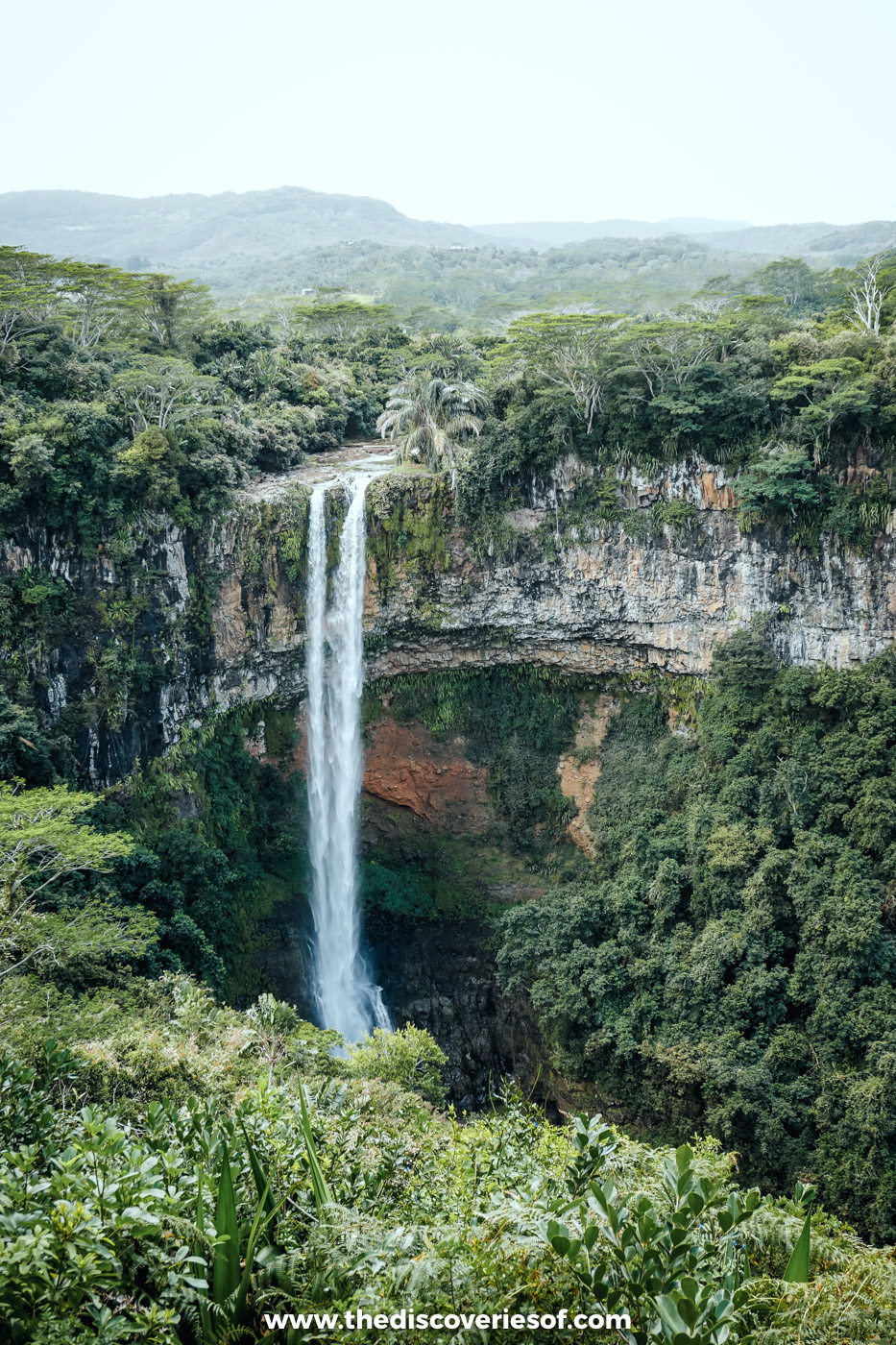
The road in from the gate reaches the waterfall first, about 1.5 km in, and your ticket covers both of its viewpoints. It’s the tallest single-drop waterfall in Mauritius, spilling off a basalt cliff into a gorge full of forest, with coffee plants among the greenery. The two upper platforms are only a short flight of steps apart, yet the falls look strikingly different from each, so stop at both. My guide to Chamarel Waterfall has more, including the guided hike down to the pool at the bottom, which the park ticket doesn’t cover.
The giant tortoises
The park also keeps a shaded enclosure of Aldabra giant tortoises, one of the largest tortoise species in the world. They come from the Aldabra atoll in the Seychelles and are cousins of the giant tortoises that once lived on Mauritius and are now extinct. The species can live for more than 150 years, and the residents here have names, including Tchaikovsky and Swarovsky. You watch from outside: going into the enclosure and feeding them are both off limits, and the keepers feed them in the morning. They still make a brilliant photo stop on the way out.
Coffee and a café
Chamarel is coffee country too. The geopark runs the only commercial coffee plantation in Mauritius, with guided walks that end in a tasting of Café de Chamarel (booked separately from the entrance ticket). For a quick bite, the park’s café does sandwiches and paninis; you need an entrance ticket to use it, and picnics aren’t allowed.
Seven Coloured Earth tickets and opening hours
- Non-residents: adults pay Rs 800, and children aged 5 to 11 pay Rs 400.
- Residents of Mauritius: Rs 400 for adults and Rs 200 for children, with an ID card or residence permit shown at the gate.
- Under 5: free.
- Paying: Mauritian rupees in cash, cards (except Diners Club) or local mobile payment apps. Foreign currency isn’t accepted, so bring rupees if you plan to pay cash.
- Booking: you can buy at the gate. If you’d rather book ahead, the park sells its own entrance ticket on GetYourGuide, for a little more than the gate price. Tickets are single entry, for one date, and non-refundable.
Tickets
The geopark is open every day, including Sundays and public holidays. From October to May it opens 8.30am to 5.30pm (last tickets at 5pm), and from June to September 8.30am to 5pm. It closes during cyclones and very heavy rain.
Getting to Chamarel
You’ll need wheels. Public transport doesn’t reach the park in any practical way, and full-size coaches aren’t allowed in, so visitors come by hire car, taxi or tour minibus. From the west coast, the road climbs from Case Noyale into the hills in a run of hairpin bends. Rough drive times to the park:
- Bel Ombre: about 30 minutes (17 km).
- Le Morne: about 25 minutes.
- Flic en Flac: 30 to 45 minutes.
- Grand Baie: about an hour and a half each way, so it’s a full day out from the north.
Inside the park, the road runs 1.5 km from the gate to the waterfall and 3 km to the dunes, with parking at both. You can walk it instead, which takes about an hour each way on basalt paths.
No car? This full-day south-west tour picks up from hotels across the island and takes in the waterfall, the dunes and the Rhumerie de Chamarel, with entry fees included. Or do as I did and ask your hotel to arrange a driver-guide. Mine was brimming with local knowledge, which is worth having on a day like this.
When to go for the best colours
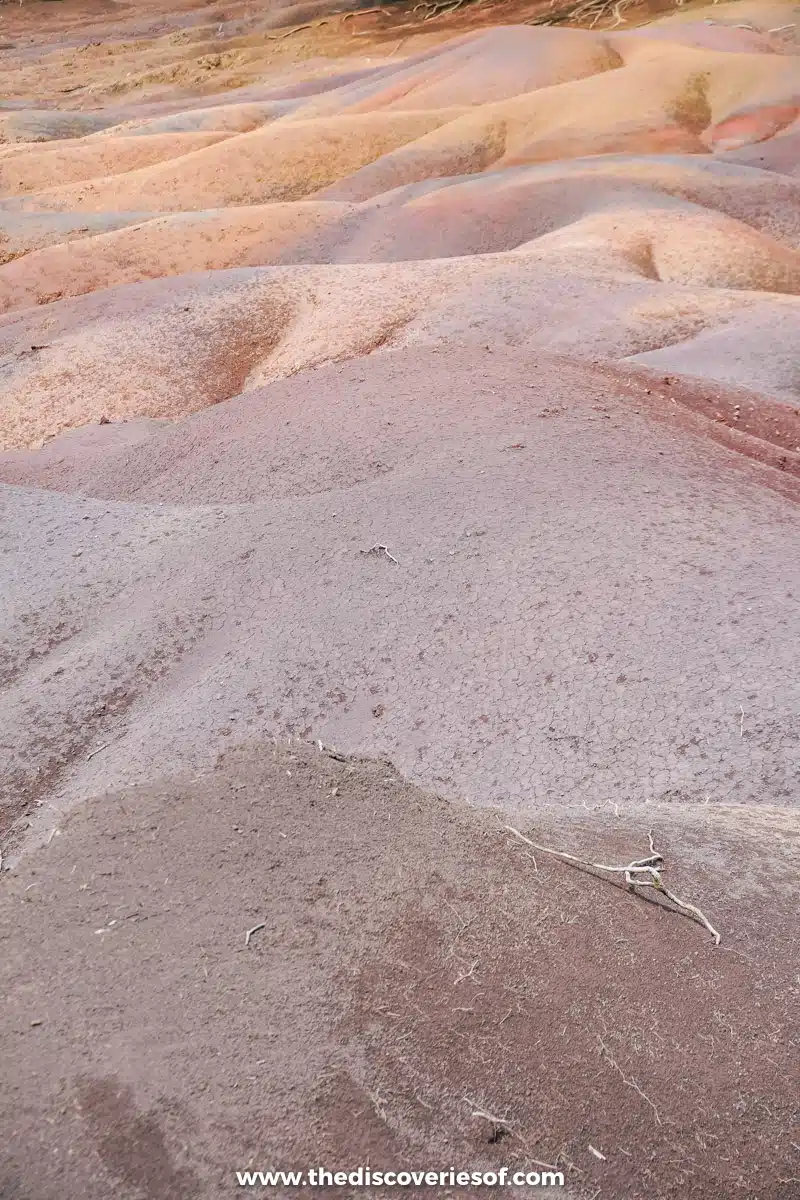
The park is open all year, and the time of day matters more than the season. Low sun in the early morning and late afternoon picks out the ridges and deepens the reds, while harsh midday light flattens everything into a dusty tan. The colours are richest when the sun comes back out after a shower, so a damp morning can pay off.
Arriving at the 8.30am opening also puts you ahead of the full-day tours, which typically collect guests from their hotels at around 9.30am. My visit was in September, in the cooler, drier months, under a mix of sun and cloud, and the colours still came through beautifully. In the rainy season, bring a light jacket or an umbrella.
Tips for your visit
- Stay on the paths. Walking on the coloured earth and taking soil are banned, and so are drones, picnics and pets. The full list is on the park’s rules page.
- Wear proper shoes. The paths are basalt rock, uneven in places and hard going for anyone with reduced mobility, though the park is working on access.
- Bring rupees. Foreign cash isn’t accepted anywhere on site.
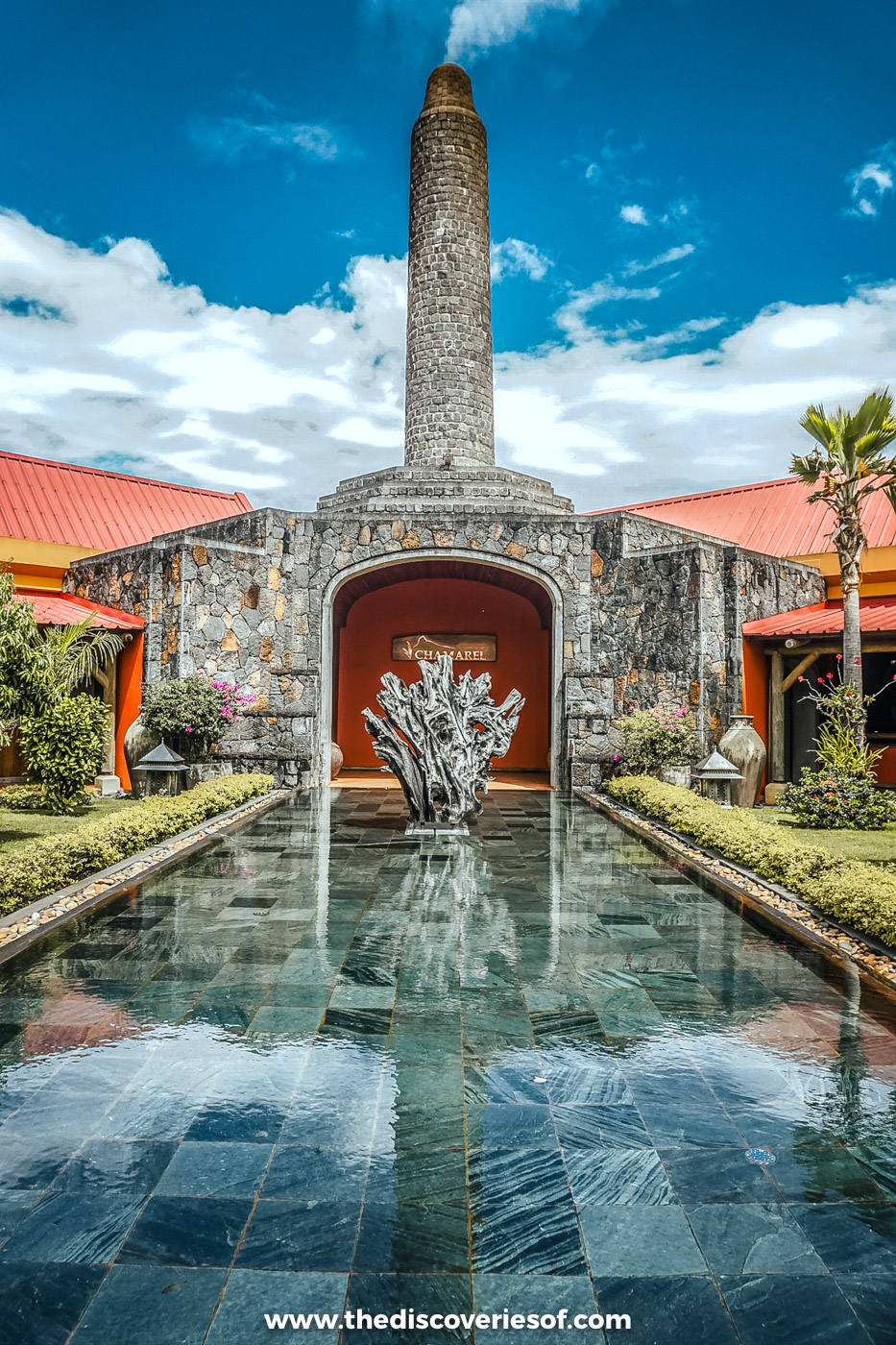
- Finish with rum. The Rhumerie de Chamarel is a short drive away, and I’d highly recommend it. Guided visits with a tasting run Monday to Saturday from 9.30am to 4.30pm (Rs 800, no booking needed), and its restaurant, L’Alchimiste, makes a good lunch stop. It’s closed on Sundays.
- Plan the rest of the south-west. My guide to things to do in Mauritius and my two-week Mauritius itinerary show where Chamarel fits, and my Mauritius travel guide has the essentials.
Map
Read next
- A guide to Chamarel Waterfall, Mauritius
- 24 things to do in Mauritius
- How to spend 2 weeks in Mauritius, one coast at a time
- Where to stay in Mauritius
- How to see the underwater waterfall in Mauritius
- Mauritius travel guide
Love this? Save and share on Pinterest
Discover the top things to do, insider tips and hidden gems in our Mauritius Travel Guide.
Read the guides →