
Curries, Creole tomato sauces, Chinese noodles and French pastry have been cooking side by side on this small island for nearly two centuries, and the result is some of the best eating in the Indian Ocean. These are the dishes to look out for, from split-pea flatbreads sold from glass cases on the back of motorbikes to a pink, jelly-studded milkshake.
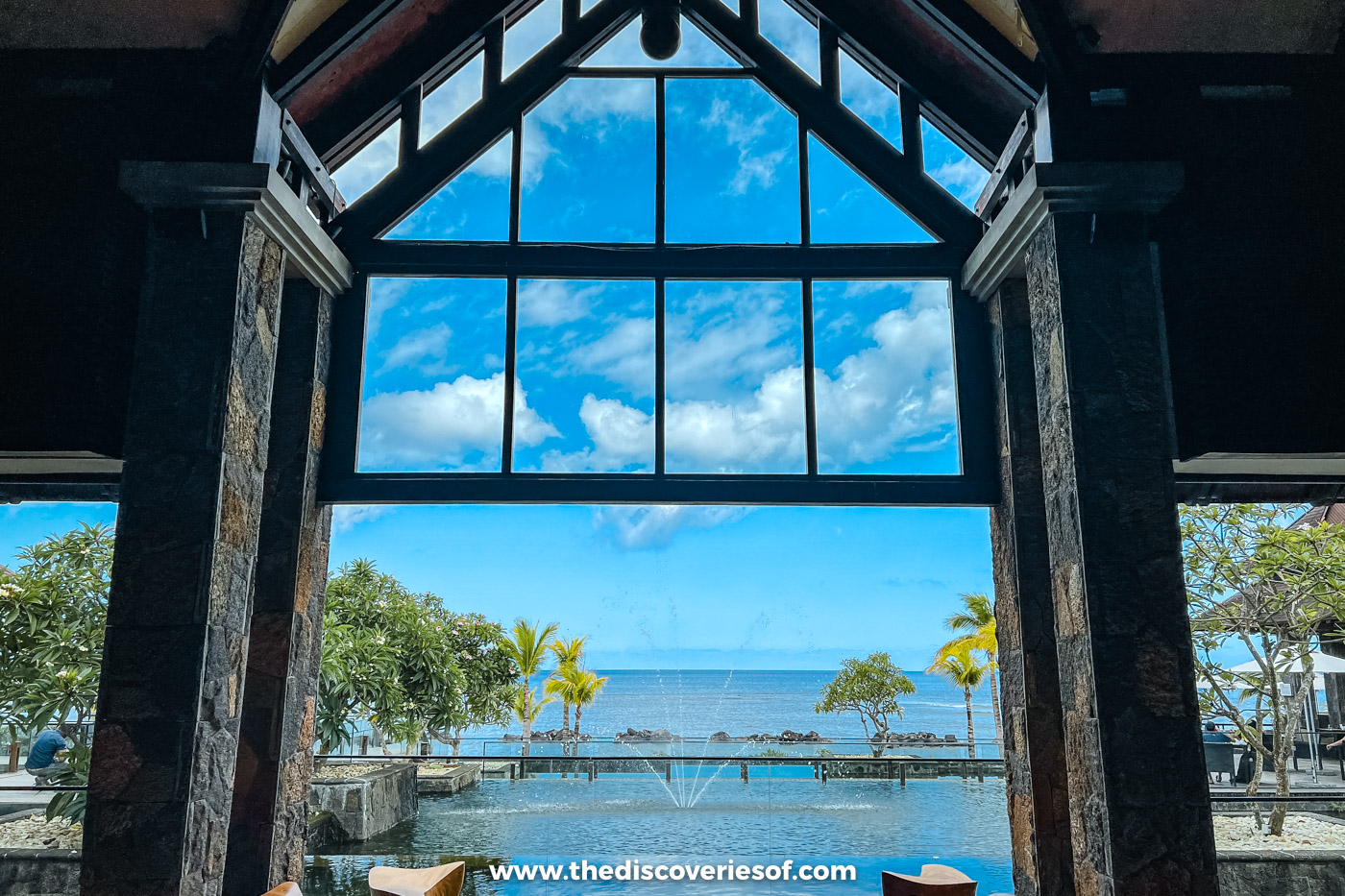
The meals I remember from three trips to Mauritius are the local ones. On my first, a Mauritian night at the Outrigger in Bel Ombre turned into after-dinner dancing. On my second I started a December morning with puri and curry on the terrace at The Westin Turtle Bay, looking out through the palms to the water. On my third, a lychee wine tasting up in the hills rolled straight into a long Mauritian lunch in the garden.
So my advice to anyone heading to the island is simple: Mauritian food is banging, so leave the resort, find the street food stalls and feast. This guide covers where the cooking comes from, the dishes to order and what goes into them, what to drink, where to find it all and roughly what it costs.
Where the island’s cooking comes from
Mauritius had no native population, so everything on the plate arrived by sea. The Dutch settled first, in 1638, followed by the French from 1715 and the British from 1810 until independence in 1968. Enslaved people brought from Madagascar and East Africa under French rule laid the foundations of Creole cooking. After slavery was abolished in 1835, almost half a million indentured labourers, most of them from India, landed at the Aapravasi Ghat depot in Port Louis to work the sugar estates, and they brought their curries, flatbreads and spice blends with them. Chinese traders added noodles and dumplings, and the French left a taste for bread, pastry and a long lunch.
Two centuries later the influences have blurred together, so a single lunch can put a Mauritian curry, a Creole tomato sauce and a Chinese dumpling on the same table without anyone batting an eyelid.
15 Mauritian dishes to try, from street snacks to Sunday briyani
Dholl puri
If the island has a national snack, this is it. Two thin, soft flatbreads are cooked on a griddle with a fine layer of ground yellow split peas inside, then folded together around a spoonful of bean curry, rougaille, pickled vegetables and chutney. It came over with Indian families, and today it’s eaten at any time of day, breakfast included, often rolled in paper and eaten standing up. Expect to pay around Rs 20 to 60 for a serving.
Farata and roti
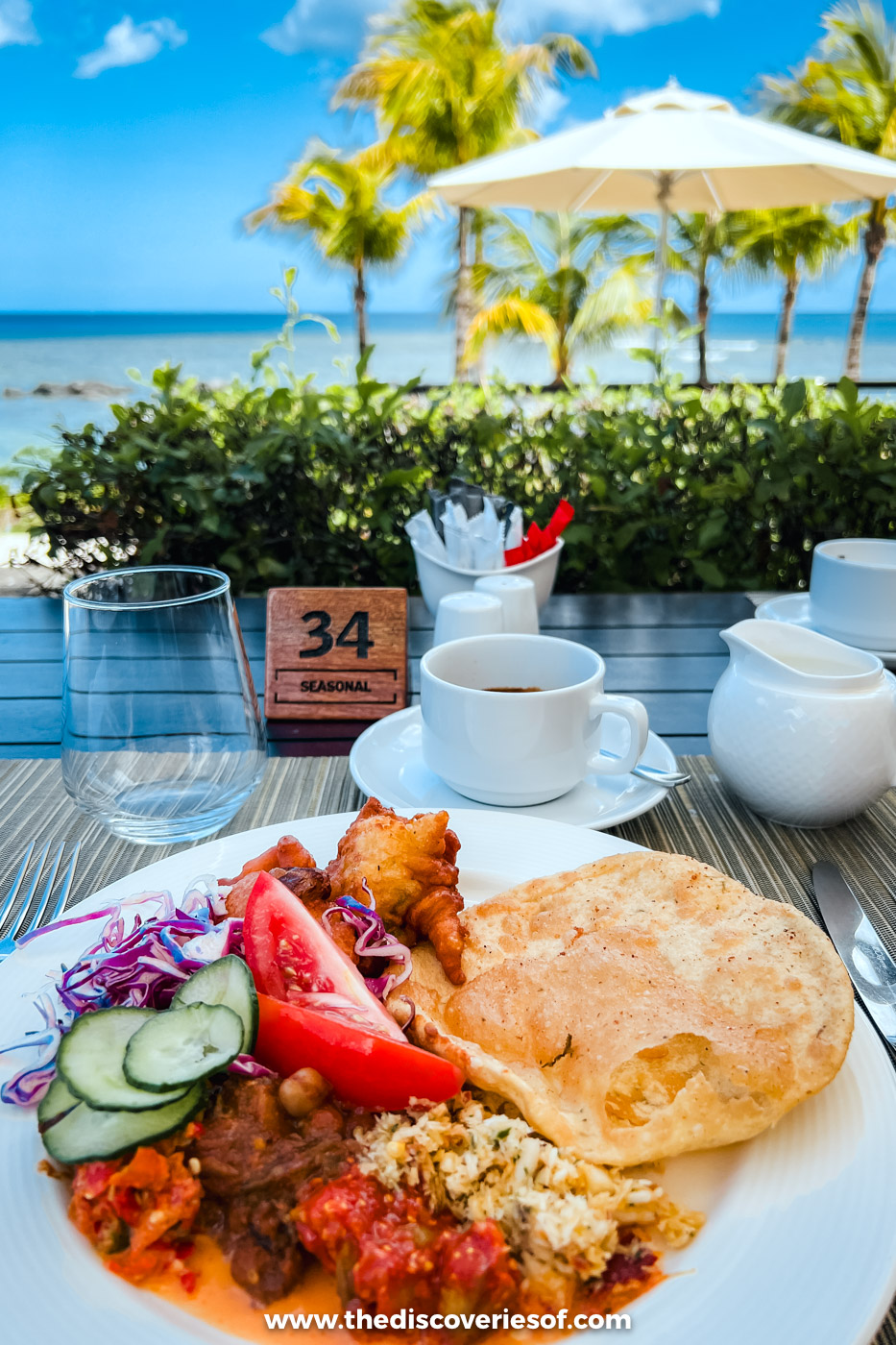
Farata is the island’s take on paratha: thicker and flakier than dholl puri, cooked in a pan without the split-pea filling and torn up to scoop curry. Roti is the thin griddle flatbread that stall holders wrap around curry, rougaille or butter beans. A farata with a filling costs roughly Rs 50 to 150, depending on what goes in it and where you buy it. It was on the breakfast buffet at the Westin on my December stay, and torn up with a meat and chickpea curry it was the best start to the day.
Gâteaux piments
Despite the name, these “chilli cakes” are small fried fritters of ground split peas, spiked with green chilli and herbs. They’re crisp outside, soft inside and cost a few rupees each, which makes it far too easy to eat a bagful.
Curry, from breakfast to dinner
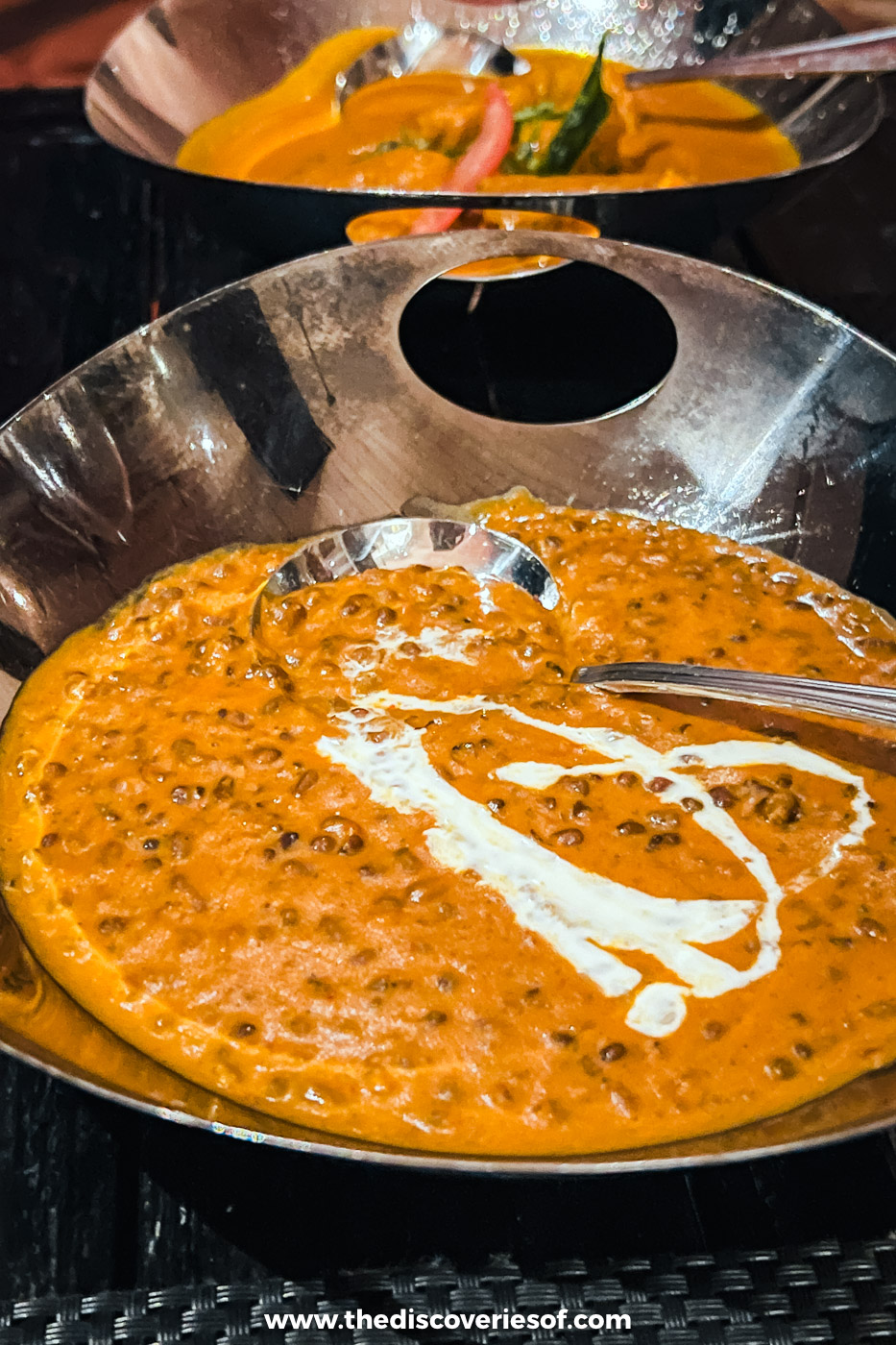
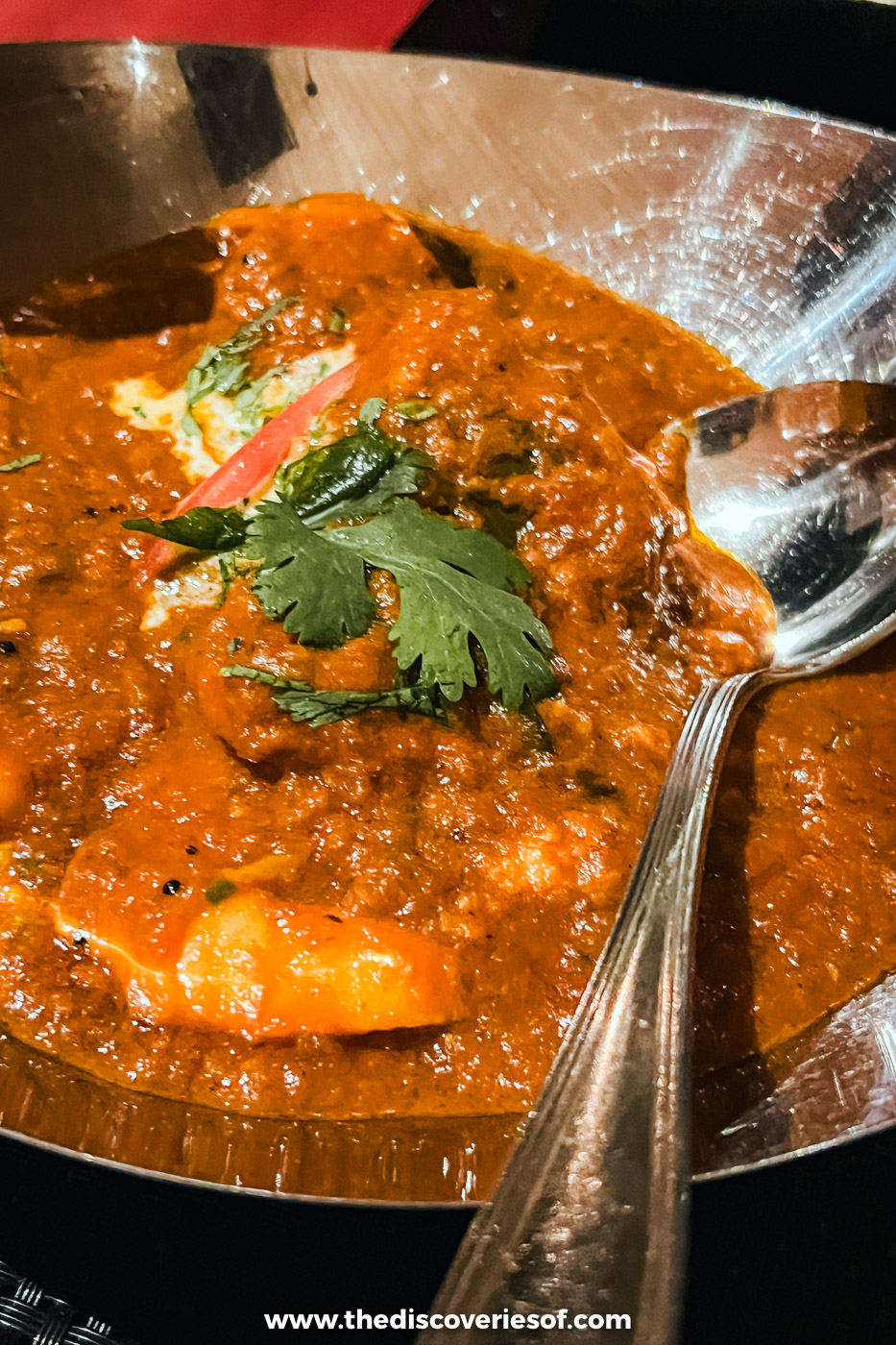
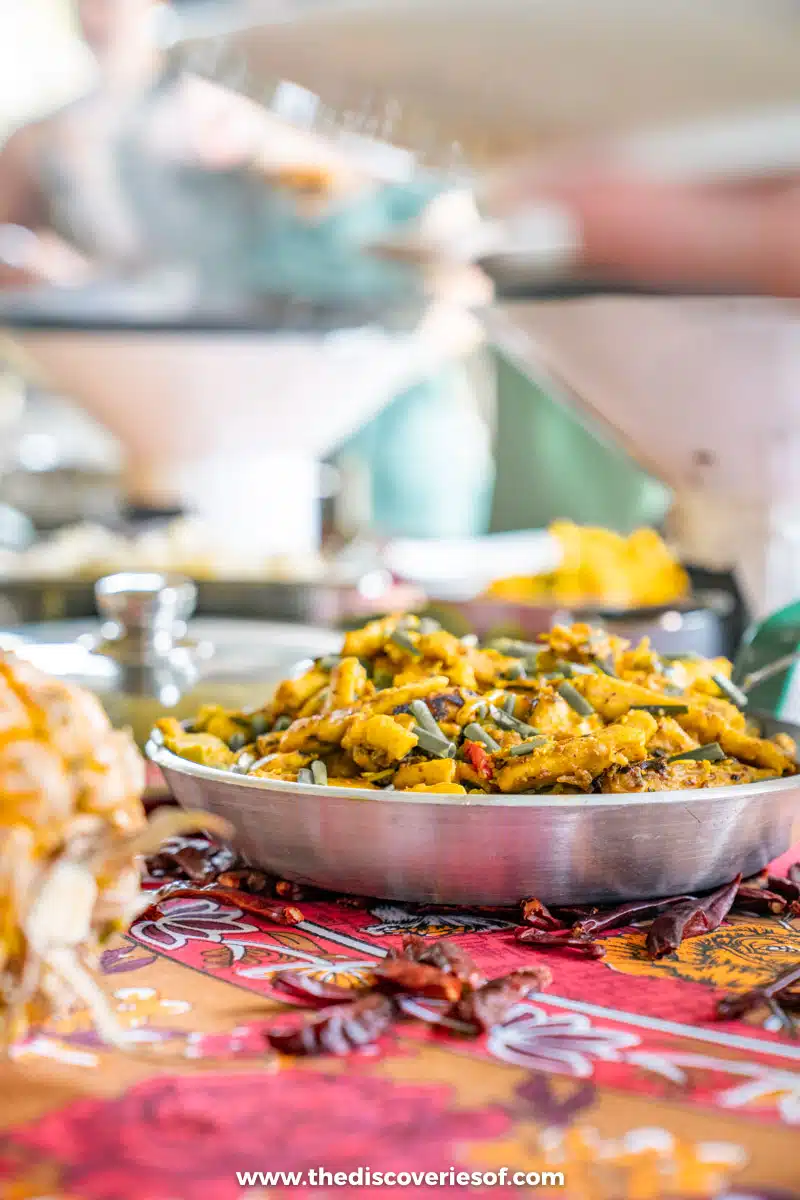
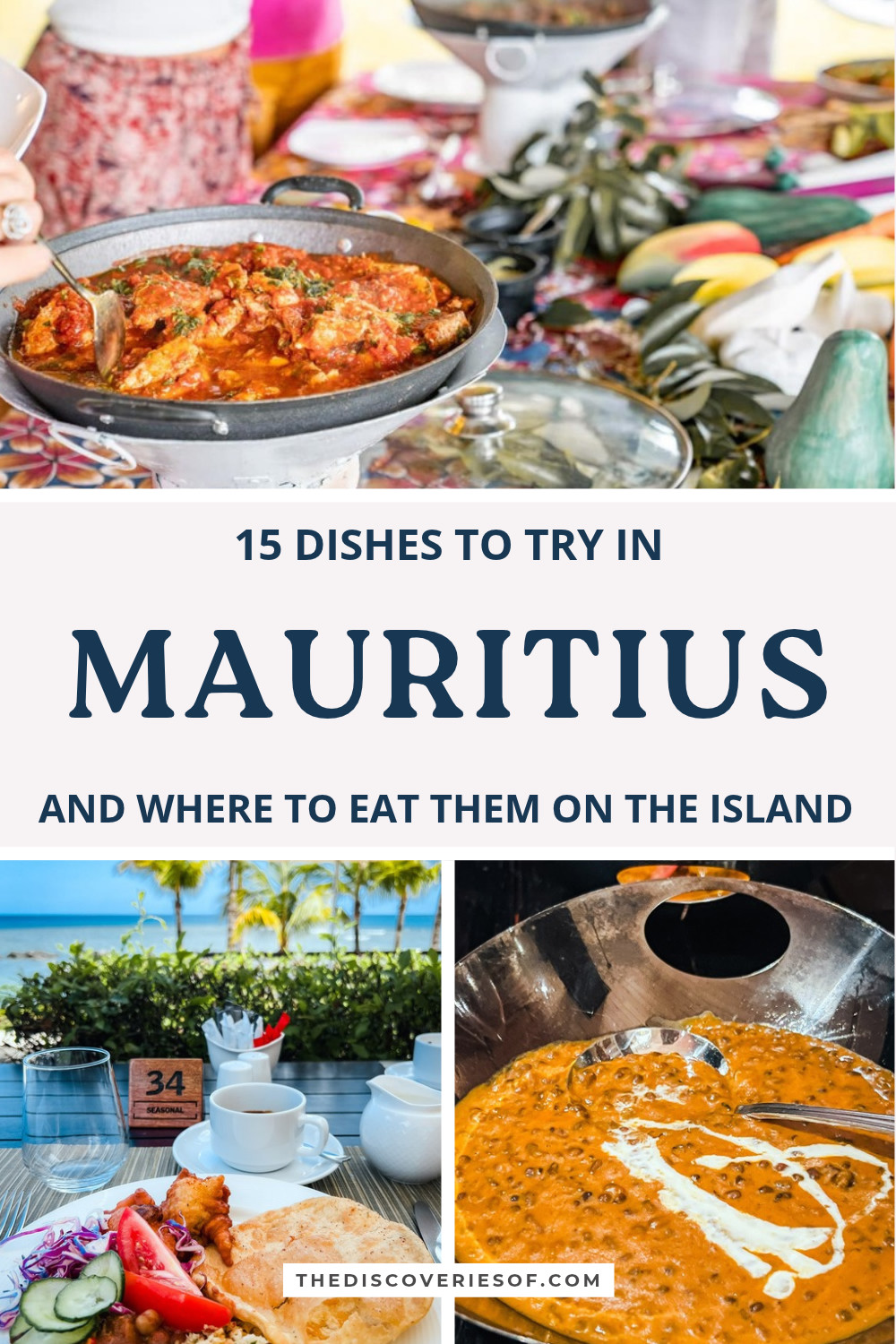
Curry (cari in Creole) is everyday food in Mauritius, made with chicken, fish, prawns, lentils or vegetables, and it turns up at every meal. At breakfast on my December stay at the Westin I went for the local dishes on the buffet: farata, a meat curry with chickpeas, a tomato relish and a fritter, with salad on the side. Dinner one evening brought a rich black lentil dal and a coriander-topped Mauritian curry, both served in steel karahis.
Rougaille
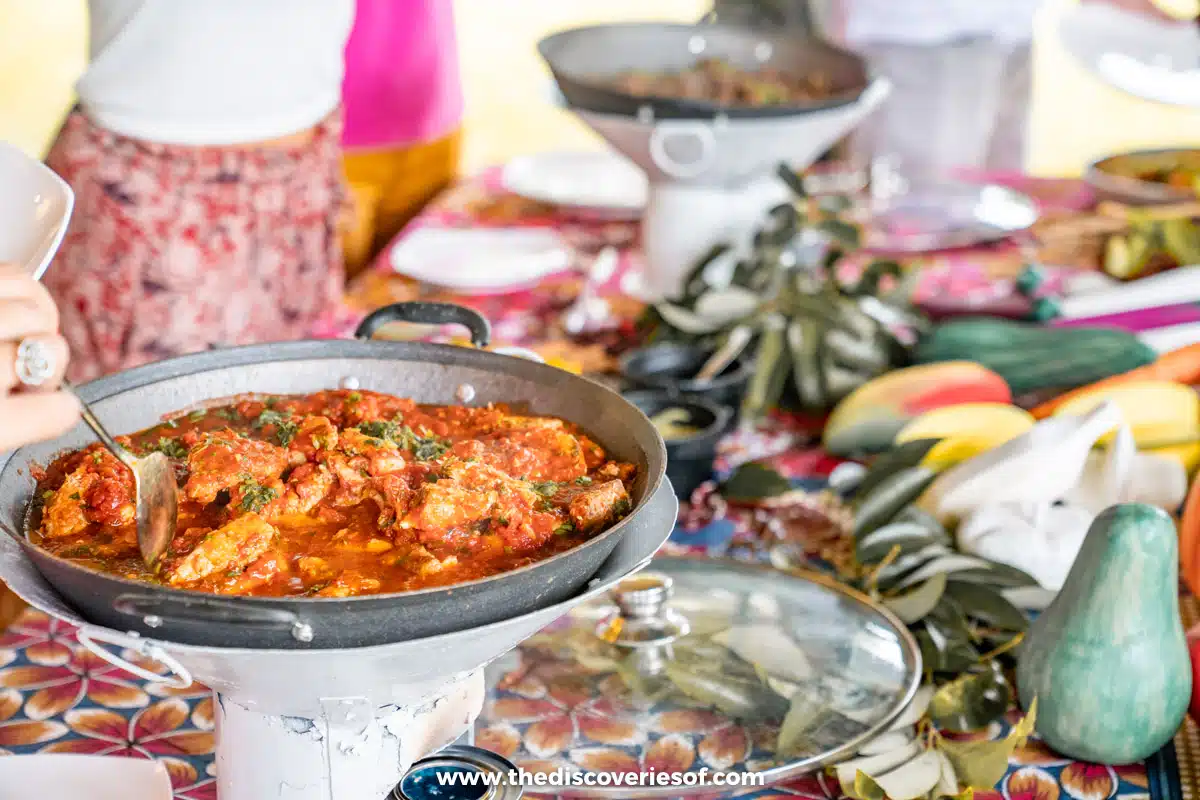
Rougaille is the great Creole sauce of the island: tomatoes cooked down with onion, garlic, ginger, thyme and chilli. It goes with almost anything, from sausages and salted fish to chicken, prawns and octopus, and it’s often spooned alongside dholl puri too. At my lunch at the lychee winery, a deep, tomato-red pot was kept bubbling over a burner, surrounded by pans of turmeric-yellow achards and piles of mangoes.
Vindaye
Vindaye takes fried fish or octopus and coats it in a tangy mix of mustard seeds, turmeric, garlic, onion, chilli and vinegar. It’s sharp rather than fiery, and it’s usually eaten cold or at room temperature with plain rice.
Octopus curry and octopus salad
Octopus (ourite) is a favourite on an island surrounded by reef. Cari ourite simmers it slowly in a spiced sauce until it’s tender, while salade ourite is lighter and fresher, with onion, chilli and a sharp dressing. You’ll also find it in rougaille, as vindaye and grilled at beachside stalls.
Briyani
Mauritian briyani is the dish for weddings and big Sunday lunches: fragrant rice slow-cooked with whole spices, chicken, beef or lamb and, unusually, soft chunks of potato, sometimes with a hard-boiled egg on top. Indian-Mauritian families make it at home, and it’s also a street food favourite, sold by the portion at stalls in Port Louis.
Boulettes
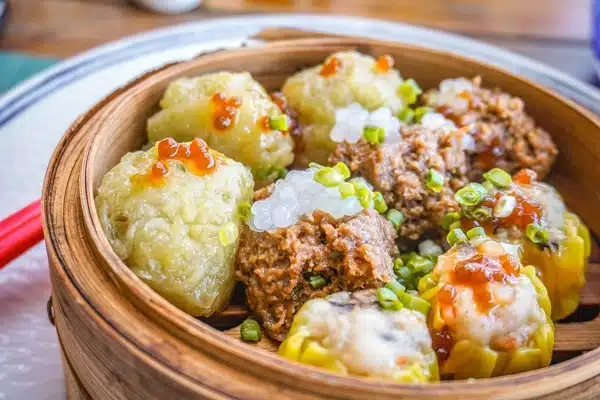
The Chinese influence shows most clearly in boulettes: steamed dumplings of fish, chicken, prawn or chouchou (chayote), a pale green squash. They’re served in a light, clear broth or with soy, chilli and garlic sauces for dipping, and Port Louis has plenty of stalls selling them.
Mine frite and bol renversé
Mine frite is the island’s fried noodle dish, tossed with egg, vegetables and chicken, prawns or beef, and it’s often the cheapest thing on a menu. Mine bouilli is the same in broth. Bol renversé, the “upside-down bowl”, packs rice into a bowl, turns it out onto a plate and tops it with stir-fried meat or seafood, vegetables, sauce and a fried egg. Noodles were my late-night weakness on my third trip: at the Ravenala they were tossed fresh to order, with your choice of sauces and garnishes, and I’d have gone back every night given the chance.
Achards and chutneys
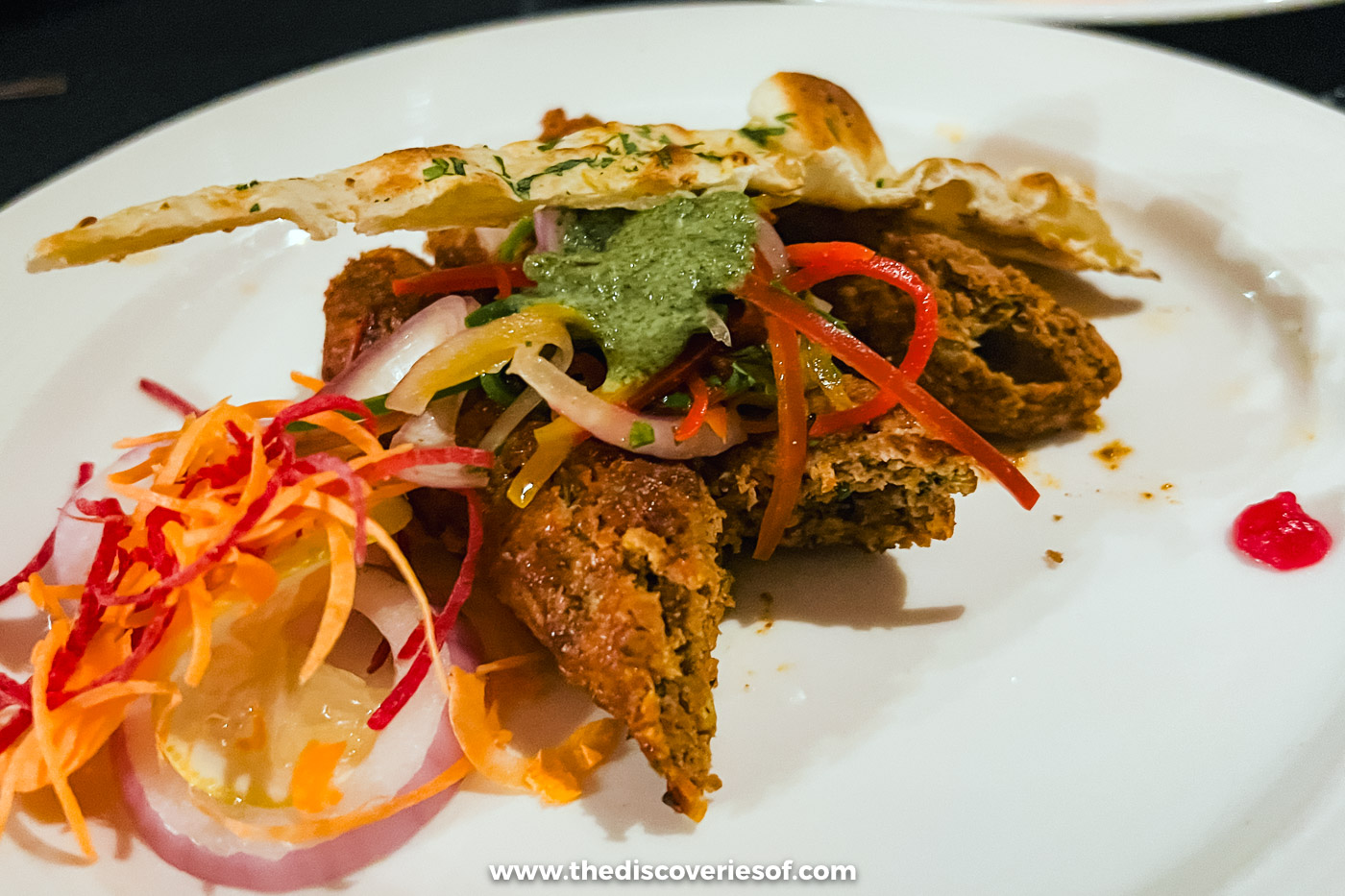
No Mauritian meal is complete without something sharp on the side. Achards are pickles of shredded cabbage, carrot, green beans and cauliflower (or green mango and papaya), cooked with mustard seeds, turmeric, garlic and chilli. Chutneys, called satini, are made fresh from coconut, tomato, coriander or tamarind. The spiced fritters I had as a starter at the Westin came topped with a spoonful of green chutney and pickled onion, and that sharp, fresh hit is exactly the point. At my lunch at Takamaka the achards came by the panful: vegetables and green beans glowing yellow with turmeric, with dried chillies scattered across the tablecloth around them.
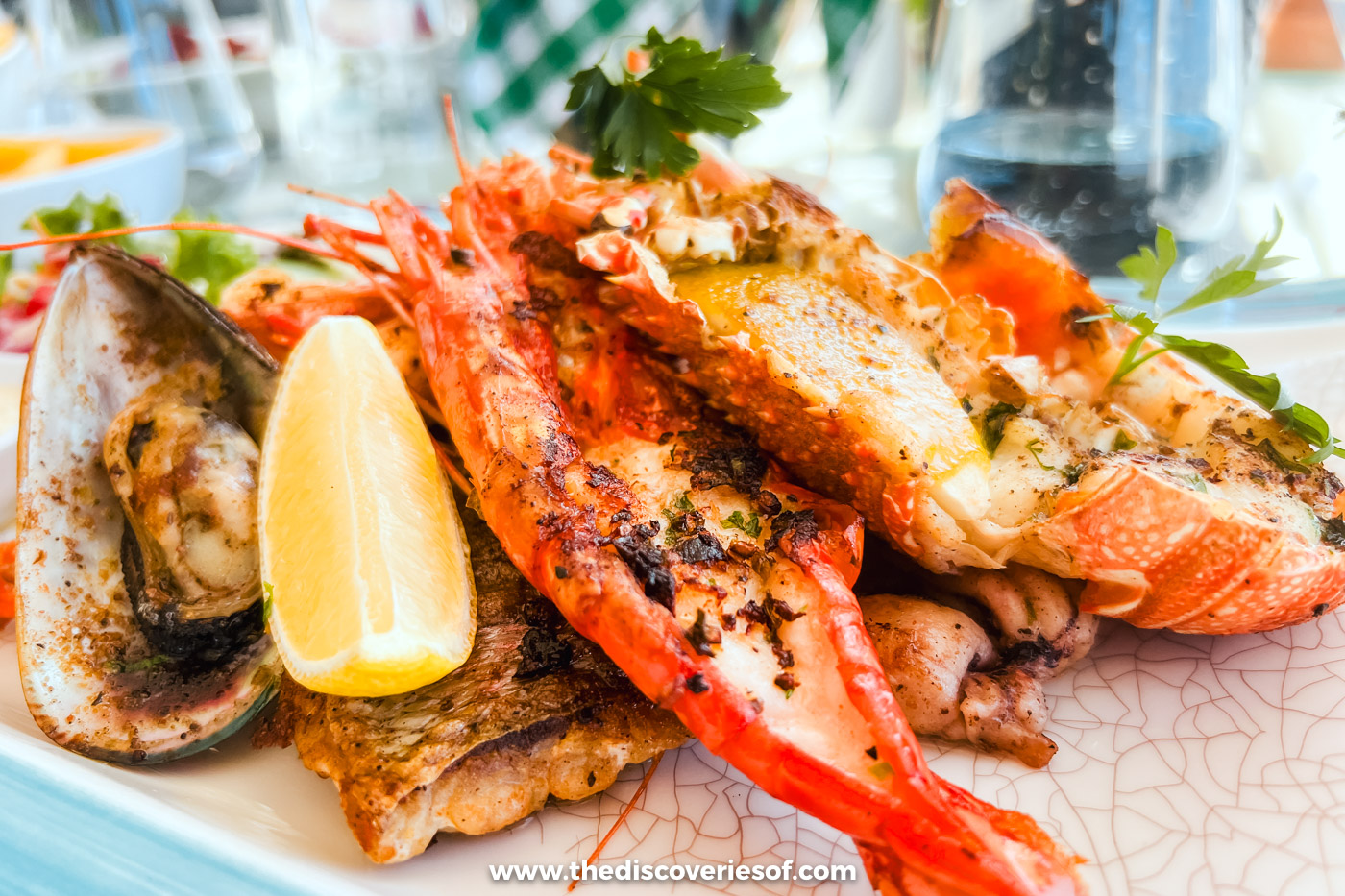
Grilled fish and seafood
Fish of the day, grilled simply with lemon and a little chilli, is on menus all round the coast, alongside prawns, squid and lobster, and seafood also goes into curries, rougailles and vindayes. If you want to splash out, a mixed grill is the way to do it: one evening I had a platter of lobster, king prawns, a mussel, squid and fish, all straight off the grill.
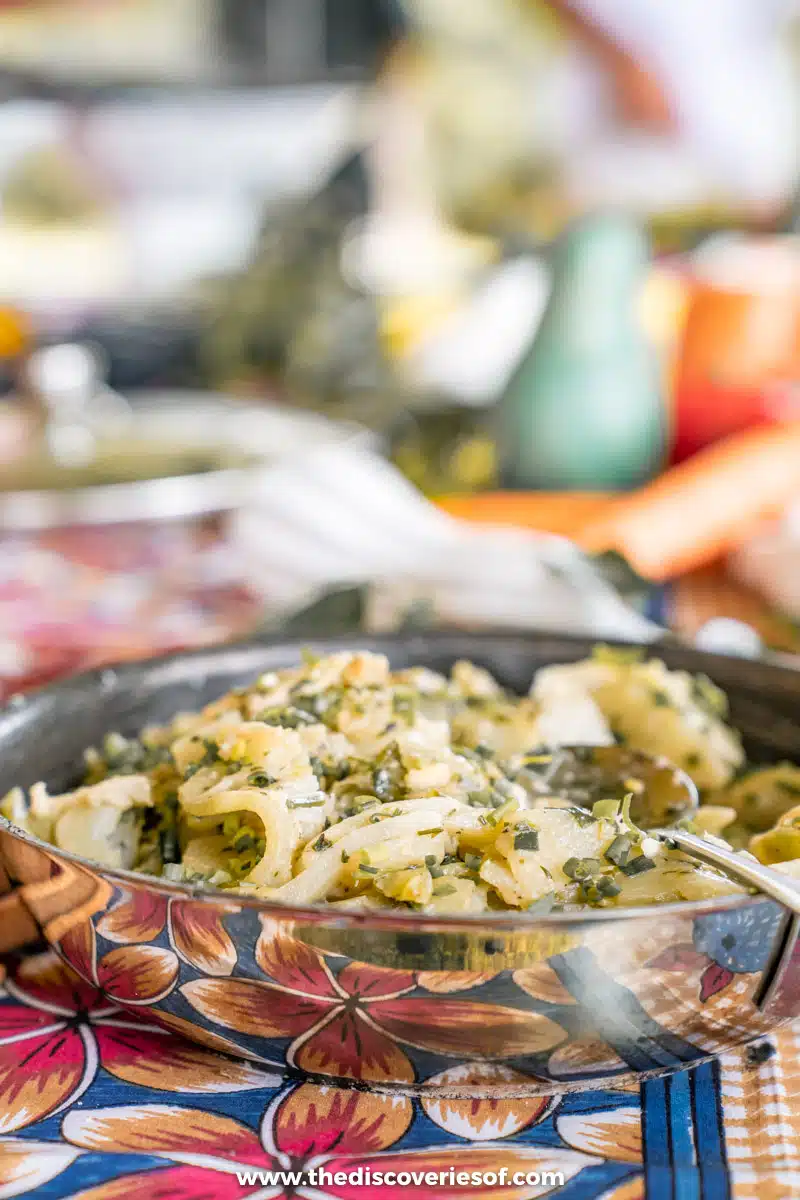
Palm heart salad
Palmiste, the tender heart of a palm, is sliced into fine ribbons and served raw in a salad. It earned the nickname “millionaire’s salad” because a whole palm has to be felled to harvest it, and it still has a special-occasion feel. Look for it on estate restaurant menus in the hills around Chamarel. I had it at my lunch at Takamaka, flecked with herbs and served from a big pan alongside the curries and achards.
Napolitaines and other sweets
The island’s bakeries and snack bars are full of sweets from every side of its heritage. Napolitaines are its signature: two rounds of shortbread sandwiched with jam and covered in pale pink icing. Look out too for gâteau patate, a sweet potato pastry with a coconut filling, coconut cakes (gâteaux coco), and Indian sweets such as ladoo, barfi and jalebi.
Alouda
Alouda is the island’s answer to a milkshake, and the one dish on this list you’ll want to drink with a spoon. Cold milk is sweetened with a vanilla, almond or rose syrup and studded with cubes of agar jelly and tookmaria (basil seeds), sometimes topped with a scoop of ice cream. Port Louis Central Market is the classic place to try it on a hot day.
What to drink with it
Rum: sugar cane shaped the island, and rum is the drink it gave back. My first trip took me up into the south-west hills to the Rhumerie de Chamarel, which distils its rum from freshly pressed cane juice rather than molasses. Look out for rhum arrangé too, rum steeped with fruit, vanilla or spices, which is often poured after dinner.
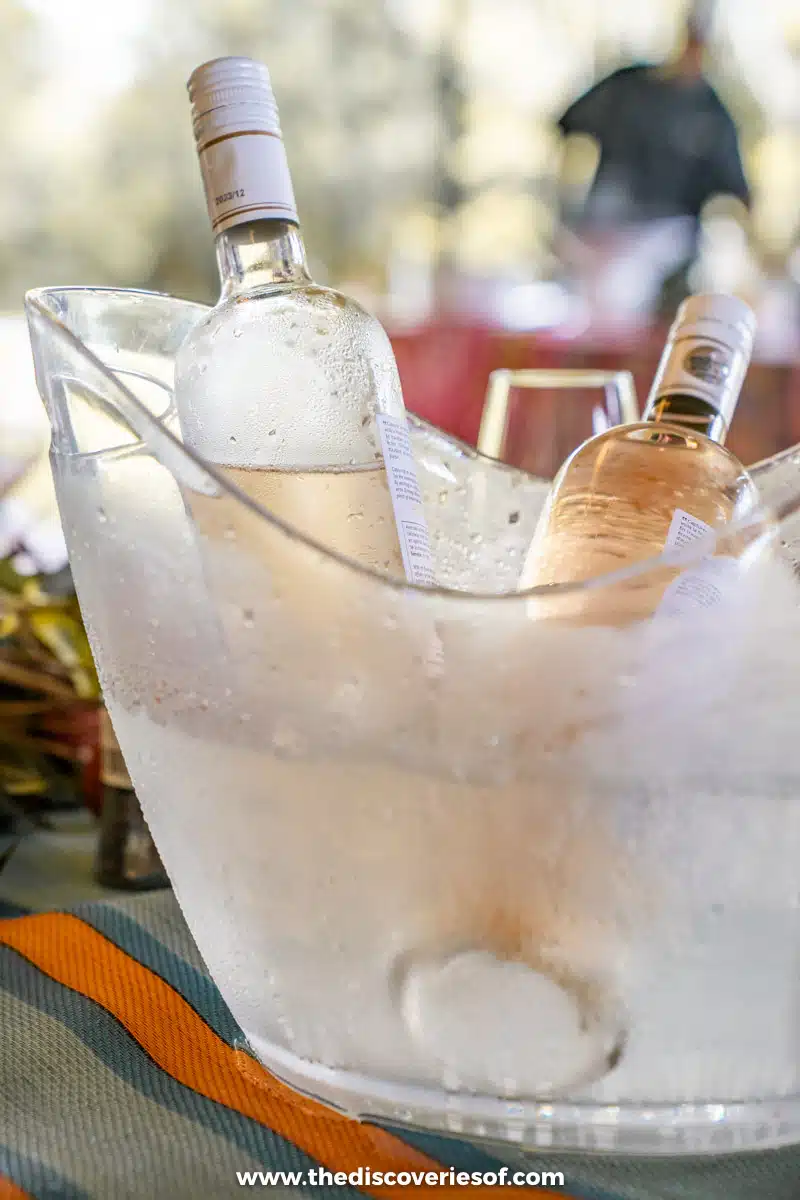
Lychee wine: grapes don’t do well here, so Takamaka Boutique Winery makes its wine from lychees instead, from crisp whites to a salmon-pink aperitif and sweet, oak-aged bottles. My tasting there came with a pale white and a pink bottle chilling side by side on ice.
Phoenix beer: the island’s most popular lager is named after the town where it’s brewed, and it’s the default order at beach bars and snack stops.
Vanilla tea: tea grows on the cool, wet uplands of the south, and the local brands, Bois Chéri among them, are often flavoured with vanilla. It’s lighter than a British brew, and it makes a good souvenir.
Where to eat Mauritian food
Street stalls and markets: the best and cheapest eating is on the street. Vendors sell dholl puri, farata and gâteaux piments from glass cases on bicycles and motorbikes, and you’ll find snack stalls in town markets and beside the busier public beaches. Port Louis has the biggest concentration, in and around the Central Market. If you’d like a local to lead the way, this Port Louis street food tour takes you round the stalls.
Le Fangourin: on my third trip I stopped at Le Fangourin, a big open-air restaurant at L’Aventure du Sucre, the sugar museum at Beau Plan in Pamplemousses. Its menu is built on local produce, with a modern take on traditional Mauritian dishes, an all-Mauritian kitchen team and vegetarian options. It opens 9am to 4.30pm and is closed on Sundays, so pair it with a morning at the museum.
Lunch at a winery or estate: table d’hôte lunches, set menus of several courses served at old estate houses, are a good way to try a spread of home-style dishes, and the hills around Chamarel have the most, handy for a day at the Seven Coloured Earth and Chamarel Waterfall. Further north on the central plateau, the Takamaka bistrot serves food all day while the winery is open, cooked with local produce, and that’s where my lunch spread came from.
At your hotel: most resorts have a Mauritian corner at breakfast or a Mauritian night during the week. I tried the local dishes wherever I stayed, from a traditional Mauritian breakfast to small plates of hot and cold island dishes on my third trip, and my hotel reviews cover what each one serves. Treat them as a warm-up for the stalls, not a replacement.
Before you order: prices and a few tips
- It’s cheap on the street: snacks such as gâteaux piments and samosas cost around Rs 5 to 25, dholl puri or roti Rs 20 to 70, and a plate of mine frite or a beach-stall meal Rs 75 to 180. A main in a local restaurant is about Rs 100 to 250, against Rs 350 to 700 in places aimed at visitors.
- Carry small notes and coins: stalls and snack bars may not take cards.
- Vegetarians eat well: dholl puri, farata, gâteaux piments, lentil and vegetable curries, achards and chutneys are all meat-free, so it’s an easy island for vegetarians.
Map
[New My Maps embed goes here: 4 pins]
Read next
- Mauritius travel tips: 22 things to know before you go
- 24 things to do in Mauritius, an island that even makes wine from lychees
- Inside Takamaka Boutique Winery, where Mauritius swaps grapes for lychees
- Tour the Rhumerie de Chamarel, the hillside distillery making rum from fresh cane
- How to spend 2 weeks in Mauritius, one coast at a time
- Where to stay in Mauritius, and how to pick the coast that suits your trip
- Westin Turtle Bay review: a polished resort on the calm north-west coast of Mauritius
- The Ravenala Attitude review: sustainability in true Mauritian style
- Mauritius travel guide
Love this? Save and share on Pinterest

Discover the top things to do, insider tips and hidden gems in our Mauritius Travel Guide.
Read the guides →