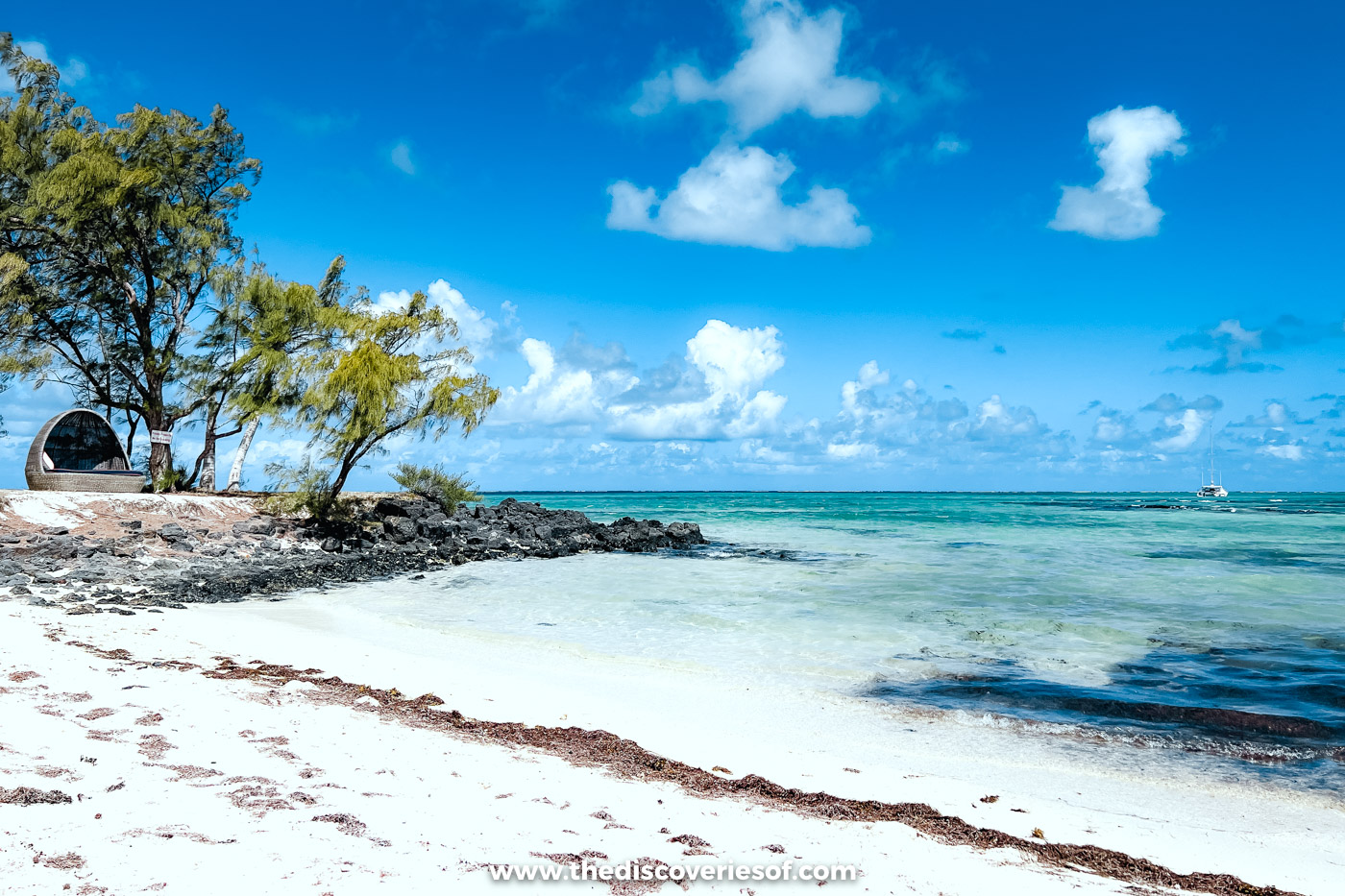
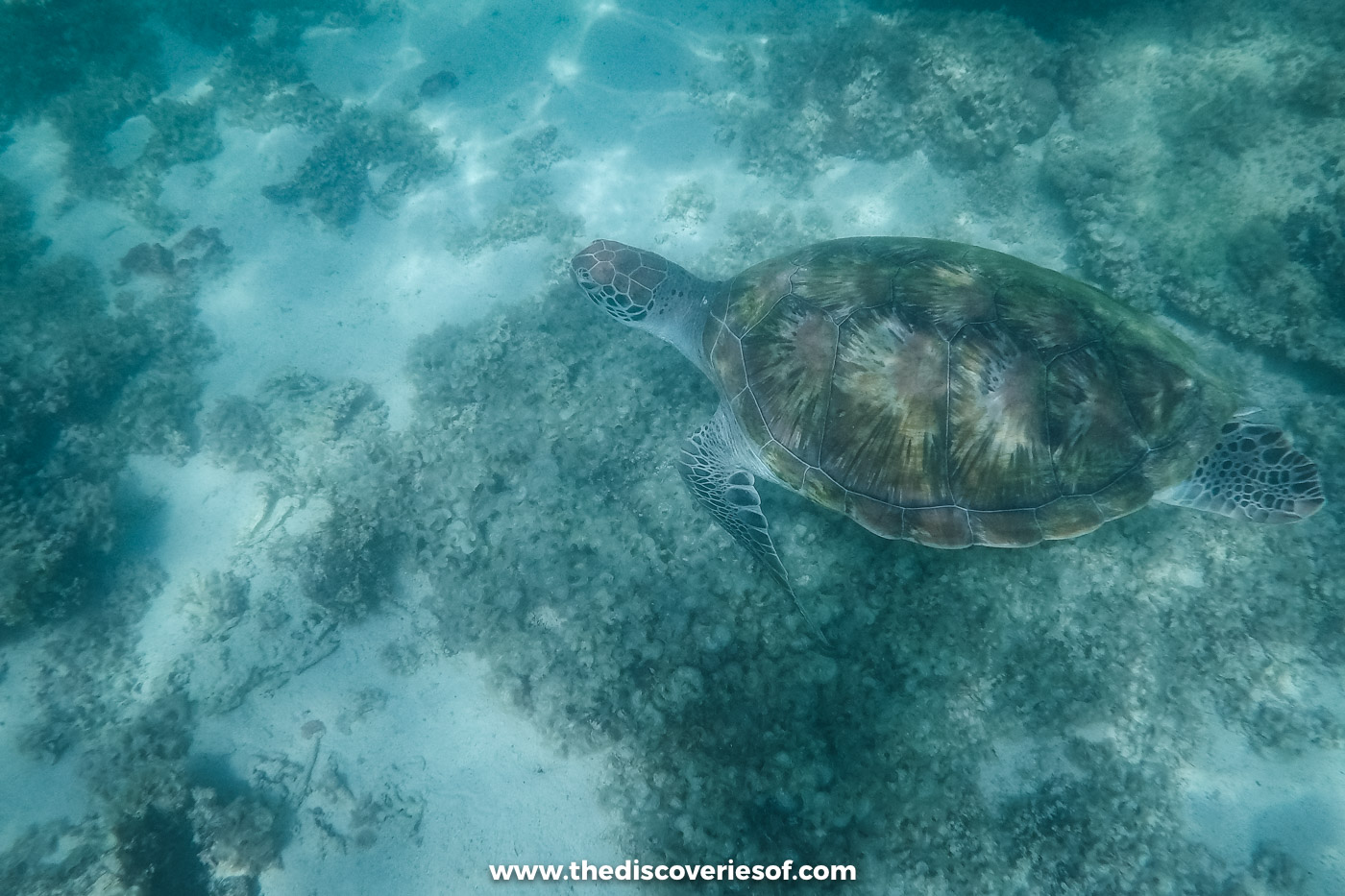

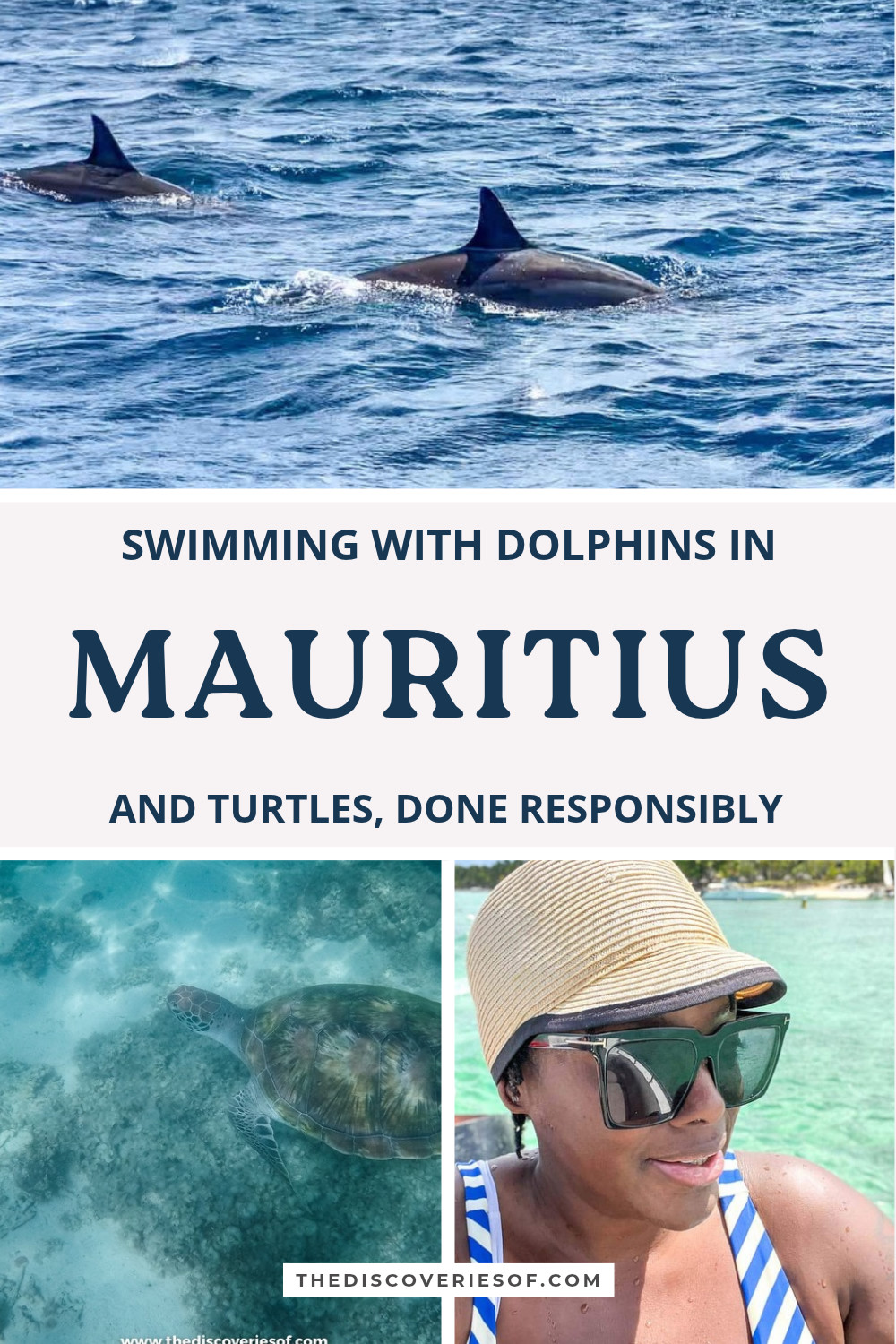
A pair of turtles cruising over the reef just below me, and dolphins surfacing beside the boat out in the deep blue: it was the stand-out day of my second trip to the island. But the dolphins off the west coast are under more pressure than the tour listings let on, and the boat you pick decides how much your morning adds to it.
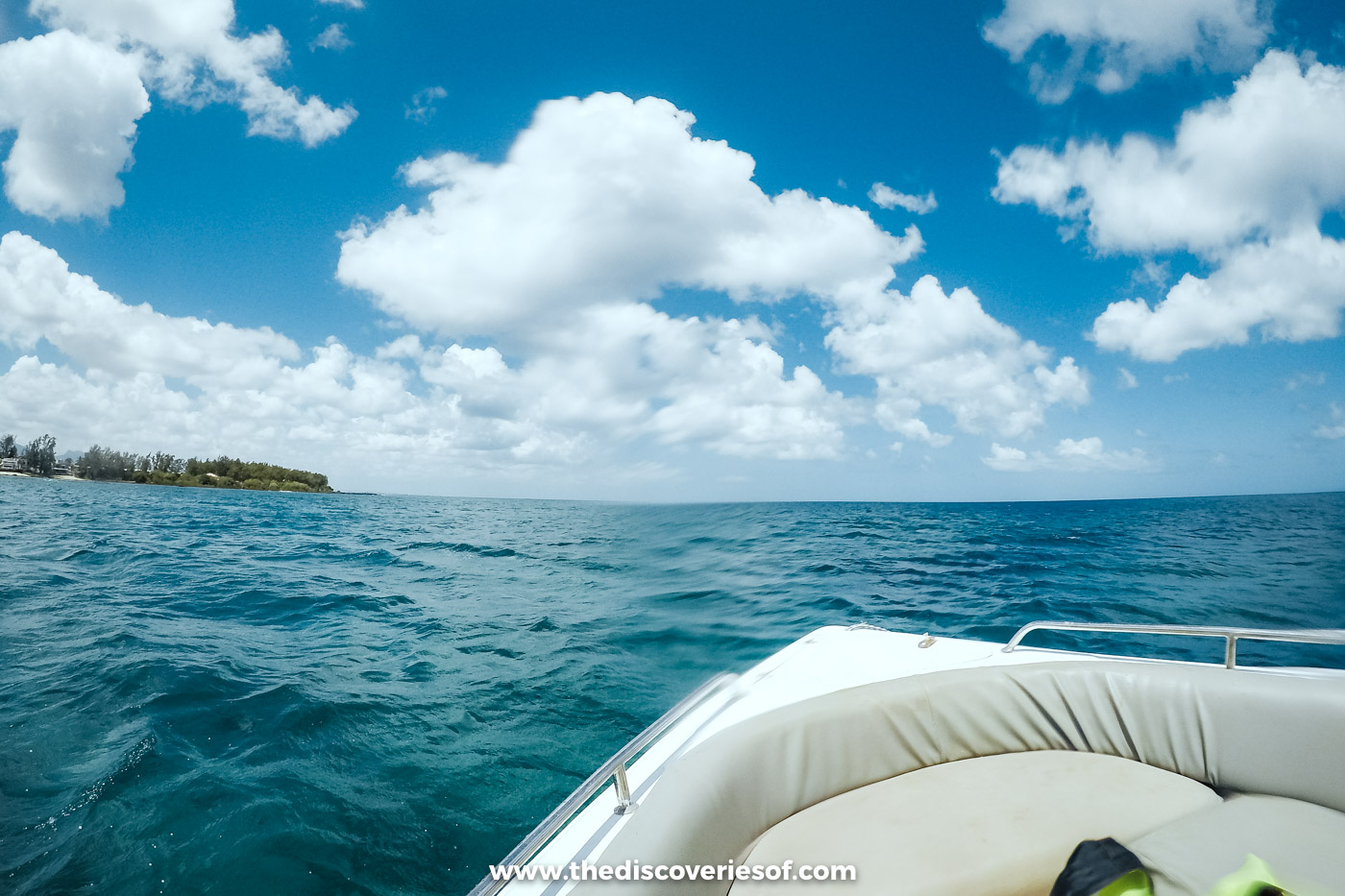
I went out on a private boat from Trou aux Biches on a December trip, half expecting to spend the morning staring at empty water. Wildlife keeps its own diary, after all. In the end the sea delivered both.
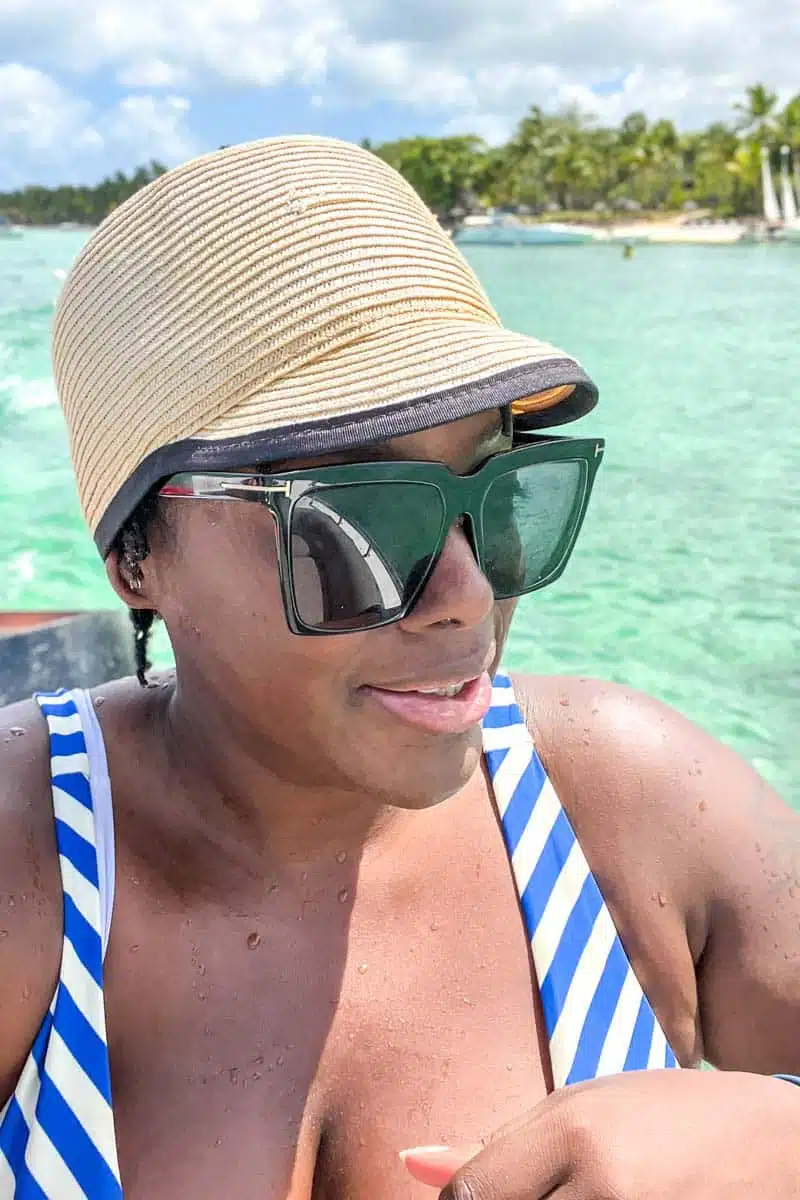
Booking the boat and guide privately was the best decision of the trip. The skipper knew where to look, nobody was waiting on a group timetable, and I could linger when something was worth watching and move on when it wasn’t. It’s still one of my top tips for the island.
This guide to swimming with dolphins in Mauritius, and snorkelling with its turtles, covers where to find both animals, what it costs and when to go. It also covers the part most listings skip: the crowding off the west coast, the rules that are meant to control it, and how to choose a skipper who actually follows them.
Dolphins and turtles in Mauritius at a glance
- Turtles: green and hawksbill turtles, seen most reliably in the north-west lagoons around Trou aux Biches and Pointe aux Piments.
- Dolphins: resident spinner and bottlenose dolphins off the south-west coast. Boats leave from Black River, Tamarin and around Le Morne.
- When: all year. By law, dolphin watching runs from 6am to noon, and swimming with dolphins only from 6am to 9am.
- Cost: about €60 to €90 a person on a shared dolphin trip. A private boat costs several hundred.
- The catch: the busiest groups of dolphins can have dozens of boats around them, and the 2012 rules went unenforced for years.
Where to find the turtles, and why Turtle Bay isn’t the place
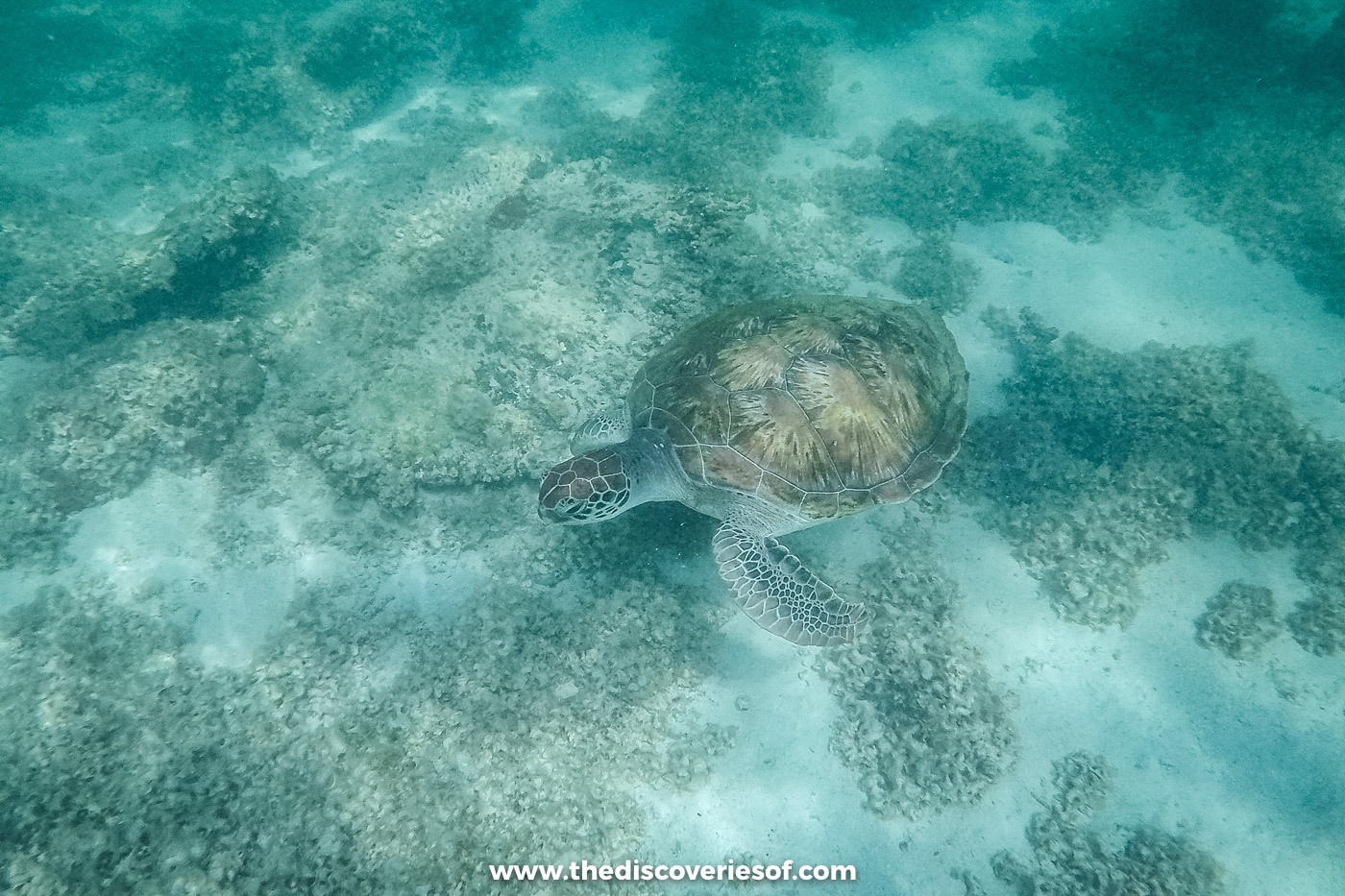
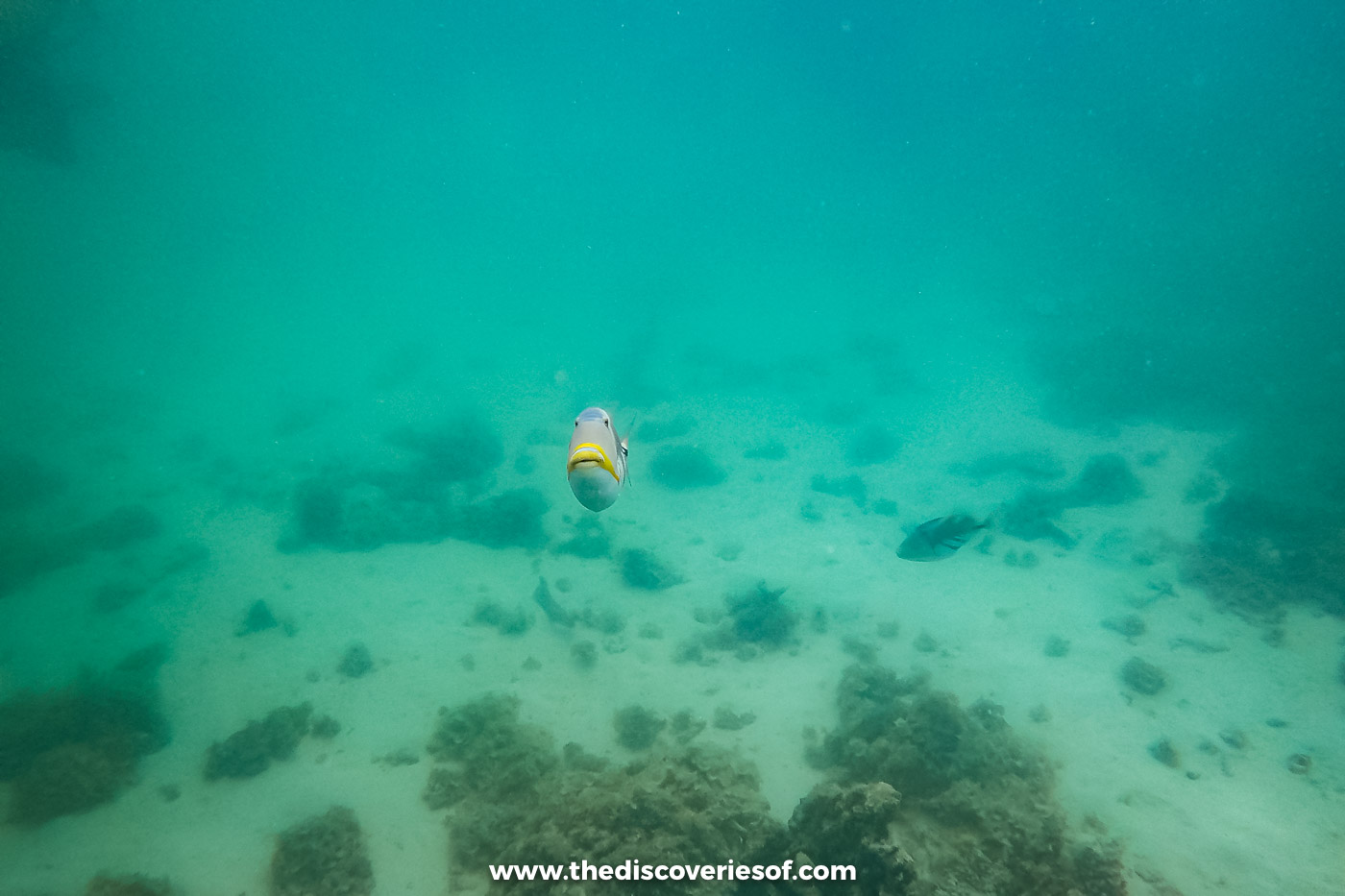
At the turtle stop, my skipper cut the engine beside a few other boats already bobbing over the reef, and within seconds of getting in I had two turtles below me, moving slowly over the coral. I’d been ready for a long wait. There wasn’t one.
Two species live in these waters: the green turtle and the smaller hawksbill, which the IUCN lists as critically endangered. Most no longer nest on the main island, where beach lighting confuses them, so the turtles you’ll snorkel with are feeding and resting on the reefs rather than coming ashore.
The north-west coast is where to look. Turtle trips on this stretch head for the reefs off Trou aux Biches and Pointe aux Piments, and Bain Boeuf, further north near Cap Malheureux, is another spot where they’re seen. Don’t let the name of Turtle Bay at Balaclava fool you: the turtles that gave it its name are long gone, and you’re far better off on a boat to the reefs a little further up the coast.
They do turn up elsewhere. On my first trip, drift snorkelling the house reef at the Outrigger in Bel Ombre was my favourite thing to do at the hotel. Turtles are sometimes spotted there, but not by me, and I’m still a little sore about it. If turtles are the point, book a boat to the north-west.
Top Tip
Float and watch rather than diving down after them. Turtles have to come up to breathe, and a snorkeller hanging directly above one gets in the way.
Where to see dolphins, and why the mornings matter
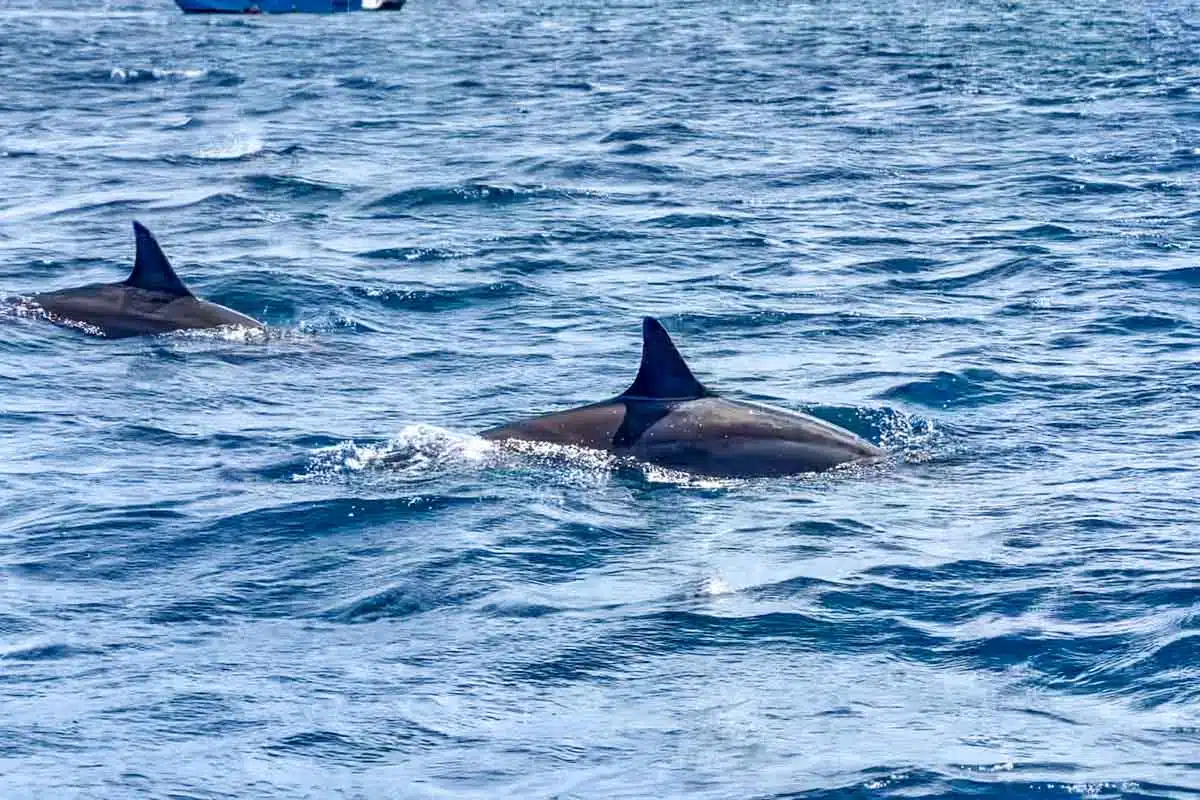
For the dolphins, the boat headed out beyond the reef. They appeared in open water, rising and slipping under again close to the boat, and getting in the water with them made it a firm yes for me.
Mauritius has two resident species. Spinner dolphins are the ones you’re most likely to see: in a long-running survey off the south-west coast they made up just over half of all cetacean sightings, with Indo-Pacific bottlenose dolphins at just over a quarter. The spinner population that uses the south-west corner of the island is estimated at 140 to 400 animals.
Almost every dolphin trip leaves from the south-west: the jetty at Black River (Grande Rivière Noire), Tamarin and the coast around Le Morne. That’s no accident. Spinner dolphins feed offshore at night and come into the sheltered bays here to rest in the morning, which is exactly when the boats go out.
The same waters hold larger animals. Humpback whales pass through in the southern winter, roughly June to September, and a small resident group of sperm whales lives off the west coast. You can watch whales from a licensed boat, but swimming with them is against the law.
The problem with dolphin trips off Tamarin and Black River
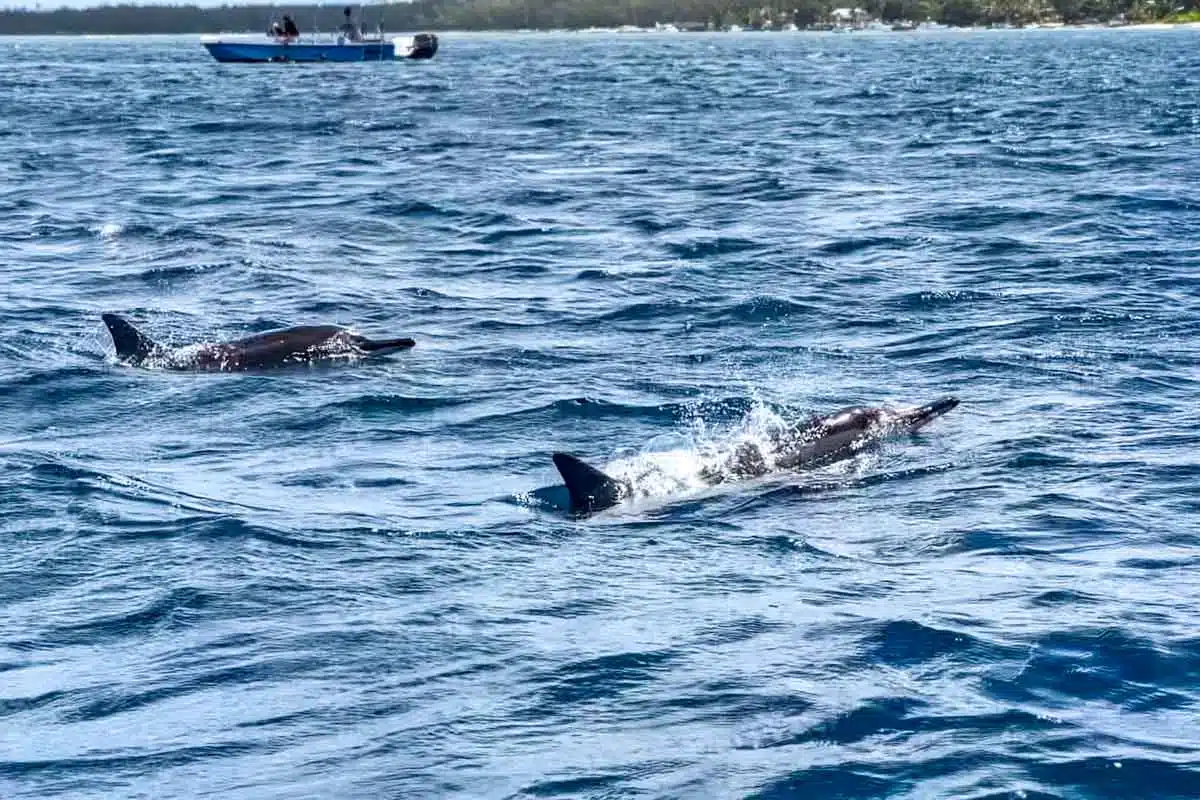
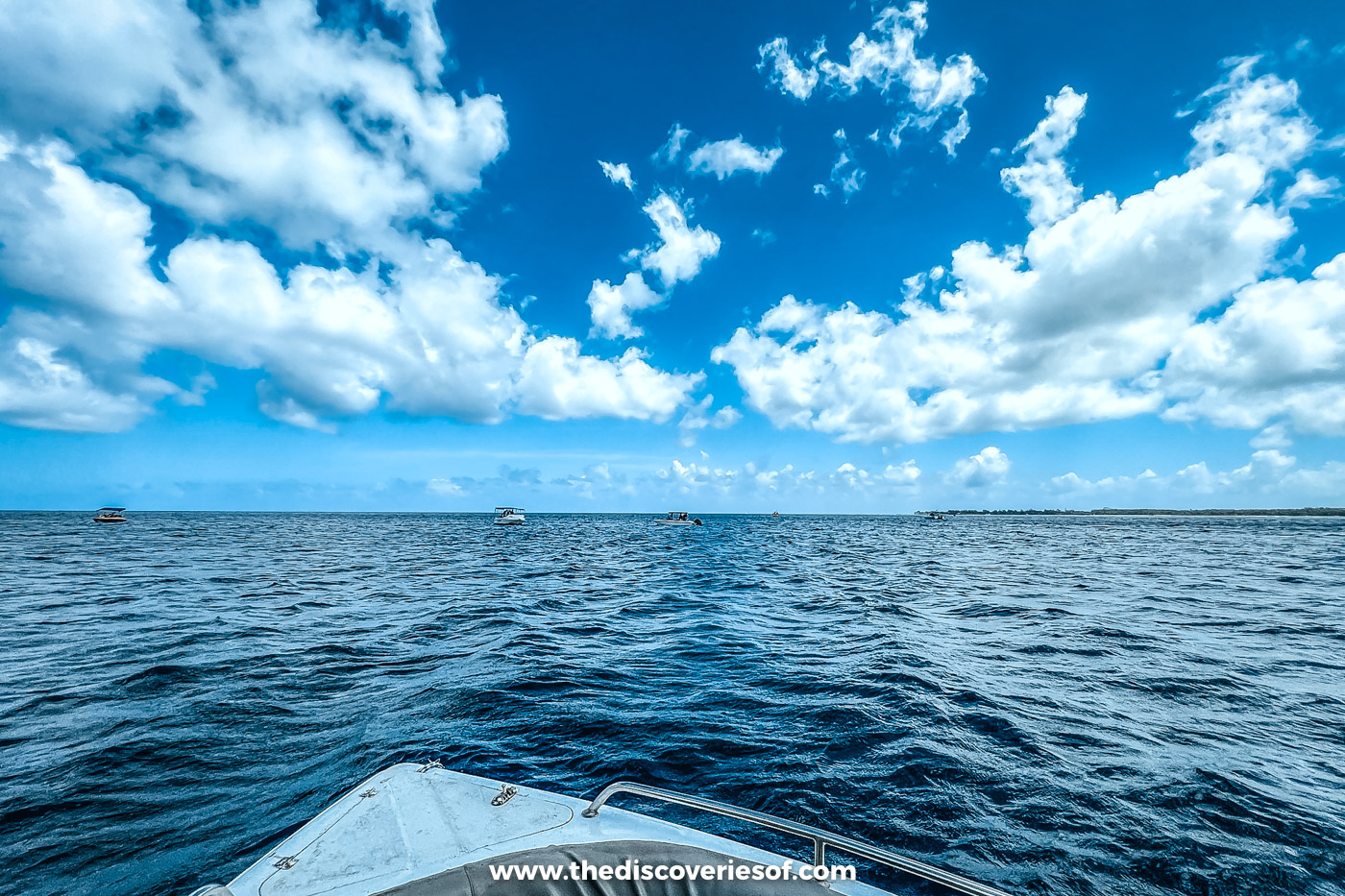
Here’s what the listings don’t tell you. The Tourism Authority has licensed 278 boats for excursions off the west coast, and around 100 work the south-west regularly. The Marine Megafauna Conservation Organisation (MMCO), a Mauritian conservation group, has counted more than 35 boats around a single group of dolphins or whales at once. One reviewer of a private Black River dolphin swim counted more than 20 boats chasing the pod.
Mauritius wrote rules for all this in 2012, and they’re sensible. The trouble is that they were never applied. In November 2025 the tourism minister admitted in parliament that none of the west coast boats held the dolphin watching licence the regulations require: they were all running on ordinary excursion licences. The obstacles cited included insurers refusing to cover dolphin swims, no local supply of propeller guards, the cost of oxygen kits and a coast guard too stretched to police viewing distances.
Things are starting to move. In October 2026 the government announced an enforcement squad led by the Tourism Authority, awareness sessions for skippers and tighter amendments to the 2012 rules, though the detail of those amendments hasn’t been published yet. Conservation groups, including MMCO and Eco-Sud, accept watching but want swimming with the animals banned outright. The operators’ federation wants fewer constraints, not more.
There’s a welfare question underneath it all. The legal swimming window, 6am to 9am, falls in the morning, when spinner dolphins are resting in the bays. A boat that races in, drops swimmers on top of a resting pod and moves on to the next is doing the opposite of what they need. And at the far end of the market, some operators still sell illegal swims with sperm whales, for around €150 to €190 a head.
None of this means you shouldn’t go. It means the boat you choose matters, and so does what you ask of it. Even private, you won’t have the sea to yourself: at my turtle stop, other boats were already there.
What Mauritian law says about dolphin watching
These are the main points of the Tourism Authority (Dolphin and Whale Watching) Regulations 2012, the law a good skipper follows whether or not anyone is checking:
- No boat may come within 50 metres of the nearest dolphin (100 metres for whales), and keep to no-wake speed within 150 metres (200 metres for whales).
- Approach from the side on a parallel course, never from behind or head-on, and never drive through or into the middle of a pod. Circling the animals is banned.
- Engines go into neutral when the boat is stationary, and speed and direction stay steady if dolphins ride the bow.
- No feeding, no touching, and no noise to attract them.
- Watching is allowed from 6am to noon, and swimming with dolphins from 6am to 9am only. Swimming, diving or snorkelling with whales is banned.
- No more than three swimmers in the water at once, including the life-saver, and every swimmer gets a briefing on calm, quiet swimming first.
- Jet skis, kitesurfers, windsurfers and divers must keep 500 metres away.
Five questions to ask before you book a dolphin boat
Few operators hold the specific licence yet, so you can’t simply book the licensed one. Ask questions instead, and listen to how they answer:
- How many people go in at once? The answer should be three at most, including a life-saver. A boat that drops a dozen swimmers on the dolphins together is breaking the rules.
- How do you approach? Look for slow, from the side and parallel, with the engine in neutral once in position. Ask what they do when a pod is already crowded: the right answer is to wait or leave.
- Do you chase? A good skipper lets the dolphins choose whether to come closer. Zigzagging after a pod that keeps moving away is chasing.
- Do you offer swims with whales? If they say yes, book elsewhere. It’s illegal, and a sign of how they treat the rules in general.
- Is the boat fitted with a propeller guard? The law requires one, and the guards weren’t even sold locally when the rules came in, so a boat that has one has taken the rules seriously.
A private boat helps, because you set the terms: you can ask the skipper to keep back from the other boats or to skip a pod that’s already surrounded. Consider watching from the deck rather than swimming, which puts far less pressure on resting dolphins, and save your snorkelling for the turtles. In the lagoon, ask for a gentle speed: boat strikes, mostly by speedboats, kill more turtles in the lagoons than anything else.
For the bigger picture, the UN Development Programme backed a responsible wildlife watching campaign with MMCO and the Tourism Authority, shown on Air Mauritius flights and at the airport.
In the water: how to behave around dolphins and turtles
- Slide in quietly from the side of the boat rather than jumping, and keep your fins below the surface.
- Stay with your guide and stay still. Dolphins that want a closer look will come to you; swimming after them ends the encounter faster.
- Never touch or feed either animal. Give turtles room to pass and to surface, and if one turns away from you, let it go.
When to go, from the 6am swim window to whale season
Time of day: dolphin swims can only run between 6am and 9am, so expect an early pick-up. Turtle snorkelling isn’t restricted in the same way, and trips to the north-west reefs run through the morning and into the afternoon.
Season: both the dolphins and the turtles are here all year. For the trip as a whole, I’d pick April to June or September to December, though the island works in any season. Summer, roughly November to April, is hotter and wetter, and it’s also cyclone season, when boat trips can be called off at short notice. My boat trip was in December. If you’d like a chance of humpback whales too, aim for June to September.
What a dolphin or turtle trip costs
- Shared dolphin trips: about €60 to €90 a person for a dolphin swim, and €90 to €110 for a longer watching excursion, according to figures reported in the Mauritian paper L’Express in April 2026.
- Private dolphin trips: from around US$460 for the boat. This private dolphin swim leaves Black River for two and a half hours, with snorkelling gear, drinks, food and hotel pick-up included.
- Private turtle trips: roughly £250 to £300 for a two-hour boat to the Trou aux Biches lagoon, with snorkelling gear and drinks.
- What to avoid: any “swim with whales” trip, whatever the price.
Tips for planning your boat trip
- Where to base yourself: the north-west puts the turtle reefs on your doorstep, and dolphin trips usually include hotel pick-up. I stayed at The Westin Turtle Bay on that trip, and Ravenala Attitude is just along the same bay. For the other coasts, I’ve rounded up the best bases in where to stay in Mauritius.
- Bring an action camera: my turtle shots came from a GoPro. A phone in a waterproof pouch works too, but a camera on a wrist strap is easier to hold steady.
- Make a day of it: a morning on the water leaves the afternoon free for one of the best beaches in Mauritius. My two-week Mauritius itinerary slots the boat trip in on the north-west leg, and my guide to things to do in Mauritius has the rest of the island.
Map
Read next
- 24 things to do in Mauritius
- How to spend 2 weeks in Mauritius, one coast at a time
- Where to stay in Mauritius
- The best beaches in Mauritius
- How to see the underwater waterfall in Mauritius
- Outrigger Mauritius review
- Mauritius travel guide: when to go, where to stay and what to know
Love this? Save and share on Pinterest

Discover the top things to do, insider tips and hidden gems in our Mauritius Travel Guide.
Read the guides →