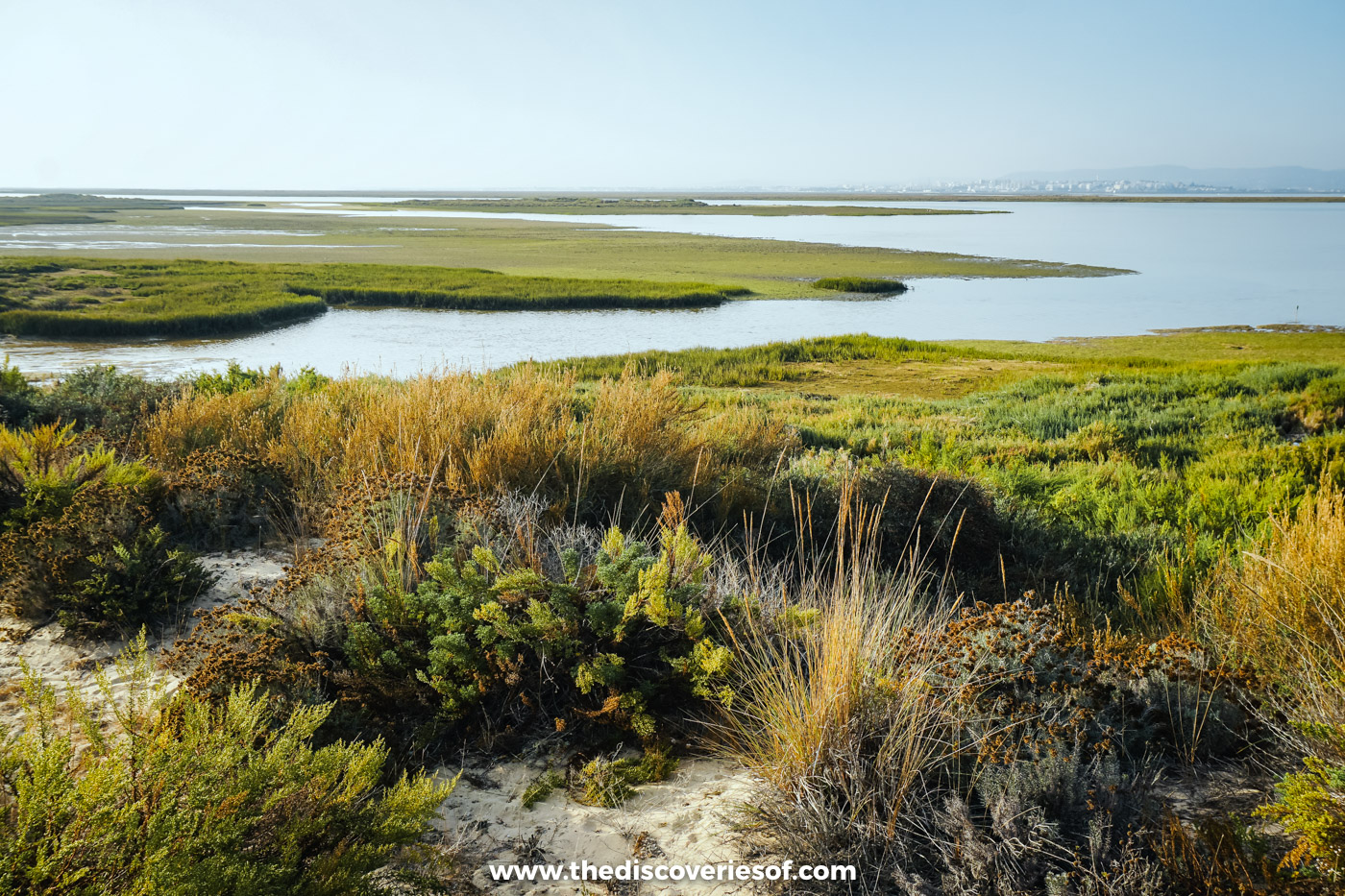

Most people landing at Faro skim low over a maze of salt marsh, sandbars and silver channels without giving it a second glance. Down there is the Algarve before the golf courses and high-rises: barrier islands with no roads, fishing villages without cars, flamingos in the salt pans and seahorses in the seagrass. Here’s how to see it by bike, on foot and by boat, which islands to aim for and what to know before you go.
The Ria Formosa Natural Park was a short bike ride from the villa I stayed in at Quinta do Lago one October. It shows a side of the region that’s easy to miss among the glitz of the golf resorts, and few visitors give it more than a glance from the plane window.
Cycling out to the lagoon felt like finding the Algarve of times past, rugged and beautiful and wonderfully quiet. Later in the trip, I went deeper into the park by boat, drifting past mud flats and tiny islands with a nature guide who seemed to know every creature in the water.
This guide covers the whole lagoon, from the trails and bird hides near Faro to the island ferries from Olhão and Tavira.
The Ria Formosa at a glance
- What it is: a coastal lagoon of salt marsh, tidal flats, channels and sandbars, sheltered from the Atlantic by a chain of barrier islands, and protected as a natural park.
- Where: about 60km of the eastern Algarve coast, from the Ancão peninsula near Quinta do Lago to Manta Rota, across the municipalities of Loulé, Faro, Olhão, Tavira and Vila Real de Santo António.
- Size: about 18,000 hectares, including the water.
- Entry: free. The only charge is at the Quinta de Marim visitor centre near Olhão, about €3.
- Getting around: boats from Faro, Olhão and Tavira to the islands; trails near Faro and Quinta do Lago; a road bridge to Praia de Faro.
- Time needed: half a day for a trail or a boat trip; two or three days to see the islands at both ends.
- Best time: spring and autumn for birds, walking weather and quiet beaches; summer for swimming.
Why this lagoon is so special
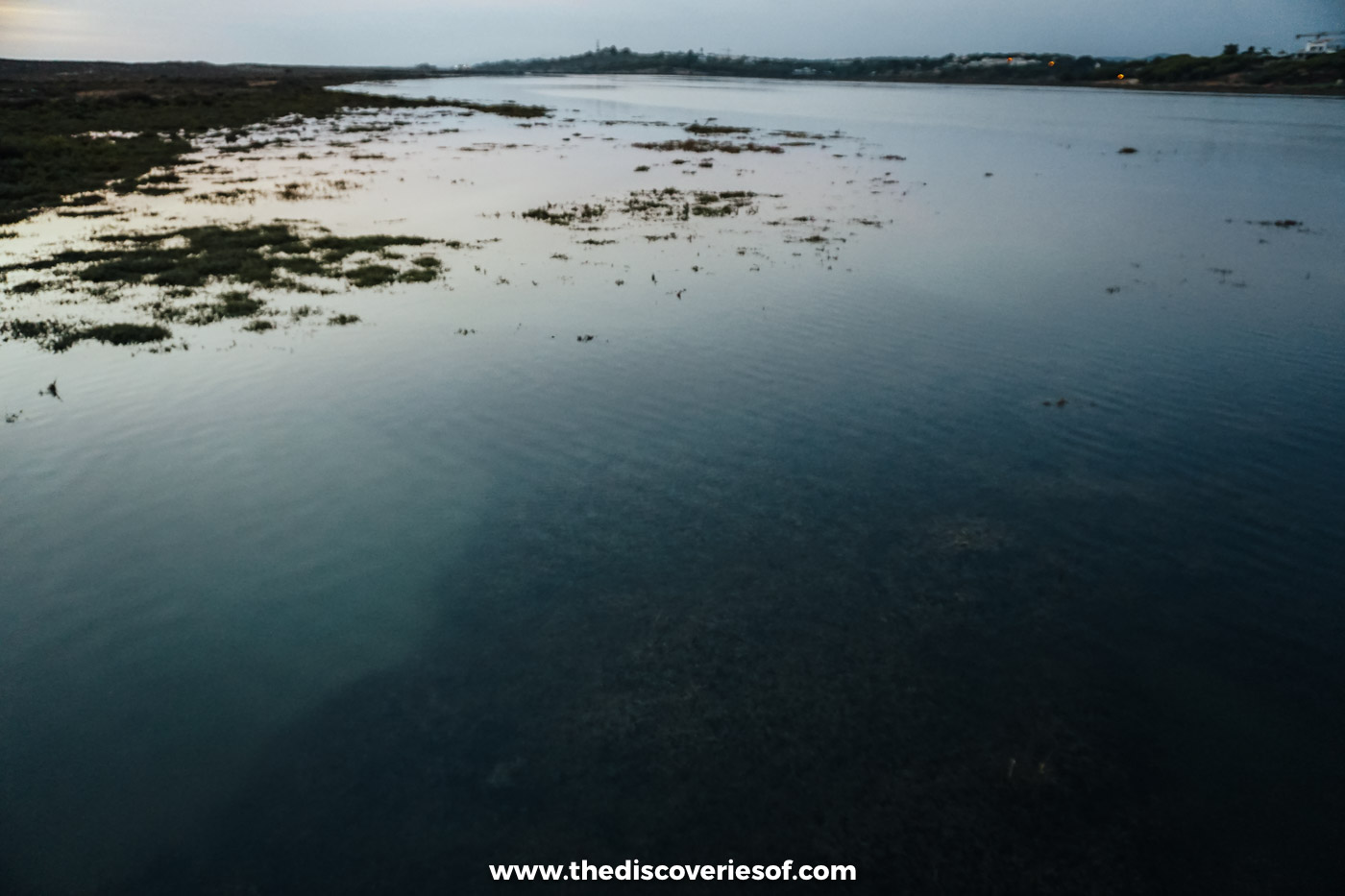
The Ria Formosa ranks among Europe’s great wetlands, and its shape never stays the same for long. Five barrier islands (Barreta, Culatra, Armona, Tavira and Cabanas) and two peninsulas (Ancão and Cacela) hold back the ocean, and the sea pours in and out through six inlets, one of them man-made. Twice a day the tide drains huge areas of mud and sand, then floods them again, so a channel you crossed by boat in the morning can be a sandbank by lunch.
It was first protected as a nature reserve in 1978 and became a natural park in 1987. It’s also a Ramsar wetland of international importance, part of the EU’s Natura 2000 network, and, by public vote in 2010, one of the seven natural wonders of Portugal.
What makes it special is the life it supports. Hundreds of species of birds feed, nest or rest here on their migrations between Europe and Africa. The park’s emblem is the purple swamphen, a glossy blue bird of the reed beds with a bright red bill. In the warm scrub and pine woods lives the Mediterranean chameleon, one of the continent’s rarest reptiles, and the seagrass meadows shelter two species of seahorse.
The seahorses tell the lagoon’s story in miniature. A few decades ago, the Ria Formosa held one of the densest seahorse populations in the world, but numbers have fallen dramatically since, through illegal fishing and the loss of seagrass. Scientists at the University of the Algarve’s CCMAR centre now breed them in captivity and release them into protected sanctuaries in the lagoon, and recent surveys have found signs of recovery.
The water is a working landscape, too. Look out at low tide and you’ll see the staked-out beds where shellfish farmers raise clams and oysters, and the lagoon supplies most of the clams Portugal sends abroad. Around the edges are the salt pans, where flor de sal is still raked by hand, and the fishing harbours of Olhão, Fuseta and Santa Luzia.
Cycling and walking the western lagoon
The western end of the park, between Quinta do Lago and Faro, is the easiest part to explore under your own steam.
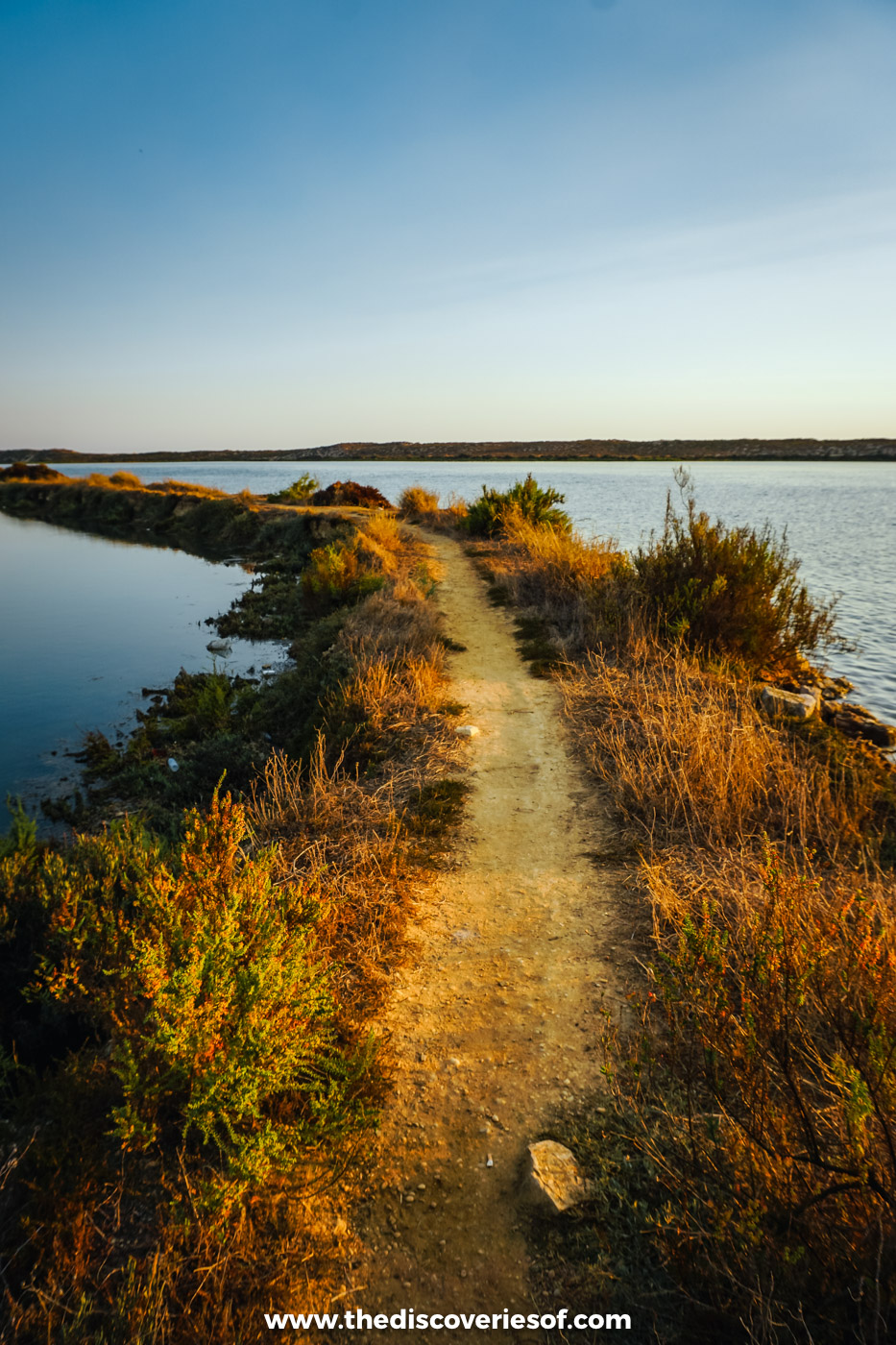
From my villa at Four Seasons Fairways, it was only a short cycle to the lagoon. Teeming with birds and life in the water, the park here is a quiet sanctuary, and walking its paths you could believe you were miles from anywhere. That is, until a plane climbs out of Faro, low over your head, and you remember the airport is just across the water.
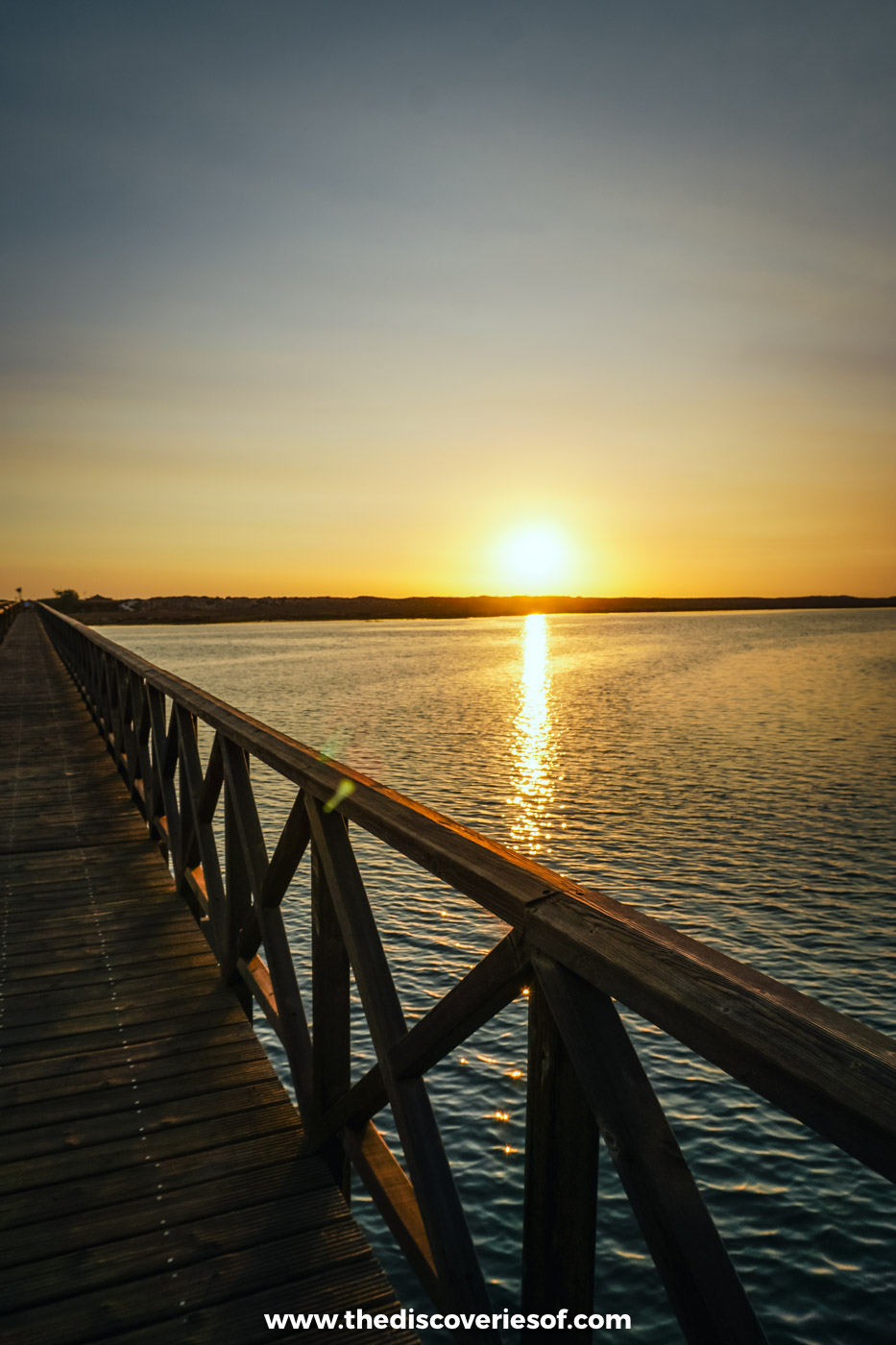
This part of the park has a bonus: a long, clean stretch of sand fringed by tall dunes, perfect for soaking up the year-round sunshine the Algarve is known for. From Quinta do Lago, you reach it over a wooden footbridge, about 300m from end to end, across the lagoon.
The São Lourenço trail and its bird hide
Starting from Quinta do Lago, the São Lourenço trail follows wide, flat tracks past salt pans, reed beds and the edge of the lagoon to the São Lourenço lake. The lake was created to make up for the wetland lost to the golf course around it, and the golfers play along both sides, but the birds don’t seem to mind.
A two-storey bird hide on the shore gives you a view over the water, where you can watch ducks, grebes, waders and, with luck, purple swamphens picking their way through the reeds. On the way, look out for the remains of Roman salt stores.
The Ludo trail
Just east, between Quinta do Lago and the airport, the Ludo trail is a 7km loop along the lagoon, freshwater pools and salt pans, with a longer version that links up with São Lourenço. It’s one of the best places on the coast to see greater flamingos, which are present in small numbers all year and in bigger flocks from October to March, along with spoonbills, black-winged stilts and Kentish plovers.
It’s flat and easy, but there’s very little shade, so take water and a hat. Allow three to four hours for the full loop, or simply walk out to the salt pans and back.
Getting There
Proximo buses 14 and 16 run from Faro towards Praia de Faro and stop at Ludo, the last stop before the beach (€2.35 for a single ticket). Drivers can park along the road to the beach and walk in through the gate.
Out on the water
To really get under the skin of the lagoon, you need to be on it. I took a boat trip from Faro with Animaris, the company that runs the boats to Ilha Deserta, and rather than racing across on a speedboat, I chose the slower option, a small catamaran carrying a nature guide who knew the lagoon inside out.
It made all the difference. The boat drifted alongside the mud flats and small, low islands while the guide pointed things out, from oysters clustered in the shallows to shore crabs on the mud, teals on the water and curlews probing for food with their long, curved bills. Then came an extra-special surprise: a few dolphins, which had wandered in from the open sea. They didn’t stay long, finding their way back out to sea remarkably quickly.
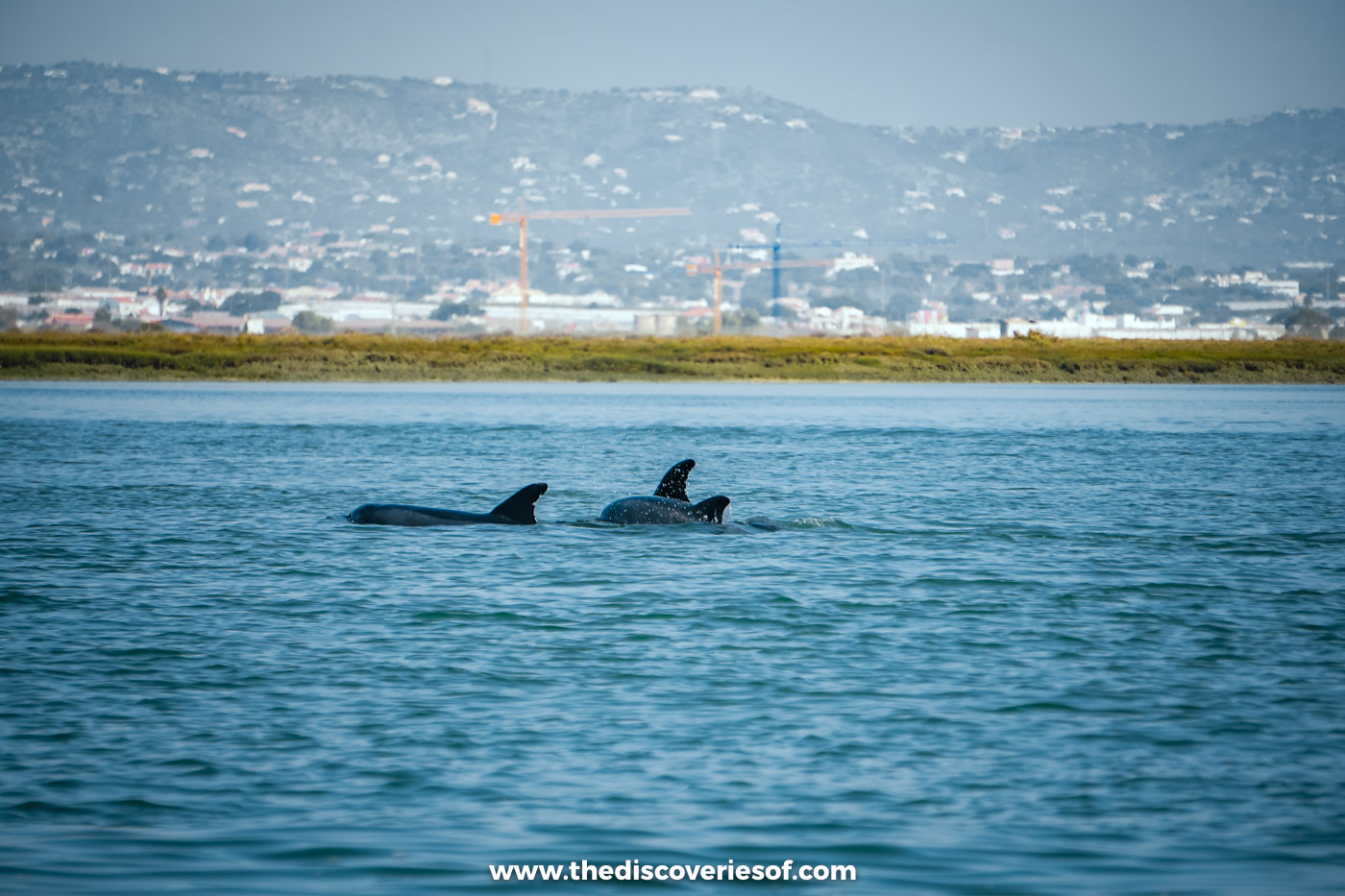
Dolphins inside the lagoon are a treat rather than a promise, but the birdlife is guaranteed. These are the main ways to get out on the water.
Boat trips from Faro
Boats depart from the Portas do Mar pier, on the waterfront beside Faro’s walled old town. Animaris runs the ferries and speedboats to Ilha Deserta all year, plus a guided eco tour with a marine biologist and a hop-on, hop-off pass to Farol and Culatra.
From June to mid-September, ferries also run from the same pier to Farol and Culatra, and boats to Praia de Faro run all year. Several small operators, such as Formosamar, run birdwatching trips and kayak tours from Faro.
Do
If you’d rather stay on dry land, this Segway tour with birdwatching follows the lagoon paths near Praia de Faro with a guide.
Ferries and island tours from Olhão
Olhão, the fishing port a few kilometres east of Faro, is the hub for the middle of the lagoon. Public ferries run by Guerreiro & Guadiana leave from the jetty beside the town’s red-brick market halls for Armona (about 15 to 20 minutes), Culatra (about half an hour) and Farol, the furthest stop.
They run all year, with the most departures from June to mid-September and only a handful of crossings a day in winter. Fares are low, around €2 each way, and since January 2026 there’s a small extra charge for dogs and four-wheeled trolleys. Water taxis wait by the jetty if you miss the last boat. If you’d rather not plan around timetables, plenty of operators run half-day and full-day island-hopping trips from Olhão’s waterfront.
Ferries from Tavira
At the eastern end, small ferries cross from Quatro Águas, about 2km from the centre of Tavira, to the Ilha de Tavira in a few minutes all year, for €2 return. From late March to the autumn, there are also boats from the Cais das Naus, in the middle of town by the seven-arched old bridge, for €2.70 return. For the town itself, see my Tavira travel guide.
The islands, from west to east
Each of the barrier islands has its own character, and between them they hold some of the emptiest beaches in the Algarve. These are the ones to know.
Praia de Faro
The only island beach you can drive to, Praia de Faro sits on the Ancão peninsula and is reached by a single-lane bridge near the airport, or by the same buses that stop at Ludo. It’s the city’s beach: a long strip of sand with beach bars and restaurants, ocean on one side and calm lagoon on the other, and as busy as you’d expect in summer.
Ilha Deserta (Ilha da Barreta)
The most famous island is uninhabited, with about 7km of beach on its ocean side and, at its tip, Cabo de Santa Maria, the most southerly spot on the Portuguese mainland. It’s the destination of my boat trip, and its huge, empty beach is just about my favourite in the Algarve. My guide to Ilha Deserta has the boats, the beach and how to spend the day there.
Culatra and Farol
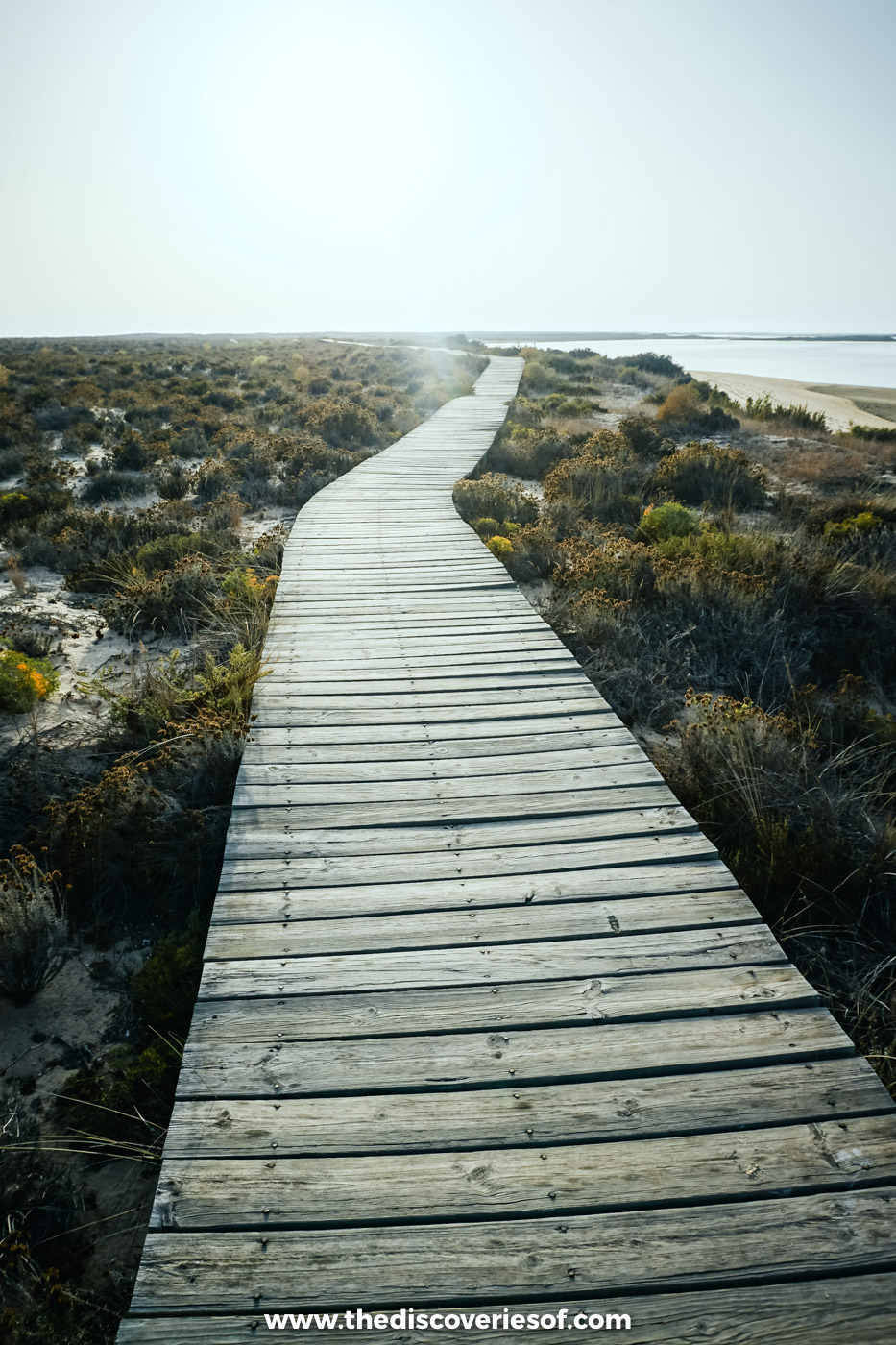
Culatra is the most lived-in island, and one of the most charming places on the whole coast. There are no cars, just sandy lanes, fishermen’s cottages, tractors and a few cafés, and Culatra village still lives mostly from fishing and shellfish, as it has for generations. A boardwalk of about 1km leads over the dunes to a long ocean beach.
At the island’s western end, the village of Farol takes its name from the tall lighthouse of Cabo de Santa Maria. It’s a mix of fishermen’s houses and holiday homes, with beaches on both sides, and you can walk between the two villages, about 3.5km, along the sand.
Armona
The closest island to Olhão, Armona has a small village of holiday chalets near the jetty, a few cafés and restaurants, and a path across the island to a huge, quiet ocean beach. It’s the easiest island day trip from Olhão, and a good choice with children.
Ilha de Tavira and Praia do Barril
The longest of the islands stretches west from Tavira for about 11km, with beaches the whole way. The section opposite the town has restaurants, lifeguards in summer and a campsite.
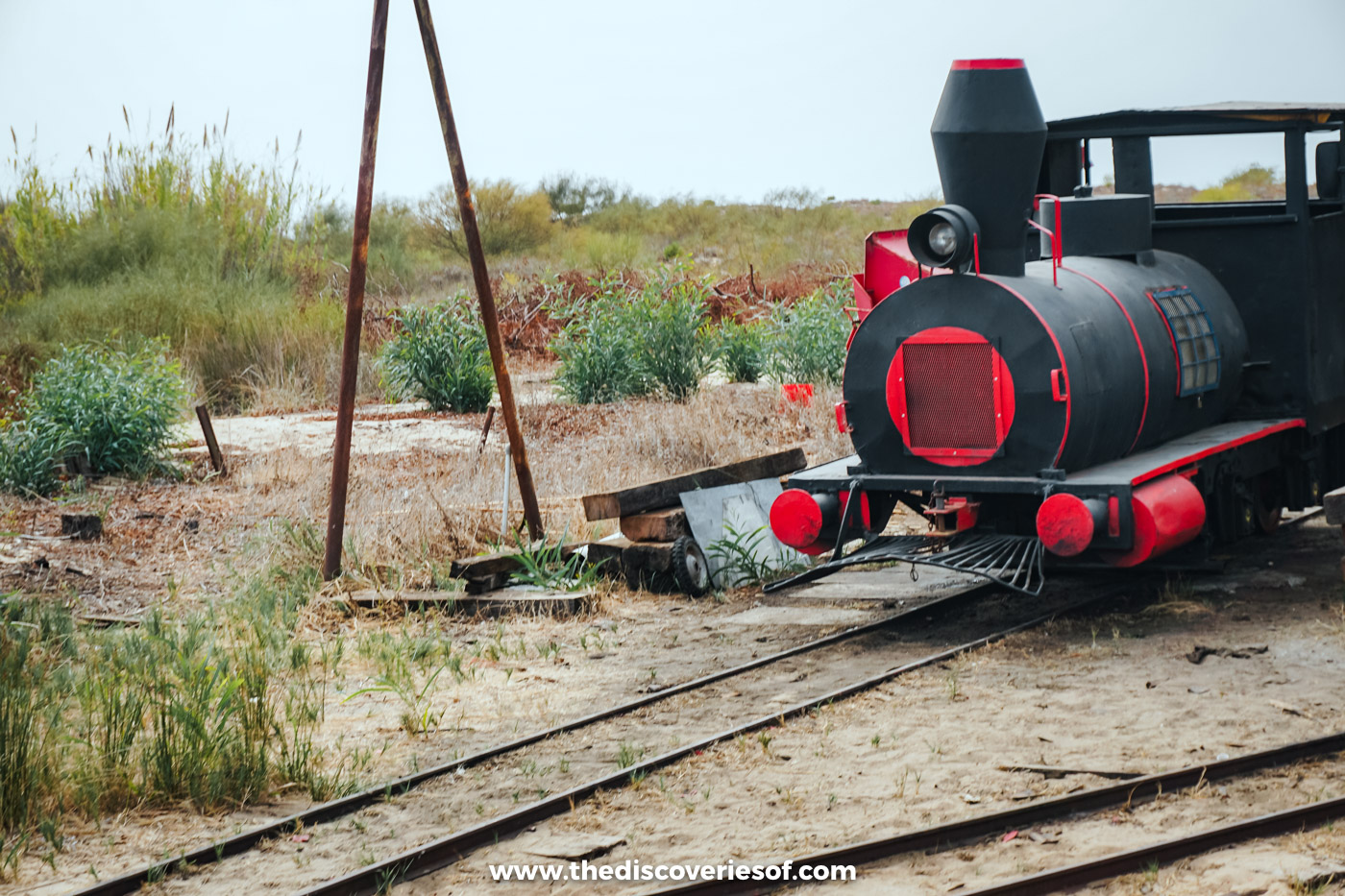
Further west is Praia do Barril, which I loved for being wild and windswept. You reach it from Pedras d’El Rei over a footbridge and then a narrow-gauge train, and in the dunes at the end sits the cemetery of rusting anchors left behind by the old tuna fishery.
Cabanas and Cacela Velha
At the park’s far eastern end, the fishing village of Cabanas de Tavira looks across to its own island beach, reached by small boats. Beyond it, the whitewashed hamlet of Cacela Velha sits on a low cliff above the point where the lagoon runs out, with one of the loveliest views on the coast. When the tide is out, people wade over to the sandbar below; when it’s in, local fishermen will take you across.
Birdwatching in the Ria Formosa
The lagoon is one of the best places in Portugal for birdwatching, and it’s good at any time of year. Spring and autumn bring the migrants on their way between Africa and northern Europe, winter brings the biggest numbers of waders, ducks and flamingos, and summer is the time for nesting little terns, Kentish plovers and black-winged stilts.
These are the species most visitors hope to see:
- Greater flamingos: in the salt pans at Ludo and around Tavira, especially from October to March.
- Spoonbills and egrets: feeding in the shallows across the lagoon.
- Purple swamphens: in the reed beds at São Lourenço and Quinta de Marim.
- Waders: curlews, whimbrels, avocets, godwits and plovers on the mud at low tide.
- Woodland birds: hoopoes and azure-winged magpies in the pine woods along the trails.
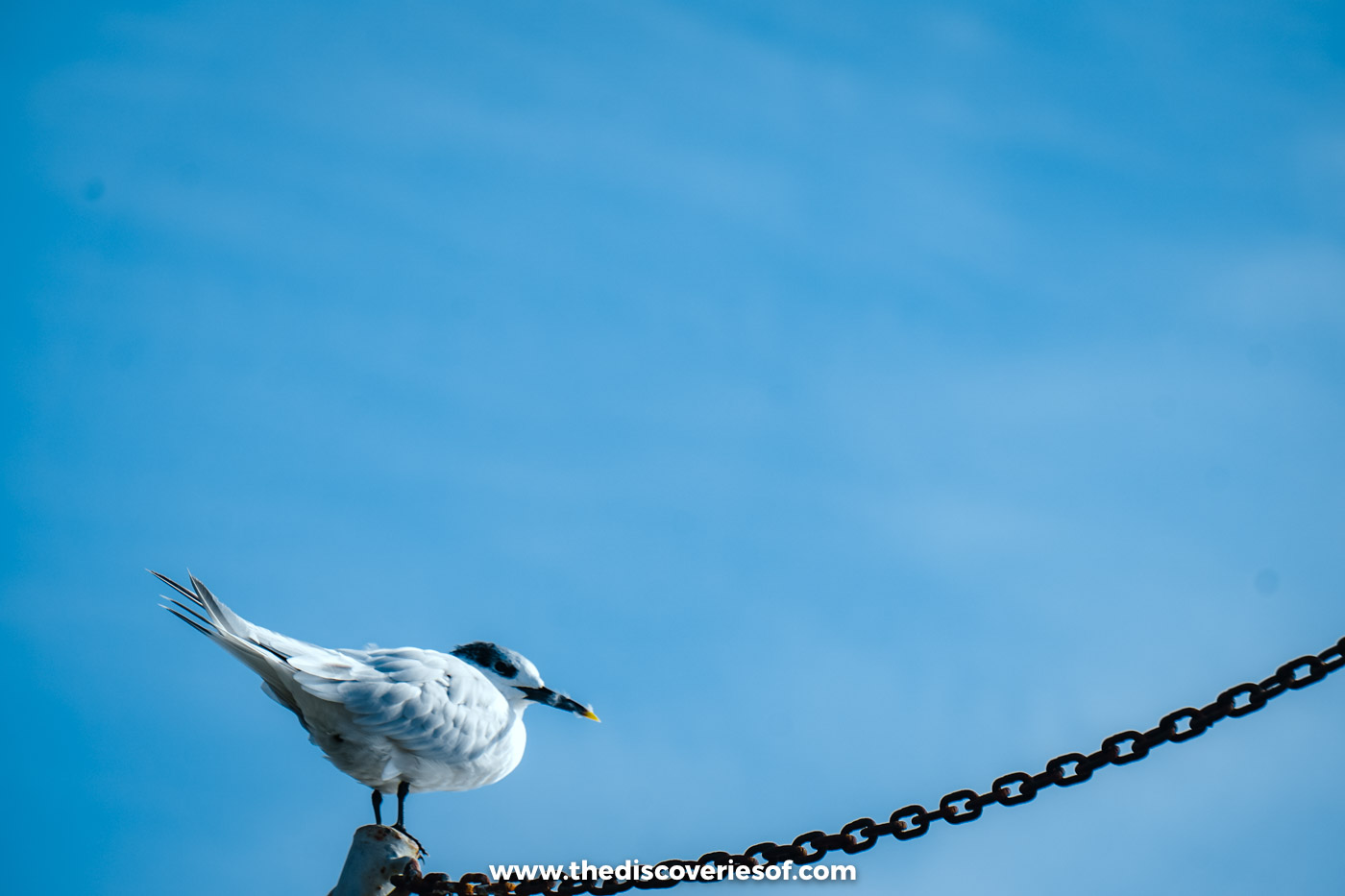
The best spots are the Ludo and São Lourenço trails at the western end, Quinta de Marim in the middle, and the salt pans between Tavira and Santa Luzia in the east. Beyond the park, the salt marshes of Castro Marim, near the Spanish border, are a separate reserve with flamingos and storks.
Top Tip
Plan your walk around the tides. The two hours either side of low tide are best for waders, when the mud is exposed and the birds are feeding close to the paths. A pair of binoculars makes all the difference.
Quinta de Marim, the park’s visitor centre
The headquarters of the natural park sit on the Quinta de Marim estate, about 3km east of Olhão, and it’s the best place to get to grips with the lagoon in a single visit. A circular trail of about 3km leads through 60 hectares of pine woods, dunes, salt marsh and freshwater pools, with information boards and a bird hide along the way.
There’s plenty of history here, too. The estate was once a Roman villa, and you can still see the tanks where fish were salted. A restored tide mill, once one of many around the lagoon, harnesses the water that flows in and out of a tidal pond. You might spot fiddler crabs on the mud, purple swamphens in the reeds and, if you’re very lucky, a chameleon in the bushes. The estate is also home to RIAS, a wildlife hospital that treats injured birds and animals from across the Algarve.
Tickets
Entry costs about €3 for adults, with discounts for students and over-65s, and children up to six go free. The estate is open daily, from 8am on weekdays and 10am at weekends. Every May, the park marks its anniversary with a free open day of guided walks, boat trips and activities (9 May in 2026).
Lunch at Estaminé
The only building on Ilha Deserta is a restaurant, and it’s a destination in its own right. When I ate there, Estaminé was run by Isabel, who had a real gift with seafood, and it generates its own electricity from the sun and treats its own water. A boat across the lagoon followed by a long seafood lunch is one of the best days out in the eastern Algarve, and my guide to Estaminé has more on eating there.
What to know before you head out
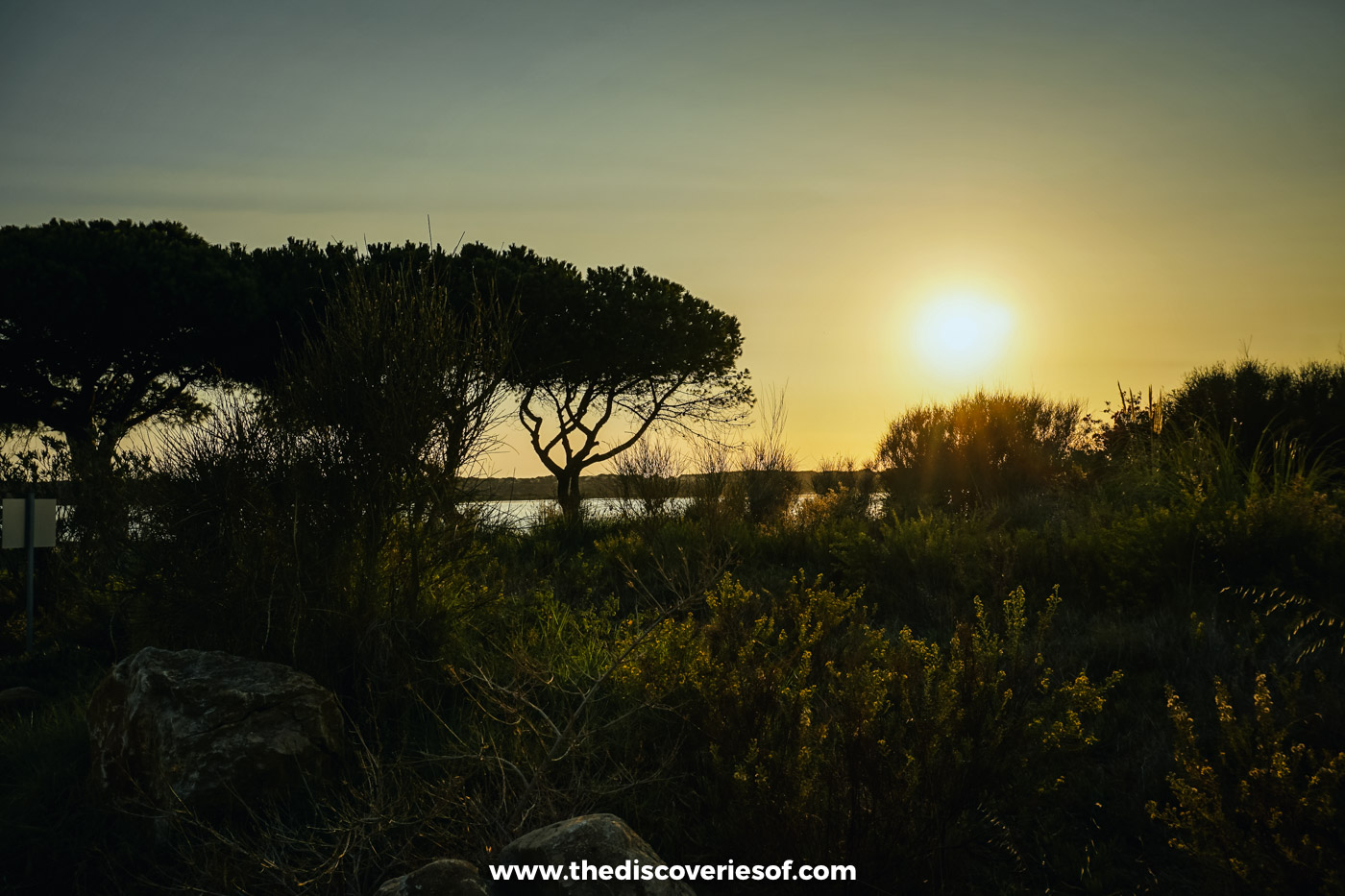
The Ria Formosa is a protected area, and a few rules and practicalities will help you get the most out of it.
- Keep to the boardwalks and paths. The dunes on the islands are fragile and full of nesting birds in spring, so cross them only where there’s a boardwalk.
- Leave the shellfish beds alone. The clams and oysters you see at low tide belong to licensed farmers, and harvesting them is their livelihood.
- Don’t wild camp. Pitch your tent at the campsite on the Ilha de Tavira instead.
- Check the drone rules before you fly. Faro airport sits on the edge of the lagoon, so much of the western Ria Formosa falls inside its restricted airspace.
- Watch the last boat. Ferries thin out after the summer, so check the return times on the day, and keep the number of a water taxi handy.
- Bring sun cream, water and insect repellent. There’s little shade on the trails or the islands, and the marshes can be buzzing with mosquitoes on still evenings.
- Choose your base by the end you want to explore. Faro and Quinta do Lago suit the western trails and Ilha Deserta, Olhão is best for Armona and Culatra, and Tavira for the eastern islands. For hotels, see where to stay in Portugal.
- Go in spring or autumn if you can. I was there in October, when the Algarve sunrises have a golden glow and autumn migrants are passing through the lagoon. For the Algarve month by month, see the best time to visit Portugal.
Map
Read next
- The best things to do in the Algarve
- The best beaches in the Algarve
- An insider’s guide to Tavira
- A villa at Four Seasons Fairways in Quinta do Lago
- One week in Portugal: the perfect itinerary
Love this? Save and share on Pinterest
Discover the top things to do, insider tips and hidden gems in our Portugal Travel Guides.
Read the guides →