

Rising out of the Atlantic off the tip of Reynisfjall, the Reynisdrangar basalt sea stacks are one of the south coast’s great sights. Here’s where to see them, the legend behind them and how to visit safely.
So you’re planning a trip to Iceland and fancy seeing the Reynisdrangar basalt sea stacks? You should. These jagged pillars of rock stand just offshore at the end of the famous Reynisfjara black sand beach, and they’re yet another of the country’s incredible landscapes.
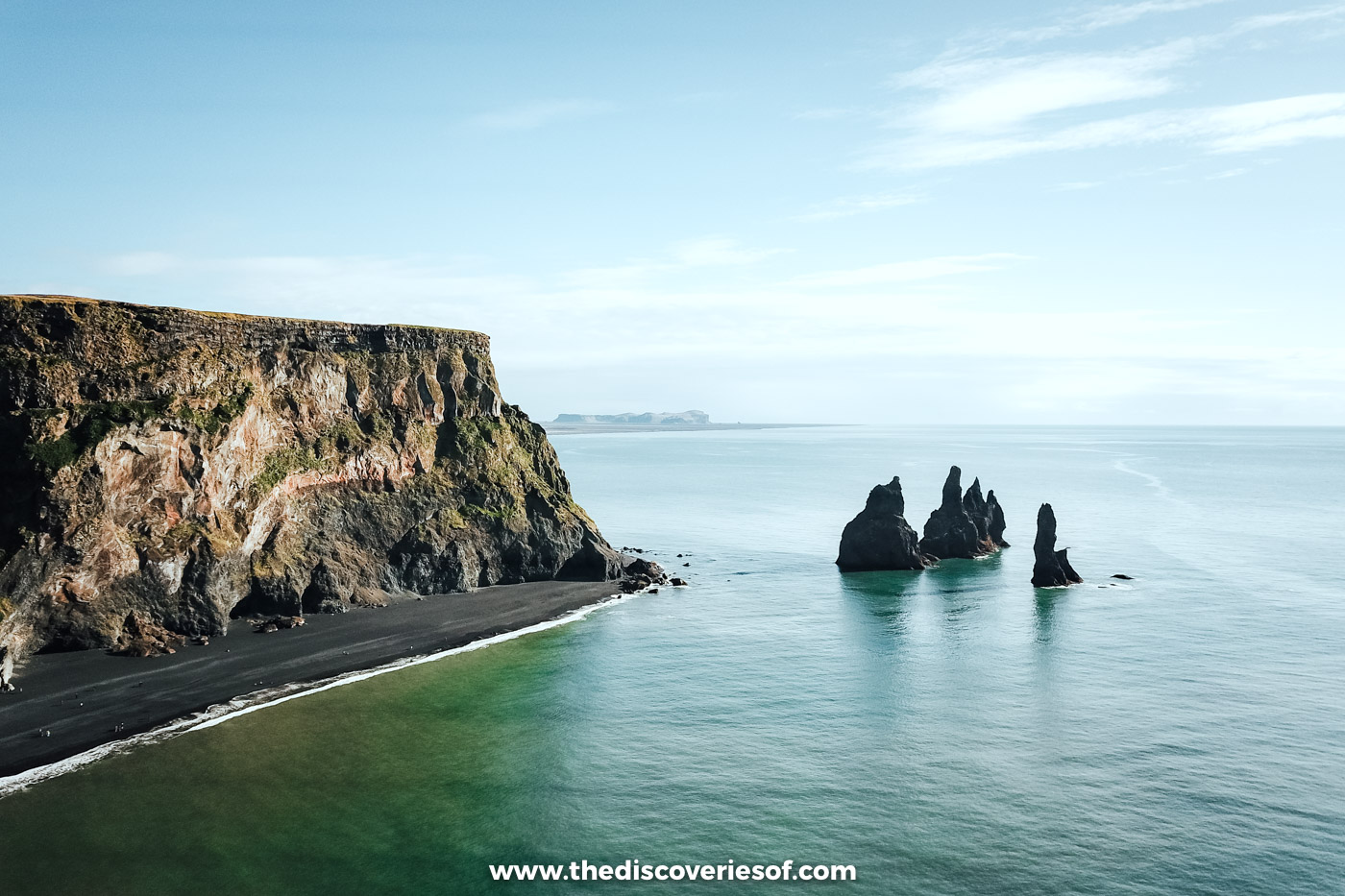
The beach and the stacks are pretty much the reason the nearby village of Vík is such a hotspot on south coast road trips. For good reason. You’d think that after seeing awesome waterfalls, glacial lagoons and the Northern Lights, you’d be all out of wonder. Incorrect.
They were one of my favourite spots on the whole coast, because it’s almost impossible to believe that something so neatly sculpted isn’t man-made (it really isn’t). I saw them on a long September day drive from Hotel Rangá to Jökulsárlón, with Skógafoss and Reynisfjara on the way. At Reynisfjara I walked the beach and sent my drone up to see the stacks from above.
If you’re heading to see them for yourself, this is what you need to know.
Why the Reynisdrangar sea stacks are worth the stop
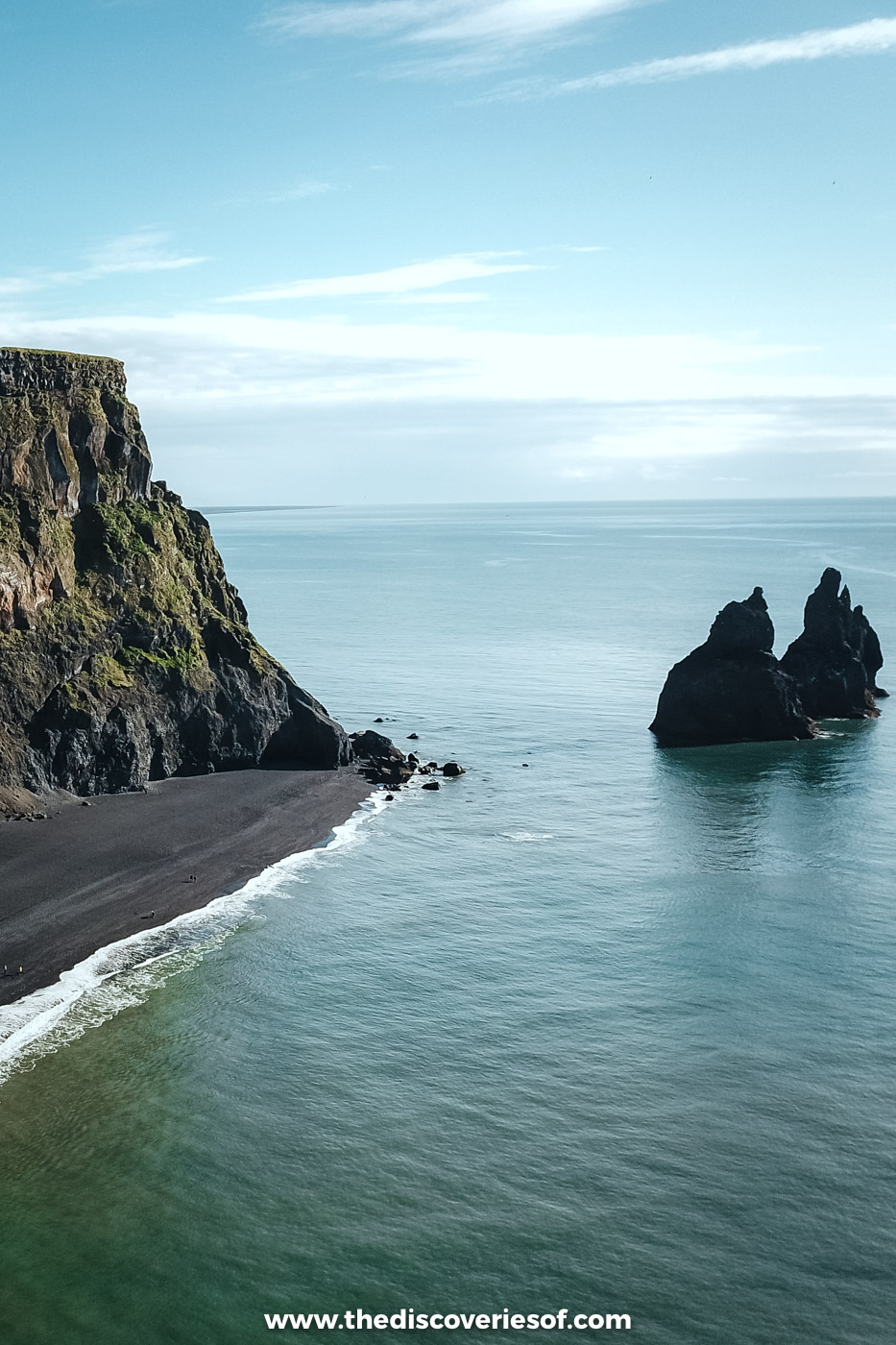
Put simply, because they’re one of the most bizarre but beautiful natural sights on the island. As if that’s not enough, they rise straight out of the surf at the end of a black sand beach, which makes for a photo opportunity that’s too good to pass up. They’re a true highlight of any south coast itinerary.
The stacks are actually a group of three, and the tallest point reaches about 66 metres above the sea. Local guides name them Langsamur, Landdrangur and a third known as Skessudrangur or Háidrangur, depending on who you talk to.
Langsamur is the largest. Its three peaks and pyramid shape mean that people often say it looks like a ship. I can see it, can you?
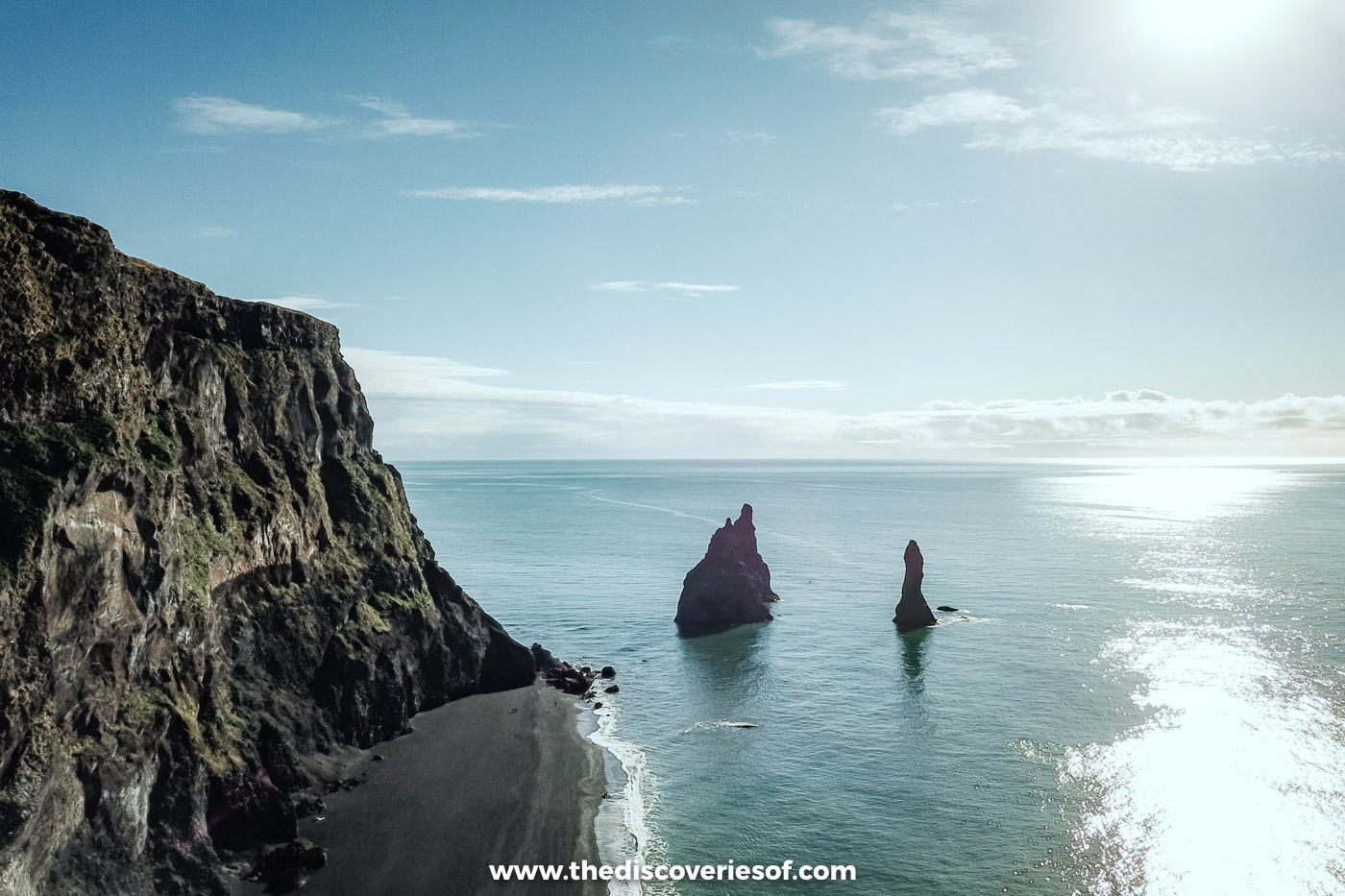
Landdrangur, as its name suggests, is the one nearest the beach. The names of the third stack fit the folklore perfectly: Skessudrangur means something like “the giantess’s stack” (a skessa is a troll woman), while Háidrangur simply means “the high stack”. You can always count on Icelandic place names to tell you a story.
Oh yeah, and between May and August each year, the cliffs of Reynisfjall above the beach are home to nesting seabirds, including cuter-than-cute puffins, fulmars and Arctic terns. Watch them from the beach or the paths, and don’t be tempted to scramble up the cliffs or the columns to get closer.
Top Tip
The waves here are genuinely dangerous. Sneaker waves surge much further up the beach than the ones before them, and they have killed several people at Reynisfjara, including in August 2025. A warning light at the beach entrance shows the day’s risk: on green or yellow, stay at least 30 metres back from the water; on red, don’t go onto the beach at all. Never turn your back on the sea.
The rather curious geology of the stacks
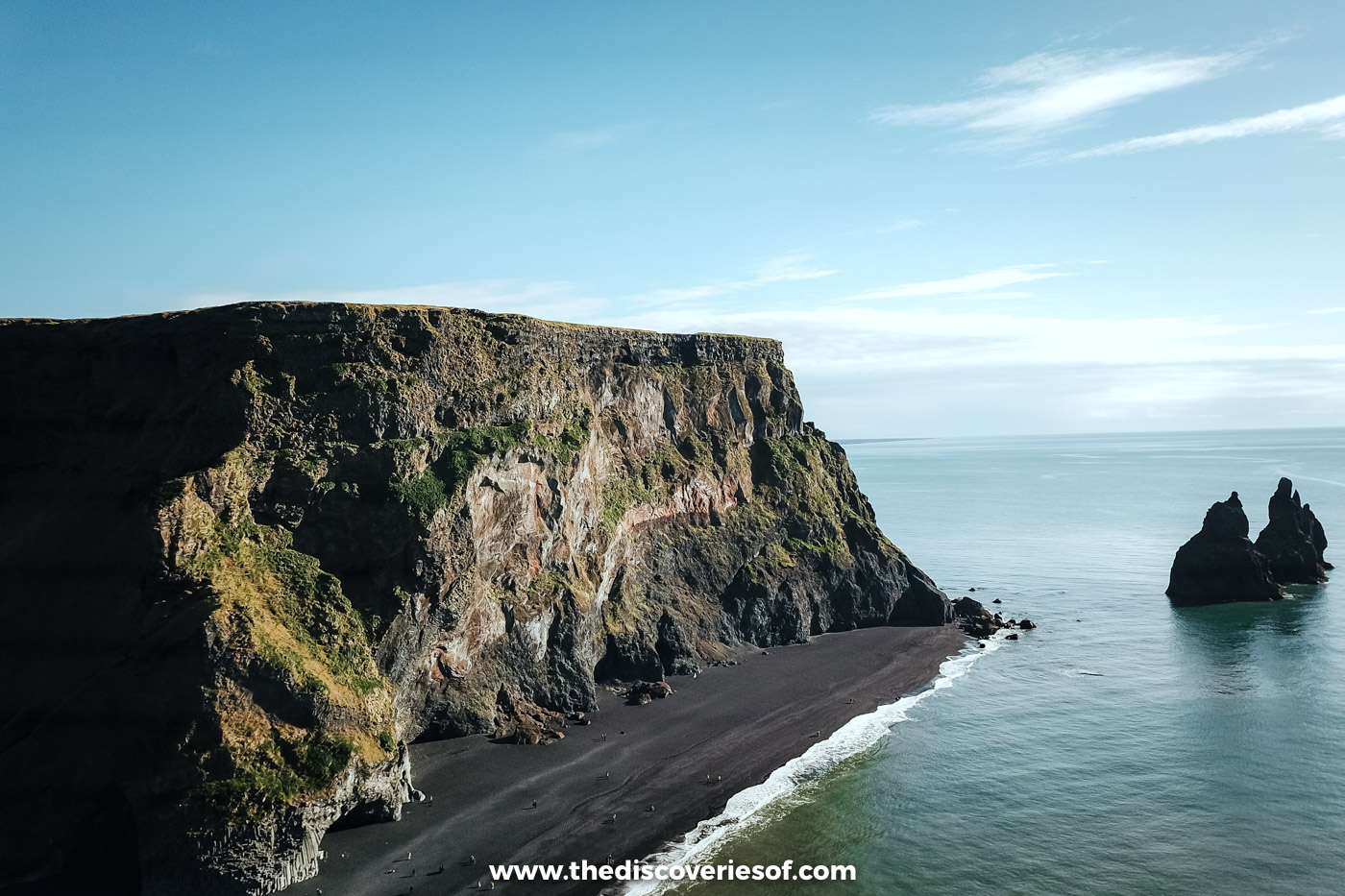
The stacks are made of the same rock as Reynisfjall, the 340-metre ridge that ends at the beach. The mountain was built by a volcanic eruption beneath a glacier during the penultimate ice age, which is why it’s a jumble of layers: volcanic tuff, pillow lava and veins of columnar basalt. Those columns formed as thick lava cooled and contracted, cracking into the neat geometric shapes that make it all look so man-made. This is called columnar jointing.
Now I’m not going to get too technical because this is a travel piece and not a science essay but… sometimes nature is so cool, right?
The stacks were once part of the headland itself. Over thousands of years the sea has worn away the softer rock around them and left them standing on their own, and the erosion hasn’t stopped. In February 2026, storms stripped huge amounts of sand from Reynisfjara and a landslide brought boulders down from the cliff. Who knows what the stacks will look like in a thousand years?
The legend of the petrified trolls
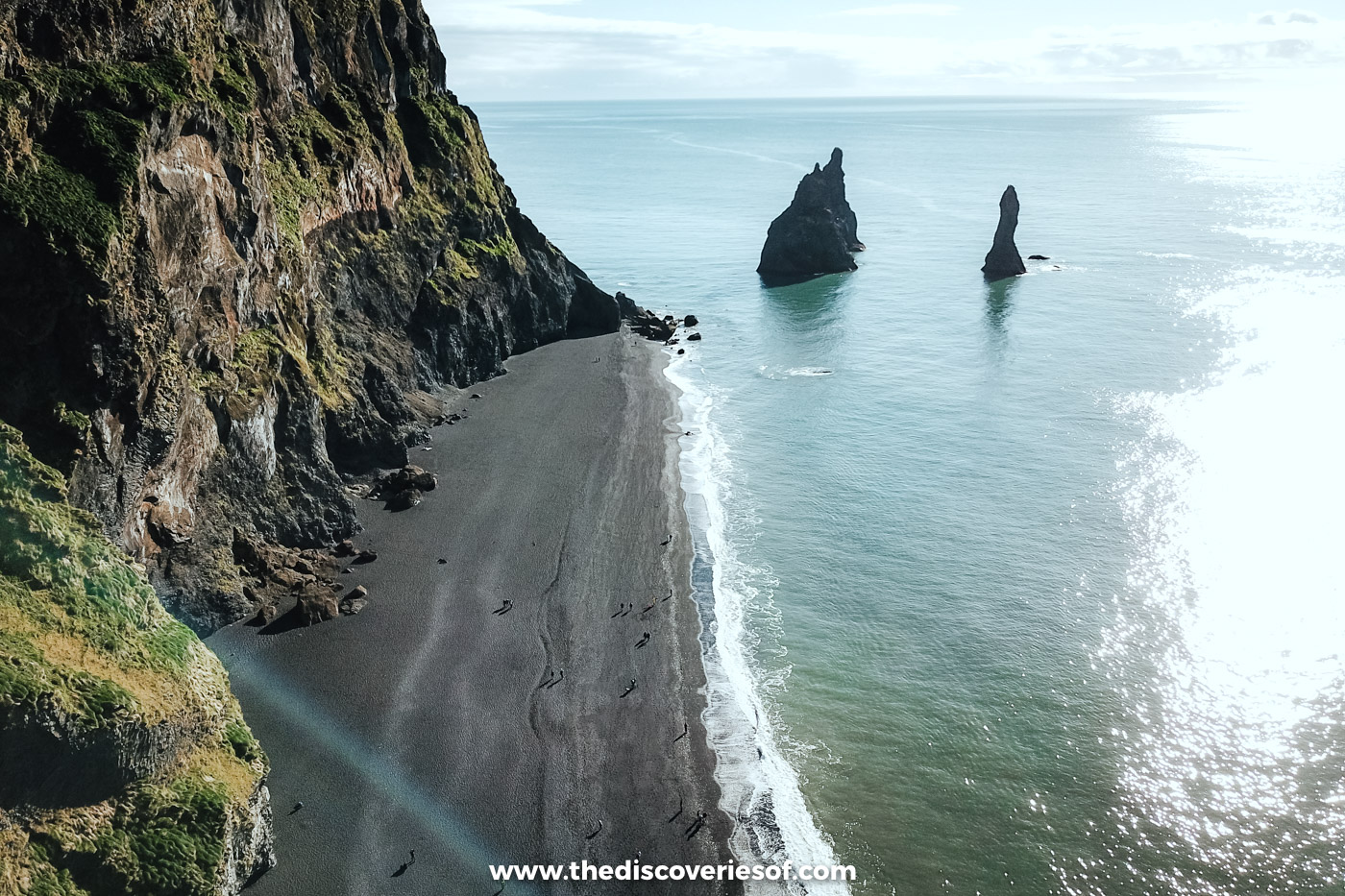
The trolls, forever petrified in time…
It wouldn’t be Iceland without a good legend or two thrown in, and the stacks star in a rather curious story.
Legend has it that two trolls waded out at night to drag a three-masted ship to shore. They were so caught up in the struggle that they didn’t notice the sun was about to rise. The moment its rays hit them, they turned to stone, trapped for eternity along with the ship in the form of the stacks.
There’s a darker version too, in which a man whose wife had been killed by two trolls tricked them into staying out until dawn, when the first light petrified them.
I’ll leave any fans of J.R.R. Tolkien’s The Hobbit, one of my favourite books as a child, to make the connection. Tolkien loved the Icelandic sagas and folklore, and the trolls caught by the dawn in his story will feel very familiar here. That will teach those pesky trolls. They do make a good picture though.
Eastwatch by the Sea: the Game of Thrones connection
Regular readers will know that I’m a huge Game of Thrones fan (obsessed? Perhaps), so it was pretty cool to see Eastwatch in real life.
Cast your mind back to series 7 and you might remember the beach and the stacks making a rather moody appearance as the shore near Eastwatch by the Sea, where Jon Snow and his band set off beyond the Wall. Sightings of Jon Snow aka Kit Harington (unfortunately) not guaranteed.
The best places to see Reynisdrangar
The stacks sit between two beaches, so you can see them from both sides of Reynisfjall, from the top of it and, if you’re lucky with the weather, from the air.
From Reynisfjara beach
This is the classic view, and the one most people come for. From the car park it’s a short walk onto the sand, and the stacks line up beyond the end of the cliff with the basalt columns and the Hálsanefshellir cave at your back. It’s also where the waves are at their most dangerous, so follow the warning light and keep your distance.
Since the February 2026 storms, the beach level near the columns has dropped and the columns and cave are often cut off by the tide, so you may not be able to walk right round to them. The stacks themselves are easy to see from a safe distance. My guide to visiting Reynisfjara covers the beach in detail.
From the beach at Vík
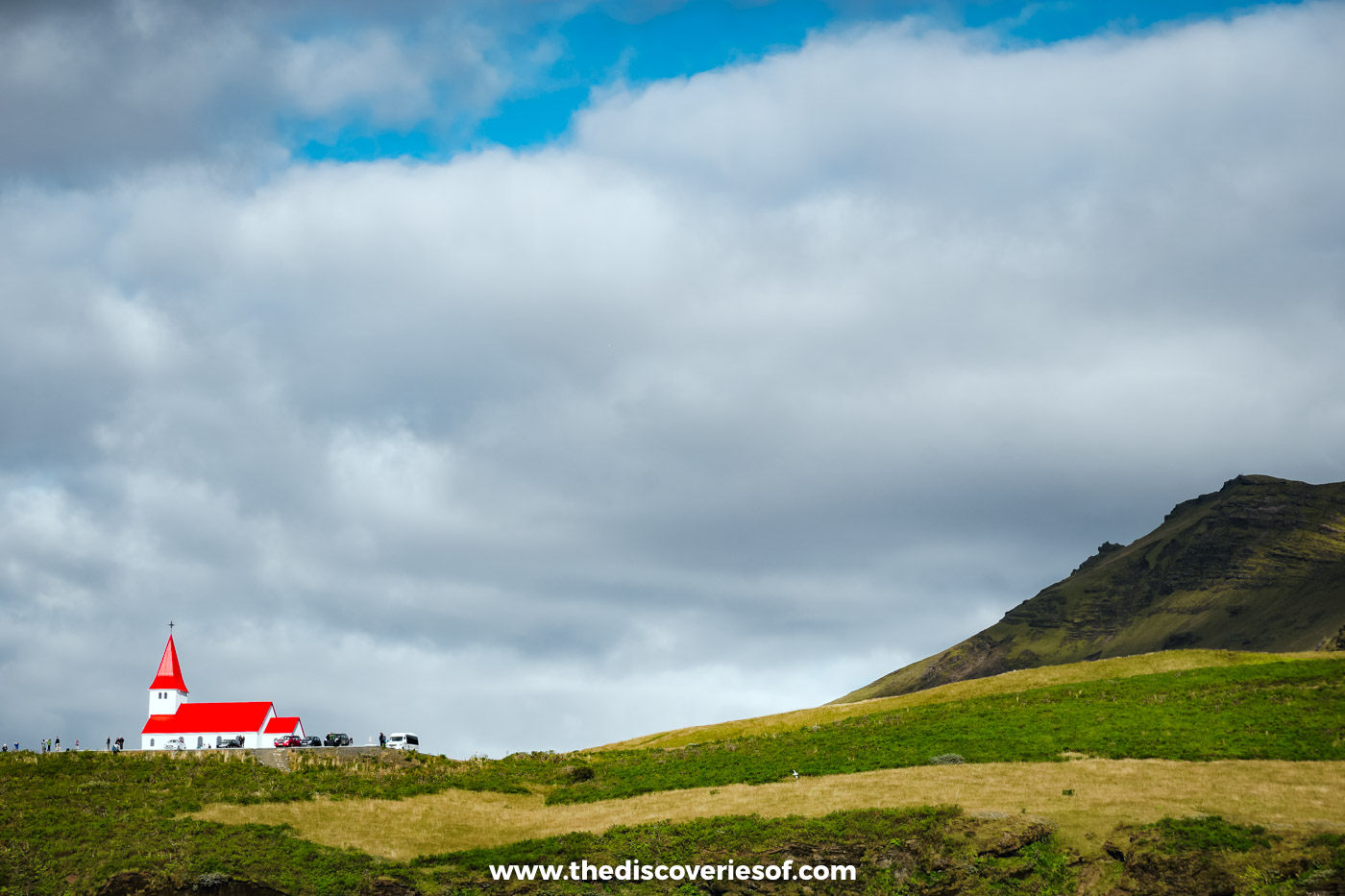
Head to the black beach at Vík, on the east side of Reynisfjall, and you’ll see the stacks from the other side, standing off the end of the headland like dark spires on the horizon. Walk west along the sand towards the cliffs for a closer view. It’s usually much quieter than Reynisfjara, with the village’s cafés close by. The same Atlantic swell reaches this beach too, so keep well back from the water here as well.
From the top of Reynisfjall
For a view of the stacks from above, walk up Reynisfjall from the western edge of Vík. A wide track winds up to the plateau (it’s closed to cars, so you’ll be on foot), and the summit looks down over the stacks, Reynisfjara and Dyrhólaey. A loop that comes back along the cliff tops is roughly 7 kilometres and takes about two and a half hours.
It’s far quieter than the beach below and, in summer, the cliffs are busy with puffins. There’s no shelter at the top and the wind can be ferocious, so stay well back from the cliff edges.
From Dyrhólaey
The cliffs by the Dyrhólaey lighthouse, about 6 kilometres west, give you a long view east along the black sand to Reynisfjall and the stacks. Access can be restricted between 1 May and 25 June for nesting birds, so check before you go.
From the air
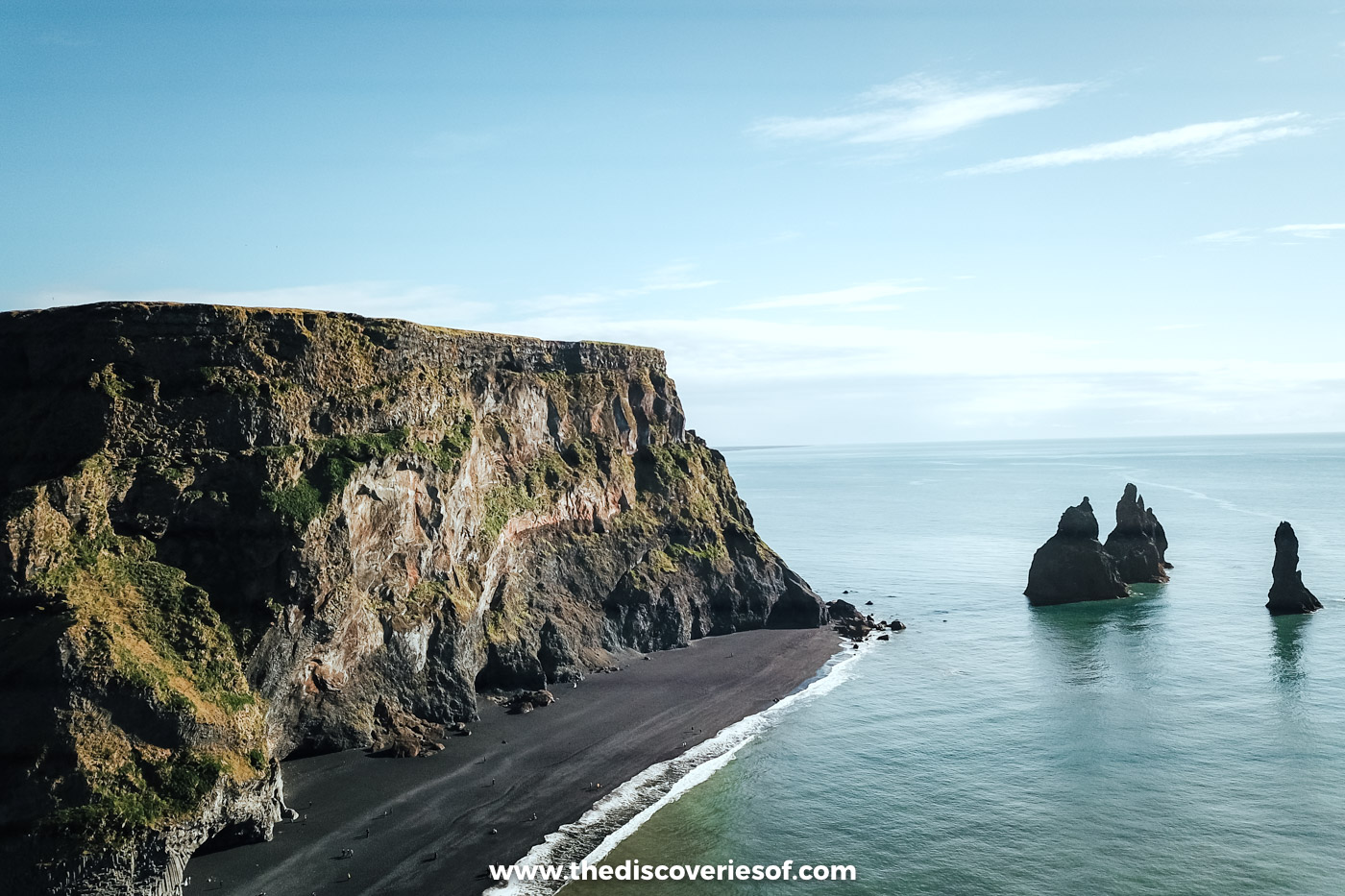
I wanted to see the stacks from a different angle, so I flew my drone out over the water at Reynisfjara. From above you can see just how far out they stand from the cliff, and how the waves wrap around their bases.
Bringing a drone? Register as an operator at flydrone.is first, never fly over people on the busy beach and keep well away from the bird cliffs. Dyrhólaey is off limits for recreational drones all year.
Top tips for planning your visit
Visiting independently
It’s easy to visit the stacks on your own, as Reynisfjara and Vík are both just off the Ring Road. Reynisfjara is reached on Route 215, which branches off the Ring Road west of Vík. If you’re heading to the area, don’t miss nearby sights such as Dyrhólaey, Vík, Skógafoss and the Sólheimasandur plane wreck.
Visiting on a tour
Pretty much every tour of the south coast stops at Reynisfjara. You can take a day trip from Reykjavik, such as this south coast waterfalls and black sand tour, which gives you about half an hour at the beach, or organise one from nearby Vík.
Address
Reynisfjara, Route 215, 871 Vík, Iceland
Parking and facilities
Parking at Reynisfjara is no longer free: it costs about ISK 750 to ISK 1,000 depending on which car park you use, paid through the Parka app. The Black Beach Restaurant sits by the car park, and there are toilets (a small charge applies). Walking on the beach itself is free.
Getting there from Reykjavik
Reynisfjara is about 180 kilometres (112 miles) from Reykjavik, which is roughly two and a half hours’ drive along the Ring Road, longer in winter conditions. Vík is about 10 minutes further east. From Hotel Rangá, it’s about an hour.
Map
Read next
- The best things to do in Iceland
- Visiting Reynisfjara black sand beach
- The perfect 7 day Iceland itinerary
- Iceland’s most stunning waterfalls
- Iceland’s most famous landmarks
- Discovering off the beaten path Iceland
- Iceland travel guide
- Black sand, blue ice and a sky full of green: South Iceland through my lens
Love this? Save and share on Pinterest

Discover the top things to do, insider tips and hidden gems in our Iceland Travel Guide.
Read the guides →




