


Oaxaca runs to a timetable that catches visitors out. The biggest market in the valley only happens on a Sunday, the city’s best museum shuts on Mondays, Monte Albán is at its emptiest in the first hour after the gates open, and the Mercado de Abastos is at its best first thing, before the crowds pile in. Plan your days in the wrong order and you’ll spend them looking at shutters.
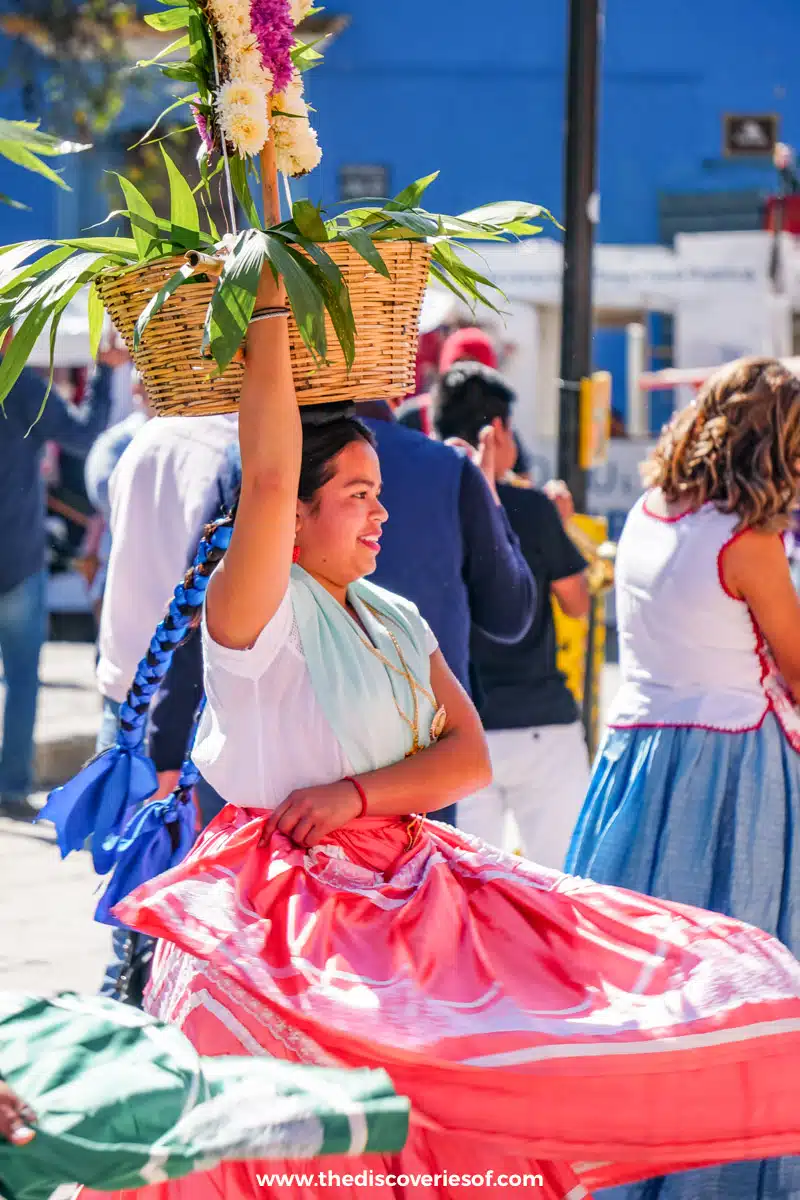
I was in Oaxaca in December, when the streets were full of processions and brass bands. Within a day of arriving I had seen live concerts and dancing in the streets, and I could totally see why people fall in love with this city: there’s just so much life and colour. It was one of my favourite stops on my trip around Mexico. This is how I’d order three days for a friend with the benefit of hindsight. Day 1 stays in the centre, from a market breakfast to a late-night tlayuda. Day 2 climbs to the Zapotec city of Monte Albán, then slows down for a rooftop lunch and mezcal cocktails. Day 3 is a Sunday out east: grilling your own lunch at Tlacolula market, a mezcal distillery and a swim above the petrified waterfalls of Hierve el Agua. It assumes you arrive on a Thursday night and have a car, or a driver, for the last day.
Your 3 day Oaxaca itinerary at a glance
- Day 1 (Friday): breakfast at the Mercado de Abastos, the Zócalo, lunch in the smoke aisle of the Mercado 20 de Noviembre, the Museum of Cultures and Santo Domingo at sunset, then mezcal and a tlayuda
- Day 2 (Saturday): Monte Albán at opening time, a late lunch on the Pitiona rooftop, the Basílica de la Soledad, then cocktails at Sabina Sabe
- Day 3 (Sunday): grilled meat and tejate at Tlacolula market, a tasting at the Gracias a Dios palenque and an afternoon at Hierve el Agua
- Suggested stay: Casa Oaxaca, a stylish boutique hotel on García Vigil with just seven rooms and an outdoor pool, a few minutes’ walk from Santo Domingo. Whatever your budget, base yourself around Santo Domingo, with the churches, mezcalerías and restaurants on your doorstep.
How many days do you need in Oaxaca?
In my opinion, four days is the perfect amount of time to spend in this beautiful part of Mexico. It gives you enough time to experience the culture, history and food that make Oaxaca so unique. I wouldn’t spend less than three days here, or more than five if you still want to see other parts of the country.
Three days covers the essentials: the historic centre, Monte Albán and a day on the road east. With a fourth, add a cooking class or the villages along the Mitla road (both are further down).
Top Tip
Start on a Friday. The Museum of Cultures is closed on Mondays and Pitiona on Tuesdays, and Tlacolula’s market is Sunday only, so a Friday start lands every stop on a day it’s open.
Oaxaca itinerary day 1: markets, Santo Domingo and the old town
The first day is on foot, apart from a short taxi ride west to the market for breakfast.
8am: breakfast at the Mercado de Abastos
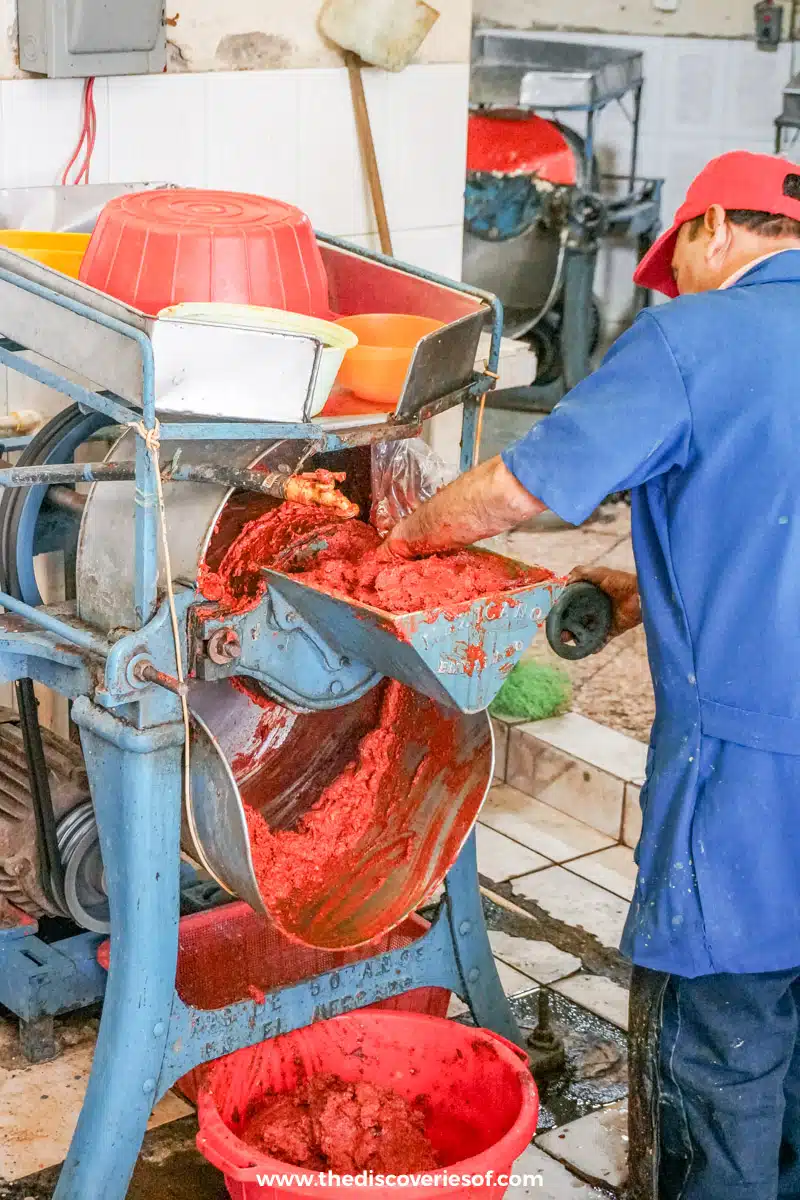
The Central de Abastos, beside the second-class bus station, is the biggest market in town, and it may lack organisation and signage, but it makes up for that with sights, sounds and smells you won’t find anywhere else. I thought I’d seen markets at home, but this really takes the biscuit: sacks of dried chillies, garlic by the armful, and mills grinding chillies into paste for mole.
Saturday is the city’s big market day, and when I went on a Saturday afternoon it was a vibe: pretty full on, with chilli sellers calling out negro and rojo and people everywhere. I wandered for a good 45 minutes and don’t think I saw even a small proportion of it. If you want to see it in full swing, come early in the morning. Even if you don’t buy a thing, it’s fascinating to see where the locals actually shop. Oaxaca is a food-obsessed city, and this is where all the magic starts.
Get there early to beat the crowds, and breakfast on memelas, thick hand-patted tortillas spread with asiento (pork lard), black beans and cheese, for 15 to 30 pesos each. Then buy a bag of chapulines, grasshoppers toasted with lime, chilli and garlic. And yes, I tried them, my first grasshoppers and a real Oaxacan speciality I hadn’t seen elsewhere in Mexico: mostly lime, chilli and garlic, like an intense peanut, and I’d highly recommend you give them a go. I bought a bag for a snack.
10.30am: the Zócalo and the cathedral
Take a taxi back to the Zócalo, the heart of the city since the Spanish laid out their grid around it in 1529. It’s closed to traffic, and each time I visited, something different was happening: a marimba band under the laurel trees, a procession, dancers balancing baskets of flowers on their heads. The cathedral on its north side has a carved 18th-century facade in the local green stone.
1pm: lunch in the smoke aisle at the Mercado 20 de Noviembre
A block south of the Zócalo, the Mercado 20 de Noviembre is the city’s great food market, and its most famous corner is the Pasillo de Humo, the smoke aisle. It’s super smoky in here, and it’s a bit confusing at first, but you’re going to love it. Pick a butcher’s stall, order your meat by weight, and it’s grilled over charcoal with spring onions and chillies while vendors bring tortillas and salsas to the long shared tables. Budget 150 to 250 pesos each.
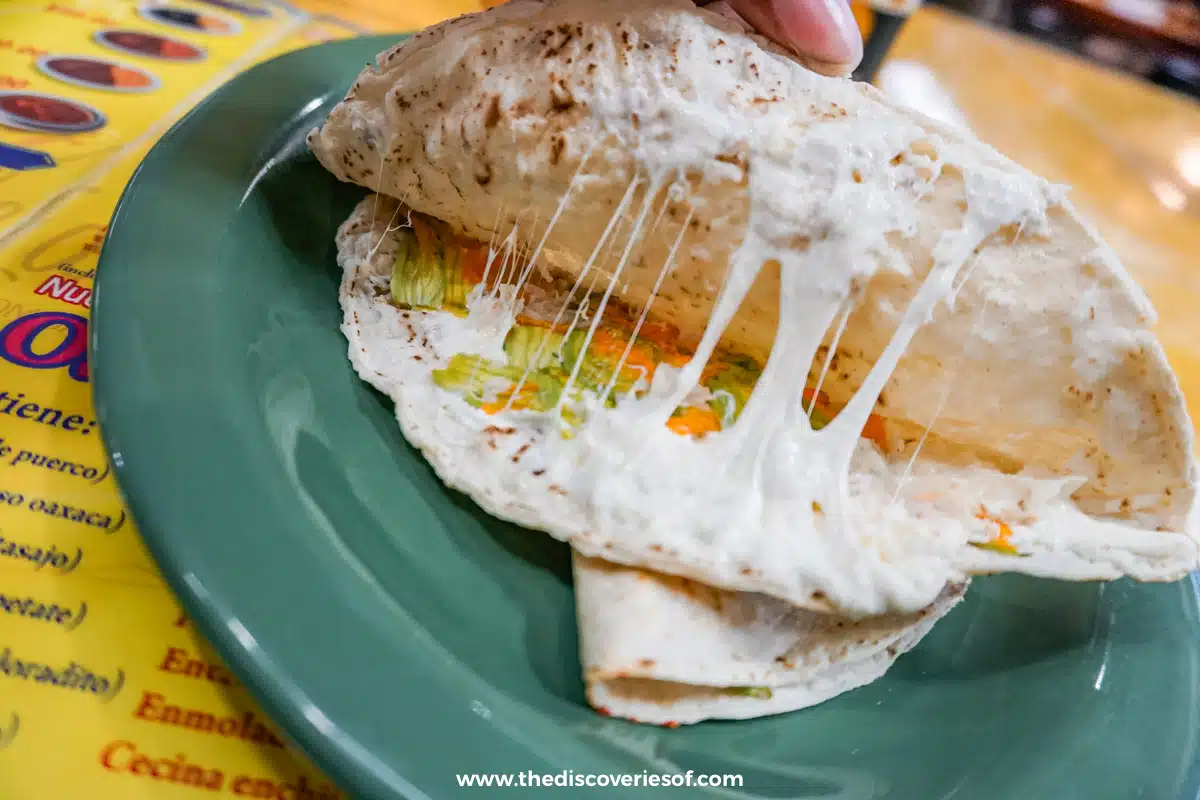
I went for the tasajo, the dried beef, which in retrospect was a little bit of a mistake, as it was very, very dry. I’d still recommend going, but next time I’d try the chorizo. I also had a quesadilla with squash flower and quesillo, the local stringy cheese, which is like a mozzarella but with tons more flavour. My guide to Oaxacan food has everything else to order.
2.30pm: the Museum of Cultures of Oaxaca
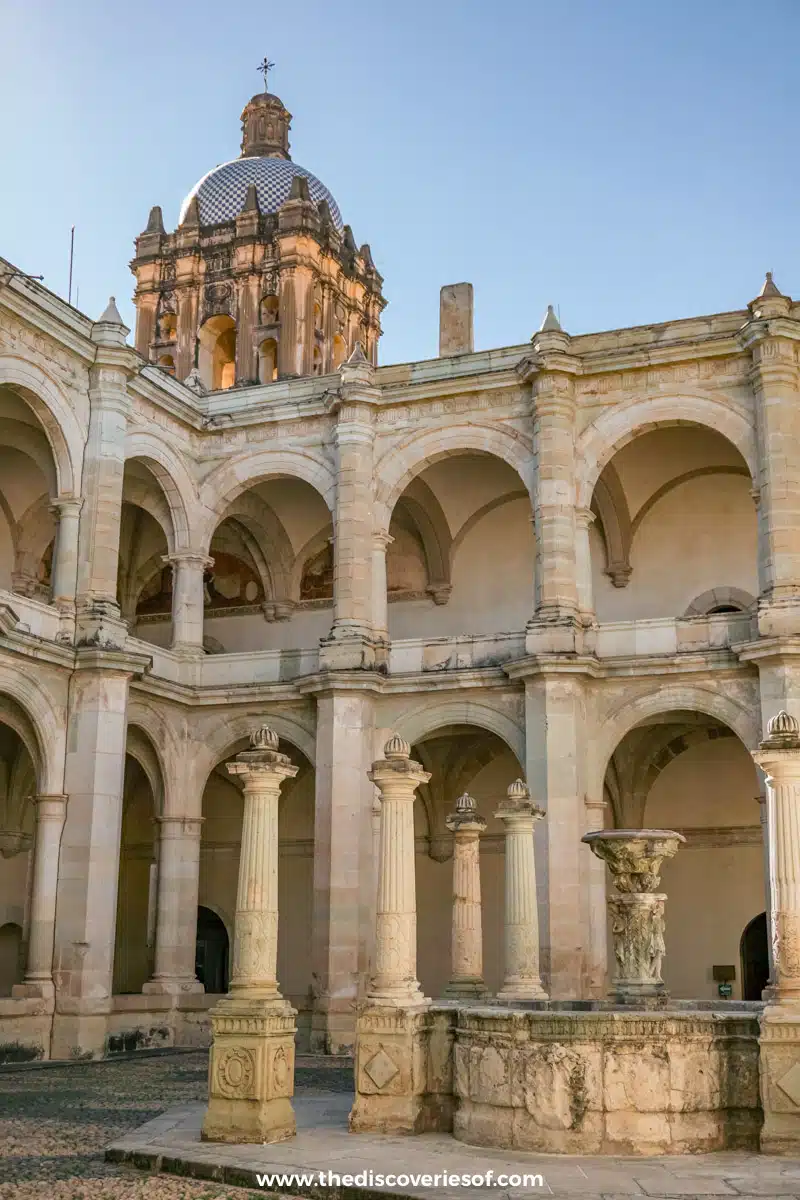
Walk up the pedestrianised Calle Macedonio Alcalá to the former convent of Santo Domingo, now the Museum of Cultures of Oaxaca. Sometimes local museums can be a bit of a snooze. Not this one: I spent the best part of an afternoon engrossed in the exhibits, which run from the Zapotec and Mixtec civilisations to independence, and the cloisters and monks’ cells between the galleries are half the pleasure.
Don’t miss the Mixtec treasure from Tomb 7 at Monte Albán, with its gold pectorals and a skull covered in turquoise mosaic. It’s the perfect primer for tomorrow morning.
Tickets
Open Tuesday to Sunday from 10am to 5pm, closed on Mondays. Entry is under 100 pesos.
5pm: Santo Domingo at sunset
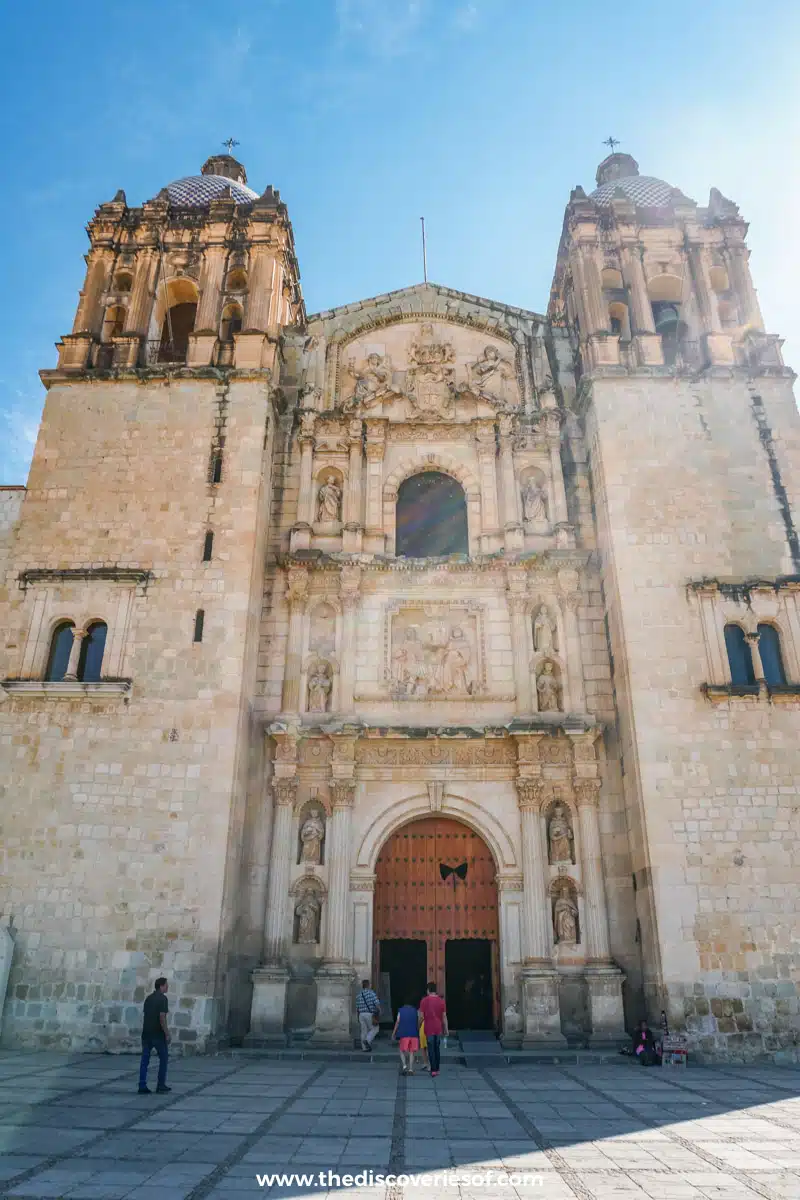
The church next door closes at lunchtime and reopens at 4pm, so late afternoon is the time to go in. The Templo de Santo Domingo de Guzmán took well over a century to build after work began in 1572, and its walls and vaults are covered in gilded stucco, with a family tree of the Dominican order climbing the ceiling by the entrance. When I filmed here, I called it one of the finest examples of baroque architecture in Latin America, and I stand by that. Look up at the facade for the founder of the Dominican order among the carvings, which are beautiful, beautiful, then have a quick mosey inside.
Then step outside as the light drops: the facade is a showstopper in the glow of sunset. Entry is free; dress respectfully.
7pm: the Andador Turístico and a mezcal or three

After dark, when the festoon lights go on, Macedonio Alcalá fills with families and street musicians. Oaxaca is massive on mezcal, and even if you don’t get out to the producers, there are loads of mezcalerías around Alcalá pouring mezcals from across the state, so the idea is to sample your way through. They say you don’t get a hangover from mezcal because it’s so pure. I wasn’t about to put that crazily to the test. La Mezcalerita, on Alcalá itself, is a small, rustic bar with a rooftop, and I highly recommend it. Los Amantes, a couple of minutes away on Calle Allende, is one of my favourites: a tiny bar that pours the mezcals from its own distillery, so you can compare agaves side by side.

Your mezcal arrives neat with orange slices and sal de gusano, a salt ground with chilli and toasted agave worm: take a sip, then a bite of the orange. The resident mezcal expert (definitely not me) pointed me to the espadín, which is nice and earthy. When the mezcalerías start to wind down, Txalaparta is where Oaxaca goes to keep the night going. My guide to mezcal in Oaxaca explains what to order.
10pm: a tlayuda at Doña Martha
Finish with a tlayuda, a huge, thin tortilla spread with asiento, beans and quesillo, topped with meat and folded over a charcoal grill. Think of it as a Oaxacan pizza that you fold over. Tlayudas Libres Doña Martha, on Calle de los Libres, is where I went for mine, having been told it’s the best place in town for tlayudas: a night-time institution with plastic tables, billowing smoke and a queue of locals that tells you everything you need to know. I had the quesillo one, loaded with cheese, beans, lettuce and onions, and it was a party in your mouth. It opens from around 7pm until late, and one tlayuda, at 60 to 150 pesos, easily feeds two.
Oaxaca itinerary day 2: Monte Albán and a slow afternoon in town
Saturday keeps Monte Albán off Sunday, when entry is free for Mexican nationals and the site is at its busiest.
8am: Monte Albán at opening time
Monte Albán is one of the most significant archaeological sites in the Americas. Founded around 500 BCE, it was the Zapotec capital for well over 1,000 years, built on a mountaintop levelled 400 metres above the valley floor and home to as many as 25,000 people. The view from the North Platform takes in the valleys in every direction.
Be there for the 8am opening and you’ll have the place largely to yourself until the tour groups arrive around noon. There’s very little shade, so bring a hat and water, and allow two to three hours for the site and its museum.
Getting There
Tourist buses leave from Calle Mina, by the Hotel Rivera del Ángel, and take 20 to 30 minutes; a return ticket costs around 120 to 150 pesos. Skip the walking trail from the city, which is steep, unshaded and has had reports of robberies. The site is open daily from 8am to 5pm, last entry 4pm, and entry is 210 pesos for international visitors, including the museum.
Do
Prefer to have the history explained as you go? This Monte Albán guided archaeological tour includes return transport from the city and a guide on site.
2.30pm: a late lunch on the Pitiona rooftop
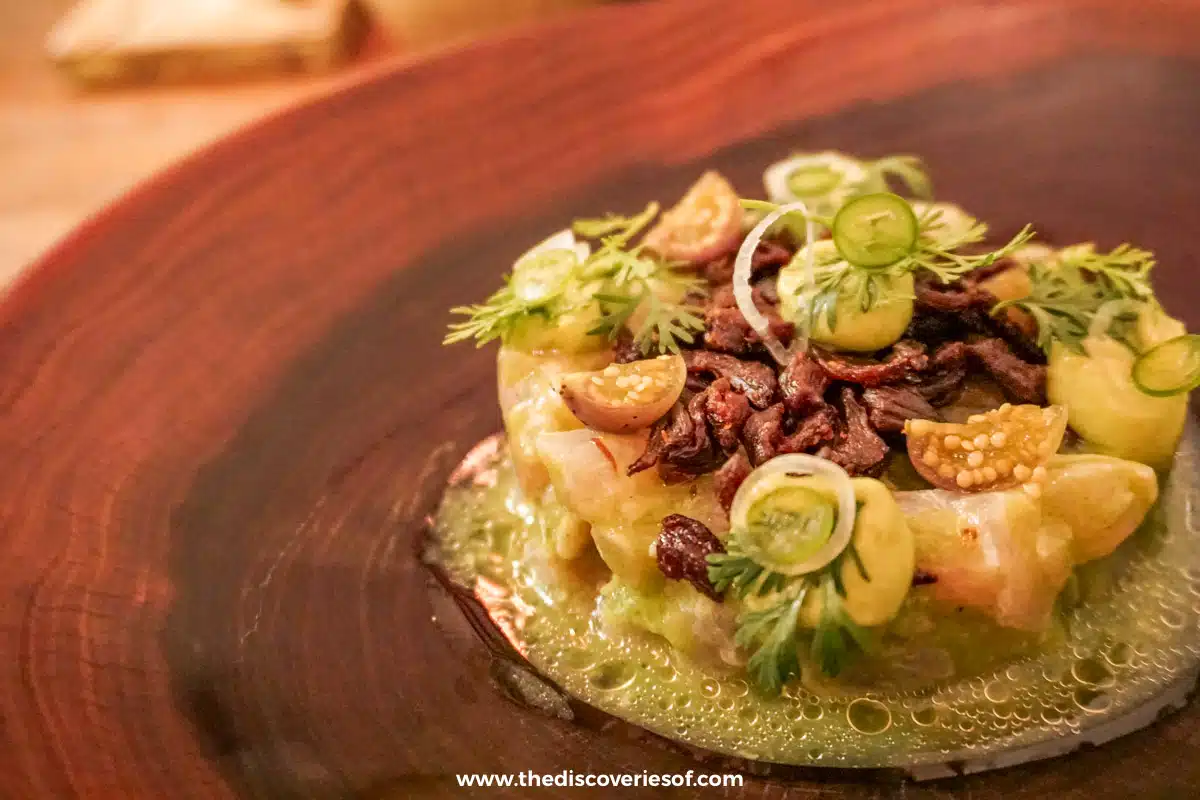
Back in town, take a long, late lunch at Pitiona on Calle Allende, a rooftop restaurant where you’ll come for the food and drinks but stay for the view. It’s a modern take on Oaxacan cooking, so expect to pay more than at a market stall, but you won’t be disappointed. When I ate there, the dishes came out as a parade of beautifully plated courses: grasshoppers with avocado and tomatillo, a tostada stacked with garnishes, and salsas in little clay pots with a basket of tortillas, all with an aerial view of the bell towers of Santo Domingo. It opens at 2.30pm and is closed on Tuesdays; book ahead for a weekend table.
4.30pm: the Basílica de la Soledad and a nieve
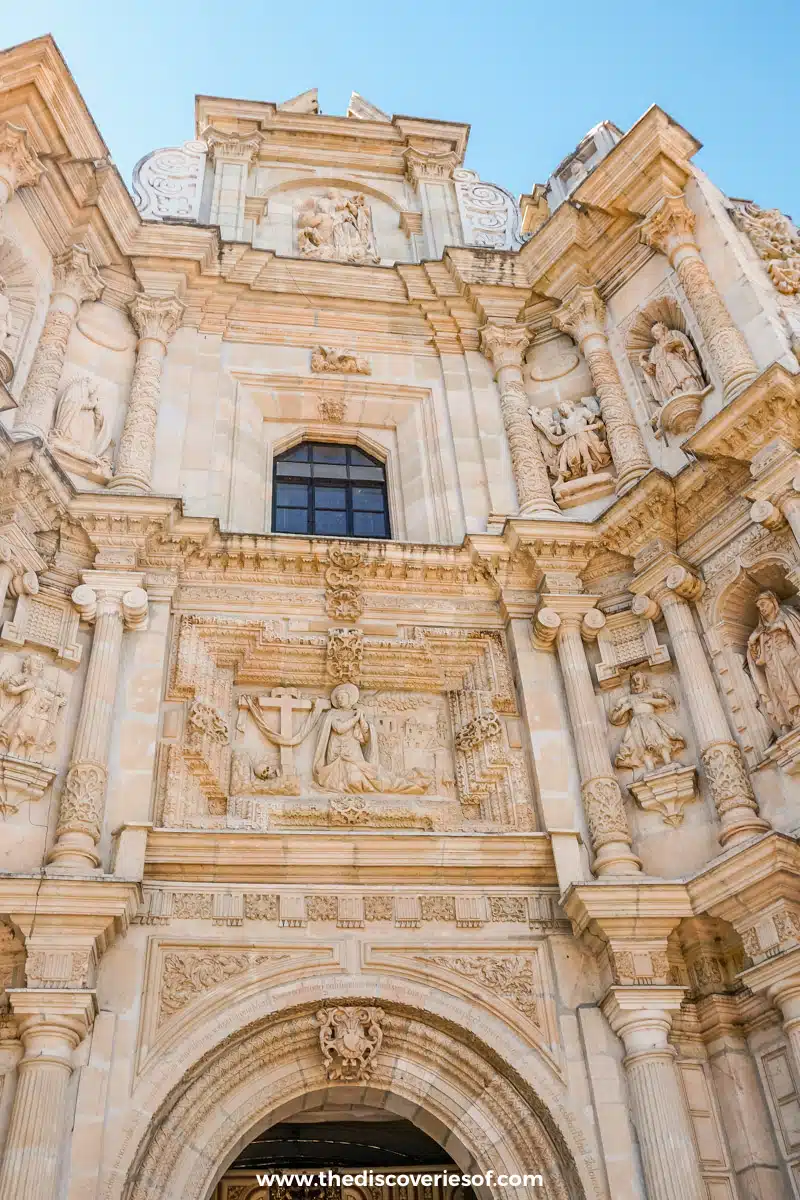
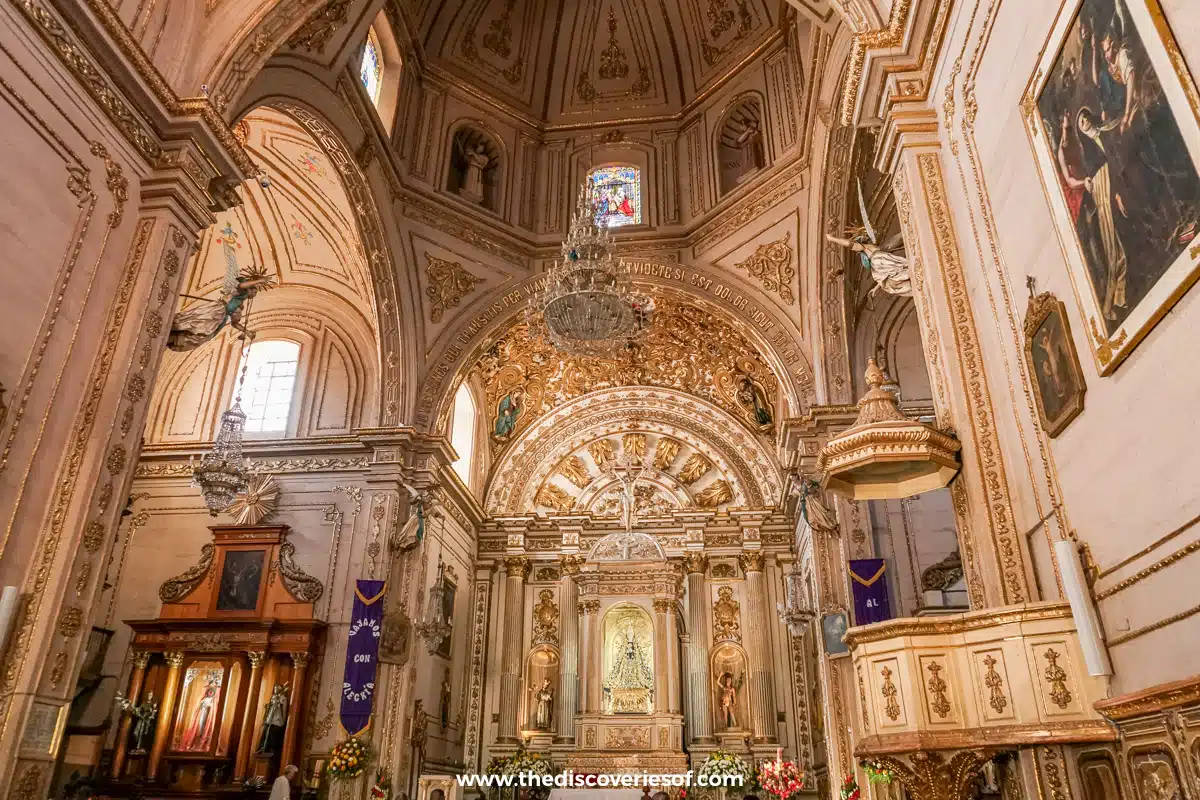
Walk off lunch with a stroll west to the Basílica de Nuestra Señora de la Soledad, built between 1682 and 1690 for the city’s patron saint. Legend has it her image turned up inside a chest carried by an ownerless mule that promptly died on the spot. It tends to be overshadowed by Santo Domingo, but it rewards those who seek it out. The tiered stone facade is spectacular, and inside, under hanging carved angels and a chandelier, the Virgin of Solitude stands in a gilded niche above the altar.
The square beside it, Jardín Sócrates, is lined with nieves parlours selling hand-churned ices, closer to a sorbet than an ice cream. The classic order is leche quemada (burnt milk) with tuna, the prickly pear.
7pm: cocktails and dinner at Sabina Sabe
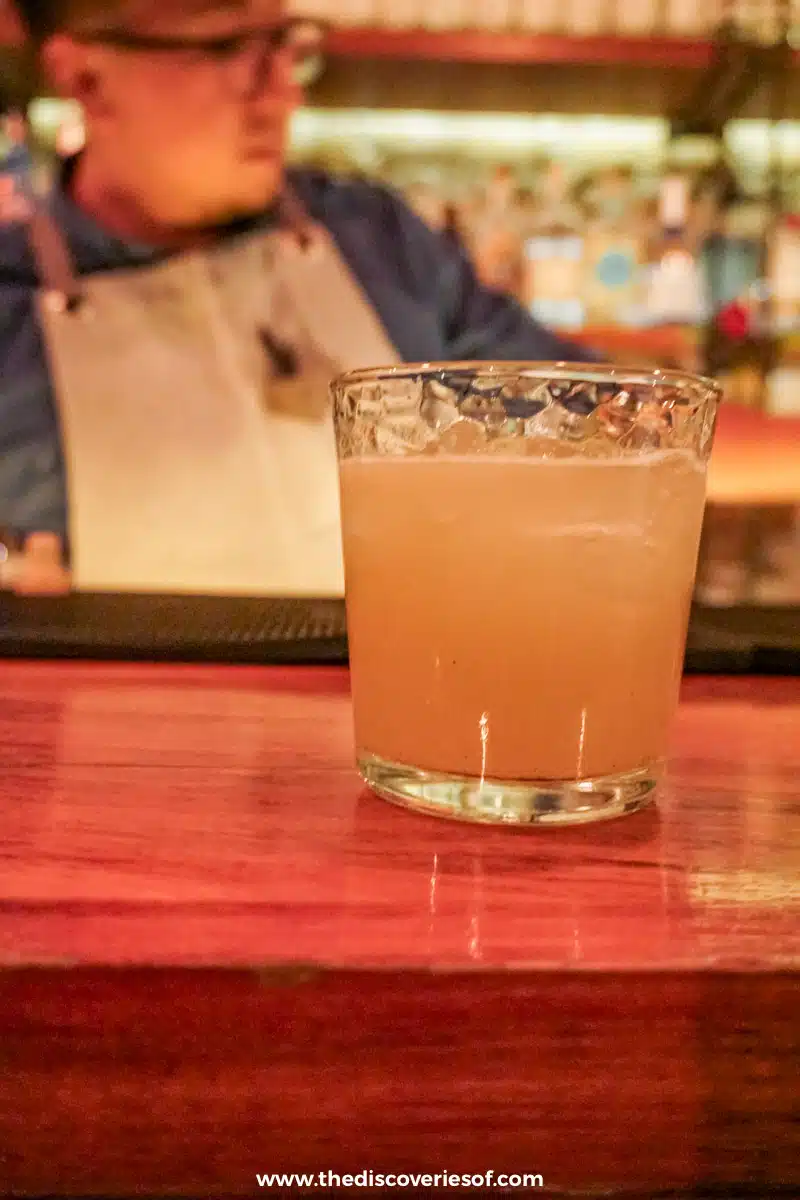
Spend the evening at Sabina Sabe on Calle 5 de Mayo, a mezcalería and grill named after the Mazatec healer María Sabina that deserves to be high on your list. I took a seat at the bar for a mezcal cocktail, and the backlit wall of bottles behind the bartenders shows how seriously they take their mezcal. The cocktails are built around Oaxacan ingredients, it has featured on North America’s 50 Best Bars list, and the grill makes it easy to stay for dinner.
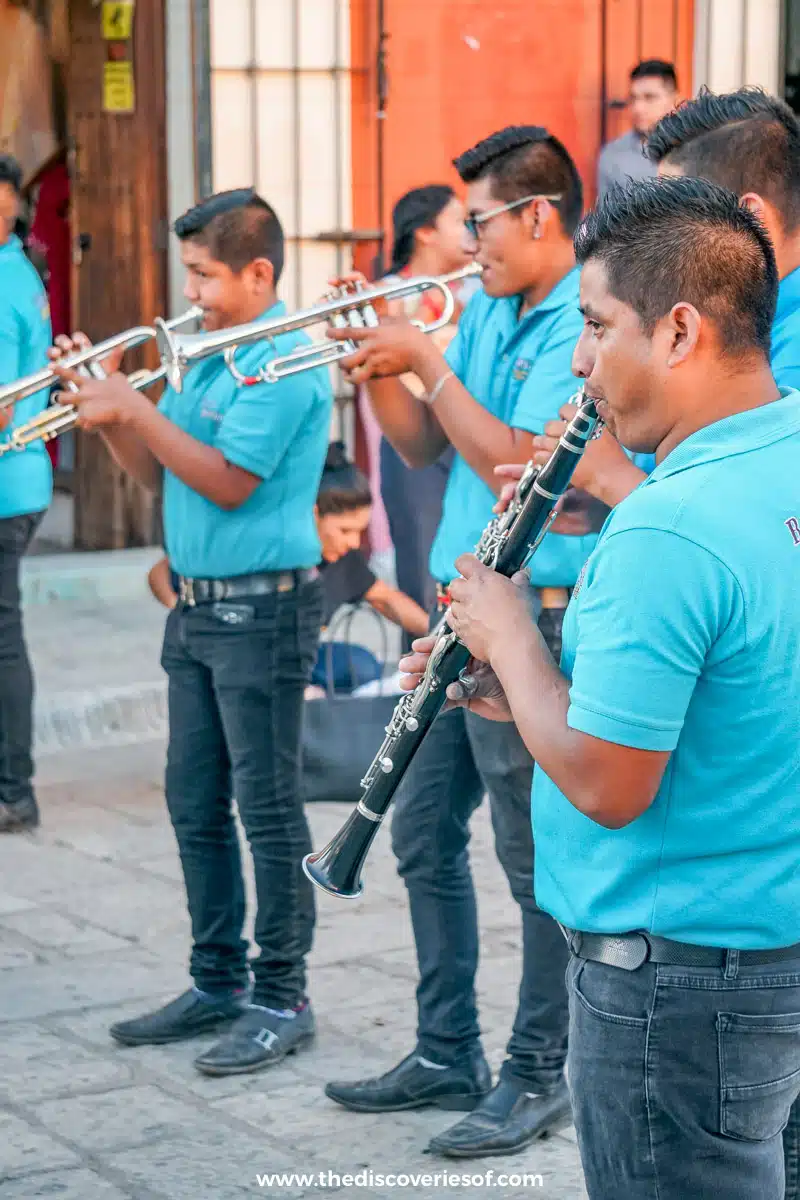
On the way, keep your ears open. The city loves a celebration, and you’d be hard pushed to spend a few days here without stumbling into a calenda, a street procession led by a brass band, giant papier-mâché figures and dancers with flower baskets on their heads. On my first day in the city alone I came across live concerts and dancing in the streets. If you hear a band strike up, follow it.
Oaxaca itinerary day 3: Tlacolula market, mezcal and Hierve el Agua
Today follows Highway 190 east, where the Sunday market, the mezcal towns and the petrified waterfalls sit on the same road. I can’t recommend getting a car and exploring the area around the city enough.
8.30am: grilled meat and tejate at Tlacolula market
Of all the places I visited around the city, Tlacolula market was up there with the best. Every Sunday, people from the surrounding Zapotec towns and villages pour into Tlacolula de Matamoros, about 30km and an hour east, to buy, sell and eat, at one of the oldest continuously running markets in the Americas.
Come hungry, and come earlyish: in fact, come with the hungriest stomach you can muster, and then an even hungrier one than that. My first stop was a stall doing chicken straight off the grill, served with fresh salsa, tortillas and a cold Victoria, which is Sunday mornings done right. It was some of the best chicken I have ever eaten. Anywhere. Then follow the cloud of smoke to the grill hall: you buy your meat at one stall and salsa by the bag at another, then grill the meat yourself with spring onions over the charcoal and wrap it in a hot tortilla. The town is also famous for barbacoa de chivo, goat slow-cooked in an underground pit and served with its consomé, a breakfast and early lunch dish here.
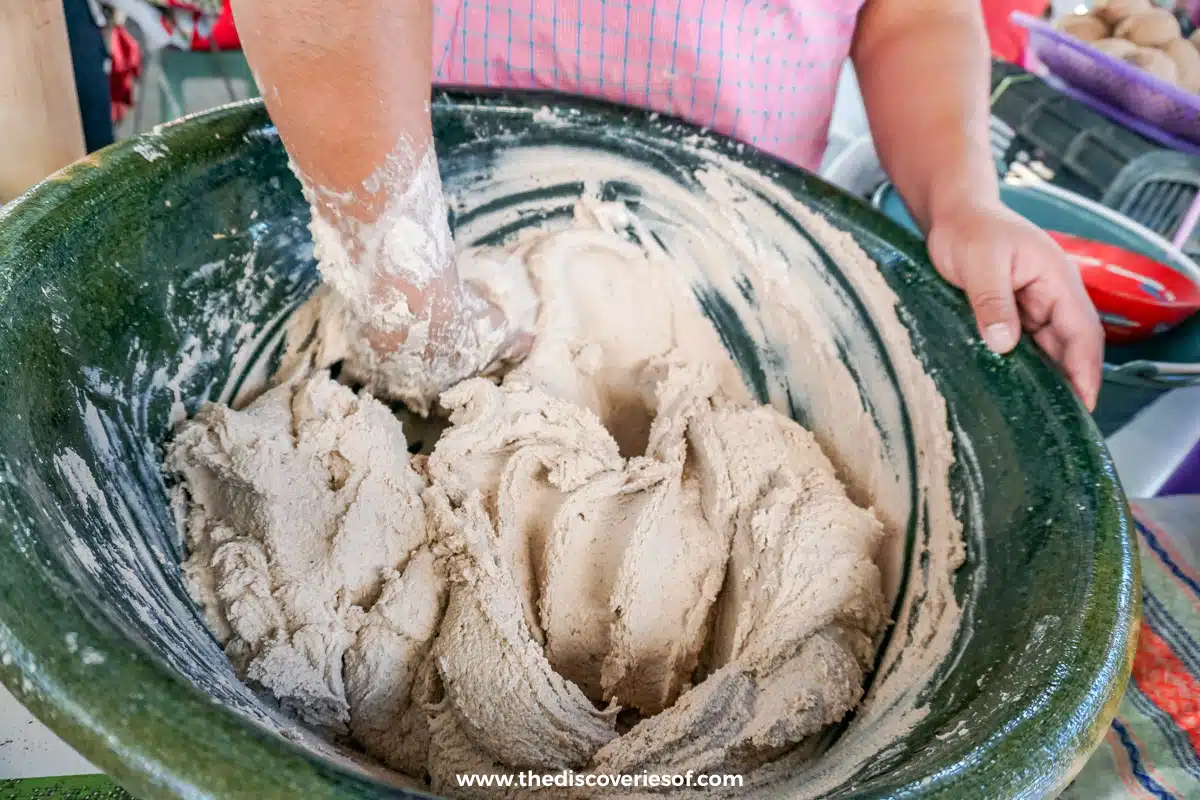
Look for the women kneading tejate, a cold Zapotec drink of maize and cacao flower, in big green clay bowls. It doesn’t look appetising, but it was the biggest surprise of my day: deeply earthy, and worth the queue. Take the advice a local gave me at my table and share a bowl, as one is pretty hefty. And do grab a seat at the shared tables: everyone is friendly, and a chat with your neighbours is half the fun. My guide to Tlacolula’s Sunday market has what else to eat.
11.30am: a tasting at the Gracias a Dios palenque
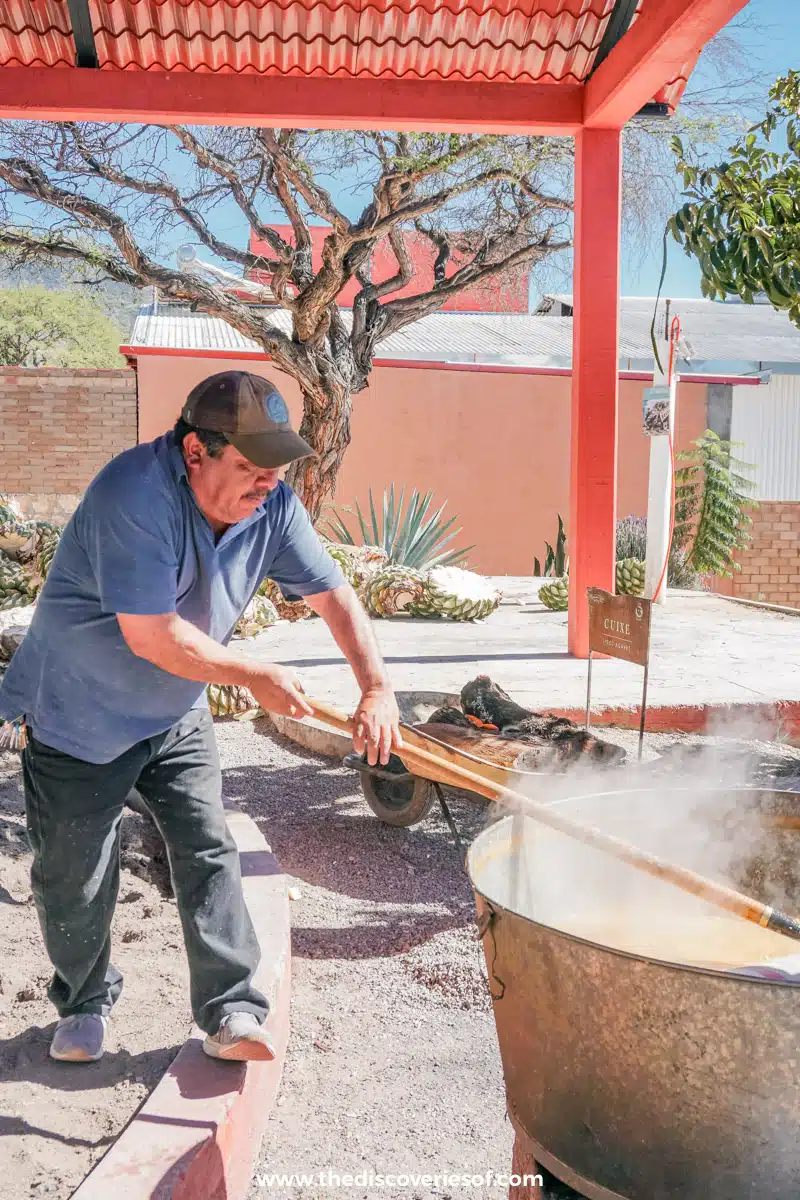
Twenty minutes further on, a sign at the entrance to Santiago Matatlán declares it the World Capital of Mezcal, about an hour’s drive from the city. My pick is the Gracias a Dios palenque (the name means thank God, and I’d say thank God for the mezcal), where the Hernández family walk you through the whole process, from the roasting pits to the stills, before sitting you down to taste.
The one that made me get mezcal was their espadín, aged three months in American oak: sweeter, with caramelly overtones rounding off the smoke, and the kind of mezcal you could drink all day. I also tried my first pechuga, made with a turkey breast hung in the still during the second distillation, which came out less sweet and more savoury, and a gin made from agave with cacao and other local botanicals. It’s up there with the best experiences near Oaxaca, and I cannot recommend it enough. Obviously, no drink-driving: join a tour, or make sure whoever drives skips the tasting. Book your visit ahead through the palenque’s website or Instagram, and bring cash for bottles.
1.30pm: Hierve el Agua
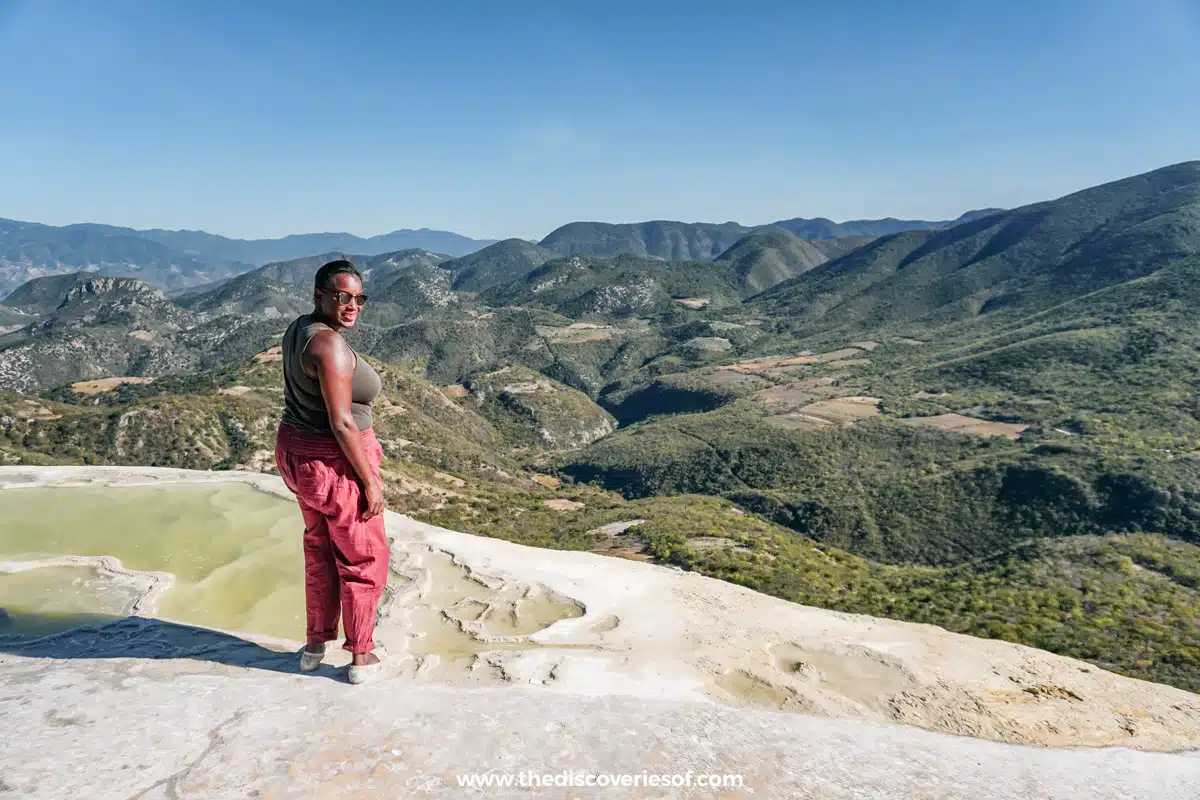
From Matatlán, drive back to the Mitla turn-off and up the winding mountain road to Hierve el Agua, about an hour. Mineral-rich springs have built up cascades of white stone down the cliff that look like frozen waterfalls, with pools on the lip of the drop that you can swim in.
OK, so this is pretty epic. I’m not sure I knew what to expect, as I’d seen a couple of pictures before I went, but even from the main pools the views are absolutely stunning. You will not regret making the trip from the city. Tour groups tend to arrive between about 10.30am and 2pm, and Sunday is the busiest day, so arriving as the coaches leave gives you more space. Swim in the infinity pool, then take the rocky trail down to the base of the falls. Allow an hour and a half to two hours, and leave by about 4pm so you’re off the mountain road before dark. My guide to Hierve el Agua has the trail and the closures in detail.
Tickets
Pay twice, in cash: a community road fee of around 20 to 30 pesos at the checkpoint, then around 50 to 70 pesos for the site. It’s open daily until 5pm, but don’t count on getting in after about 4pm, and as it has closed at short notice in the past, ask your hotel the day before whether it’s open.
Do
No car? This Hierve el Agua, Tule, Mitla and mezcal distillery tour covers the road east in a day with transport included, and a taxi to Tlacolula works for the morning.
Back in the city, finish on the Zócalo, where the marimba and brass bands take turns in the bandstand in the evening.
Have more time? Add these to your itinerary
Take a cooking class
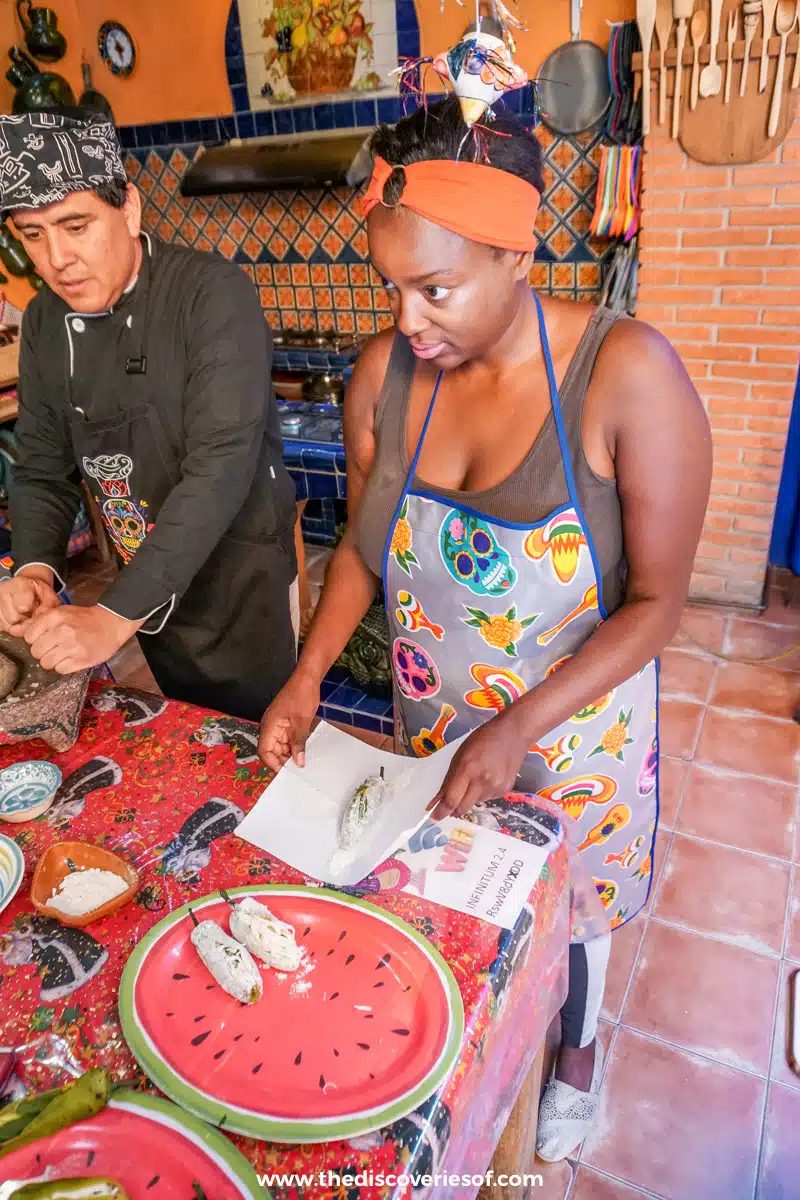
If you want to understand the food here, cook it. I booked a traditional cooking class with a local chef, which kicked off with a stroll through the Mercado de Abastos to pick out the freshest ingredients. It’s a very, very traditional market, and I was literally not seeing any other tourists. Back in the kitchen, the menu included chiles rellenos and a soup I had never tried before, made with sweet corn, squash flowers and the squash itself, which was really quite delicate. Then came the feast, and good gracious, what a feast it was. This traditional Oaxacan cooking class with a market visit follows the same pattern.
Drive the Mitla road: El Tule, Teotitlán del Valle and Mitla
With a fourth day and a car, head east again slowly. In Santa María del Tule, the Árbol del Tule is a Montezuma cypress with the stoutest trunk of any tree in the world, more than 40 metres around. Teotitlán del Valle is a Zapotec weaving village where families still make wool rugs on foot-looms, dyed with cochineal, indigo and marigold. Further on, the palaces of Mitla are covered in geometric mosaics of thousands of cut stones fitted together without mortar. My list of things to do in Oaxaca has more on all three.
For a longer trip, my 2 week Mexico road trip itinerary spends three days here on the way from San Cristóbal to Mexico City.
Watch my Oaxaca video
Map
Handy tips for planning your 3 days in Oaxaca
Top tips
- Carry cash in small notes. Markets, street stalls, colectivos, the palenques and Hierve el Agua all run on pesos; larger restaurants take cards.
- Book ahead for festivals. Hotels fill months in advance for the Guelaguetza in July, the Day of the Dead and Christmas, and prices rise.
What to pack
Layers for the evenings, which are cool at 1,555 metres; a hat and sunscreen for Monte Albán; swimwear, a towel and trainers for the pools and trail at Hierve el Agua; and an empty bottle if you plan to bring mezcal home.
Best time to visit
November to April is the dry season, with sunny days and cool evenings. December is peak season, with higher prices, but the city is alive with festivals, from the Noche de Rábanos radish carving on 23 December to the Christmas processions. I visited in December and loved every moment of it; it was still around 30 degrees in the day. For good weather with fewer people, go between late January and March; from around June to September, expect afternoon downpours. My guide to the best time to visit Mexico goes month by month.
Getting around
The historic centre is compact and best explored on foot; agree taxi fares before you get in. Take the tourist bus to Monte Albán, and hire a car or join a tour for day 3. Flights from Mexico City take around 1 hour 15 minutes, ADO buses from the capital’s TAPO station around 6.5 to 7 hours, and the drive five to six hours on the toll roads through Puebla.
Read next
- The best things to do in Oaxaca (grasshoppers included)
- Oaxaca food: what to eat in Mexico’s foodie paradise
- Tlacolula Sunday market, the real heart of Oaxacan food
- Mezcal in Oaxaca: why it’s more than smoky tequila
- Hierve el Agua’s petrified waterfalls look even stranger in person than in photos
- 3 days in Mexico City: the perfect Mexico City itinerary

Discover the top things to do, insider tips and hidden gems in our Mexico Travel Guide.
Read the guides →




