

The food in Oaxaca is incredible! So it makes sense that learning how to make some delicious Oaxacan dishes should be at the top of your list during your time in the city. If you want to understand the food here, cook it.
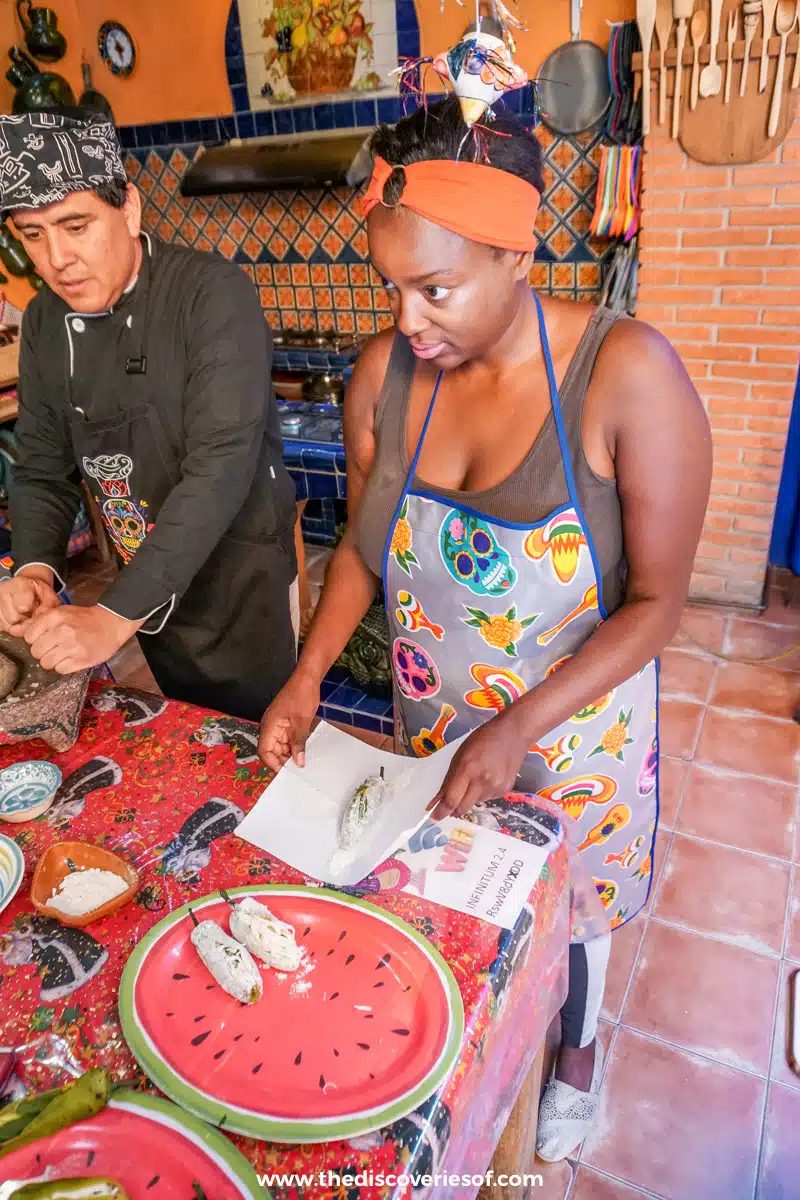
I made a beeline and booked a traditional cooking class with a renowned local chef and found out why this region’s gastronomy is so famous along the way. This guide covers what a Oaxaca cooking class is actually like, from the morning market run to the feast at the end, then how to choose between the classes you can book: city kitchen or village, set menu or free choice, mole or not, and what you should expect to pay.
My Oaxaca cooking class, from market to table
My class was with La Cocina Oaxaqueña, chef Gerardo Aldeco’s cooking school, which still runs classes from his family home in the city, with a market run to the Central de Abastos first. Most classes here follow the same shape, and mine was no exception: a shop for ingredients at a local market with your teacher, then several hours in the kitchen, then lunch, which is everything you’ve just made. Here’s how it went.
Shopping the Mercado de Abastos with the chef
It all kicked off with a stroll through the Mercado de Abastos accompanied by a local chef. Together, the chef and I picked out the freshest ingredients on the pre-prepared list. This is a very, very traditional market, and I was literally not seeing any other tourists.
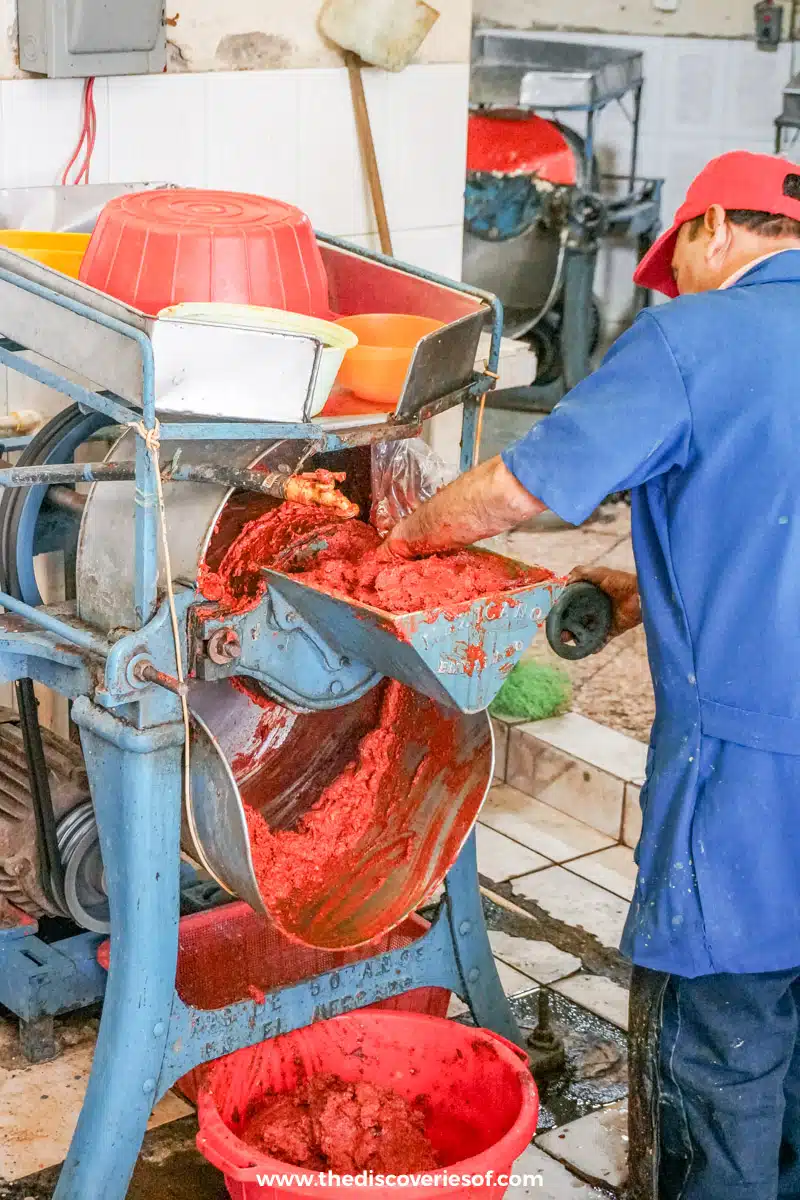
The Central de Abastos sits west of the centre beside the second-class bus station, and it’s the biggest market in the city: the one where local people and restaurant kitchens do their real shopping. It may lack organisation and signage, but it makes up for that with sights, sounds and smells you won’t find anywhere else. Saturday is the big market day, and it’s full on, but pretty cool.
The central market is huge, and there’s such a wealth of fresh produce here every day, ready for you to pick up for your own little Oaxacan feast: tons and tons of fruit, meat, cheese and freshly milled chilli paste. Even if you don’t buy anything and you’re just coming to have a nose around, it’s always so interesting to see where locals actually buy their food and how they shop. Oaxaca is a food-obsessed city, and this is where all the magic starts.
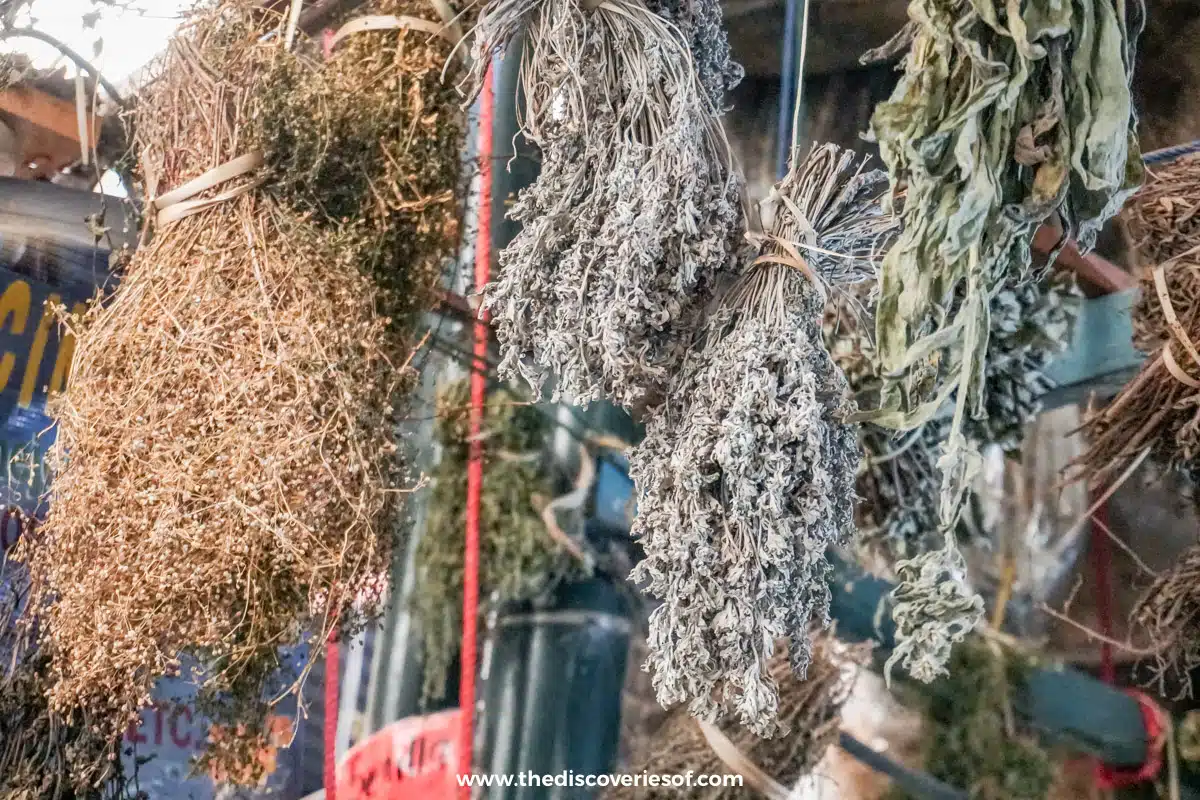
That’s exactly why it makes such a good classroom. Going round with someone who cooks for a living, you learn what to look for in a pile of dried chillies, which herbs go into which dish and why stalls grind chillies into paste. On your own, it’s a lot to take in.
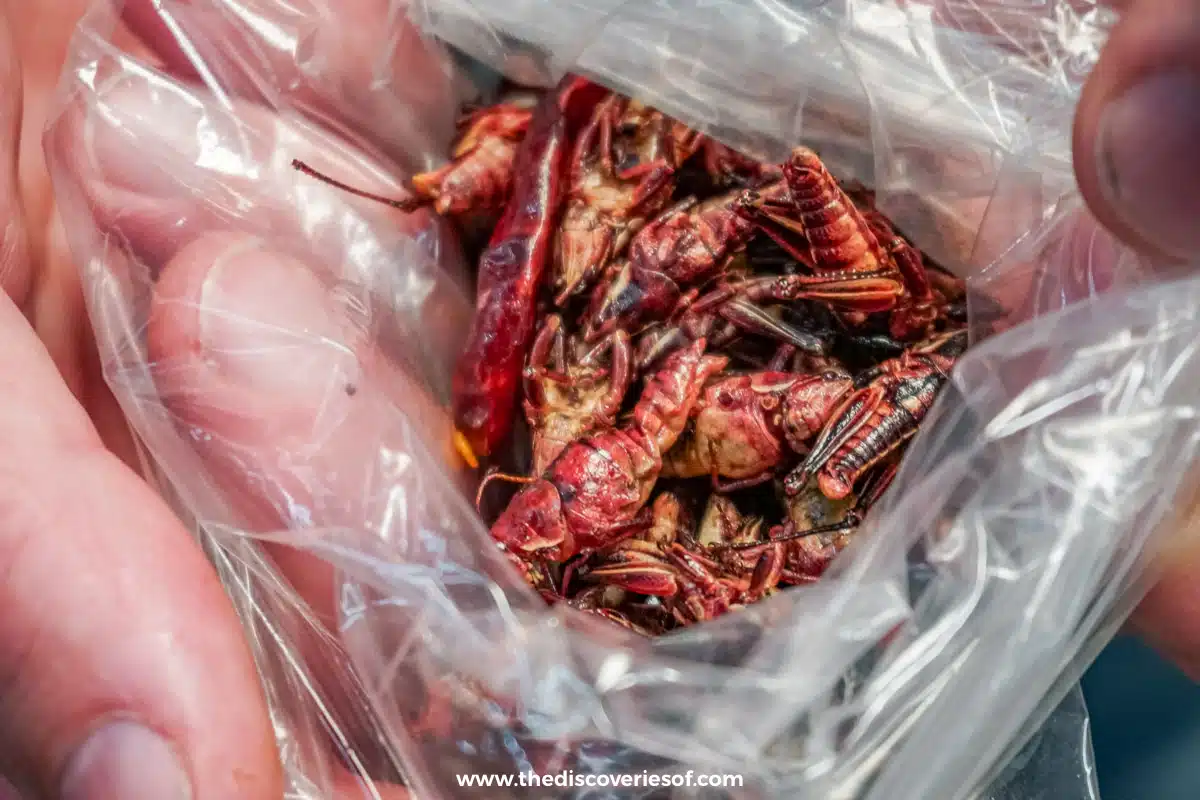
The Abastos is also where I ate my first grasshopper. Chapulines, toasted grasshoppers, are a real Oaxacan speciality, and the first one I tried was nice, weird and very intense: very limey, with lime and chilli. The next flavour I tried I liked even more, so I bought a bag of those for a snack.
Chiles rellenos, huitlacoche soup and yellow mole
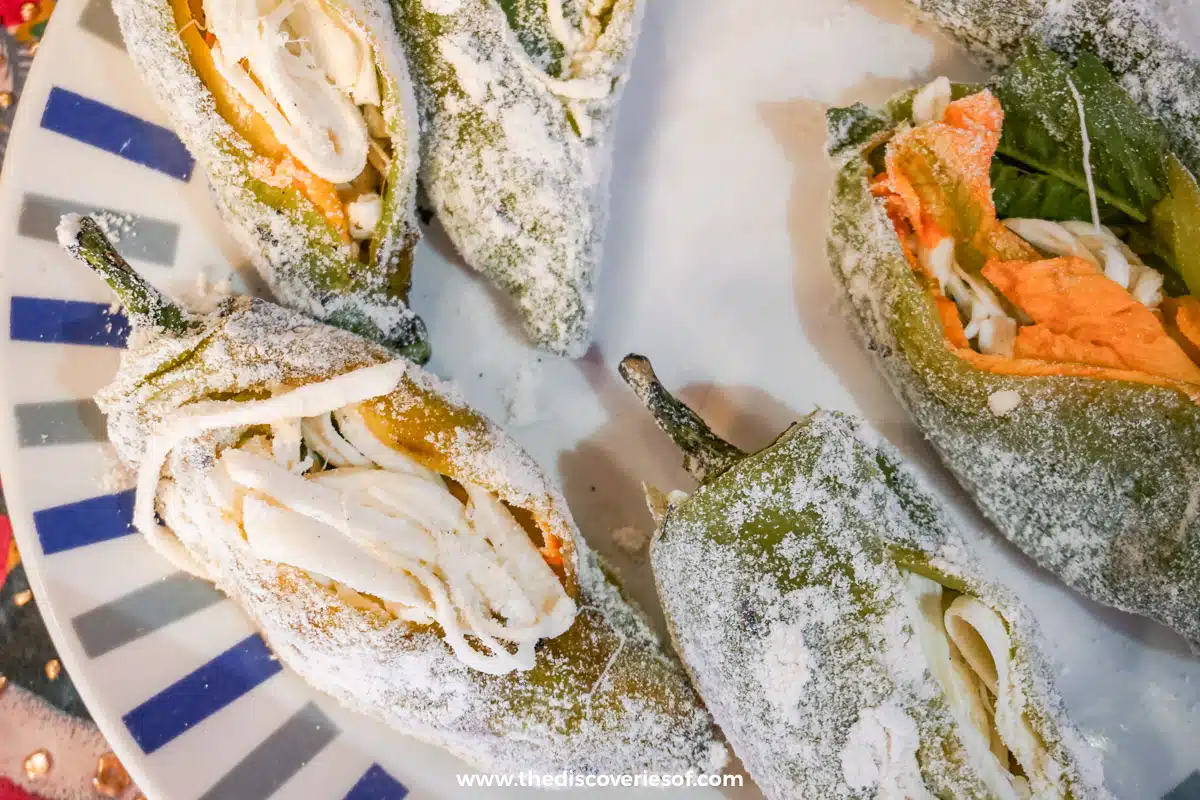
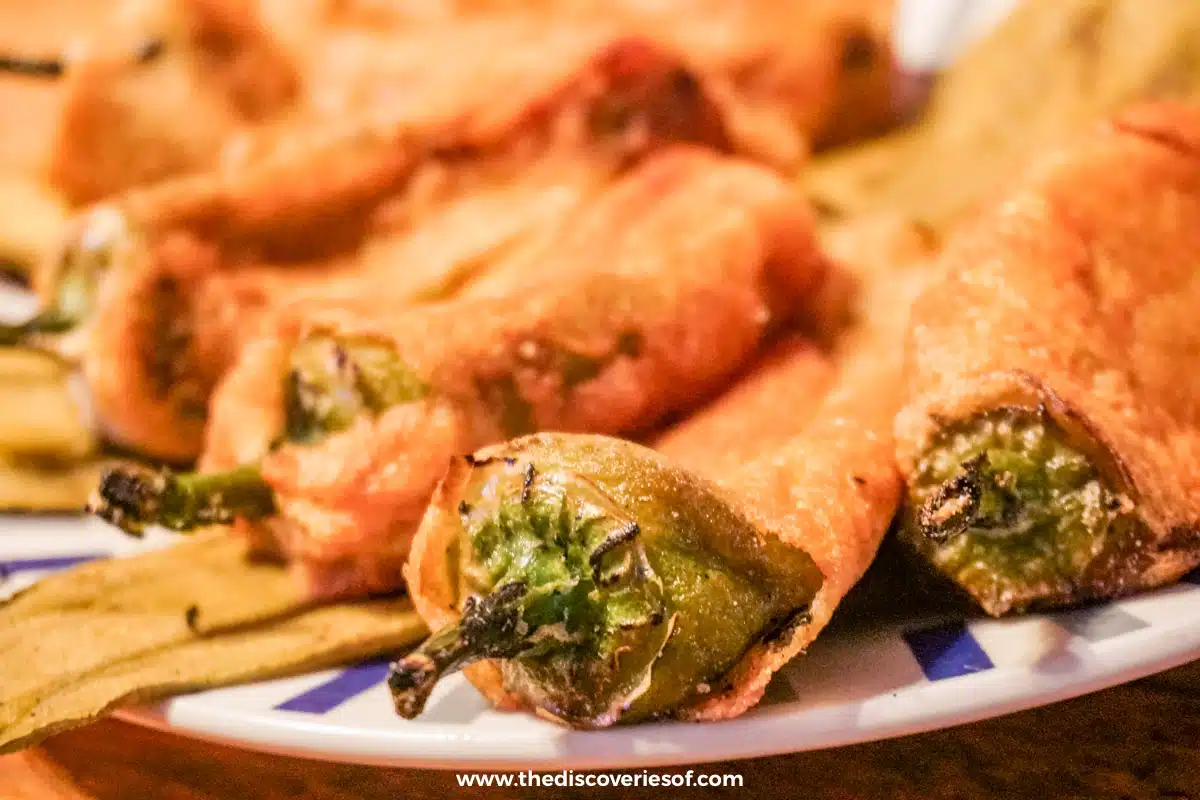
After the trip to the market to source local ingredients, it was time to set about making the dishes on the menu. The menu included chiles rellenos: green chillies stuffed with quesillo, the stringy Oaxacan cheese, then coated in a light batter and fried. My job was dipping the stuffed chillies in the egg batter and frying them.
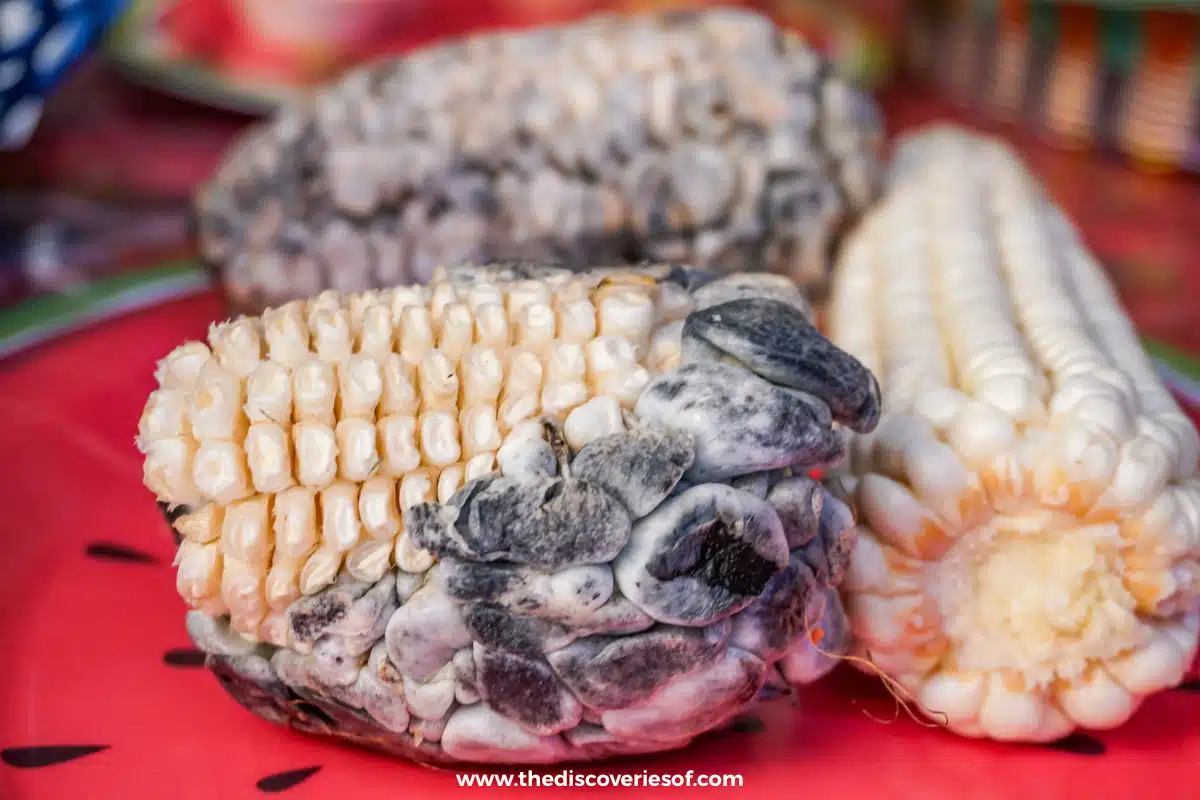
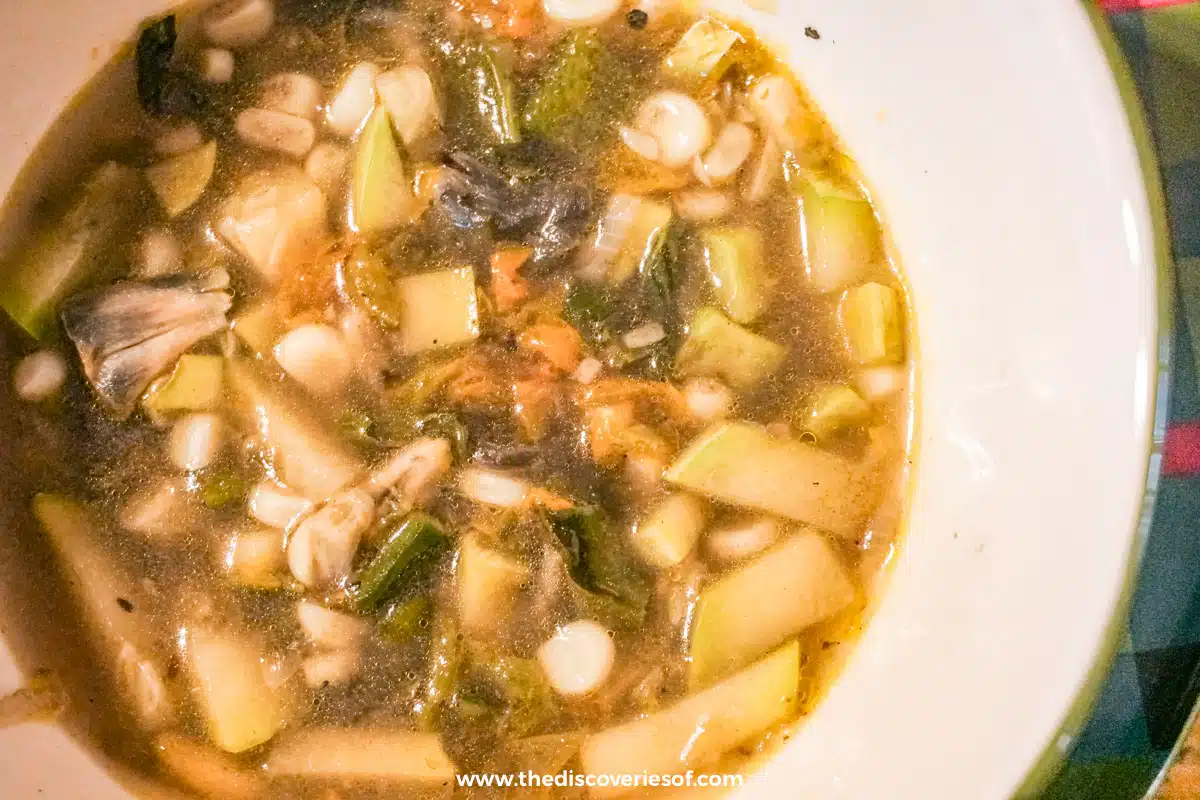
One of the other dishes was huitlacoche soup, a soup I had never tried before, made with sweet corn, squash flowers and the squash itself. It was lovely and really quite delicate. Huitlacoche is the grey, inky fungus that grows on corn cobs, and it’s prized in Mexican cooking.
Then there was chicken in yellow mole, mole amarillo, one of Oaxaca’s famous moles and a lighter one than the dark, chocolatey mole negro.
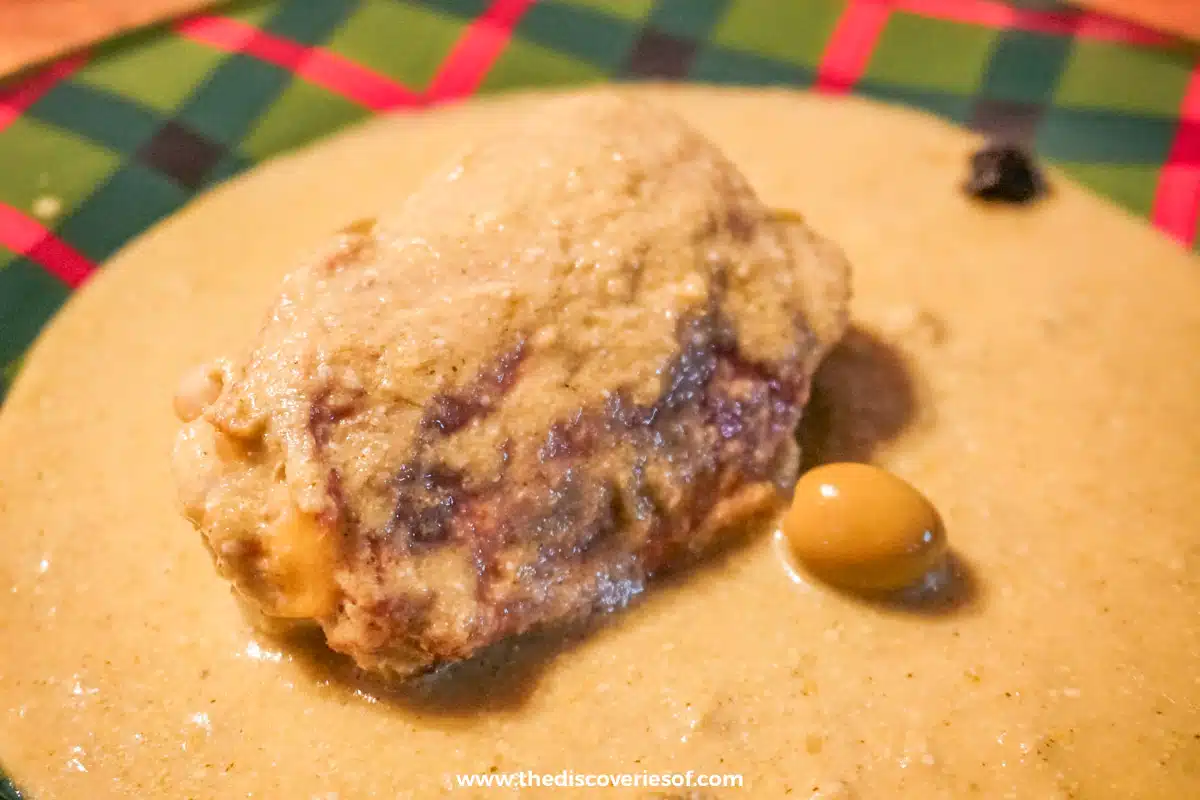
All that was left to do after was… feast, and good gracious, what a feast it was!
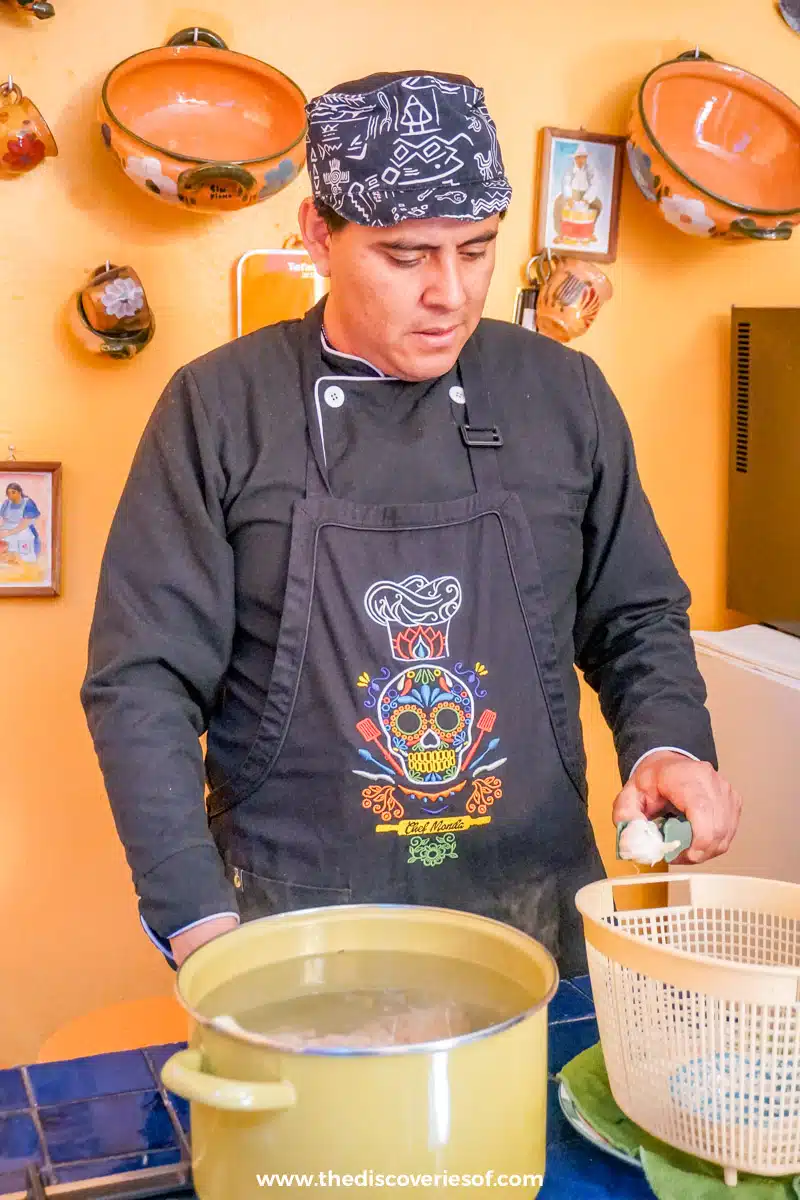
Top Tip
Take notes as you go, or ask whether the class sends recipes afterwards. The small things the chef tells you at the stove (how dark to toast the chillies, when the batter is ready) are the parts you’ll forget.
How to choose a cooking class in Oaxaca
There are dozens of classes in and around the city, and on paper they look alike. In practice they differ on four things, and it’s worth deciding what matters to you before you book.
Market tour or straight to the kitchen?
A guided shop shows you ingredients you’d walk straight past on your own, and it explains why the food tastes the way it does. If your time is short, or you’ve already done the markets, a kitchen-only class or a short salsa class still teaches you plenty.
City kitchen or village class?
City classes are easy to fit into a day of sightseeing, and most visit one of the central markets on the way in. Village classes, often in Teotitlán del Valle, the weaving village about 30km east of the city, take most of a day with transport, but you cook in a local kitchen in a Zapotec village that’s famous for its rugs, so you can pair the class with a look at the weaving workshops.
Set menu, mole or free choice?
This is the big one. Oaxaca is known as the land of seven moles (negro, rojo, coloradito, amarillo, verde, chichilo and manchamanteles), and mole negro can run to more than 20 ingredients, so many classes build the day around one. Others, like mine, put one of the lighter moles (I made yellow mole with chicken) alongside everyday dishes such as chiles rellenos and soup. A few have no set menu at all: you decide what to cook at the market. Check the menu before you book, especially if mole is the reason you’re going.
Mezcal, group size and dietary needs
Many classes include a drink, sometimes a mezcal tasting, and some finish with one. Group sizes vary from private lessons to around 15 people, and smaller groups mean more time at the stove. Most teachers can adapt for vegetarians and some for gluten-free diets, but say so when you book: lard and chicken stock turn up in a lot of traditional recipes.
Classes you can book
Prices for a full class with a market visit run from roughly US$80 to US$125 a person on the booking sites, usually including the ingredients, lunch and a drink. These four show the range, starting with the class I took.
The class I took: La Cocina Oaxaqueña
Chef Gerardo Aldeco’s school is still going strong, with a 4.8 rating from more than 160 reviews on Tripadvisor. Classes run in the morning and the afternoon, include pickup from your hotel and start with the Central de Abastos, and the menu changes from day to day: recent reviewers mention yellow mole, tamales, tortillas and fresh hot chocolate. Book direct through the school, and ask which dishes are on for your date if there’s one you’re set on.
A city class with no set menu
Do
This cooking class with a local market tour starts with a shop for ingredients before you cook a full meal in the city centre. There’s no set menu, so you cook whatever looks best at the market that day. It runs about 4.5 hours for groups of up to 15, and vegetarian and gluten-free options are available.
A village class in Teotitlán del Valle
Do
This traditional cooking class with a market visit picks you up from your hotel and takes you to the market in Teotitlán del Valle, then into a local kitchen to cook two dishes (often a mole and a soup), with handmade tortillas and a traditional drink. Allow about 6.5 hours, including the drive.
A short salsa class
Do
If you only have an afternoon, this salsa class with a taco tasting at Casa Crespo in the centre teaches ten Mexican salsas in about 90 minutes, then pairs them with tacos. There’s no market visit, but you’ll leave with recipes you’ll actually use at home.
Tips for your class
- Go hungry: you’ll taste as you cook and then eat a full lunch, so skip the big breakfast.
- Bring cash for the market: the class covers the ingredients, but you’ll want pesos for snacks, chapulines and anything you want to take home, like chocolate or mole paste.
- Plan around the market days: Saturday is the big day at the Mercado de Abastos and the Tlacolula market is Sunday only, so check which market your class visits and book the day that suits you.
- Book a few days ahead: the best-reviewed classes fill up, especially around Day of the Dead and Guelaguetza, and most offer free cancellation up to 24 hours before.
Watch my Oaxaca food video
Take a look at the markets, the cooking class and the mezcal in my food video.
Map
Read next
- Oaxaca food: what to eat in Mexico’s foodie paradise
- The best things to do in Oaxaca (grasshoppers included)
- Mezcal in Oaxaca: why it’s more than smoky tequila
- Tlacolula Sunday market, the real heart of Oaxacan food
- Hierve el Agua’s petrified waterfalls look even stranger in person than in photos
- 2 weeks in Mexico: the perfect road trip itinerary
Love this? Save and share on Pinterest

Discover the top things to do, insider tips and hidden gems in our Mexico Travel Guide.
Read the guides →




