
From culture-filled cities to sprawling ancient ruins, these are the very best day trips from Mexico City. Add these nearby destinations to your CDMX itinerary and thank me later.
A blend of old and new, Mexico’s capital city is one of the largest in the world, and it boasts more than enough to keep you busy for days. But once you finally get outside the city limits, a whole other side of central Mexico opens up: pyramids, colonial silver towns, volcanoes, hot springs and canyons, almost all of them within a few hours of the capital.
Many of the best day trips from Mexico City quietly slip under the radar of people visiting CDMX. Not anymore. Below are the trips I think are most worth your time, with honest, step-by-step practical detail on how to reach each one, plus a hassle-free tour option where a guided trip genuinely makes life easier.
Teotihuacan Pyramids
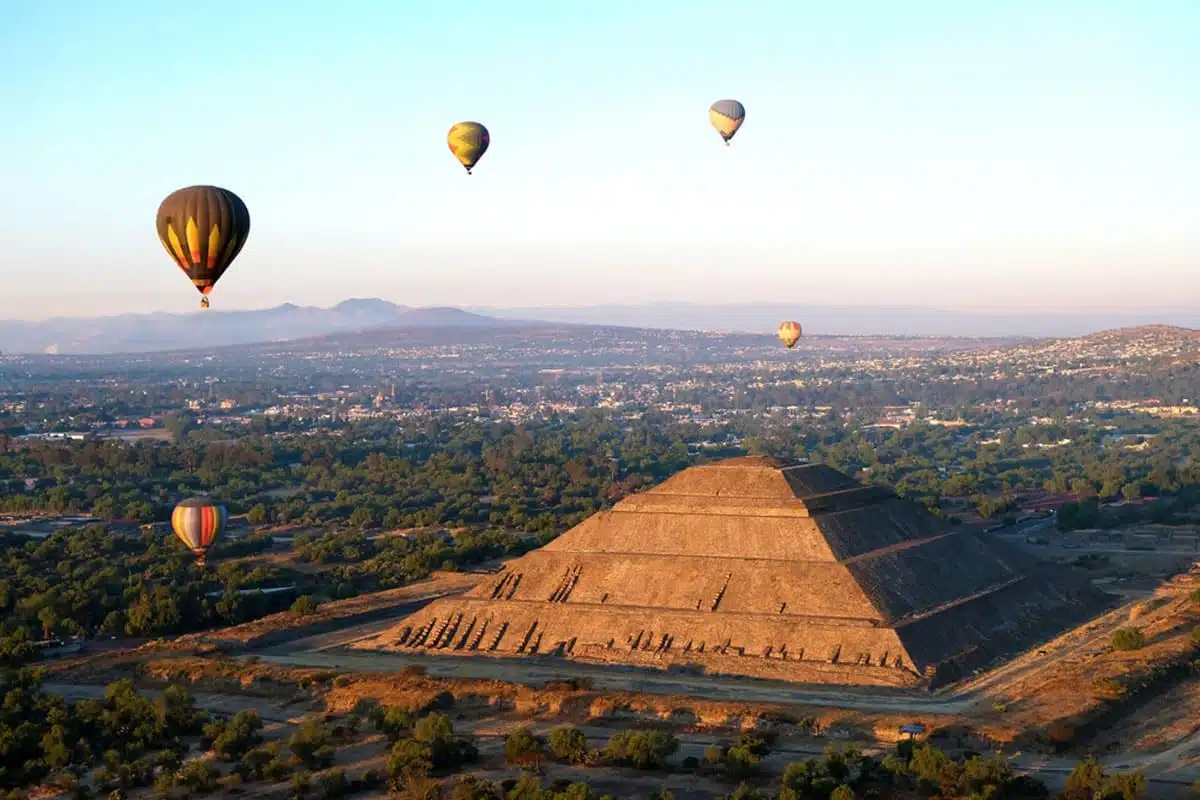
Is there a more famous day trip from Mexico City than the pyramids of Teotihuacán? Comparisons aside, Teotihuacán is in a class of its own and an essential visit on any first trip to the capital.
This was once the largest city in the pre-Hispanic Americas, home to as many as 200,000 people at its peak between roughly 400 and 500 CE, built by a civilisation so ancient that even the Aztecs, who named the site centuries later, found it long abandoned and shrouded in mystery. Walk the Avenue of the Dead, the city’s grand central axis, between the colossal Pyramid of the Sun and the Pyramid of the Moon, and explore the intricately carved Temple of the Feathered Serpent.
As of 2025 it is once again possible to partially climb the Pyramid of the Moon. Go early: there is almost no shade, and the site gets busy and punishingly hot between noon and 4pm. We cover the site’s history in much more depth in our guide to the most famous landmarks in Mexico.
How to Get There: Buses to Teotihuacán (look for “Pirámides”) leave roughly every 15 to 20 minutes from Gate 8 of the Terminal Central de Autobuses del Norte (the North Bus Station), operated by Autobuses Teotihuacanos. Reach the terminal on Metro Line 5, getting off at the Autobuses del Norte stop, or by Uber (20 to 30 minutes from Roma or Condesa, traffic depending). Buy a round-trip ticket at the counter (cash only, around 105 MXN return). The journey takes about 1 hour 20 minutes. For the return, buses leave from Gate 2 of the site, and your return ticket works on any departure.
Average journey duration: Around 1 hour 20 minutes each way.
Hassle-free option: If you would rather skip the logistics, an early-access tour that gets you to the pyramids before the crowds, often paired with a tequila or mezcal tasting, is a genuinely worthwhile way to do it.
Xochimilco
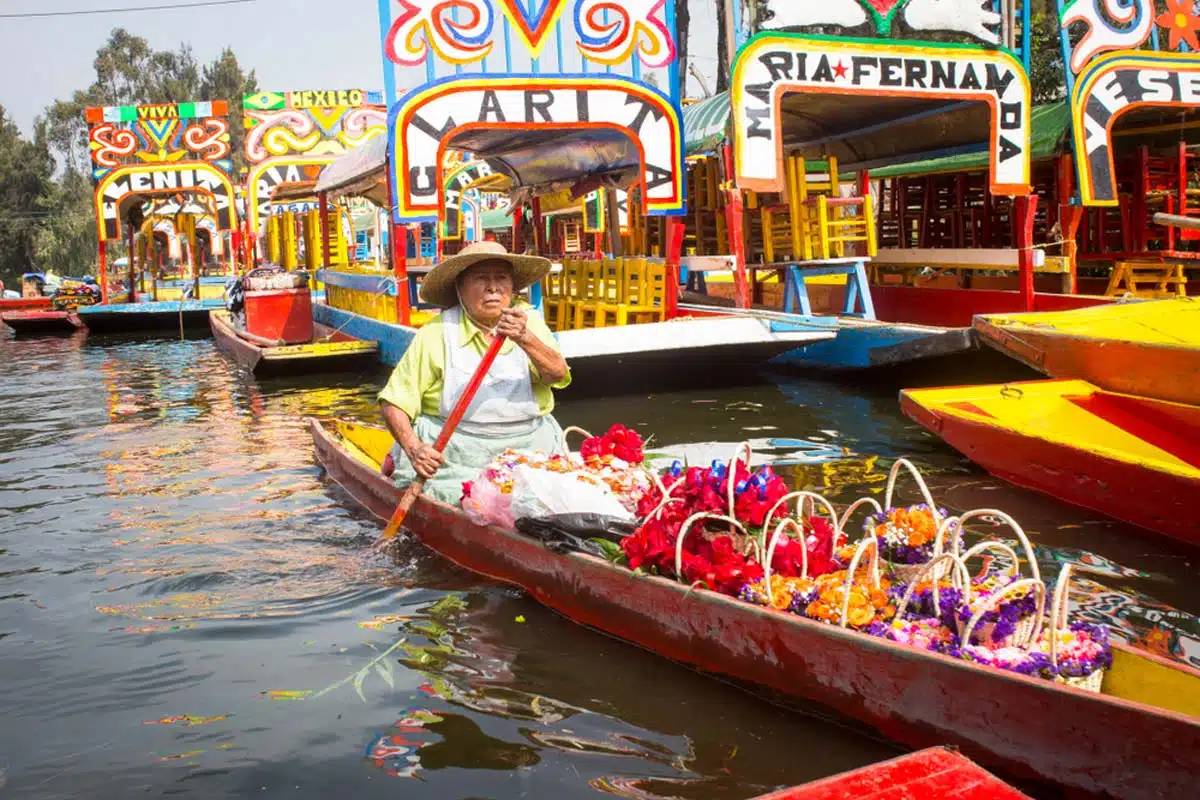
Looking for Mexico City day trips that don’t involve leaving the city at all? Xochimilco is a perfect choice.
You have almost certainly seen the photos: brightly painted boats drifting along ancient canals, passengers serenaded by mariachis, with perhaps one too many micheladas in hand. What makes it more than a party, though, is the history beneath it.
These canals and the chinampas (artificial farming islands) around them are the last living remnant of the vast Aztec water-farming system that once fed Tenochtitlán, and the reason Xochimilco is a UNESCO World Heritage Site. Hire a trajinera (the colourful flat-bottomed boats) by the hour and bring snacks and drinks, or buy them from the vendor boats that pull alongside. It is more fun than it has any right to be.
How to Get There: The simplest and safest option is an Uber, which takes around 45 minutes to an hour from the city centre. By public transport, take Metro Line 2 to Tasqueña, then transfer to the Tren Ligero (light rail) to Xochimilco, followed by a short walk to the embarcaderos (boat piers).
Average journey duration: Around 1 hour
Hassle-free option: You can book an all-inclusive boat tour with lunch and drinks – they’ll arrange hotel pick up and drop off.
Puebla
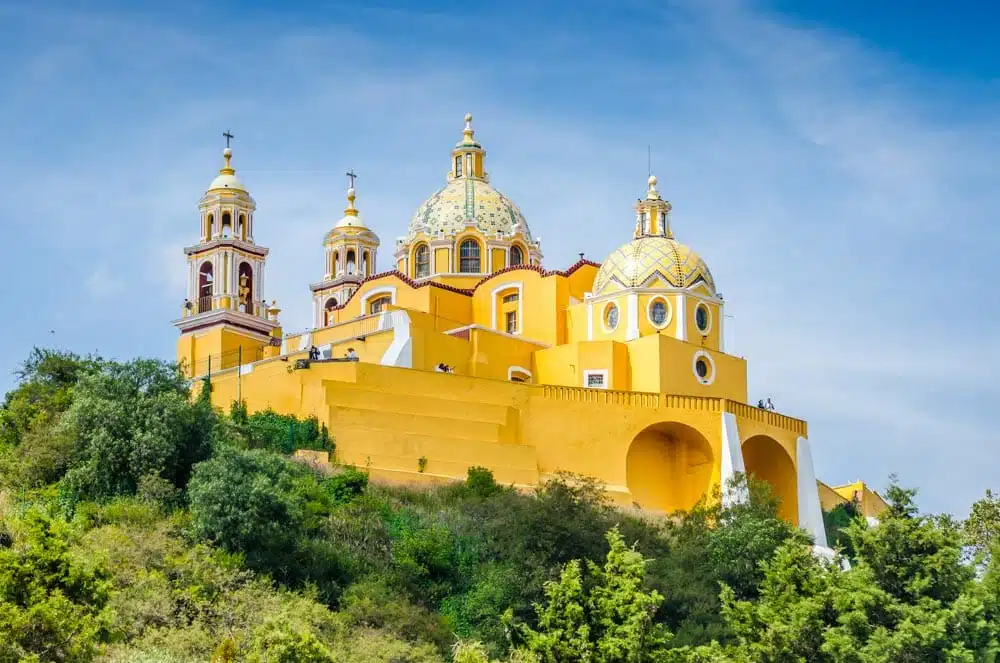
If you do not mind heading a little further out, Puebla is one of the most rewarding day trips from the capital, though it genuinely deserves an overnight if you can spare one.
This UNESCO-listed colonial city is a feast of baroque architecture, its facades clad in the colourful Talavera tiles for which it is famous. Do not miss the Capilla del Rosario, a chapel so densely gilded it is almost overwhelming, or the city’s cathedral. Puebla is also one of Mexico’s great food cities, the birthplace of mole poblano and chiles en nogada, so come hungry. For a souvenir, the Uriarte Talavera workshop lets you watch the painstaking pottery process before you buy.
How to Get There: ADO buses run frequently from the TAPO terminal (Metro San Lázaro) to Puebla’s CAPU terminal, taking around 2 to 2.5 hours. From CAPU, take a taxi or Uber the short distance into the historic centre.
Average journey duration: 2 to 2.5 hours each way.
Hassle-free option: Because Puebla and Cholula work so well together but are awkward to combine by public transport in a single day, a small-group tour covering both the Cholula pyramid and Puebla’s historic centre takes the stress out of it.
Top Tip
Puebla pairs naturally with Cholula (below), which sits just a few kilometres away.
Cholula
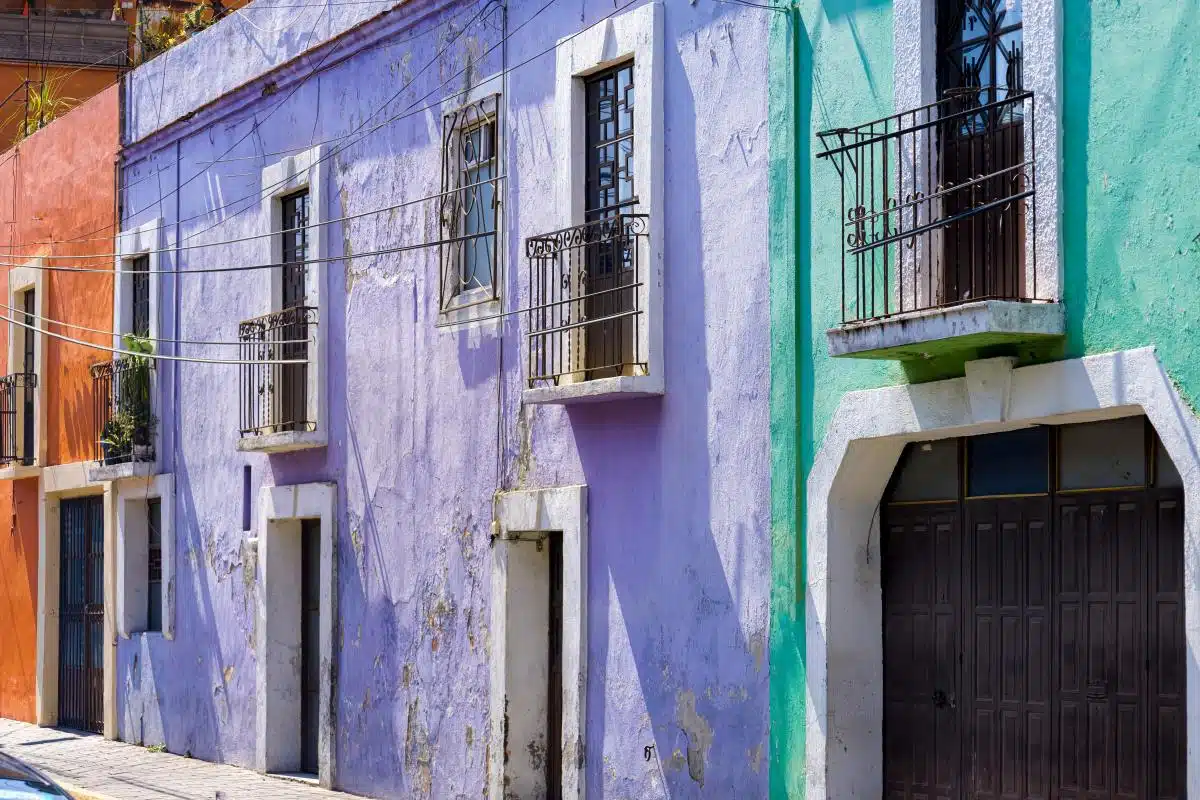
Cholula is located a few kilometres from Puebla, and is home to one of the most extraordinary landmarks in Mexico: the Great Pyramid, known in Nahuatl as Tlachihualtepetl. By volume, this is the largest pyramid on earth, larger than anything in Egypt, but most visitors walk straight past it because it looks like a grassy hill topped by a church. That church, the Santuario de la Virgen de los Remedios, was built by the Spanish on the summit, and the views from it across to the Popocatépetl volcano are superb.
You can explore several kilometres of excavated tunnels beneath the pyramid, then wander Cholula’s lively town, which has become a buzzy, student-filled place with excellent food and a relaxed atmosphere. We cover the pyramid in more detail in our famous landmarks in Mexico guide.
How to get there: Cholula is easiest to reach as part of a Puebla trip; the two are about 20 minutes apart by taxi or local bus. From Mexico City directly, take an ADO bus to Puebla (2 to 2.5 hours) and continue to Cholula from there.
Average journey time: Around 2.5 hours each way.
Hassle-free option: The same Cholula-and-Puebla small-group tour mentioned above is the most efficient way to see both in one day without your own car.
Tepoztlán
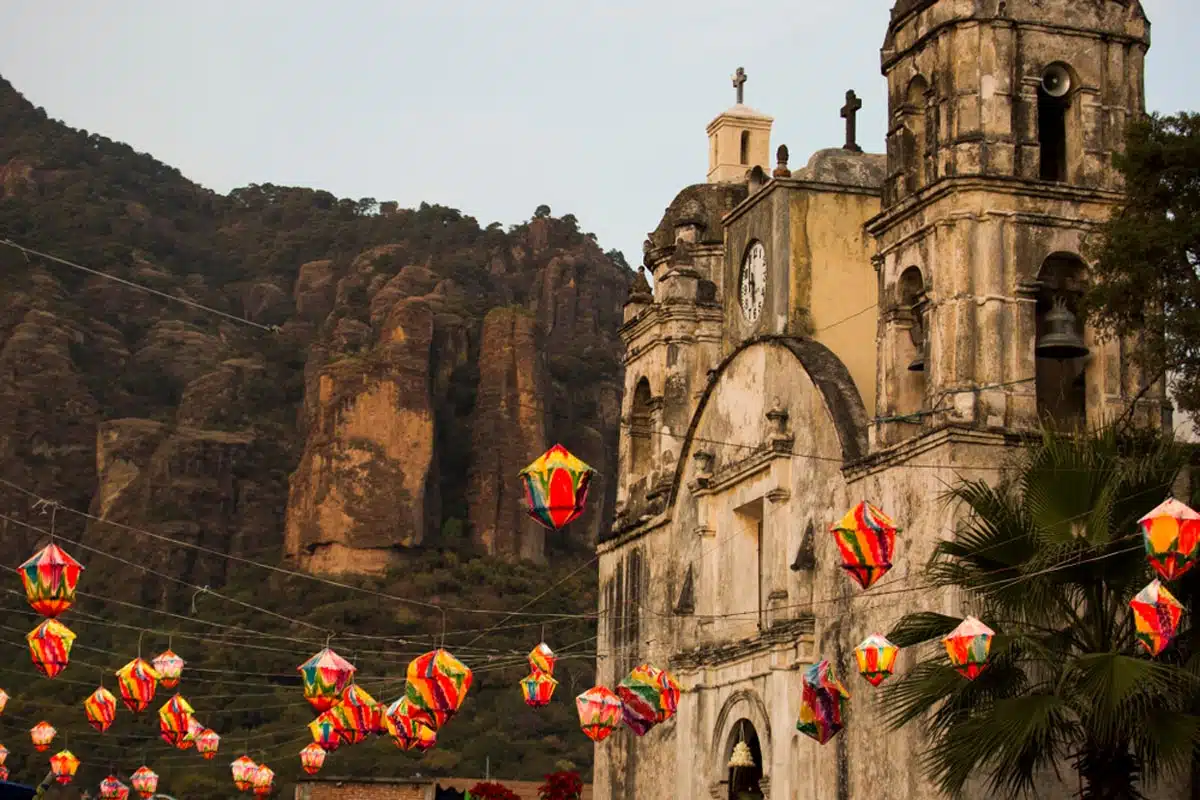
A magical mountain town in the state of Morelos, Tepoztlán is one of Mexico’s designated Pueblos Mágicos, and a wonderful day trip if you want a blend of history, hiking and a famously mystical atmosphere. According to legend, the nearby village of Amatlán was the birthplace of Quetzalcóatl, the feathered serpent deity, and the town has long drawn pilgrims and spiritual seekers as a result.
The highlight is the hike up to the Tepozteco, a small pyramid perched dramatically on a clifftop above the town, dedicated to Tepoztécatl, the Aztec god of pulque. It is a steep climb but the valley views from the top are spectacular. Back down in town, the Mercado Artesanal is great for crafts and street food, and is at its most vibrant on Sundays.
How to Get There: From Mexico City, take a bus from the Terminal Central del Sur (Metro Tasqueña) directly to Tepoztlán, a journey of around 1.5 hours. A car takes a similar time and gives you more flexibility.
Average journey duration: Around 2 hours.
Hassle-free option: A guided tour pairing Tepoztlán with the nearby town of Tlayacapan is a relaxed way to see the area’s magical towns if you would rather not navigate the buses yourself.
Cuernavaca
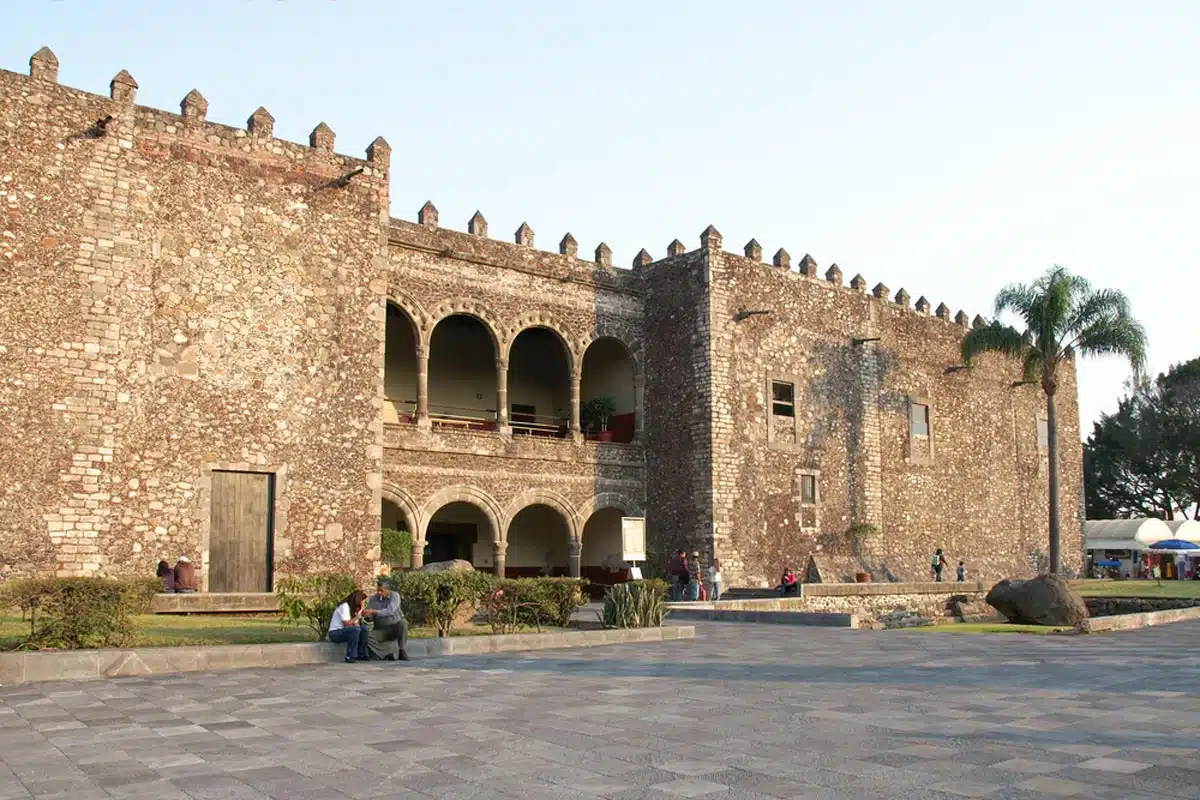
Culture lovers, listen up. Known as the City of Eternal Spring for its famously mild climate, Cuernavaca has long been a retreat for those escaping the capital, and it makes an easy and rewarding day trip.
You could spend a couple of days exploring its museums, gardens and colonial architecture, but a day is enough for the highlights. Top of the list is the Robert Brady Museum, the former home of the American artist and collector, whose eclectic collection of art, furniture and objects from around the world is worth the trip on its own. The Palacio de Cortés and the cathedral are also well worth your time.
How to Get There: Frequent Pullman de Morelos buses run from Mexico City (Metro Tasqueña) to Cuernavaca in around 1.5 hours. By car it is a similar journey time via the México-Cuernavaca highway.
Average journey duration: Around 1.5 hours each way.
Hassle-free option: A history-focused tour combining Cuernavaca with Taxco is an easy way to take in both in a single day, with transport and a guide handled for you.
Taxco
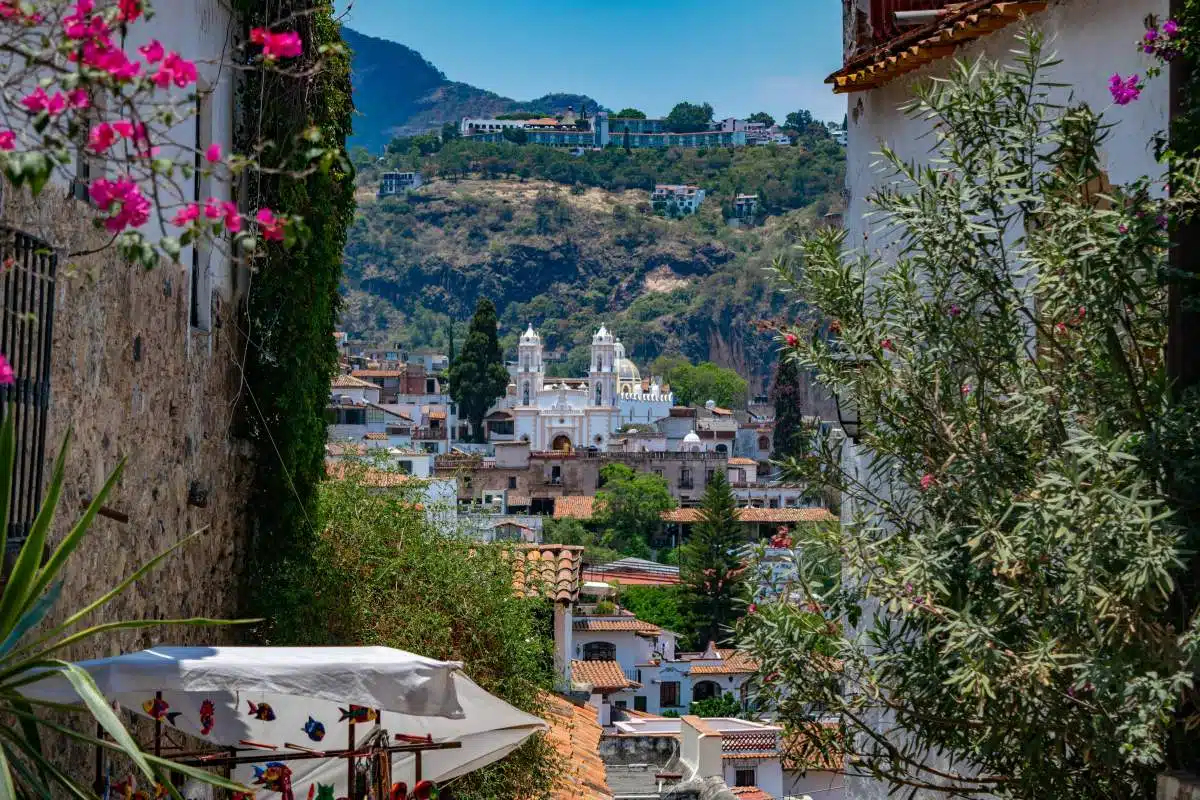
For a laidback day trip with genuinely stunning surroundings, head to Taxco, a colonial silver-mining town that tumbles down a steep hillside in a cascade of white houses and red roofs. It is one of the most picturesque towns in central Mexico.
Taxco is synonymous with silver, and the Saturday silver market (the Mercado de Plata) is the place to pick up handmade jewellery. Beyond the silver, the dramatically set Santa Prisca church, one of the finest baroque churches in Mexico, dominates the main square, and the surrounding hills hide caves and waterfalls. Try the local pozole while you are there.
How to Get There: Taxco is further than most of these trips. Frequent buses run from Mexico City’s Taxqueña terminal, taking around 2.5 to 3 hours. By car it is a similar time via the Autopista del Sol. It pairs well with Cuernavaca if you have your own transport.
Average journey duration: 2 to 3 hours each way.
Hassle-free option: Given the distance and the winding mountain roads, a full-day tour combining Taxco with Cuernavaca is a relaxed way to see both without driving.
Grutas de Cacahuamilpa
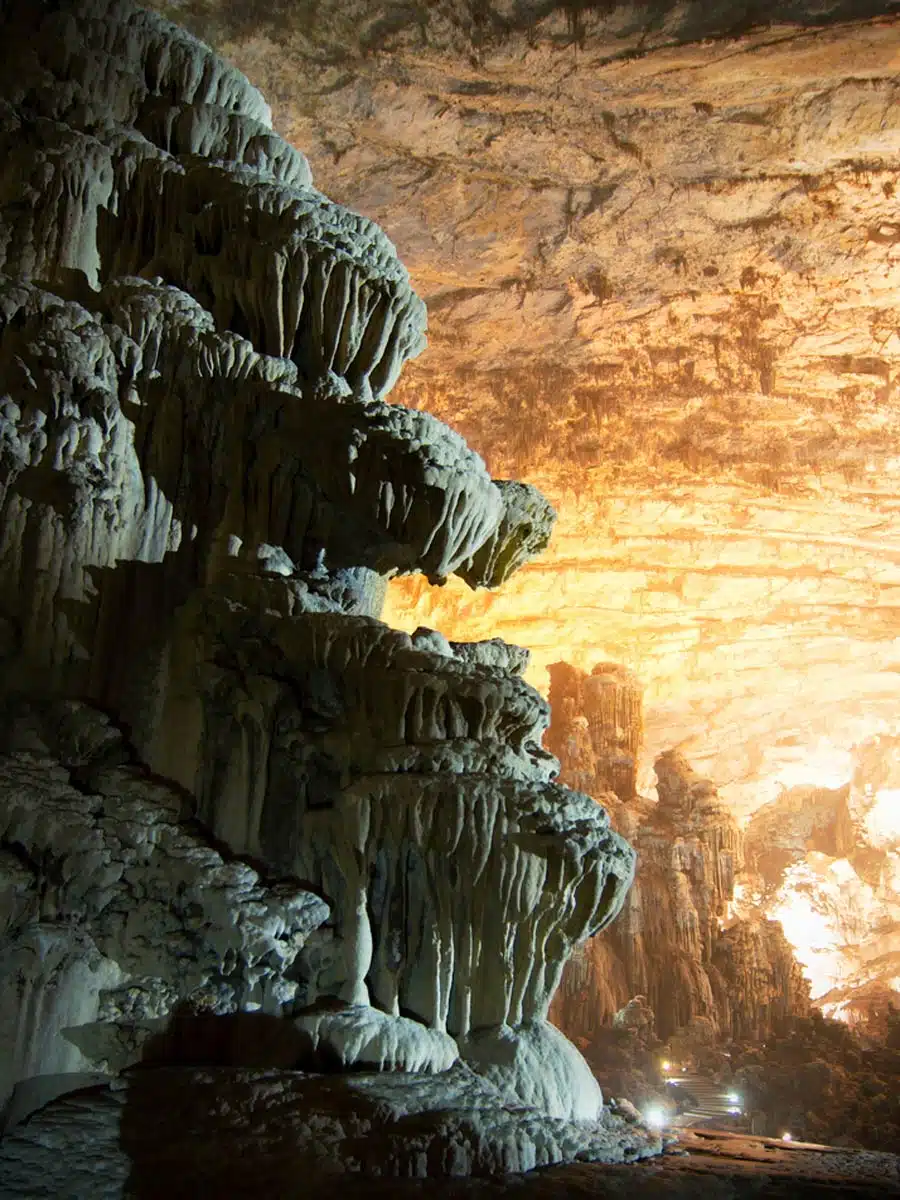
For something completely different, the Grutas de Cacahuamilpa are among the largest cave systems in the world, and one of the most spectacular natural sights within reach of the capital.
Explore vast underground chambers filled with dramatic stalactites and stalagmites on a guided walk through the illuminated caverns, which stretch for kilometres beneath the mountains. The scale is genuinely jaw-dropping, with some chambers soaring more than 80 metres high. The caves sit between Cuernavaca and Taxco, so they combine well with either. your camera.
How to Get There: The caves are tricky to reach by public transport and require careful timing to get back, so driving is far easier, around 2.5 to 3 hours from Mexico City. Otherwise, a tour is the most reliable option.
Average journey duration: 2.5 to 3 hours each way.
Hassle-free option: A private or small-group tour pairing the caves with Taxco solves the awkward logistics and is the way I would recommend doing it.
Valle de Bravo
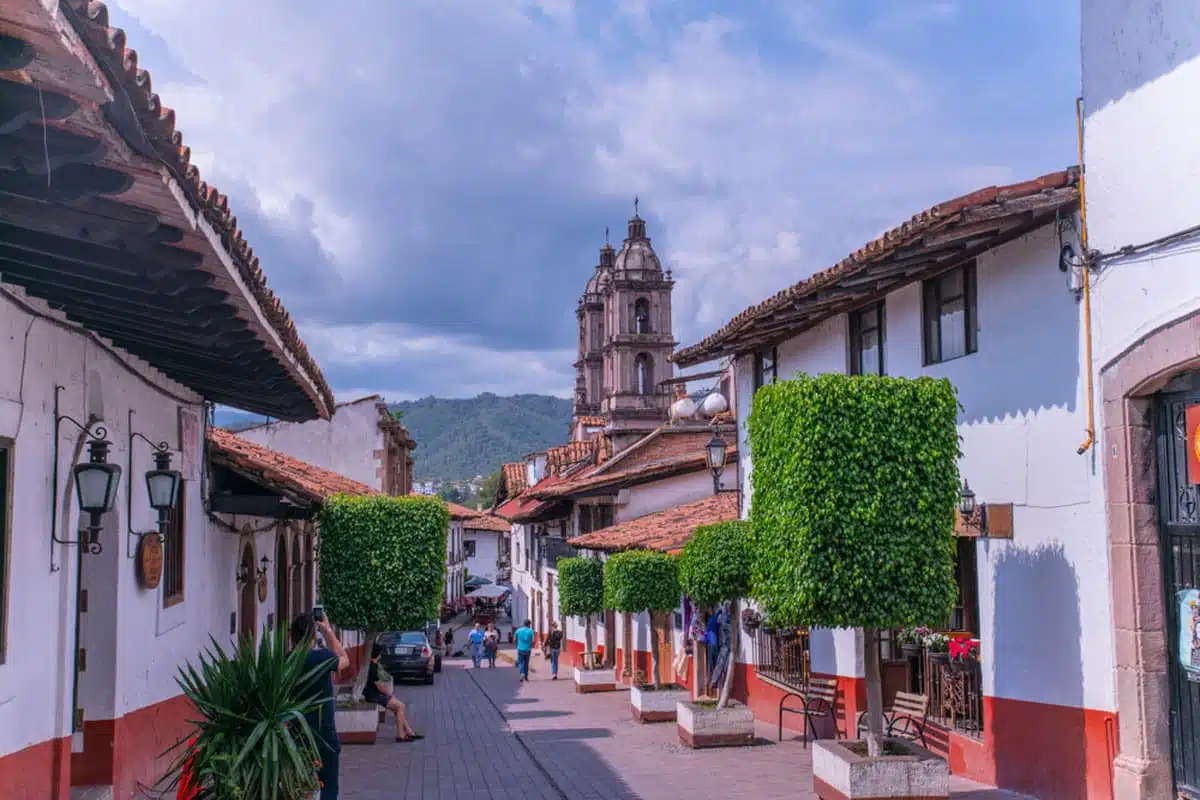
Migrating monarchs, picturesque scenery near Lake Avándaro and stunning architecture are all reasons to plan a day trip from Mexico City to Valle de Bravo.
A favourite weekend escape for well-heeled Mexico City residents, Valle de Bravo is a pretty lakeside town that makes a refreshing change from ruins and colonial centres. Set on the shores of Lake Avándaro and surrounded by pine forest, it is all about the outdoors.
Swim or paddleboard on the lake, hike in the surrounding hills, or, if you time your visit between roughly November and March, make the trip to the nearby monarch butterfly sanctuaries, where millions of migrating monarchs cluster in the forests in one of the natural world’s great spectacles. The town itself has cobbled streets, good restaurants and a relaxed, slightly upmarket feel.
How to Get There: Buses run from Mexico City’s Observatorio terminal (Terminal Poniente) to Valle de Bravo in around 2.5 to 3 hours. A car gives you the most flexibility, especially if you want to combine the town with the butterfly sanctuaries.
Average journey duration: 2.5 to 3 hours each way.
Hassle-free option: A private day tour to Valle de Bravo handles the drive and lets you focus on the lake and the surrounding countryside, and many tours can add the monarch butterfly sanctuaries in season.
Iztaccíhuatl-Popocatépetl National Park
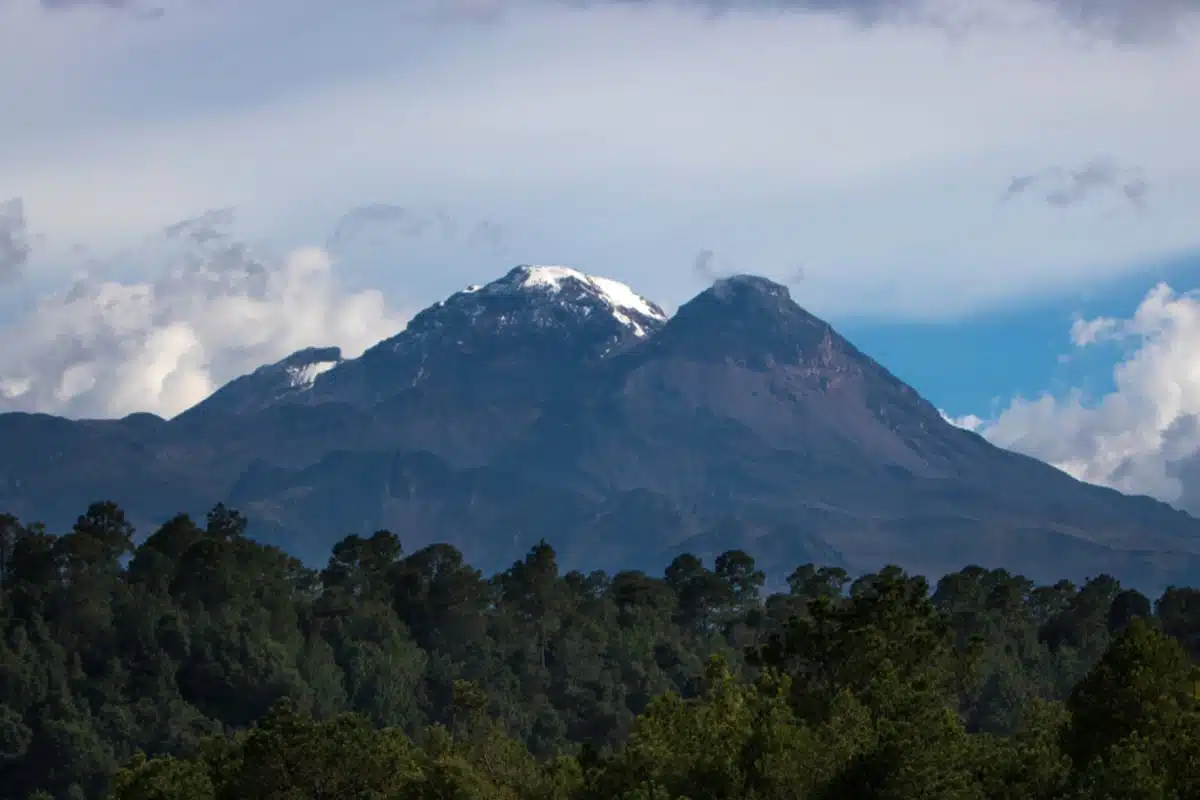
If you are after rugged nature rather than culture, the Iztaccíhuatl-Popocatépetl National Park delivers in spectacular fashion. The park is home to two of Mexico’s most famous volcanoes, and on a clear day the views are unforgettable, with the active Popocatépetl frequently venting plumes of smoke.
Note that Popocatépetl itself is off-limits to climbers due to volcanic activity, but the dormant Iztaccíhuatl offers serious high-altitude hiking, and the Paso de Cortés between the two peaks is accessible for those wanting the views without a technical climb. This is high terrain, so come prepared for cold and altitude.
How to Get There: This trip is genuinely difficult without a car or tour. Driving takes around 2 hours to the Paso de Cortés. Given the altitude and the need for a guide on any serious hiking, a guided trip is strongly recommended here.
Average journey duration: Around 2 hours each way by car.
Hassle-free option: For anyone wanting to hike Iztaccíhuatl, going with an alpinist-led tour is not just easier but the safe and sensible way to tackle a high-altitude volcano.
San Miguel de Allende
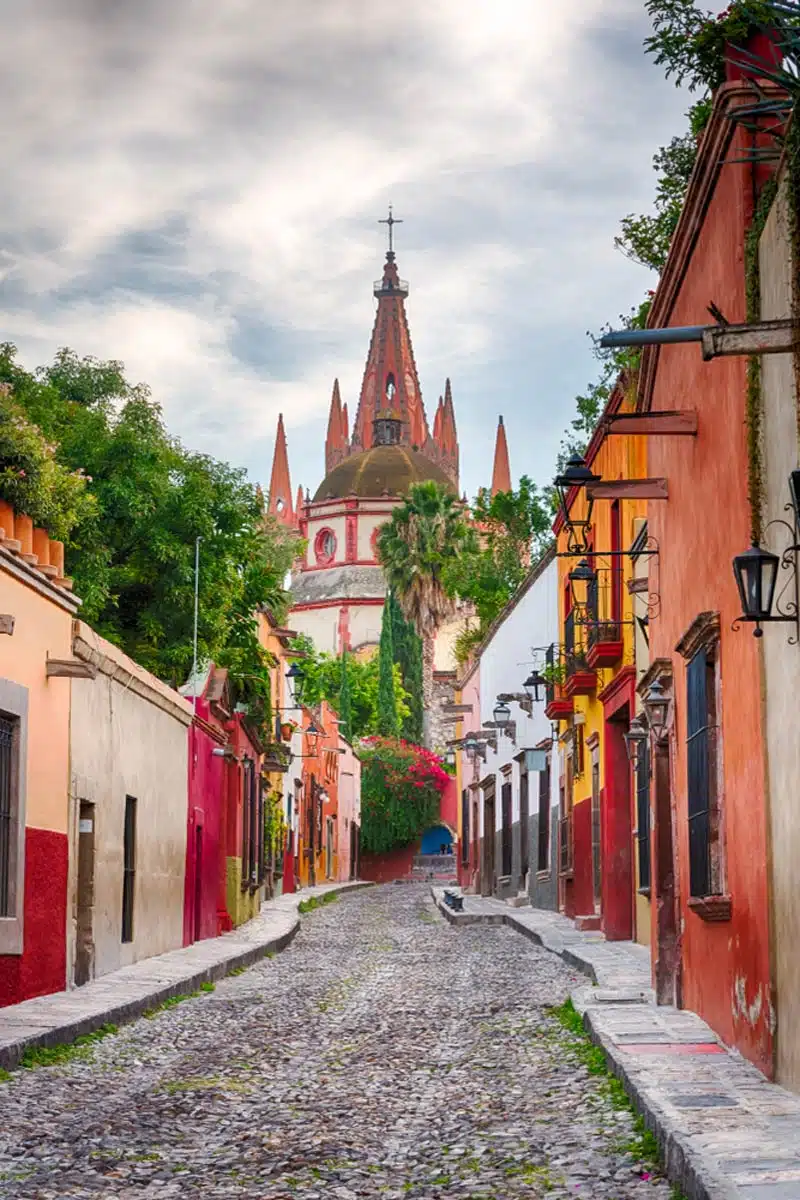
Regularly voted one of the best small cities in the world, San Miguel de Allende is a stunning colonial town in the state of Guanajuato, beloved for its rose-coloured architecture, thriving arts scene, and superb dining and shopping.
The undisputed icon is the Parroquia de San Miguel Arcángel, the neo-Gothic parish church whose pink fairytale spires rise over the main square. Beyond it, San Miguel is a place to wander: cobbled lanes, galleries, rooftop bars and boutiques at every turn. Honestly, though, at around four hours each way it is a stretch as a day trip, and I would strongly encourage at least one overnight to do it justice.
How to Get There: Direct buses (ETN and Primera Plus) run from Mexico City’s Terminal Norte to San Miguel in around 4 hours. By car it is a similar journey via the highway towards Querétaro.
Average journey duration: Around 4 hours each way.
Hassle-free option: Given the distance, a tour with round-trip transport lets you sleep on the journey and make the most of your time in town, though an overnight stay remains the better choice if you can manage it.
Grutas Tolantongo
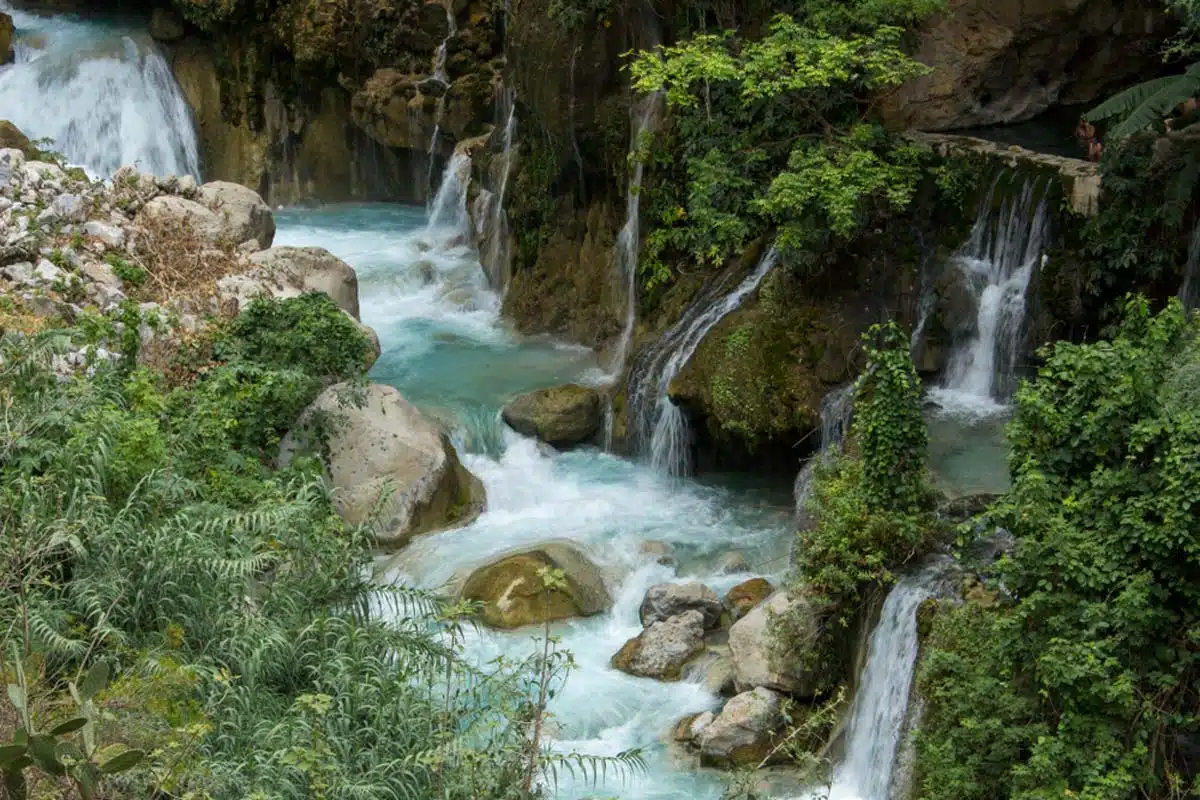
For something truly special, and a longer adventure, the Grutas Tolantongo are worth every minute of the journey. Tucked into a canyon in the state of Hidalgo, this is a network of natural thermal pools, hot springs, a warm river and a steamy cave, all set against an emerald mountainside.
The turquoise terraced pools cascading down the canyon wall are the iconic image, and soaking in warm mineral water while gazing across the Sierra Madre is unforgettable. It is increasingly popular and can get busy, but the setting is so dramatic it remains a genuine highlight. Note there are no ATMs and it is largely cash-only, so bring pesos.
How to Get There: There is no direct route, which is why this is a long day. Driving is the most reliable option at around 3 to 4 hours each way. By public transport, take a bus (Ovnibus or Flecha Roja) from the Terminal Central del Norte to Ixmiquilpan, then a local shuttle from near the Mercado Morelos / Iglesia de San Antonio directly to Tolantongo (around 70 MXN, departing a few times daily). Allow a very early start and check return shuttle times carefully.
Average journey duration: 3 to 4 hours each way.
Hassle-free option: Honestly, this is the one trip where I would recommend a tour to almost everyone: a round-trip tour removes the genuinely complicated logistics and the long, winding mountain drive, and lets you simply enjoy the pools.
Practical Tips for Easy Day Trips From Mexico City
- Book tours in advance. The most popular day trips fill up quickly, especially in high season.
- Go midweek where you can. Weekends, particularly at the ruins and the natural sights like Tolantongo, get extremely busy with local visitors.
- Start early. Almost all of these trips reward an early departure, both for beating crowds and for the long journey times involved.
- Ask your hotel. Many hotels and hostels can arrange tours, sometimes at better rates than booking independently.
- Carry cash. Several of these destinations, especially the caves and Tolantongo, are largely cash-only and have no ATMs.
Mexico City Day Trips: Read More Guides
Love This? Save and Share on Pinterest



Discover the top things to do, insider tips and hidden gems in our Mexico Travel Guide.
Read the guides →