Lisbon has a way of turning a quick bite into the best meal of the trip. There’s a steakhouse that ages its beef in a glass chamber by the door, a tapas bar near the river where the sausage arrives on fire, a hotel dining room where the sea bass stole the show and a custard tart worth queuing for, even at midnight.
I’ve been to Lisbon time and again, and for every sight I’ve ticked off, there’s a meal I’d happily cross the city for a second time. My trips have landed in very different seasons: a January weekend that took in a memorable hotel dinner and a Sunday seafood feast, and a late October visit when I walked, talked and tasted my way through the oldest quarters of the city.
For years the city’s dining scene leaned towards old-school tascas and seafood halls. These days, a generation of ambitious chefs sits alongside them, reworking traditional Portuguese cooking with serious technique. The good news for you is that both camps are thriving, and some of the most memorable food in town still comes at a very fair price.
The trick is knowing where to go, because the busiest streets are lined with menus in six languages and food that doesn’t live up to the view. These are the best restaurants in Lisbon for my money, the tables I’d go back to, from a blowout steak dinner to a pastry eaten standing at the counter. If you’re building a wider plan for the city, my guide to the things to do in Lisbon has the sights to slot between meals.
The best restaurants in Lisbon
Book ahead for dry-aged steak at Sala de Corte
Price: €€€. Neighbourhood: Cais do Sodré.

If I had to sum up Sala de Corte in a handful of words, they would be these: the best steak in the city. It was one of the finds of my October trip, and it’s where I’d send any meat lover.
Everything about the experience is polished. The service is slick and attentive without hovering, and the dining room is a snazzy, low-lit space of dark wood, marble and copper, with a long open kitchen where you can watch the grill at work. The steaks themselves are the main event, and they really are something else.
The beef is dry-aged on site (you’ll pass the ageing chamber on your way in, lined with hanging cuts) and cooked in a Josper, a charcoal-fired cross between a grill and an oven that chars the outside hard while keeping the middle juicy. Alongside imported favourites, the kitchen rotates native Portuguese breeds every couple of weeks, so it’s worth asking what’s on. Big sharing cuts such as the T-bone and chuletón are priced by weight, so check the size before you order.

Don’t skip the starters or the sides, which are far more than an afterthought, and lean on the sommelier: the list runs to more than 250 wines, with plenty of Portuguese reds that suit a steak dinner.
The critics agree. The World’s 101 Best Steak Restaurants guide ranked it 50th in Europe in its September 2026 list, and it has featured on the guide’s global ranking for years. You’ll find it on Praça Dom Luís I, around the corner from the Time Out Market, and it serves lunch and dinner every day. It fills up, especially at weekends, so book online before you go.
Share small plates at José Avillez’s Taberna
Price: €€. Neighbourhood: Chiado.

José Avillez is the best-known chef in Portugal, and you can hardly walk a block in Chiado without passing one of his restaurants. Picking between them can be daunting, which is why I was so glad of a tip from Catarina, the PR at the Four Seasons Hotel Ritz during my January stay. She sent me to Bairro do Avillez, and I’m very glad she did.
The bairro, or “neighbourhood”, is a cluster of four places to eat under one roof, inside the walls of an old convent on Rua Nova da Trindade. The Taberna sits at the front, and it’s the one I’d choose: it gets the balance between casual and high-end just right, serving many of the chef’s signature flavours without any of the ceremony of his fine-dining rooms.
The menu is built for sharing. Think crisp croquetes, cheeses and cured meats, a prego (the classic steak sandwich) made with tenderloin, a bitoque with a fried egg on top and comforting plates such as tomato migas. My lunch was a table-filling spread of steak, chips and sides, which tells you all you need to know about how easy it is to over-order here.
Better still, the kitchen serves continuously from noon until midnight, so it’s a lifesaver if you’ve lost track of time on the hills of Chiado and missed the usual lunch window. There’s a terrace in good weather, and vegetarian dishes are marked on the menu.
Behind the Taberna, the Páteo is a bright, airy dining room for a longer seafood-led meal, the Mini Bar hides behind an unmarked door for cocktails and inventive snacks after dark, and Pizzaria Lisboa does thin-crust pizza and fresh pasta. Booking is recommended at all four, especially for dinner and weekends, although the Taberna takes walk-ins when it has space.
Join the queue for seafood at Cervejaria Ramiro
Price: €€. Neighbourhood: Intendente.


No list of the city’s great tables is complete without Cervejaria Ramiro, the loud, joyful seafood beer hall that has been on Avenida Almirante Reis since 1956. I went late on a Sunday afternoon after a sidecar tour of the city, queued for about ten minutes and ate my way through oysters, garlicky clams, giant tiger prawns and a steak sandwich for dessert, for about €40 a head at the time. Allow €50 to €60 a head today.
You can now book through TheFork with a €25 deposit per person, or take a ticket at the door and wait. It’s closed on Mondays and throughout August.
Graze on Portuguese tapas at A Muralha in Alfama
Price: €. Neighbourhood: Alfama.
Alfama is the most atmospheric corner of the city, but it’s also where you’ll find some of its most tired tourist menus. Plenty of places here charge over the odds for food that doesn’t justify it. If you know where to look, though, there are still real gems tucked into the old quarter, and A Muralha Tapas e Vinhos is one of them.
I found it on my October trip, the same visit on which I took a history tour of the neighbourhood from the castle down to the cathedral (there’s more in my guide to Alfama). It’s an unassuming little place at the bottom of Alfama, on Rua Jardim do Tabaco close to the cruise terminal, and you could easily walk straight past it.
That would be a mistake. The kitchen turns out traditional Portuguese petiscos (the country’s answer to tapas), and honestly, every plate I tried was a delight. The octopus salad was fresh and zingy, the morcela (a rich, dark sausage) arrived at the table in flames and the sheep’s cheese was tart and crumbly in the best way. The wine list is the other draw, with hard-to-find bottles from right across Portugal. Order a glass or two of something local and a few plates to share, and you’ll understand why it’s worth seeking out.
A Muralha opens from late morning until late at night, Monday to Saturday, and closes on Sundays. It doesn’t take reservations, so turn up early in the evening if you want a table without waiting.
Eat like a local at Flor do Cais
Price: €. Neighbourhood: Cais do Sodré.
Cais do Sodré is best known for nightlife these days, with Pink Street and the Time Out Market drawing the crowds. A few blocks away from the market, on Rua dos Remolares, Flor do Cais (listed these days as Flor do Cais do Sodré) is the antidote: a neighbourhood eatery that packs a big punch for its size and its prices.
It was another of my October finds: unfussy, local and focused on doing the classics well. The menu sticks to traditional Portuguese fish and meat dishes, simply prepared but bursting with flavour. Wash yours down with a glass of Portuguese wine from the short, select list and you have a proper local meal at a very fair price.
It’s mainly a lunch spot, open from 11am on weekdays, with dinner served only on some evenings. It closes on Sundays, so check the hours before you plan an evening meal here.
Dress up for dinner at Varanda in the Four Seasons Hotel Ritz
Price: €€€. Neighbourhood: Marquês de Pombal.
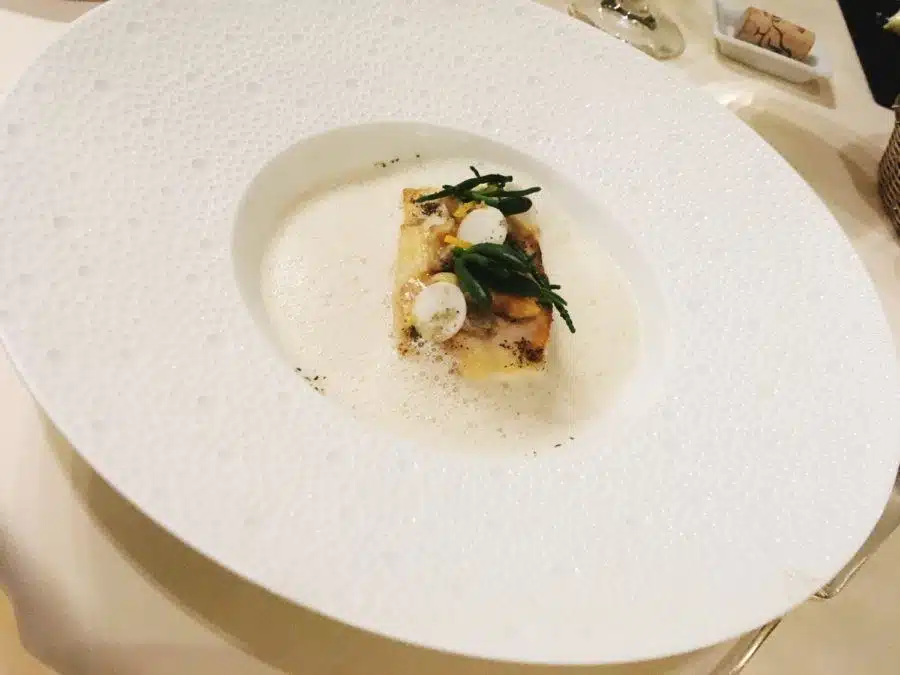
Hotel restaurants can be hit and miss, but Varanda, overlooking Eduardo VII Park from the Four Seasons Hotel Ritz, is worth booking even if you aren’t staying. I ate there on a Saturday evening during my January weekend and worked my way through the signature menu: roasted crayfish, sea bass, Irish beef cooked “à la ficelle” and a dark chocolate croustillant to finish.
There was a lot of technical skill on every plate, but the sea bass stole the show. It was seasoned with the hotel’s own salt and served with clams from the Ria Formosa in a Bulhão Pato sauce of garlic and coriander, the same dish the city’s seafood halls are famous for, reimagined for a fine-dining plate. When the chef came over to the table at the end of the evening, I did my best to coax the recipe out of him.
The kitchen has moved on since my dinner. Executive chef Carlos Cardoso now leads it, and the evening menu is a seasonal, Mediterranean-leaning affair. Varanda also serves breakfast every day, lunch on weekdays and a weekend brunch, with champagne and chefs cooking to order, from 12.30pm until 4pm on Saturdays and Sundays. Dinner runs from 7pm to 10pm. Expect to pay from about €50 a head, considerably more with wine, and dress smart casual.
If you want the full story of the hotel, read my review of the Four Seasons Hotel Ritz Lisbon.
Pull up a seat at the Time Out Market’s long tables
Price: € to €€. Neighbourhood: Cais do Sodré.

For something more casual, I love eating at the Time Out Market. It took over half of the 19th-century Mercado da Ribeira in 2014, and it brings some of the city’s best chefs and best-loved local institutions together under one enormous roof.
The format is simple: browse the counters around the edge of the hall, order from whichever ones tempt you and carry your tray to the long communal tables in the middle, with a cold cerveja (beer) or a glass of vinho from one of the bars. There are around 26 restaurants and 8 bars, so a group with very different tastes can all eat what they like and still sit together.

Henrique Sá Pessoa, whose restaurant Alma holds two Michelin stars, runs one of the most popular counters, and Marlene Vieira’s octopus is another favourite. Save room for a pastel de nata from Manteigaria’s stand before you leave.
It’s at its best for a weekend lunch, when locals and visitors settle in for a long, leisurely meal. That’s also when it’s busiest, so arrive early to snag a seat or risk circling the hall with a tray of cooling food. Late morning (around 11.30am) or mid-afternoon is much calmer than the 1pm to 2.30pm rush. The market opens daily from 10am, until midnight from Sunday to Wednesday and until 2am from Thursday to Saturday.
Wait for the bell at Manteigaria
Price: €. Neighbourhood: Chiado.
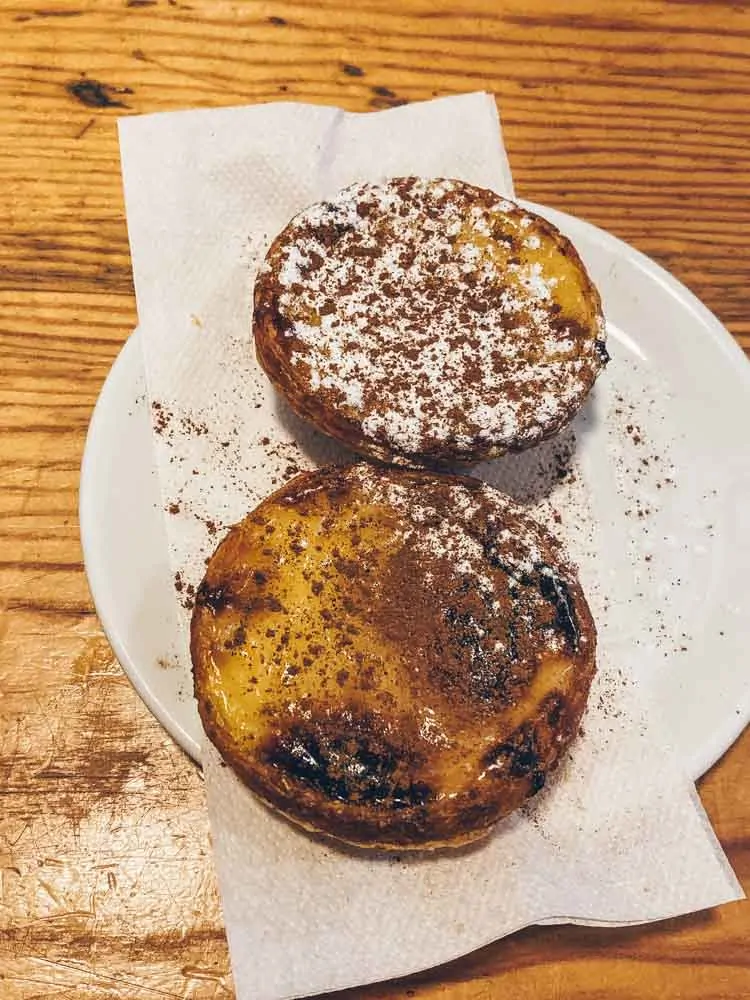
It might be sacrilege to say so, but after eating more pastéis de nata than I care to count, my vote for the city’s best goes to Manteigaria. If wibbly, wobbly custard in a crisp pastry case is your idea of heaven, this is where to find it.
The original shop sits on the corner of Rua do Loreto and Praça Luís de Camões, in a building that was once a butter shop (which is what manteigaria means). There are no tables, so you eat standing at the counter, with cinnamon and icing sugar to shake over the top. Listen for the bell: it rings each time a fresh tray comes out of the oven, and that’s the moment to order. It’s open every day from 8am until midnight, and a tart costs about €1.30. There’s a second counter at the Time Out Market if you’re already there.
Of course, you should also try the originals at Pastéis de Belém, which has been baking them to a secret recipe since 1837, close to the Jerónimos Monastery. Ignore the long takeaway queue and head inside: the tearooms stretch back much further than you’d guess from the street, and you’ll often find a table free.
Tips for eating out in Lisbon
- Book the big names. Sala de Corte, the Páteo at Bairro do Avillez and brunch at Varanda all fill up, especially at weekends, so reserve a few days ahead. Ramiro takes online bookings with a deposit, while smaller places like A Muralha work on a first-come, first-served basis.
- Eat on Lisbon time. Lunch runs from about 1pm to 3pm and dinner rarely gets going before 8pm. If you want to walk in somewhere popular without queuing, arrive at opening time.
- Know about the couvert. Bread, butter, olives and other nibbles that arrive unasked are not free. They’ll appear on the bill, but you can send back anything you don’t want. Read my guide to tipping in Portugal for how much to leave.
- Start with a food tour. I booked a tour with Oh! My Cod (Suck My Cod when I went) on a whim one morning, and it’s up there with the best food tours I’ve taken. Take one early in your trip and you’ll come away with a list of dishes to order everywhere else. Two pieces of advice: book it, and go hungry. My Lisbon guide has the details.
Map
Read next
- 31 things to do in Lisbon, from sidecar rides to a church left scorched inside
- Cervejaria Ramiro, Lisbon: what to order and how to get in
- Is the Four Seasons Hotel Ritz Lisbon worth the splurge?
- LX Factory: shops, restaurants and street art in Lisbon’s coolest spot
- Tipping in Portugal
- How to spend one week in Portugal
Love this? Save and share on Pinterest

Discover the top things to do, insider tips and hidden gems in our Portugal Travel Guides.
Read the guides →