
Two dozen kitchens, a few hundred seats and, on a busy day, what feels like half the city circling with a tray. Lisbon’s most famous food hall can be brilliant or exhausting depending on when you arrive and which counters you queue at. Here’s how to make it the first one.
I’ve been to the Time Out Market on two trips to Lisbon, first on a January weekend and again in late October, and I love it for exactly what it is: a casual, noisy, very good meal with some of the country’s best-known chefs cooking a few metres from your table. It isn’t a secret, and it isn’t cheap by local standards, but if you want to try a lot of Portuguese cooking in one sitting, nowhere in the city makes it easier.
On my October visit I worked my way round three counters: an octopus hot dog at Sea Me, a pork cheek risotto from the chef João Rodrigues and, inevitably, a pastel de nata from Manteigaria. Two of the three are still there. The line-up changes more than you’d think, so everything below reflects the market as it is now.

The market at a glance
- Where: inside the Mercado da Ribeira on Avenida 24 de Julho, Cais do Sodré, across the road from Cais do Sodré station.
- Opening hours: every day from 10am to midnight.
- What’s inside: around 26 restaurants and 8 bars, plus kiosks and a few shops, all around one big hall of communal tables.
- Booking: none. Seating is first come, first served.
- Paying: each counter takes your order and payment separately; cards are fine.
- Busiest: weekend lunch and summer evenings. Mid-afternoon is the calmest time to eat.
- Next door: the traditional fresh market, Monday to Saturday from 6am until early afternoon.
From fish market to food hall
The Mercado da Ribeira has been Lisbon’s riverside market for well over a century. The present building opened on 1 January 1882 beside the Tagus, and for more than a century it traded wholesale as well as retail, selling fish, fruit and vegetables to the city’s shops and restaurants. A fire in June 1893 destroyed its eastern side, and the hall was remodelled and enlarged several times after that.
By 2000 the wholesale trade had moved out, and the market was left with its retail stalls and a lot of empty space. In 2010 the city council put part of the building out to tender, Time Out won it, and on 18 May 2014 the magazine opened its first market there. The idea was simple: take the restaurants and producers its critics rated most highly and put them under one roof. It was such a success that it became the model for the Time Out Markets in other cities around the world.
Look up as you walk in. The iron roof trusses, the skylights and the long view down the hall are the old market’s, and they give the place a sense of occasion that most food halls lack.
How it works
The counters line the edges of the hall, each with its own menu board, and the tables fill the middle. Walk the whole loop before you choose: it takes five minutes and saves you ordering at the first counter you see.
Order and pay at the counter, and most will hand you a buzzer that goes off when your food is ready. Collect your tray, find a seat at any of the communal tables, and go back for drinks or a second course from somewhere else. That’s the real advantage of the place: a group can each eat from a different kitchen and still sit together. Nobody minds you sharing a table with strangers, and at busy times you’ll have to.
There’s no table service, and you can’t reserve. If you’re in a group at a busy time, the trick is to split up: one or two of you hold seats while the others order, then swap.
The chefs’ counters
The heart of the market is the row of counters run by well-known Portuguese chefs, each serving a short menu of their signature cooking at market prices. These are the ones to queue for.
Henrique Sá Pessoa
Henrique Sá Pessoa has cooked here since the market opened in 2014. His fine-dining restaurant reopened under his own name in Amoreiras in February 2026 and kept its two Michelin stars, and in the same month he relaunched his market counter with a refreshed menu. Expect Portuguese comfort food done properly: roast suckling pig with turnip-green purée and chips, confit cod with chickpeas, fish and chips with homemade tartare sauce, and a bifana (pork sandwich) made with black pork secretos.
Marlene Vieira
Marlene Vieira has also been here from the start, and her counter is where to go for traditional Portuguese cooking with a little polish: octopus à lagareiro, roasted with garlic and olive oil, oven-baked bacalhau with chickpea mousse and corn bread, and a francesinha, Porto’s famously excessive meat-filled sandwich.
João Sá
In the spring of 2025, Marlene Vieira’s husband, João Sá, whose restaurant Sála in the Baixa holds a Michelin star, took over a counter in the chefs’ row with a fully open kitchen. When it opened, the menu played with Portuguese classics in unexpected forms: a cozido (meat and vegetable stew) ramen, a savoury pastel de nata with mushroom cream and a salt cod cannelloni, plus a cheaper dish of the day.
The row does change. The pork cheek risotto I had in October came from the chef João Rodrigues, who no longer has a counter here.
Miguel Castro e Silva and Susana Felicidade
Miguel Castro e Silva brings the food of northern Portugal: oven-baked rice dishes, bacalhau and his own take on the francesinha. Susana Felicidade’s counter looks south instead, with cooking built around fish, shellfish and produce from the Algarve and the Costa Vicentina.
What else to order
Beyond the chefs’ row, the best counters are offshoots of well-loved restaurants and specialists that have earned their spot. These are the ones worth seeking out.

- Sea Me: the seafood and petiscos counter, with Japanese touches like sardine nigiri. Its octopus hot dog, a bun piled with octopus à lagareiro, was my pick on my October visit, and it’s still on the menu.
- Croqueteria: croquettes in all sorts of flavours, from the traditional kind to game sausage with turnip greens, cozido and pata negra ham, at about €2 each. Order a few as a starter to share while you decide on the rest.
- Café de São Bento: the market branch of a steakhouse that Time Out’s own critics have named the best steak in town, serving its house steak with chips.
- Marisqueira Azul and Monte Mar: the two seafood counters. Marisqueira Azul does platters of prawns, crab and clams à Bulhão Pato, while Monte Mar, an offshoot of the Cascais restaurant, does hake with clam rice and prawns with squid.
- Manteigaria Silva: the deli counter of the old city-centre grocer, with boards of cured ham and Portuguese cheeses such as Serra da Estrela to share over a bottle of wine.
There are also pasta, burger and Mexican counters, and doughnuts from Crush, but you can find those anywhere. Come for the Portuguese cooking.
Save room for a pastel de nata
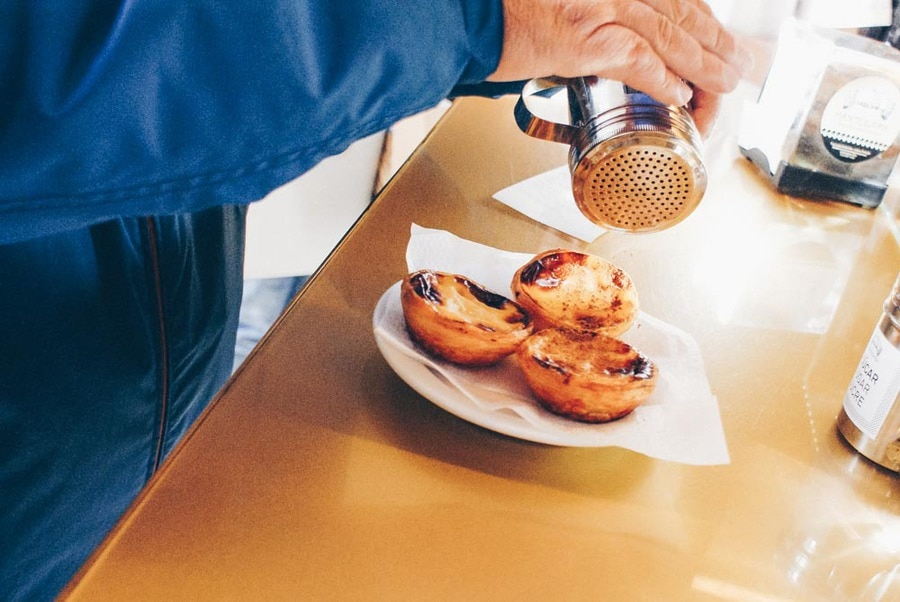
Of all the pastéis de nata I’ve worked my way through in the city, Manteigaria’s are my favourites, and the market has its own counter, so there’s no excuse to leave without one. Expect a crisp, hand-rolled pastry case around a custard that’s only just set and still has a wobble to it. Eat it on the spot, standing up if you have to.
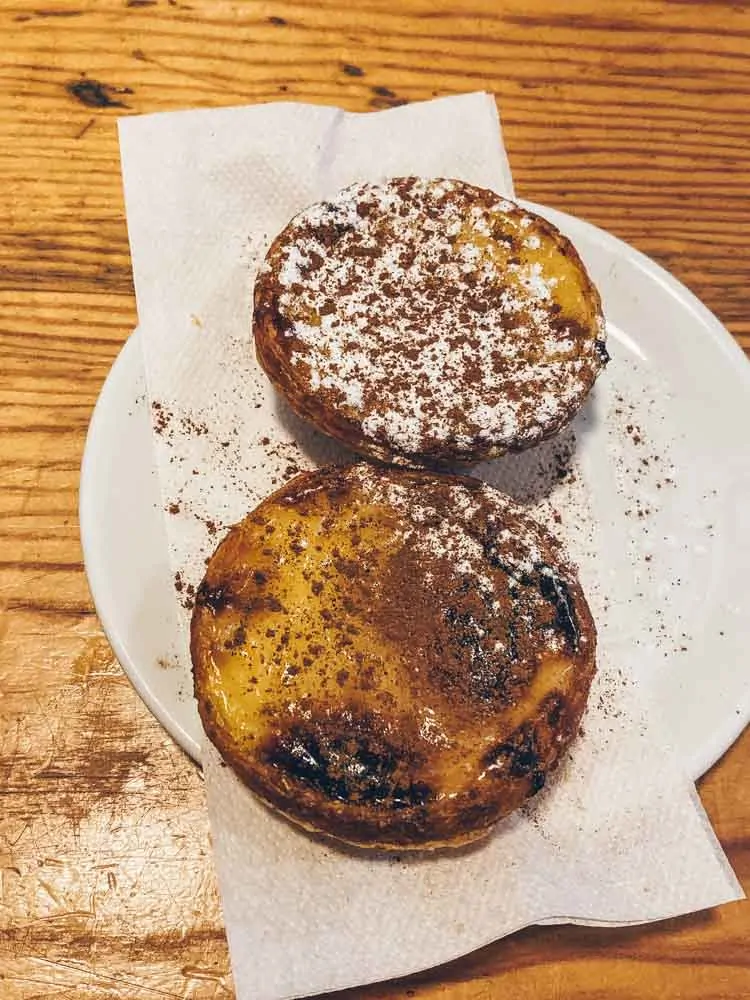
If you’d rather have yours at the original shop in Chiado, my guide to the best restaurants in Lisbon has the details. For something to take home, the Recordação de Sintra kiosk sells queijadas and travesseiros, Sintra’s puff pastry pillows filled with almond and egg cream.
Wine, beer and something stronger
Drinks come from the bars and kiosks dotted around the hall, so you can pick up a glass on your way back to the table. O Bar da Odete is the one for wine: everything on its list is Portuguese and approved by the wine critic it’s named after, so it’s a good place to try something you won’t find at home, from a crisp vinho verde with your seafood to a red from the Douro or the Alentejo. The Time Out Bar does cocktails, and beer is easy to find all round the hall.
When to go to beat the crowds
The market is one of the most visited places in Lisbon, and at peak times it shows. Weekend lunchtimes, roughly 1pm to 2.30pm, and early evenings are the busiest, especially from June to August, when finding a seat can feel like a contact sport. It’s loud, and if you hate crowds, those are the times to avoid.
The calmest windows are late morning, from opening until about noon, and mid-afternoon, roughly 3pm to 5pm, between the city’s lunch and dinner hours. Weekdays are easier than weekends, and outside the summer months it’s calmer all day.
Top Tip
If you want a proper sit-down at a weekend, arrive at 11.30am, claim a table and order an early lunch. By the time the 1pm crowds arrive, you’ll be on to the pastéis de nata.
What it costs
You pay a little more here than you would at a neighbourhood tasca, and noticeably less than at the chefs’ own restaurants. As a guide, most mains at the chefs’ counters and the better restaurant stands cost about €14 to €20, a croquette is about €2 and a pastel de nata is still pocket change. Seafood platters are where the bill climbs. Budget around €25 to €35 a head for a main, a drink and something sweet, and more if you’re sharing a seafood platter.
The working market next door
Time Out only runs part of the building. The other half is still the Mercado da Ribeira’s traditional market, with stalls selling fish, fruit, vegetables and flowers, and it’s well worth a wander before you eat. It opens Monday to Saturday from 6am, is at its liveliest first thing in the morning and closes at about 2pm. The florists keep longer hours and also trade on Sundays.
Come in the morning and you’ll see the market doing the job it has done for well over a century, a few metres from the food hall’s counters. Then head next door for an early lunch.
Getting to the market
The market is about two minutes’ walk from Cais do Sodré station, which makes it one of the easiest places in the city to reach.
- Metro: take the green line to Cais do Sodré, the end of the line.
- Train: Cascais line trains from Cascais, Estoril and Oeiras terminate at Cais do Sodré, so the market makes an easy first or last stop on a day trip along the coast.
- Ferry: Transtejo boats from Cacilhas, Seixal and Montijo, on the south bank of the Tagus, dock at the Cais do Sodré terminal.
- Tram and bus: trams 15E (towards Belém) and 18E stop at Cais do Sodré, as do Carris buses 728, 735, 736 and 781.
The main entrance is on Avenida 24 de Julho, just across the road from the station. Driving isn’t worth it: parking around Cais do Sodré is hard to find, and the market is so well served by public transport that there’s no need.
If you’re planning the rest of your time in the city, my guide to the best things to do in Lisbon and my 3 days in Lisbon itinerary will help you fit it in.
Map
Read next
- The best restaurants in Lisbon
- The best things to do in Lisbon
- 3 days in Lisbon: the perfect Lisbon itinerary
Love this? Save and share on Pinterest
Discover the top things to do, insider tips and hidden gems in our Portugal Travel Guides.
Read the guides →