
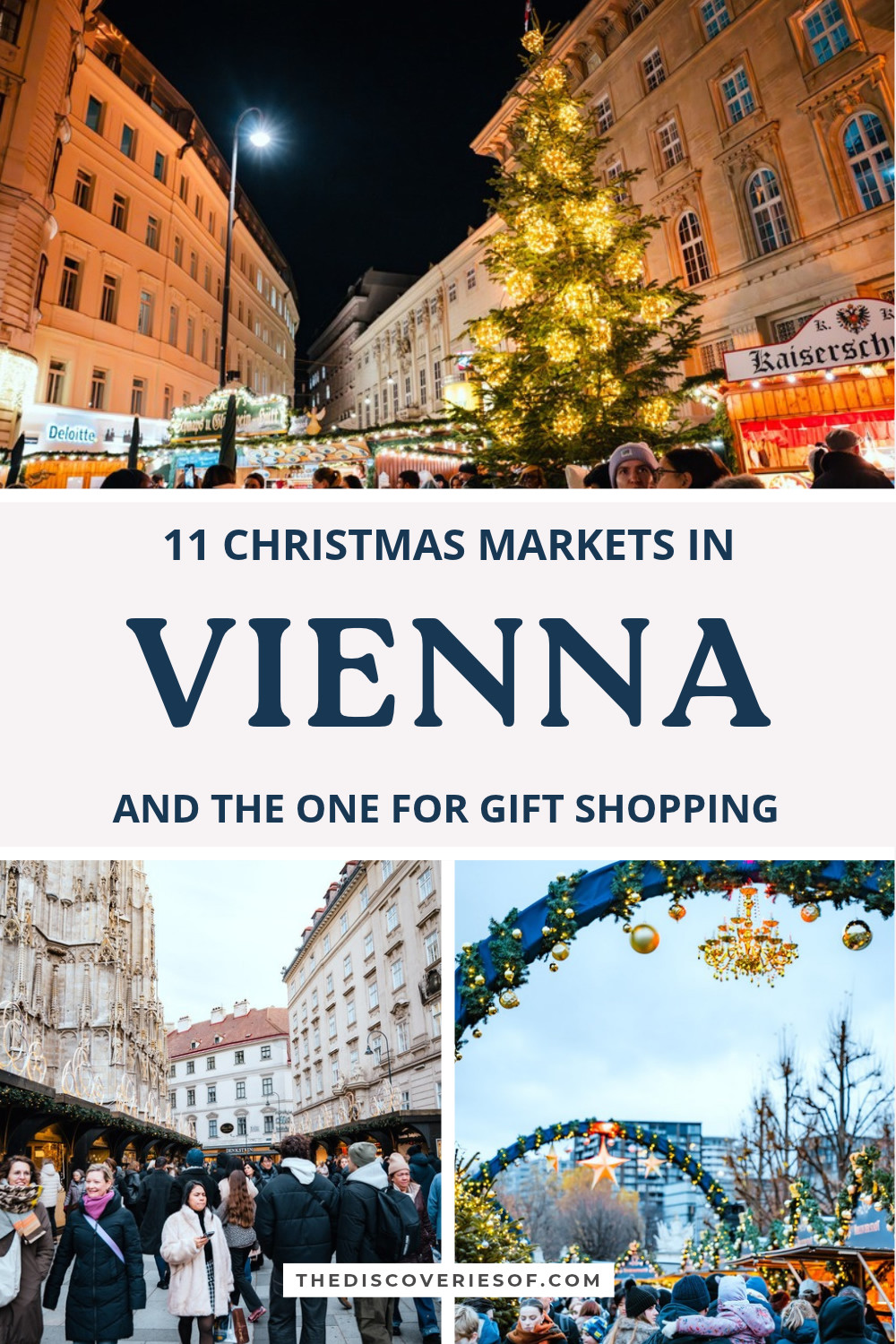
From a skating rink outside the City Hall to an all-organic market below a baroque church, Vienna’s Christmas markets fill palace forecourts, museum squares and cobbled lanes, and every one pours its punch into its own mug. These are the 11 I went to, with what I ate, drank and bought at each, plus the dates, hours and nearest U-Bahn.
I flew to Vienna in November a couple of weeks after filming London’s Christmas lights, so I assumed I was already in a festive mood. By the end of my first evening I realised I’d had no idea.
London does Christmas pretty well, but Vienna is on another level. Over four days I worked my way round 11 Vienna Christmas markets, tasting the cheese, the punch and the fried dough and ticking off Christmas presents as I went.
The markets fall roughly into two camps. There are the big spectacles, where the lights and the setting are the draw, and the smaller craft markets, where the people behind the counters make what they sell. The best trip mixes both.
Below, the markets are grouped by area, starting in the old town and along the Ring, so you can string several together in an evening. After them come the mug deposits, Punsch versus Glühwein, and an easy route that links four markets on foot.
The best Christmas markets in Vienna, area by area
1. Wiener Christkindlmarkt, Rathausplatz
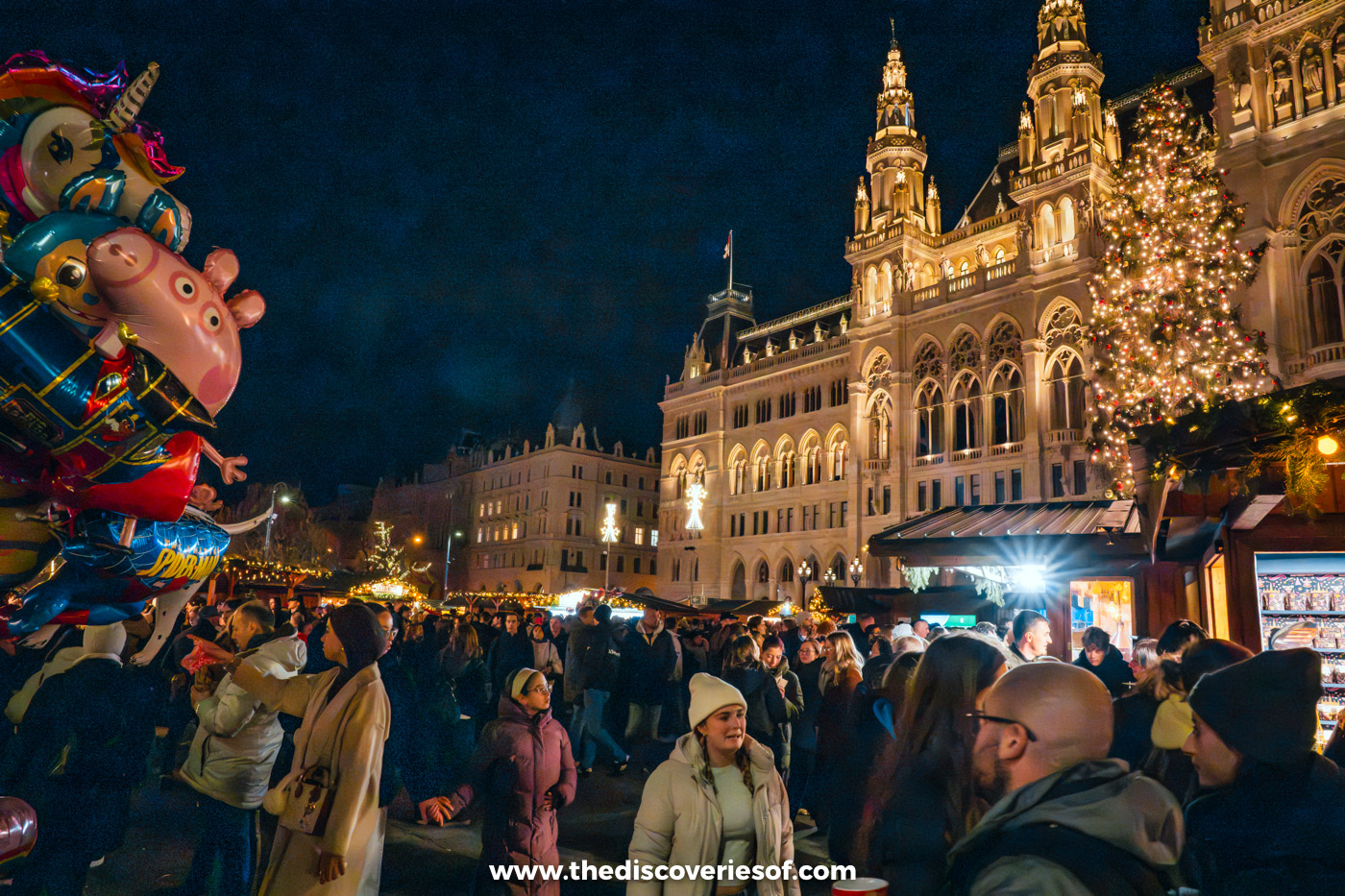
I turned a corner onto Rathausplatz on my first night and stopped dead. A huge illuminated arch spelling out Wiener Christkindlmarkt, topped with a giant red bow, frames the neo-Gothic City Hall, which glows behind the stalls like a cathedral.
This is the city’s biggest and best-known market, and the sheer scale is the point. Every tree in the park beside the square is strung with lights, and there’s a carousel, a ferris wheel, glowing baubles taller than a person and a grotto of red hearts hanging from the branches.
Wandering through it, I felt like one of Santa’s elves, and I’ll admit it got me a little choked up.
It gets crowded, but the square is so big that I could still wander without being jostled. Finding the ice rink took a while, and when I did, it was vast: next to it, the one in Leicester Square looks tiny.
After a 3am start for my flight, I watched the skaters gliding backwards (and the ones clinging on for dear life) rather than joining them.
The stalls lean towards gifts, decorations and hot food rather than artisan produce to take home, so this isn’t where I’d do my serious shopping. But it’s free to walk in, much of the joy is simply being there, and it ranks among the most spectacular markets I’ve seen anywhere.
The market has been on this square since 1975, in front of a City Hall built between 1872 and 1883.
- Dates and hours: 13 November to 26 December, daily 10am to 10pm (to 6.30pm on 24 December). The Vienna Ice World rink stays open until 6 January, and skating costs extra.
- Nearest U-Bahn: Rathaus (U2). Trams D, 1 and 71 stop at Rathausplatz/Burgtheater on the Ring.
2. Am Hof
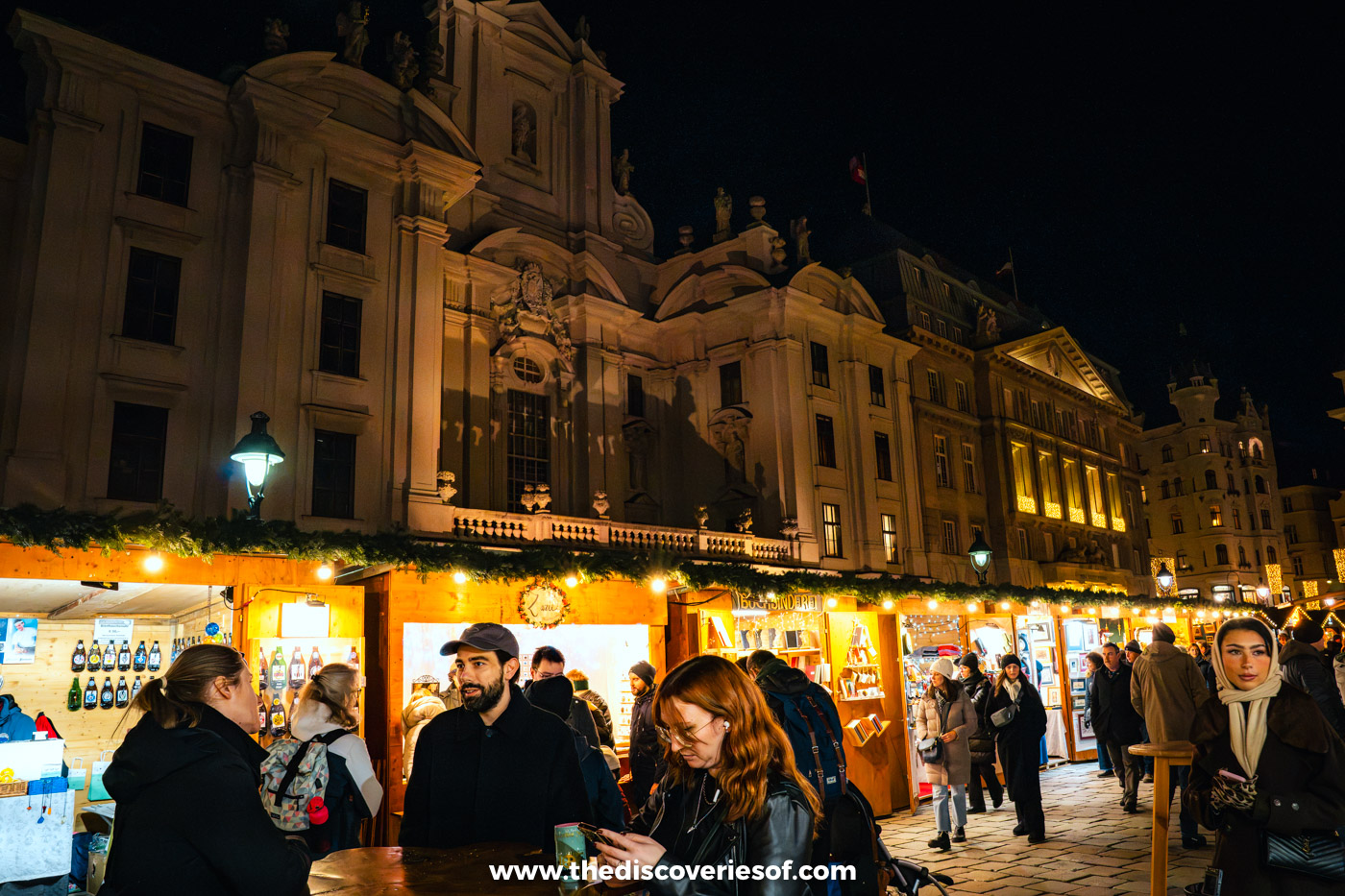
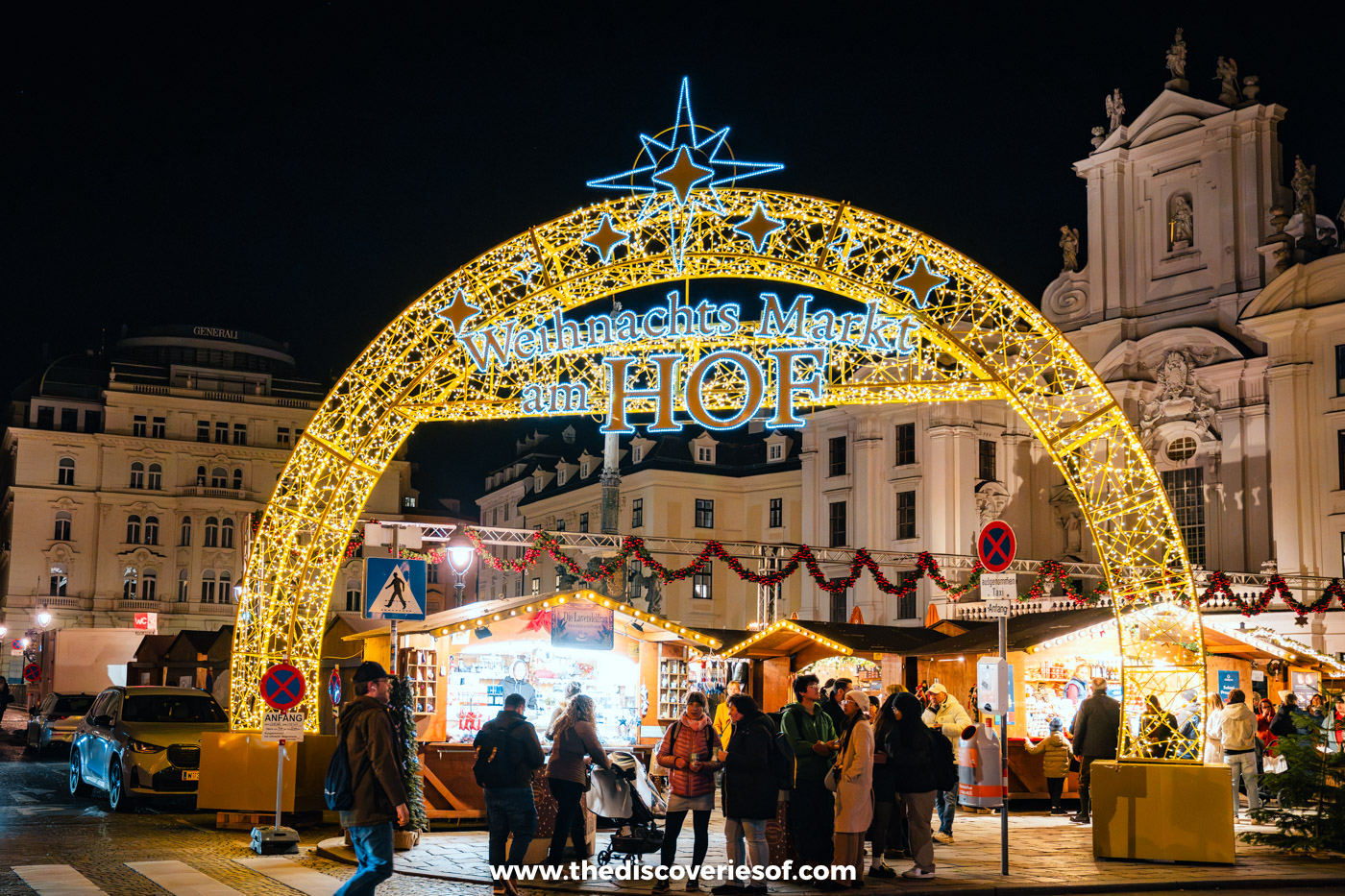
Am Hof was the first market I went to, and it set the bar for the rest of the trip. Wooden huts hung with fairy-lit hearts fill the square in front of the white baroque Kirche am Hof, and I could smell sausages on the grill before I’d made it under the arch.
It looks exactly like a Christmas market should, but what makes it special is the people running the stalls. They’re makers and producers selling their own work, so you know where everything has come from, which is rarer than it should be.
Within minutes I’d found a stall of Alpine cheeses and speck, and the stallholder let me taste before I bought. The chilli cheese was outrageously good, and an extra-mature Bergkäse surprised me by being smooth rather than crumbly. Both came home with me, along with some speck.
Then came my first Glühwein of the trip: deeply spiced, with cinnamon right at the front, and served in a mug almost too cute to give back. My score for Am Hof: 10 out of 10.
- Dates and hours: 13 November to 23 December. Monday to Thursday 11am to 9pm, Friday to Sunday 10am to 9pm, with food and drink until 10pm.
- Nearest U-Bahn: Herrengasse (U3), a short walk away.
3. Altwiener Christkindlmarkt, Freyung
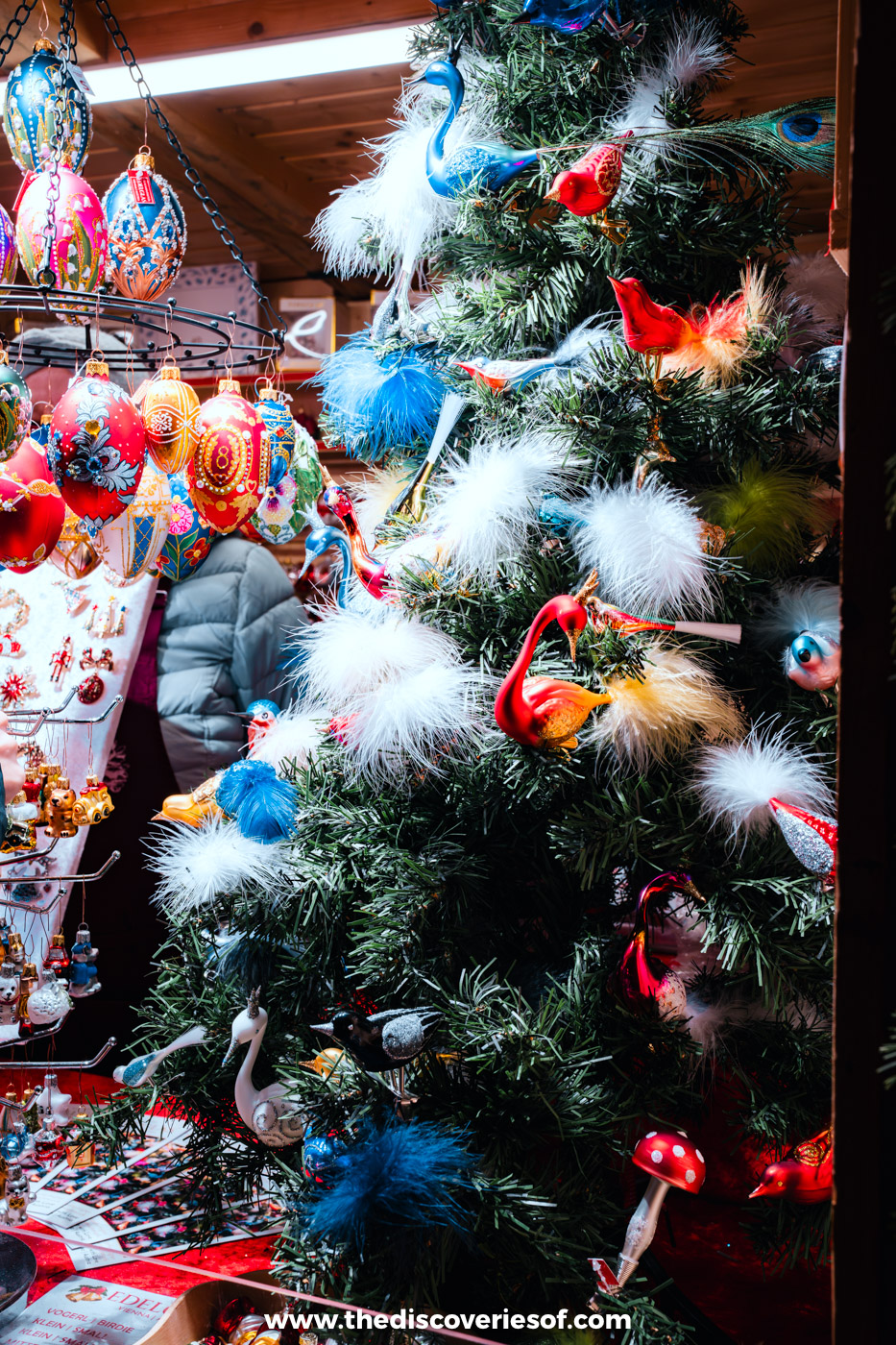
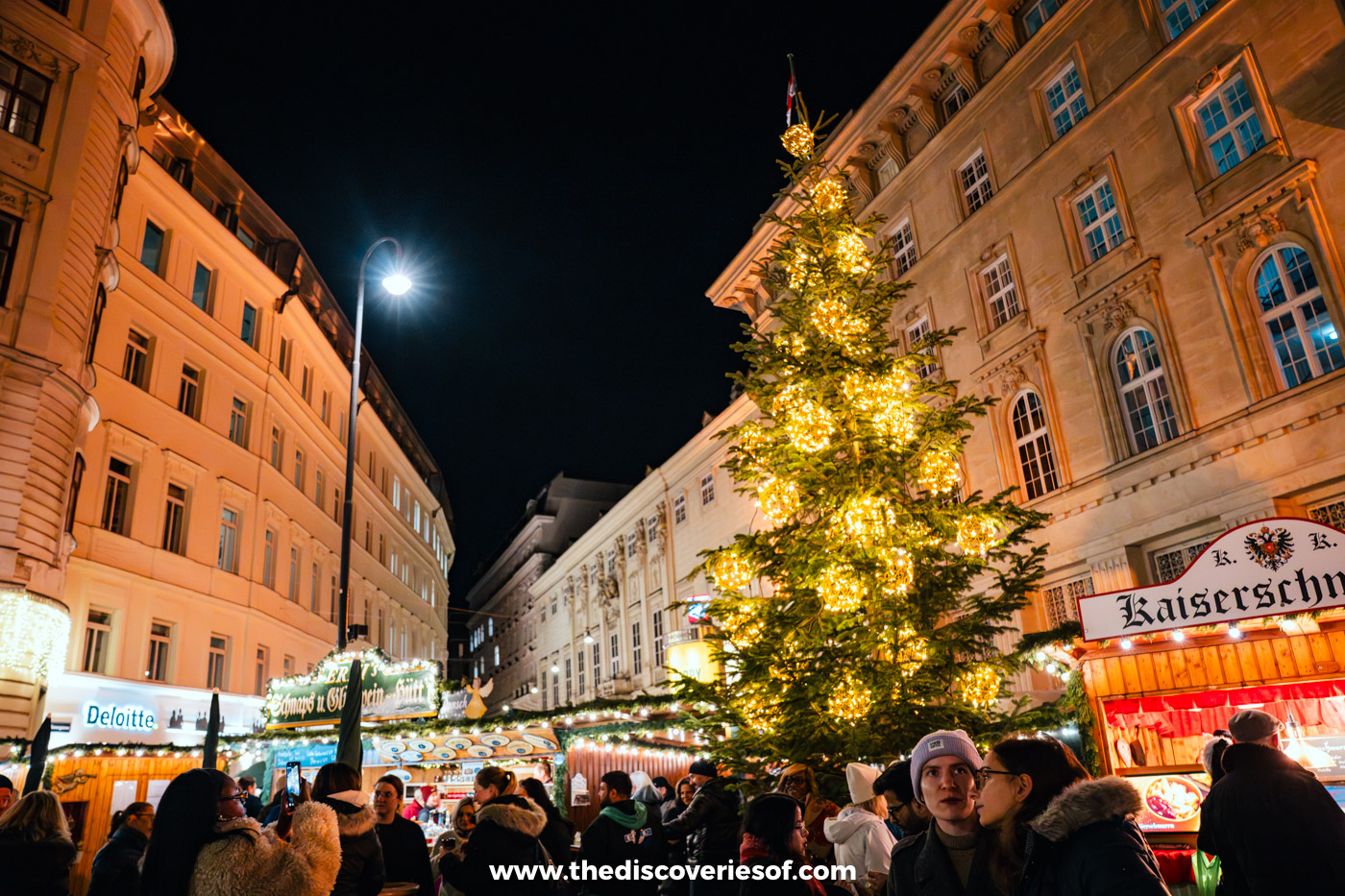
I knew Freyung was close to Am Hof, but I didn’t realise it was mere paces away, and the two make a natural pair. The Old Viennese Christmas Market here has the same craft focus: glass decorations, nativity figures and ceramics.
A tall Christmas tree stands in the middle of the square, with a Kaiserschmarrn stall doing a roaring trade beside it. I ducked into one place selling more baubles than I’ve seen in my life, every one hand-decorated (plus a few slightly creepy dolls), and came out with a bad case of cuteness aggression.
It’s also the market with the longest pedigree. The city’s records mention a Saint Nicholas and Christmas market on the Freyung as early as 1764.
The square’s name means “freedom”, after the sanctuary the Schottenstift monastery here once offered people on the run.
- Dates and hours: 14 November to 23 December, daily 10am to 9pm.
- Nearest U-Bahn: Herrengasse (U3) or Schottentor (U2).
Top Tip
Advent music starts at Freyung from 4pm, so arrive around dusk, see Am Hof first and then walk the two minutes across.
4. Stephansplatz
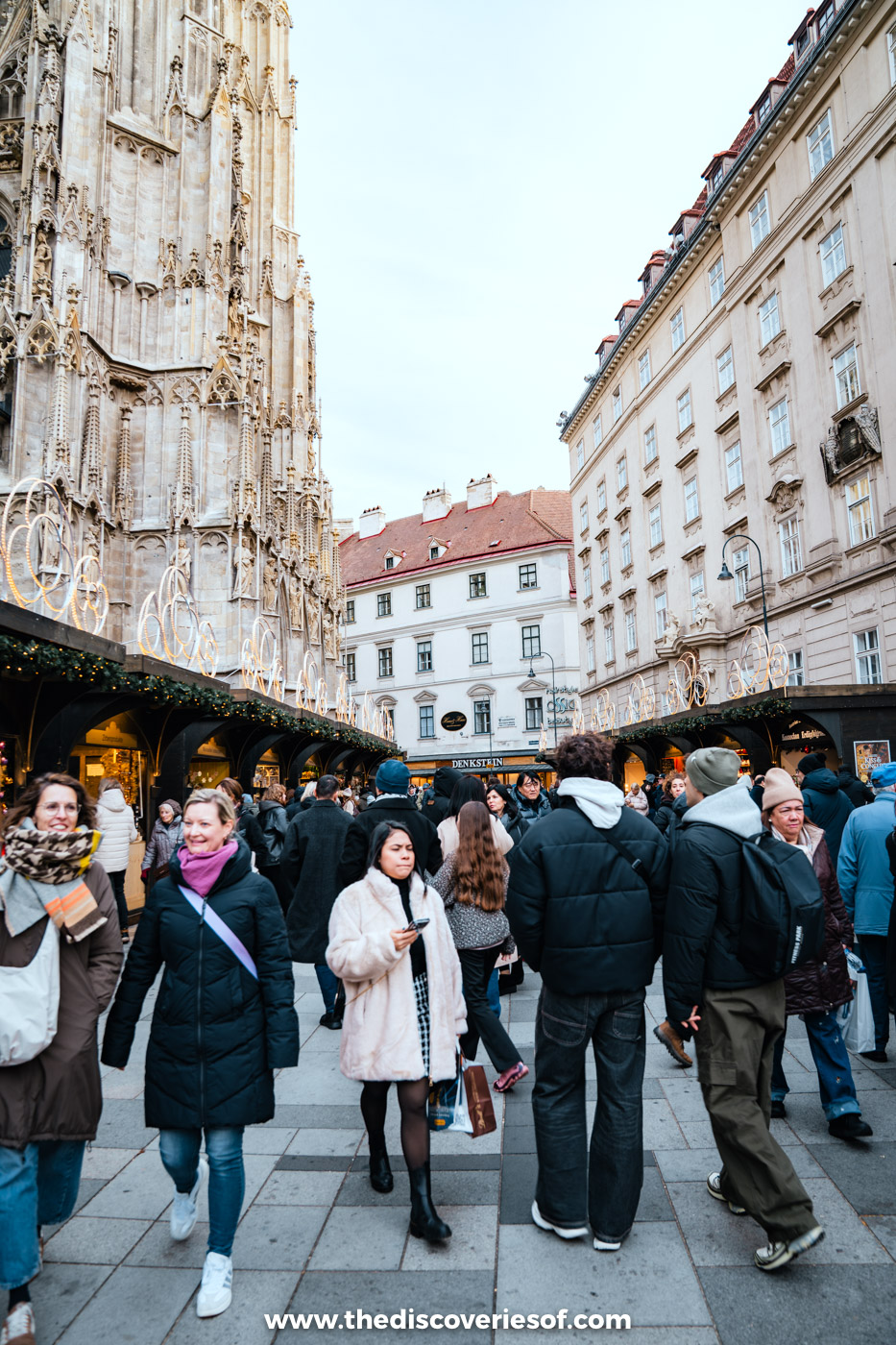
You’ll almost certainly pass this one, because it sits at the foot of St Stephen’s Cathedral, the sight nobody misses. It isn’t the most extensive market, with around 40 huts, and if you’re walking past the end of the Graben you could miss it altogether.
Head down the side of the cathedral, though, and the stalls wrap right round the back. There’s Glühwein, naturally, alongside woollen hats, alpaca mittens and fresh wreaths (lovely, if not the easiest thing to fly home with).
It’s a sweet little festive detour rather than a destination in its own right.
It’s also on the patch where the tradition began. Chronicles from 1626 mention huts on the Graben and the neighbouring Brandstätte, where bakers, confectioners and gingerbread sellers set out their wares, according to the City of Vienna’s market history.
- Dates and hours: 6 November to 26 December, daily 11am to 9pm (to 4pm on 24 December and 7pm on 25 and 26 December).
- Nearest U-Bahn: Stephansplatz (U1, U3).
Read next: St Stephen’s Cathedral in Vienna: exploring the two towers, catacombs and an emperor’s tomb
Top Tip
Make this the start of the evening route below. Come around 4pm, then walk up the Graben as its chandeliers light up.
5. Spittelberg
Spittelberg was my favourite, and if you only shop at one market, make it this one. Rather than filling a single square, the stalls spread through the cobbled 18th-century lanes of one of the city’s prettiest neighbourhoods.
It was once one of the rowdiest, crammed with taverns. Today it’s all quiet boutiques, and the market’s emphasis is on handmade goods with a local feel.
I found things here I’d genuinely never seen anywhere else, like wax candles carved into sculptural shapes and brass kaleidoscopes made by the woman selling them. In one, coloured glass tumbled into new patterns as I turned it; in another, jewels sank slowly through a thick liquid.
Almost every stall had something I’d have happily wrapped up as a present. You have to wander a little to find it all, but for the products alone it’s a 10 out of 10.
Spittelberg is also where I finally tried a Glühwein weiß, made with white wine instead of red. It’s lighter, so the cinnamon and star anise come through, while the red I tried next to it was much richer, with the tannins of the wine.
One stall’s punch list ran to caipirinha and Lillet versions, which I’ve never seen at any other market.
- Dates and hours: 13 November to 23 December. Monday to Friday 2pm to 9.30pm, weekends and holidays 11am to 9.30pm.
- Nearest U-Bahn: Volkstheater (U2, U3). The stalls run along Spittelberggasse, Stiftgasse, Schrankgasse and Gutenberggasse.
Top Tip
On weekdays Spittelberg doesn’t open until 2pm, so save it for late afternoon. The lanes look their best once the lights come on.
6. Winter at the MQ, MuseumsQuartier
I found this one by accident, cutting through the MuseumsQuartier on my way to Spittelberg. Winter at the MQ turns the main courtyard of the museum complex into a seasonal hangout, with Christmas trees and light installations.
The bars and cafés around the square serve punch, Glühwein and winter food. It’s mostly about eating and drinking rather than stalls, so treat it as a place to grab a mug and catch up with whoever you’re travelling with.
It’s free, and there are ice curling lanes in the courtyard if you want something to do besides hold a drink.
- Dates and hours: 13 November to 23 December. Monday to Friday 4pm to 11pm, weekends and holidays 2pm to 11pm.
- Nearest U-Bahn: MuseumsQuartier (U2) or Volkstheater (U2, U3).
Top Tip
It’s open until 11pm, later than any other market on this list, which makes it the natural last stop of the night.
7. K&K Christmas Village, Maria-Theresien-Platz
The K&K Christmas Village on Maria-Theresien-Platz is back after a year off, run by the same K&K team as the market at the Belvedere (number 10). It sits between the twin domed museums of art history and natural history, with the statue of Empress Maria Theresa in the middle.
It’s a great location, but it was actually my least favourite market of the trip. With around 70 stalls it’s one of the smaller ones, and there wasn’t much I hadn’t already seen elsewhere.
I had the Lángos with sour cream and cheese, a slab of crispy fried dough. It was tasty, but overpriced at €14.
- Dates and hours: 20 November to 26 December. Sunday to Thursday 11am to 9pm, Friday and Saturday 11am to 10pm.
- Nearest U-Bahn: Volkstheater (U2, U3) or MuseumsQuartier (U2).
Top Tip
Rathausplatz is round the corner and Spittelberg a couple of minutes’ walk away, so fit this one in between the two rather than making a special trip.
8. Art Advent, Karlsplatz
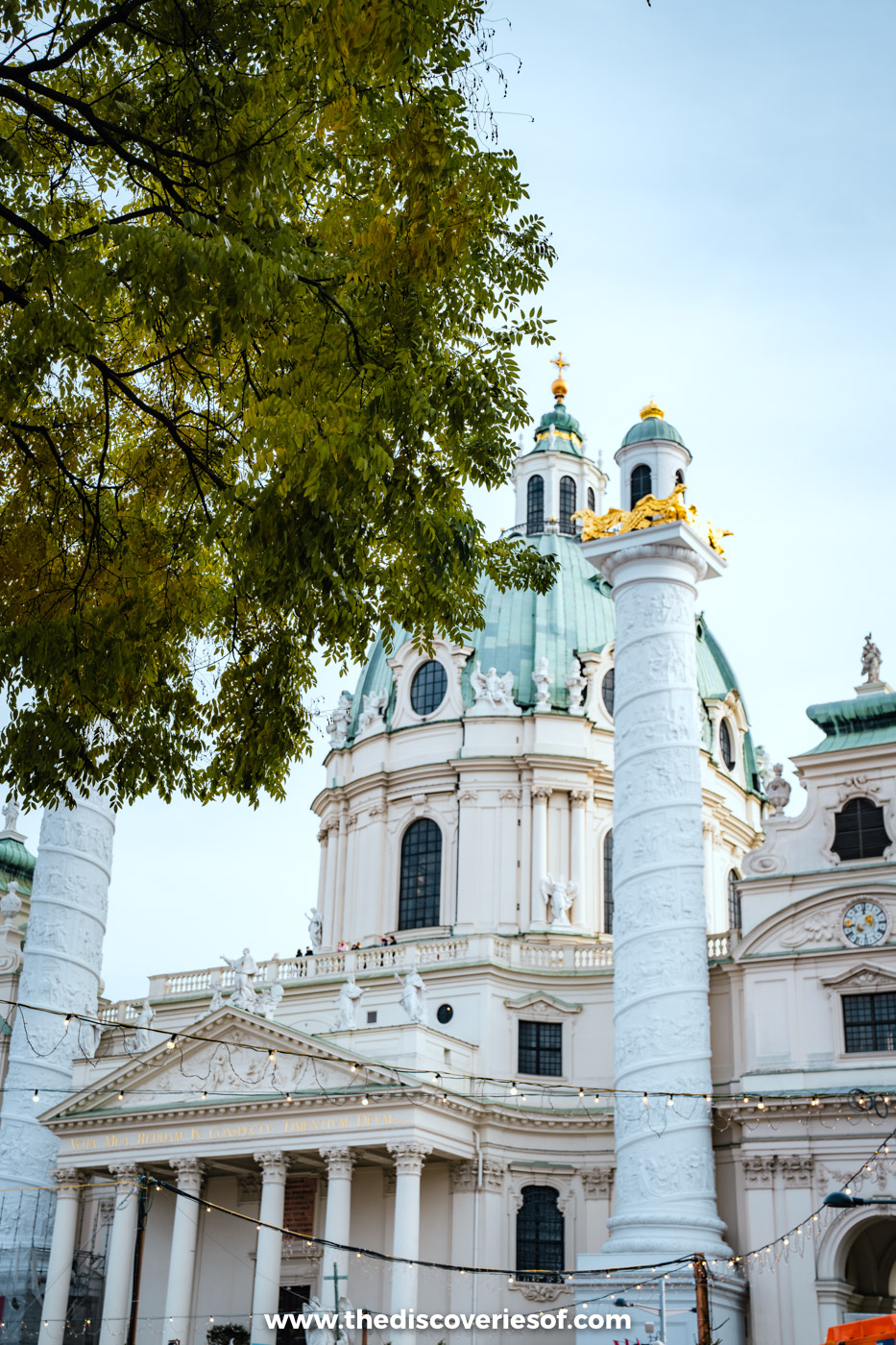
Art Advent was the surprise of the trip. Within half an hour of arriving, I’d decided it was fast becoming one of my favourites.
Two things set it apart: all the food is certified organic, and the stalls are arts and crafts, so what you find is handmade and one of a kind. I made my first gift purchase of the trip here, from a stall of concrete vases and pen holders with beautiful designs, for someone I knew would love one.
Come hungry at lunchtime, because the stalls each cook something different instead of repeating the same few dishes. I started with a Käsekrainer, a smoky sausage oozing with cheese, dipped in a chilli and pear sauce that tasted more like sweet red pepper. It was a proper winter warmer on a 5°C day.
A slice of raclette bread (€6.50 when I was there, €8.50 with bacon or ham) was gorgeous, although the brown bread could have done with toasting.
Then came a Wiener Krapfen, fried while I waited and filled with a deep, slightly tart jam. It was buried in so much icing sugar that a single cough sent a cloud of it everywhere.
An Apfel-Ingwer Punsch, apple with a warm kick of ginger and not too sweet, washed it all down. There were poppy seed noodles and Kaiserschmarrn too, and a puppet show for children in the middle of the market that was unbearably cute.
The setting helps. Karlskirche, the baroque church Emperor Charles VI vowed to build during the plague of 1713, rises behind the stalls, and Otto Wagner’s ornate pavilions for the old city railway stand in the park.
Round the corner is the gold-domed Secession, home of the breakaway artists’ group that included Klimt.
- Dates and hours: 13 November to 23 December, daily noon to 8pm, with food until 9pm.
- Nearest U-Bahn: Karlsplatz (U1, U2, U4).
Top Tip
Art Advent opens at noon, later than most, so plan it as a lunch stop, then walk on to Schwarzenbergplatz and the Belvedere for the afternoon.
9. Christmas Magic, Schwarzenbergplatz
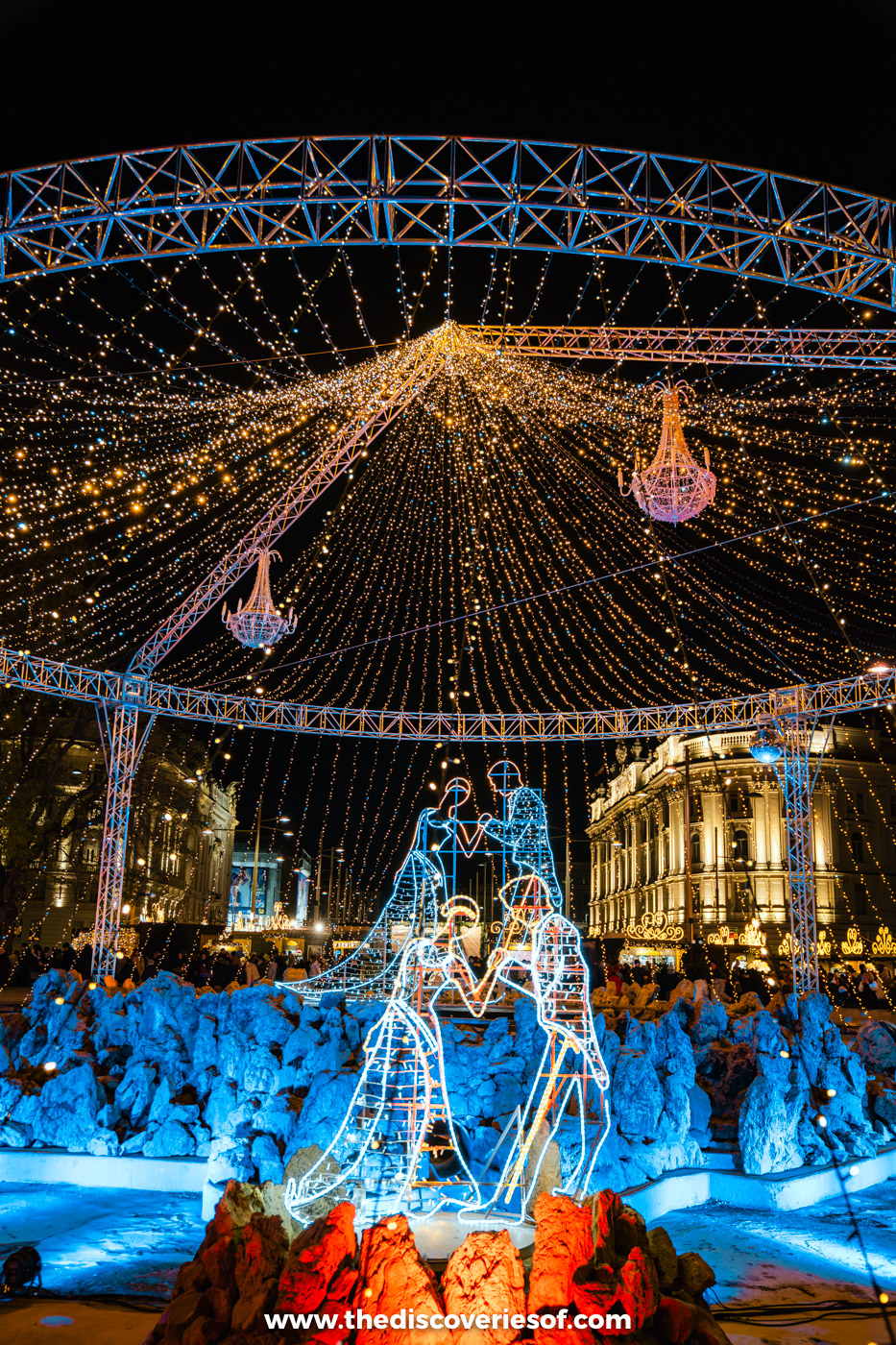
I spotted this market from the tram before I even knew what it was: a canopy of lights over the Hochstrahlbrunnen fountain, with glowing wire figures of a waltzing couple in the middle. Christmas Magic is new this season and fairly small, with 48 stalls, but the light installation makes it one of the most striking.
Every half an hour the lights put on a show timed to music, which was surprisingly good. On my visit it was preceded by live music on the stage, with Austrian takes on Christmas songs everyone knows.
Look out for the sugar snowballs: big balls of pastry in different flavours that you smash inside their paper bag and eat in pieces. I was on my way to dinner so didn’t try one, and I didn’t see them at any other market, which I still regret.
Behind the fountain stands the Soviet War Memorial, which commemorates around 17,000 Red Army soldiers who died in the fight for the city in 1945. It’s a reminder that these festive squares often carry heavier histories too.
- Dates and hours: 13 November to 26 December. Monday to Friday 11am to 9pm, weekends and holidays 10am to 9pm. Live music runs from Friday to Sunday from 6pm.
- Nearest U-Bahn: Karlsplatz (U1, U2, U4), about ten minutes’ walk. Trams D and 71 stop at Schwarzenbergplatz.
Top Tip
Come after dark. The light show is the whole reason to go, and it runs every 30 minutes.
10. K&K Christmas Market, Belvedere
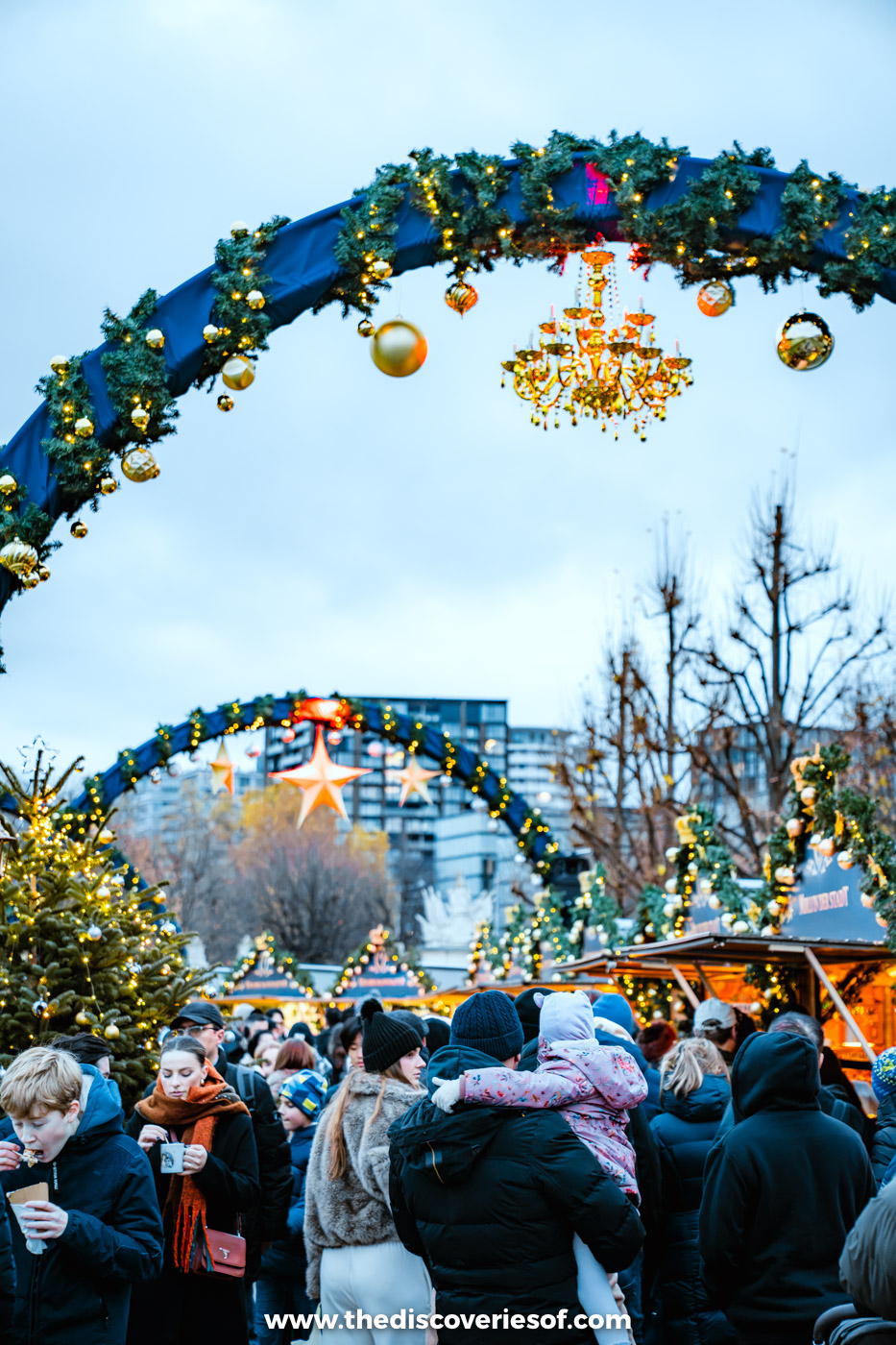
With the Upper Belvedere reflected in the pond behind it, this might be the prettiest setting of all. The K&K market had only just opened for the season when I went, and its stalls sell marzipan, ceramics, cards and, of course, Glühwein.
I couldn’t resist an eggnog marzipan from a stall selling dozens of flavours. It had a gooey centre and a crunchy coat of sugar balls, and it really did taste of eggnog. I’d love to find them in London.
The market is small, with two fairly narrow lanes of stalls, so on a Sunday afternoon you’re funnelled along and it gets crowded. When it does, retreat to the little café on the side of the Upper Belvedere to warm up over a melange.
The palace was built for Prince Eugene of Savoy, and its galleries hold Klimt’s The Kiss if you’d like to pair the market with some art.
- Dates and hours: 20 November to 31 December. Monday to Friday 11am to 9pm, weekends and holidays 10am to 9pm (to 5pm on 24 and 31 December).
- Getting there: tram D to Schloss Belvedere. The nearest U-Bahn is Südtiroler Platz-Hauptbahnhof (U1), about ten minutes’ walk.
Top Tip
It runs until 31 December, so it’s one of the few central markets still open between Christmas and New Year.
11. Schönbrunn Palace
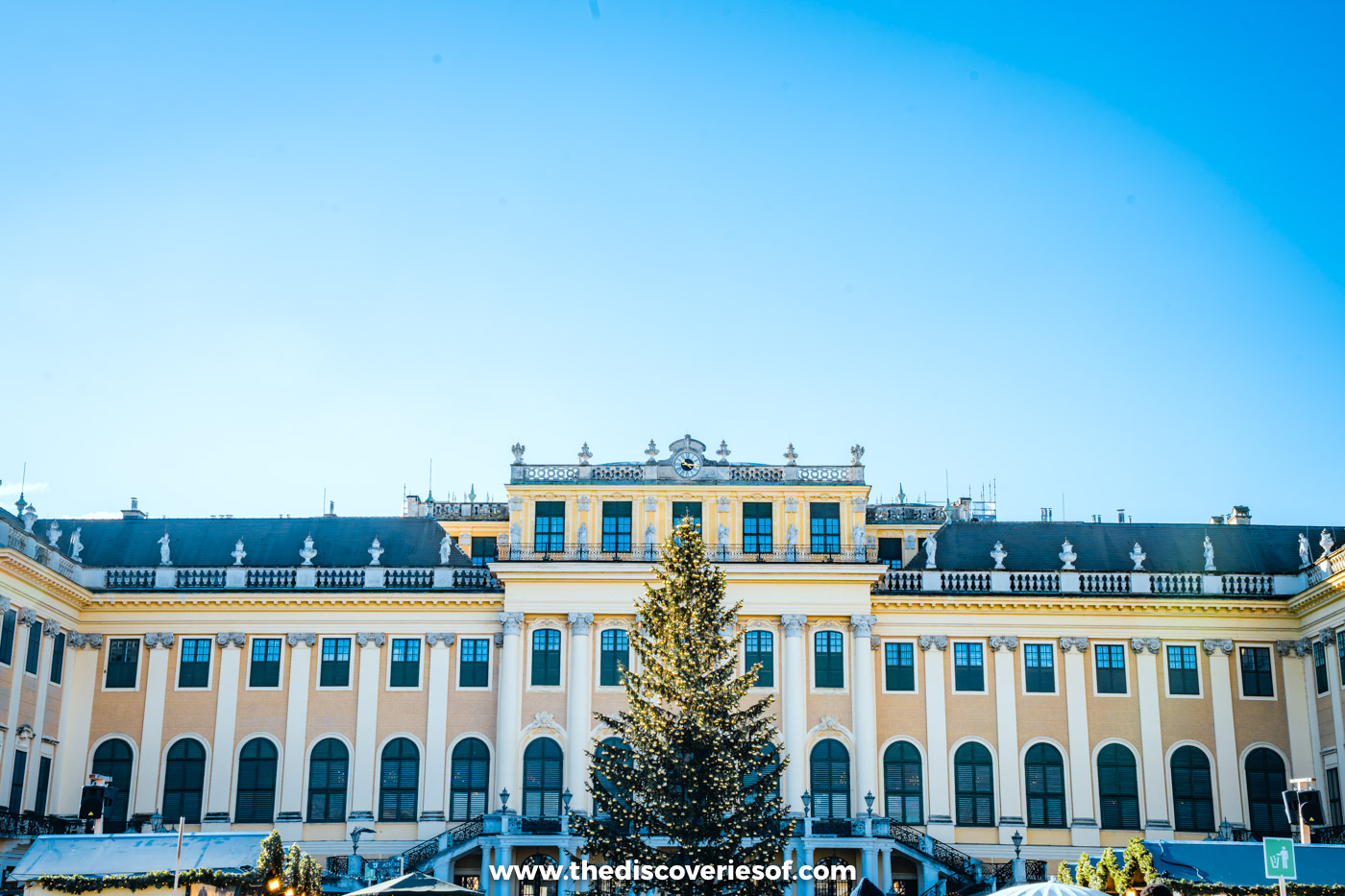
Schönbrunn’s market fills the palace forecourt, with the long yellow façade and a towering Christmas tree behind it, which is about as imperial as a backdrop gets. I’d booked the 8.30am palace tour, and by the time I came out the sun was shining and the stalls had opened.
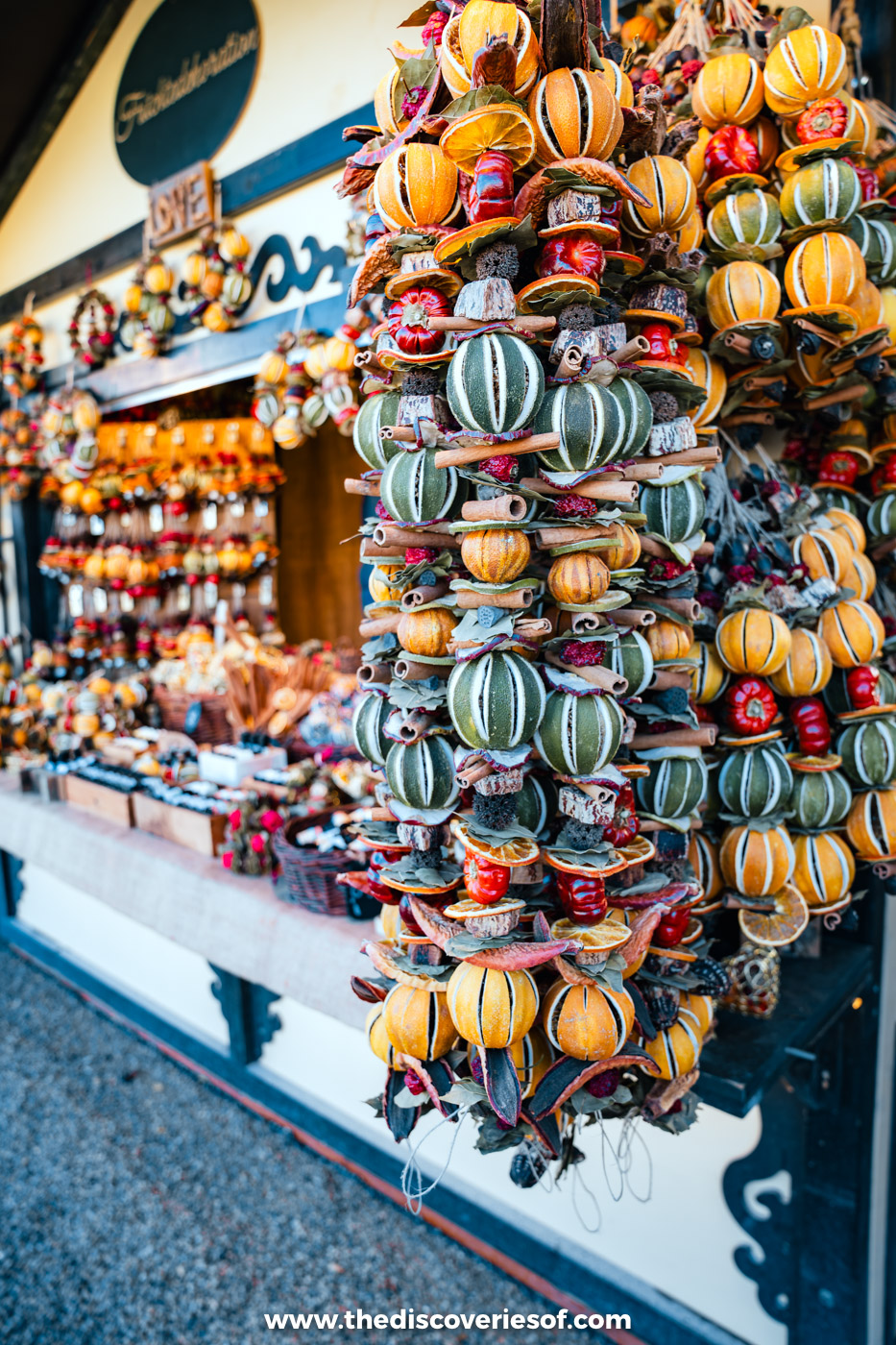
There’s a good mix: snow gloves, custom ceramics, incense and decorations such as strings of dried oranges. There’s plenty of hot food too, from potatoes to fries, and the waft of spices wherever you walk.
This is where I had my first Beerenpunsch, a berry punch with fresh fruit floating in it. It was sweet and lightly spiced, like a warm cordial, with a pop of redcurrant or strawberry every other sip.
The Orangenpunsch was even better. I’d worried it would taste like warm orange squash, but it was gently spiced and citrusy: Christmas in a cup.
- Dates and hours: 6 November to 6 January, daily 10am to 9pm (to 4pm on 24 December and 7pm from 25 December). Free to enter; the palace rooms need a ticket.
- Nearest U-Bahn: Schönbrunn (U4).
Read next: A guide to Schönbrunn Palace, the Habsburgs’ 1,441-room summer home
Top Tip
This is the last market standing, open until 6 January. Book an early palace slot and browse the stalls afterwards, as I did.
Mugs, deposits and what to drink
How the mug deposit works
Every market serves its hot drinks in its own design of mug, and you pay a deposit (Pfand) on top of the drink, usually €5, although a few smaller markets charge less. Hand the mug back at a drinks stall in the same market and the deposit is returned; hold on to it and you’ve bought yourself a souvenir.
Expect to pay from about €5 for a standard punch or Glühwein up to around €8 for the speciality ones, on top of the deposit.
Don’t
Don’t carry a mug on to the next market and expect a refund there. Each market only takes back its own, so return it before you move on.
Punsch or Glühwein?
Glühwein is mulled wine: red (rot) as standard, and often white (weiß) too, which is lighter and lets the spices shine. Punsch is a broader family: a hot, sweet base of fruit juice, tea or wine, usually laced with rum or another spirit.
It’s flavoured however the stall likes, from orange and berry to apple and ginger. Kinderpunsch is the alcohol-free version for children (and anyone driving).
If I had to pick, I’d order the Glühwein weiß at Spittelberg, the Orangenpunsch at Schönbrunn and the Apfel-Ingwer at Karlsplatz. And I’d never pass up a Beerenpunsch with fresh fruit in it.
An easy route for seeing several markets in one evening
The old town markets are close enough to link on foot, and the walk between them takes you under some of the city’s best Christmas lights. Start at Stephansplatz around 4pm, as the light fades, and walk up the Graben under its chandeliers, which at blue hour are peak Christmas.
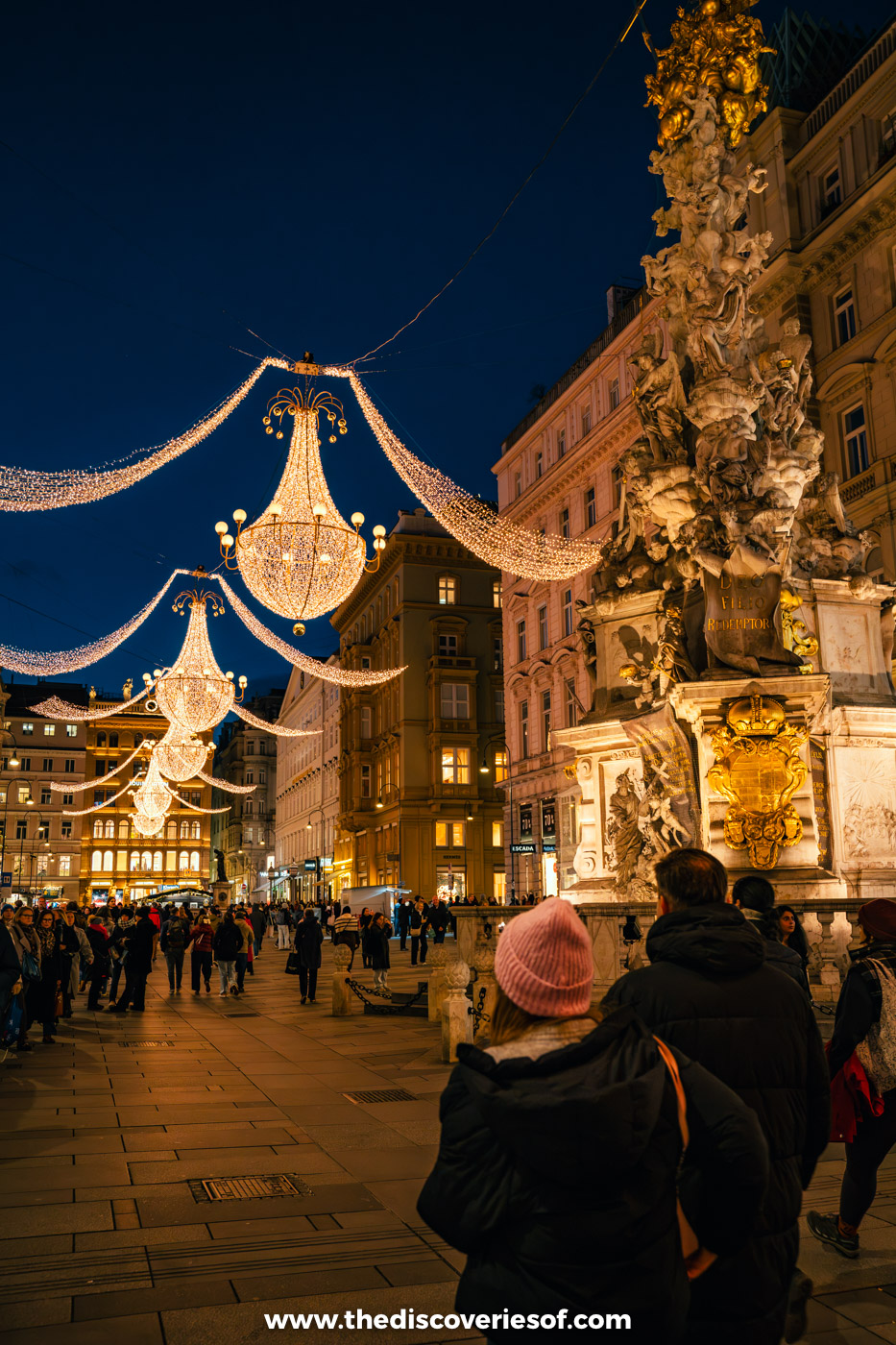
At the far end, Kohlmarkt is worth a quick look for its twinkling lights. Then turn right onto Bognergasse, where lit cylinders hang over the street and sway in any breeze.
You’ll come out at Am Hof, about ten minutes from the cathedral, and Freyung is two minutes further on. From there it’s roughly ten minutes’ walk to Rathausplatz for the park, the rink and dinner nearby.
That’s four markets with about 25 minutes of walking.
On a second evening, start at the MuseumsQuartier, cross into the lanes of Spittelberg, then walk to Maria-Theresien-Platz. That leaves Rathausplatz round the corner if you want another look.
On a Sunday, follow my lead: lunch at Art Advent, the Belvedere in the afternoon and Schwarzenbergplatz after dark for the light show. Schönbrunn sits out on its own, so pair it with a morning at the palace.
The city tourist board keeps a full list of this season’s Christmas markets if you want to add more.
Do
If you’d rather someone else did the navigating, this small-group Christmas markets tour with punch and treats takes two to three hours and covers Spittelberg, the MuseumsQuartier and Rathausplatz.
Map
Read next
- SO/ Vienna review: spacious rooms, views both ways and breakfast 18 floors up
- Inside the Sisi Museum at Vienna’s Hofburg, where an empress hung gym rings in her dressing room
- 3 days in Vienna, with time for Habsburg palaces, grand coffee houses and two rival Sachertortes
- Sacher or Demel? Where to eat Sachertorte in Vienna, and the cake war behind it
- What Vienna in winter is really like, with Christmas markets, coffee houses, balls and a chance of snow
- St Stephen’s Cathedral in Vienna: exploring the two towers, catacombs and an emperor’s tomb
- How to see Vienna’s Christmas lights in one walk, from ballroom chandeliers to Roman ruins
- Visiting the Wiener Christkindlmarkt at Rathausplatz, where the ice rink winds through the park
- The Am Hof Christmas market, where Vienna’s makers sell their own work
- London’s best Christmas lights: a walking tour from Covent Garden to Marylebone
- Why Covent Garden at Christmas is the most festive corner of London
- 28 of the best city breaks in Europe, and how long to give each one
- Best places to visit in December: 29 warm and wintry escapes
- 25 stunning places to visit in Europe in winter
- Schnitzel, strudel and a sausage at midnight: what to eat in Vienna, and where to order it
- Trześniewski review: are Vienna’s century-old open sandwiches still the best quick lunch in town?
Love this? Save and share on Pinterest
Discover the top things to do, insider tips and hidden gems in our Austria Travel Guide.
Read the guides →