
Three days, three palaces and rather more cake than is strictly sensible. This day-by-day plan takes you up a cathedral tower, through Schönbrunn before the crowds and round the city’s great museums and coffee houses, with the timings, tables and tickets that make it all fit, and it still leaves room to decide which Sachertorte deserves its crown.
I went to Vienna in November with a very simple mission: climb its cathedral, eat my way round the city and find coffee houses where nobody would hurry me out. Four days later I’d ticked off a cathedral tower, two palaces, a very large schnitzel and both Sachertortes.
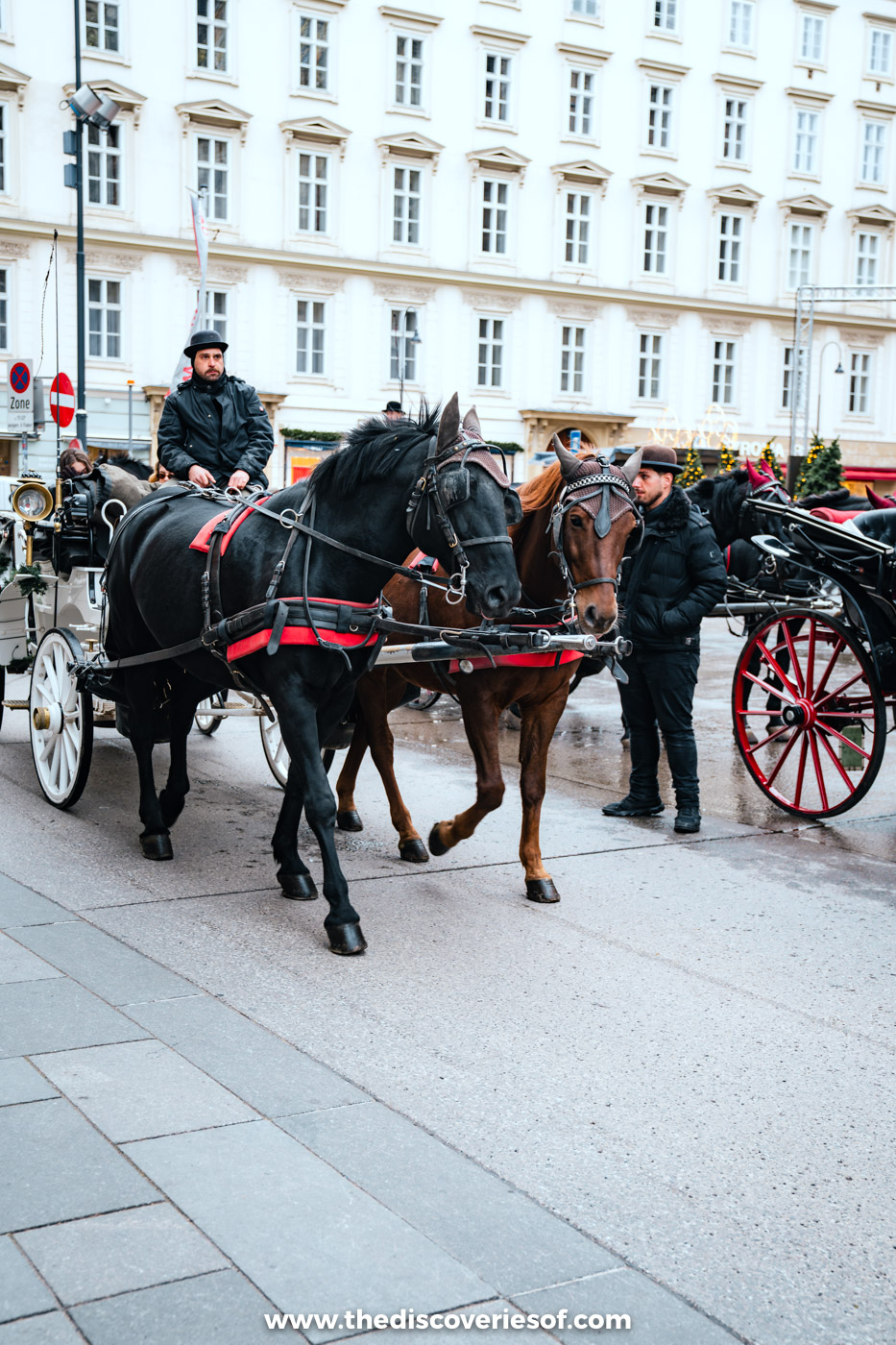
The city runs on a timetable that’s easy to trip over. The Naschmarkt’s stalls shut on Sundays, the Secession on Mondays and the Leopold Museum on Tuesdays, and Schönbrunn’s timed slots wait for no one, so the order of your days matters more than you’d think.
This plan for 3 days in Vienna is built on the route I actually walked, every place I ate (sorry, not sorry) and the couple of things I’d change with hindsight. I’ve added the big sights I didn’t have time for, so first-timers don’t miss anything, and each day stays in one corner of the city, so you spend your time gazing up at palaces rather than down at a map.
Day 1 is the old town and the Hofburg, from the top of St Stephen’s to the Sisi Museum. Day 2 is Schönbrunn, the Naschmarkt and the art around Karlsplatz, and day 3 is the Belvedere, a Sachertorte showdown and the Prater.
Right, comfy shoes on. Let’s go.
Your 3 days in Vienna at a glance
- Day 1, the old town and the Hofburg: St Stephen’s Cathedral and its south tower, the Graben, lunch at Trześniewski, Kohlmarkt and the Roman ruins, the Sisi Museum, Heldenplatz, coffee at Café Landtmann, then the State Opera and a late schnitzel at Lugeck.
- Day 2, palaces and art: Schönbrunn on the 8.30am slot, the Gloriette, lunch at the Naschmarkt, Karlskirche and the Secession, the Leopold Museum, drinks in Spittelberg and dinner at Plachutta.
- Day 3, the Belvedere and the cake war: the Belvedere gardens and The Kiss, Schwarzenbergplatz, Sachertorte at Café Sacher, the Albertina, round two at Demel, the Prater’s Giant Ferris Wheel and dinner at Zum Schwarzen Kameel.
- Have more time: the Kunsthistorisches Museum, the Spanish Riding School and an evening at a Heuriger.
- Where to stay: SO/ Vienna, across the Danube Canal from Schwedenplatz.
- Getting around: on foot in the old town, then the U-Bahn or a tram for Schönbrunn, Karlsplatz, the Belvedere and the Prater.
Top Tip
Start on a Thursday or a Friday. That way day 1 avoids Sunday, when the cathedral interior only opens at 1pm, and day 2 dodges the Monday and Tuesday museum closures and the Naschmarkt’s day off
Day 1: St Stephen’s, the Graben and the Hofburg
Welcome to the Innere Stadt, the old town wrapped inside the Ring, and the only transport you’ll need today is your own two feet. My 3am flight alarm meant I started at lunchtime, but with a whole day you can fit in the inside of the cathedral and the Sisi Museum too.
Pace yourself. Today ends with a night at the opera, or at least a schnitzel the size of a dinner plate.
10am: St Stephen’s Cathedral, inside and up the south tower
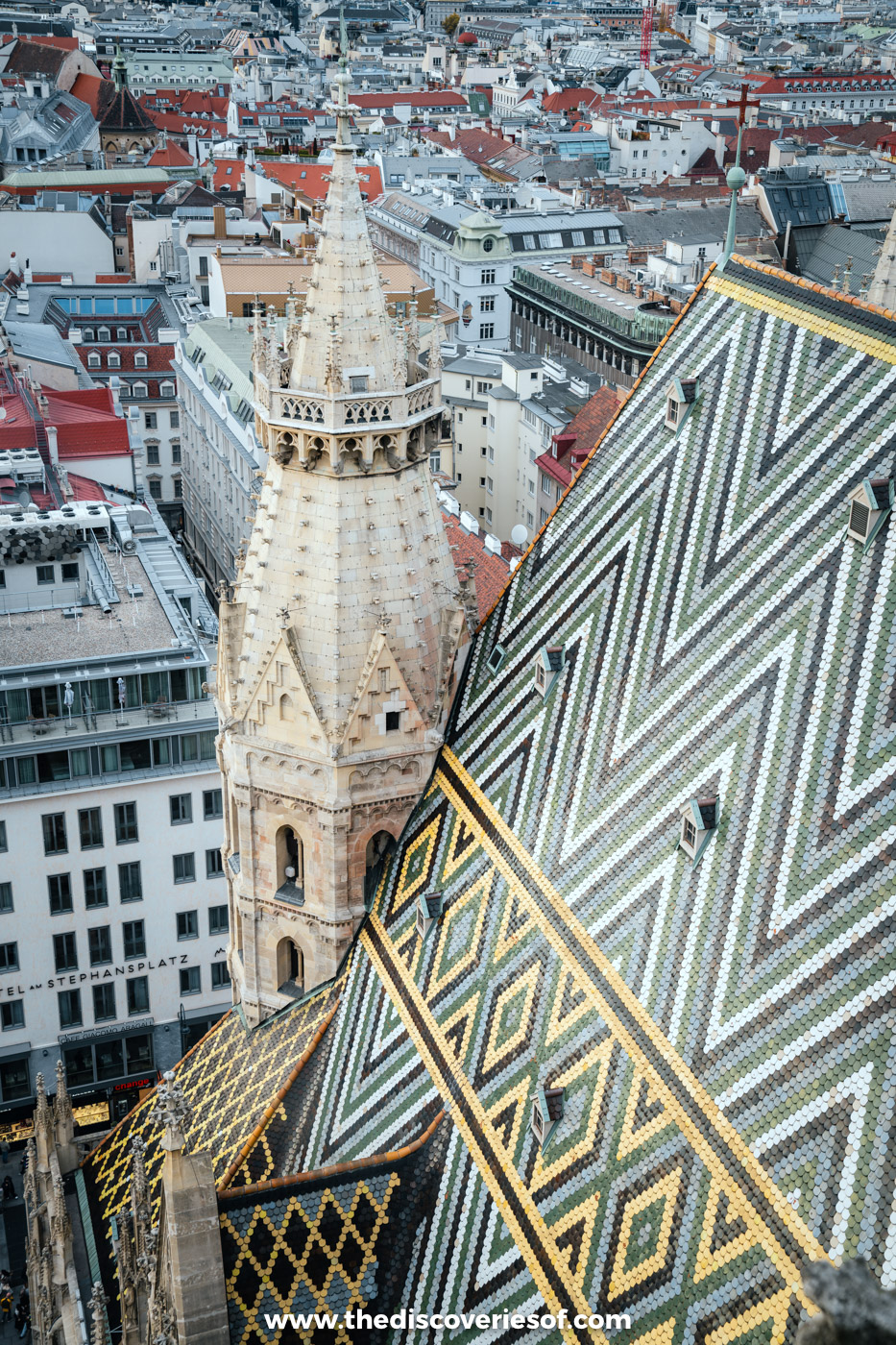
Start where the city did, at the Stephansdom, the absolute heart of Vienna. Go inside first, while the nave is open for sightseeing (9am to 11.30am, Monday to Saturday), because the sheer scale of it deserves your time; I only got round to it on my last morning and wished I’d gone in sooner.
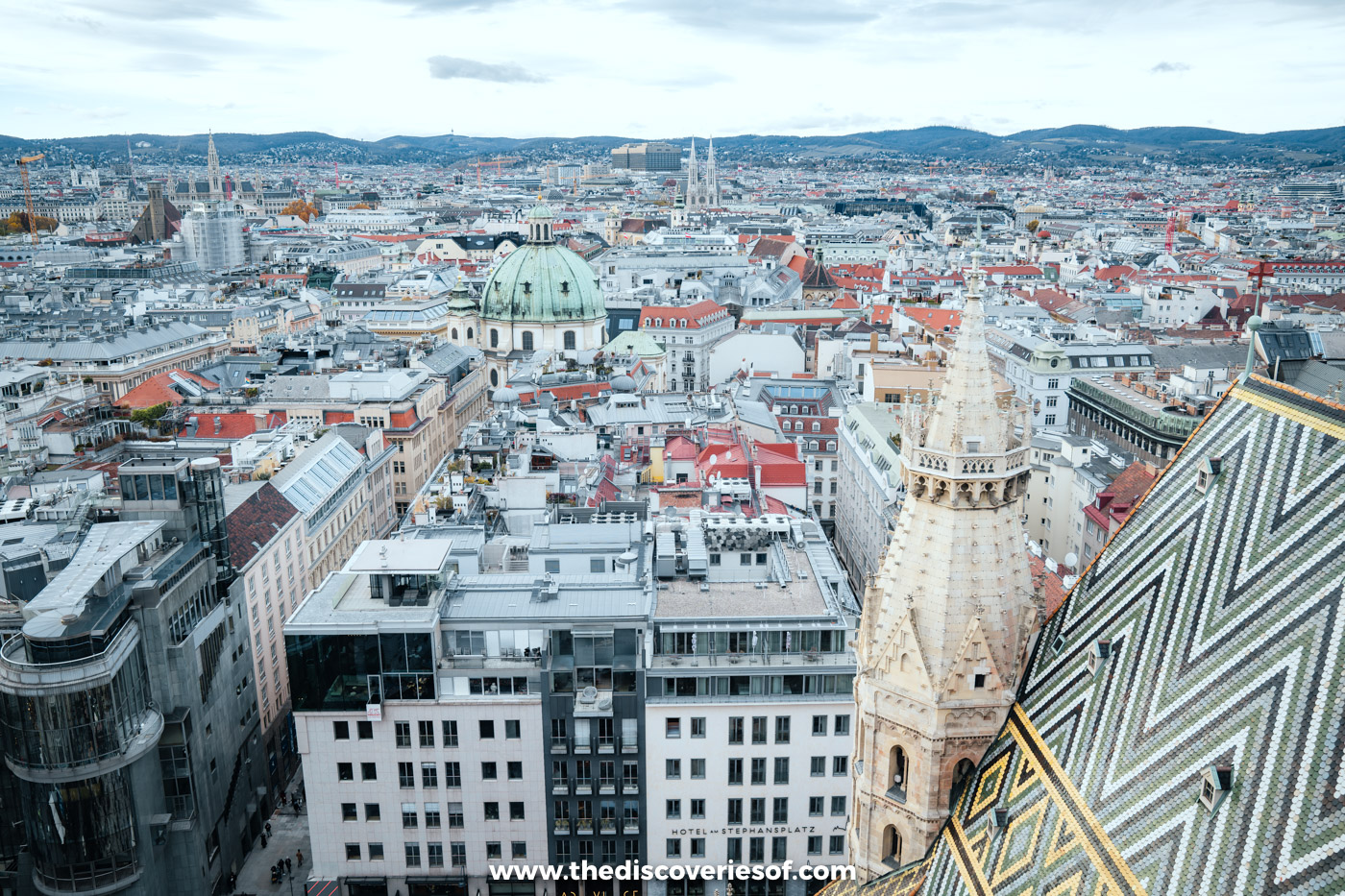
Then tackle the south tower. Let’s be honest: 343 steps is a bit of a slog, but this isn’t one of those torturous towers where the stairs shrink to a sliver, you can stop for a breather at a few points, and although I reached the top a little out of puff, the view was worth every step.
Look down and the glazed tiles of the roof zigzag away beneath you; look out and the red rooftops roll on as far as the wooded hills. The climb costs €8 and the tower is open daily from 9am to 7pm, with the last ascent at 6.15pm.
11.45am: walk the Graben to the Plague Column
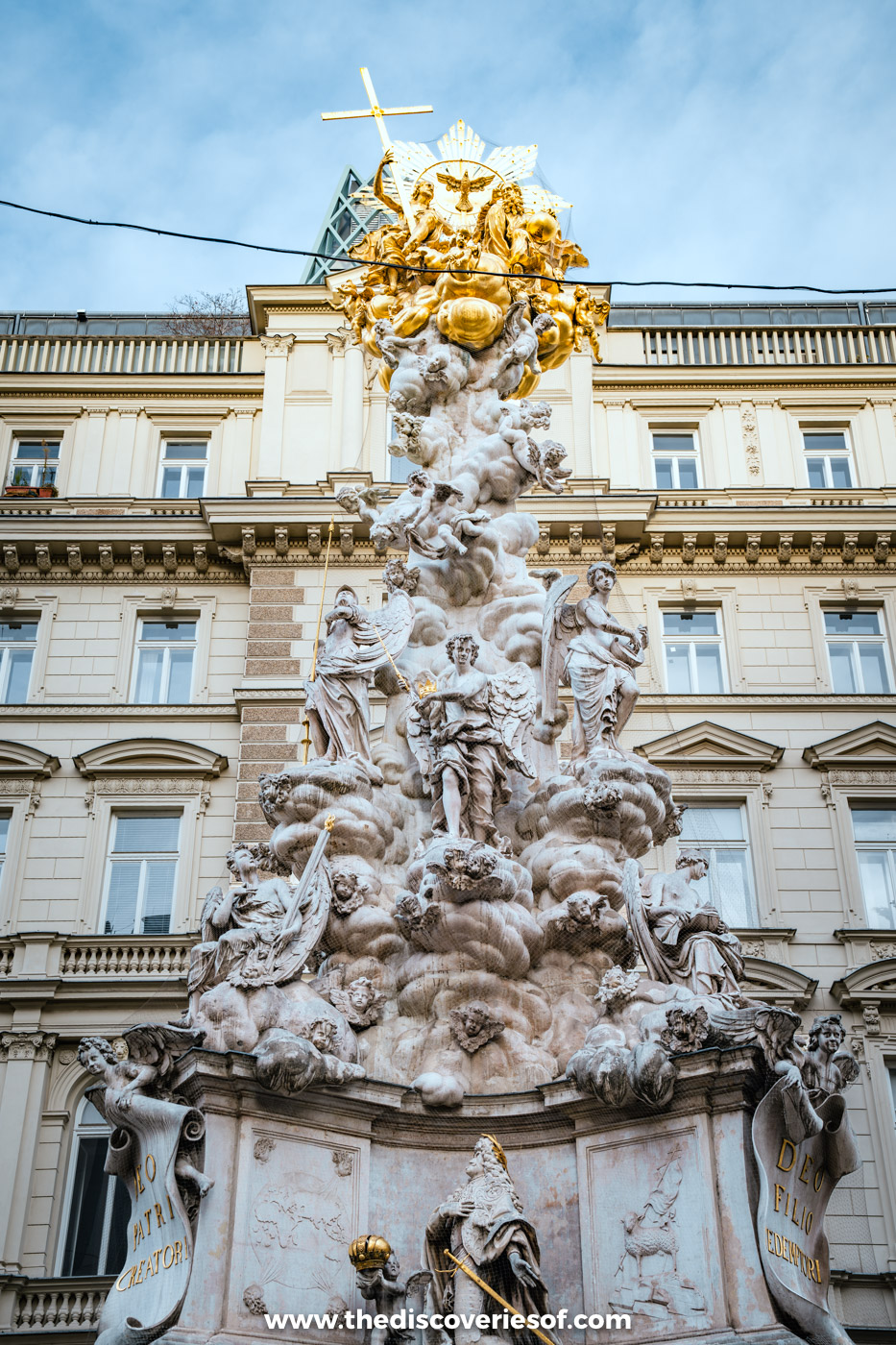
From the cathedral’s west front, the Graben opens up ahead of you, one of the grandest and busiest streets in the city. Can you believe its name means ditch? It follows the edge of the camp the Romans built here.
Halfway along rises the Pestsäule, or Plague Column. When plague hit the city in 1679, Emperor Leopold I swore to build a monument if it passed, and he kept his word, finishing it in the 1690s with a statue of himself at prayer up among the swirling clouds.
In a street heaving with shoppers, it’s quite something to stumble on such a stark reminder of the city’s darkest years.
12.30pm: Brötchen and a Pfiff at Trześniewski
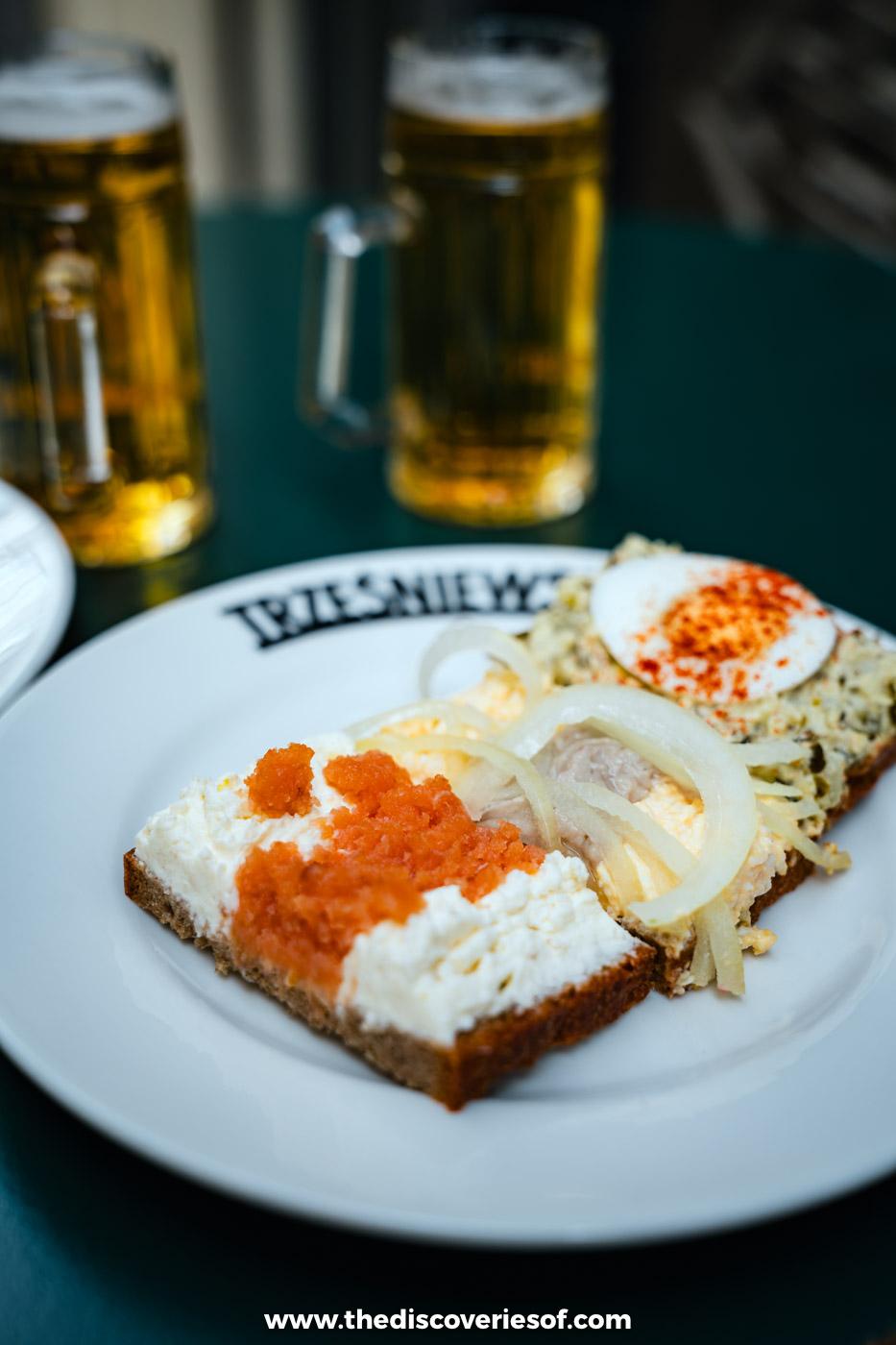
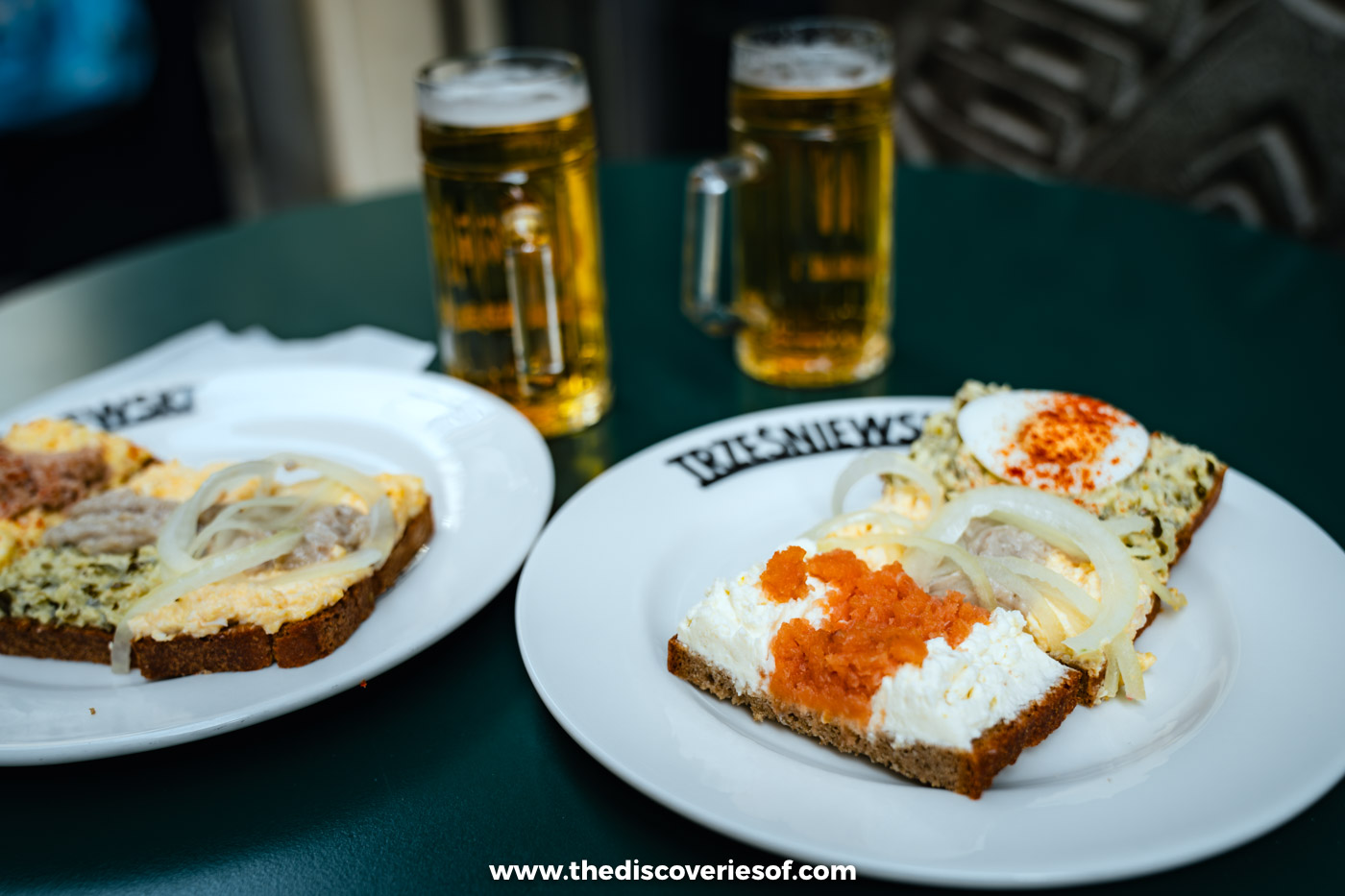
Just off the Graben on Dorotheergasse, Trześniewski has been making open sandwiches since 1902. You point at the Brötchen you fancy at the counter, little slices of rye bread piled with spreads, and wash them down with a Pfiff: an eighth of a litre of beer in the dinkiest, cutest glass.
I went for smoked salmon and cream cheese with a kick of horseradish, herring with egg and pickled onion (my breath was going to be delightful later), and gherkin and egg. Every one was very, very good, and as a famously slow beer drinker, I can confirm the Pfiff is exactly the right size.
Finding a quick, cheap lunch this good a few metres from a city’s most famous sight is rare. The Viennese have been eating it for over a century, and one bite tells you why.
Top Tip
Trześniewski on Dorotheergasse opens Monday to Friday from 8.30am to 7.30pm and Saturdays from 9am to 6pm, and it’s closed on Sundays, so plan day 1 for another day
1.30pm: Kohlmarkt and the Roman ruins on Michaelerplatz
Where the Graben ends, Kohlmarkt branches off to the left. It’s one of the poshest streets in town today, lined with luxury boutiques, which makes me love the fact that it’s named after the grubby old charcoal market that once stood here.
Kohlmarkt leads straight to Michaelerplatz and the Hofburg, home of the Habsburg emperors for more than 600 years, its gilded dome built on a properly imperial scale. In the middle of the square, in a sunken open-air display, lie the walls of Roman Vindobona, which were only uncovered in excavations between 1989 and 1991.
This was the spot that stopped me in my tracks: shoppers behind me, imperial grandeur in front and Roman stones underfoot. Generation after generation crossed this square with no idea what lay beneath their feet, and it really makes you think.
Top Tip
The ruins sit in an open display in the middle of the square, so there’s no ticket and no closing time. Come back after dark if you’re passing
2pm: the Sisi Museum and the Imperial Apartments
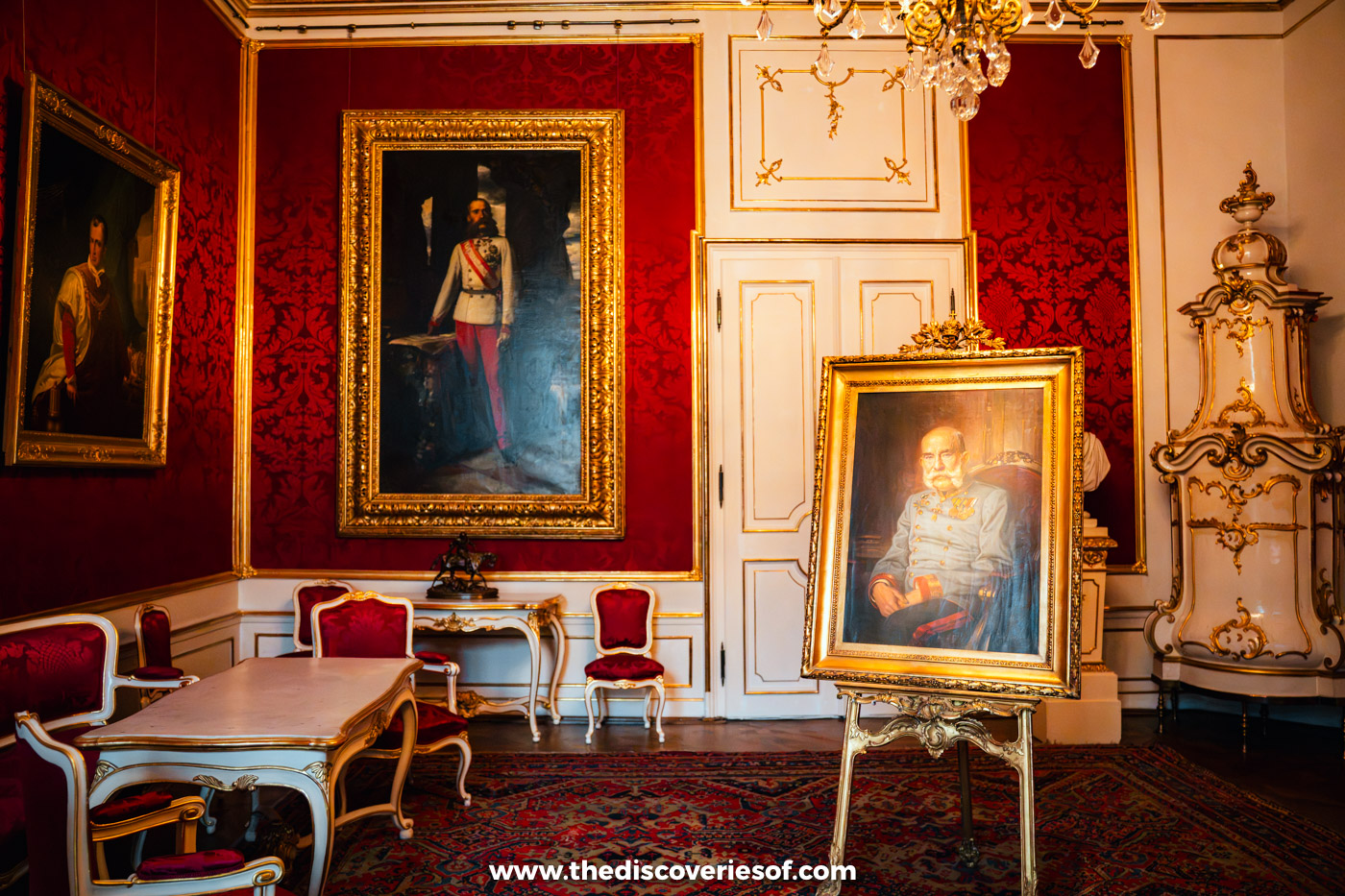
Walk through the Michaelertor into the Hofburg for the Sisi Museum, which had reopened that very week after its redesign when I went (great timing on my part). There was a steady stream of visitors, though it never felt crowded, and the audio guide set the scene for each room really well.
It tells the story of Empress Elisabeth, who married Franz Joseph in 1854 at 16, hated court life and spent years travelling to escape it, until she was assassinated in Geneva in 1898. She was, by all accounts, a fitness fanatic, and you can see the gymnasium where she exercised from 5am in summer.
It’s much smaller than Schönbrunn, so an hour or so is plenty. Day tickets cost €27 for a timed slot, from 9am to 5.30pm, with last entry at 4.30pm.
Tickets
Buy the Sisi Pass (€69) if you’re also doing Schönbrunn on day 2. It costs the same as the Palace Ticket and a Sisi Museum day ticket bought separately, and adds the Furniture Museum
3.30pm: Heldenplatz and the Neue Burg
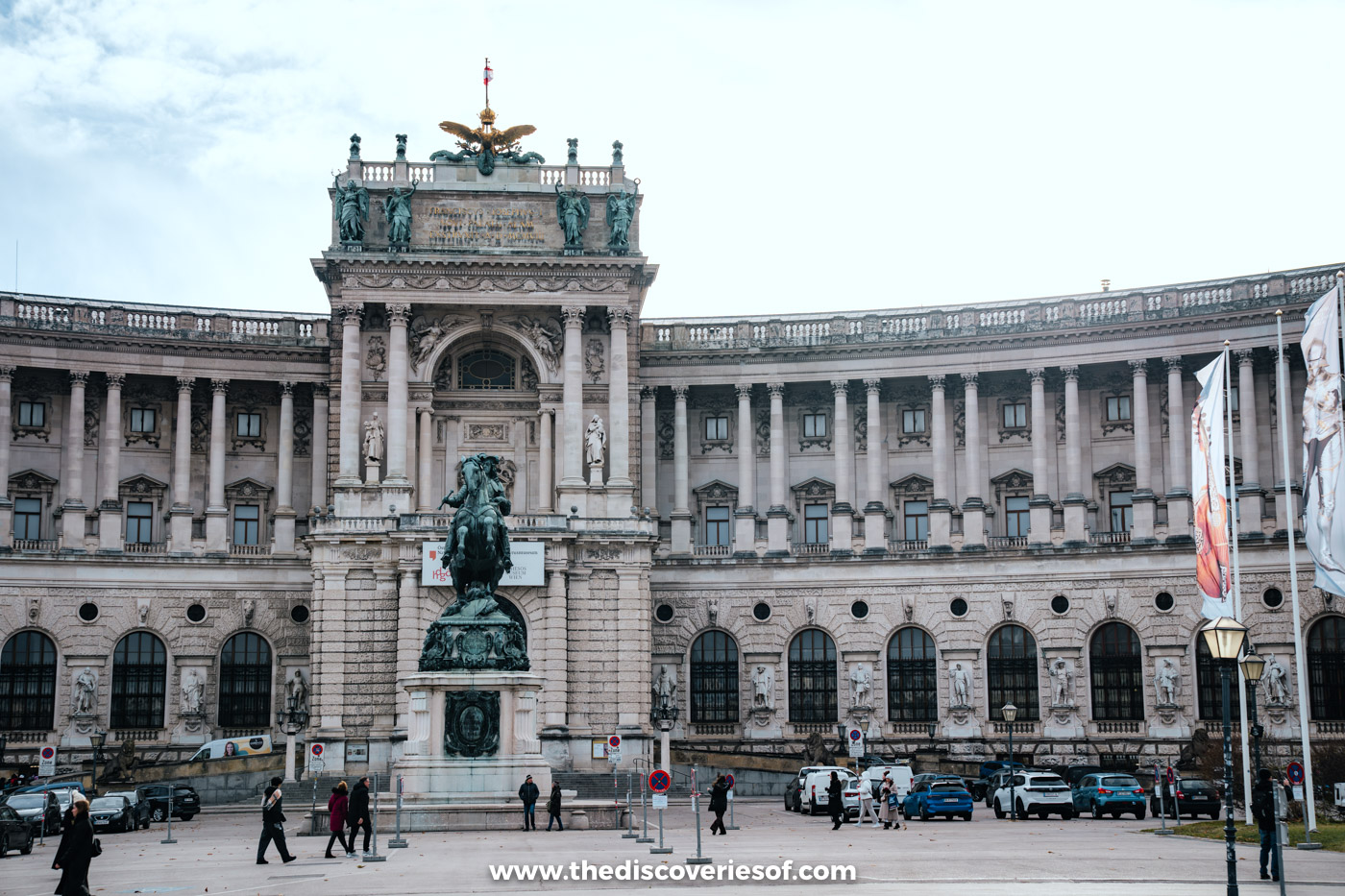
Afterwards, walk out on to Heldenplatz, in front of the curved Neue Burg, the last part of the Hofburg built before the empire fell. Hitler announced the annexation of Austria from here in 1938, and standing in that huge, open square, you really feel the weight of the city’s history.
From here the Volksgarten and the Ring are right on your doorstep, which makes it an easy hop to coffee.
4pm: coffee and Kaiserschmarrn at Café Landtmann
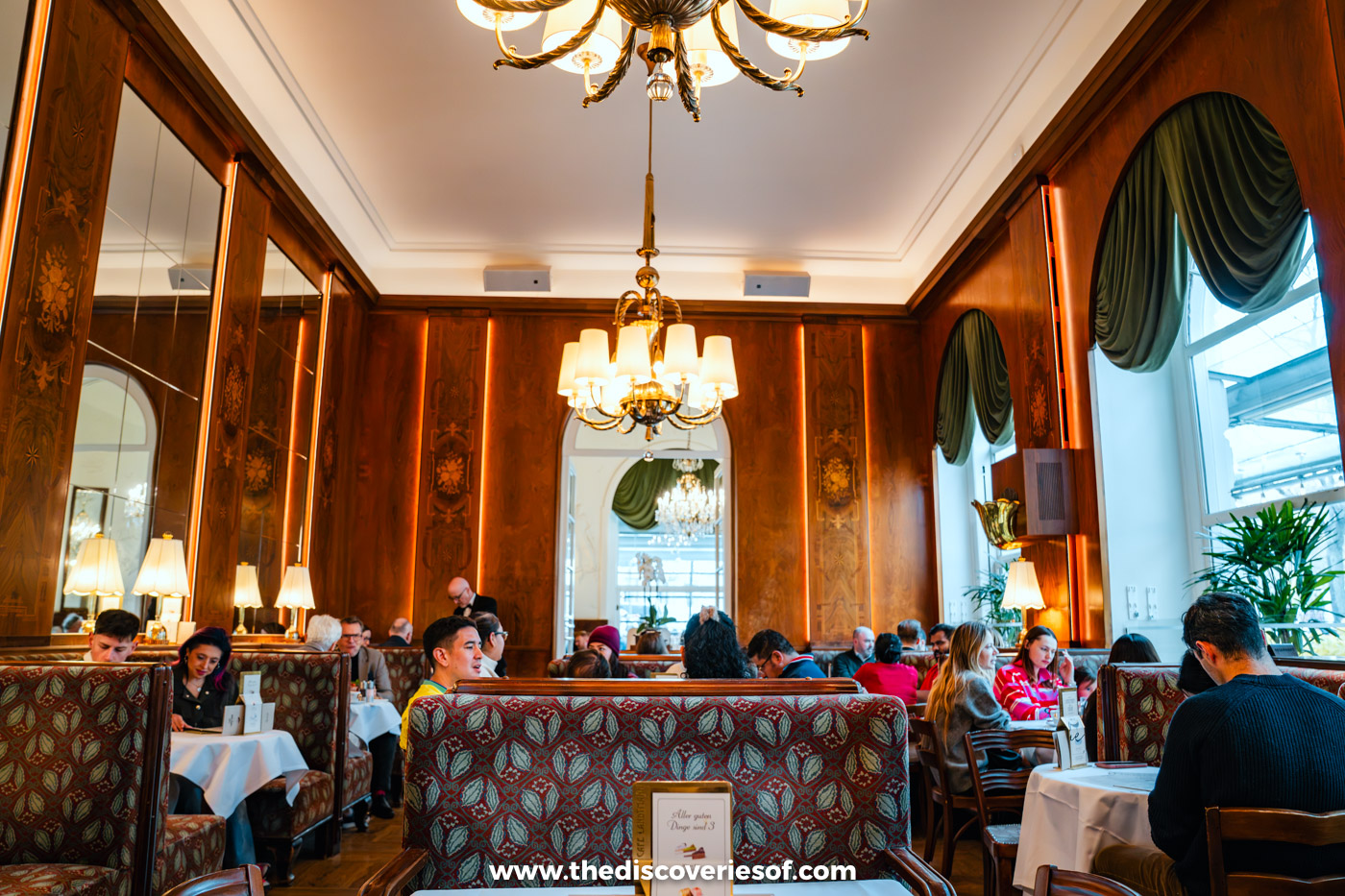
Café Landtmann, on the Ring by the Burgtheater, is about ten minutes’ walk from Heldenplatz. Its queue beat me on a Saturday evening, but at about 10am on a Monday I waited only five minutes or so for a table in its beautiful panelled room.
I ordered an Einspänner, black coffee in a glass under a towering cap of whipped cream, which looked slightly ridiculous in the best possible way. And at long last, I got my Kaiserschmarrn.
It’s a torn-up pancake under a snowdrift of icing sugar, with a slightly tart plum compote on the side, and the contrast is lovely. Kaiser means emperor and Schmarrn means mess, and legend has it a cook’s botched pancake became Franz Joseph’s favourite; food historians aren’t convinced, but I love the story.
Top Tip
If the queue is long, come back first thing on a weekday morning. The one that put me off on a Saturday night took about five minutes on a Monday
7pm: a night at the State Opera
The Vienna State Opera, on the Ring at the top of Kärntner Straße, puts on a different production almost every night of its season, which runs from September to June. Performances are in the evening, and the gilded auditorium is half the show.
Those standing places are one of the great bargains in Europe, at a few euros each. They go on sale online and at the box office from 10am the day before each performance, so check the current rules on the opera’s site before you go.
Don’t
Plan on the opera in July or August. The house is closed for the summer, so use the evening for a concert instead, or head straight to dinner
10pm: a late Wiener Schnitzel at Lugeck
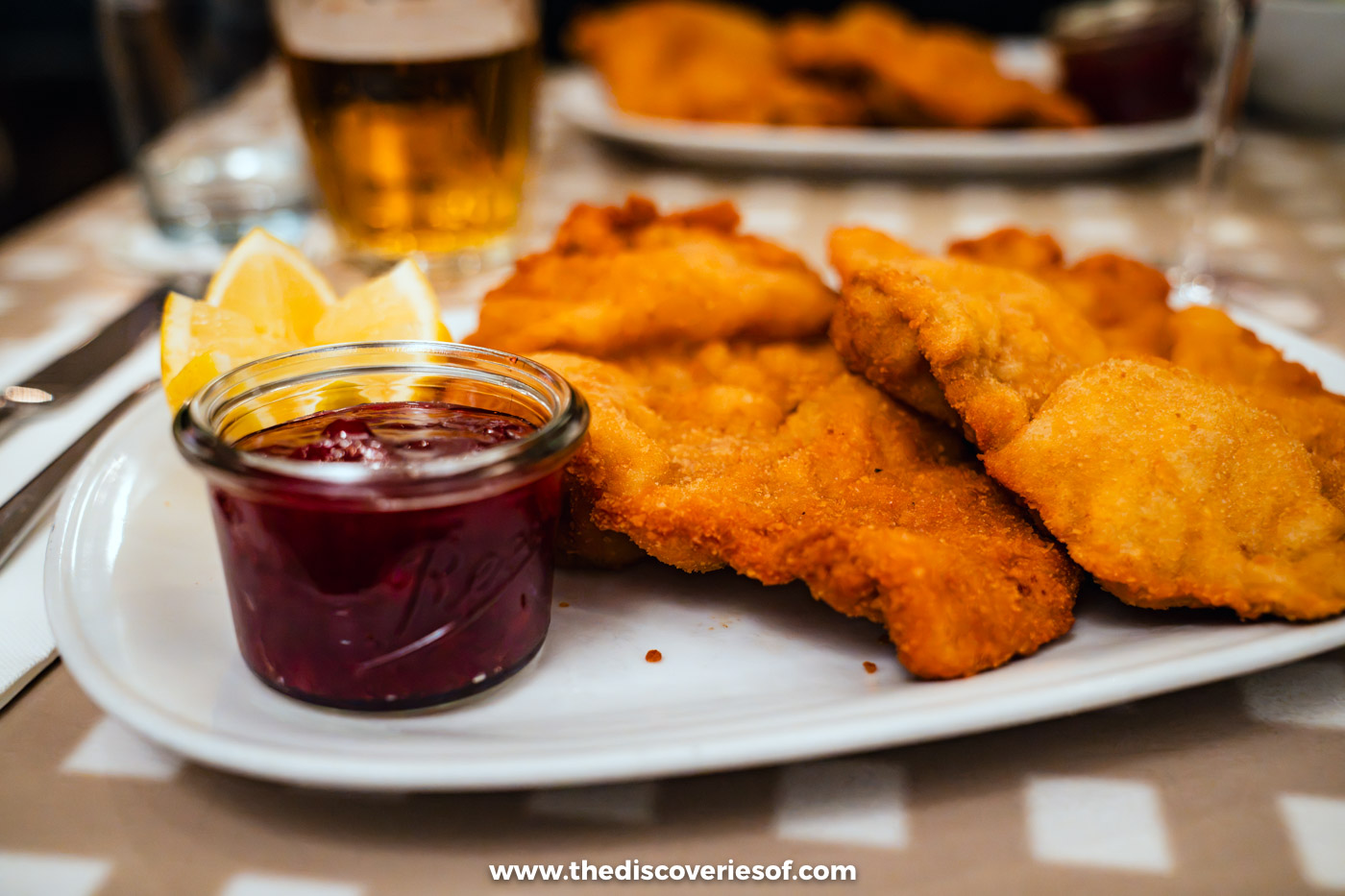
Lugeck, the sister restaurant of Figlmüller, the city’s best-known schnitzel house, serves until midnight, so it’s perfect after the opera (or earlier, if you skip it). A true Wiener Schnitzel has to be veal, and each one here starts as 250g of meat, pounded thin and breadcrumbed, so it arrives as two vast golden escalopes.
Mine came as tradition demands, with a pot of lingonberry jam and potato salad, and I paired it with a Grüner Veltliner. Hearty, generous and very, very Austrian: exactly what a long first day calls for.
Suggested stay: SO/ Vienna
I stayed at SO/ Vienna, the glass tower at Praterstraße 1 on the far bank of the Danube Canal, a couple of minutes from Schwedenplatz U-Bahn. The breakfast was amazing, the rooms are very spacious, and you get city views out of both sides. My full SO/ Vienna review has the rest.
Best of all, it’s brilliantly connected. From Schwedenplatz, Stephansplatz is one stop on the U1, Praterstern is two stops the other way, and the U4 runs direct to Karlsplatz, the Naschmarkt and Schönbrunn, so I’d happily recommend it. You can also browse more hotels in Vienna.
Day 2: Schönbrunn, the Naschmarkt and the art around Karlsplatz
Today is a palace, a food market and a run of galleries, so loosen your belt a notch and wear comfortable shoes. You’ll head out to Schönbrunn first thing, come back for lunch at the Naschmarkt and spend the afternoon among Vienna’s art nouveau.
Whatever you do, don’t make it a Sunday, Monday or Tuesday. The Naschmarkt’s stalls are shut on Sundays, the Secession on Mondays and the Leopold Museum on Tuesdays.
8.30am: the first slot at Schönbrunn Palace
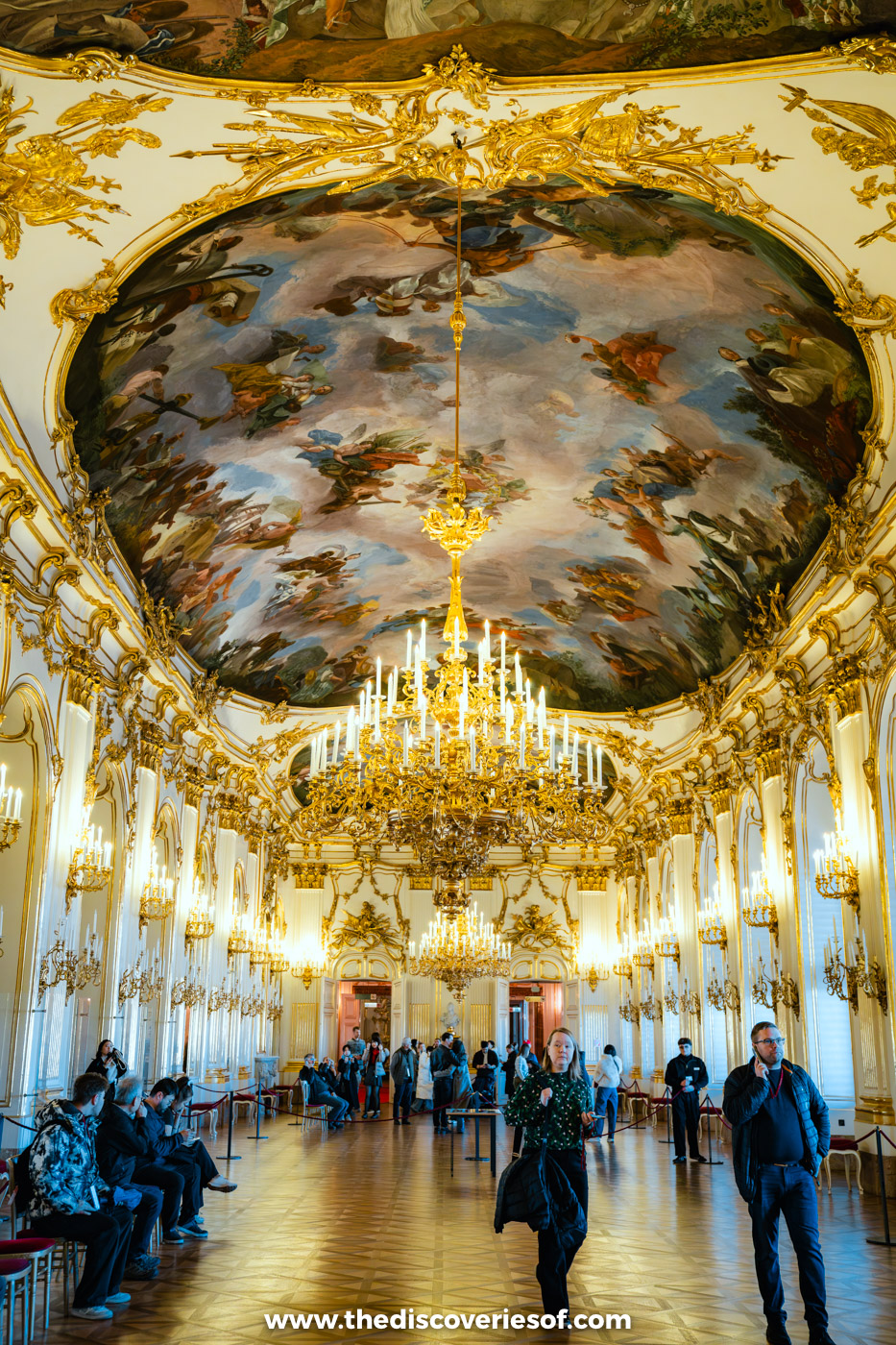
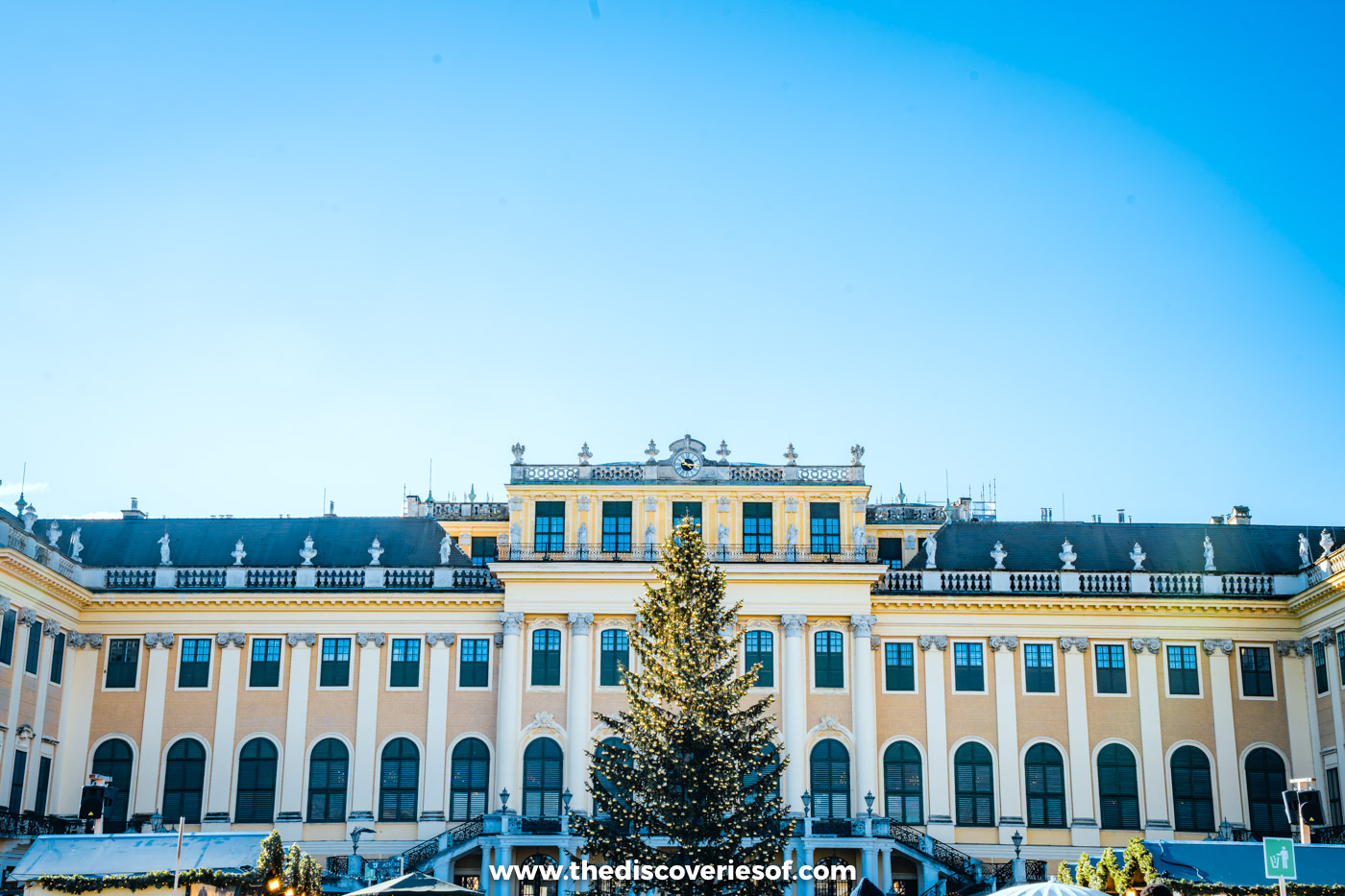
The Habsburgs’ summer palace has 1,441 rooms, and 45 of them are open to visitors. Entry is by timed slot and they’re strict about it, so book online in advance and turn up on time, because a missed slot can mean a wasted ticket.
I’d booked the 8.30am slot, the first of the day, and woke to rain hammering down. Rather than the half-hour trip by U-Bahn, I cheated and called an Uber, which took 15 minutes (a bargain well struck), and after all that rushing I arrived before the doors had even opened.
Was the early start worth it? Absolutely. The rooms were quiet enough to take my time over how wildly different each one is, from black lacquer panelling to chinoiserie, and by the time I left the crowds had swelled massively.
Don’t rush the Great Gallery, the vast ballroom where Kennedy and Khrushchev met in 1961; I couldn’t stop picturing myself sweeping in for a ball in an enormous gown. The Mirror Room, where a six-year-old Mozart played a concert, is another must.
The Palace Ticket (€42) takes you round every room on the main floor, audio guide included, in roughly 75 minutes. The Sisi Pass (€69) adds the Sisi Museum and the Furniture Museum.
Do
If you’d rather have a guide, this skip-the-line tour of Schönbrunn Palace and its gardens covers the state rooms and the grounds in one go
10.15am: the gardens and the Gloriette
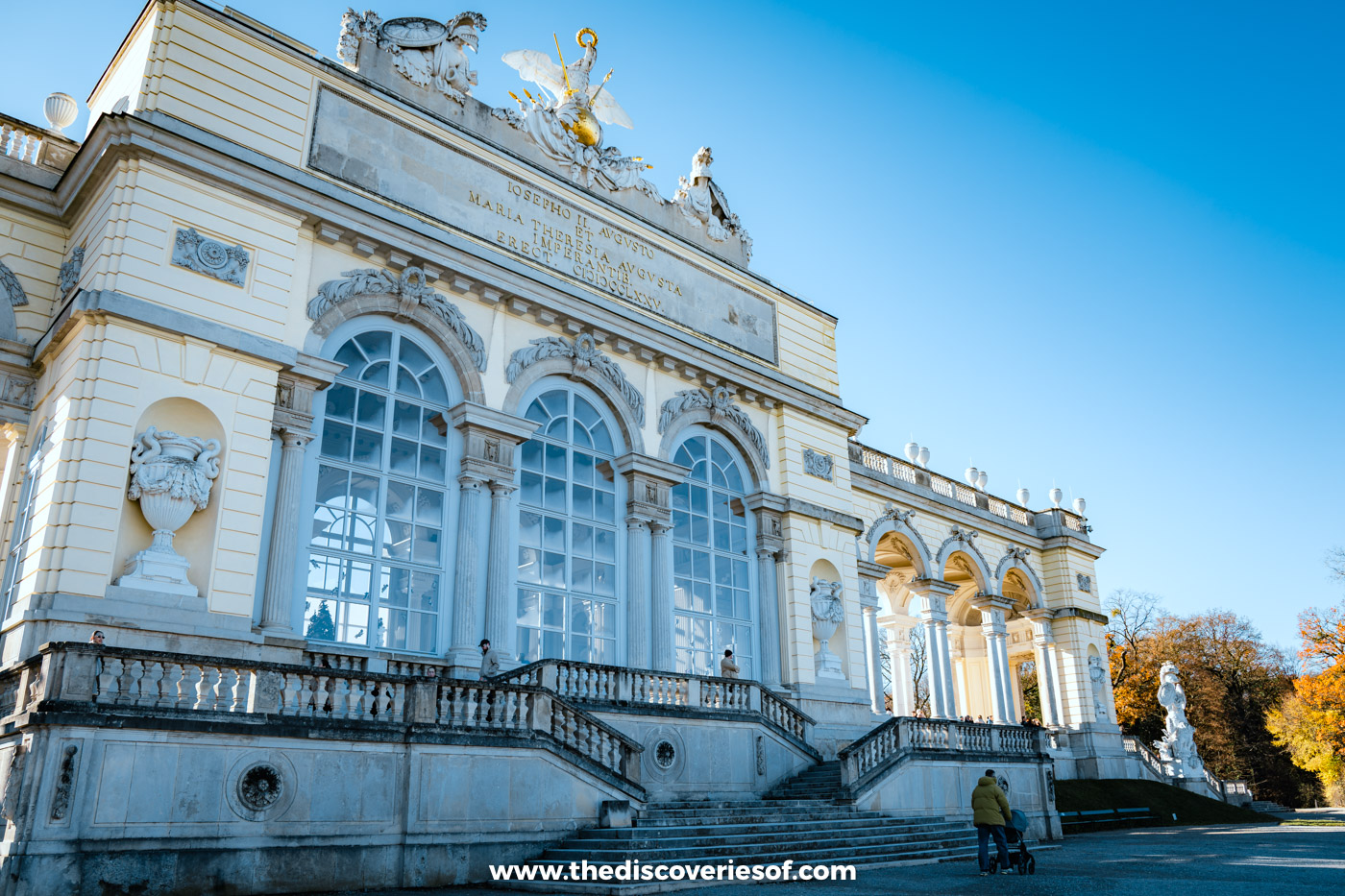
Behind the palace, the gardens climb to the Gloriette, a colonnade raised on the hilltop in 1775 to give the imperial family a pretty view. Nice work if you can get it, and the park is free to walk in.
On a clear day you can see the palace with the entire skyline stretching away behind it, and after the morning’s downpour, I lucked out with a crisp, bright one. Allow the whole morning for Schönbrunn.
Getting There
From Schönbrunn station, the U4 takes you straight to Kettenbrückengasse, at the far end of the Naschmarkt, in about ten minutes with no changes
12.30pm: lunch at the Naschmarkt
A market has traded here since the 1770s, when it sold mostly milk. Today it stretches for more than half a kilometre, with fruit, vegetable and spice stalls in some stretches and restaurants and beer halls in others, a veritable treasure trove of flour, spices and dried fruit.
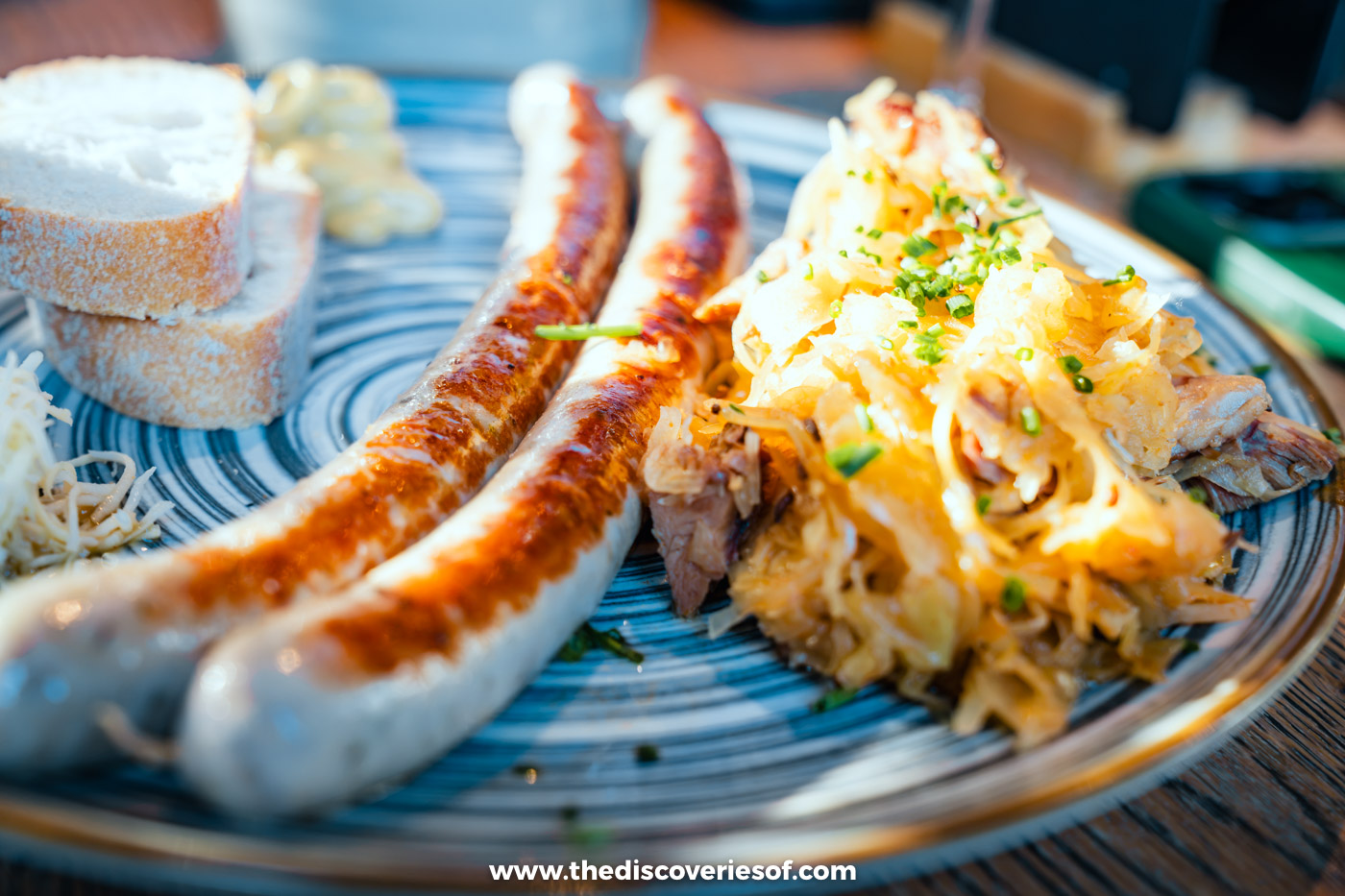
On Saturdays a flea market sets up at the Kettenbrückengasse end from 6.30am to 2pm, and half the city seems to pile down. When in Vienna: I had a bratwurst and a glass of Grüner Veltliner at the Bierhalle, just inside the market, then a sweet poppy seed bun for pudding.
A Käseball, a little cheese and chive bread ball, took me by surprise: great flavour, but so dry I was crying out for a sauce. Don’t leave without climbing to the roof terrace above the central building, where flowers were blooming in November and you look across to Otto Wagner’s Majolikahaus, its facade painted with flowers.
Top Tip
Arrive after 2pm for a calmer browse. It was packed when I got there at about 1pm, but by 2.30pm it was far quieter, although some stalls were starting to close
2.30pm: Karlskirche and Otto Wagner’s pavilions
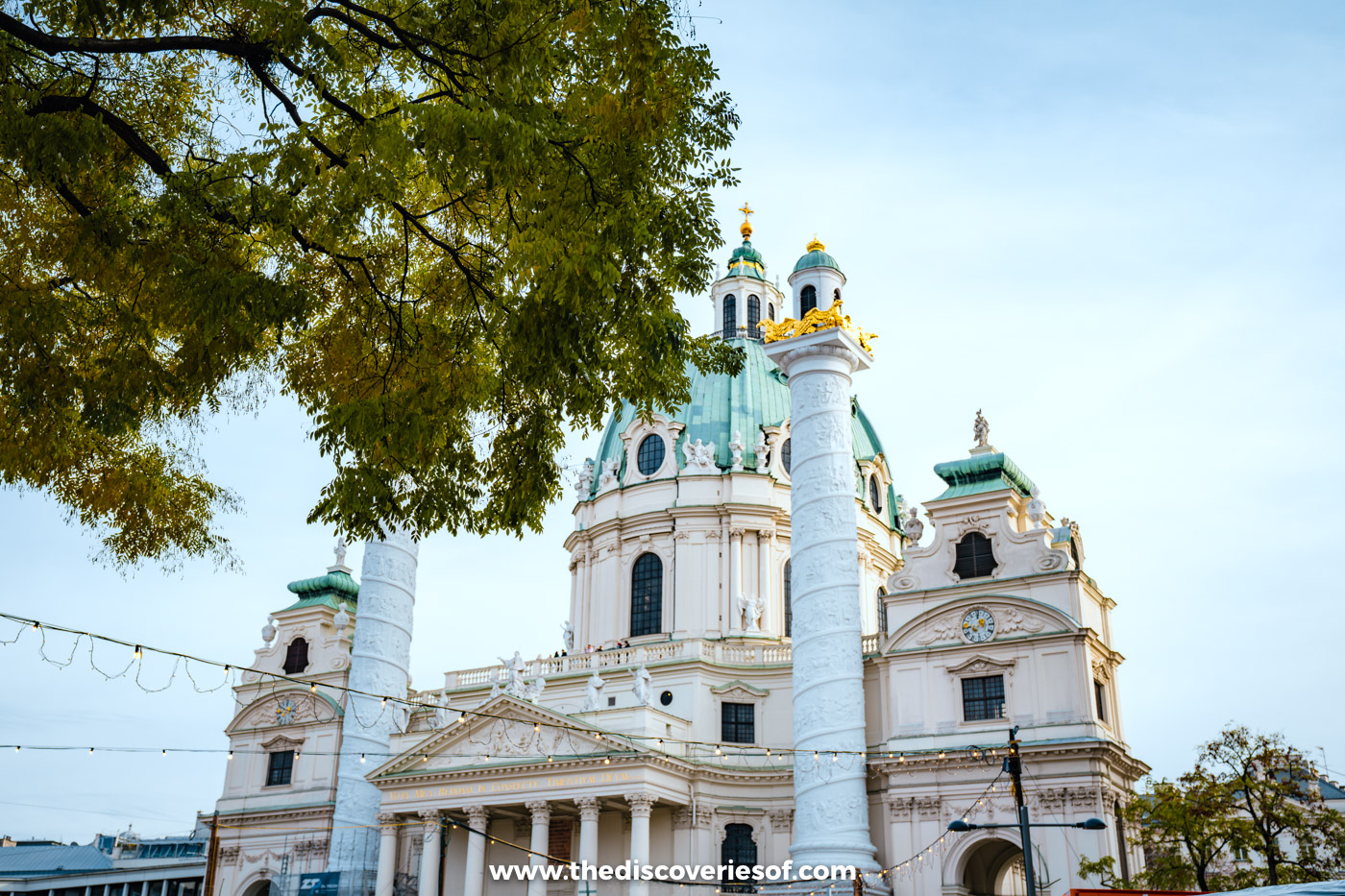
Walk ten minutes east to Karlsplatz and Karlskirche, which Emperor Charles VI promised to build when plague struck in 1713. Its green dome and the two giant carved columns either side of the portico make it impossible to mistake for anything else.
Inside, a visit takes in the church, the treasury and a panoramic terrace up under the dome (€9.50, Monday to Saturday 9am to 6pm). In the park in front stand the two decorative pavilions Otto Wagner designed for the city’s first metropolitan railway; I saw both, and the church, from the outside.
3.15pm: the Secession and the Beethoven Frieze
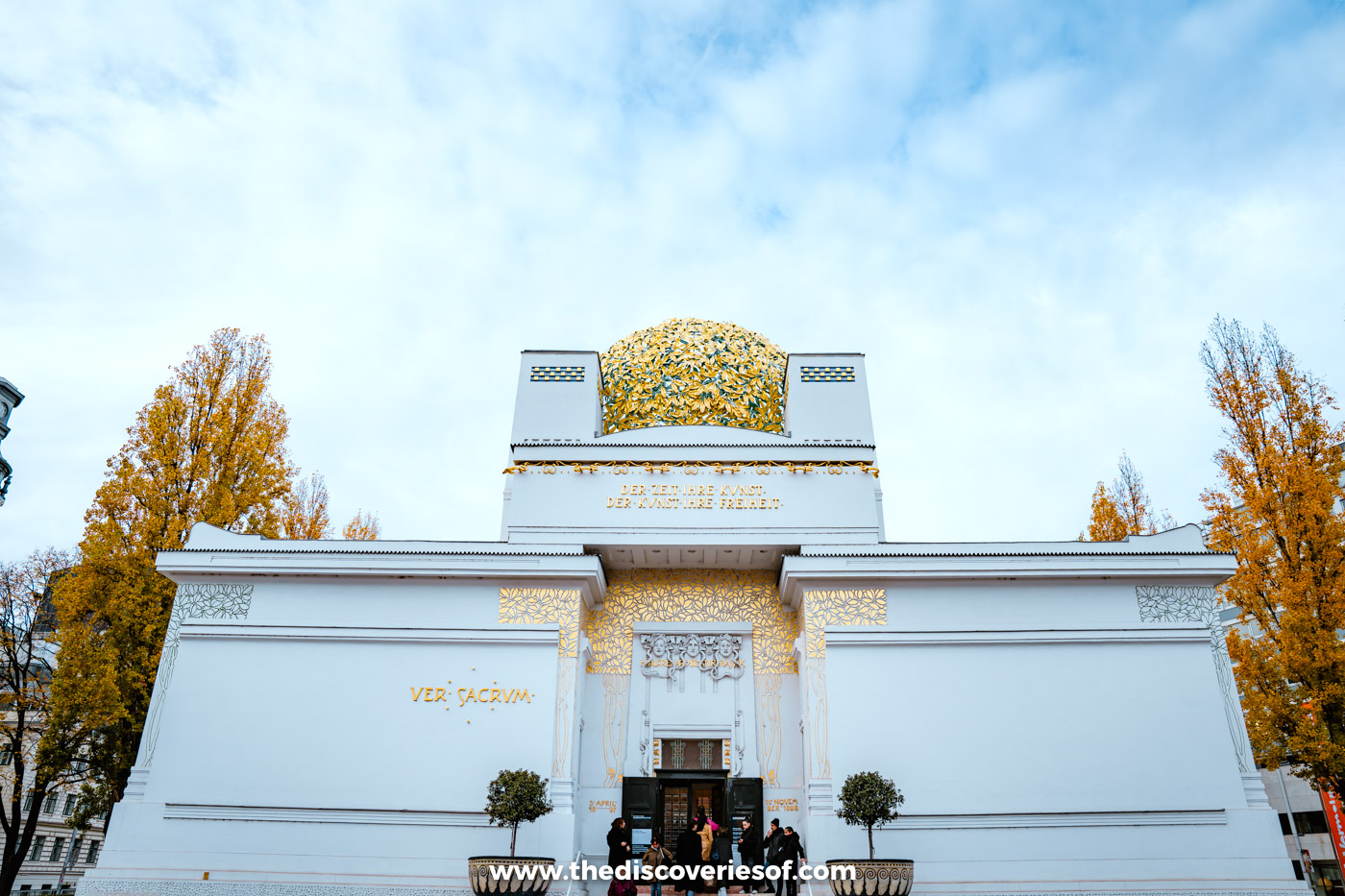
Round the corner is the Secession, built for the breakaway artists, Klimt among them, who wanted to show work outside the academic mainstream. I saw it from the outside, and its dome of gilded laurel leaves is worth the short detour on its own.
Downstairs is Klimt’s Beethoven Frieze, a wall painting made for an exhibition in 1902, and the ground floor shows contemporary art. Allow 45 minutes.
Tickets
The Secession is open Tuesday to Sunday from 10am to 6pm and closed on Mondays. Admission is €13, including the Beethoven Frieze
4pm: Schiele and Klimt at the Leopold Museum
From the Secession it’s a ten-minute walk to the MuseumsQuartier, a huge complex of museums, cafés and courtyards in the former imperial stables. The pick for a first visit is the Leopold Museum, which holds the world’s biggest collection of Egon Schiele alongside major works by Klimt and the rest of Vienna 1900.
Two hours before closing is plenty for the highlights. Then grab a drink in the main courtyard, where locals lounge on the big outdoor furniture in summer.
Tickets
The Leopold Museum is open from 10am to 6pm and closed on Tuesdays. On a Tuesday, swap in mumok, the modern art museum across the courtyard
6pm: evening drinks in Spittelberg
Spittelberg is a few minutes’ walk behind the MuseumsQuartier, a maze of cobbled 18th-century lanes that were once full of rowdy taverns. These days it’s far better behaved, all quiet boutiques and restaurants, and it’s one of the prettiest corners of the city.
For me it’s one of the prettiest corners of the city, and its lanes are made for an aperitivo before dinner. Spittelberggasse, the main street, is lined with Biedermeier houses.
8pm: Tafelspitz at Plachutta Wollzeile
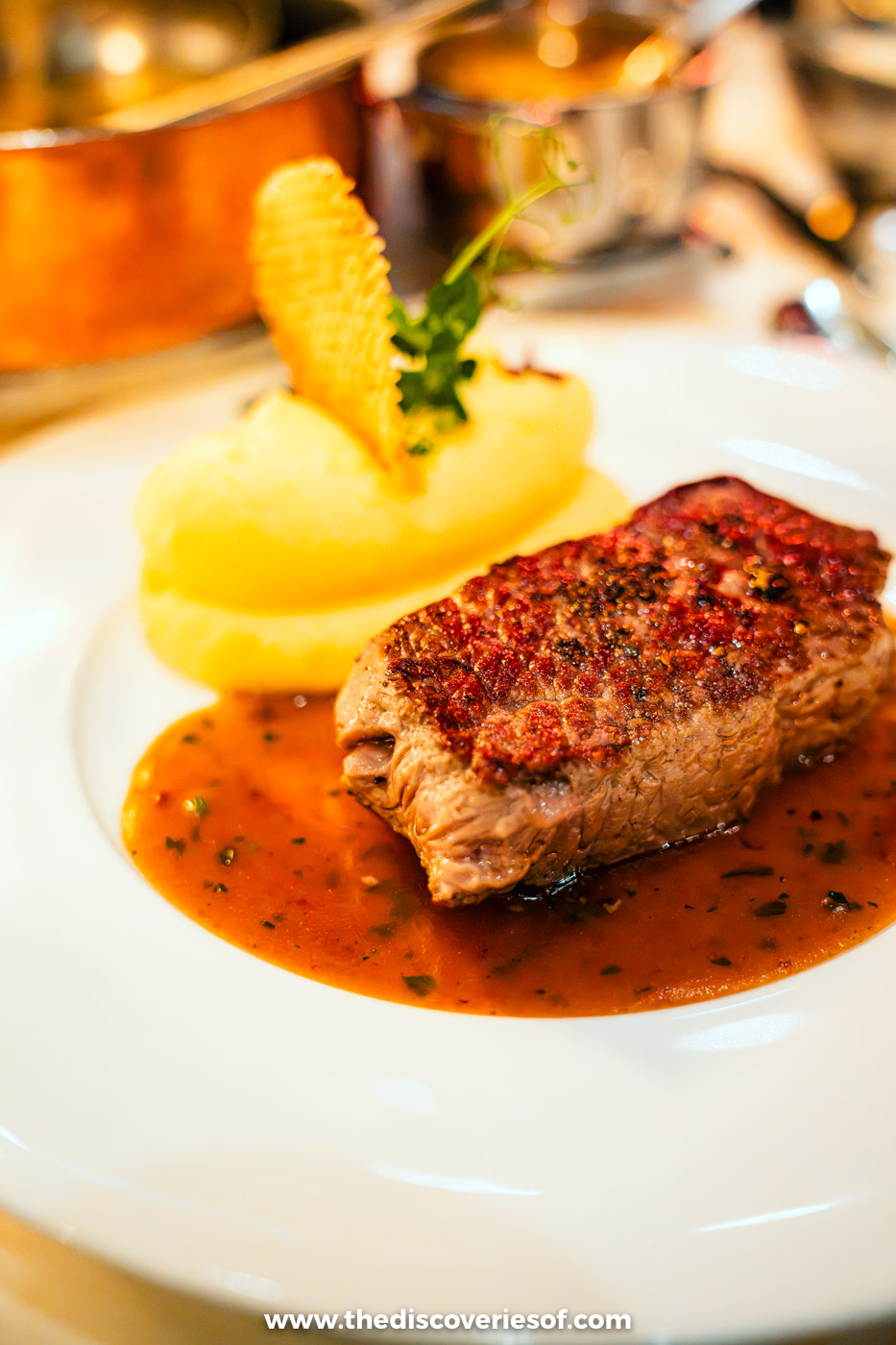
Plachutta, on Wollzeile, is the place for Tafelspitz, the city’s signature boiled beef. The beef cooks slowly in a deep broth with marrow bones and vegetables, is brought to the table in its copper pot, and comes with horseradish, a horseradish cream and soft, thin-cut potatoes.
My own choice was a thick steak with béarnaise sauce and mashed potato, and it was rich, indulgent and very Viennese. It’s a big, beautifully decorated dining room and it books up fast: when I booked a couple of days ahead, a 9.45pm table was all that was left.
Wollzeile is worth a wander by day, too. I found a tiny sweet shop there selling handmade marzipan and sugar decorations for cakes, and if I lived in Vienna, I’d bake a cake purely to decorate it with them.
Top Tip
Café Central, perhaps the best-known coffee house in Vienna and top of my list, was closed for renovation when I went. Check it has reopened before you plan around it
Day 3: the Belvedere, a Sachertorte showdown and the Prater
Day 3 starts with Klimt and a baroque garden, settles the great cake debate and finishes on a Ferris wheel. Everything on it opens on a Sunday, so this is the day to keep for one.
10am: the Belvedere gardens
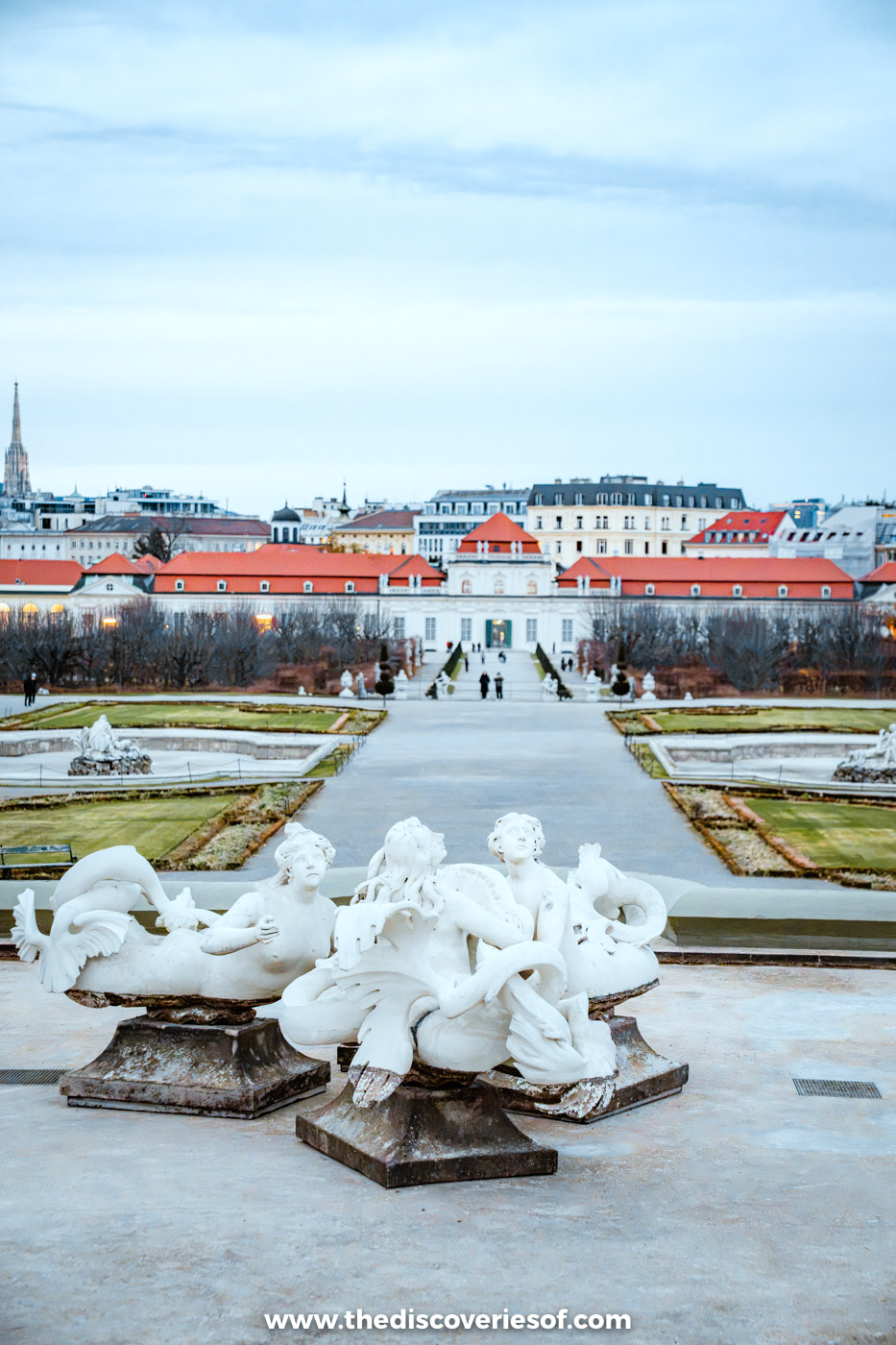
Take tram D from the Ring to Schloss Belvedere. The Belvedere is really two baroque palaces, the Upper and Lower, linked by terraced gardens, and they were built for Prince Eugene of Savoy, the general who helped drive the Ottoman army from Vienna in 1683.
The gardens are free, and from the top you look back over statues and parterres to the spire of St Stephen’s. With the Upper Belvedere reflected in its pond, I think it’s one of the prettiest spots in the city.
Tickets
The palace gardens are free. Between November and February they’re open from 7am to 5.30pm, with longer hours the rest of the year
10.30am: Klimt’s The Kiss at the Upper Belvedere
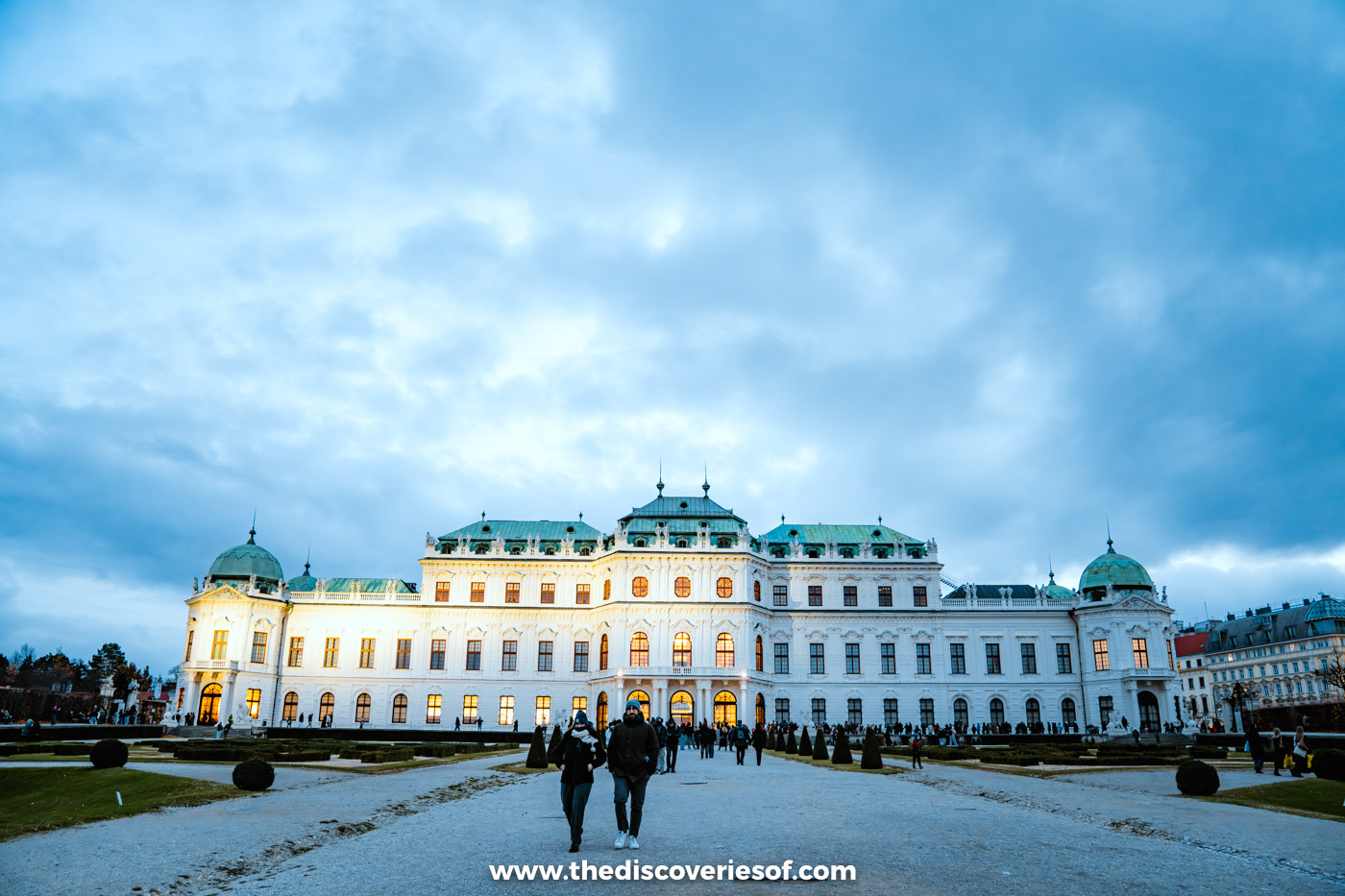
The Upper Belvedere’s galleries hold Klimt’s The Kiss, painted in 1907 and 1908 and bought by the Austrian state in 1908. It’s surrounded by more Klimt, plus Schiele, Kokoschka and French Impressionists, and the baroque halls are a sight in themselves.
Tickets are €23 and the galleries open daily from 9am to 6pm. Allow at least an hour and a half.
12pm: a melange in the Belvedere café
When you’ve had your fill of art, there’s a small café tucked into the side of the Upper Belvedere, and it’s a lovely spot to chill out and warm up. I sat over a melange, Vienna’s answer to a cappuccino, and thawed out.
12.45pm: Schwarzenbergplatz
Walk ten minutes back down Prinz-Eugen-Straße to Schwarzenbergplatz, where the Hochstrahlbrunnen fountain plays in front of the Soviet War Memorial. It honours the Red Army soldiers who died in the battle for the city in 1945, and it’s a reminder that even Vienna’s grandest squares carry a darker history.
From here it’s under ten minutes’ walk along the Ring to the Opera and Café Sacher.
1.15pm: the original Sachertorte at Café Sacher
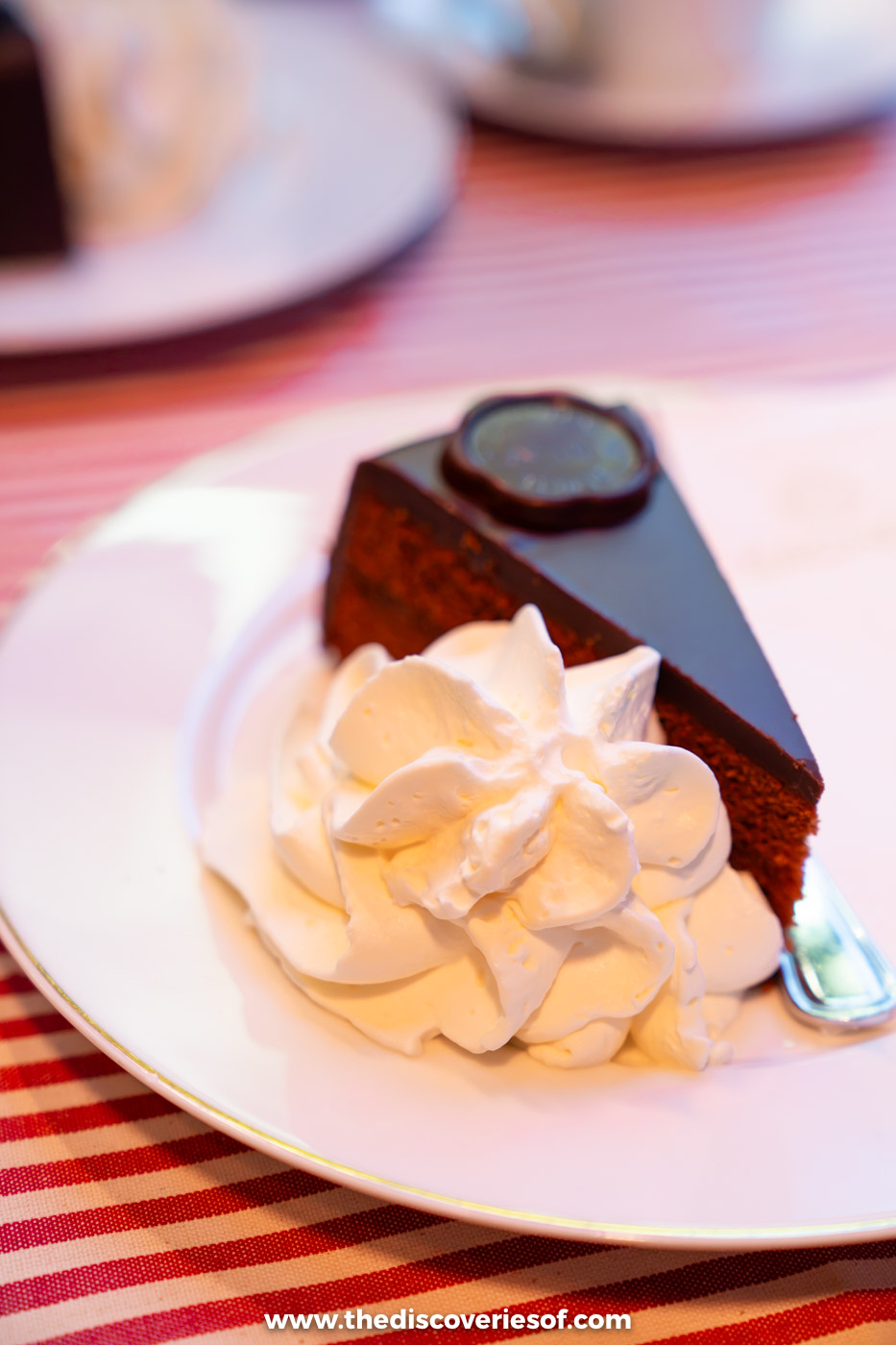
Behind the Opera is the Hotel Sacher, home of the original Sachertorte. There are two ways in: Sacher Eck on the corner, where the queue the afternoon I went was frankly hectic and spread over two floors, and Café Sacher itself, the more traditional coffee house round the side.
I picked Café Sacher and queued for about 20 minutes. Then, in the interests of speed, I grabbed a table outside under the heaters and ordered a slice with a melange.
Confession time: I’m not the biggest fan of chocolate cake, so the bar was set high. The thin seam of apricot jam was lovely against the cocoa, but the sponge is lighter and less moist than you might expect, and it genuinely needs its cloud of whipped cream.
Was it nice? Absolutely, but I honestly wouldn’t write home about it. Do pop inside to see the coffee house, though, because the room is beautiful.
Top Tip
Café Sacher, at Philharmonikerstraße 4, opens daily from 8am to 10pm. When I went, its own entrance had a far shorter queue than the corner café
2.30pm: the Albertina
Two minutes from Sacher, the Albertina sits on the old city bastion at the southern tip of the Hofburg. It was once a Habsburg palace, and today it pairs state rooms with one of the great art collections of Europe, from Monet and Picasso to its famous prints and drawings.
It’s open daily from 10am to 6pm, and until 9pm on Wednesdays and Fridays. Two hours is enough for the permanent collection and a temporary exhibition.
Top Tip
On a Wednesday or Friday, swap the Albertina and the Prater round. With the museum open until 9pm, you can catch the Ferris wheel in daylight and see the art after dark
4.30pm: round two at Demel
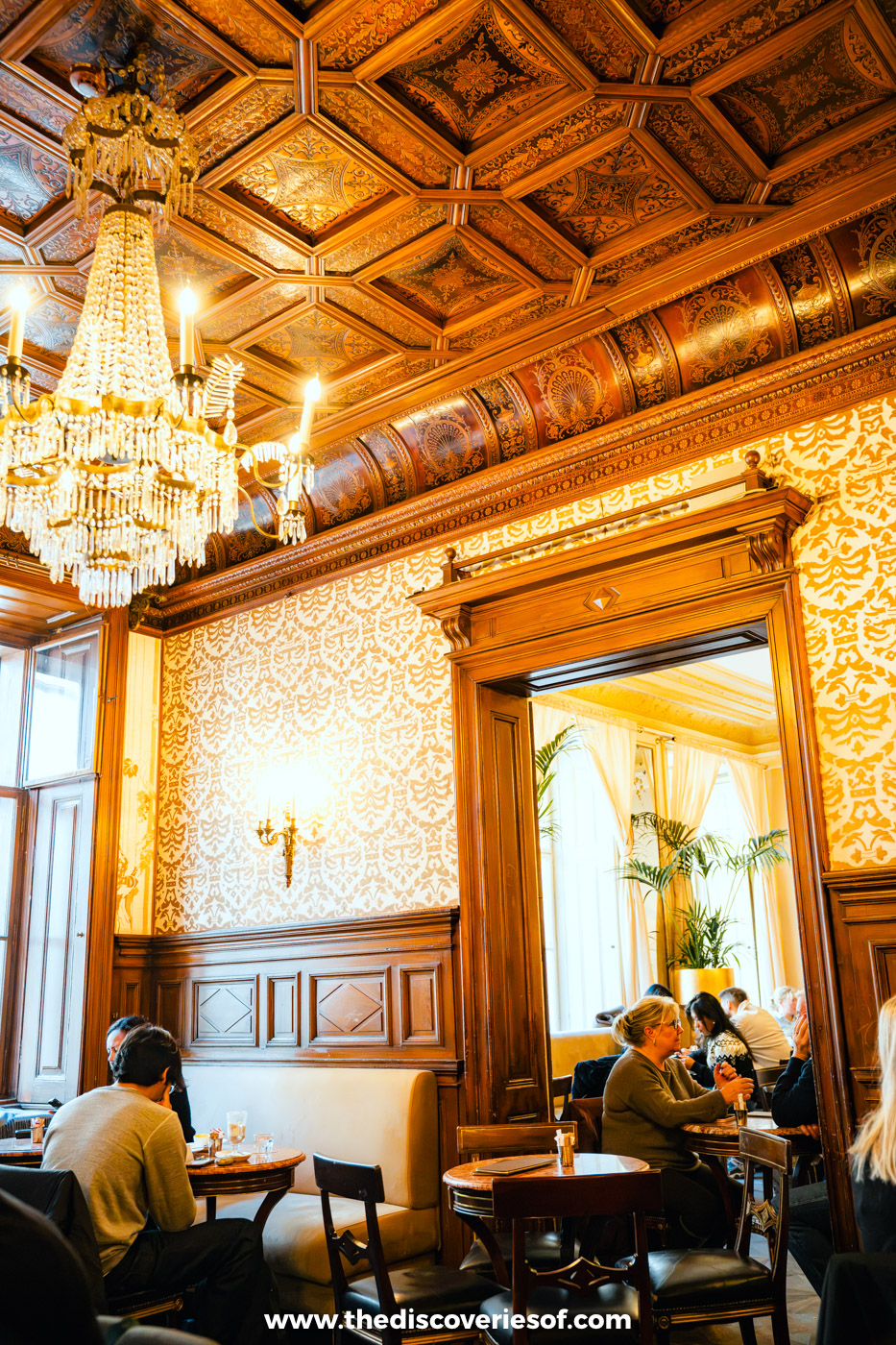
Walk five minutes up to Demel on Kohlmarkt, the old imperial court confectioner and Sacher’s great rival, which is open daily until 7pm. If you’re hungry, start with the goulash: boiled potatoes don’t usually do much for me, but this converted me, with meltingly tender beef in a deep, rich sauce and waxy potatoes cooked until they soaked up every drop.
Then order Demel’s own Sachertorte to compare with the slice from Sacher. It’s more chocolatey, with chocolate in the middle where Sacher has apricot jam, but otherwise the two are closer than a centuries-old feud would have you believe, and I’ll let you find out which one won.
6pm: the Prater and the Giant Ferris Wheel
Walk to Stephansplatz and take the U1 three stops to Praterstern for the Prater, the former imperial hunting ground that’s now a vast public park. At its entrance is the Wurstelprater funfair, and above it all turns the Wiener Riesenrad, the Giant Ferris Wheel built in 1897.
A ride in one of its red wooden cabins takes about 15 minutes and gives you sweeping views back over the city, especially at dusk. Tickets cost about €14.50, and the wheel runs into the evening all year.
Top Tip
The funfair rides run in the main season from mid-March to the end of October. Out of season, the Ferris wheel keeps turning but much of the Wurstelprater is quiet
8.30pm: dinner at Zum Schwarzen Kameel
Take the U1 back to Stephansplatz and finish in the old town at Zum Schwarzen Kameel on Bognergasse, a wood-panelled institution that also sells Brötchen at its counter. Everything I’d read said to sit on the heated terrace, but after a whole day in the cold, the last thing I wanted was to eat outside, and the room inside is wonderfully atmospheric.
A word of warning: portions are generous. My meatloaf was a starter and still a hefty plate, which I kept classic with cranberry sauce and potato salad, plus a Grüner Veltliner (get one), and the waiter was so friendly and genuine that he made the night.
Plenty of places in the city trade on one famous dish, and I’d dutifully been to them. This one simply did everything brilliantly, and of all the restaurants I tried in Vienna, it was probably my favourite.
Top Tip
The café, wine bar and bistro open every day from 8am to midnight, Sundays included, so it works for a late glass and a Brötchen too
Have more time? Add these to your itinerary
With a fourth day, or a slower pace, these three are the ones I’d add. They round out the imperial city, from its paintings and its horses to its wine.
The Kunsthistorisches Museum
Facing the Natural History Museum across Maria-Theresien-Platz, the Kunsthistorisches Museum holds the Habsburgs’ old masters, including the world’s largest collection of paintings by Pieter Bruegel the Elder, his Tower of Babel among them. Raphael, Vermeer, Velázquez and Rubens are all here too.
The domed hall at its heart houses a café that’s one of the most beautiful places in the city to stop for cake. It opens daily from 10am to 6pm, and until 9pm on Thursdays.
Tickets
Book a time slot online before you go, as admission runs on timed entry
The Spanish Riding School
The white Lipizzaner stallions of the Spanish Riding School train in the baroque Winter Riding School inside the Hofburg. The cheapest way to see them is the morning exercise, which usually starts between 10am and 11am, with tickets from €17.
Gala performances cost more and sell out further ahead. Book online and check the programme, as dates vary through the year.
An evening at a Heuriger
Vienna is one of the few capitals with vineyards inside its city limits, and a Heuriger, a wine tavern run by the winemakers themselves, is where the Viennese go to drink them. The classic villages are Grinzing, Nussdorf, Neustift, Sievering and Heiligenstadt on the northern edge of the city, with Stammersdorf across the Danube.
Look for a bunch of pine branches hung over the door and a sign saying “Ausg’steckt”, which means it’s open. Many of the smaller taverns only open on set dates or in the warmer months, so check before you go.
Getting There
Tram D runs from the Ring out to Nussdorf, and tram 38 runs from Schottentor up to Grinzing
Handy tips for planning your 3 days in Vienna
Top tips
- Plan around the closing days. The Naschmarkt’s stalls close on Sundays, the Secession on Mondays and the Leopold Museum on Tuesdays, and the State Opera takes July and August off.
- Book the timed sights early. Schönbrunn, the Sisi Museum and the Kunsthistorisches Museum all sell entry by time slot, and the early ones go first.
- Book dinner too. The best-known restaurants fill up days ahead.
- Cover up in churches. St Stephen’s and Karlskirche are working churches, so keep shoulders and knees covered, especially during services.
What to pack
- A waterproof layer, whatever the season. No rain was forecast for my trip, but the Saturday poured and I had nothing rainproof with me. Learn from my mistakes.
- Layers. Summers can be properly hot, spring and autumn swing between warm afternoons and chilly evenings, and winter calls for a coat, hat and gloves.
- Comfortable shoes for cobbles, gallery floors and 343 tower steps.
- A tote bag for Naschmarkt spices, Demel chocolates and anything else that catches your eye.
Best time to visit
Vienna works all year, but spring (April to early June) and early autumn (September and October) are the sweet spot: mild weather, the gardens at their best, and the opera and concert season in full swing. Autumn is also wine season, when the Heurigen pour the new vintage.
July and August are the hottest and busiest months, and the State Opera is closed, although the city fills with open-air events instead. Winter is cold, quieter outside Advent and very atmospheric, with the coffee houses at their cosiest.
Top Tip
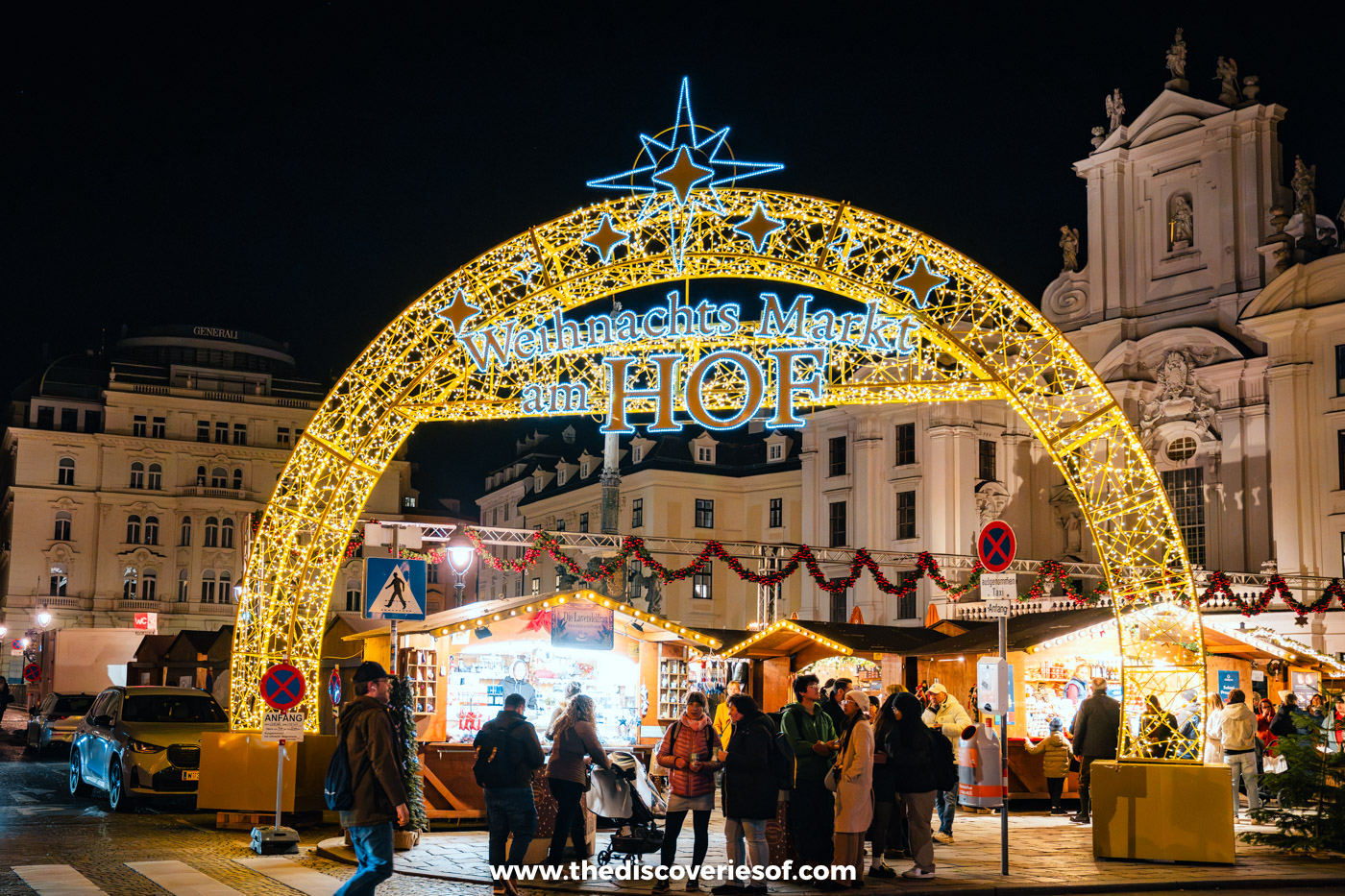
Visiting in winter or at Christmas? From mid-November the city fills with markets and lights, and on my trip it snowed so hard on my last morning that I genuinely couldn’t tell whether I was in a winter wonderland or under personal attack. Plan it with my guides to the Vienna Christmas markets, the Christmas lights walk and Vienna in winter
Getting around
- From the airport: until the end of October 2027 the City Airport Train runs as a bus to Wien Mitte, taking about 21 minutes. ÖBB’s Railjet trains reach the Hauptbahnhof in about 15 minutes, and the Vienna Airport Bus to Schwedenplatz takes about 22, handy for SO/.
- In the city: the old town is best on foot, and the U-Bahn and trams cover the rest.
- Tickets: a 24-hour ticket costs €10.20 (€9.70 digital). Wiener Linien scrapped its 48 and 72-hour tickets at the start of 2026, and a 7-day ticket (€28.90, or €25.20 digital) works out cheaper than three 24-hour ones.
- Vienna City Card: the 72-hour version (€37, digital) includes public transport plus discounts at many sights.
Map
Read next
- SO/ Vienna review: spacious rooms, views both ways and breakfast 18 floors up
- Inside the Sisi Museum at Vienna’s Hofburg, where an empress hung gym rings in her dressing room
- A guide to Schönbrunn Palace, the Habsburgs’ 1,441-room summer home
- St Stephen’s Cathedral in Vienna: exploring the two towers, catacombs and an emperor’s tomb
- Sacher or Demel? Where to eat Sachertorte in Vienna, and the cake war behind it
- 28 of the best city breaks in Europe, and how long to give each one
- 25 cool places in Europe worth building a whole trip around
- The ultimate Europe bucket list, 100 incredible places to visit in Europe from Big Ben to cheese fondue
- 70 UNESCO World Heritage Sites worth planning a whole trip around
- Schnitzel, strudel and a sausage at midnight: what to eat in Vienna, and where to order it
- Trześniewski review: are Vienna’s century-old open sandwiches still the best quick lunch in town?
Love this? Save and share on Pinterest
Discover the top things to do, insider tips and hidden gems in our Austria Travel Guide.
Read the guides →