
Veal beaten thin and fried until golden, beef that comes to the table in the copper pot it simmered in, beer poured by the eighth of a litre and a goulash worth the detour to, of all places, a cake shop. These are the Viennese dishes and drinks worth your appetite, with the tables, counters and sausage stands that serve them best.
Picture a narrow counter just off the Graben, lined with little slices of dark rye bread, each one heaped with something creamy, pink or flecked with chives. Locals point, pay and perch with a glass of beer so small it’s almost cute, and that’s lunch. Vienna has lunched like this for well over a century, and after the first bite you’ll understand why it never went out of fashion.
That counter was one of my first stops when I went to Vienna in November, and it set the tone nicely. Over four days I worked through a schnitzel made from 250g of veal, a goulash so tender it practically melted, a pancake named after an emperor and both of the city’s rival Sachertortes (purely for research purposes, obviously).
Viennese food is what happens when an empire brings its recipes home. Strudel pastry arrived from the Ottoman Empire, goulash from Hungary, pancakes and plum-filled buns from Bohemia, and rumour has it the schnitzel itself started life in Milan. The result is hearty, generous and very good at keeping out the cold.
This guide to what to eat in Vienna runs in the order you’ll actually eat it: the big savoury classics first, then sandwiches, sausages and market snacks, then the cakes and sweet things, and finally what to drink. Every dish comes with where I ate it or where to find it, plus the prices, opening hours and booking tips that make the difference between a table and a queue.
Right. Napkin tucked in? Let’s get to it.
Viennese food at a glance
The savoury classics worth booking a table for
Viennese restaurants come in two main styles: the grand old dining rooms, and the Beisl, the city’s cosy, wood-panelled take on a bistro. Both do the classics below, and portions everywhere are generous, so arrive hungry.
Wiener Schnitzel at Lugeck
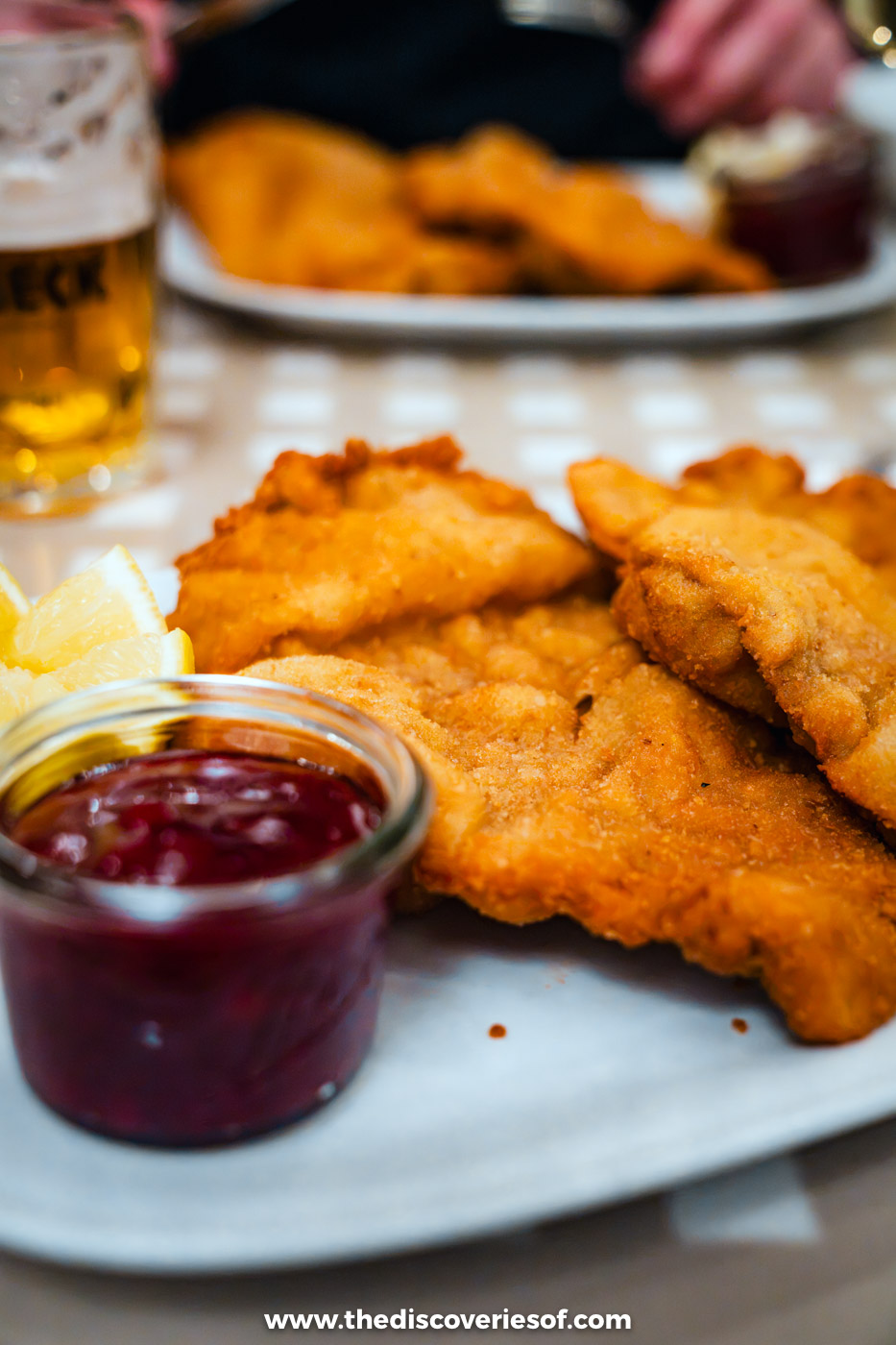
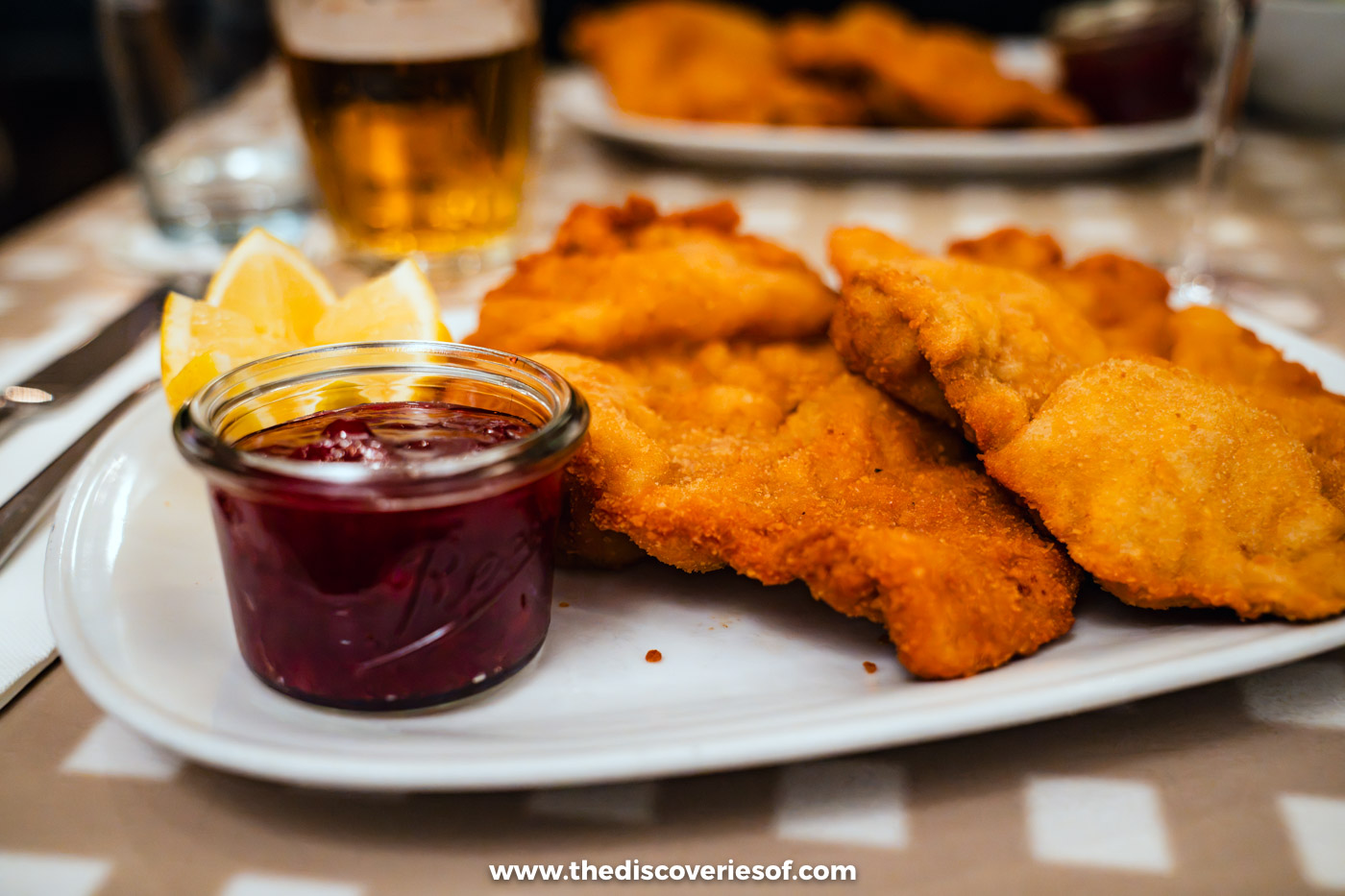
If you only eat one thing in Vienna, make it this. A true Wiener Schnitzel is veal, butterflied and pounded thin, dipped in flour, egg and breadcrumbs and fried until golden, and the pork or turkey versions on cheaper menus are usually labelled Schnitzel nach Wiener Art.
I had mine at Lugeck, a few steps from St Stephen’s and the sister restaurant of Figlmüller, the schnitzel house Johann Figlmüller started on Wollzeile in 1905. Each one begins as 250g of veal, so once it’s been beaten out, it lands in front of you as two vast, golden escalopes.
I went the traditional route, lingonberry jam and potato salad on the side and a Grüner Veltliner in my glass, and it was great: hearty and seriously sizeable. Somewhere between the jam and the wine, I felt very Austrian indeed.
The lemon wedge is standard, and the proper side is potato salad dressed with vinegar and oil and tossed with lamb’s lettuce (exactly what turned up at Lugeck). That sharp dressing is the whole point, because it cuts straight through all that crisp, buttery crumb.
Top Tip
At Lugeck, a veal Wiener Schnitzel with potato salad costs €34.50, and the lingonberry jam is €2.90 extra. It’s at Lugeck 4, open daily from 11.30am to midnight with hot food until 10pm, and you can book on Lugeck’s website
Tafelspitz at Plachutta Wollzeile
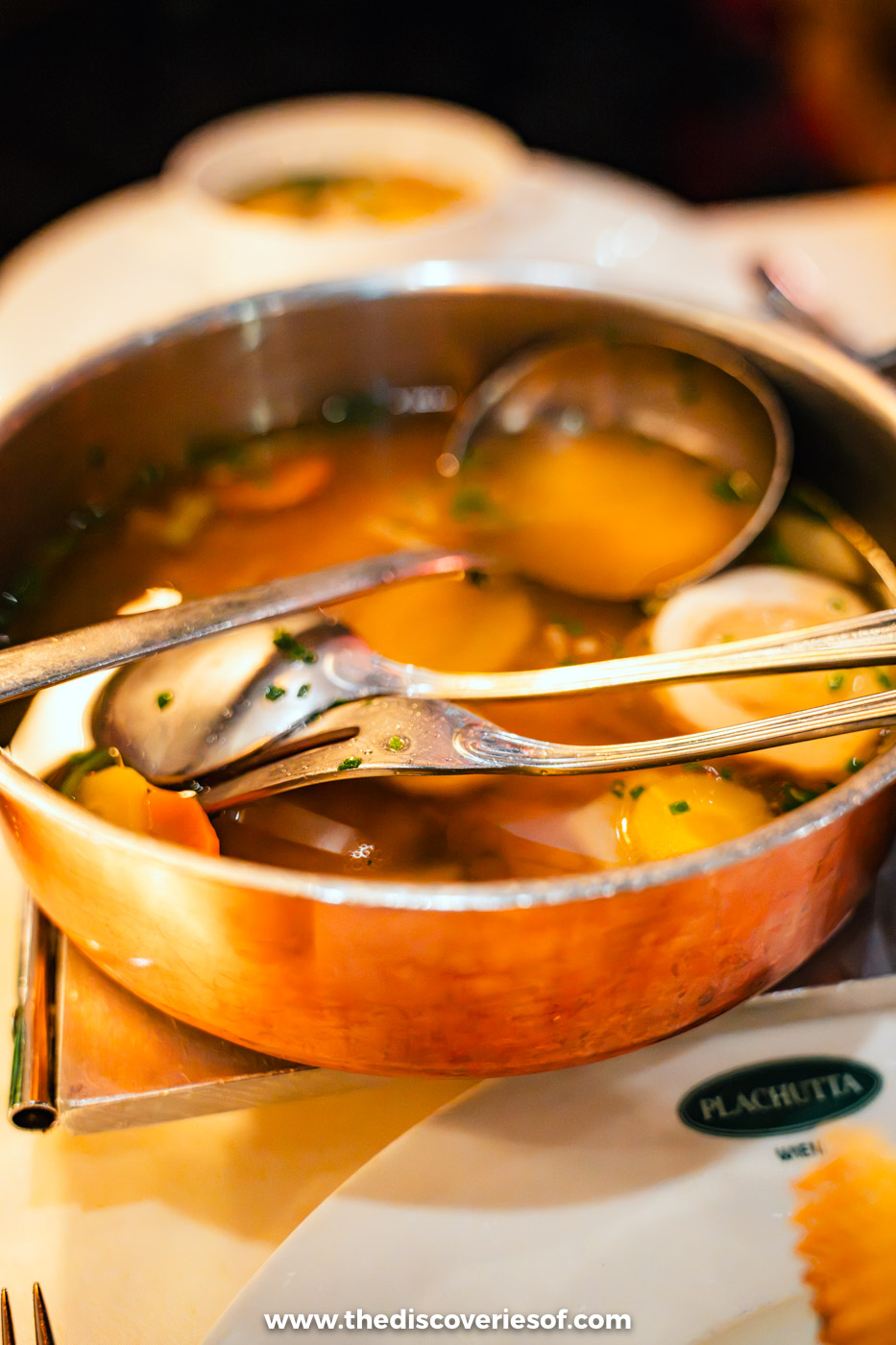
Boiled beef sounds like the least exciting thing on any menu. Don’t let that put you off: Tafelspitz was Emperor Franz Joseph’s favourite dish, and his fondness for it helped turn boiled beef into a Viennese institution.
At Plachutta, the restaurant family that made its name on it, the beef arrives in the copper pot it simmered in. First comes the broth with its root vegetables, then a marrow bone to spread on toasted dark bread, and finally the meat with apple horseradish, chive sauce, creamed spinach and crispy hash browns.
The Tafelspitz that arrived at my table at the Wollzeile branch came with a whole parade of sides, from grated horseradish to a horseradish cream. My own order was a thick-cut steak with béarnaise and mashed potato, which was rich, indulgent and felt every bit as Viennese.
The dining room is huge and gorgeous, and it was packed. When I booked a couple of days ahead, the only table left was at 9.45pm.
Do
Book Plachutta Wollzeile as early as you can, especially for a weekend. It’s at Wollzeile 38, open daily from 11.30am to 11.30pm, and the Tafelspitz costs €36.80
Goulash at Demel
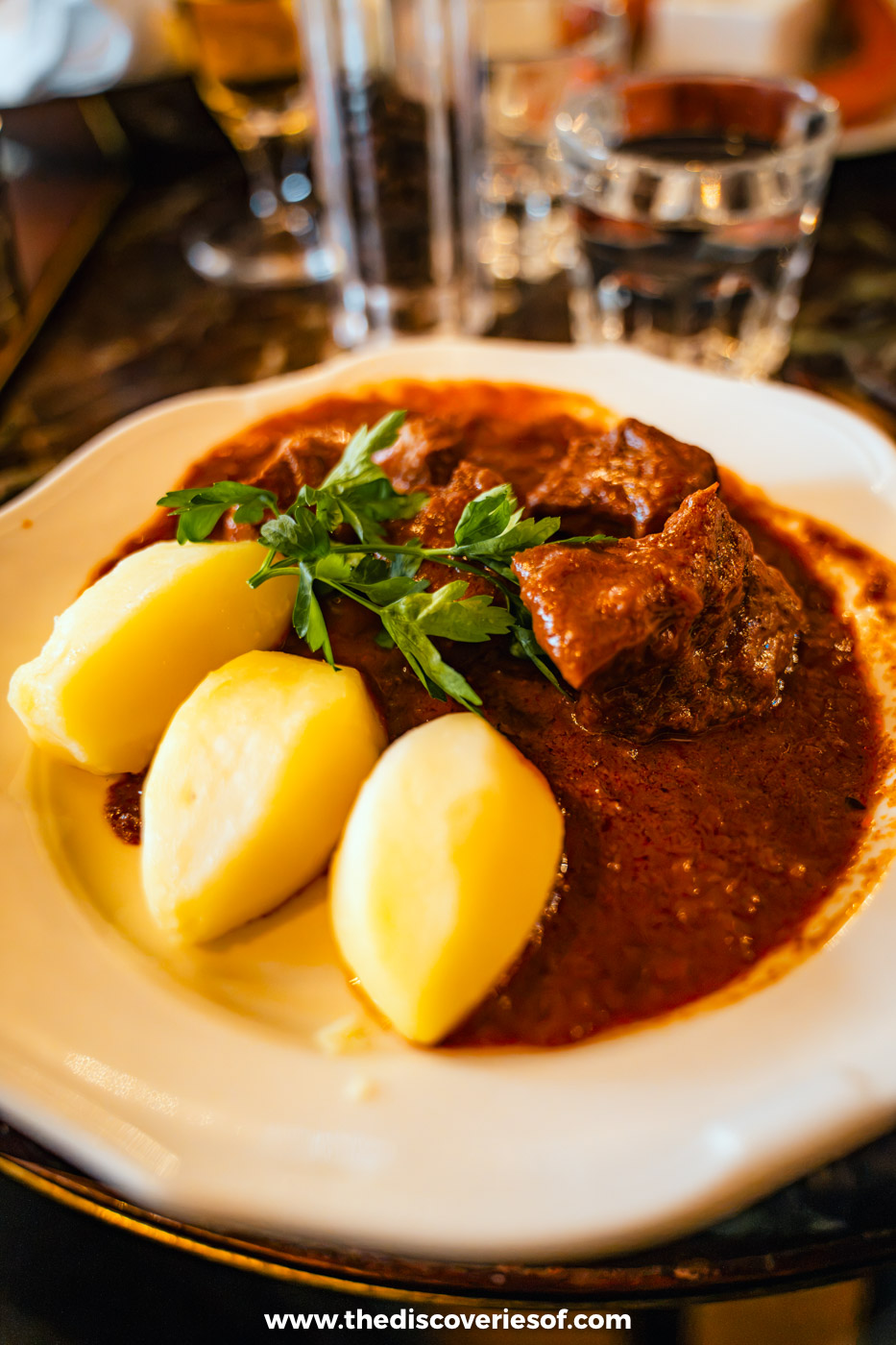
Goulash came to Vienna from the Hungarian half of the empire, and the local version, Rindsgulasch, is a thick, paprika-red stew of beef and onions rather than a soup. Most old-school Beisln and coffee houses serve it, with bread, potatoes or dumplings.
The one I had came from an unlikely kitchen. I went to Demel, the old court confectioner on Kohlmarkt, for its Sachertorte, and with a couple of hours to spare before my flight home, I ordered the beef goulash for lunch first.
Oh my goodness. The beef was so tender it practically melted, and the sauce was rich and delightful.
Then there were the potatoes, which I’d usually leave on the side of the plate (boiled potatoes and I are not close). These were waxy ones, cooked until they were soft and so absorbent they drank up the sauce, and I was a big fan.
Top Tip
Demel, at Kohlmarkt 14, opens daily from 10am to 7pm. Order lunch first and the cake afterwards, and you’ve ticked off two Viennese classics at one table
Leberkäse at Zum Schwarzen Kameel
Leberkäse is Austria’s answer to meatloaf: finely ground meat baked in a block until the top turns crusty, then served in thick slices (and despite the name, it usually contains neither liver nor cheese). It’s proper comfort food, and you’ll find it everywhere from sausage stands to smart old-town dining rooms.
I had it as a starter at Zum Schwarzen Kameel on Bognergasse, a house whose story goes back to 1618, where the menu calls it meatloaf. Even as a starter it was a seriously big plate, so pace yourself.
Everything I’d read said to grab a seat outside under the heaters. After a whole day on my feet in the cold, I ignored that, headed inside and loved it. The wood-panelled dining room is wonderfully atmospheric, the wine was great (order the Grüner Veltliner) and my waiter was so friendly and genuine.
Plenty of places in Vienna are famous for one dish, and I’d dutifully been to them and enjoyed them. Kameel felt different, and it’s probably my favourite place I ate in the whole city, market stalls aside.
Top Tip
Kameel’s ground-floor bar is open daily from 8am to midnight and takes no bookings, so it’s perfect for a few open sandwiches and a glass of wine. For a proper meal in the brasserie, reserve on the Zum Schwarzen Kameel website
Backhendl, Schweinsbraten and Knödel
Order any of these in a Beisl and you’ll see why nobody leaves a Viennese lunch hungry. Backhendl is chicken, breadcrumbed and fried in the same way as a schnitzel, and it’s usually served with potato salad and a wedge of lemon.
Schweinsbraten is roast pork with crackling, sliced and served with sauerkraut and a fat bread dumpling (Semmelknödel) to mop up the gravy. Dumplings, or Knödel, turn up all over the menu, including Grammelknödel, which hide a filling of crispy pork scratchings.
Two more to look out for: Zwiebelrostbraten, a pan-fried beef steak in a rich gravy under a heap of crispy onions, and Krautfleckerl, little pasta squares tossed with sweet, buttery cabbage. This is stick-to-your-ribs food, made for a cold day and a long walk afterwards.
Sandwiches, sausages and market snacks
Some of the best things you’ll eat in Vienna cost a few euros and come on a paper plate, or no plate at all. This is where the city grabs lunch on the go, and where your budget gets a breather.
Brötchen and a Pfiff at Trześniewski
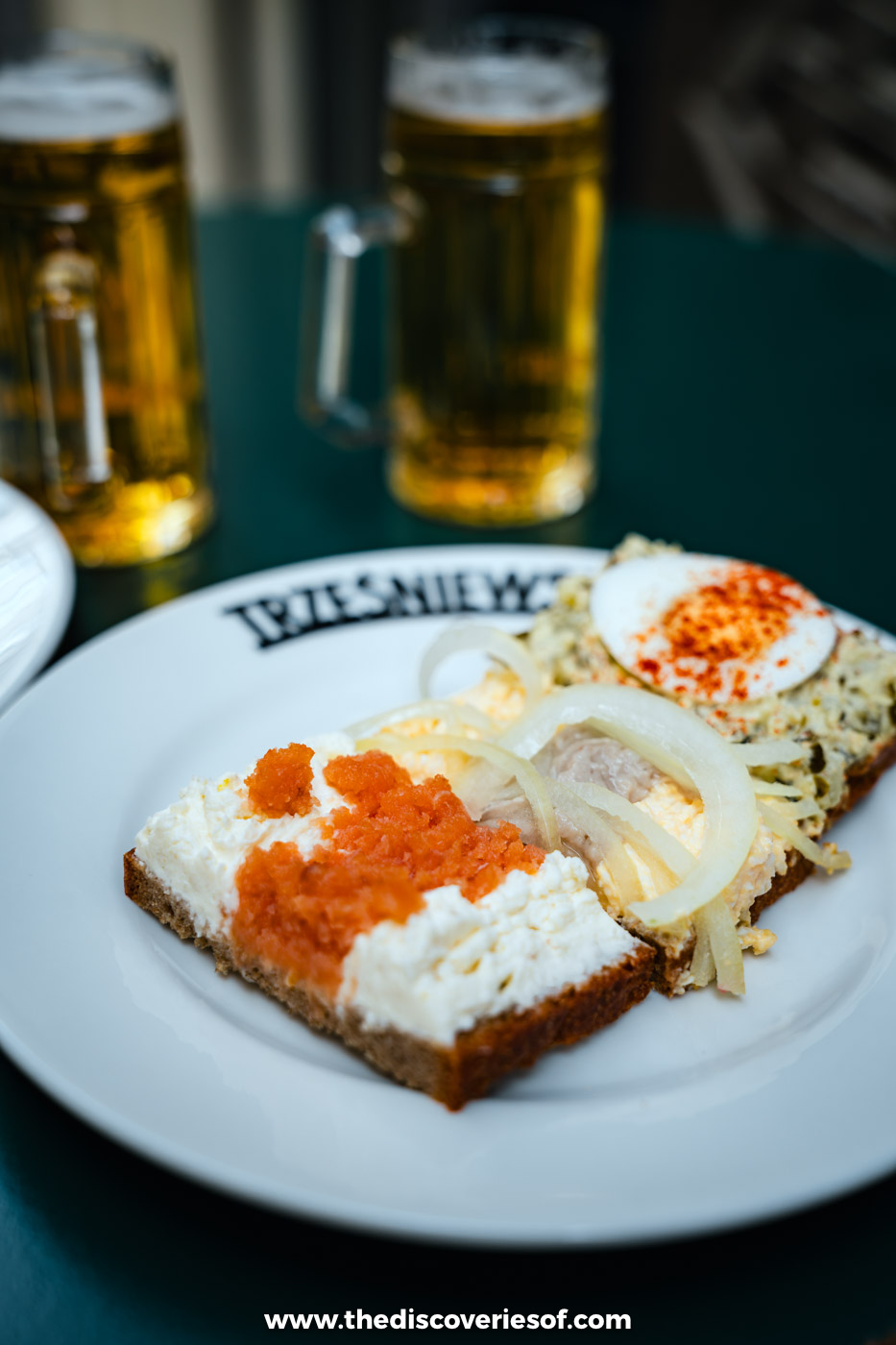
Brötchen are Vienna’s open sandwiches: bite-sized slices of dark rye bread spread thickly with creamy toppings. Trześniewski, on Dorotheergasse just off the Graben, has been making them for more than 120 years, and it now offers 25 different toppings.
The ritual is half the fun. Choose your Brötchen at the counter, take your little platter, and order a Pfiff to wash it down: beer served by the eighth of a litre.
My smoked salmon and cream cheese one had a kick of horseradish that lifted the whole thing, and it was very, very good. Next came herring with egg and pickled onions, which, as I noted at the time, would do wonders for my breath, then a simple gherkin and egg.
As for the Pfiff, it’s served in the dinkiest, cutest little glass, and as a very slow beer drinker, an eighth of a litre is exactly the right amount for me. In central London, finding a quick, cheap and genuinely good lunch a few metres from a major landmark is hit and miss, which is why I loved the quality here so much.
Top Tip
Trześniewski, at Dorotheergasse 1, opens 8.30am to 7.30pm on weekdays and 9am to 6pm on Saturdays. On Sundays and public holidays it opens 10am to 5pm, so it works for a lazy weekend lunch too
Käsekrainer at a Würstelstand
The Würstelstand, the humble sausage kiosk, is so much a part of city life that it joined Austria’s UNESCO list of intangible cultural heritage in 2024, alongside the coffee houses and the Heurigen. Plenty stay open late into the night, and a sausage at midnight is a very Viennese way to end an evening.
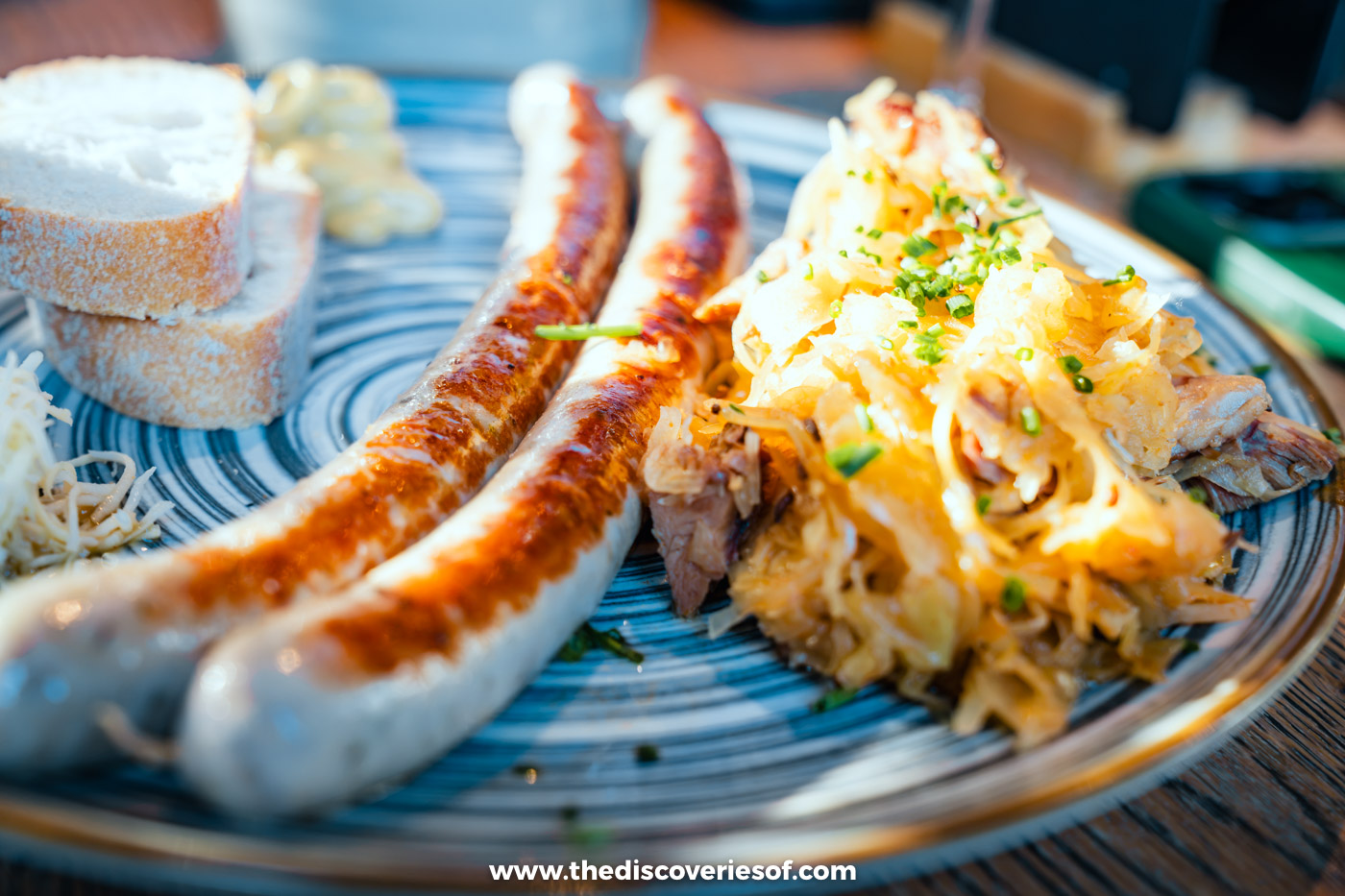
The one to order is a Käsekrainer, an Austrian invention: a lightly smoked pork sausage studded with cheese (around 10 to 20 per cent of it) that melts as it cooks. When I bit into mine, the cheese came oozing out, and honestly, it was ridiculous, in the best way.
Think of the nicest smoked hot dog you’ve ever eaten, then add molten cheese. I dunked mine in a chilli and pear sauce, a combination I’d never have dreamed up, and it turned out fruity rather than fiery, closer to a sweet red pepper relish, which gave it lots of lovely contrast.
It’s a proper winter warmer. Frankly, a bit of sausage is pretty much always the answer.
For a sit-down version, the Bierhalle just inside the Naschmarkt does a good bratwurst with sauerkraut. I had mine with a glass of Grüner Veltliner, because when in Vienna.
Top Tip
At the counter you’ll be asked “süß oder scharf?”: sweet Kremser mustard or a sharper tarragon one. For a late one, Bitzinger behind the Albertina (Albertinaplatz 1) opens daily from 8am to 4am, and the stand on Hoher Markt is another well-known spot for night owls
Käseball and poppy seed buns at the Naschmarkt
The Naschmarkt, the city’s best-known food market, stretches for more than half a kilometre from Karlsplatz to Kettenbrückengasse. Between the fruit and vegetable stalls you’ll find spices by the scoop, dried fruit and sacks of flour, with restaurants and beer halls in other stretches, so arrive hungry and graze.
It was here that I tried my first Käseball, a little bread ball baked with cheese and chives. It caught me off guard. The cheese and chives tasted great, but it was dry enough that I was crying out for a sauce, or at the very least for it to be warm.
A bun filled with sweet poppy seed paste was much more my thing. Poppy seed, or Mohn, turns up all over Austrian baking, from buns and strudel to Mohnnudeln, potato noodles tossed in poppy seed and sugar, so keep an eye out for it.
Don’t
Turn up on a Sunday, when the stalls are shut. Saturday is the liveliest day, with a flea market at the Kettenbrückengasse end, and I found the market far calmer by about 2.30pm than it had been at 1pm
Cakes, pastries and the sweet stuff
Vienna takes its Mehlspeisen, the sweet dishes and pastries, as seriously as its main courses, and an afternoon in a coffee house isn’t complete without one. Pace yourself. Or don’t.
Kaiserschmarrn at Café Landtmann
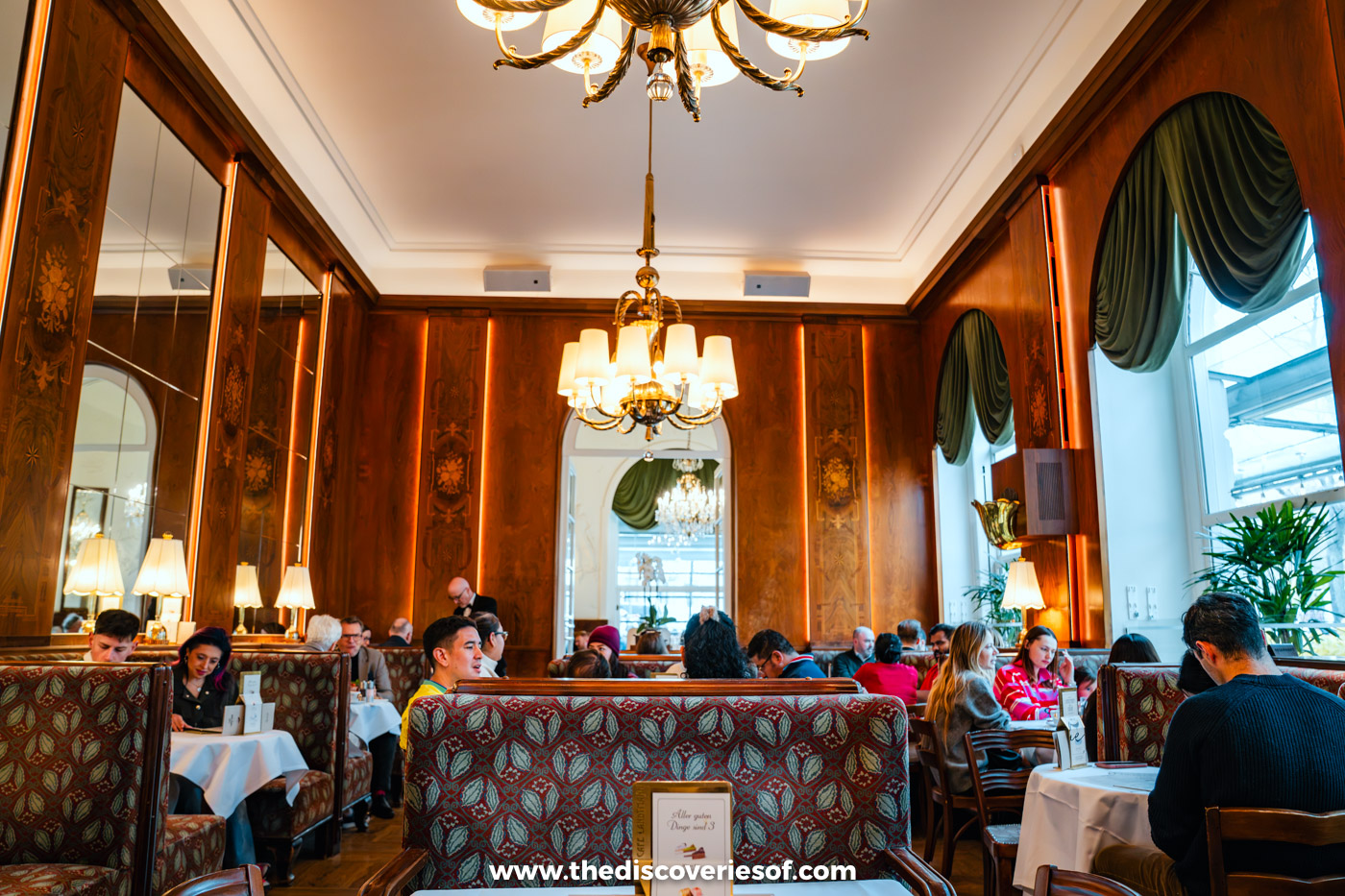
Kaiserschmarrn is a thick, fluffy pancake torn into rough pieces in the pan, buried under icing sugar and served with a fruit compote, usually plum. Farm families were eating egg batter straight from the pan back in the 16th century, but it was Franz Joseph’s court chefs who made it fit for an emperor.
As for the name, Kaiser is emperor and Schmarrn a mess, and the favourite legend involves a botched pancake that Franz Joseph loved anyway. Local food historians aren’t buying it, but it’s far too good a story to let go.
I’d been after one all trip and finally got my hands on it on my last morning, at Café Landtmann, on the Ring since 1873. Its queue had beaten me on the Saturday evening (I’d done quite enough queuing for one day), but at about 10am on the Monday, I waited five minutes or so.
On its own, the torn pancake is fairly plain. The magic is in the pairing: a heavy dusting of icing sugar on top and a slightly tart plum jam on the side, and the contrast between the two is lovely.
Top Tip
Café Landtmann, at Universitätsring 4, opens at 7.30am every day, and a weekday morning is the best time to walk straight in. If the queue’s long, Lugeck (€13.90) and Plachutta (€19.40) both serve Kaiserschmarrn too
Sachertorte at Café Sacher and Demel
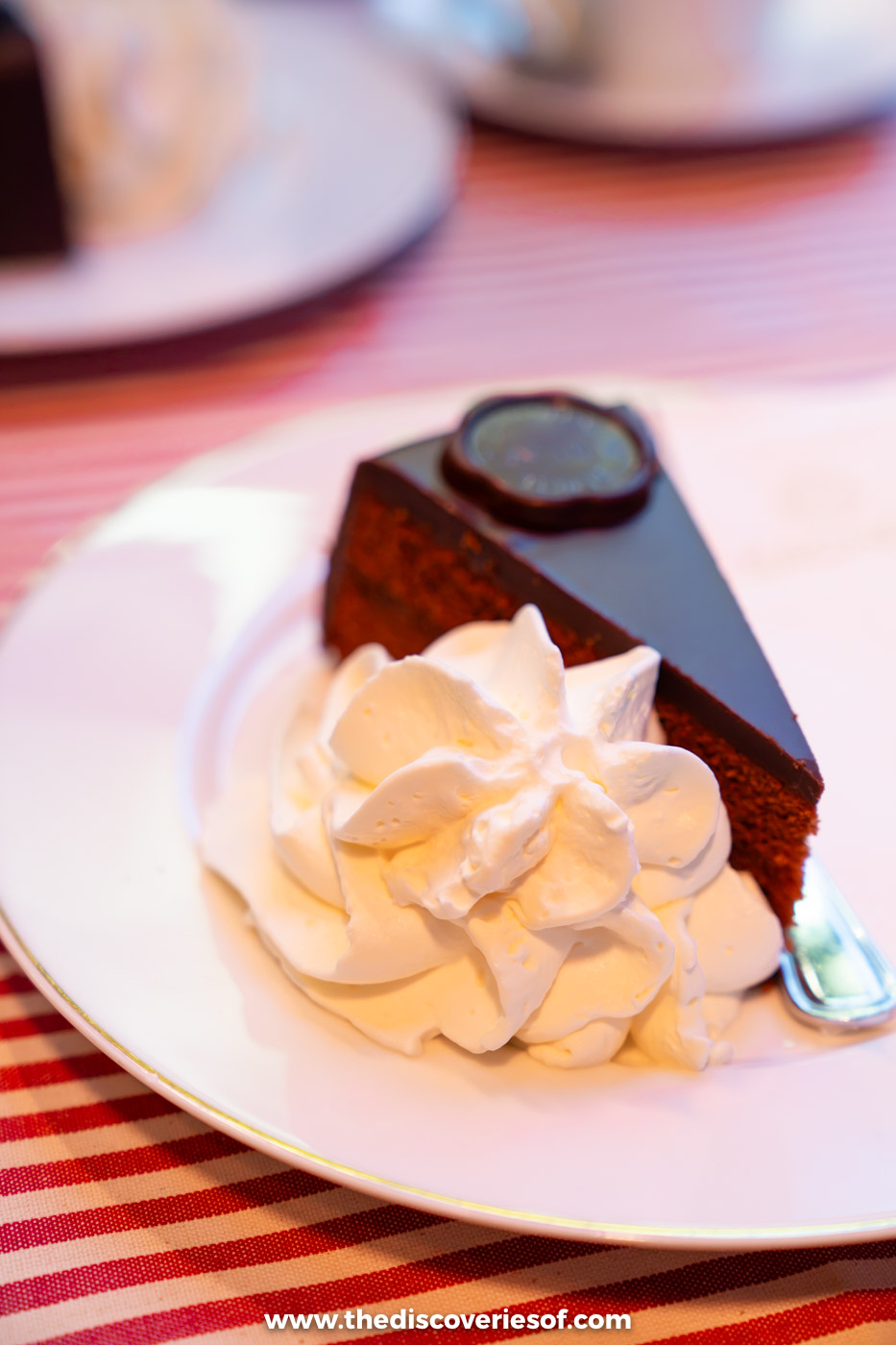
The city’s most famous cake is a chocolate sponge layered with apricot jam under a dark, glossy glaze, served with unsweetened whipped cream. Two grand addresses claim it: only the Hotel Sacher may sell the Original Sacher-Torte, while Demel sells its own Demel’s Sachertorte.
Naturally, I ate both. Demel’s is the more chocolatey of the two, but the difference is, frankly, de minimis, and Sacher just pipped it to the post for me.
Expect to pay €11.50 for a slice with cream at Café Sacher. My Sachertorte guide has the full taste test, the court case behind the rivalry and the queues to expect.
Apfelstrudel and Topfenstrudel
Strudel dough reached Vienna from the Ottoman Empire, and the city made the apple version its own. The pastry is stretched by hand until, so the saying goes, you could read a newspaper through it, then rolled around apples, raisins, cinnamon and buttery breadcrumbs and baked until crisp.
Coffee houses serve it warm, with whipped cream or vanilla sauce. Its creamier cousin, Topfenstrudel, swaps the apple for a sweet quark filling, and Milchrahmstrudel, baked in a milky custard, is said to be the oldest strudel recipe of all.
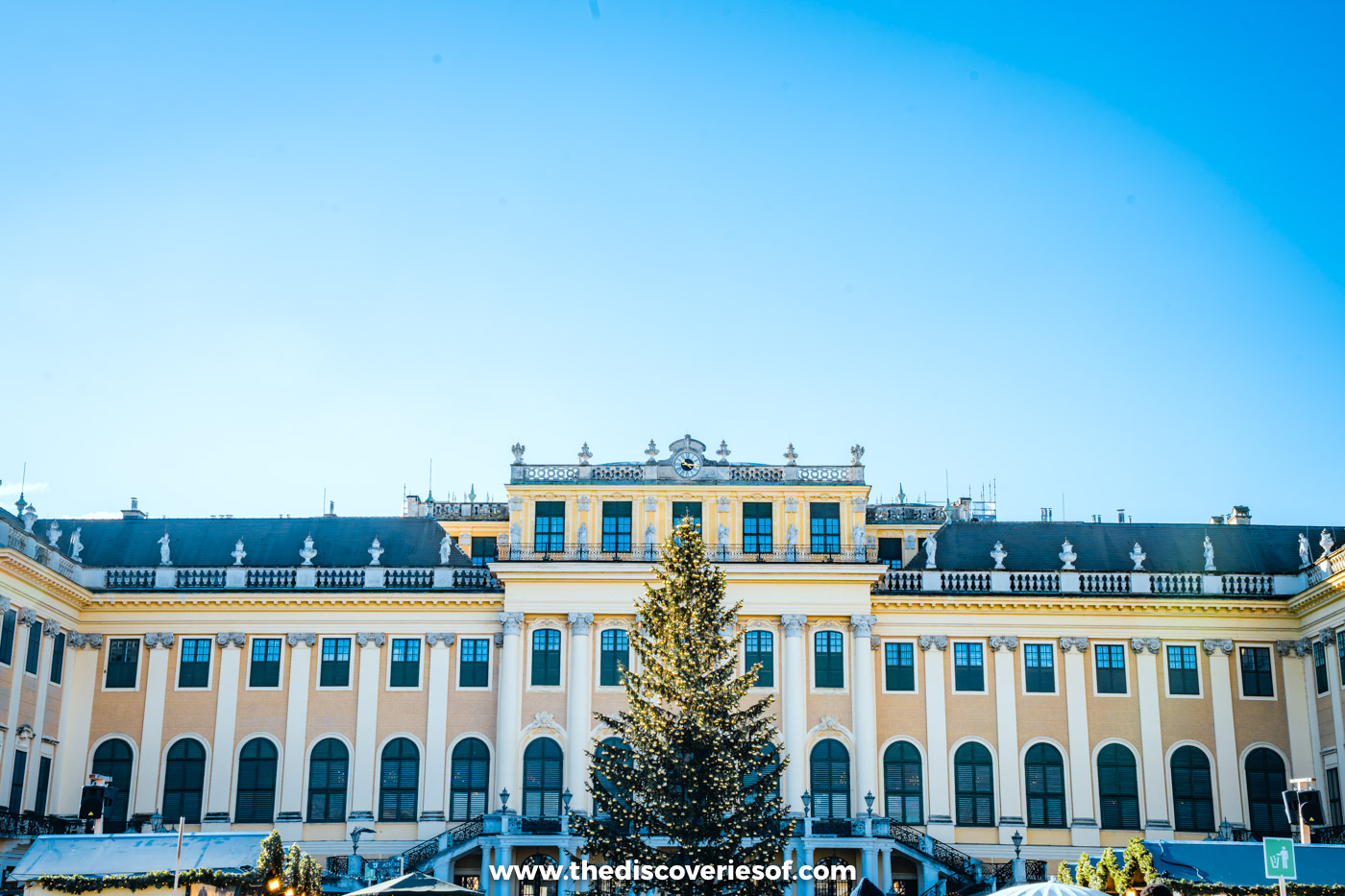
To watch one being made, Gerstner runs a strudel show in the historic bakery at Schönbrunn Palace, usually at 11am, noon, 3pm and 4pm. The €19.90 ticket includes the show, a slice and a hot drink.
Krapfen and Punschkrapfen
Krapfen are Vienna’s doughnuts: yeasted dough, deep-fried, filled with jam (traditionally apricot) and showered with icing sugar. Bakeries sell them all year, but they’re the classic treat of Fasching, the carnival season in the run-up to Lent, when they’re everywhere.
The one I tried came hot from the fryer, and it was exactly as good as I’d hoped. Imagine a doughnut with a crustier outside and a lighter middle, plus a jam with more depth than the usual sugary strawberry, closer to blackcurrant.
Then there’s the icing sugar. One tiny cough sent up a puff of it, and I’m still amazed I didn’t end up wearing it, unlike some of the people around me, who had it in their hair.
Don’t confuse them with Punschkrapfen, a little cube of rum-soaked sponge and apricot jam in a bright pink coat of icing. You’ll find them in most Konditorei cabinets, and one is plenty.
Do
This 5.5-hour food and coffee tour fits a lot of this page into one day: a coffee house on the Graben, a market, a family bakery for Krapfen, a Würstelstand and a sit-down lunch of Wiener Schnitzel or Tafelspitz with Kaiserschmarrn
Palatschinken, Germknödel and Marillenknödel
Austrian puddings are built on dough, butter and jam, and plenty of each. Palatschinken, thin pancakes from Bohemia, come rolled around apricot jam, and Buchteln are soft yeast buns filled with Powidl plum jam and served with vanilla sauce.
Germknödel is the big one: a fluffy steamed yeast dumpling with a plum jam centre, drenched in melted butter and showered with poppy seeds and sugar. It’s mountain-hut food as much as city food, and hearty dishes like this always taste of winter to me, mainly because I usually only eat them when I’m skiing.
In summer, look out for Marillenknödel, apricot dumplings that joined the Viennese repertoire in the mid-19th century. A whole apricot goes inside a quark or potato dough, and the dumpling is rolled in buttery breadcrumbs, so you get sweet, sharp and crunchy in every mouthful.
Marzipan, Manner wafers and handmade sweets
On my last day, on Wollzeile near St Stephen’s, I stumbled into the cutest little shop selling handmade sweets and marzipan. I came away with marzipan to take home, and its handmade sugar decorations for birthday and celebration cakes were so pretty that, if I lived here, I’d bake a cake just to decorate it.
For a souvenir with a longer shelf life, head to the Manner shop on Stephansplatz, facing St Stephen’s Cathedral. Manner has been making its pink-wrapped Neapolitan wafers since 1898 (the name nods to the hazelnuts of the Naples region), and the cathedral has been its trademark since 1890.
Top Tip
Mozartkugeln are Salzburg’s sweet, not Vienna’s. For a gift that’s truly Viennese, pick up a boxed Sachertorte or a stack of Manner wafers instead
What to drink in Vienna
Melange, Einspänner and the coffee-house rules
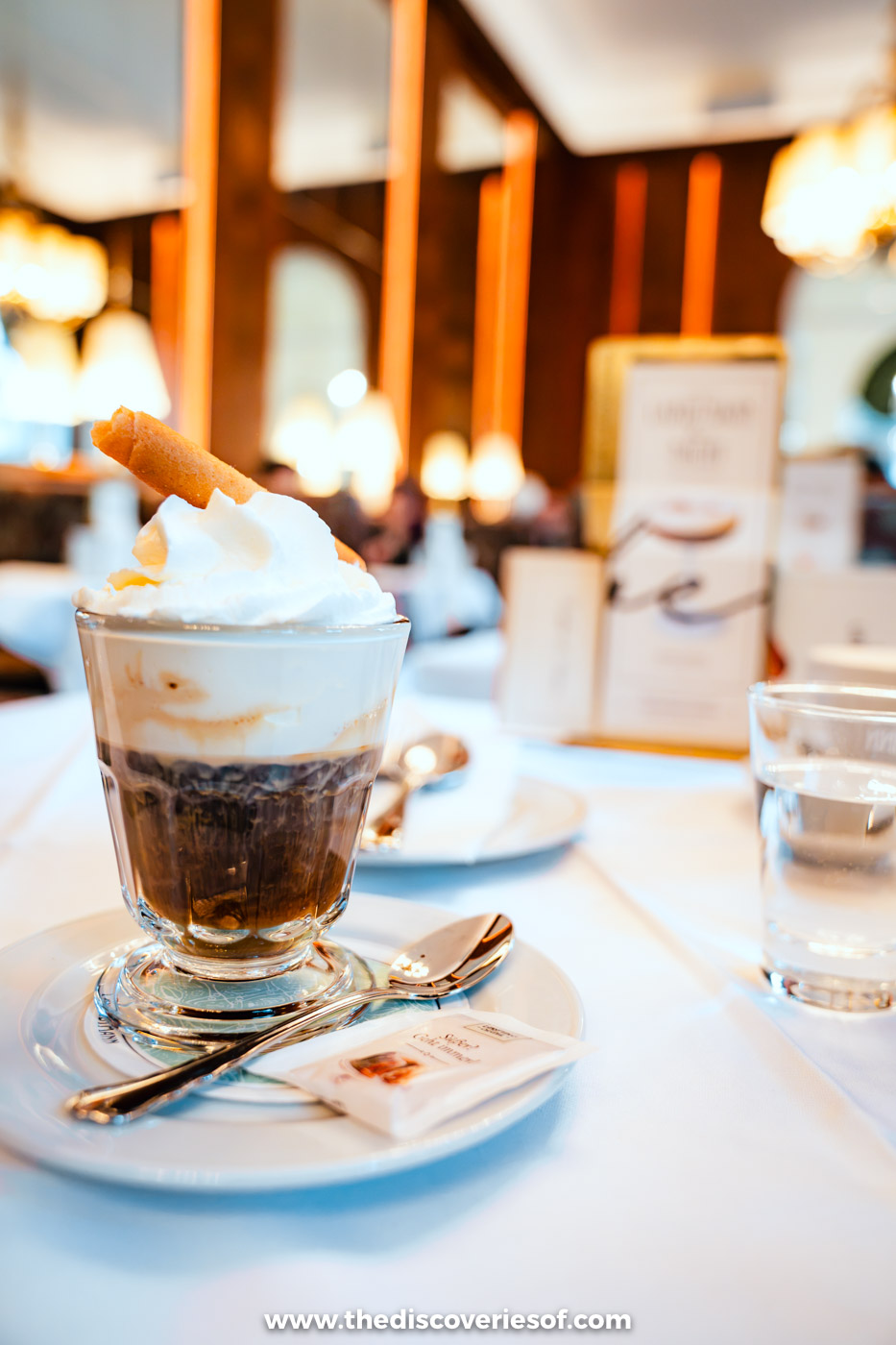
Viennese coffee-house culture is on UNESCO’s list of intangible cultural heritage, and its great luxury is time. Your coffee arrives with a glass of water, nobody hurries you out, and as the UNESCO report puts it, patrons consume time and space, “but only the coffee appears on the bill”.
The house standard is the melange, a slightly diluted espresso topped up with warm milk and milk foam, so it’s milder than a cappuccino. I had one with my Sachertorte at Café Sacher, and another in the Upper Belvedere’s small café, which is a lovely spot to sit, chill out and warm up.
An Einspänner is strong black coffee in a glass under a tower of whipped cream. It’s named after the one-horse carriage, whose drivers liked the cream for keeping their coffee warm, and mine at Landtmann looked slightly ridiculous, in the best way.
Want something longer? Order a Verlängerter, an espresso stretched with hot water, much like an Americano.
Don’t
Plan a morning around Café Central without checking its website first. It closed for a major renovation and was still shut when I visited, which was a shame, because it was top of my list (alas)
Grüner Veltliner, Gemischter Satz and the Heurigen
Vienna is one of the few capitals that makes serious wine inside its own city limits, from around 600 hectares of vines, and some 85 per cent of it is white. The grape you’ll see everywhere is Grüner Veltliner, Austria’s signature white: crisp, a little peppery and good with almost everything on this page.
I drank it with my schnitzel at Lugeck, with my bratwurst at the Naschmarkt and with dinner at Zum Schwarzen Kameel. It’s the obvious pairing for fried food, because that crisp acidity keeps every forkful tasting fresh.
The city’s own speciality is Wiener Gemischter Satz, a field blend made from at least three grape varieties that are grown, harvested and turned into wine together. Taste it where it’s made, at a Heuriger, one of about a hundred wine taverns in the city that pour wine from their own vineyards.
From late summer into autumn, those taverns also serve Sturm, cloudy, partly fermented grape juice that’s sweet and slightly fizzy. Or keep things light with a Weisser Spritzer, half white wine and half sparkling water.
Top Tip
Spot pine twigs above a doorway and the sign “Ausg’steckt”, and you’ve found a Heuriger that’s open and pouring. Tram D from the Ring to Nussdorf and the 38 from Schottentor to Grinzing will take you out to the vineyard villages
Beer by the Pfiff, Almdudler and a Schnaps to finish
Beer comes in Viennese sizes: the Pfiff (125ml), the Seidl (300ml) and the Krügerl (half a litre). Ottakringer is the one big brewery left in the city, though around 15 pubs brew their own.
If you’re not drinking, order an Almdudler, Austria’s much-loved herbal lemonade. And after a big dinner, you may well be offered a Stamperl, a shot of schnapps, usually distilled from fruit such as apricots or plums, to help it all go down.
Top Tip
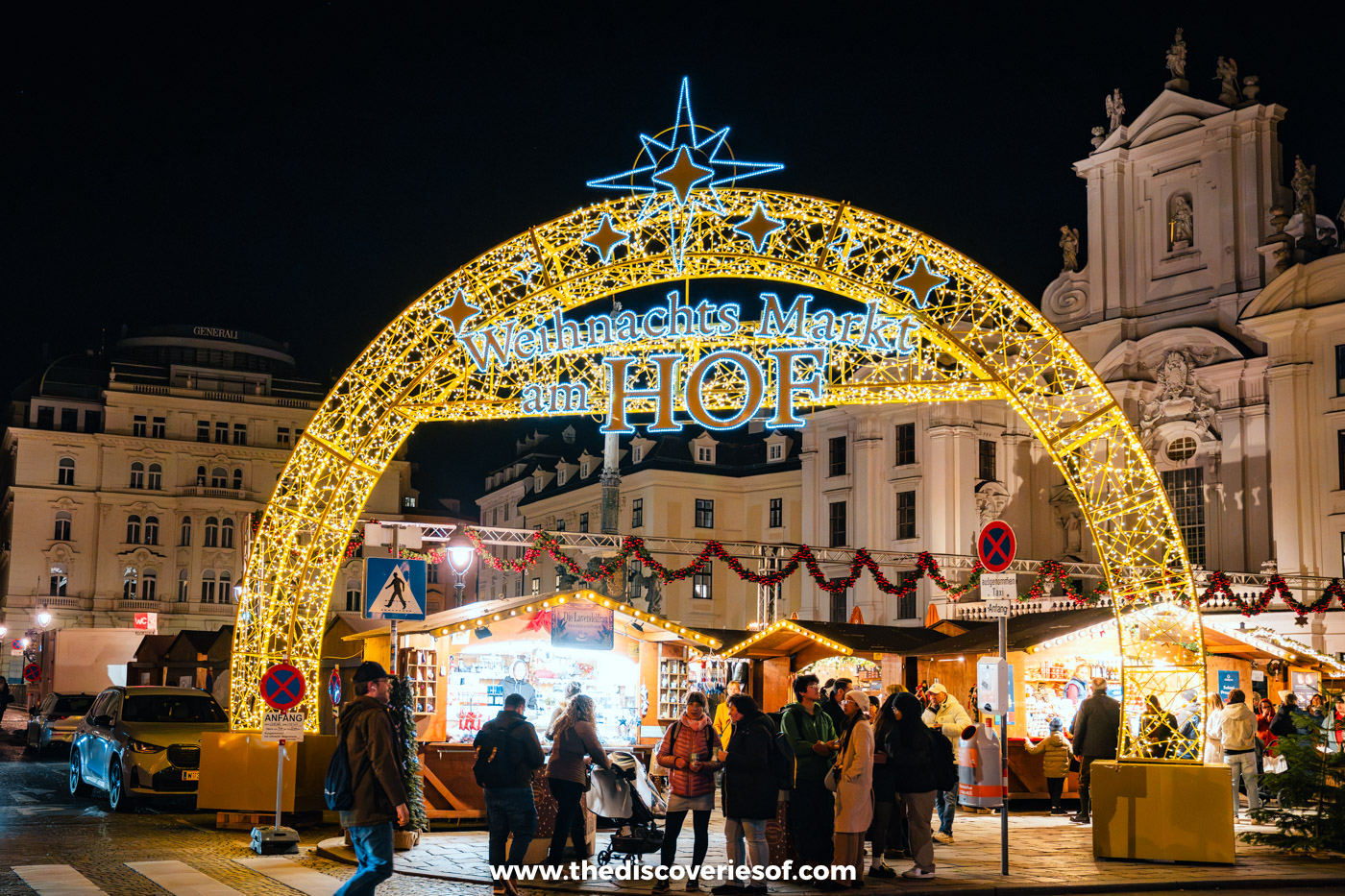
Eating at the Christmas markets? In Advent, each market serves its Glühwein and Punsch in a mug of its own design: hand it back for your deposit, or take it home. Try a Glühwein weiß, the white-wine version, where the cinnamon and star anise really come through, plus a bag of hot Maroni and a market Kaiserschmarrn, if your stall hasn’t sold out like mine did. Lángos, fried dough with sour cream and cheese, is everywhere too, though mine was tasty but overpriced at €14. My guide to the Vienna Christmas markets covers all 11 markets
Booking, tipping and other things to know before you eat out
- Book the big names. Plachutta, Lugeck and the brasserie at Kameel fill up, so reserve a few days ahead, especially for Friday and Saturday nights.
- Go easy on starters. Portions are generous even at the smart places, and a starter can be a meal in itself.
- Look for a Mittagsmenü. Many Beisln offer a set lunch on weekdays, often a soup and a main, which is the cheapest way to eat the classics sitting down.
- Mind the Sunday closures. The Naschmarkt’s stalls are shut on Sundays, though most restaurants and coffee houses stay open.
- Ask for the bill. In a coffee house nobody will bring it until you ask (“Zahlen, bitte”), and you pay at the table rather than at a counter.
- Tip 5 to 10 per cent. Add it when you pay, depending on how happy you were, but check the bill first in case service is already included. Cards are widely accepted, though coins come in handy at sausage stands and market stalls.
Viennese food FAQs
What food is Vienna most famous for?
Wiener Schnitzel above all, followed by Tafelspitz, Sachertorte, Apfelstrudel and Kaiserschmarrn. Add the coffee houses, the sausage stands and Trześniewski’s open sandwiches, and you have the essentials.
Is Wiener Schnitzel made with pork?
The original is veal. A pork or turkey version is usually sold as Schnitzel nach Wiener Art (Viennese-style schnitzel), so check the menu wording if you want the real thing.
Is eating out expensive?
It can be, but it doesn’t have to be. A veal schnitzel costs around €29 to €35 at the best-known restaurants and a slice of Sachertorte is €11.50 at Café Sacher, while open sandwiches, sausage stands and market snacks will feed you for a fraction of that.
Do you need to book restaurants?
For the famous names, yes, particularly at weekends. Sandwich bars and sausage stands are walk-in, and so are most coffee houses, though some of the grand cafés take reservations too.
Do you tip in Vienna?
Yes. In restaurants, 5 to 10 per cent is normal, depending on the service, but check the bill first: if service is already included, there’s no need to pay it twice.
Is it easy to eat vegetarian?
Better than its meaty reputation suggests. Krautfleckerl, Käsespätzle and most of the sweet dishes are meat-free, Plachutta serves a vegan mushroom goulash, and the city’s tourist board points to Tian, Wrenkh and &flora for vegetarian and vegan cooking.
What’s the difference between a melange and a cappuccino?
A melange is a slightly diluted espresso with warm milk and milk foam, so it tastes milder than a cappuccino. If you’d rather have your coffee black under a cap of whipped cream, ask for an Einspänner.
What is a traditional Viennese breakfast?
In a coffee house, the classic is a coffee with a crusty Semmel roll or a Kipferl, butter and jam, often with a soft-boiled egg served in a glass. Zum Schwarzen Kameel’s brasserie serves breakfast from 8am if you’d like yours somewhere grand.
Map
Read next
- Sacher or Demel? Where to eat Sachertorte in Vienna, and the cake war behind it
- A guide to Schönbrunn Palace, the Habsburgs’ 1,441-room summer home
- St Stephen’s Cathedral in Vienna: exploring the two towers, catacombs and an emperor’s tomb
- 28 of the best city breaks in Europe, and how long to give each one
- The ultimate Europe bucket list, 100 incredible places to visit in Europe from Big Ben to cheese fondue
- Trześniewski review: are Vienna’s century-old open sandwiches still the best quick lunch in town?
Love this? Save and share on Pinterest
Discover the top things to do, insider tips and hidden gems in our Austria Travel Guide.
Read the guides →