
Empress Elisabeth hated court life, rose before dawn to work out and was killed with a sharpened file on the shores of Lake Geneva. Her story fills one wing of the Hofburg, alongside the rooms she and Franz Joseph lived in and a treasury of imperial silver. Here’s what to see inside, which ticket to buy and how to time your visit.
It’s six o’clock on a winter morning in the Hofburg. The empress is already up, working through her exercises on wall bars and rings in her dressing room, before settling in for hours with her hairdresser (and yes, the rings are still hanging in the doorway).
That’s the woman at the heart of the Sisi Museum, and she’s a lot more interesting than the fairytale version on the chocolate boxes. I went on a Monday morning in November, on the 9am slot as the doors opened, and it had just reopened after its redesign. Great timing, if I say so myself.
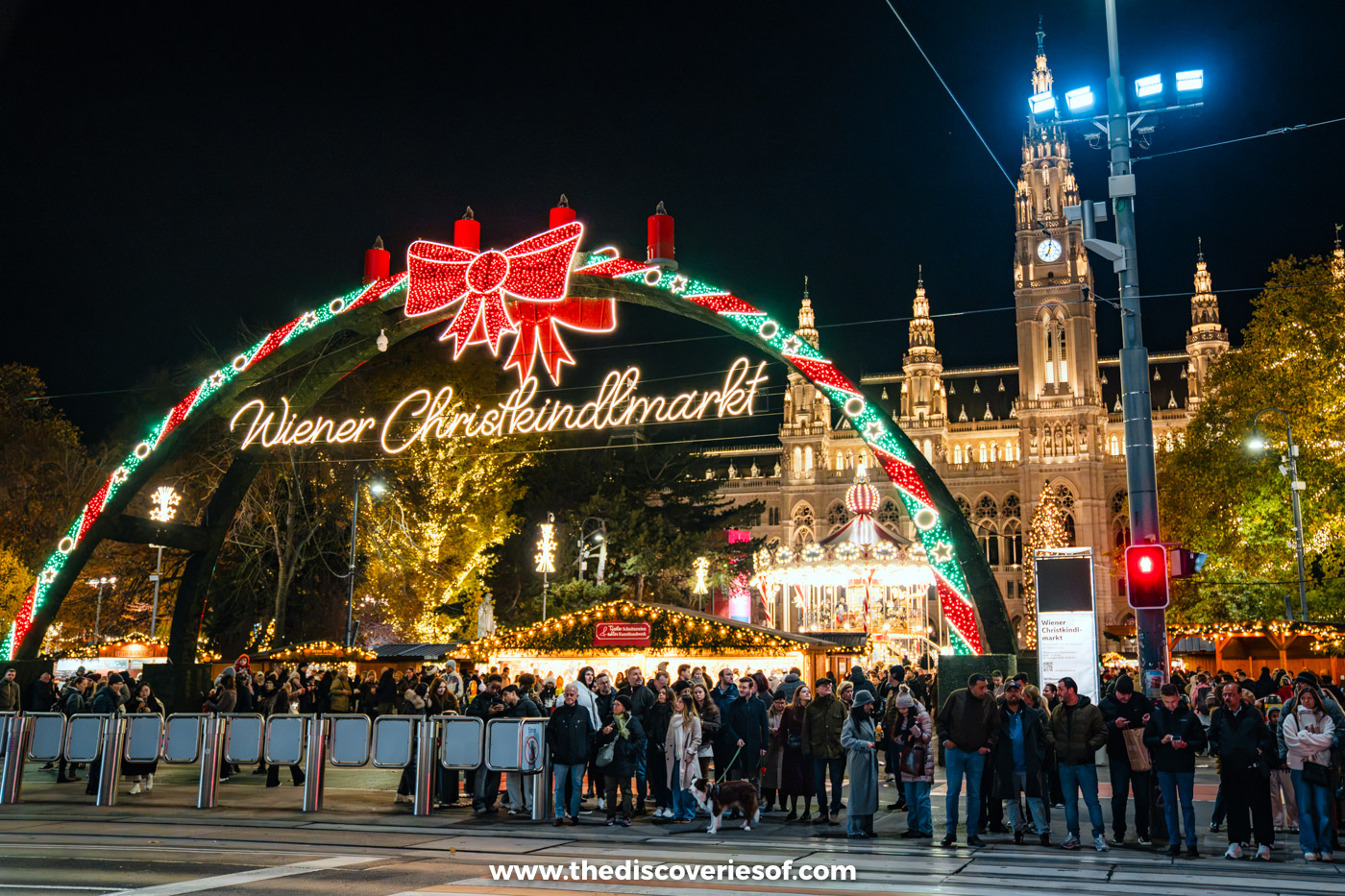
I’d already had a sneak preview on my first evening, walking down Kohlmarkt with the Christmas lights on. At the end of the street the Hofburg appears, and it’s grand on a spectacular scale: really big, gilt on the statues, a huge dome. It’s exactly the architecture you come to Vienna expecting.
This guide covers who Sisi really was, what changed in the redesign, the rooms you shouldn’t rush, which ticket to buy and the square outside. Let’s get to it.
Why this corner of the Hofburg is worth a morning
The Hofburg was the Habsburgs’ winter home and seat of government for more than 600 years. One route now takes you through three parts of it: a museum about Elisabeth, the private apartments she and Franz Joseph lived in, and the Silver Collection that once laid the imperial table.
Compared with Schönbrunn Palace, it’s much, much smaller, which is only to be expected. But where Schönbrunn shows you the pomp of the court, this shows you the people stuck inside it.
My verdict? Overall, I really enjoyed it. The rooms are lovely, it wasn’t packed, and the audio guide was really good at setting the context, so you always know what you’re looking at and why it matters.
Who was Sisi, the empress who couldn’t bear court life?
Elisabeth was born in Munich in 1837, the daughter of Duke Maximilian in Bavaria. In 1854 she married her cousin, Emperor Franz Joseph. She was 16.
She’s the most famous empress in Austrian history, and she famously hated court life. Vienna’s stiff etiquette suffocated her, so she spent years travelling around Europe to get away from it all, from Corfu to the Hungarian countryside.
Hungary became her cause. She learned the language, fought the Hungarians’ corner at court and was crowned their queen alongside Franz Joseph in 1867. After their son, Crown Prince Rudolf, died at Mayerling in 1889, she grew more restless still, escaping into long journeys and stays on Corfu.
She was an interesting character by all accounts, and very, very obsessed with fitness. Records suggest her floor-length hair took around three hours a day to care for, she kept to a severely limited diet, and she had her waist laced to about 50 centimetres (roughly 19.5 inches, if you want to wince in imperial units).
Her end was brutal. On 10 September 1898, travelling incognito in Geneva, she was stabbed on the lakeside promenade by an anarchist, Luigi Lucheni, with a file sharpened to a stiletto point.
Thinking she’d simply been punched, she got up, thanked the people who helped her and hurried on to the lake steamer, where she collapsed. She was 60.
What changed when the museum reopened
The museum stayed open through several years of building work, and the redesigned route opened on 19 November 2026. The Schönbrunn Group, which runs it, has spent around €15 million so far. It needed to: almost 930,000 people visited in 2025, squeezing through rooms that were never built to be a museum.
The big change is the order. The Silver Collection used to start the tour; now it’s the grand finale, linked to the upper floor by a new staircase and lift.
There’s a proper cloakroom at last, a bigger shop, and (a very Viennese bonus) archaeologists found the remains of a Roman road during the works.
The real headline, though, is a suite of Rococo rooms along Schauflergasse, open to the public for the first time. Until now they were offices for the Federal Chancellery, and restorers found the original walnut parquet hiding under a later floor.
Top Tip
The step-free main entrance has a lift up to the first-floor rooms, so you can skip the 72 stairs if you need to. Leave big coats and bags in the new cloakroom before you start.
What to see on the route through the Hofburg
Don’t race through the museum to get to the apartments. These are the highlights, in the order you’ll meet them.
The museum: Sisi’s life in objects
The first section traces her life through a run of themed rooms, from her Bavarian childhood to Geneva. There are more than 300 objects, from dresses, fans and gloves to a 63-piece first-aid kit she travelled with and a reconstruction of her saloon car from the imperial train.
The sport and beauty room is where her “iron discipline”, as the museum puts it, comes into focus: her exercise leggings, her vanity case and a riding spur. Then the mood darkens, with her black mourning jewellery, her death mask and the black coat laid over her after the attack, back on display since the reopening.
The final rooms look at how she became a pop-culture icon, with film posters and postcards galore. There’s even an interactive station where you can try on her dresses virtually (no corset required).
Top Tip
Pick up the audio guide at the start. It’s free, comes in 14 languages and sets the scene for every room, which matters most in the apartments, where the furniture alone doesn’t tell you much.
Franz Joseph’s audience chamber and study
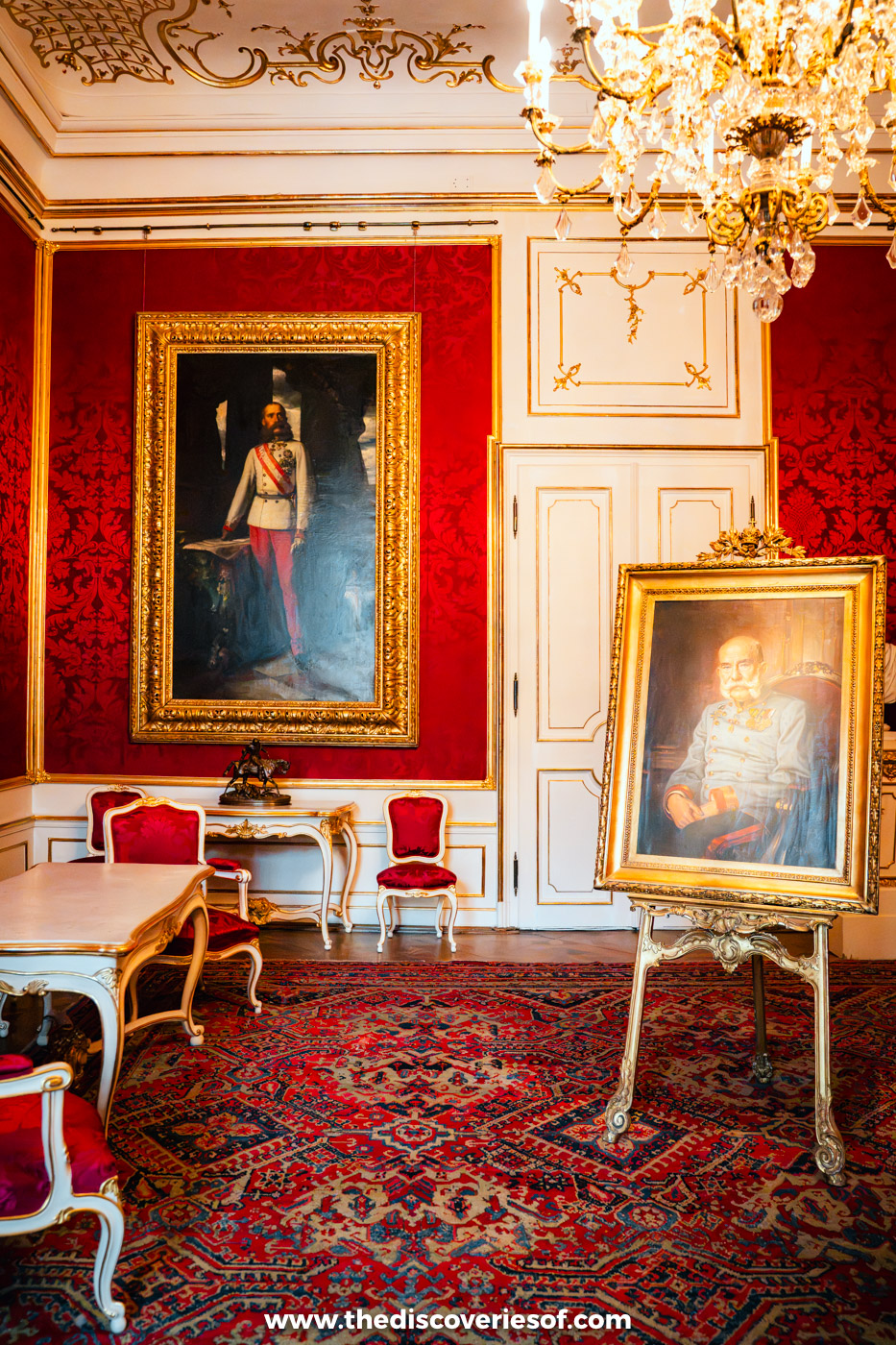
The apartments open with the emperor’s working rooms, and they tell you everything about him. In the audience chamber, Franz Joseph received around 260,000 people over his reign, standing at a lectern by the window, with every petitioner left standing too.
Most audiences lasted a few minutes, and the pace was relentless. “Yesterday I had 127 audiences, today I will be giving 108,” he wrote to his friend Katharina Schratt (no wonder he favoured short meetings). His last portrait, painted by Heinrich Wassmuth in 1915, a year before he died, is in this room too.
Next door is the conference room, where he chaired his ministers, then his study. He was at his desk by 4am every day, and behind it hangs his favourite painting, a Winterhalter portrait of Elisabeth.
Sisi’s dressing and exercise room
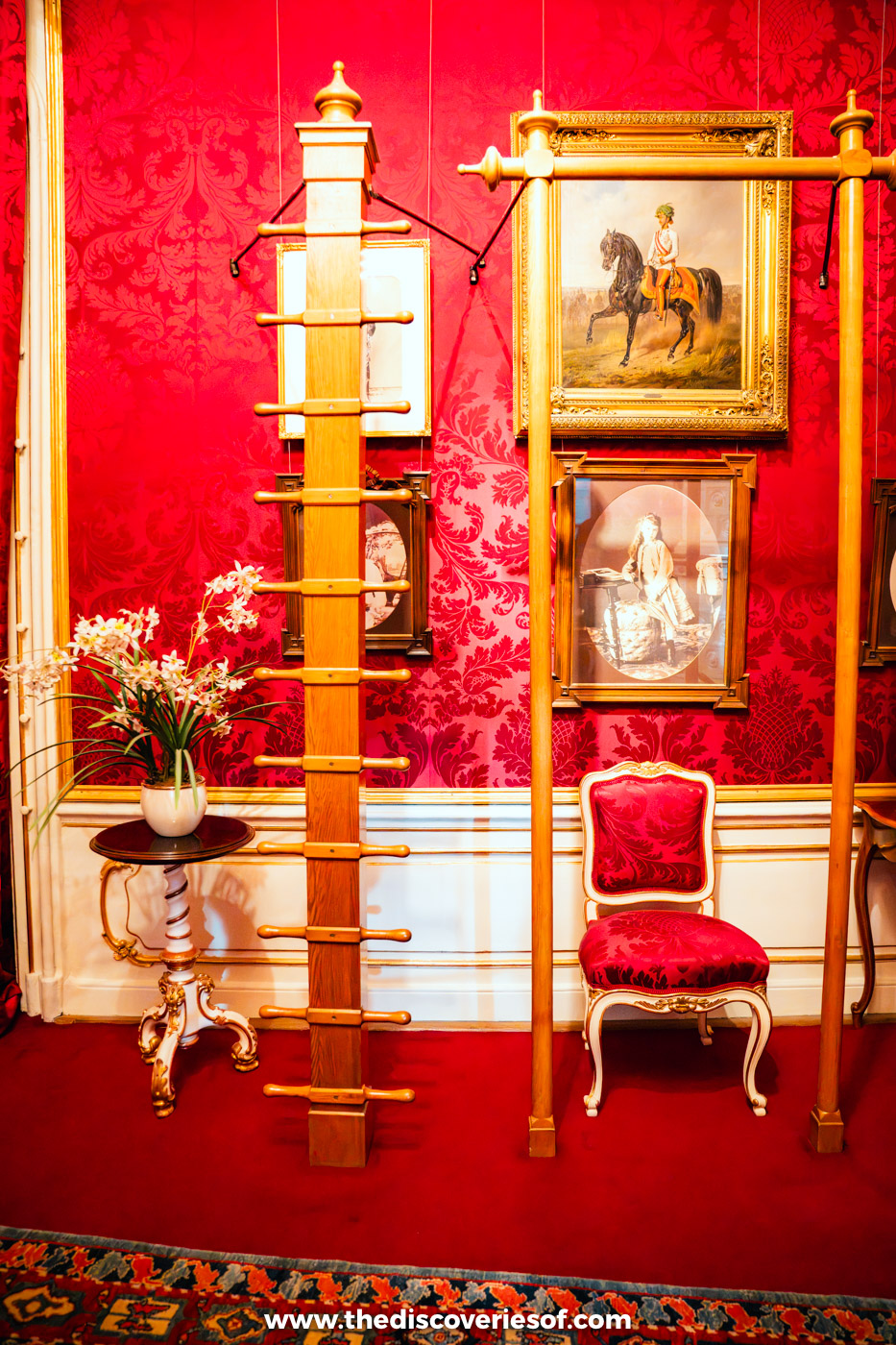
Don’t miss this one. Sisi turned her dressing room into her morning gymnasium, and her wall bars, a high bar and the rings in the doorway to the next room are all still in place.
Her day started right here, at 5am in summer and 6am in winter, with her exercises and a long session with her hairdresser, Fanny Feifalik. Dressing all that hair took so long that she studied languages while it was being done, and she picked up seven over her lifetime.
Picture it: red damask walls, a gilded chair, and an empress hanging off the woodwork before most of the palace was awake. (Most of us can barely manage a stretch before our first coffee.)
The new white and gold rooms
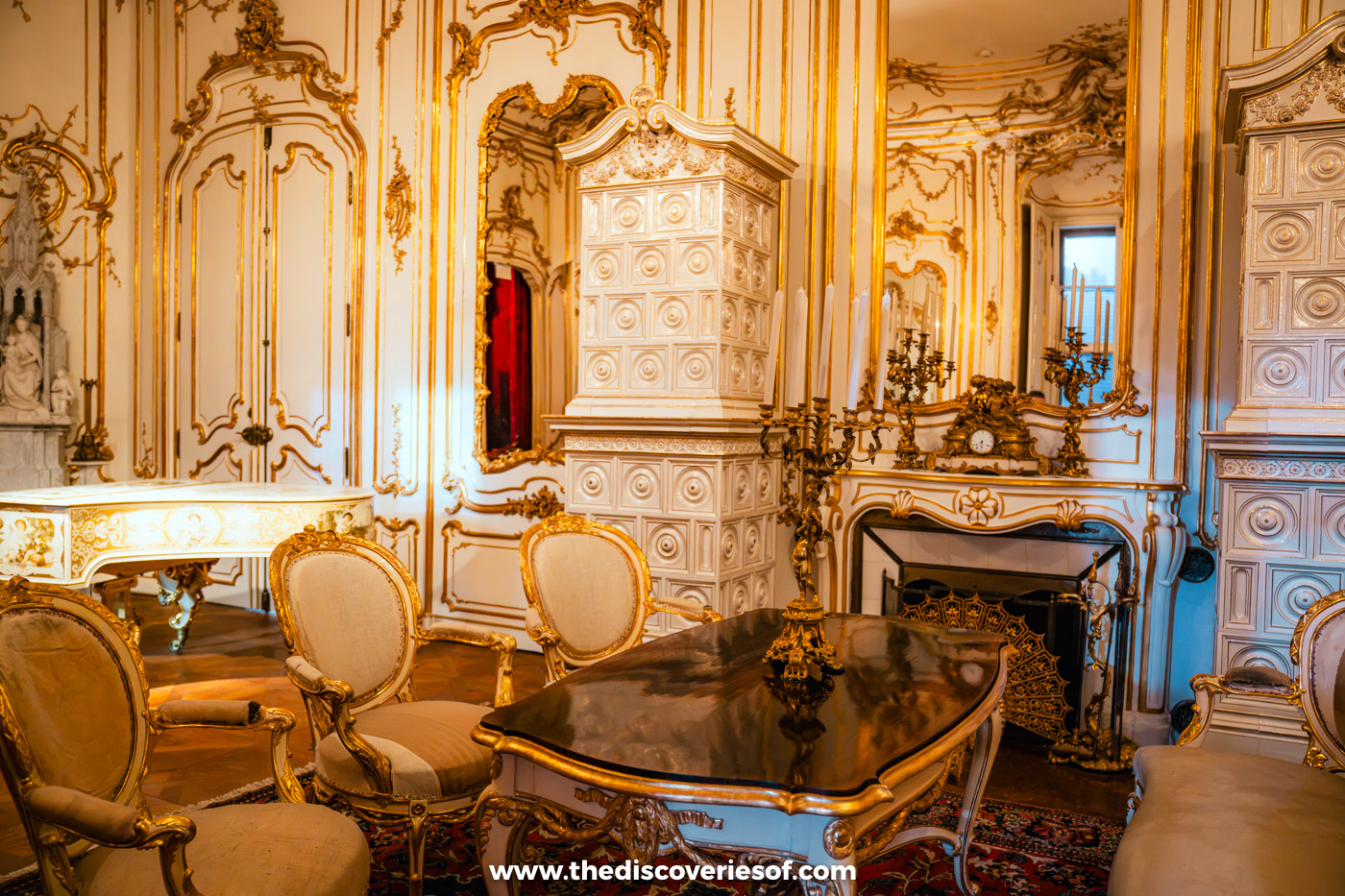
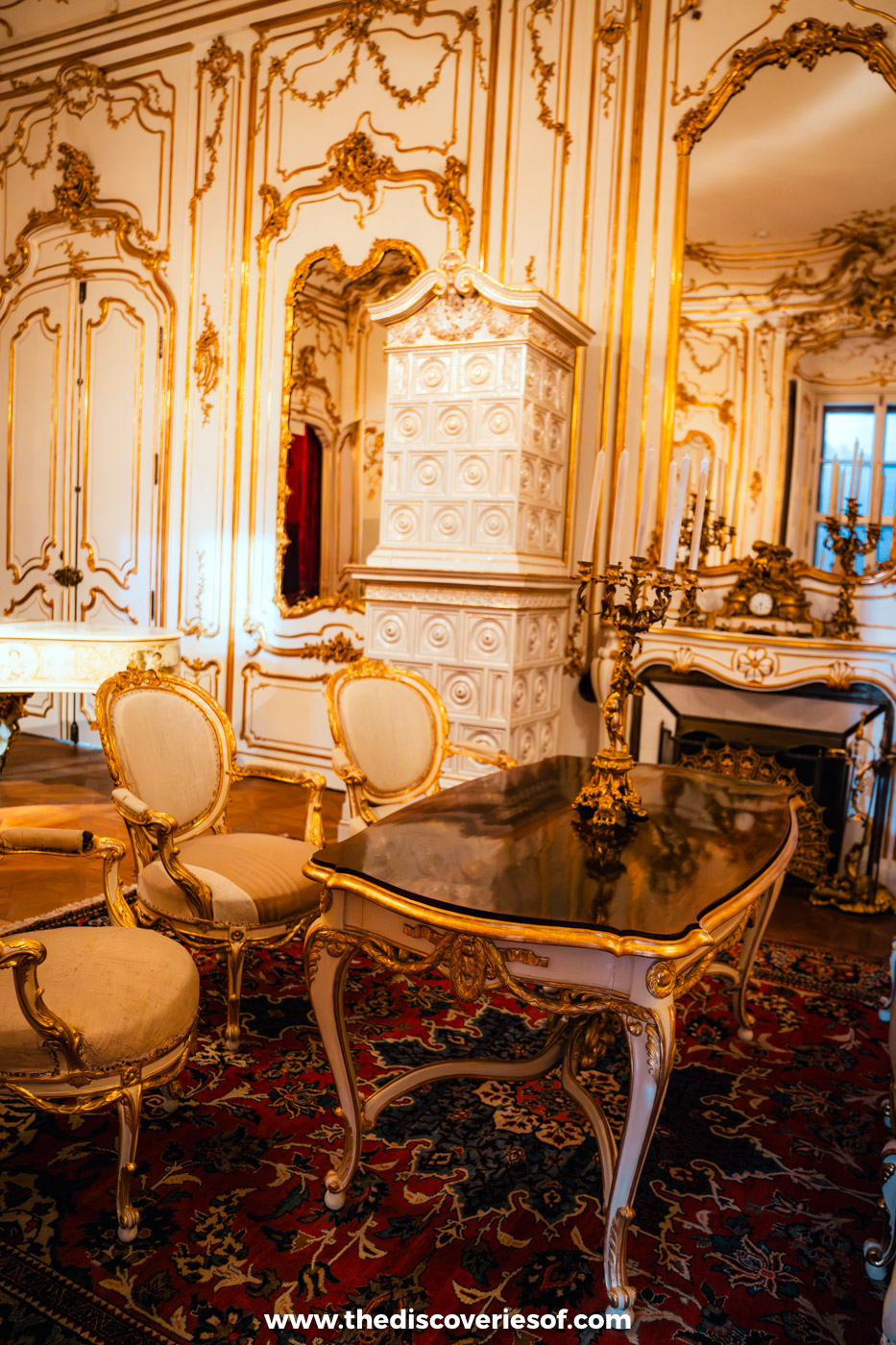
These are the rooms that opened with the redesign, and they’re dazzling: white panelling picked out in gold, towering tiled stoves and mirrors at every turn. They were a private retreat for the imperial family, which is why they feel so much more lived-in than the state rooms.
They now hold some of her most personal belongings, including a lace jacket, satin shoes, her gymnastics trousers and a dressing gown. Look out, too, for a Bösendorfer grand piano made for the empress, on public view for the first time since 1888.
The Large Salon and the dining room
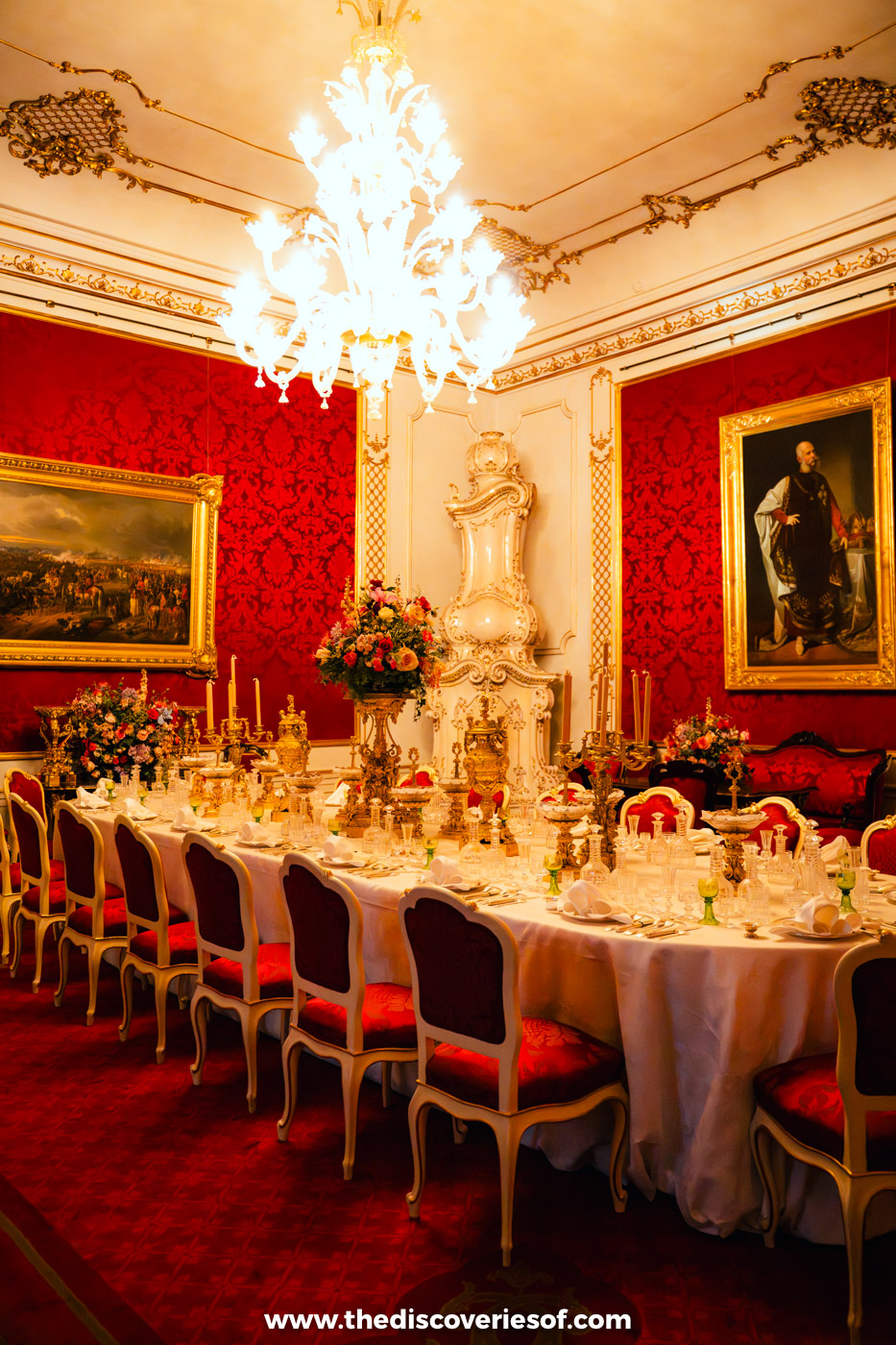
The Large Salon was Elisabeth’s reception room, where the couple sometimes breakfasted together and Franz Joseph took his evening tea. Find the portrait of him in the robes of the Golden Fleece, painted for his 50th jubilee in 1898.
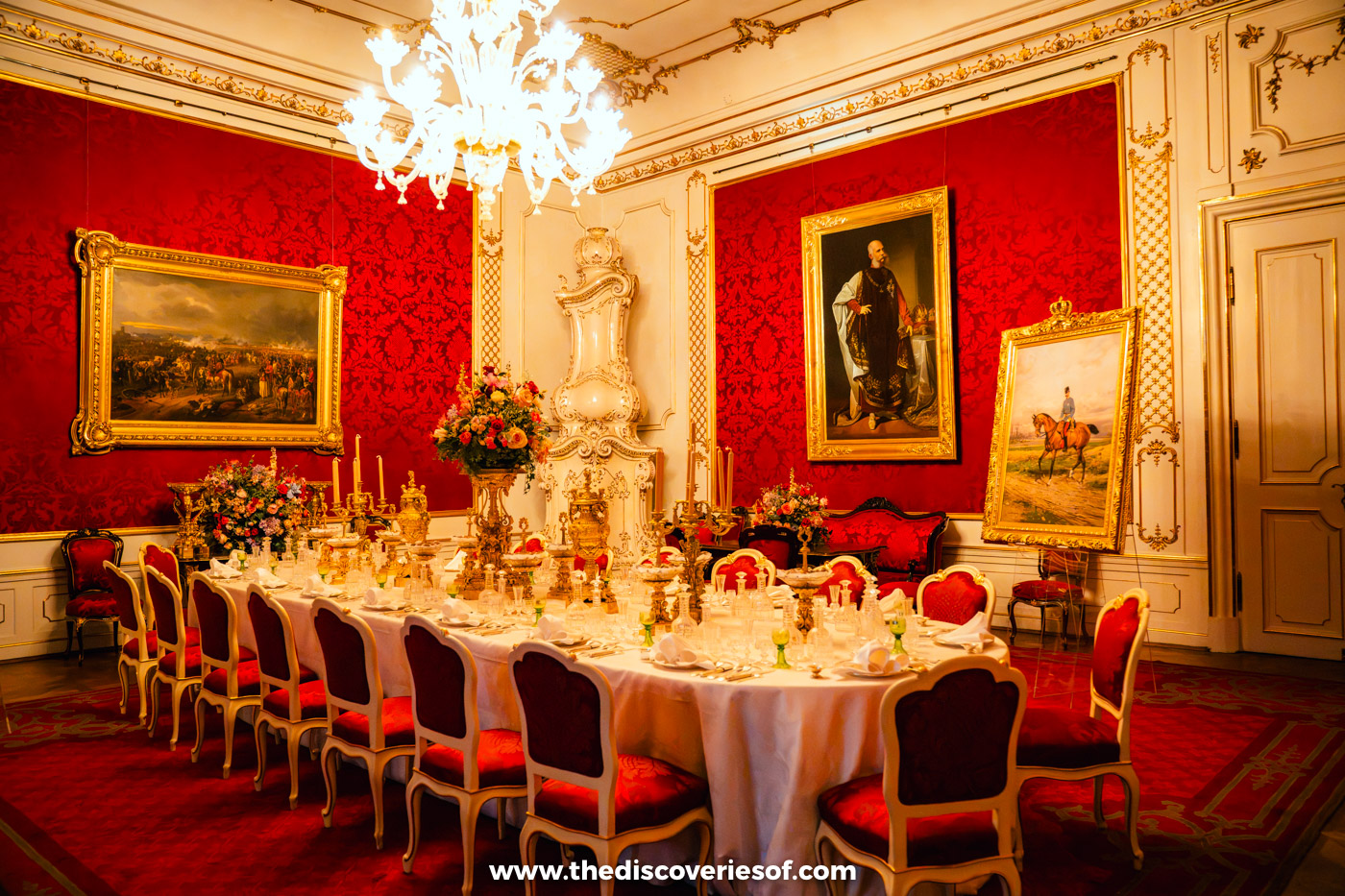
Then comes the dining room, laid out in full. Flowers, gilt, crystal, a chandelier: it looks as though the footmen have just stepped out and dinner is about to be served.
The Silver Collection
Like everyone’s now, my route ended on the ground floor in the Silver Collection, redesigned to feel like a treasure chamber. It holds around 135,000 objects that once served the imperial table, from porcelain services to Maria Theresa’s own cutlery, and only part of it is on show.
The showstopper is a gilded table centrepiece about 30 metres long, made in 1838 for the coronation of Emperor Ferdinand I, and you can now walk the full length of it. Look out for the imperial napkin as well, which the collection’s staff still fold in the traditional court style.
Don’t
Don’t run out of steam before the end. The Silver Collection comes last now, so if you’re short on time, move a little faster through the museum rooms rather than skipping the silver.
Finding the entrance on Michaelerplatz
The entrance is on Michaelerplatz, under the great dome of the Michaelertrakt. Walk down Kohlmarkt from the Graben and the dome closes off the end of the street, which couldn’t be further away from the humble charcoal market Kohlmarkt is named after if it tried.
Before you go in, look down. In an open pit in the middle of the square are Roman remains from the settlement around Vindobona, which weren’t discovered until the early 1990s.
What I hadn’t realised is how recent that was. It always makes me think of all the people who went about their lives up here for centuries, with no clue what lay beneath them.
The nearest U-Bahn stop is Herrengasse on the U3, a few minutes’ walk away, and Stephansplatz (U1 and U3) is under ten minutes on foot. A 24-hour ticket costs €10.20 if you’re hopping between sights.
Sisi Museum tickets: which one to buy
Book a timed ticket online before you go, as I did. Tickets are sold online only through the official Sisi Museum tickets page (via imperialtickets.com), and the museum warns about fake ticket sites, so stick to that link.
- Day ticket (€27): the Sisi Museum and the Imperial Apartments, with a fixed entry time. It’s €16 for 6 to 18-year-olds and €25 for students up to 25.
- Day ticket with guided tour (€33): the same route with a guide for about an hour. The English tour runs daily at 2pm.
- Sisi Pass (€69): the Sisi Museum, Imperial Apartments and Silver Collection, plus the Schönbrunn Palace tour and the Furniture Museum, valid for a year. You only need a time slot for Schönbrunn.
Doing both palaces? Then it’s a no-brainer. Schönbrunn’s Palace Ticket is €42 on its own, so the pass costs exactly what you’d pay for the two separately, with the Furniture Museum thrown in and no slot to book here.
Only seeing the Hofburg? The day ticket is all you need.
Do
For the backstory with a guide, this skip-the-line Hofburg and Sisi Museum tour includes the museum and apartments, plus the palace courtyards and Heldenplatz.
Opening hours and how long to allow
Doors open at 9am daily and close at 5.30pm, and the last admission is at 4.30pm. I got in at 9am on the dot, and it was relatively busy from the get-go, which was to be expected in rooms this size. Busy, but not packed.
It’s compact, and I finished up a little earlier than I’d planned. With the Silver Collection now tacked on the end, allow an hour and a half or so to see everything without rushing.
Top Tip
Take the first slot of the day. The rooms on this route are far smaller than Schönbrunn’s, so the earlier you go, the more space you’ll have to linger in each one.
Step out on to Heldenplatz and the Neue Burg
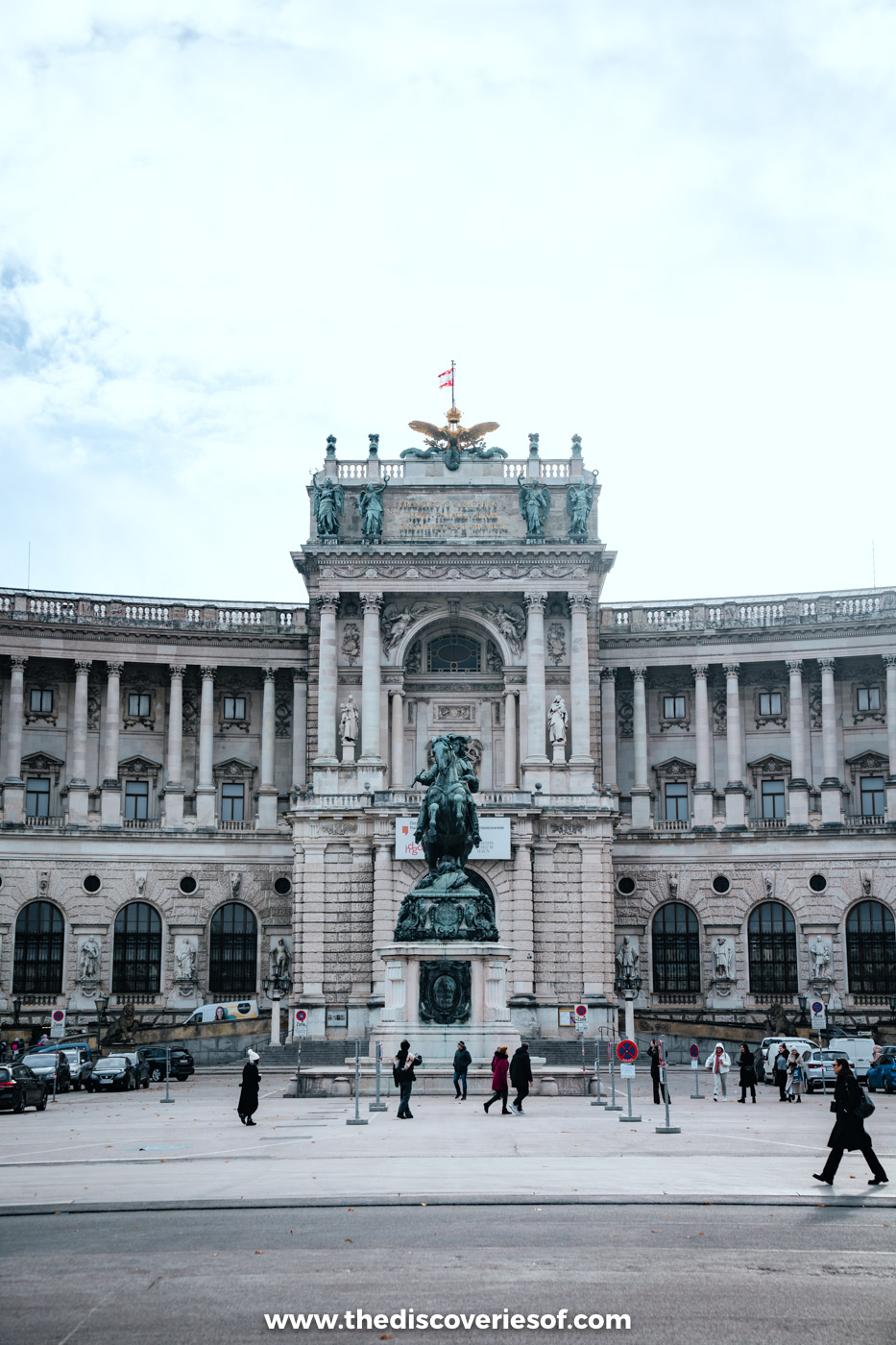
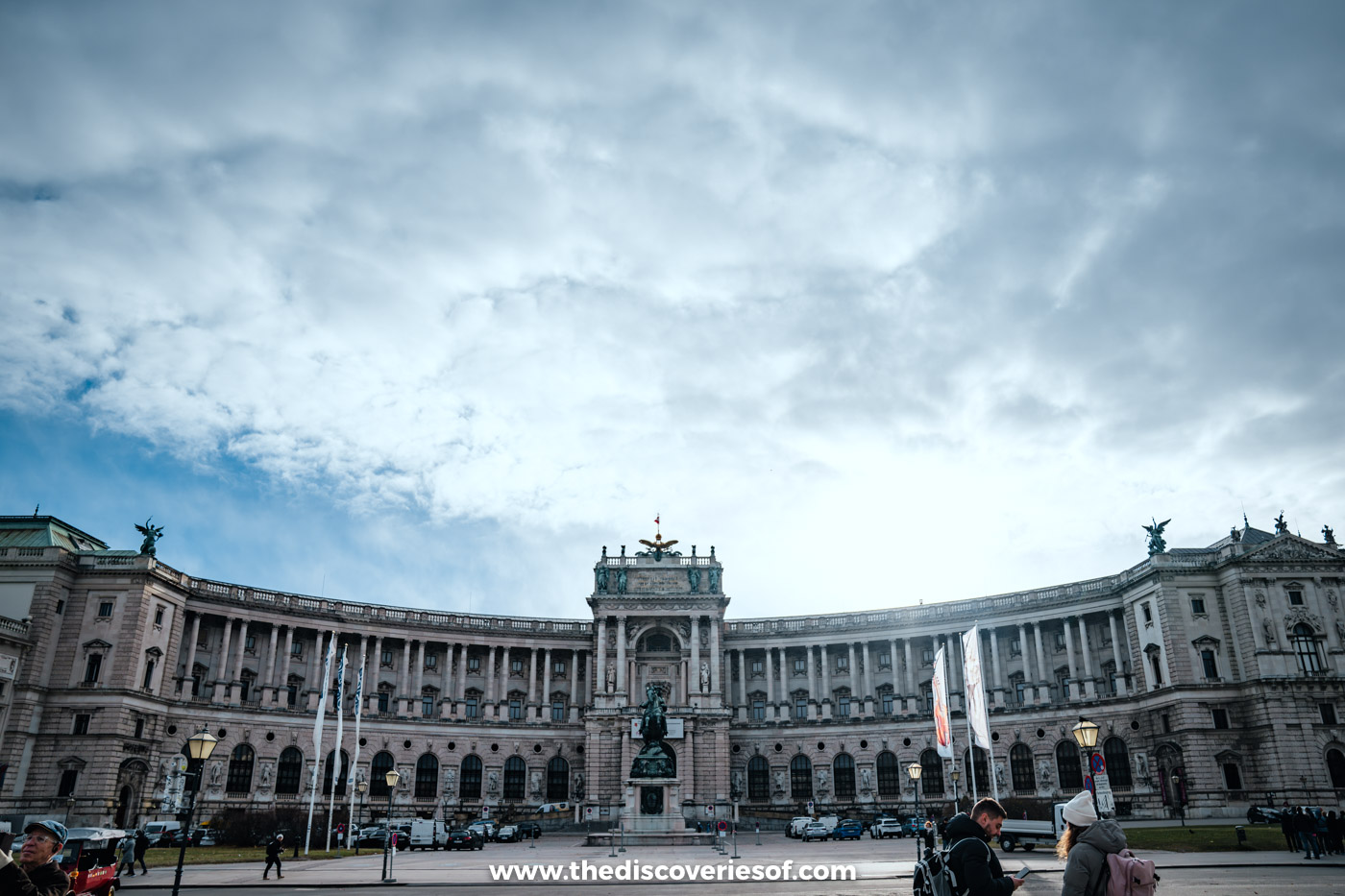
When you come out, Heldenplatz (Heroes’ Square) is just around the corner, so don’t head straight off. For me it’s Austria’s most iconic square, and the curved Neue Burg sweeping along one side was the last part of the Hofburg to be built, begun in 1881 and still unfinished when the empire fell.
Two equestrian statues by Anton Dominik Fernkorn face each other across the square: Archduke Charles, who beat Napoleon at Aspern, and Prince Eugene of Savoy, who fought the Ottomans. Today the Neue Burg is home to museums including the House of Austrian History and the Weltmuseum.
It was from the Neue Burg’s balcony, in March 1938, that Hitler announced the annexation of Austria to a cheering crowd. Standing in that vast space, it’s quite mad to think how much history has played out right where you’re standing, and how much of it is dark and complex.
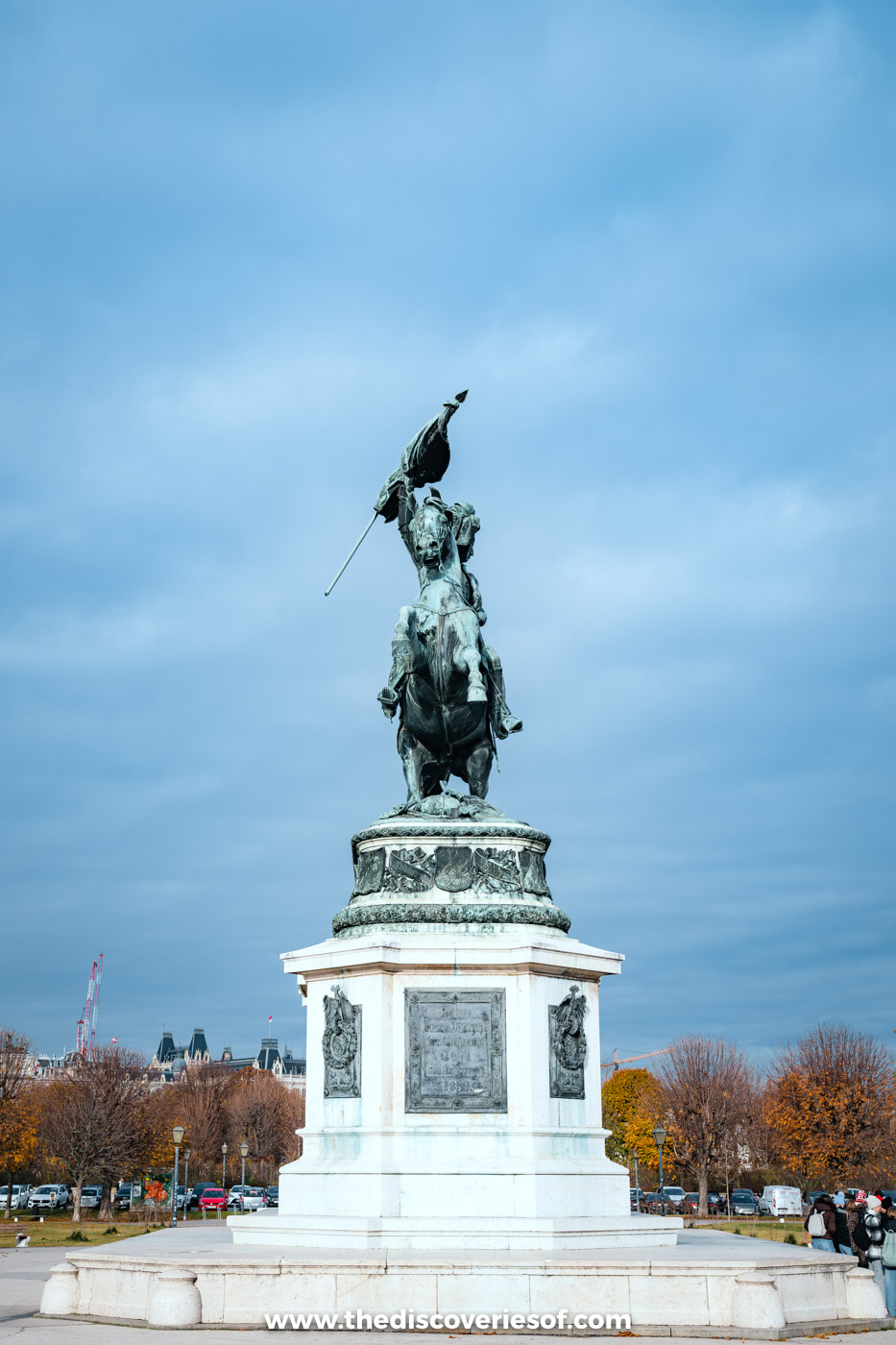
That’s the thing about Vienna. So much history is woven in between the buildings, the streets and squares named after emperors and empresses, that the whole city ends up feeling like a museum you can wander for free. Fascinating doesn’t quite cover it.
Before you go: your questions answered
Is the Sisi Museum worth it?
Yes, and even more so if Elisabeth’s story grabs you. Being a fraction of Schönbrunn’s size, it slots easily into a morning, and the private apartments and that exercise room give you a far more personal picture of the Habsburgs than any state room.
Do you need to book in advance?
Day tickets have fixed entry times and there can be waits at busy periods, so it’s best to book online ahead. With a Sisi Pass you can turn up without a slot.
Is the Silver Collection open?
Yes. Since the redesign it forms the final part of the route through the Hofburg, after the Imperial Apartments.
Where is the entrance?
On Michaelerplatz, under the dome of the Michaelertrakt, at the end of Kohlmarkt. The entrance is step-free, with a lift to the first floor.
Can you combine it with Schönbrunn?
Yes, with the Sisi Pass, which covers both palaces and the Furniture Museum and is valid for a year. Schönbrunn is about 15 minutes away by taxi or half an hour on public transport, so the two are easier on separate mornings.
Map
Read next
- SO/ Vienna review: spacious rooms, views both ways and breakfast 18 floors up
- 3 days in Vienna, with time for Habsburg palaces, grand coffee houses and two rival Sachertortes
- A guide to Schönbrunn Palace, the Habsburgs’ 1,441-room summer home
- How to see Vienna’s Christmas lights in one walk, from ballroom chandeliers to Roman ruins
- St Stephen’s Cathedral in Vienna: exploring the two towers, catacombs and an emperor’s tomb
- Sacher or Demel? Where to eat Sachertorte in Vienna, and the cake war behind it
- What Vienna in winter is really like, with Christmas markets, coffee houses, balls and a chance of snow
- 11 Vienna Christmas markets, and the one to save your gift shopping for
- 28 of the best city breaks in Europe, and how long to give each one
- Schnitzel, strudel and a sausage at midnight: what to eat in Vienna, and where to order it
- Trześniewski review: are Vienna’s century-old open sandwiches still the best quick lunch in town?
Love this? Save and share on Pinterest
Discover the top things to do, insider tips and hidden gems in our Austria Travel Guide.
Read the guides →