
South Korea’s second city rarely gets second billing for long. It’s a port where you can paddleboard beneath a 7.4 km bridge in the morning, glide over the sea on a cable car in the afternoon and eat beef ribs grilled at your table by night, and it’s home to the only United Nations cemetery in the world. These are the experiences worth building your trip around.
Playing second city isn’t always easy, but Busan has every bit as much charm and excitement as anywhere in South Korea, Seoul included. I’ll admit I expected a standard big-city stop: a couple of headline sights, a lot of busy people and not much character. I was wrong. By the time I left, it was running Seoul very close as my favourite place in the country.
I spent some time here in October, partway through a fortnight travelling around Korea, and filled them with everything I could. I paddled out into the bay, floated over the water on a cable car, ate blowfish two ways and picked my sashimi from the tanks. I also spent a long time at the UN Memorial Cemetery, which proved to be one of the most moving afternoons of the whole trip.
Busan isn’t just a beach city, either. The cemetery and the hillside homes of Gamcheon tell the story of the Korean War and the refugees who crowded into the city, and that history shapes what you see today. Then there’s the food, and the best meal I had anywhere in South Korea.
Below, the best things to do in Busan start with the experiences that stayed with me most, then take in markets, temples, beaches and a mountain fortress. Short tips on getting there, getting around and where to base yourself follow at the end.
The best things to do in Busan
Feast on beef ribs at Korean Steak Grill
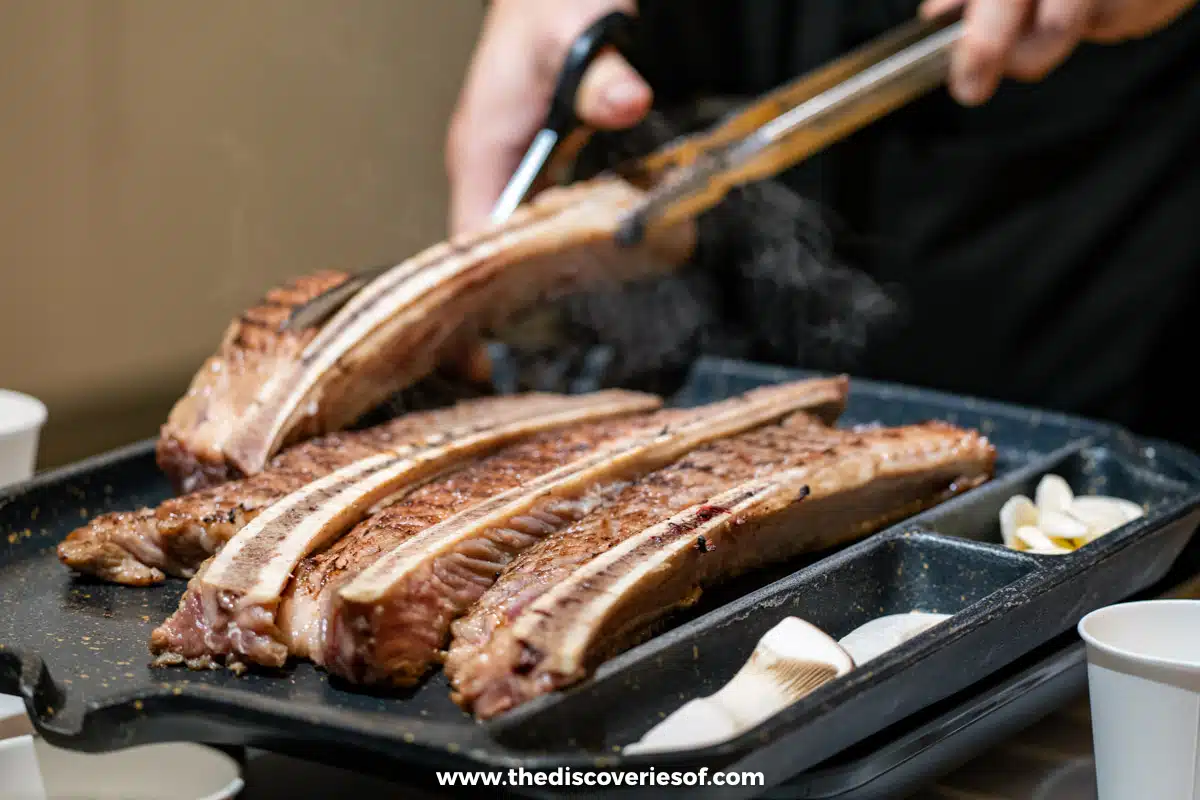
You probably know South Korea is a dream for food lovers, so it means something when I say this: choosing a favourite meal from the whole trip is hard, but if I’m honest, Korean Steak Grill wins. The Haeundae branch of Jeonseorui Udaegalbi (전설의 우대갈비 해운대직영점) serves the best Korean barbecue I’ve had anywhere.
Walk up to the laid-back dining room above Haeundae Beach and you might not expect much. Then the staff bring incredible steak on the bone to your table, grill it in front of you and snip it into bite-sized pieces, and it’s every bit as good as it looks. As with all the best barbecue here, the meal is full of extras, including jangajji (pickled vegetables) that cut through the richness of the beef.
It’s also a rare place where the view matches the food. The restaurant sits on the third floor, overlooking the beach, and the booths suit a small group sharing a feast. The staff are friendly, many speak English, and the festive mood spills in from the beachfront below.
Top Tip
You’ll find it at 277 Haeundae Beach-ro, a few minutes’ walk from Haeundae Station. It’s open from 11am to 10pm. The signature order is the king galbi for two, served with stew and rice.
Remember the fallen at the UN Memorial Cemetery
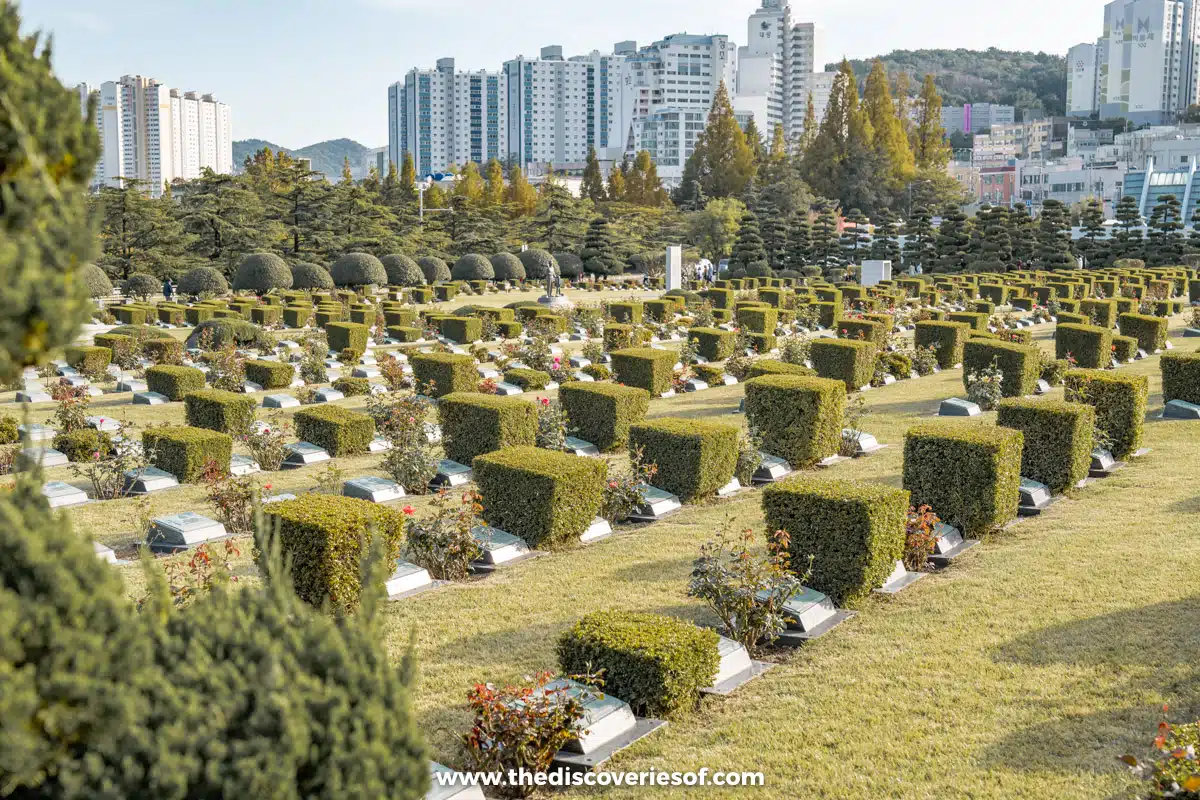
After the Second World War, Japan’s 35-year occupation of Korea ended and the peninsula was divided into North and South. In June 1950, North Korea invaded the South, and the United Nations sent forces from around the world to defend it. Busan (then romanised as Pusan) became the temporary seat of government and the vital port for supplies, and in the summer of 1950 it was the last line of defence, held inside the Pusan Perimeter. Its population swelled as refugees poured in.
The war lasted until the 1953 armistice and left millions dead, among them tens of thousands of UN soldiers. The UN Memorial Cemetery in Korea is the only United Nations cemetery in the world. More than 2,300 servicemen from 11 countries lie here, and over 40,000 UN soldiers killed in the conflict are named on its Wall of Remembrance.
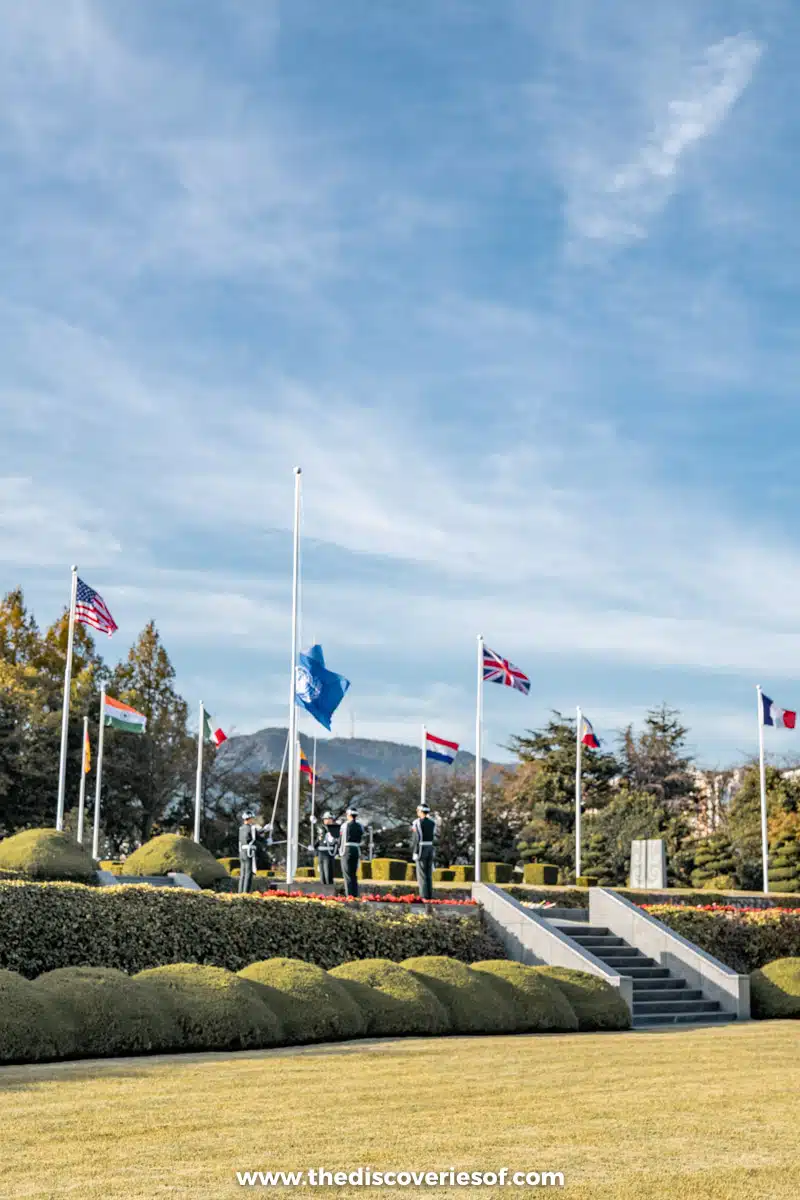
I spent a lot of time at the cemetery, and it stayed with me more than anything else in Busan. Begin with the short film shown in the Memorial Service Hall, which covers the war, the size of the UN effort and the stories of individual soldiers and what they gave up. I was in tears by the end of it, and I wasn’t the only one. Then walk the grounds: the graves are laid out in national sections between immaculate hedges and trees, under the flags of the countries that fought.
Try to time your visit for the raising or lowering of the flags. Seeing soldiers honoured with such ceremony, more than 70 years on, is deeply emotional, and it’s an essential stop if you want to understand modern Korea.
Fly over the sea on the Busan Air Cruise
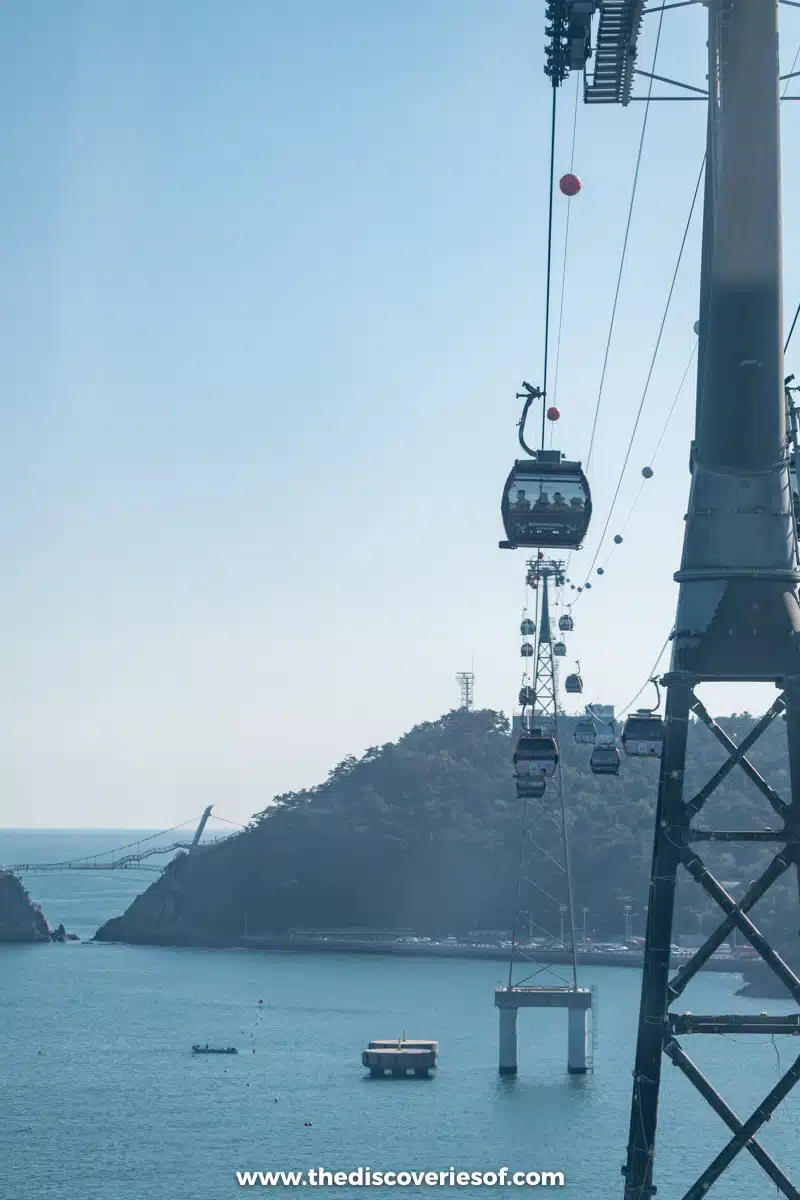
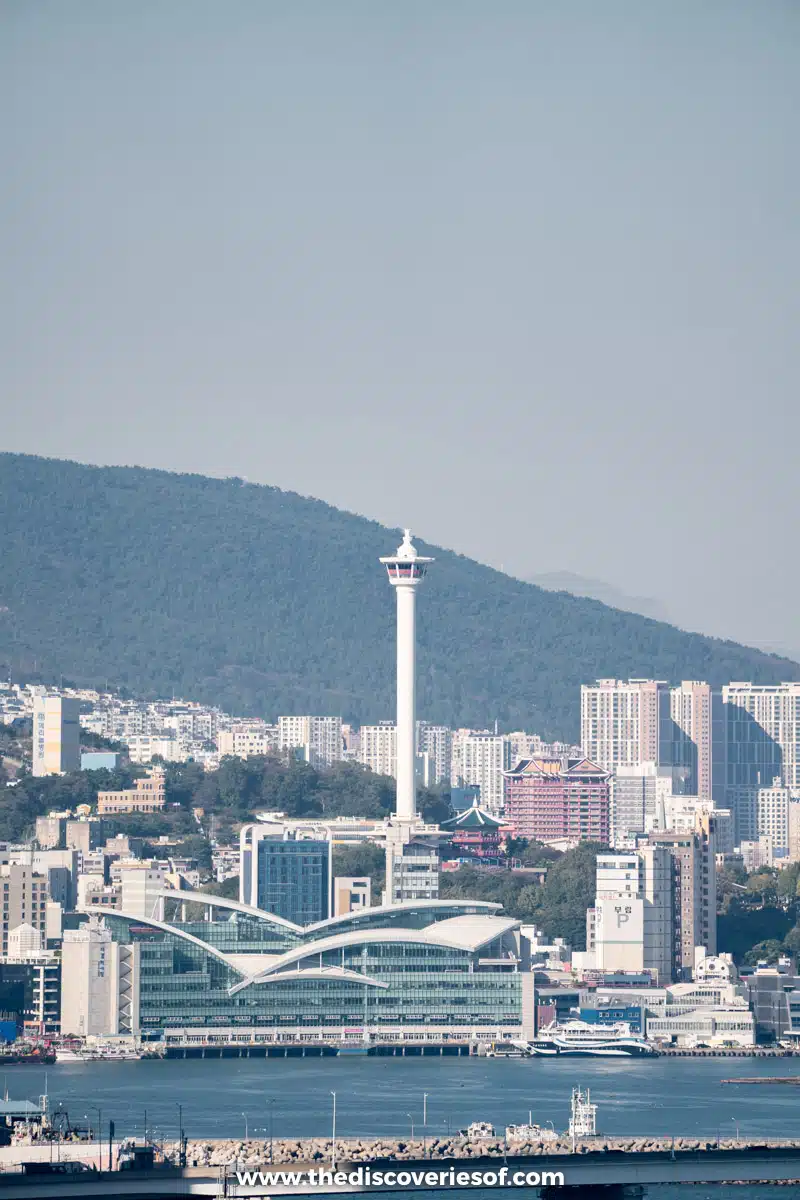
The Busan Air Cruise (the Songdo Marine Cable Car) carries you 1.62 km across the bay from Songdo Beach to the rocky headland of Amnam Park, with some of the best views of the sea and the city in Busan. A cable car first crossed the bay in the 1960s; the line was rebuilt and reopened in 2017, and it has been one of the city’s top attractions ever since.
I’d recommend booking a premium Crystal Cruise ticket if you can. The cars have glass floors and extra windows, so the rugged cliffs and the water slide by beneath your feet. As you walk around the headland at the far end, the whole city spreads out before you.
There’s a slightly strange rooftop park at Songdo Sky Park Station. I couldn’t work out why there were growling gorillas up there, so ignore them and head for the viewpoints instead.
Tickets
Standard returns are 19,000 won (about £11) and Crystal Cruise returns 24,000 won (about £14). Cars run from 9am until 9pm in spring and autumn, until 10pm in July and August and until 8pm in winter. You can reserve tickets on the official booking site.
Try blowfish two ways at Geumsubokguk
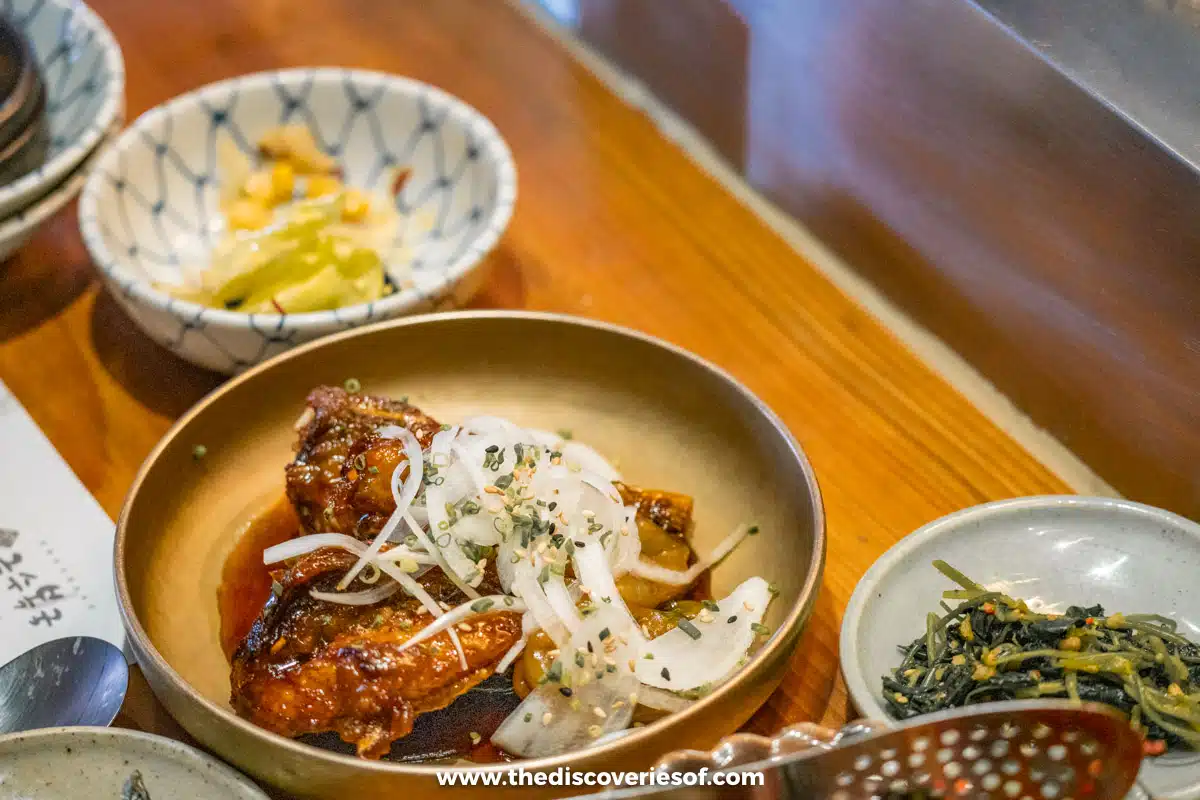
Fine, this one isn’t for everyone. Blowfish (bok in Korean, better known by its Japanese name, fugu) contains a toxin that can kill you if the fish is prepared incorrectly. The fish so poisonous you can die from it? Sign me up.
In all seriousness, you’re in safe hands. Chefs need a licence to prepare blowfish, and Geumsubokguk’s Haeundae head store has been serving it since 1970. Its bokguk, a clear blowfish soup, is a local favourite and has a reputation as a hangover cure.
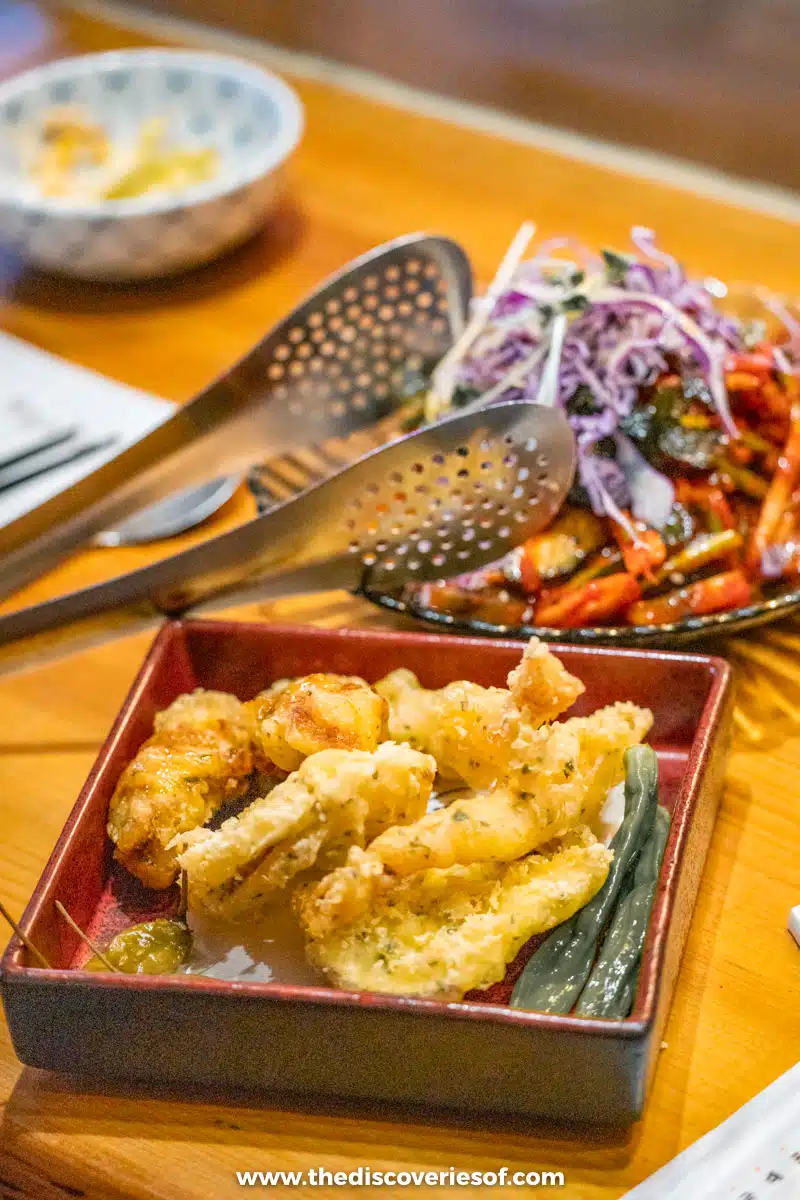
I had it two ways. The clear broth was OK, but not my favourite. The second, in a sweet and savoury teriyaki-style sauce, was brilliant: the meaty fish stood up really well to the marinade, and I kept going back for more. Soups cost from about 14,000 to 24,000 won (£8 to £14), depending on the type of blowfish, and the restaurant is open around the clock.
Getting There
From Haeundae Traditional Market, take the 115-1 bus one stop to Haeundae Hot Springs Sageori (Haeundae Oncheon Sageori), then walk south for a few minutes to 23 Jungdong 1-ro 43beon-gil.
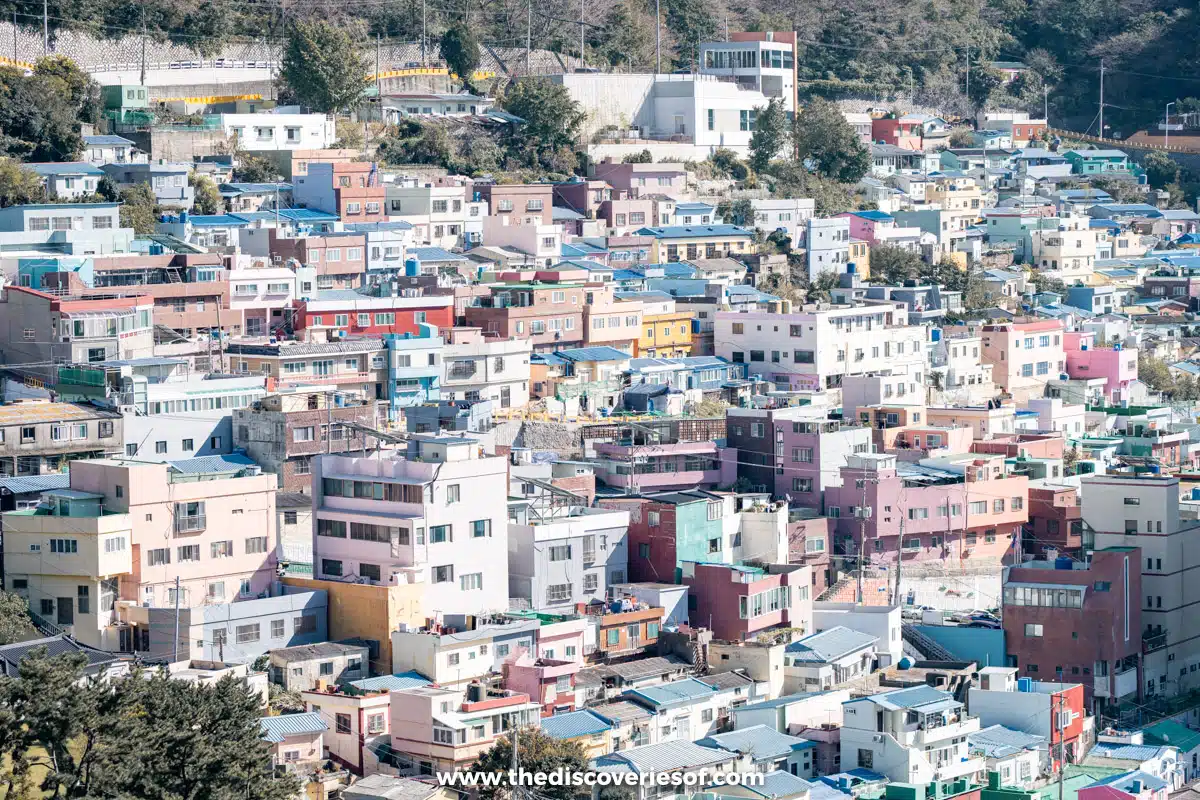
Wander the colourful lanes of Gamcheon Culture Village
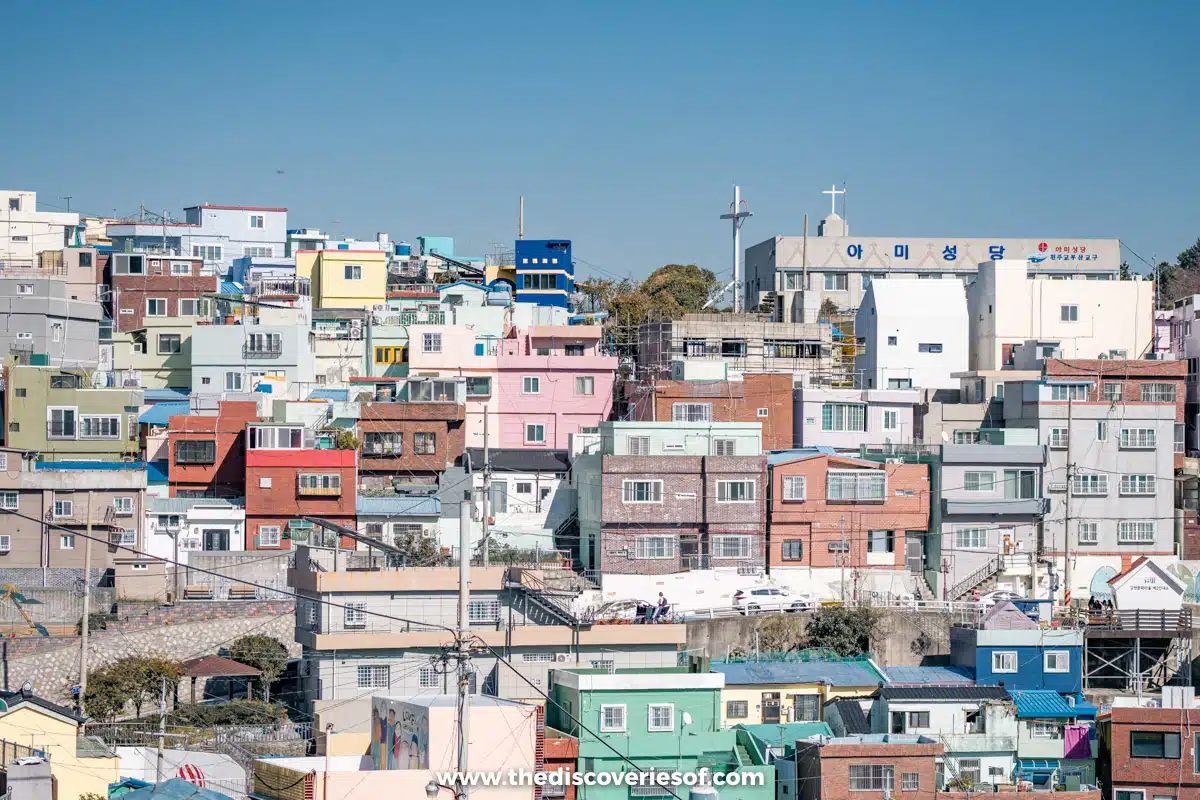
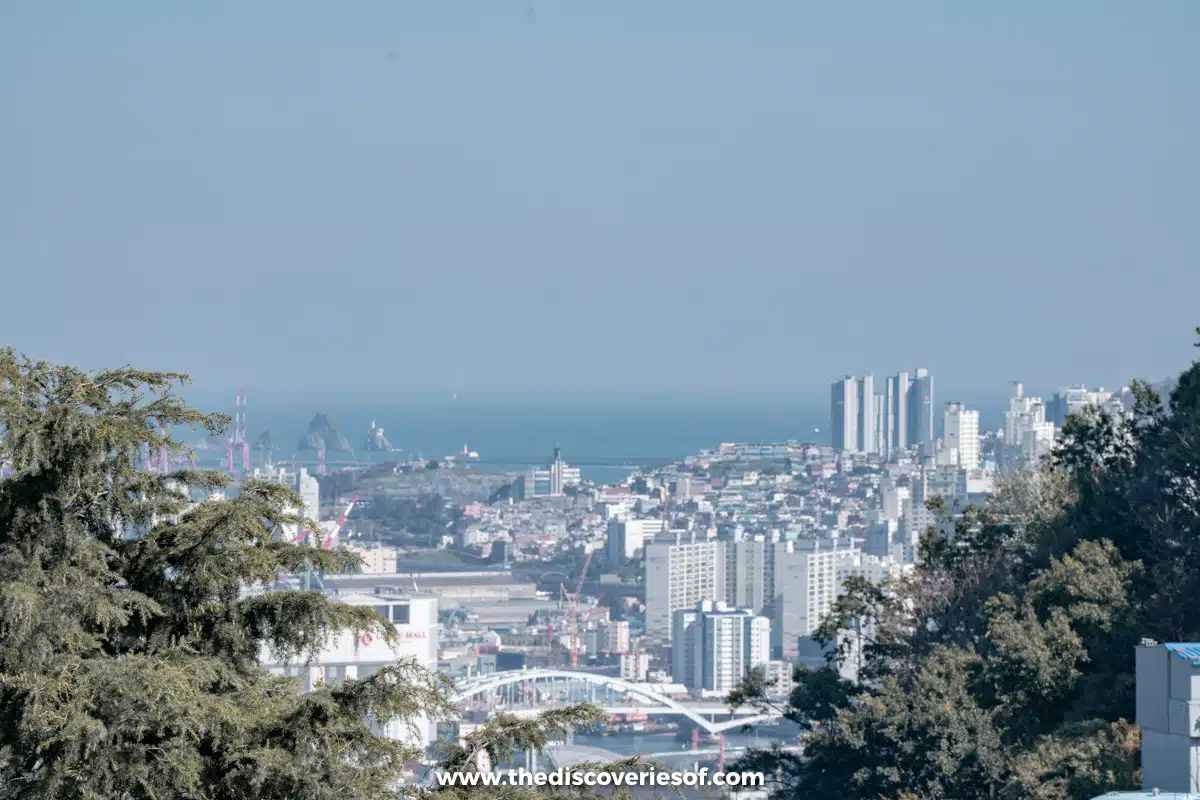
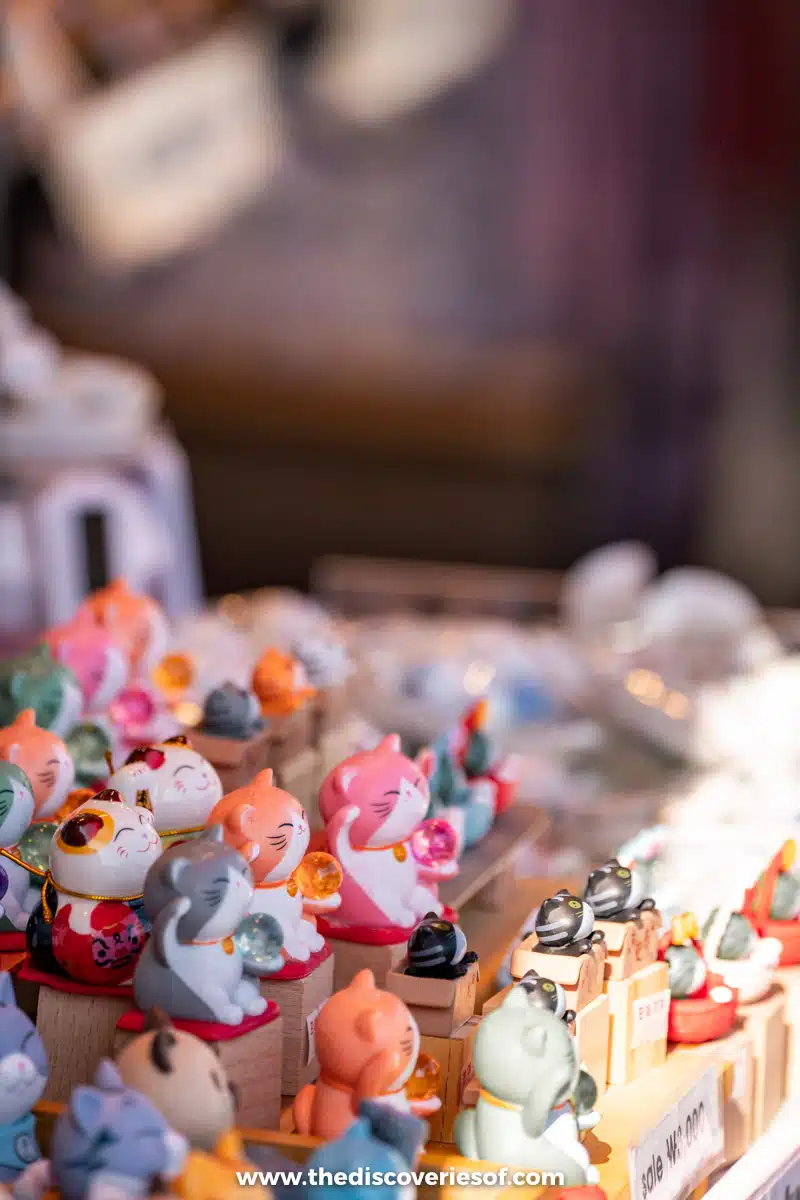
Gamcheon grew up in the middle of the 20th century, when Busan’s population exploded and refugees from the Korean War needed somewhere to live. Homes went up side by side on the steep hill above the bay, many of them little more than wood and metal shacks. Over the decades they became two-storey houses, but the neighbourhood, then known as Taegeuk Village, slowly fell on hard times.
From 2009, a government-backed art project brought in artists and residents to repair the houses and decorate the lanes, and the bright paint, murals and quirky installations turned Gamcheon into one of the most popular places in the city.
It’s no wonder it’s one of the most photographed spots in Busan. The streets are colourful and quirky, with great views out to the bay. For the best view of the village itself, climb up to the Haneul Maru observation deck. People live here, so keep your voice down in the residential lanes.
Top Tip
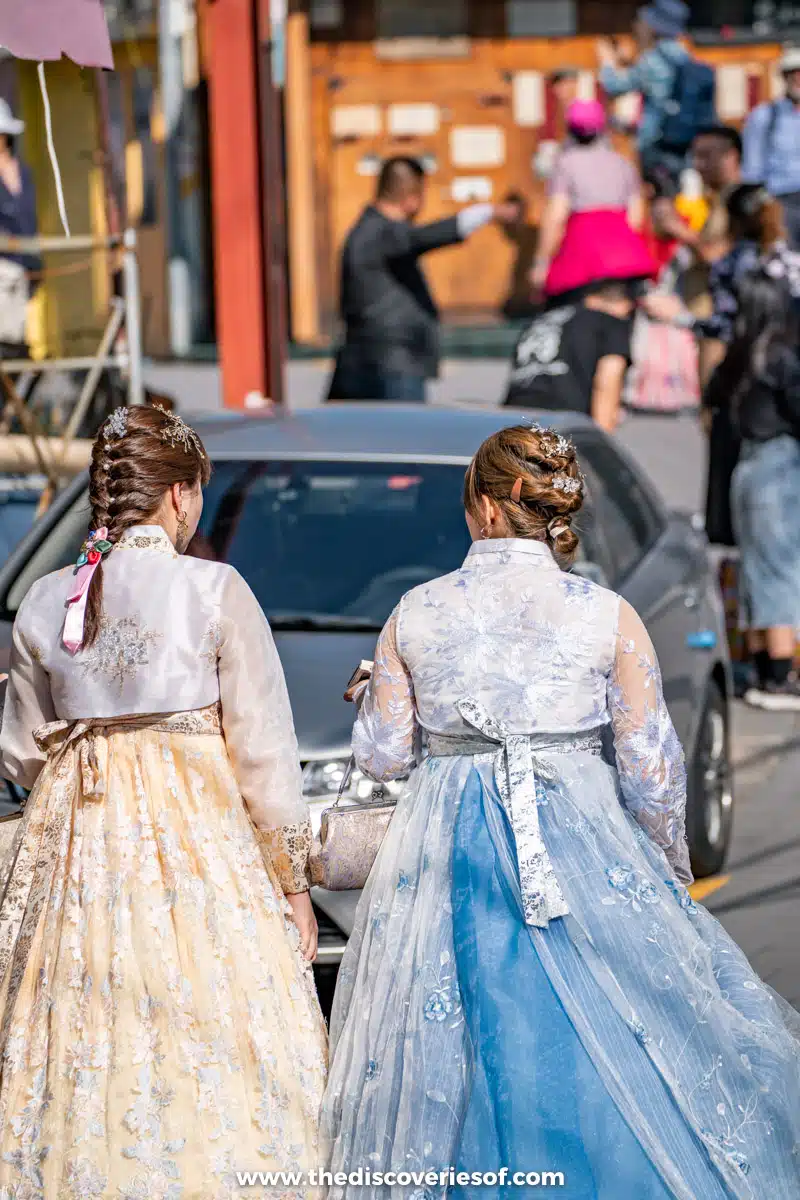
Gamcheon is one of the best places in the city to wear a hanbok for photos. You can rent one from shops such as Hanbok It House and stroll the lanes in traditional dress.
Walk over the waves on the Songdo Cloud Trail
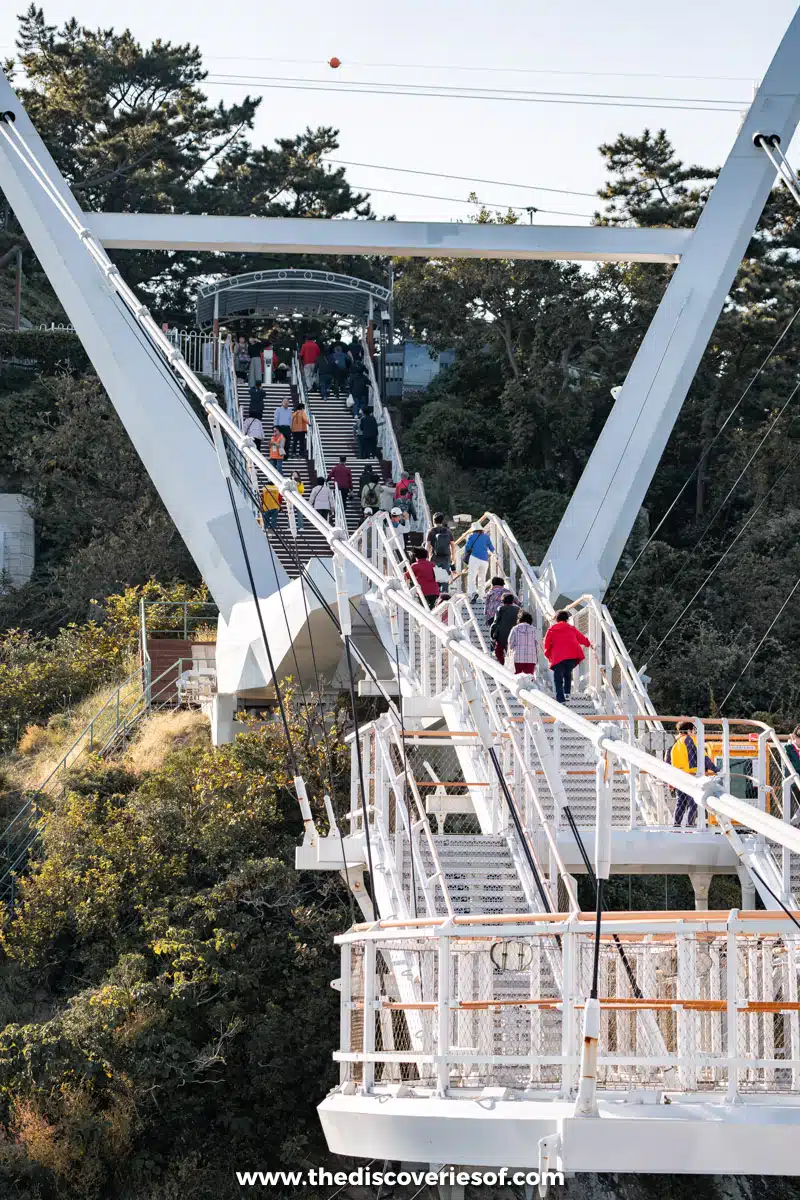
There’s nothing quite like a walk along the coast, and the Songdo Cloud Trail takes it a step further. The 365-metre walkway curves out over the sea from the end of Songdo Beach, with views of the coast, the city and the Air Cruise cars sailing overhead. If heights make you nervous, don’t worry: it’s far less scary than it looks.
Look out for the glass-floored sections, where you can watch the waves rolling in beneath your feet. The walkway ends at Geobukseom, a rocky islet named for its resemblance to a turtle, where statues of a fisherman and a mermaid recall a local legend of two lovers.
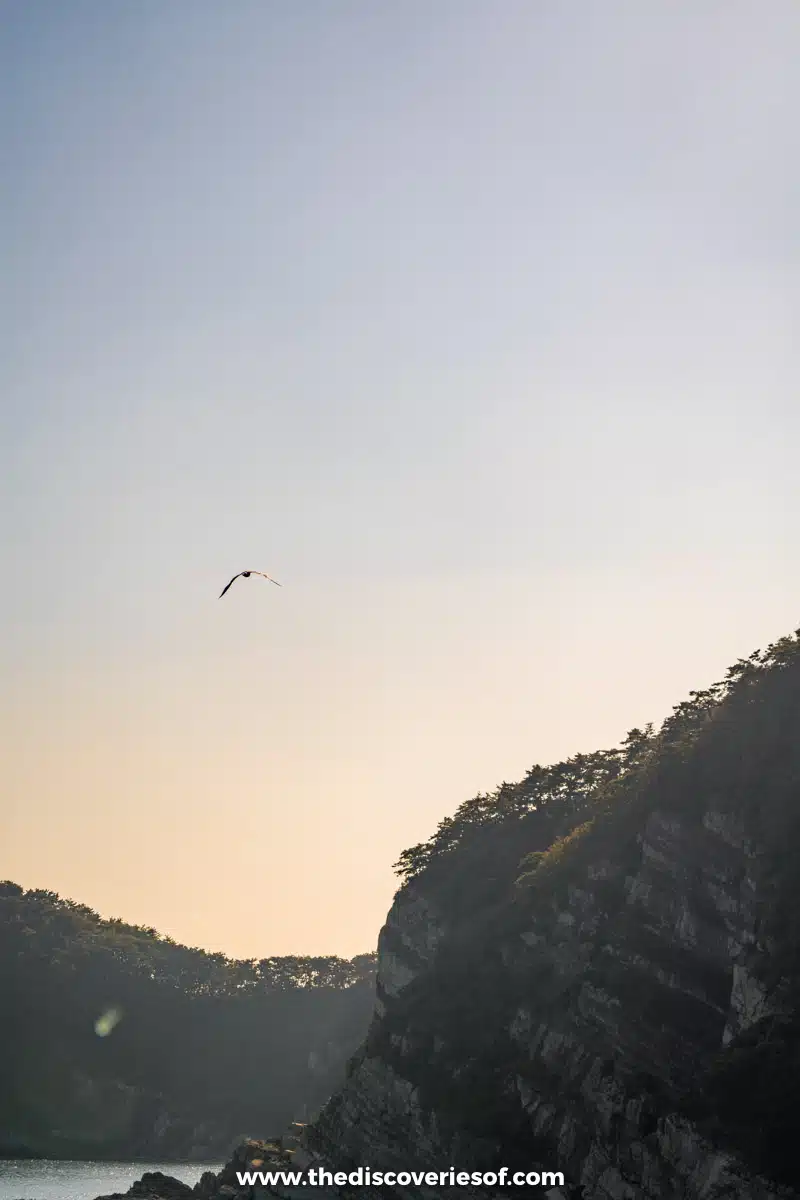
Entry is free, and the trail is open every day from 6am to 11pm. Time your visit for the early morning if you can, when the island is often wrapped in the low cloud that gives the walk its name.
Visit Haedong Yonggungsa, the temple on the rocks
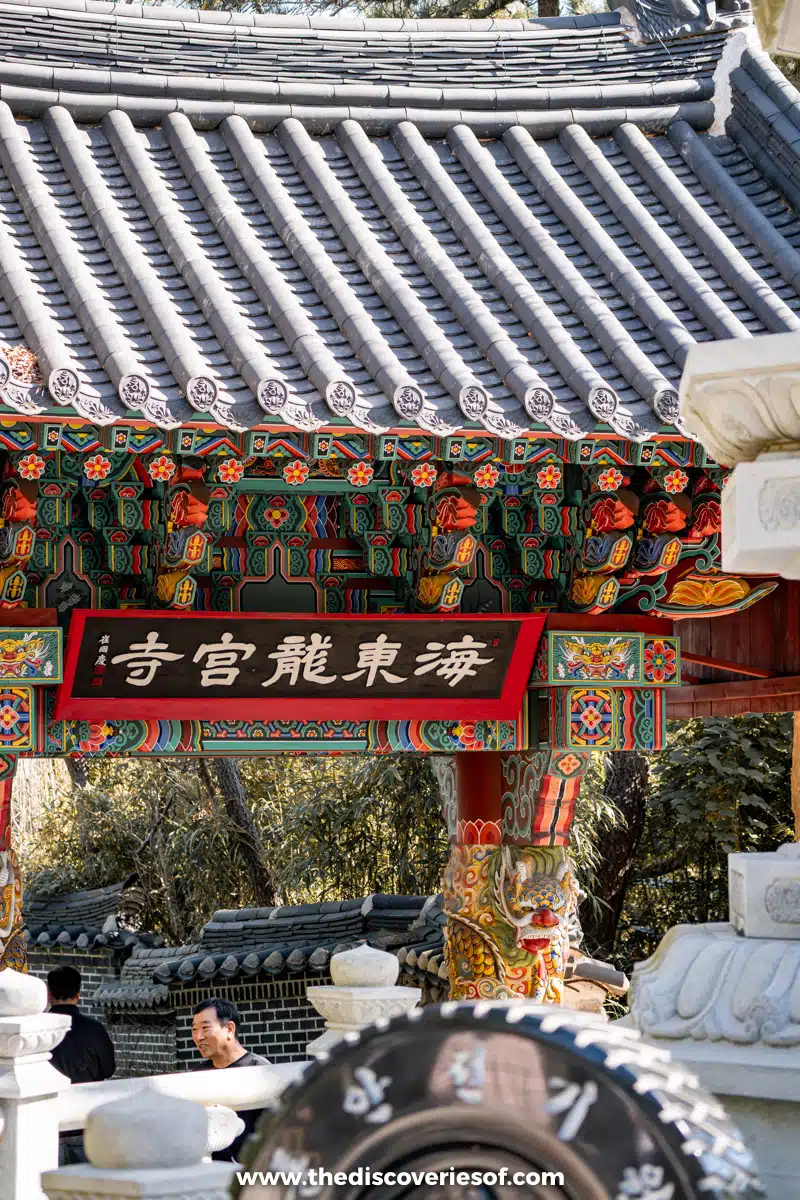
Haedong Yonggungsa is one of the most scenic temples in Korea, set right on the rocks above the sea on the north-eastern edge of the city. Its origin story says that a monk, Naong, was told in a dream by a sea god to build a temple on this stretch of coast, and it’s usually dated to 1376. Japanese troops destroyed it during the invasion of 1592, and most of today’s buildings date from a rebuild in the 1970s, though you’d never guess.
You’ll see how special the setting is as soon as you arrive, with the sea crashing below and stone guardians lining the approach. Walk down the 108 steps for the classic view of the complex above the waves, then on to Daeungjeon, the main hall, with its tiled roof curling towards the sky and every beam painted in bright colour. Look out for the golden laughing Buddha too: rubbing his belly is said to bring good luck.
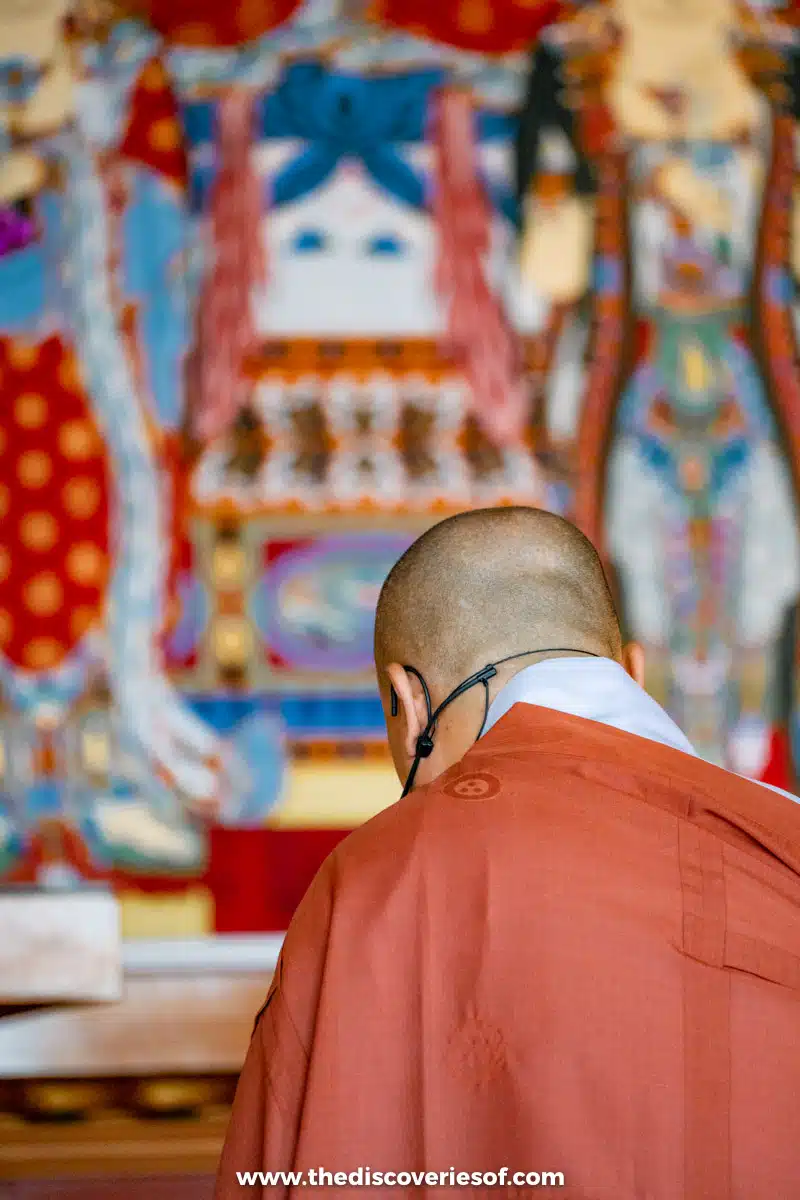
There’s no entry fee, and the gates open at 5am, which makes it a beautiful place for sunrise and the best way to beat the tour groups.
Getting There
Take bus 181 from Haeundae Station (exit 7) to the Haedong Yonggungsa stop, which takes about 25 minutes, then walk for 10 minutes to the temple.
Eat sashimi straight from the tank (live octopus optional)
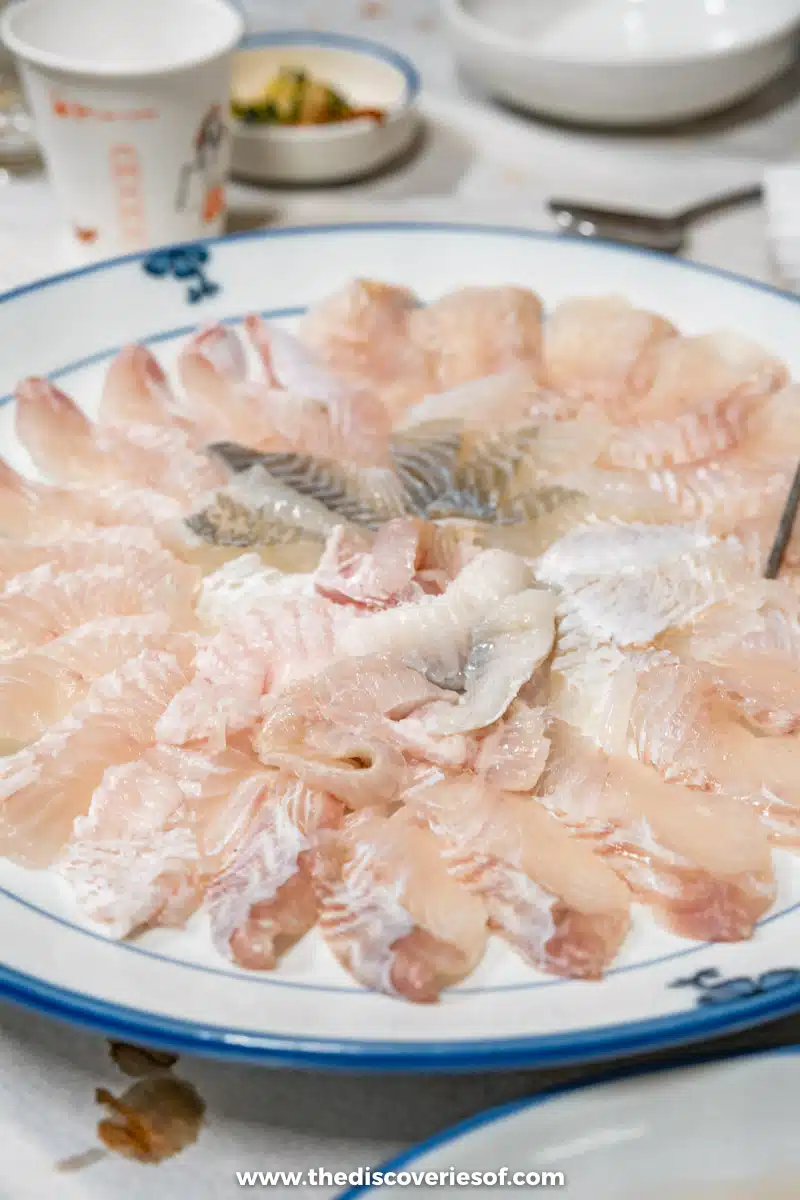
Sashimi is usually thought of as Japanese, but raw fish is a Korean staple too, where it goes by the name saengseon-hoe, and the country’s biggest port is the place to try it, and the classic way is above a fish market: you choose your fish from the tanks downstairs, and a restaurant upstairs prepares it and brings it to your table with vegetables, herbs and dipping sauces.
My lunch was at Bangpajae Hoetjip, a restaurant over a fish market that works exactly this way, and it’s where I braved san-nakji. The octopus is chopped moments before it reaches the table, so the pieces are still wriggling under their sesame oil, seeds and spring onion. The taste was a pleasant surprise. The texture is the challenge: chew firmly, or a sucker can cling to your tongue or the back of your throat. Not for the faint of heart.
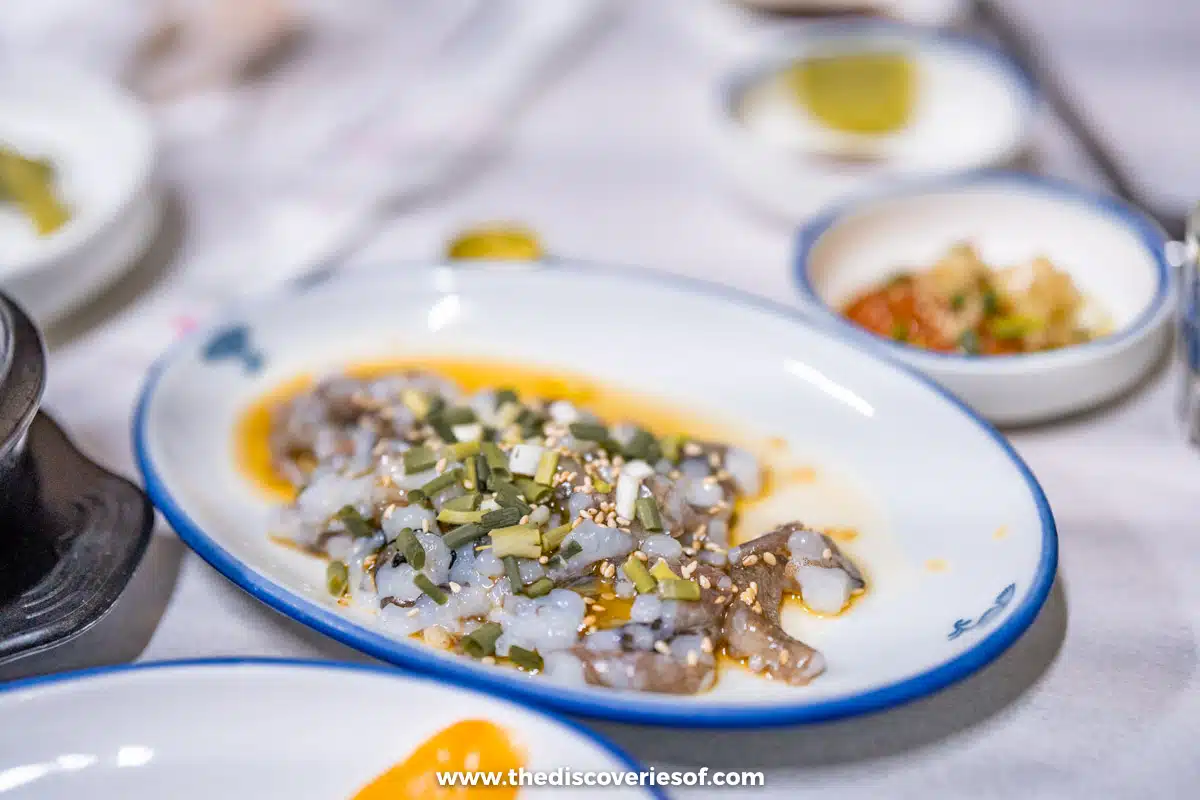
The biggest and most famous place to do this is Jagalchi Market in Nampo, the largest seafood market in the country. Buy from a stall on the ground floor, and a partner restaurant upstairs will prepare it for a small table charge per person. Millak Raw Fish Town, by Gwangalli Beach, works the same way.
Top Tip
Jagalchi is open from 5am to 10pm, but many stalls pack up around 8pm, and it closes on the first and third Tuesdays of the month. The floors are wet, so wear sensible shoes.
Slurp cold wheat noodles at Choryang Milmyeon
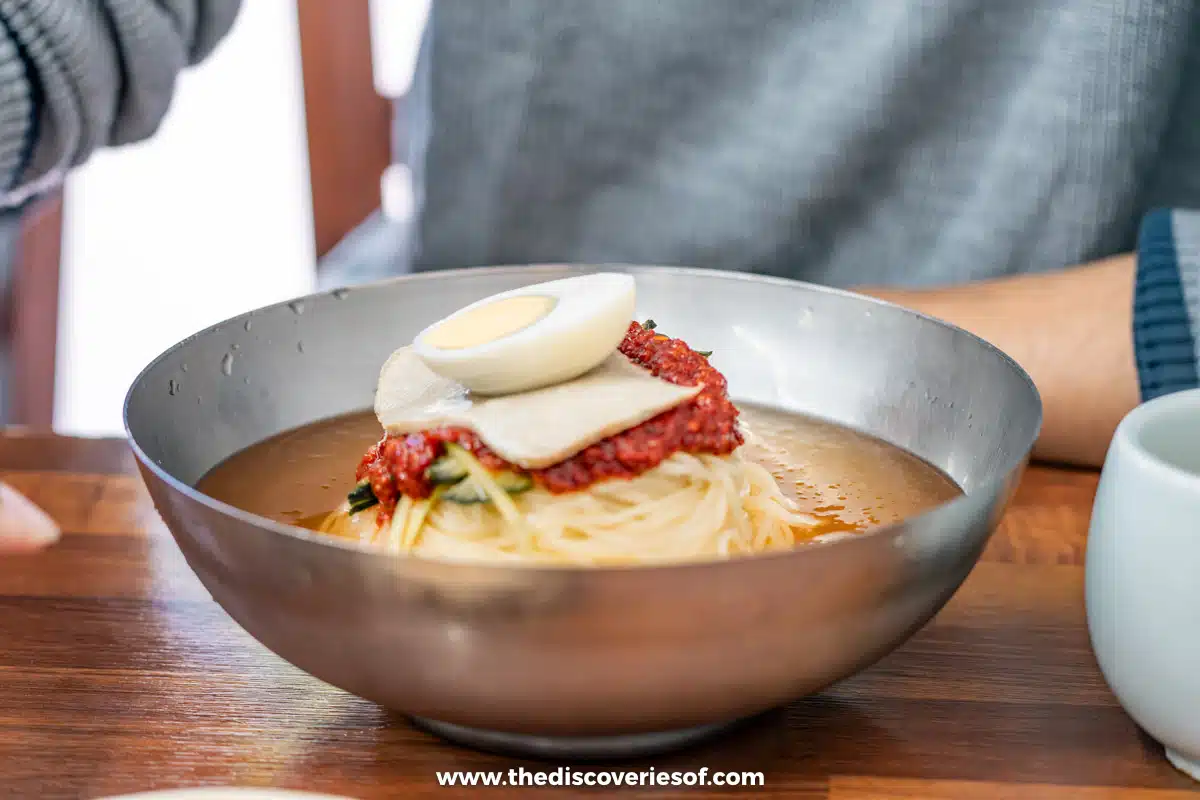
Milmyeon is Busan’s own noodle dish, and it has a history. During the Korean War, refugees from the North who craved the buckwheat cold noodles of home turned to the wheat flour shipped in as UN aid, as farmers couldn’t grow enough rice, and Busan’s wheat noodles were born.
Choryang Milmyeon, near Busan Station, is a little out of the way if you’re coming from Gamcheon, but it’s worth the effort. You get chilled noodles topped with a fiery red sauce, plus a jug of broth to pour over as you go. Yes to this. Order the flagship noodles, but try the dumplings too.
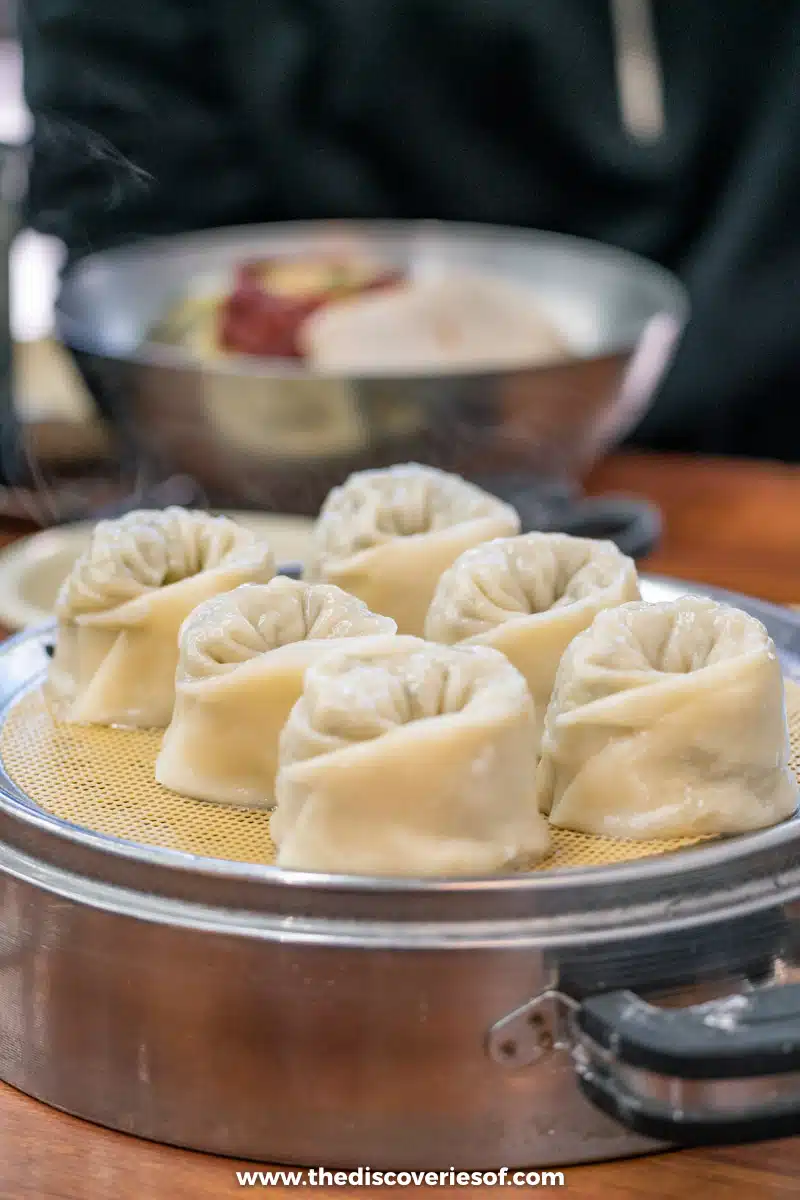
A bowl costs 7,000 to 8,000 won (about £4 to £5), and a plate of dumplings 7,000 won, so it’s a filling meal for very little.
See the whole coast from BUSAN X the SKY
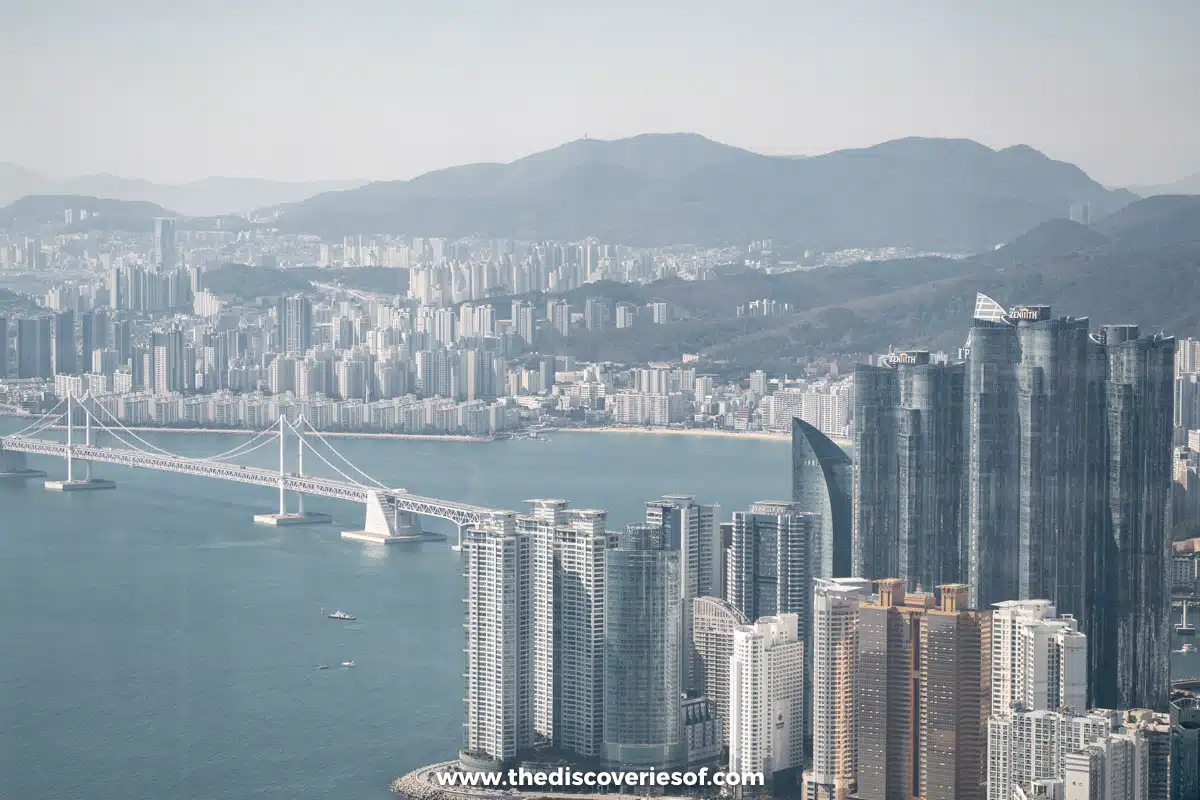
Haeundae LCT Landmark Tower is the second-tallest building in Korea, at 411.6 metres, and BUSAN X the SKY fills its top three floors. I know heading to the top of the tallest building isn’t on everyone’s list in a new city, but this one should be.
The ride up the lift to the 100th floor comes with a virtual hot air balloon on the screen, which nicely distracted me from how high I was actually climbing. At the top, the views run along the coastline from Haeundae Beach to Dongbaekseom Island and across to Gwangan Bridge. The 99th floor has a lounge and a restaurant, and a Starbucks that bills itself as the highest in the world, while the 98th has cafés, snacks and a rest area.
Top Tip
Don’t miss Shocking Bridge on the 100th floor, a glass-floored platform where you look straight down to the streets far below. It was the most unusual (and legitimately terrifying) part of the visit. Tickets cost around 27,000 won at the desk, less online, and the observatory is open from 10am to 9pm, with last entry at 8.30pm.
Ride a Sky Capsule along Haeundae Blue Line Park
Haeundae Blue Line Park is one of the newest additions to an ever-changing city, and it’s taken social media by storm. It runs along the old Donghae Nambu railway, a coastal line that closed in 2013 and reopened in 2020 as a walking route with two rides on top. A bit like the High Line in New York City, it’s a great place to admire the views, but here you can sit back and let the track do the work.
The Sky Capsules are the stars: brightly coloured little cars that pootle their way along a raised track above the coast for about 2 km between Mipo, at the eastern end of Haeundae Beach, and Cheongsapo. The ride takes about 30 minutes and serves up sea views the whole way. Have your camera ready, as the capsules are totally adorable. Below them, the Beach Train runs the full 4.8 km of the old line to Songjeong, stopping along the way.
Tickets
A one-way Sky Capsule for two costs 40,000 won (about £23), with larger capsules for three or four. They sell out at busy times, so book your tickets ahead, and use the Beach Train for the return trip.
Paddleboard beneath Gwangan Bridge at Gwangalli Beach
There are some excellent beaches in Busan, and Gwangalli is one of the best. Haeundae has the buzz, and the view from Songdo is lovely, but this sweep of sand has something the others don’t: Gwangan Bridge, the 7.4 km double-decker suspension bridge that arcs across the bay right in front of it.
Spend an afternoon or evening here and you’ll see the appeal. Better still, get out on the water. The wide bay is a great place for stand-up paddleboarding, and local operators near the beach run three-hour sessions that start with a short lesson. It got choppy on my paddle out, but staying upright is half the fun. You might fall in once or twice, but the views of the bridge, the city and the beach are worth the unexpected swim, and it’s easy enough to climb back on.
Top Tip
Book a sunset session and you’ll paddle back as the bridge lights up. On Saturday evenings, Gwangalli also hosts a drone light show over the bay.
Watch the city light up from the Diamond Bay yacht
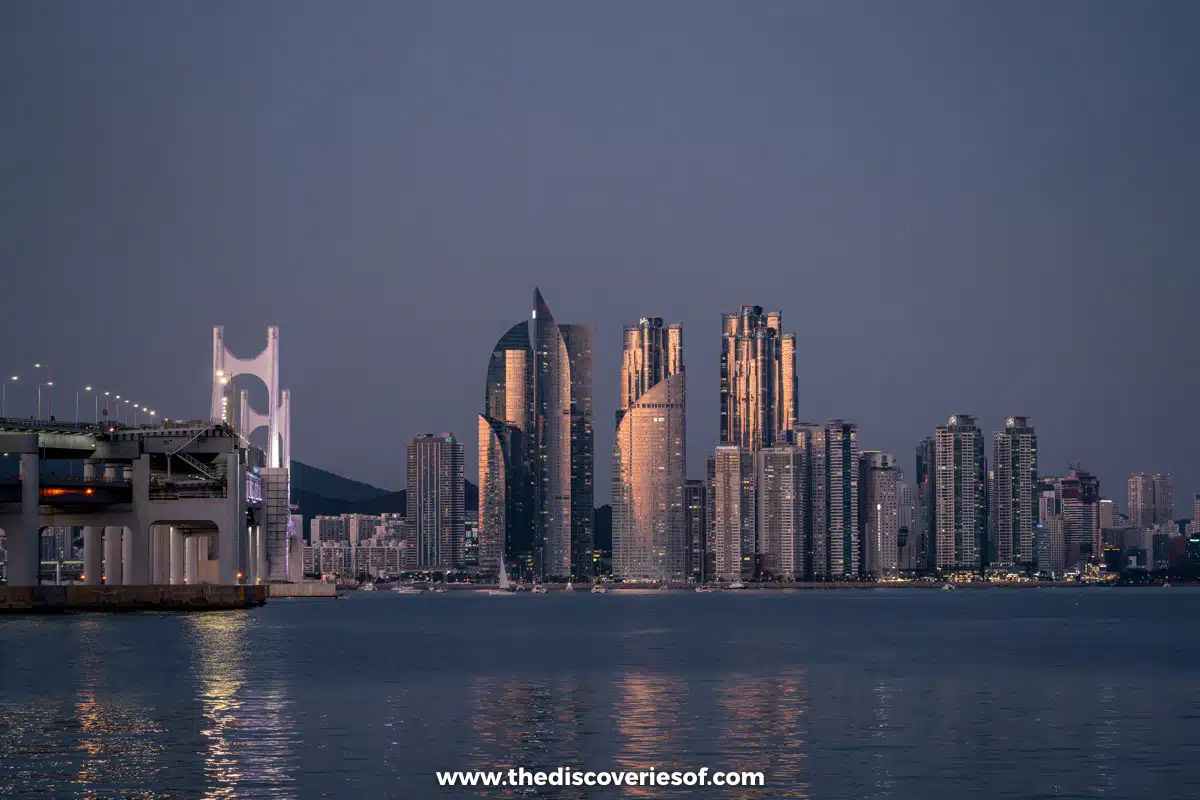
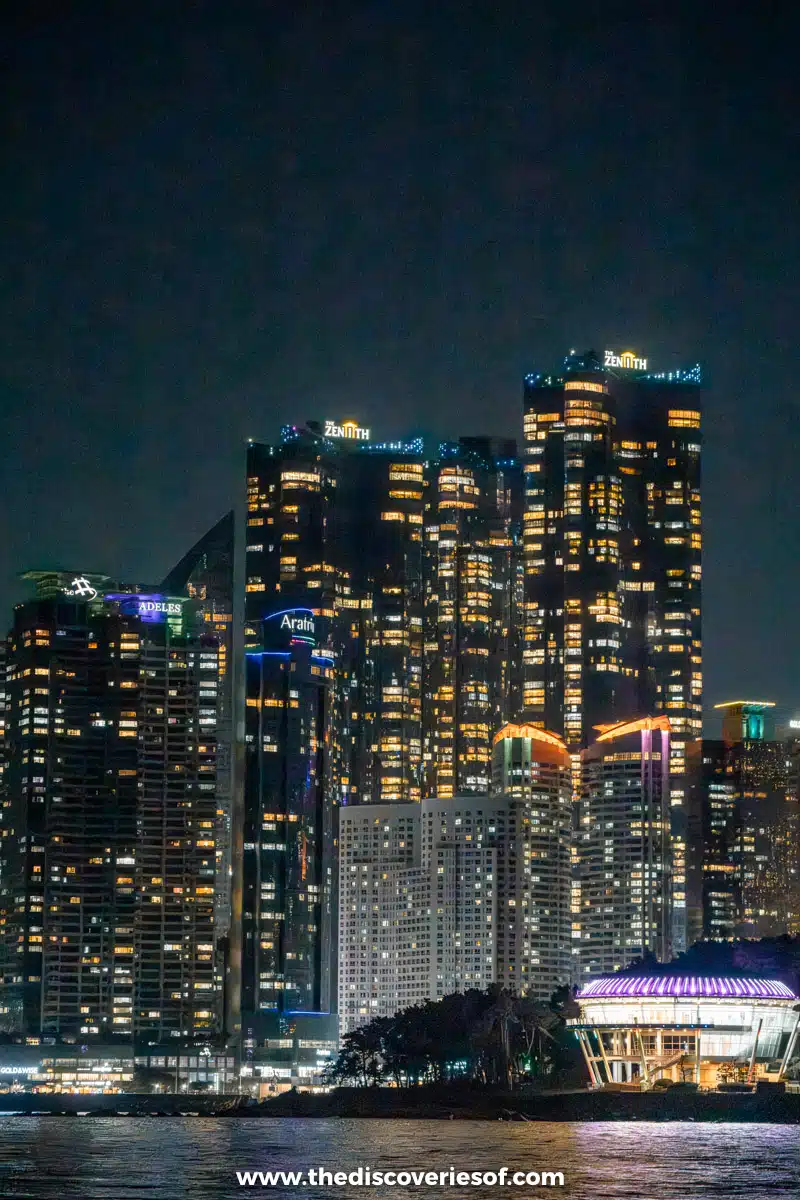
Busan’s coastline gives you plenty of ways to see the city, but if you have even slight sea legs, Diamond Bay is a perfect way to see its glittering lights reflected in the bay. The catamaran cruises leave from Yongho Bay in Nam-gu and last about 50 minutes, jetting you round the bay so you can photograph the city from the water.
There are two routes. By day, the weather decides whether you head out to the Oryukdo islets or follow the Haeundae course. That course passes beneath Gwangan Bridge and runs past Nurimaru on Dongbaekseom Island to Haeundae, and it’s the one I’d choose: go for a sailing around sunset and you’ll watch the city light up on the way back.
Top Tip
Night cruises follow the Haeundae course and leave at 6.30pm, 7.30pm and 8.30pm. Sailings are cancelled in bad weather, so book online with a flexible ticket and arrive at the terminal 30 minutes before departure.
Explore Huinnyeoul Culture Village on Yeongdo
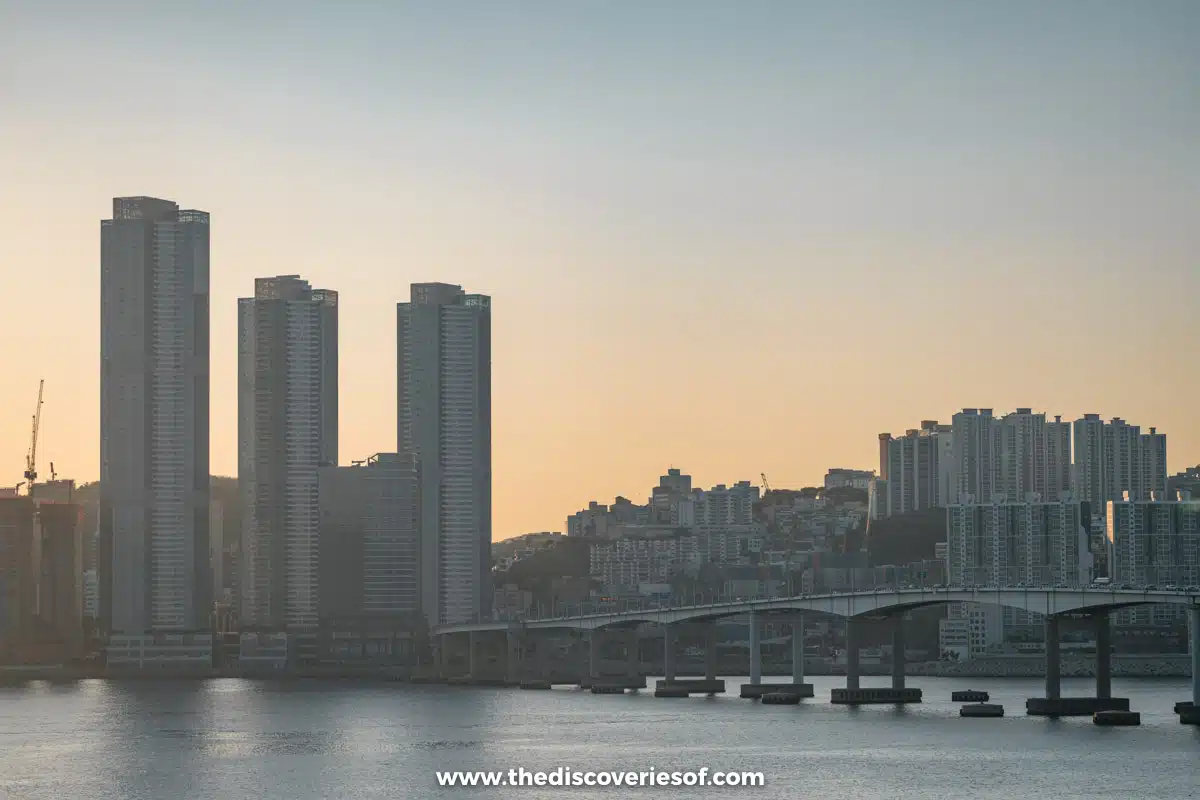
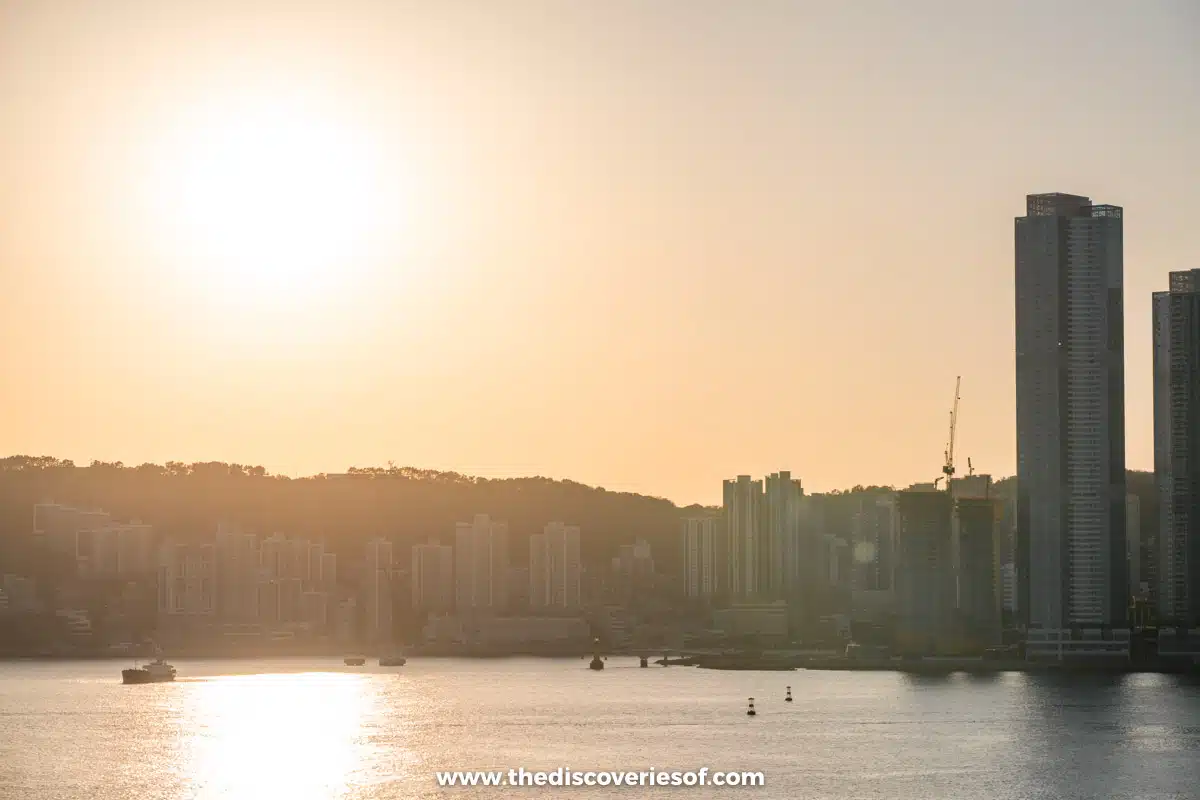
Huinnyeoul Culture Village, on the island of Yeongdo just across the Namhang Bridge, is increasingly known as the Santorini of Busan. Wander among its white-walled houses and steep staircases above the sea and you’ll see the resemblance.
Once you’re there, get lost in the lanes. It’s very walkable (if you’re happy with hills), with cafés and small shops tucked into the old houses. I was charmed by the Huinnyeoul coastal trail below the village, where murals line the walls and staircases and the path runs right along the shore. Follow it to the Huinnyeoul coastal tunnel, whose arched openings frame the classic shot of the harbour and Namhang Bridge.
Getting There
From Nampo Station (exit 6), take bus 7, 71 or 508 for six or seven stops to the Huinnyeoul Culture Village stop. The ride takes about 20 minutes.
Spend a day on Haeundae Beach
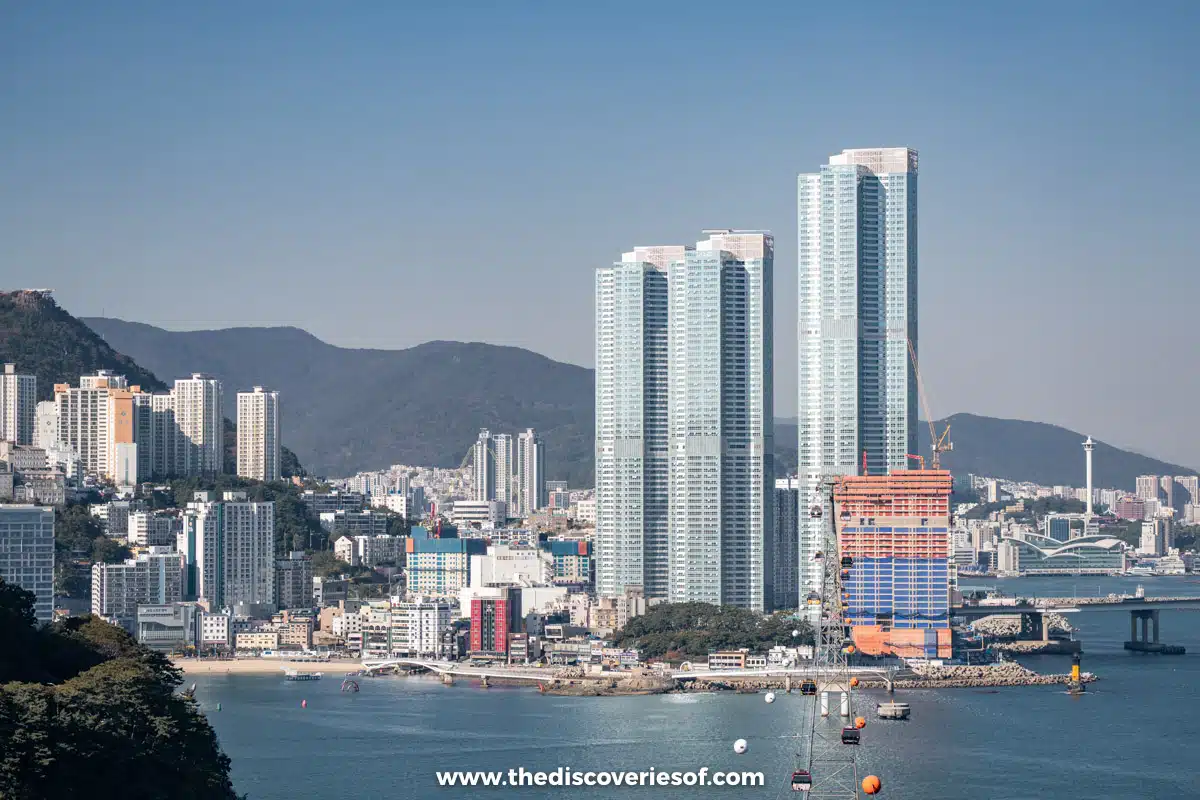
Haeundae is the city’s most famous beach: around 1.5 km of golden sand backed by hotels, restaurants and the glass towers of Marine City. In summer it’s packed with parasols and swimmers, and out of season it’s a lovely place for a long walk by the sea. I stayed right on the seafront here.
Walk west along the beach to Dongbaekseom, a small wooded island linked to the shore, where a coastal path loops past the lighthouse and Nurimaru APEC House, built for the 2005 APEC summit. Haeundae Traditional Market, a few streets back from the beach, is good for a cheap street-food lunch.
Top Tip
The beach is lifeguarded through the summer season, and it’s at its busiest in July and August. In winter, the Haeundae Light Festival fills the seafront with illuminations.
Hunt for bargains at Gukje Market
Gukje Market is a sprawling street market that has supplied Busan with everyday essentials since the years after liberation in 1945. It grew into the bustling heart of the city during the Korean War, when Busan became a refugee capital, and its maze of alleys is still packed with locals shopping for clothes, kitchenware, hanbok fabric and souvenirs to take home to your jealous friends.
It has a friendly, lively feel, and you can find good deals if you look carefully. Just round the corner, BIFF Square, named after the Busan International Film Festival, is known for its street food, especially ssiat hotteok: sweet pancakes stuffed with seeds and nuts.
Most shops open from about 9am to 8pm, and many close on Sundays, so go during the week, and in the morning if you want to see the market at its liveliest. Jagalchi is a short walk away, so you can easily combine the two.
Stand on the clifftops at Taejongdae
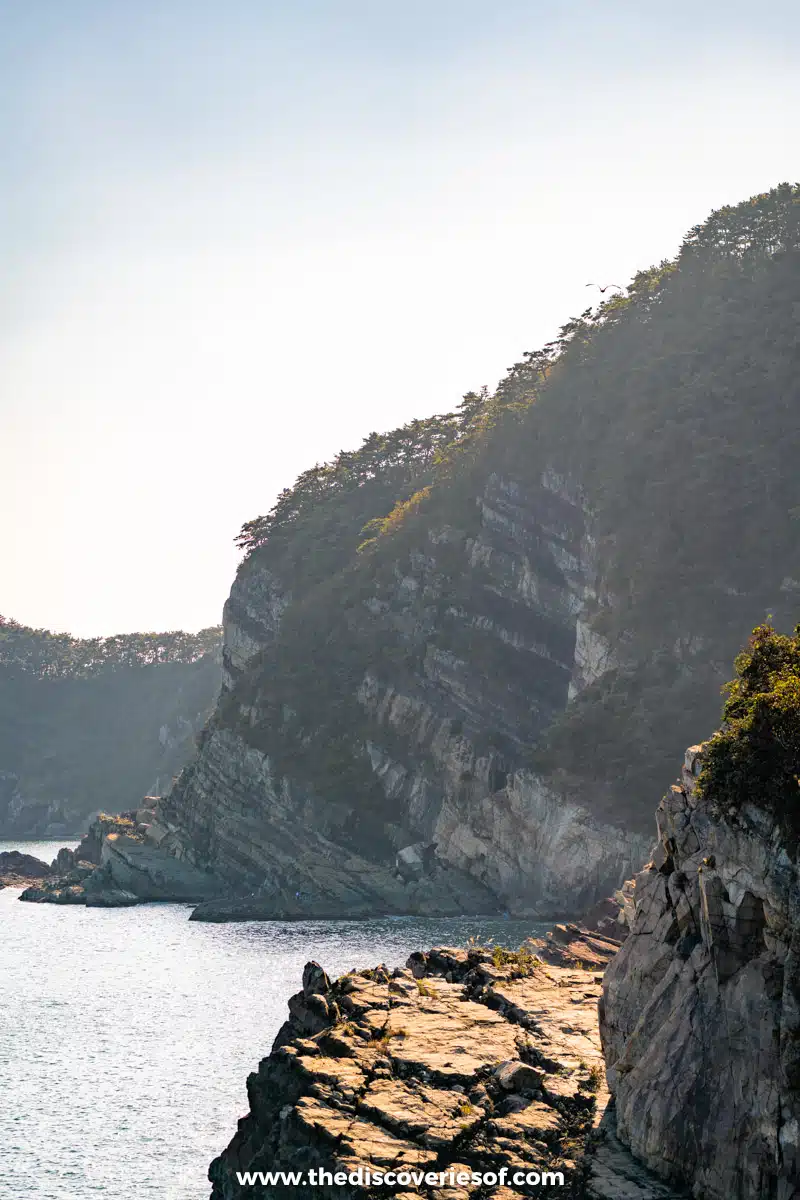
At the southern tip of Yeongdo, Taejongdae is a wooded headland of sheer cliffs and wave-carved rocks that has drawn visitors since the Silla kingdom (its name is said to come from King Taejong Muyeol, who came here to practise archery). Today it’s a park with a loop road around the cape.
Walk the loop, or hop on and off the Danubi road train, to reach the observatory, the white Yeongdo lighthouse and the flat rocks of Sinseonbawi below it. On a clear day you can make out Japan’s Tsushima Island on the horizon. Paths down to the rocks can be steep and slippery, so stick to daylight. Pair it with Huinnyeoul, a short bus ride away on the same island.
Soak away the day at Spa Land Centum City
Korean bathhouses are part of everyday life, and Busan has one of the grandest. Spa Land sits inside Shinsegae Centum City, one of the largest department stores in the world, with hot-spring baths fed by natural spring water, outdoor footbaths, and a series of themed saunas and relaxation rooms where locals while away whole afternoons.
The baths are separated by gender and you bathe naked, while the saunas and lounges are mixed and you wear the clothes you’re given. It’s a great way to recover after a few days of walking the city’s hills.
Tickets
Adults pay 25,000 won (about £14). It’s open daily from 9am to 10pm, with last entry at 9pm. Get off at Centum City Station on subway line 2, which connects to the store.
Take a footbath in the Dongnae hot springs
People in Busan have been soaking in the hot springs at Dongnae for centuries, and the town’s baths are said to date back to the Silla era. When you leave Oncheonjang Station, look out for the golden statues of an old woman and a crane. They recall the legend of a woman who saw an injured crane heal its leg in the water and followed its lead.
Dongnae’s free open-air footbath sits in the middle of the old hot spring district. The spring water comes out of the ground at around 60°C, and locals spend 20 to 30 minutes here, as many believe the mineral-rich water helps aching joints. The footbath is generally open from 10am to 5pm, but it closes on Wednesdays and Fridays and for parts of the summer and winter, so check before you make a special trip.
Top Tip
If you’d like a full soak rather than a footbath, the bathhouses of the Dongnae hot spring district are all around you, or head to Spa Land (above) in Centum City.
Hike to Geumjeongsanseong Fortress
Hiking is a national pastime in South Korea, and Busan’s steep mountains and sea views make it a great place to lace up your boots. In November 2025, Geumjeongsan became the country’s 24th national park, and the first inside a major city, and its fortress hike is one of the best in the region, combining big views with a history lesson.
After the Japanese and Manchu invasions of the 16th and 17th centuries, most of Geumjeongsanseong was built in 1703 to defend the coast. It’s the largest fortress in Korea, with walls running for well over 15 km along the ridges and four restored gates. The 12 km point-to-point trail follows the walls past watchtowers and the 801-metre summit, Godangbong, with around 840 metres of climbing.
Many hikers start at Beomeosa, a temple founded in the 7th century in the forest below the North Gate. Its stone lanterns and the steps up to Daeungjeon, the main hall, are worth a look before or after your hike. It’s a challenging day, and the wind and rain make it harder still, but it’s one of the most rewarding walks around.
Getting There
Take subway line 1 to Beomeosa Station, then a short bus ride up to the temple. A cable car also runs from Geumgang Park, near Oncheonjang Station, towards the South Gate.
Tips for your trip
- Getting there. The KTX from Seoul reaches Busan Station in about two and a half hours, and it’s a comfortable, scenic ride. KTX-Eum trains from Seoul’s Cheongnyangni Station, via Andong, run to Bujeon, and some call at Sin Haeundae, close to the beaches. Gimhae International Airport handles domestic and regional flights.
- Getting around. The subway and buses reach almost everything on this list: tap in with a T-money card, which works across the country. Google Maps won’t give you proper directions here, so install Naver Map or KakaoMap, and book taxis through the Kakao T app. There’s more on entry rules and money in my South Korea travel tips.
- How long to spend. Plan on two or three days to see the highlights, and add another in summer to spend time on the water. If you want it all in a day-by-day plan, try my 3-day Busan itinerary.
- When to go. Spring (with cherry blossom from late March) and autumn are the most comfortable seasons for walking the city. I went in October, once the beach season was over. July and August are hot, humid and busy, but it’s beach season, and the city is at its liveliest.
- Where to stay. Haeundae is the best base for a first visit, with the beach, the subway and many of the best restaurants on your doorstep. I stayed at Grand Josun Busan, right on Haeundae Beach, a smart five-star with sea views and a pool. For more choice, see all hotels in Busan.
Map
Read next
- Short on time? See Busan in 3 days with this itinerary
- How to spend 10 days in South Korea, from Seoul’s palaces to live octopus in Busan
- 22 things to do in South Korea, from a peek into North Korea to a vigorous spa scrub
- 32 things to do in Seoul, from a virtual royal banquet to cocktails in an old teahouse
- 30 South Korea travel tips to know before you go, from cash to hidden cameras
Love this? Save and share on Pinterest

Discover the top things to do, insider tips and hidden gems in our South Korea Travel Guide.
Read the guides →